High-Reliability Faceplates & HMI Assemblies for Adelaide OEMs
Explore precision-fabricated membrane switches, tactile elastomer keypads, and optical display graphic overlays designed for harsh industrial duty cycles.
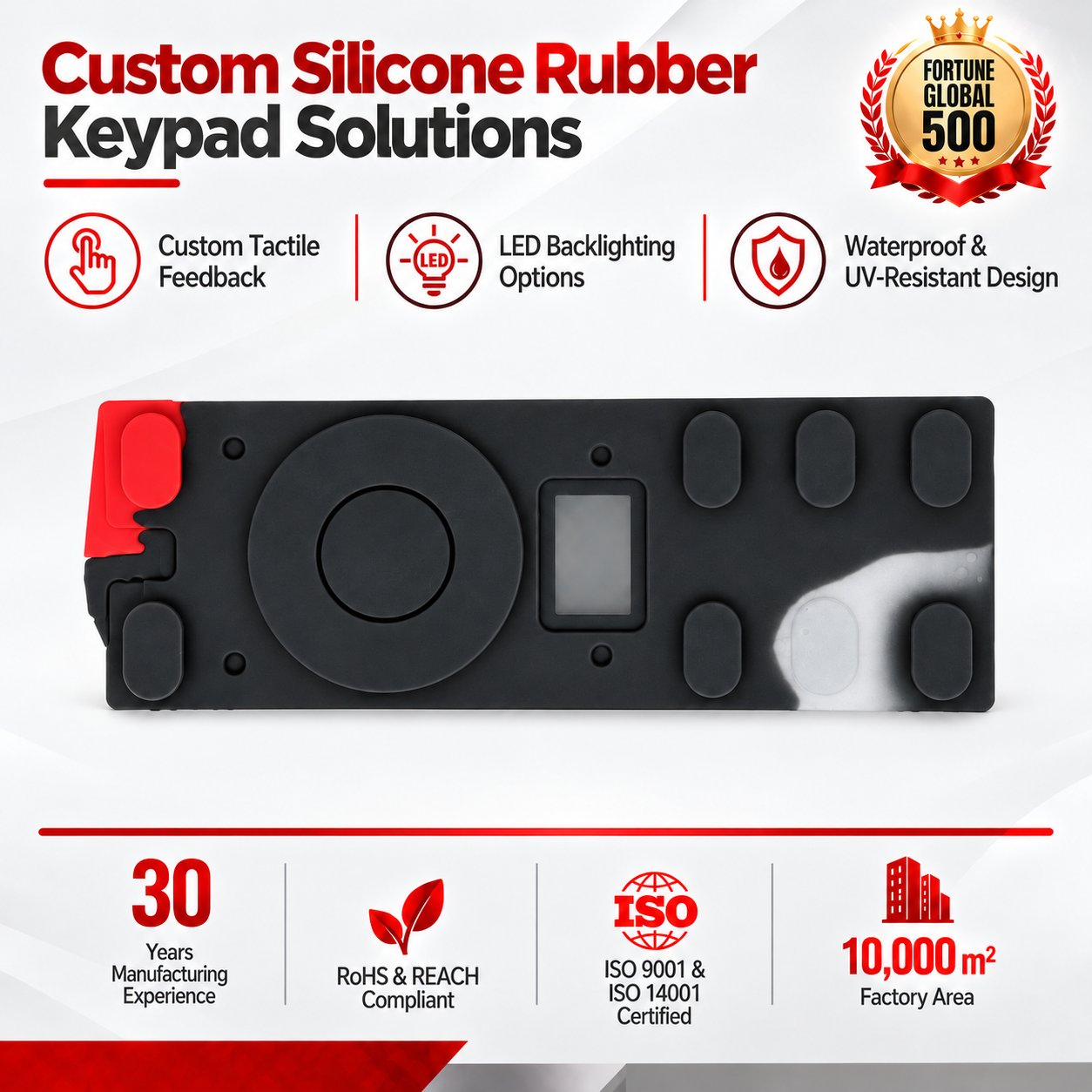
Customizable Design Black Embossed Circular Buttons Red Silicone Rubber Keypad Panel Switch
- Contact Pill: Low Resistance Carbon
- Life Expectancy: >1,000,000 Cycles
- Environmental: IP65 Dust & Splash
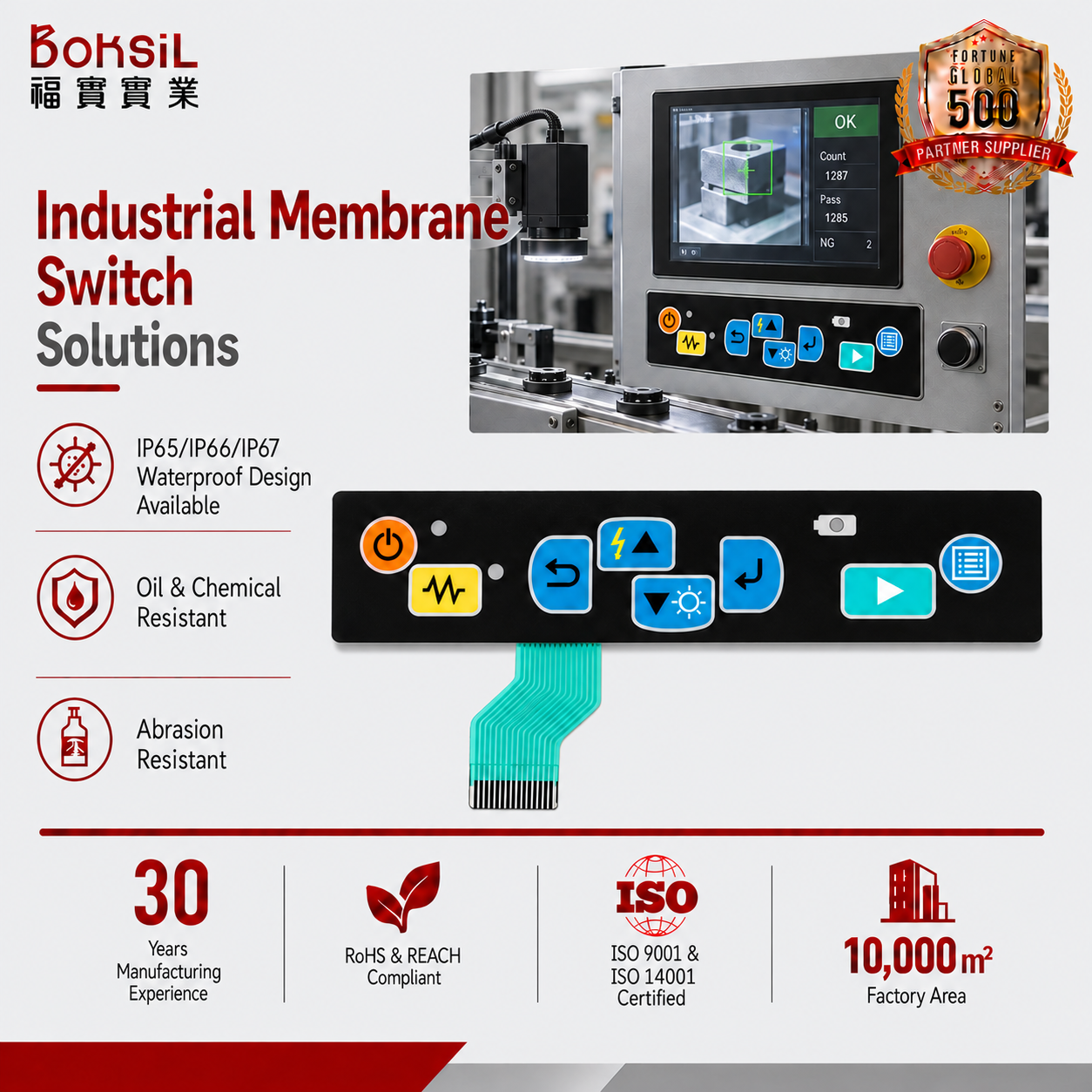
Custom Capacitive Touch Screen Panel Graphic Overlay Membrane Switch
- Substrate: Optical Grade PET / PC
- Surface Finish: Anti-Glare / Fine Matte
- Sensing Stack: Solid-State Capacitive
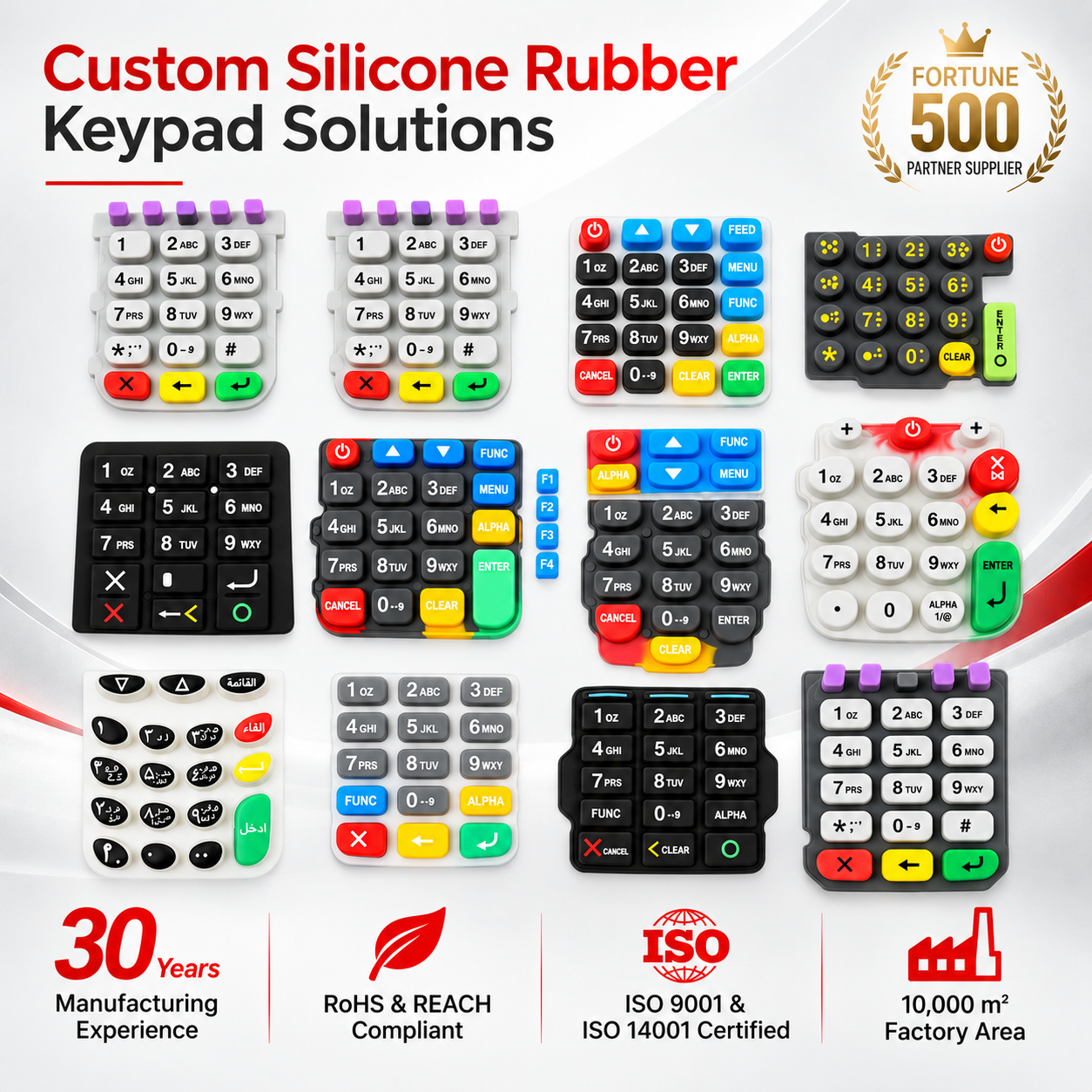
Conductive OEM/ODM Fabrication Silicone Rubber Elastomer Keypad Push Button
- Durometer: 40° - 70° Shore A
- Coating: Antimicrobial PU Spray
- Compliance: RoHS / REACH Verified
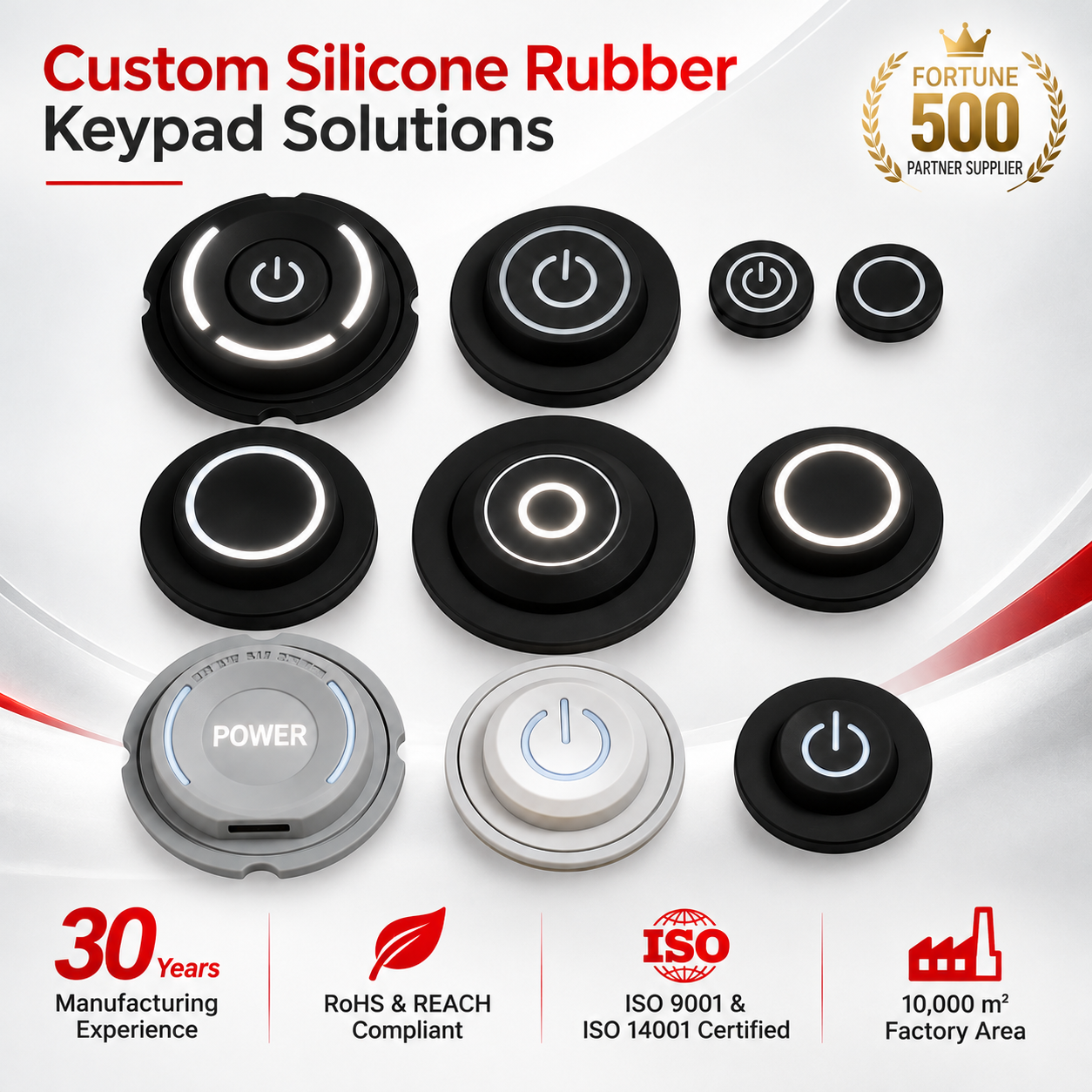
Single Tactile Cap Power Multicolor Backlit Controller Membrane Switch
- Backlight: Laser-Etched Translucent
- Actuation Force: 250g - 350g Tactile
- Lamination: 3M 468MP High-Bond
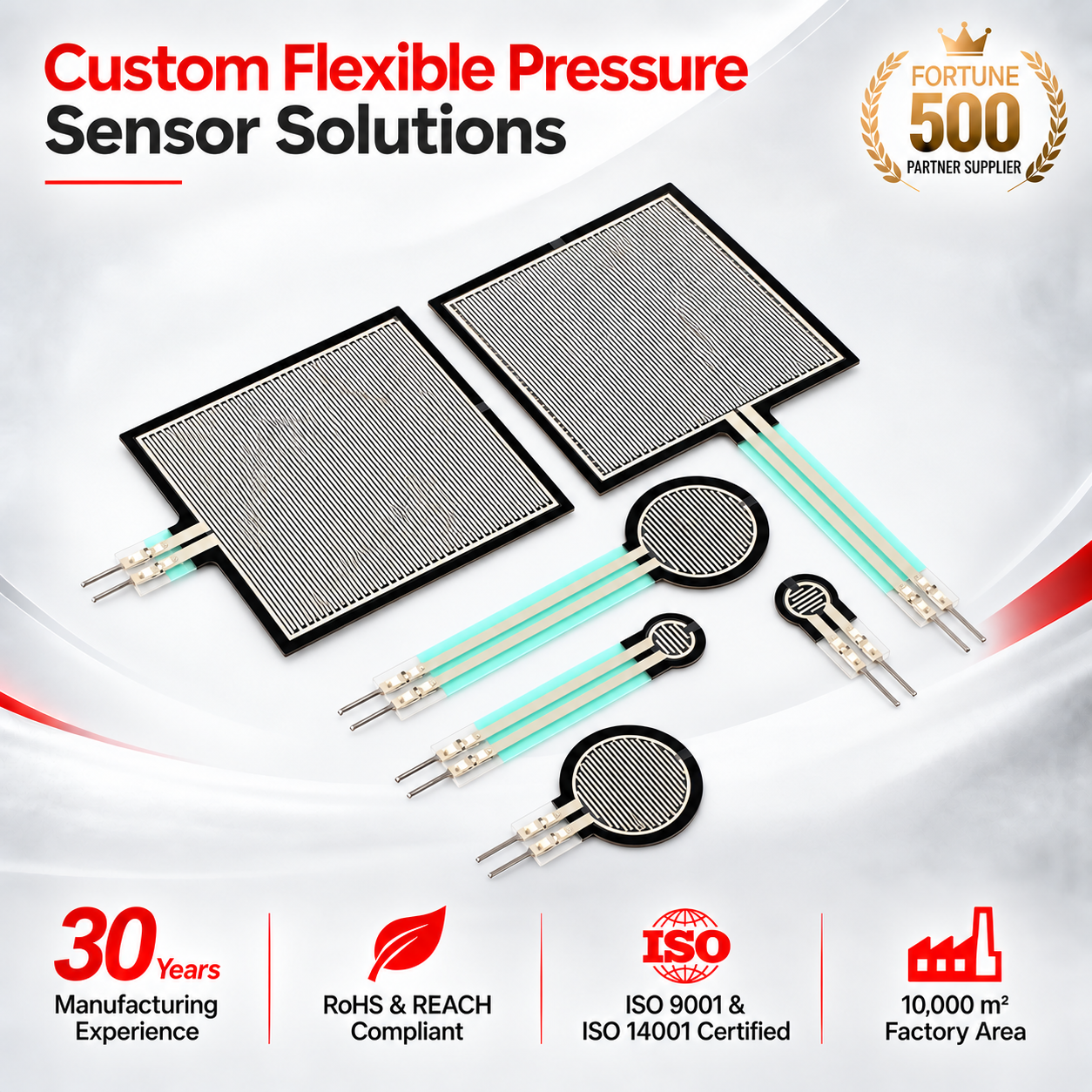
High Sensitive Capacitive Multi Touch Thin Film FSR Pressure Sensor Membrane
- Response Speed: <5 Microseconds
- Thickness: 0.25mm - 0.45mm Profile
- Circuit: Printed Conductive Silver
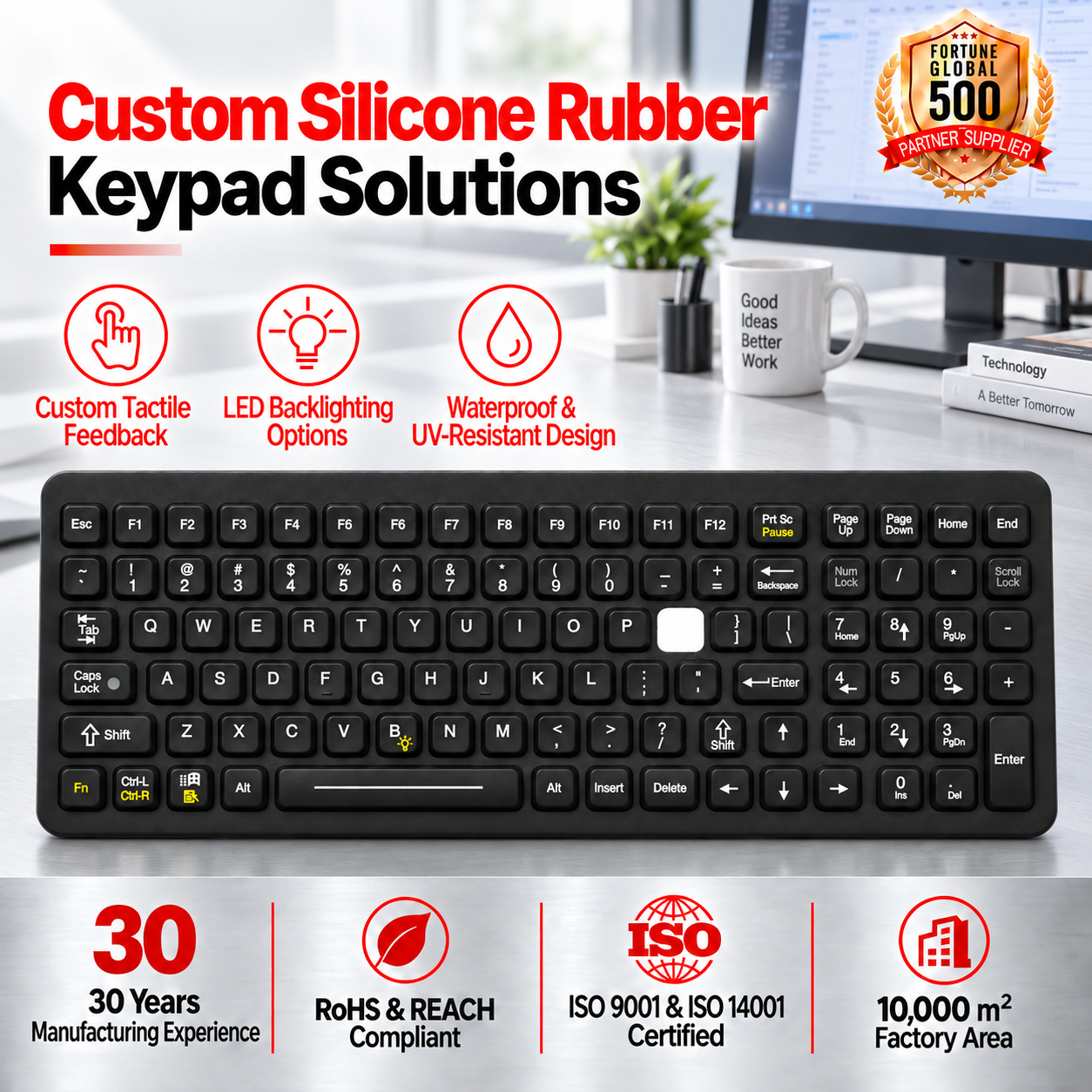
Industrial Silicone Keypad Rubber Button Conductive Non-Toxic for Terminals
- Operating Temp: -40°C to +85°C
- Chemical Proof: Oils, Fuel, Cleaners
- Tooling Lead: 7 - 10 Calendar Days
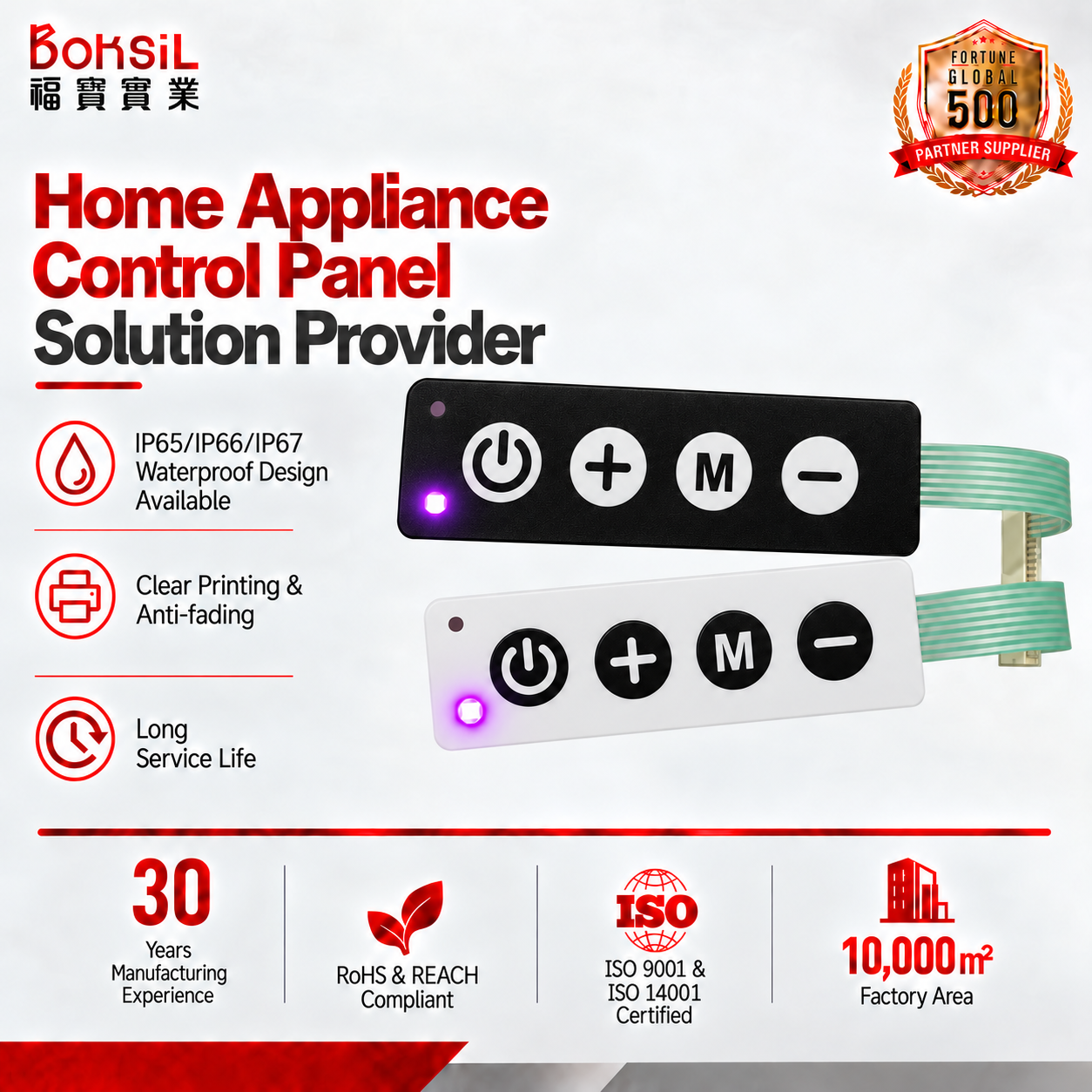
4 Button LED Lights Metal Domes Tactile Button Membrane Switch Panel
- Dome Alloy: Stainless Steel Nickel-Plated
- Integrated SMT: Chip LEDs (0805/1206)
- Embossing: Rim / Pillow Tactile
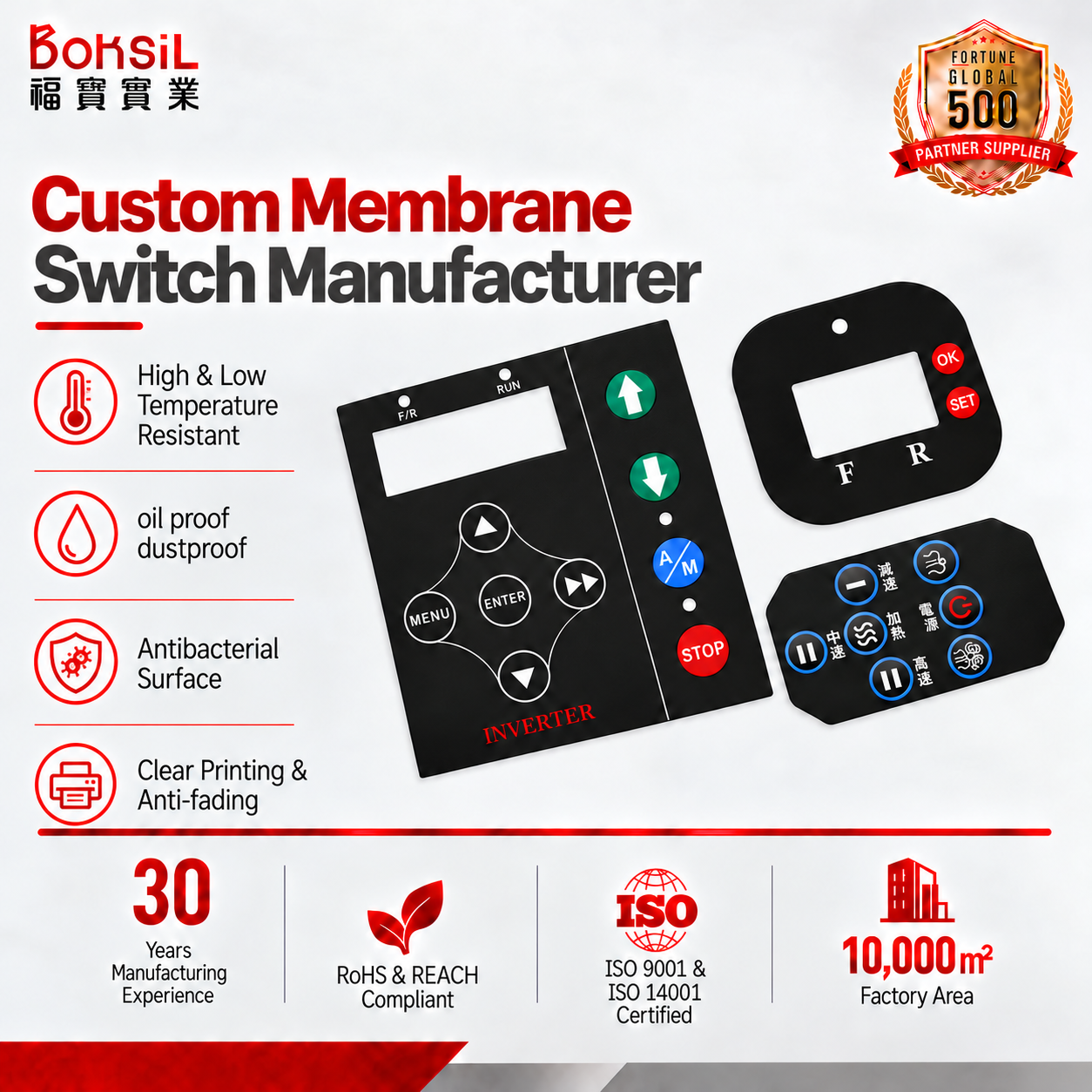
Front Control Panel Polycarbonate Membrane Switch Graphic Overlay
- Display Window: Ultra-Clear Optical Gloss
- Backing Adhesive: 3M 467MP / 3M 300LSE
- Printing: Sub-Surface Silk-Screen
Executive Engineering Dossier: Transparent Window Membrane Faceplates in South Australia
In the evolving industrial landscape of greater Adelaide—stretching from the advanced marine and defence shipyards of Osborne to the automation hubs within the Tonsley Innovation District and high-tech agritech clusters in Edinburgh Parks—human-machine interface (HMI) faceplates perform a dual role. They are both the primary brand presentation surface and the frontline barrier protecting sensitive microprocessor electronics from aggressive external environments.
A transparent window membrane faceplate is a specialized multi-layer laminated front panel featuring selectively cleared optical apertures. These apertures allow digital alphanumeric displays, seven-segment LEDs, vacuum fluorescent displays (VFD), high-definition TFT LCDs, or modern OLED panels to transmit data without visual aberration, parallax displacement, or optical interference. Achieving this requires precision sub-surface screen printing, controlled solvent drying, micro-registered selective texturing, and vacuum lamination with pressure-sensitive acrylic adhesives.
As equipment manufacturers across the Adelaide plains modernize their products for global export, procurement specifications require strict adherence to international industrial standards: NEMA 4X/IP66 sealing against airborne red dust and chemical washdowns, zero birefringence over polarized glass, and 100% electrical continuity validation before containerized air or sea consignment.
Optical Engineering & Substrate Chemistry for Precision Display Windows
The core challenge in manufacturing transparent window faceplates is balancing structural impact resistance with optical clarity. In Adelaide's heavy industrial, maritime, and electronic sectors, selecting the correct film chemistry prevents field failures such as Newton rings, diffuse haze, surface micro-cracking, and adhesive delamination.
Biaxially Oriented PET (Autotex / Autoflex)
Engineered for high switch flexural cycling (>5 million actuations). Polyester offers exceptional resistance to harsh industrial chemicals, mineral acids, cutting fluids, and isopropyl cleaning agents. Provides >90.5% visible light transmission when post-treated with UV optical clearing varnishes.
Optical Hard-Coated Polycarbonate (Lexan HP92W)
Features 3H–5H pencil hardness scratch immunity, high impact strength (shatterproof protection for underlying displays), and superior die-cut dimensional stability. Lexan films provide ultra-flat surfaces with less than 0.8% internal haze for high-resolution graphics.
Dead-Front Secret-Until-Lit Window Layers
Utilizes carefully calibrated translucent smoke inks matched to background resin densities. Display segments and warning iconography remain invisible to human eyes until illuminated by internal surface-mount LEDs or Light Guide Film (LGF) arrays.
Display Window Optical Variations
Depending on the ambient lighting environment of the installation—such as direct sunlight in South Australian open-cast mining sites or the controlled illumination of an operating theater in the Adelaide BioMed City precinct—the window treatment must be configured specifically:
1. Clear Gloss Windows: Delivers pristine optical transparency (>92% transmission). Ideal for high-definition color LCD/OLED screens where true-to-life contrast and vivid pixel rendering are paramount. Micro-spacer dot patterns are applied to eliminate refractive interference and optical Newton rings caused by film-to-glass contact.
2. Anti-Glare (AG) Diffuse Windows: Chemically etched or micro-textured top coatings scatter directional ambient light, minimizing reflections from overhead industrial bay lighting or outdoor midday sunlight. This reduces operator eye strain and enhances readability without blurring fine fonts.
3. Colored & Tinted Filter Windows: Formulated with spectral translucent inks (such as Ruby Red, Amber, or Emerald Green) designed to match specific 7-segment LED display wavelengths. By blocking out-of-band ambient light, these filters dramatically improve contrast ratios in high-ambient-light environments.
| Substrate Chemistry & Window Type | Luminous Transmission | Abrasion Resistance | Flex Life (Actuations) | Adelaide Application Suitability |
|---|---|---|---|---|
| Hard-Coated PET with Clear Window | 91% – 93% | ASTM D3363 3H | > 5,000,000 cycles | High-cycle industrial controllers, agricultural sorting rigs |
| Optical Polycarbonate (HP92W Series) | 89% – 92% | Pencil 2H - 3H | > 500,000 cycles | Vandal-resistant fuel terminals, mining machinery HMIs |
| Anti-Glare Frosted Matte Polyester | 82% – 86% (Diffuse) | Taber > 1000 Cycles | > 3,000,000 cycles | Outdoor solar inverters, marine telemetry on Gulf St Vincent |
| Smoked Dead-Front Polycarbonate Overlay | 18% – 35% (Active) | Standard Hardcoat | > 1,000,000 cycles | Defence avionics, luxury smart appliances, medical diagnostics |
Targeted Industrial Applications Across the Greater Adelaide Region
Our manufacturing and engineering teams supply custom-built faceplates directly tailored to South Australia’s dominant economic clusters, satisfying stringent technical and compliance specifications:
Naval Defence & Maritime at Osborne
Adelaide is the hub of Australia’s naval shipbuilding enterprise. Shipboard control consoles, submarine telemetry, and marine communications equipment require MIL-STD-810G salt-fog resistance, zero-halogen outgassing, and electromagnetic shielding (copper mesh or silver grid prints) integrated behind the graphic overlay to block EMI/RFI intrusion.
Viticulture, Wine & Agritech in Barossa & Clare Valley
Grape harvesting machinery, continuous fermentation monitoring consoles, and automated bottling lines operate in washdown environments with tartaric acid, sulfur dioxide, sanitizers, and high-pressure hot water. Perimeter gas-tight gaskets using 3M 300LSE adhesive prevent fluid ingress to IP67 standards.
Medical Device Hardware at Tonsley & BioMed City
Medical monitoring systems, pathology centrifuges, and respiratory controllers require wipe-clean, antimicrobial-treated front membranes (Microban-infused polyesters). Displays must maintain complete optical clarity while withstanding daily sterilizations with chlorhexidine, hospital-grade bleach, and ethanol.
Renewable Energy & Outback Mining Terminals
From grid-scale battery storage control boxes in the mid-north to remote processing facilities in Roxby Downs and Olympic Dam, HMIs operate in ambient temperatures cycling from below freezing up to 48°C. Our adhesive systems maintain high shear strength, preventing edge lifting, bubble expansion, or trace oxidation.
Why Adelaide OEM Hardware Engineers Partner with AXRU Electronics
Sourcing directly from our 10,000㎡ manufacturing facility in Dongguan offers Adelaide design teams the speed, technical depth, and cost structure needed to win competitive tenders. Assessed and verified on-site by Intertek, we bring comprehensive engineering capabilities under one roof:
Complete In-House Process
From CAD layout, laser profiling, and screen printing to precision auto-die cutting and optical clear room lamination, our operations are 100% self-contained—eliminating subcontractor delays and quality risks.
Accelerated Reliability Lab
Our quality lab operates continuous QUV accelerated weathering chambers, Taber ink scrub abrasion testers, programmable thermal-humidity chambers (-40°C to +150°C), and automated key life cyclers.
100% Electrical & Visual Testing
Every unit undergoes automated continuity and insulation resistance testing (>100MΩ at 250V DC), along with microscope inspection for window clarity and print alignment.
Low Prototyping MOQ
We actively support Adelaide's startup incubators and agile R&D engineering projects. Pilot runs starting from 100 pieces are supported with dedicated CNC plotter sampling—no hard tooling required for early prototypes.
Advanced Window Anti-Newton Ring Tech
By applying microscopic matte dot printing on the inner face of the display window, we guarantee clean, bubble-free optical coupling against touch screens and display glasses without visual artifacts.
Rapid Direct Air Logistics to Adelaide
With daily air-cargo links connecting Hong Kong/Shenzhen directly to Adelaide Airport (ADL), production batches and express engineering prototypes reach South Australia within 3 to 5 business days from dispatch.
Frequently Asked Questions: Sourcing Transparent Window Faceplates in Adelaide
Key technical, commercial, and operational questions answered for South Australian purchasing officers, mechanical engineers, and hardware system designers.
How do you prevent "Newton rings" behind transparent display windows in humid Adelaide conditions?
What CAD engineering files are required to quote and begin DFM verification for our faceplate?
Can your transparent window faceplates survive outdoor Adelaide sun and coastal salinity?
What is the standard production turnaround and air freight lead time to Adelaide?
Can we integrate tactile embossed keys and custom LED backlighting on the same faceplate?
Connect Directly with Our HMI Engineering Team
Send through your CAD files, graphic schematics, or target performance specifications. Receive a comprehensive DFM manufacturability audit, layer stack-up proposal, and transparent volume quotation for your Adelaide assembly run within 24 hours.