Engineered Assemblies
Specialized HMI Interface Architectures
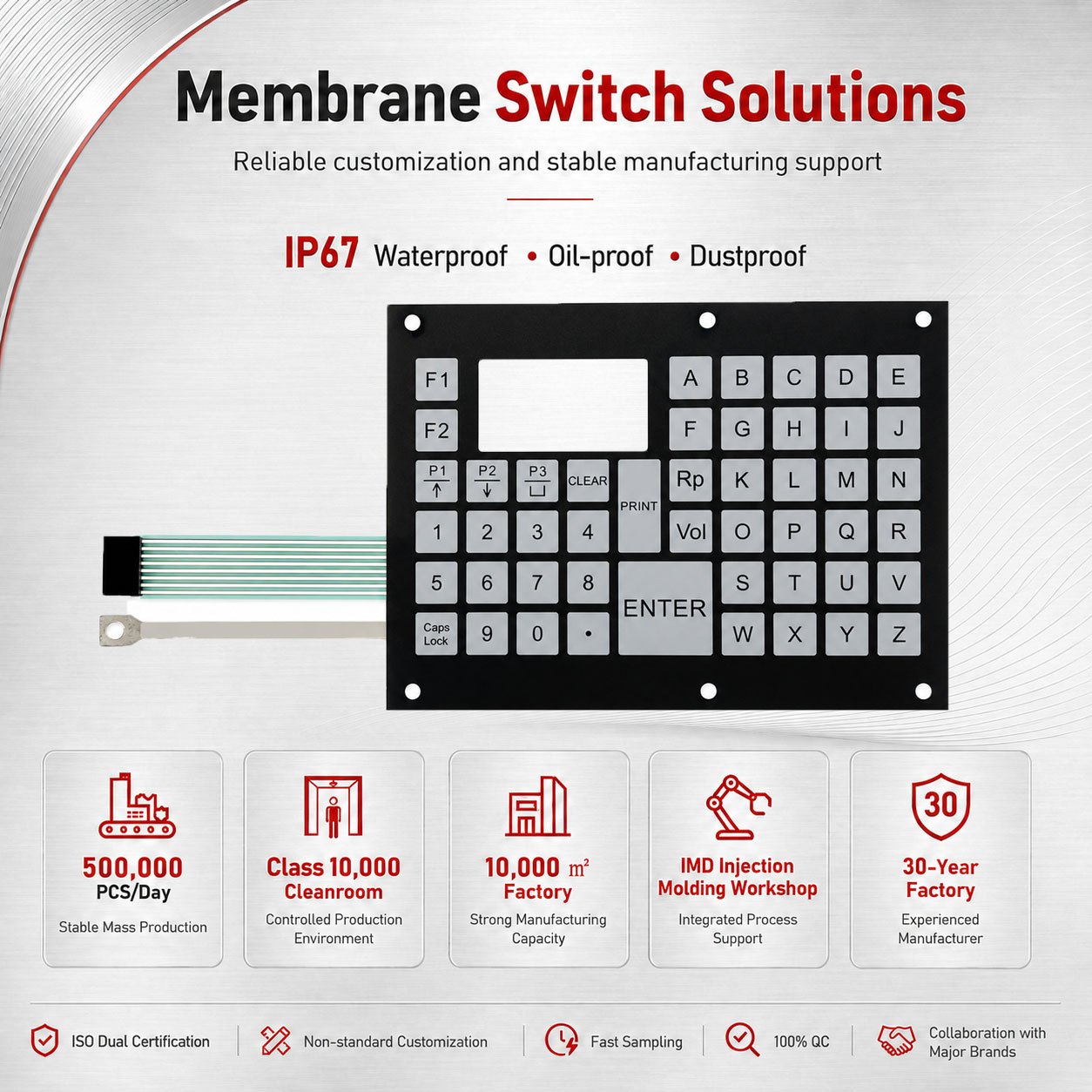
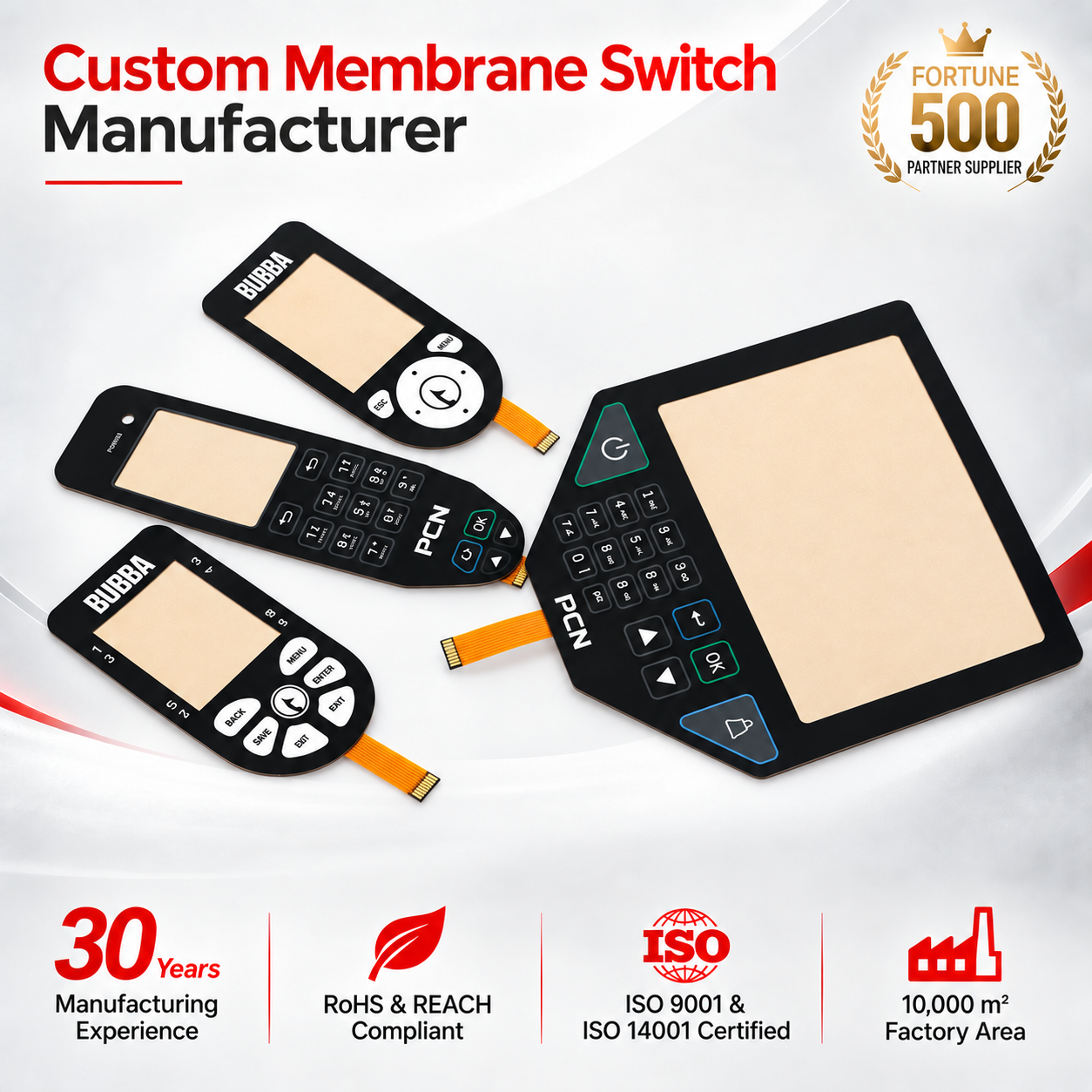
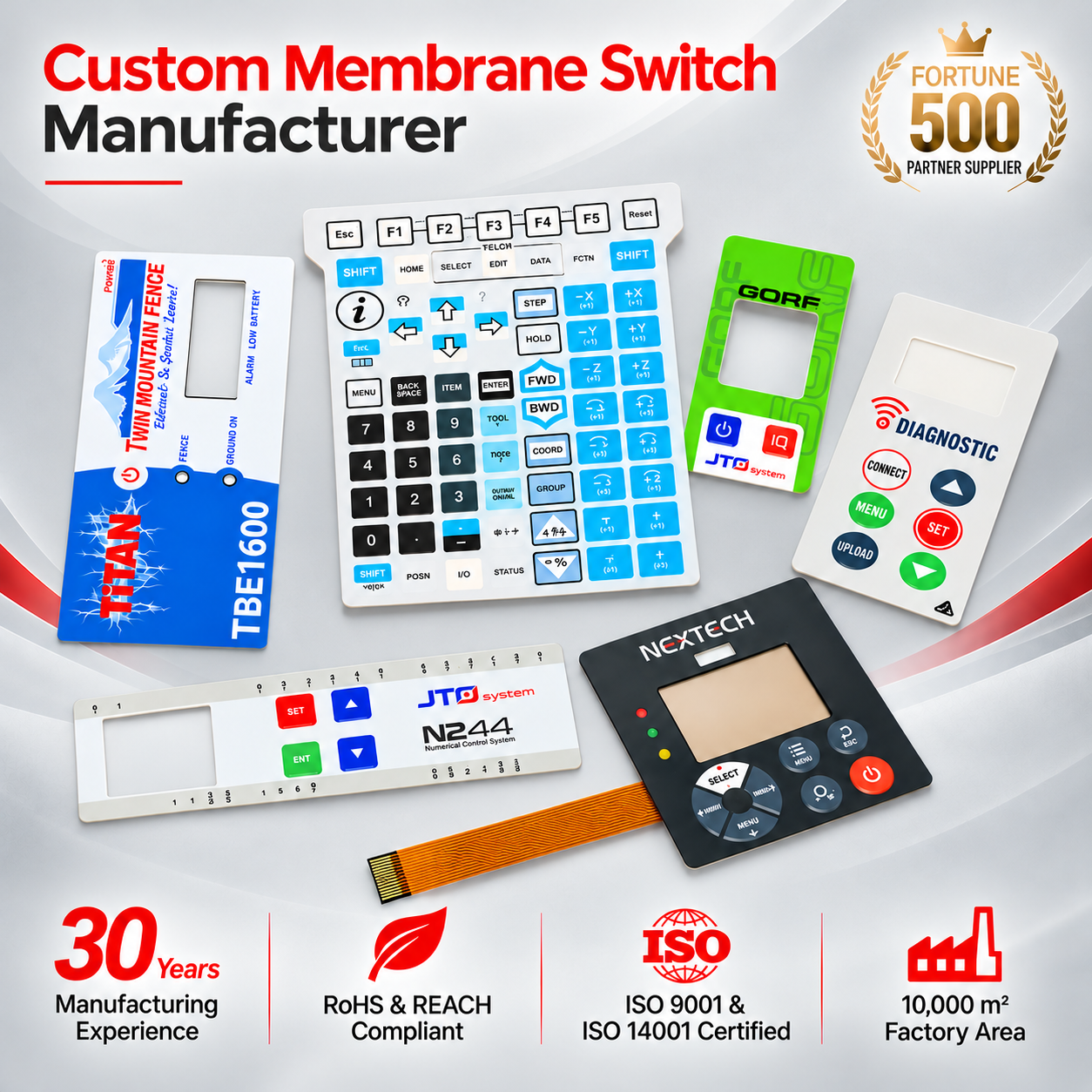
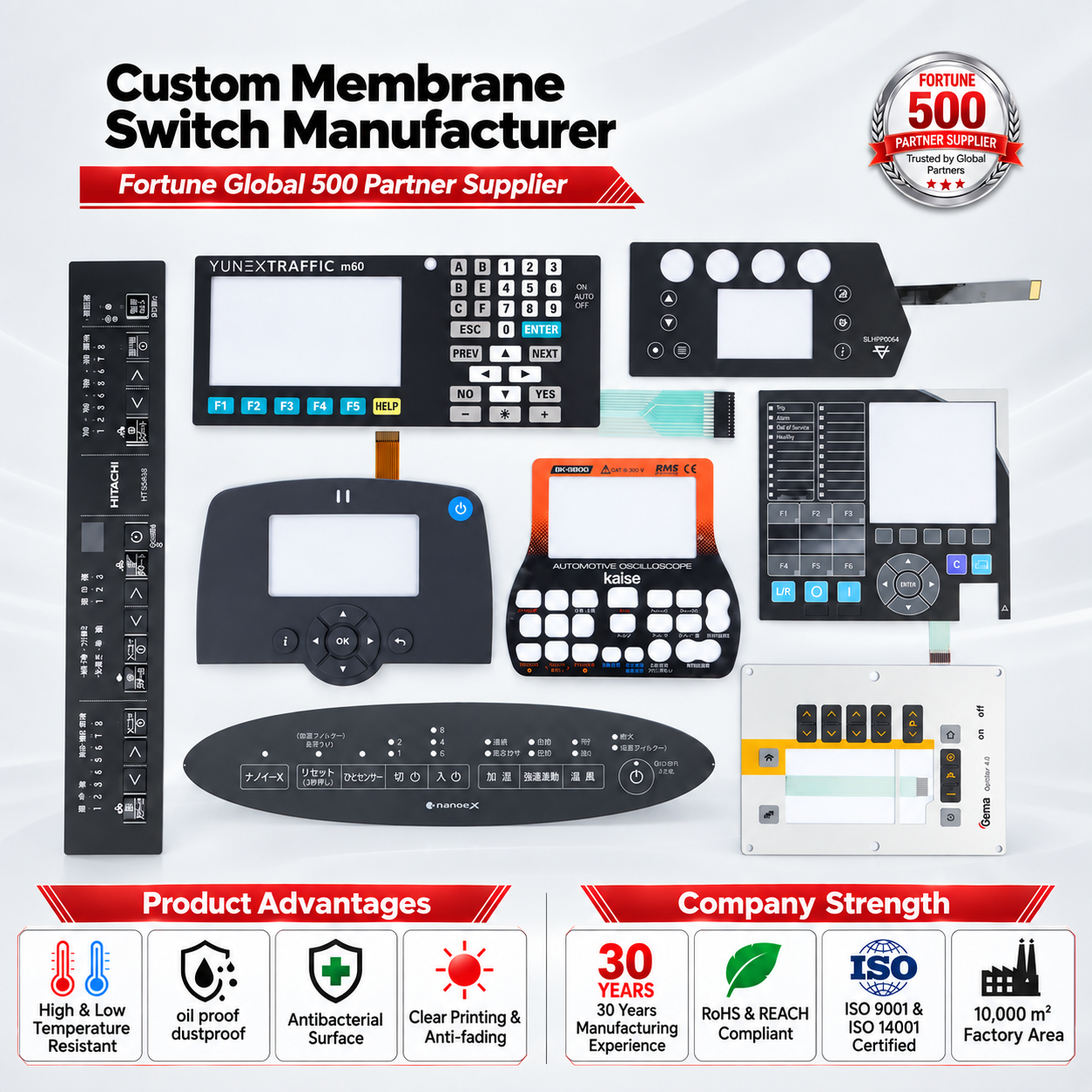
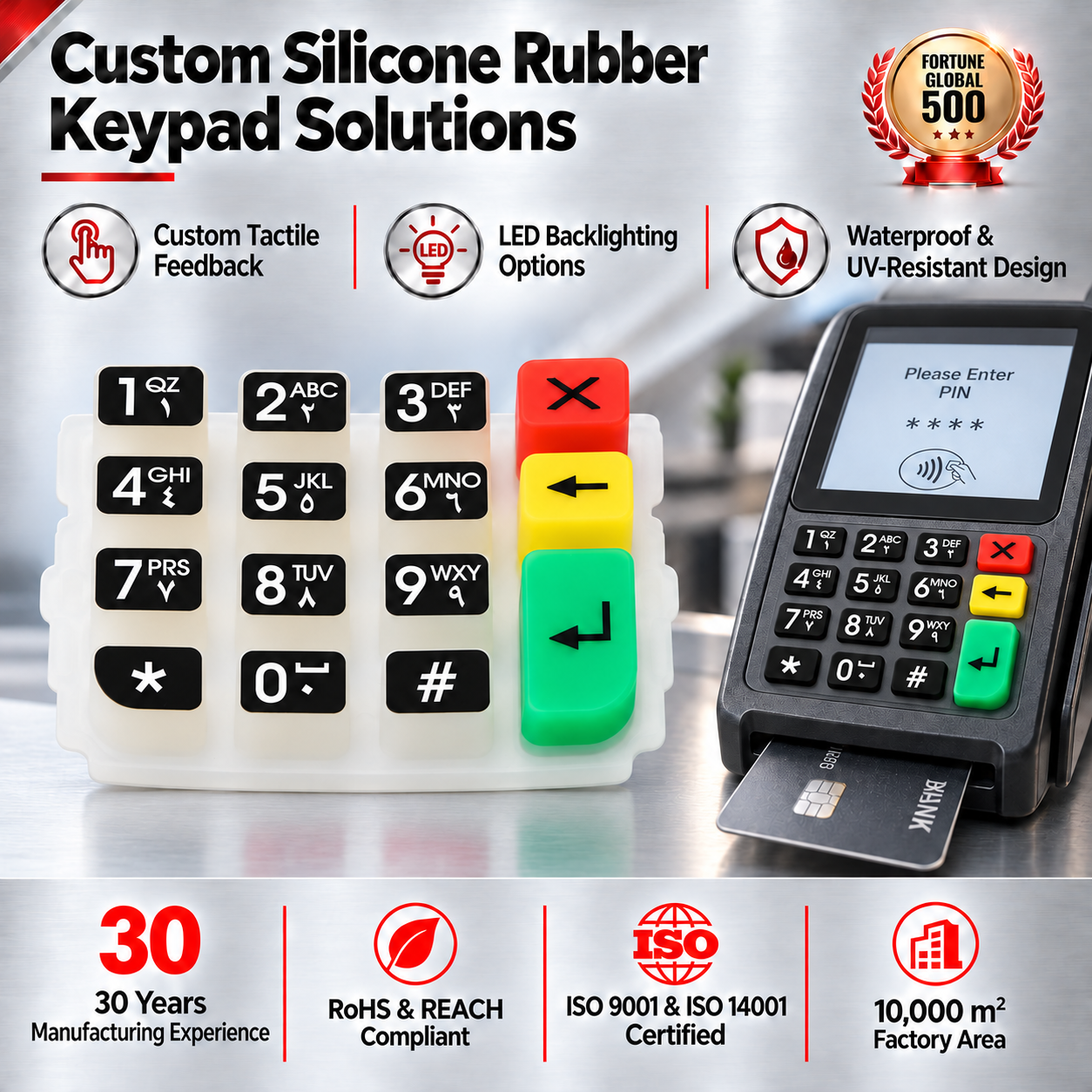
Precision-screened membrane arrays, conductive elastomeric matrices, and optical PMMA displays verified under ISO 9001 and Intertek-audited production routines.
Technical Whitepaper
Engineering Resilient HMI Assemblies for the Daugavpils Industrial Microclimate
Daugavpils represents Latvia's second-largest economic nucleus and an indispensable logistical corridor connecting the Baltic states to Central Europe. The city's industrial foundation—anchored historically by heavy rail engineering, locomotive modernization (such as Daugavpils Lokomotīvju Remonta Rūpnīca), metal fabrication, automated logistics sorting, and agricultural technology—demands electronic operator interfaces capable of enduring punishing mechanical and thermal realities.
Human-Machine Interfaces (HMIs) deployed throughout the Latgale region face seasonal temperature amplitudes swinging from severe sub-zero winter lows down to -30°C, reaching +35°C during high-load summer plant cycles. Standard commercial microswitches and generic PET films fail catastrophically under these parameters due to plasticizer migration, localized adhesive delamination, and silver track micro-fracturing induced by thermal contraction stress.
To deliver uncompromising reliability for Daugavpils engineering procurement teams, AXRU Electronics formulates membrane switch stack-ups with premium biaxially oriented polyethylene terephthalate (Autotype MacDermid Autotex/Autoflex) and flexible polyimide (FPC) copper substrates. By implementing specialized low-temperature conductive silver inks enriched with flexibilizing synthetic resins, our circuits accommodate differential thermal expansion between layers without micro-cracking. Furthermore, critical environmental perimeter gaskets utilizing modified high-shear 3M 200MP and 300LSE adhesive matrices seal the inner switch cavity against freezing condensation, hydraulic mist, and atmospheric particulate contamination.
Local Deployments
Localized Industrial Applications Across Daugavpils
Purpose-engineered HMI integrations designed to comply with European safety codes and survive harsh Baltic field dynamics.
Rolling Stock & Rail Modernization
Driver cabin diagnostic consoles, wayside switching relays, and auxiliary passenger heating panels built with nickel-plated stainless steel metal domes to provide positive tactile feedback even when operated with heavy insulated work gloves in Daugavpils rail yards.
Heavy Mechanical & CNC Machinery
Solvent-proof graphic overlays and copper-etched FPC control panels resistant to hydraulic cutting oils, metal shavings, and repetitive chemical washdown cycles in local lathe, milling, and fabricated metal production facilities.
Automated Timber & Agro Logistics
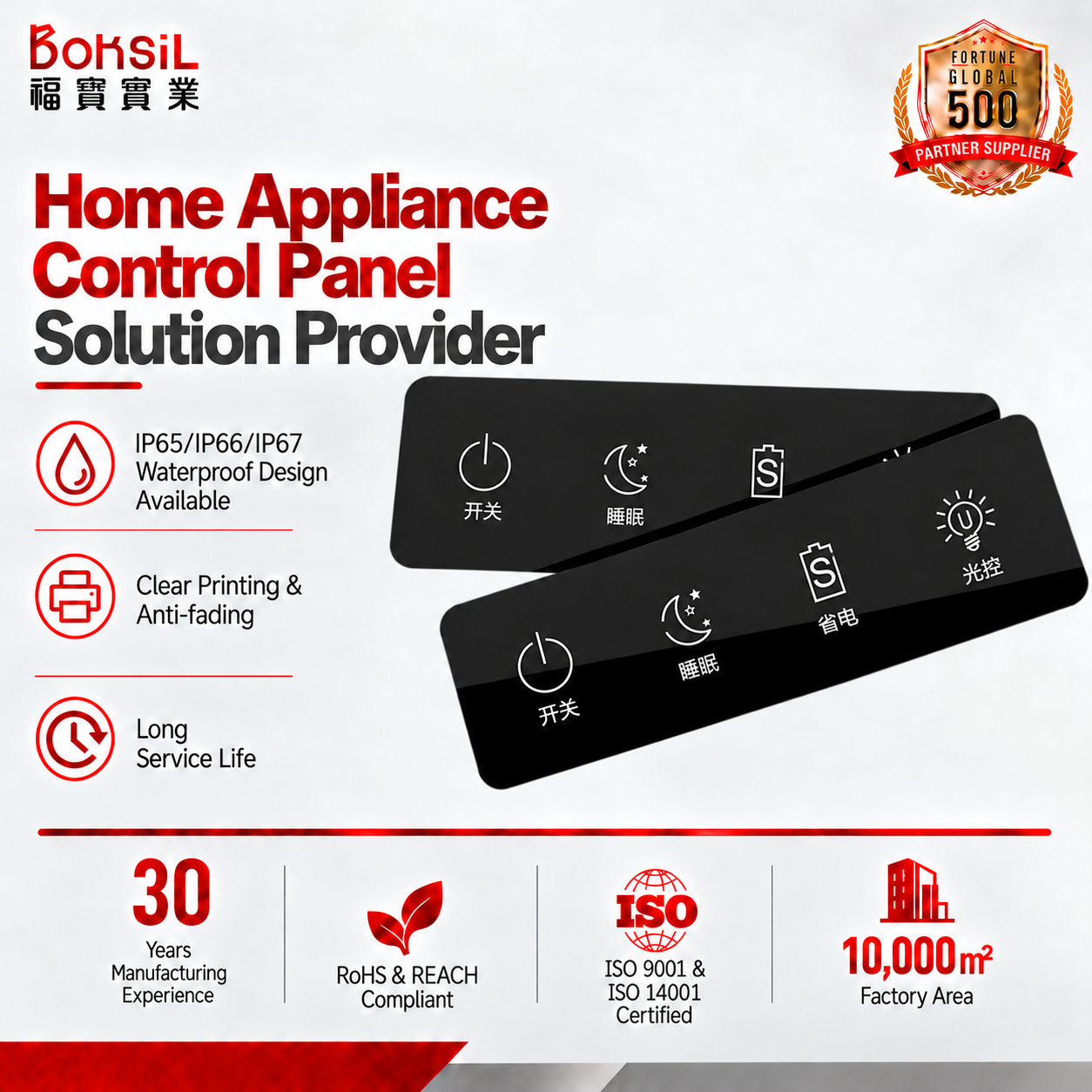
IP66 and IP67 sealed membrane keyboards equipped with EMC/ESD aluminum shield foils to protect sensitive internal microprocessors from electrostatic discharge triggered by dry timber movement and agro-bulk conveyance systems.
Selection Architecture
Engineering Material Stack-Up Matrix
Comparing switch physical topologies to identify the optimized balance of electrical conductivity, actuation resilience, and environmental isolation.
| Technology Segment | Primary Substrate Layer | Tactile Mechanism | Environmental Protection | Typical Latgale Application |
|---|---|---|---|---|
| Silver Flex Membrane | 0.125mm - 0.175mm Mylar PET | Stainless Dome (280g - 450g) | IP65 Perimeter Seal | Packaging machinery & weighing scales |
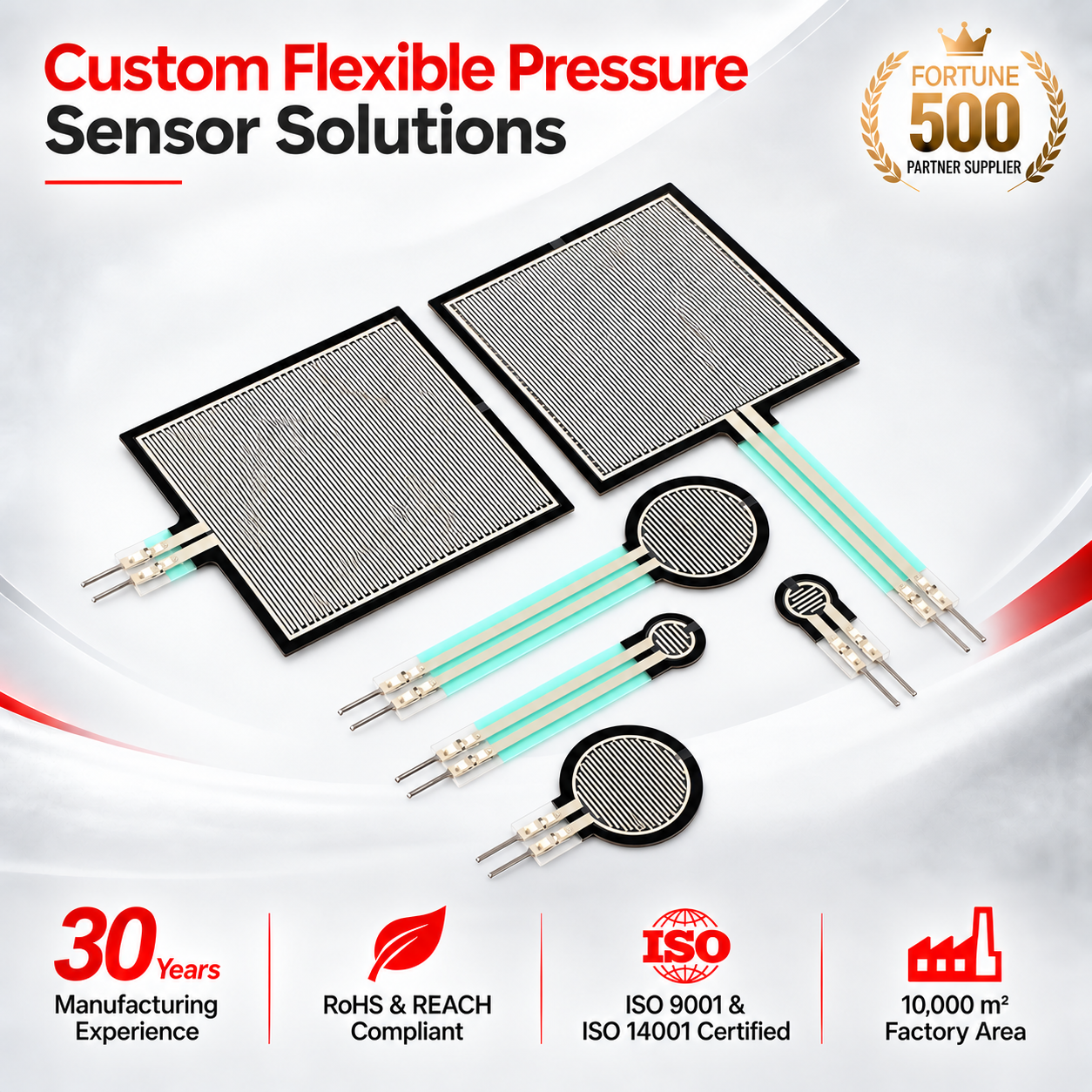
| FPC Copper Switch | Double-sided RA Copper Polyimide | Gold/Nickel Dome Array | IP67 Sealed Housing | Locomotive diagnostics & critical robotics |
| Capacitive Matrix | Chemically Toughened PMMA / Glass | Solid-State (Zero Wear) | IP68 Completely Hermetic | Food-grade dairy processing & clean rooms |
| Silicone Elastomer Hybrid | Molded Silicone with Carbon Pills | Elastomeric Compression Cusp | IP66 with Perimeter Lip | Rugged handheld transceivers & field diagnostic tools |
Regional Industry Trends
Transition Toward Smart HMI & High-Density Integration in Latvia
Latvian hardware engineering firms are actively decoupling from fragmented legacy component designs, pivoting towards unified, slimline HMI assemblies. As smart factory initiatives expand across Daugavpils' industrial free zones and technology parks, procurement specifications demonstrate three distinct macro transitions:
1. Surface-Mounted Active Component Integration: Instead of simple passive switch matrices routing to external breakout boards, engineers are increasingly requiring integrated surface-mount SMD LEDs, photocouplers, and onboard micro-controllers pre-soldered on flexible printed circuits (FPC). This eliminates harness fabrication steps on local European assembly lines.
2. Optical Display Bonding and Dead-Front Aesthetics: Modern instrumentation requires clean, unbroken graphic front faces where indicator graphics and status legends remain completely invisible ("dead-front") until backlit by precision Light Guide Films (LGF) or selective LEDs, maintaining sleek architectural aesthetics for exported Baltic apparatus.
3. Stringent European Chemical Directives: Full compliance with EU Regulation (EC) No 1907/2006 (REACH) and RoHS 3 (Directive 2015/863) has become non-negotiable. Substrates, conductive traces, barrier tapes, and adhesive releases must be entirely halogen-free and inert under stringent recycling protocols.
Manufacturing Authority
AXRU Electronics Competitive Advantage
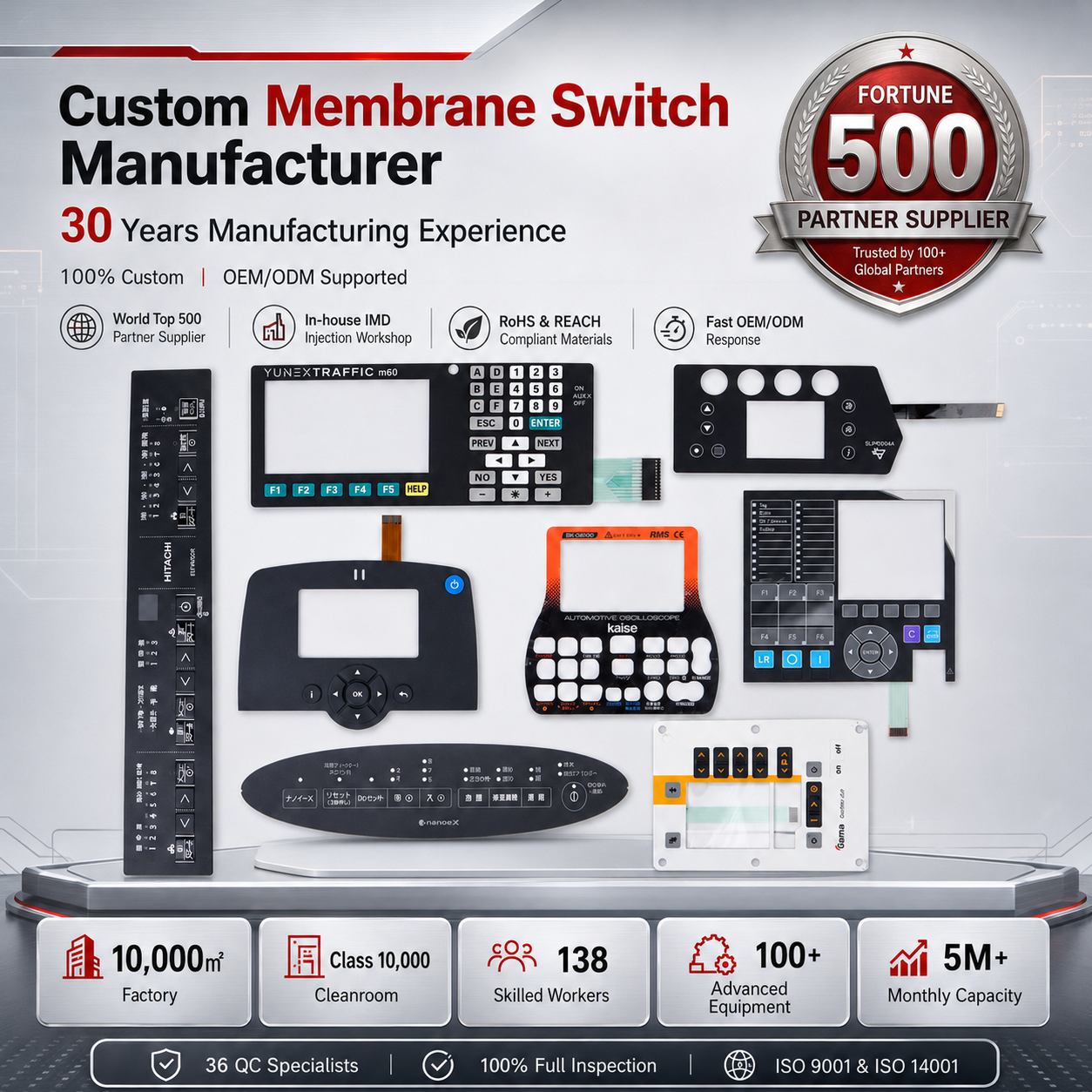
Direct Chinese factory pricing combined with Tier-1 export standards, Intertek on-site auditing, and in-house environmental validation testing.
100% In-House Processing
Silk screen graphic printing, conductive circuit deposition, metal dome array collation, laminating, and laser flatbed die-cutting under one 10,000㎡ factory footprint. Zero outsourced risk.
Full Reliability Lab
In-house computerized key actuation life testers, force-displacement curve analyzers, programmable environmental humidity chambers, and peel-strength adhesion testers verifying every batch.
Direct Baltic Logistics
Daily express departures (DHL/FedEx Air Priority) achieving 4-6 business days delivery to Riga and Daugavpils hubs, accompanied by seamless DDP customs clearing and complete commercial invoice packages.
Low MOQ Prototyping
Engineering pilot runs commencing at just 100 pieces with rapid-turn sample production, allowing Baltic R&D divisions to refine physical prototypes before committing to mass production volume.
Procurement Clarity
Frequently Asked Questions for Daugavpils OEM Buyers
Direct answers addressing technical feasibility, testing, minimum order thresholds, and logistical integration into Latvia.
How do AXRU membrane switch keypads survive the extreme winter frost in Daugavpils?
Standard adhesive tapes become brittle and fail below -10°C. For our Daugavpils and Nordic deployments, we utilize automotive-spec 3M 300LSE or 200MP acrylic adhesives formulated with glass transition temperatures (Tg) well below -40°C. Additionally, we use stabilized MacDermid Autotex PET film which maintains tensile flexibility and tactile snap ratio down to -40°C, preventing overlay fracturing.
What engineering documentation is required to generate an accurate quotation?
We work directly from native CAD data: DXF/DWG vector engineering drawings for outline geometry and tail traces, vector graphic files (Adobe Illustrator or vector PDF) with specified Pantone / RAL color matching codes, an electrical pinout schematic, and environmental targets (desired IP rating, contact loop resistance limits, and operational cycle expectations).
Can you integrate backlighting into sealed waterproof keypads?
Yes. We implement thin-profile Light Guide Film (LGF) arrays coupled with ultra-thin side-fire or top-fire SMD LEDs mounted directly to an internal flexible printed circuit (FPC). This architecture provides uniform key legend illumination with minimal profile height (typically under 1.2mm total stack thickness) without compromising the outer IP67 seal barrier.
Are your production processes and materials compliant with European Union regulations?
All raw substrates, conductive silver/carbon tracks, surface coatings, LEDs, connectors (such as Amphenol, Nicomatic, or standard 2.54mm female housings), and adhesive layers supplied by AXRU Electronics are fully certified under RoHS 3 (Directive 2015/863/EU) and REACH (EC 1907/2006). Comprehensive compliance declarations and material safety data sheets are included with pilot approval documentation.
How does AXRU ensure tactile feel uniformity across multi-key consoles?
Every batch of stainless steel metal domes undergoes actuation force and snap ratio testing using computerized force-displacement analyzers. Domes are secured inside precision-molded pocket spacers within a climate-controlled clean room, eliminating lateral migration and ensuring uniform tactile response (typically 250g to 450g ±30g) across millions of switch cycles.
Ready to Engineer Your Custom Membrane Interface?
Connect directly with our senior HMI project engineers. Receive a comprehensive Design for Manufacturability (DFM) assessment, material stack-up proposal, and itemized quotation within 24 hours.
Inquire Now