
Engineering Context: Membrane Circuit Architecture for Greater Indianapolis OEMs
The Indianapolis metropolitan area—anchoring Marion, Hamilton, Hendricks, and Johnson counties—represents one of North America's most demanding corridors for industrial electronics. From advanced medical diagnostic instrumentation in the 16 Tech Innovation District to heavy vehicle powertrains, logistics robotics in Plainfield, and specialized agritech machinery along the I-65 and I-70 thoroughfares, electronic hardware must withstand aggressive operational abuse.
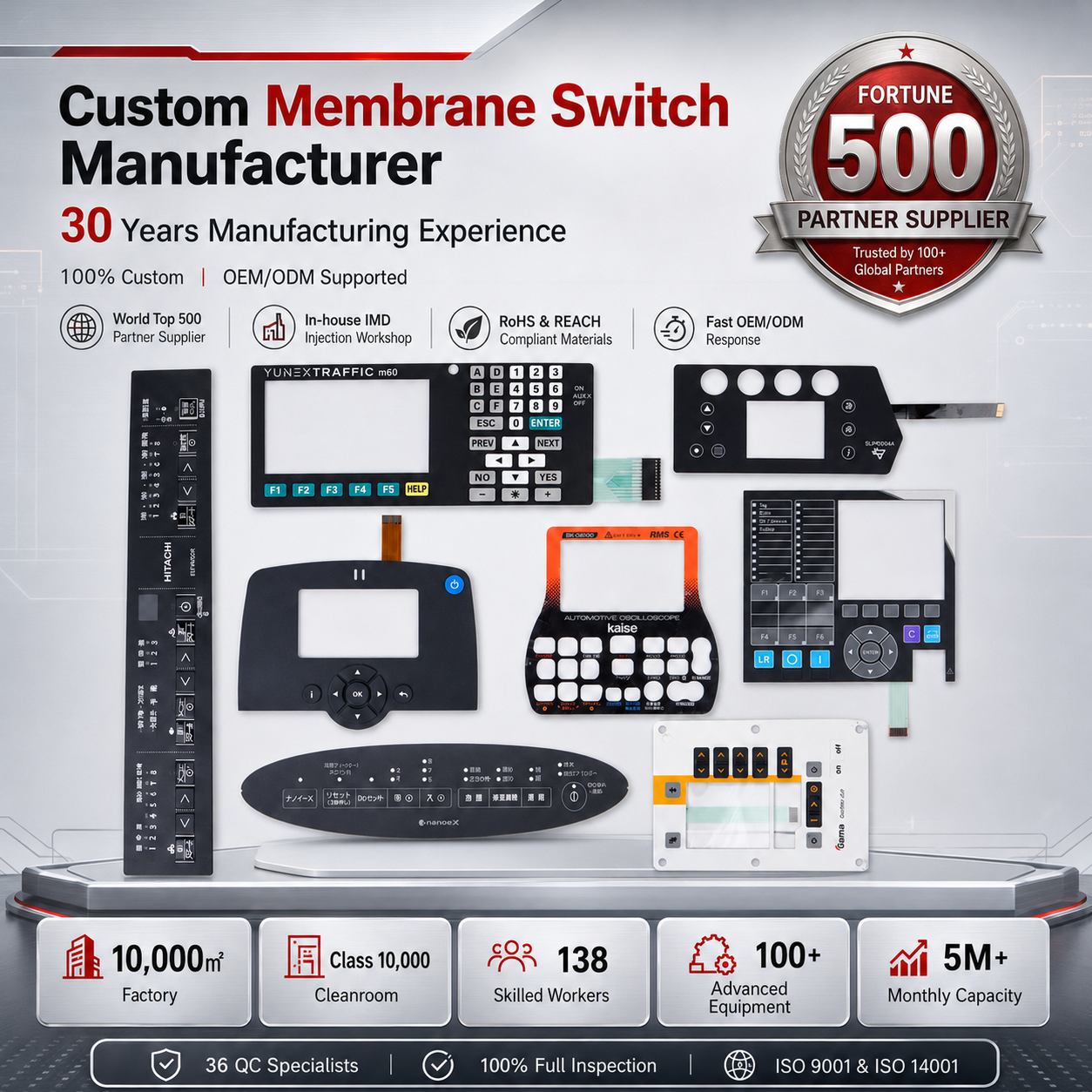
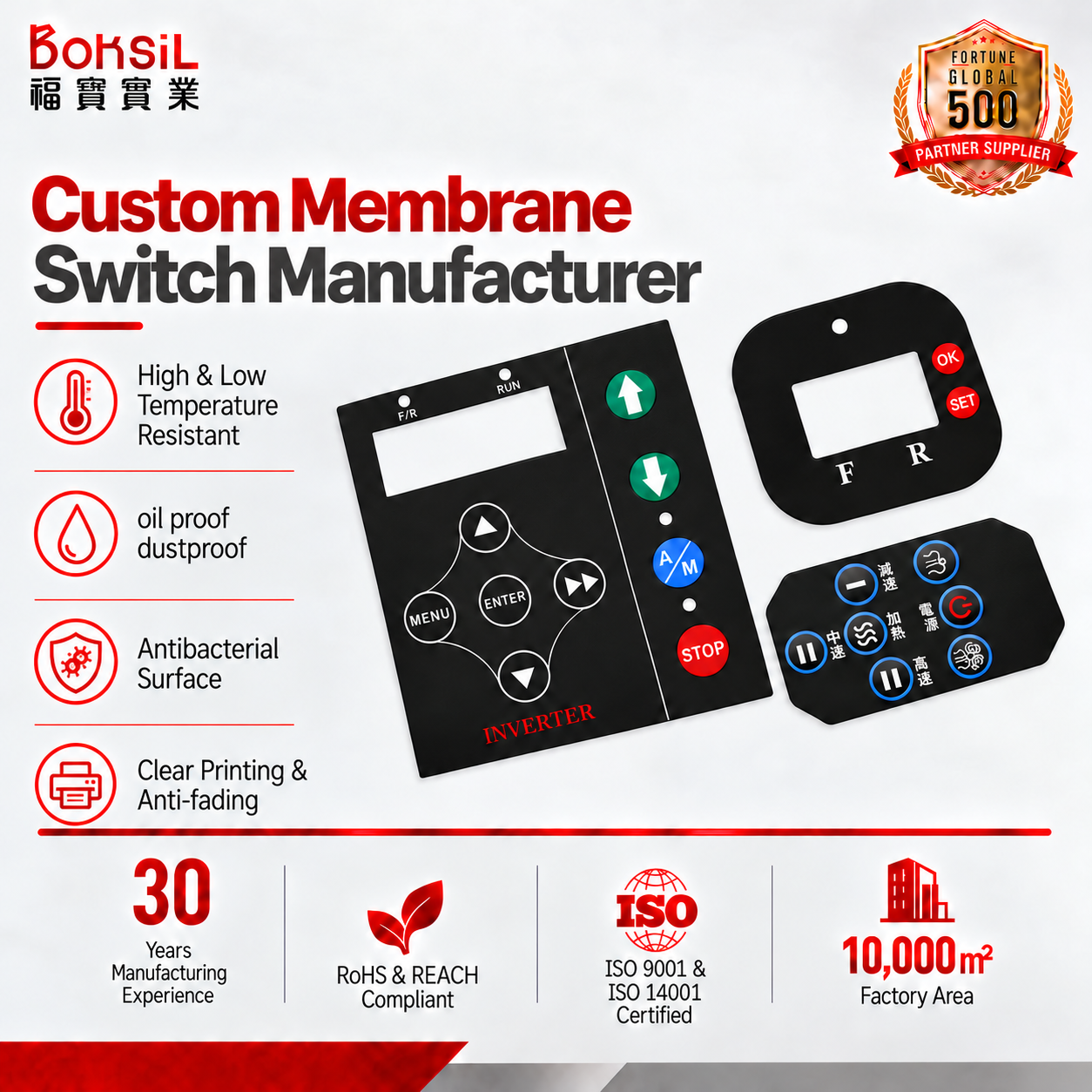
As a global membrane circuit supplier & exporter serving the Indianapolis market, Dongguan AXRU Electronics Co., Ltd. fills an imperative engineering gap. While commodity electronic assemblers often outsource critical layers—leading to trace oxidation, premature silver migration, and interlayer delamination—AXRU maintains complete, single-roof manufacturing oversight. We process screen-printed silver-on-PET circuits, multi-conductor copper flexible printed circuits (FPCs), embedded micro-LED backlighting, and precision graphic overlays within an ISO-governed, Intertek-verified production plant.
Engineering teams across central Indiana face distinct environmental challenges. Winter field operations expose control panels to sub-zero thermal cycling, while manufacturing plant floors encounter airborne lubricants, high-pressure washdowns, and electrostatic discharge (ESD). AXRU addresses these failure modes by deploying proprietary circuit stack-up topologies, including carbon overprinting over conductive silver ink to eliminate micro-fracturing and silver whiskering, perimeter dead-space venting with hydrophobic membrane breathers, and complete Faraday cage shielding layers capable of absorbing 15kV ESD strikes without signal latch-up.
Indianapolis Regional Industry Applications
Medical & Life Sciences Hardware
For biomedical laboratories, clinical monitors, and infusion systems operating across Indianapolis medical complexes. Our assemblies integrate continuous antimicrobial hardcoats (Autotex AM) that withstand harsh quaternary ammonium hospital disinfectants, bleach, and isopropyl alcohol wipes without clouding, micro-cracking, or legend degradation.
Commercial Vehicles & Powertrains
Serving the heavy-duty transportation corridor spanning Columbus to Indianapolis. Engine bay diagnostics and cabin interfaces utilize copper-clad Polyimide (FPC) flexible circuits laminated with high-shear acrylic adhesives (3M 300LSE). These survive sustained engine vibration, hydraulic mist, and ambient excursions from -40°C to +105°C without circuit intermittency.
Logistics, Sorting & Autonomous Robotics
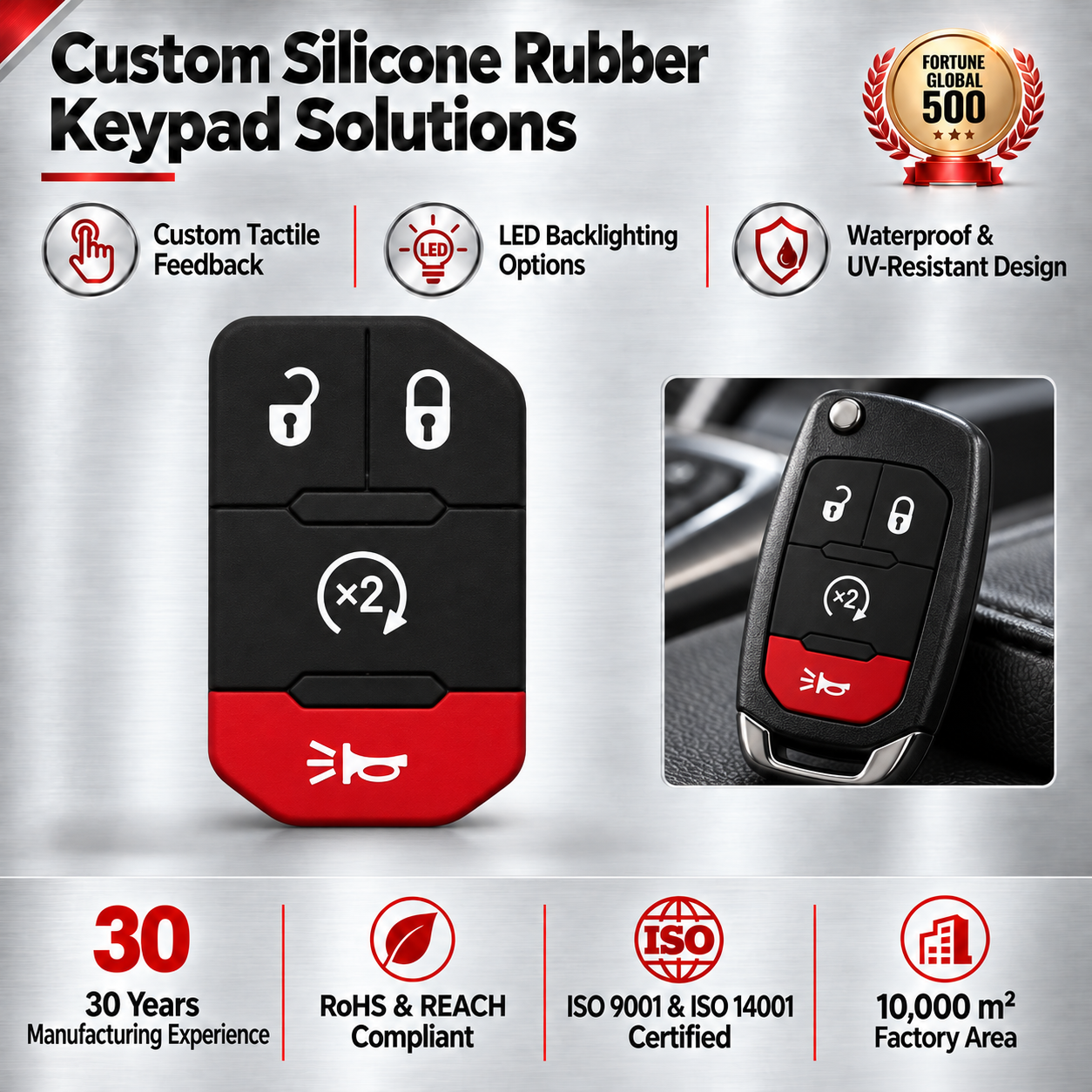
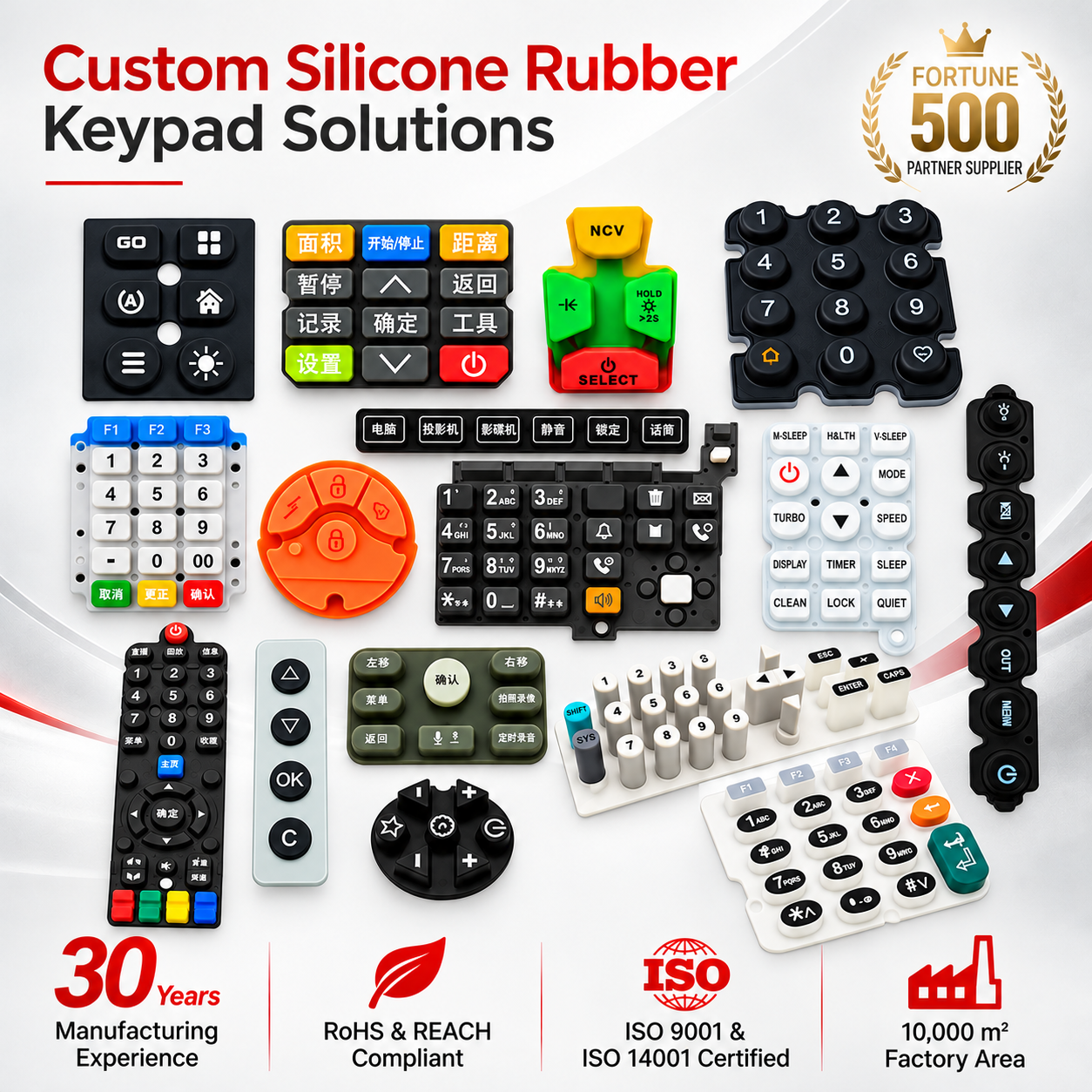
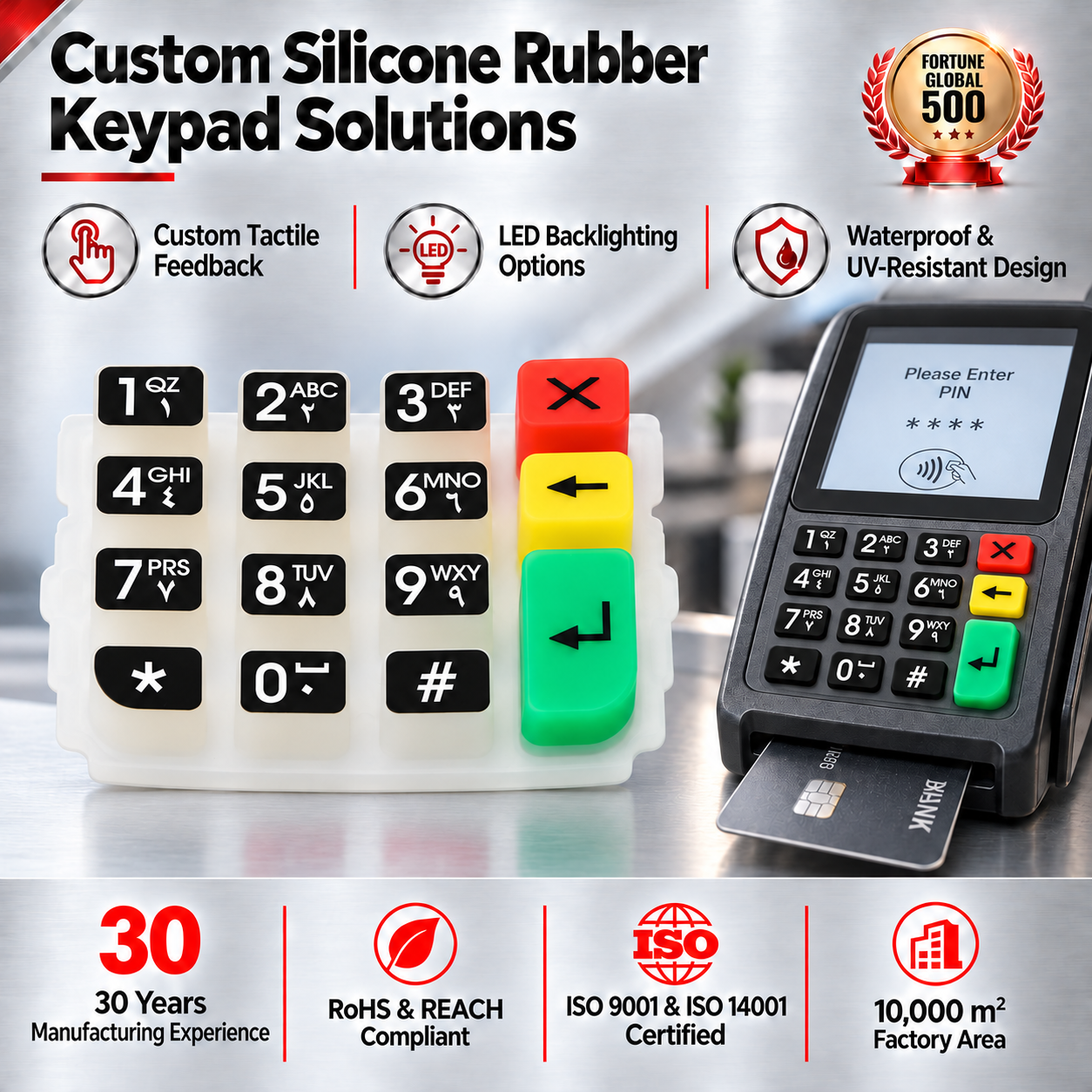
Centering around the massive logistics infrastructure near Indianapolis International Airport. Mobile barcode scanners, automated guided vehicles (AGVs), and sorter controllers leverage our hybrid silicone-over-membrane keypads, combining crisp tactile actuation (>350g snap ratio) with MIL-STD impact durability for round-the-clock shift operation.
Automated Retail & Fluid Dispensing
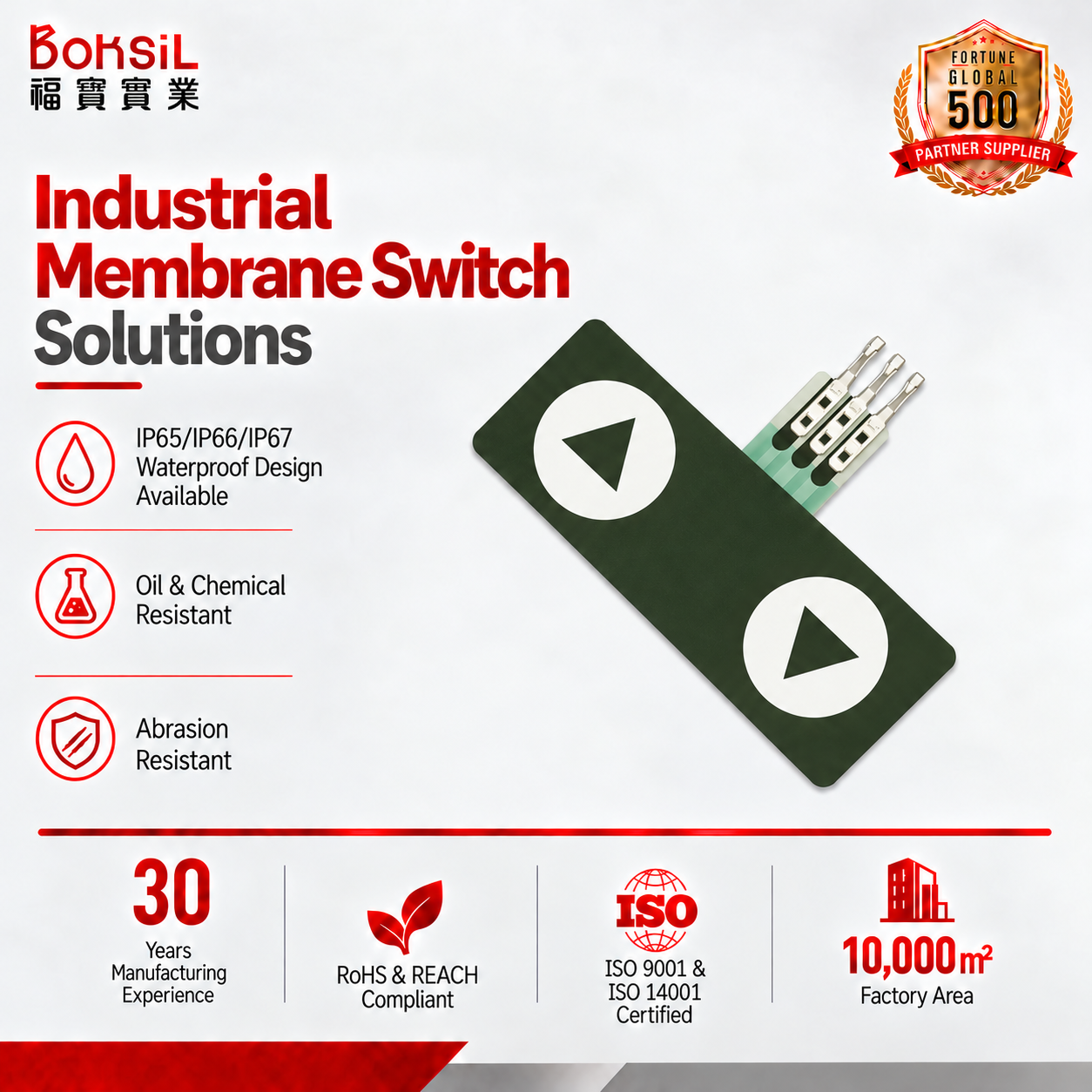
Engineered for fuel management consoles, outdoor kiosks, and commercial retail terminals. Featuring robust polycarbonate facings with UV-stabilized reverse printing, IP65 perimeter water gaskets, and tamper-resistant stainless steel dome switches engineered to withstand vandalism, direct rainfall, and seasonal freeze-thaw cycles.
CNC Machine Tools & Industrial PLCs
Installed directly on manufacturing lines across Central Indiana's automotive parts foundries and metal fabrication plants. Chemical-resistant Autotex polyester graphic overlays resist cutting fluids, mineral oils, and caustic coolants while maintaining tactile response over five million continuous switch activations.
Agritech & Fertilizer Distribution
Serving precision farming instrument producers in surrounding agricultural equipment hubs. Incorporating sealed, nitrogen-flushed membrane cavities and gold-plated nickel domes to safeguard electrical contacts from corrosive anhydrous ammonia, phosphate dust, and direct UV solar breakdown.
Technical Whitepaper: Mitigating Failure Modes in Industrial Membrane Circuitry
A successful HMI subsystem relies on precise interaction between mechanical elasticity, chemical resilience, and trace conductivity. When hardware fails in the field, Indianapolis engineering directors commonly trace root causes to three specific design pitfalls: trace embrittlement due to aggressive radius bending, silver migration prompted by ambient moisture ingress, and adhesive displacement under elevated shear stress.
| Circuit / Architecture Feature | Silver-PET Printed Flexible Circuit | Copper-Clad Polyimide (FPC) | Capacitive Sensing Film Matrix |
|---|---|---|---|
| Trace Resistance | <1.0 Ω/cm (Formulated Ag Ink) | <0.05 Ω/cm (Pure Rolled Annealed Cu) | 100 Ω - 1 kΩ (High-Impedance Electrodes) |
| Minimum Bend Radius | R ≥ 2.0 mm (Static Tail Only) | R ≥ 0.8 mm (Dynamic Multi-Flex) | R ≥ 1.5 mm (Planar Adhesive Bond) |
| Contact Resistance | <10 Ω (With Stainless Dome) | <1 Ω (Gold/Nickel Plated Pads) | Solid-State Contactless (0 Ω Mechanical) |
| Operating Temperature | -20°C to +70°C Continuous | -40°C to +105°C Continuous | -30°C to +85°C Continuous |
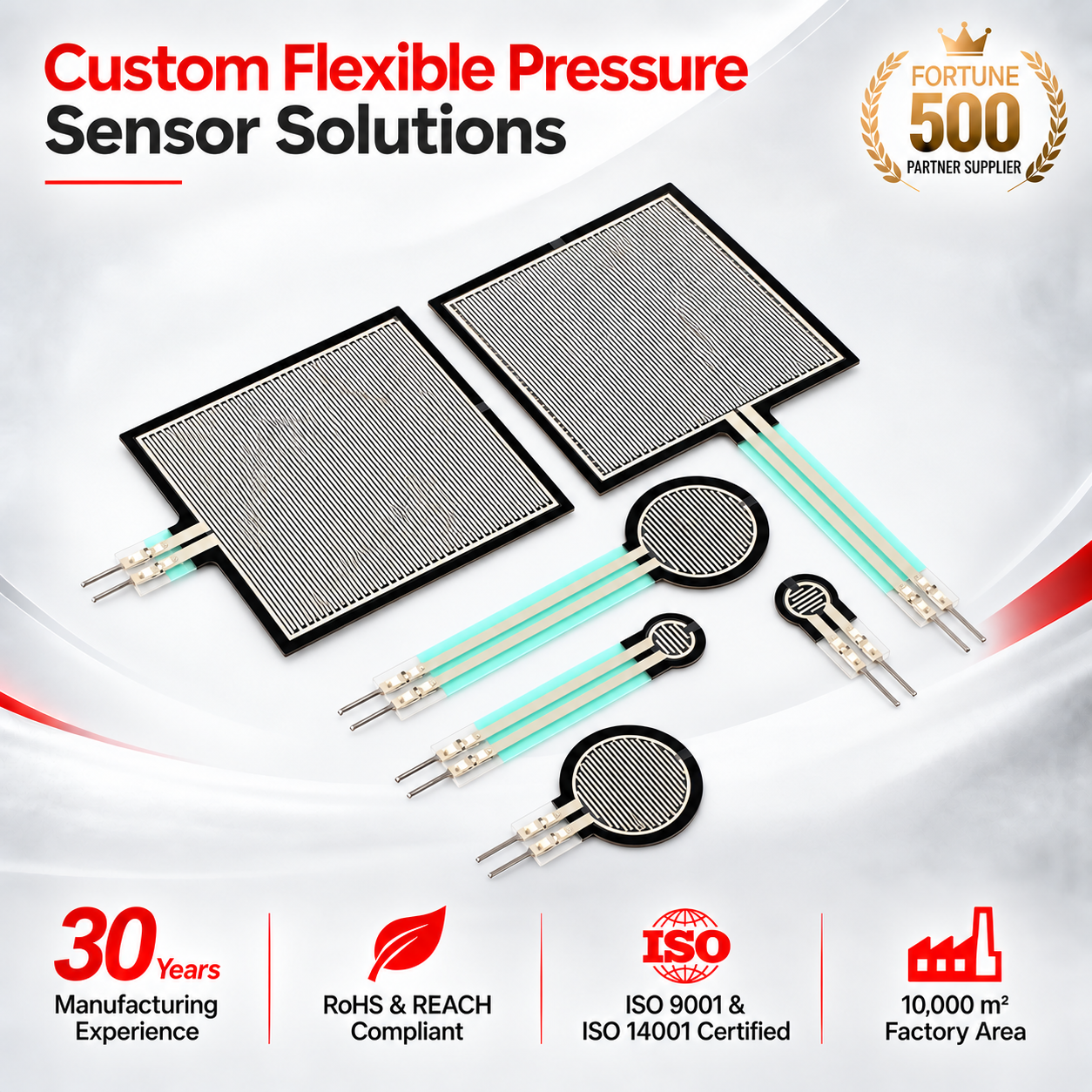
| Component Integration | Conductive Epoxy Bonded SMT LEDs | Reflow Soldered Micro-SMDs & ICs | Zero-Insertion Force Tail to Controller |
| Target Central Indiana Use | Industrial Enclosures & Metering | Powertrain & Harsh Medical Probes | Sanitary Cleanrooms & Touch HMIs |
Silver Migration Mitigation via Cross-Linked Dielectrics: Silver migration is an electrochemical dendritic growth that develops between adjacent traces when voltage bias and humidity coexist. AXRU’s fabrication protocol mandates a carbon conductive overcoat over every active silver trace, capped by a double-pass UV-cured acrylic dielectric barrier. This construction isolates conductive silver particulates from ambient moisture, even if the outer environmental gasket experiences breach or localized condensation.
Actuation Physics & Dome Haptics: Tactile feedback is calibrated through precise metal dome metallurgy. We stock four-leg, round, and oblong nickel-plated and gold-plated stainless steel domes spanning 8mm to 20mm diameters, with actuation forces ranging from 180g (light laboratory touch) to 500g (deliberate, high-resistance feedback for thick-gloved industrial plant operators). Each tooling revision undergoes an automated force-displacement plotting test, ensuring snap ratios consistently hold between 45% and 65% for unambiguous tactile feedback.
Why Central Indiana Procurement Teams Partner With AXRU
Intertek-Audited Quality
Our 10,000㎡ factory footprint in Dongguan operates under verified on-site auditing by Intertek. Comprehensive incoming raw material inspection (IQC), in-line optical tracking, and 100% electrical continuity verification eliminate line-side assembly defects.
Low Prototyping MOQ
Accelerate your NPI (New Product Introduction) cycles. We maintain an engineering MOQ threshold of just 100 pieces for custom membrane circuits and graphic overlays, supporting fast-track iterations before releasing volume tooling.
In-House Reliability Lab
Batch sampling validated against key life cyclers (>5M actuations), programmable thermal/humidity simulation chambers, ink scrub abrasion testers, and spectrophotometric color matching guarantees lifetime field reliability.
Streamlined Export Logistics
With more than 10 years of North American export tenure, we deliver door-to-door DDP air and sea freight logistics directly to warehouse docks in Marion, Hendricks, and Hamilton counties, providing clear commercial documentation and full tariff classification guidance.
Future Trends: Evolution of HMI Subsystems Across Indiana's Manufacturing Base
Industrial design priorities across the Midwest are evolving rapidly from basic electromechanical pushbuttons to smart, integrated front-panel assemblies. AXRU collaborates closely with industrial design teams and system integrators to embed three prominent technological transitions into current fabrication runs:
1. Convergence of Capacitive Sensing with Dead-Front Backlighting: Mechanical buttons are increasingly supplemented or replaced by capacitive sensing arrays laminated behind monolithic polycarbonate or chemically hardened glass facings. By employing dead-front screen printing techniques, legends and status icons remain invisibly integrated into a seamless, high-gloss bezel until triggered by capacitive proximity or touch. This creates fully washdown-compliant interfaces imperative for aseptic medical spaces and sterile food processing plants throughout central Indiana.
2. In-Mold Decoration (IMD) for Complex Geometric Bezels: Traditional flat sheet membrane switches require recessed cavities within injection-molded housings. With AXRU’s IMD and In-Mold Electronics (IME) capabilities, printed films are pre-formed and thermo-mechanically fused directly into the structural resin during the injection molding phase. This yields a single-piece component that eliminates external perimeter seams, reduces assembly labor, and presents an impervious barrier against hydraulic fluid, pressure washing, and particle ingress.
3. Transition from Silver-Ink Traces to Rigid-Flex Copper Hybrids: As connected equipment across Indiana's industrial corridor packs more computing power into compact form factors, the interface panel must handle higher current densities and complex SMT components. By bonding ultra-thin flexible copper circuits (FPC) with rigid backing stiffeners (FR4 or aluminum panels), AXRU provides customers with complete hybrid assemblies that feature high-density connectors, embedded microcontrollers, and surface-mount LEDs while maintaining the slim envelope of a membrane keypad.
Purchasing & Engineering FAQ for Indianapolis OEMs
What is the standard turnaround time for shipping prototypes to Indianapolis?
Which design files do your engineers require to generate an accurate DFM review and quotation?
- Mechanical outline drawings in CAD format (.DXF, .DWG, or 3D .STEP).
- Graphic overlay artwork vector files (.AI, .PDF, or .EPS) with callouts for Pantone (PMS) or RAL color matching codes.
- Circuit schematic or pinout mapping showing common bus or matrix layouts.
- Stack-up specifications indicating desired adhesives (e.g., 3M 467MP, 3M 300LSE), dome force ratings, tail pitch, and connector termination types (e.g., Nicomatic, Berg, Amphenol, or ZIF contacts).
How do you guarantee environmental seals against moisture and harsh chemicals?
Can AXRU cross-reference or replace existing membrane keypad assemblies with legacy toolings?
How does AXRU prevent electrical short circuits and intermittency over lifetime use?
Ready to Accelerate Your Central Indiana HMI Hardware Project?
Connect directly with our senior application engineers. Submit your preliminary 2D drawings, schematics, or sample specifications for an immediate, confidential DFM review and factory-direct quotation within 24 hours.