High-Reliability OEM Elastomer & Membrane Interface Solutions
Engineered for mission-critical tactile feedback, IP67+ hermetic sealing, extreme thermal gradients (-40°C to +200°C), and extended fatigue resistance across Victorian industrial deployments.
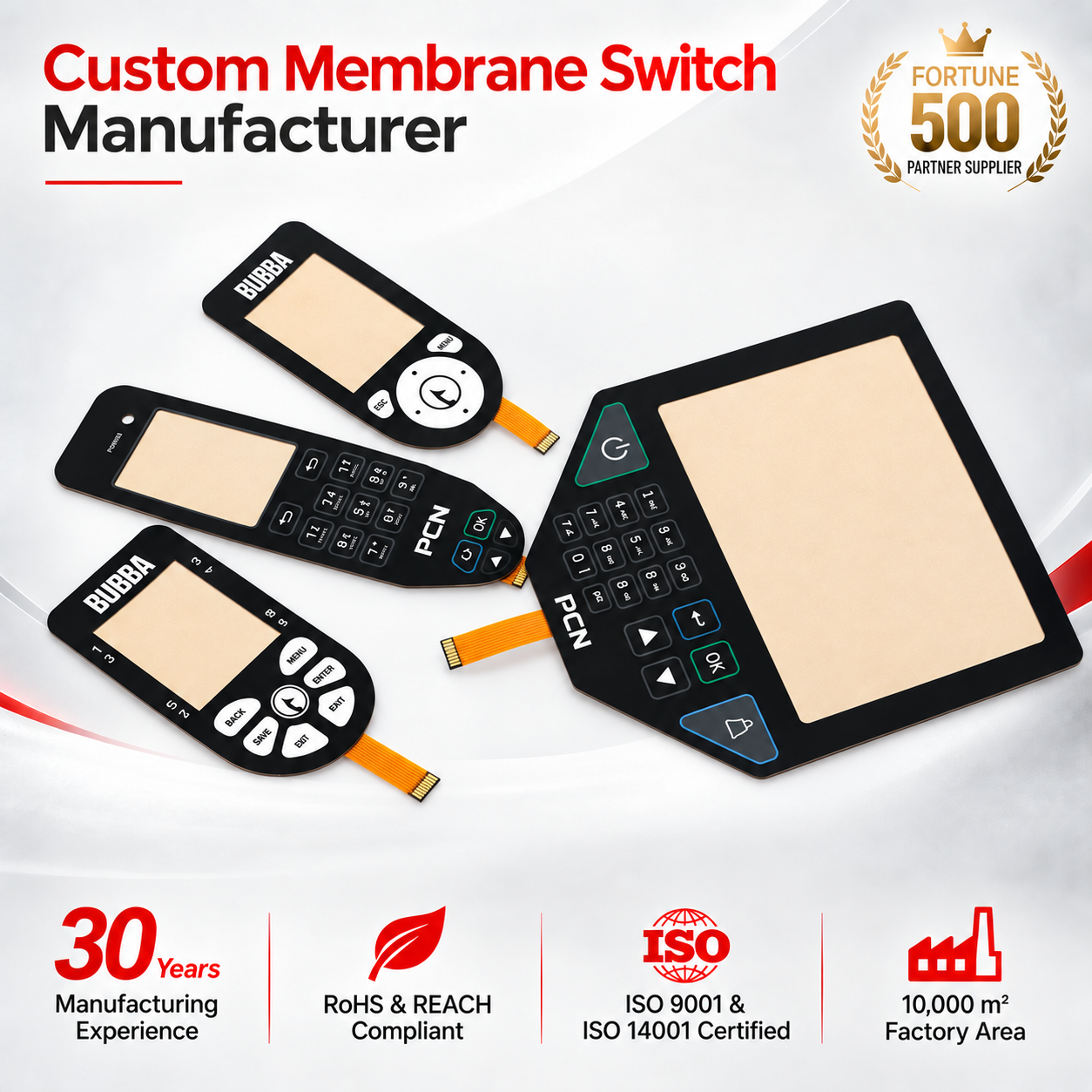
Custom 3m Adhesive Tactile Metal Dome Button Membrane Switch Graphic Overlay for Electronic Equipment
- Adhesive Bond: 3M 467MP / 468MP High-Temp
- Tactile Dome: Stainless Steel 280g Snap Force
- Actuation Life: >1,000,000 Cycles
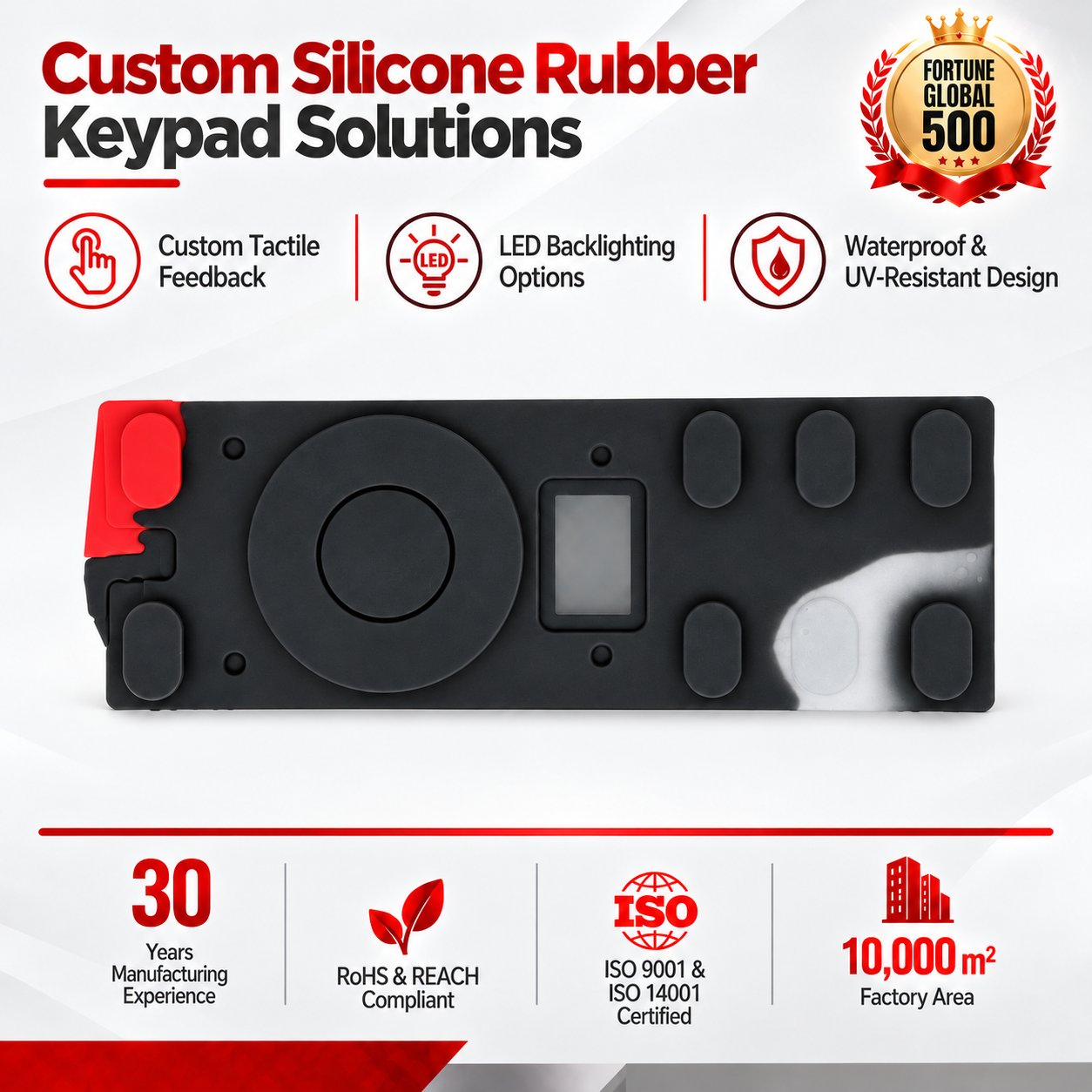
Customizable Design Black Embossed Circular Buttons Red Silicone Rubber Keypad Panel Switch for Industrial Control
- Elastomer Grade: High-Tear VMQ Silicone (50 Shore A)
- Conductive Pill: Low-Resistance Carbon / Gold Pill
- Operating Range: -45°C to +180°C Continual
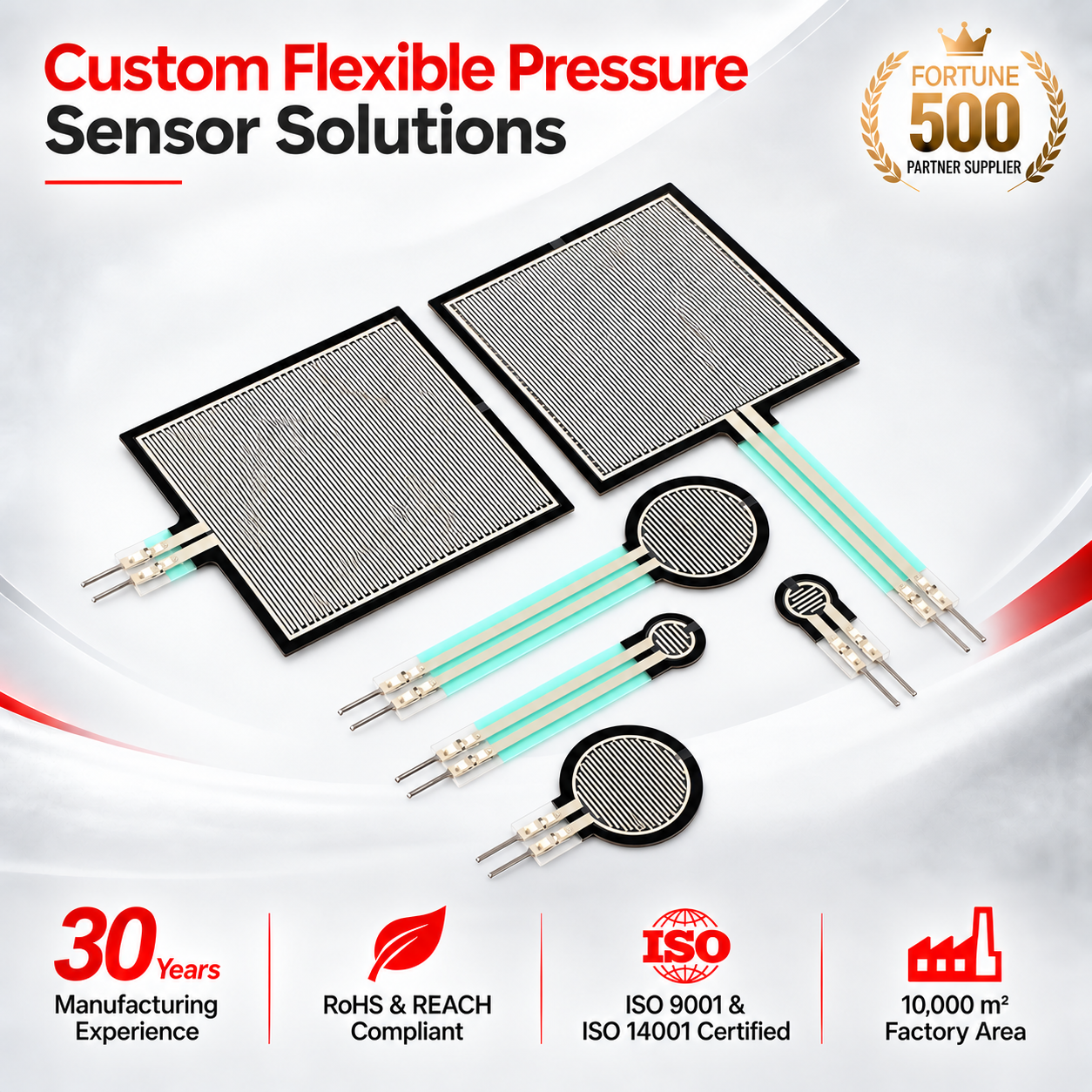
High Sensitive Capacitive Multi Touch Sensor Membrane Ultra-Soft Thin Film Pressure Sensor Fsr Type Pressure
- Substrate: Optical Grade PET / Polyimide
- Sensing Method: Piezo-Resistive / FSR Matrix
- Response Time: <5 Microseconds Rapid Trigger
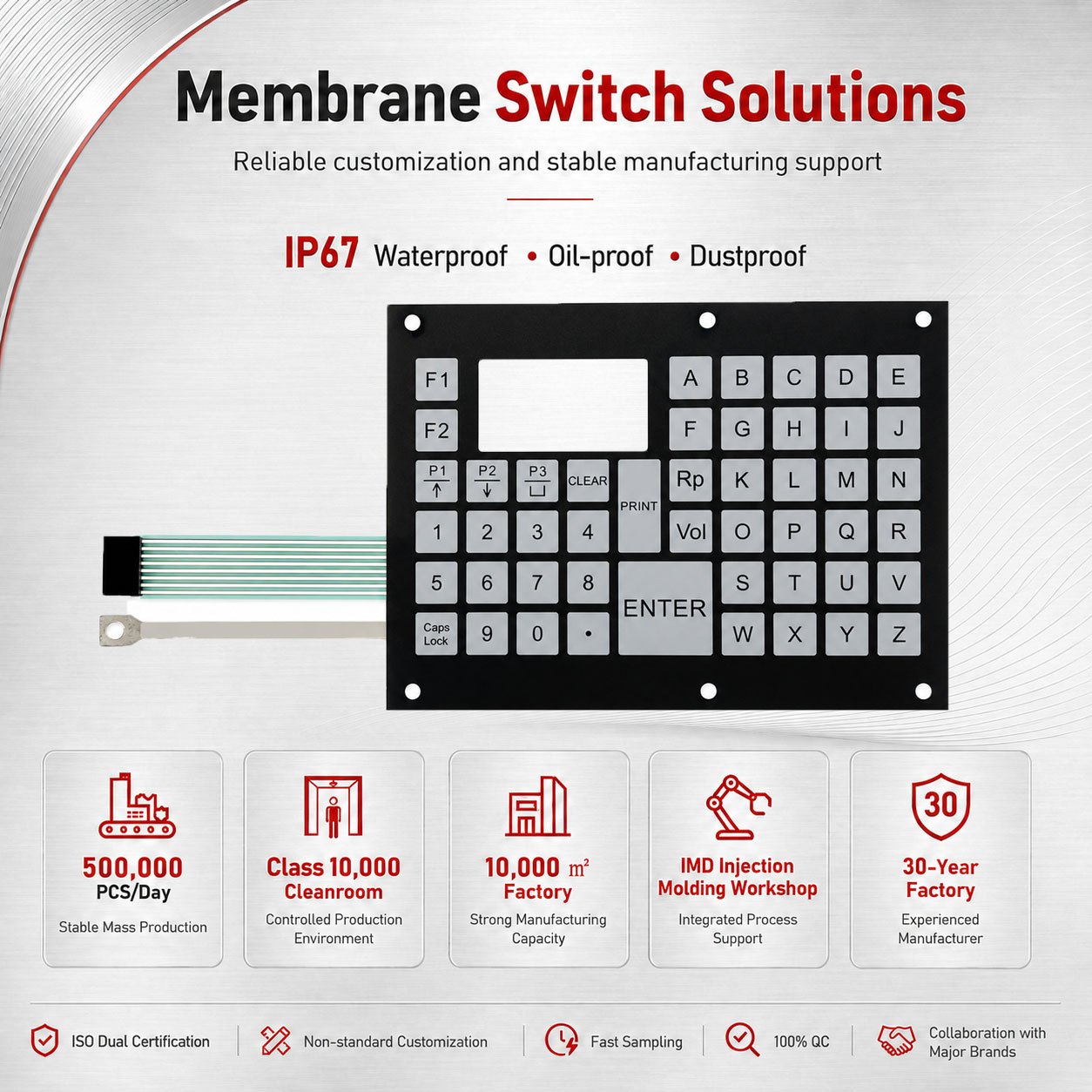
Custom Waterproof Wired Screen Wireless Tactile Switch Panel Fuel Dispenser Button Board Resistive Pad Keypad Circuit
- Ingress Rating: IP67 / NEMA 4X Sealed Perimeter
- Flame Retardancy: UL94-V0 Silicone Compound
- Chemical Defense: Diesel, Hydrocarbon & UV Inactive
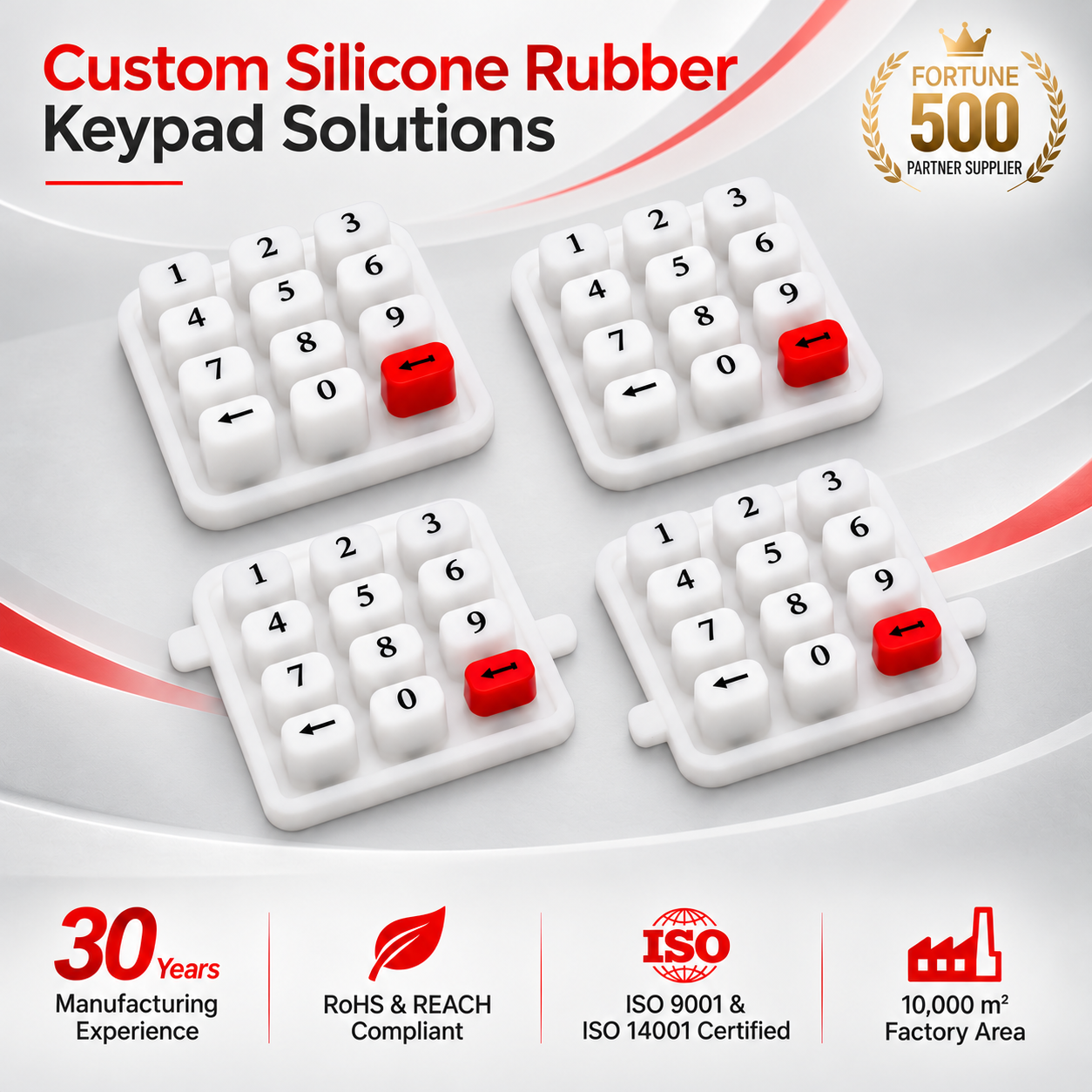
Custom Manufacturer Epoxy Silicone Rubber Keypad oem/odm with low Profile Design Durable and Waterproof
- Surface Finish: Crystal Polyurethane / Hard Epoxy
- Abrasion Rating: >100,000 Cycles RCA Abrasion
- Key Travel: 0.8mm to 1.5mm Crisp Stroke
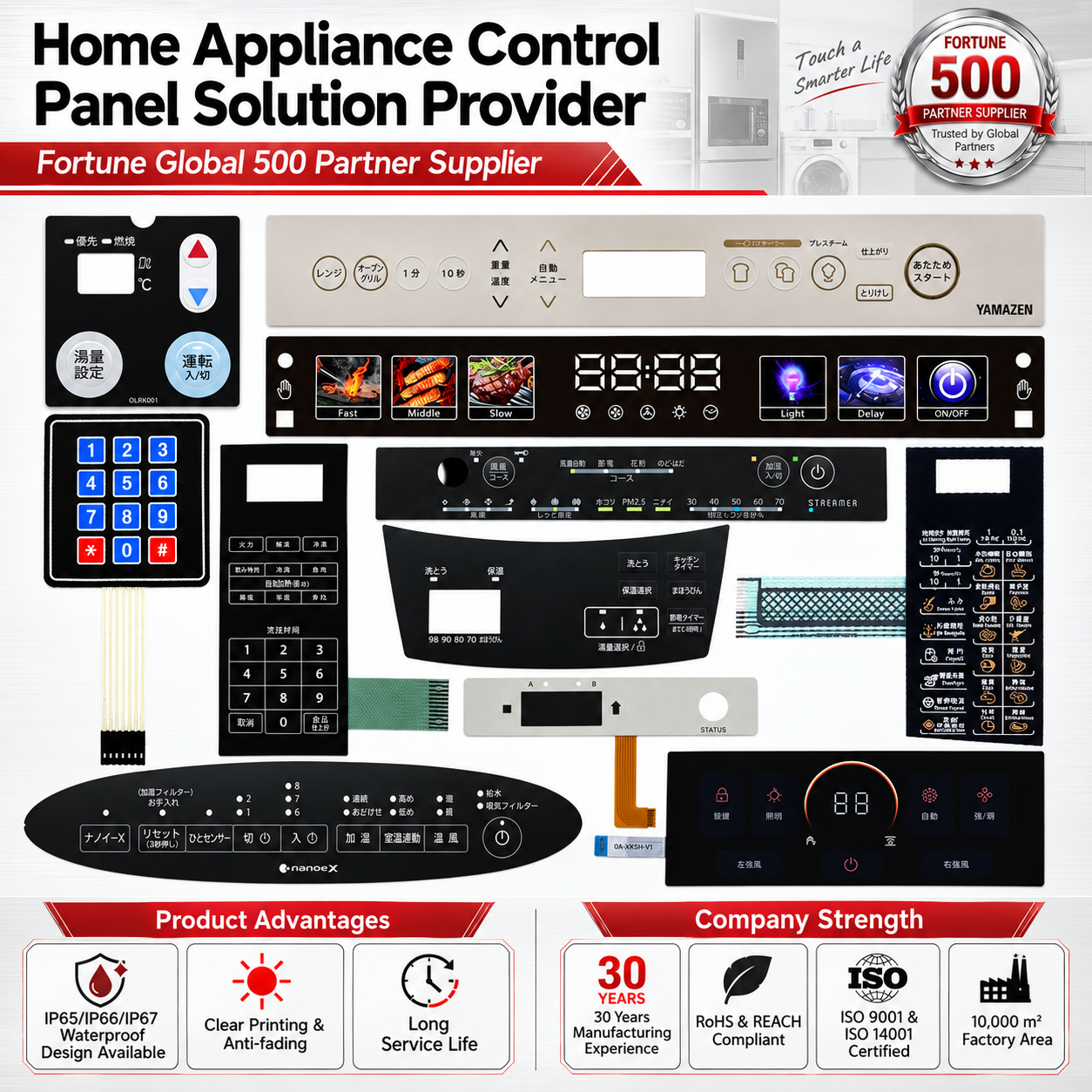
Factory Custom Membrane Switch Graphic Overlay ip65 Waterproof Membrane Keypad Touchpad Single Button Panel
- Fascia Film: Autotex Hardcoated Fine Polyester
- Circuit Traces: Screened Conductive Silver Carbon
- Window Finish: Anti-Glare / Clear LED Display
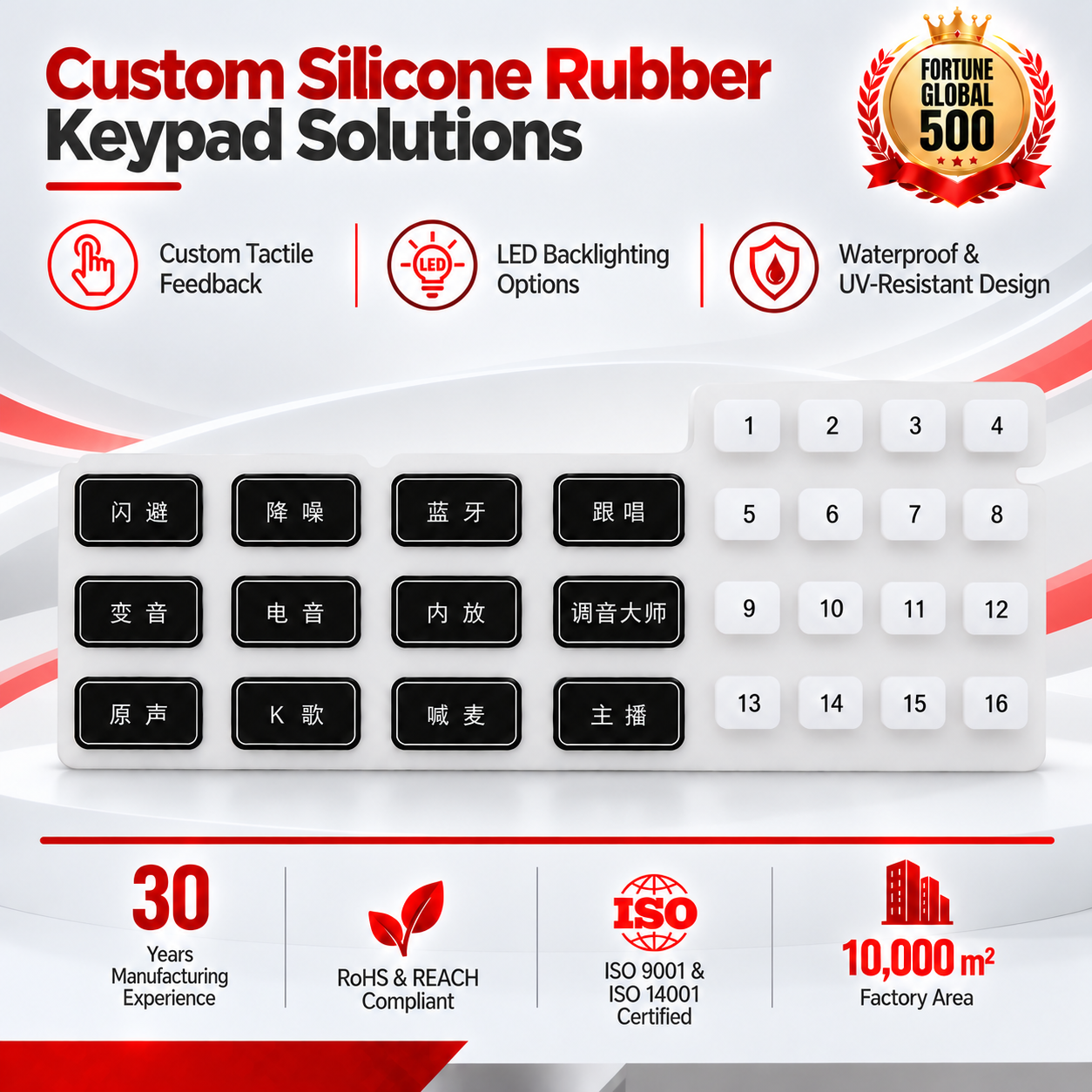
Rugged Waterproofing Custom Silicone Rubber Keypad Numpad Soft Touch Wear-Resistant High Temp Elastomer Keypad
- Thermal Rating: Up to 230°C High-Temp Stability
- Perimeter Gasket: Integral Compression O-Ring Bezel
- Actuation Profile: Elastic Webbing Curve Engineered
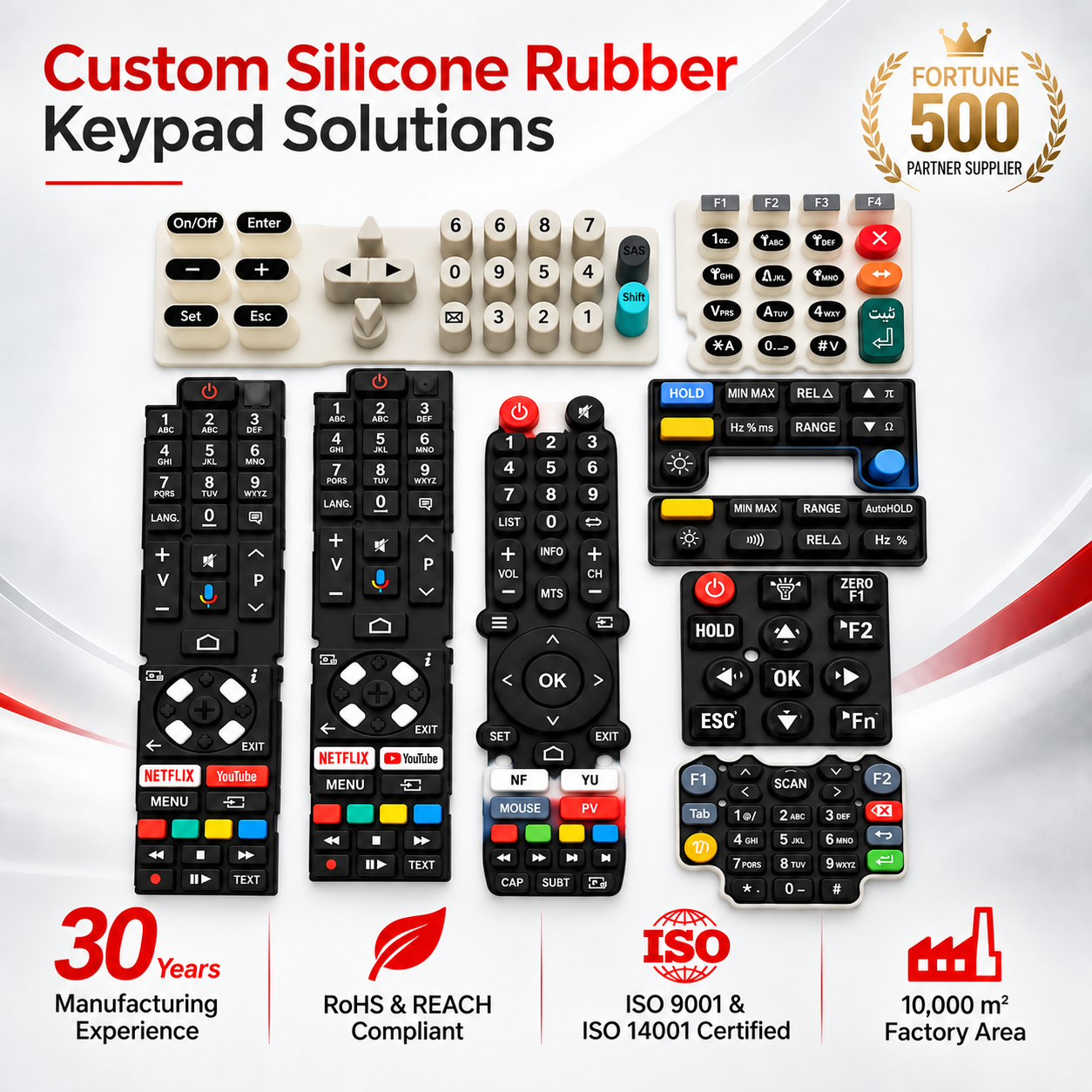
OEM/ODM Custom Special Color Silicone Rubber Elastomer Keypad Membrane Switch Button for Remote Controller
- Illumination: Negative Laser Etch Translucent Font
- Color Precision: Pantone / RAL Mathematical Match
- Protective Coat: Matte PU Oil Soft-Touch Coating
Material Science of High Temperature Elastomer Keypads in Severe Australian Environments
Overcoming the intersection of intense solar irradiance, sudden cold fronts, sub-zero winters, and heavy industrial chemical washdowns across Victoria’s primary manufacturing corridors.
Advanced VMQ & Fluorosilicone Chemistry
Standard commercial silicones exhibit catastrophic glass transition (Tg) degradation when cycled between Melbourne's winter chills (-2°C in regional Victoria) and closed-enclosure solar heat build-ups exceeding +75°C. We formulate high-molecular-weight Vinyl Methyl Silicone (VMQ) and Fluorosilicone (FVMQ) capable of continuous operation from -50°C to +200°C (intermittent +250°C), preserving tensile elongation without brittle fracture.
Snap Ratio & Tactile Web Dynamics
Tactile actuation feedback relies on the geometry of the silicone hinge webbing. Our DFM engineers fine-tune the snap angle (typically 40° to 55°) and wall thickness (0.35mm to 0.60mm) to achieve a snap ratio between 45% and 60%. This guarantees a distinct, clicky tactile sensation that machine operators in Dandenong heavy workshops can feel effortlessly through heavy leather safety gloves.
Integrated Hermetic Bezel Sealing
Rather than relying on secondary perimeter O-rings that degrade under thermal shear, our compression tooling forms continuous sealing ribs directly into the elastomer keypad profile. Interfacing directly with milled aluminium or injection-molded ABS/Polycarbonate housings, our keypads achieve IP67 and IP68 ingress protection against salt mist, coastal moisture along Port Phillip Bay, and jet washing.
Victorian Hardware Engineering Note: UV Stability & Ozone Resistance
Australia endures some of the highest peak UV indices globally. Standard elastomeric materials undergo photodegradation, polymer chain scission, and yellowing when exposed outdoors. AXRU’s compounding incorporates specialized hindered amine light stabilizers (HALS) and inorganic pigments tested under ASTM G154 accelerated UV weathering to ensure zero discoloration and zero legend chalking over a decade of continuous Australian sun exposure.
Localized Melbourne Application Scenarios for High Temperature Keypads
From the automated assembly cells of Campbellfield to the diagnostic suites of the Clayton Biotech Precinct, our HMI panels power critical hardware.
Heavy Transport & Rail Systems
Melbourne houses Australia's most extensive tram and commuter rail network. Train cab driver consoles, signaling interlocks, and trackside junction interfaces require flame-retardant silicone keypads compliant with EN 45545-2 / AS 7529 standards, maintaining switch resilience despite severe vibration and heating duct proximity.
Dandenong & Campbellfield Machinery
Victoria's industrial manufacturing core relies on CNC controllers, agricultural packaging machinery, and chemical batch mixers. In these facilities, keypads encounter hydraulic oils, glycol lubricants, and caustic sanitizers. Our fluorosilicone and hard polyurethane-capped keypads withstand direct solvent splashback without swelling.
Clayton & Parkville Medtech
Melbourne’s world-renowned biomedical research hub demands medical control interfaces capable of withstanding hundreds of autoclave sterilization and isopropyl alcohol wash cycles. We manufacture non-porous, antimicrobial silicone rubber assemblies molded under class 100,000 cleanroom protocols with zero toxic plasticizers.
Mining Telemetry & Field Hardware
Engineering houses in Melbourne design specialized telemetry and remote monitoring controllers deployed in regional Victoria and exported directly to Western Australian mines. Under blistering 50°C ambient desert sun, where internal enclosure temperatures surpass 90°C, our laser-etched backlit keypads operate without loss of contact resistance.
Elastomer Contact Technologies Comparison for Hardware Engineers
Selecting the optimal contact stack-up to match target circuit loads, cycle lifespan, and environmental thermal stress.
| Contact Technology | Actuation Force | Contact Resistance | Thermal Ceiling | Expected Life | Typical Industrial Target |
|---|---|---|---|---|---|
| Conductive Carbon Pill | 120g – 350g | <100 Ω (Typ. 20-50 Ω) | +180°C Continuous | >1.5 Million Cycles | Standard PLC & Handheld |
| Gold-Plated Metal Dome Hybrid | 250g – 500g | <1 Ω | +125°C Continuous | >1.0 Million Cycles | Critical Rail & Defense |
| Low-Resistance SC Nickel Pill | 150g – 300g | <10 Ω | +160°C Continuous | >1.0 Million Cycles | Automotive Under-Hood |
| Direct-Print Carbon Paste | 80g – 200g | <150 Ω | +120°C Continuous | >500,000 Cycles | Cost-Sensitive Consumer |
| Fluorosilicone Extreme High-Temp | 160g – 400g | <50 Ω (Conductive Matrix) | +230°C Continual / 260°C Peak | >2.0 Million Cycles | Mining & Heavy Foundries |
Key Trends Shaping Melbourne's Industrial Keypad Procurement
Navigating sovereign manufacturing demands, energy transitions, and advanced human-machine ergonomics across Australia.
1. Shift Towards Hybrid Capacitive-Elastomer HMIs
Modern Melbourne hardware teams are blending the tactile physical reliability of silicone rubber buttons with integrated capacitive touch zones and optical light guides (LGF). This allows mission-critical physical emergency inputs (Stop/Start, Power) while incorporating sleek slider bars for parameter tuning, fully sealed behind continuous front fascias.
2. Tightened Environmental Compliance (RoHS, REACH, PFAS-Free)
With Australian regulatory bodies closely aligning with strict EU ecological directives, procurement directors at ASX-listed engineering firms mandate full traceability. AXRU guarantees raw VMQ gum free of restricted phthalates, low-molecular cyclosiloxanes (D4, D5, D6), and halogen-free compounds verified by SGS and Intertek analytical lab testing.
3. Rapid Prototyping to Mitigate Supply Bottlenecks
Melbourne design consultancies in Richmond and South Melbourne operate on agile product development sprints. Waiting 8–10 weeks for production steel tooling kills market timing. Our rapid tooling capability delivers fully functional compression-molded silicone prototypes in 10 to 14 working days, speeding time-to-certification.
Engineered Precision: Inside Our 10,000㎡ Manufacturing Plant
Direct factory integration ensures full control over raw material compounding, CNC tooling, cleanroom printing, and automated functional validation.
10,000㎡ Dedicated Facility
Housing 121 skilled technical specialists in Dongguan, our plant is assessed on-site and verified by Intertek. We eliminate subcontracting delays by controlling every stage—from tooling EDM to final electrical continuity checks—under one unified roof.
Rigorous In-House Testing Lab
Our quality reliability suite includes automatic force-displacement graph plotters, pneumatic key cycle life testers (rated to 5M cycles), Taber and RCA abrasion rigs, programmable thermal/humidity simulation chambers, and UV spectrophotometric colorimeters.
Fast Delivery to Melbourne Metro
Streamlined export processing with comprehensive customs documentation, air courier partnerships (DHL/FedEx door-to-door to Tullamarine Airport in 3-5 transit days), and sea cargo consolidation for high-volume palletized OEM production runs.
Common Questions from Melbourne Hardware Engineers & Buyers
Everything you need to know about tooling lead times, DFM engineering sign-offs, freight logistics, and environmental durability.
What is the typical tooling turnaround and sample delivery time to Melbourne?
Our rapid tooling cycle for single-cavity prototype compression molds takes approximately 10 to 12 working days. Prototype samples are dispatched via express air courier directly to Melbourne facilities (arriving in Victoria within 3 to 5 business days). Production multi-cavity hardened steel tooling is finalized in 18 to 22 days.
How do your keypads survive outdoor solar heating in Australian outback and regional VIC?
By blending premium VMQ silicone polymer with UV stabilizers and high thermal threshold cross-linking catalysts, our keypads resist thermal degradation up to +200°C continuous exposure. Even when sunlight heats dark powder-coated metal enclosures to +85°C, the silicone maintains elasticity, prevents key-sticking, and avoids deformation.
Can you customize tactile actuation force for gloved industrial machine operators?
Yes. For factory equipment and outdoor field consoles in Victoria where operators wear thick safety gloves, we engineer elevated tactile actuation forces between 300g and 500g with an optimized 55% snap ratio. This guarantees unmistakable feedback that eliminates false triggering and user input errors.
What engineering CAD files do you require for quotation and DFM analysis?
We work with 3D CAD models in STEP, IGES, or native SolidWorks format along with 2D drawings in PDF or DXF specifying tolerances, critical dimensions, Shore A durometer, Pantone/RAL color codes, and contact resistance limits. If you have an existing physical component, our metrology lab can reverse-engineer it.
Do your products comply with Australian AS/NZS electrical and environmental standards?
Our raw materials and manufacturing lines adhere strictly to RoHS 2011/65/EU, REACH (EC 1907/2006), and UL94-V0 flammability ratings. This simplifies AS/NZS 61000 and AS/NZS 60950 compliance verification for Australian electrical product compliance records.
What surface protection techniques prevent key legend wear from repeated scrubbing?
We provide two industrial surface solutions: hard polyurethane (PU) spray coatings for general wear, and solid thick-layer clear epoxy resin caps over button tops. Epoxy caps create an impenetrable chemical shield that withstands over 100,000 aggressive industrial wiping cycles using ethanol, IPA, bleach, or acetone without print loss.
Ready to Engineer Your Custom High-Temp Keypad for the Melbourne Market?
Send our senior engineering team your 3D STEP files, 2D layout drawings, or technical specifications. We provide a complete Design for Manufacturability (DFM) review and a direct factory quotation within 24 hours.