Factory Catalog
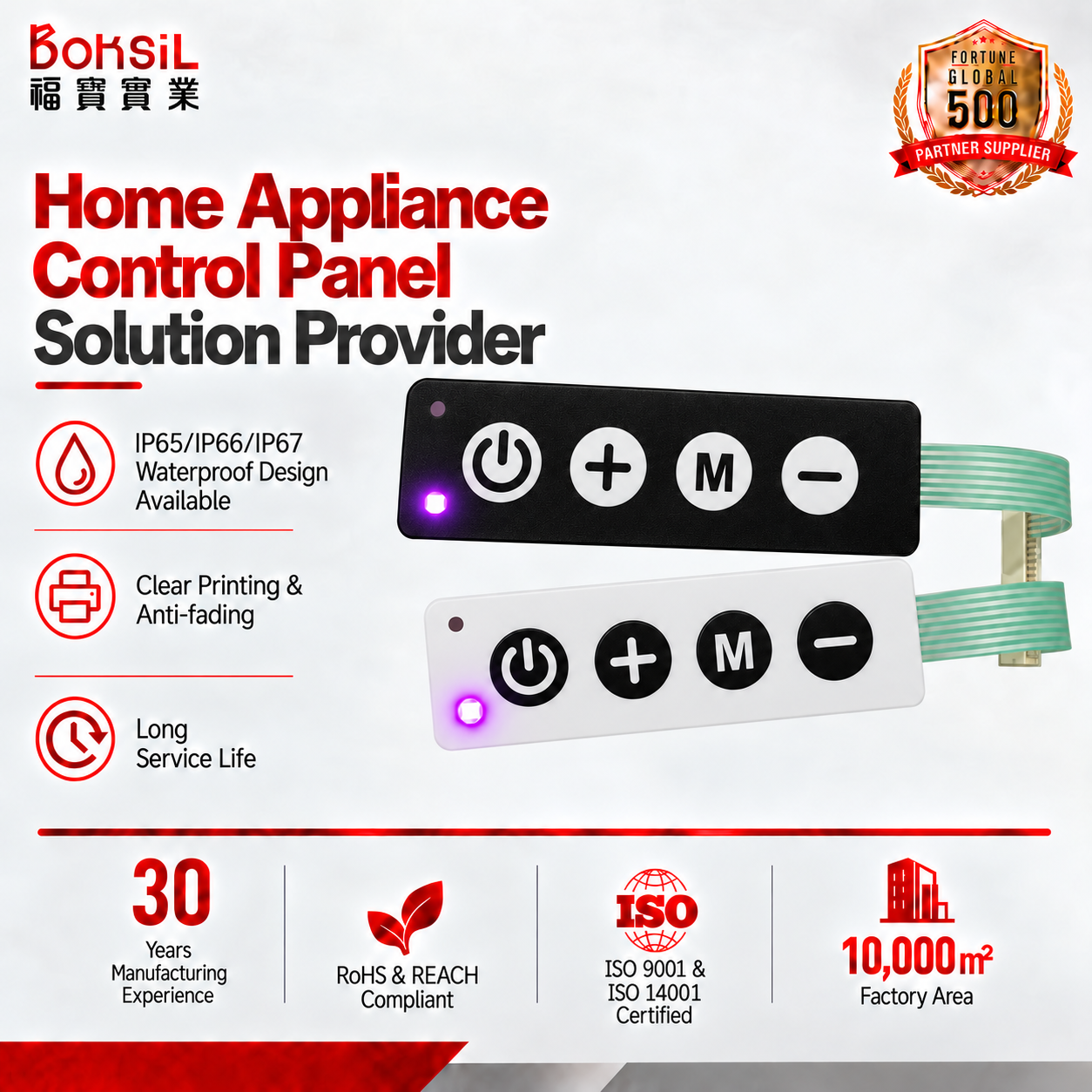
Precision OEM Capacitive Touch & Membrane Interface Assemblies
Fully compliant with ISO 9001 and verified on-site by Intertek. Review our primary Human-Machine Interface (HMI) configurations ready for custom adaptation, precision tooling, and fast-track shipping to Sandy Point Town.
Application Engineering
Capacitive Control Architecture Serving Sandy Point Town
Engineering customized touch surfaces designed to counter coastal salinity, tropical humidity fluctuations, high ultraviolet exposure, and utility automation requirements.
Marine & Harbor Infrastructure
Sandy Point Town’s coastal proximity demands panels invulnerable to saline condensation and sea fog erosion. Our capacitive touch switches use chemically strengthened Gorilla or PMMA cover lenses laminated to optical clear adhesives (OCA), isolating sensing copper traces and preventing dendritic copper failure.
Power, Desalination & Utility Systems
Local facilities managing water processing and power regulation require human-machine interfaces that remain immune to electromagnetic interference (EMI) and wet-finger conditions. We incorporate active water-rejection capacitive firmware algorithms and printed ITO ground shields to maintain zero false-triggers.
Commercial Kiosks & Tourism Hospitality
Outdoor resort systems, ticket kiosks, and access automation across Sandy Point Town require ruggedized touch arrays. We build IK08 to IK10 impact-rated tempered glass surfaces with anti-glare (AG) and anti-fingerprint (AF) coatings that remain legible in Caribbean sunlight.
10,000㎡
Production Facility100%
AOI & Electrical Test< 0.5s
Signal Response TimeIP67/NEMA 4X
Hermetic Integrity
Industry Whitepaper
Emerging HMI Hardware Trends in Coastal & Regional Industrial Automation
A technical overview analyzing the shift from traditional electromechanical switches toward solid-state capacitive surfaces for export markets.
Hermetic Solid-State Monoliths vs. Mechanical Moving Assemblies
In environments like Sandy Point Town, airborne sodium chloride and ambient relative humidity exceeding 80% accelerate micro-corrosion in traditional mechanical switch contacts. When salt deposits seep through bezel edges, electrical shorts and contact chatter inevitably follow.
Modern OEM capacitive control panels bypass these failure vectors entirely. By casting printed capacitive electrodes on flexible PET or copper FPC directly behind an unbroken 2mm to 6mm sheet of chemically toughened glass or UV-stabilized polycarbonate, the active circuitry is permanently isolated from external contaminants. The result is a wear-free actuation lifetime exceeding tens of millions of continuous cycles.
| Evaluation Parameter | AXRU OEM Capacitive Control Panels | Conventional Membrane Switches | Mechanical Push-Button Arrays |
|---|---|---|---|
| Mechanical Wear Lifecycle | Virtually Unlimited (Solid-state capacitive field) | 1,000,000 to 5,000,000 Actuations | 100,000 to 500,000 Operations |
| Moisture & Salt Ingress Protection | IP67 to IP69K (Hermetically sealed front lens) | IP65 (Perimeter adhesive dependent) | IP40 to IP54 (Prone to gasket aging) |
| Sanitization & Chemical Resistance | Impervious to bleach, industrial alcohol, and saline sprays | Moderate to High (Depending on overlay hardcoat) | Low (Particulates gather in bezel gaps) |
| Aesthetic & Illumination Integration | Capacitive sliders, dead-front LEDs, optical bonding | Embossed domes, flat LEDs, EL backlighting | Fixed discrete single-color pilot lamps |
| Impact Resistance (IK Rating) | IK07 to IK10 with thermal tempered glass | IK04 to IK06 (Flexible polymer membrane) | IK06 to IK08 (Mechanical housing dependent) |
E-E-A-T Capabilities
End-to-End Dongguan Manufacturing & Testing Rigor
Eliminate middleman markups and supply chain fragmentation. At Dongguan AXRU Electronics Co., Ltd., our 121-technician team runs tooling, screen printing, circuit etching, clean-room assembly, and climate stress tests under one roof.
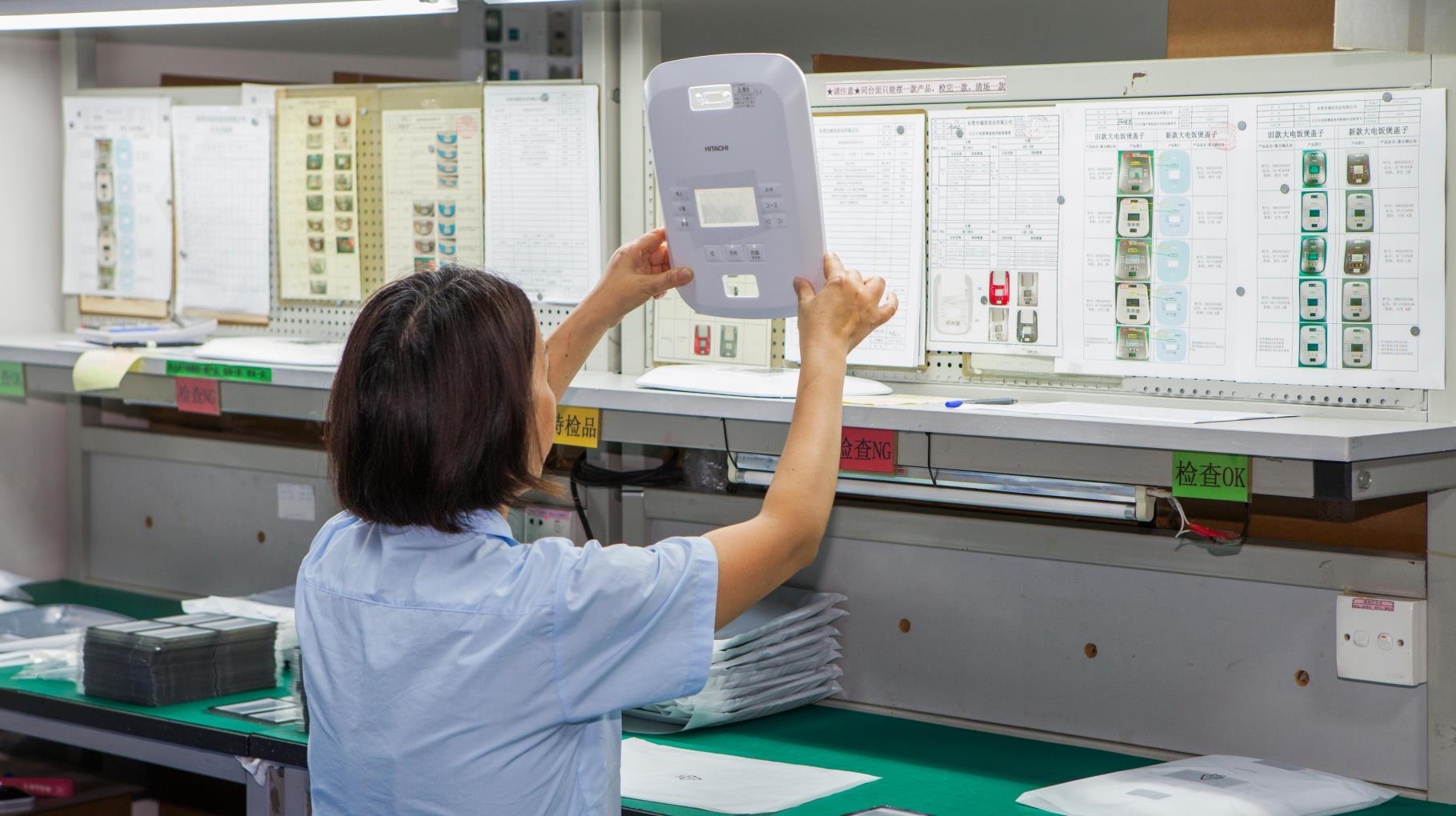
100% Automated Optical & Electrical QA
Every capacitive circuit undergoes stringent open/short circuit testing, trace impedance verification, and sensitivity calibration across the entire touch sensor envelope prior to crating.
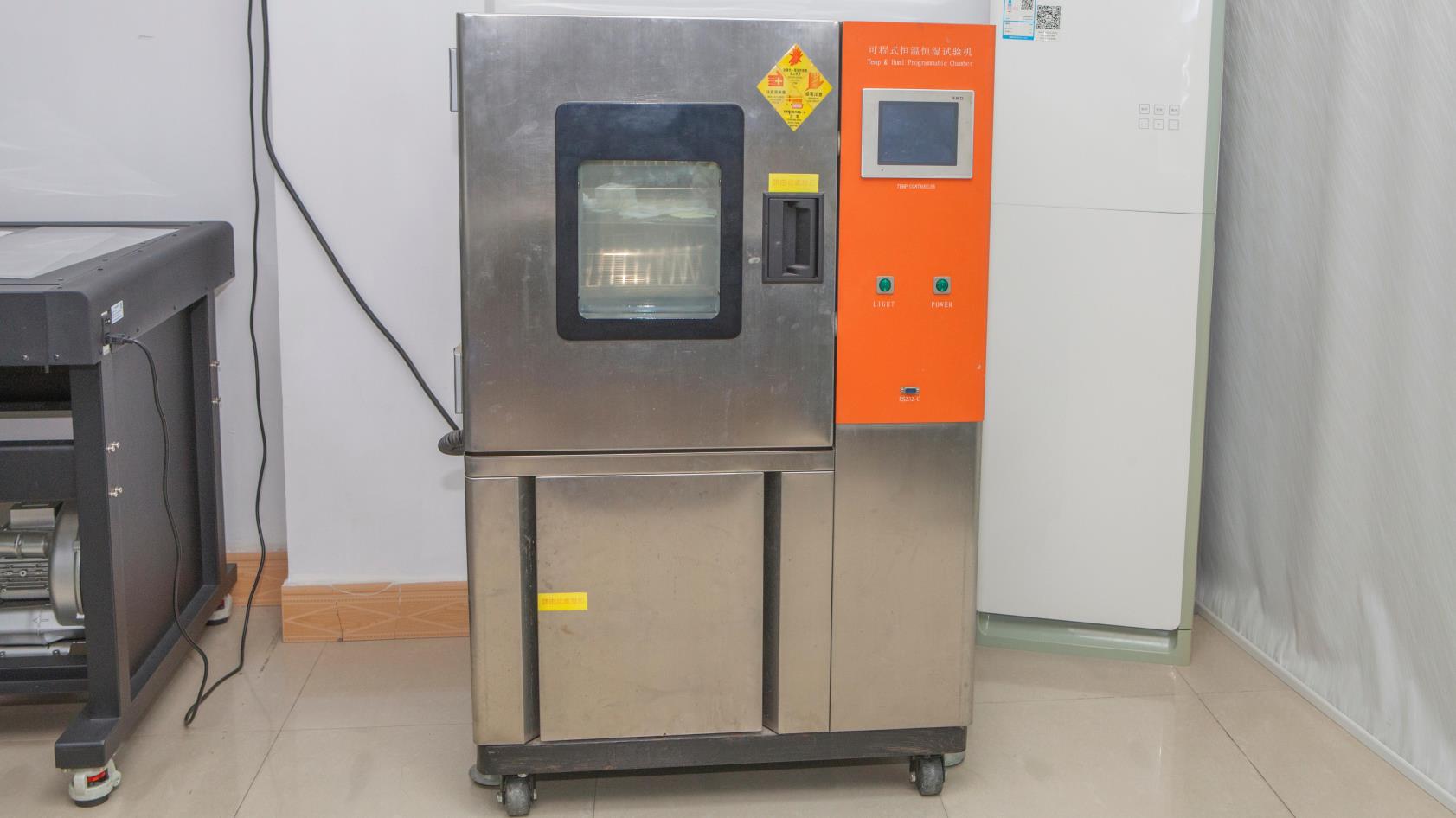
Climate Stress & Thermal Shock Chamber
Panels are validated in extreme environmental chambers cycling from -40°C to +85°C at 95% relative humidity to guarantee no adhesive delamination or silver migration happens in tropical regions.
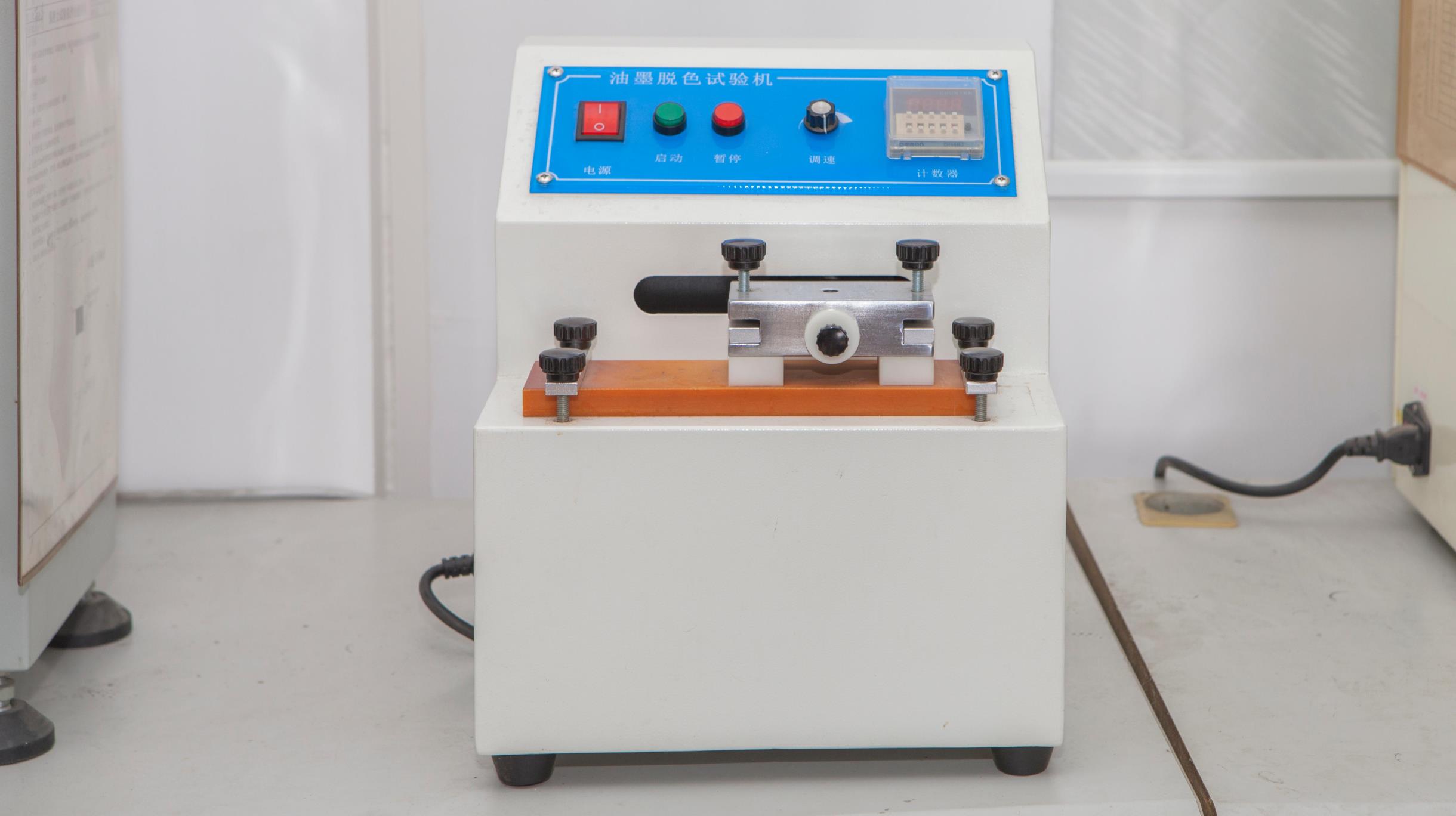
Abrasion & Solvent Chemical Testing
Our surface graphic overlays and glass printing undergo rigorous rub-tests using MEK, ethyl alcohol, and mechanical abrasion testers to confirm print integrity and UV stability over years of use.
Procurement Insights
Frequently Asked Questions: Ordering Capacitive Panels from Sandy Point Town
Clear, direct engineering answers addressing minimum order volumes, lead times, export logistics, and technical validation.
Q1: What is the standard MOQ and lead time for custom capacitive panel tooling?
Our OEM manufacturing lines accommodate initial development production starting at 100 units. Prototyping and first article engineering samples (FAI) typically finish within 10 to 15 business days following CAD sign-off, with mass production runs completing in 3 to 4 weeks depending on glass tempering specifications.
Q2: How do your panels resist tropical coastal humidity and salt spray?
We deploy closed-cell edge perimeter sealing using authentic 3M 300LSE or structural OCA bonding. Furthermore, sensor traces are printed using corrosion-resistant carbon or passivation-sealed silver conductive ink on medical-grade Autotex PET, preventing atmospheric oxidation.
Q3: Can the capacitive touch panel function with latex, nitrile, or heavy work gloves?
Yes. Our engineering team tunes controller driver ICs (such as Microchip, Cypress, or Goodix) specifically for your intended operation mode. We calibrate sensitivity thresholds to accurately register touches through work gloves or through overlay glass up to 6mm thick.
Q4: What files and design data do we need to provide to obtain a definitive DFM quote?
Provide your 2D outline drawings (AutoCAD DWG/DXF or vector PDF), 3D step files if mating with an existing bezel, graphic artwork with Pantone color designations, and desired interface communication protocol (I2C, USB, UART, or raw matrix pinout).
Q5: What shipping channels are used for reliable delivery to Sandy Point Town?
We pack finished assemblies in anti-static ESD shielding, humidity-absorbing desiccants, and reinforced honeycomb cartons. Goods are exported via DHL, FedEx Express, or air cargo for rapid transit, backed by complete commercial documentation and customs compliance.
Q6: Can you integrate backlighting and dead-front indicators into the touch surface?
Absolutely. We incorporate ultra-thin Light Guide Film (LGF), embedded surface-mount LEDs, and dead-front graphic printing where icons remain completely invisible until touch triggers illumination of the relevant channel.
Launch Your Custom Capacitive Interface Project Today
Direct from our 10,000㎡ factory to your production line. Engage directly with our senior hardware engineering team to review design tolerances, material stack-ups, and get a rapid quotation.