Specialized Membrane Keypads & Custom Control Overlays
Direct factory fabrication of tactile elastomeric assemblies, waterproof matrix circuits, and high-sensitivity thin-film capacitive sensors customized for European machinery and industrial enclosures.
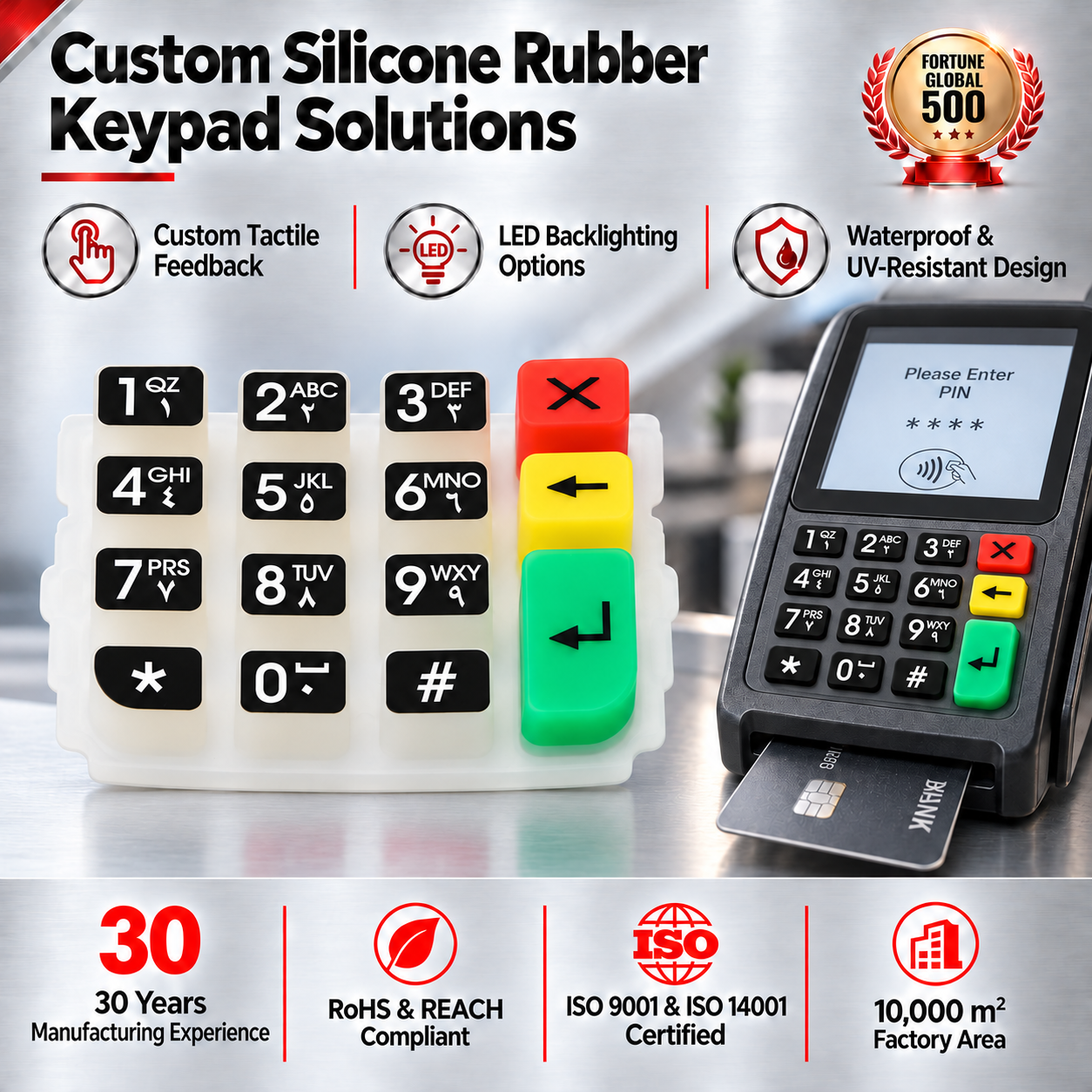
- MaterialSilicone / Conductive Pill
- Life Span> 1,000,000 Cycles
- Actuation Force120g – 250g Customizable
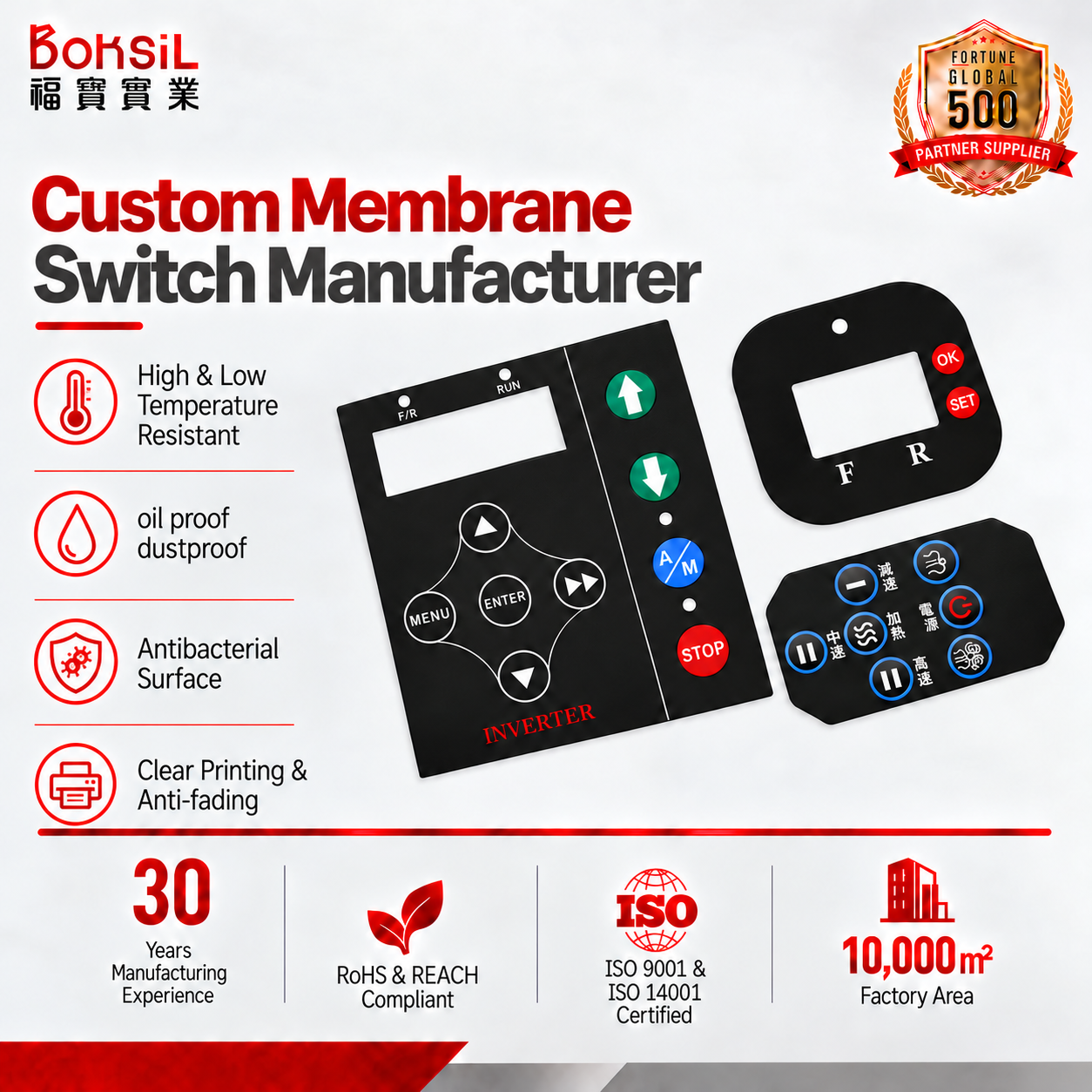
- SubstrateLexan PC / Autotex PET
- WindowsTransparent / Anti-Glare Tint
- PrintingReverse Screen / Sub-Surface
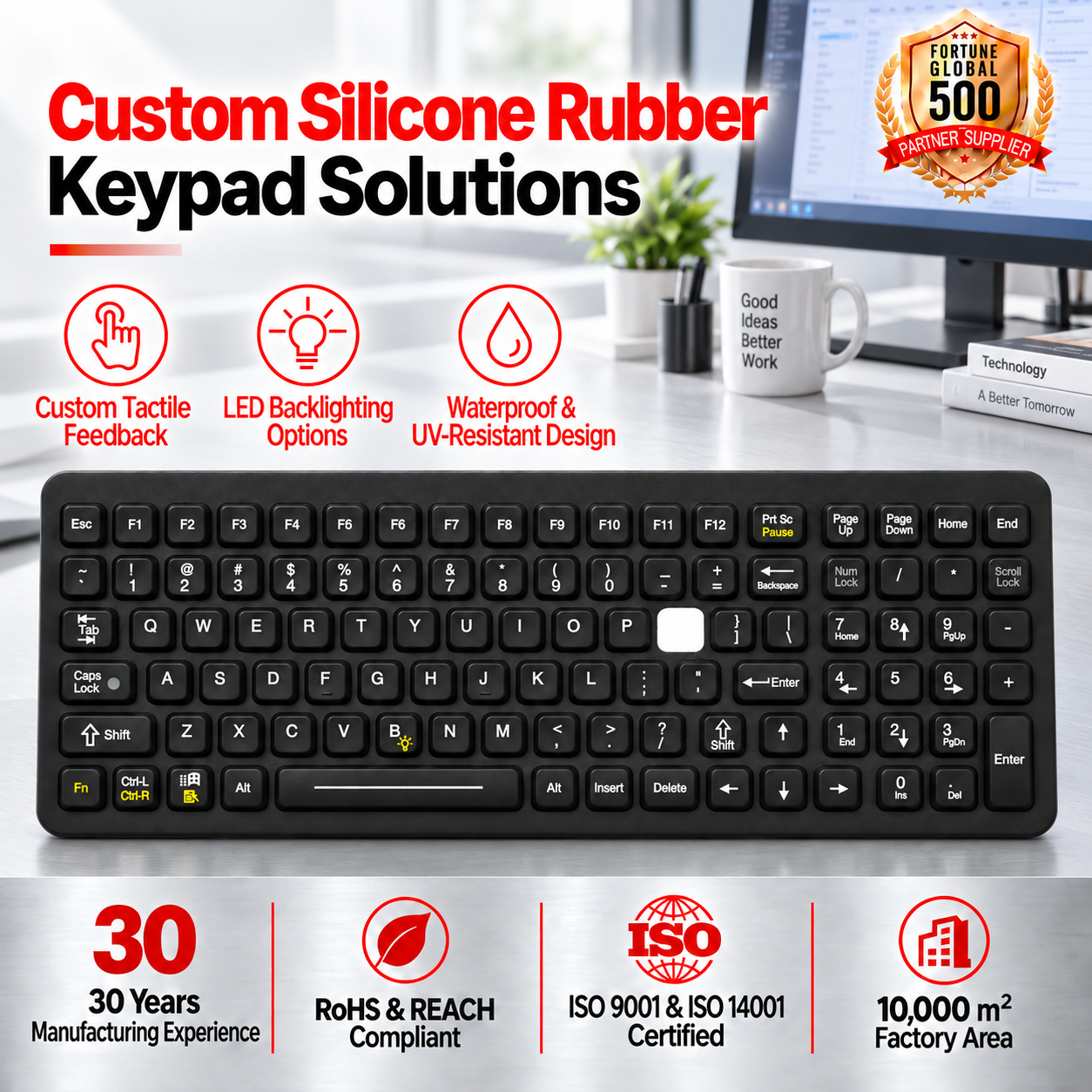
- Contact PillGold / Low-Ohm Carbon
- CoatingPU / Epoxy / Laser Etching
- SealingIP65 Ingress Resistance
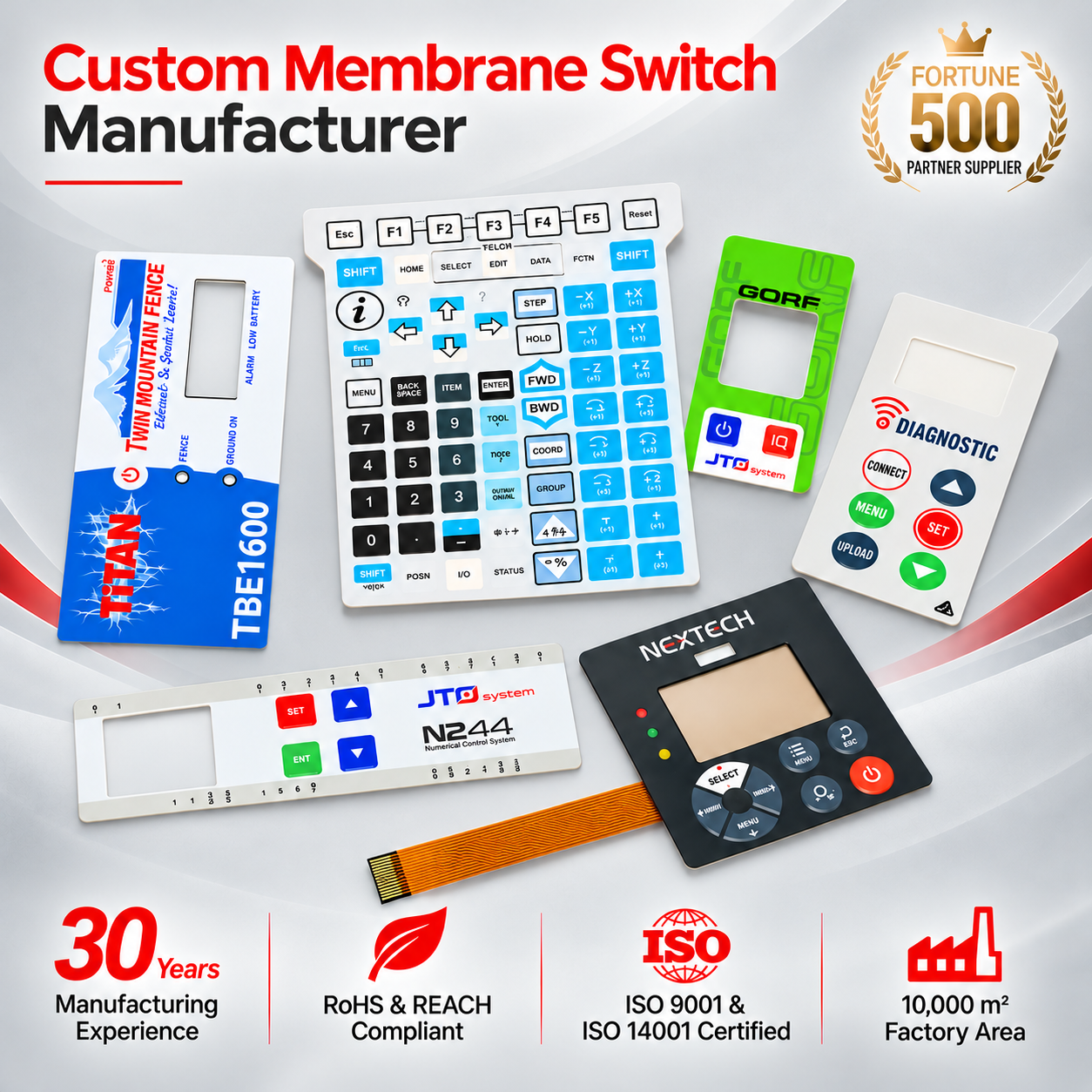
- DomesStainless Steel (Snap Dome)
- EmbossingPillow / Rim Tactile Ring
- Operating Temp-40°C to +85°C
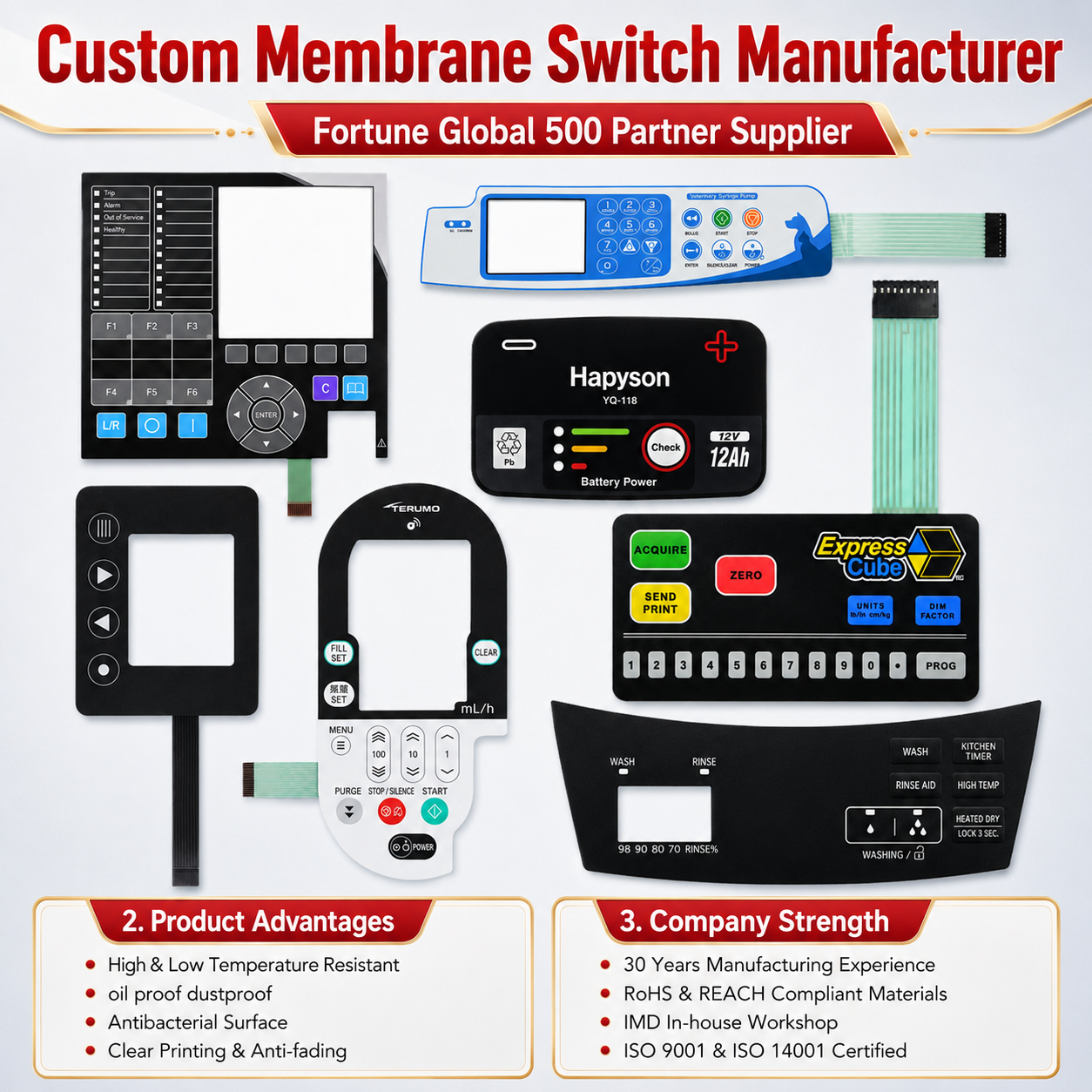
- Circuit TraceHigh-Reliability Copper FPC
- Pitch Connector1.0mm / 2.54mm ZIF Standard
- Ingress RatingIP67 Rated Perimeter Gasket
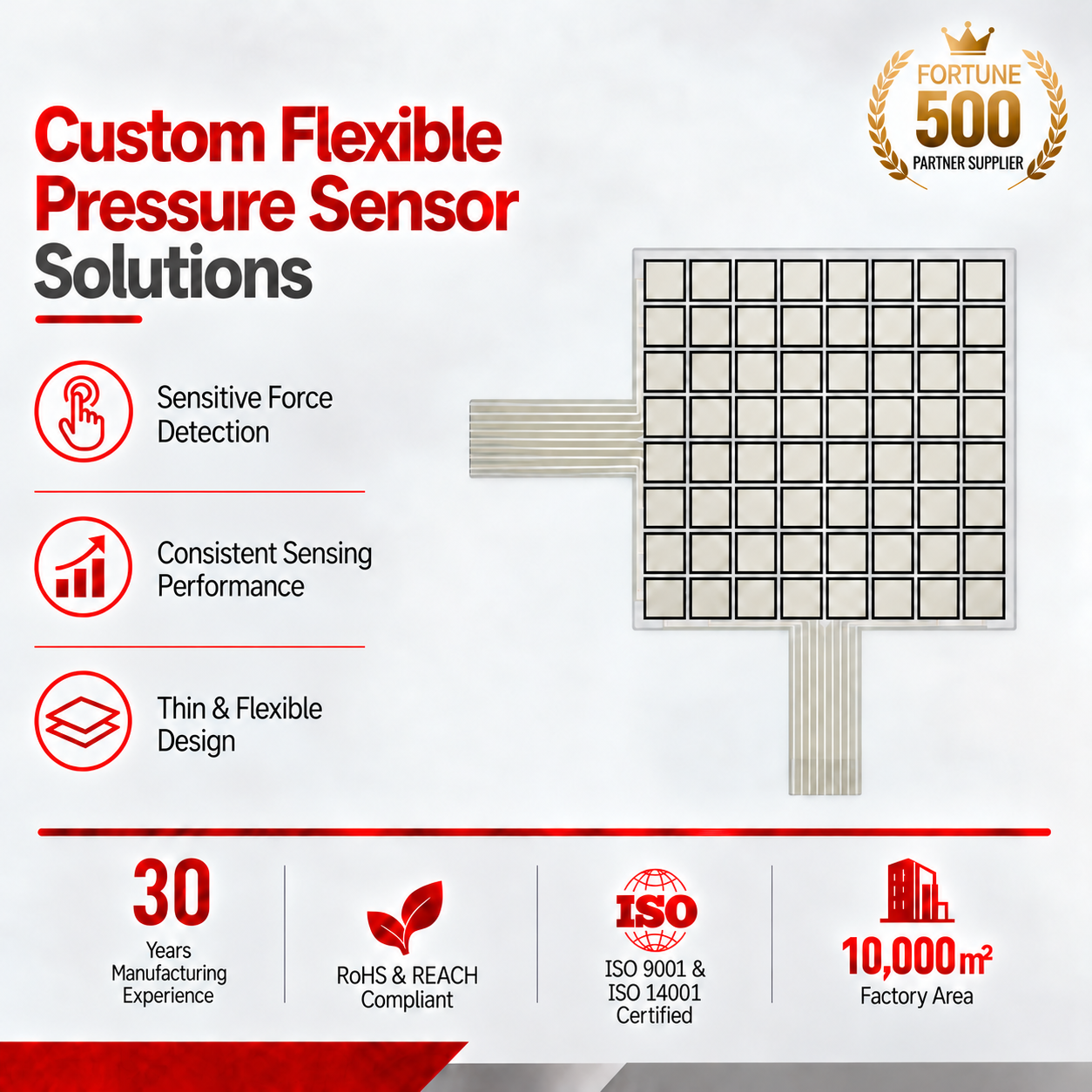
- Sensing TypePiezoresistive / Bend Sensor
- Thickness< 0.25mm Ultra-Slim Profile
- Dynamic Range20g – 10kg Calibrated
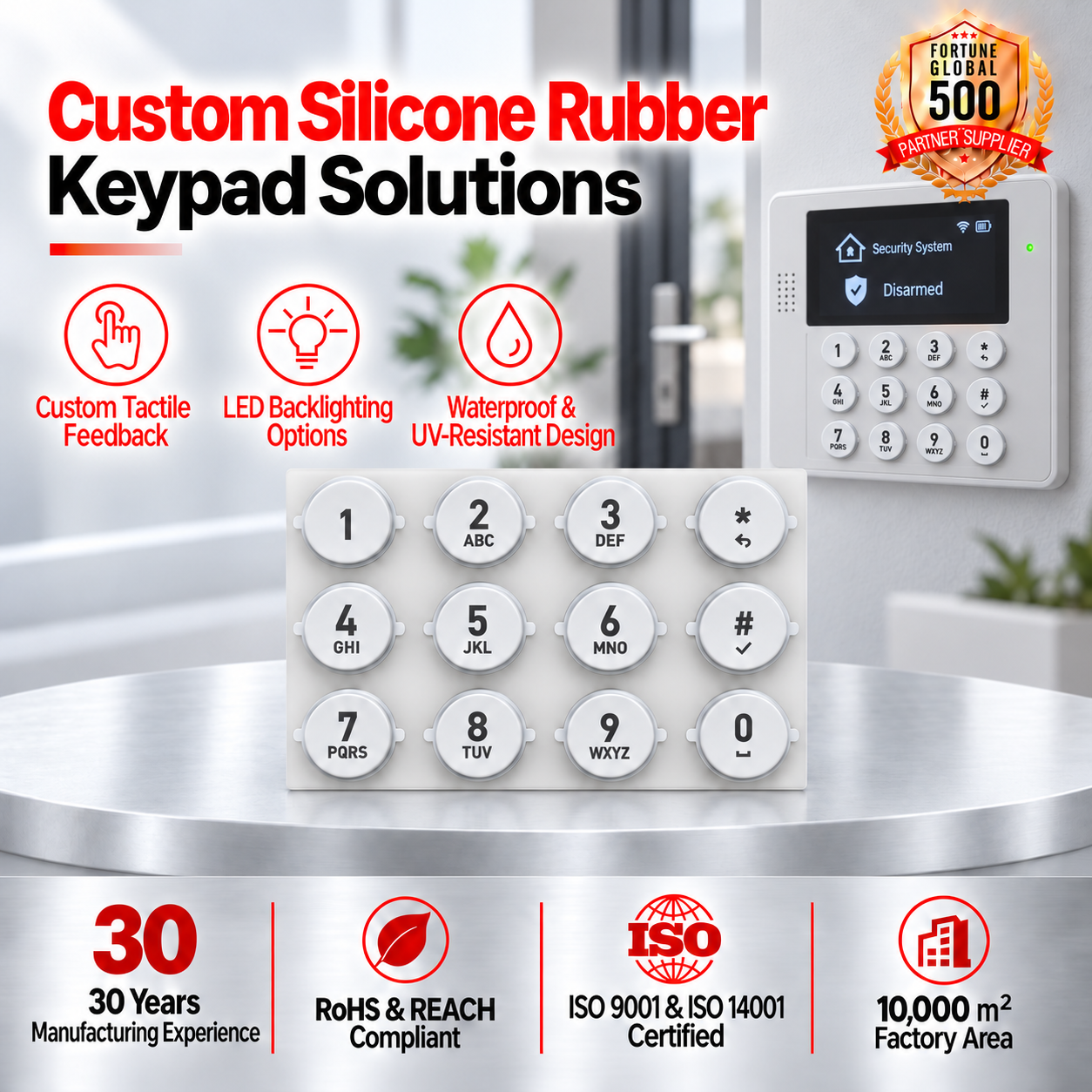
- Key StructurePlastic Keycap + Rubber Base (P+R)
- Legend FinishBacklit Laser Etch / Screen Print
- Abrasion ShieldUV-Cured Hard-Coating
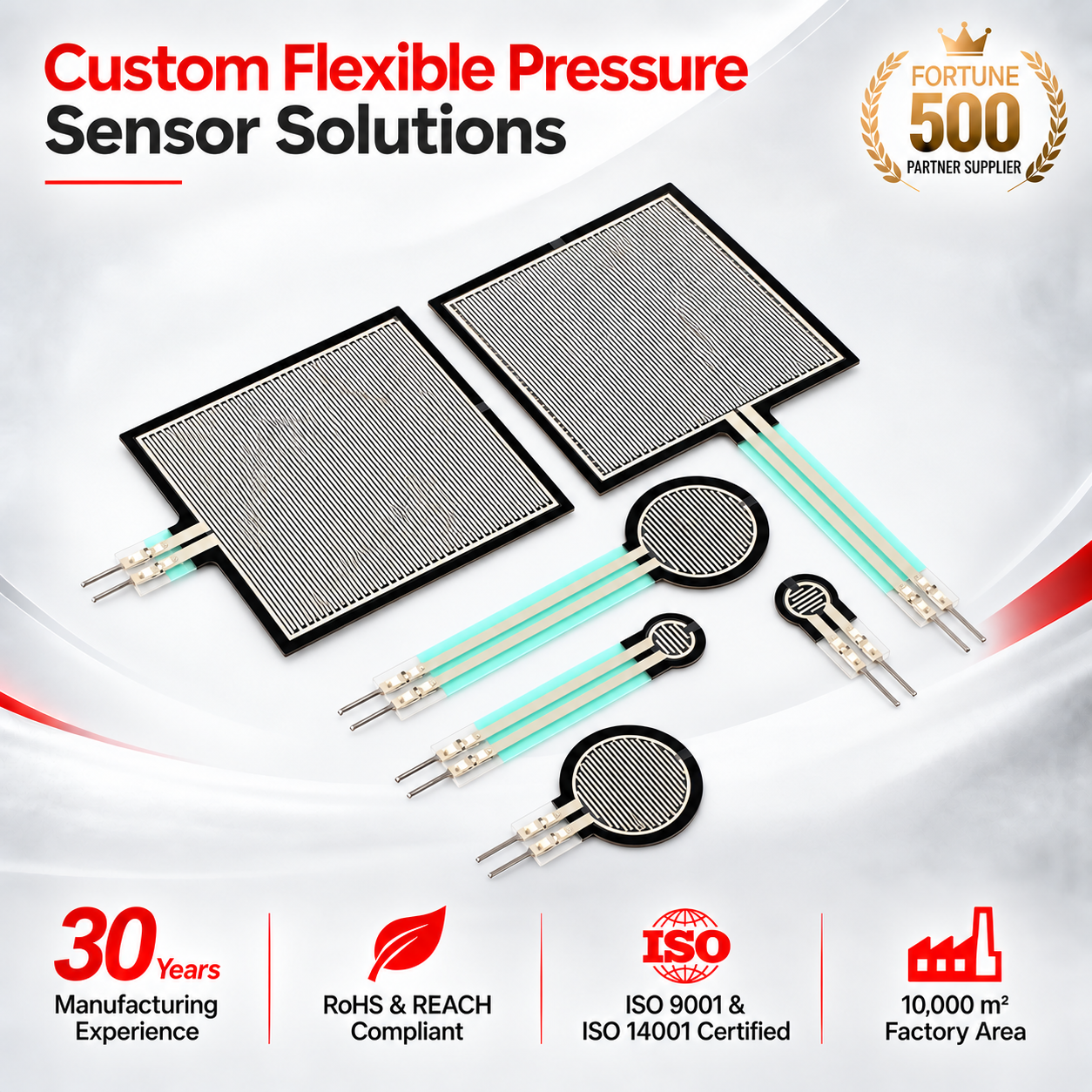
- Response Time< 1 Millisecond Micro-Delay
- Substrate BaseFlexible Conductive Polymer
- IntegrationDirect Microcontroller Ready
Engineering Whitepaper: Advanced Backlighting Architecture in Thin-Profile Membrane Switches
In modern industrial electronics and medical instrumentation, human-machine interface (HMI) reliability depends directly on visibility, ergonomics, and hermetic encapsulation. The engineering challenge of integrating illuminated feedback into a thin-film stack-up without causing optical hotspots, mechanical fatigue, or excessive thermal dissipation requires meticulous component selection and structural modeling.
At Dongguan AXRU Electronics Co., Ltd., our design-for-manufacturing (DFM) protocols evaluate three primary backlit delivery topologies tailored to the operational demands of European equipment designers: Light Guide Film (LGF) arrays, surface-mount (SMD) discrete LED matrices, and electroluminescent (EL) foils.
Technical Design Rule: LGF architectures utilize precisely calibrated micro-dots (ranging from 0.05mm to 0.25mm) etched onto optical-grade polycarbonate or PMMA film. These micro-dots refract light escaping from side-firing 0603 or 0805 ultra-thin LEDs, transforming point-source luminescence into perfectly uniform, diffuse planar backlighting with a profile thickness under 0.8mm.
Comprehensive Cross-Sectional Layer Stack-up Specifications
Achieving IP65 or IP67 sealing alongside distinct tactile confirmation (snap ratio between 45% and 65%) necessitates a multi-layer adhesive and circuit sandwich. The standard industrial backlit membrane stack manufactured in our Intertek-verified facility is constructed through the following precision-laminated layers:
| Layer Hierarchy | Engineering Material Selection | Thickness Range | Primary Function & Environmental Protection |
|---|---|---|---|
| 1. Graphic Overlay | Autotex F150 / F200 Polyester or Sabic 8B35 PC | 0.125mm – 0.200mm | Sub-surface screen-printed graphics, chemical resistance, anti-glare finish |
| 2. Overlay Adhesive | 3M 467MP / 3M 200MP High-Performance Acrylic | 0.050mm – 0.075mm | Optically clear bonding, shear strength across temperature cycles |
| 3. Light Guide Film (LGF) | Optical PMMA / Micro-Embossed Polycarbonate | 0.125mm – 0.250mm | Directs edge-lit photon paths across selected legend key regions |
| 4. Dome Retainer & Spacer | Polyethylene Terephthalate (PET) with Air Vents | 0.075mm – 0.125mm | Houses stainless steel domes; channels internal air pressure to prevent hydraulic lock |
| 5. Tactile Actuator Layer | Nickel/Gold-Plated Stainless Steel Snap Domes | 0.060mm – 0.100mm | Provides tactile feedback (200g–450g trip force); closes electrical contact |
| 6. Circuit Layer | Silver-screened PET / Rolled Annealed Copper FPC | 0.075mm – 0.150mm | Signal transmission lines; carries mounted side-firing LEDs and thermistors |
| 7. Rear Mount Adhesive | 3M 300LSE / 3M 468MP Heavy-Duty Adhesive | 0.100mm – 0.200mm | Anchors complete assembly to aluminum, powder-coated steel, or ABS housings |
Optical Isolation and Dead-Front Masking Techniques
A critical engineering failure in low-quality membrane keyboards is light bleed—photons leaking into adjacent keys or unlit annunciator windows. Our printing lines resolve this via high-density carbon/silver light-blocking blackout masks printed beneath translucent colors. Translucent display windows for 7-segment LED readouts or LCDs maintain light transmission rates above 88%, while non-active keys achieve total opacity (optical density OD > 4.0), providing a clean "dead-front" appearance until illuminated.
Custom HMI Application Scenarios Across Cluj-Napoca’s Tech Clusters
Cluj-Napoca, celebrated as Romania’s "Silicon Forest," integrates high-level software engineering with specialized hardware manufacturing. From the Tetarom Industrial Parks to specialized laboratories, our custom backlit membrane switches and tactile interfaces solve harsh environmental and functional challenges.
Automotive Testing & Diagnostic Terminals (Jucu Industrial Basin)
Located minutes outside Cluj, automotive component producers and test benches require input interfaces resilient against hydraulic fluid, mineral oils, and engine heat. Our Autotex hard-coated PET overlays paired with copper FPC circuits deliver continuous actuation under extreme vibration, operating reliably across thermal variations of -40°C to +85°C.
Smart Factory Automation Panels (Tetarom I & II Hubs)
Modern manufacturing cells in Cluj-Napoca’s industrial corridors rely on programmable controllers (PLCs) and robotic control cabinets. In environments with metallic dust and high electromagnetic noise, our membrane switches equipped with continuous aluminum or printed silver grid ESD shields suppress up to 15kV electrostatic discharges without false actuations.
Medical & Life Science Instrumentation (Cluj Innovation Clusters)
With medical R&D institutions and private healthcare equipment manufacturers flourishing across Transylvania, cleanability is paramount. Our front overlays incorporate Microban® antimicrobial treatment and hermetic IP67 perimeter bonding, allowing repeated sanitization with isopropyl alcohol, chlorine bleaches, and ammonium hospital detergents without graphic discoloration.
Emerging Engineering Trends in Cluj-Napoca’s Hardware Ecosystem
As Transylvanian OEMs transition toward connected cyber-physical systems and energy-efficient operations, the mechanical requirements placed on user interfaces have evolved beyond simple circuit bridges.
Low-Power Micro-LED Integration
Energy harvesting and battery-backed IoT field devices manufactured in Cluj require ultra-low power consumption. Our sub-surface light guide systems achieve equal luminance (over 120 cd/m²) utilizing up to 70% fewer active LEDs compared to standard perimeter arrays.
Capacitive-Tactile Hybrid Assemblies
Bridging smooth wipe-clean touch technology with tactile confirmation. Cluj engineers frequently request assemblies pairing capacitive slider keys for menu navigation with tactile snap domes for high-consequence machine E-stop or power triggers.
In-Mold Decoration (IMD / IML)
Shifting from flat rectangular faceplates to 3D contoured enclosures. IMD molds the printed graphic and sensory film directly into the injection-molded resin, producing completely seamless automotive cockpits and consumer medical shells without gaps.
RoHS 3 & REACH Compliance
Stringent EU chemical regulations necessitate clean material traceability. All adhesives (3M, Nitto), polyester substrates (MacDermid, Toray), conductive inks (Henkel, Acheson), and lead-free solders used in our facility carry full declarations of conformity for easy EU importation.
Why Cluj-Napoca Hardware Teams Partner with AXRU Electronics
With 12 years of specialized interface manufacturing, an Intertek-verified 10,000㎡ facility, and a workforce of 121 technicians, we manage screen printing, FPC bonding, precision lamination, and automated testing under one roof.
100% Final Electrical Inspection
No membrane switch exits our line unchecked. Automated continuity testers check circuit loops, insulation resistance (typically >100MΩ at 100V DC), contact bounce (<5ms), and forward voltage drop on every embedded LED diode, preventing line shutdowns at your Romanian assembly plants.
Dedicated Actuation Life Cycle Testing
Equipped with automated pneumatic and mechanical life test rigs, our lab verifies key durability up to 5,000,000 actuations. Force-displacement analyzers plot real-time snap curves, ensuring consistent tactile response throughout prolonged field deployment.
Programmable Climate Chambers
To safeguard against the humid continental climate and severe winter chills of Cluj County (-25°C to +40°C), production batches undergo constant thermal cycling and high-humidity dwell tests (-40°C to +85°C at 95% RH) to verify zero bubble formation or adhesive creep.
Ink Rub & Decolorization Verification
Using automated linear abrasion machines loaded with solvents (alcohol, MEK, acetone), we guarantee sub-surface printed legends never wear out. The ink remains sealed behind optical polyester layers, completely untouchable by operator fingers or cleaning wipes.
Tensile & Peel Strength Analyzers
Delamination of flexible tail connectors or multi-layer acrylic adhesives ruins field reliability. We perform 90° and 180° peel adhesion checks on calibrated tensile rigs, ensuring high adhesive shear limits compliant with FINAT testing standards.
Accelerated UV Yellowing Resistance
Industrial machinery situated near windows or outdoors suffers intense solar radiation. We test materials in accelerated QUV chambers to guarantee zero yellowing, haze, or embrittlement of transparent display windows over long deployment horizons.
Frequently Asked Questions for Romanian & EU Sourcing Teams
Clear, direct answers regarding custom tooling, technical drawings, CE/RoHS compliance, sample lead times, and customs clearance into Cluj-Napoca.