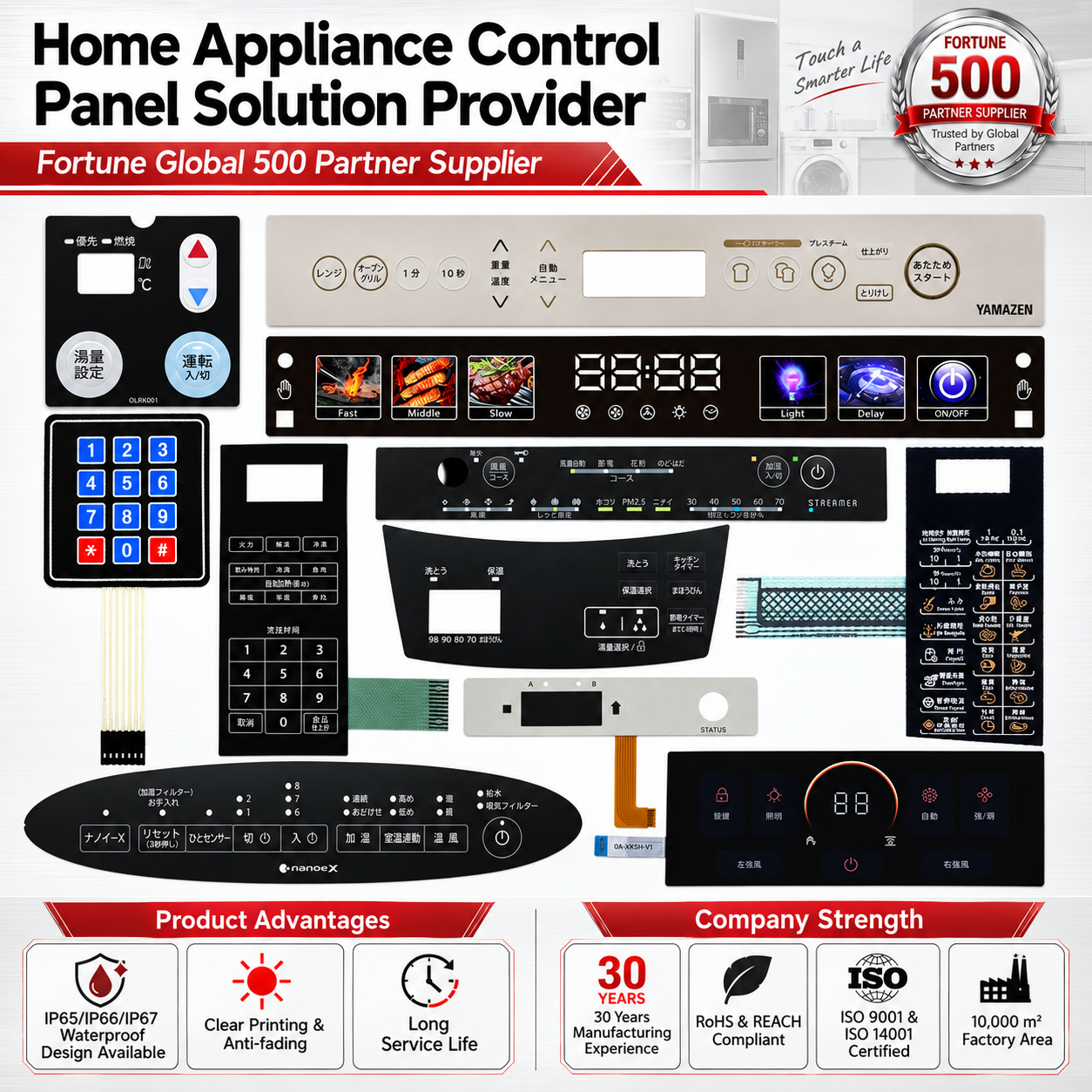
Custom Capacitive Touch Screen Panel Screen Printing Graphic Overlay Membrane Switch for Home Appliance
- OverlayOptical Grade PET
- TechnologyCapacitive Multi-Touch
- ComplianceRoHS, REACH
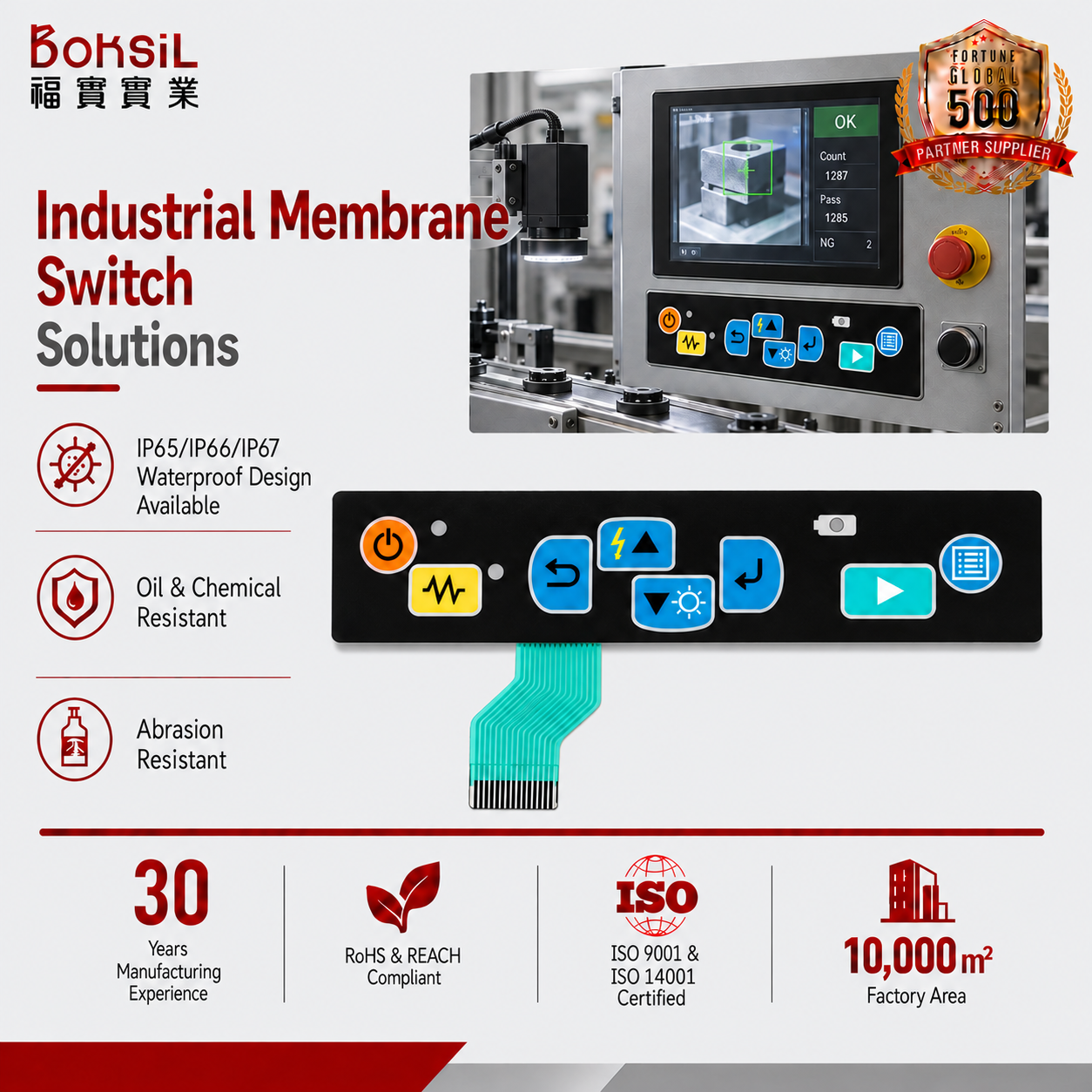
Manufactured under stringent ISO standards within our 10,000㎡ Dongguan plant, our HMI products support rapid DFM sampling and end-to-end integration for the Delaware Valley technical cluster.
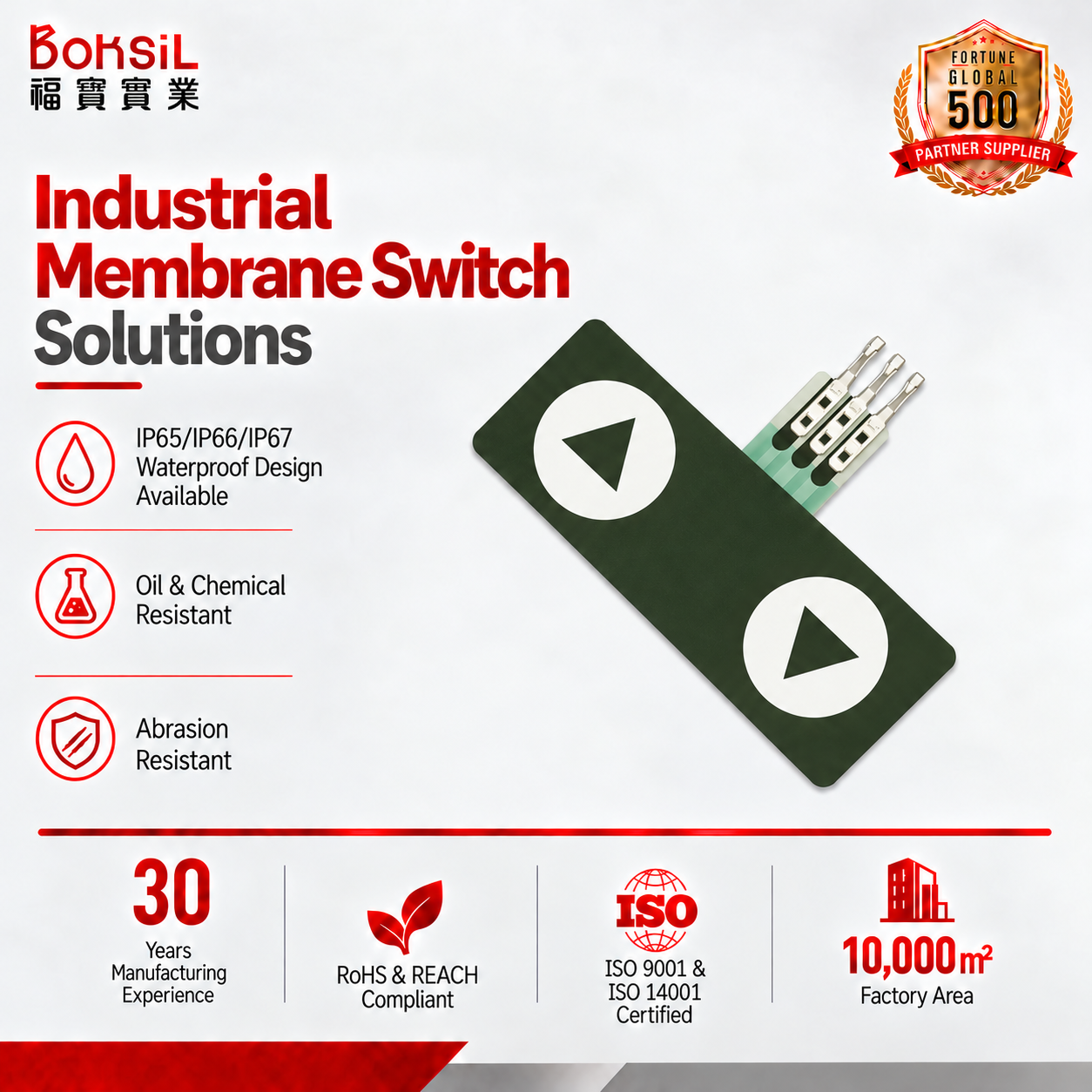
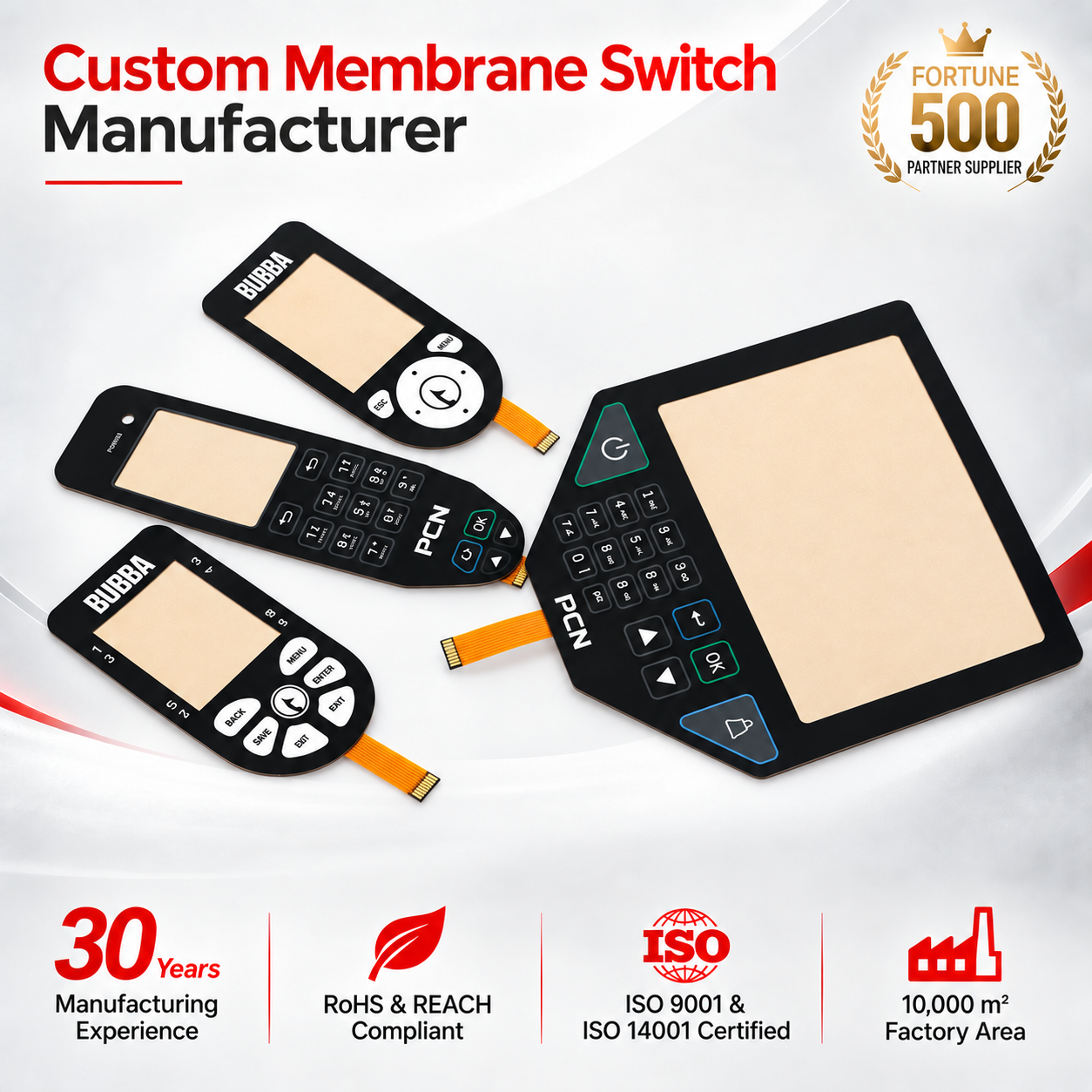
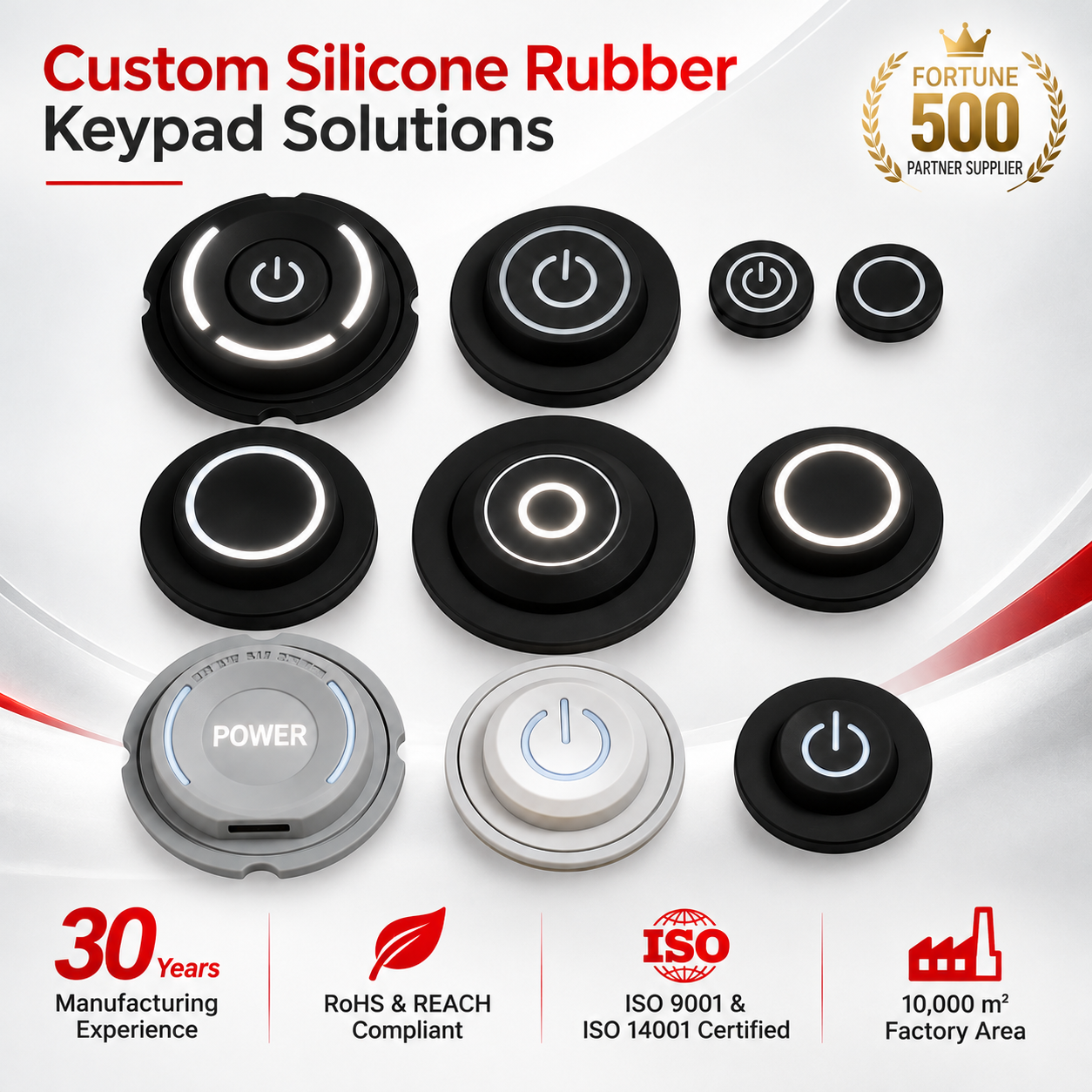
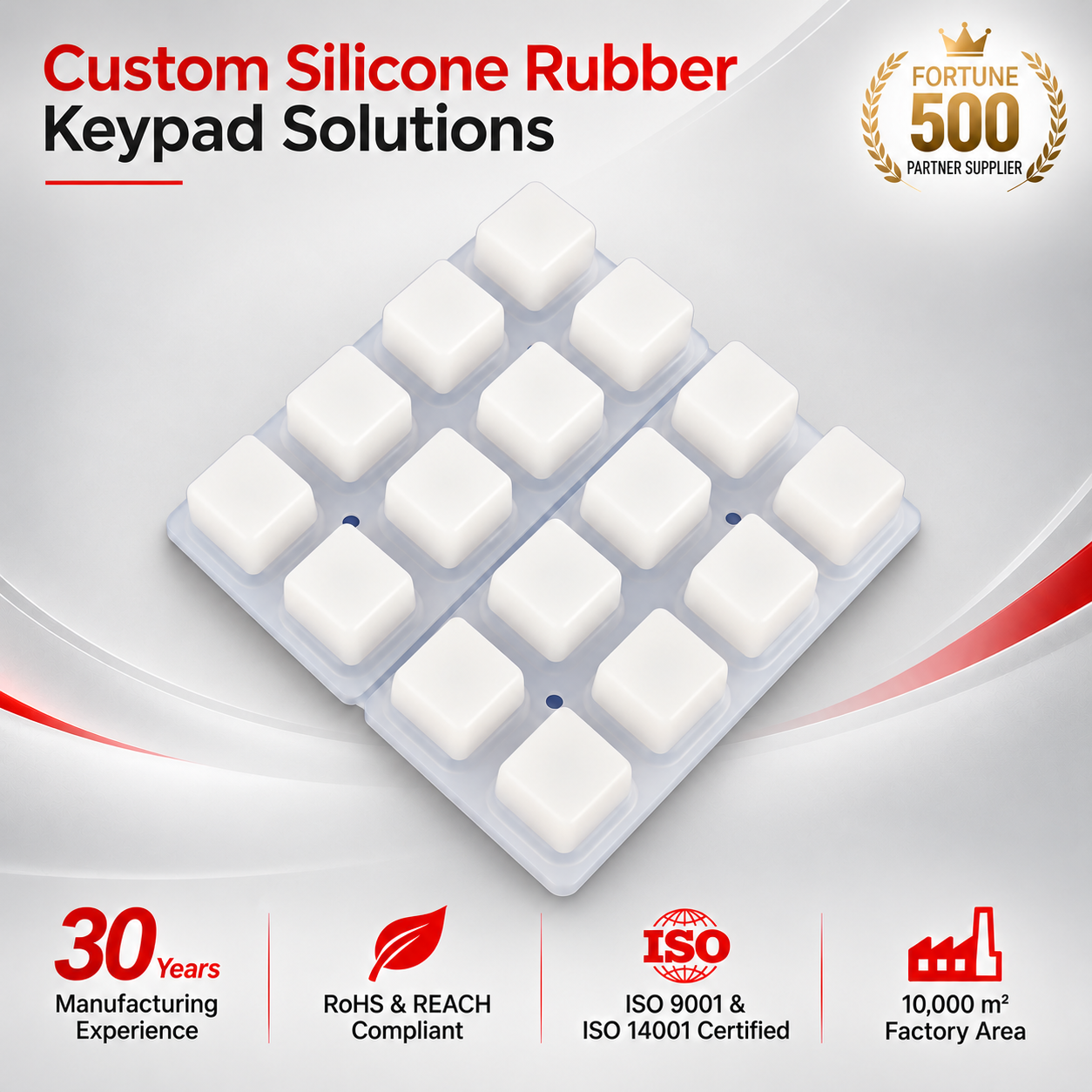
Analyzing substrate selection, chemical resistance profiles, and electrical continuity under demanding industrial life cycles.
Unlike standard Polycarbonate (PC) which is prone to stress-cracking under repetitive flexure or aggressive cleaning chemicals, oriented Polyethylene Terephthalate (PET) provides exceptional tensile strength (over 170 N/mm²), heat resistance up to 120°C, and unmatched resistance against aggressive sanitizers like isopropyl alcohol and chlorine solutions.
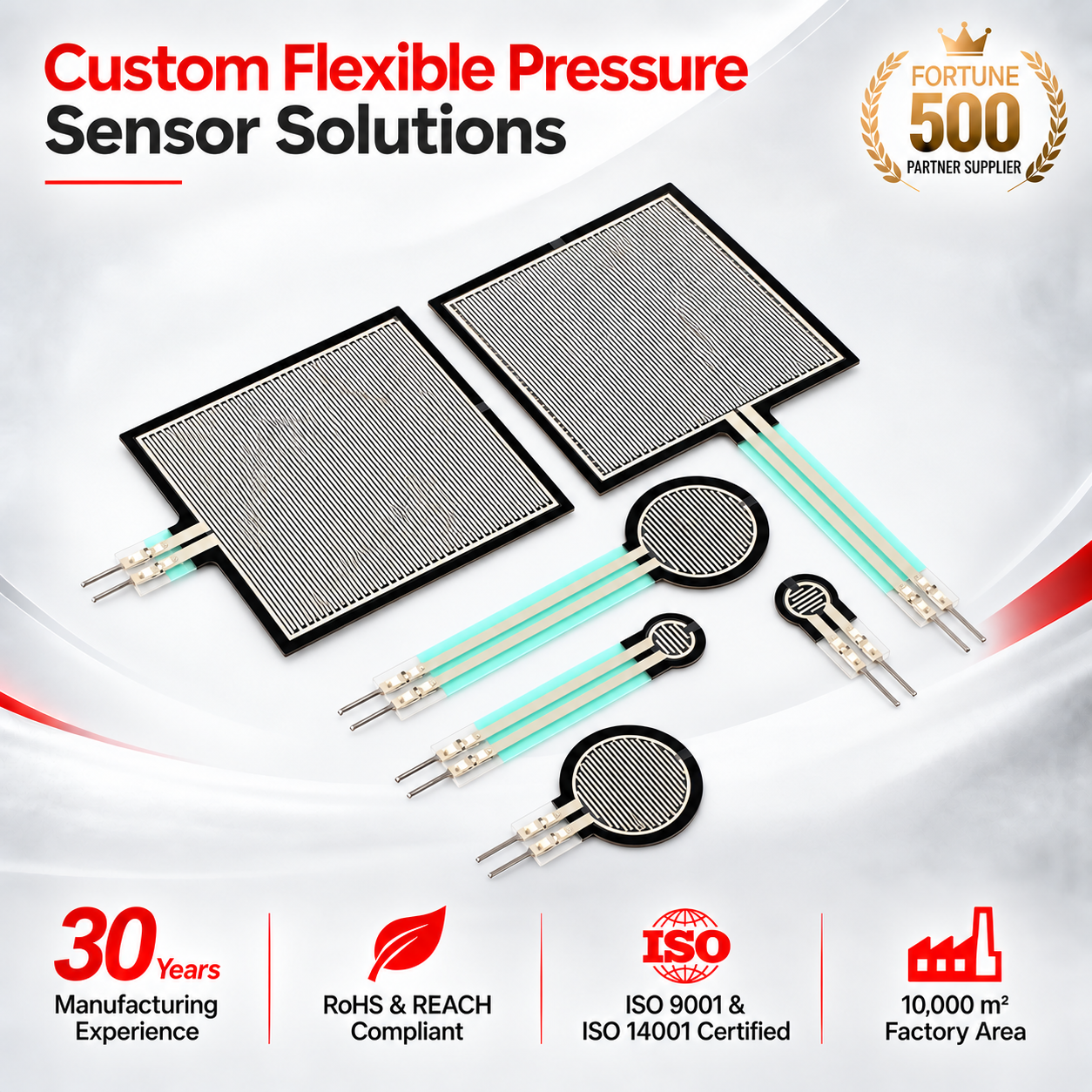
We formulate proprietary conductive silver inks backed with carbon overprinting to completely mitigate silver migration under high relative humidity. For ultra-dense connector pitches down to 0.5mm, we produce Polyimide Flexible Printed Circuits (FPC) with rolled annealed copper traces, achieving circuit resistance below 1 Ohm per run.
Using laser-ablated acrylic adhesive systems (specifically 3M 467MP, 468MP, and VHB foams), we engineer unbroken perimeter pressure gaskets. Tail exits are manufactured with integrated barrier rings, allowing human-machine interfaces to undergo rigorous low-pressure steam, splash, and caustic sterilization routines without delamination.
| Physical & Electrical Parameter | Standard Screen-Printed Silver PET | Copper Clad Polyimide (FPC) | Capacitive Solid-State PET Film |
|---|---|---|---|
| Actuation Lifespan | 1,000,000 to 3,000,000 Cycles (Tactile) | >5,000,000 Cycles (Metal Dome) | Virtually Unlimited (Zero Contact Wear) |
| Minimum Contact Resistance | < 50 Ω (Trace length dependent) | < 1 Ω (Ultra-low trace resistance) | N/A (Solid state capacitive sensing) |
| Component Soldering Capabilities | Conductive Epoxy Bonding (SMD LEDs) | Reflow Solderable (Microcontrollers, LEDs) | SMD Controller bonding on circuit tail |
| Operating Temperature Envelope | -20°C to +70°C (-4°F to 158°F) | -40°C to +105°C (-40°F to 221°F) | -30°C to +85°C (-22°F to 185°F) |
| Bending Radius Tolerances | R ≥ 2.0 mm | R ≥ 0.8 mm (Dynamic flex rating) | R ≥ 1.5 mm |
From the biotech corridors of University City to advanced manufacturing in Montgomery and Bucks counties, our PET switches empower mission-critical hardware.
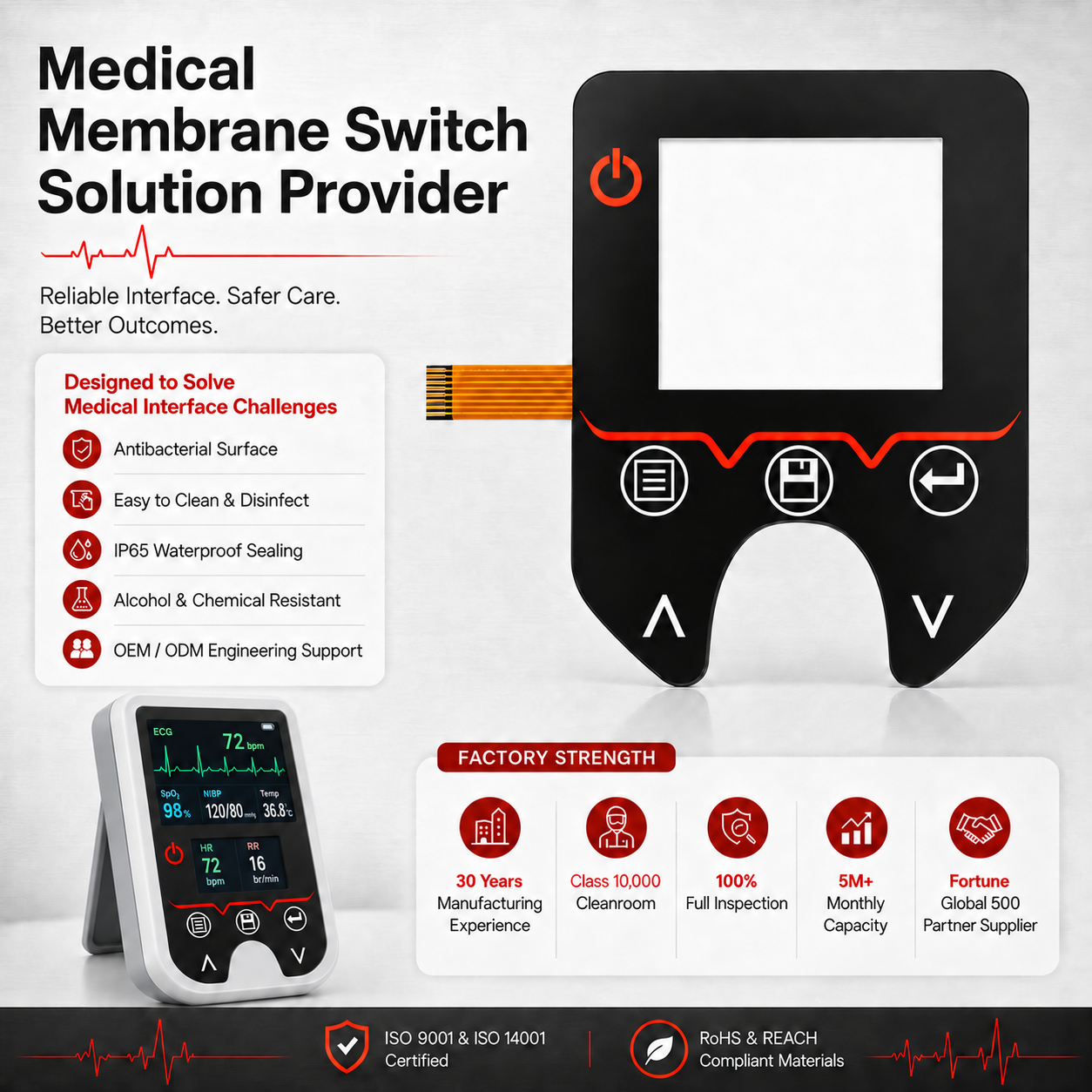
The Philadelphia region stands as a global hub for cell and gene therapy, clinical research, and hospital equipment. Our medical-grade PET graphic overlays feature antimicrobial hard-coats that resist degradation from bleach and hospital-grade germicides, making them ideal for patient monitors, infusion pumps, and automated laboratory centrifuges.
Positioned along key Mid-Atlantic transit and distribution lines, regional packaging facilities, chemical processing plants, and CNC machine builders require ruggedized interfaces. We supply IP65-sealed, metal-dome keypad modules capable of tactile actuation through thick gloves while resisting airborne grease and process humidity.
Serving defense contractors and marine electronics manufacturers operating around the Philadelphia Navy Yard and South Jersey tech corridors, our custom membrane switches include full EMI/RFI copper or aluminum foil shielding layers to prevent interference in high-frequency tactical and communication enclosures.
How engineering procurement teams in Pennsylvania, New Jersey, and Delaware are evolving their specifications.
OEM hardware designers are phasing out bulky exterior indicator bulbs. The prevailing standard demands Light Guide Film (LGF) or ultra-thin side-firing SMD LEDs embedded directly between membrane layers. This provides crisp, dead-front iconography and balanced light distribution without expanding panel depth.
Rather than choosing purely flat graphic overlays, engineering teams increasingly specify 3D molded silicone rubber keymats aligned over tactile membrane circuits. This architecture delivers positive travel, backlit key legends, ergonomic finger wells, and true IP67 perimeter sealing in a unified assembly.
Supply chain velocity is vital for Philadelphia developers competing on short medical and smart-grid product launch windows. Procurement managers prioritize offshore manufacturing partners capable of providing fast DFM feedback, precision plotter-cut engineering prototypes, and full lot-traceable inspection sheets within days.
Combining world-class manufacturing scale with rigid reliability validation at our Intertek-verified production campus.
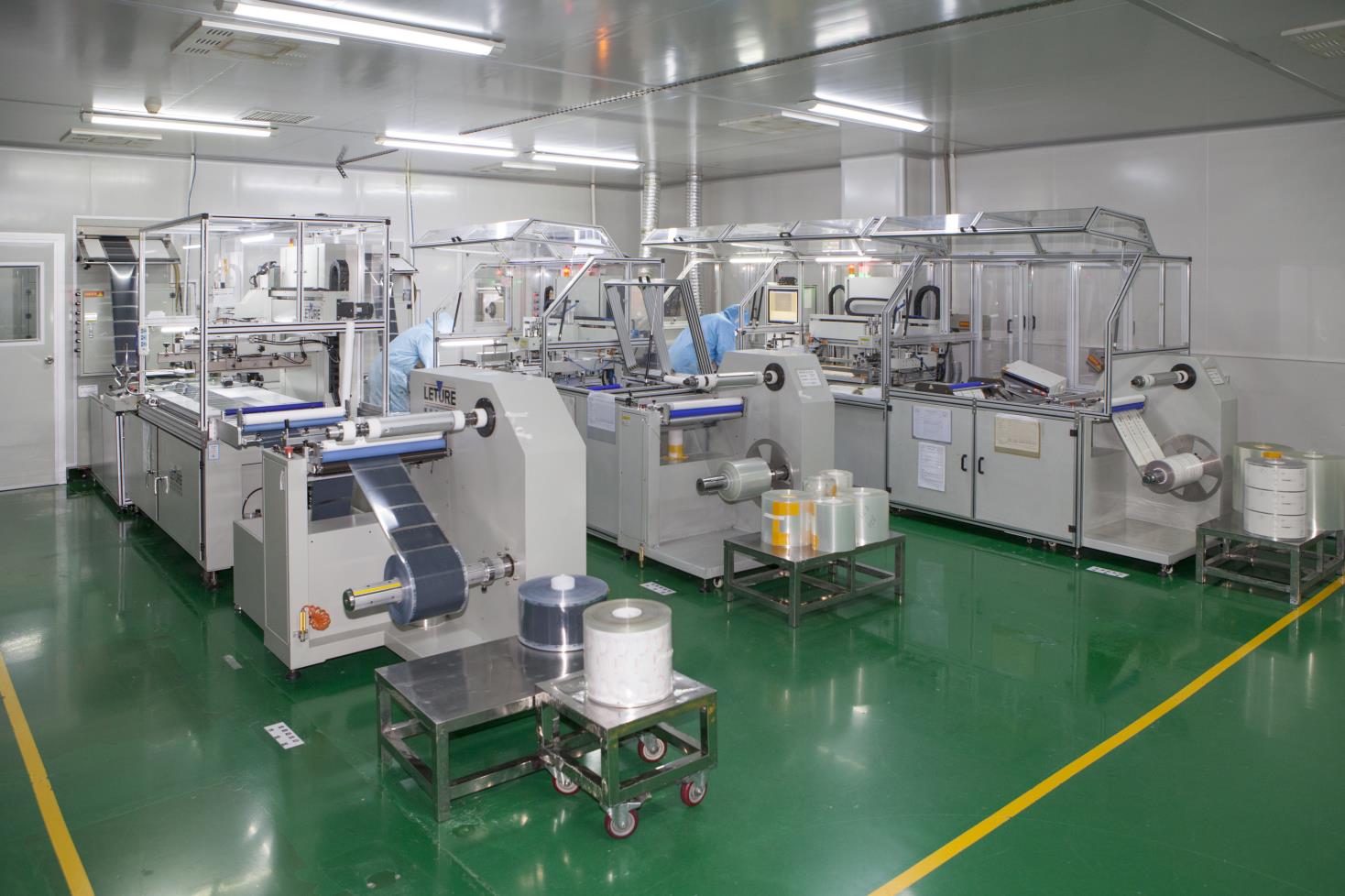
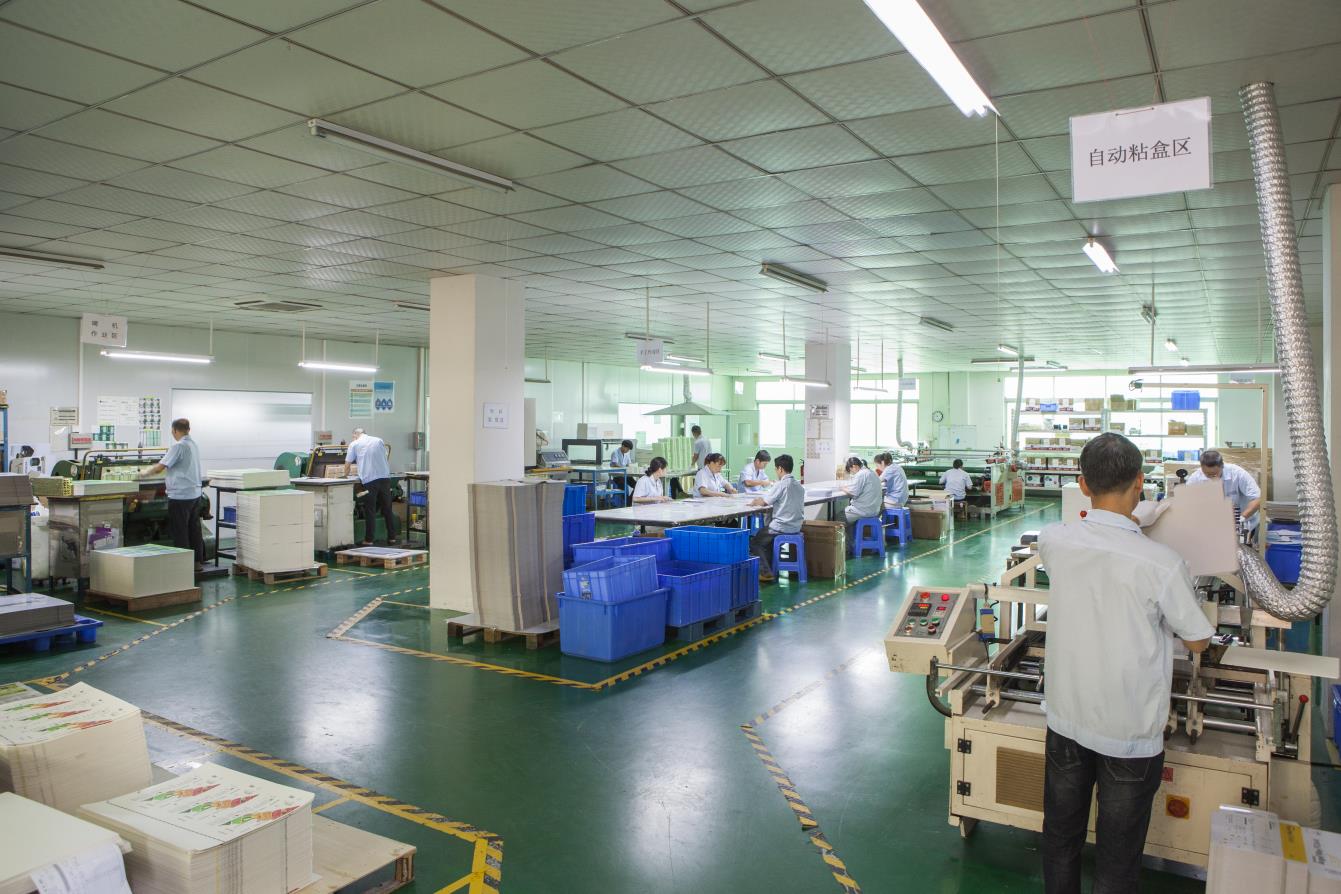
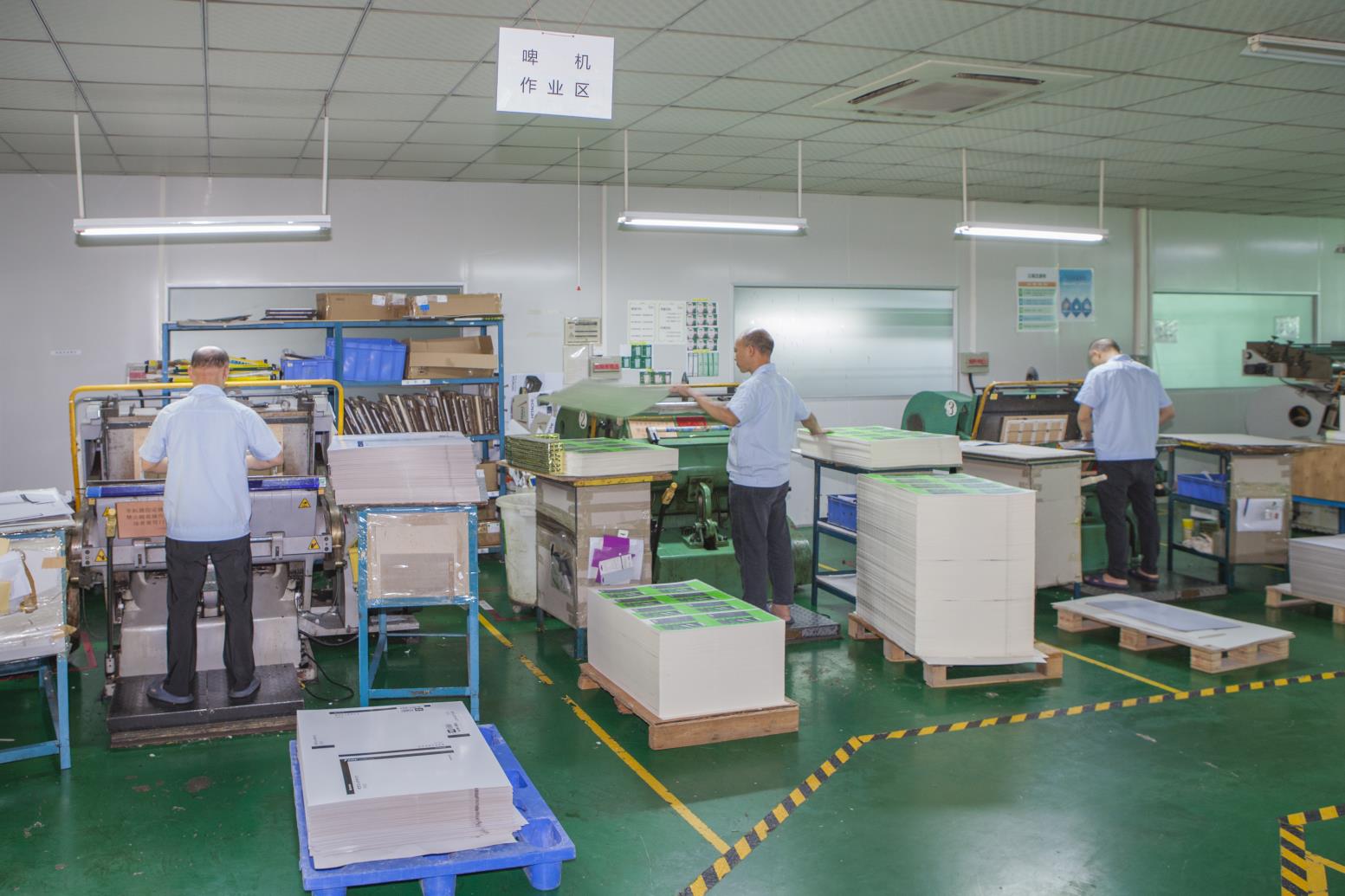
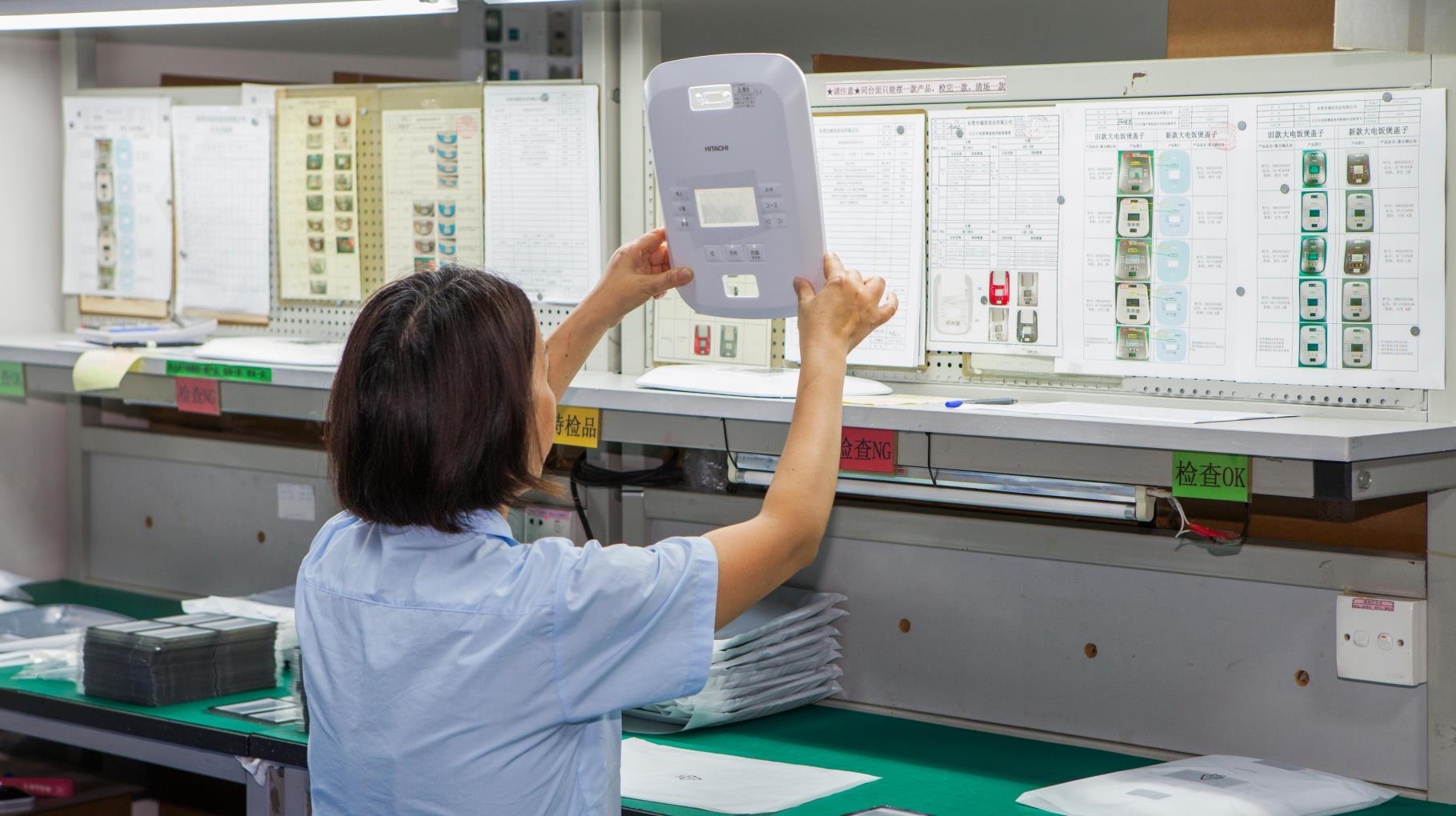
From screen printing in dust-free workshops to automated adhesive lamination and precision flatbed die-cutting, every production phase is handled internally. We maintain strict control over layer registration (within ±0.05mm), tail bonding integrity, and clean optical windows, preventing cross-supplier delays.
Our 10,000㎡ manufacturing floor and 121-member technical workforce have been audited and verified on-site by Intertek. We serve Fortune 500 equipment builders across North America, backing every shipment with complete material certifications (RoHS, REACH) and detailed First Article Inspection (FAI) reports.
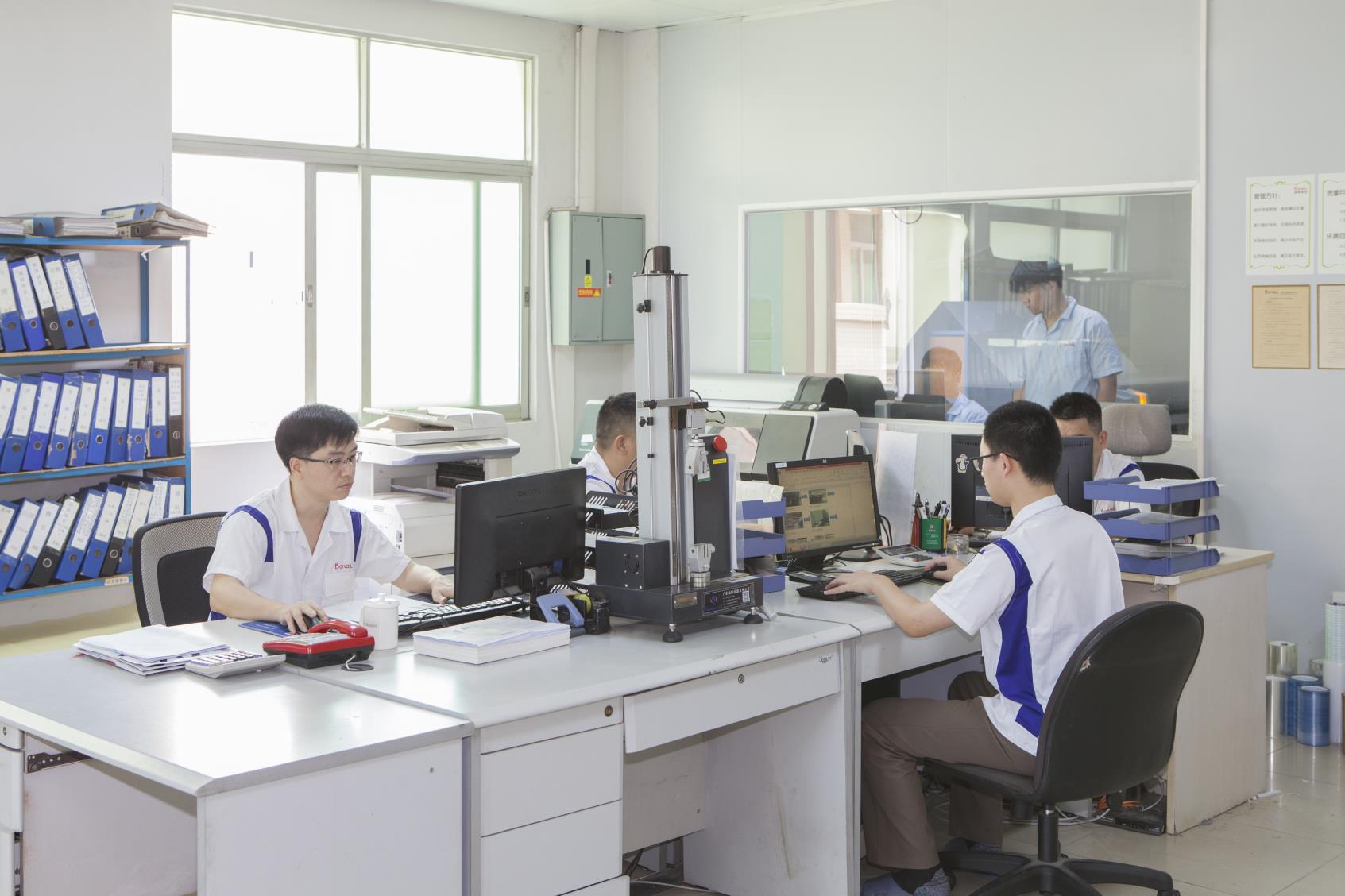
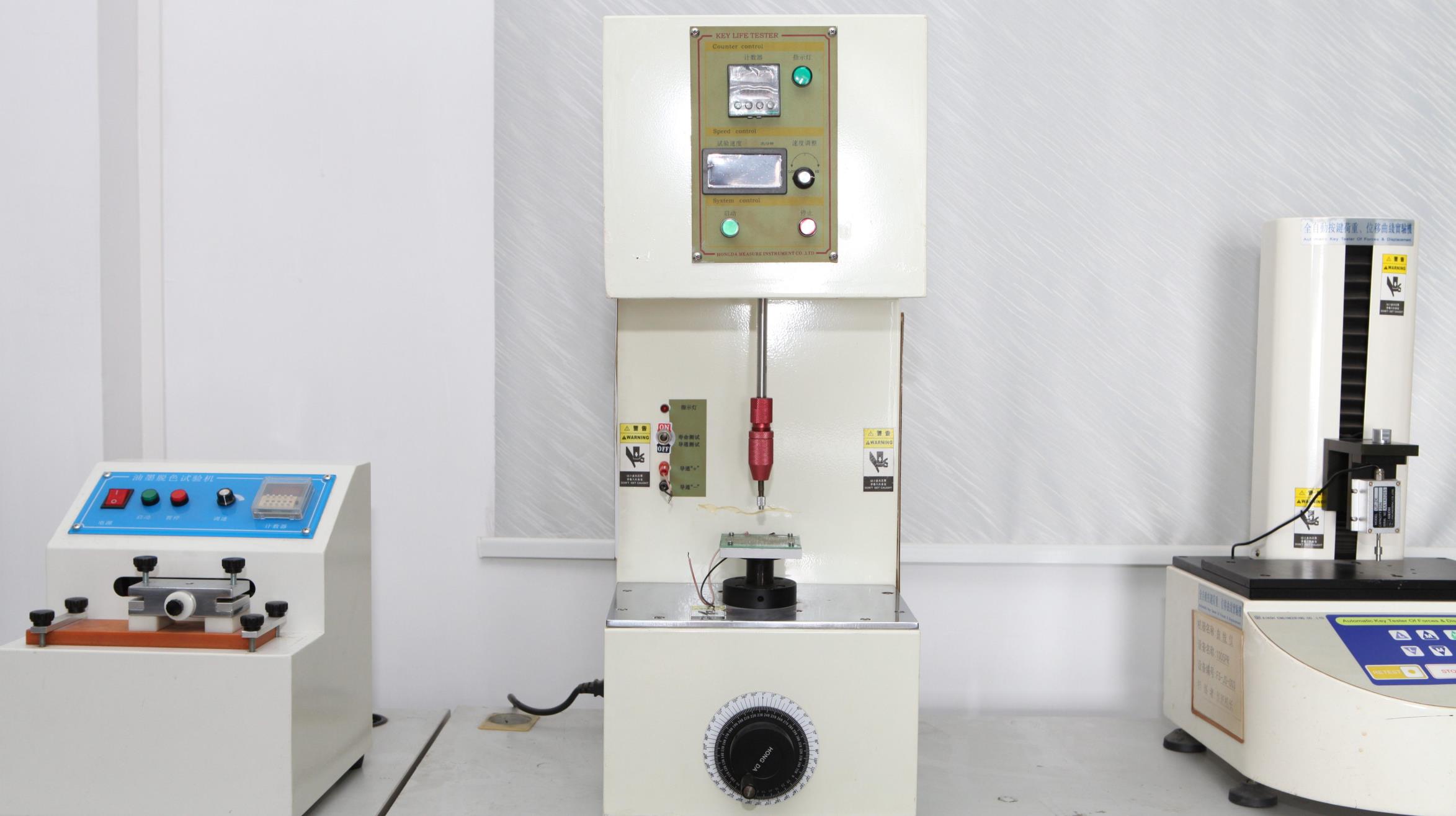
Every batch undergoes electrical verification (100% check for opens, shorts, and LED function). Our laboratory conducts key life cycling, automated force-displacement plotting, tensile adhesive peel tests, solvent rub resistance testing, and climate simulation inside programmable temperature and humidity chambers.
Clear, direct answers regarding logistical timelines, prototyping, environmental sealing, and file submission.
Whether you require a rapid prototype build for a Philadelphia-based medical device development or high-volume production for industrial control consoles, our engineering team is ready to analyze your stack-up and provide prompt DFM feedback.