High-Durability Membrane Faceplates & Precision Keypads
Manufactured under strict ISO cleanroom parameters, our membrane front panels, silicone elastomer units, and capacitive sensors provide optical transparency, tactile feedback, and total chemical barrier protection.
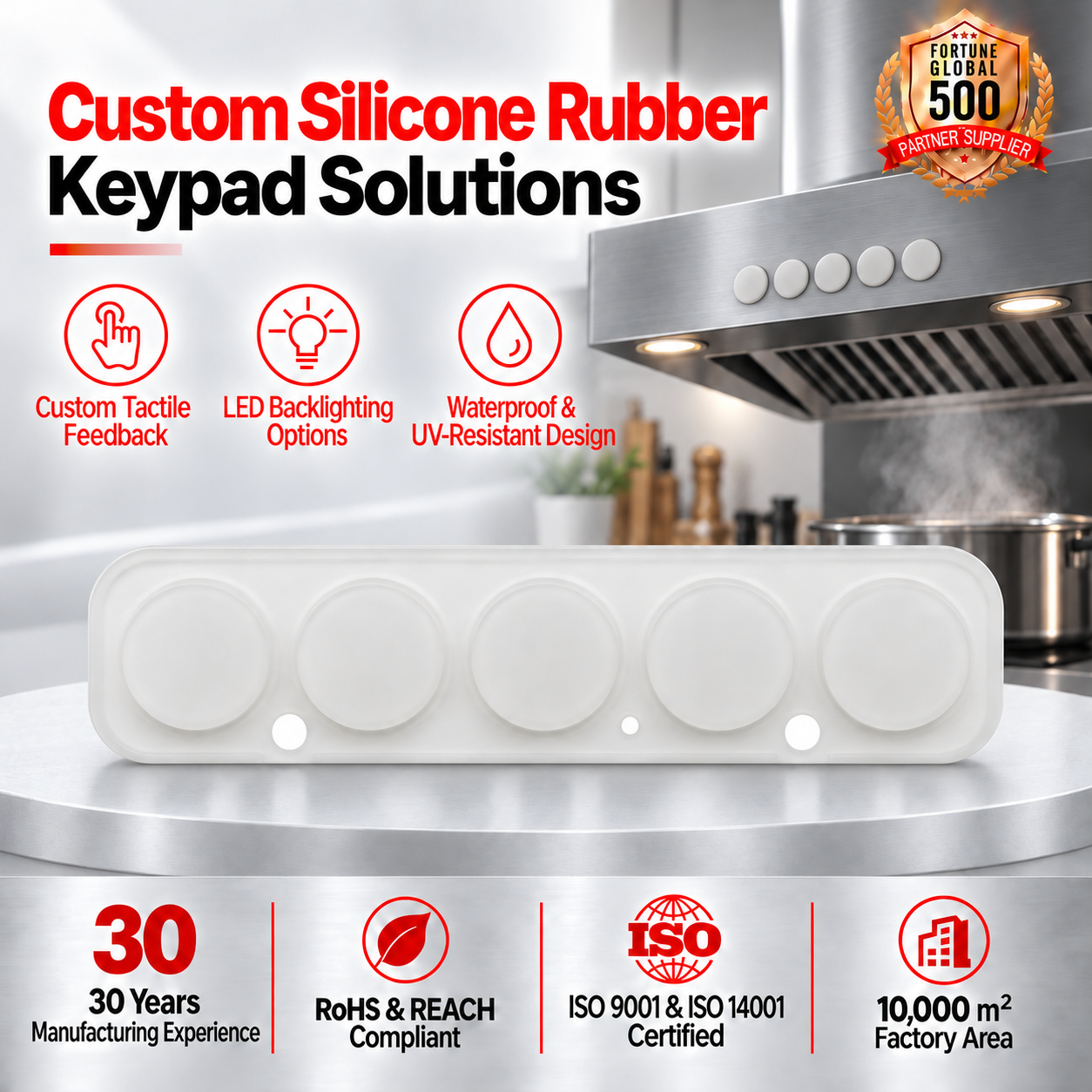
Home Appliance 5 Circular Soft Silicone Rubber Keypad Front Panel Button Unit Momentary Customized Manufacturer
- Contact Type: Conductive Carbon / Metal
- Ingress Level: IP65 Water-Repellent
- Life Expectancy: >1,000,000 Cycles
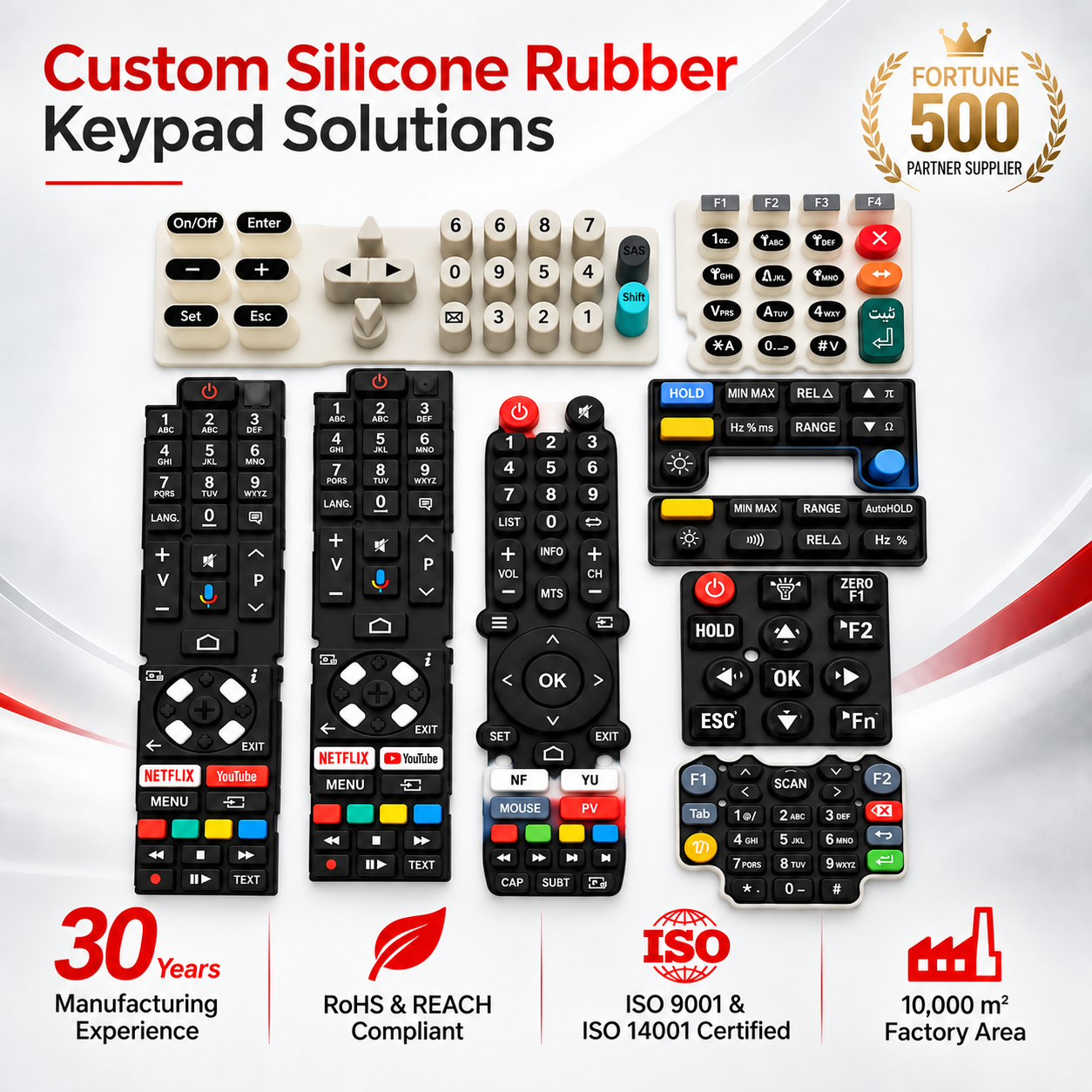
OEM/ODM Custom Special Color Silicone Rubber Elastomer Keypad Membrane Switch Button for Remote Controller
- Color Matching: Pantone / RAL Verified
- Actuation Force: 120g – 250g Customizable
- Surface Coating: PU / Epoxy Anti-Scratch
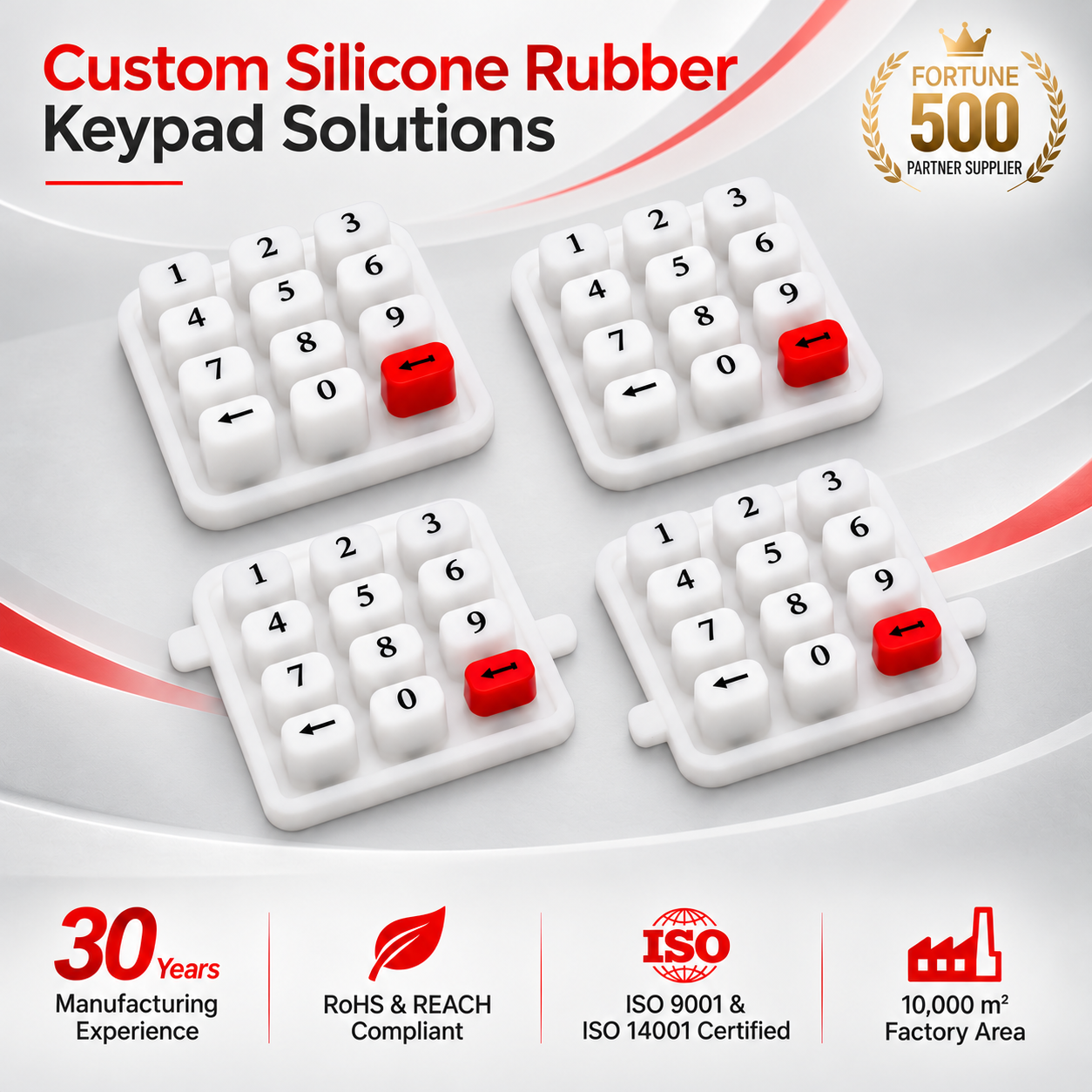
Custom Manufacturer Epoxy Silicone Rubber Keypad oem/odm with low Profile Design Durable and Waterproof
- Top Coating: Optical Drop Gel Epoxy
- Moisture Seal: Hermetic Perimeter Sealing
- Operating Temp: -20°C to +75°C
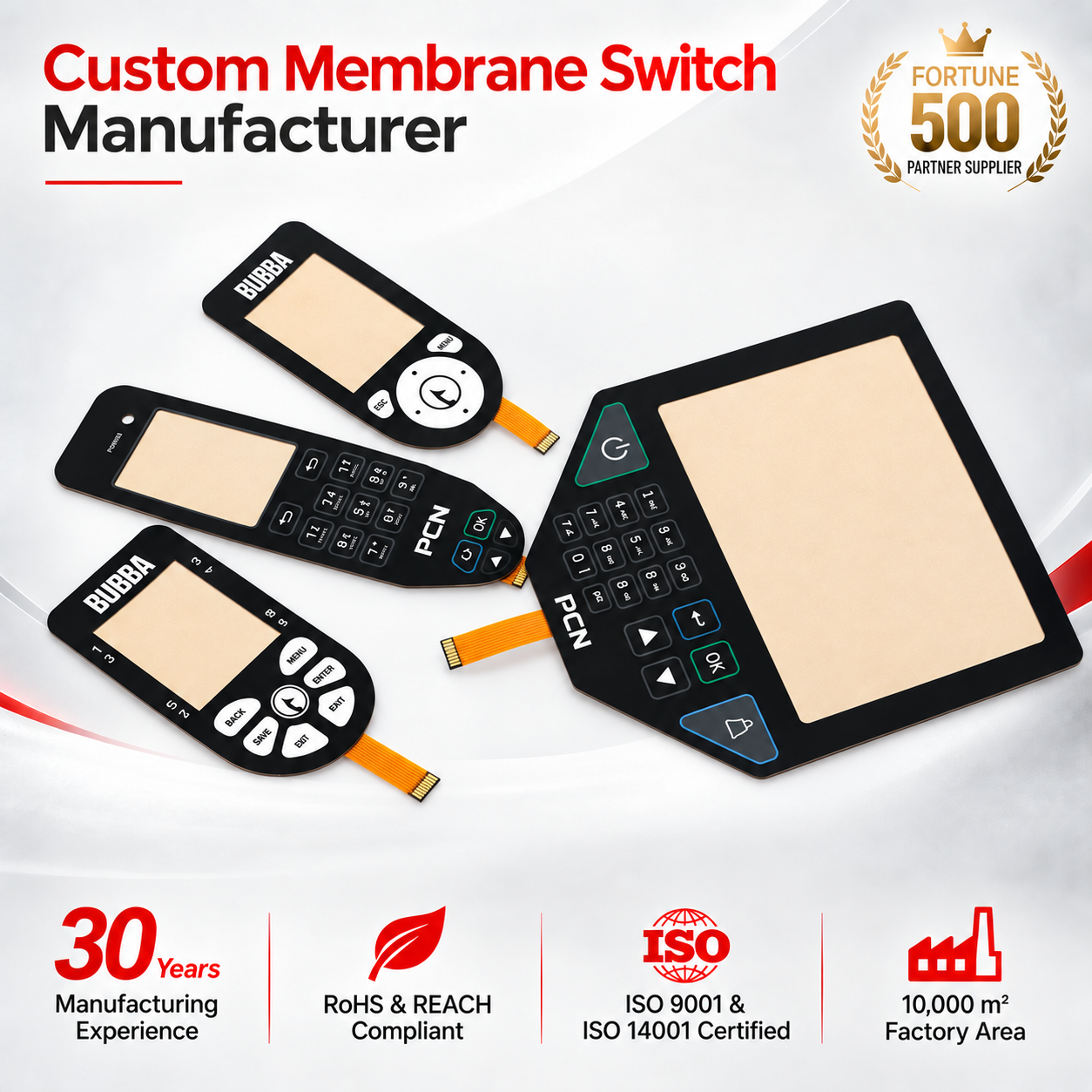
Custom 3m Adhesive Tactile Metal Dome Button Membrane Switch Graphic Overlay for Electronic Equipment
- Backing Adhesive: Genuine 3M 467MP / 300LSE
- Dome Material: Stainless Steel Plated
- Window Clarity: Transparent High-Luster
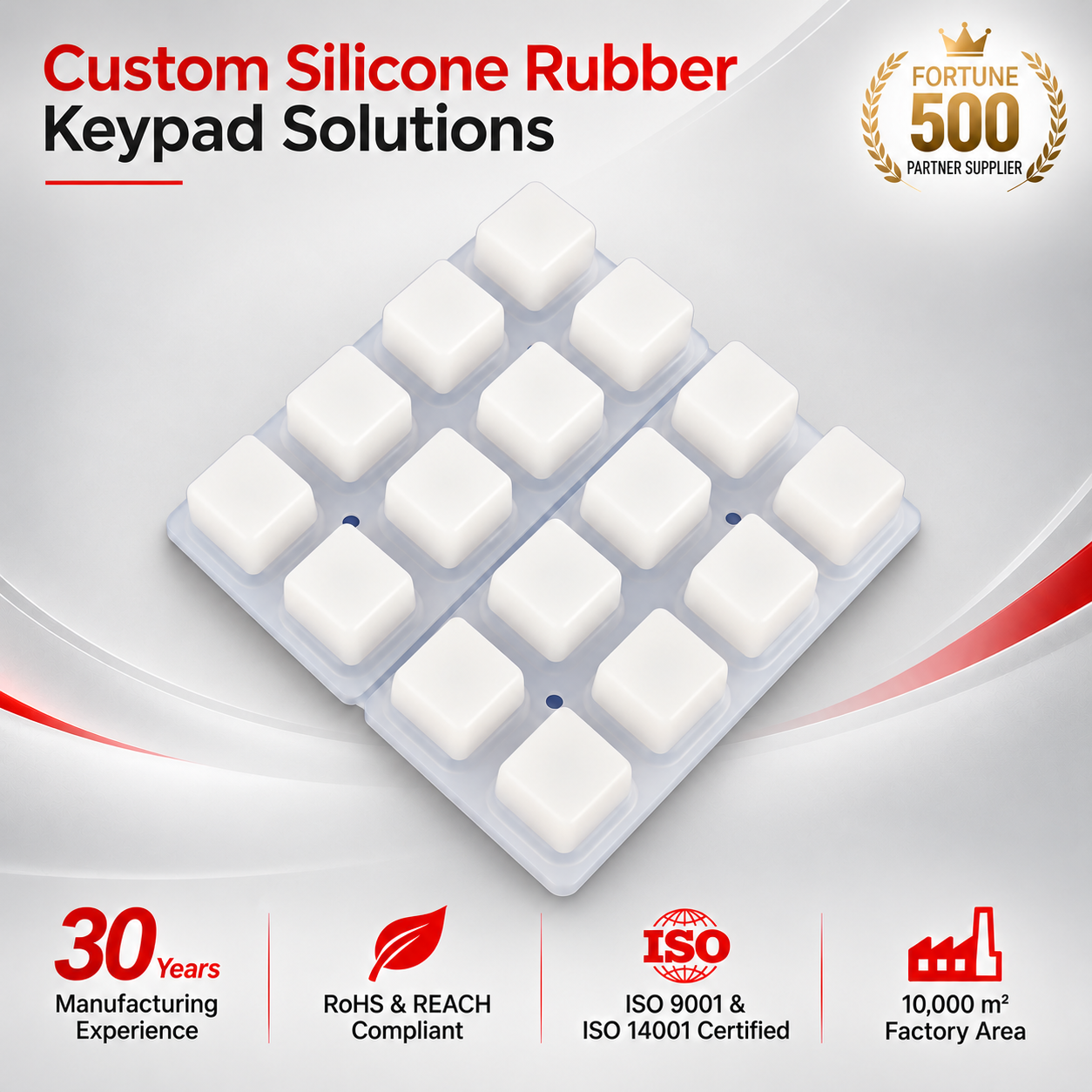
Wholesale Oval Dome OEM/ODM Custom Backlit White Silicone Rubber Keypad 4x4 Control Panel for Communication Equipment
- Illumination: Laser Etched / LGF Backlit
- Configuration: 4x4 Matrix Layout
- ESD Shielding: Aluminum Foil / Carbon Grid
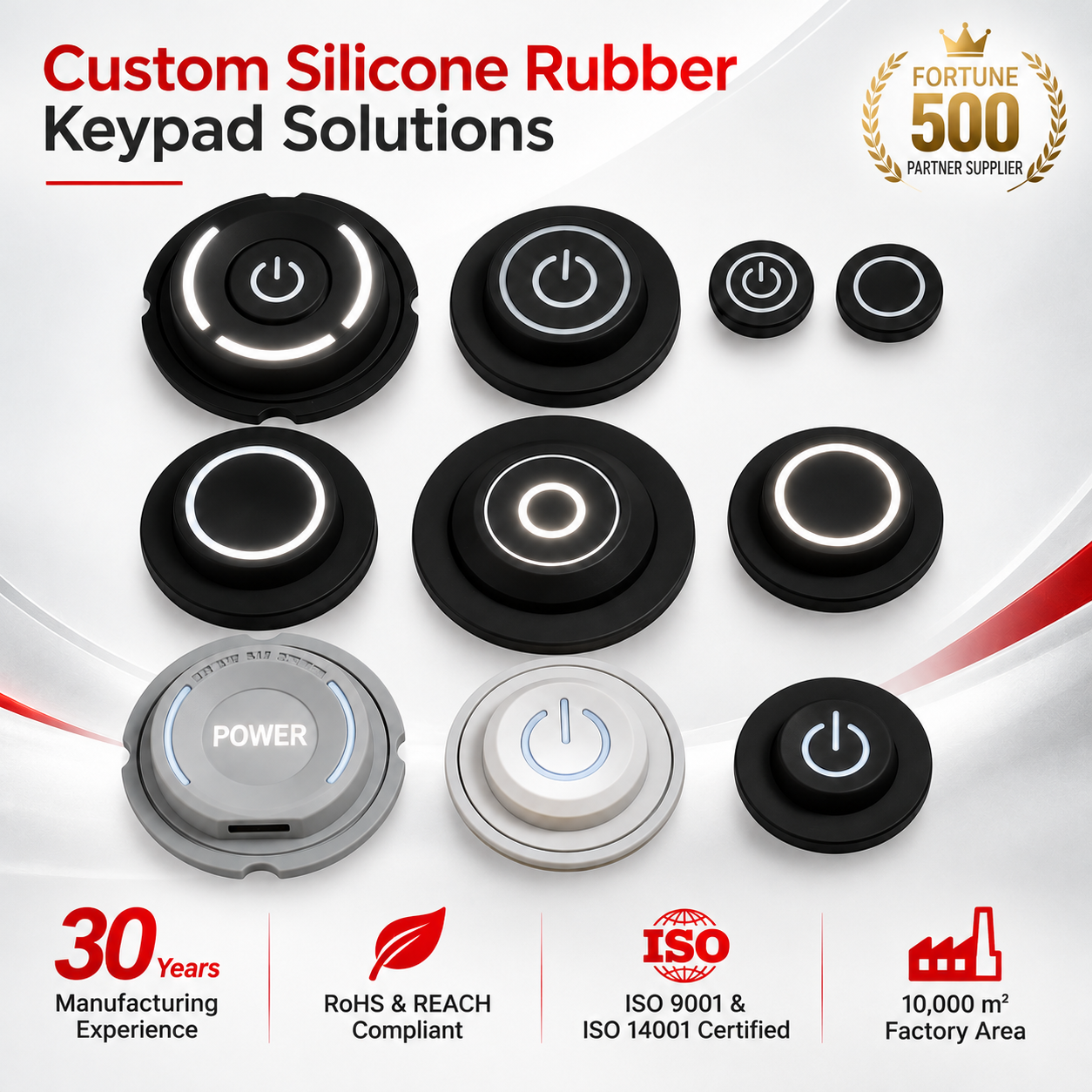
Single Tactile Cap Power Custom Silicone Rubber Button Keypad Multicolor Backlit Controller Replacement Membrnae Switch
- Cap Architecture: Single Tactile Ergonomic Cap
- Lighting Option: Integrated SMD LED Wells
- Contact Resistance: <100 Ohm Conductive Ink
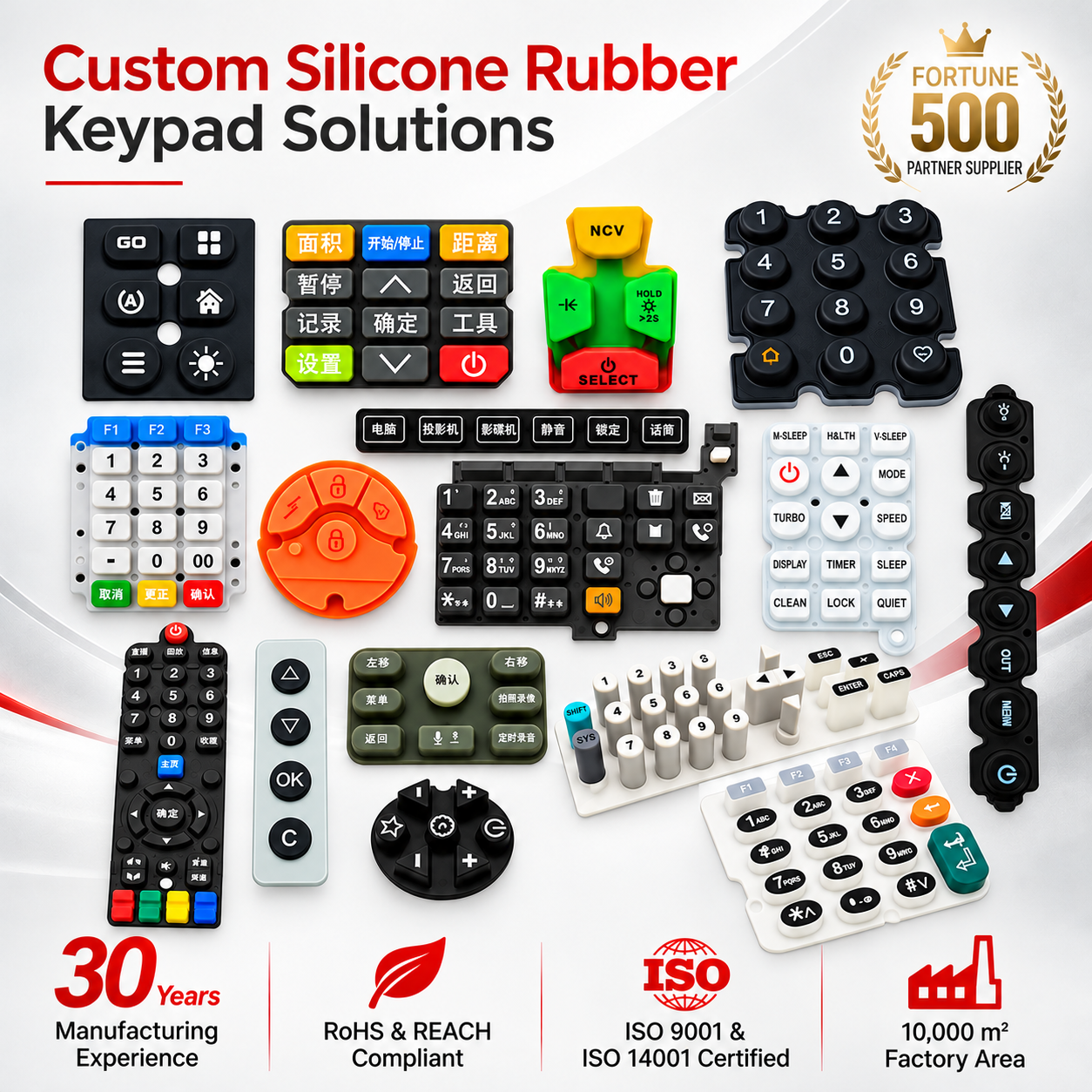
China Custom Size Durable Mullti Color Conductive Rubber Silicone Elastomer Keypads ptt Push Button Exporter
- Tactile Response: High-Reliability PTT Feel
- Elastomer Pill: Low-Resistance Carbon Pill
- Chemical Proof: Resistant to Oil & Salt Fog
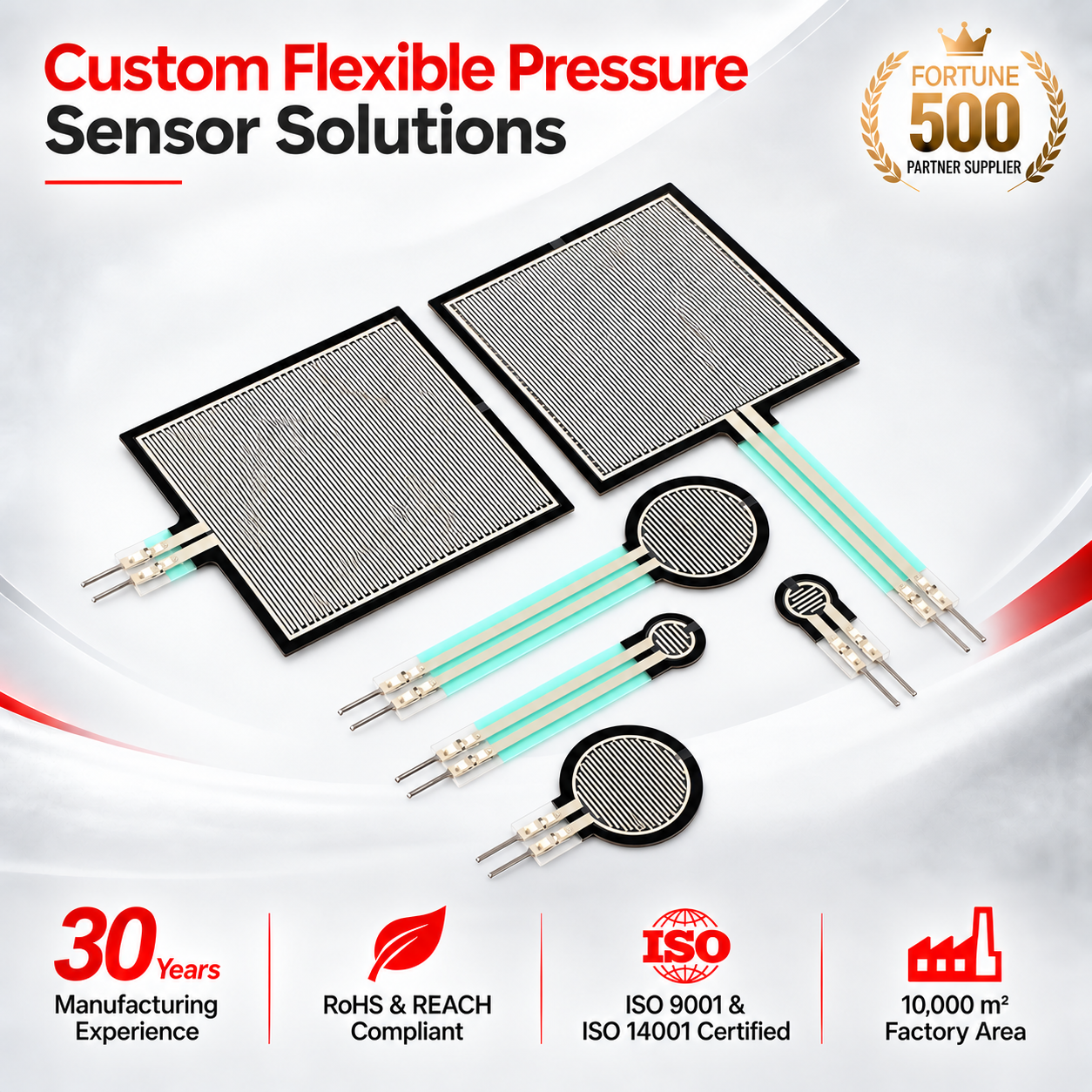
High Sensitive Capacitive Multi Touch Sensor Membrane Ultra-Soft Thin Film Pressure Sensor Fsr Type Pressure
- Technology: Thin-Film FSR / Capacitive
- Substrate: Optical Grade Ultra-Soft PET
- Linearity: Calibrated ±2% Response Curve
Precision Optical Windows & Environmental Resilience in Tropical Marine Zones
Addressing the complex engineering challenges of designing human-machine interfaces that survive constant relative humidity, intense UV solar irradiation, and airborne salt chloride attacks in Ngerulmud, Palau.
In equatorial maritime microclimates such as Babeldaob Island—home to the national capital complex of Ngerulmud—industrial electronics and municipal human-machine interfaces (HMIs) face severe operational threats. Standard commercial membrane switches degrade rapidly when deployed in these tropical conditions: high humidity induces moisture vapor transmission across thin polymer substrates, solar ultraviolet radiation cleaves molecular polymer backbones, and airborne ocean chlorides trigger rapid electrochemical silver migration. Dongguan AXRU Electronics Co., Ltd. addresses these engineering failure modes by re-architecting graphic overlay layers, adhesive bond lines, and optical transparent windows using advanced fluoropolymer chemistries and selective hermetic sealing techniques.
Optical Window Clarity & Anti-Newton Treatment
Transparent display windows engineered with selective UV hard-coat texturing. We prevent the unsightly visual interference fringes (Newton's rings) between the membrane overlay and underlying OLED, TFT, or LCD panels by applying microscopic micro-stippled texturing or optical-clear liquid adhesives (LOCA).
Hermetic IP67/IP68 Perimeter Gaskets
Utilizing high-cohesion acrylic adhesive systems such as 3M 300LSE and 3M 467MP combined with closed-cell micro-cellular urethane foam gaskets (Rogers PORON). This creates an impenetrable barrier preventing humidity intrusion, driving monsoonal rain, and salt aerosol penetration into tactile switch cavities.
Copper Flex (FPC) vs. Silver Trace Reliability
While screen-printed silver conductive ink is suitable for standard consumer devices, high humidity and voltage differentials in coastal Palau can induce silver dendrite growth. For critical civic, telecom, and maritime controls in Ngerulmud, we offer polyimide-based Copper FPC circuit layers that completely eliminate dendrite failure.
Material Comparison Matrix: Transparent Window Front Panels
Selecting the optimal substrate is critical for matching product lifespan with environmental exposure in the Republic of Palau. The following engineering matrix contrasts the baseline mechanical and optical metrics of materials utilized in our manufacturing process:
| Substrate Classification | Optical Transmission (%) | Hardness Rating (ASTM D3363) | UV Yellowing Index (ΔYI) | Chemical & Solvent Resistance | Typical HMI Application in Palau |
|---|---|---|---|---|---|
| Autotype Autoflex Hard-Coated PET | 91.5% ± 0.5% | 3H to 4H | < 1.2 after 1000h QUV | Exceptional: Resists DEET, cleaning chemicals, fuel | Marine vessel navigation, coastal weather monitoring |
| Optical Grade Polycarbonate (Lexan HP92S) | 89.0% ± 1.0% | 1H to 2H | < 2.5 (with UV inhibitors) | Moderate: Sensitive to aromatic hydrocarbons | Indoor institutional panels, medical monitors in Ngerulmud |
| Chemically Strengthened PMMA (Acrylic) | 93.0% ± 0.3% | 5H to 6H | < 0.5 (virtually zero degradation) | High: Stable against alcohol wipe-downs | Rigid display protective windows, high-traffic kiosks |
| Ultra-Thin Aluminosilicate Glass Overlay | 94.5% ± 0.2% | > 9H (Mohs 7) | 0.0 (Absolute UV stability) | Immune: Complete acid/base/solvent resistance | Government security access consoles, extreme maritime HMIs |
Mission-Critical Operating Environments across Babeldaob & Palau
From the central administrative institutions of Ngerulmud to remote off-grid marine stations throughout the Palauan archipelago, our membrane faceplates deliver uncompromised interface integrity.
Government Administrative Facilities & Capitol Complex
The Capitol building in Ngerulmud requires enduring access control units, climate control consoles, and energy-management dashboards that maintain pristine aesthetics despite constant high relative humidity and non-stop operational demands.
Palau Maritime Authority & Coast Guard Vessels
Vessel monitoring systems (VMS), sonar consoles, and VHF radio front panels exposed to high-velocity salt spray, oil contamination, and direct tropical sun. Our sealed transparent windows protect critical LCD readouts while maintaining responsive tactile feedback.
Solar Microgrids & Battery Energy Storage (BESS)
As Palau executes its national mandate for 100% renewable energy transition, outdoor solar inverter enclosures and battery storage switchgear require UV-stabilized, dead-front window overlays that resist thermal cycling between daytime heat and nighttime tropical humidity.
Eco-Luxury Resorts & Marine Research Laboratories
Palau’s premier eco-resort smart room interfaces and the Palau International Coral Reef Center (PICRC) rely on sealed, chemical-resistant capacitive control surfaces capable of handling frequent antiseptic disinfection without graphic fading.
10,000㎡ Direct Manufacturing Hub in Dongguan, China
AXRU Electronics operates a vertically integrated production infrastructure, eliminating intermediate brokers and delivering full engineering traceability from rapid prototypes to scheduled sea/air volume batches.
Intertek On-Site Verified Supplier
Our complete operational footprint—from raw material storage and cleanroom screen-printing bays to computerized CNC flatbed cutting and automated die-cutting—has been thoroughly inspected and verified on-site by Intertek.
Fortune 500 Qualified Vendor
We supply tier-one multinational equipment brands in medical instrumentation, industrial robotics, and rugged telecommunications, adhering to rigorous zero-defect PPM benchmarks and complete material traceability.
Streamlined Logistics to Koror & Ngerulmud
Leveraging direct air-cargo corridors through regional transport hubs (Guam, Manila, Taipei), we ensure swift dispatch of custom prototypes within 5-7 business days and consistent sea-freight scheduled container shipments for ongoing operations.
Comprehensive Laboratory Testing & Reliability Verification
Every membrane faceplate design undergoes rigorous physical, mechanical, and optical evaluation within our on-site environmental test center before volume production authorization.
Force-Displacement Graphing
Automated load testing instruments precisely map peak switch actuation force, tactile return ratio, and travel distance to ensure uniform keystroke feel across multi-key panels.
1,000,000+ Key Life Cycling
Multi-station pneumatic actuation rigs depress metal domes and silicone keys continuously to validate long-term mechanical spring retention and contact resistance stability.
Programmable Climatic Chambers
Subjecting assemblies to thermal shocks ranging from -40°C to +85°C and 95% sustained relative humidity, validating seal integrity against condensation and delamination.
Spectrophotometer Color & Haze Testing
Precision optical instruments verify Pantone/RAL color matching tolerances (ΔE < 0.8) and measure haze percentages across clear display windows for maximum contrast.
Frequently Asked Questions from Engineers & Importers in Palau
Detailed technical, logistical, and design considerations for sourcing custom transparent window membrane switches for Pacific Island environments.
How do you prevent display window condensation and fogging in Palau's tropical humidity?
Can you produce membrane switches that integrate dead-front windows for hidden-until-lit LEDs?
What is the typical tooling charge and turnaround time for prototypes destined for Palau?
How do you guarantee that legends, keys, and lettering will not rub off under heavy use?
Which connector options are supported for interfacing with our internal PCBs?
Can you reverse-engineer a faceplate from an old, degraded sample without original CAD files?
Initiate Your Engineering DFM Review Today
Send your 2D/3D CAD drawings (DXF, DWG, STEP, AI, or PDF) along with your project specifications. Our Senior HMI Application Engineers provide complimentary stack-up design, transparent window clarity optimization, and volume manufacturing quotations within 24 business hours.
Contact Us