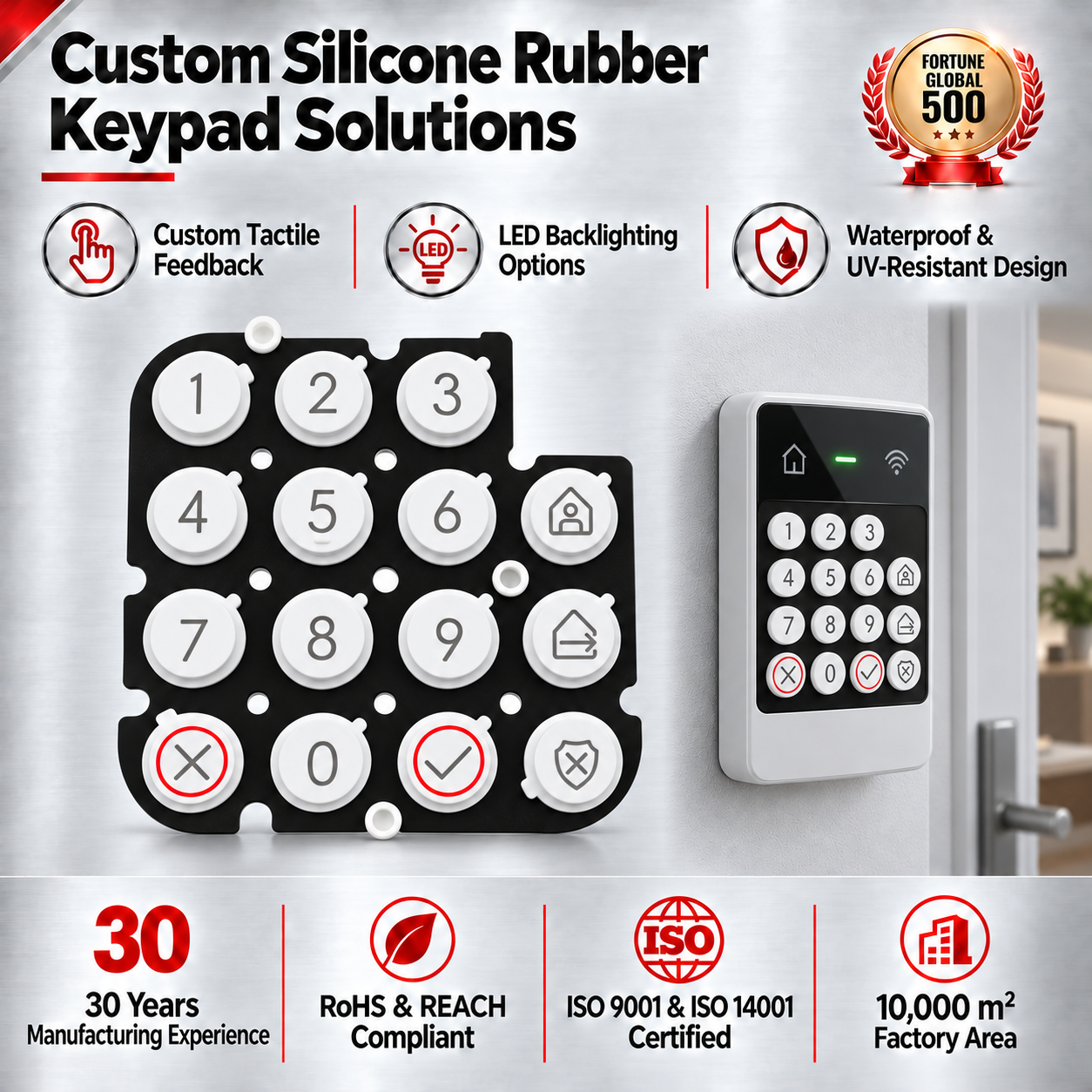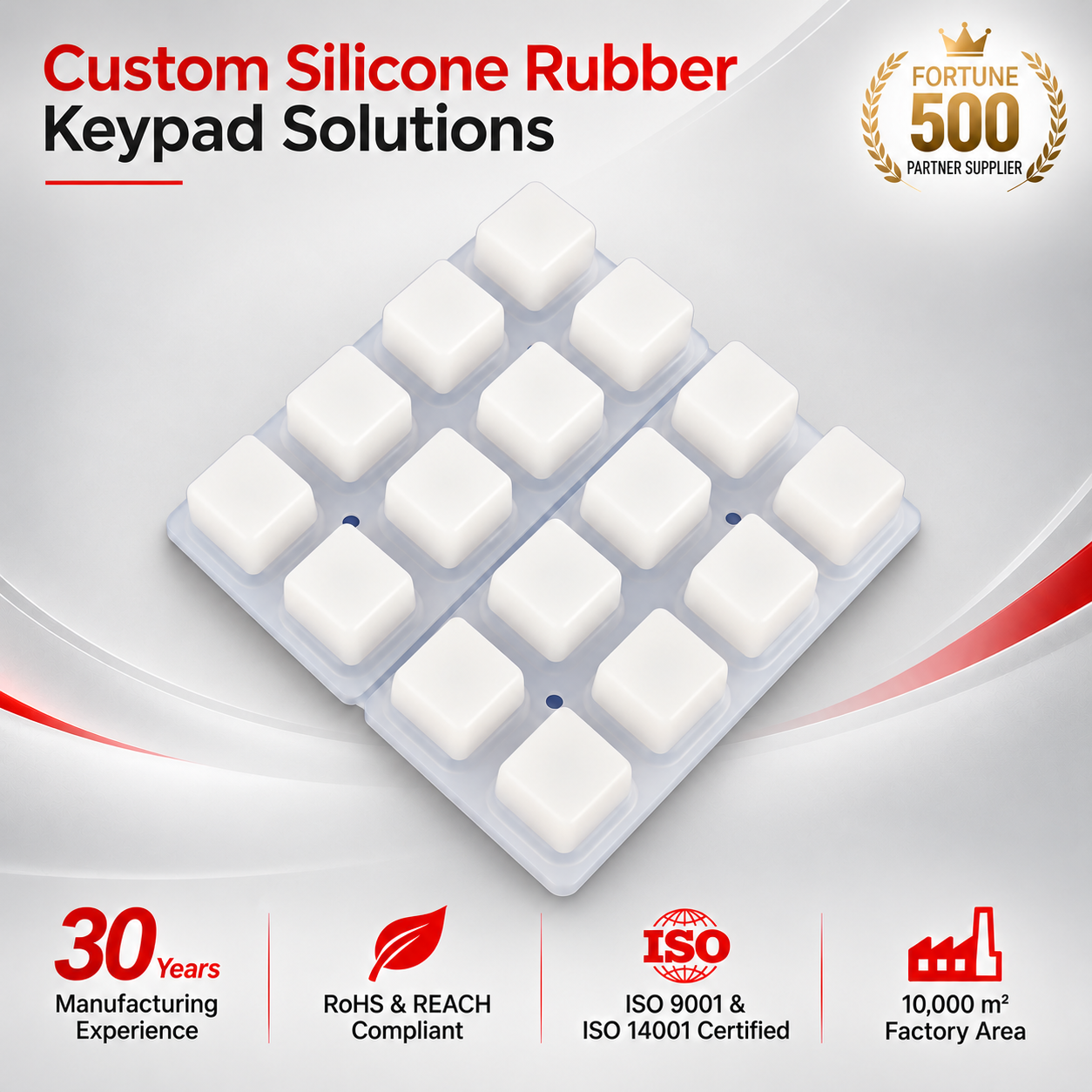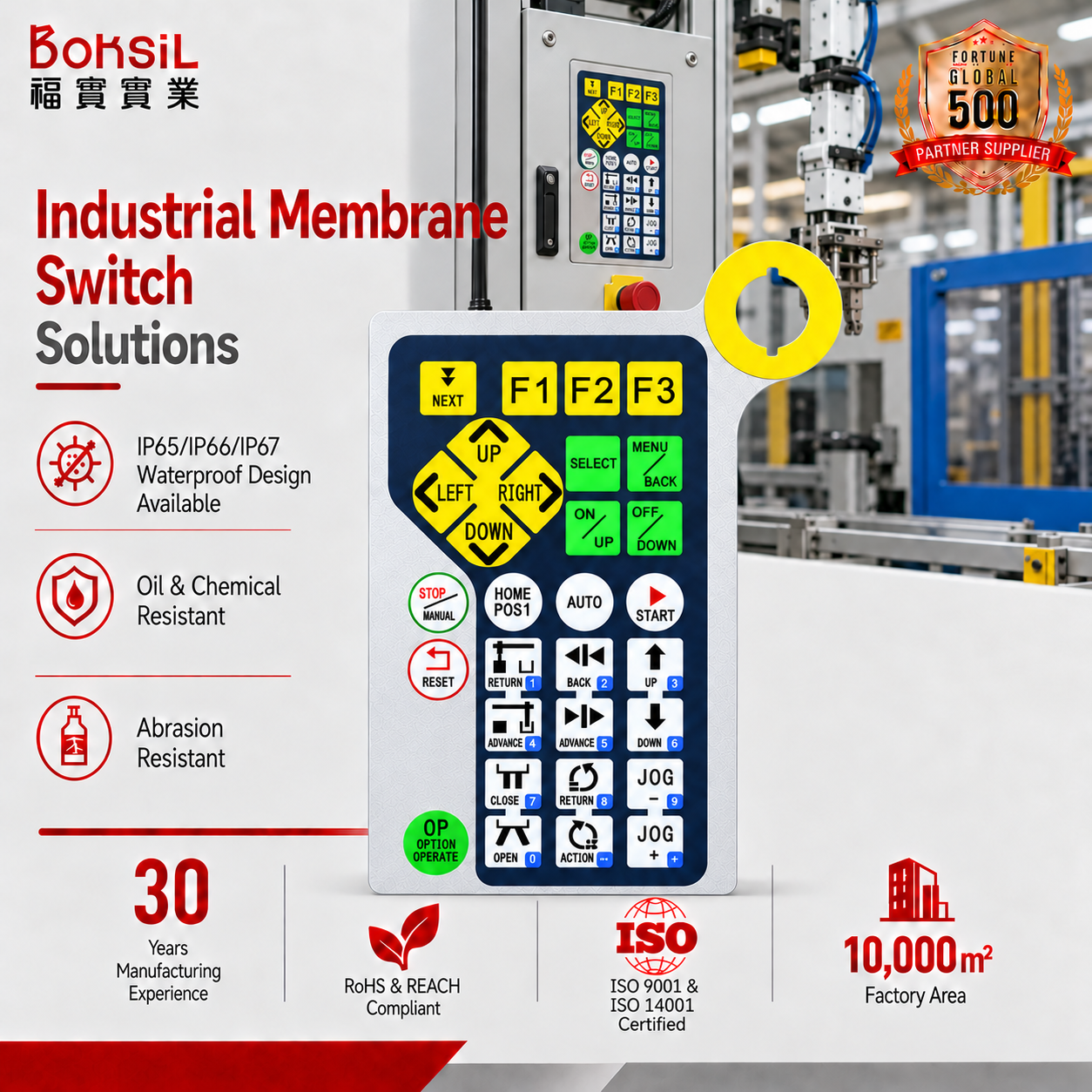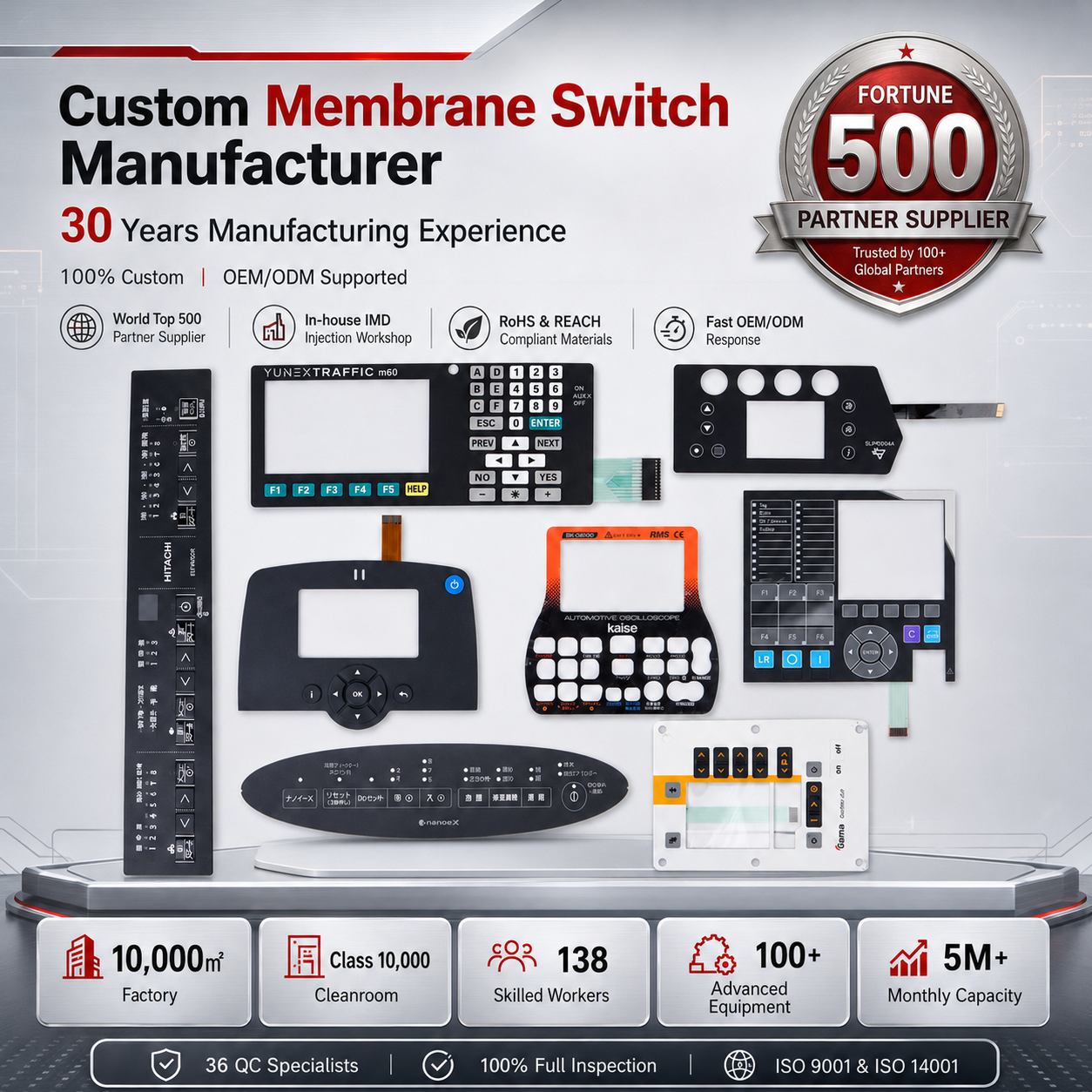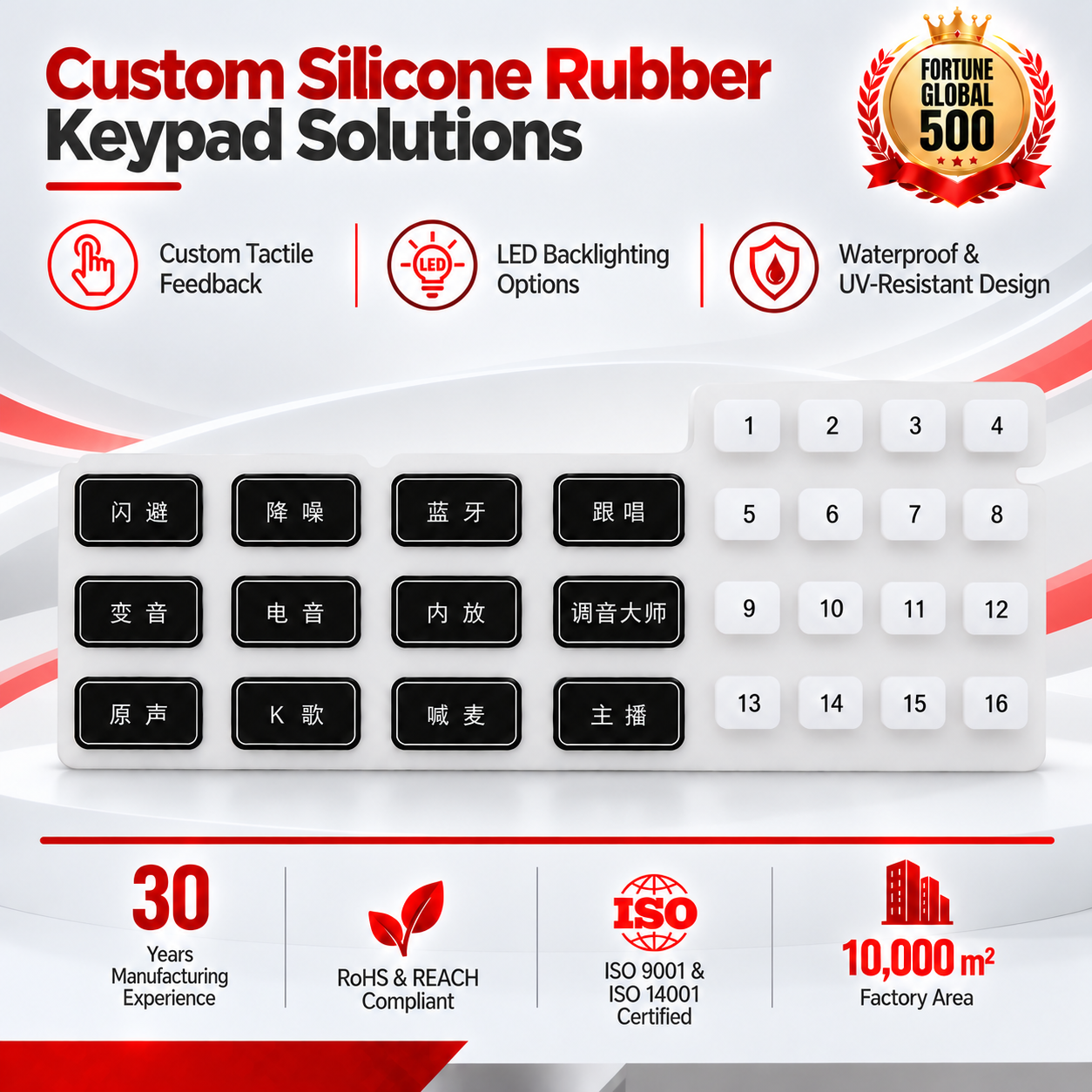
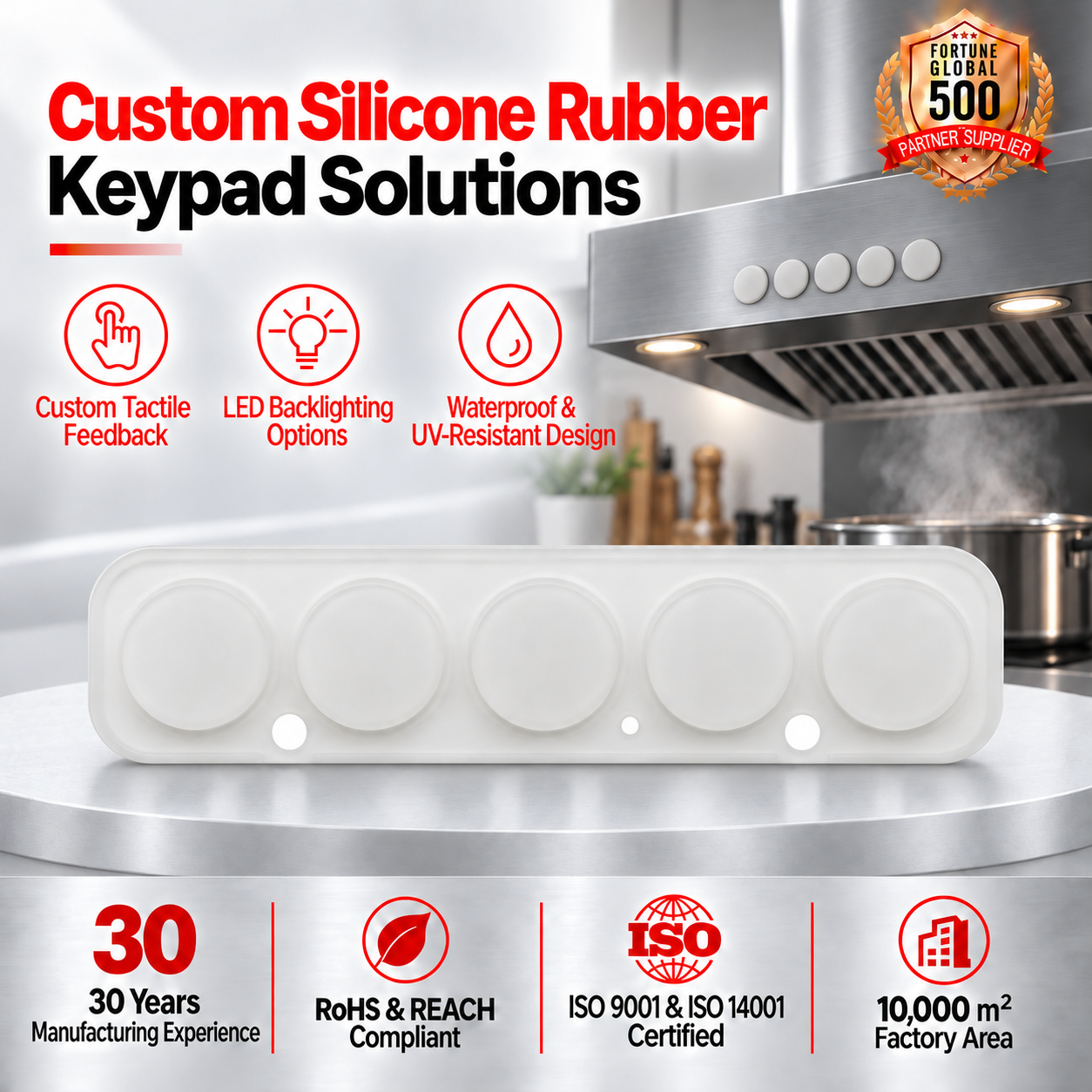
Rugged Waterproofing Custom Silicone Rubber Keypad Numpad
- High-temp silicone elastomer
- Wear-resistant PU coating
- IP67 fluid protection rating
Custom-engineered tactile membranes, capacitive thin-film overlays, and vulcanized silicone keypads built to strict medical, automotive, and industrial environmental standards.
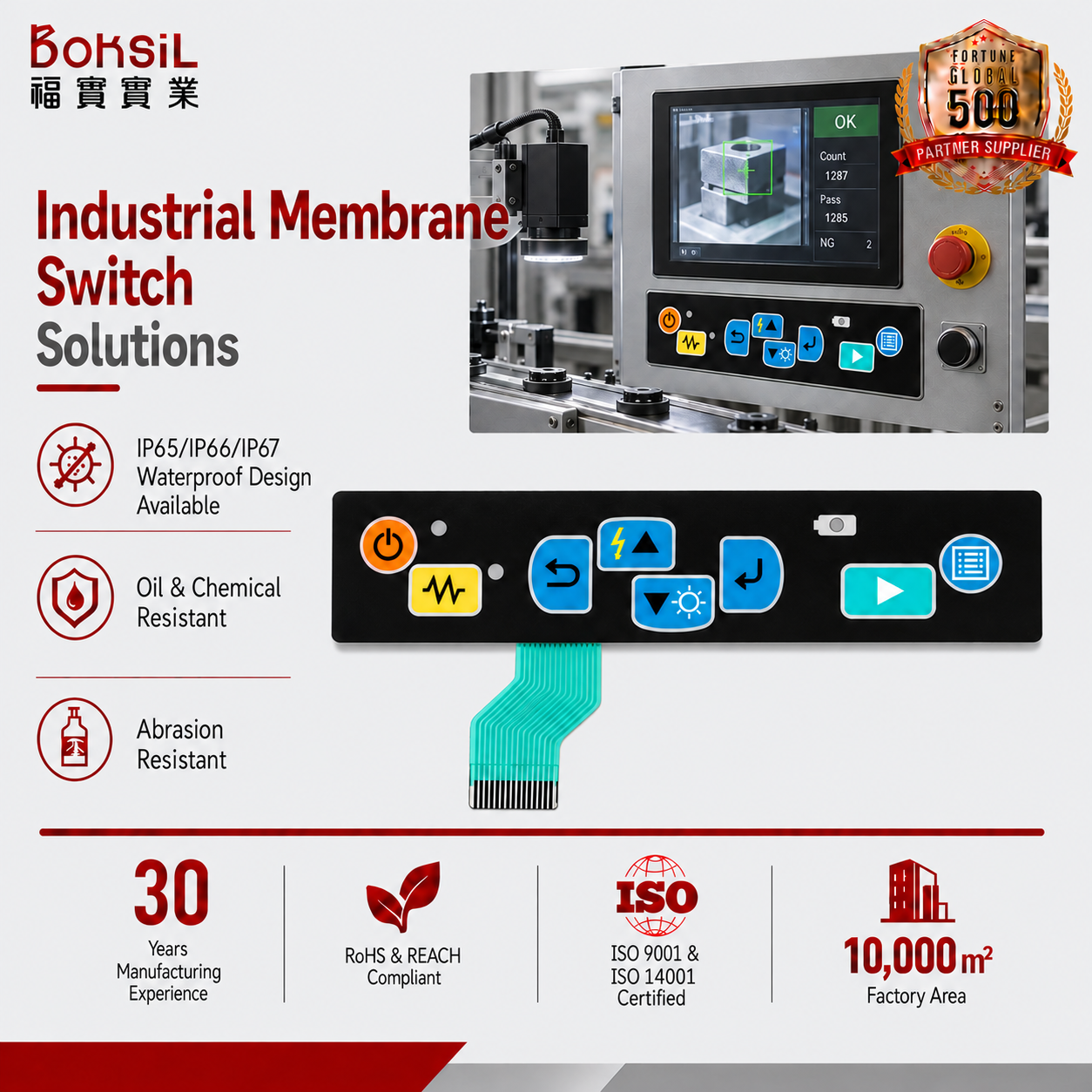
In high-reliability industrial automation, surgical medical diagnostic instrumentation, and commercial appliances, the Human-Machine Interface (HMI) serves as the primary barrier against environmental contamination. As a tier-one trusted membrane switch manufacturer and exporter, our engineering reviews prioritize cross-layer adhesion dynamics, silver trace electromigration prevention, and precise force-displacement ratios.
A standard industrial membrane keyboard features a multilayer laminated architecture. The uppermost layer, the graphic overlay, is screen-printed on the sub-surface of biaxially oriented polyethylene terephthalate (PET) or polycarbonate (PC). PET is strictly designated for high-flexing cyclic environments due to its fatigue threshold exceeding five million flexural cycles, compared to PC which exhibits premature micro-fissuring around switch perimeters when repeatedly exposed to aggressive industrial solvents like MEK, isopropyl alcohol, and hydraulic lubricants.
| Substrate / Architecture | Typical Electrical Resistance | Actuation Life Expectancy | Ingress Protection (IP) | Environmental Tolerance | Primary Industrial Use |
|---|---|---|---|---|---|
| Silver Conductive on PET | < 100 Ω (Trace length dependent) | 1,000,000 cycles | IP65 (Perimeter sealed) | -20°C to +65°C | Consumer controls, home appliances |
| Copper Etched Polyimide (FPC) | < 1 Ω (Ultra-low trace resistance) | 5,000,000+ cycles | IP67 / IP68 (Epoxy sealed) | -40°C to +85°C | Medical diagnostics, aerospace, mil-spec |
| Capacitive Printed ITO / PEDOT | N/A (Solid state touch) | Zero mechanical wear | IP69K (Hermetic flush mount) | -30°C to +70°C | Sterile surgical suites, wet food processing |
| Silicone Rubber Over Membrane | < 150 Ω (Conductive carbon pill) | 2,000,000 cycles | IP66 with molded bezel rib | -40°C to +120°C | Military handheld terminals, outdoor fuel dispensers |
Below the graphic layer lies the spacer adhesive layer, typically precision die-cut using aerospace-grade 3M 467MP or 3M 468MP high-performance acrylic adhesives. The spacer creates the mechanical air pocket accommodating tactile stainless steel snap domes (ranging from 6mm to 20mm, with actuation forces from 200g to 500g). Vented channels etched between adjacent switch chambers are engineered to equalize atmospheric pressure during rapid cyclic actuation, avoiding internal condensation and switch lockout caused by altitude or ambient temperature shifts.
How global supply chain volatility, component miniaturization, and harsh-environment requirements are transforming OEM component sourcing strategies.
Industrial procurement departments are migrating from traditional conductive silver ink printed on polyester towards etched copper Flexible Printed Circuits (FPC). Copper eliminates silver migration risks under high humidity and permits fine-pitch SMT component mounting (0402 LEDs, microcontrollers, ZIF connectors) directly on the membrane tail.
Medical equipment manufacturers and sterile food automation facilities demand graphic overlays pre-treated with zinc-pyrithione or silver-ion antimicrobial agents (such as Autotex AM). Sourcing contracts increasingly require ISO 22196 compliance to verify 99% bacterial elimination across multi-shift clinical use.
Bulky, high-voltage Electroluminescent (EL) foils and uneven fiber optic arrays are being replaced by micro-etched Light Guide Films (LGF). LGF channels light from perimeter side-firing SMD LEDs uniformly across text legends with an ultra-thin stack-up profile (< 0.2mm), reducing power draw by 40%.
Engineered innovations bridging physical mechanical switches and next-generation smart surfaces.
Pure capacitive touch screens lack the tactile confirmation needed in high-vibration industrial vehicles. Modern designs merge capacitive touch detection with localized piezo-electric or eccentric rotating mass (ERM) haptic feedback, validating input even through heavy industrial gloves.
In-Mold Electronics (IME) merges electronic screen-printed circuitry, LEDs, and conductive switch traces directly into thermoformed 3D plastic shells. This removes the secondary mechanical adhesive bonding phase, enabling fully waterproof, seamless geometric enclosures for automotive dash controls.
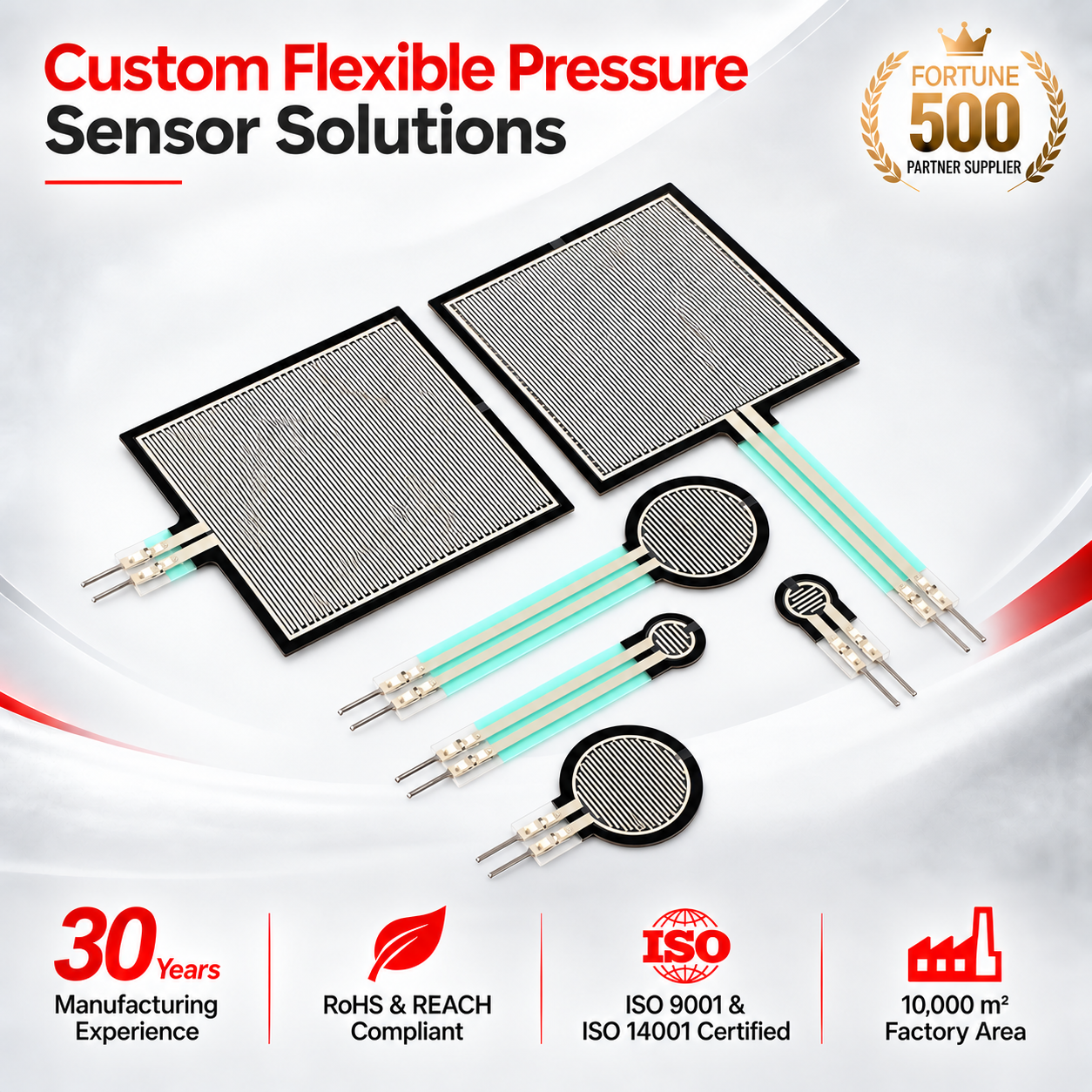
Modern medical beds, robotic grippers, and safety-critical machine switches utilize variable resistance polymer thick-film (PTF) sensors. Unlike simple binary on/off switches, FSR modules quantify applied mechanical force continuously, enabling precise speed, clamp, and variable menu control.
Direct manufacturer accountability: 10,000㎡ advanced cleanrooms, in-house tooling, and Intertek on-site audited quality management systems.
Our operations are audited annually by Intertek, confirming verifiable production metrics, ethical workforce practices, and complete traceability across our 121-person specialized production workforce.
In-house testing rigs including computerized force-displacement curve plotters, key life endurance cyclers (5M+ cycles), tensile bond testers, and UV accelerated weathering test chambers ensure zero field failures.
Dedicated flatbed sample cutters and high-speed digital UV presses yield physical functional prototypes within 3 to 5 business days, cutting project lead time before hard-tooling steel dies.
Zero substandard plastics. We exclusively purchase genuine Autotex PET, Lexan Polycarbonate, Nicomatic connectors, stainless steel domes from precision European/Japanese mills, and 3M industrial double-coated tape.
Every membrane switch panel is loaded onto programmable wiring harness testers checking open/short circuits, contact bounce (< 5ms), switch resistance thresholds, and diode polarity before sealing.
Proven track record as a trusted supplier of custom human interface assemblies to multinational OEMs in telecom, automotive diagnostic systems, and precision clinical measuring hardware.
Critical guidelines on production parameters, tooling investments, environmental validation, and lead times.
Submit your CAD blueprints, schematic drawings, or physical sample requirements. Our HMI engineering specialists will provide a complete DFM analysis and quotation within 24 hours.
Inquire Now