Medical IP65
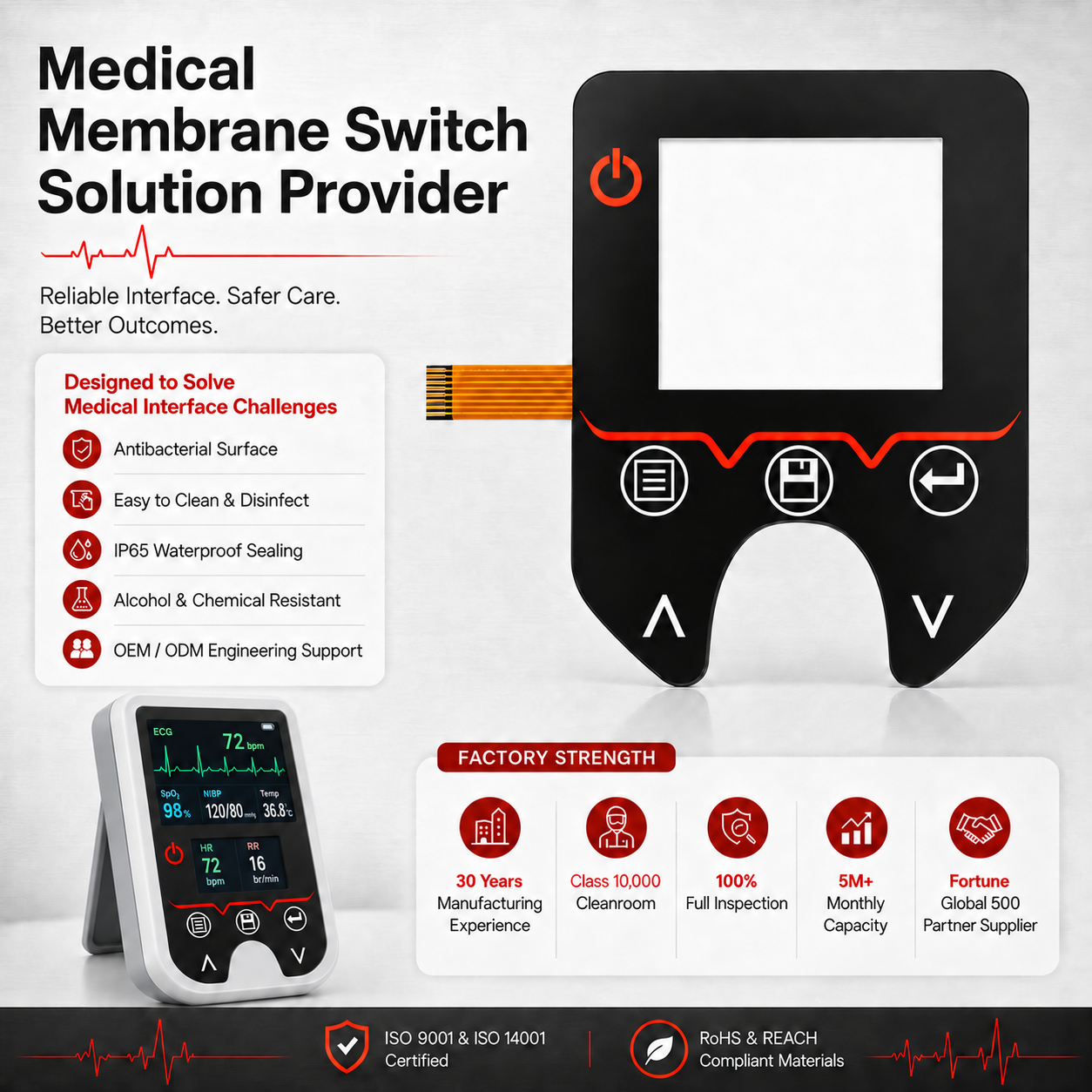
Engineering enterprise-grade capacitive touch switch keyboards, ruggedized human-machine interfaces (HMI), and high-reliability conductive elastomer panels for critical industrial, medical, and automotive controls.
Explore custom capacitive touch switch keyboards, printed sensor membranes, graphic overlays, and elastomer switch arrays manufactured to stringent tolerances under IPC, ASTM, and ISO manufacturing benchmarks.
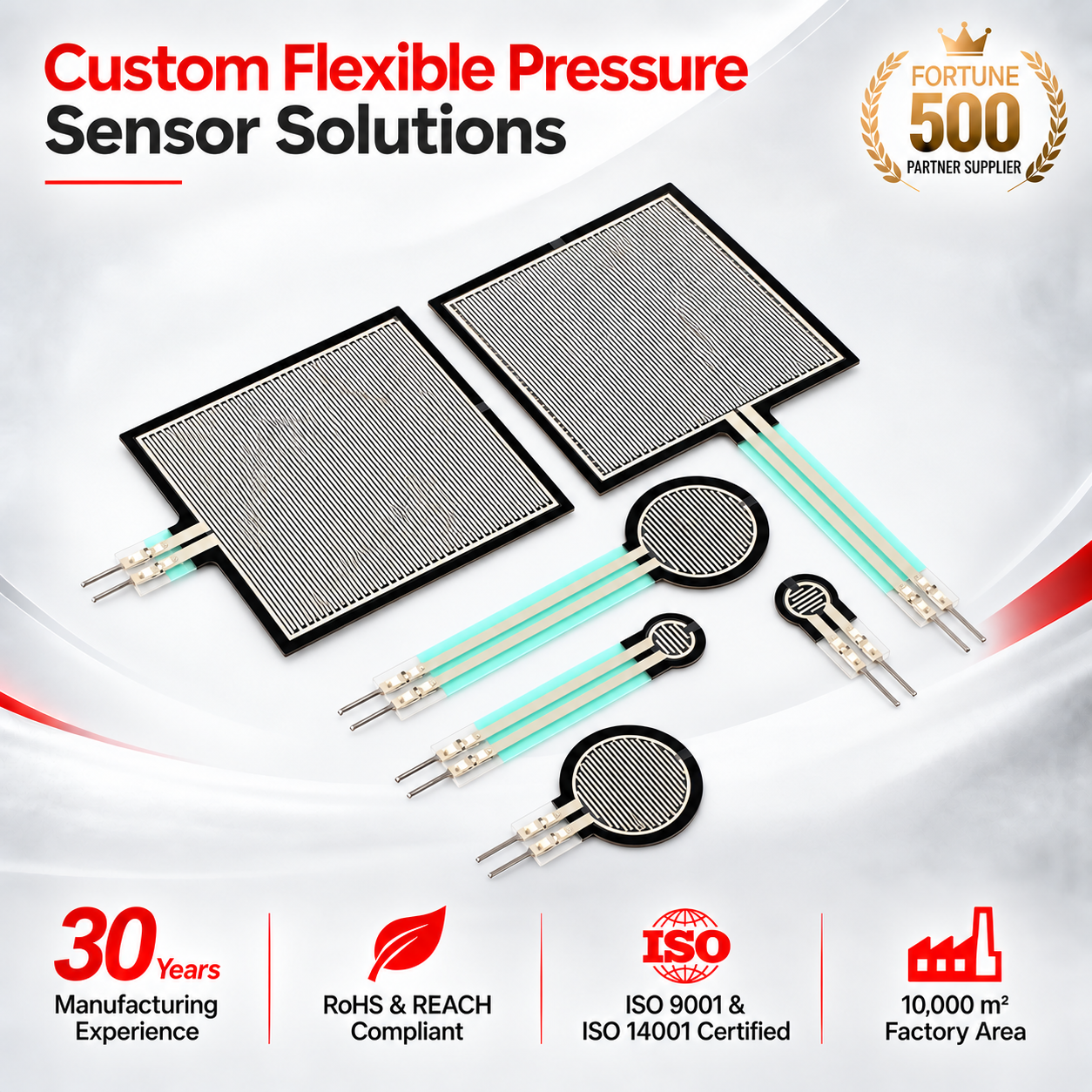
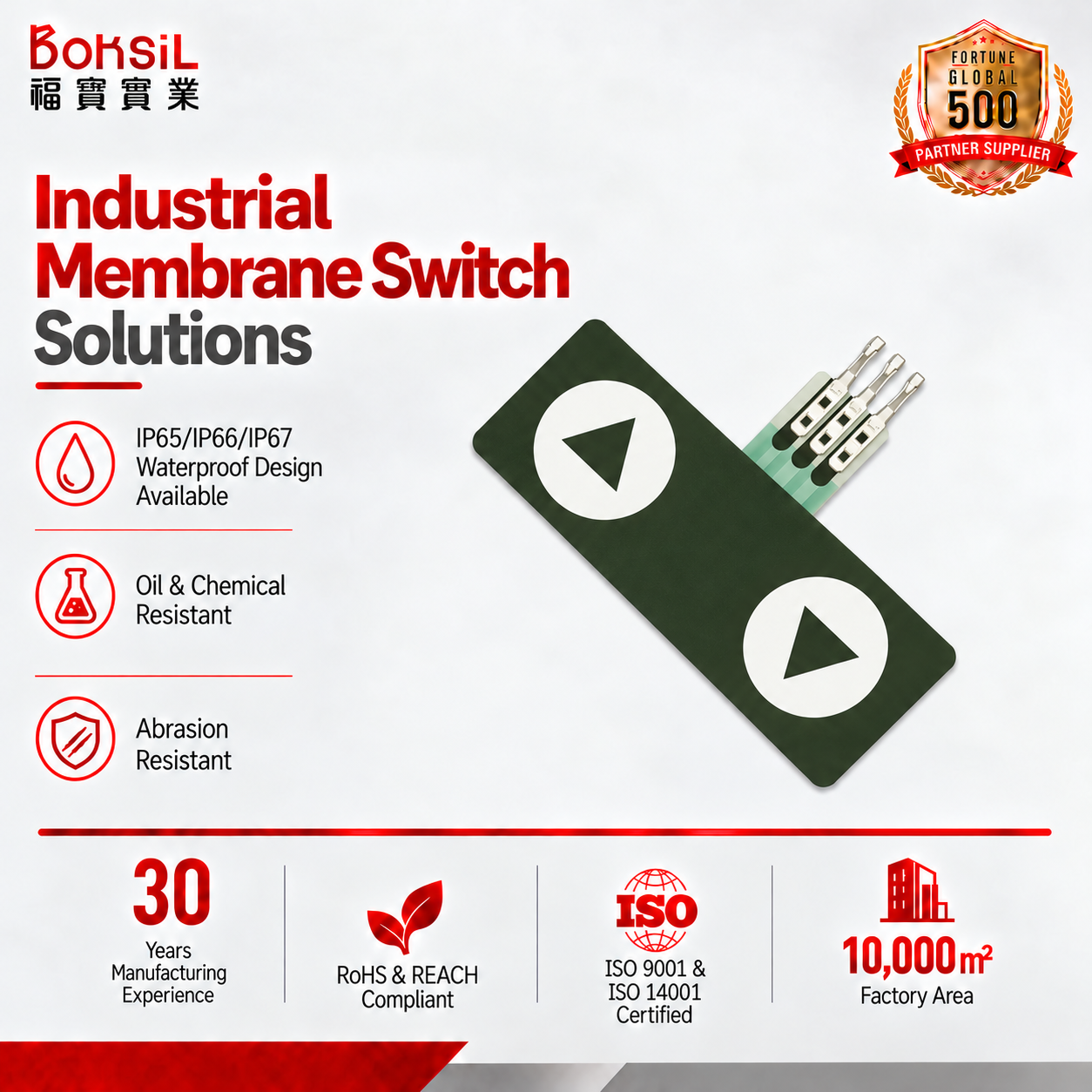
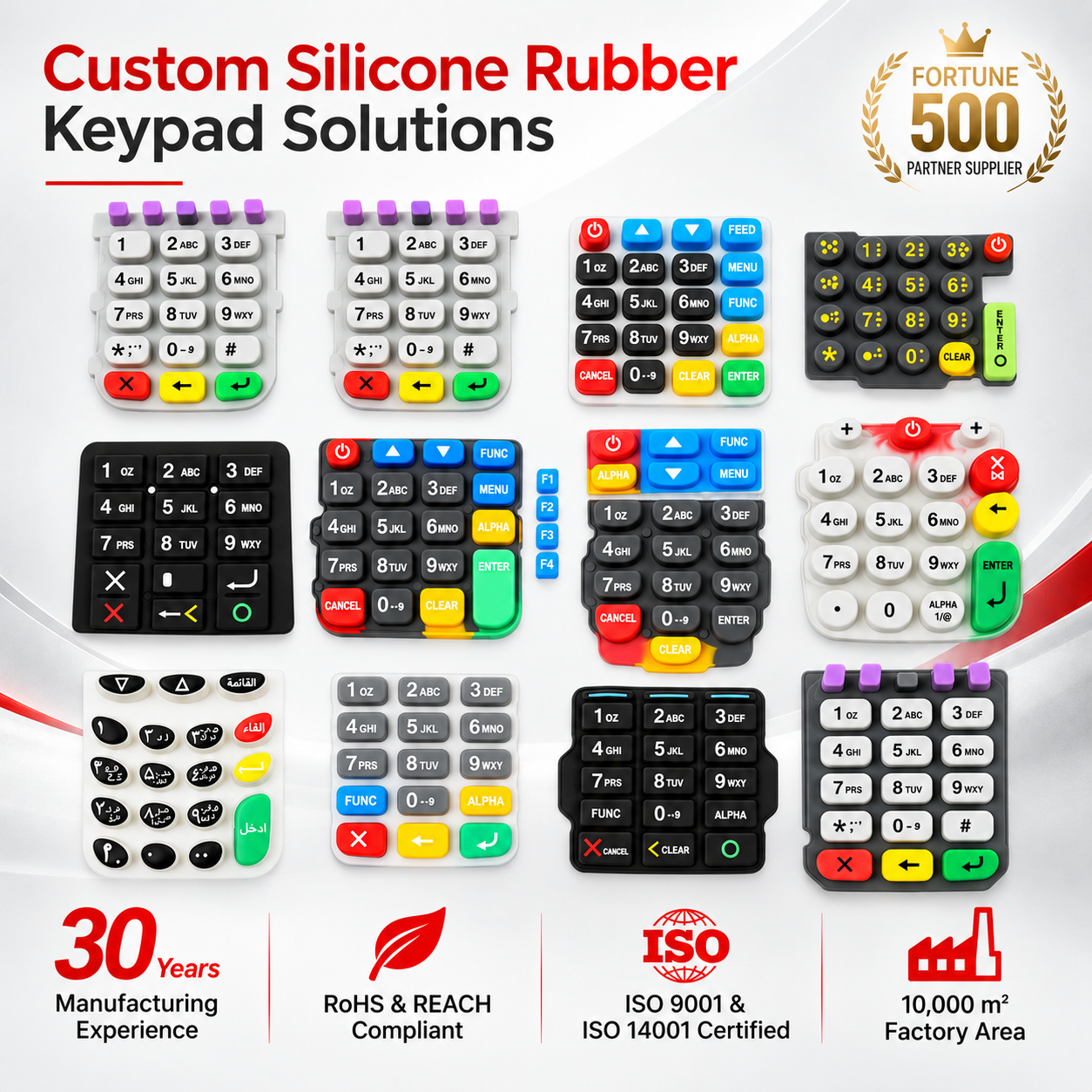
A rigorous design breakdown for hardware engineers, embedded system developers, and procurement executives seeking zero-drift touch performance in electronically noisy or humid field conditions.
Our capacitive touch keyboard panels employ dual-electrode mutual-capacitance matrix arrays or single-ended self-capacitance layouts depending on spatial multi-touch constraints. By isolating the drive (Tx) and sense (Rx) traces across micro-etched conductive ITO or screen-printed fine-pitch conductive silver films on optical-grade PET substrates, we achieve trace coupling immunity and multi-finger tracking without ghosting.
The coupling sensitivity of a capacitive touch interface correlates inversely with front-panel thickness and directly with the dielectric constant (εr) of the substrate. We fabricate specialized capacitive overlays utilizing chemically tempered soda-lime glass (εr ≈ 7.0), optical grade PMMA acrylic (εr ≈ 3.4), or flexible Autotype polyester PET (εr ≈ 3.2), configured with 3M optically clear adhesives (OCA) to prevent internal micro-gap air bubbles.
Electromagnetic interference from variable frequency motor drives, high-power switching power supplies, and wireless radios represents the leading cause of false-triggering in field-deployed capacitive keypads. We integrate conductive silver grid cross-hatch shields or solid carbon backing layers coupled to earth ground, paired with microcontroller firmware threshold tuning to comply with IEC 61000-4-3/4-6 standards.
| Interface Technology | Typical Substrate Stack-up | Actuation Life (Cycles) | Sealing & Chemical Resistance | Optimal Industry Application |
|---|---|---|---|---|
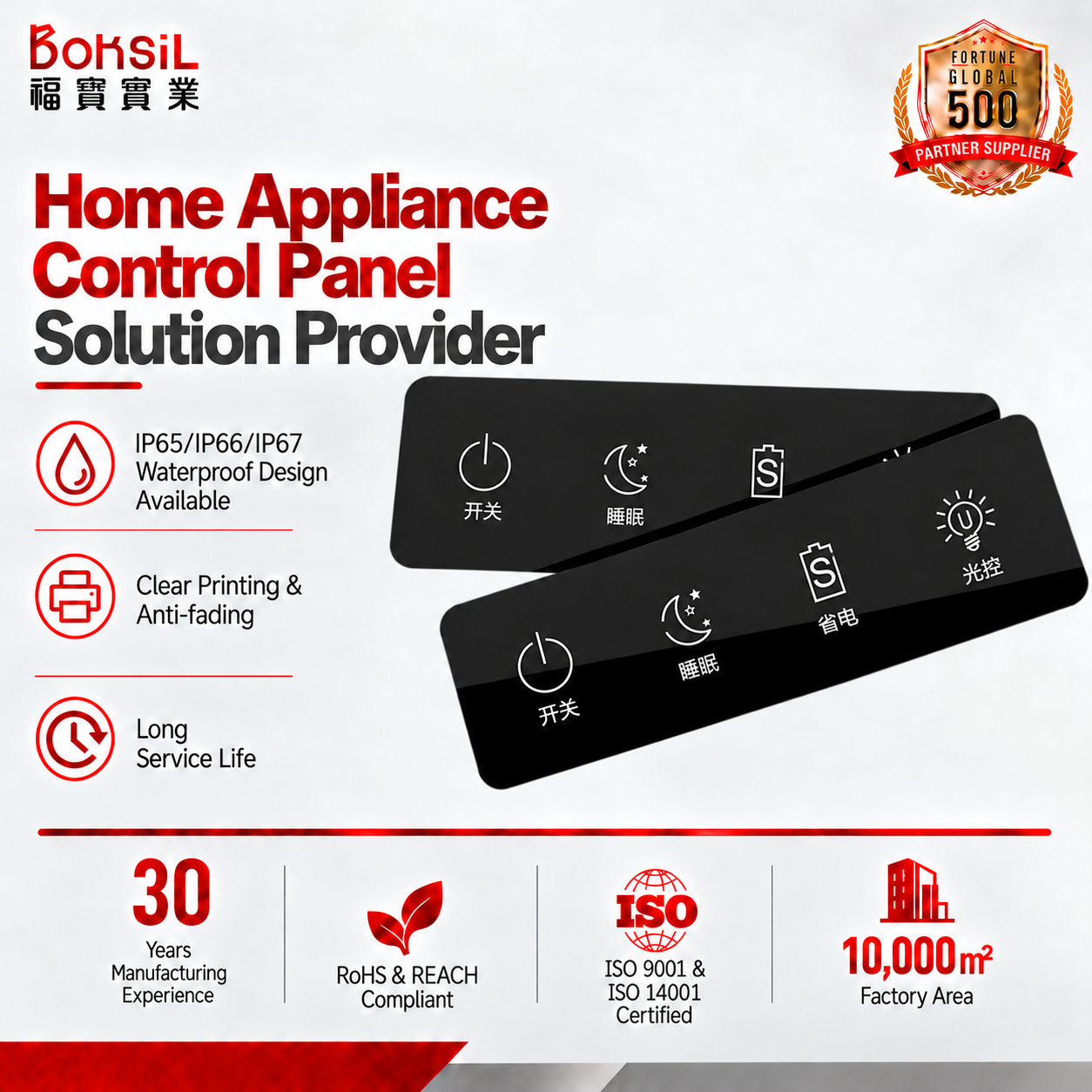
| Capacitive Touch Keyboard | Tempered Glass / PMMA / PET + Printed Silver Sensor + 3M OCA + Controller FPC | Virtually Infinite (>50 Million touches, solid-state) | Hermetic IP67/IP68 wipe-clean front fascia; resists isopropyl alcohol, bleach, and harsh acids | Medical diagnostic terminals, clinical monitors, smart appliance dashboards, cleanrooms |
| Tactile Metal-Dome Membrane | Autotex PET Overlay + Acrylic Spacer + Stainless Steel Domes (SUS301) + Silver Circuit | 1,000,000 to 5,000,000 cycles (dome geometry dependent) | IP65 perimeter gasket seal; impervious to light washdowns, airborne grease, and dust | Industrial CNC machinery, handheld test instrumentation, agricultural vehicle cockpits |
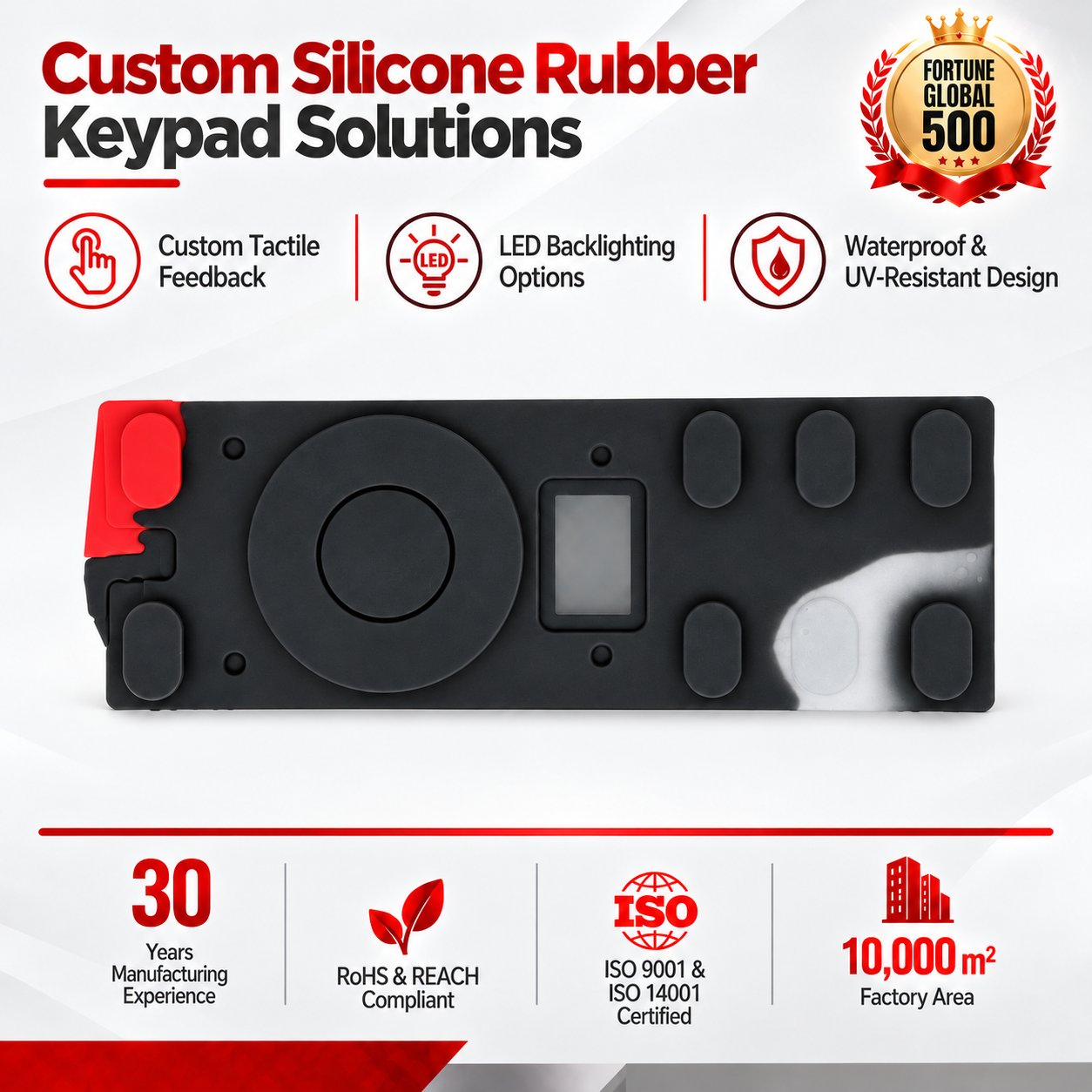
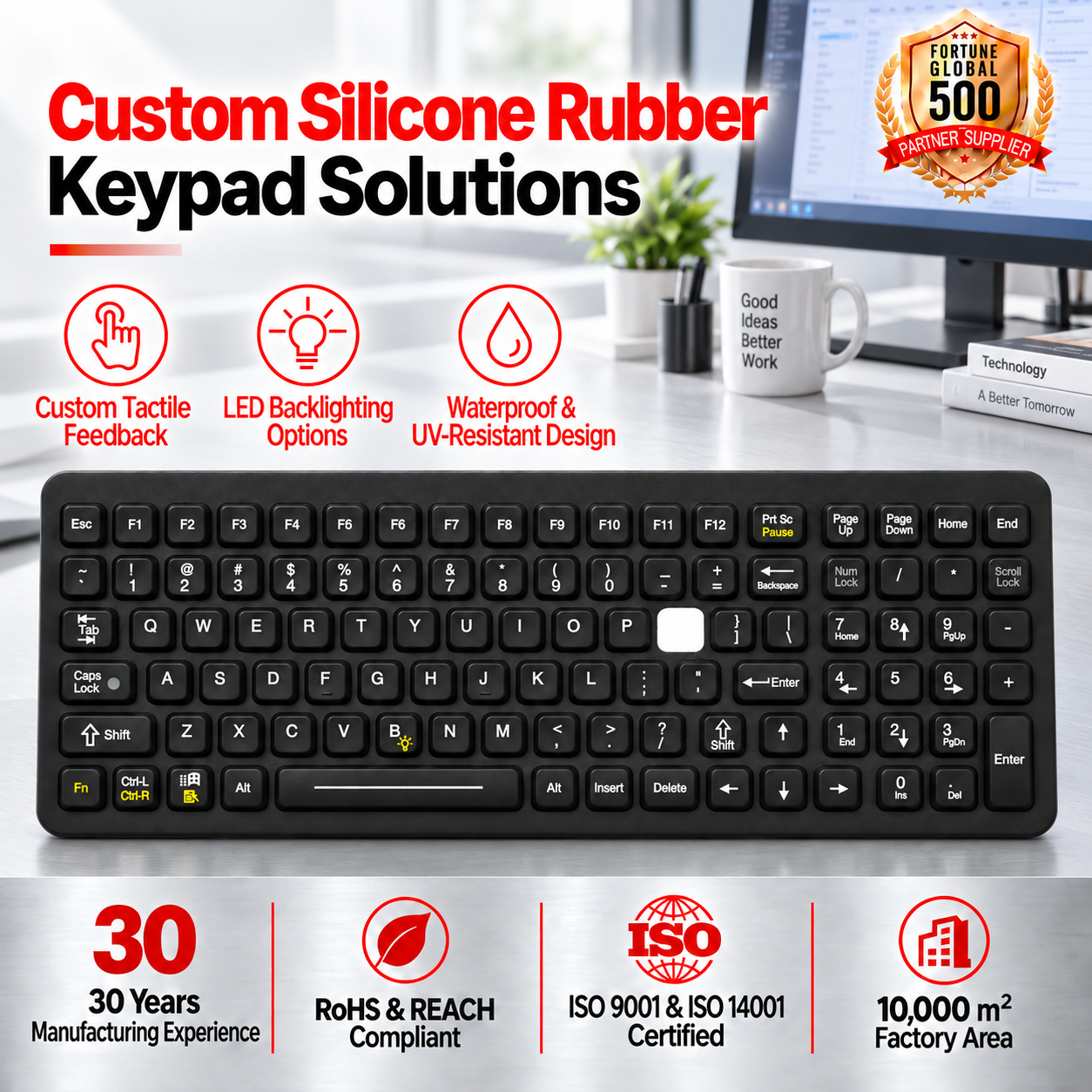
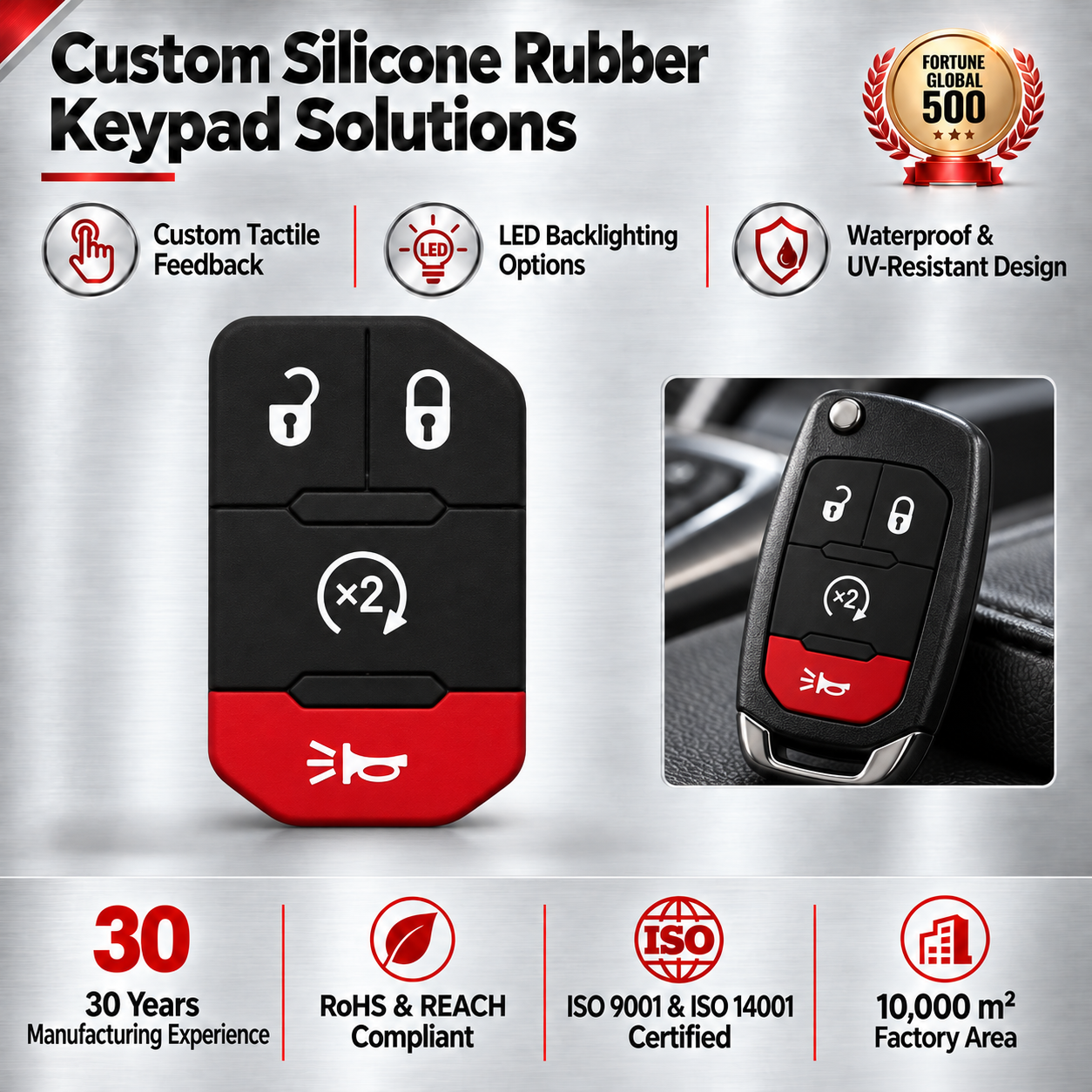
| Conductive Silicone Rubber Keypad | Compression-Molded Elastomer + Carbon Pill / Gold Contact + Rigid FR4 PCB or Silver PET | 500,000 to 2,000,000 actuations | Inherent elastomeric bezel-sealing; resilient against high vibration and mechanical drop shocks | Remote controls, military handheld radios, rugged avionics, barcode warehouse scanners |
| Hybrid Capacitive + FSR Touch | Chemically Toughened Cover Lens + Capacitive Sensor + Piezoelectric Thin-Film FSR | >10 Million cycles | Hermetically encapsulated; immune to false actuation caused by pooling liquid or spray | Subsea telemetry systems, heavy-water washdown meat processing, outdoor fuel dispensers |
Direct manufacturing transparency from China's premier electronics fabrication hub. No intermediaries, no third-party contract slicing—engineered from raw substrates to finished HMI units entirely under one roof.
Our multi-story cleanroom workshop features automatic screen-printing tunnels, high-speed computerized die-cutting presses, precision surface-mount lines, and dedicated laser ablation suites.
Our complete operation, workforce integrity (121 skilled technicians), and environmental protocols have been audited and certified on-site by Intertek, ensuring Fortune 500 supplier compliance.
Batches undergo rigorous validation on automatic force-displacement testers, key-life cyclers, climatic programmable chambers (-40°C to +120°C), and taber ink-abrasion equipment.
Collaborate directly with cross-functional CAD/DFM engineers fluent in electronic schematic layout, impedance matching, micro-gap lamination, and MCU sensor tuning.
Strategic technology developments reshaping global supply chains and hardware bills-of-materials (BOM) over the 2025–2030 product development horizon.
Conventional capacitive switches are vulnerable to false triggers from pooling fluids, oil droplets, or rain. The emerging industry benchmark integrates thin-film force-sensing resistors (FSR) underneath the capacitive electrode. The keyboard demands both dielectric proximity and a calibrated physical downward pressure (e.g., 0.5N to 2.0N) before dispatching a key-down event, guaranteeing zero false triggers in high-moisture medical and marine environments.
Flat interfaces are transitioning toward organic, three-dimensional surfaces. Through In-Mold Electronics (IME) and 3D structural decoration, functional conductive silver capacitive traces and surface-mount LEDs are screen-printed directly onto planar plastic film, thermoformed into complex ergonomic contours, and injection-molded behind engineering resin, reducing assembly depth by over 65%.
To overcome operator input ambiguity associated with smooth, non-tactile glass panels, modern capacitive touch keyboards integrate ultra-compact piezoelectric ceramic actuators or linear resonant actuators (LRA) directly beneath the PCB or perimeter chassis. When a capacitive touch sensor confirms a registered strike, the MCU fires a localized micro-deflection wave, mimicking the authentic mechanical click of a snap-action metal dome.
Clear, uncompromised answers on prototyping, tooling investments, environmental ratings, and high-volume mass production from our engineering leadership team.