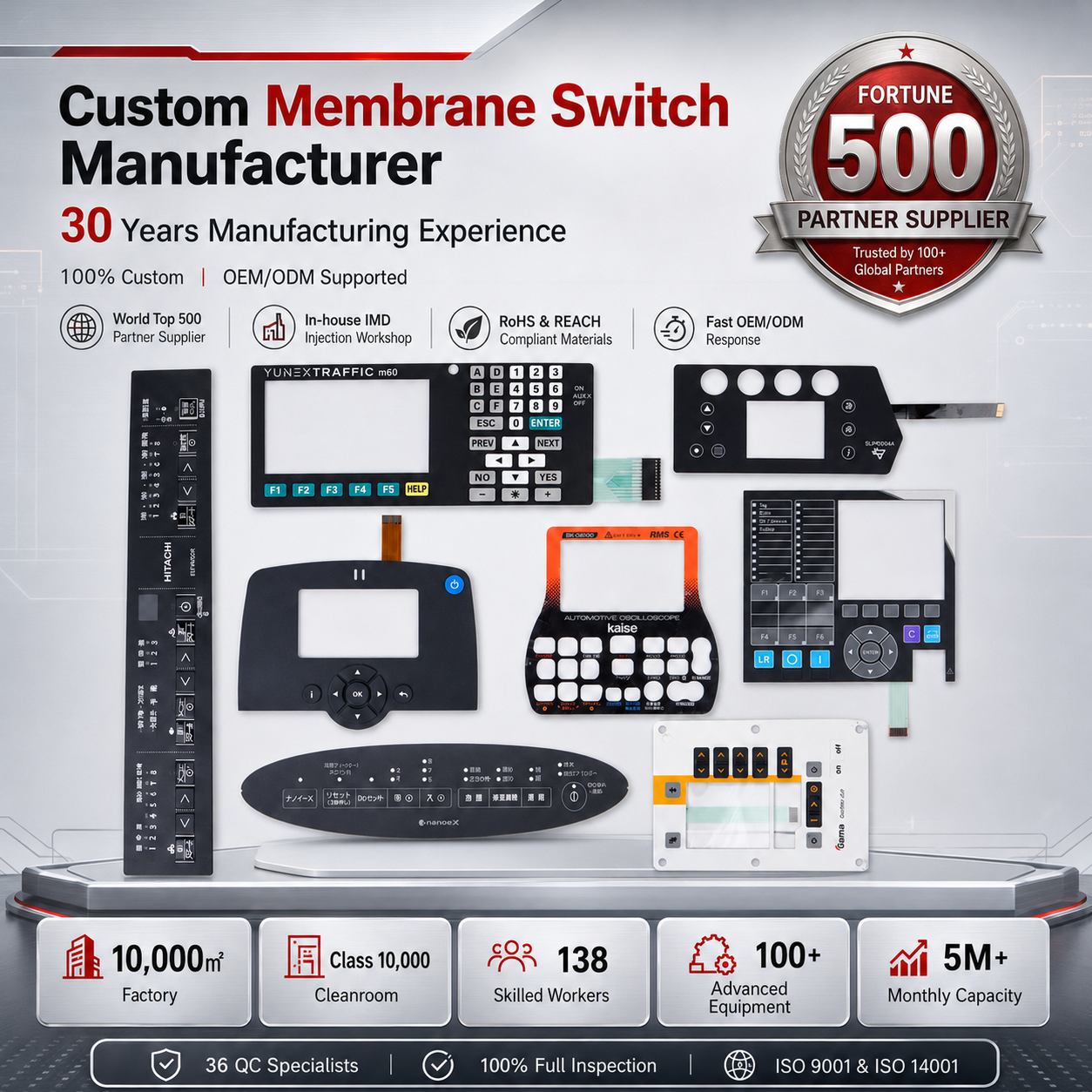
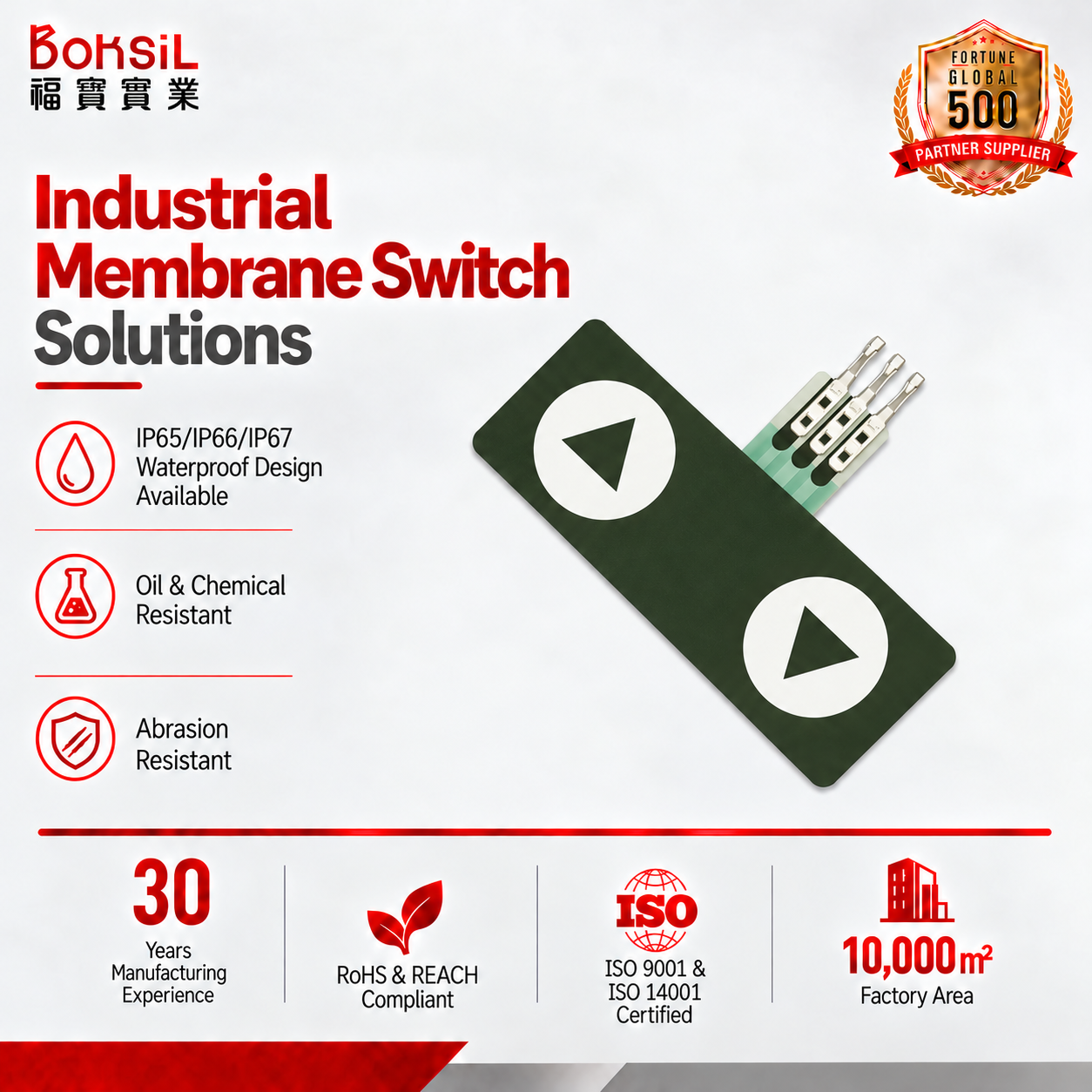
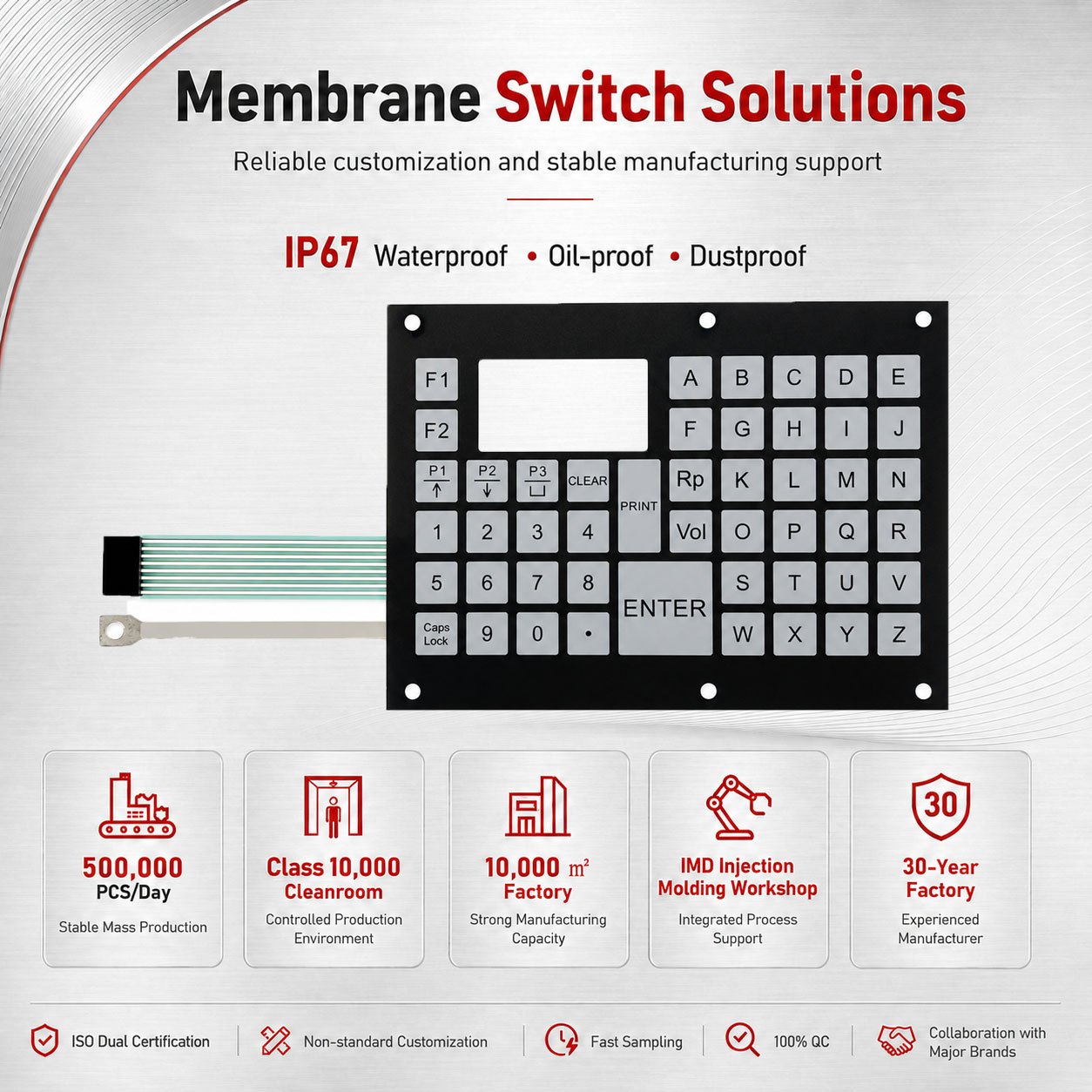
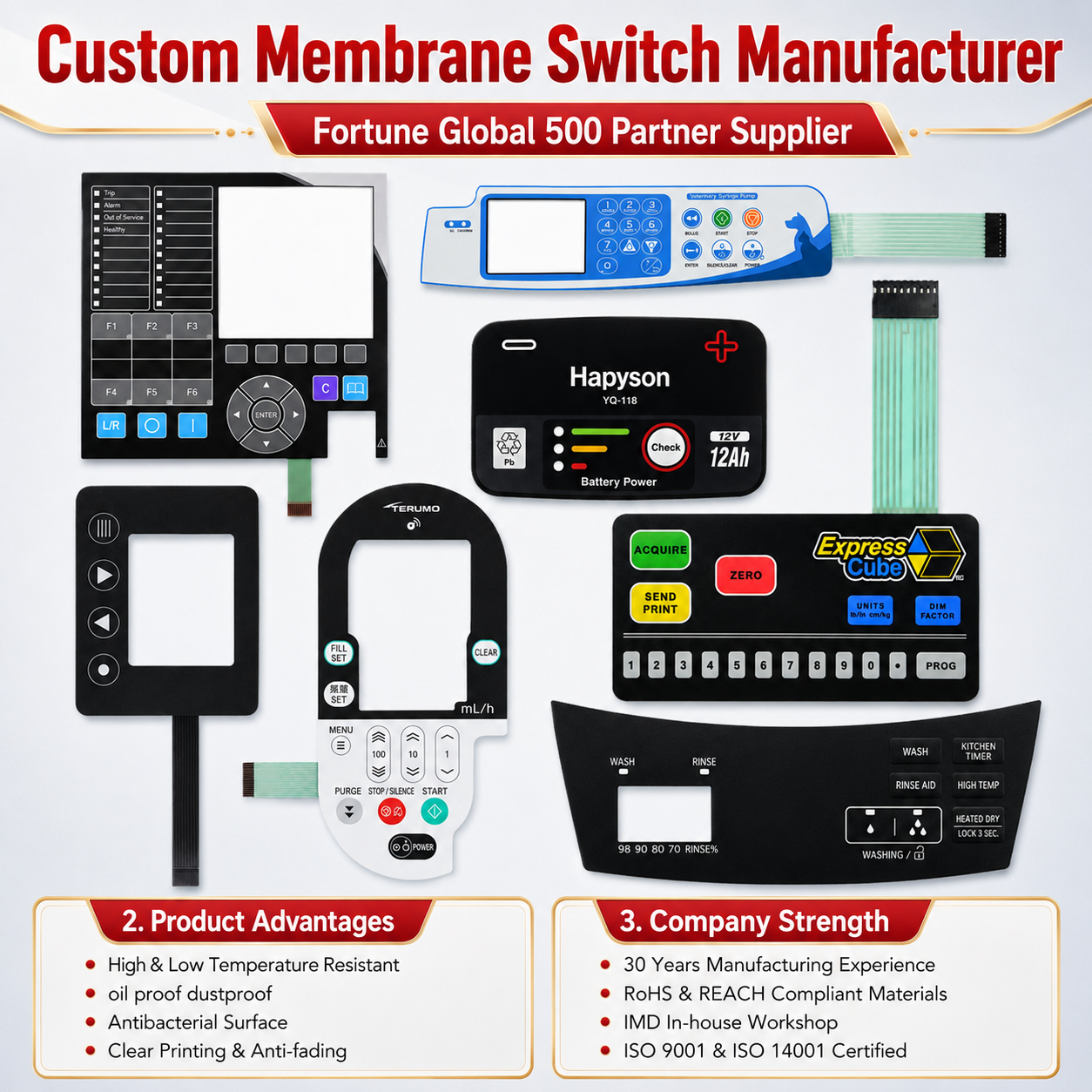
Custom Industrial Medical Appliance Membrane Switch Manufacture Graphic Overlay Waterproof FPC Circuit Power Button
- Circuitry: Copper FPC / Silver
- Ingress Rating: IP65 - IP67
- Actuation: Tactile Metal Dome
Select from our field-tested tactile keypad assemblies, capacitive thin-film matrices, and ruggedized industrial overlays.
A White Paper synthesis for strategic sourcing managers, electronics procurement specialists, and product engineers navigating next-generation user interface architectures.
Traditional screen-printed silver-carbon ink circuits are rapidly yielding to polymide-based flexible printed circuits (FPC). Sourcing trends demonstrate that tier-one medical and outdoor infrastructure buyers demand rolled-annealed copper due to its near-zero electromigration risk under prolonged high-humidity and thermal stress cycles, eliminating silver dendrite failures.
In post-pandemic commercial kitchen, clinical, and laboratory equipment procurement, specifications mandate IP67 continuous washdown tolerance. Future-proof designs leverage perimeter venting channels that exit outside the gasket seal alongside biaxially-oriented, textured PET film integrated with micro-encapsulated antimicrobial ionic silver additives.
The industrial design market is moving decisively towards combining frictionless capacitive gesture sensing with physical, tactile metal-dome confirmations. Operators require tactile reassurance for mission-critical operations like Emergency Stops or Pump Actuations while utilizing capacitive sliders for auxiliary menu navigations.
Uneven backlight hotspots from conventional point-source LEDs are being replaced by ultra-thin Light Guide Films (LGF) measuring only 0.125mm to 0.25mm. LGF guarantees precision lumen dispersion over complex graphic arrays with minimal power consumption, allowing completely invisible "dead-front" iconography until illuminated.
Procurement teams are cutting mechanical assembly steps by adopting IMD/IML front-bezel integration. Instead of layering adhesive film over bare plastic, high-definition printed graphics are fused directly during injection molding, ensuring total chemical resilience, peel resistance, and seamless curvature impossible via conventional flat-cutting.
Global original equipment manufacturers are pivoting toward direct factory alliances equipped with integrated DFM (Design for Manufacturability) verification rigs. Sourcing protocols prioritize vendors who utilize rapid digital prototyping alongside automated optical and electrical testing lines to minimize tooling re-spins and compressed lead times.
A comparative technical guideline to ensure electrical, environmental, and tactile ergonomics match your exact operational requirements.
| Layer Technology | Material Substrate | Tactile Feel & Stroke | Ingress / Environmental Spec | Target Application Focus |
|---|---|---|---|---|
| Tactile Metal Dome Membrane | Autotex Textured PET / Polycarbonate | Snap Action (250g - 450g), 0.3mm - 0.5mm | IP65 to IP67 Hermetically Sealed | Medical Diagnostic Systems, Industrial CNC, Handheld Radios |
| Copper FPC Keypad Assembly | Polyimide (PI) Film + Rolled Annealed Copper | Crisp Tactile (Stainless Domes) | IP68 Compatible; -40°C to +105°C | Aerospace Cockpits, Automotive Subsystems, High-Density Matrix |
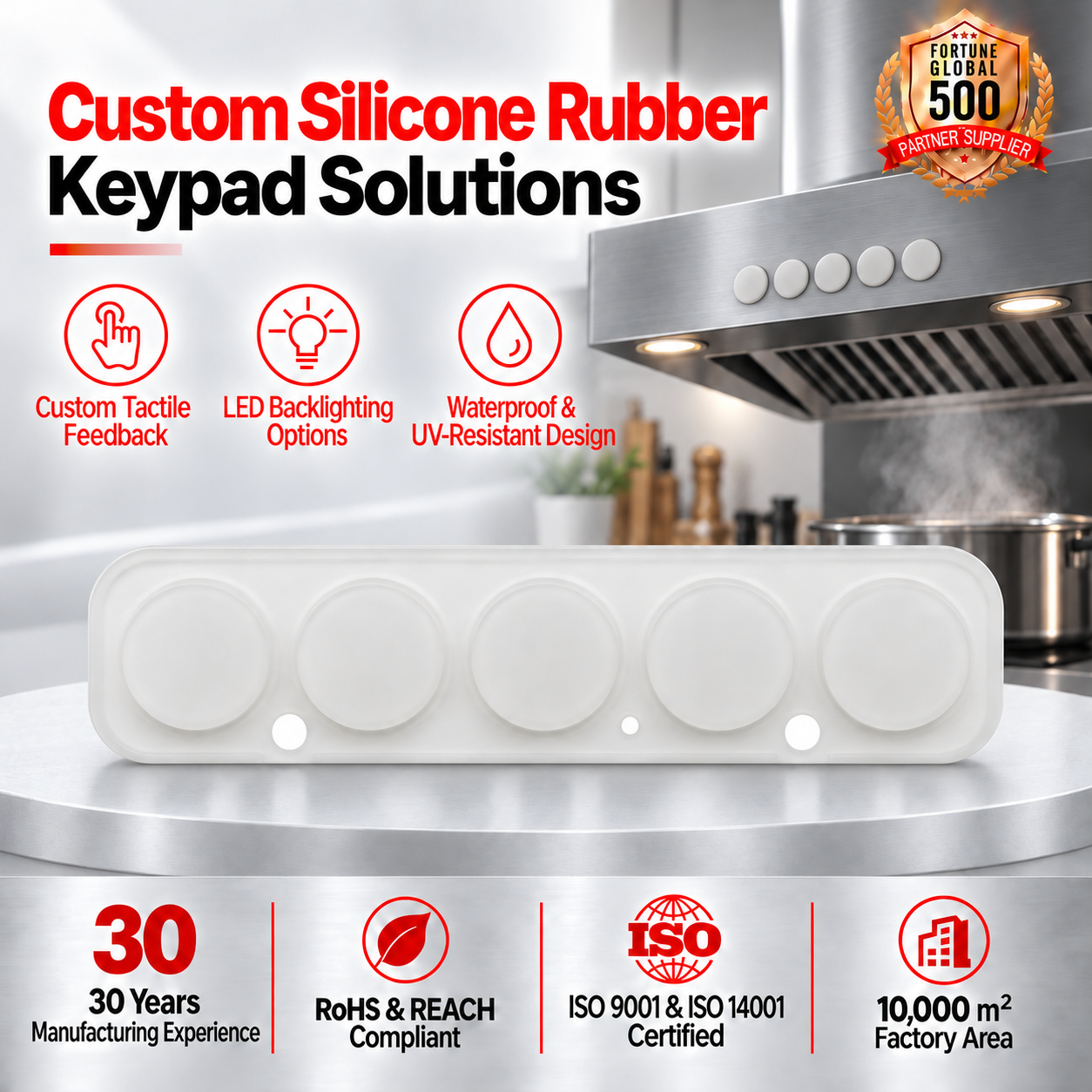
| Silicone Rubber Keypad Integration | Compression Molded Silicone (Shore 40A-60A) | Deep Travel Ergonomic (0.8mm - 2.0mm) | Oil Resistant, UV & O-Zone Protected | Heavy Machinery, Commercial POS, Telecom Handsets |
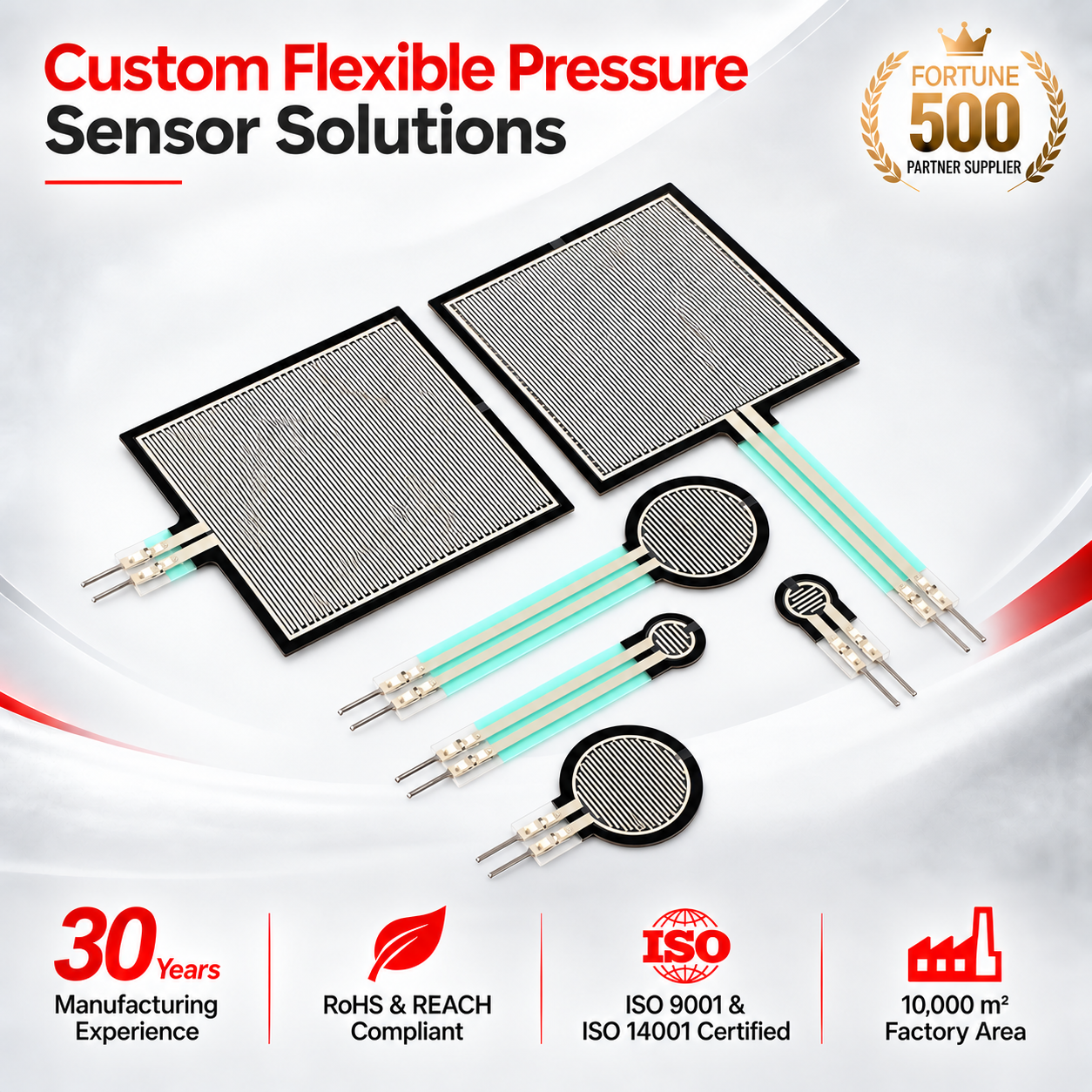
| Piezoresistive FSR Pressure Array | Multi-Layer Conductive PET | Non-Tactile / Ultra-Soft Dynamic Sensing | Operating Range 20g to 10kg force | Surgical Robotics, IoT Pressure Sensing, Automotive Footbeds |
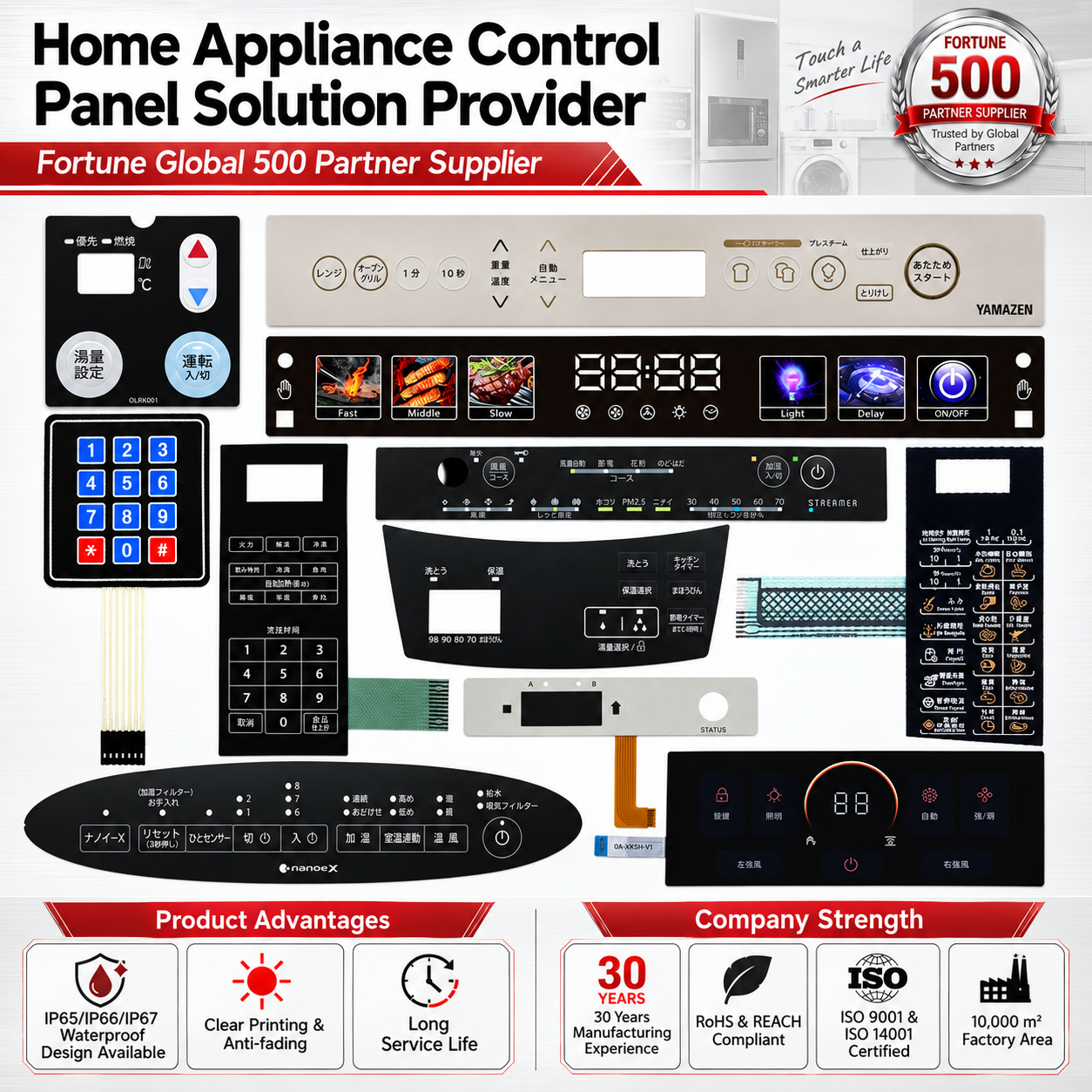
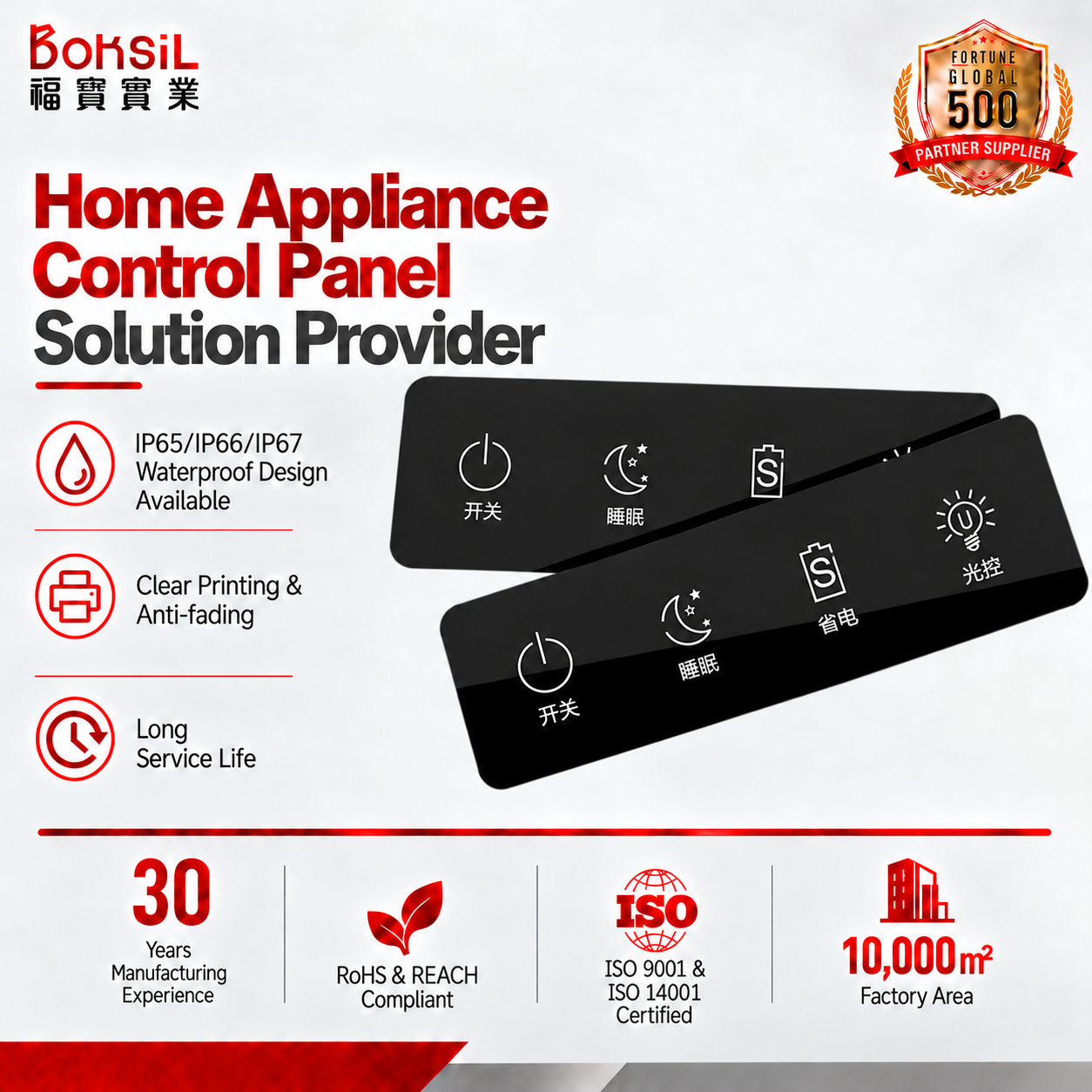
| PMMA Optical Front Panel | Optical-Grade Acrylic / Chemical Hardcoat | Rigid Faceplate (Non-Tactile / Capacitive) | 92% Light Transmittance, 4H-6H Hardness | Smart Home Appliance Displays, Infotainment Interfaces |
Fully integrated 10,000㎡ manufacturing plant verified on-site by Intertek. We eliminate middleman markups and technical friction through singular engineering accountability.
Every operational phase—from precision screen printing, cleanroom optical bonding, and SMT LED placement to high-speed die cutting—is housed under one roof in Dongguan, China, guaranteeing rigid revision control and unmatched production velocity.
Having served as an audited supplier to Fortune 500 corporations and global equipment builders, our 121-strong technical team brings specialized design heuristics, mitigating acoustic resonance, ESD arc discharges, and adhesive migration failures.
Our production facilities maintain complete operational transparency. We undergo stringent annual third-party validation by Intertek to uphold zero-defect quality assurance policies across every custom fabrication batch.
We do not rely on spot checks. In-house equipment includes automated key-life cycling testers, force-displacement dynamometers, programmable temperature-humidity chambers, UV accelerated-yellowing testers, and ink abrasion testers.
Bypass untechnical sales intermediaries. AXRU pairs your project with a senior HMI structural engineer and account manager proficient in bilingual DFM reviews, stack-up optimization, and custom impedance modeling.
Accelerate your NPI (New Product Introduction) cycles. We accommodate early-stage functional builds with a minimum order quantity of just 100 units, backed by laser-cut rapid prototyping before tooling commitment.
Detailed insights into lead times, DFM engineering requirements, environmental qualification, and quality control.
To deliver a comprehensive DFM review within 24 hours, our engineering department requires:
1. Vector Artwork: Adobe Illustrator (.AI), CorelDraw (.CDR), or Vector PDF featuring Pantone (PMS) or RAL color callouts.
2. Mechanical Dimensions: 2D mechanical files (.DWG or .DXF) showing outline dimensions, tolerances, cutouts, window clearances, and tail length/location.
3. Electrical Schematic: Circuit routing diagram or matrix scanning map, pinout assignments, connector pitch (standard 1.0mm, 1.27mm, or 2.54mm), and contact resistance threshold.
4. Environment Requirements: Desired ingress rating (e.g., IP65, IP67), UV exposure needs, chemical exposure risks, and tactile switch force parameters (e.g., 280g, 350g, 420g).
We engineer hermetic sealing using continuous die-cut perimeter adhesive gaskets made with high-performance acrylic transfer tapes (typically 3M 467MP, 3M 468MP, or VHB series). The circuit layer incorporates internal breathable equalization channels that terminate outside the sealing gasket into the device enclosure, preventing atmospheric pressure delamination without permitting ingress. For aggressive washdown environments, our IP67 designs feature double-perimeter outer seals and hydrophobic membranes over ventilation ports.
Standard membrane switches utilize conductive silver flake inks screen-printed onto treated polyester (PET) films. While highly cost-effective for general appliances and low-density matrix circuits, silver ink is vulnerable to micro-cracking under tight bend radiuses and dendrite electromigration in high-moisture conditions. FPCs utilize polyimide (Kapton) films bonded with solid rolled-annealed copper traces etched using photolithography. FPCs provide exceptionally low trace resistance, ultra-fine pitch trace routing (down to 0.5mm), direct SMT component soldering compatibility, and unlimited flexural lifespan.
Tactile feedback is primarily achieved using stainless steel domes (nickel-plated or gold-plated) ranging from 6mm to 20mm in diameter, with standard trip forces spanning 180g to 500g. We utilize specialized dome shapes (four-leg, round, or triangular with dimples) depending on the tactile "snap ratio" desired. Polydome alternatives—formed directly into the polyester overlay via thermoforming—are also available for cost-effective applications. Every production run is validated using automated force-displacement plotting machines to verify consistent tactile feel across every key.
Every shipment undergoes 100% automated electrical testing for open/short circuits, trace resistance, and LED polarity verification. In addition, batch sampling records are generated through our reliability lab:
• Actuation Life Cycling: Validation up to 1,000,000 to 5,000,000 strokes.
• Environmental Exposure: High/low temperature (-40°C to +85°C) and cyclic humidity chamber testing.
• Ink Decolorization & Cross-Hatch: ASTM D3359 cross-hatch adhesion and solvent/alcohol rub testing.
• FAI & PPAP: Full First Article Inspection (FAI) reports and PPAP Level 3 documentation for automotive and medical OEM accounts.
Collaborate with our Dongguan engineering lab to optimize your mechanical stack-up, select robust substrates, and receive prototype samples with fast turnaround.