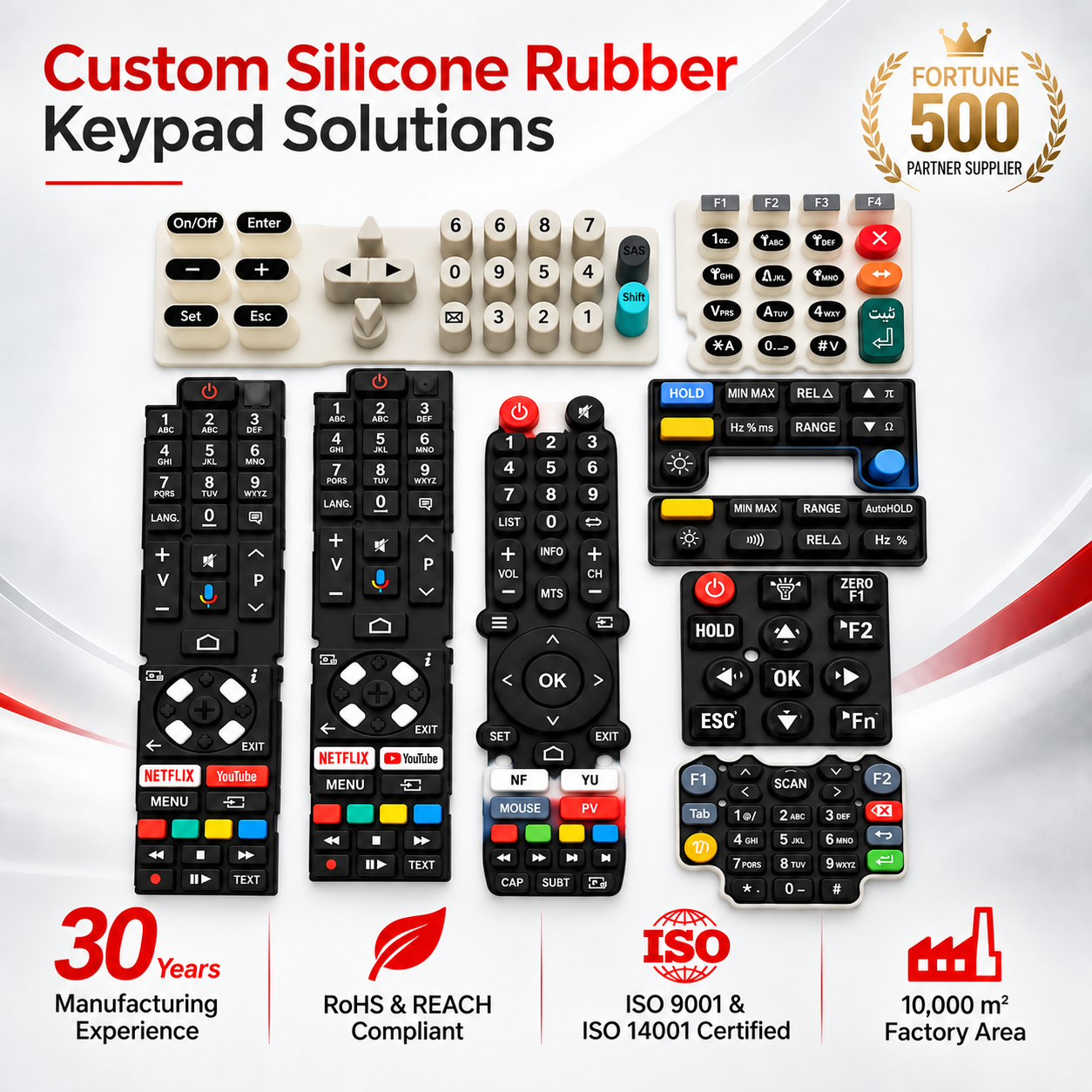
Tactile Elastomer
View Tech Specs →
Verified OEM/ODM tactile solutions engineered for precision tactile feedback, IP67 harsh environment resilience, and thin-profile human-machine interaction.
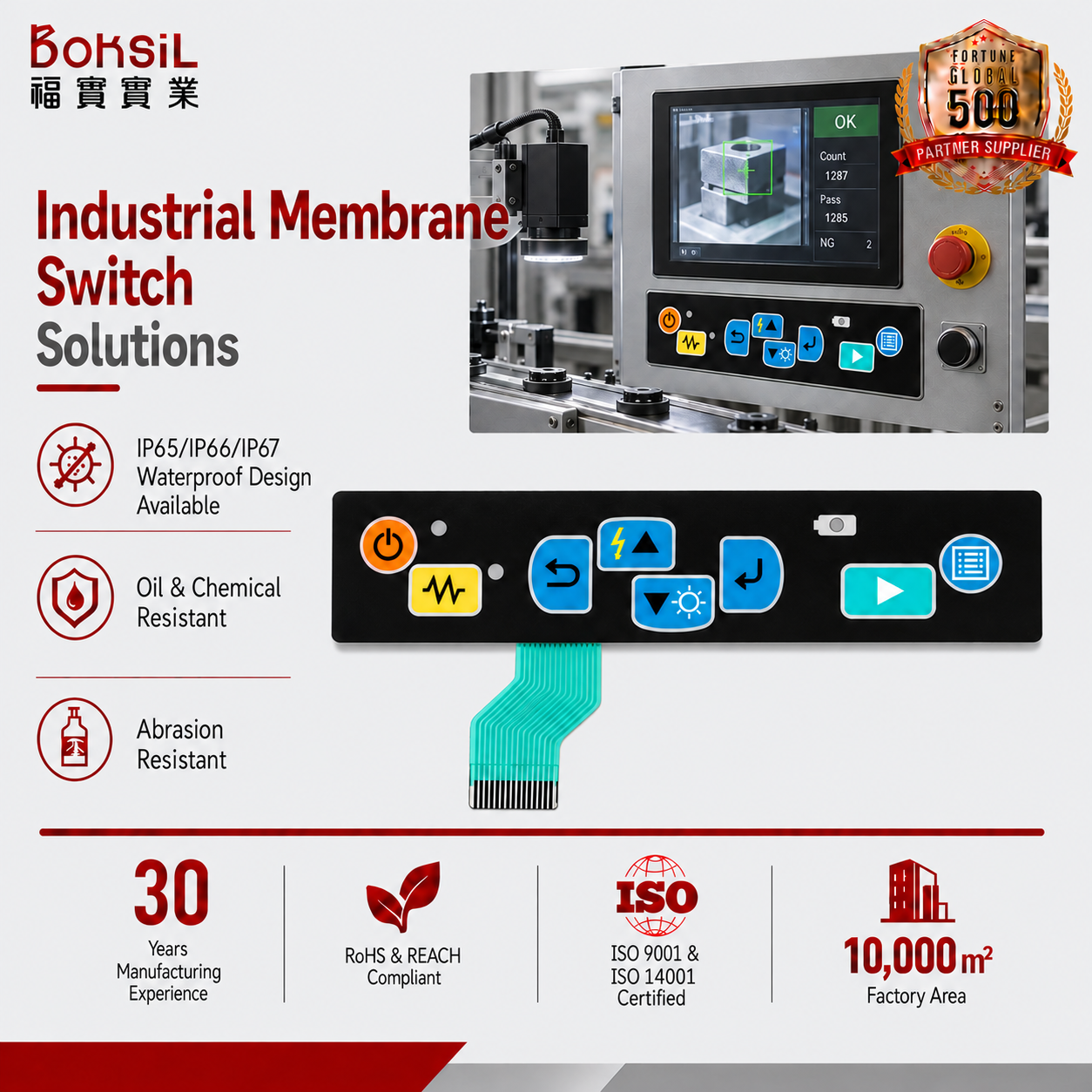
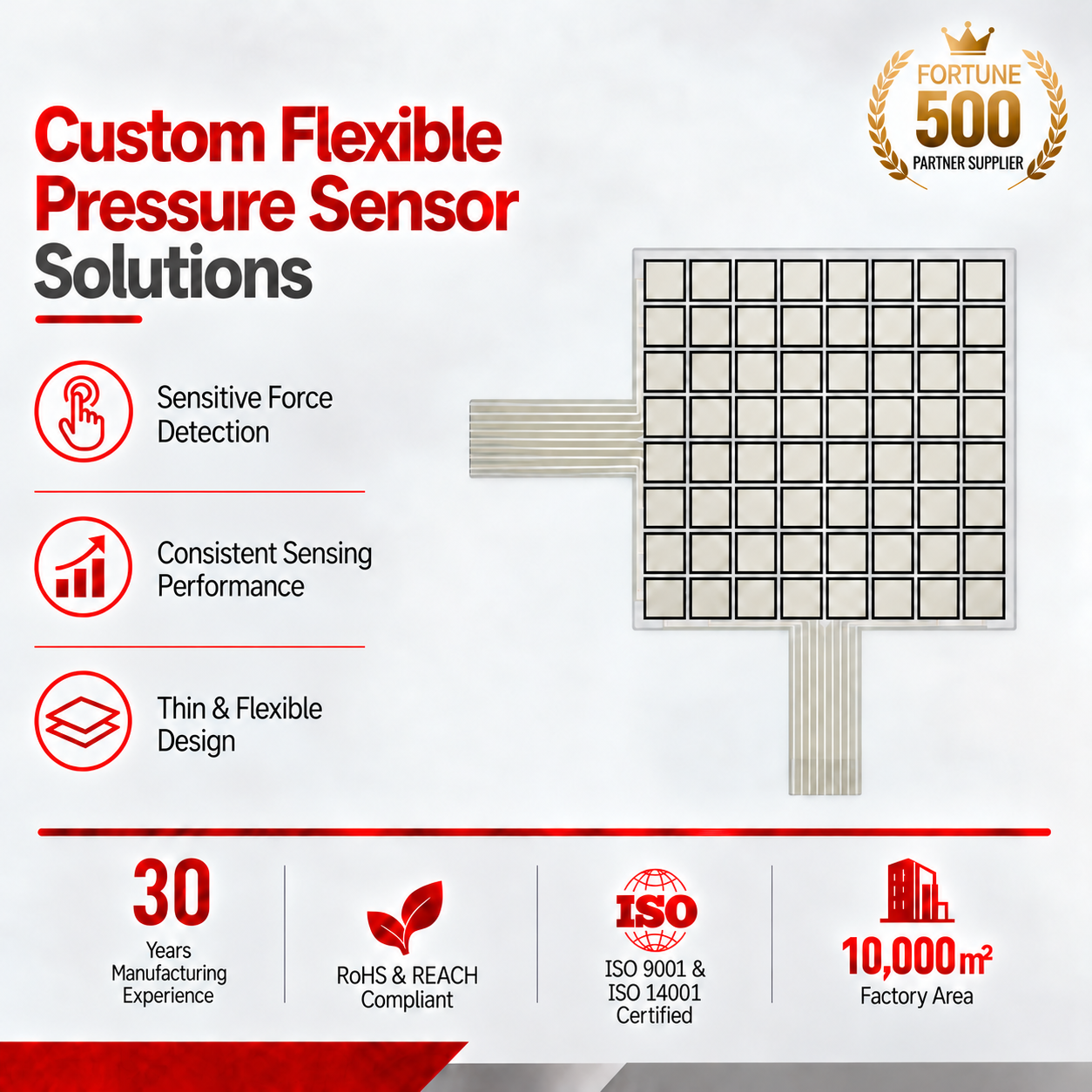
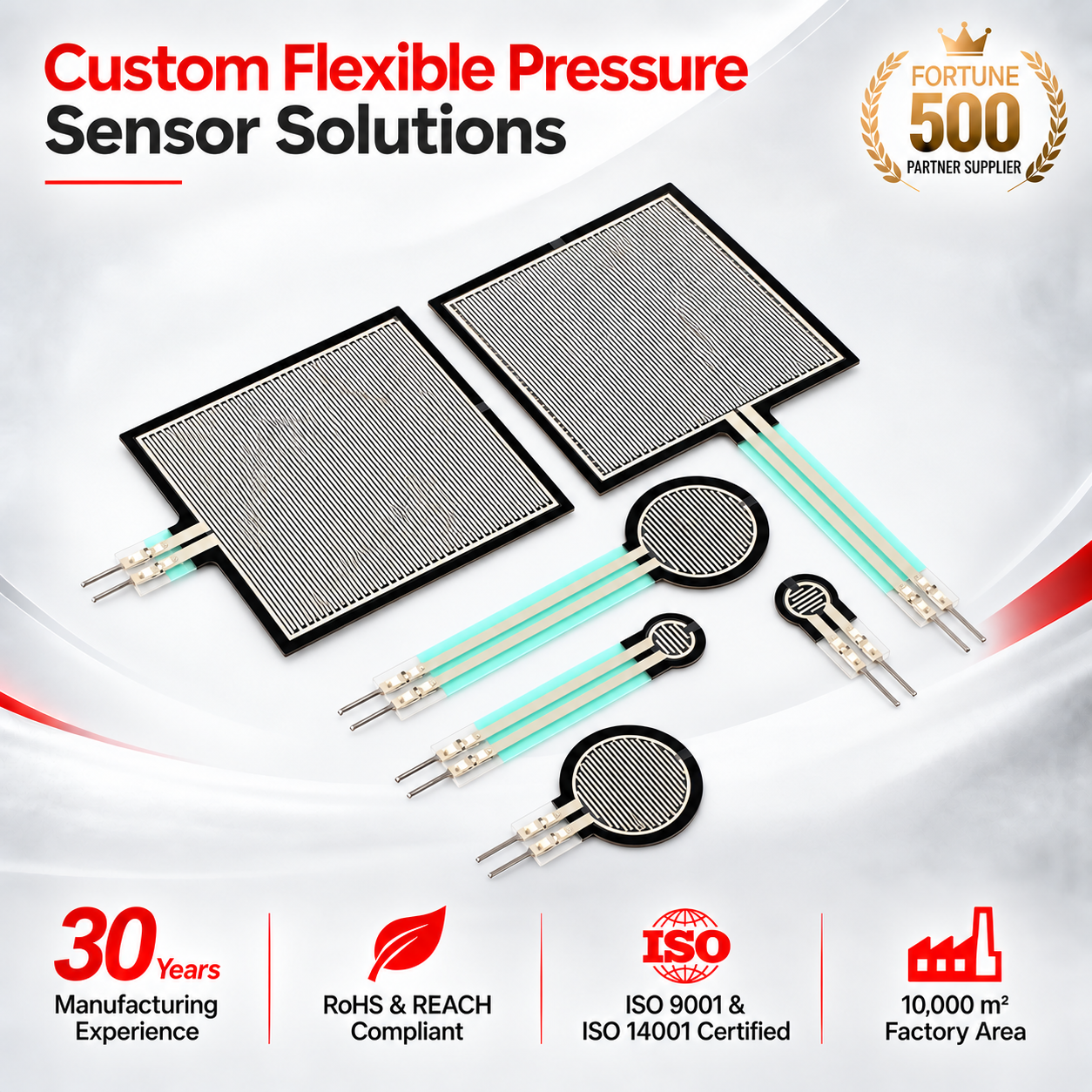
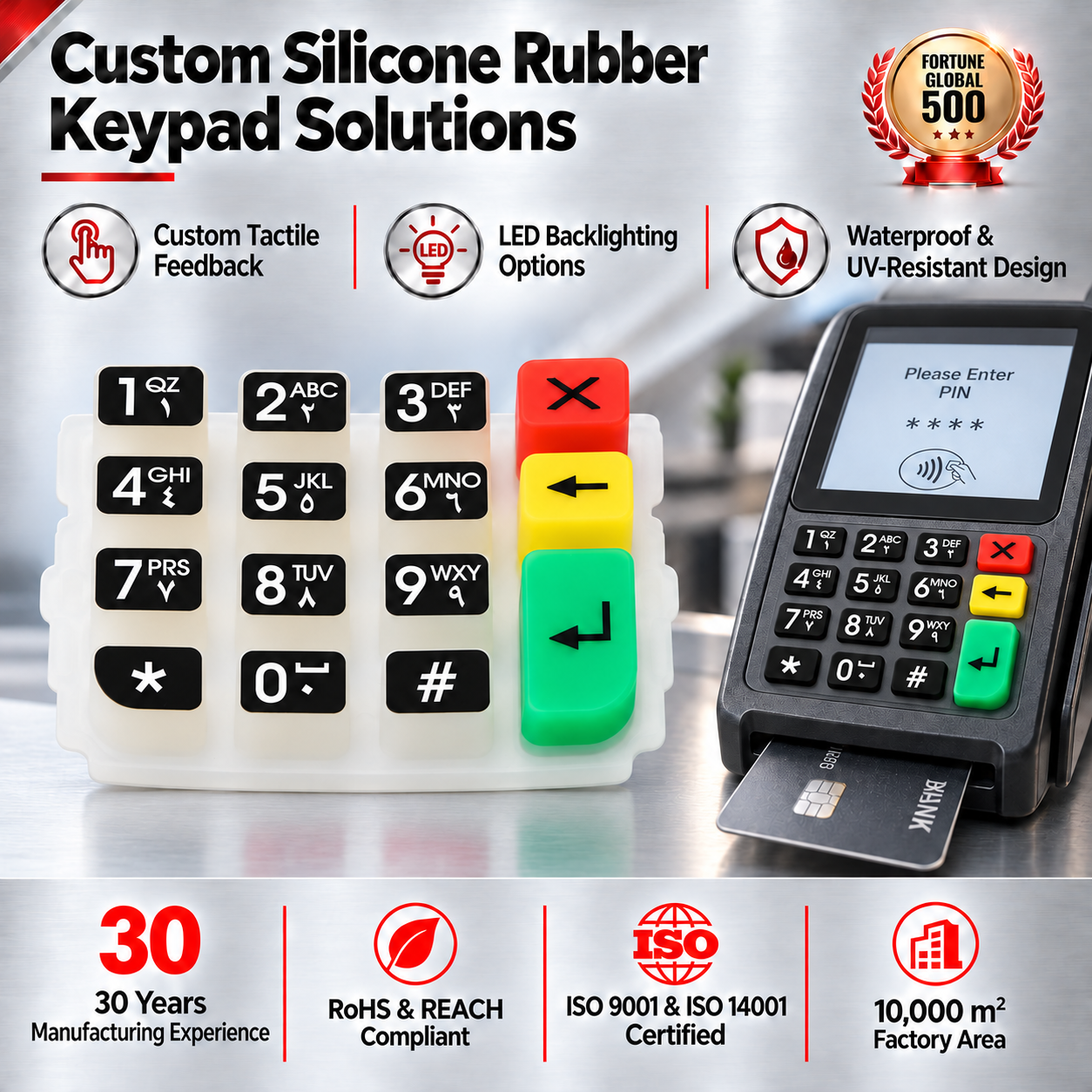
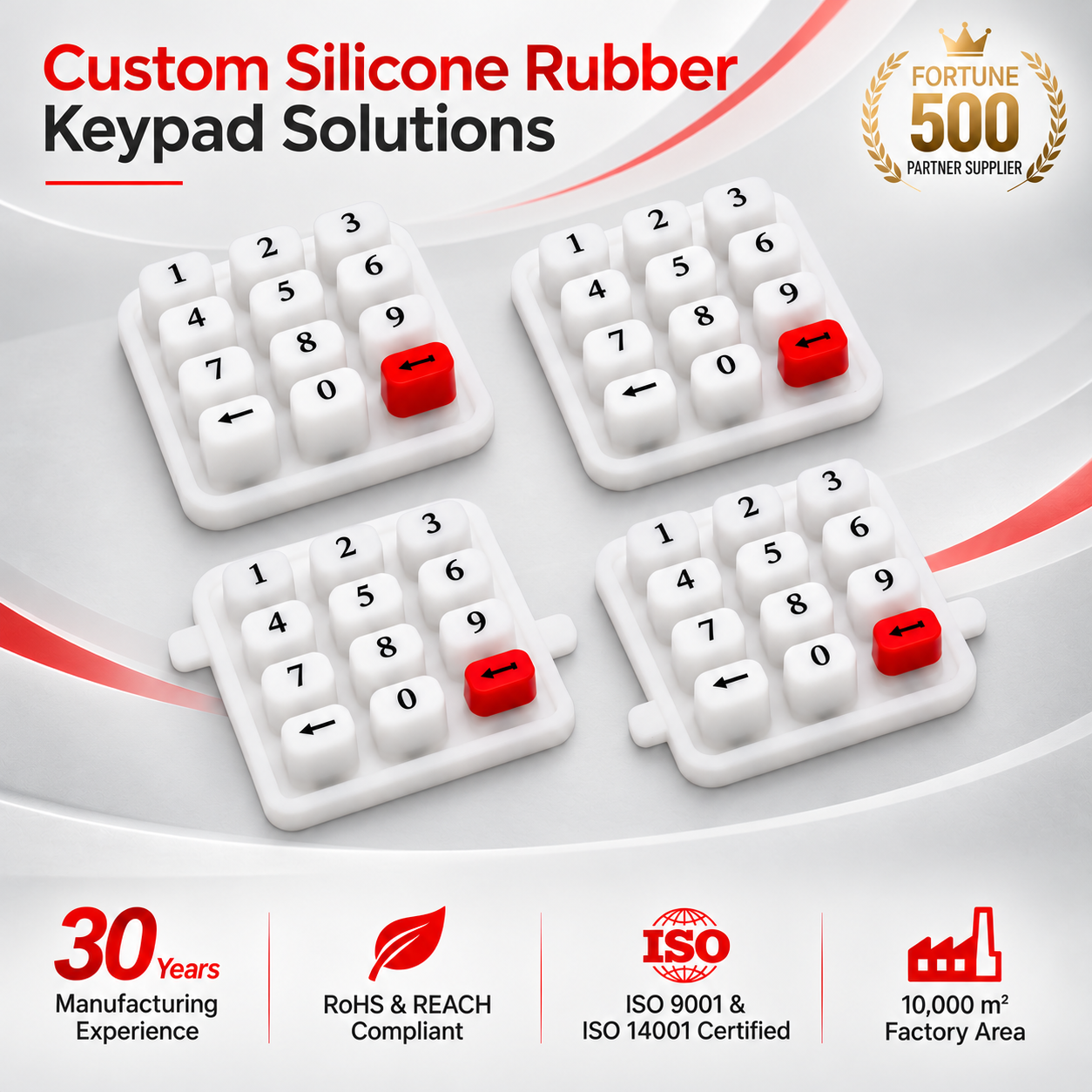
Dongguan AXRU Electronics delivers industrial-grade backlit membrane switches, capacitive arrays, and integrated HMI front panels with zero-tolerance electrical validation.
Fabricated in Class 1,000 to Class 10,000 dust-free environments. Environmental control mitigates particulate contamination across optical layers, ensuring pinhole-free graphic overlays and stable silver migration prevention.
Eliminate pinpoint LED hot-spots using customized Micro-Dot Light Guide Film (LGF) structures and precision laser etching. Our optical modeling guarantees balanced, low-power illumination across large surface footprints.
Versatile substrate engineering supporting standard screen-printed silver circuitry on heat-stabilized polyester (PET) or multi-layer high-density flexible printed circuits (FPC) with gold-plated contact pads.
Continuous adhesive gaskets utilizing solvent-resistant 3M and Nitto engineering adhesives protect sensitive contact zones against moisture penetration, high-pressure washdowns, and chemical exposure.
Every lot undergoes life cycle verification, force-displacement stroke measurement, ink adhesion rub testing, programmable thermal shock chamber assessment, and automated 100% electrical open/short screening.
Direct communication with senior HMI mechanical and electronic design engineers. Fast turnaround on Design for Manufacturability (DFM) reviews, functional circuit CAD prototypes, and color-matched overlay samples.
A comprehensive technical evaluation of optical diffusion technologies, structural layer stack-ups, and long-term operating durability.
The standard modern backlit membrane switch departs drastically from legacy single-sheet keypads. To satisfy high reliability in automotive, medical electronics, and precision industrial controls, engineers must balance tactile travel distance, electrostatic discharge (ESD) shielding, and photonic attenuation. The interface consists of multiple critical layers: an engineered polyester (PET) or polycarbonate (PC) graphic overlay with dead-front back-printing; an optical-grade Light Guide Film (LGF); micro-actuation stainless steel tactile metal domes; high-bond acrylic spacer dies; and an etched copper FPC or printed conductive silver substrate.
| Backlighting Method | Luminance Uniformity | Stack Thickness | Power Consumption | Mechanical Tactile Impact | Expected Service Life |
|---|---|---|---|---|---|
| Light Guide Film (LGF) | 90% - 95% (Excellent) | 0.125mm - 0.25mm | Low (1-4 Edge LEDs) | Zero degradation of dome snap | > 50,000 Hours |
| Electroluminescent (EL) Lamp | 80% - 85% (Moderate) | 0.20mm - 0.30mm | High (AC Inverter Required) | Minimal damping effect | 3,000 - 8,000 Hours (Decays) |
| Direct Surface Mount LEDs | 30% - 50% (Hot-spot prone) | 0.80mm - 1.50mm | Moderate to High | Requires key spacing relief | > 50,000 Hours |
| Woven Fiber Optic Mesh | 85% - 90% (Good) | 0.30mm - 0.50mm | Low (Remote LED source) | Slight increase in actuation force | > 50,000 Hours |
Procurement directors and systems architects are increasingly consolidating vendor matrices. The migration towards smart, unified human-machine interfaces demands suppliers who integrate force-sensing resistors (FSR), capacitive touch proximity, and tactile switches within a single ultra-thin enclosure. Key market drivers include:
1. Miniaturization via Ultra-Thin Light Distribution: Legacy systems relying on clunky backlight housings or EL lamps (which suffer from inverter frequency hum and rapid half-life degradation) are being phased out in favor of micro-molded LGF networks coupled with side-firing 0603 or 0805 SMD LEDs.
2. Seamless Surface Integration with Dead-Front Graphics: Commercial and clinical end-users demand unblemished aesthetic panels where button legends and diagnostic indicators remain completely invisible until energized by internal logic circuitry. Achieving this requires strict optical density tolerances and precise reverse multi-pass screen printing.
3. Harsh Chemical and Biocompatible Resistance: In medical devices and heavy manufacturing equipment, graphic overlays must withstand harsh chemical wipes (isopropyl alcohol, bleach solutions, quaternary ammonium) without clouding, delaminating, or suffering ink leaching.
Direct guidance for component sourcing, mechanical tolerances, tooling verification, and volume production.
Consult directly with our Dongguan engineering lab for comprehensive stack-up validation, photometric LGF simulations, and competitive factory-direct volume pricing.
Contact Us