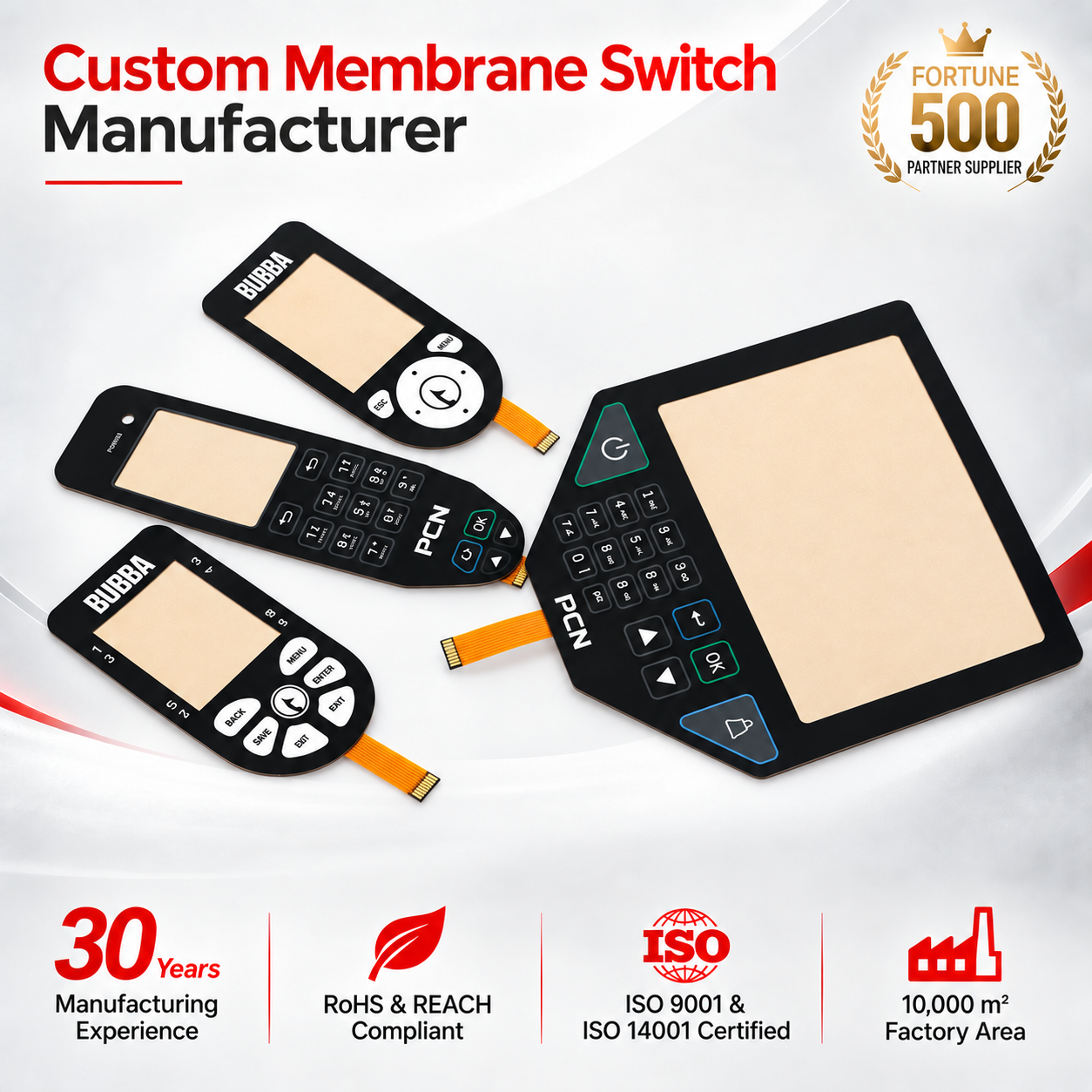
Custom 3m Adhesive Tactile Metal Dome Button Membrane Switch Graphic Overlay for Electronic Equipment
- Tactile Feedback: Stainless Steel Dome (350g)
- Adhesive Base: 3M 467MP / 468MP Acrylic
- Actuation Life: >1,000,000 Cycles
As precision manufacturing converges with smart ergonomics, Dongguan AXRU Electronics delivers end-to-end engineered input subsystems. We transform rigid schematic drawings into ruggedized, tactile membrane panels characterized by seamless LED integration, high-density matrix layouts, and verified IP67 moisture sealing.
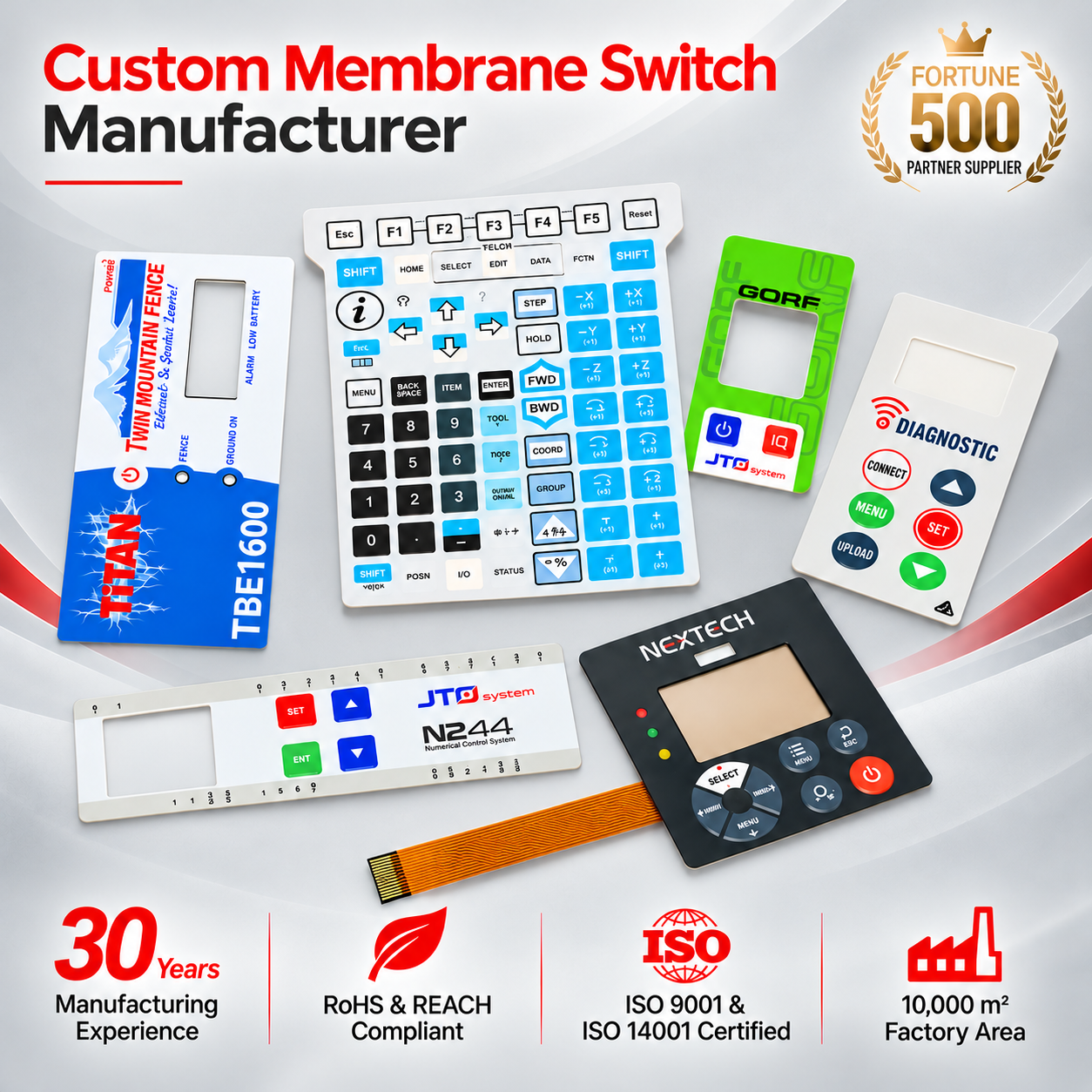
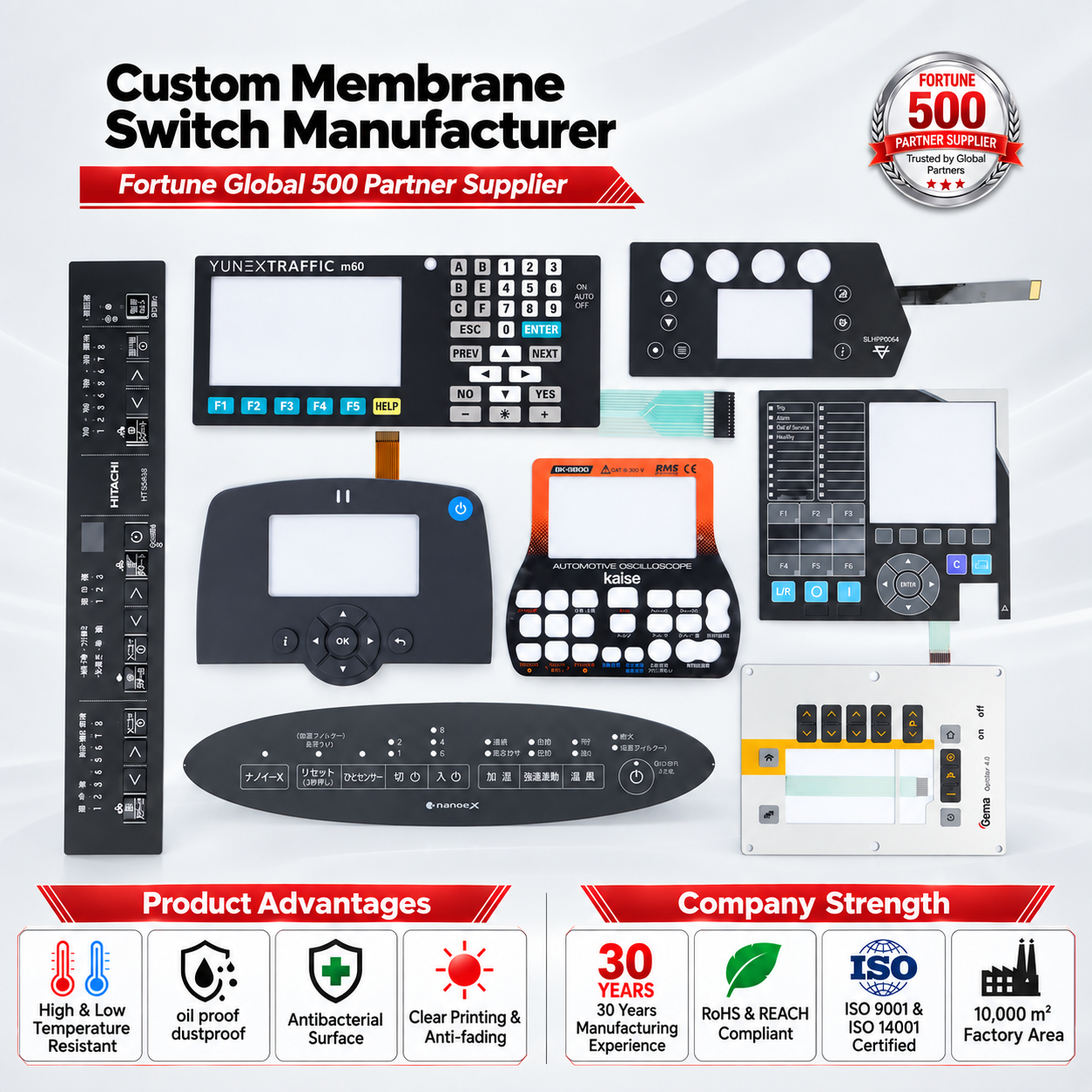
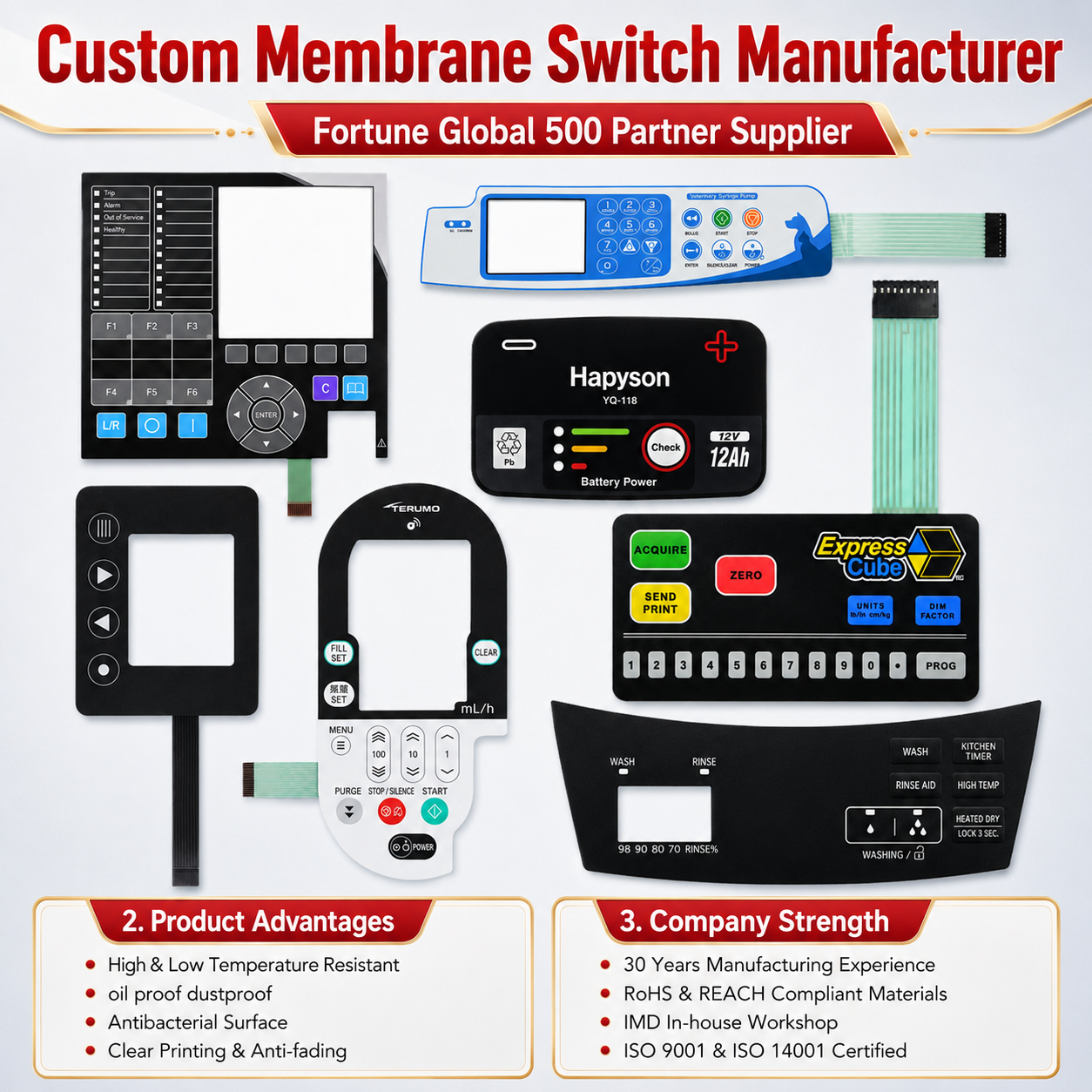
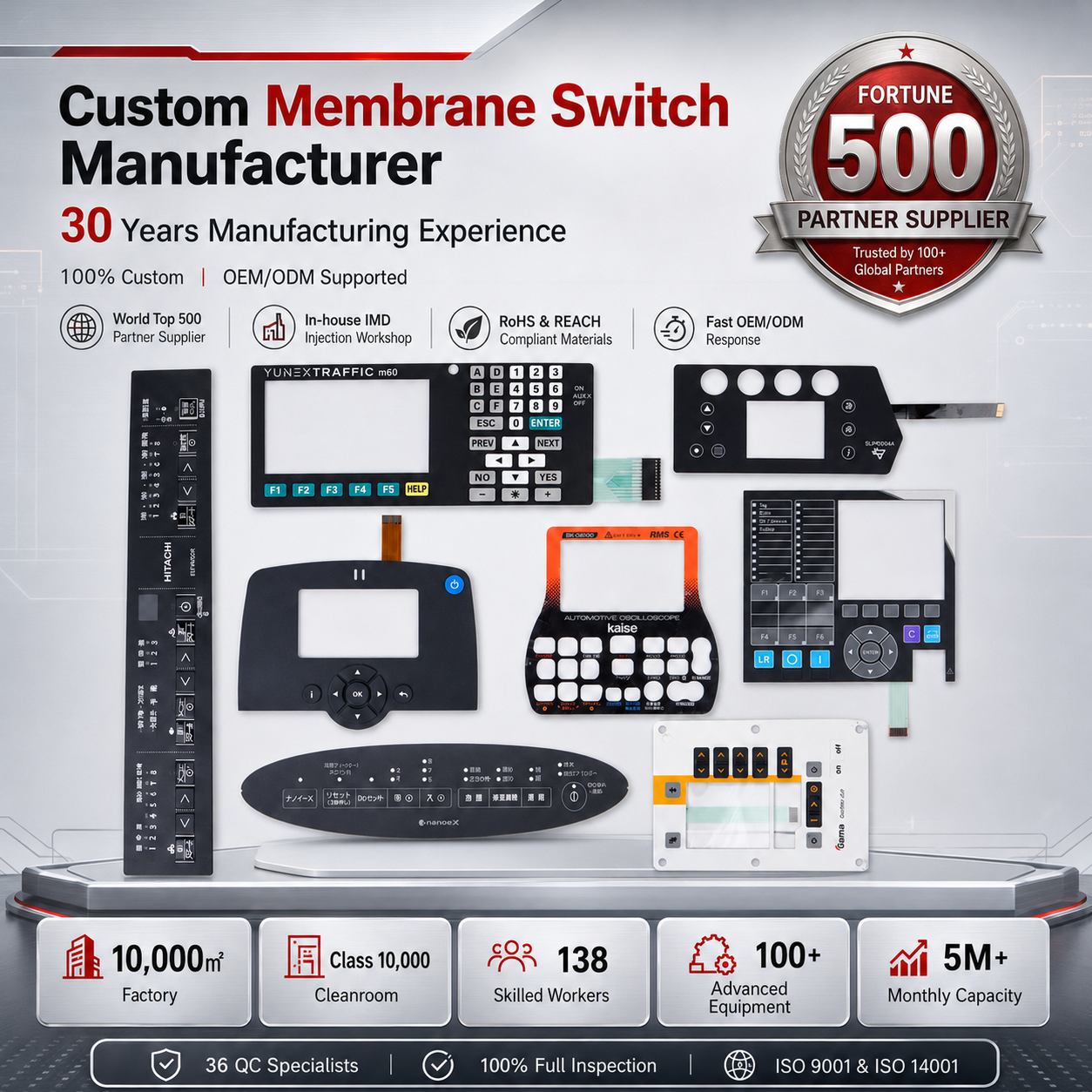
When selecting or specifying custom OEM LED membrane switches, hardware design engineers frequently encounter the cross-disciplinary challenges of mechanical deflection, optical diffusion, and electrical isolation. An un-optimized design leads to catastrophic failures in the field, including silver migration, LED solder joint fracture from membrane flexing, and uneven backlight illumination.
At Dongguan AXRU Electronics Co., Ltd., we mitigate these failure modes through rigorous layer stack-up optimization. For standard applications, a silver-printed polyester (PET) circuit provides exceptional cost-efficiency; however, when high-intensity LED chips (such as 0603 or 0805 surface mount packages) and fine-pitch display interconnects are required, we strongly advocate for Flexible Printed Circuit (FPC) copper substrates. Copper FPC exhibits superior solder integrity, zero micro-cracking under repeated mechanical actuation, and drastically lower trace resistance (<1Ω versus 10–50Ω in screen-printed conductive silver inks).
| Circuit Architecture | Conductor Material | LED Solder Joint Durability | Trace Resistance | Recommended Industrial Context |
|---|---|---|---|---|
| Silver-Printed PET | Conductive Silver Pastes | Conductive Epoxy Bonding | 10Ω – 50Ω (Depends on trace run) | Commercial appliances, high-volume cost-sensitive consumer interfaces |
| Copper Clad Polyimide (FPC) | Electrodeposited/Rolled Cu | Reflow SMT Soldering (High Shear) | < 0.5Ω (High conductivity) | Medical diagnostic terminals, avionics, ruggedized automotive controllers |
| Hybrid Silicone + Membrane | Carbon Pill or Gold Plated | Embedded Under Silicone Dome | < 100Ω Contact Resistance | Handheld military radio remotes, high-travel outdoor instruments |
Global supply chain directors within OEM/ODM conglomerates are fundamentally pivoting how human-machine interfaces are sourced. The legacy methodology of procuring disconnected graphic overlays, mechanical switches, bare PCBs, and secondary backlighting films from segregated vendors has proven unviable due to cumulative tolerance errors, elevated defect rates during final assembly, and extended production lead times.
The contemporary procurement paradigm focuses heavily on monolithic turnkey front-panel integration. Tier-1 buyers require manufacturers to deliver fully integrated faceplate assemblies—incorporating the front decorative overlay, precision-embossed tactile switches, integrated status LEDs, light guide films (LGF), and CNC-machined metal or plastic housing backplates—pre-tested as a unified plug-and-play module. Furthermore, stringent environmental mandates in Europe and North America (such as RoHS 3, REACH, and halogen-free standards) necessitate exhaustive material traceability. Dongguan AXRU Electronics maintains full supply chain provenance on all Autotex films, 3M pressure-sensitive laminates, and electronic components.
The landscape of LED membrane switches is advancing rapidly, driven by three major technological vectors:
A. Light Guide Film (LGF) Uniformity: Historical backlighting relied on discrete, clustered LEDs that produced glaring hotspots and uneven illumination across graphic legends. Modern engineering utilizes laser-micro-dotted Light Guide Films (LGF) measuring between 0.125mm and 0.250mm in thickness. Side-firing ultra-compact LEDs direct photons laterally through the high-refractive index polycarbonate film, distributing uniform lux across complex switch surfaces with minimal power consumption.
B. Hybrid Capacitive-Tactile Surfaces: While capacitive touch panels deliver ultra-modern sleekness, industrial operators working with heavy protective gloves or in liquid-splash environments still require definitive mechanical feedback. The industry is rapidly adopting hybrid architectures: capacitive slider arrays for variable analog adjustment paired with tactile metal dome power/emergency stops built directly on the same substrate.
C. Antimicrobial & Self-Healing Nanocoatings: In the wake of heightened infection-control protocols in clinical environments, graphic overlays are increasingly manufactured with embedded silver-ion nano-additives. These formulations destroy bacteria and viral envelopes on contact while maintaining long-term resistance to aggressive hospital-grade chemical disinfectants such as isopropanol, bleach, and quaternary ammonium solutions.
Our 10,000㎡ manufacturing facility in Dongguan, verified on-site by Intertek, integrates end-to-end tooling, cleanroom screen printing, and advanced reliability validation under one roof.
10,000㎡ manufacturing floor verified for genuine production capacity, rigorous labor standards, and certified quality management compliant with ISO 9001 systems.
No outsourced core operations. Screen printing, cleanroom SMT placement, automated laser profiling, and adhesive lamination remain strictly in-house for absolute IP protection.
Every batch is subjected to automated force-displacement stroke validation, ink abrasion/solvent resistance tests, thermal humidity aging, and UV yellowing chambers.
You work directly with dedicated DFM engineers who evaluate your CAD/Gerber designs for trace routing, dome sizing, connector pitch, and optical dead-front window parameters.
Supporting rapid product development with dedicated rapid prototyping lines before transitioning seamlessly into full high-volume multi-cavity mass production.
Extensive export background supplying tier-1 multinational brands in Germany, the United States, Japan, and the UK with full PPAP level 3 quality documentation.
Submit your mechanical drawings or circuit concepts directly to our application engineering team in Dongguan. Receive a full Design-For-Manufacturing (DFM) assessment and factory-direct quotation within 24 hours.
Send an Inquiry