High-Reliability Membrane Keypads & Input Interfaces
Explore engineering-grade input assemblies precision-manufactured with premium polyester overlays, stainless-steel tactile snap domes, silicone elastomer matrices, and multi-layer FPC/PET conductor circuitry.
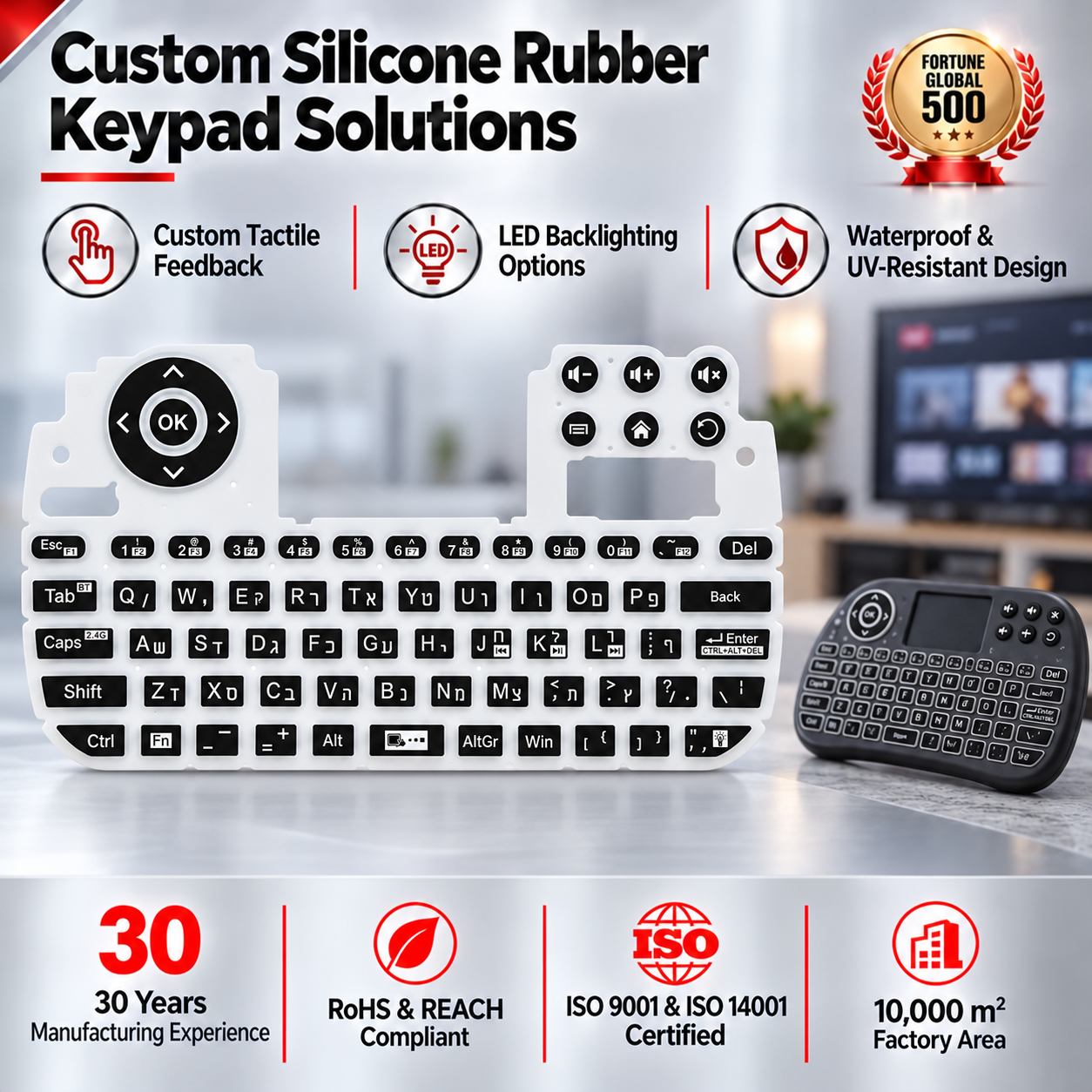
Mini Wireless QWERTY Silicone Rubber Keypad Customizable Matrix
- Contact Resistance: < 150 Ω
- Actuation Force: 180 ± 30g
- Durability: > 1,000,000 Cycles
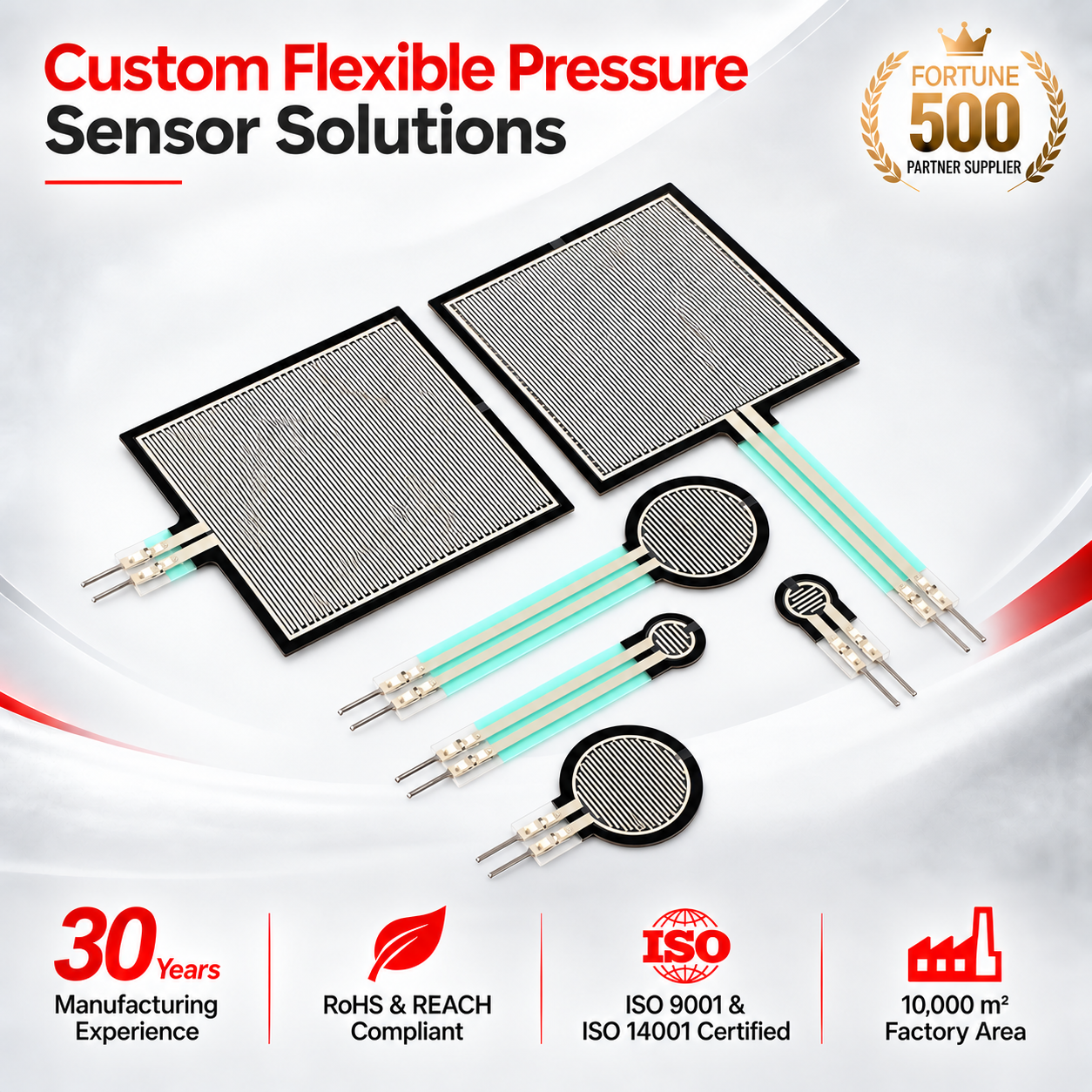
Capacitive Multi-Touch Thin Film FSR Pressure Sensor Membrane
- Sensing Range: 20g – 5kg dynamic
- Thickness: 0.25mm – 0.45mm
- Response Time: < 5 Microseconds
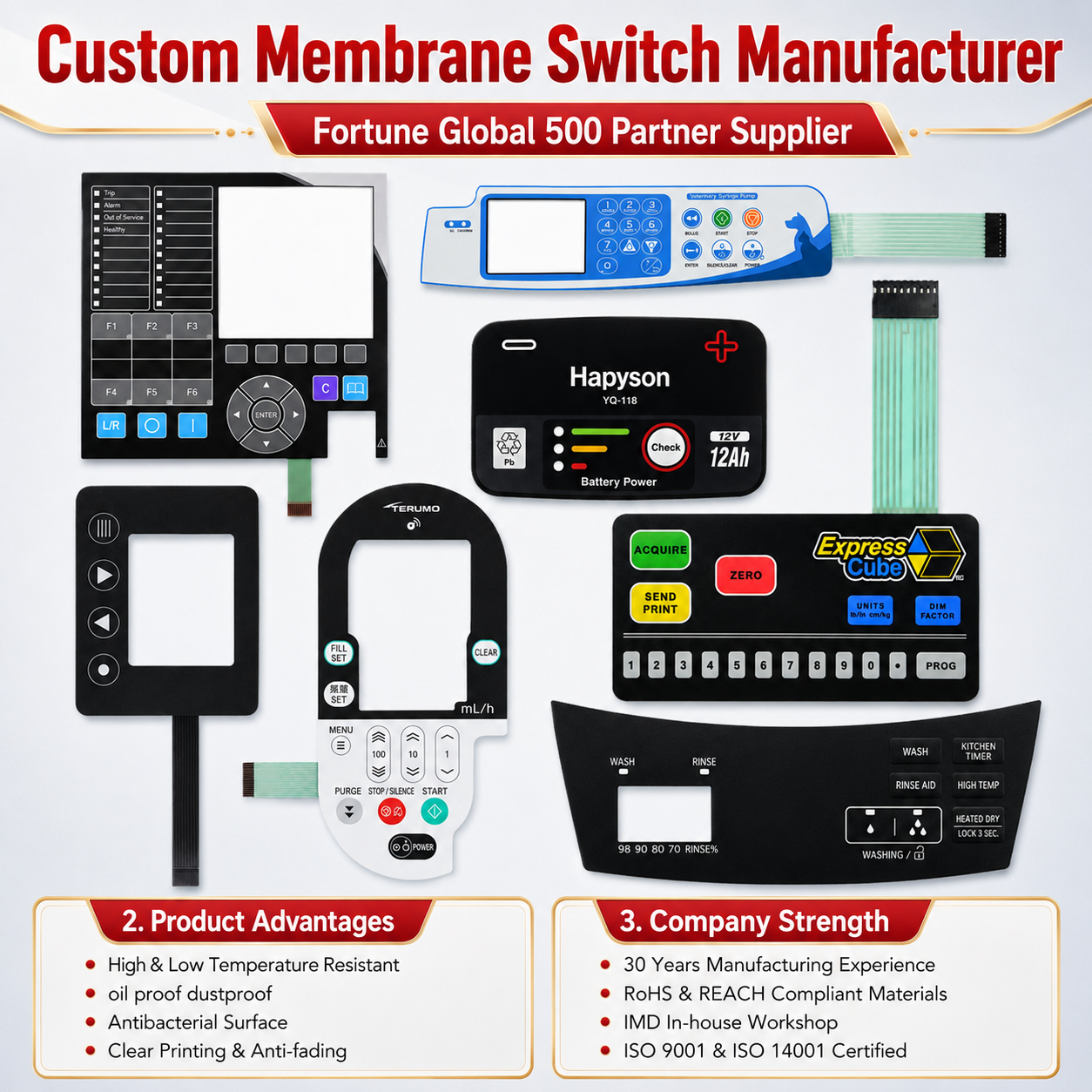
5×4 Matrix Waterproof FPC Flexible Circuit Membrane Switch
- Substrate: Polyimide / Copper
- Ingress Protection: IP65 / IP67 Sealed
- Tactile Dome: Nickel-Plated SS
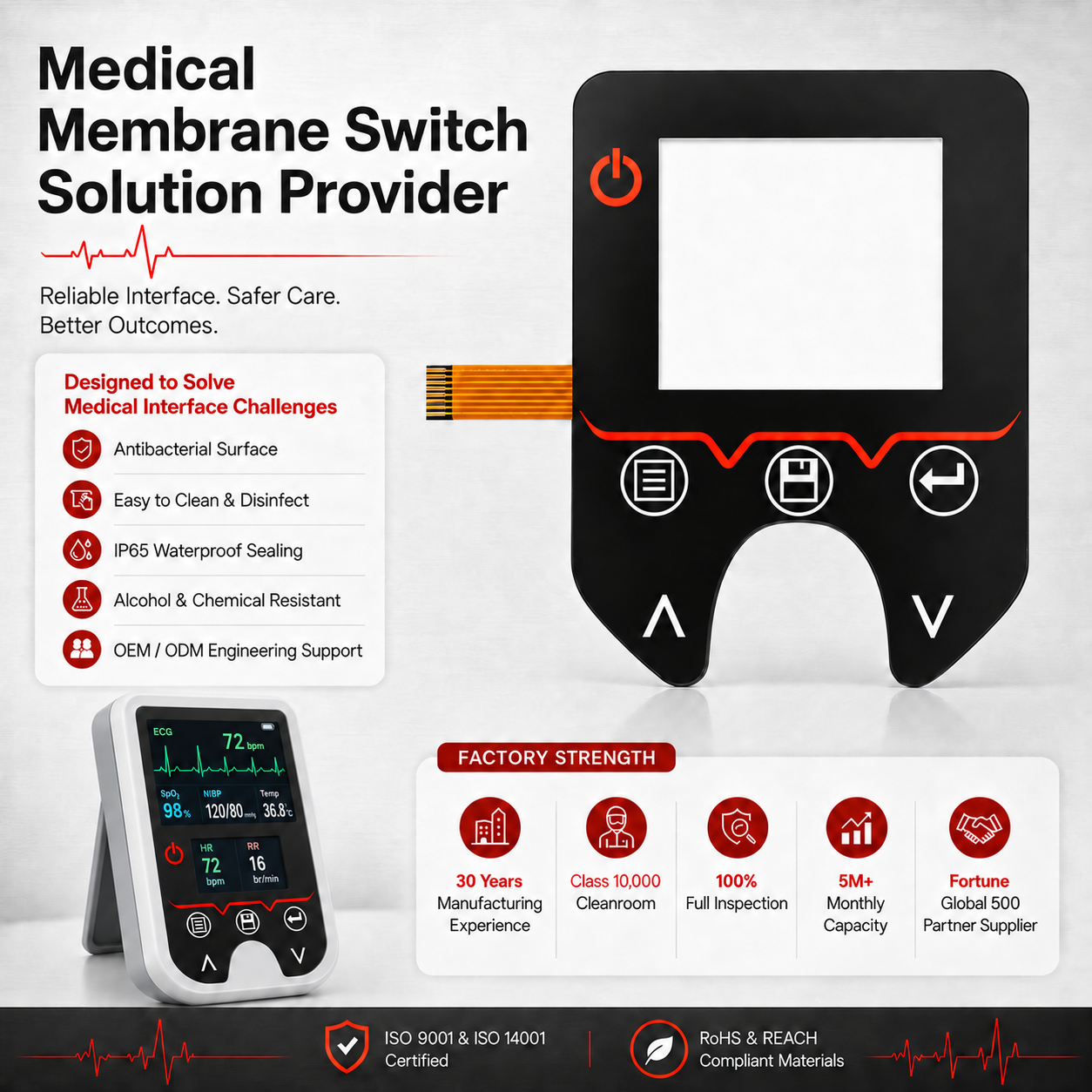
Medical IP65 Waterproof PC/PET Graphic Overlay Control Panel
- Chemical Proof: Alcohol / Bleach Cleans
- Window Finish: Anti-Glare / Gloss
- EMC Shielding: Selective Carbon / Alum
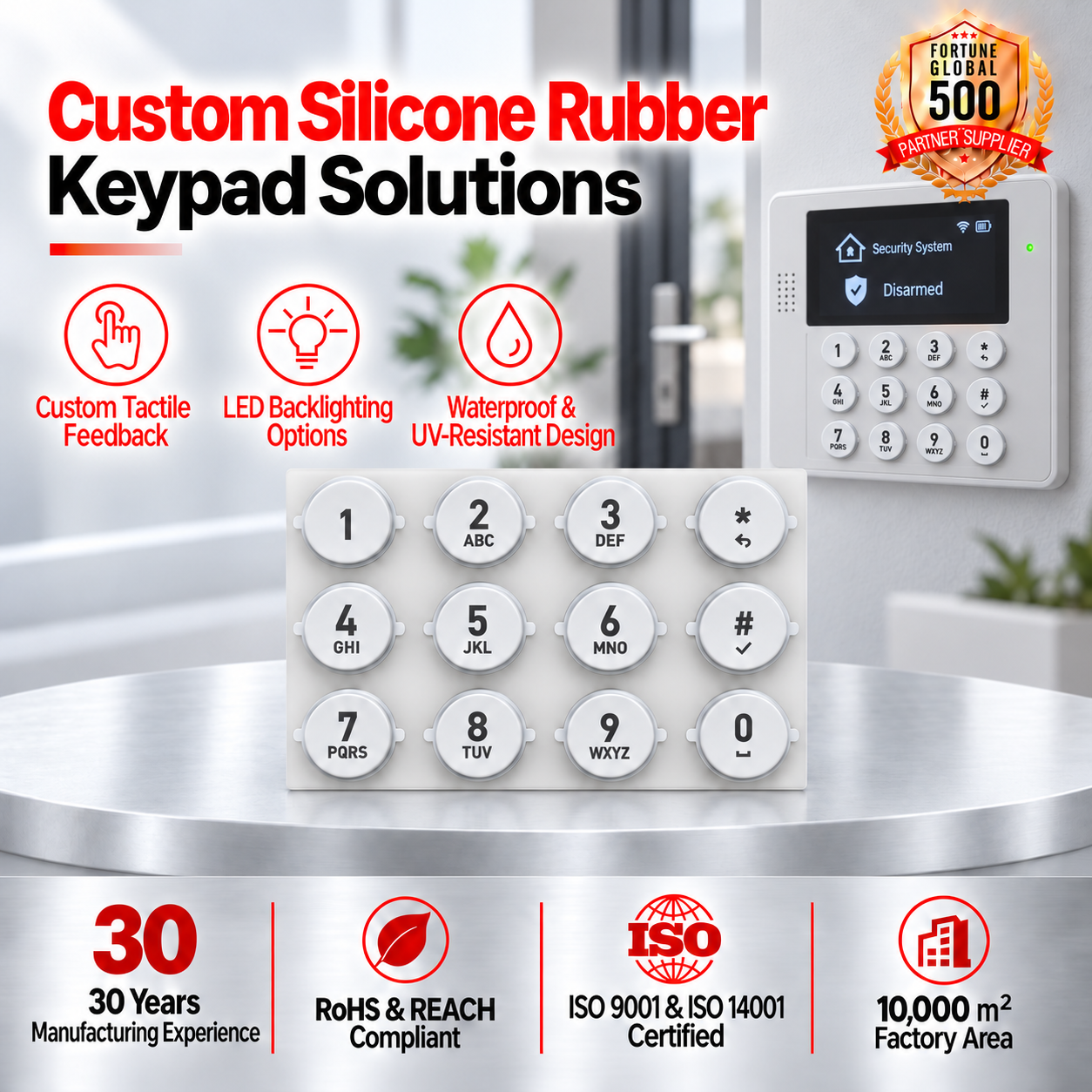
3×4 Numeric 12-Key Plastic + Rubber (P+R) Keypad Matrix
- Cap Material: ABS / Polycarbonate
- Conductive Pill: Gold / Low-Ohm Carbon
- Travel Distance: 1.2mm – 1.8mm
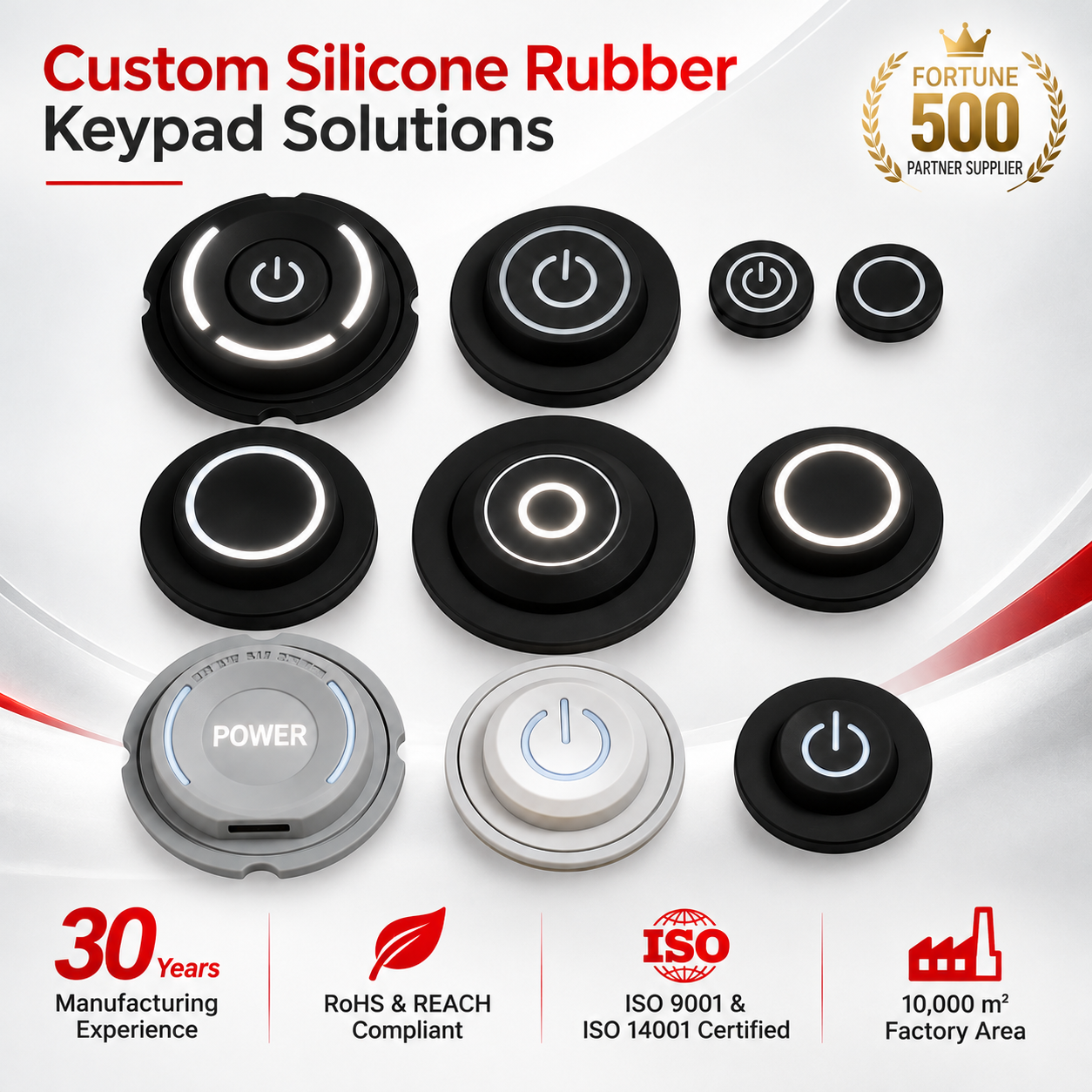
Single Tactile Cap Multicolor Backlit Silicone Membrane Button
- Lighting Engine: SMD LED / LGF Film
- Engraving: Precision Laser Etched
- Operating Temp: -35°C to +85°C
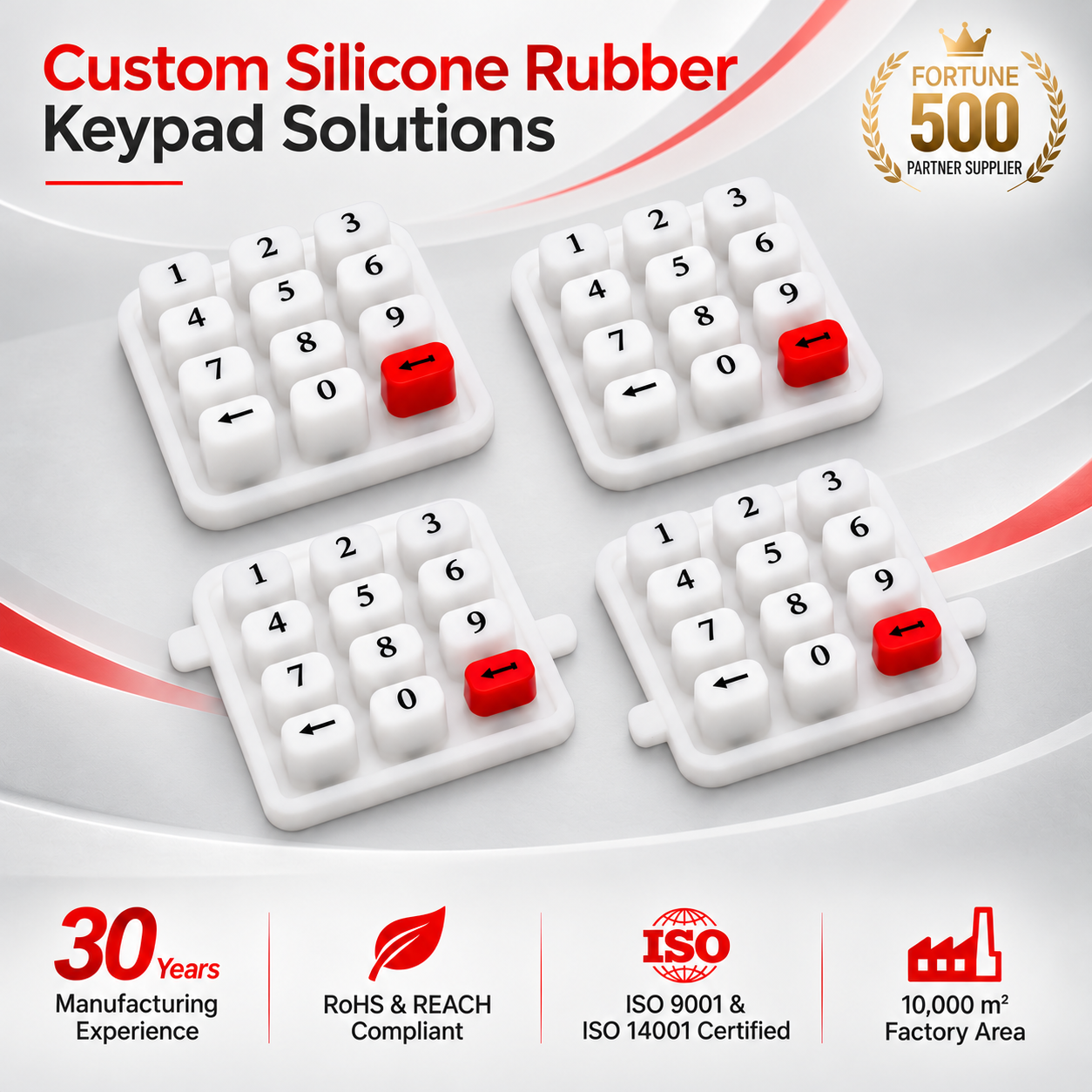
Low-Profile Waterproof Epoxy Resin Coated Silicone Keypad
- Surface Coating: High-Gloss Polyurethane
- Abrasion Cycle: > 500,000 Rubs
- Sealing: Hermetic Oil/Water Barrier
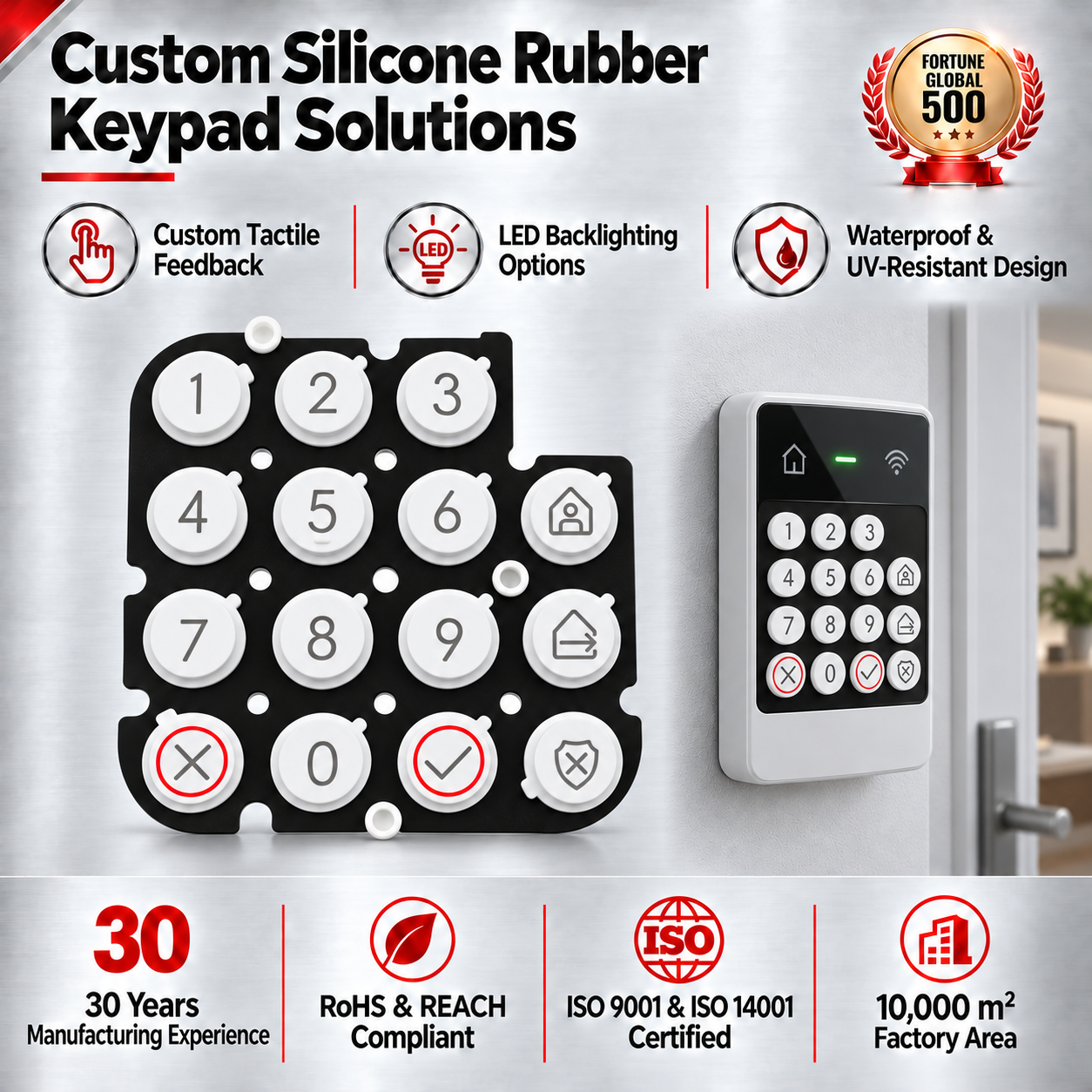
Numeric Conductive Embossed Silicone Panel for Appliances
- Printing: Multi-Color Silkscreen
- Insulation Resistance: > 100MΩ @ 250VDC
- Compliance: RoHS & REACH Certified
Membrane Keypad Stack-Up Architecture & Electromechanical Dynamics
Understanding the multi-tier engineering stack-up of custom human-machine interfaces ensures exceptional environmental resilience, strict electrical continuity, and predictable tactile response.
Multi-Layer Substrate Anatomy & Material Synergy
A high-performance membrane keypad is not simply an aesthetic graphic skin; it is a meticulously calibrated multilayer electromechanical composite. The topmost tier comprises an engineered Autotex biaxially oriented polyethylene terephthalate (PET) or Lexan polycarbonate (PC) graphic overlay film. The graphics are printed in reverse (sub-surface screen printing or fine-pitch digital industrial imaging) to prevent abrasion, solvent degradation, and cosmetic fading over millions of cycles. Beneath the overlay, high-cohesion acrylic adhesive systems—such as 3M 467MP, 3M 468MP, or 3M 200MP transfer tapes—bond the visual layer directly to the mechanical spacer and dome retention assembly without outgassing or air voids.
The switching core features an upper and lower circuit loop separated by a dielectric spacer layer with precision vented channels. During key actuation, a stainless-steel metal dome (spherical, four-leg, or obround geometry plated with nickel or optional flashing gold) collapses through the spacer cavity to short the open circuit traces. This provides both instantaneous tactile feedback (with crisp click-feel snap ratios exceeding 45% to 60%) and an electrical contact closure characterized by a low contact resistance (< 1.0 Ω when utilizing copper-etched FPC, or < 50 Ω when utilizing screen-printed nano-silver polymer thick-film conductive inks). To guard against moisture-induced dendritic growth and silver ion migration under humid environments, conductive silver traces are systematically over-printed with an impermeable carbon conductive protective overcoat.
IP65 – IP68 Ingress Sealing
Continuous perimeter gasket adhesives, blind hermetic embossing, and labyrinth ventilation channels route air displacement internally while blocking moisture, salt spray, jet fuel, hydraulic fluids, and aggressive medical sterilizing chemicals.
Integrated ESD & EMI Attenuation
Solid aluminum foil laminates or grid-patterned conductive silver-carbon traces create a Faraday shield directly behind the overlay, shunting electrostatic discharges (up to 15kV air and 8kV contact) safely to ground prior to PCB coupling.
Calibrated Actuation Life
Custom metal dome selections (ranging from 12mm to 20mm diameters and 180g to 450g actuation forces) are rated from 1,000,000 to over 5,000,000 cycles, validated on in-house multi-station automated pneumatic cycle simulators.
Substrate & Conductor Selection Matrix for OEM Hardware
Review standard physical and electromechanical characteristics across the four predominant switch substrates manufactured in our Dongguan facility.
| Evaluation Parameter | Silver Conductive PET Film | Copper Etched Polyimide (FPC) | Compression Silicone Elastomer | Capacitive FSR Thin-Film |
|---|---|---|---|---|
| Typical Trace Resistance | 10 – 100 Ω (layout dependent) | < 0.1 – 0.5 Ω (ultra-low) | 10 – 150 Ω (conductive pill) | Dynamic variable (20MΩ down to 1kΩ) |
| Pitch & Trace Density | Standard pitch (≥ 1.0mm) | High density micro-pitch (≥ 0.3mm) | Discrete contact spacing | Uniform continuous matrix |
| SMD Component Mounting | Conductive epoxy bonding | Standard SMT reflow soldering | Embedded pill or LED encapsulation | Peripheral FPC lead termination |
| Flexural Fatigue Life | Excellent for planar static panels | Superior dynamic flex endurance | High elastic return (>10M cycles) | Ultra-thin resilient bend radius |
| Typical Operating Range | -20°C to +70°C | -40°C to +105°C | -40°C to +180°C | -25°C to +85°C |
| Target Industrial Sectors | Appliances, test gear, metering | Aerospace, military, medical tech | Field terminals, heavy machinery | Surgical sensors, touch robotics |
Emerging Procurement & Technology Trends (2025–2030)
Global procurement teams are shifting away from standalone membrane switches toward multi-technology integrated front modules. Here is how international engineering and supply chain leaders are structuring specifications.
1. Rise of Hybrid Capacitive-Tactile Surfaces
Modern medical and commercial devices demand flush, easy-to-sanitize flat surfaces without sacrificing the safety of tactile feedback. The latest trend integrates capacitive touch slider sensors and dead-front graphic zones alongside selective metal dome clusters. Equipment operators receive tactile confirmation on critical functions (e.g., Emergency Stop, Power, Confirm) while adjusting secondary parameters via intuitive capacitive swipes on an unbroken polycarbonate or antimicrobial PET front facia.
2. Micro Light Guide Film (LGF) Uniform Backlighting
Bulky, power-hungry incandescent indicators and uneven spot LEDs are being replaced by ultra-thin Light Guide Films (LGF) measuring as thin as 0.125mm. Side-firing ultra-compact SMD LEDs channel light through micro-etched optical dots that refract illumination evenly across complex legends, company emblems, and key rings. This delivers homogenous illumination with minimal light bleed while drawing up to 75% less current from device power supplies.
3. Single-Source Box-Build Sub-Assemblies
Procurement directors are consolidating bills of materials (BOM) by ordering turn-key Human-Machine Interface sub-assemblies. Rather than sourcing loose membrane keypads, plastic backer plates, and display windows separately, AXRU integrates the graphic keypad, bonded aluminum/acrylic support plates, custom FPC tail connectors, transparent display windows, and pre-integrated cable harnesses into an assembled, tested, drop-in front-bezel module.
4. Sustainable & Halogen-Free Materials
In response to European Union RoHS 3 and REACH SVHC expansions, global exporters are requiring green-certified manufacturing. Our production lines use halogen-free polyethylene terephthalate substrates, solventless UV-curable dielectric coatings, lead-free SMT solder pastes, and water-based screen printing systems to ensure trouble-free customs clearance and end-of-life recycling compliance in all tier-one markets.
Why Tier-1 Global OEMs Partner with AXRU Electronics
Headquartered in the global electronics manufacturing epicenter of Dongguan, China, our 10,000㎡ vertically integrated plant offers engineering depth, cost efficiency, and end-to-end quality assurance.
Rigorous In-House Testing Laboratory & Process Control
At Dongguan AXRU Electronics Co., Ltd., quality control is not an afterthought; it is embedded into each phase of the production line. From incoming raw material verification (spectrophotometer color matching, adhesive tack measurement, and substrate thickness inspection) through precision silkscreen printing, automatic dome pick-and-place, and flatbed die-cutting, every unit maintains full batch traceability.
Our dedicated reliability and environmental testing laboratory subjects pre-production qualification samples and mass-production batches to stringent automated quality protocols:
- 100% Final Electrical Inspection: Automated microprocessor-controlled continuity testers verify open circuits, pinout mapping, contact resistance, and LED forward voltage across every single piece before shipment.
- Actuation Life Simulation: High-speed multi-head pneumatic key-life testers actuate metal domes and silicone buttons up to 5,000,000 cycles to evaluate snap-action decay and fatigue resistance.
- Force-Displacement Profiling: Precision computer-interfaced load cells record actuation curves, measuring tactile peak force (F1), switch travel, and return force (F2) to guarantee consistent hand-feel across all key positions.
- Environmental Stress Screening: Programmable thermal-humidity chambers test assemblies between -40°C and +85°C at 95% relative humidity to confirm seal integrity and adhesive shear resistance.
- Ink Abrasion & UV Stability: Norman Tool RCA abrasion testers and accelerated QUV chambers ensure graphic overlays resist aggressive industrial solvents, cleaning agents, and outdoor sunlight yellowing.
With an on-site verified plant by Intertek and direct experience acting as a reliable supply chain partner to Fortune 500 enterprises, AXRU bridges custom engineering, rapid low-volume prototyping (starting from 100 pieces), and high-volume wholesale production runs with consistent turnaround times.
Frequently Asked Questions for Sourcing Membrane Keypads
Detailed technical answers to common questions raised by electrical engineers, mechanical designers, and supply chain managers.
What engineering drawings and files are required for an accurate DFM review and quotation?
When should an engineer specify a Copper FPC circuit over a Silver Conductive PET circuit?
How does AXRU prevent silver migration and short circuits in high-humidity applications?
What are the minimum order quantities (MOQ) and sample lead times?
Can membrane switches achieve true IP67 or IP68 waterproof ratings?
What overlay surface finishes and display window options are available?
Ready to Engineer Your Custom Membrane Keypad?
Send your 2D/3D CAD drawings, schematic requirements, or sample specs to our engineering team in Dongguan for an on-demand DFM assessment and wholesale quote.