Specialized Membrane Keypad Assemblies & Tactical HMI Modules
Direct factory supply of custom tactile arrays, force-sensitive resistors (FSR), silicone elastomer keypads, and graphic overlays fabricated to MIL-STD, IPC, and ISO standards.
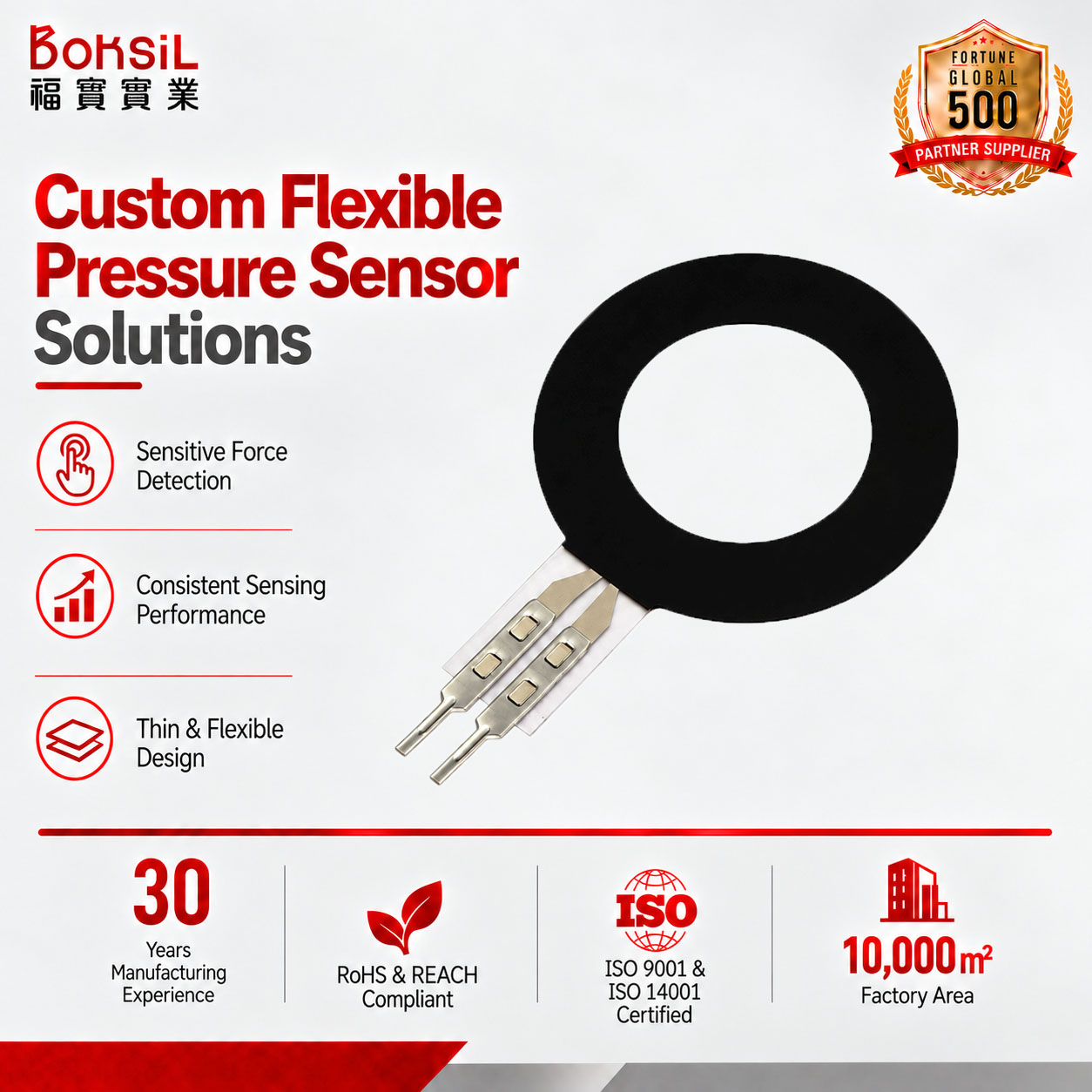
High Quality Universal FSR Flexibility Force Sensitive Sensor Capacitive Touch Keypad Thin Film Pressure Sensitive Resistor
- Sensor Tech: Piezoresistive Film
- Actuation Force: 20g – 2kg Linear
- Lifecycle: >10,000,000 Cycles
- Circuit Carrier: Ultra-thin Polyimide/PET
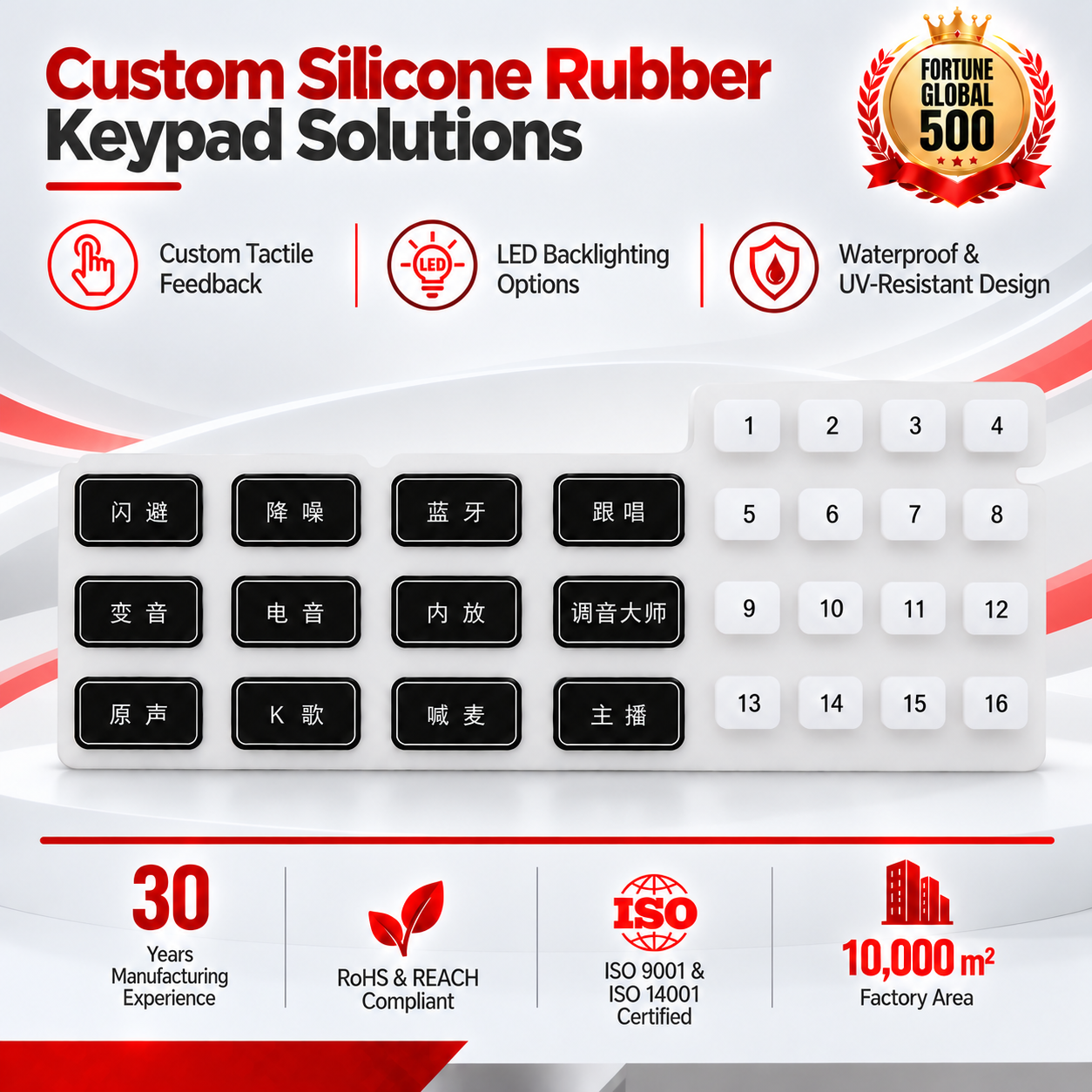
Rugged Waterproofing Custom Silicone Rubber Keypad Numpad Soft Touch Wear-Resistant High Temp Elastomer Keypad
- Material: Silicone (Shore A 40–70)
- Ingress Sealing: IP67 Monolithic Seal
- Contact Pill: Low-Resistance Carbon/Gold
- Temperature: -40°C to +180°C
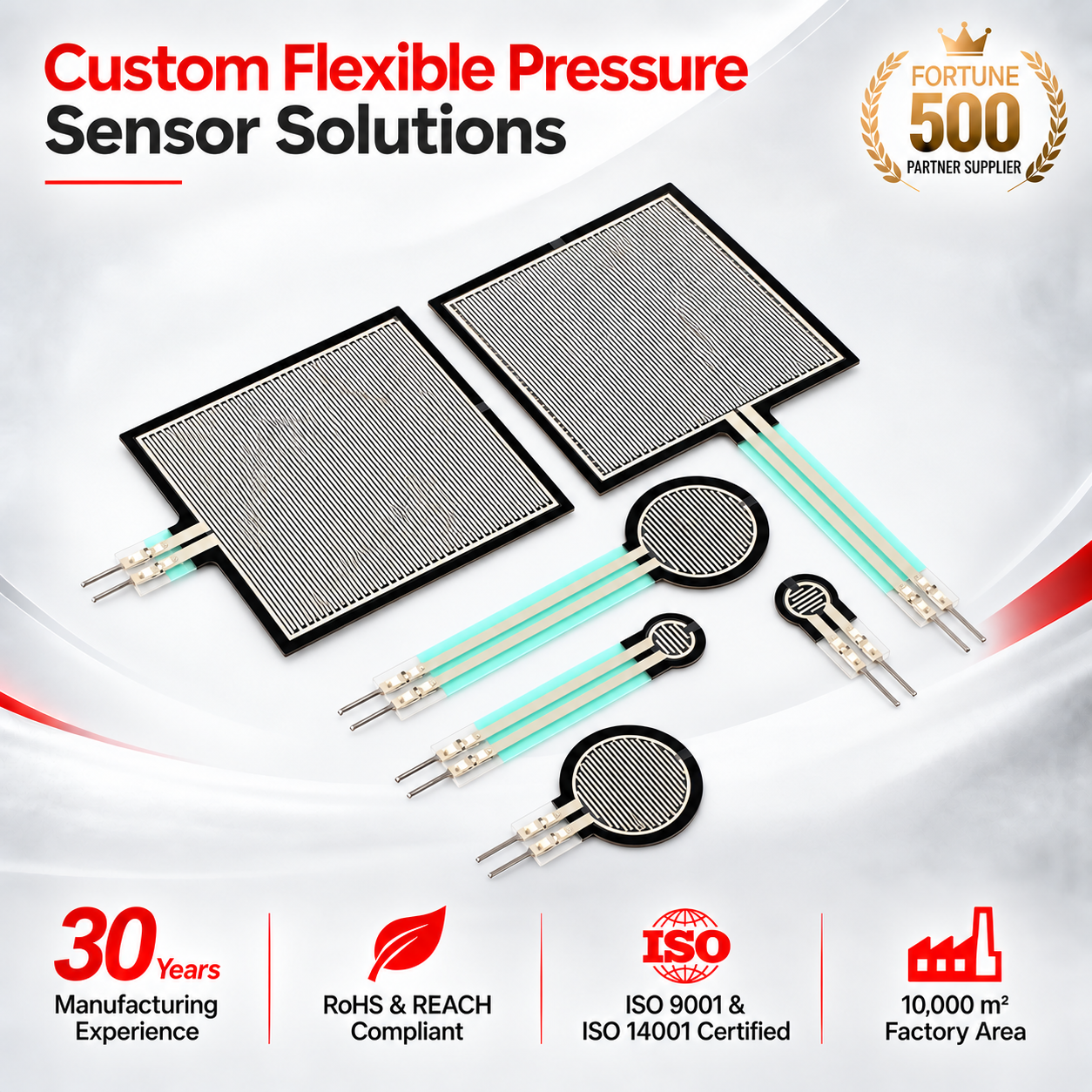
High Sensitive Capacitive Multi Touch Sensor Membrane Ultra-Soft Thin Film Pressure Sensor Fsr Type Pressure
- Operation: Hybrid Capacitive + FSR
- Substrate: Optical-Grade Clear PET
- Response Time: < 5 Microseconds
- Interface: I2C / Analog Voltage Out
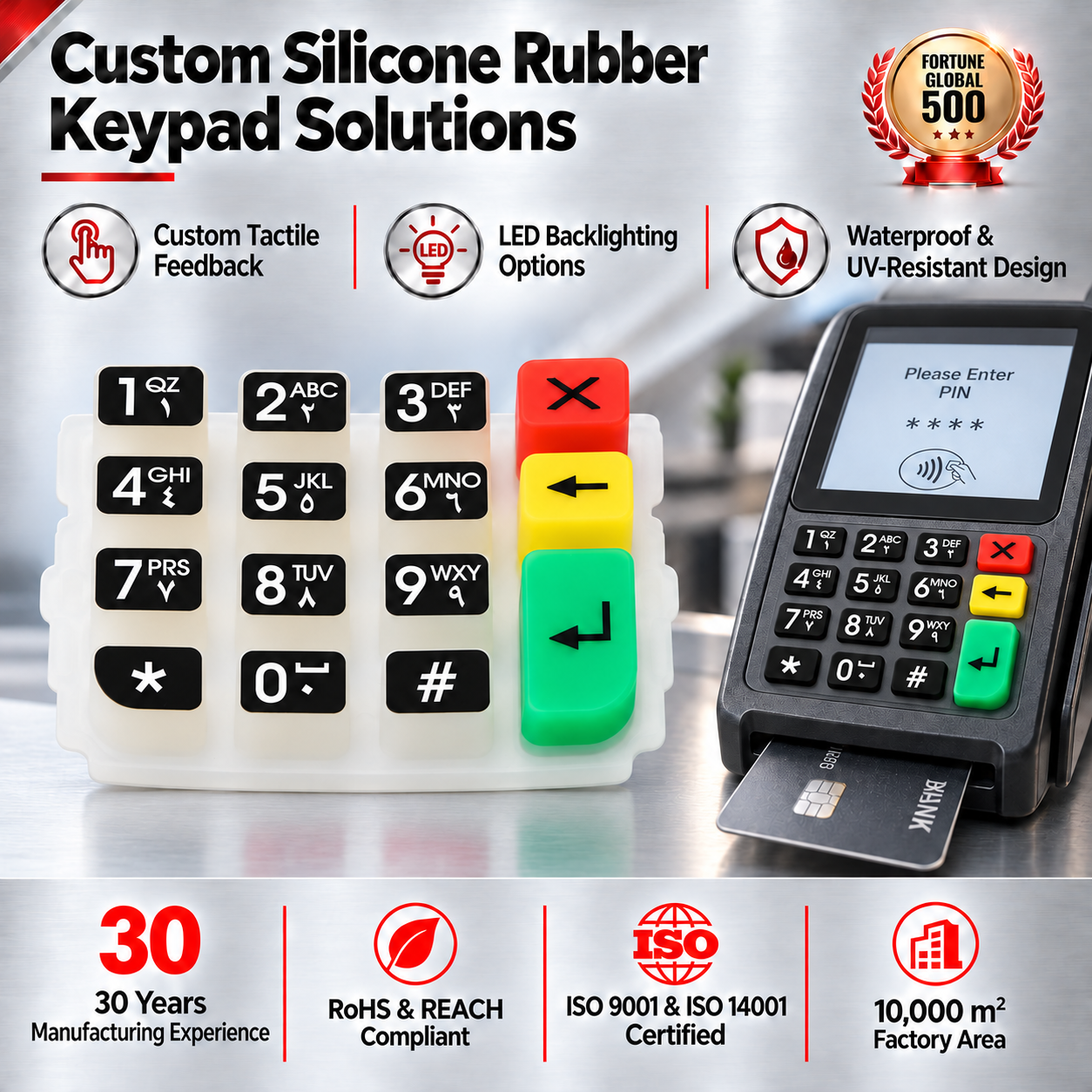
Electronic Soft Tactile Switch Plastic Silicone Button Elastomer Rubber Keypad Contact Strip for Home Appliance
- Keycap Fitment: P+R (Plastic + Rubber)
- Actuation Stroke: 1.0mm – 1.8mm
- Tactile Ratio: 40% – 60% Snap Ratio
- Coating: PU Spray / UV Matt Hardcoat
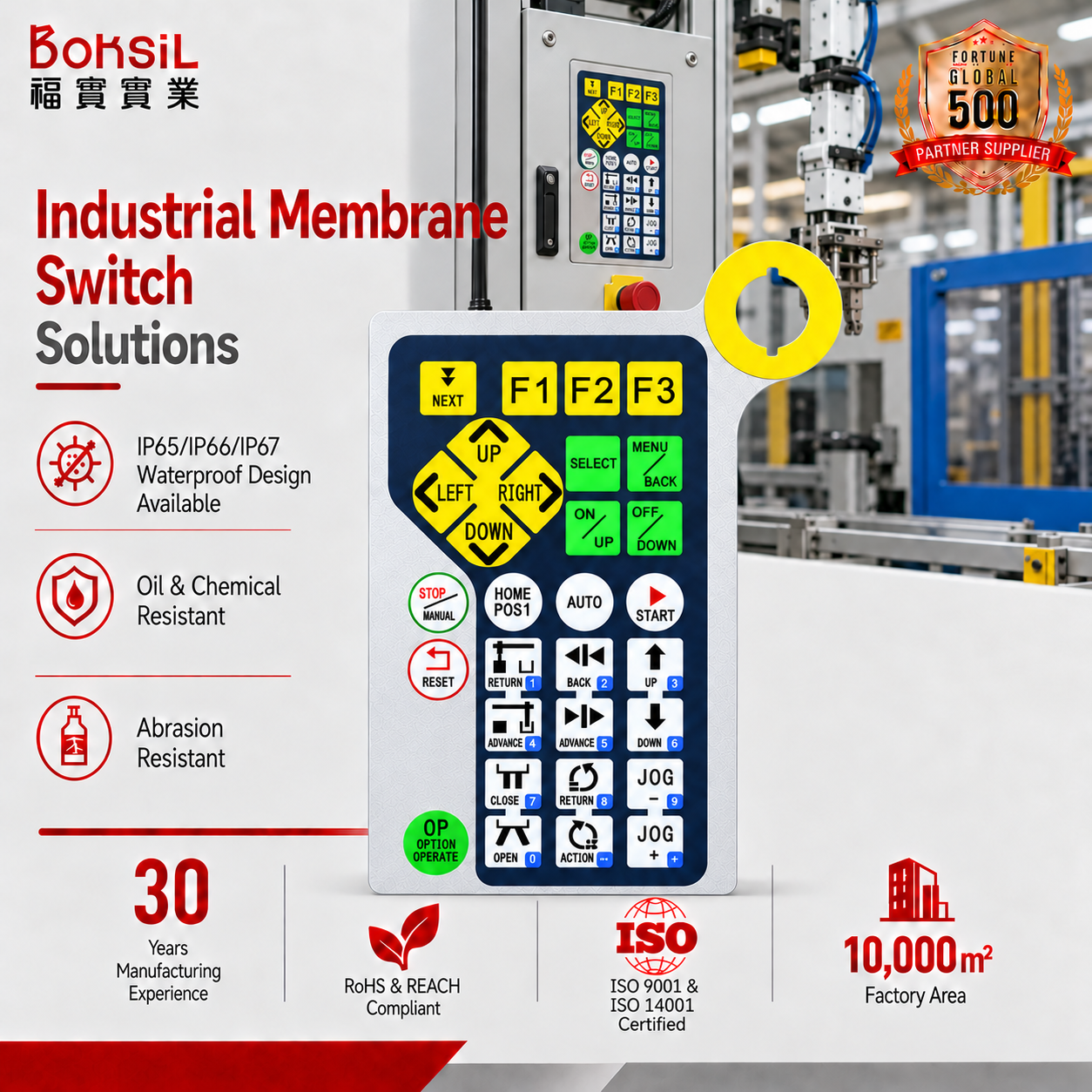
Custom Membrane Switch Manufacturer Membrane keypad sticker Polyethylene Graphic Overlay for industrial touch keyboard
- Graphic Layer: Autotex PET / Lexan PC
- Circuit Type: Conductive Silver PTF
- Embossing: Rim / Pillow / Dome
- Adhesive: 3M 467MP / 468MP High-Bond
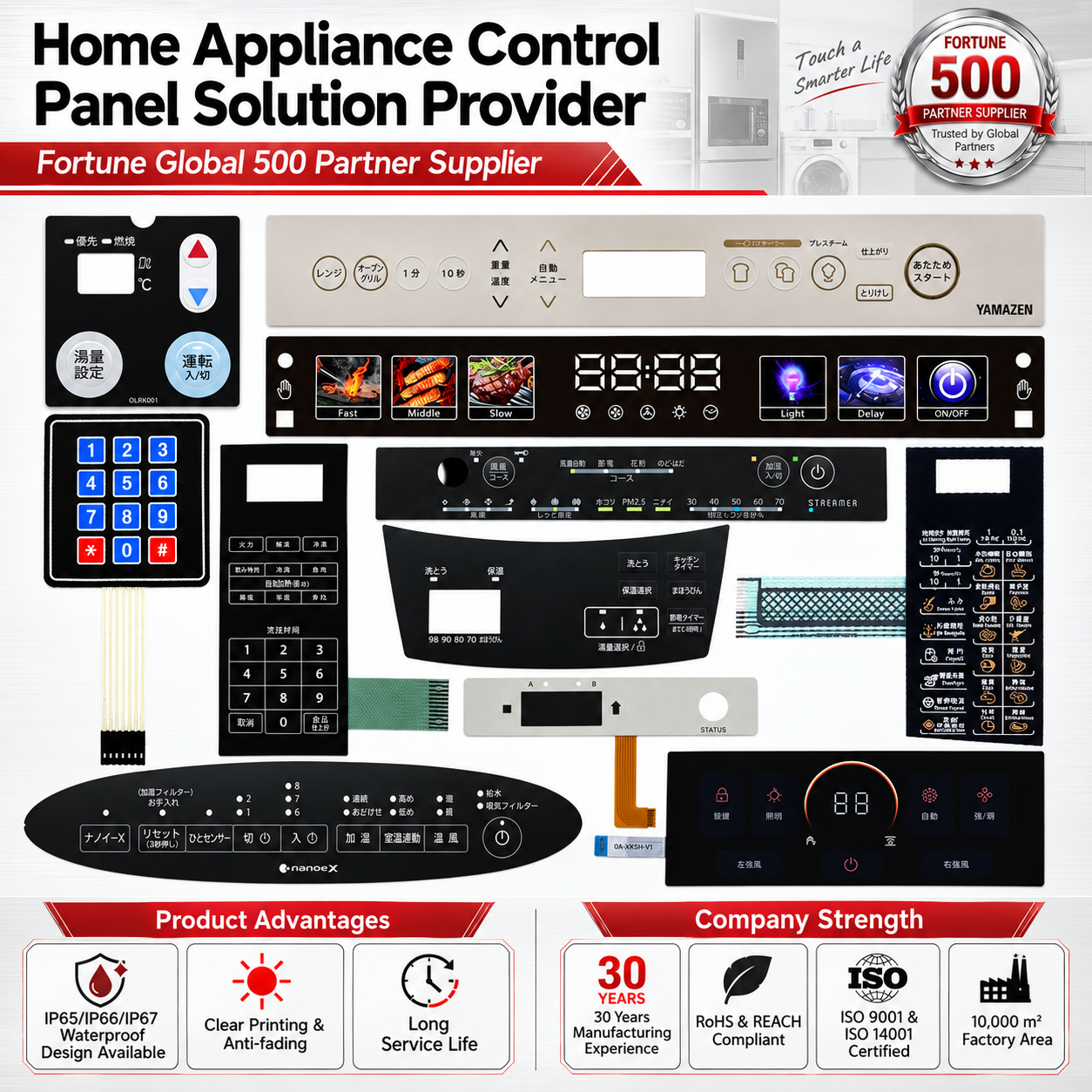
Factory Custom Membrane Switch Graphic Overlay ip65 Waterproof Membrane Keypad Touchpad Single Button Panel
- Sealing Grade: IP65 / NEMA 4 Enclosure
- Tail Gasketing: Full Perimeter Sealed
- Internal Domes: Gold-Plated Stainless Steel
- Loop Resistance: < 50 Ohms
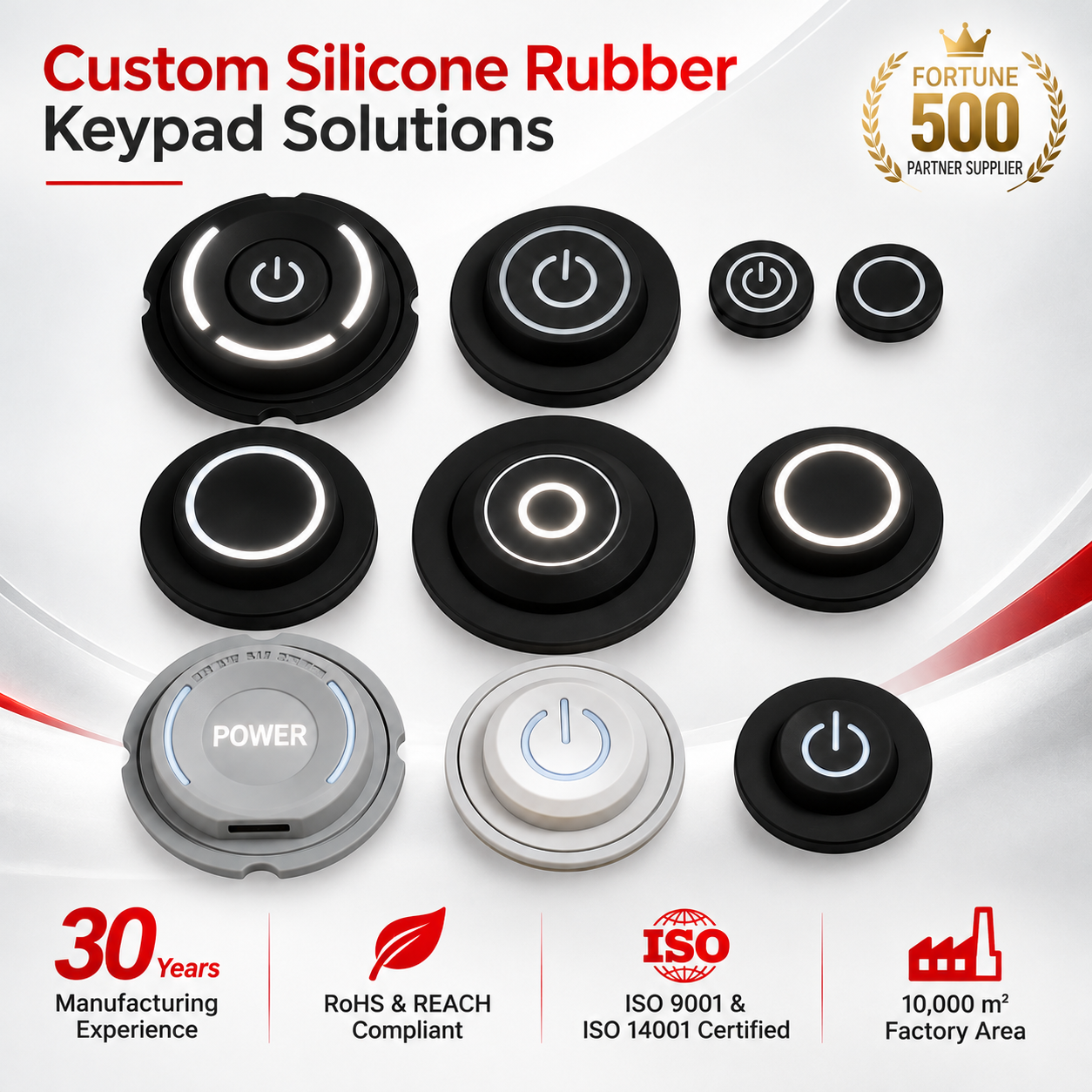
Single Tactile Cap Power Custom Silicone Rubber Button Keypad Multicolor Backlit Controller Replacement Membrane Switch
- Illumination: Laser-Etched + SMD LED
- Tactile Feel: Crisp Metal Dome Snap
- Backlight Film: Integrated LGF (Light Guide)
- Actuation Life: 1,500,000 Operations
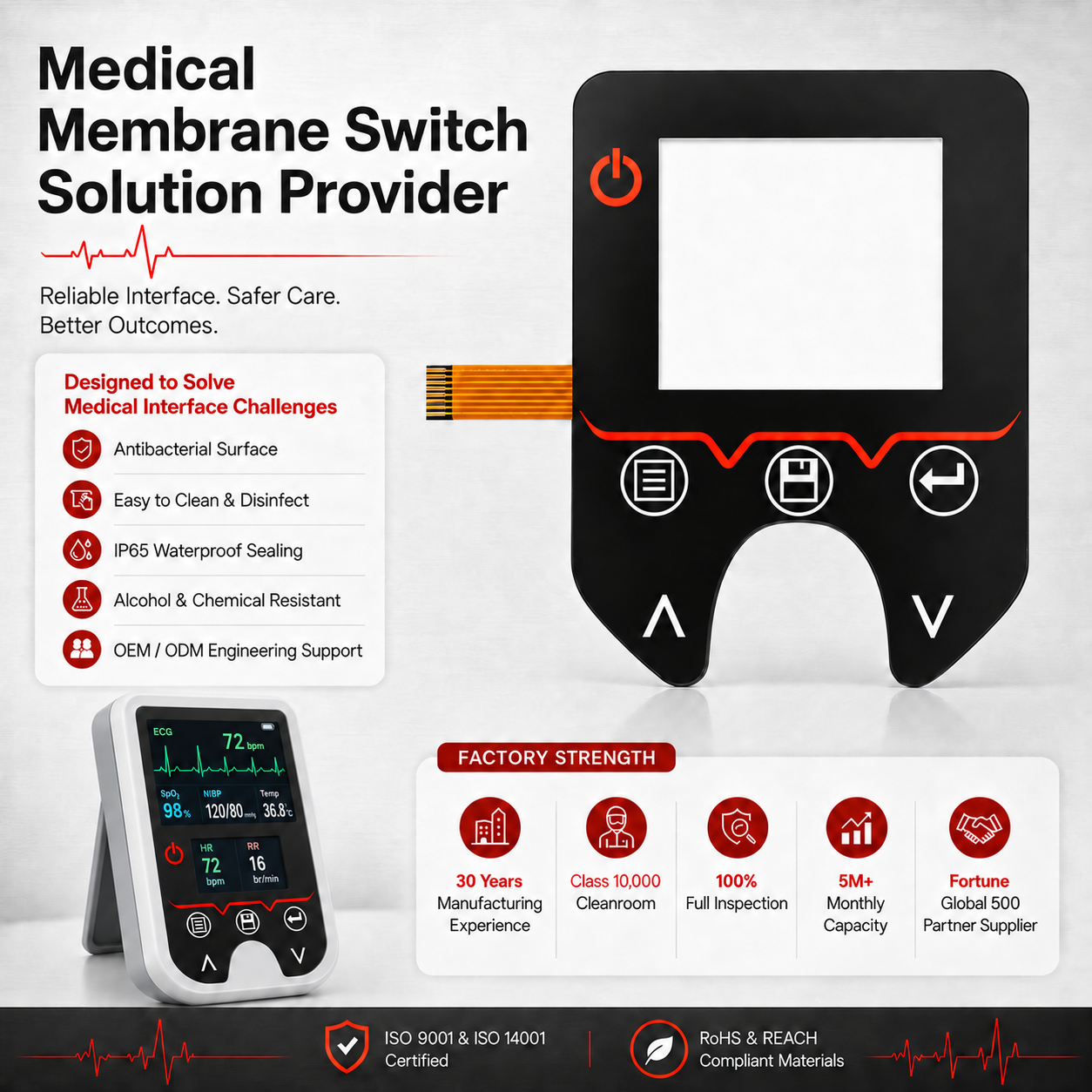
Factory Custom Medical Equipment ip65 Waterproof PC Graphic Overlay Membrane Switch Control Front Panel Button
- Compliance: Antimicrobial / Bio-Proof
- Window Coating: Anti-Glare / Scratch Resistant
- Chemical Shield: Resistant to Bleach / IPA
- ESD Protection: Integrated Shield > 15kV
Engineering Overview: Industrial-Grade Membrane Keypad Assemblies
A precision membrane keypad switch assembly is a multi-layered, electro-mechanical user interface engineered to establish or interrupt an electrical circuit within human-machine interface (HMI) ecosystems. Unlike conventional mechanical microswitches characterized by bulky housings and soldered contacts, a custom membrane keypad leverages thin-film polymer science, micro-dispensed conductive silver pastes or photo-etched flexible copper clad laminates (FCCL), and elastomeric seals. This results in an ultra-low profile user interface ranging between 0.8mm to 2.2mm in total stack-up thickness.
Modern industrial equipment, diagnostic medical instrumentation, commercial fuel dispensers, and avionics control consoles demand control surfaces that balance tactile feedback, operational longevity, environmental sealing, and chemical imperviousness. To achieve these performance criteria, high-reliability membrane keypad assembly manufacturers utilize cleanroom printing environments (Class 1,000 to Class 10,000), multi-pass screen printing processes with sub-mil precision, and automated die-cutting techniques that preserve trace integrity under rigorous physical deflection cycles.
"The reliability of a membrane switch in mission-critical environments is determined by trace rheology, dielectric spacing, adhesive shear strength, and the hermeticity of the tail exit seal. Premature field failures almost universally stem from sub-standard perimeter venting, silver dendrite migration under humidity, or micro-cracking across tight tail bend radiuses." — Senior HMI Materials Engineer.
Anatomy of a High-Reliability Membrane Assembly Stack-up
A typical high-tier tactile membrane switch engineered by Chinese export leaders encompasses six to eight laminated functional layers, each performing a distinct mechanical, chemical, or electrical function:
1. Graphic Overlay Layer: The outward-facing facade, reverse-printed on optical-grade Polycarbonate (Lexan) or textured Polyester (MacDermid Autotype PET). Reverse printing shields the graphic inks, legends, and transparent display windows from surface abrasion, cleaning solvents, ultraviolet radiation, and microbial infiltration.
2. Overlay Adhesive Layer: High-performance acrylic transfer adhesive (such as 3M 467MP or 3M 468MP) precision cut to vent air from the tactile key chambers toward internal breather channels, avoiding unvented hydro-lock during switch actuation.
3. Retainer / Dome Spacer Layer: A dimensionally stable PET film engineered with precise cavities that house and seat the tactile metal domes, controlling dome float and ensuring centered tactile actuation forces.
4. Tactile Metal Dome Array: Stainless steel (SUS301 or SUS304) tactile snap domes, optionally plated with nickel or flash gold. These domes provide the characteristic "click" sensation (tactile ratio of 40%–65%), bridging open circuit switch contacts upon depression.
5. Circuit Substrate Layer: Either a Polymer Thick Film (PTF) silver-printed heat-stabilized polyester film or a Flexible Printed Circuit (FPC) with rolled-annealed (RA) copper tracks. The circuit layer incorporates the interdigitated contact fingers, LED circuit traces, and routing lines exiting via the flexible tail.
6. Rear Mounting Adhesive: Formulated according to the mating enclosure substrate. Options include modified acrylics for high-surface-energy (HSE) metals, or specialized rubber/tackified acrylics (e.g., 3M 300LSE / 9472LE) engineered for low-surface-energy (LSE) injection-molded plastics like polypropylene or ABS.
Engineering Selection: Membrane Switch Circuit Architectures
Selecting the appropriate electrical substrate represents the core architectural decision during the Design for Manufacturability (DFM) phase. The matrix below contrasts the three primary circuit technologies utilized across modern China export assembly lines:
| Evaluation Parameter | Silver PTF on PET Film | Copper Flex Circuit (FPC) | FR4 Rigid PCB Substrate |
|---|---|---|---|
| Typical Trace Resistance | 10 – 100 Ω (Length Dependent) | < 1 – 5 Ω (Ultra-Low) | < 0.5 Ω (Near Zero) |
| Pitch & Trace Density | Standard Pitch (≥1.00mm, 2.54mm) | Fine Pitch (Down to 0.3mm / 0.5mm) | High Density Multilayer (0.2mm) |
| Component Integration | Conductive Epoxy Bonded LEDs | Direct SMT Reflow Soldering | Standard High-Temp SMD / Through-hole |
| Flexibility & Bend Radius | High (Recommended R ≥ 2.5mm) | Exceptional (Dynamic Flex Capable) | Rigid (Flat Structural Backer) |
| Silver Migration Risk | Moderate (Requires Carbon Masking) | None (Copper + Immersion Gold/Tin) | None (Solder Mask Barrier) |
| Relative Tooling & Unit Cost | Lowest Tooling / Lowest Unit Cost | Moderate Tooling / Mid Unit Cost | Higher NRE / Modular Component Value |
| Ideal Industrial Targets | White Goods, Medical Disposables, Meters | Aerospace, Critical Medical, Defense HMIs | Heavy Machinery, High-Vibration Consoles |
Why Tier-1 OEMs Source from Dongguan AXRU Electronics
Combining vertically integrated manufacturing, cleanroom production lines, and comprehensive reliability testing under one Intertek-verified roof.
Vertically Integrated 10,000㎡ Plant
We avoid sub-contracting core processes. From precision automatic screen printing and laser cutting to SMD LED placement and high-tonnage hydraulic embossing, all 6 manufacturing phases remain strictly within our Dongguan facility.
100% Comprehensive Quality Control
Every membrane switch undergoes automated electrical functional testing checking for continuity, open-circuit resistance, insulation resistance (>100MΩ at 100V DC), contact bounce (<5ms), and LED luminous uniformity before packaging.
In-House Reliability Testing Lab
Our facility houses custom key lifecycle testers (cycling switches up to 5,000,000 actuations), programmable temperature & humidity aging chambers (-40°C to +120°C), Taber ink abrasion testers, and cross-hatch adhesion verification.
Rapid DFM & Prototype Delivery
Equipped with digital UV flatbed proofing presses and CNC cutter plotters, our engineering team delivers production-grade prototypes within 3 to 5 business days, accelerating your time-to-market and clinical trial validation.
Third-Party Audited (Intertek Verified)
Operating under strict ISO 9001:2015 quality management and ISO 13485-aligned medical cleanroom protocols. Verified on-site by Intertek, ensuring total traceability of raw chemical lots, adhesives, and electrical substrates.
Global B2B Export Logistics Excellence
Over a decade of exporting experience to North America, Germany, Japan, and the UK. Products are packaged in hermetically sealed, ESD-safe bags with desiccant packs, engineered to withstand trans-oceanic shipping conditions.
Future Sourcing & Technology Trends in Membrane Keypad Assemblies (2025–2030)
The global human-machine interface industry is witnessing a structural transformation. Buyers moving away from simple mechanical switches are demanding intelligent, ultra-thin, sealed surfaces capable of multimodal feedback. Forward-looking procurement directors must align with factories investing in the following technological developments:
1. The Proliferation of Force-Sensing Resistors (FSR) & Analog Pressure Arrays
Binary on/off actuation is no longer sufficient for complex industrial robotics, medical infusion pumps, and smart automotive interfaces. Piezoresistive force-sensing arrays allow human inputs to be interpreted with continuous variable control. By altering resistance in inverse proportion to applied physical pressure, FSR membranes enable variable-speed motor throttling, dual-stage weapon triggering, and continuous tactile monitoring while retaining a fully sealed, wipe-clean profile.
2. Transition from Bulky Electroluminescence (EL) to Micro-LGF Backlighting
Traditional electroluminescent lamps suffer from short half-lives (frequently under 3,000 hours) and generate unwanted electromagnetic high-frequency hum from inverters. The industry standard has pivoted decisively toward Light Guide Film (LGF) integration. Utilizing ultra-thin (0.125mm to 0.250mm) micro-prismatic optical PET film, side-firing ultra-bright SMD LEDs distribute light across legends and dead-front icons. This approach consumes up to 80% less power while delivering a working lifespan in excess of 50,000 hours.
3. Monolithic IP67/IP68 Silicone-Membrane Hybrids
While traditional flat membrane switches achieve IP65 ingress protection with perimeter sealing, harsh oil-and-gas, marine, and surgical environments require complete resistance to high-pressure washdowns (IP69K). Factories are resolving this through custom vulcanized silicone rubber keypads over-molded directly to membrane circuit assemblies. The resulting elastomeric lip acts as an integrated O-ring gasket, shielding the internal dome cavities and tail outputs from water jet penetration, solvent pooling, and steam autoclaving cycles.
4. Mitigation of Silver Migration via Carbon Capping and Polymer Passivation
Under continuous DC bias voltage and elevated relative humidity (>85% RH), ionic silver atoms undergo electrolytic dissolution and migrate along electric field lines between adjacent traces, ultimately inducing micro-short circuits. Leading Chinese exporters mitigate this physics phenomenon by printing a continuous, low-porosity carbon overcoat layer over all silver tracks, paired with high-potency UV-cured dielectric barrier insulations. Advanced designs are increasingly routing high-density traces via flexible copper (FPC) circuits where copper traces are chemically passivated with electroless nickel immersion gold (ENIG).
OEM Buyer's Guide: Engineering Best Practices & DFM Checklist
Procurement teams seeking to optimize NRE (Non-Recurring Engineering) tooling investments and avoid expensive prototype revisions should ensure the following design parameters are locked prior to tooling sign-off:
Tactile Feedback & Snap Ratio
Specify metal dome parameters clearly: diameter (typically 6mm to 20mm), actuation force (ranging from 180g to 500g for gloved operations), and desired snap ratio. A snap ratio between 45% and 60% yields the most distinct, positive mechanical click for field operators.
Venting Channel Engineering
Tactile domes require air displacement during deflection. Internal venting between key chambers—rather than exterior venting directly to the enclosure rear—is essential to preserve IP65+ watertight integrity while avoiding tactile stiffness caused by trapped air.
Tail Exit Geometry & Pitch
Avoid placing the flexible ribbon tail exit directly underneath or within 5mm of a key dome. Ensure standard pitch spacing (1.0mm, 1.27mm, or 2.54mm) compatible with standard FCI, Nicomatic, or standard ZIF zero-insertion-force connectors.
Frequently Asked Questions: Sourcing Custom Membrane Keypads
Direct technical answers addressing environmental ratings, tooling expenditures, file formats, and manufacturing lead times.
What is the standard Minimum Order Quantity (MOQ) and sample lead time? +
How do you achieve verified IP65, IP67, or NEMA 4 waterproof ratings? +
Polycarbonate (PC) vs. Polyester (PET): Which graphic overlay is superior? +
How is silver dendrite migration prevented in humid field conditions? +
What CAD and engineering documentation files are required for an RFQ? +
Can embedded surface-mount (SMD) LEDs and active chips be integrated? +
What methods are utilized to protect against Electrostatic Discharge (ESD)? +
What tactile switch choices exist: Non-tactile, Metal Dome, or Polydome? +
How do you guarantee color fidelity and display window optical clarity? +
What tail termination connectors and pin pitches are supported? +
Ready to Engineer Your Custom Membrane Keypad Assembly?
Submit your CAD drawings, overlay artwork, or physical sample requirements. Our senior HMI engineering team in Dongguan will deliver a complete Design for Manufacturability (DFM) review and formal quote within 24 hours.
Inquire Now