Precision Manufacturing Catalog
Featured Custom Membrane Switches & Keypad Assemblies
Explore engineered user-interface components built with robust environmental seals, tactile feedback engineering, and high-frequency circuit durability.
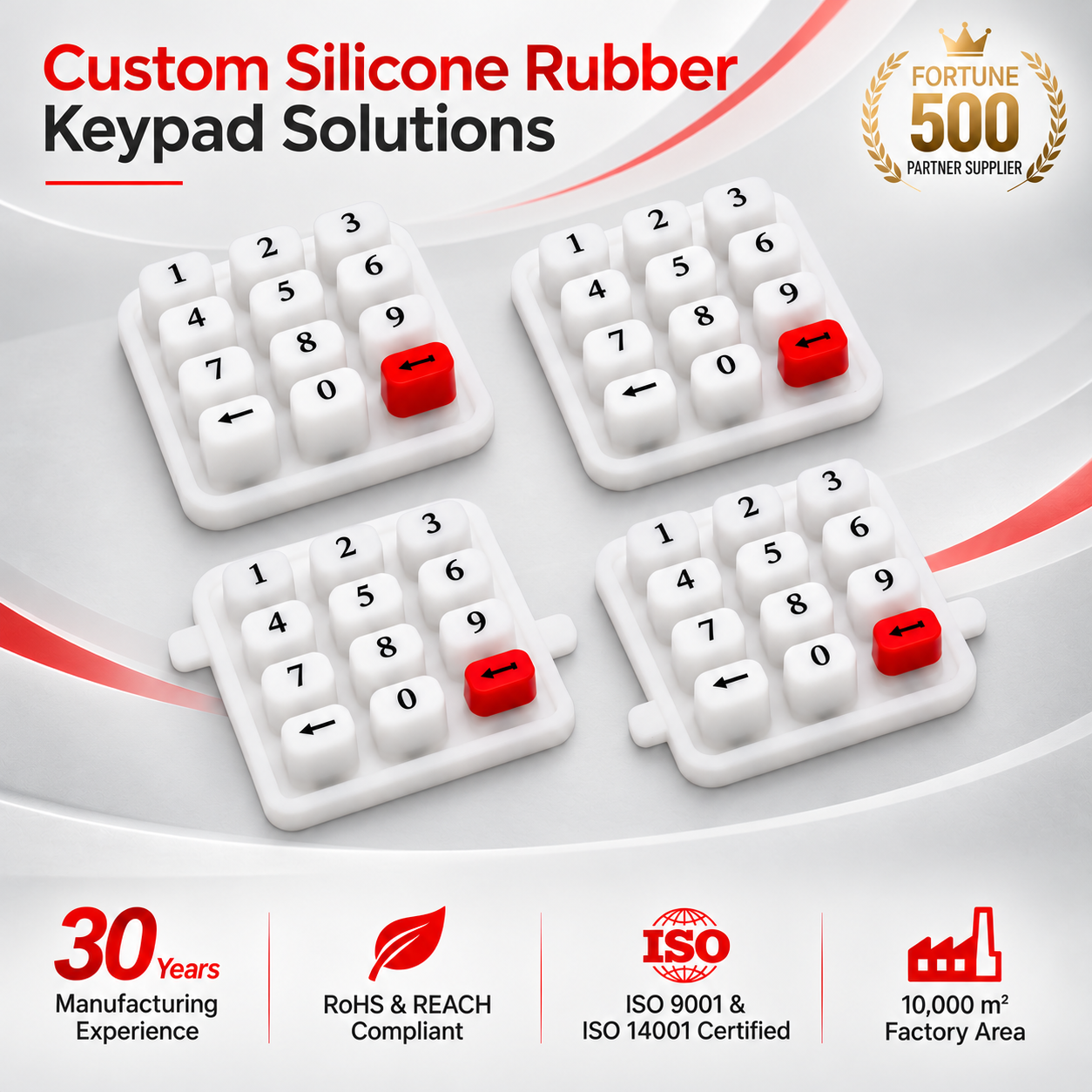
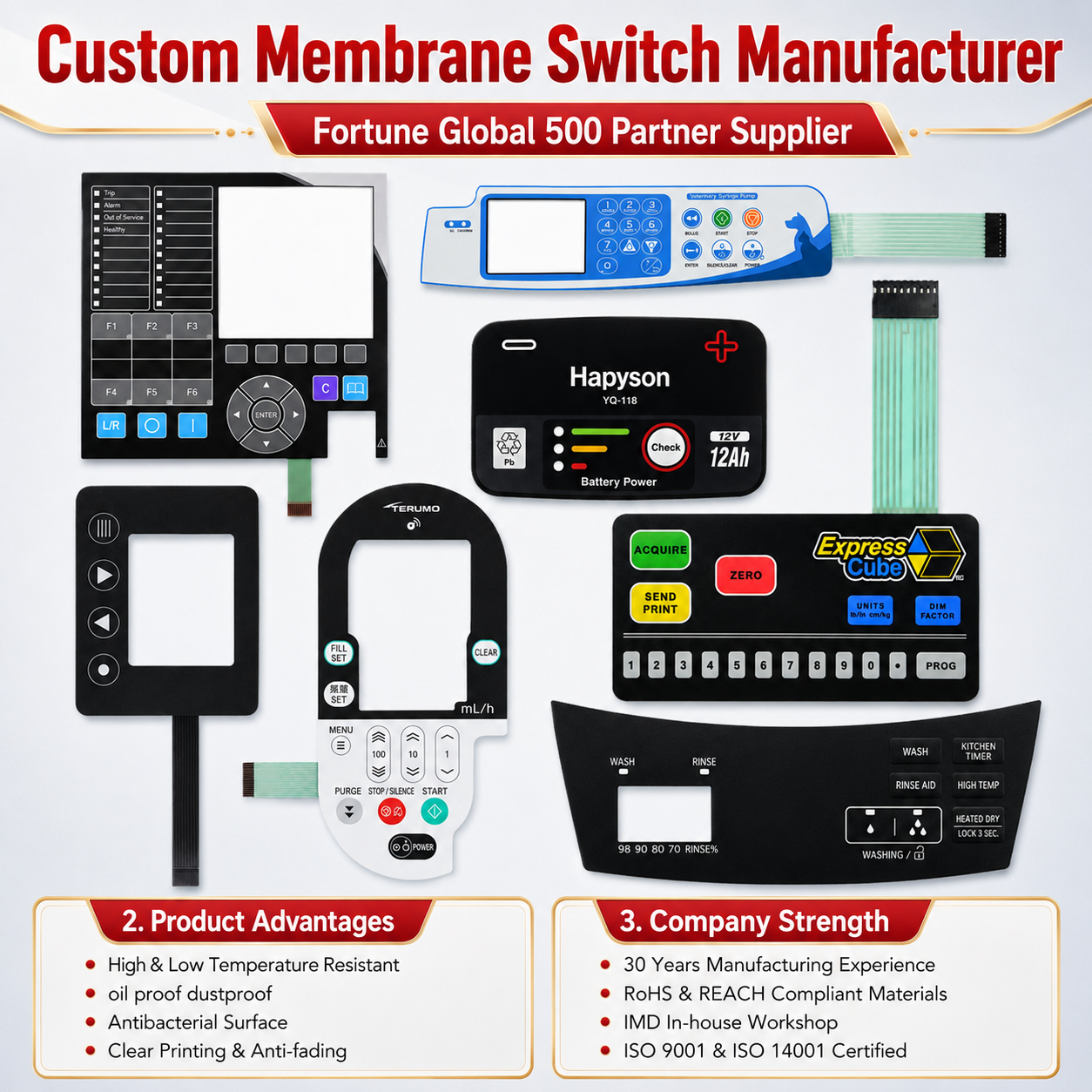
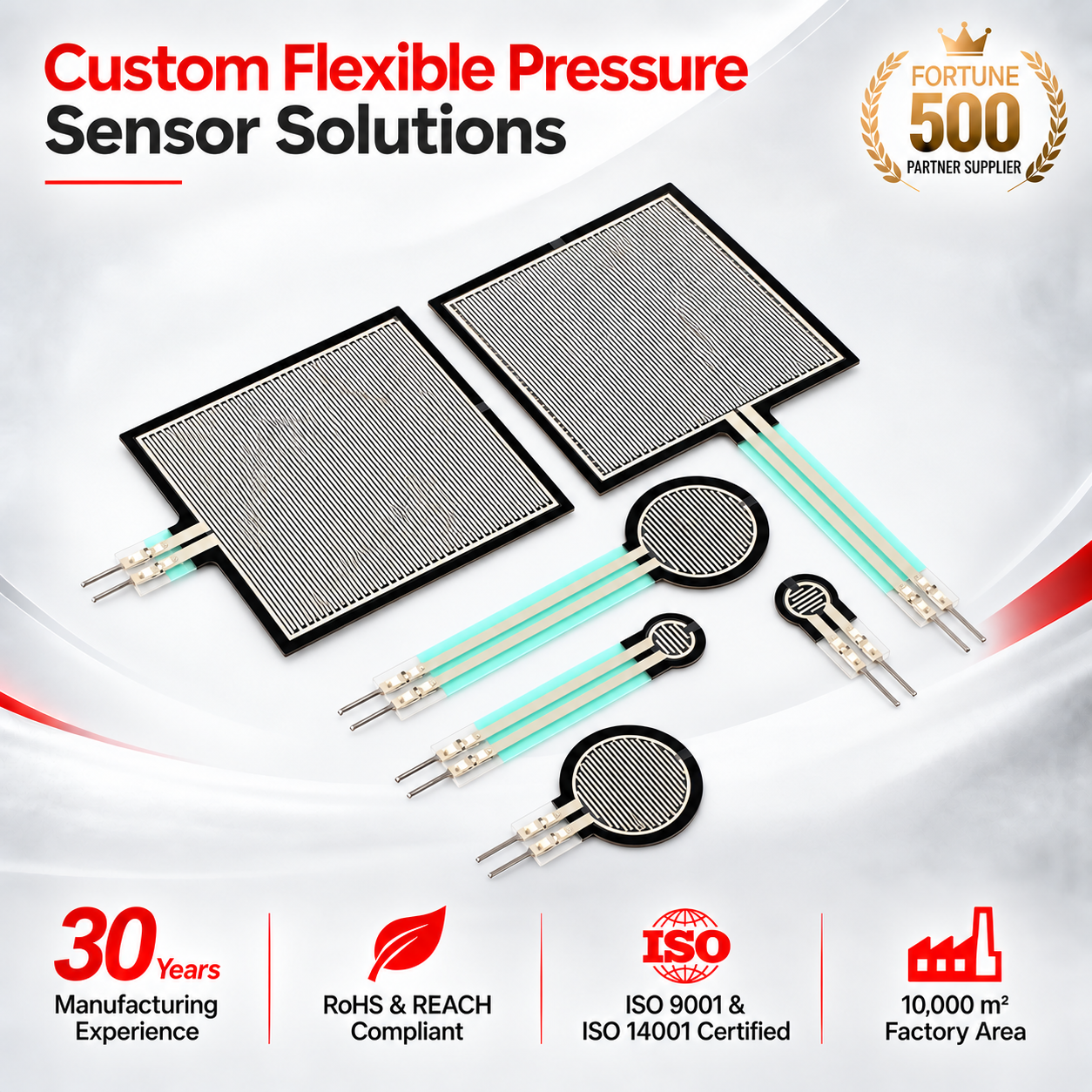
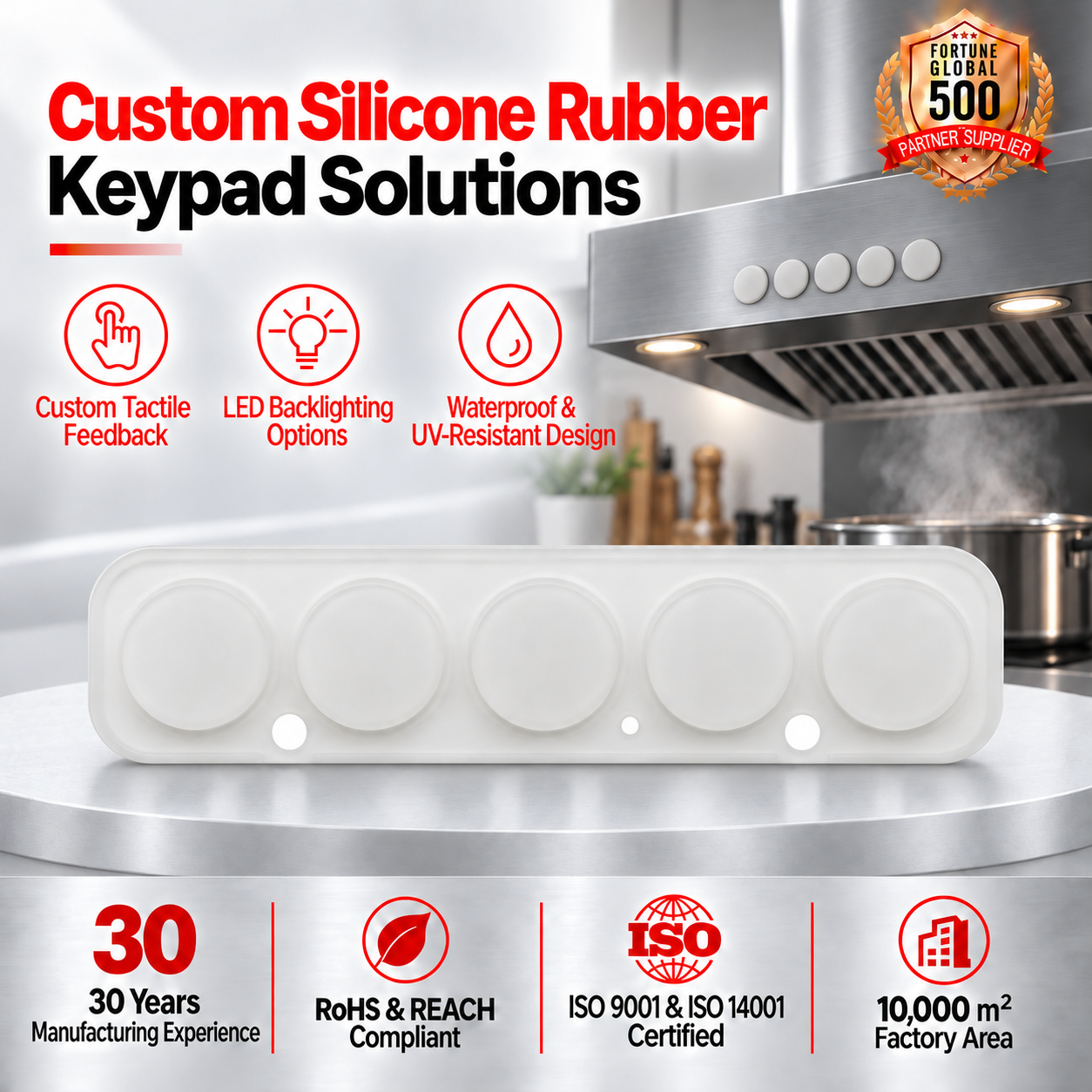
Engineering Stack-Up Matrix
Technical Architecture: Substrate & Contact Mechanics
Optimize design-for-manufacturing parameters based on electrical loads, physical environments, and actuation requirements.
| Technology Type | Primary Substrate & Inks | Actuation Force & Life | Sealing Performance | Core Industry Fit |
|---|---|---|---|---|
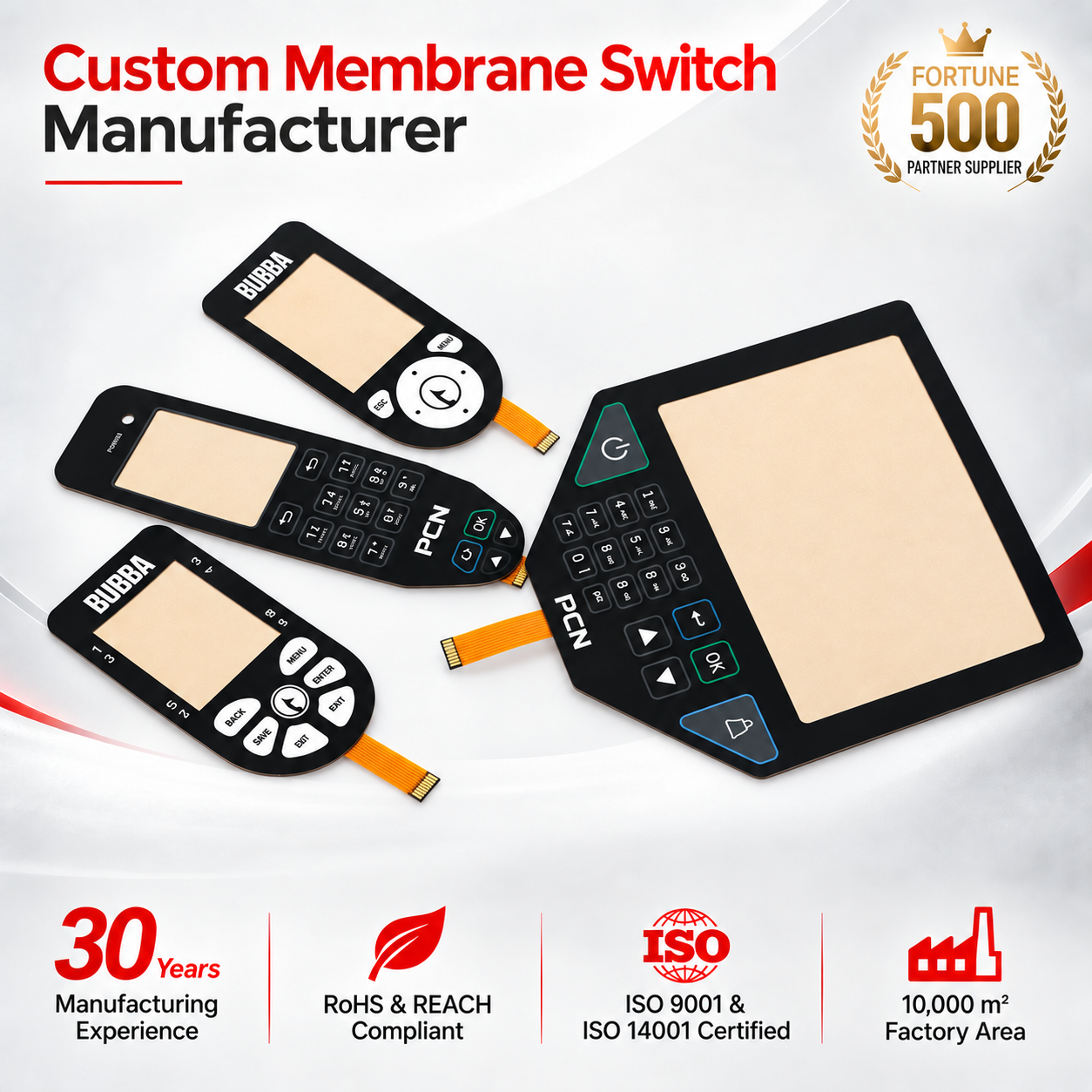
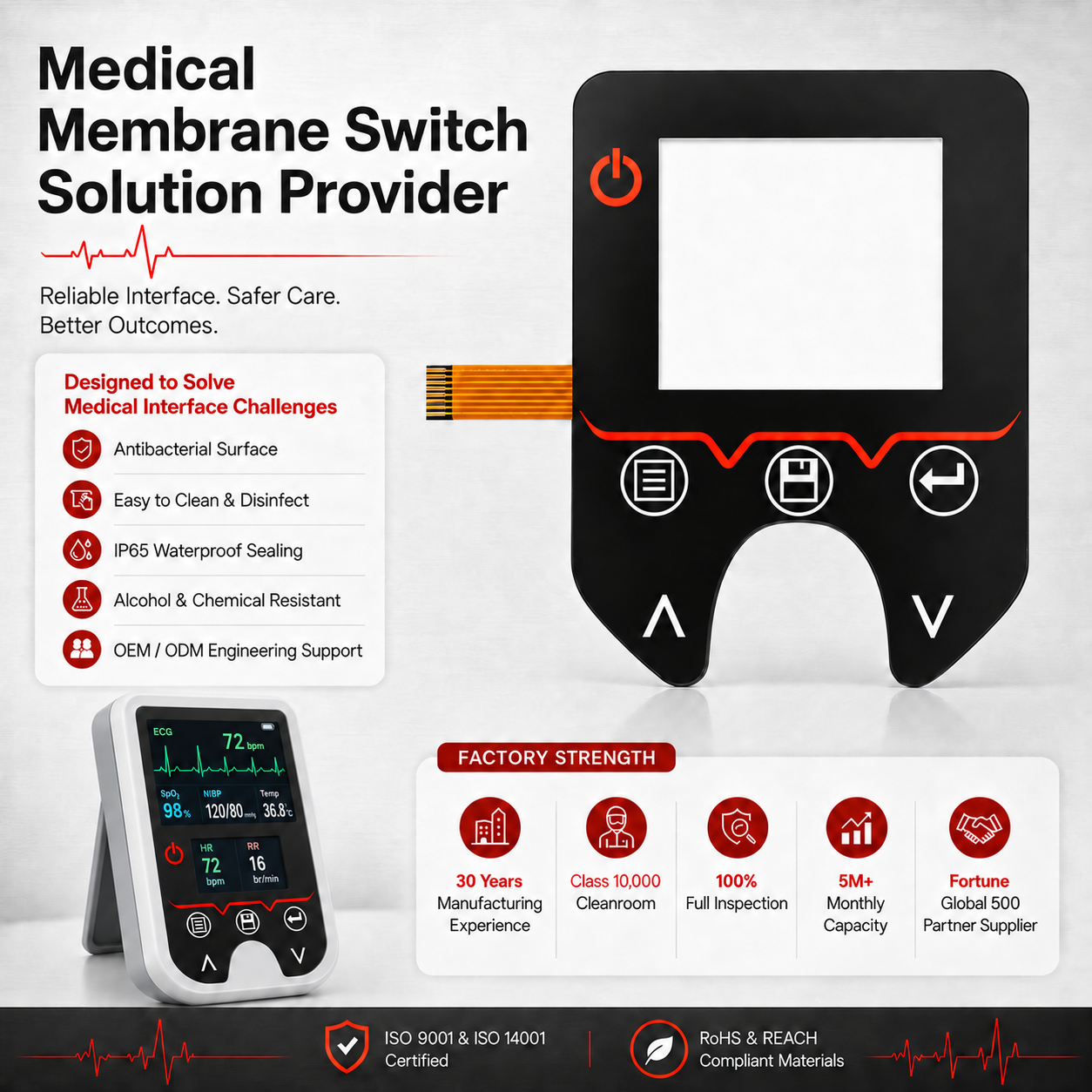
| Metal Dome Tactile Membrane | Polyester (PET), Conductive Silver/Carbon, Stainless Domes | 250g – 450g; > 1,000,000 cycles | IP65 to IP67 perimeter gasketed | Medical diagnostic consoles, heavy machinery |
| Flexible Copper Circuit (FPC) | Polyimide (PI), Rolled Annealed Copper Foil | Dome dependent; > 3,000,000 cycles | Hermetic tail seal, multi-layer high density | Aviation avionics, precision lab instrumentation |
| Capacitive Touch Surface | Optical Grade PET / Glass / Acrylic, PEDOT / Silver Nano | Zero force (solid state); unlimited wear life | Seamless surface, chemical wipe-down IP68 | Cleanrooms, commercial smart appliances |
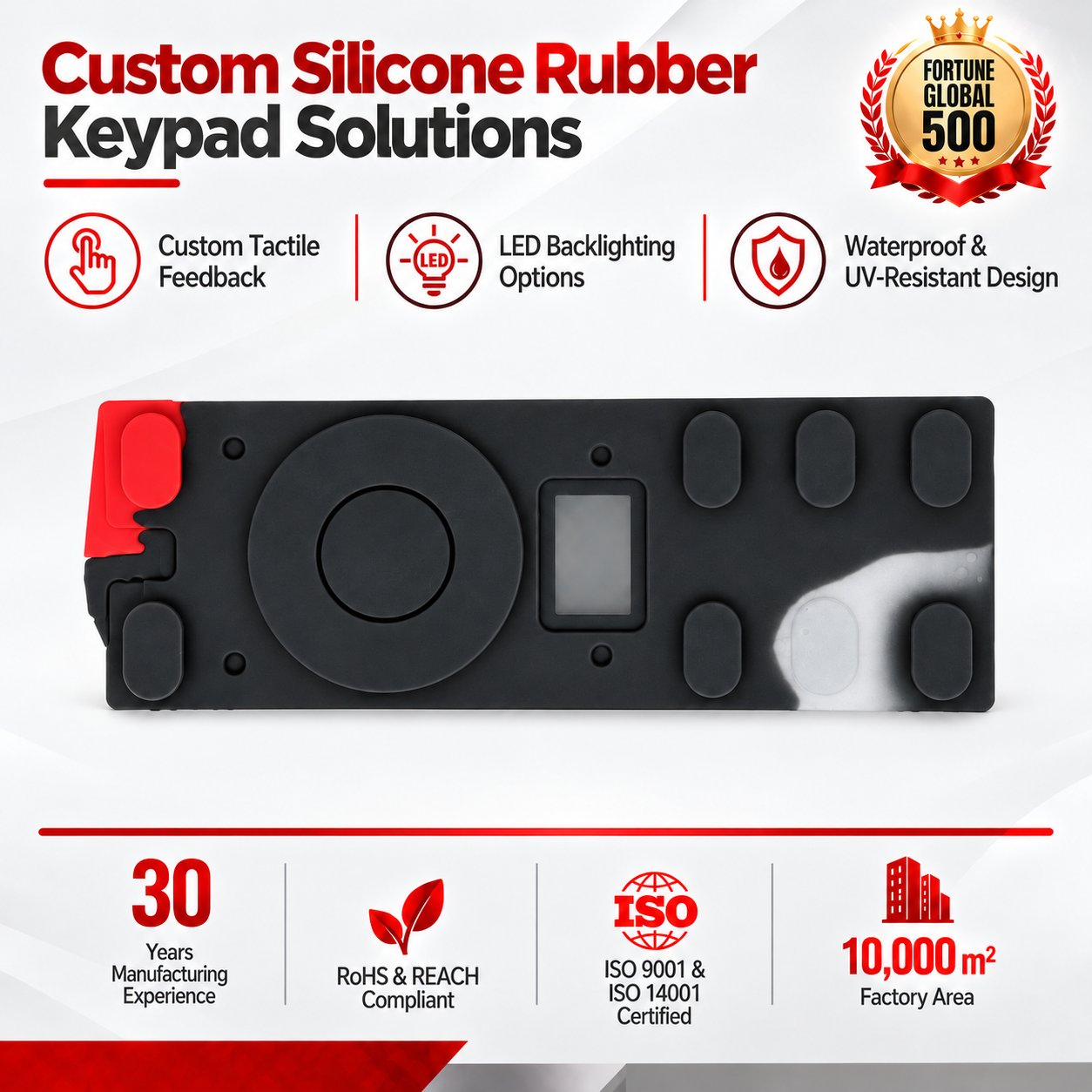
| Silicone Rubber Integration | High-tear strength silicone rubber, carbon pills, PU/Epoxy | 100g – 220g; > 2,000,000 cycles | Integral elastomeric bezel compression seal | Rugged handheld terminals, tactical remote controls |
Procurement Intelligence
Future Procurement Trends for Industrial HMI & Membrane Switches
How global supply chain leaders are de-risking tier-1 assembly, integrating smart electronics, and lowering Total Cost of Ownership (TCO).
Sub-Assembly Integration
Global buyers are migrating away from procuring isolated graphic overlays and loose discrete circuit layers. Modern procurement mandates turnkey plug-and-play modules that integrate rigid PCB backer plates, SMD indicators, embedded Light Guide Films (LGF), and pre-tested display lenses.
Consolidating graphic films, tactile switches, display integration, and final cable termination down to a single vetted vendor drastically mitigates assembly tolerance stack-ups on customer lines.
Design-for-Cost (DFC) Migration
Fluctuating commodity prices have accelerated the strategic transition from double-sided etched polyimide FPC circuits to hybrid screen-printed conductive polymer thick-film (PTF) polyester sheets where current loads allow.
By strategically engineering carbon overprint barriers to inhibit silver electro-migration, modern PTF circuits achieve high signal reliability at an approximate 30% reduction in initial tooling capital compared to photo-etched copper.
Life-Cycle & Sustainability Audits
Strict European RoHS, REACH, and California Proposition 65 compliances demand non-halogenated raw ingredients and eco-conscious resin chemistry. Procurement teams actively favor plants operating automated solvent recovery units.
Suppliers are heavily evaluated on in-line scrap optimization and UV-curable, volatile-organic-compound-free (VOC-free) dielectric ink processes to align with international corporate carbon footprint mandates.
Technology Horizon
Frontier Innovations in Membrane Switch Engineering
Emerging material formulations and human-machine interface breakthroughs redefining industrial operation.
Active Tactile Haptics & Force-Sensing (FSR)
Traditional mechanical snapping domes are converging with piezoresistive Force Sensing Resistor (FSR) matrices. By embedding semi-conductive micro-particle films, thin-film interfaces register variable pressure profiles.
This innovation allows variable velocity controls, dual-stage actuation thresholds for safety-critical medical devices, and solid-state acoustic resonance that mimics mechanical clicks on completely flat surfaces.
Light Guide Film (LGF) & Dead-Front Illumination
Eliminate bulky incandescent modules and localized hot-spotting through precision laser-micro-dotted optical grade TPU and polycarbonate light distribution sheets. LGF architecture directs light uniformly across legends using only micro edge-lit side LEDs.
Combined with opaque "dead-front" ink chemistry, legends and icons remain completely invisible until energized, delivering sleek, automotive-grade cockpit interfaces to industrial machines.
Enterprise Authority
Why Tier-1 Global OEMs Partner with Dongguan AXRU
Full-spectrum fabrication, rigorous quality systems, and accountable in-house cleanroom manufacturing.
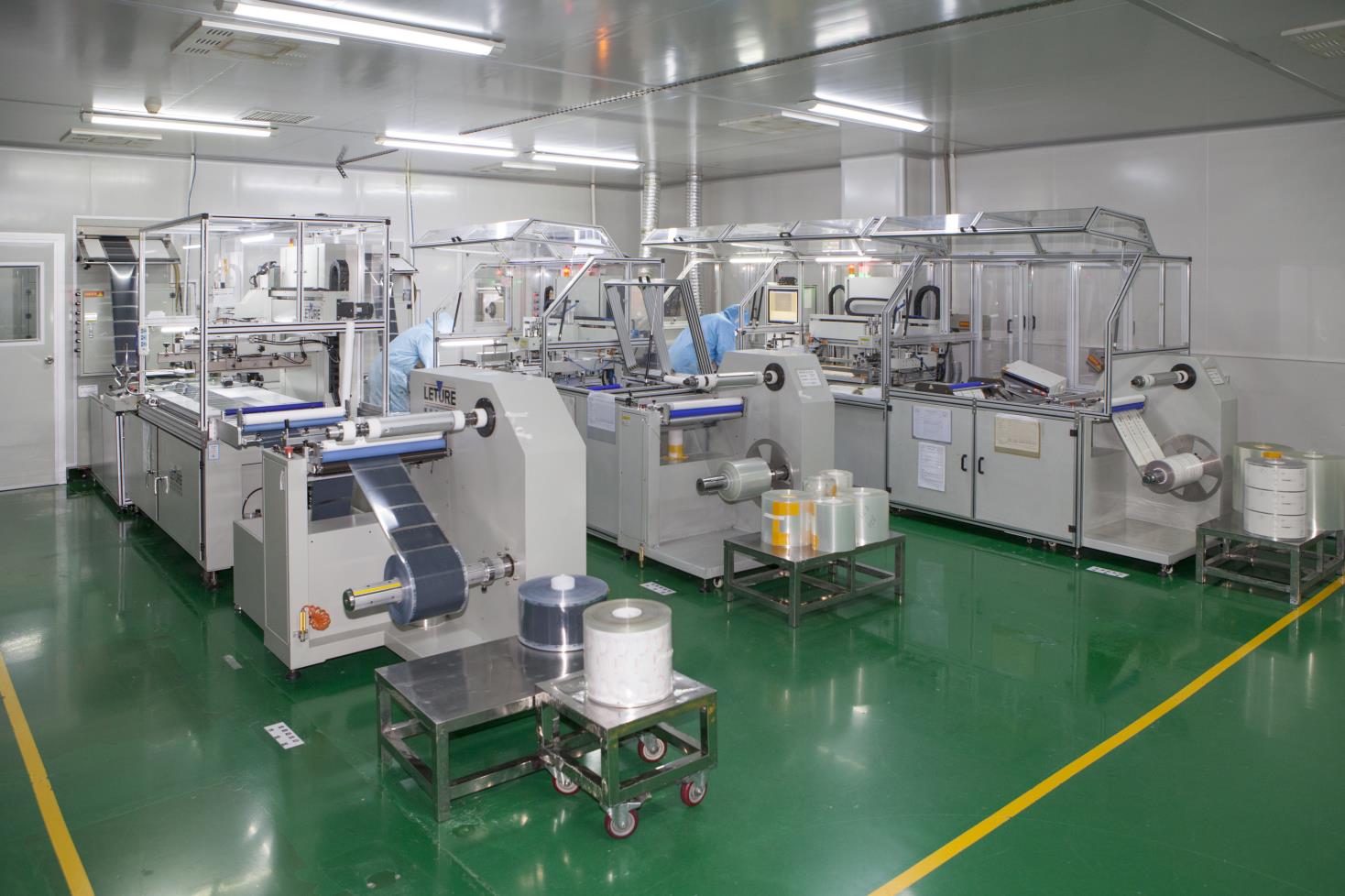
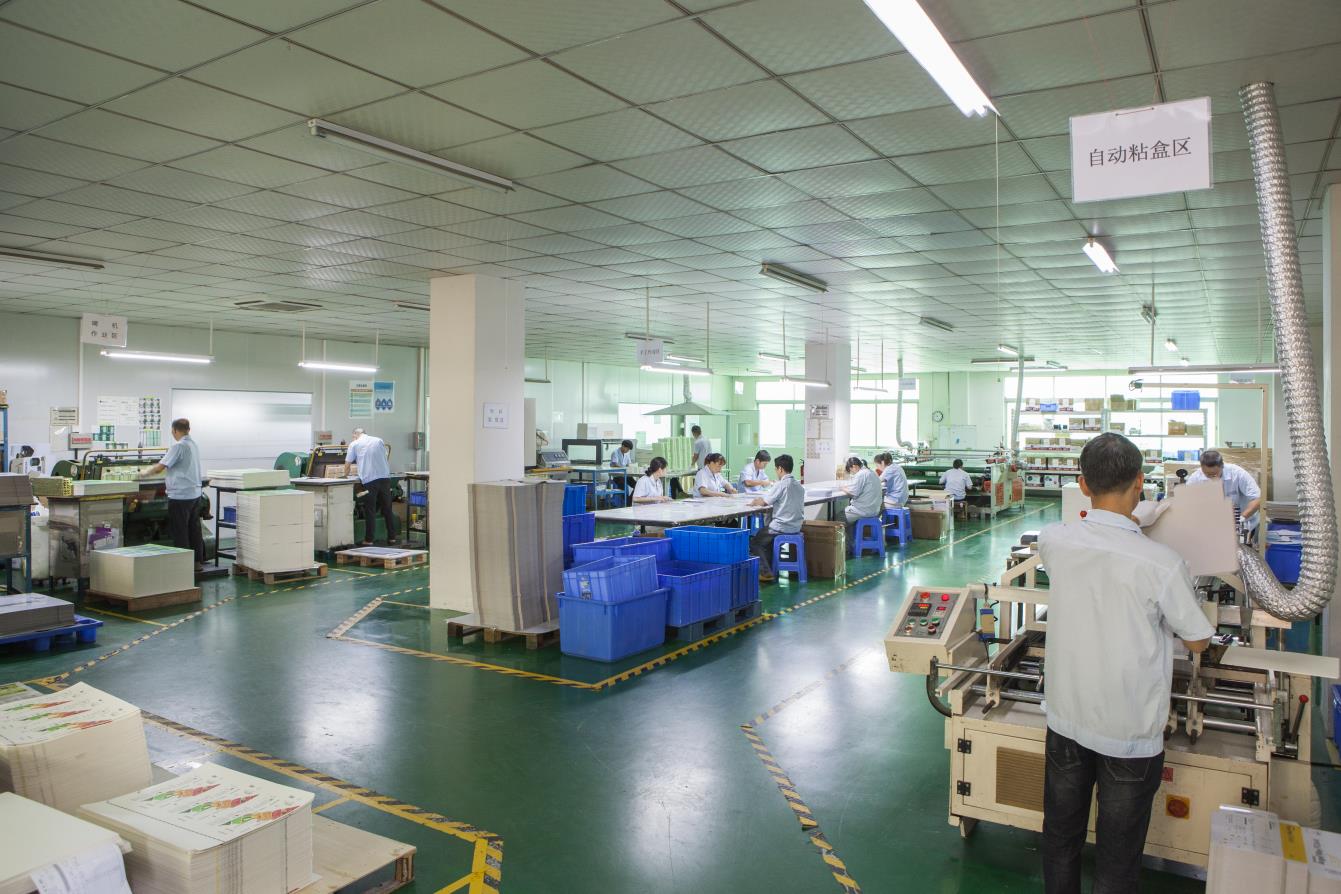
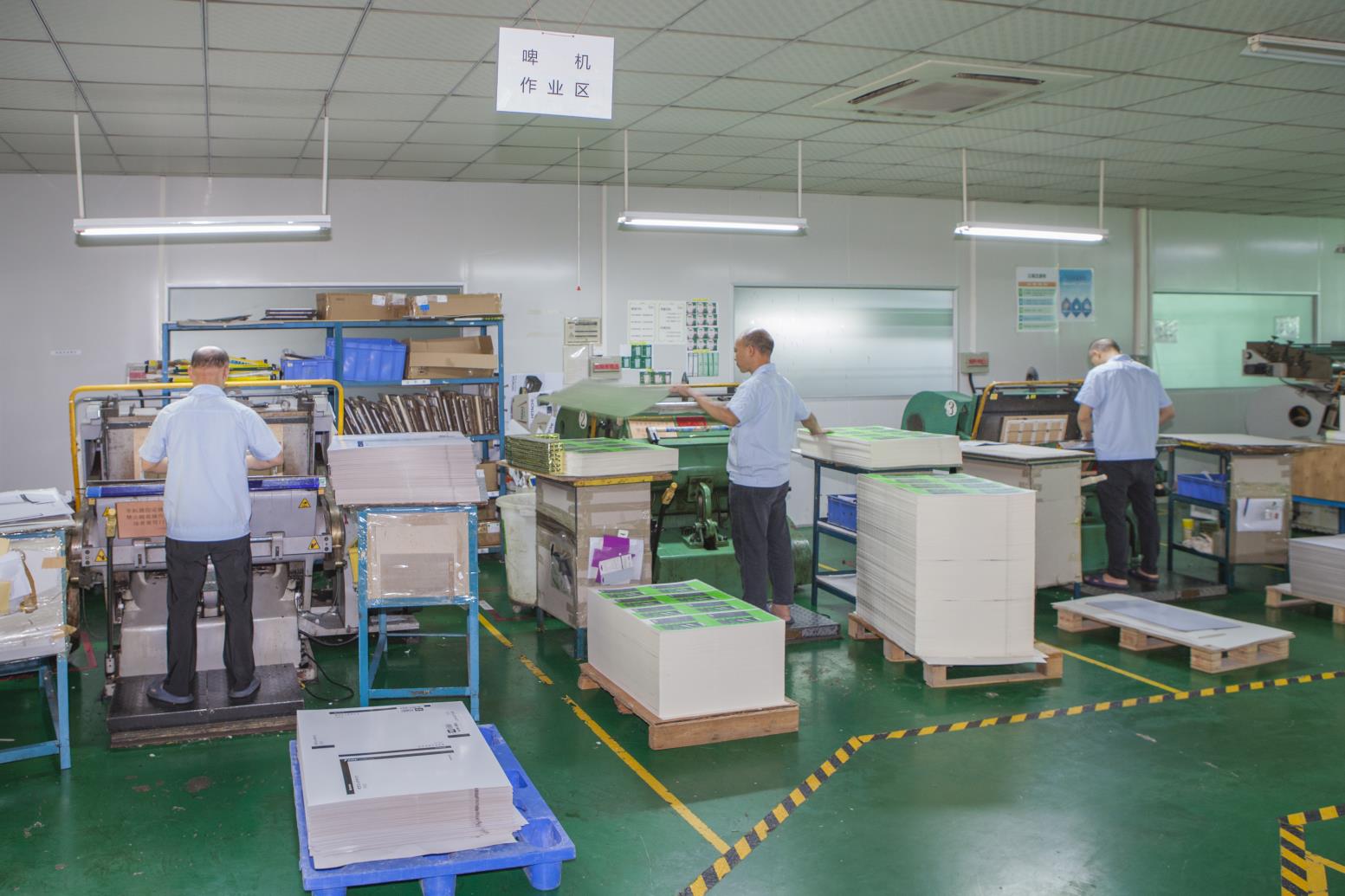
Intertek-Verified Facility
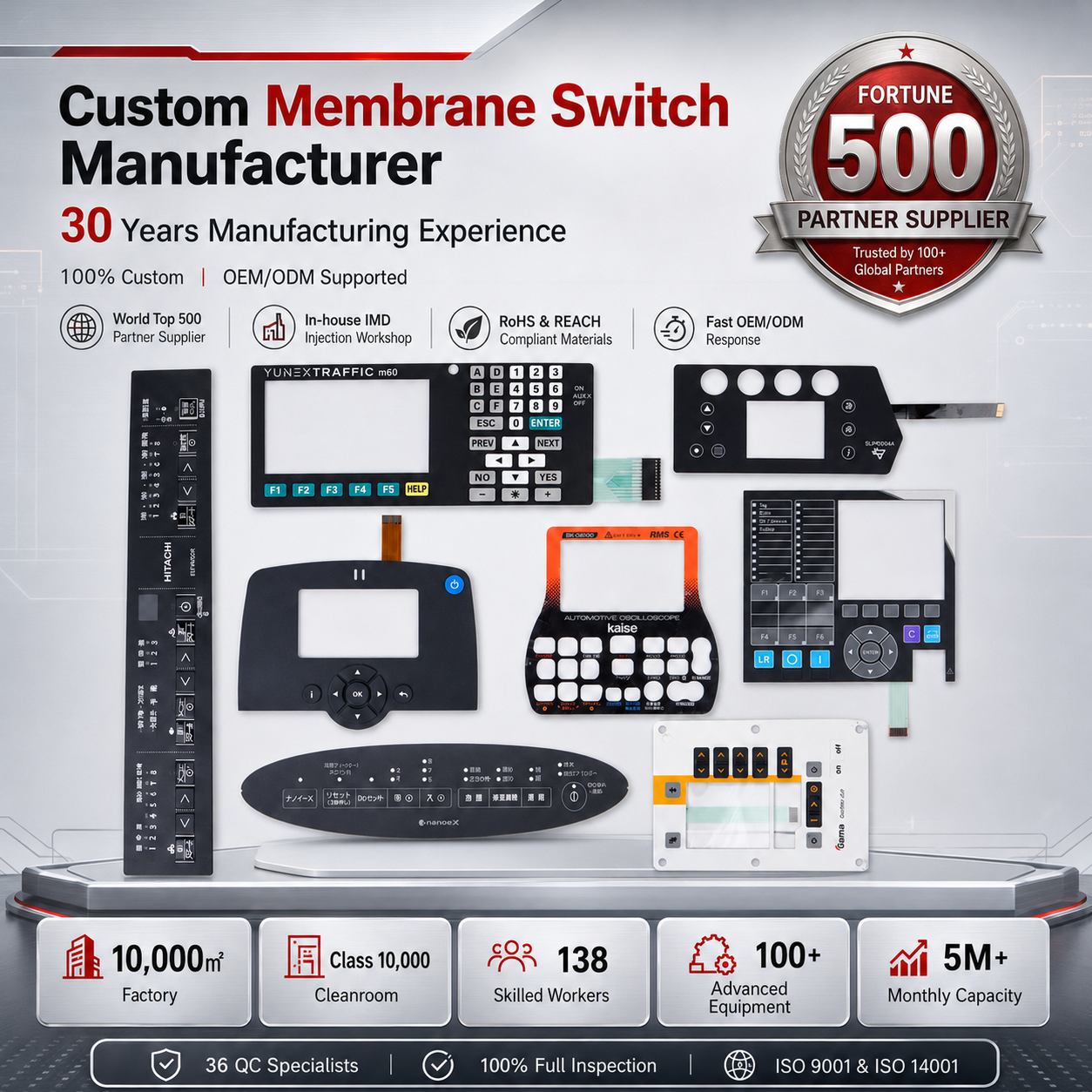
Our comprehensive 10,000㎡ plant and dedicated 121-specialist engineering team have undergone strict on-site verification by Intertek. From initial vector engineering to final dielectric lamination, all operations are centralized under one accountable roof.
Rigorous In-House Testing Lab
Every batch is qualified via automated force-displacement testers, accelerated life cycle rigs, programmable temperature/humidity chambers, yellowing resistance units, and 100% electrical continuity and insulation barrier testing.
Fortune 500 Trusted Supplier
With over a decade of direct export experience across North America, Germany, Japan, and the UK, we support mission-critical equipment programs with low MOQ thresholds (starting at 100 pcs) alongside automated high-volume capacity.
Procurement & Engineering FAQ
Frequently Answered Technical Questions
Addressing common challenges in interface reliability, environmental sealing, and manufacturing lead times.
What is the standard minimum order quantity (MOQ) and sample prototyping timeline?
Our standard production MOQ starts at 100 pieces, enabling seamless NPI (New Product Introduction) engineering runs and pilot builds without excessive financial exposure. Rapid engineering prototypes are delivered in 5 to 7 business days following digital Gerber and artwork DFM sign-off.
How do you guarantee long-term IP65, IP67, or NEMA 4X ingress protection?
Waterproofing relies on continuous closed-loop adhesive perimeters (typically utilizing genuine 3M 200MP, 300LSE, or VHB systems). We design internal cross-venting channels isolated entirely from exterior edges, combined with moisture-barrier silicone boot gaskets or ultrasonic perimeter welds to prevent capillary ingress during high-pressure liquid washdowns.
Which file formats and parameters are necessary to generate an accurate DFM quote?
Please provide your 2D mechanical outlines (DWG, DXF, or 1:1 PDF) specifying tolerances, display cutouts, and tail exit location. Artwork should be vectorized (.AI, .CDR, or vector PDF) with distinct Pantone Solid Coated callouts. Include your preferred circuit topology (Silver conductive trace vs. Copper FPC) and target actuation force (e.g., 280g vs. 400g).
How is silver migration prevented in high-humidity industrial operating conditions?
Under high electric fields and humidity, pure silver particles can migrate and cause dendritic short circuits. We apply a protective 100% carbon-paste overprint cap layer on all exposed interdigitated fingers and traces, complemented by a dual-cure dielectric passivating overcoat to shield silver pathways completely from moisture exposure.
Can embedded LEDs and active surface components survive aggressive flexural stress?
Yes. We mount micro SMD 0603/0805 LEDs and thermistors using conductive epoxy resin cured in automated convective ovens, followed by an encapsulation encapsulant UV dome that provides mechanical strain relief. Tail exits and flexure zones are strategically engineered outside active button flexing areas to preserve circuit continuity over multi-million switch operations.
Accelerate Your Human-Machine Interface Design
Request comprehensive technical documentation, comprehensive material datasheets, and complete component specification matrices from our senior engineering team.