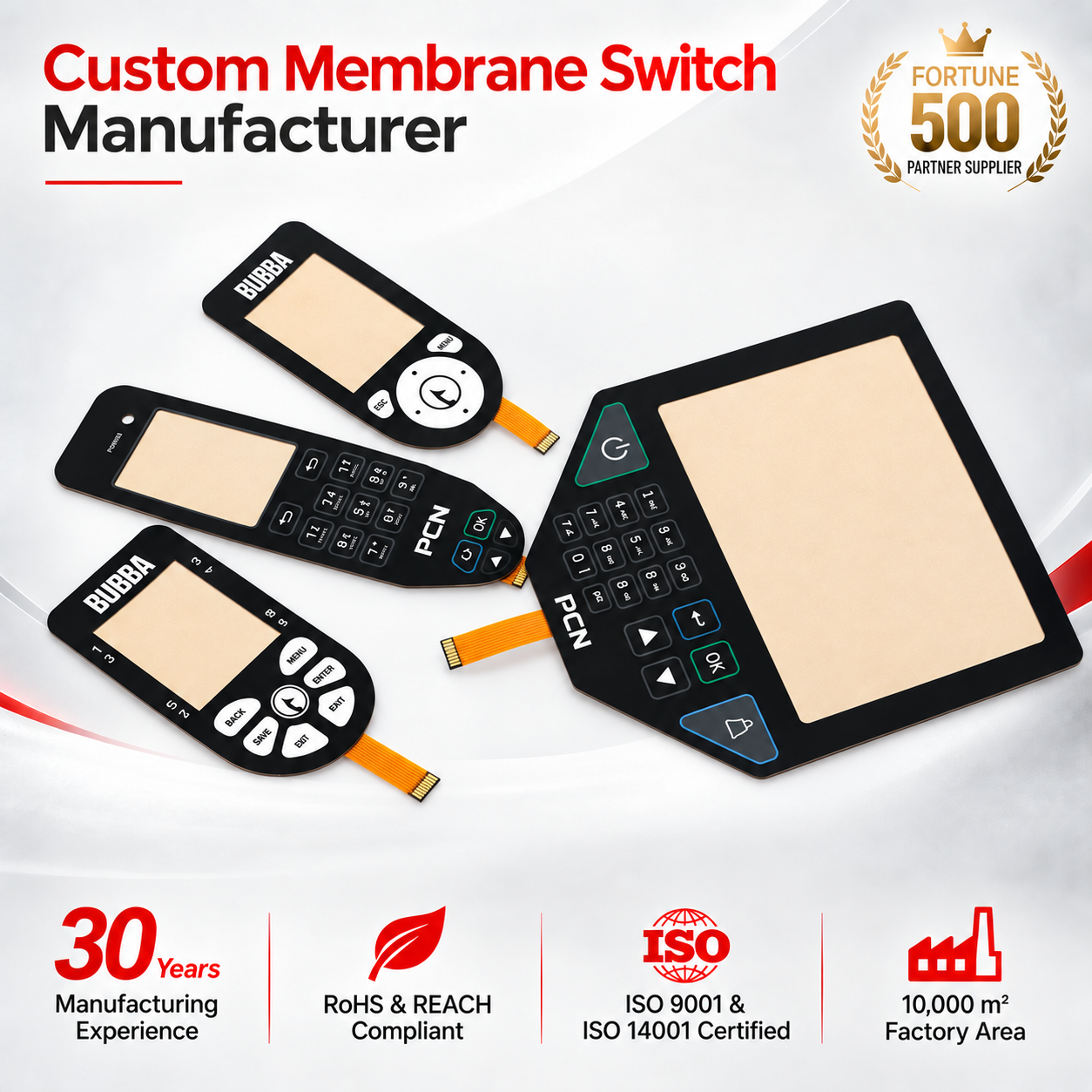
Custom 3M Adhesive Tactile Metal Dome Button Membrane Switch Graphic Overlay
- Adhesive Spec: 3M 467MP / 468MP High-Bond
- Actuation Life: >1,000,000 Cycles
- Thermal Rating: -30°C to +105°C Continuous
Explore our certified elastomer arrays, tactile metal dome matrices, and resilient graphic overlays formulated to withstand continuous heat exposure from -40°C to +200°C without mechanical fatigue.
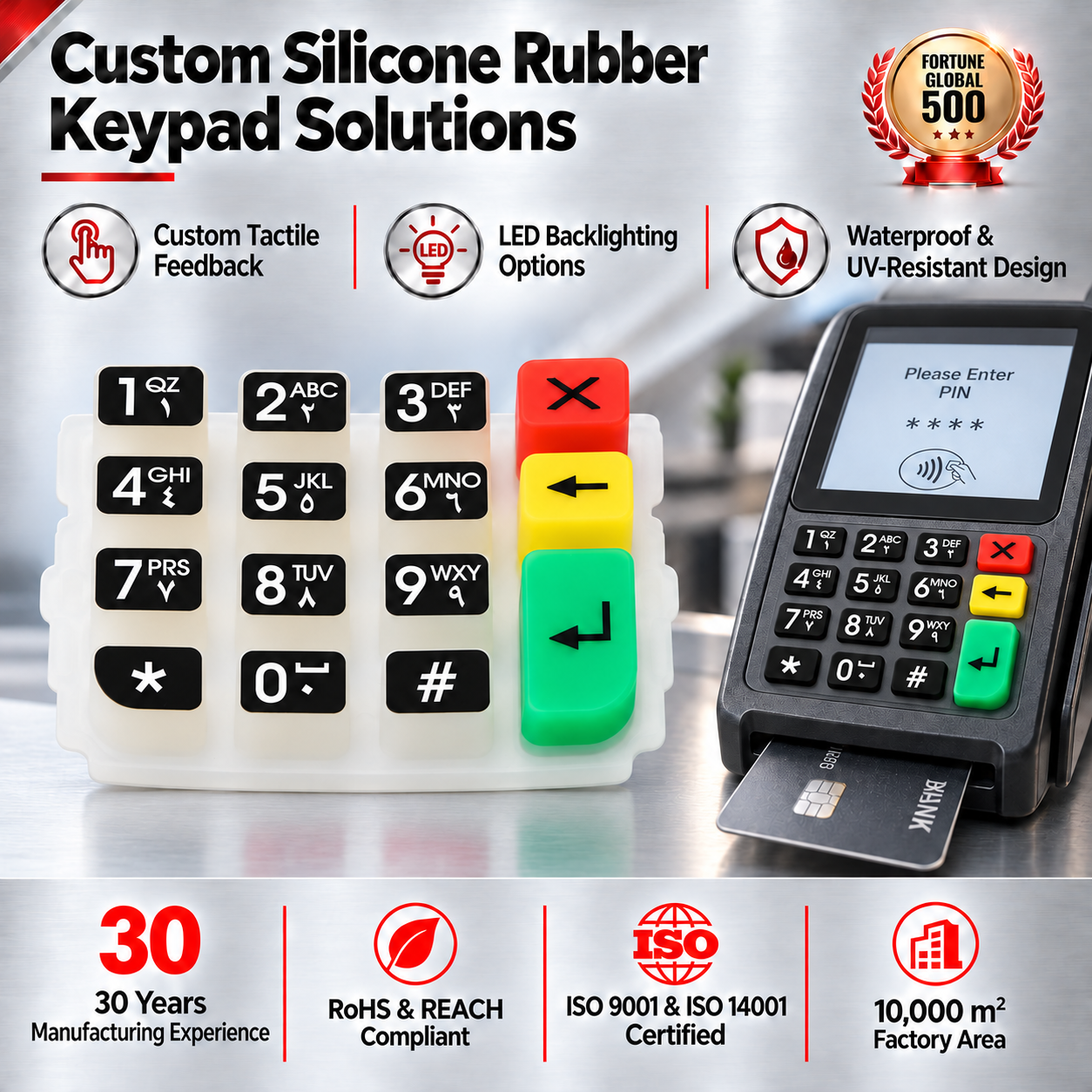
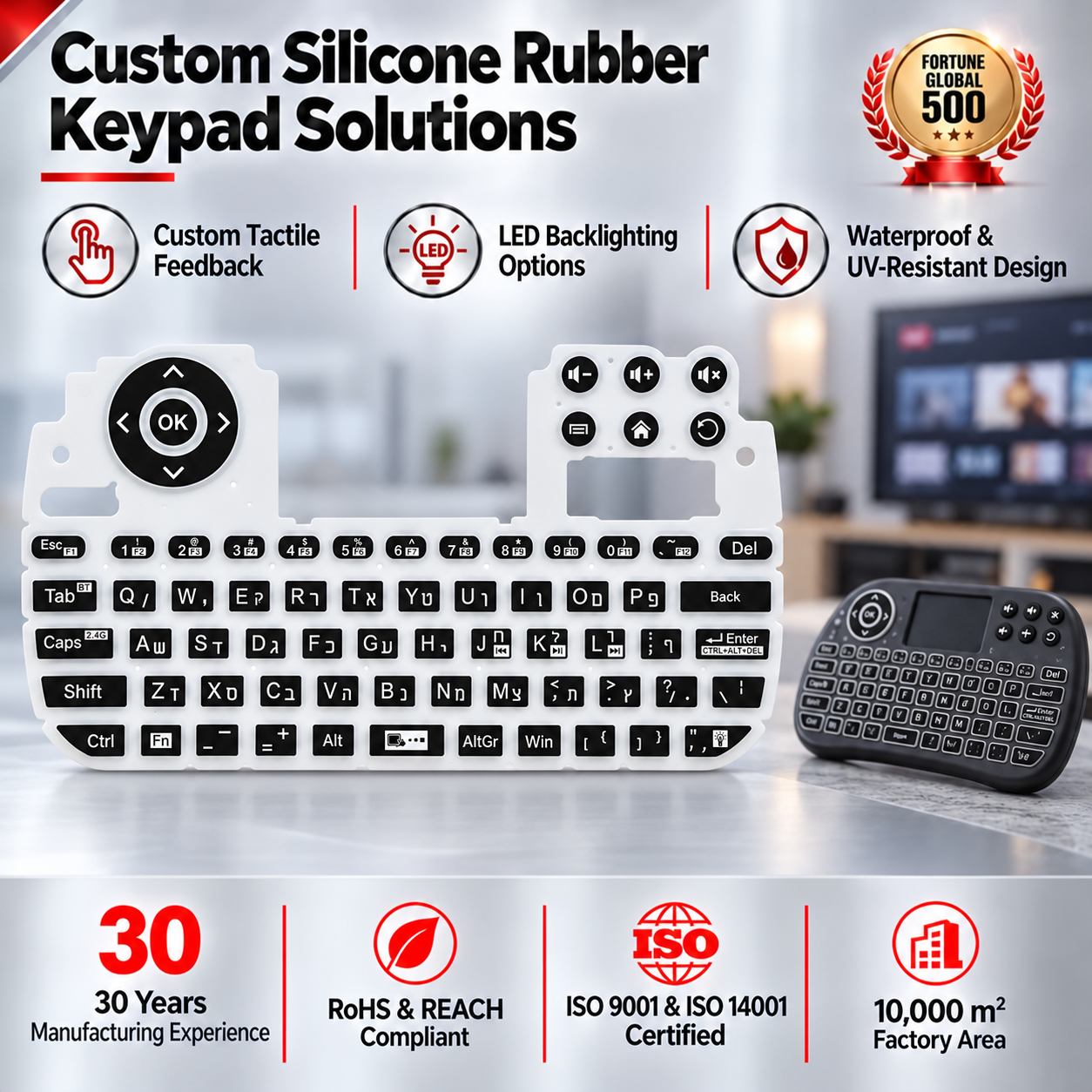
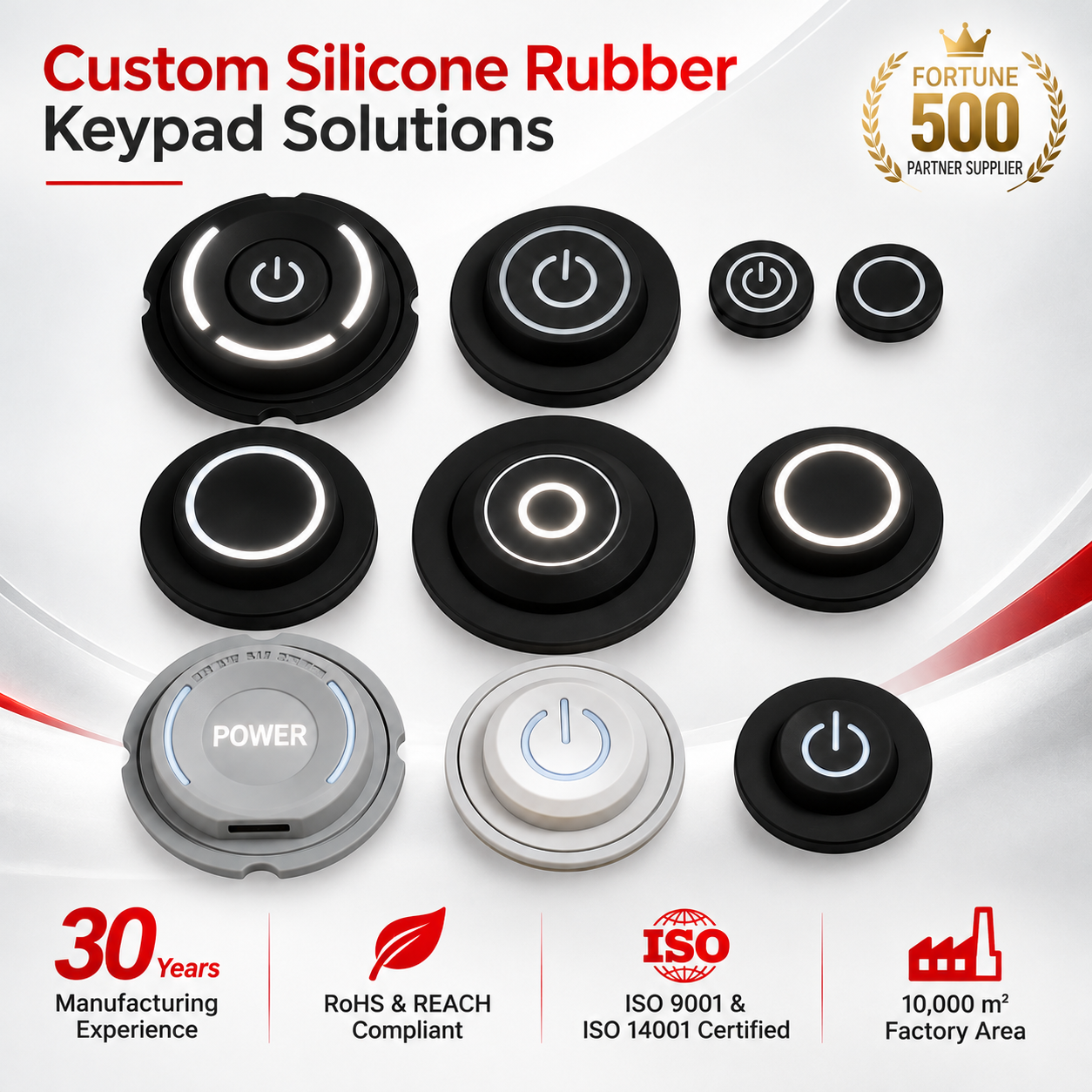
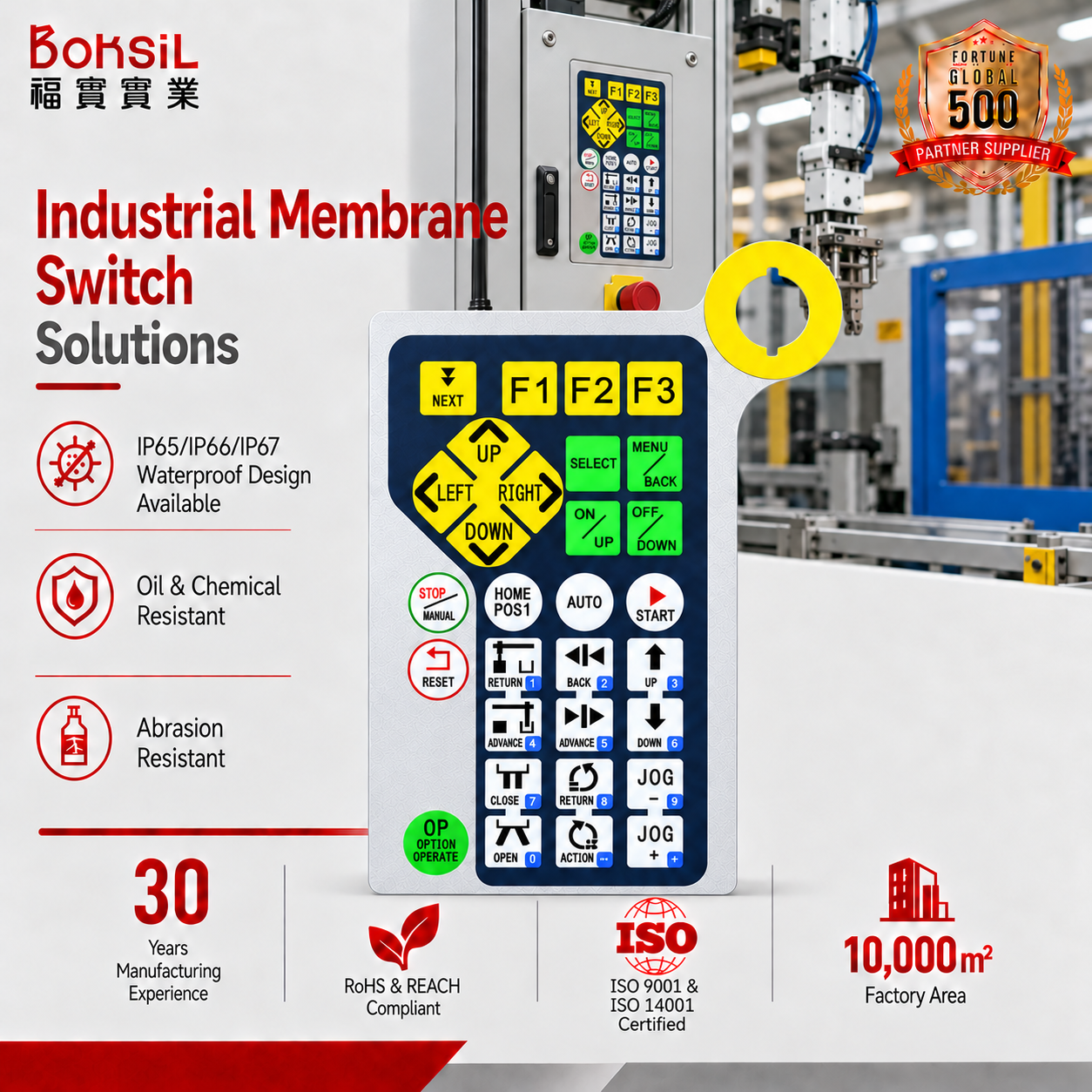
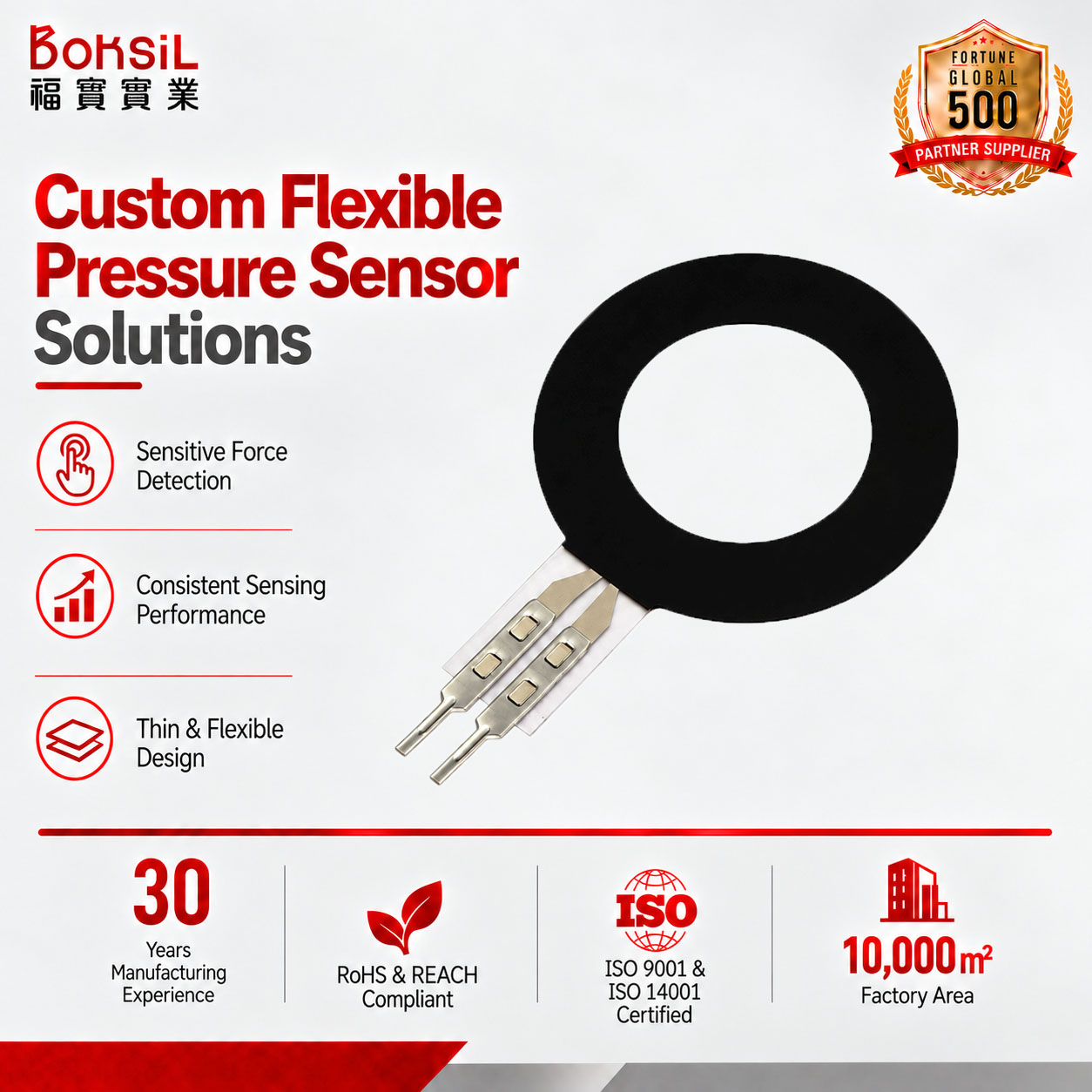
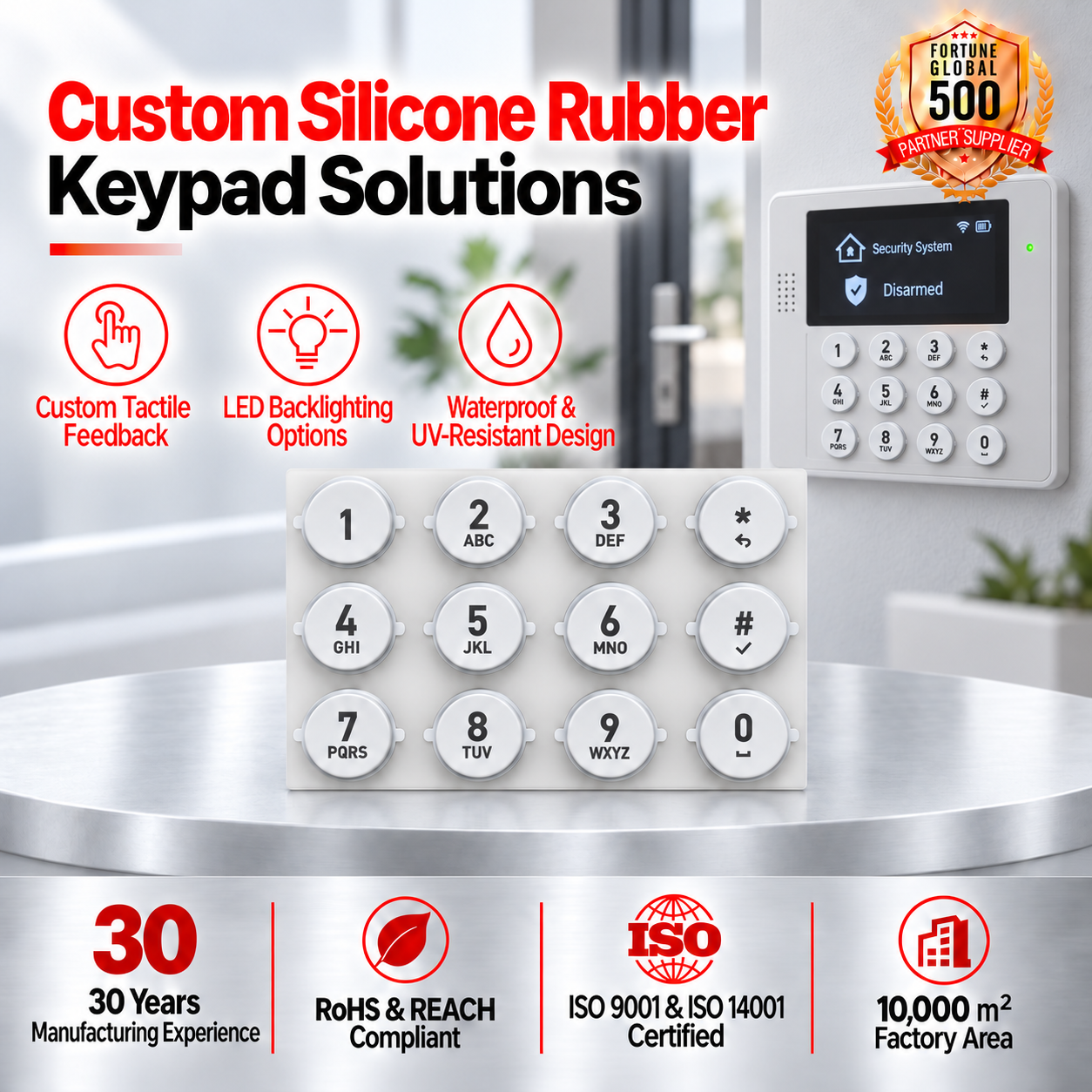
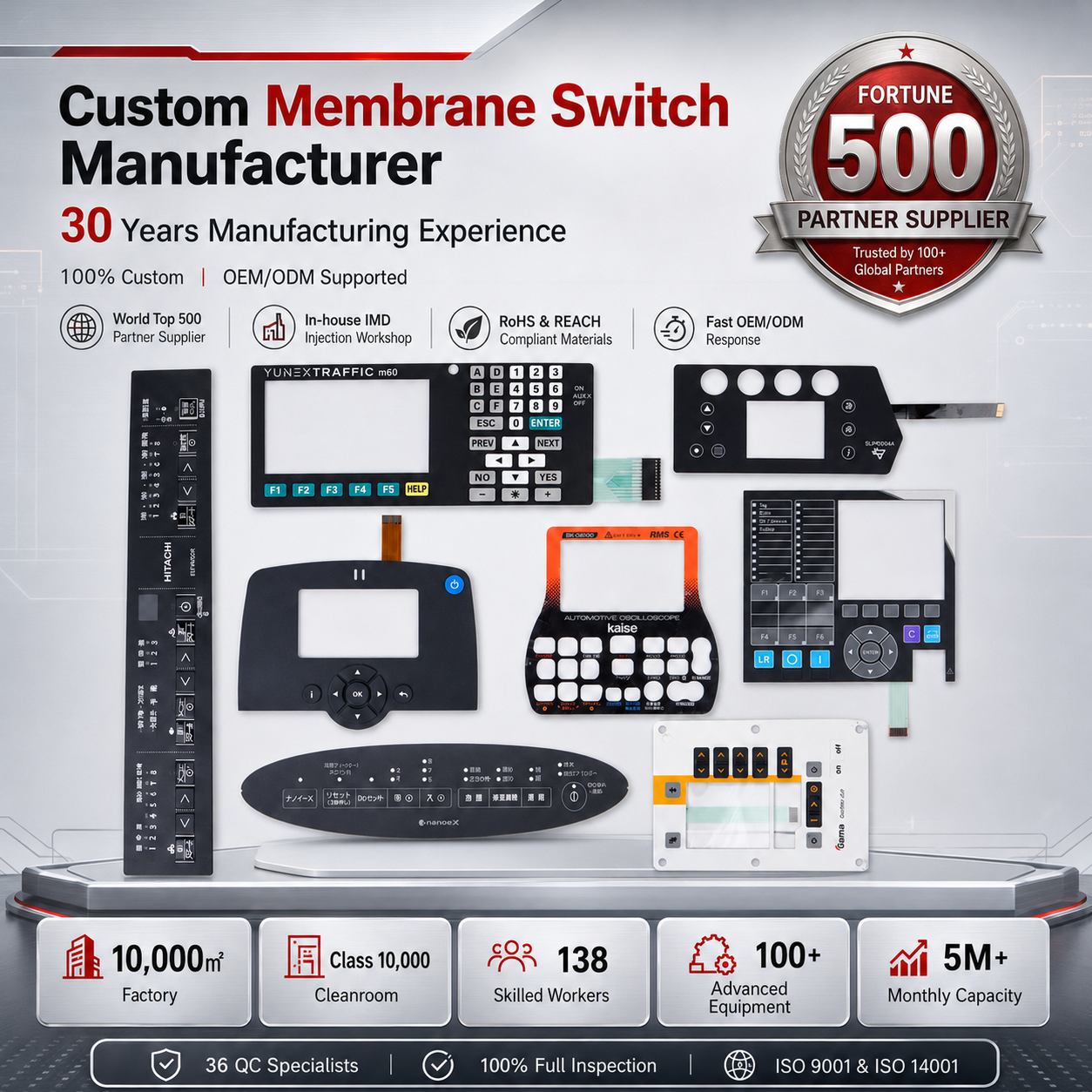
AXRU Electronics combines an accredited 10,000㎡ manufacturing hub with 12+ years of specialised elastomer vulcanization and tactile membrane fabrication, providing direct engineering-grade supply lines to Sheffield OEMs.
Unlike standard brokers, AXRU manages all manufacturing steps internally: tool tooling, formulation of heat-stabilized synthetic rubber, cleanroom silk-screen printing, surface hardening, metal-dome assembly, and environmental aging. Operating out of our modern facility in Dongguan, our process eliminates third-party outsourcing delays, ensuring strict tolerance margins (±0.05mm) and transparent DFM (Design for Manufacturability) collaboration for UK engineering teams.
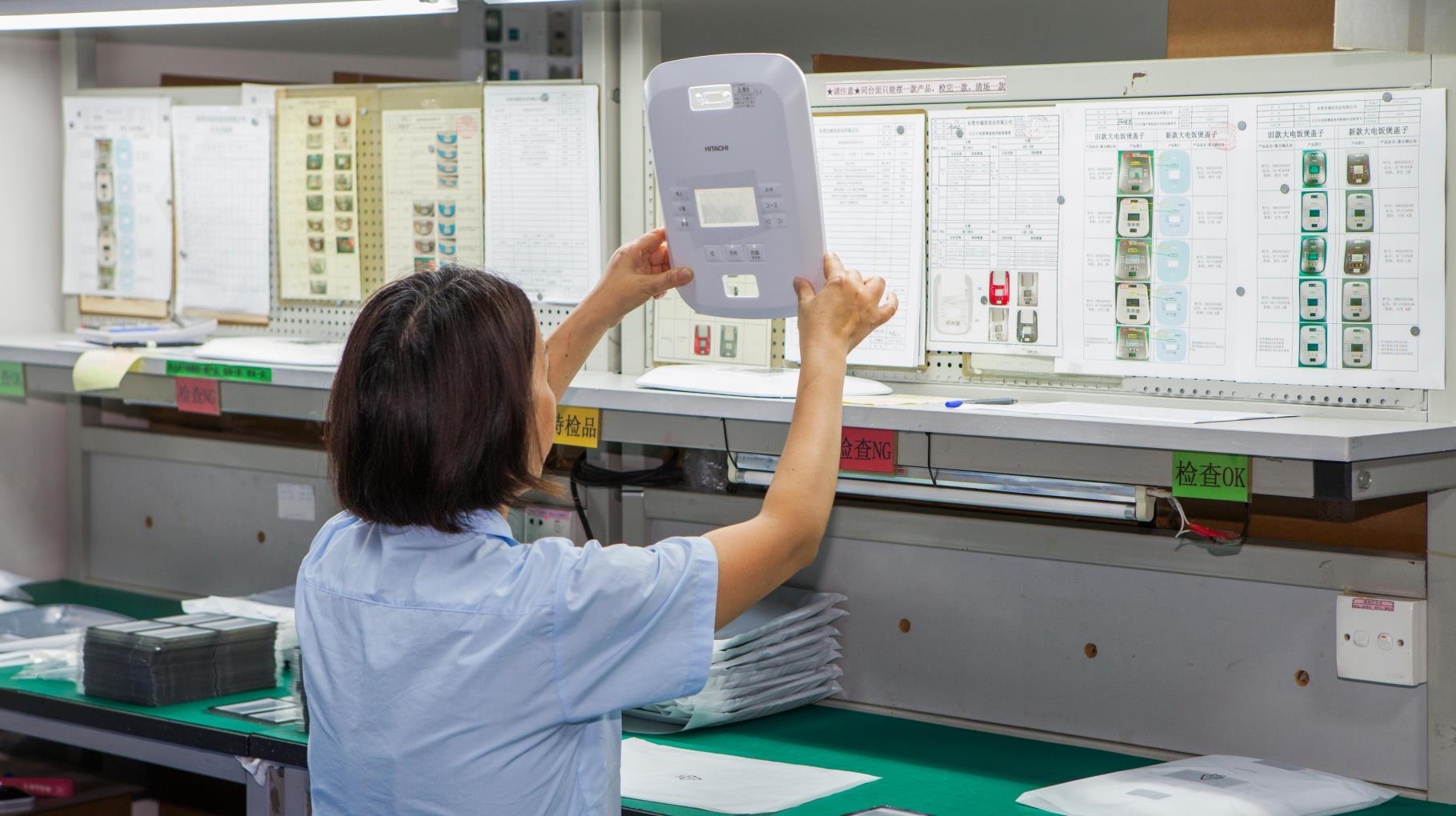
Contact resistance and insulation verification.
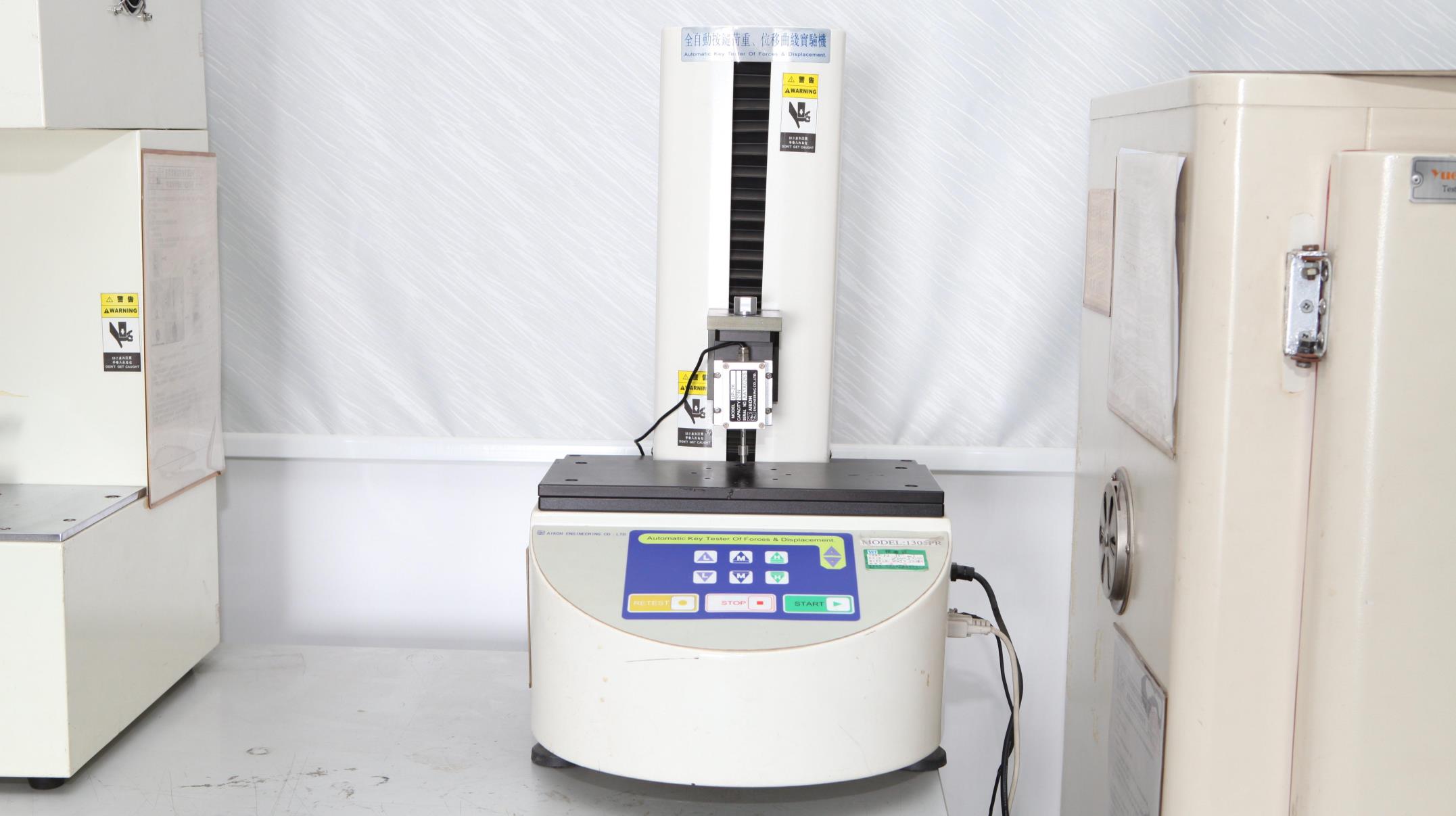
Force vs. displacement snap validation.
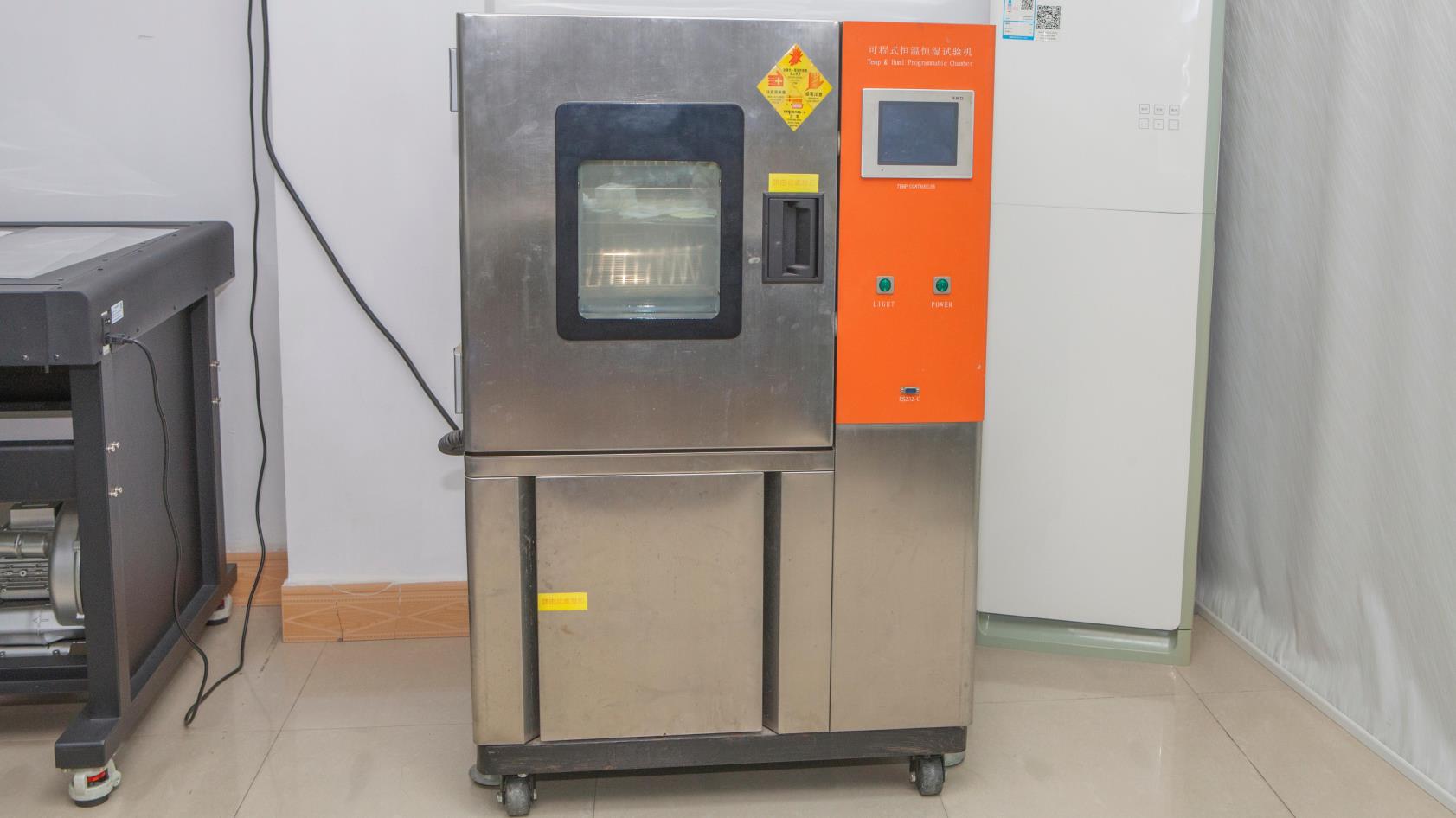
-50°C to +200°C cyclic endurance stress.
Designing human-machine interface assemblies that preserve tactile snap ratio, electrical low resistance, and seal integrity inside elevated temperature zones.
In standard commercial silicone keypads, temperatures exceeding 80°C trigger post-curing embrittlement, hardening the elastomer webbing and altering the snap ratio. For industrial applications subject to ambient thermal soak—such as electric arc controls, glass tempering systems, or engine test cells—AXRU specifies high-consistency silicone rubber (HCR) cross-linked via platinum or high-purity peroxide cure systems. By formulating vinyl methyl silicone (VMQ) with tailored metal-oxide thermal stabilizers, our elastomer buttons withstand continuous service up to +200°C without loss of Shore A elasticity or excessive compression set.
Furthermore, outgassing inside sealed electronics enclosures poses a critical risk: volatilized siloxane polymers can migrate and condense on contact pads, forming insulating non-conductive silicon dioxide films. To eliminate this phenomenon, our production includes mandatory high-vacuum post-curing baking cycles (200°C for 4 to 8 hours), removing low-molecular-weight cyclosiloxanes down to negligible trace thresholds.
Standard conductive carbon pills degrade under thermal cycling. We apply high-density carbon-doped silicone or co-molded gold-plated nickel pills that maintain contact resistance <10Ω across 1,000,000 thermal shifts.
Silver paste screened onto PET carriers delaminates above 85°C. For industrial environments, we integrate Polyimide Flexible Printed Circuits (FPC) with rolled-annealed copper tracks capable of withstanding +125°C solder-reflow heat.
Finite element analysis (FEA) is utilized to shape the elastomer return spring. Even as thermal expansion causes minor material softening, our engineered switch geometry maintains a crisp 40%–60% tactile snap ratio.
The table below summarizes empirical laboratory data compiled from AXRU material qualification runs, benchmarking high-temp elastomer against alternate HMI membrane interfaces:
| Substrate / Technology | Continuous Temp Rating | Peak Surge Limit (10 min) | Actuation Life at 90°C | Resistance to Mineral Oils | Recommended Application |
|---|---|---|---|---|---|
| High-Temp Platinum-Cured VMQ | -40°C to +200°C | +260°C | > 1,500,000 Cycles | Good (Fluorosilicone: Excellent) | Furnace, Foundries, Aerospace HMI |
| Standard Commercial Silicone | -20°C to +85°C | +110°C | < 300,000 Cycles | Fair | Office Devices, Consumer Remote Controls |
| Polyimide (PI) Copper FPC Membrane | -40°C to +125°C | +150°C | > 3,000,000 Cycles | Excellent | Heavy Industrial Process Control, Medical |
| Standard Silver Paste / PET Film | -20°C to +65°C | +80°C | < 100,000 Cycles (Traces degrade) | Moderate | Short-life appliances, Indoor Instruments |
Sheffield and the wider Advanced Manufacturing Innovation District (AMID) house globally recognized enterprises in precision metallurgy, aerospace forgings, medical equipment, and energy systems. Our high-temperature elastomeric switches provide dependable performance where conventional plastic keyboards fail.
Sheffield’s world-class facilities surrounding the Advanced Manufacturing Research Centre (AMRC) develop turbine assemblies, titanium forgings, and hydraulic actuators. Control interfaces deployed on automated deburring, CNC machining centers, and flight-simulation ground consoles require flame-retardant (UL94-V0) silicone keypads capable of resisting synthetic aviation fluids (Skydrol) and high ambient temperatures.
Operating along the Don Valley and Attercliffe, modern Sheffield alloy makers utilize heavy electric induction furnaces and automated rolling mills. Crane pendants, ladle control consoles, and pyrometer calibration keyboards face constant radiant heat. Our IP67 sealed elastomer keypad assemblies block molten slag splatter, airborne metallic iron dust, and thermal shocks up to +220°C.
Rooted in cutlery and surgical steel craft, Sheffield’s medical device manufacturers produce sterilizers, laboratory centrifuges, and orthopedic implants. Our medical-grade silicone keypads withstand repeated steam autoclave cycles (134°C pressurized saturated steam), chemical washdowns with quaternary ammonium disinfectants, and harsh antiseptic wipes without key legend fading.
As Sheffield pioneers clean energy through Small Modular Reactor (SMR) development and offshore energy grid fabrication, outdoor-installed power distribution switchboards demand long-term thermal endurance. Our elastomer arrays retain hermetic perimeter compression against UV-induced yellowing, marine salt fog, and continuous +60°C sun-load thermal enclosures without losing membrane return elasticity.
Market dynamics influencing OEM system specifications, supply line de-risking, and technical interface compliance within the Sheffield commercial corridor.
UK original equipment manufacturers require fast prototyping to validate CAD enclosures before committing to volume tool builds. AXRU supports Sheffield R&D centers with rapid CNC sample fabrication and quick-turn silicone compression sampling within 7 to 10 days, accelerating development cycles without expensive upfront tooling commitments.
Post-Brexit standards require components to carry verified testing documentation. All silicone compounds and FPC layers exported to Sheffield are certified compliant with EU REACH SVHC lists, RoHS 3 (Directive 2015/863), and UL94-V0 flammability ratings, accompanied by traceable batch certificates of conformity.
In heavy Sheffield industrial plants, operators wear heavy-duty leather or Kevlar thermal gloves. Flat capacitive touch glass interfaces cause frequent accidental inputs or failure to trigger. OEMs are transitioning back to hybrid silicone keypads featuring long travel (1.5mm–2.5mm) and audible metal-dome tactile snap feedback.
Direct technical answers addressing inquiries commonly raised by procurement managers, systems architects, and testing engineers throughout the UK.
Consult directly with our Dongguan factory engineering squad. Receive complete DFM feedback, stack-up layer verification, and transparent direct-factory pricing within 24 hours.