Factory-Direct Matrix Keypads & Graphic Overlay Interfaces
Directly manufactured by Dongguan AXRU Electronics Co., Ltd. within our certified 10,000㎡ plant. Every unit undergoes 100% electrical continuity verification and mechanical actuation profile testing before export shipment to European hubs.
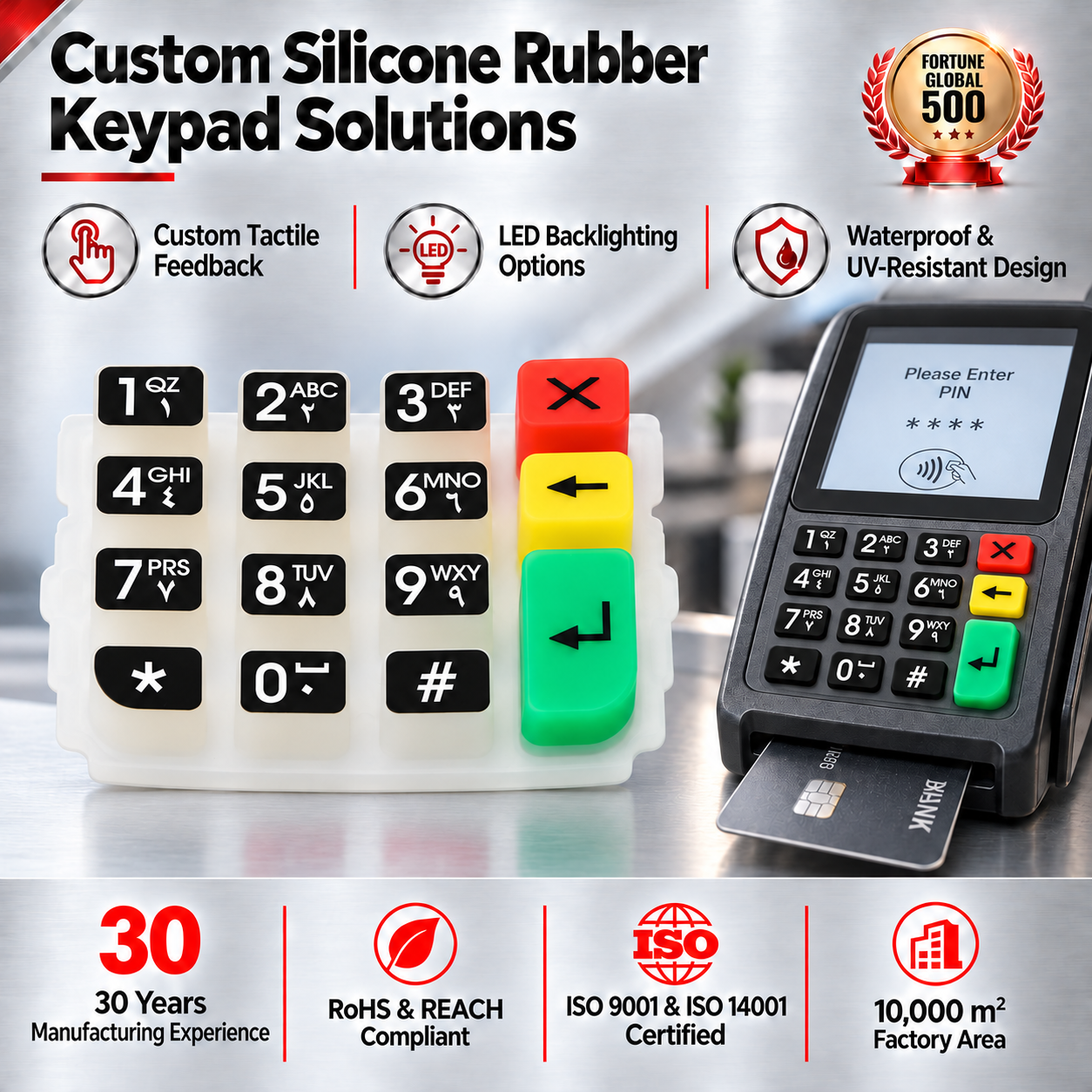
Electronic Soft Tactile Switch Silicone Rubber Button Strip
- Stroke Feel: Crisp Tactile Snap
- Base Material: Food-Grade Silicone
- Operating Temp: -40°C to +180°C
- Actuation Life: ≥ 1,000,000 Cycles
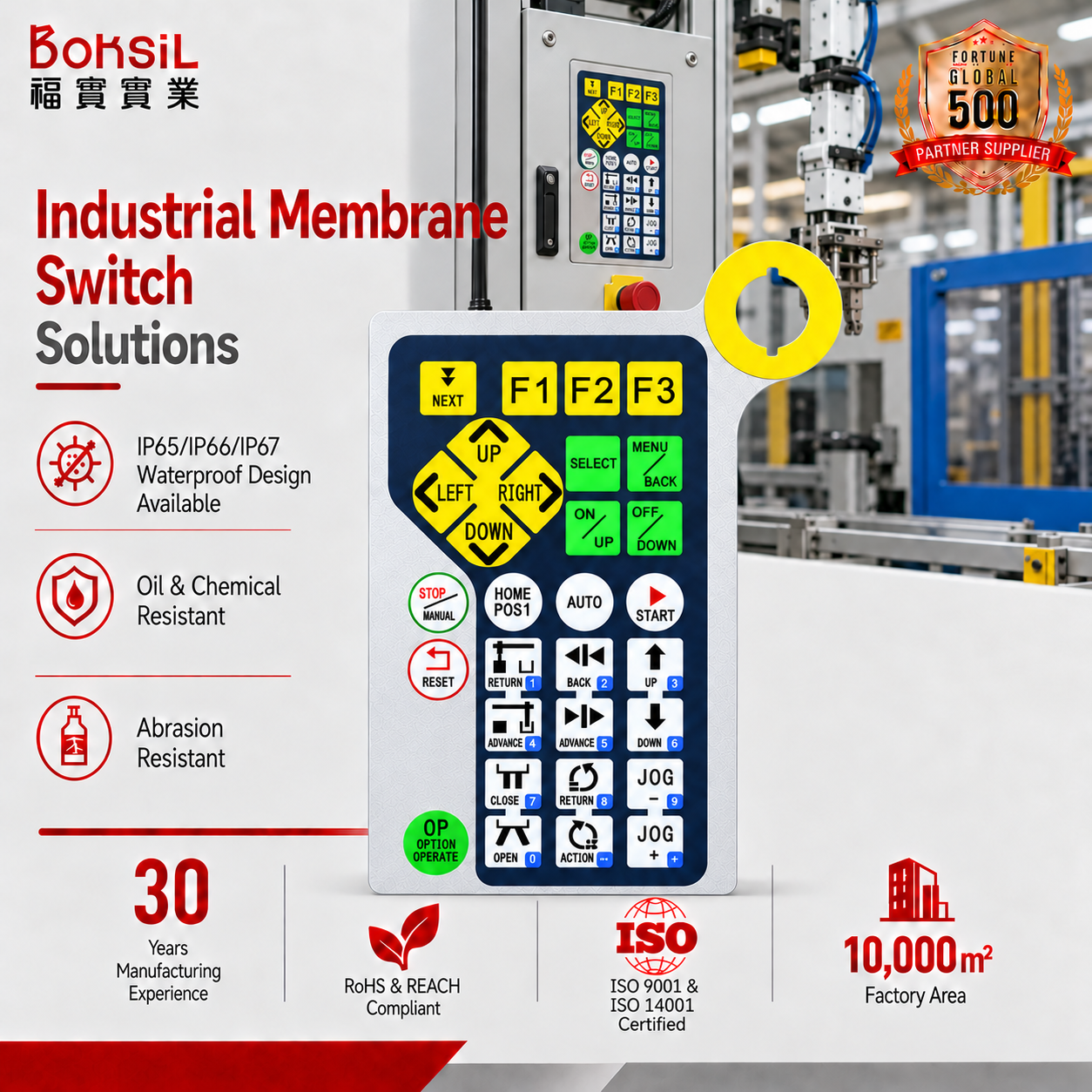
Custom Membrane Switch Sticker Graphic Overlay Panel
- Substrate: Autotex Hardcoated PET
- Circuit Layer: Conductive Silver Ink
- Chemical Shield: Alkalis & Solvents
- Tail Pitch: 1.0mm / 2.54mm FFC

IP65 Waterproof Sealed Touchpad Single-Button Panel
- Waterproof Seal: Perimeter Gasket Loop
- Switch Core: Stainless Steel Dome
- Dome Travel: 0.3mm – 0.6mm
- Bonding Tape: 3M 467MP / 468MP
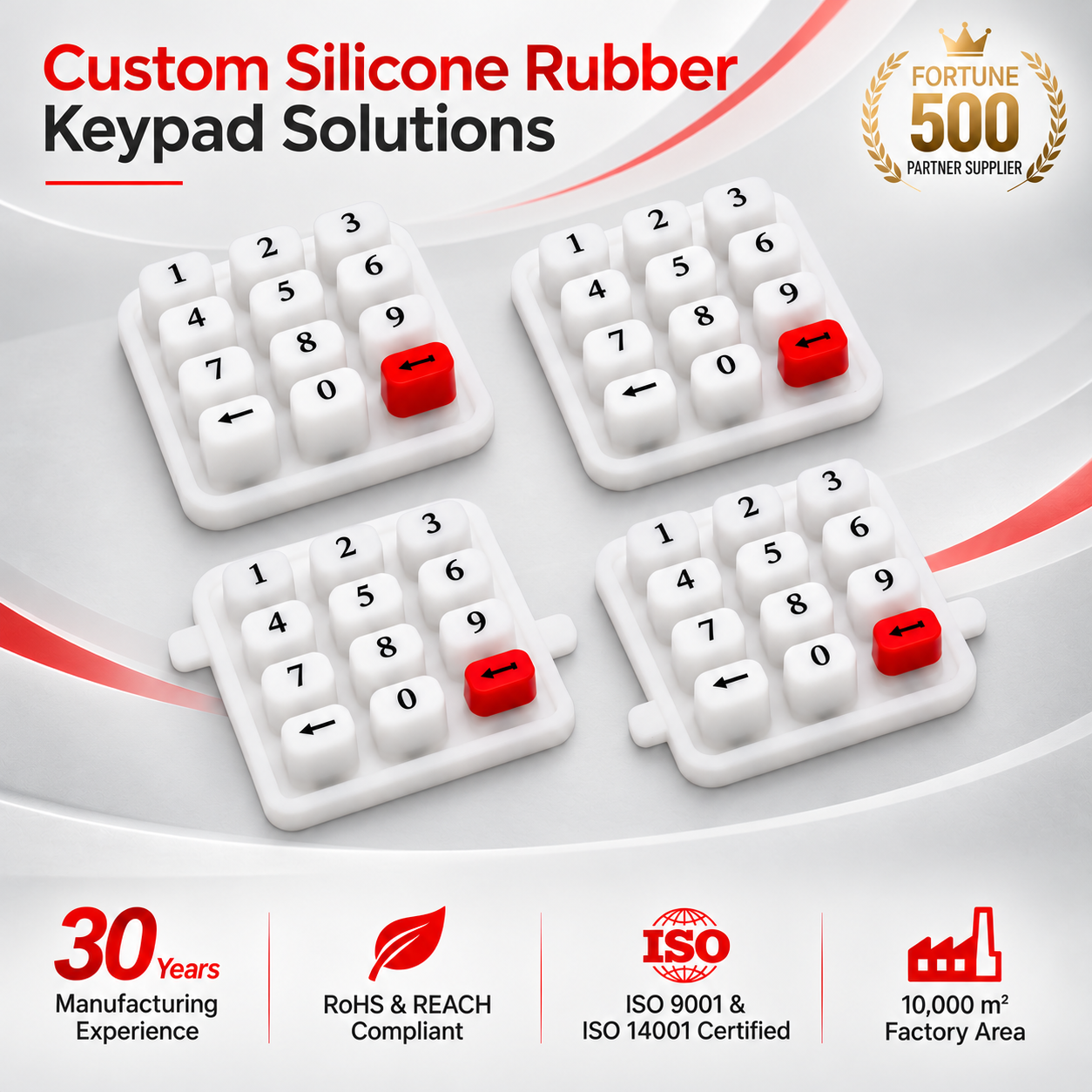
Low-Profile Epoxy Drip Silicone Rubber Custom Keypad
- Cap Treatment: Crystal Polyurethane Drop
- Wear Resistance: > 500,000 Rub Cycles
- Contact Pill: Conductive Carbon Pill
- Resistance: < 100 Ω Contact
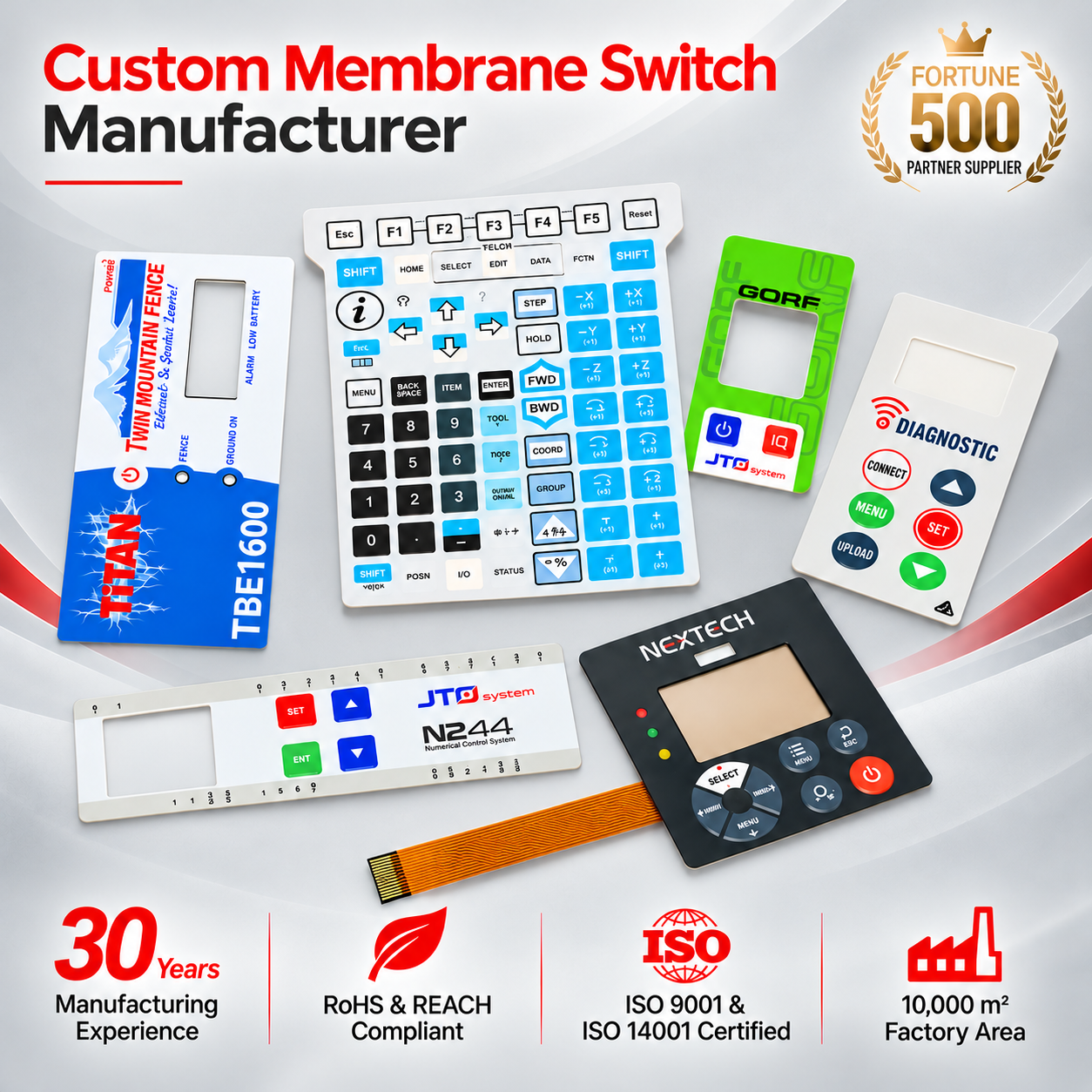
Tactile Embossed Industrial Membrane Front Faceplate
- Embossing: Rim / Pillow Thermoformed
- Window Clarity: LED Translucent Tinted
- Loop Resistance: < 50 Ω (Ag Track)
- Compliance: RoHS, REACH, CE Direct
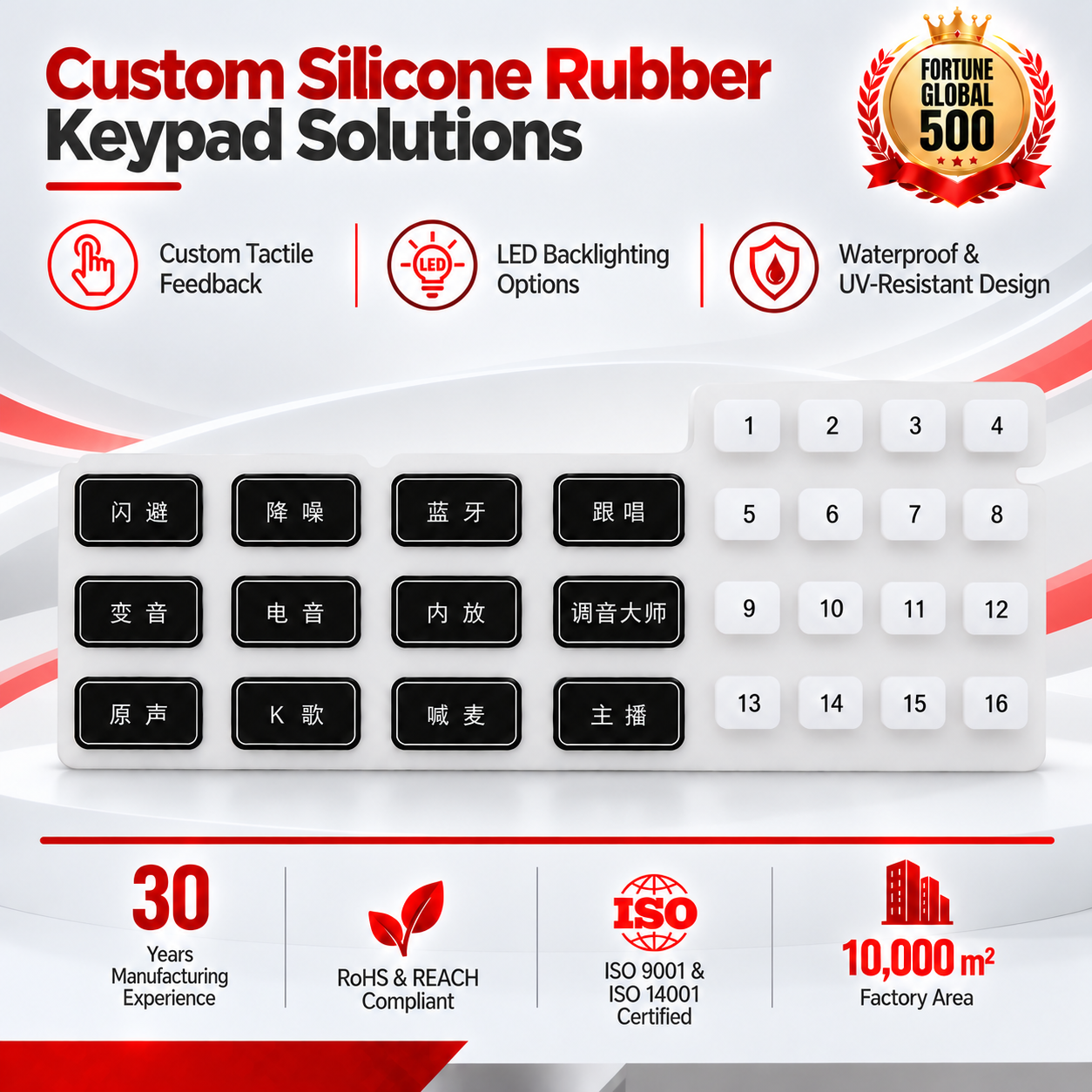
Rugged Waterproof 4x4 Matrix Silicone Numpad Keypad
- Layout: 4x4 Matrix Pin-out
- Legend Mark: Laser Etched Backlit
- Shore Hardness: 50° – 60° Shore A
- Sealing Ring: Integrated Perimeter Lip
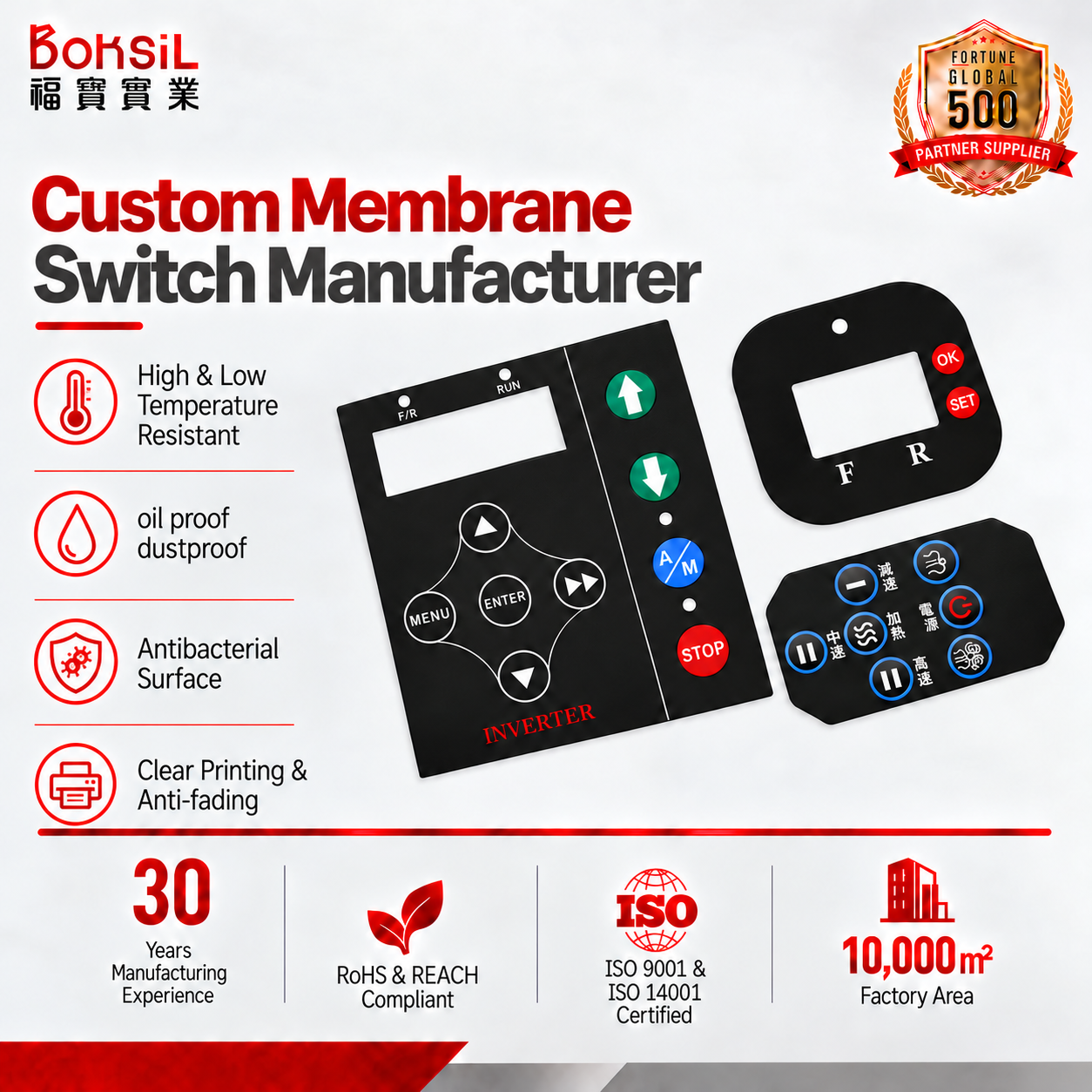
Polycarbonate Graphic Overlay Front Control Electronic Panel
- Faceplate Film: 0.18mm Lexan PC
- Print Precision: Reverse Sub-surface Silk
- Adhesive Spec: 3M 300LSE High Energy
- ESD Shielding: Aluminum Foil / Carbon Grid
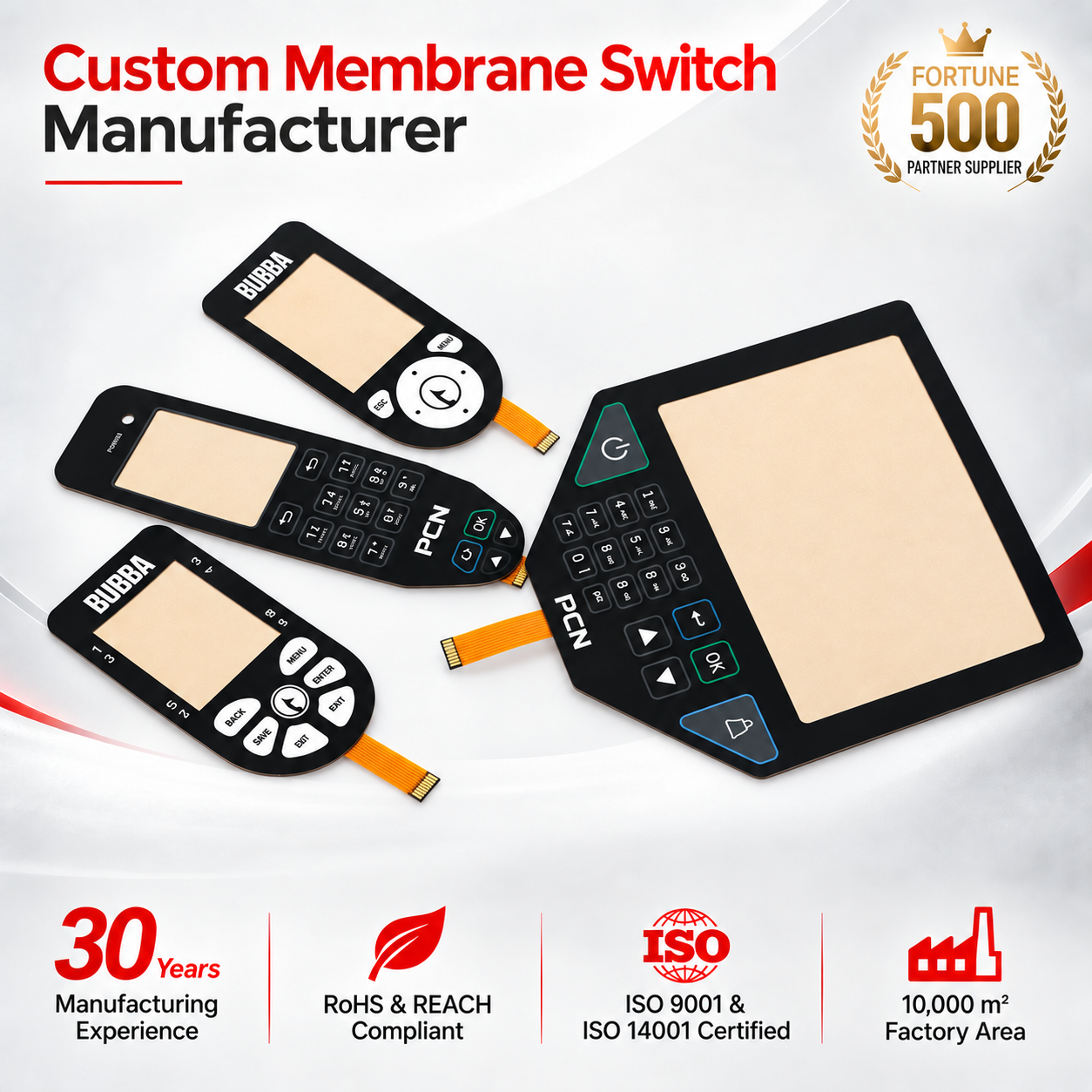
Custom 3M Adhesive Tactile Metal Dome Membrane Switch
- Metal Dome: Nickel-Plated Stainless
- Actuation Force: 280g – 350g Standard
- Contact Rating: 30V DC @ 50mA Max
- Connector: Nicomatic / Crimp Contacts
Precision Matrix Keypad Architecture: Electrical Stack-Up & Material Selection for Pristina Industrial OEM Applications
As industrial automation, electronic medical device fabrication, commercial HVAC control, and smart metering initiatives expand across the Republic of Kosovo—concentrated within the Pristina economic zone, the Drenas Industrial Park, and the Fushë Kosovë commercial corridor—hardware design engineers face mounting pressure to balance rugged environmental resilience with competitive bill-of-materials (BOM) expenditures. Matrix keypad button panels and membrane switch human-machine interfaces (HMIs) represent the primary touchpoint between industrial operators and internal microcontrollers (MCUs).
A matrix membrane switch organizes switch contacts into an intersecting grid of row traces and column traces. By leveraging dynamic matrix multiplexing (such as an $M \times N$ scanning routine driven by a microcontroller GPIO bank or dedicated keyboard encoder IC like the SX8654 or TCA8418), design teams minimize wiring harness density, reduce pin count on host microprocessors, and drive down final mechanical assembly times. However, delivering stable low-contact-resistance performance across harsh Western Balkan operational environments requires rigorous component stack-up selection, microscopic material registration, and precise tactile calibration.
FPC vs. Silver-Printed PET Traces
While screen-printed polymer thick film (PTF) silver ink on biaxially oriented polyethylene terephthalate (PET) provides an exceptionally cost-effective circuit matrix for standard commercial devices, harsh industrial controllers subject to continuous mechanical vibration or extreme humidity benefit from copper-clad Flexible Printed Circuits (FPC) with polyimide (PI) substrates. Copper FPC exhibits trace resistance below 1 Ω per trace, eliminates silver migration risks, and accommodates high-density SMD LED integration.
Actuation Force & Snap Ratio
Operator sensory feedback is governed by the snap ratio formula: Snap Ratio = (F_actuation - F_contact) / F_actuation × 100%. AXRU engineers optimize stainless steel metal dome geometries (circular, four-leg, or oblong domes ranging from 6mm to 12mm) to establish a snap ratio between 40% and 60%, delivering an unmistakable tactile "click" even through heavy neoprene work gloves commonly worn in Kosovar industrial plants.
Multi-Layer Environmental Sealing
Condensation and particulate ingress are the leading causes of premature contact degradation in continental European climates. Our engineering designs incorporate a continuous 360-degree perimeter adhesive gasket utilizing high-cohesion acrylic adhesives (such as 3M 467MP or 3M 468MP), coupled with internal breather channels vented into sealed enclosure compartments, guaranteeing IP65 or IP67 ingress protection against washdown and winter freezes.
High-Reliability Matrix Keypad Deployments Across Kosovo & Pristina Industries
From municipal infrastructure modernizations in the Pristina capital district to food-grade manufacturing plants in neighboring municipalities, our HMI panels satisfy stringent European compliance directives.
1. Commercial HVAC & District Heat Exchangers
Pristina’s municipal thermal heating upgrades and decentralized heat-pump installations demand front control panels that operate flawlessly from −25°C in deep Balkan winters to +65°C ambient plant room conditions. Our UV-stabilized, non-yellowing Autotex PET graphic overlays resist thermal degradation and internal moisture condensation.
2. Agro-Processing & Beverage Packaging Machinery
Kosovo’s expanding agro-industrial and beverage processing facilities (e.g., wine, fruit juice, and dairy processing) require washdown-grade HMIs resistant to caustics, sanitizers, and pressurized hot water spray. AXRU’s IP67 perimeter-sealed silicone elastomer membrane keypads prevent chemical ingress and maintain hygienic wipe-clean compliance.
3. Self-Service POS, Kiosks & Ticketing Terminals
Modernizing transit hubs, fuel dispensing stations, and retail ticketing kiosks in Pristina require vandal-resistant, anti-wear input panels. AXRU supplies ruggedized 4x4 matrix keypads combining embossed stainless steel faceplates, sub-surface screen printing, and tactile metal domes rated for over 3 million actuation cycles.
4. Substation Grid & Solar Inverter Monitoring
With Kosovo's transition toward solar energy farms and electrical grid digital retrofits, energy management enclosures encounter heavy electromagnetic interference (EMI). AXRU integrates vapor-deposited aluminum or printed conductive carbon-grid ESD grounding layers to dissipate static charges up to 15kV.
Comparative Material Matrix: Evaluating Substrate & Contact Configurations
| Matrix Architecture | Typical Substrate Stack | Actuation Life (Cycles) | Contact Resistance | IP Seal Rating | Best Fit Applications in Pristina |
|---|---|---|---|---|---|
| Silver Conductive PET Membrane | Autotex PET + Spacer + Ag Ink Traces | 1,000,000 to 2,000,000 | < 50 Ω (dependent on trace length) | IP65 with perimeter seal | Commercial appliances, laboratory monitors, light electronics |
| Tactile Metal Dome + FPC Circuit | Polycarbonate Overlay + Copper FPC + Ni Domes | 3,000,000 to 5,000,000 | < 1 Ω (low-power MCU direct pin) | IP67 with airtight breather | Industrial automation, power distribution, outdoor equipment |
| Molded Silicone Elastomer + Membrane | Silicone Rubber Cap + Carbon Pills / Metal Dome | 1,000,000 to 3,000,000 | < 100 Ω (carbon) / < 5 Ω (dome) | IP66 / IP67 with housing bezel | Handheld terminals, logistics scanners, agricultural machinery |
| Vandal-Proof Stainless Steel Keypad | SUS304 Faceplate + PBT Keys + Gold-plated PCB | > 5,000,000 | < 0.1 Ω | IP65 / IK08 Impact Proof | Fuel dispensers, municipal kiosks, access control turnstiles |
Navigating Procurement Channels: Direct China Factory Sourcing vs. European Intermediaries
Original Equipment Manufacturers and system integrators in Pristina traditionally sourced membrane switch components through European trading houses located in Germany, Italy, or Slovenia. While this approach provided proximity, it carried substantial markup overheads (often 40% to 70% above baseline production costs) and extended lead times due to fragmented engineering communications. As Kosovo aligns its trade policies closer with European single-market directives (CE marking, RoHS Directive 2011/65/EU, and REACH Regulation EC 1907/2006), procurement directors in Pristina are accelerating factory-direct China supply chain integration.
BOM Optimization & Tooling Amortization
By engaging directly with Dongguan AXRU Electronics Co., Ltd., hardware teams reduce upfront steel die-cutting and silk-screening tooling costs by up to 60%. Our rapid sample fabrication machine enables functional prototype testing within 5 to 7 business days, significantly compressing new product introduction (NPI) cycles.
Multimodal Logistics to Western Balkans
Flexible logistics routing guarantees uninterrupted component deliveries into Pristina. Time-sensitive prototyping batches ship via air express directly into Pristina International Airport (PRN) within 4 to 6 transit days, while volume production runs utilize combined maritime and overland transport through the Port of Thessaloniki (Greece) or Port of Durrës (Albania).
Direct Engineering DFM Reviews
Bypassing trading intermediaries eliminates lost-in-translation engineering errors. Pristina R&D teams interface directly with our in-house DFM (Design for Manufacturability) engineers, reviewing layer stack-ups, tail bend radiuses, pitch tolerance, and connector locking mating forces prior to physical tool cutting.
Dongguan AXRU Electronics Co., Ltd.: Certified Industrial HMI Manufacturing
Situated in China’s electronic manufacturing epicenter, Dongguan AXRU Electronics Co., Ltd. operates a 10,000㎡ precision manufacturing facility staffed by 121 seasoned technicians. Independently audited on-site by Intertek, we maintain full chain-of-custody manufacturing from class-1,000 cleanroom screen printing to multi-axis automated die cutting.
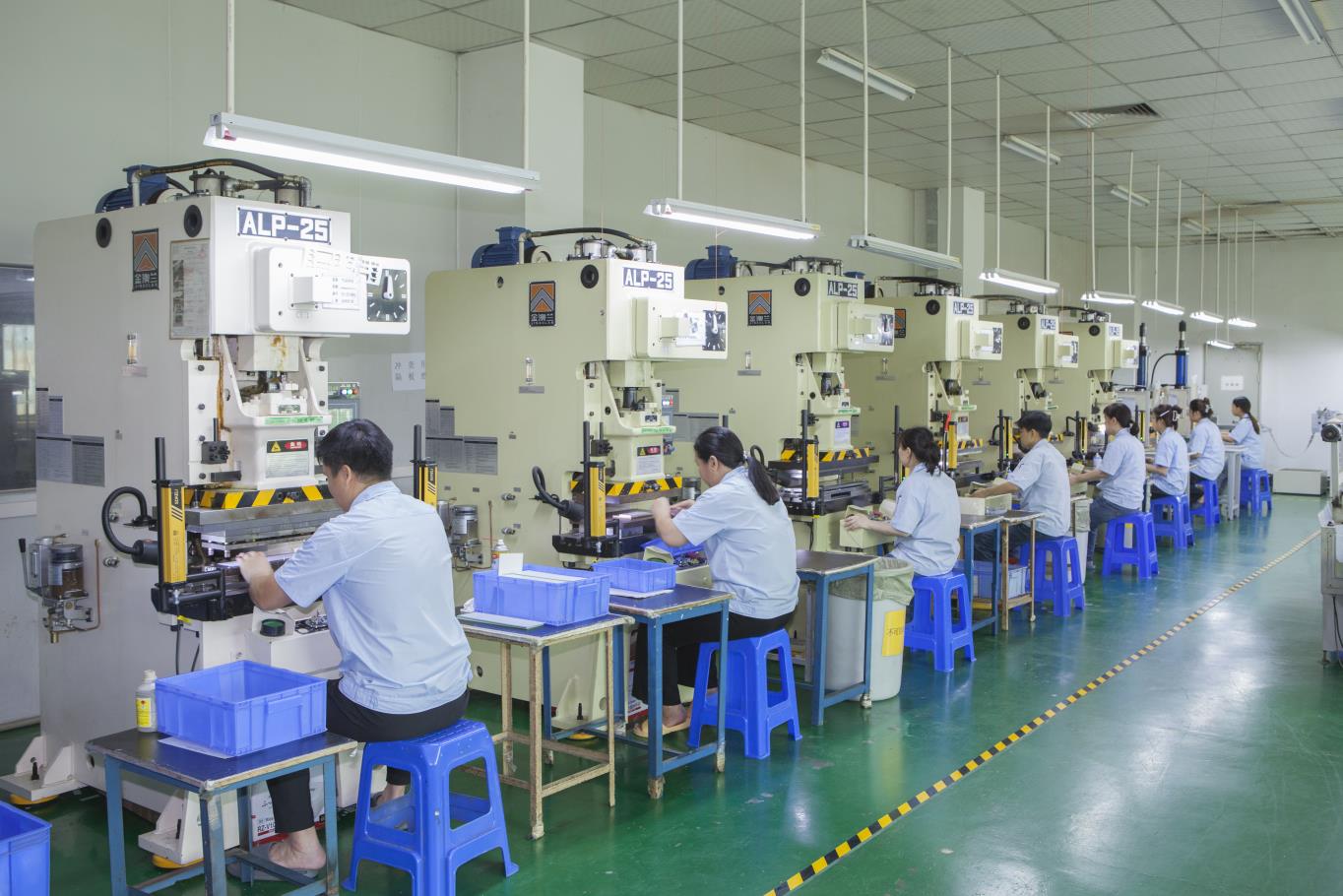
Why Pristina Equipment Builders Rely on AXRU:
- Fortune 500 Qualified Vendor: We consistently engineer and supply critical control panels for global appliance and automation brands, upholding zero-defect Six Sigma methodologies.
- Total In-House Fabrication: No subcontracted printing or lamination. Graphic artwork screen printing, silver circuit deposition, metal dome pick-and-place, and final optical inspection occur under one roof.
- Low Prototype Threshold (MOQ 100 Pcs): We actively support startup pilot runs, research institute designs, and high-mix low-volume industrial equipment runs without onerous volume penalties.
Internal Testing & Reliability Verification Lab
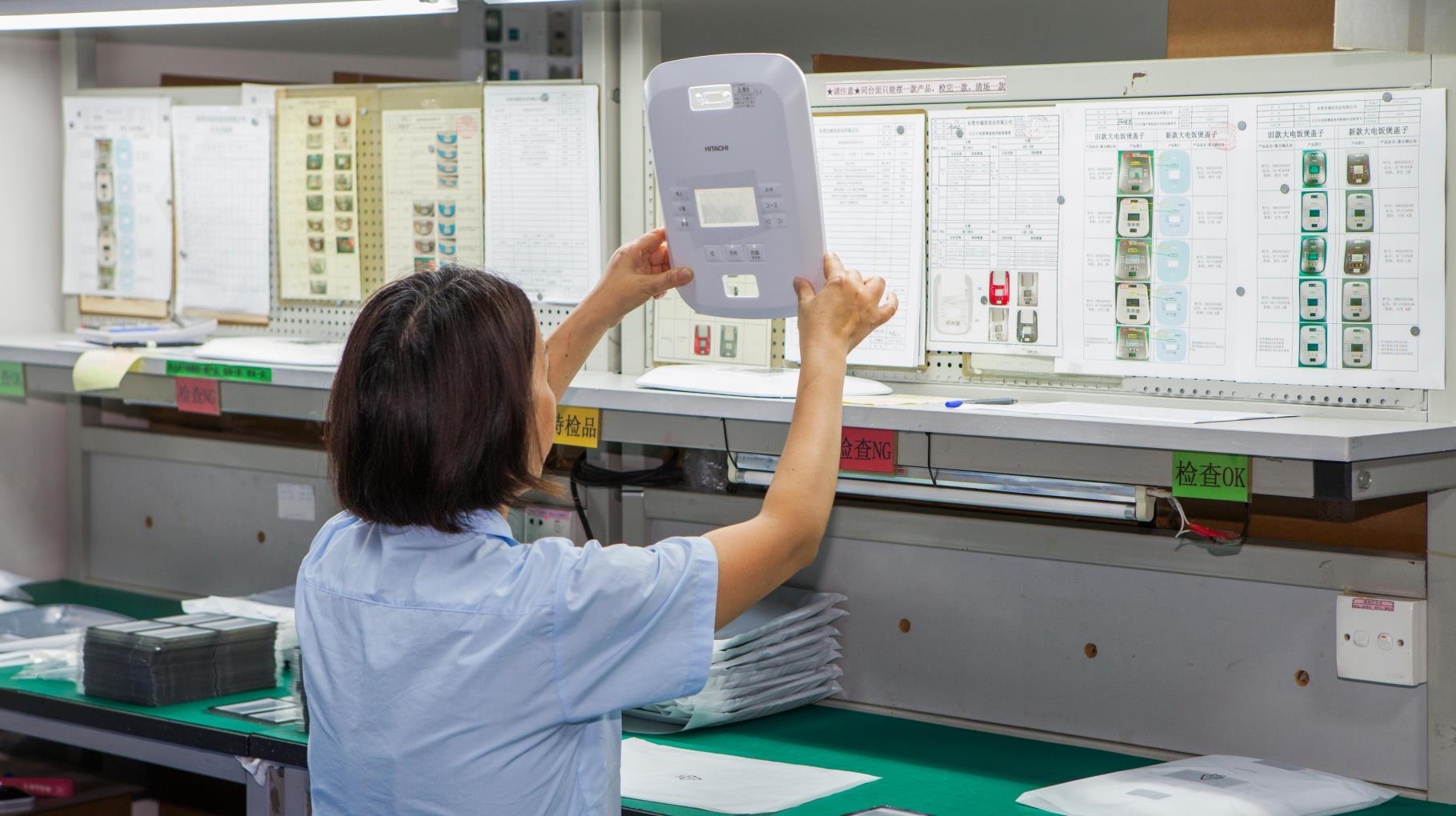
100% Electrical Inspection
Every switch matrix is probed for line continuity, micro-shorts, insulation isolation, and LED forward voltage.
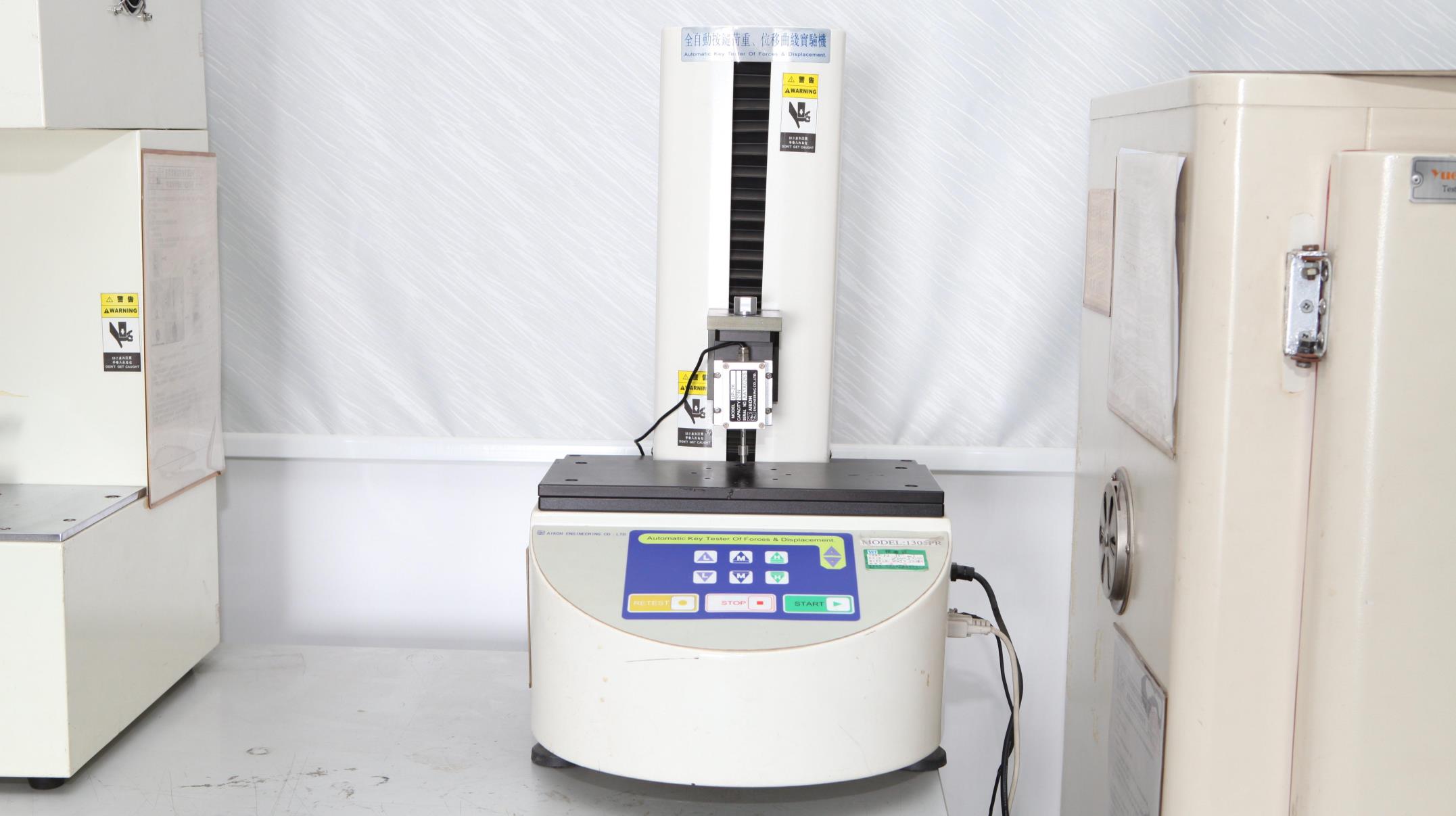
Force & Displacement Tester
High-resolution load cells record dynamic tactile curves, dome actuation gram-force, and physical travel depth.
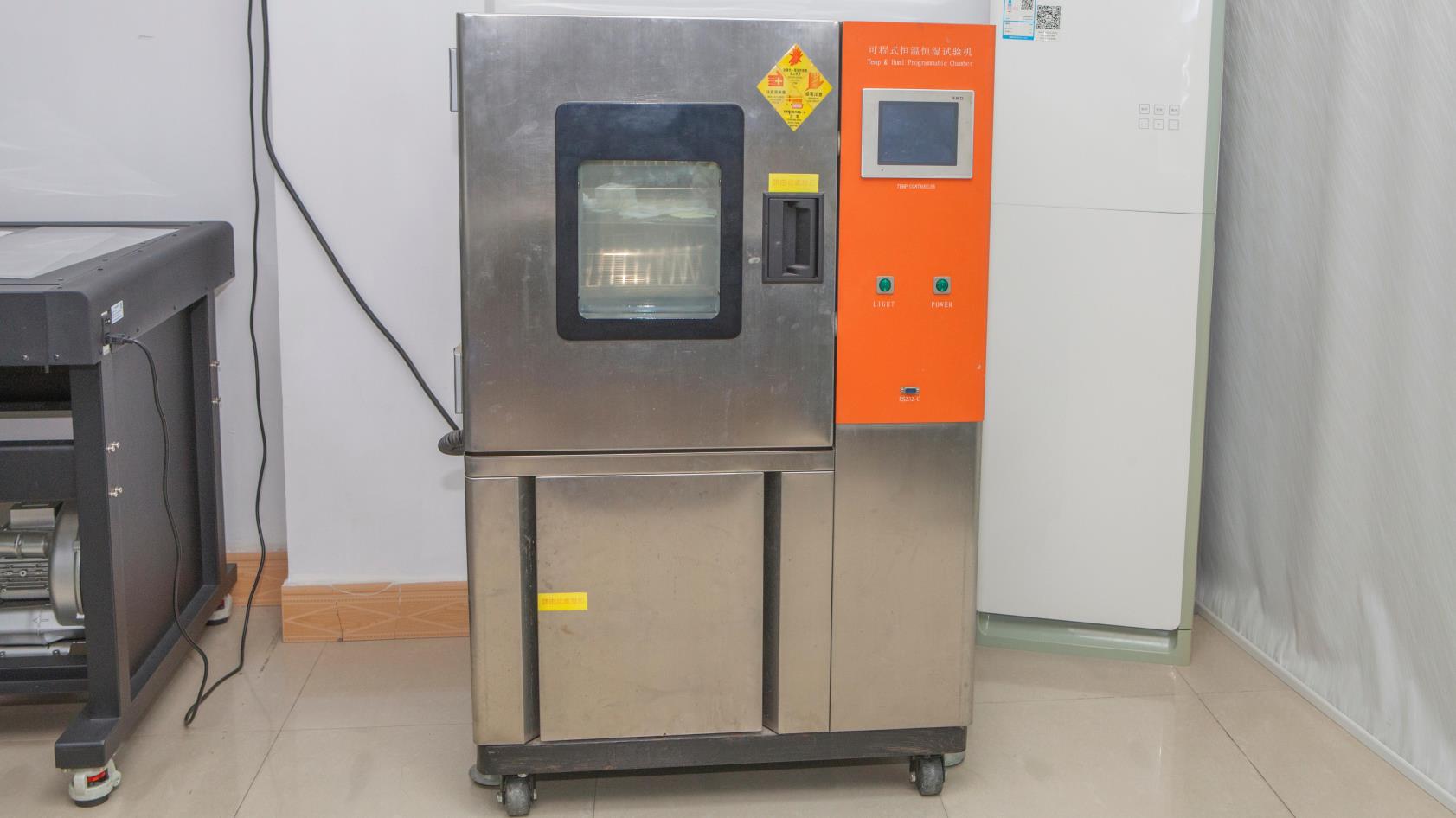
Thermal & Humidity Chamber
Subjecting sample panels to −40°C to +85°C cycling and 95% RH to validate adhesive peel strength and anti-delamination integrity.
Frequently Asked Questions: Sourcing Matrix Keypads from China to Pristina
Our standard production MOQ for custom matrix membrane switches, silicone keypads, and graphic overlays begins at just 100 units. Before full batch fabrication, we supply complete First Article Inspection (FAI) engineering prototypes for physical fitment, pinout confirmation, and tactile validation in your Pristina testing laboratories.
To quote within 24 hours, our engineering office requires mechanical drawings in DXF, DWG, or STEP format detailing window cutouts, overall dimensions, tail routing, and connector specifications. Graphic overlays should be provided in Adobe Illustrator (AI), vector PDF, or CorelDraw with explicit Pantone (PMS) or RAL color notations.
We engineer continuous perimeter adhesive borders utilizing 3M 200MP/300LSE adhesive series devoid of cutouts along the external boundary. Breather vents are directed internally through the multi-conductor tail exit into the client's sealed housing enclosure, completely preventing external liquid and moisture pull during winter thermal contractions down to −25°C.
Yes. We regularly embed ultra-thin 0603 or 0805 miniature bi-color and single-color surface-mount LEDs directly onto the conductive circuit layer. Display windows for seven-segment LED readouts, TFT LCDs, or OLED indicators can be configured with crystal-clear high-gloss transparency, anti-glare matte treatments, or specialized dead-front selective printing.
Every shipment to Pristina includes comprehensive material compliance certifications: formal Certificates of Conformance (CoC), RoHS 3 Directive compliance reports, REACH SVHC declarations, and batch-specific electrical continuity test logs. We also supply custom commercial invoices, packing lists, and EUR.1 origin documentation where applicable.
To safeguard connected microcontrollers from static discharge generated by human touch in dry winter heating environments, we integrate an intermediate aluminum foil or conductive printed carbon grid shielding layer positioned between the graphic overlay and upper circuit. This layer routes static charges up to 15kV directly to chassis ground via a dedicated tail pin.
Accelerate Your Pristina HMI Project with Direct Engineering Consultation
Submit your DXF/CAD blueprints, sample sketches, or technical stack-up requirements directly to our senior engineering desk. We provide formal Design for Manufacturability (DFM) reviews and itemized factory-direct quotations within 24 hours.