Engineered Thin-Film & Silicone Control Assemblies
High-cycle, low-profile human-machine interfaces built with multi-layer environmental sealing, conductive screen-printed circuits, and customized actuation mechanics.
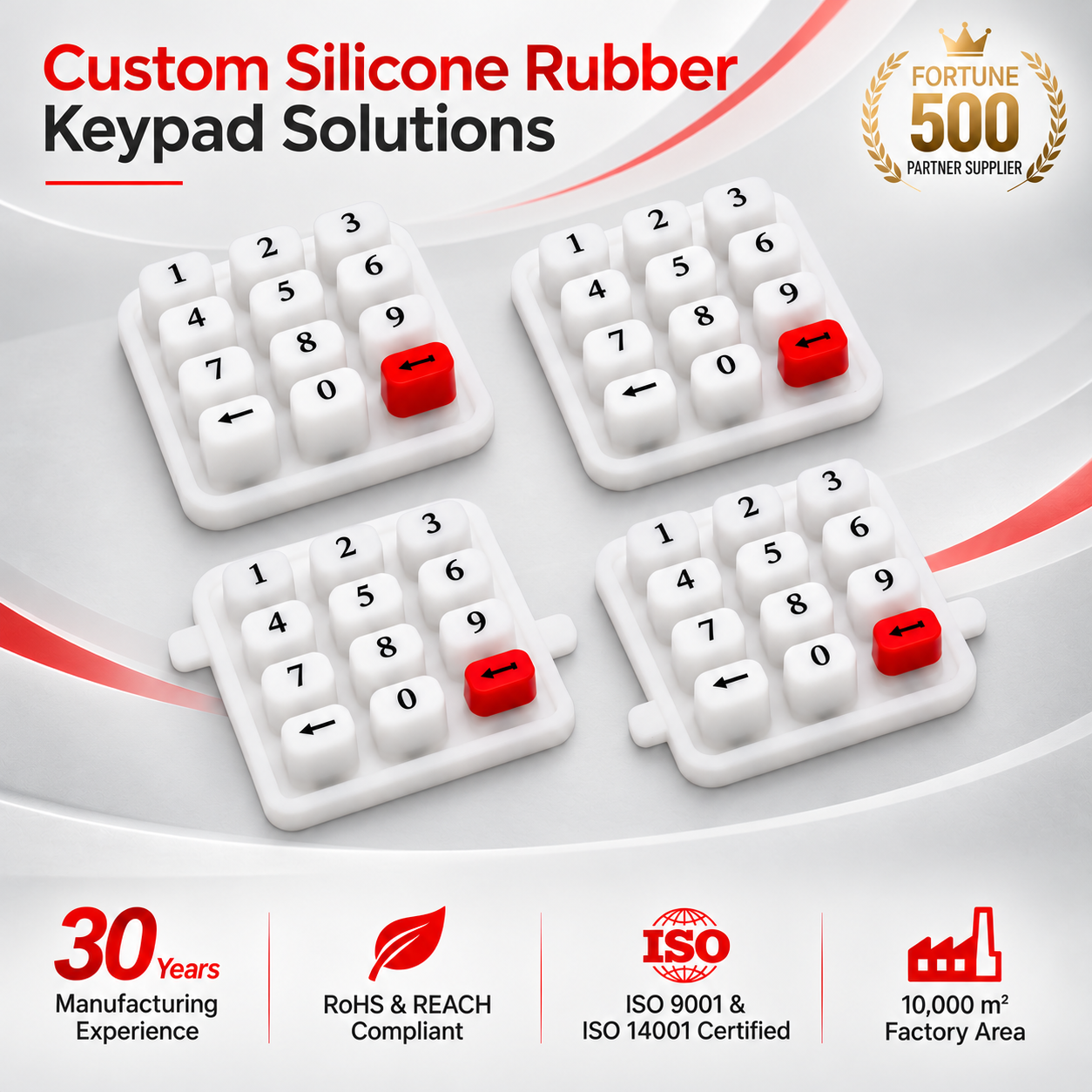
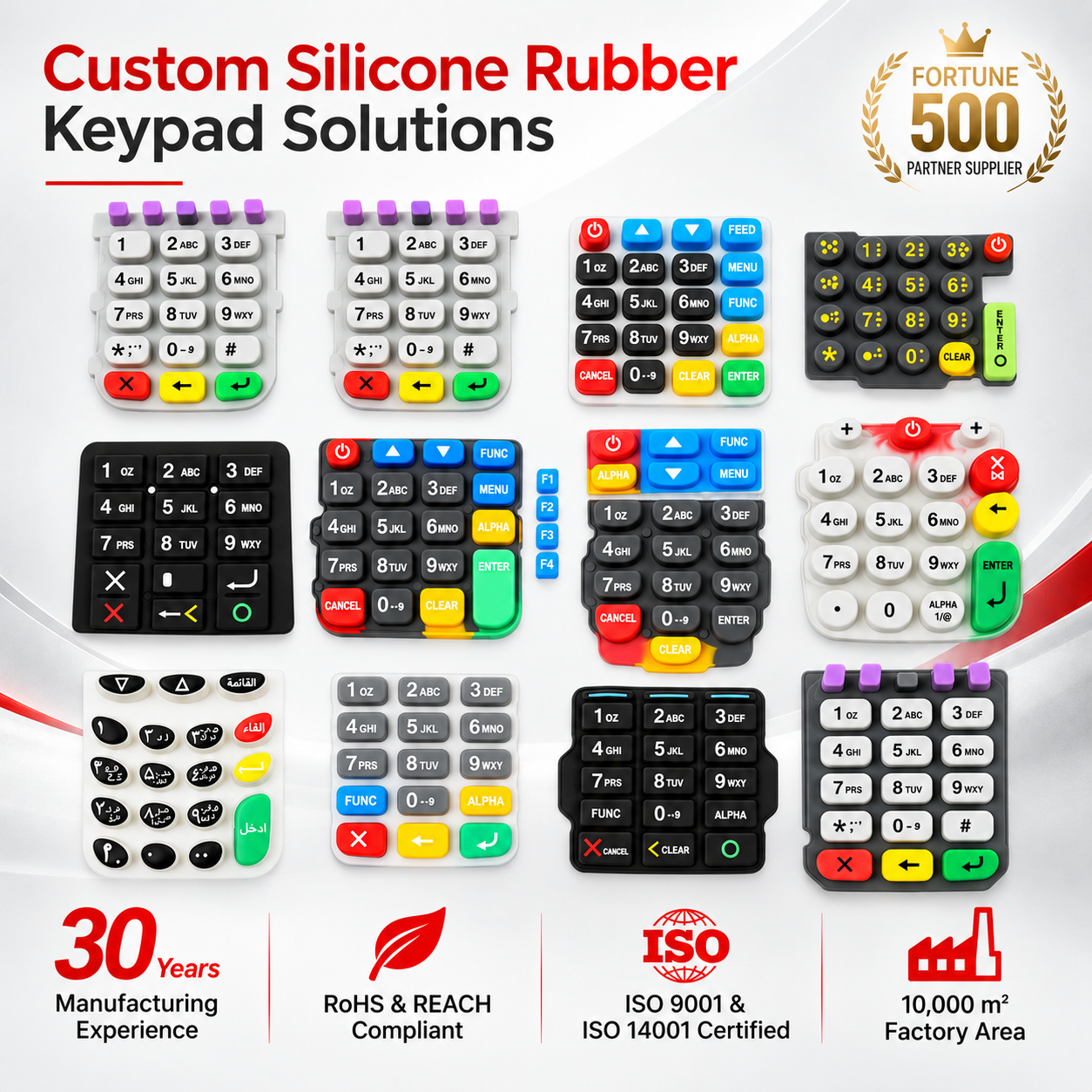
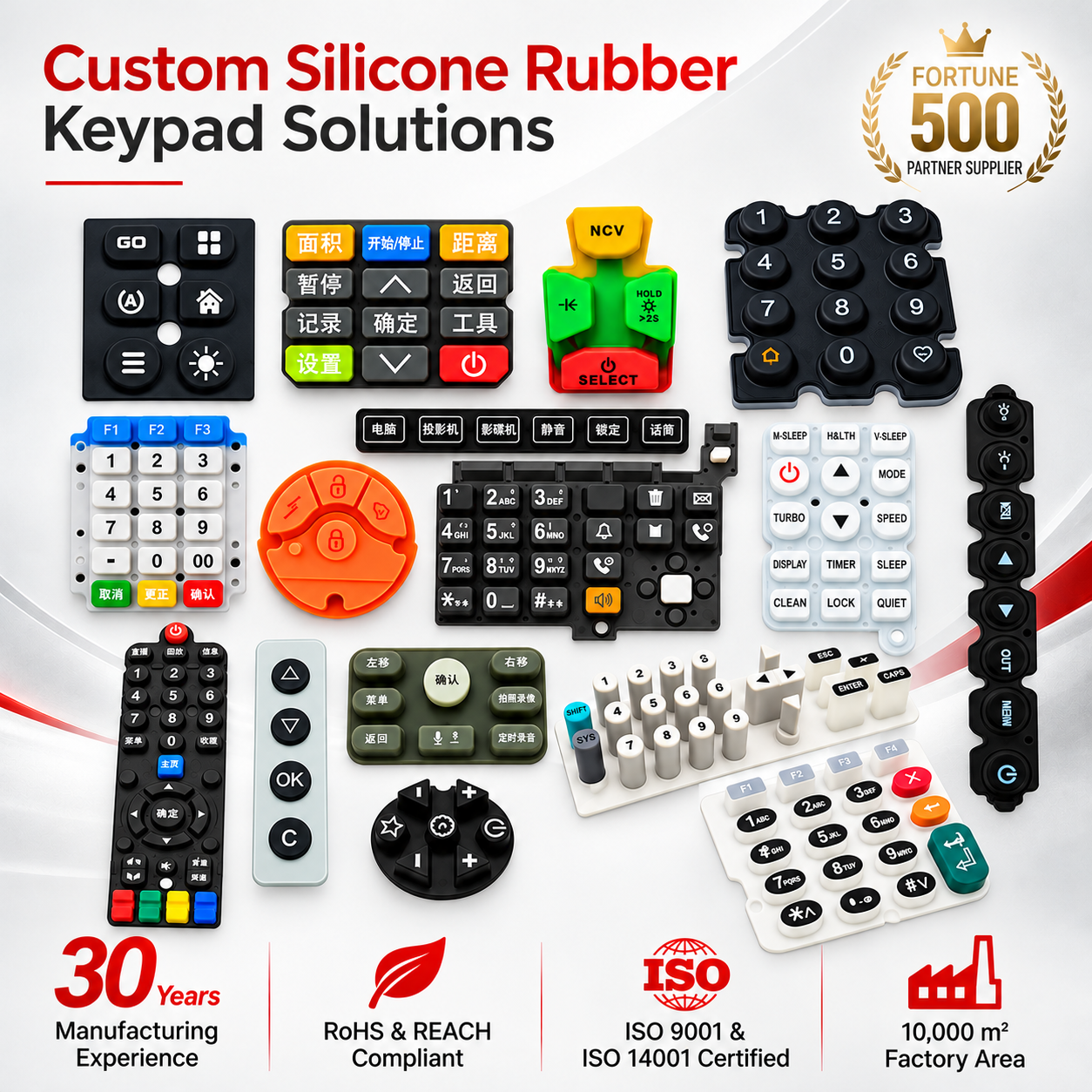
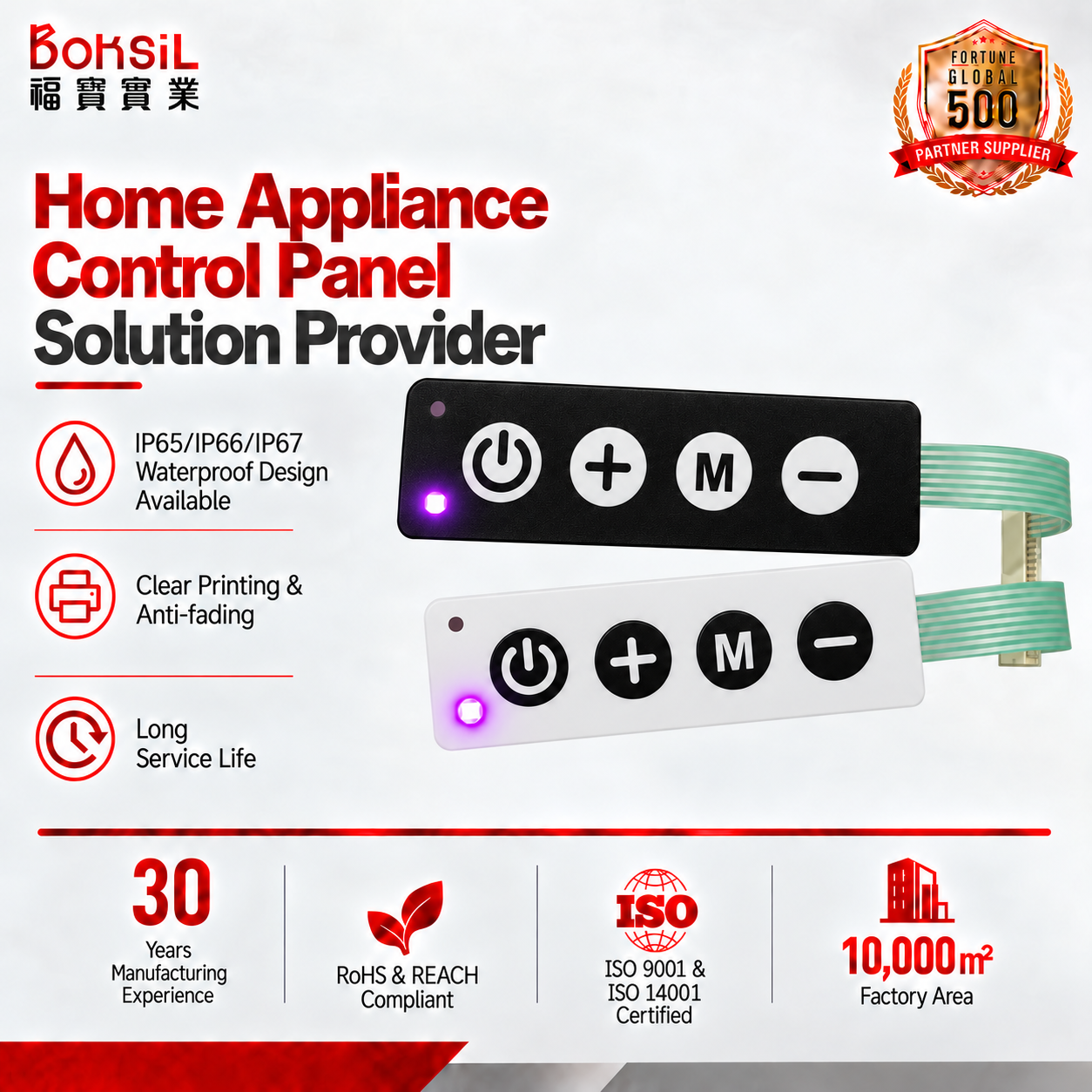
Flat Membrane Switches vs. Mechanical Control Consoles
A comprehensive architectural comparison demonstrating why industrial engineers in Puebla, Mexico are upgrading legacy electromechanical controls to flat membrane stacks.
Hermetic Surface Ingress Protection
Flat membrane panels utilize continuous, non-porous Autotex® polyester or Lexan® polycarbonate graphic skins laminated with 3M™ 467MP/468MP high-tack acrylic adhesives. Unlike mechanical switches that create openings for dust, water, lubricants, and particulate ingress, flat switches create a closed IP65/IP67/NEMA 4X front barrier suitable for chemical washdown.
Low-Profile Space Optimization
With an ultrathin stack-up profile ranging between 0.8mm and 1.5mm, flat membrane keypads eliminate heavy behind-panel enclosures, bulky contact blocks, and soldered wiring harnesses. This allows tier-one equipment builders in Puebla to integrate interactive interfaces into slim handheld testing devices and compact automotive dash assemblies.
EMI/RFI & ESD Shielding Integrity
Industrial machinery generates severe electromagnetic noise. Our advanced flat membrane circuits integrate full-coverage printed aluminum foil, copper mesh, or selective carbon grid layers grounded through dedicated tail pins, safeguarding sensitive microcontrollers against electrostatic discharge up to 15kV.
For systems engineers and purchasing managers in Puebla, selecting a human-machine interface (HMI) manufacturer requires evaluating total cost of ownership, long-term environmental endurance, and design versatility. Flat membrane switches represent an evolutionary leap beyond mechanical switches: they consist of multiple layers bonded together by industrial-grade pressure-sensitive adhesives, creating a monocoque, fully sealed input module. Because the switch contacts are protected inside a hermetic pocket, moisture, atmospheric oxidation, airborne oil mists, and industrial dust cannot corrode the conductive traces.
Architectural Layer Stack-up Specifications
A precision-manufactured flat membrane switch involves an engineered sequence of sub-surface printed polyester films, conductive interconnects, and adhesive spacers. The table below delineates the multi-layer composition standard in our Dongguan manufacturing cleanrooms:
| Layer Component | Material Standard | Thickness Specification | Key Functional Advantage |
|---|---|---|---|
| 1. Graphic Overlay | Autotex® PET / Sabic Lexan® PC / PMMA | 0.125mm – 0.25mm | Sub-surface silk screening prevents graphics scratching; chemical resistance against industrial solvents. |
| 2. Overlay Adhesive | 3M™ 467MP / 3M™ 468MP Acrylic Adhesive | 0.05mm – 0.13mm | High shear strength; seals against edge moisture penetration across -40°C to +105°C. |
| 3. Retainer / Dome Retainer | Heat-stabilized Mylar® Polyester | 0.075mm – 0.125mm | Holds stainless steel tactile domes precisely aligned over conductive contact pads. |
| 4. Tactile Actuator (Optional) | Nickel/Gold-Plated Stainless Steel Domes | Dia: 6mm – 20mm (Tripod/Four-Leg) | Sharp tactile click feedback; actuation force calibrated between 180g and 500g. |
| 5. Spacer Layer | Double-Coated Polyester with Die-Cut Vents | 0.125mm – 0.25mm | Establishes contact gap; custom breathing channels prevent internal pressure lock at elevated altitudes. |
| 6. Circuit Layer | Silver Conductive Ink on PET / Polyimide Copper FPC | 0.075mm – 0.125mm | Trace resistance <1.0 Ω/cm; supports surface-mounted LEDs, optical light guides, and resistors. |
| 7. Rear Mount Adhesive | 3M™ 300LSE / 3M™ VHB™ High Strength Tape | 0.13mm – 0.50mm | Bonds securely to powder-coated steel, cast aluminum, ABS, or polypropylene enclosures. |
Localization Context: Supplying Puebla's Advanced Manufacturing Hub
How Dongguan AXRU Electronics aligns supply chain mechanics, technical compliance, and rapid tooling iterations with Puebla's primary industrial zones.
The state of Puebla stands as one of Latin America's preeminent engineering epicenters. From the massive automotive assembly complexes in San José Chiapa and Cuautlancingo to the burgeoning agro-industrial and medical tech operations across Huejotzingo and the Parque Industrial Puebla 2000, local plant managers demand HMI switch assemblies capable of withstanding rigorous operational realities.
Automotive Tier-1 & Tier-2 Line Controls
Puebla's automotive cluster requires production floor interfaces that resist grease, hydraulic cutting fluids, and aggressive cleaning chemicals. Our reverse-printed polyester overlays prevent legend fading under repeated solvent wipe-downs, while our automotive-grade backlit silicone panels integrate seamlessly into vehicle dashboard instrumentation and diagnostic calibration consoles.
Food & Beverage Bottling Line Keypads
With major food processing, beverage bottling, and textile facilities operating along the Atoyac basin, washdown resilience is paramount. Standard mechanical buttons short-circuit when subjected to pressurized water. Our perimeter-sealed, IP67-certified membrane panels provide an impervious barrier that protects internal electronics against high-humidity wash cycles.
Altitude & Thermal Pressure Management
Situated at an average elevation of 2,135 meters (over 7,000 feet) above sea level, Puebla experiences atmospheric pressure variables that cause poorly designed sealed membrane switches to pillow or bubble. AXRU engineers design custom internal labyrinth venting paths that equalize pressure differentials between sea-level manufacturing and high-altitude Puebla operation.
Key Trends Shaping HMI Procurement in Mexico
As Mexico solidifies its position as a global nearshoring leader under USMCA trade protocols, procurement managers in Puebla are transitioning from generic off-the-shelf components to bespoke, highly integrated human-machine interfaces. Three major technological vectors define this shift:
1. Convergence of Capacitive Touch and Tactile Membrane Architecture: Modern industrial machinery increasingly requires the sleek aesthetic of smartphone capacitive touch screens combined with the unmistakable physical actuation safety of tactile metal domes. AXRU delivers hybrid assemblies featuring hard-coated PMMA or Gorilla Glass front panels equipped with projected capacitive (PCAP) sensing for variable settings, alongside embossed snap-dome tactile perimeter keys for emergency stop and reset functions.
2. Embedded Illumination and Light Guide Film (LGF) Integration: Gone are the days of bulky, single-point incandescent panel indicators. Contemporary HMI designs demand uniform, energy-efficient backlighting. By integrating ultra-thin 0.125mm Light Guide Films (LGF) and side-firing micro-SMD LEDs directly within the switch stack, our factory achieves crisp, edge-to-edge illumination across legends, status rings, and dead-front graphic zones, reducing power consumption while improving dark-environment ergonomics.
3. Transition from Silver Screened PET to Ultra-Reliable Copper Flex (FPC): While silver conductive ink on polyester remains the standard for cost-effective applications, demanding automotive and aerospace-adjacent plants in Puebla are specifying Flexible Printed Circuits (FPC). Copper-clad polyimide circuits deliver trace resistance close to zero, withstand extreme continuous thermal swings from -40°C to +125°C, and permit the reflow soldering of active surface-mount components, buzzers, and micro-controllers directly onto the flexible switch tail.
Intertek-Verified Factory Capabilities
10,000㎡ vertically integrated manufacturing campus in Dongguan, China — providing direct OEM engineering accountability without trading company intermediaries.
100% In-House Production
From Class 1,000 / Class 10,000 cleanroom silk screening, automatic circuit printing, and SMD component placement to laser cutting and precision die-cutting, we eliminate subcontracting risks to maintain strict quality trace records.
Rigorous Reliability Lab
Every batch undergoes testing in our on-site laboratory: automated key life testers (5M+ strokes), force-displacement curve analyzers, programmable temperature/humidity chambers (-50°C to +150°C), and ink rub abrasion testers.
Fortune 500 Supply Chain Compliance
Audited and verified on-site by Intertek. We serve top-tier international brands with complete PPAP documentation, First Article Inspection (FAI) reports, RoHS, REACH, and UL-certified raw material certifications.
Low MOQ & Rapid Prototyping
We respect engineering development cycles. Our dedicated rapid-prototyping sample cell can deliver custom membrane switch and silicone keypad prototypes in as fast as 5–7 business days, with production runs starting from just 100 pieces.
Global Logistics Efficiency
Experienced in high-speed DDP/DAP shipments directly to Puebla, Mexico City, Monterrey, and Guadalajara via air express (DHL/FedEx/UPS 4-6 business days) or sea freight container routing via Manzanillo and Veracruz ports.
Direct Engineering Support
Collaborate directly with our HMI stack-up engineers. We review your CAD, DXF, and Gerber files to optimize tactile snap ratios, connector pitch, tail escape paths, and electrostatic shielding prior to hard tooling.
Frequently Asked Questions by Puebla Buyers
Direct answers addressing technical trade, logistics, and quality assurance questions when sourcing custom membrane switches from China.