Industrial Product Portfolio
High-Durability Interface Components for Central European OEMs
Explore eight core configurations certified for rigorous environments, featuring high tensile stability, hermetic edge sealing, and verified metal-dome feedback.
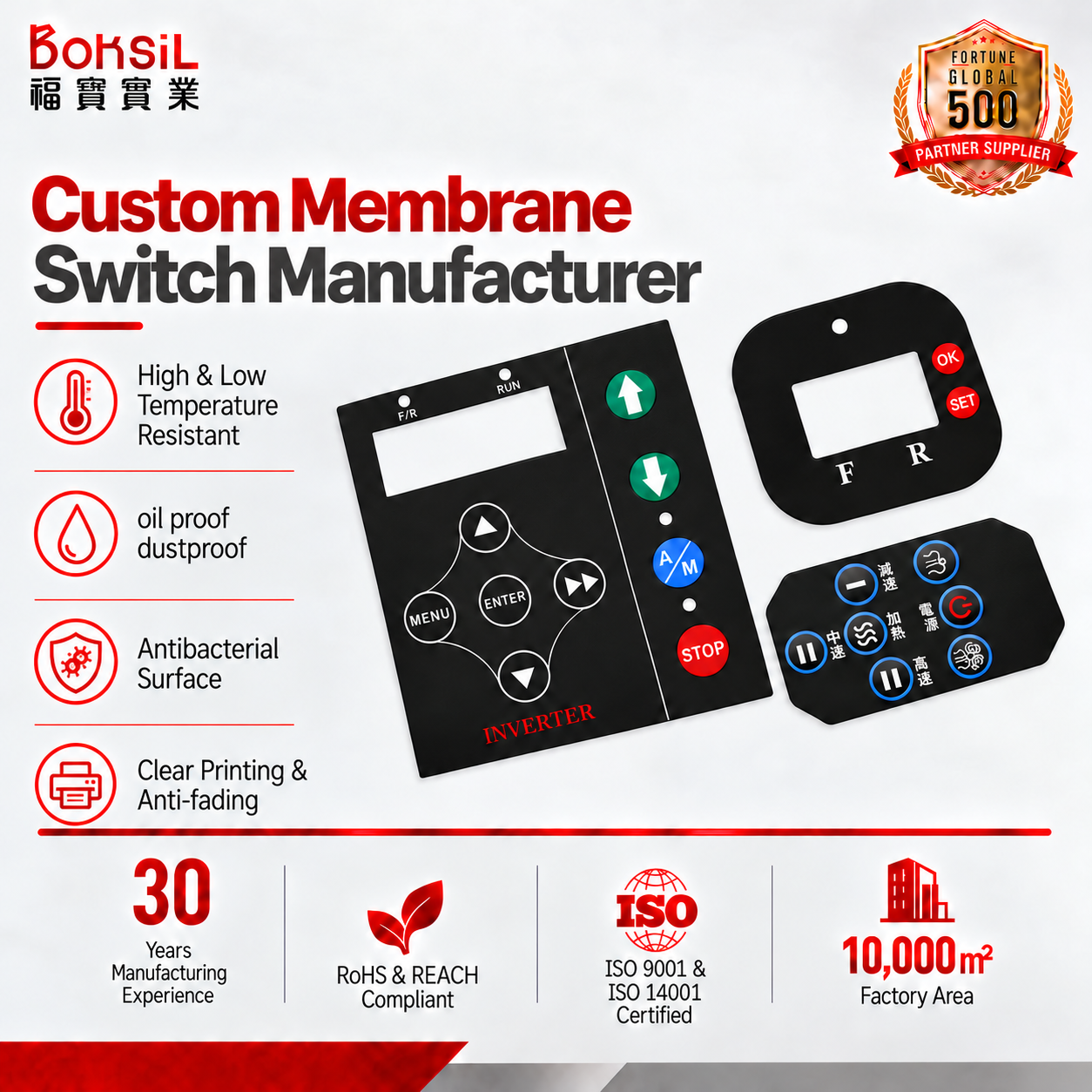
OEM/ODM Factory Front Control Polycarbonate Membrane Switch
Technical Details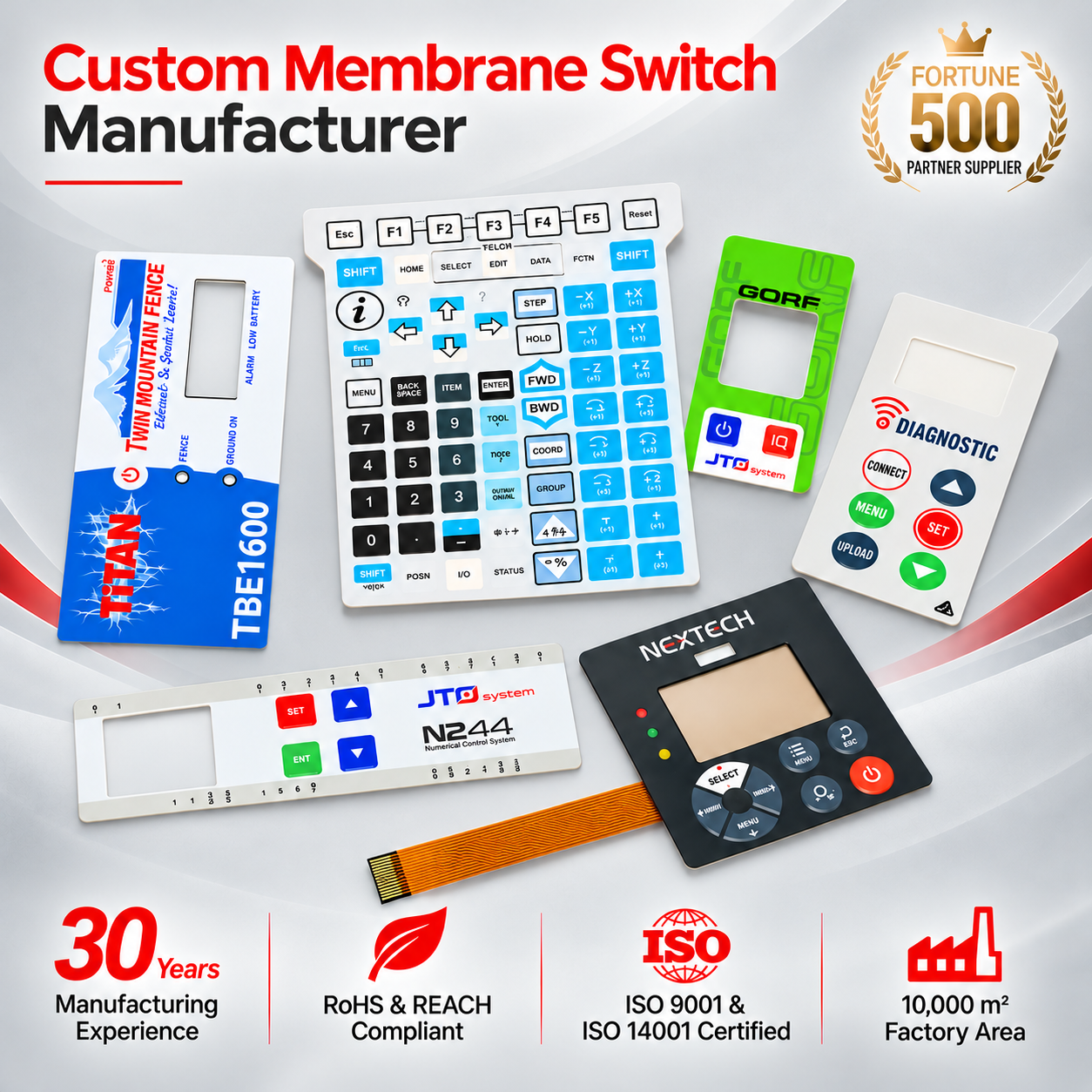
Factory Direct Embossed Button Flat Industrial PET Membrane Panel
Technical Details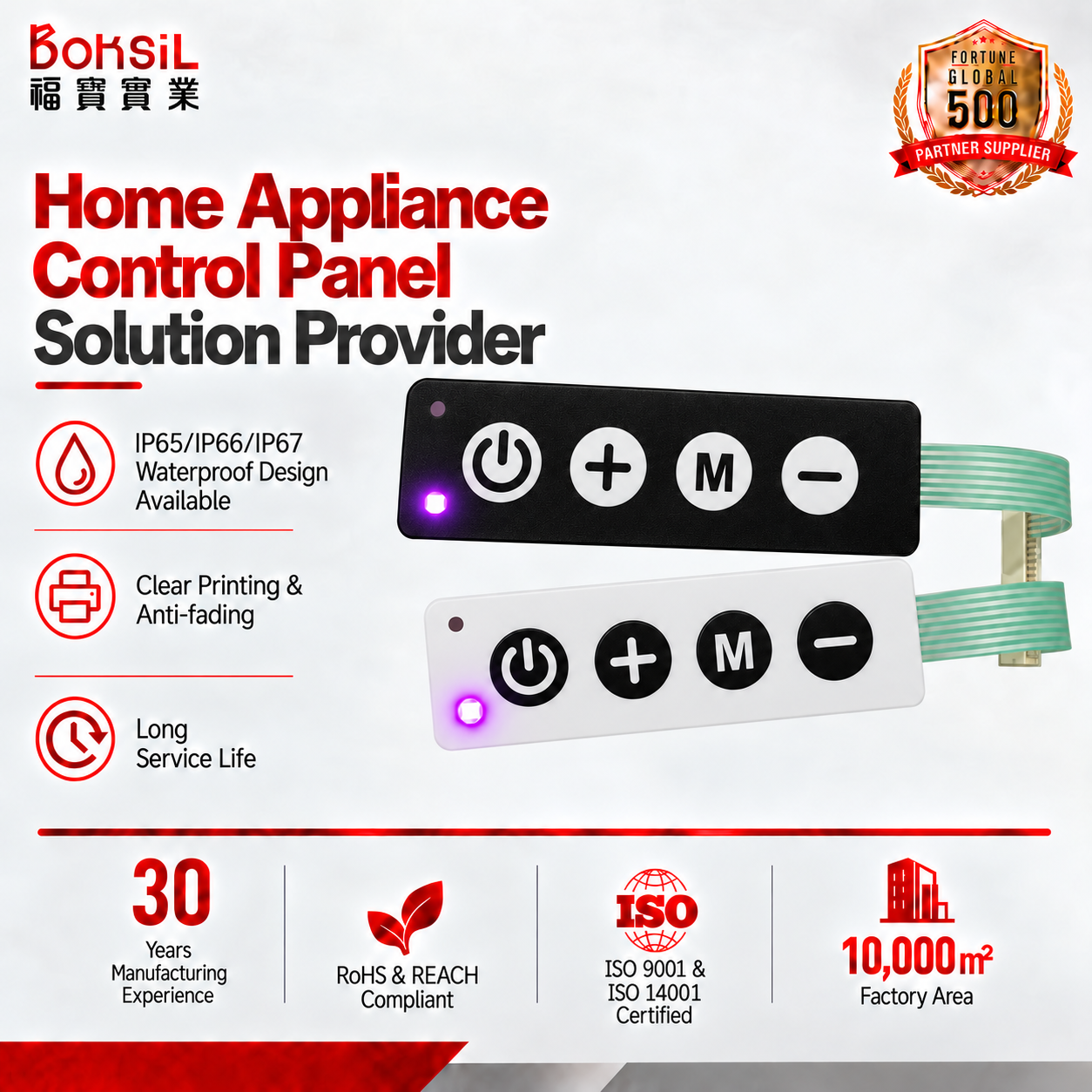
4-Button LED Lights Metal Domes Tactile Membrane Switch Panel
Technical Details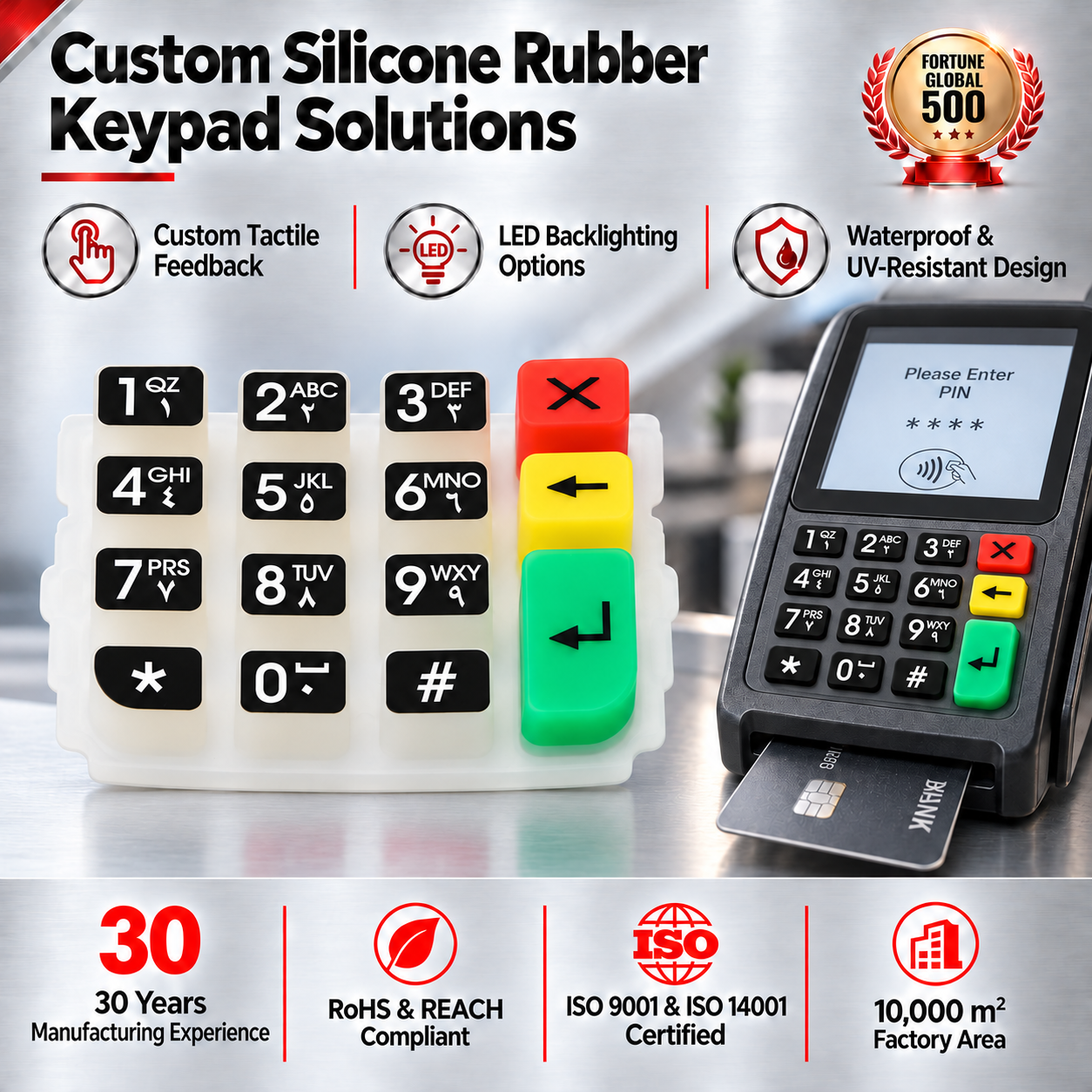
Electronic Soft Tactile Plastic Silicone Keypad Contact Strip
Technical Details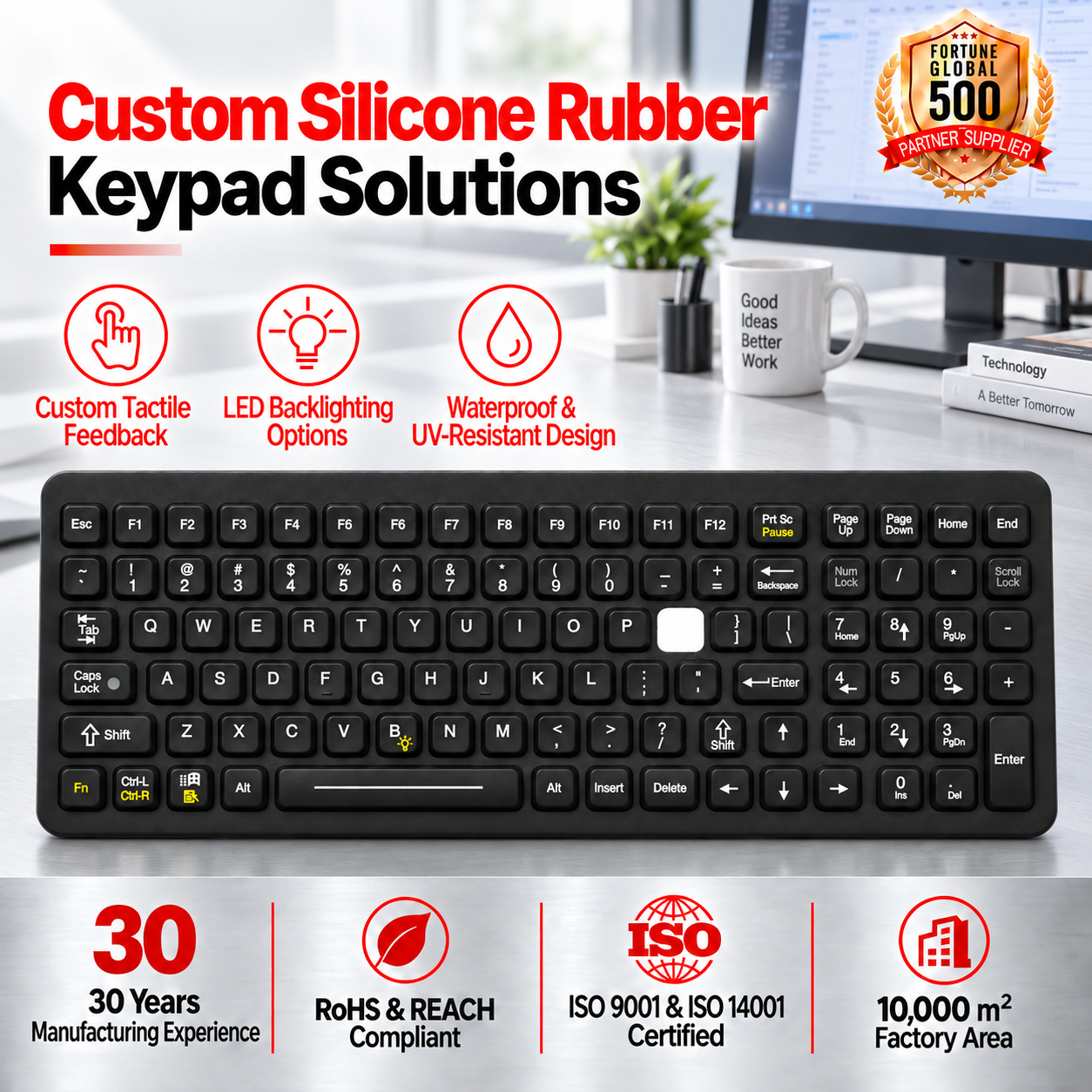
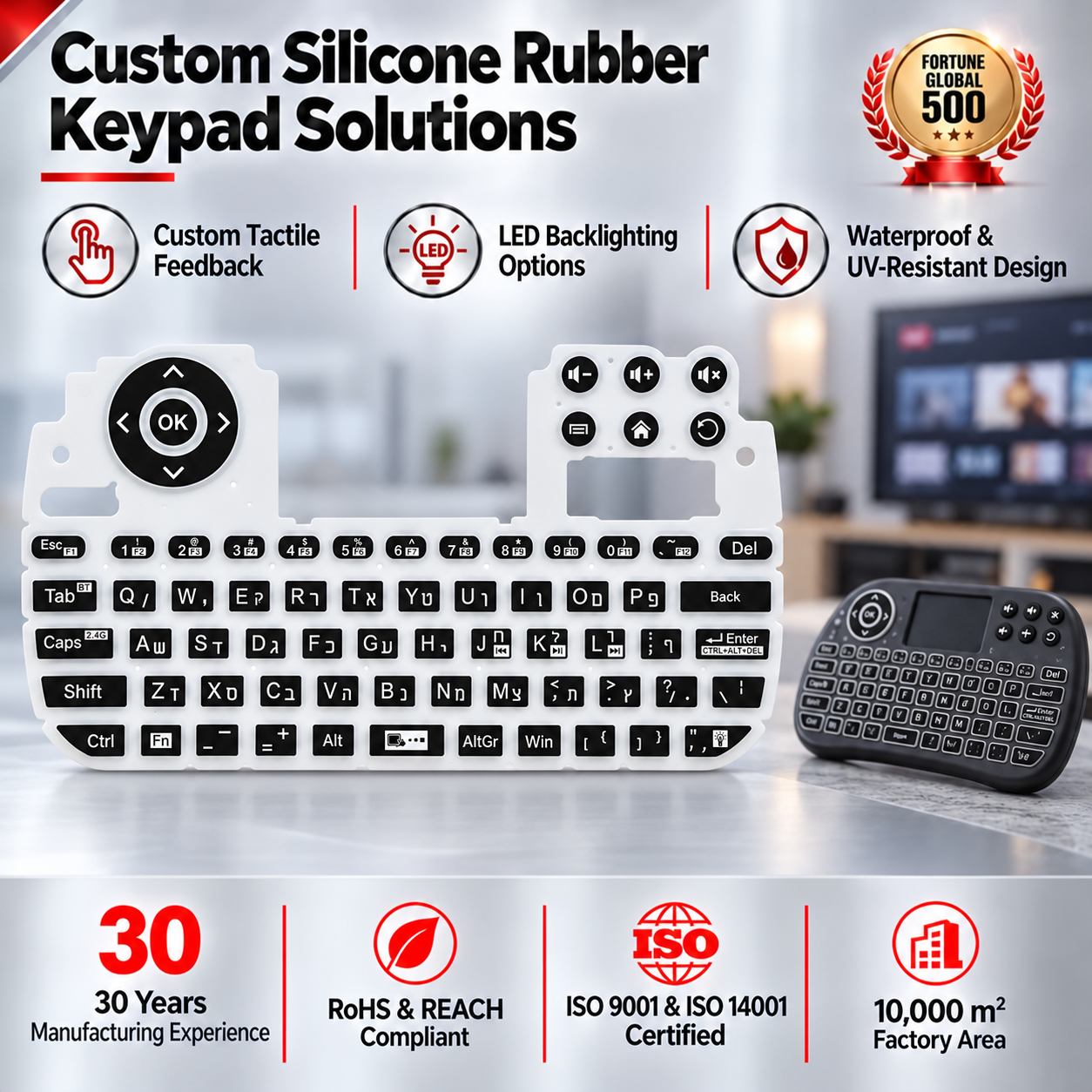
Industrial Conductive Silicone Rubber Keypad Terminal Array
Technical Details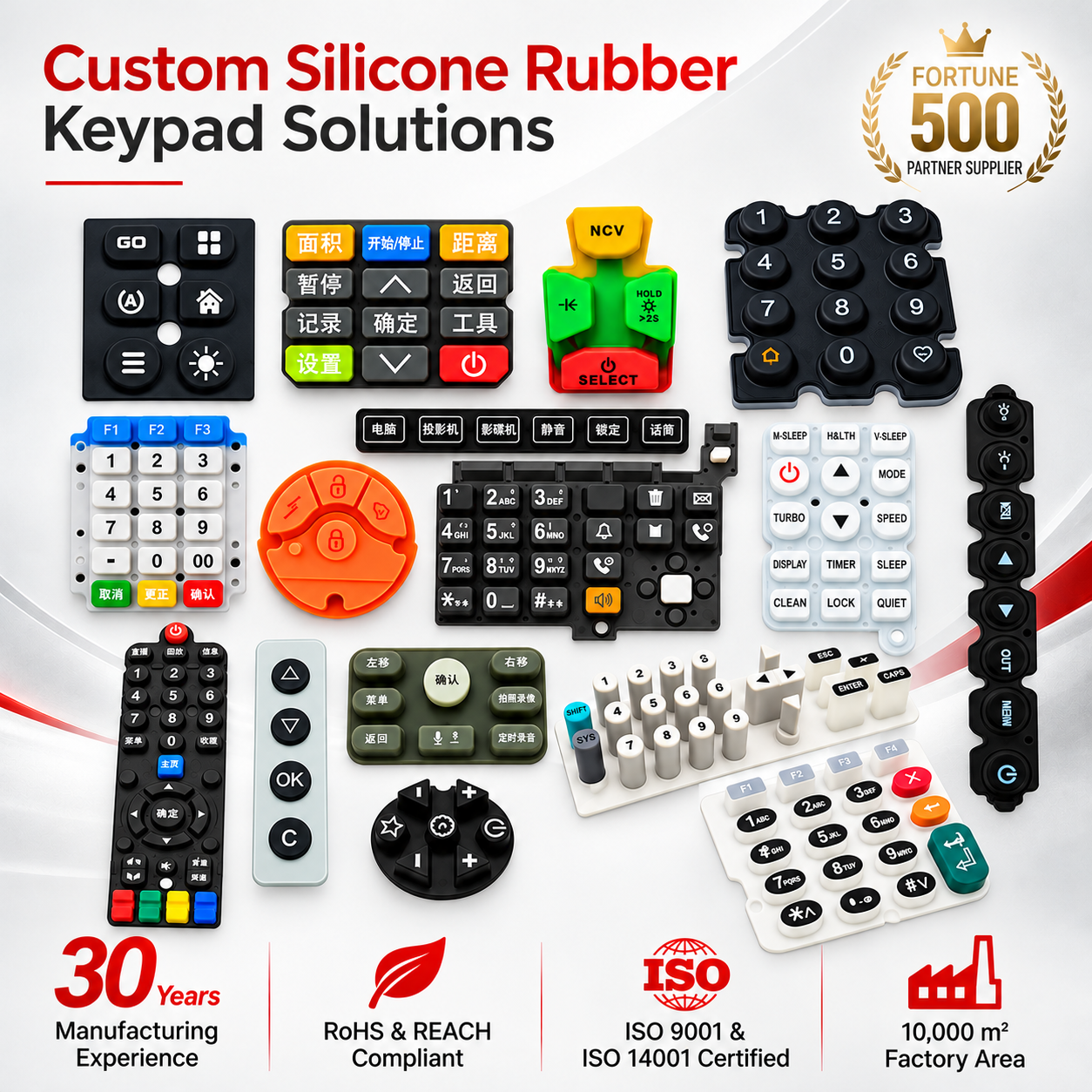
Custom Durable Multi-Color PTT Push Button Silicone Elastomer Panel
Technical Details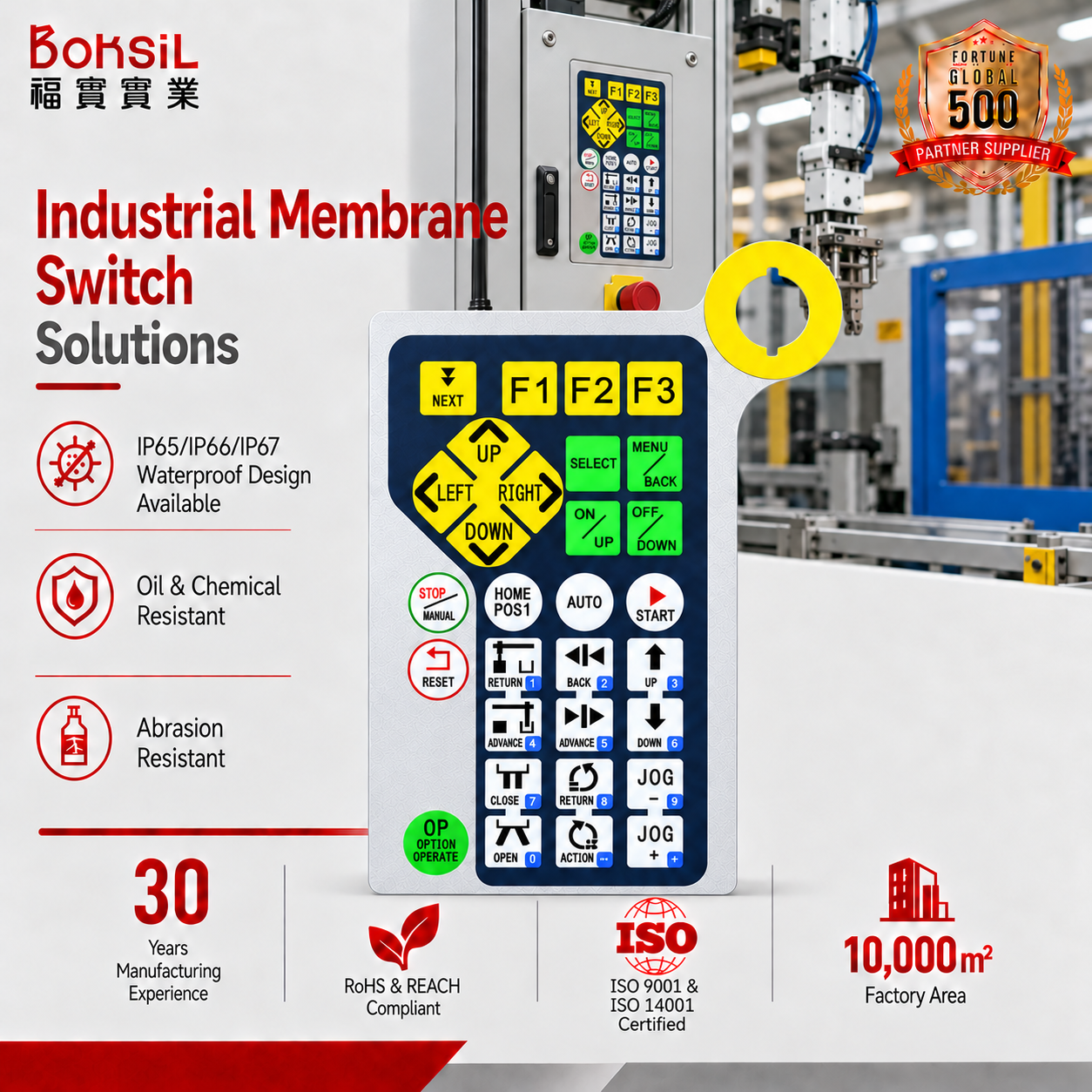
Industrial Graphic Overlay PET Keypad Sticker for Touch HMI
Technical Details
10,000㎡
Factory Floor Footprint
100%
Circuit & LED Inspection
5M+
Dome Actuation Life Cycles
IP65/67
Sealed Ingress Integrity
Technical Whitepaper
Engineering PET Membrane Control Interfaces for Lower Silesian Industry
A deep analysis of substrate behavior, chemical resistance, and localized mechanical integration across the Wrocław Industrial Corridor.
The Wrocław metropolitan area, anchoring Poland's dynamic Lower Silesian Voivodeship, has rapidly evolved into one of Central Europe's most prolific hubs for automated machinery, industrial robotics, precision medical manufacturing, and Tier-1 automotive subsystems. Within these highly demanding operating environments, the human-machine interface (HMI) serves not merely as a functional bridge, but as a critical line of defense against severe ambient interference. For system integrators and electrical engineers in Wrocław, Biskupice Podgórne, Kobierzyce, and the nearby Special Economic Zones, selecting between Polycarbonate (PC) and Biaxially-Oriented Polyethylene Terephthalate (PET) is the foundational decision dictating field longevity.
Substrate Mechanics: Why PET Dominates Industrial Actuation
While polycarbonate continues to be specified for flat, non-flexed instrument bezels owing to its exceptional initial optical clarity and ease of processing, PET represents the industry benchmark for dynamic membrane control switches. In applications requiring embossed perimeter rims, tactile pillow keys, or stainless-steel dome integration, polycarbonate rapidly succumbs to micro-fissuring and flexural fatigue—typically failing before 100,000 actuation cycles. Conversely, premium industrial-grade PET substrates, such as Autotype Autoflex, exhibit a molecular structure that routinely withstands over 5,000,000 cycles without loss of tensile elasticity or aesthetic degradation.
Engineering Insight: Flexural Yield & Chemical Defense
PET control layers feature an inherently inert surface chemistry that provides superior resistance against harsh industrial solvents, cutting fluids, alcohols, brake fluids, and chlorinated disinfectants. Where polycarbonate degrades and crazes upon repeated contact with organic cleaners, PET maintains its barrier integrity, rendering it indispensable for clinical and chemical environments across Lower Silesia.
Furthermore, local integration across Wrocław's automotive and transit sectors necessitates stringent compliance with electromagnetic compatibility (EMC) standards. PET membrane switches allow for the seamless introduction of printed carbon-silver mesh shields or solid aluminum-mylar barrier foils laminated directly between the graphic skin and the circuit array. This multilayer shield structure shunts electrostatic discharges (ESD up to 15kV) safely to system ground, preserving the integrity of downstream microcontroller circuitry.
Regional Implementation
Key Operational Environments Across Lower Silesia
From automated logistics to laboratory instruments, our PET membrane interfaces are tailored to local technological demands.
Automated Production & Robotics
Integrated into teach pendants, conveyor controllers, and PLC terminals in Wrocław-Bielany industrial clusters. Built with high tactile snap-ratio metal domes for feedback through operator work gloves.
Automotive Assembly & Testing
Custom faceplates designed for Tier-1 electronic testing equipment and cabin inspection consoles. Utilizing dead-front printing, tinted translucent LED windows, and UV-stabilized anti-glare surfaces.
Medical & Diagnostic Instrumentation
Serving Wrocław's specialized bio-tech and healthcare equipment manufacturers. Continuous flat PET graphic overlays allow washdown with medical sterilizers, eliminating microbial harboring points.
EV Battery & Energy Systems
Engineered for power inverter controls and battery module assembly cells in Lower Silesia. Flame-retardant adhesive stack-ups (UL94 V-0 options) prevent delamination under extreme thermal cycling.
Commercial Food & Packaging
Designed for food processing, filling systems, and end-of-line packaging. Fully perimeter-sealed gaskets achieve true IP65 and IP67 ratings, resisting direct high-pressure spray cleaning.
Transit & Ticket Terminals
Outdoor kiosks, urban tram controllers, and parking terminals. Features hard-coated surfaces resisting graffiti solvents, UV sunlight yellowing, and constant abrasive handling.
| Substrate / Interface Type | Actuation Life (Cycles) | Chemical Tolerance | Tactile Response | Typical Wrocław Industry Fit |
|---|---|---|---|---|
| Polyester (PET) Tactile Panel | > 5,000,000 | Exceptional (Alcohols, Ketones, Oils) | Sharp, audible snap (Metal dome) | Industrial automation, medical, instrumentation |
| Polycarbonate (PC) Flat Overlay | < 100,000 (Non-embossed) | Moderate (Sensitive to esters) | Flat / None or low mechanical | Cost-sensitive enclosures, static bezels |
| Silicone Rubber Membrane Hybrid | > 1,000,000 | Very High (Sealed elastomer) | Soft, cushioned travel | Handheld diagnostics, outdoor telemetry |
| Capacitive Solid Front Panel | Wear-Free (Solid State) | Maximized (Continuous glass/PET) | Optical / Acoustic feedback | Laboratory diagnostics, smart metering, appliances |
Procurement & Supply Chain Trends
Emerging HMI Sourcing Dynamics in South-Western Poland
How supply chain resiliency, ESG mandates, and Industry 4.0 integration are redefining procurement decisions.
Procurement directors and design teams in Wrocław's technology corridors are experiencing a notable paradigm shift. Where historical procurement focused strictly on unit-cost optimization, current procurement strategies for Tier-1 sub-assemblies prioritize Design-for-Manufacturability (DFM) verification, total life-cycle durability, and comprehensive testing documentation.
Three dominant trends have materialized across the Lower Silesian landscape:
1. Hybridization of Thin-Film and Rigid Electronics: Engineering teams are progressively replacing bulky standalone mechanical push-buttons with hybrid PET control panels that integrate surface-mount technology (SMT) LEDs, resistors, and flexible printed circuit (FPC) tails with narrow pitches (down to 0.5mm/1.0mm ZIF connectors). This drastically reduces enclosure depth, optimizing interior volume for controllers and heat sinks.
2. Rapid Prototyping & Engineering Agility: With Wrocław maintaining a dense ecosystem of R&D centers, development cycles are compressed. OEM buyers require rapid sample verification—transitioning from digital layout approval to physical, laser-cut samples in under 7 business days before committing to dedicated steel tooling for high-volume runs.
3. Traceability and Material Compliance: Given strict European Union regulations, including RoHS, REACH, and WEEE directives, industrial suppliers serving Poland must furnish comprehensive material documentation. Every adhesive layer (typically 3M 467MP, 468MP, or 3M 300LSE for low-surface-energy plastics), conductive ink formulation, and polyester base layer must be documented with traceable certificates of conformance.
Manufacturing Capabilities
Why International OEMs Partner with Dongguan AXRU Electronics
Our 10,000㎡ vertically integrated manufacturing base provides end-to-end reliability for European engineering leaders.
Intertek-Verified Plant
Audited on-site by Intertek. Featuring an ISO-certified production structure staffed by 121 skilled technical specialists.
100% In-Line Electrical Testing
Every membrane panel is verified on automated test rigs for loop resistance, open/short circuits, and LED luminous integrity.
Complete In-House Tooling
From screen printing and precision die-cutting to metal-dome automated placement, core processes are conducted under one roof.
Flexible MOQ Starting at 100 Pcs
Supporting prototyping, pilot runs, and scaled serial production without penalizing early-stage design iterations.
Purchasing FAQ
Frequently Asked Questions: Sourcing PET Panels for Wrocław
Clear, transparent answers addressing logistics, technical standards, and engineering support for Polish purchasers.
How does PET material performance compare in cold environments typical of Polish winters?
PET (Polyester) retains its flexural elasticity and impact resistance across a wide operating envelope (-40°C to +85°C). Unlike rigid vinyls or substandard polycarbonates that embrittle when exposed to sub-zero temperatures, premium PET overlays maintain tactile snap fidelity without cracking, making them well-suited for outdoor transit terminals and non-climate-controlled logistics warehouses across Lower Silesia.
Can you provide IP67 level perimeter sealing against industrial washdowns?
Yes. By employing closed-loop perimeter acrylic gaskets (such as 3M 200MP or 300LSE series adhesives) alongside custom blind-die embossed geometries, the switch cavity is isolated from the external environment. This prevents moisture, mist, dust, and washdown chemicals from compromising the silver circuits or metal domes, easily satisfying IP65 and IP67 ingress testing.
What is the standard delivery timeline from Dongguan to Wrocław facilities?
Following CAD approval, engineering prototypes are completed within 5-7 working days. Mass production generally requires 12-15 business days depending on order volume. We coordinate express air transit (DHL, FedEx, UPS) directly to Wrocław Nicolaus Copernicus Airport (WRO) or local manufacturing plants within 4-6 transit days, complete with EU customs clearance documentation.
Which engineering files do you require to initiate a DFM check and formal quote?
We accept standard 2D vector files (AutoCAD DXF/DWG, Adobe Illustrator AI, or high-resolution PDF). For accurate quotation, please detail your mechanical dimensions, circuit pin-out, Pantone/RAL color codes, surface finish preference (matte, fine texture, gloss), and specific tactile requirements (dome diameter, actuation force in grams).
Can you provide dead-front display windows and customized LED backlighting?
Yes. We routinely fabricate dead-front windows that remain opaque until illuminated from behind. We also integrate ultra-thin surface-mount LEDs (0603/0805 packages), light guide films (LGF) for uniform key backlighting, and optical-grade clear or tinted filter windows for seamless integration with OLED, TFT, and segment displays.
Need a Technical Review or Quotation for Your Interface?
Consult directly with our engineering specialists. Receive full Design-for-Manufacturability feedback, material sample kits, and comprehensive quotations within 24 hours.