IP67 Waterproof
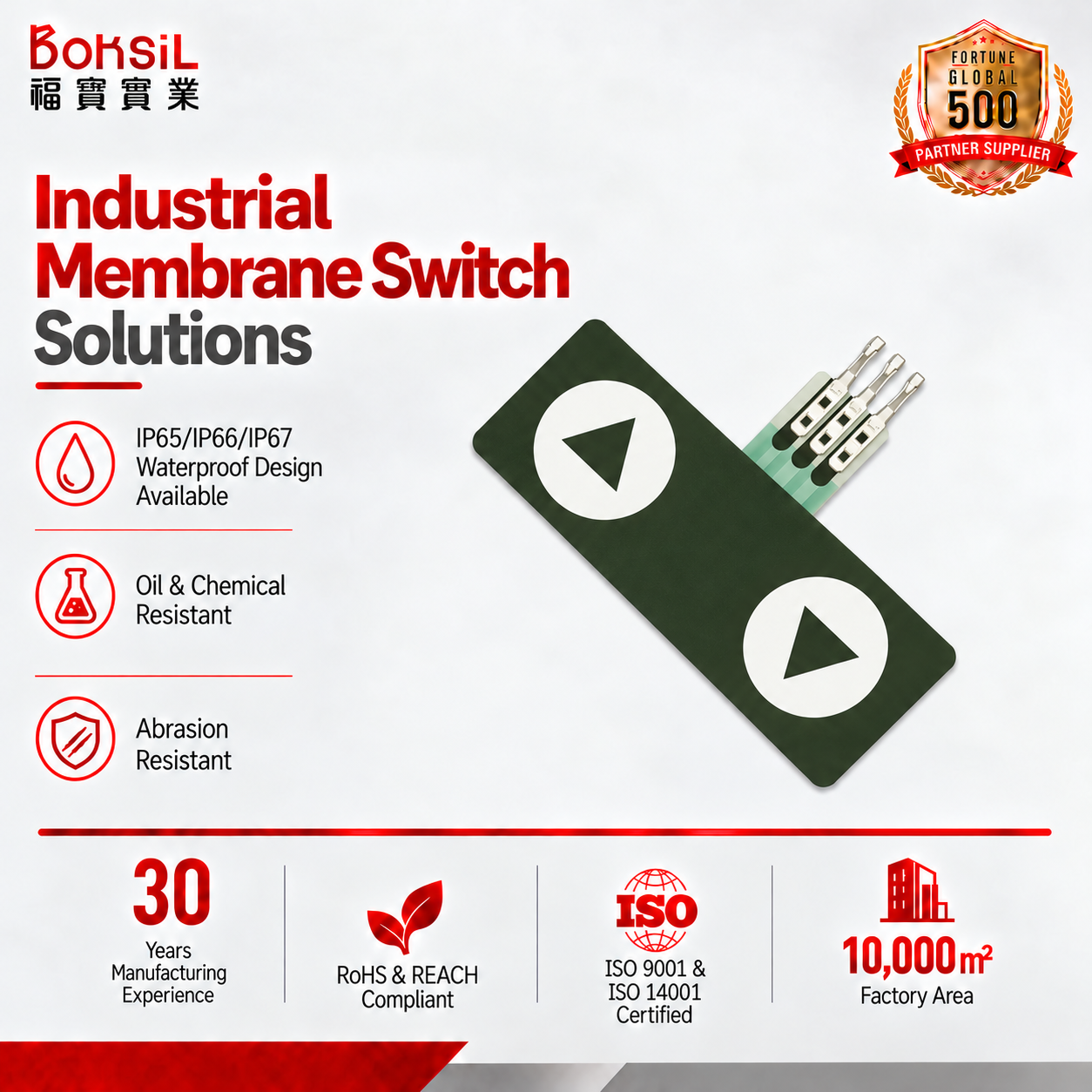
5×4 Matrix Waterproof FPC Flexible Circuit Membrane Switch Panel
- Circuit Type: Flexible Polyimide FPC
- Key Feel: Tactile Metal Dome (350g)
- Field Rating: IP67 Submersible Edge Seal
Direct from our 10,000㎡ manufacturing plant: high-cycle matrix panels, hermetically sealed FPC circuits, and illuminated silicone elastomer keyboards built to exact municipal and rail signaling specifications.
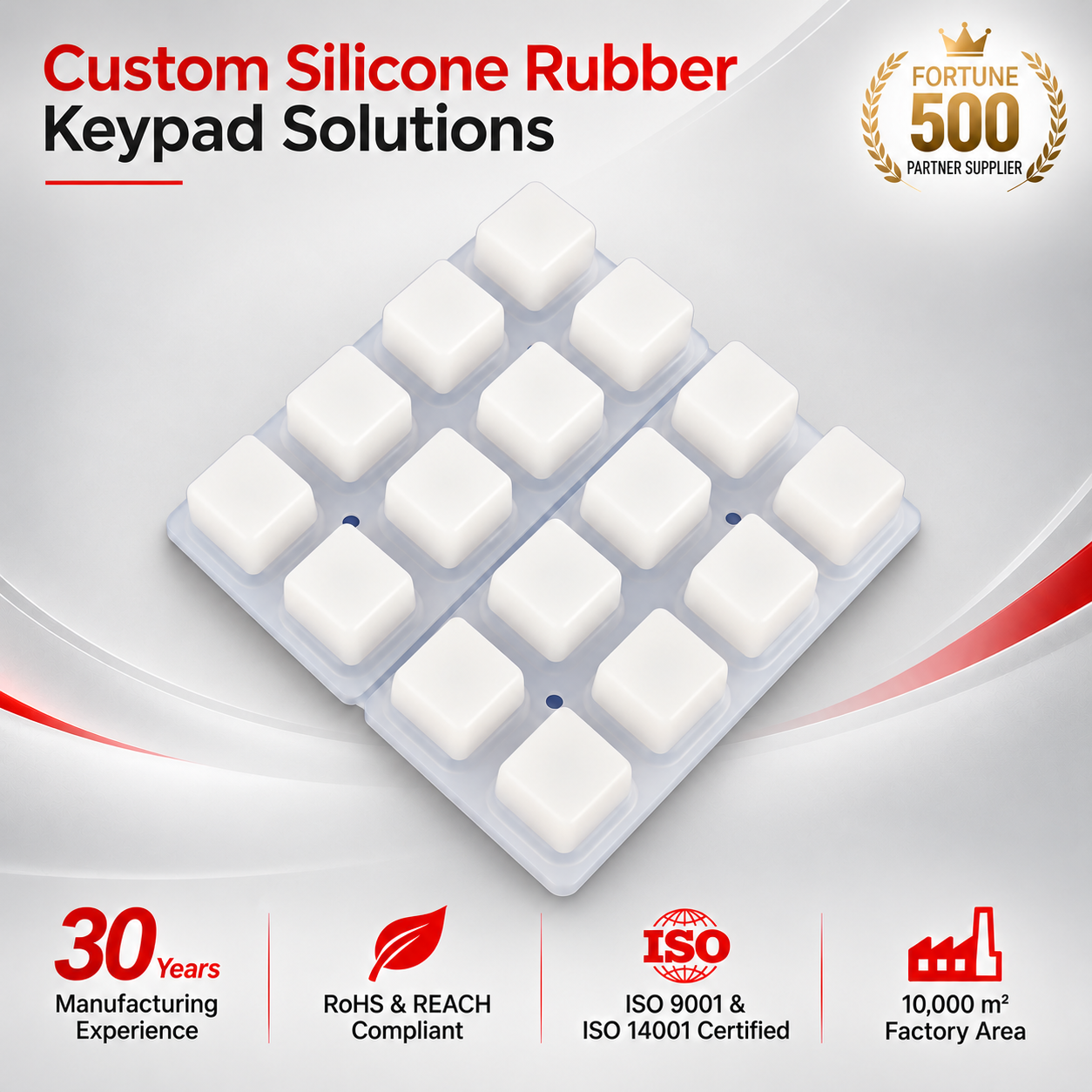
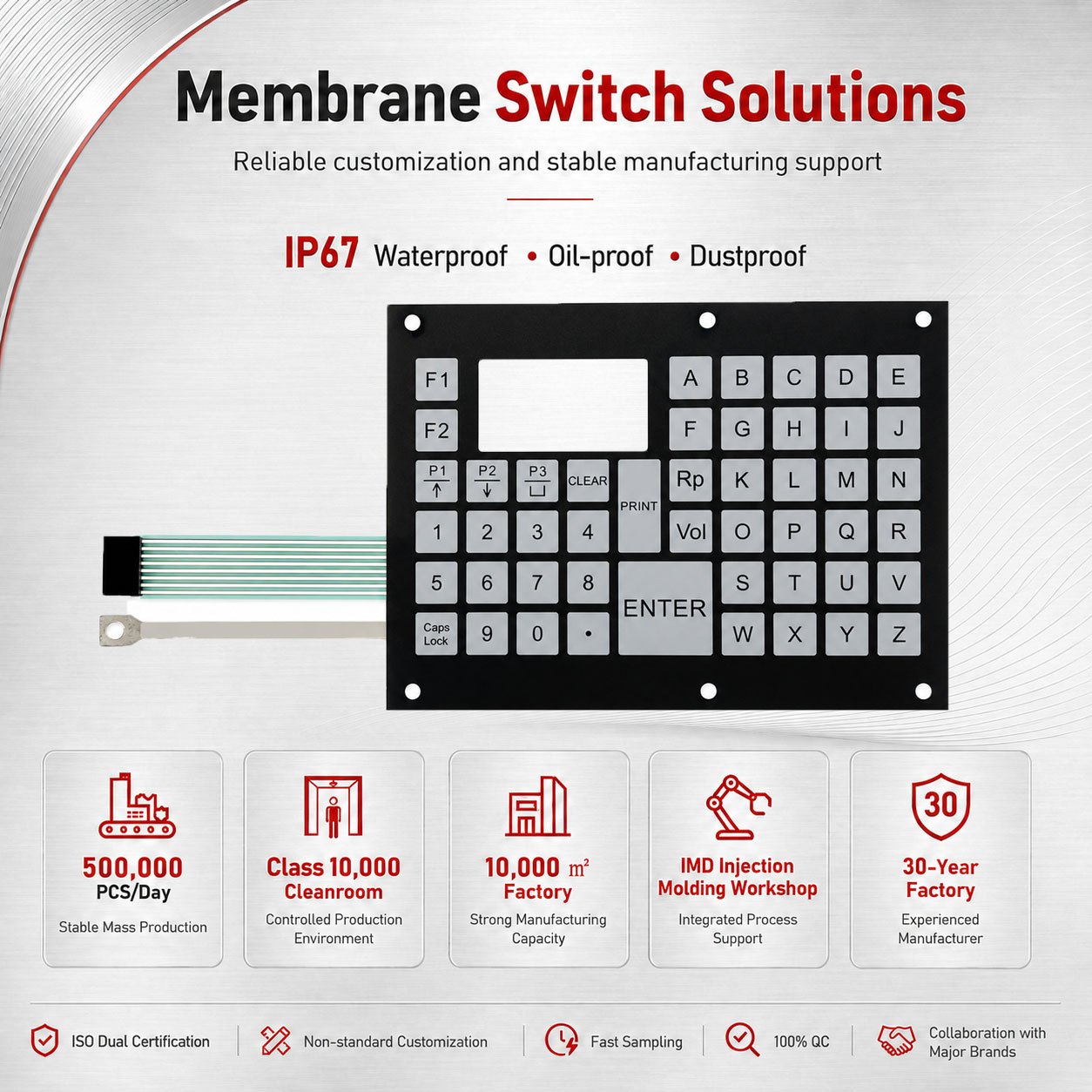
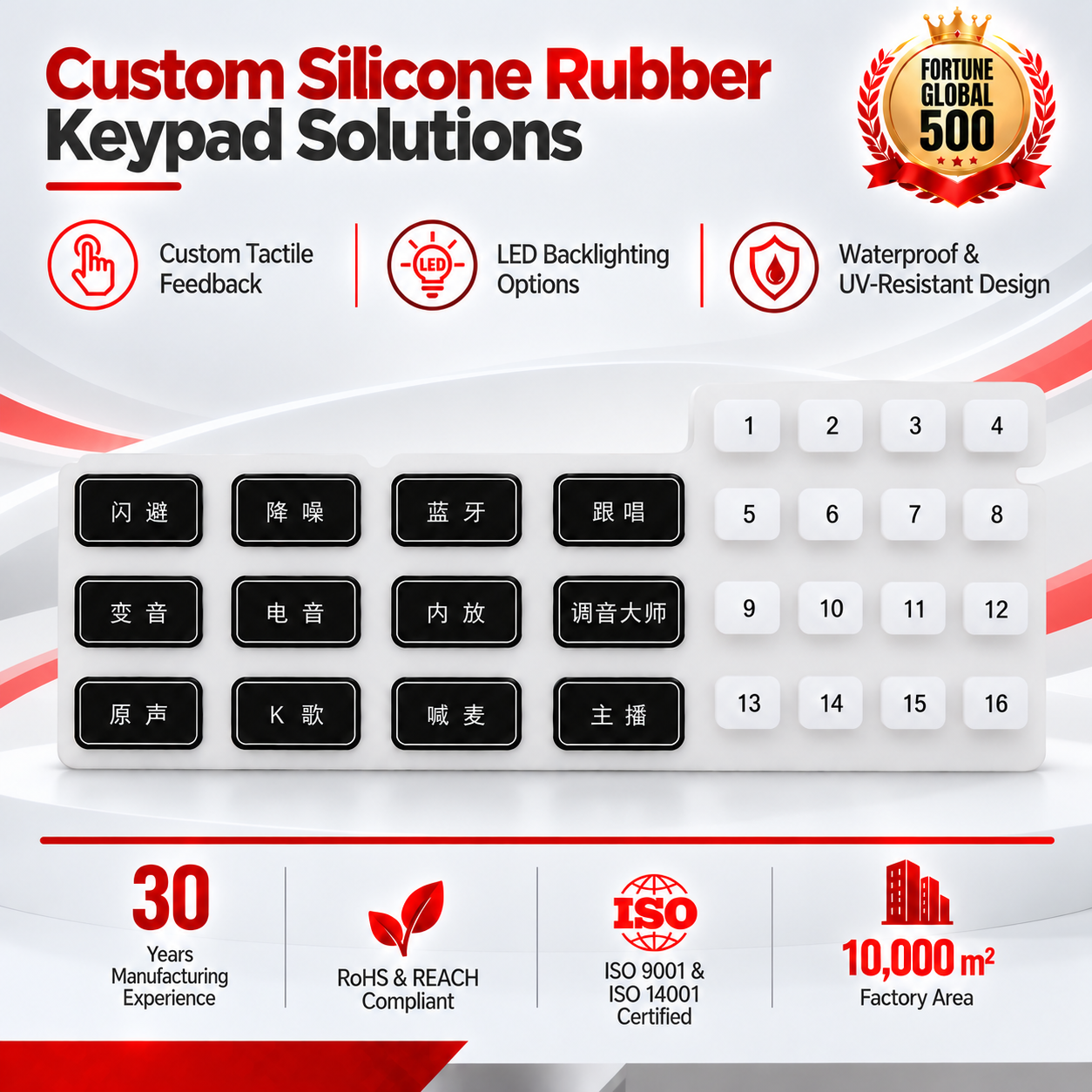
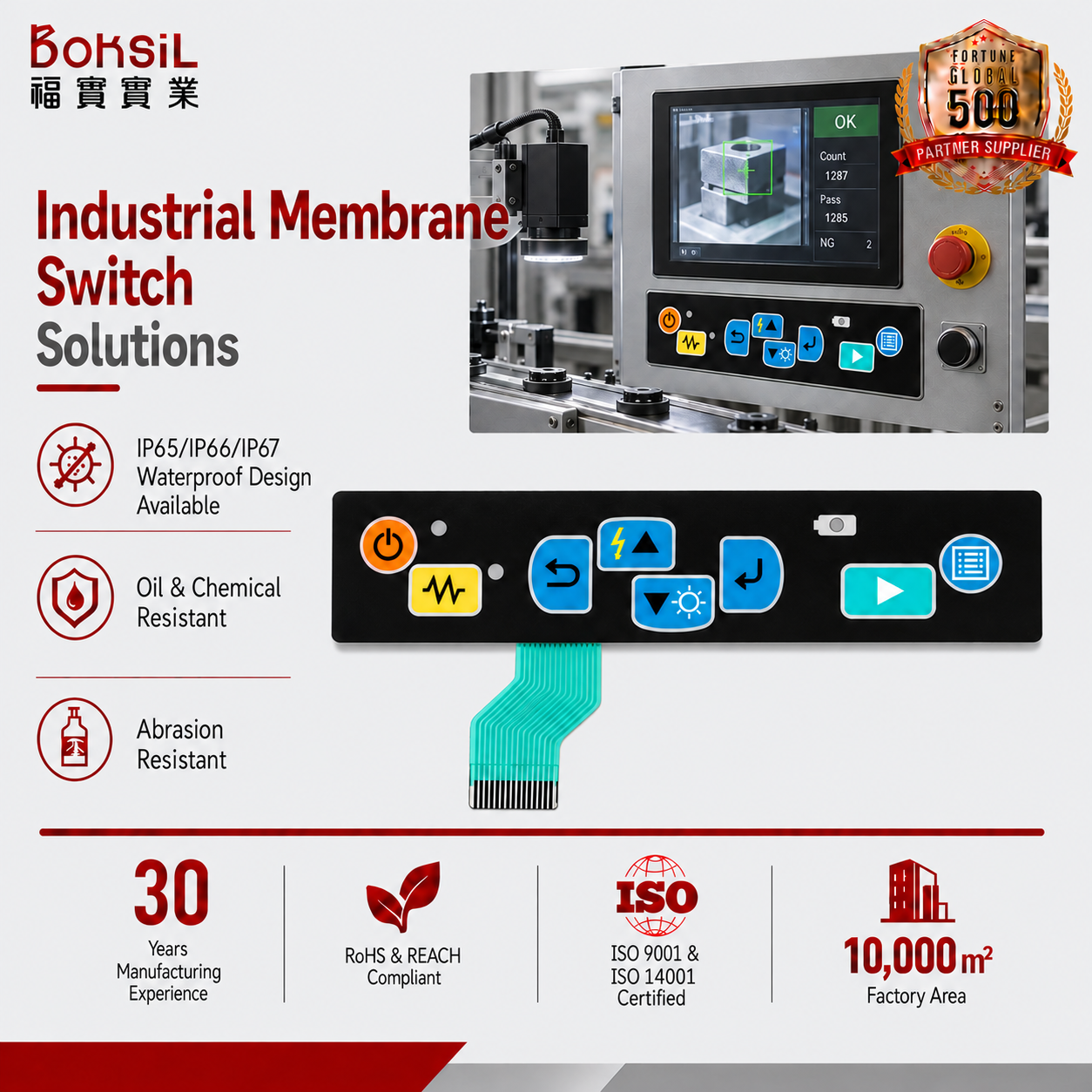
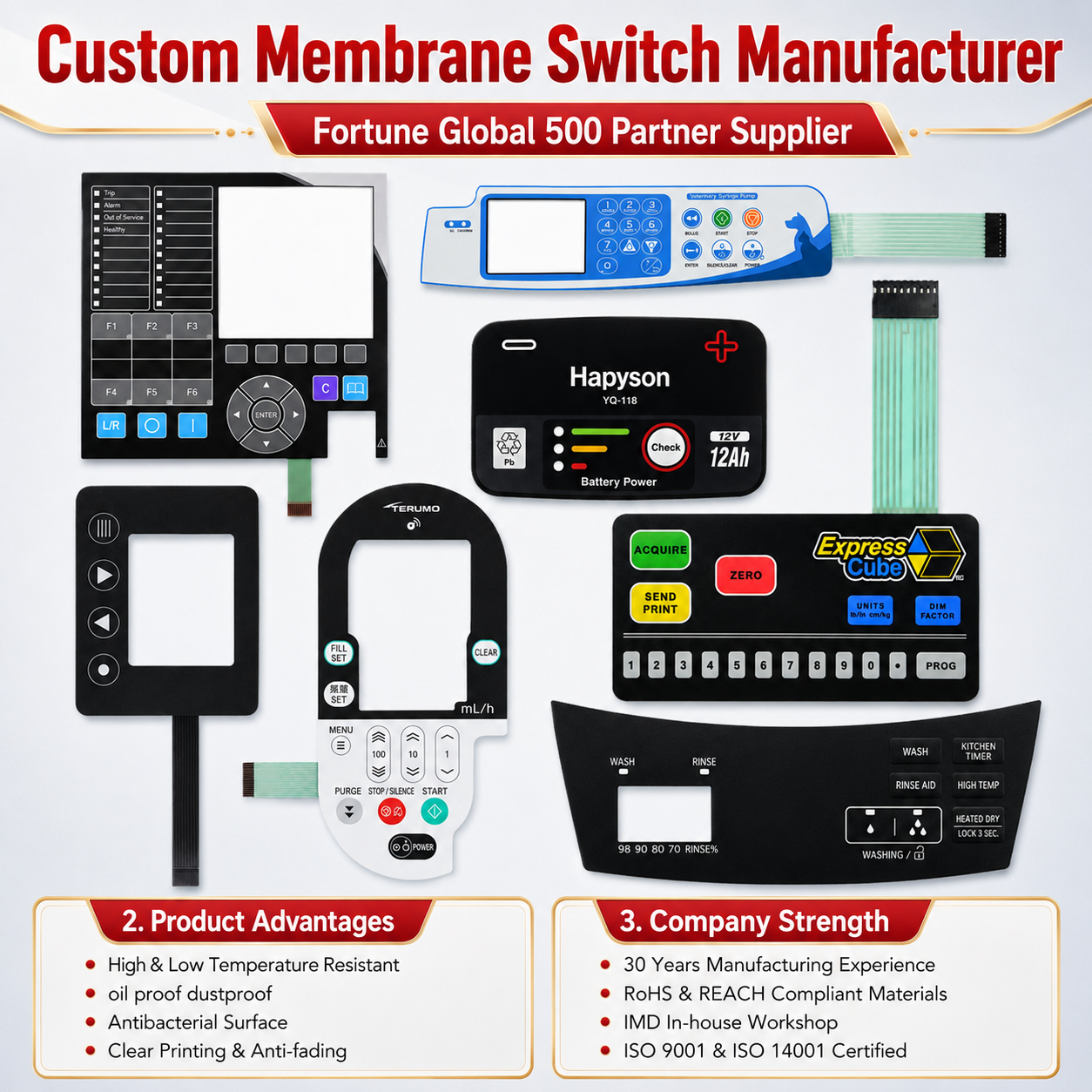
In the execution of contemporary traffic infrastructure projects across the Republic of Hungary—ranging from Budapest's BKK integrated urban traffic management networks to Magyar Közút’s nationwide motorway tolling corridors and MÁV’s railway crossing interlocking cabinets—the Human-Machine Interface (HMI) serves as the critical physical bridge between field maintenance technicians and microprocessing controllers. Membrane keypads deployed within roadside cabinets are subjected to rigorous operational stresses that far exceed general consumer electronics standards. They must reliably perform under severe Pannonian climatic swings, extreme diurnal temperature gradients (-28°C in harsh continental winter nights up to +75°C solar heat build-up within unventilated aluminum roadside enclosures), corrosive airborne de-icing salt aerosols, continuous heavy industrial vibrations, and non-stop ultraviolet radiation.
A standard polyester membrane keypad will quickly suffer premature mechanical failure, legend delamination, and silver migration when exposed to fluctuating relative humidity (reaching 95% RH during Hungarian spring thaw) combined with electrical potential. To counteract these failure mechanisms, AXRU employs a precision-engineered multi-layer composite stack-up specifically developed for automotive and infrastructure applications:
1. Graphic Overlay Substrate: We standardize on premium-grade biaxially oriented polyethylene terephthalate (PET) films, such as MacDermid Autotype Autotex XE or Sabic Lexan HP92W. Unlike standard polycarbonate which yellows and becomes brittle under high UV exposure along motorway corridors such as the M1, M3, and M7, Autotex XE features an integrated fluoropolymer hard-coat providing outstanding resistance to UV degradation, aggressive petroleum hydrocarbons, windscreen cleaning fluid splash, and graffiti removal solvents.
2. Circuit Carrier: Copper Flex (FPC) vs. Polymer Thick Film (PTF): While conventional membrane keypads employ screen-printed silver conductive ink on polyester, roadside traffic controllers operating with 24VDC or 48VDC field-bus architectures demand maximum circuit survivability. AXRU engineers recommend Flexible Printed Circuits (FPC) with polyimide cores and etched rolled-annealed copper traces electroplated with nickel and flash immersion gold (ENIG). FPC eliminates the vulnerability of silver ink migration caused by electrical micro-arcing in condensing environments, ensuring zero intermittent signal loop faults.
3. Tactile Feel and Snap Dome Dynamics for Gloved Field Personnel: Technicians working on traffic intersection cabinets in winter must operate keypads while wearing insulated utility gloves. Standard low-force domes (150g–200g) produce negligible tactile sensation through insulated glove fabric, leading to input errors and double-keying. AXRU integrates heavy-gauge stainless steel snap domes (nickel-plated or gold-plated) engineered for an actuation force of 350g to 450g with a crisp, tactile trip ratio above 45%. This high feedback index guarantees positive key closure confirmation without requiring technicians to visually monitor LCD status readouts.
Closed-cell perimeter bonding using 3M 300LSE / 467MP solvent-free acrylic adhesives, preventing capillary water moisture ingress along display windows and ribbon cable egress exits.
Backlit integration using ultra-thin Light Guide Films (LGF) and surface-mounted side-fire micro-LEDs, combined with anti-glare matte textured display windows for direct sunlight readability.
Full-coverage printed aluminum foil or conductive carbon/silver lattice ground layers engineered to safely discharge up to 15kV electrostatic air bursts without disrupting controller microprocessors.
Selecting the optimal front panel technology requires balancing cycle longevity, environmental sealing, tooling budget, and mechanical tactile feedback. The engineering matrix below contrasts the four dominant HMI technologies deployed across Central European infrastructure:
| Technology Type | Construction Stack | Actuation Life | Ingress Rating | Operating Temp | Suitability for Hungary Traffic Cabinets |
|---|---|---|---|---|---|
| FPC Tactile Membrane Switch | Autotex XE PET + Polyimide Copper FPC + Stainless Domes | 3,000,000+ cycles | IP67 Sealed | -40°C to +85°C | Highest Recommendation: Impervious to silver migration; ideal for primary roadside intersection cabinets. |
| Silver Ink PET Membrane Switch | Sub-surface printed PET + Conductive Silver Screened Lines | 1,000,000 cycles | IP65 Standard | -20°C to +65°C | Cost-Effective: Suitable for indoor transit sub-stations, auxiliary ticketing kiosks, and dry enclosures. |
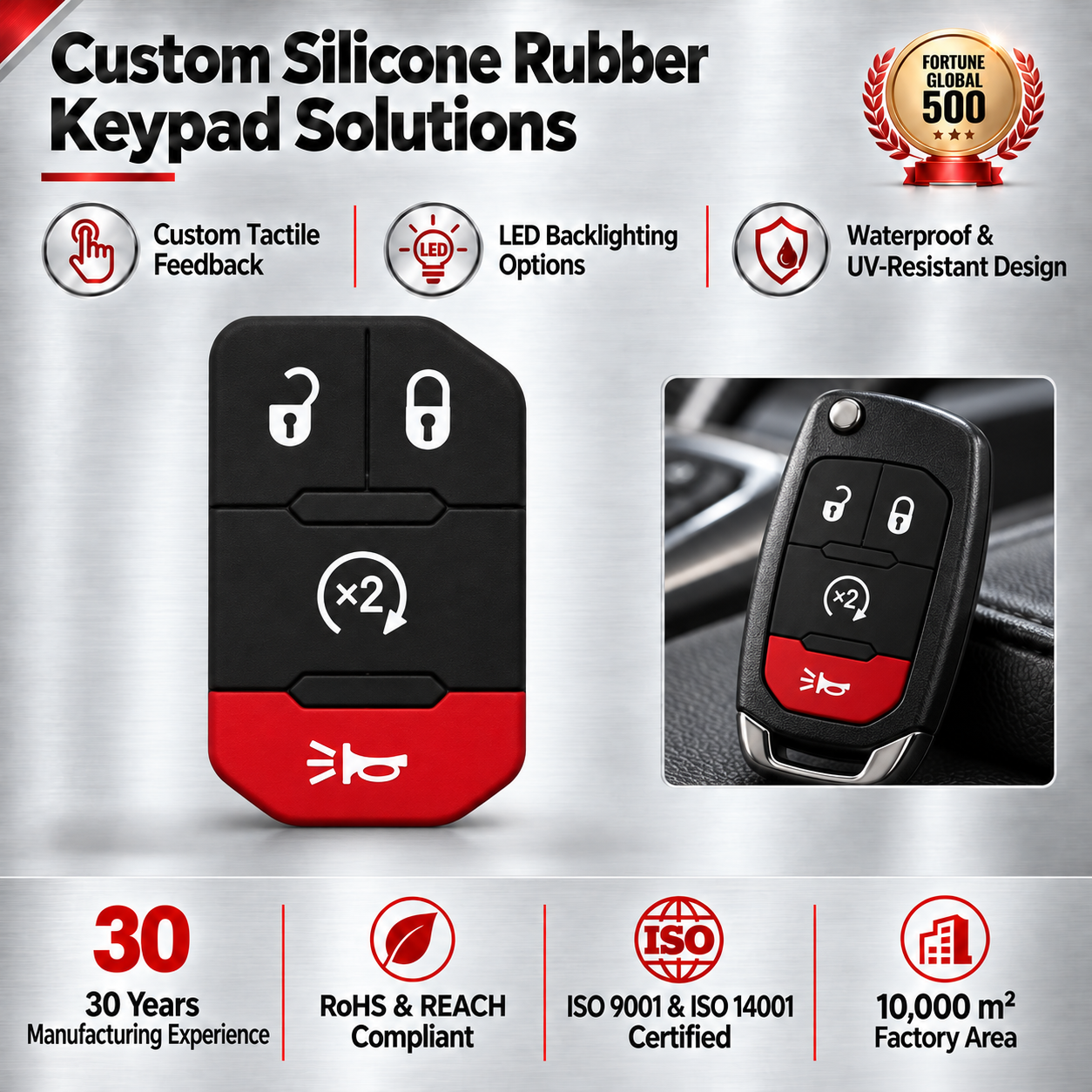
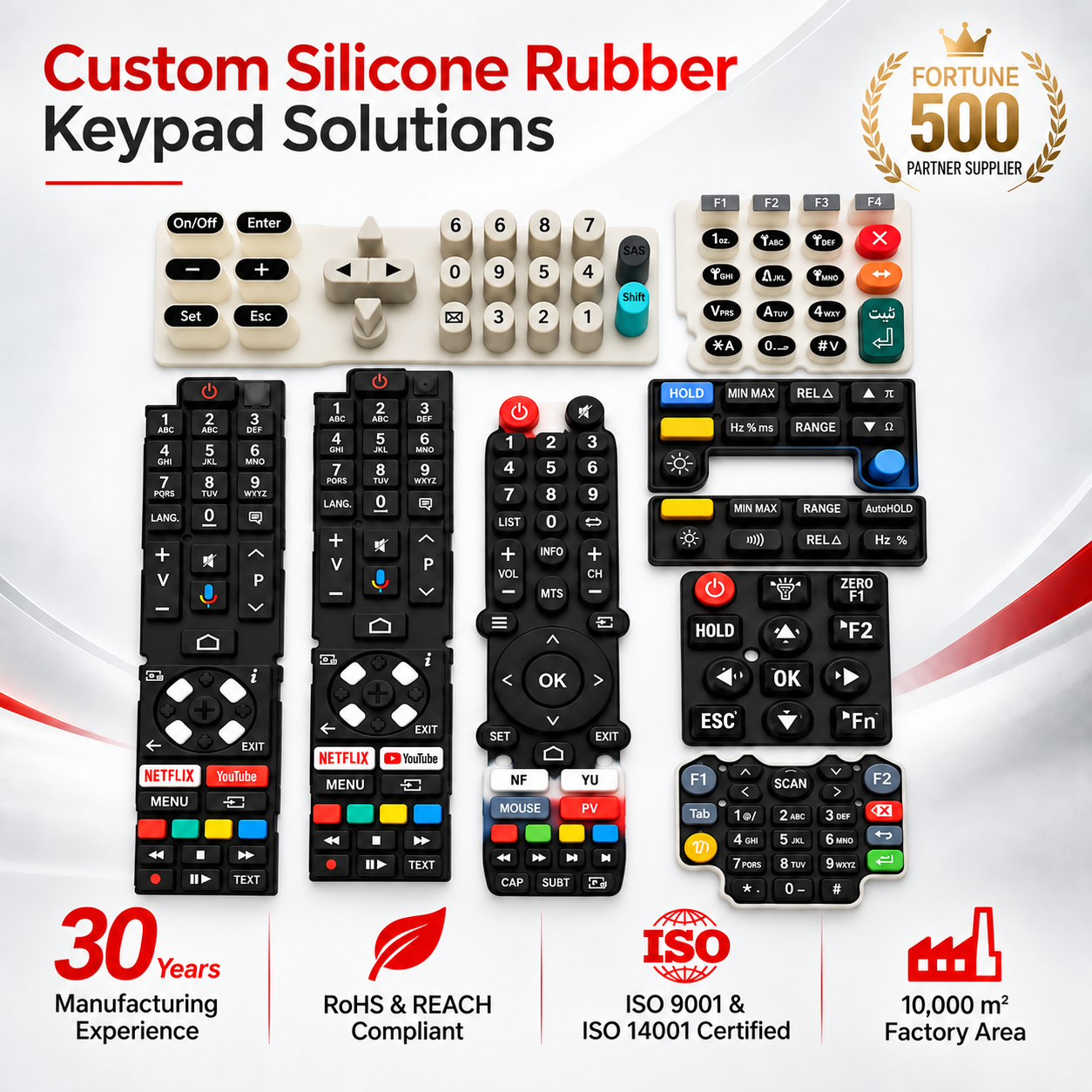
| Silicone Elastomer + Membrane | Compression Molded Silicone Mat + Carbon Pill / Dome Substrate | 2,000,000 cycles | IP66 / IP67 | -40°C to +100°C | Excellent Glove Feel: Outstanding mechanical travel (1.5mm) and integrated 3D perimeter water seal gaskets. |
| Capacitive Touch Glass / Acrylic | Chemically Strengthened Glass + ITO/Printed Touch Sensors | Solid-State (Unlimited) | IP65 Surface | -25°C to +70°C | Sleek Clean Surface: Modern urban terminals; requires specialized tuning for rain droplet rejection and winter gloves. |
Hungary's geographical position as Central Europe’s prime logistics hub has spurred sustained investment into smart mobility. The modernization of municipal intersections under the Budapest 2030 Urban Development Concept requires traffic controllers to incorporate edge-computing diagnostic ports and multi-tiered manual override keypads. Simultaneously, major logistics arterial routes radiating from Budapest toward Austria (M1), Slovakia (M2/M15), Romania (M43), and Serbia (M5) are being upgraded with dynamic speed regulation and Variable Message Signs (VMS), mandating localized field keypads capable of unassisted operation 24 hours a day, 365 days a year.
Furthermore, major electric bus fleet rollouts in provincial centers like Debrecen, Szeged, and Győr require ruggedized depot charging pedestals and dispatch interfaces. These outdoor charging installations demand HMIs capable of withstanding constant public handling, intense solar UV index levels, and electromagnetic pulses originating from high-voltage DC fast-charging inverters.
Custom-engineered interface assemblies built to withstand the precise environmental and operational realities of Hungarian transportation networks.
Installed inside Type-332 and custom European aluminum street-side enclosures managing multi-phase arterial traffic flows across Buda and Pest districts.
Front interface panels for field communication controllers located along the M1, M3, M5, and M7 motorway corridors and high-speed toll plazas.
Mission-critical emergency override and maintenance diagnostic keypads operating beside electrified standard and narrow-gauge railway tracks.
High-durability front faceplates for municipal electric transit hubs in Debrecen and Szeged, subjected to relentless continuous public operator usage.
Unlike trading intermediaries, Dongguan AXRU Electronics conducts 100% of engineering reviews, screen printing, SMT component mounting, lamination, and reliability testing internally.
Automated pneumatic actuators cycle switches to 5,000,000 operations under continuous electrical loop logging.
Digital force testers record actuation curve, snap ratio, and return spring force for unified batch tactile feel.
Programmable environmental testing cycling from -40°C to +85°C at 95% relative humidity to prove adhesive bonding.
Accelerated solar radiation chambers ensuring graphic inks and overlay films resist Pannonian UV yellowing.
Automated computerized test stations verify open/short circuits, contact loop resistance (<100Ω), and LED polarity.
Comprehensive technical and commercial clarity for purchasing heads, mechanical design engineers, and public tender contractors.
Thermal condensation within unheated roadside cabinets is the leading cause of silver migration short-circuits. We address this by utilizing copper-etched Polyimide FPC (Flexible Printed Circuit) traces or printing polymer thick film silver inks sealed with redundant dielectric encapsulation. Combined with 3M 300LSE perimeter hydro-gaskets, our assemblies maintain an airtight barrier rated to IP67, entirely preventing moisture penetration.
For municipal and state-level tenders requiring full traceability under EU directives, we provide comprehensive documentation packages including Certificates of Origin, Certificate of Conformity (CE), RoHS 3 (Directive 2015/863/EU) test reports, REACH SVHC declarations, and initial First Article Inspection (FAI) reports with full dimensional and force-displacement measurement curves.
Upon sign-off of the 2D engineering stack-up drawing and Pantone/RAL artwork proofs, rapid engineering prototypes are typically fabricated within 7 to 10 working days. Mass production runs (e.g., 500 to 10,000 units) ship within 18 to 22 working days. We routinely ship directly to Budapest (BUD Airport), Debrecen, or regional European distribution hubs via DHL/FedEx air express (3–5 business days) or sea/rail freight.
Yes. If you have discontinued field controller units lacking original Gerber or CAD files, our engineering team can fully reverse-engineer the component from a physical sample. We scan graphic layouts, map electrical switch matrix pinouts, replicate tactile dome feel, match housing cutouts, and upgrade the legacy design to modern UV-resistant PET and gold-plated FPC circuits.
For nighttime utility service inside roadside cabinets, we strongly recommend integrated Light Guide Film (LGF) backlit systems driven by low-power SMT side-view LEDs, or laser-etched silicone elastomer keypads. Laser etching allows high-intensity LED illumination to shine directly through key legends while remaining completely dark in unlit areas ("dead-front" styling), preserving operator night vision while ensuring unambiguous legibility.
Understanding that specialized transportation infrastructure controllers involve niche production runs rather than consumer volumes, our factory offers low-barrier entry with an MOQ starting at just 100 pieces for custom designs. Pilot engineering samples (5–10 units) are supplied prior to mass tooling release to ensure thorough field validation in actual road cabinets.
Send us your DXF/DWG drawings, schematic pinouts, or physical sample requirements. Our senior HMI engineering team will provide a comprehensive Design for Manufacturability (DFM) review, material stack-up proposal, and formal quotation within 24 hours.