The Engineering Challenge: Marine Salt Spray, Humidity, and Thermal Stress in Micronesia
Operating electronic user interfaces in equatorial Oceania involves extreme environmental challenges not encountered in continental climates. With average relative humidity hovering between 80% and 95% year-round and heavy airborne sodium chloride (marine aerosol) penetrating unsealed mechanical housings, standard membrane switches succumb to two prevalent failure modes within months: electrolytic silver migration and interfacial delamination.
When high ambient humidity infiltrates a standard screen-printed silver ink circuit on polyethylene terephthalate (PET), an electric potential across adjacent conductor traces creates microscopic dendrites. These metallic silver filaments bridge the trace gaps, causing phantom actuation, erratic signal loops, and short circuits. For remote islands across Micronesia—where replacement shipments take weeks via air freight through Guam or sea cargo through Pohnpei Harbor—equipment downtime can shut down desalination units, cold-storage reefers, or emergency municipal generators.
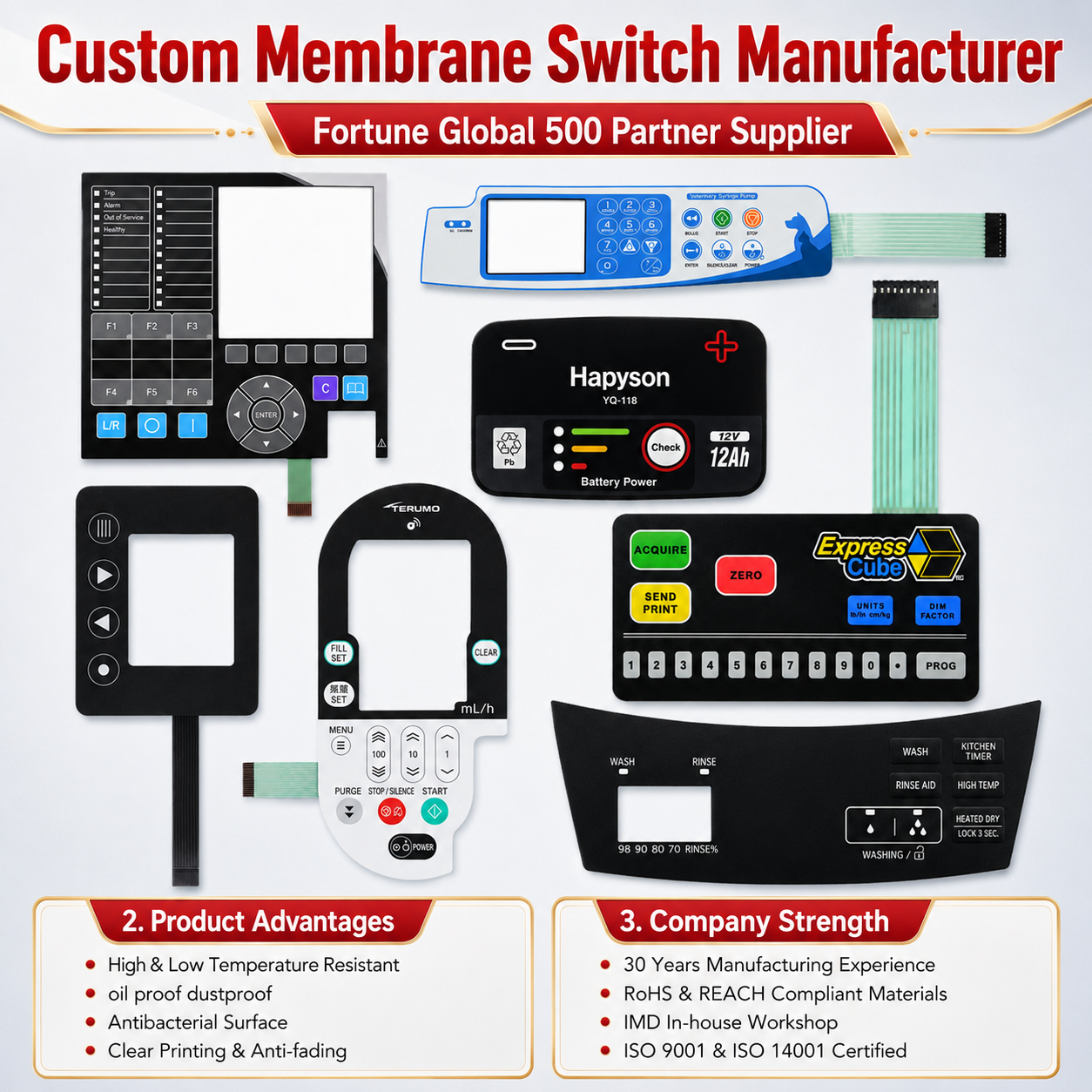
Dongguan AXRU Electronics Co., Ltd. solves these environmental constraints through engineered material stack-ups specifically calibrated for tropical Pacific operations:
| Engineering Parameter |
Standard Commercial Construction |
AXRU Pacific-Island Ruggedized Specification |
Operational Reliability Gain |
| Circuit Substrate Metallurgy |
Screen-printed Silver Flake Ink on untreated PET film |
Flexible Printed Circuit (FPC) with rolled-annealed copper or Carbon-shielded Silver Ink with 1.5mm trace clearance |
Eliminates Silver Dendrite Migration |
| Graphic Overlay Material |
Standard Polycarbonate (PC) without UV stabilization |
Autotex XE (Hard-coated UV Polyester) or MacDermid Autotype with selective anti-glare finish |
10+ Years UV Resistance, No Yellowing or Embrittlement |
| Perimeter Ingress Sealing |
Partial perimeter adhesive with open tail venting |
Continuous IP67/IP68 closed-loop perimeter gasket using 3M 300LSE/468MP laminated under hydraulic pressure |
100% Ingress Barrier against Salt-Mist & Condensation |
| Tactile Dome Metallurgy |
Standard stainless steel without anti-corrosion plating |
SUS301/SUS304 with Gold (Au) or Nickel (Ni) Plating sealed within hydrophobic dome retainers |
Zero Oxidation inside switch contact cavities |
| Internal Venting Design |
Vented externally into open humid air |
Internal cross-channel equalization or sealed micro-porous membrane filters |
Maintains Tactile Snap without moisture intake |
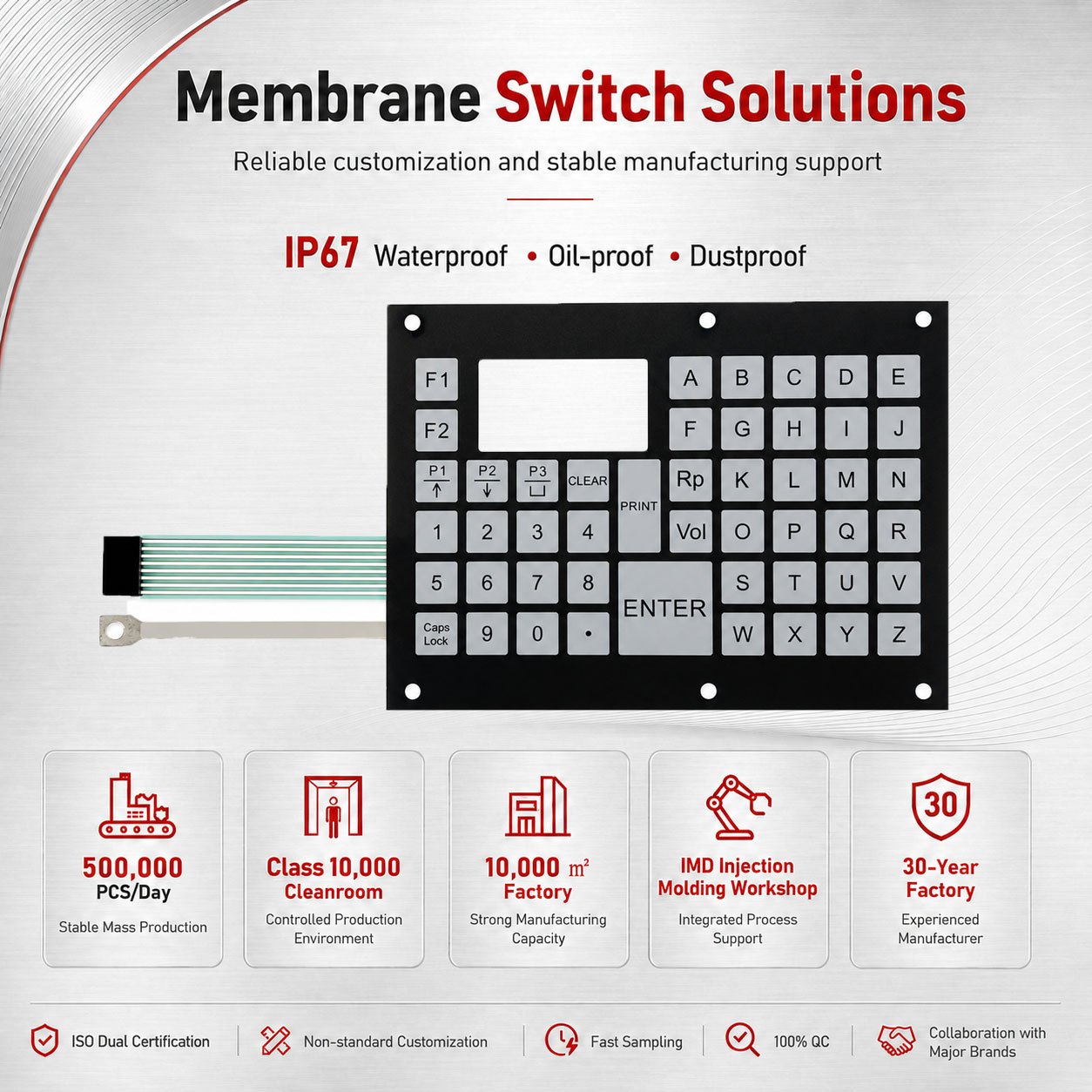
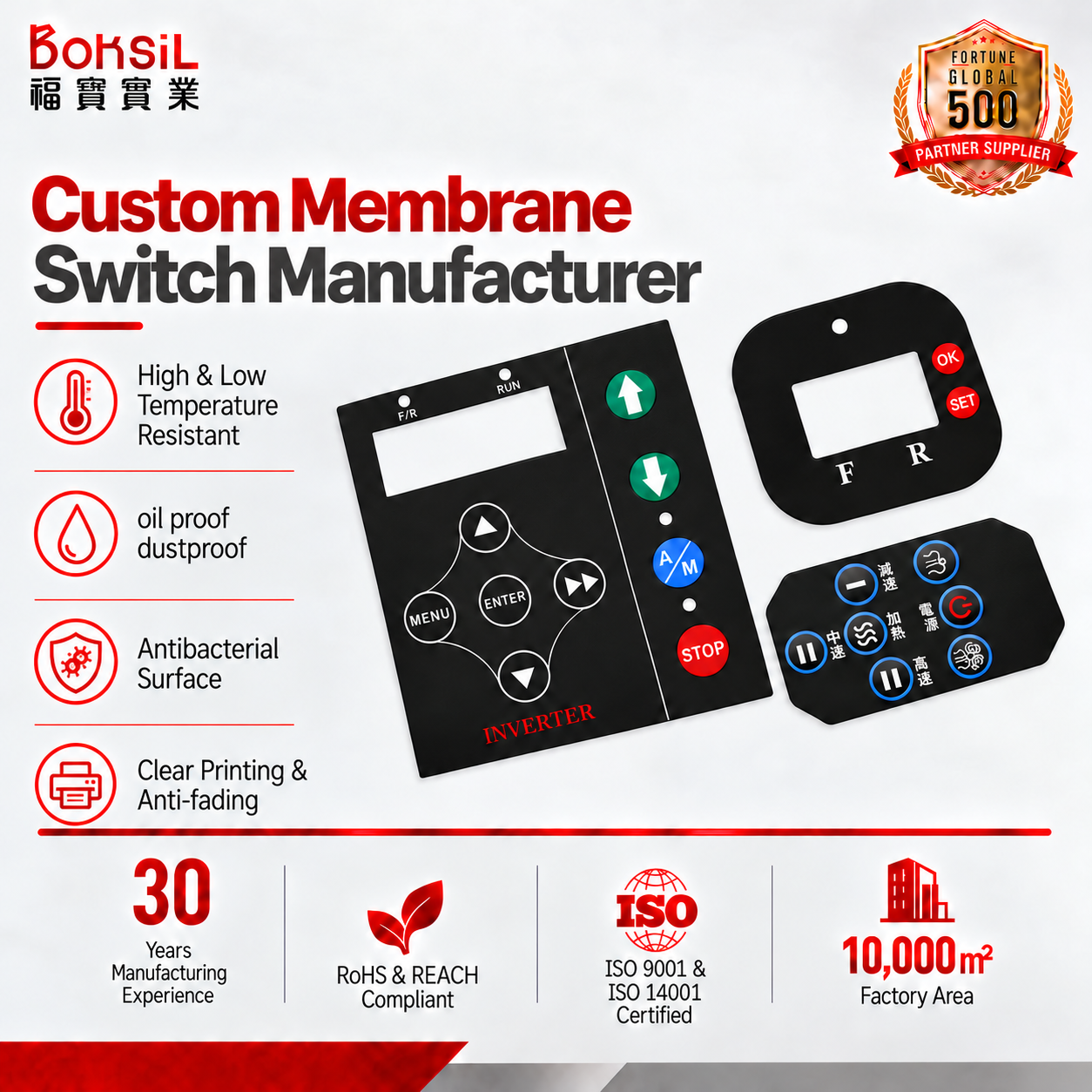
By shifting to an FPC copper circuit architecture sealed with high-tack acrylic adhesives capable of withstanding thermal swings up to 85°C and 95% RH, AXRU membrane keypads guarantee over 1,000,000 to 3,000,000 tactile actuations without switch resistance drift or graphic degradation.
10,000㎡
Cleanroom & Plant Capacity
100%
Electrical & Optical Pre-Shipment QA
12+ Yrs
OEM/ODM Global Manufacturing
Intertek
Independently Verified Facility
Island Microgrid & Solar Inverters
Remote hybrid microgrid installations on Yap, Chuuk, and Kosrae rely on distributed photovoltaic inverters and diesel backup generators. Our membrane control panels integrate dead-front LED windows, anti-glare graphic overlays for direct solar reading, and hermetic perimeter seals that prevent salt crystallization from corroding internal switch logic boards.
Commercial Port & Cold-Chain Bunkering
At regional distribution ports like Pohnpei Harbour, fuel bunkering pumps and commercial walk-in blast freezers demand panels resilient to petroleum distillates, ammonia, and extreme temperature shocks (-30°C to +45°C). AXRU manufactures chemical-resistant Autotex and stainless-steel hybrid tactile switchboards that retain snap action despite oil and washdown sprays.
Reverse Osmosis & Water Desalination
Municipal and resort desalination facilities across low-lying atolls require high-pressure washdown-rated (IP67/IP68) control consoles. Standard buttons crack and leak corrosive saline brine behind the bezel. Our continuous, embossed polyester graphic overlays provide seamless, wipe-down sanitization with zero crevices for salt buildup or fungal growth.
Inter-Island Maritime Navigation & VHF
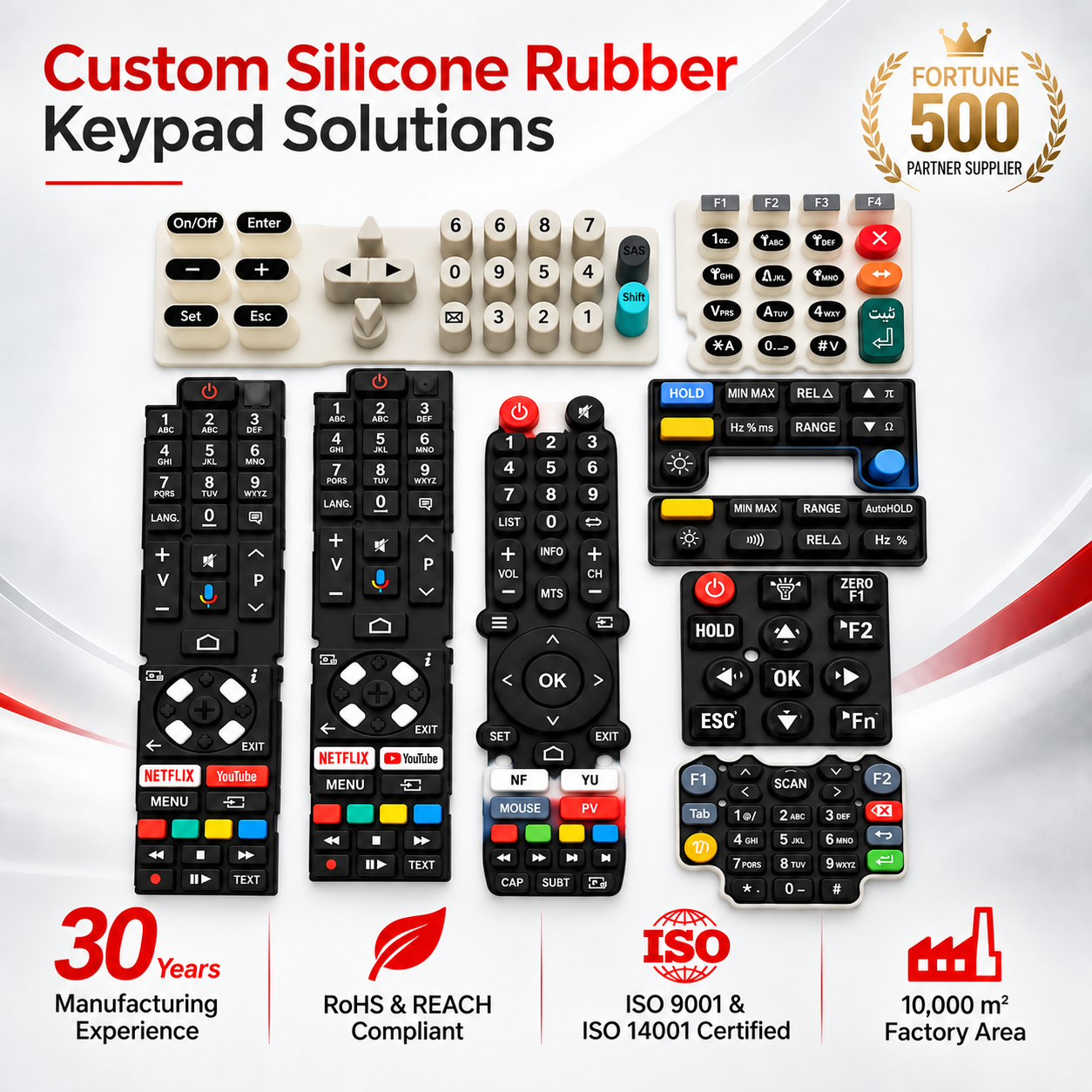
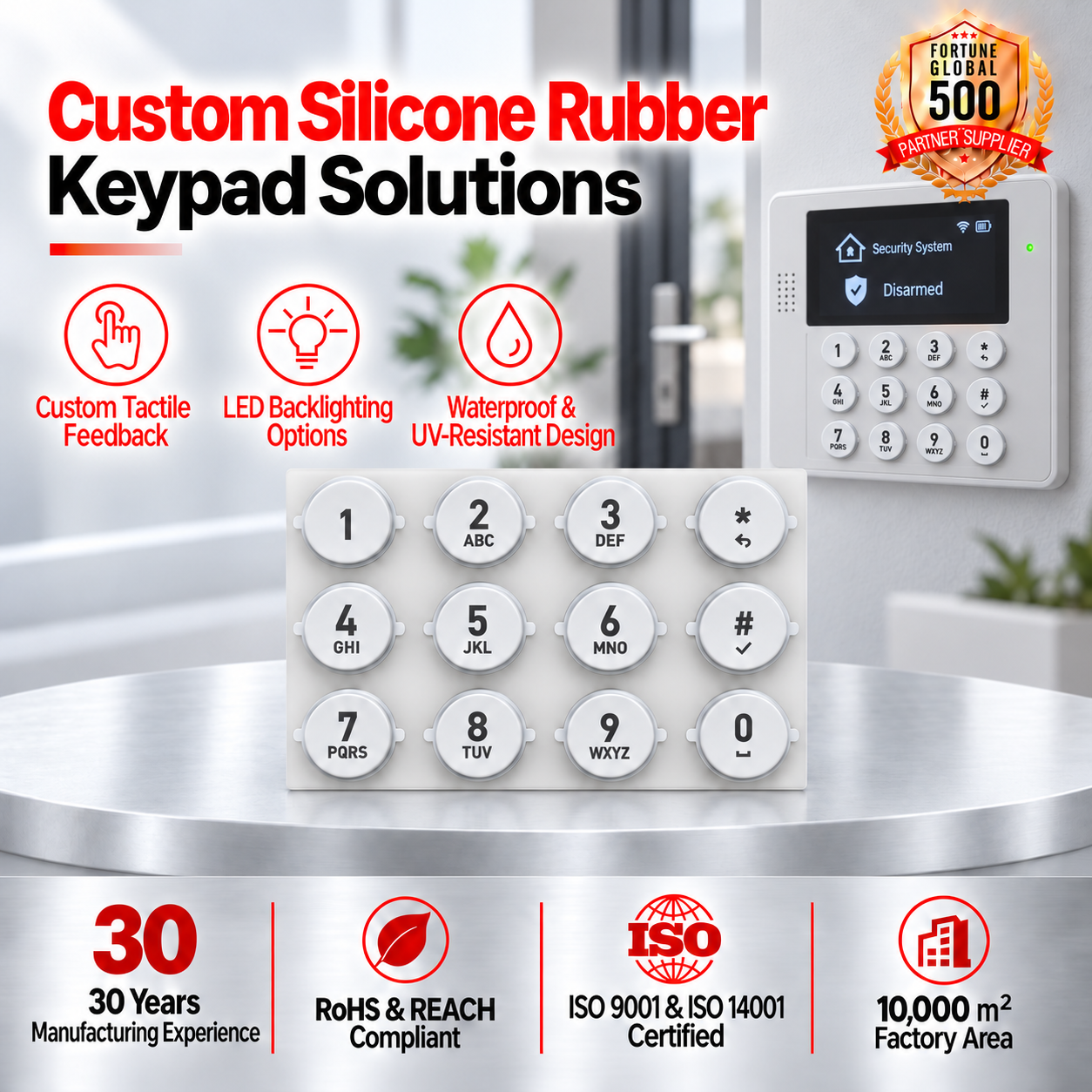
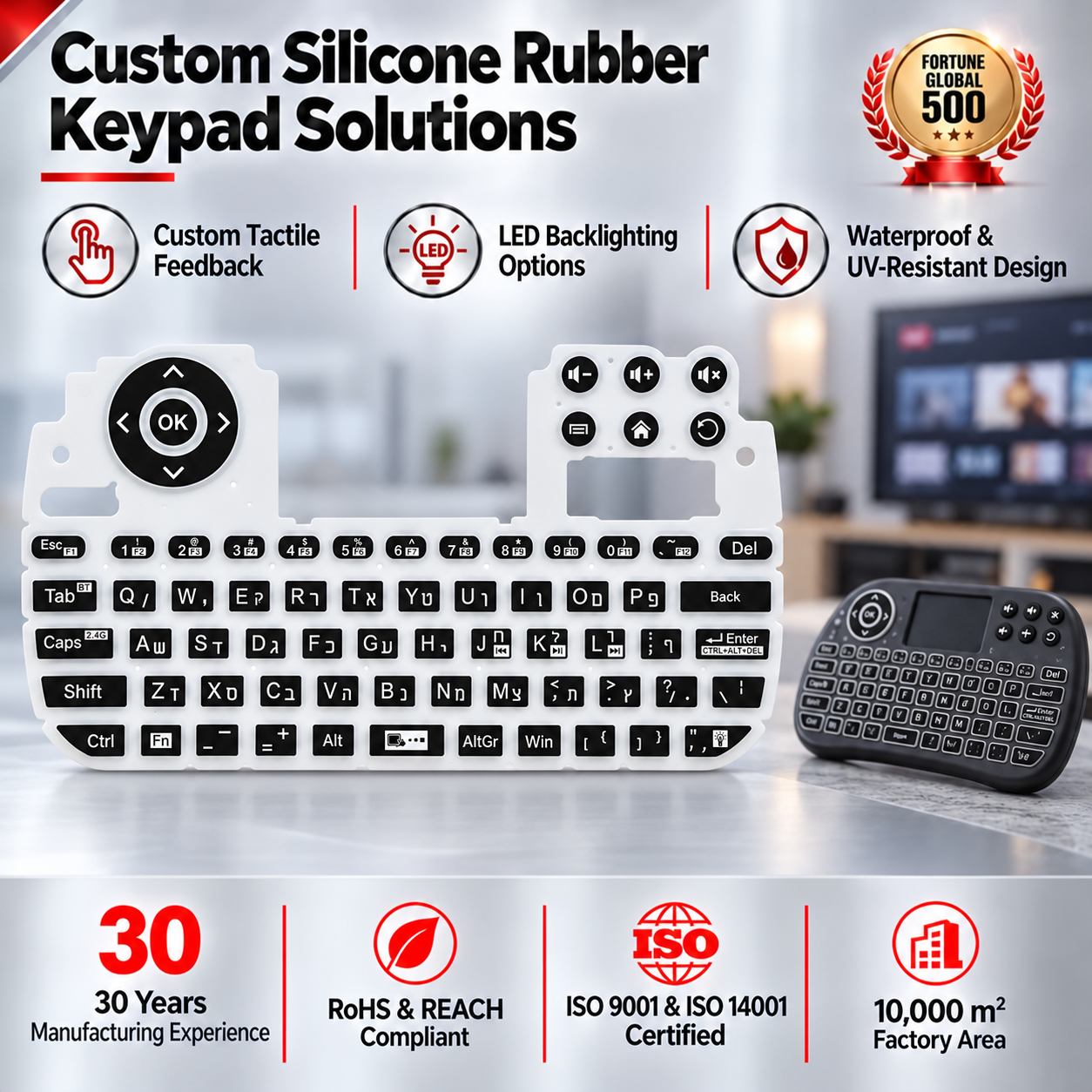
Inter-island cargo vessels, pelagic tuna fleets, and patrol boats operating in the FSM Economic Exclusion Zone depend on navigational radar, sonars, and communications systems. AXRU builds silicone rubber keypads featuring laser-etched translucent characters, carbon contact pills, and Light Guide Film (LGF) backlighting for night-bridge legibility.
Atoll Clinic Diagnostic & Telehealth Devices
Decentralized dispensaries and island healthcare clinics utilize portable blood analyzers, autoclaves, and patient vital monitors. These devices require antimicrobially coated, chemically inert membrane switch front plates that endure repeated sterilization using hospital-grade isopropyl alcohol, chlorhexidine, and sodium hypochlorite bleach.
Telecom & Weather Telemetry Enclosures
Unattended weather stations, tsunami warning beacons, and outer-island satellite earth stations require user input panels capable of withstanding intense UV radiation and driving tropical rainstorms without peeling, fading, or accidental capacitive touch triggering from rainwater sheeting.
Regional Market Trends: Modernizing Human-Machine Interfaces Across Oceania
Infrastructure investment in Micronesia, Palau, and the Marshall Islands is accelerating rapidly, catalyzed by international development projects, renewable energy microgrid funding, and telecommunications upgrades (such as regional fiber-optic submarine cable landing stations). This transformation drives distinct technological demands on industrial input hardware:
- Transition from Mechanical Switches to Monolithic Sealed Panels: Traditional push-buttons, rocker switches, and rotary dials allow moisture ingress through their mechanical shafts, resulting in rapid salt corrosion. System designers are standardizing on monolithic membrane switch panels and silicone elastomer keypads with fully integrated sealing gaskets.
- Demand for High-Contrast Sunlight Readability: With outdoor solar installations and marine deck equipment subjected to extreme ambient lux levels, low-grade displays and overlays become illegible. The adoption of matte, anti-reflective textured polyester films (Autotex Fine) and high-brightness LED status indicators embedded directly into the switch stack-up is now an industry standard.
- Hybrid Capacitive-Tactile Designs: Equipment builders are increasingly pairing capacitive touch surfaces for sleek, flat glass-front aesthetics with physical metal dome feedback for critical functions (such as Emergency Stop, Main Power, and Reset) to ensure positive tactile actuation even when operators wear heavy utility or maritime gloves.
- Supply Chain Resilience & Direct-to-Factory Prototyping: Island integrators can no longer absorb high minimum order quantities (MOQs) or multi-layered middleman markups from regional trading firms. Sourcing directly from verified manufacturers like AXRU—with prototype flexibility (MOQ 100 pcs) and comprehensive Design for Manufacturing (DFM) reviews—cuts development cycles and spare-parts overhead by more than 40%.
Intertek On-Site Verification
Our production facilities, quality management workflows, environmental controls, and social compliance standards are independently assessed and certified on-site by Intertek. We adhere strictly to ISO quality management protocols, providing international buyers with auditable provenance and quality assurance.
Comprehensive Testing Laboratory
Every batch of switches is validated within our internal reliability lab featuring:
• Key Life Testers (>1,000,000 cycles)
• Force-Displacement Profilers (tactile snap curve)
• Programmable Temp & Humidity Chambers
• UV Yellowing & Abrasion Rub Testers
Rapid DFM & Sample Turnaround
Our dedicated engineering department conducts comprehensive Design for Manufacturing (DFM) reviews on every drawing, validating tail routing, dome clearance, pin-pitch compatibility, and adhesive boundaries. Functional engineering prototypes are shipped within 5 to 7 business days.
Q1: How does AXRU handle international freight and logistics to Micronesia, Guam, and the Marshall Islands?
We regularly ship customized electronic assemblies to Oceania through expedited air courier services (DHL Express, FedEx International Priority, UPS) routed via key regional transshipment hubs in Guam (GUM) and Honolulu (HNL). For larger production runs or palletized enclosures, consolidated ocean freight can be booked directly to major seaports including Pohnpei (Kolonia), Chuuk (Weno), Majuro, or Saipan. All consignments are vacuum-sealed with desiccant packs and ESD antistatic shielding to prevent moisture absorption during maritime transit.
Q2: Why should we specify Copper FPC instead of Silver PET for switches installed in tropical atolls?
While screen-printed silver ink on PET film is cost-effective for indoor consumer electronics, it presents serious long-term reliability risks in equatorial island climates. Elevated relative humidity combined with continuous electrical potential creates severe electrochemical silver migration (dendritic treeing), which permanently shorts circuit traces. Polyimide-based Copper Flex Circuits (FPC) feature solid etched copper traces coated with polyimide coverlay or gold immersion plating, offering zero silver migration risk, significantly lower electrical loop resistance (<1 Ω), and immune performance against high-humidity failure.
Q3: Can AXRU reverse-engineer replacement membrane panels from existing or obsolete machinery?
Yes. In remote facilities across Micronesia, equipment from discontinued American, Japanese, or European manufacturers often requires replacement keypad panels that are no longer available from the original OEM. You can send your non-functional sample or a scan of the front fascia along with connector pinout details to our engineering team. We reverse-engineer the graphic artwork, trace geometry, tactile dome positions, and tail termination to produce 100% form-fit-function replacement panels.
Q4: What is the Minimum Order Quantity (MOQ), and do you accommodate low-volume municipal/pilot batches?
Our standard minimum order quantity for custom membrane switches and graphic overlays is 100 pieces. We understand that infrastructure projects in the Federated States of Micronesia often require small-batch replacement or pilot runs. We support prototype development phases with low-cost rapid soft tooling before committing to full high-volume die cut and screen production.
Q5: What file formats are required to generate an engineering quotation and DFM assessment?
For graphic overlays, vector artwork files in Adobe Illustrator (.AI), CorelDraw (.CDR), or editable Vector PDF with designated Pantone PMS color references are preferred. For physical dimensions, tail routing, and internal circuit layers, standard CAD drawings in .DXF, .DWG, or Gerber format allow our engineering team to provide a detailed Design for Manufacturing (DFM) analysis and firm quotation within 24 business hours.
Q6: How are graphic legends protected from high UV exposure and harsh chemical cleaning detergents?
All text, iconography, and colors are printed on the second surface (the reverse underside) of high-grade, optical-clarity polyester film (such as Autotex XE). The printing is viewed through the protective polymer substrate, meaning that mechanical scratching, aggressive sun exposure, saline aerosol, and harsh disinfectants (bleach, IPA, ammonia) never come into direct contact with the ink layer.
Ready to Engineer Resilient HMI Panels for Your Next Project?
Connect with AXRU Electronics’ dedicated project engineering team today. Review stack-up options, optimize for tropical salt-spray resistance, and receive a comprehensive technical proposal along with a customized quote.
Get Catalog