Engineered Switch Assemblies Ready for Panama & Regional Export
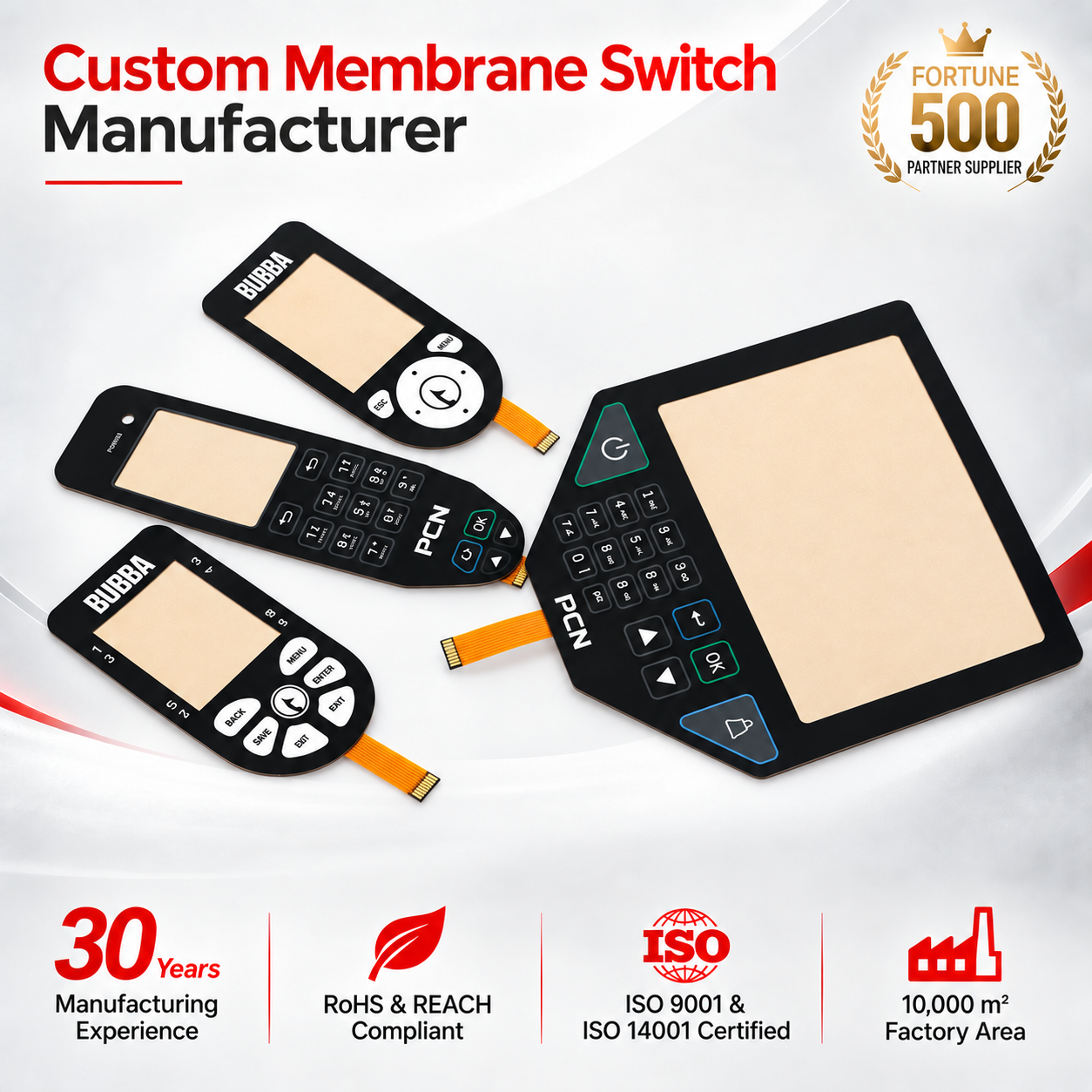
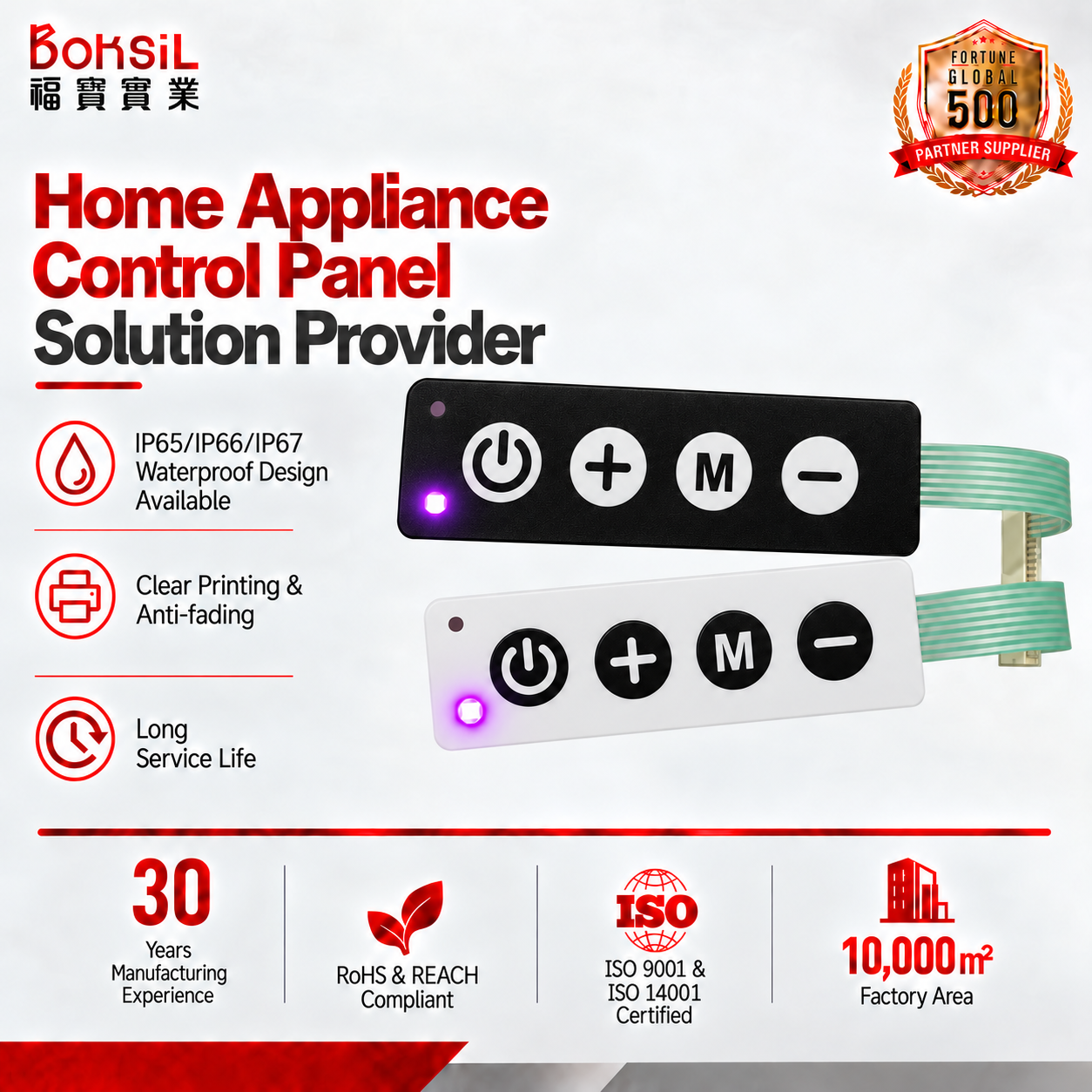
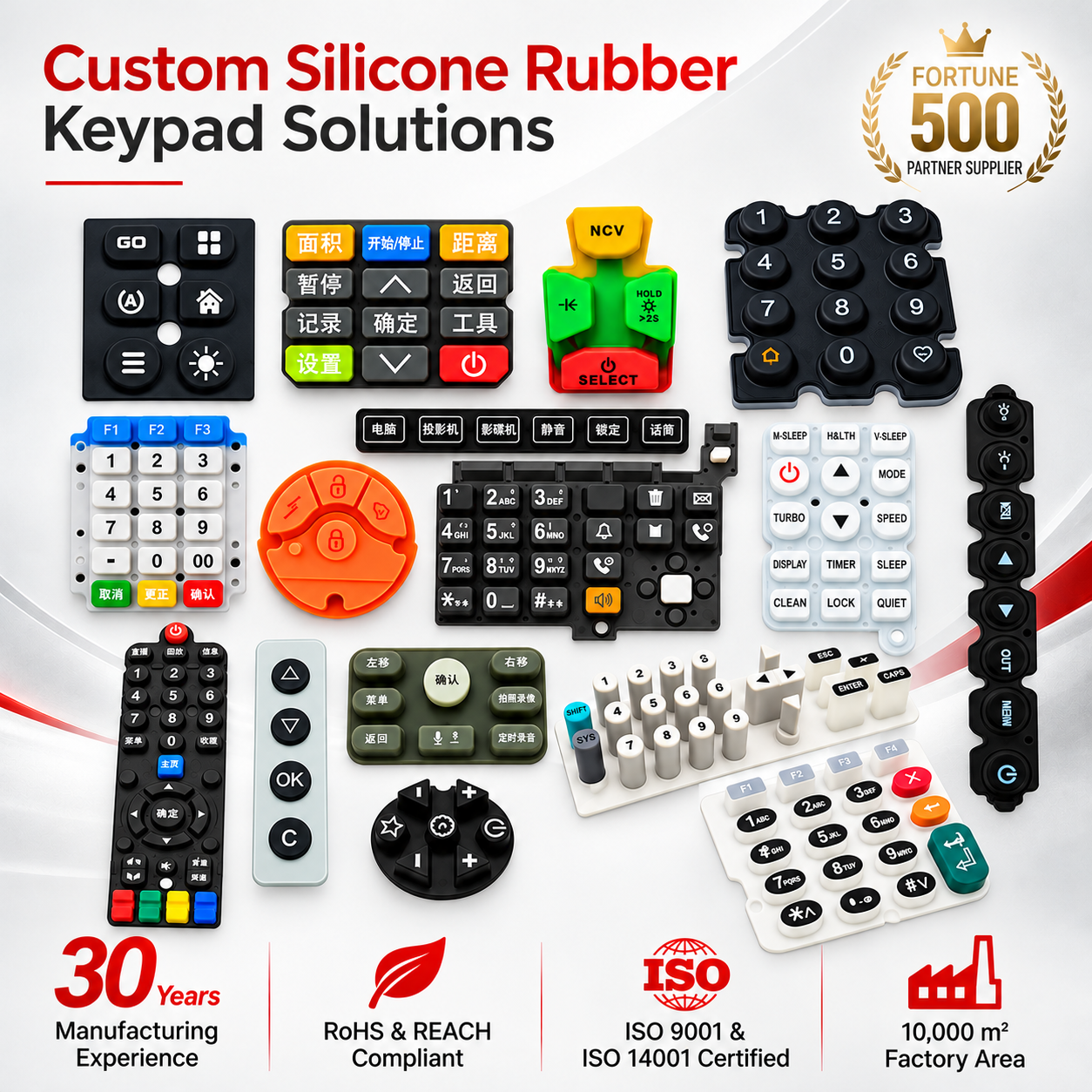
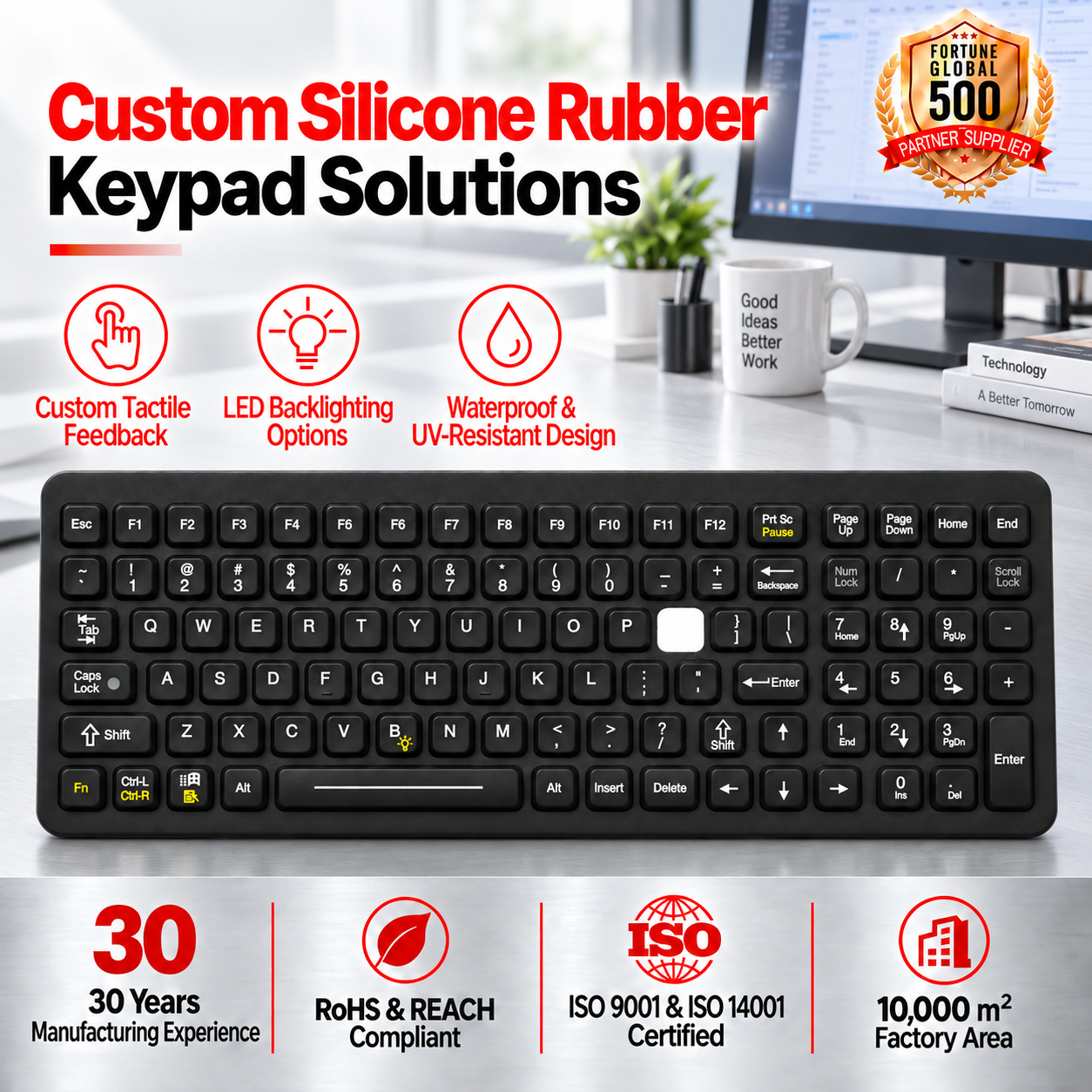
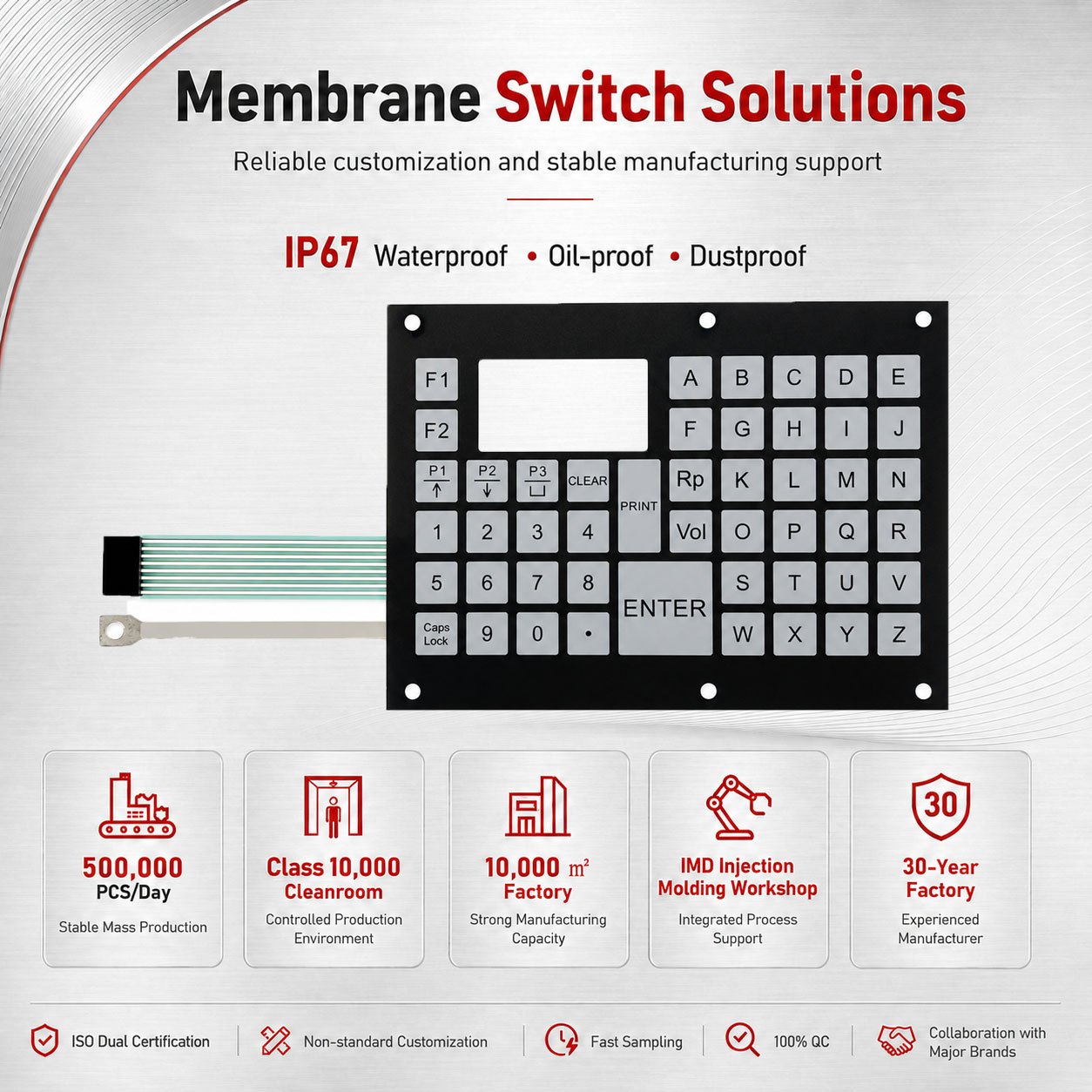
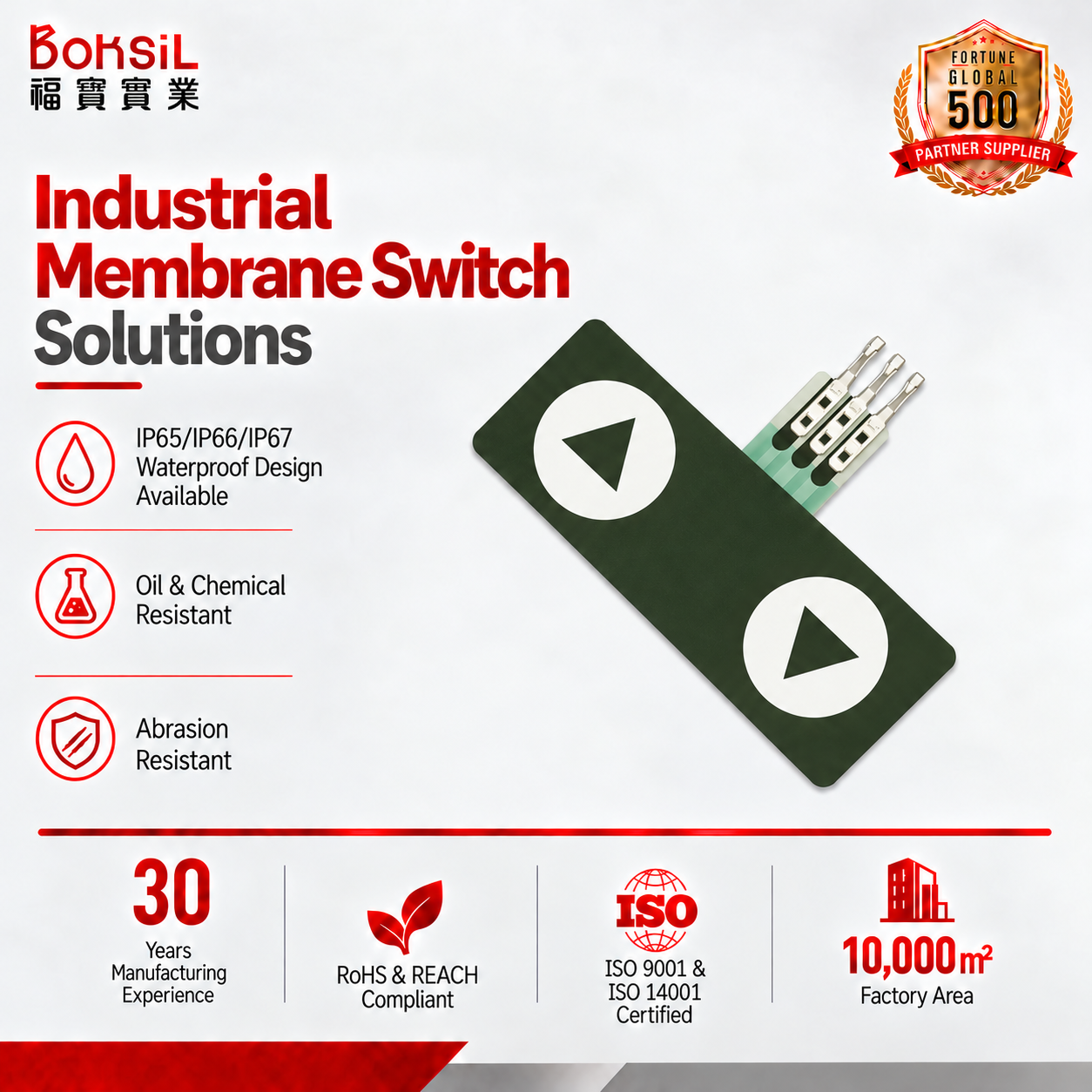
Custom precision-built human-machine interfaces engineered with silver-on-PET or copper FPC circuitry, LED backlighting, and environmental barriers suited to demanding commercial environments.
HMI Reliability Dynamics in the Panama City Metro & Regional Trade Corridor
Analyzing technical resilience, thermal dissipation, and salt-fog ingress mitigation for electronic control interfaces across Latin American distribution hubs.
The strategic position of Panama City as the transit nexus of the Western Hemisphere creates unique operational criteria for Human-Machine Interfaces (HMI) and LED membrane switches. Operating within the humid tropical classification (Köppen Am/Af), outdoor and semi-sheltered electronics deployed along the Panama Canal terminal zones, Tocumen commercial parks, and the Colón Free Trade Zone are perpetually subjected to high relative humidity (averaging 75% to 92%), ambient thermal shifts, airborne airborne chlorides, and intense ultraviolet solar irradiation.
In standard commercial keypad designs, this microclimate induces silver migration (electrochemical dendritic growth bridging conductive tracks), premature adhesive shear failure due to water-vapor transmission, and yellowing or embrittlement of external polyester faceplates. For electronic original equipment manufacturers (OEMs) and systems integrators servicing Panama City's marine refueling stations, cold-chain reefer terminals, and logistics automation, interface failure results in expensive downtime and critical communication halts.
As a specialized direct manufacturer, Dongguan AXRU Electronics Co., Ltd. addresses these environmental stressors through material engineering: pairing Autotype Autotex/XE series UV-resistant textured PET films with solid acrylic adhesive matrices (such as 3M 467MP/468MP or 3M 300LSE for low surface energy plastics). By integrating perimeter-enclosed IP67 silicone barrier gaskets, micro-vented venting chambers with hydro-repellent membranes, and surface-mount chip LEDs embedded via conductive isotropic epoxy over plated Flexible Printed Circuits (FPC), we deliver human-machine control assemblies capable of enduring severe maritime and industrial service cycles without tactile loss or optical degradation.
Localized Applications Across Panama's Key Economic Sectors
Tailored HMI and membrane control architectures designed to solve real-world mechanical and environmental challenges in local deployment sites.
Port Terminal & Maritime Logistics
Bunkering monitoring panels, shipboard navigation controls, and crane cabin telemetry terminals deployed along the Pacific (Balboa) and Atlantic (Manzanillo/Cristóbal) corridors. Our panels incorporate high-bright SMD LEDs (up to 1200 mcd) for daylight visibility and dead-front graphic printing with zero ghosting under direct tropical sun.
Free Trade Zone Assembly & Retail Terminals
Point-of-Sale (POS) consoles, barcode verify terminals, and distribution automation in the Colón Free Zone and Panama Pacífico. Featuring gold-plated stainless steel metal domes (click ratio > 45%) providing crisp tactile feedback that prevents double-key entries in rapid inventory environments, validated beyond 3 million actuations.
Tropicalized Commercial Refrigeration & Cold Chain
Reefer container controllers, food processing control units, and pharmaceutical storage consoles operating across alternating freezing and ambient condensing temperatures. Engineered with specialized internal vapor diffusion loops and hydrophobic FPC tails to prevent condensation shorts during temperature cycling between -25°C and +65°C.
Material Stack-Up Architecture for Tropicalized Marine Deployments
Technical comparison between generic standard membrane assemblies and AXRU's reinforced export-grade builds engineered for Central American logistics hubs.
| Design Parameter | Standard Commercial Grade | AXRU Panama/Marine Tropicalized Specification | Engineering Benefit |
|---|---|---|---|
| Faceplate Overlay | 0.125mm Standard Polyester or PVC | 0.180mm–0.200mm Autotex XE Fine/Velvet Textured UV-PET | Zero UV yellowing, resistance to diesel, salt mist, and industrial clean detergents. |
| Conductor Substrate | Silver Conductive Ink on PET Film | Polyimide Copper Flexible Circuit (FPC) or Nickel-over-Silver Encapsulated Tracks | Total elimination of silver electrochemical migration under 95% RH bias conditions. |
| Actuation & Contact | Bare Carbon Contact or Low-spec Steel | Four-Leg Stainless Steel Domes with 24K Gold Flash (Actuation: 280g–400g) | Consistent tactile snap-action, low contact resistance (< 1Ω), and zero contact oxidation. |
| Sealing Methodology | Perimeter Acrylic Transfer Tape | Full Gasket Frame with Hydrophobic Pressure Equalization Filter (IP67 Rated) | Prevents breathing vacuum effect under rapid daytime/nighttime temperature fluctuations. |
| LED Backlighting Integration | Top-mounted standard 0805 LEDs | Inverted SMD LEDs with Precision Light Guide Film (LGF) & Fiber Optic Weave | Ultra-thin uniform luminescence (<1.2mm total stack-up) with zero hot spots and minimal draw. |
Technological Trends Shaping Keypad Sourcing in Panama City
Four macroeconomic and technological vectors driving the modernization of interface panels across Latin American supply chains.
FPC Circuit Upgrades
Panama engineering firms are transitioning away from screen-printed silver ink circuits toward high-density flexible printed circuits (FPC), accommodating miniature SMT LEDs, resistors, and onboard microcontrollers within the keypad sandwich.
Light Guide Film (LGF)
Replacing bulky separate backlighting assemblies, ultra-thin LGF layers driven by side-firing LEDs illuminate discrete icons and perimeter borders with high uniformity, optimizing visibility for nighttime port operations while conserving power.
Silicone-Membrane Hybrids
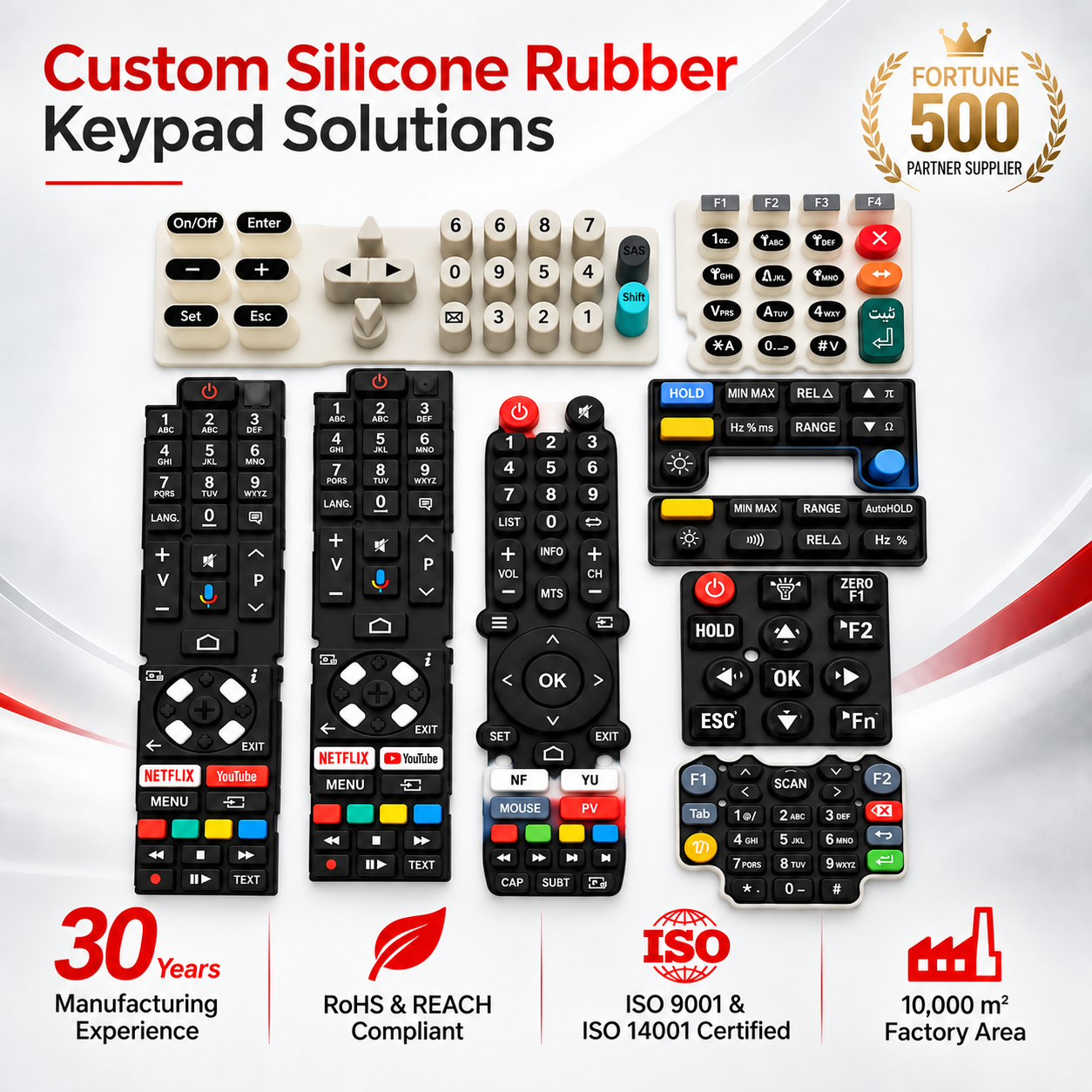
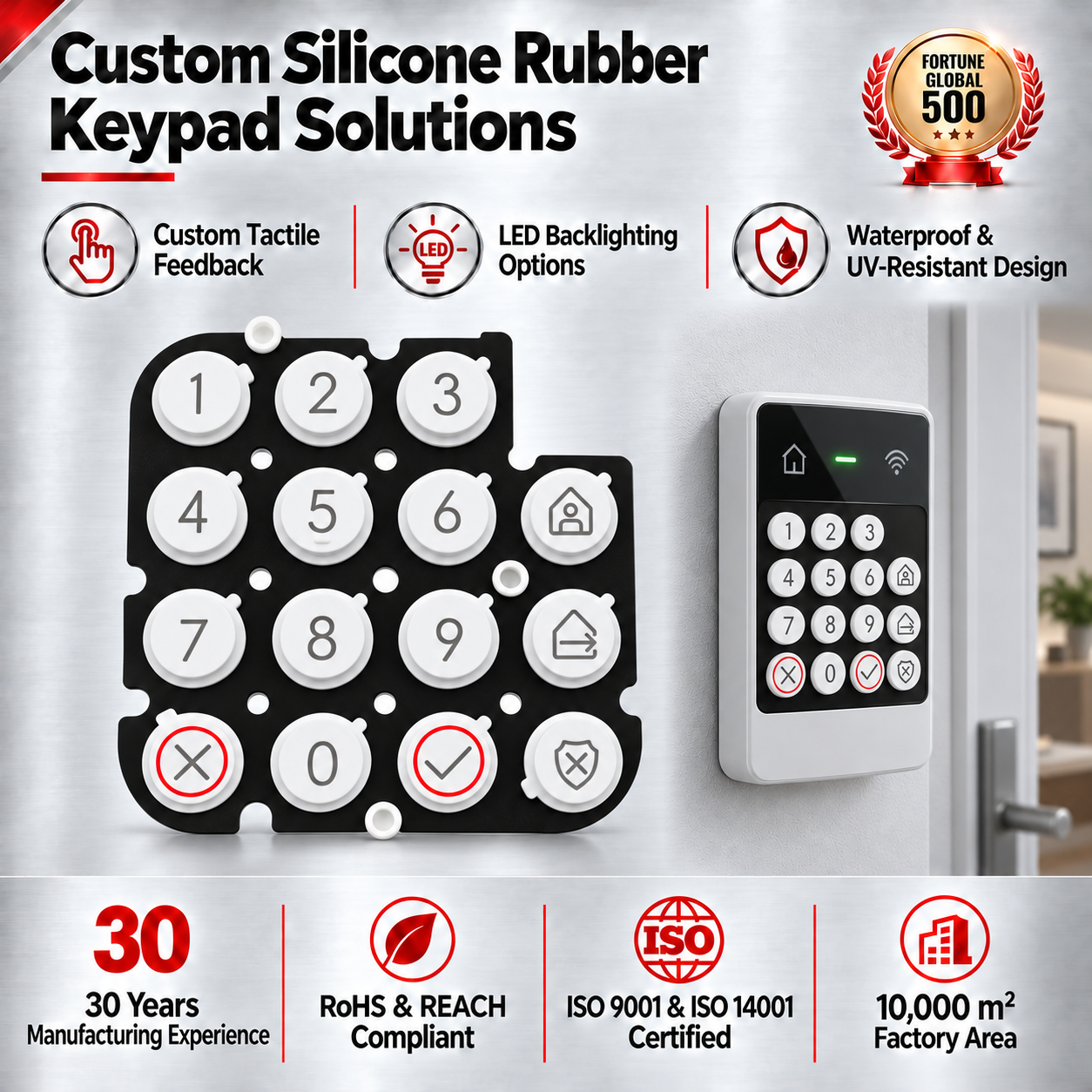
Equipment buyers increasingly favor hybrid tactile panels—combining the 3D ergonomic feel, rugged key travel, and laser-etched backlight legends of silicone rubber with the hermetically sealed circuit layers of a membrane switch.
Antimicrobial Surface Finishes
Driven by regional hygiene standards in food production, medical clinics, and public infrastructure across Panama, chemical-resistant antimicrobial overlays prevent biofilm buildup and withstand harsh hospital-grade disinfectant wipe downs.
AXRU Manufacturing Strength & End-to-End Quality Validation
Full in-house fabrication across our 10,000㎡ plant ensures traceable consistency from raw roll material to finished electro-mechanical interface.
10,000㎡ Cleanroom Production
Intertek on-site verified facility staffed by 121 technicians. Equipped with Class 1,000 and Class 10,000 dust-free printing rooms that guarantee zero pinholes or particulate contamination under optical display windows and conductive traces.
Advanced Environmental QC Lab
Every product iteration undergoes programmable temperature & humidity testing (-40°C to +120°C, 20%–98% RH), automated key life cycle tests up to 5,000,000 hits, force-displacement curve analysis, and ink solvent rub testing.
Fortune 500 Proven Supplier
Over a decade of direct export experience servicing global brand tier-1 supply chains. Complete quality documentation including First Article Inspection (FAI), Production Part Approval Process (PPAP Level 3), RoHS, REACH, and full batch traceability.
Frequently Asked Questions: Sourcing Membrane Switches in Panama City
Clear, direct technical answers addressing customs routing, moisture ingress protection, lead times, and prototyping requirements.
How does AXRU prevent silver migration in the high-humidity environment of Panama?
To resist relative humidity averaging over 80% in Panama City, we utilize high-purity silver pastes paired with cross-linked dielectric polymer encapsulation over all circuit tracks. For severe outdoor or marine terminal applications, we recommend polyimide copper Flexible Printed Circuits (FPC) with ENIG (Electroless Nickel Immersion Gold) plating, completely eliminating electrolytic dendritic growth and track breakdown.
What is the typical transit duration and customs route to Panama City and the Colón Free Trade Zone?
For urgent engineering prototypes and production batches under 50 kg, air express couriers (DHL, FedEx, UPS) deliver directly to Panama City (PTY / Tocumen) or Colón within 4 to 6 business days. For consolidated container ocean shipments, cargo routed through Shenzhen or Hong Kong ports to Balboa or Manzanillo takes approximately 24 to 28 days port-to-port. All shipments include detailed export packaging with moisture-barrier vacuum packing and desiccant packs.
What engineering files and specifications are needed to initiate a DFM quotation?
We work from 2D vector graphic layouts (Adobe Illustrator .AI, CorelDraw .CDR, or vector .PDF) showing Pantone color callouts, embossing lines, and transparent LED windows, combined with mechanical CAD drawings (AutoCAD .DWG/.DXF or 3D STEP files) indicating pinouts, tail routing, dome positions, and overall dimensions. If you are replacing an obsolete assembly, our engineering team can reverse-engineer physical sample units sent to our Dongguan facility.
Can you manufacture membrane switches compliant with IP67 or NEMA 4X washdown standards?
Yes. We achieve true IP67 / NEMA 4X performance using perimeter-welded acrylic frame adhesives, continuous gasket sealing ridges, and specially routed tail-exit seals that prevent capillary moisture draw. Internal chambers are vented through hydrophobic ePTFE membrane patches, enabling equalizing air pressure during sudden tropical temperature fluctuations without drawing ambient water vapor into key contacts.
What are your Minimum Order Quantities (MOQ) and sample prototyping turnarounds?
To support product R&D and specialized equipment runs for our Latin American partners, our production MOQ starts at just 100 units. Prototyping and DFM validation samples are routinely completed in our dedicated sample fabrication workshop within 5 to 7 working days following mechanical and artwork sign-off.
Request Custom Quotations & Full Technical Catalogs
Have an upcoming design build, tender submission, or looking to resolve field reliability issues on existing control panels? Connect directly with our engineering team for DFM reviews, free sample kits, and comprehensive stack-up recommendations.