Precision Products for Advanced Control Architecture
High-tolerance graphic overlays, tactile silicone interfaces, and integrated circuit switch assemblies manufactured in an Intertek-audited 10,000㎡ clean facility.
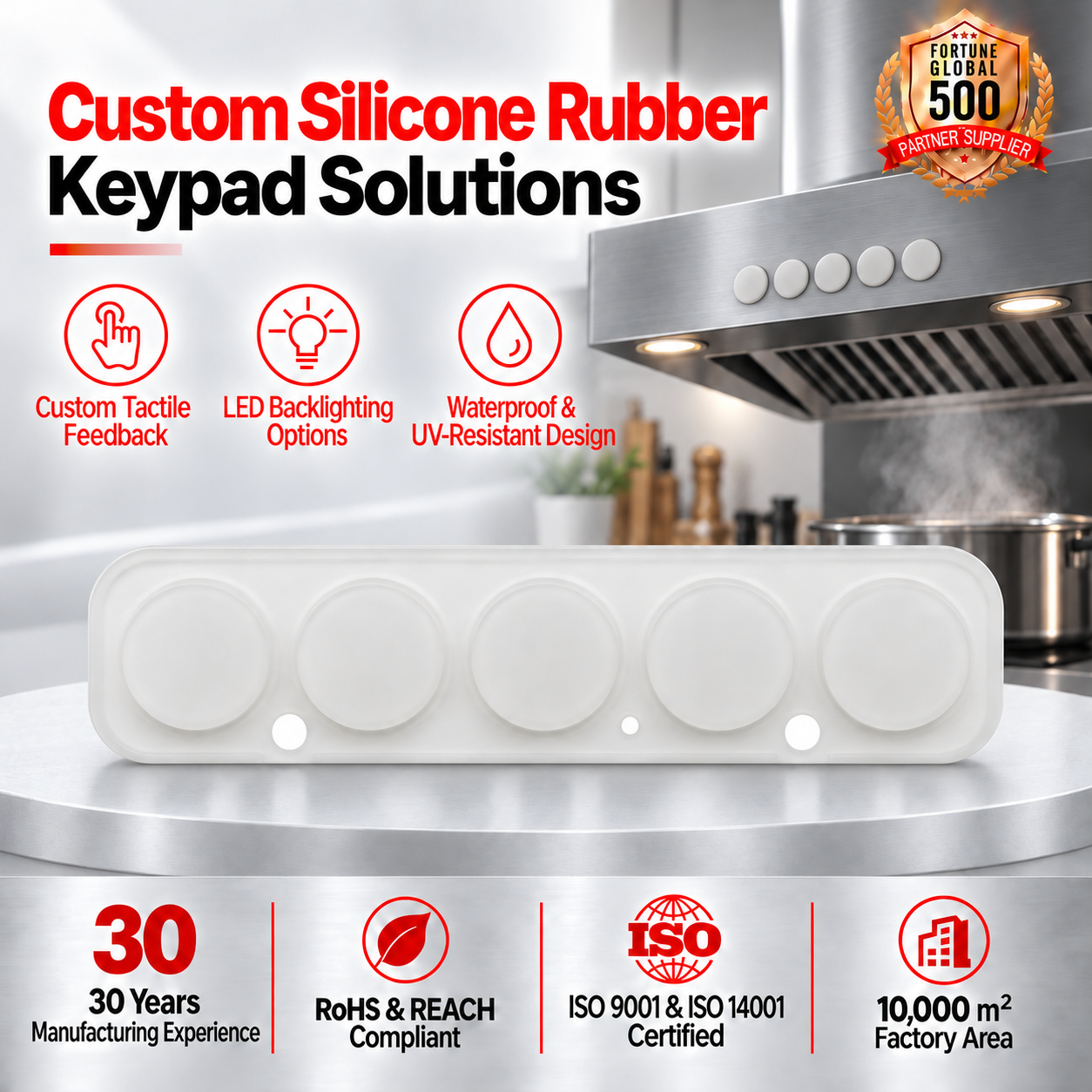
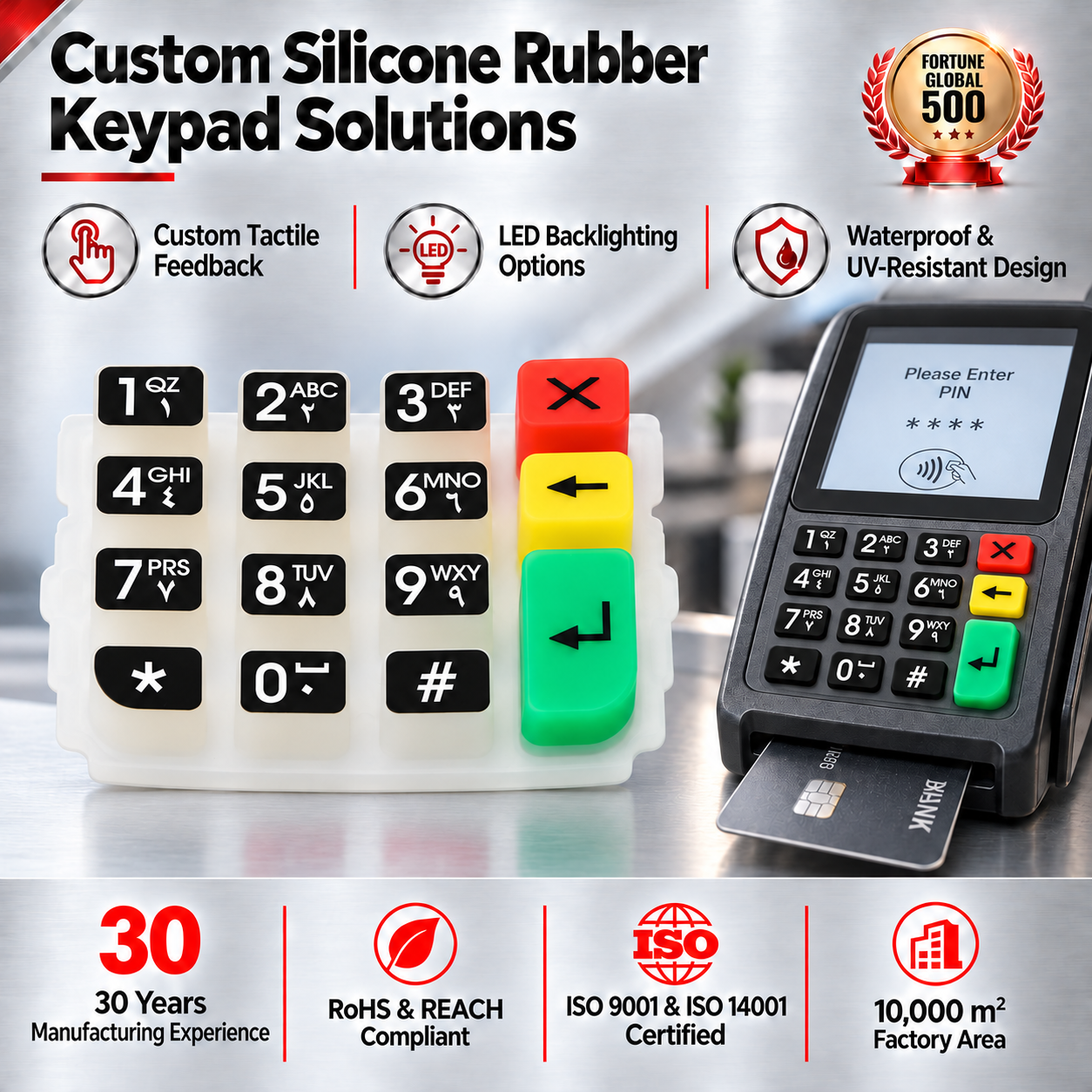
5 Circular Soft Silicone Rubber Keypad Front Panel Button Unit
- StructureMolded Silicone + Matte PU
- Tactile FeelMomentary Soft Actuation
- Contact TypeConductive Carbon Pills
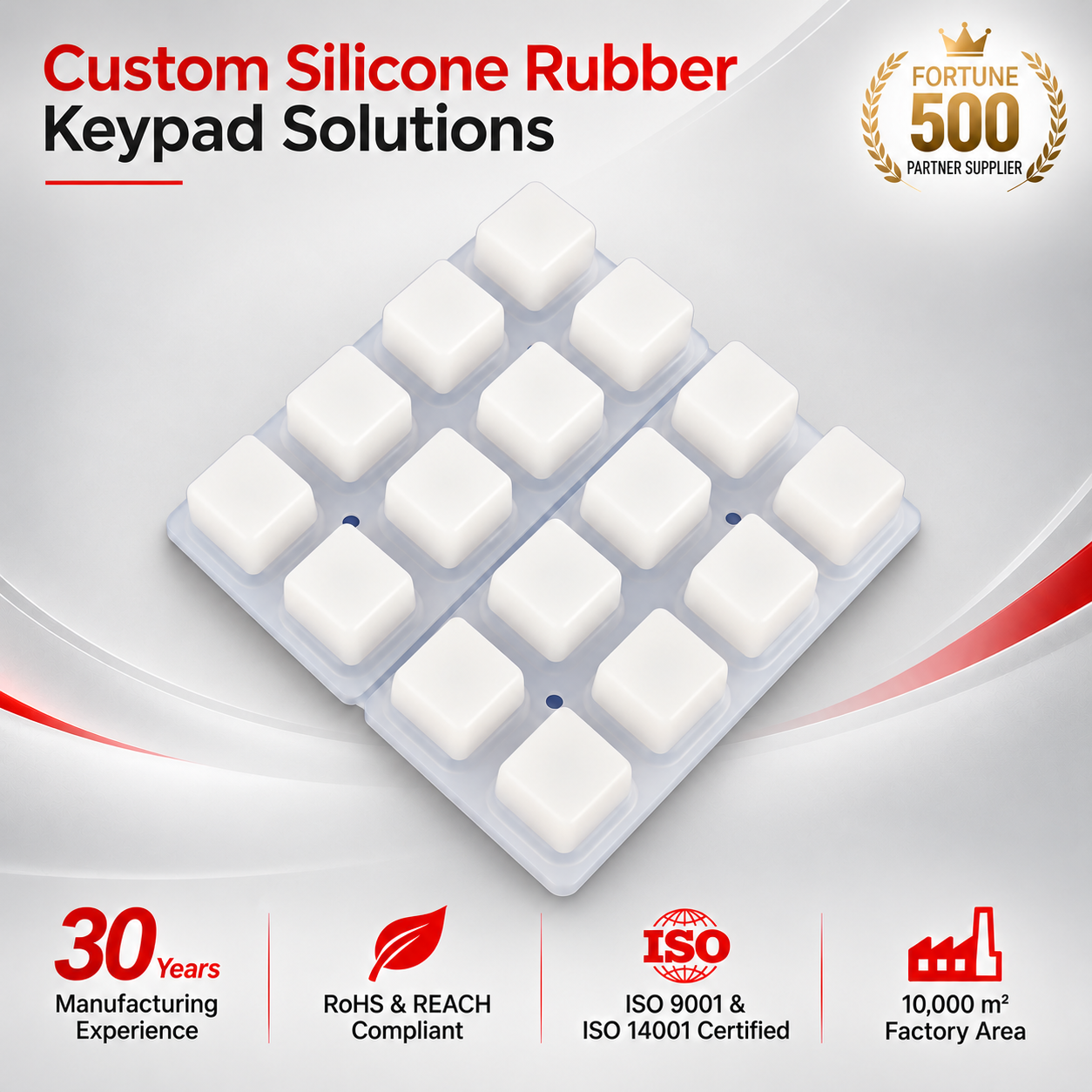
Wholesale Oval Dome Backlit White Silicone Rubber 4x4 Keypad Panel
- IlluminationLaser-Etched Backlighting
- ResistanceOil, Grease, Dilute Acids
- ApplicationCommunication Equipment
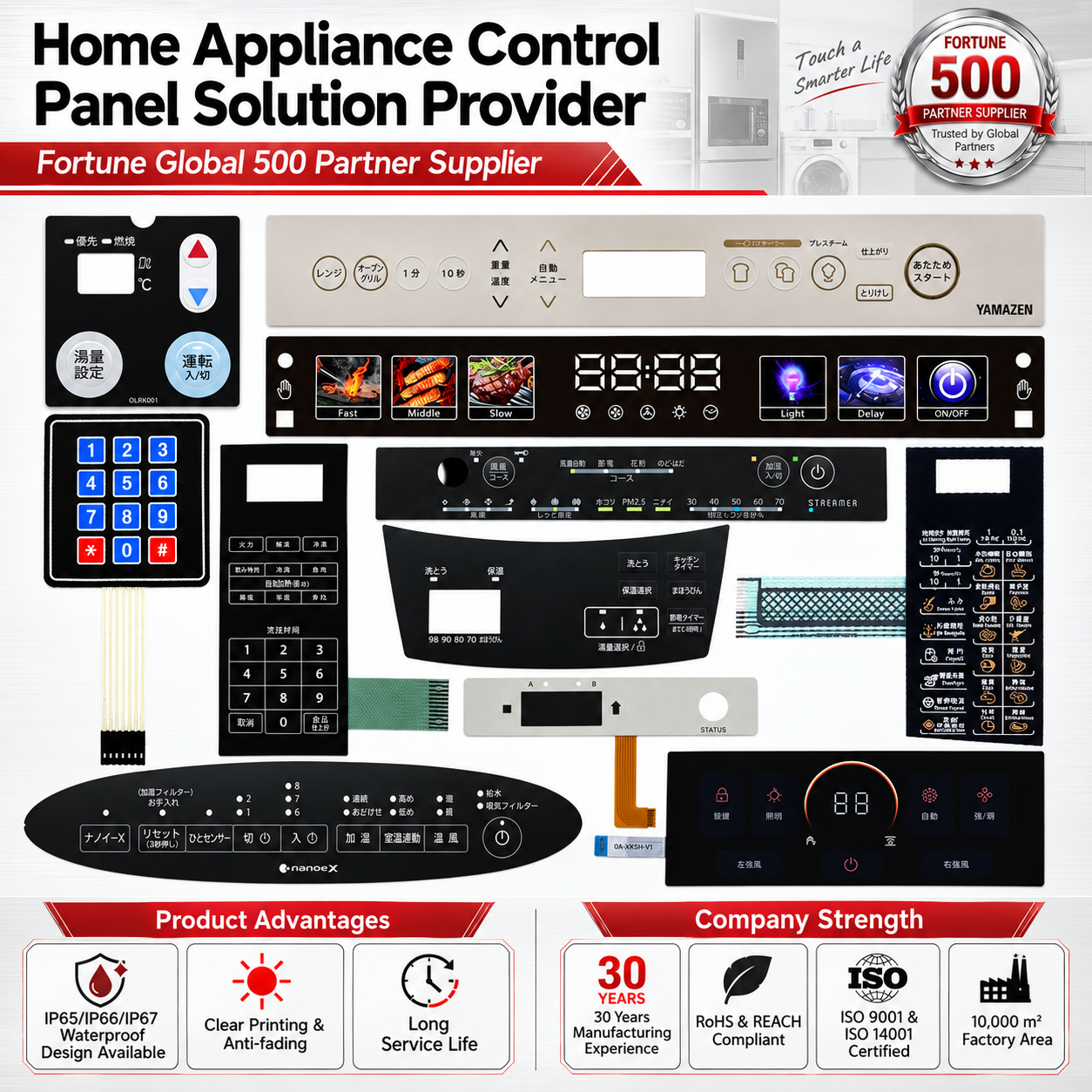
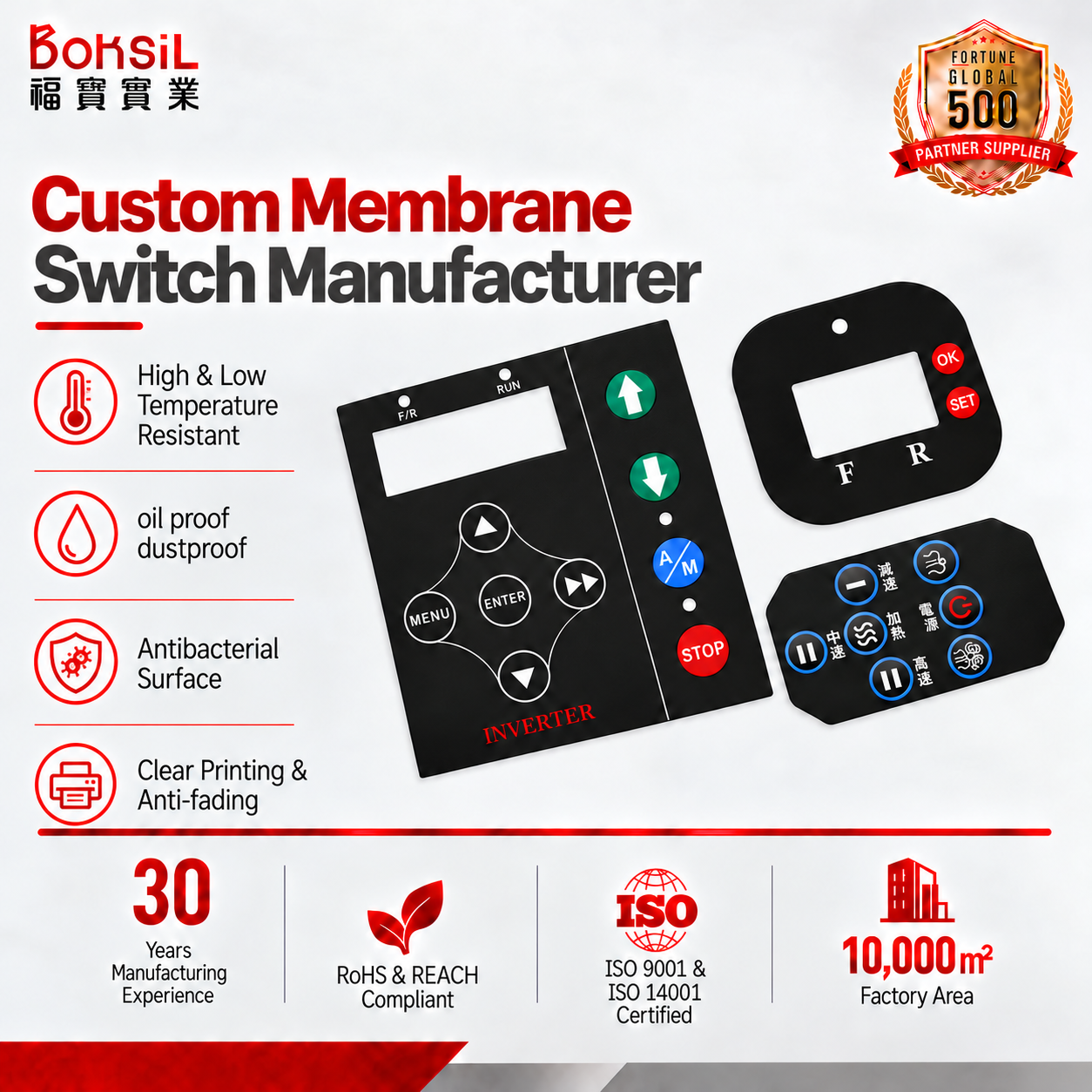
Factory Custom Membrane Switch Graphic Overlay IP65 Waterproof Panel
- Sealing RatingIP65 Gasket Perimeter
- Key StyleEmbossed Rim / Tactile Domes
- SubstrateFine Matte Polyester Film
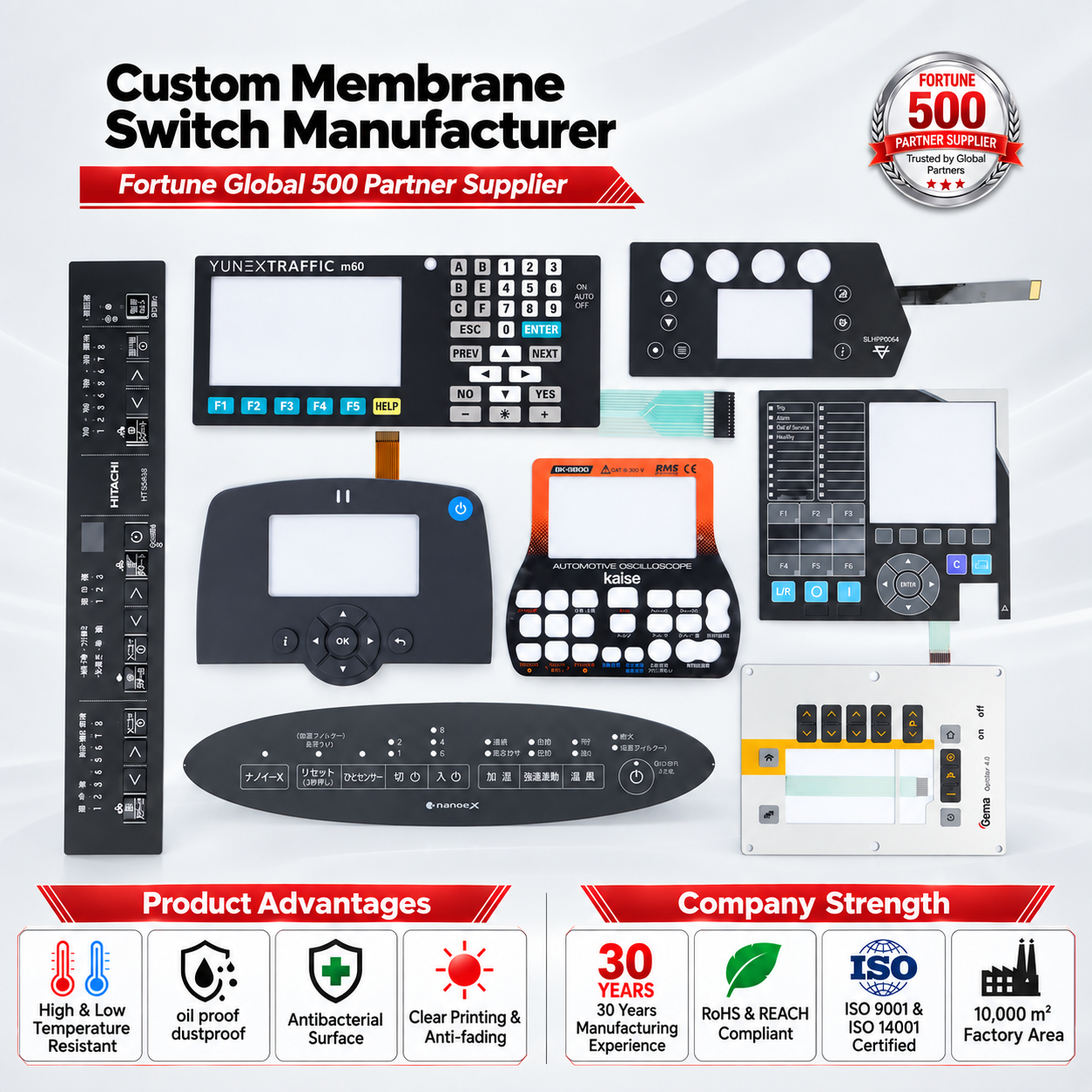
Industrial Medical Appliance Membrane Switch Waterproof FPC Touch Panel
- CircuitryCopper Flex FPC Substrate
- Reliability> 3,000,000 Operations
- SterilizationChemical Wipe Proof Layer
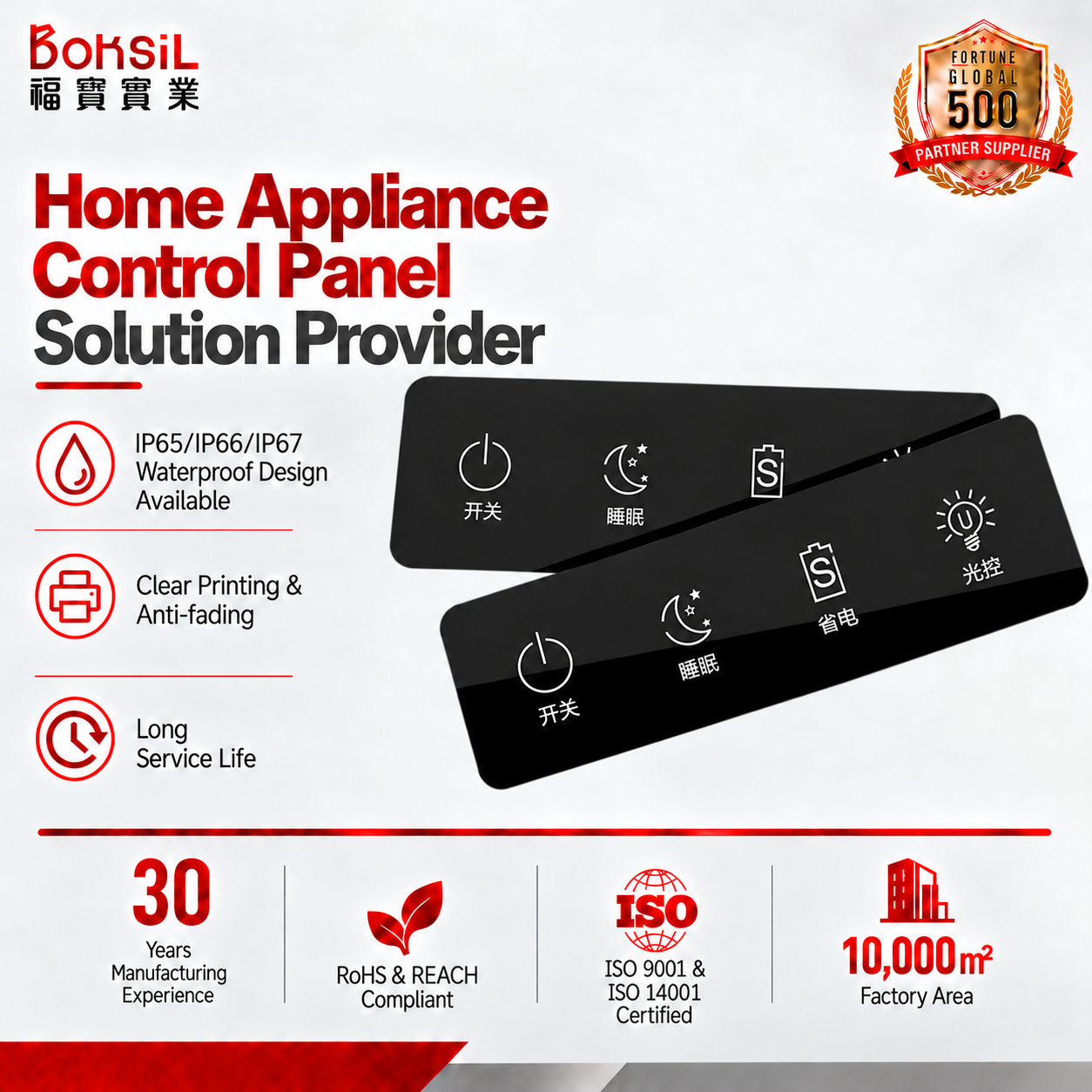
Custom Silk Screen Printing PMMA Acrylic Graphic Overlay Front Panel
- MaterialHard-Coated Optical PMMA
- ClarityAnti-Glare > 92% Light Trans.
- Bonding3M 467MP / 468MP Adhesives
OEM Front Control Electronic Panel Polycarbonate Graphic Overlay
- Base FilmFlame Retardant Lexan PC
- PrintingSub-Surface Reverse Screen
- RegistrationTight Visual Match (±0.05mm)
Soft Tactile Switch Plastic Silicone Button Elastomer Contact Strip
- ConstructionPlastic Keycaps + Rubber Base
- FeedbackCrisp Snap Ratio (40-60%)
- DurabilityAbrasion Tested > 500k Cycles
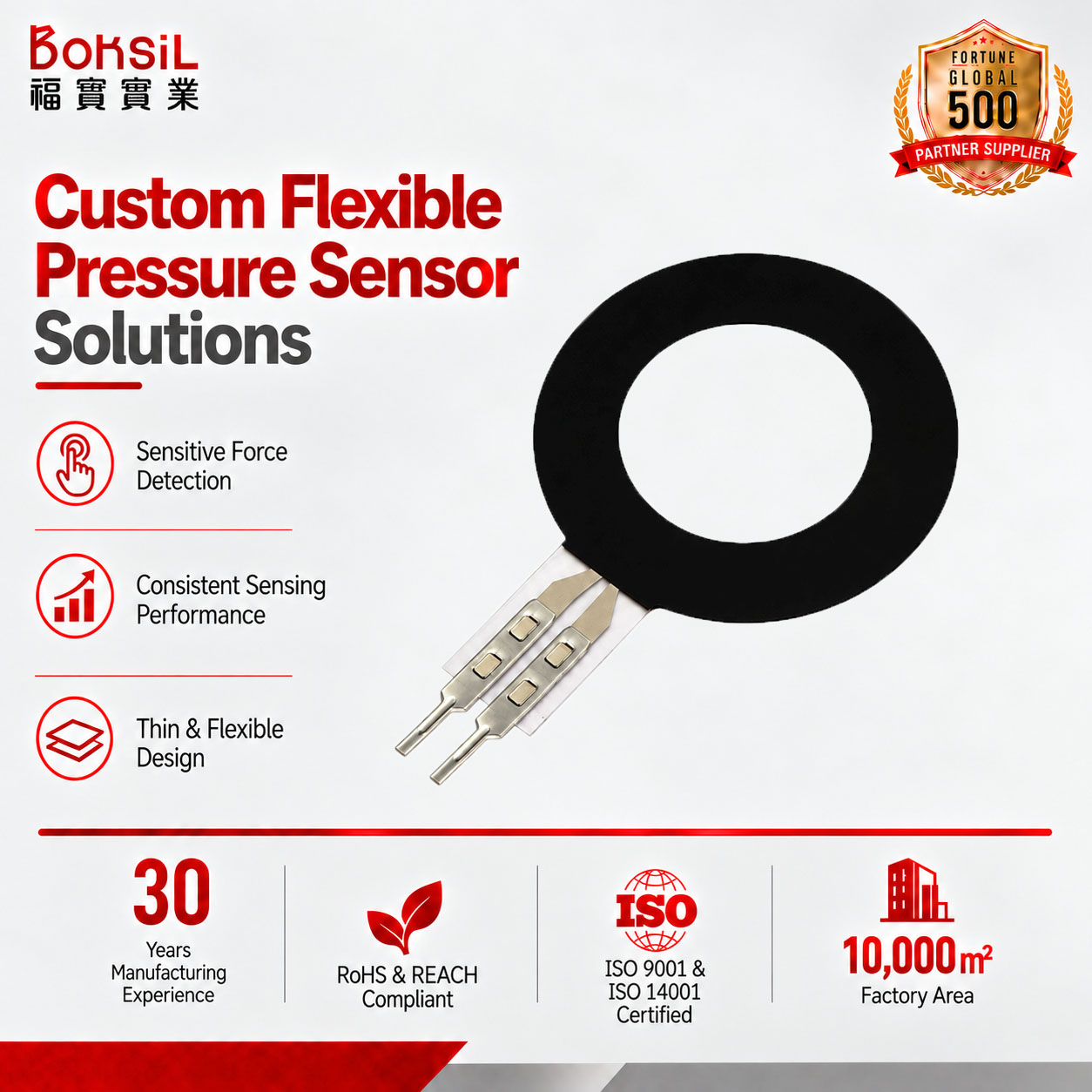
Universal FSR Flexibility Force-Sensitive Pressure Sensor Overlay
- TechnologyDynamic Thin-Film Piezoresistive
- IntegrationUltra-thin (<0.35mm profile)
- SensitivityDynamic Trigger 20g - 5kg
Engineering Human-Machine Interfaces for the Balzers Industrial Ecosystem
Balzers, anchored within the Rhine Valley's high-technology corridor between Liechtenstein and Switzerland, represents an exceptionally rigorous demand profile for Human-Machine Interfaces (HMI). Recognized globally as a focal point for high-vacuum surface engineering, advanced thin-film coating systems, precision optical equipment, and semiconductor tool manufacturing, apparatus originating from this market requires componentry designed to operate continuously within specialized industrial environments.
For procurement officers, hardware design authorities, and manufacturing engineers in Balzers, keyboard overlays and membrane control fascias are not mere aesthetic elements. They constitute the primary operational barrier isolating sensitive control circuits from cleanroom solvents, harsh chemical vapors, industrial lubricants, high electrostatic charges, and heavy repetitive usage. Standard off-the-shelf front panels consistently fail under the rigorous micro-climate criteria demanded by precision instruments engineered in the Alpine Rhine basin. Dongguan AXRU Electronics Co., Ltd. provides localized engineering optimization, material science verification, and scalable manufacturing services designed specifically to satisfy these exacting operational parameters.
Localized Industrial Applications in the Balzers and Alpine Rhine Basin
Thin-Film & PVD Equipment
Sealed fascias engineered with chemical-resistant biaxially oriented polyester (PET) to endure outgassing considerations, high-temperature cycles, and plasma vacuum chamber environments.
Optical & Photonics Instruments
Non-glare, anti-reflective PMMA acrylic and polycarbonate overlays featuring dead-front optical display cutouts and precise filter printing for laser measurement equipment.
Semiconductor Handling Machinery
Electrostatic discharge (ESD) guarded membrane arrays with integrated conductive silver-grid printing to avert charge buildup in class 100/1000 cleanroom environments.
Material Science Selection: Polyester (PET) vs. Polycarbonate (PC) in Harsh Operational Climates
Selecting the correct polymer base is the foundational step when engineering keyboard overlays for apparatus exported worldwide from the Balzers industrial zone. Material degradation—manifested as environmental stress cracking, plasticizer migration, ink delamination, or tactile fatigue—directly compromises machine reliability and brand prestige.
Autotex® XE and Fine Biaxially Oriented Polyester (PET): For heavy industrial controllers, process vacuum equipment, and systems exposed to aggressive solvents (such as isopropyl alcohol, acetone, methyl ethyl ketone, and industrial detergents), Autotex textured polyester remains the industry benchmark. PET possesses superior flex life, exceeding five million continuous actuations without micro-fracturing along key dome embossment borders. Its molecular matrix provides high dimensional stability across rapid thermal swings (-40°C to +85°C), mitigating the ripple effects that often afflict cheaper front fascias during operating cycle thermal spikes.
Optical-Grade Polycarbonate (Lexan™ / Makrofol®): Polycarbonate is favored when structural rigidity, internal impact resistance, and optical display clarity are primary concerns. Offering exceptional flame retardance (UL94 V-0 or V-2 compliance) and easy thermoforming characteristics, PC is widely used for display bezel interfaces, diagnostic consoles, and instrumentation with internal light-guiding mechanisms. When treated with an optical hard coat, PC surfaces achieve a pencil hardness of up to 3H, preventing abrasions from heavy operator hand tooling.
| Engineering Property | Autotex® Hard-Coated Polyester | Standard Polycarbonate (Lexan) | Hard-Coated Cast PMMA Glass |
|---|---|---|---|
| Flexural Fatigue Life | > 5,000,000 actuations | ~ 100,000 actuations | Rigid / Non-Flexible |
| Chemical & Solvent Resistance | Exceptional (Alcohols, Alkalis, Fuels) | Moderate (Susceptible to aromatic solvents) | High (Except aggressive esters) |
| Surface Pencil Hardness | 2H to 3H (Textured finish) | HB to 1H (Uncoated) | 4H to 6H (Hard-Coated Acrylic) |
| Dimensional Thermal Stability | Up to +105°C continuous | Up to +85°C continuous | Up to +80°C continuous |
| Optical Window Transmission | Up to 89% (Clear window zones) | 90% to 92% | > 92.5% (High clarity) |
| Balzers Application Fit | PVD vacuum tools, chemical plants | Diagnostic bezels, internal monitors | Instrumentation front LCD lenses |
Emerging Technology Trends in the Alpine Rhine Valley Engineering Belt
The transition toward Industry 4.0 and smart physical factory architectures throughout Liechtenstein and neighboring Eastern Switzerland has catalyzed distinct shifts in human-machine interface configurations:
1. Seamless Hygienic Architectures & Dead-Front Aesthetics: Equipment users demand zero-dust collection surfaces. The convergence of flat, flush-mounted graphic overlays with sub-surface dead-front icon printing allows indicators and warnings to remain completely invisible until backlit by integrated surface-mount LEDs. This creates modern, high-contrast user interfaces with zero surface crevices, facilitating rapid solvent washdowns.
2. Hybrid HMI Configurations: Pure touchscreen capacitive glass systems often struggle within automated industrial machine environments where technicians operate while wearing heavy nitril or protective leather gloves. The dominant trend across Balzers automation suppliers is the hybrid panel: pairing a center multi-touch TFT display unit with dedicated tactile perimeter membrane switches fitted with stainless steel domes (providing 280g to 420g actuation force). This arrangement prevents accidental machine actuation while delivering unambiguous tactile and acoustic click confirmation.
3. Advanced Shielding Against High Electromagnetic Interference (EMI): With high-frequency plasma generators and heavy power electronics integrated within coating systems, electromagnetic compatibility (EMC) is a crucial certification benchmark. Keyboard overlays engineered for this market feature continuous micro-printed copper or carbon-silver ground planes beneath the graphic layer, safely shunting electrostatic charges to chassis ground before signal cross-talk can disrupt micro-controllers.
Manufacturing Reliability: The Dongguan AXRU Engineering Standard
Adhesive Engineering
Specified integration of original 3M 467MP, 468MP, or 3M 300LSE low-surface-energy laminates, ensuring high peel adhesion on powder-coated and die-cast aluminum frames.
Complete DFM Validation
Every engineering package undergoes Design for Manufacturability analysis: tail exit trace geometry, pinch clearances, ventilation channel design, and color registration review.
100% Comprehensive QC
In-house testing laboratories verify contact loop resistance, insulation impedance (>100MΩ at 250V DC), key life endurance, and environmental stress before shipping.
Supply Chain Predictability and Technical Collaboration with Dongguan AXRU Electronics
Operating a 10,000㎡ production facility manned by 121 specialized technicians and engineers in Dongguan, China, AXRU Electronics bridges the gap between Asian industrial scale and precision European engineering expectations. Audited and verified on-site by Intertek, our plant maintains ISO-certified quality protocols covering every internal stage: from precision screen printing in Class 10,000 cleanrooms to automatic laser profiling, CNC machining, metal dome placement, and automated force-displacement graph testing.
For Swiss and Liechtenstein procurement organizations managing tight NPI (New Product Introduction) programs, we provide agile tooling turnarounds, functional prototyping within 5 to 7 business days, and seamless delivery channels via air express directly into the Zurich-Vaduz logistics hub. Our export engineering unit communicates fluently in professional technical English, eliminating misunderstandings on tight tolerances, CAD layer alignments, and cosmetic classifications.
Frequently Asked Questions: Procurement for the Balzers Market
How does AXRU ensure keyboard overlays resist chemical washdowns in vacuum/optical assembly rooms?
What are your typical prototype and mass-production lead times for European shipments?
Can you match specific tactile requirements for operators wearing heavy work gloves?
What design files and technical documentation are needed for an accurate quotation?
How are electrostatic sensitive circuits protected inside your membrane switch assemblies?
Accelerate Your Next-Generation HMI Development
Send your drawings, BOM requirements, or reverse-engineering samples directly to our senior interface engineering desk. Receive a comprehensive DFM technical review and factory-direct quote within 24 hours.