Advanced In-Mold Decoration (IMD) Engineered for Specialized Operating Environments
Explore our core selection of factory-direct Human-Machine Interface (HMI) modules, industrial capacitive touch switches, and high-performance in-mold decorated front panels supplied directly to commercial and infrastructure developments across the Airai corridor.
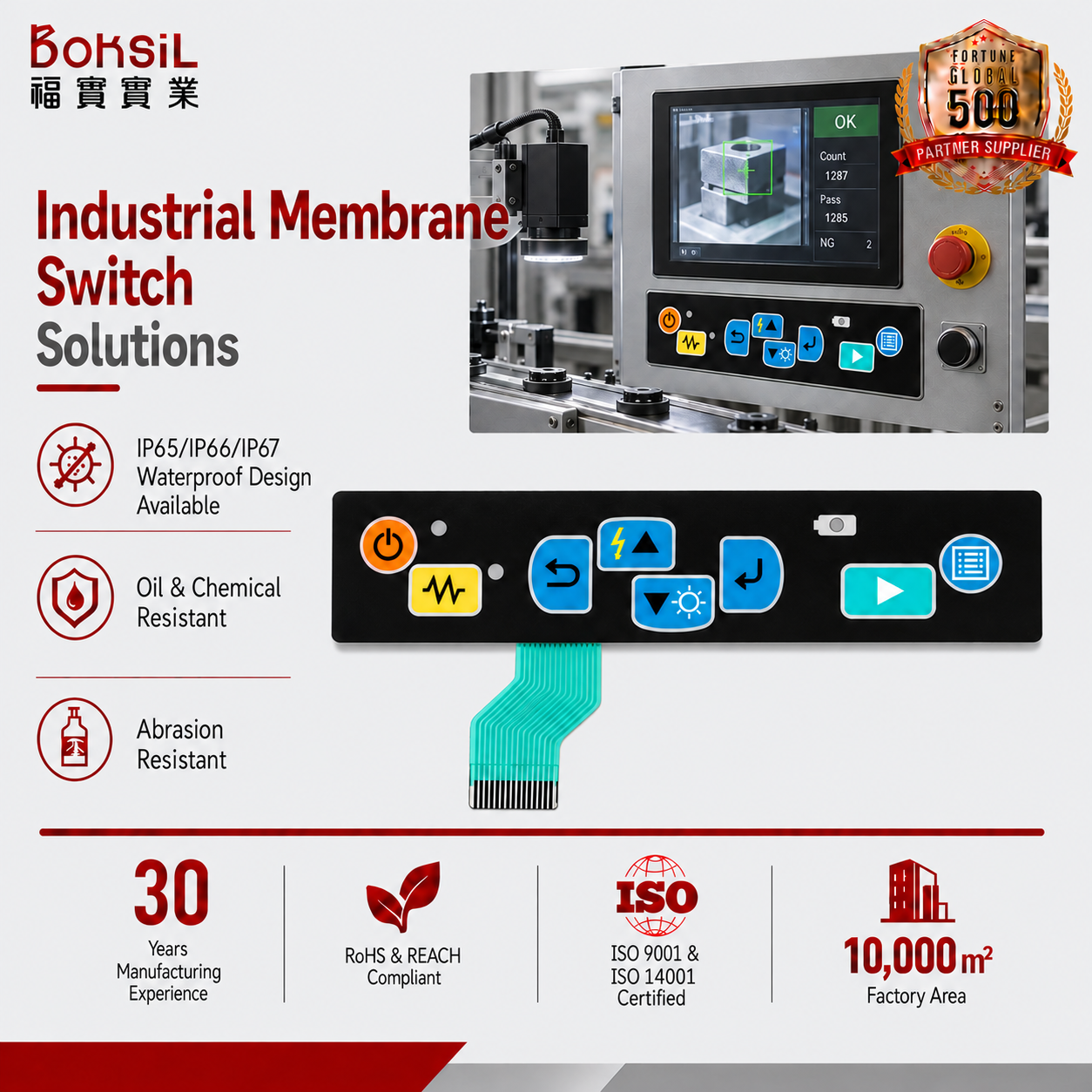
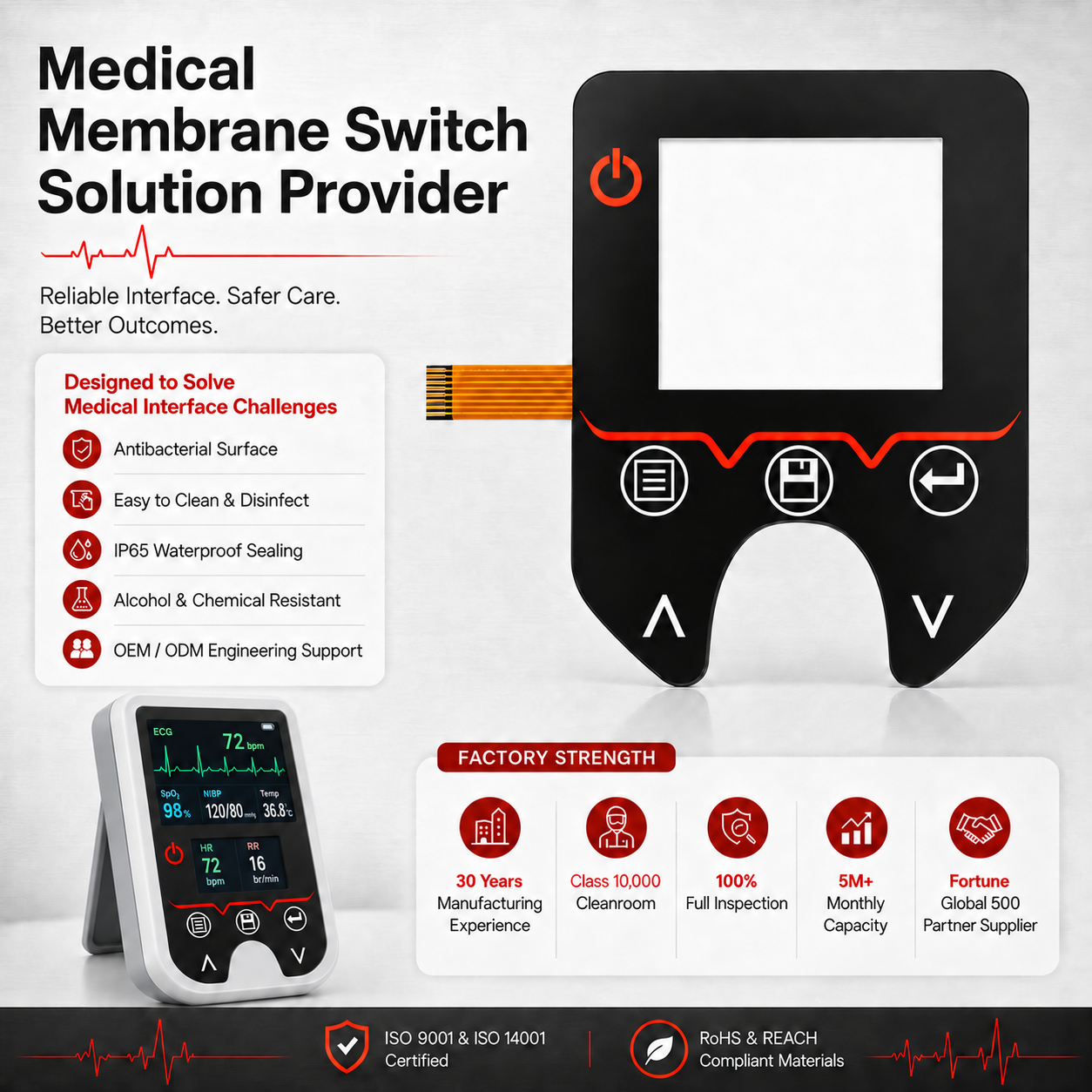
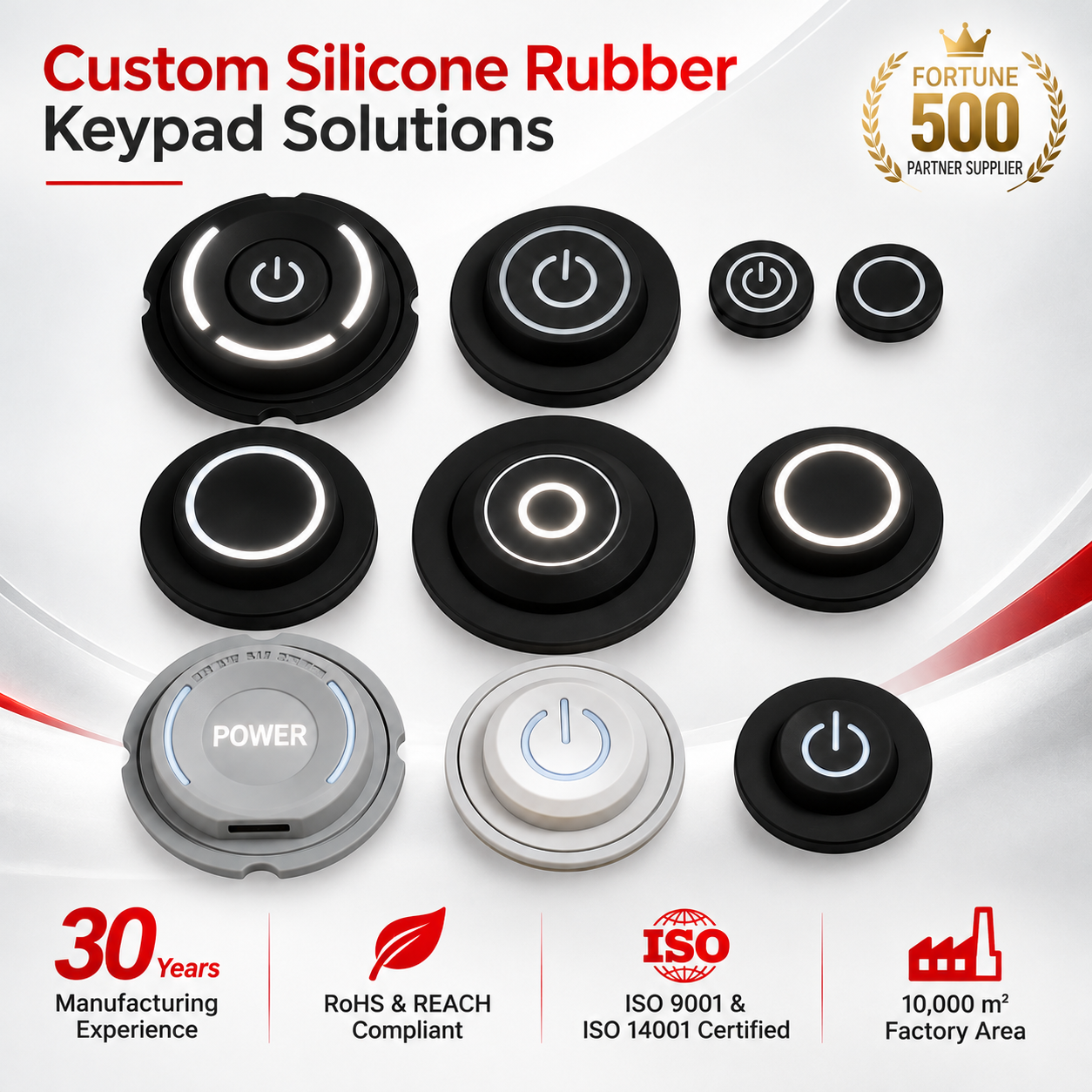
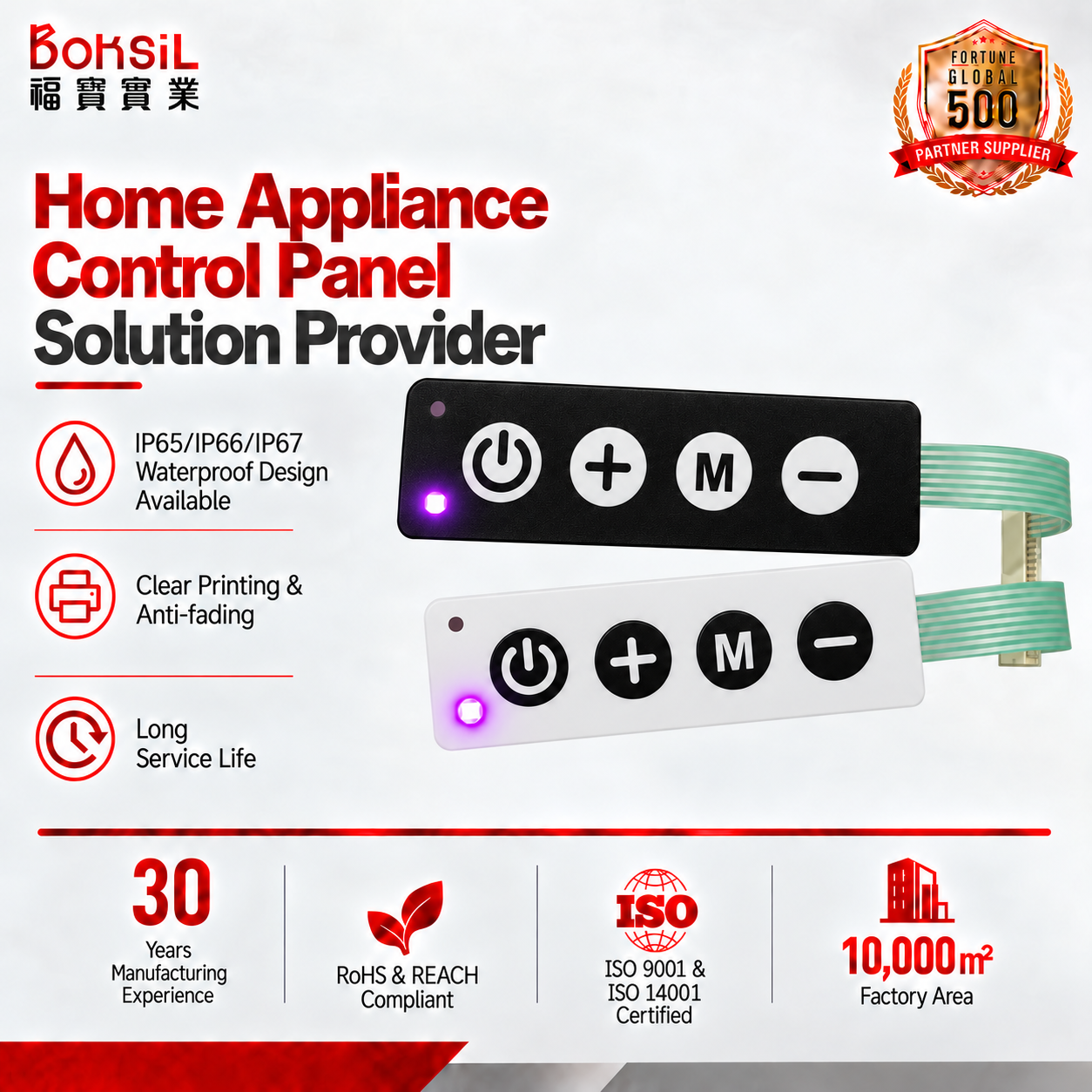
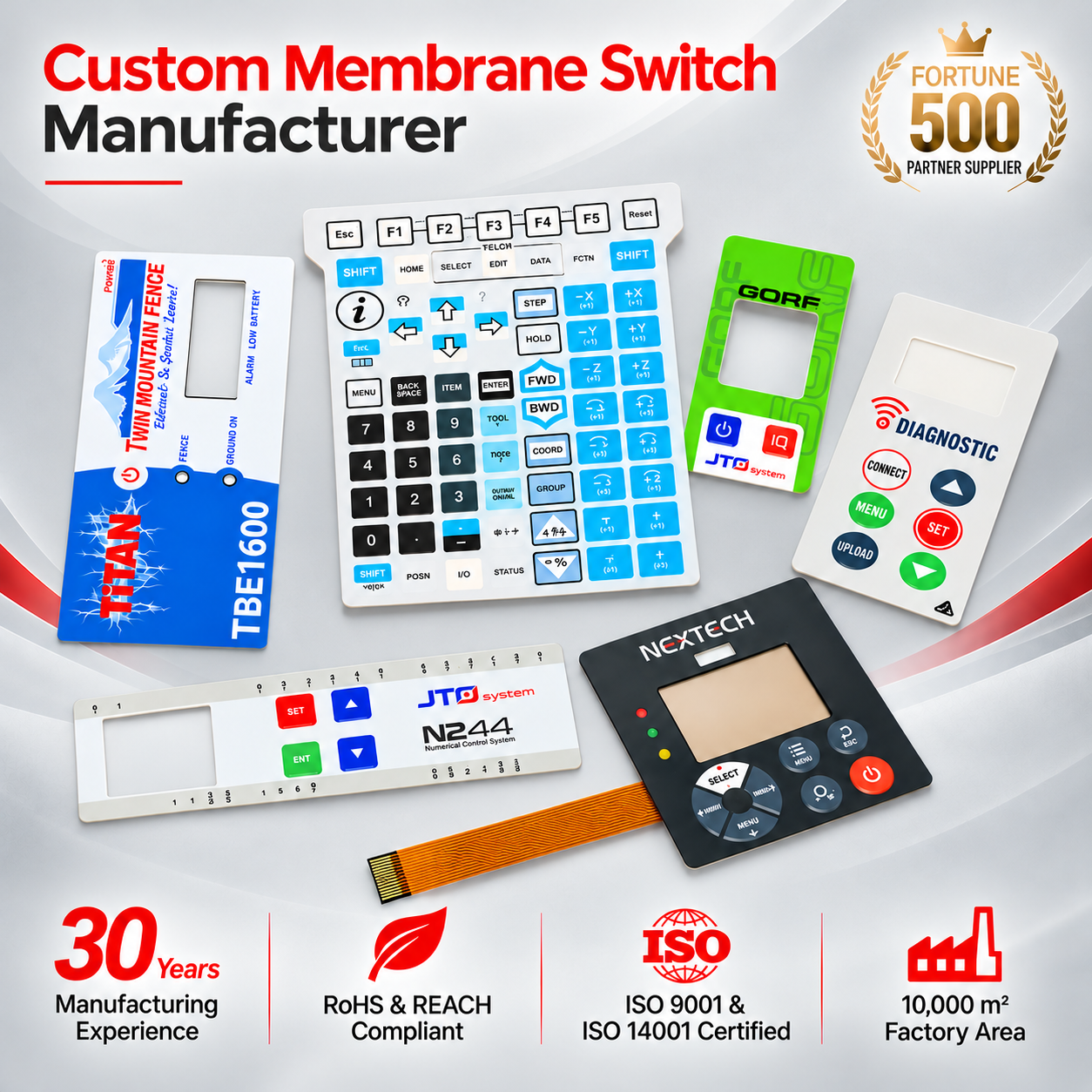
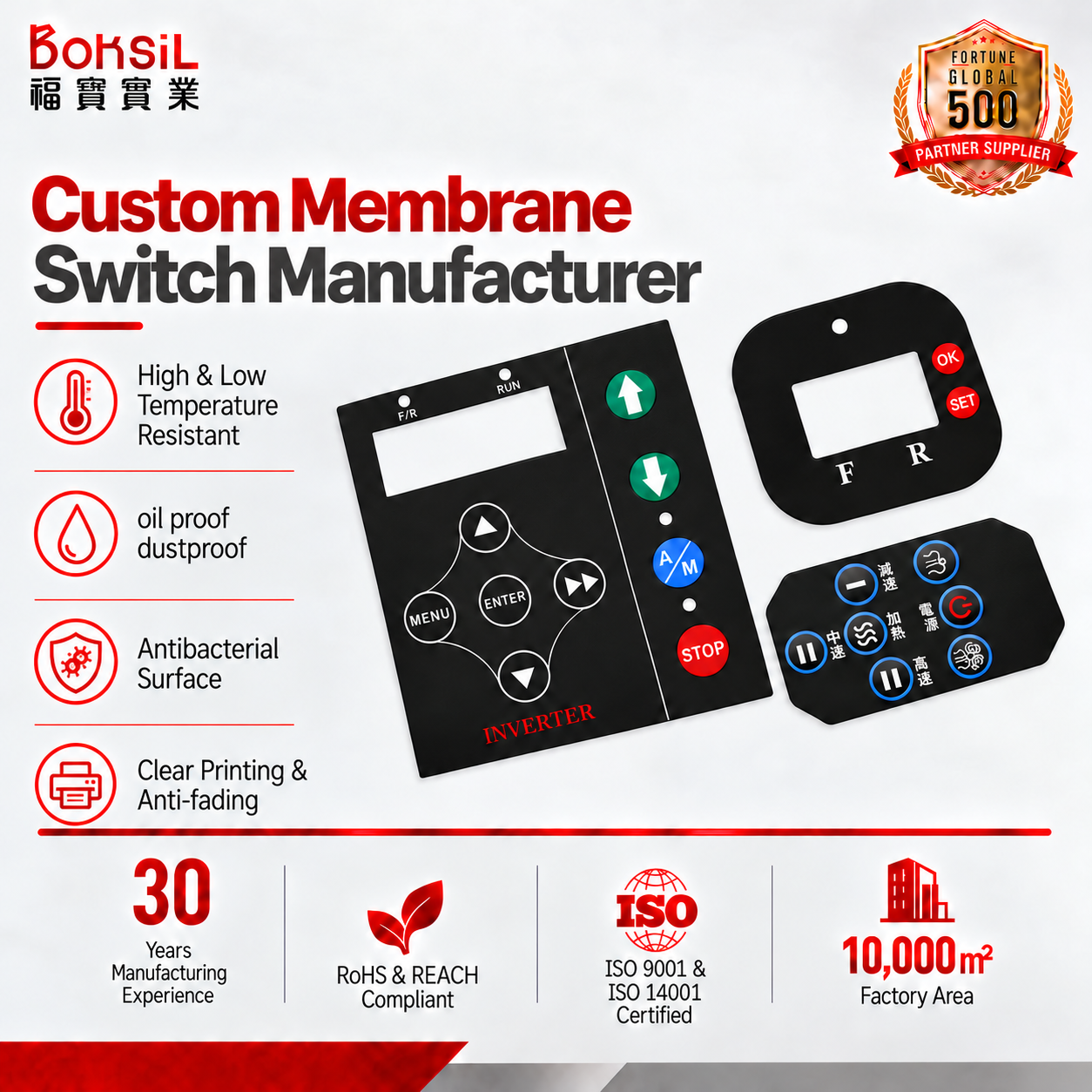
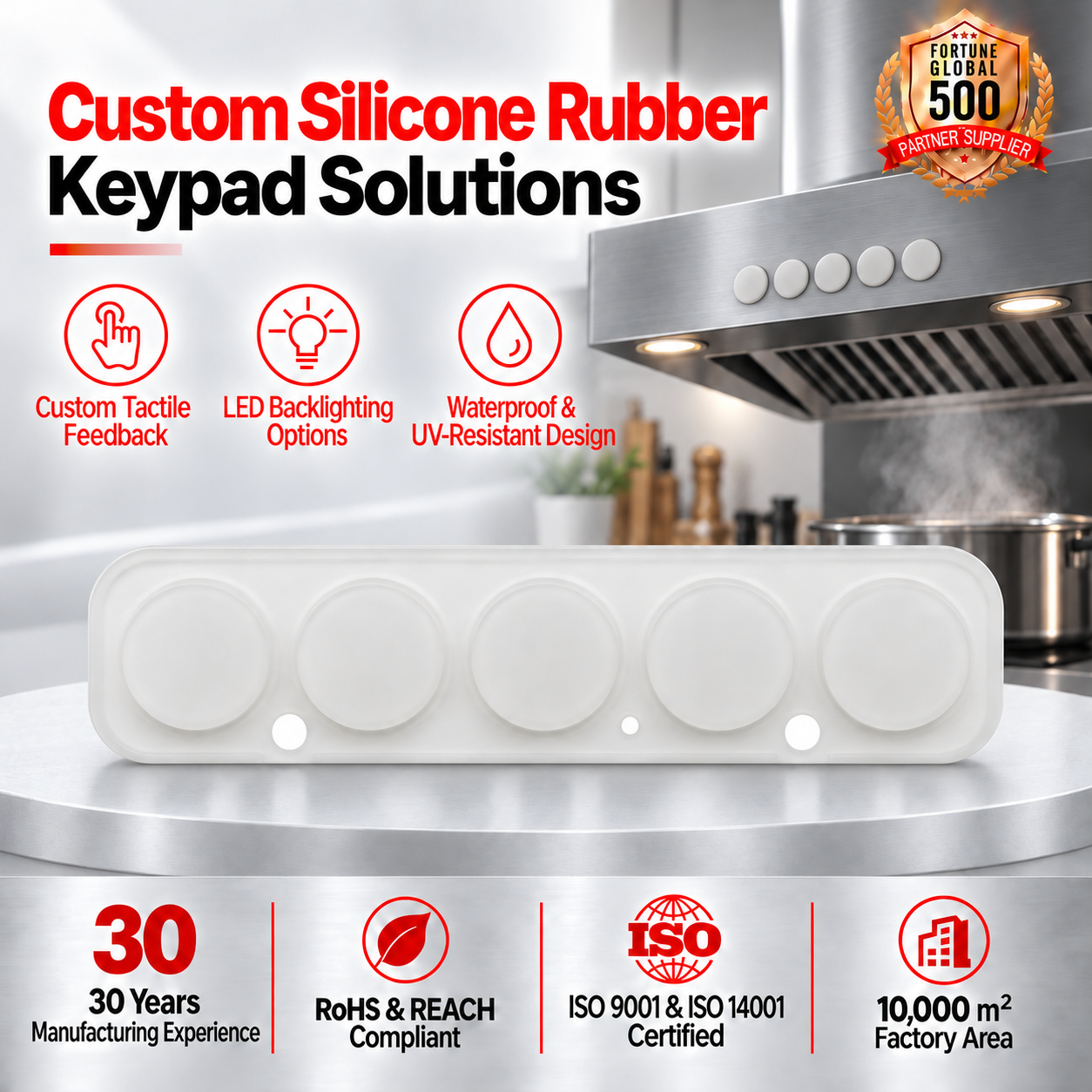
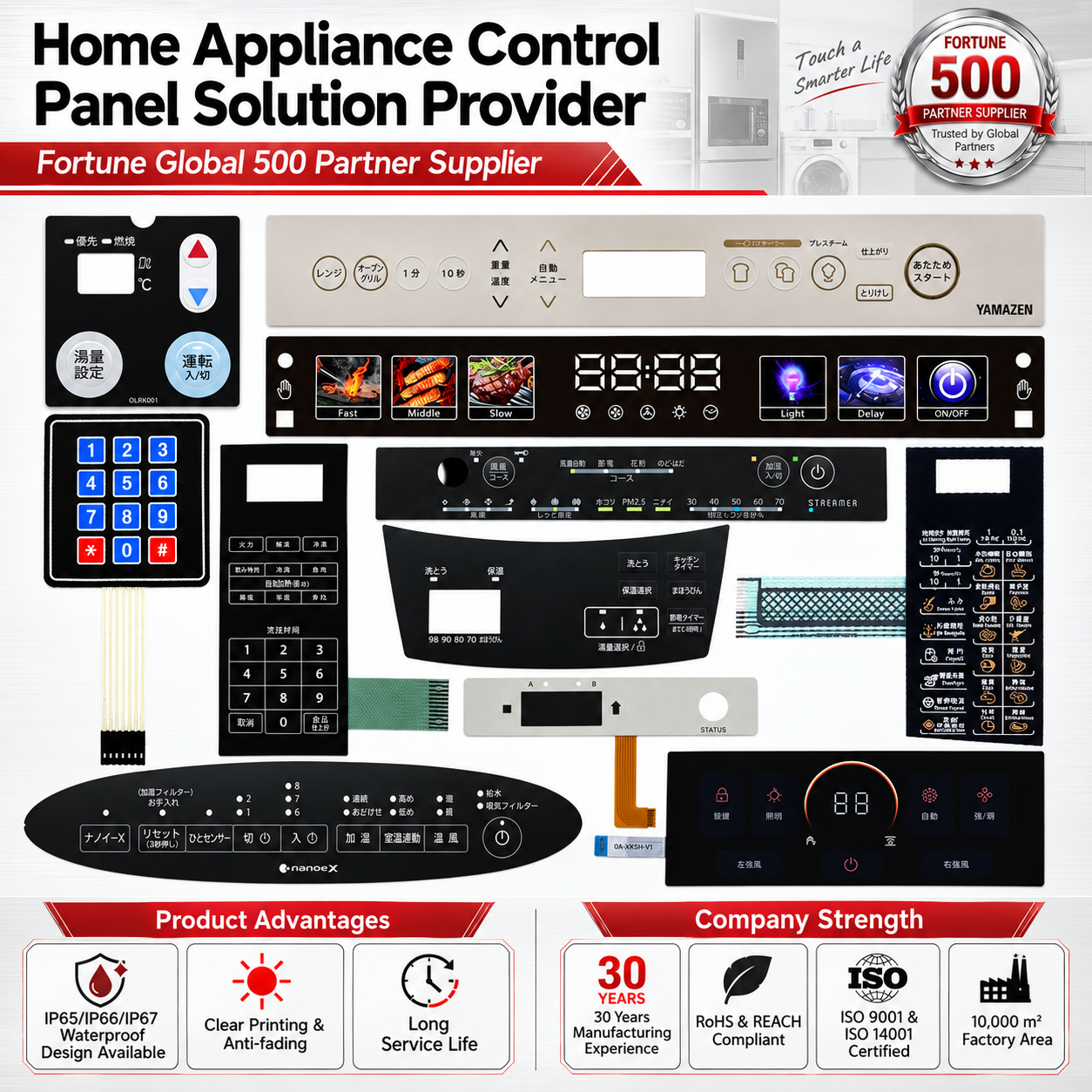
In-Mold Decoration (IMD/IML) vs. Traditional Overlays in High-Salinity Tropical Climates
A technical evaluation on film-insert molding integrity, thermal expansion coefficients, and hermetic barrier protection for hardware operating in coastal Micronesian environments.
Monolithic Sub-Surface Protection
Traditional multi-layer adhesive membrane switches carry the intrinsic risk of edge-delamination when deployed in tropical ambient settings where relative humidity consistently exceeds 80%. In-Mold Decoration fuses precision-printed optical-grade Polycarbonate (PC) or optical Polyethylene Terephthalate (PET) film directly into molten resin (ABS, PC, or PMMA) during high-pressure injection molding. The graphic layer resides securely behind the outer protective surface, completely inaccessible to moisture, corrosive sea-spray aerosols, rubbing alcohol, and sanitizers.
Thermal & UV Degradation Mitigation
Tropical island regions, including Airai and the central Babeldaob plateau, present persistent ultraviolet irradiance challenges coupled with high surface thermal saturation. Standard top-surface screen printing deteriorates through photochemical degradation, resulting in yellowing, embrittlement, and key cracking. AXRU’s IMD manufacturing line utilizes automotive-grade anti-UV topcoats (3H to 5H pencil hardness ratings) alongside fluoropolymer backer films, preventing chromatic shifting and guaranteeing continuous cosmetic clarity exceeding 10 years of field exposure.
Integrated Capacitive Sensing & Backlighting
Modern user interface design demands seamless, button-free transitions. Through precision thermoforming and hydroforming, IMD panels incorporate 3D curves, integrated display clear windows, dead-front capacitive touch arrays, and Light Guide Films (LGF). This eliminates mechanical gaps entirely, providing an uninterrupted IP67/IP68 ingress barrier that stops oceanic moisture from reaching internal control electronics, sensors, and microcontrollers.
| Evaluation Parameter | Conventional Adhesive Overlay | AXRU In-Mold Decoration (IMD / IML) | Architectural Benefit in Airai Deployments |
|---|---|---|---|
| Graphics Encapsulation | Reverse-printed on second layer; edges exposed to air/humidity | Fused permanently between outer film and injected resin substrate | Zero delamination risk caused by salt-fog, mist, or daily wet wipe-downs |
| Mechanical Wear Lifecycle | 1 to 2 million cycles; susceptible to top-surface scratching | 5 to 10+ million cycles; 3H–5H hard-coat scratch barrier | Enduring structural integrity for high-traffic public access terminals & utilities |
| Hermetic Seal Performance | Requires perimeter PSA die-cut gasket (IP65 max rating) | Native Monolithic Structural Barrier (IP67 / IP68 compatible) | Total prevention of saline ingress onto delicate PCB traces and contacts |
| Geometric Complexity | Strictly 2D planar or shallow embossed bubble keys | Complex 3D contours, deep draws, integrated light pipes | Modern industrial aesthetics that elevate commercial hardware value |
| Chemical / Solvent Resistance | Marginal; harsh solvents degrade acrylic adhesive edges | Impervious to fuels, marine oils, ammonia, alcohol, and bleach | Essential for marine fuel dispensing, diagnostic gear, and water systems |
Localized Application Scenarios Serving the Airai & Micronesia Market
As Airai expands as a vital commercial, administrative, and transportation hub around Roman Tmetuchl International Airport, equipment manufacturers and infrastructure specifiers require HMI interfaces engineered for uninterrupted resilience.
Aviation & Logistics Hub Systems
Automated passenger self-service stations, outdoor baggage scanners, and cargo loading terminals situated near airport runways face nonstop thermal radiation and fuel particulate exposure. AXRU’s IMD front bezels prevent text abrasion and protect back-end motherboards from humidity-induced short circuits.
Marine & Harborside Equipment
Commercial docks, coastal water-pumping stations, and reef-research monitoring devices require interfaces impervious to sodium chloride crystallization. Our hermetically molded IMD housings eliminate adhesive joint decay, ensuring uninterrupted tactile snap-response under constant maritime exposure.
Utility & Green Energy Inverters
Remote photovoltaic arrays, battery energy storage systems (BESS), and off-grid generator controllers installed across rural sectors require rugged, sunlight-readable display overlays with integrated UV-blockers to prevent display blackout and internal electronic condensation.
Hospitality & Medical Facilities
Hotels, eco-resort smart room controllers, and regional medical facilities require wipe-clean surfaces capable of handling hospital-grade disinfectants and detergents without ghosting, surface clouding, or localized graphic peeling.
Emerging Technology Trends in Pacific Island Interface Engineering
Key technological shifts guiding procurement officers, system integrators, and OEM engineers sourcing custom control panels for regional deployment.
Shift from Assembled Bezels to Unibody IMD
Procurement teams are steering away from multiple-part assemblies (plastic bezel + silicone gasket + screen-printed graphic overlay + metal bracket). A single In-Mold Decorated chassis condenses four manufacturing steps into one high-precision molding run. This dramatically shortens production lead times, lowers shipping freight overhead for offshore buyers, and removes manual assembly discrepancies.
Demand for Antibacterial & Antiglare Treatments
With heightened hygiene standards across public facilities and transportation portals, customers specify nano-silver antimicrobial surface treatments integrated into the IMD top film. Concurrently, matte anti-glare (AG) textured coatings are implemented to maintain crystal-clear readability under intense overhead equatorial sunlight without reducing touch sensitivity.
Hybrid Interfaces: Metal Dome Tactility + Touch
While capacitive touch is visually modern, critical safety systems (such as power shutdowns, high-pressure pump valves, and marine hoists) mandate definitive physical tactile feedback. AXRU’s hybrid IMD architectures seamlessly combine tactile metal domes behind 3D-formed film contours, providing high-reliability mechanical actuation alongside capacitive digital sliders.
AXRU Electronics: End-to-End Control Under One 10,000㎡ Roof
Headquartered in the global manufacturing heart of Dongguan, China, Dongguan AXRU Electronics Co., Ltd. delivers institutional-grade reliability, vertical integration, and direct engineering support to global buyers.
Intertek-Verified Plant
Our 10,000㎡ plant and 121 skilled technicians are audited and certified on-site by Intertek. We adhere strictly to ISO quality management standards across screen printing, cleanroom lamination, injection tooling, and circuit assembly.
Full Process In-House
From CAD/DFM engineering reviews, automated screen printing, and 3D film thermoforming to cleanroom mold injection and precision laser cutting, every single phase stays within our factory walls. We eliminate unauthorized subcontractor delays and safeguard your proprietary designs.
Rigorous Laboratory Validation
Our in-house reliability laboratory features automatic force-displacement testers, key life cycle testers (up to 5,000,000 strokes), programmable temp/humidity chambers (-40°C to +120°C), tensile testing machines, ink wear abrasion testers, and UV accelerated weathering test rigs.
Direct Engineer-to-Engineer DFM
No non-technical intermediaries. OEM clients collaborate directly with senior HMI mechanical and electronic design engineers. We review stack-up drawings, optimize connector pitches (e.g., 1.0mm, 2.54mm FPC/FFC), and provide initial rapid-turn samples with a low 100-piece MOQ.
Frequently Asked Questions: Sourcing Custom IMD Panels for Airai & Pacific Regional Projects
Essential guidance on minimum order quantities, climate adaptation, tooling costs, and export logistics.
Q: What is the standard MOQ and sample turnaround time for custom IMD panels?
A: For custom In-Mold Decoration (IMD) panels, prototype production tooling can be prepared within 12 to 18 business days. Our minimum order quantity (MOQ) starts at just 100 pieces for pre-production verification, making it economically accessible for specialized commercial hardware, infrastructure runs, and regional device rollouts.
Q: How do your IMD panels resist high relative humidity and salt air corrosion?
A: Because IMD fuses the decorative film permanently into the resin matrix during the injection cycle, there are no open adhesive edge seams where moist, saline air can trigger capillary suction or delamination. Furthermore, we seal flexible tail exits with hot-melt polyurethanes and employ gold- or carbon-plated circuit traces to ensure complete resistance against galvanic oxidation.
Q: What file formats and design data are needed for a DFM engineering review?
A: To initiate a formal Design for Manufacturability (DFM) review, please provide 2D mechanical drawings (.DXF, .DWG, or vector .PDF) showing boundary dimensions and button placements, 3D CAD files (.STEP, .IGS) for structural injection contours, and graphic artwork files (.AI, .CDR) with exact Pantone color callouts. If you have an existing physical component, our engineering team can reverse-engineer the stack-up.
Q: Can display windows, touch sliders, and dead-front indicators be molded into the panel?
A: Yes. Our optical screen-printing techniques allow for high-transparency clear windows (over 92% light transmission) for OLED/TFT/LCD displays, smoked semi-transparent windows for hidden-until-lit "dead-front" LED icons, and capacitive touch sliders engineered directly behind the durable outer film face.
Q: How is export logistics and fragile packaging handled for shipments to Airai?
A: Every IMD panel is fitted with a static-free protective film on both front and rear optical faces, nestled in custom vacuum-formed anti-static blister trays, and vacuum-sealed inside heavy-duty multi-wall corrugated cartons with desiccant packs. Shipments are handled via established global couriers (DHL, FedEx, UPS) or scheduled air freight directly through Roman Tmetuchl International Airport (ROR).
Q: What documentation and quality certificates accompany production batches?
A: Every production run undergoes 100% optical and electrical continuity inspection. Shipments include a formal Certificate of Conformance (CoC), First Article Inspection (FAI) dimensional reports, color-matching spectrophotometer records, and material safety compliance documentation (RoHS and REACH).
Ready to Build Your Custom IMD Interface with an Accountable Factory?
Upload your engineering drawings or schedule a direct consultation with our HMI project engineers. We provide comprehensive DFM evaluations and competitive factory-direct quotations within 24 hours.