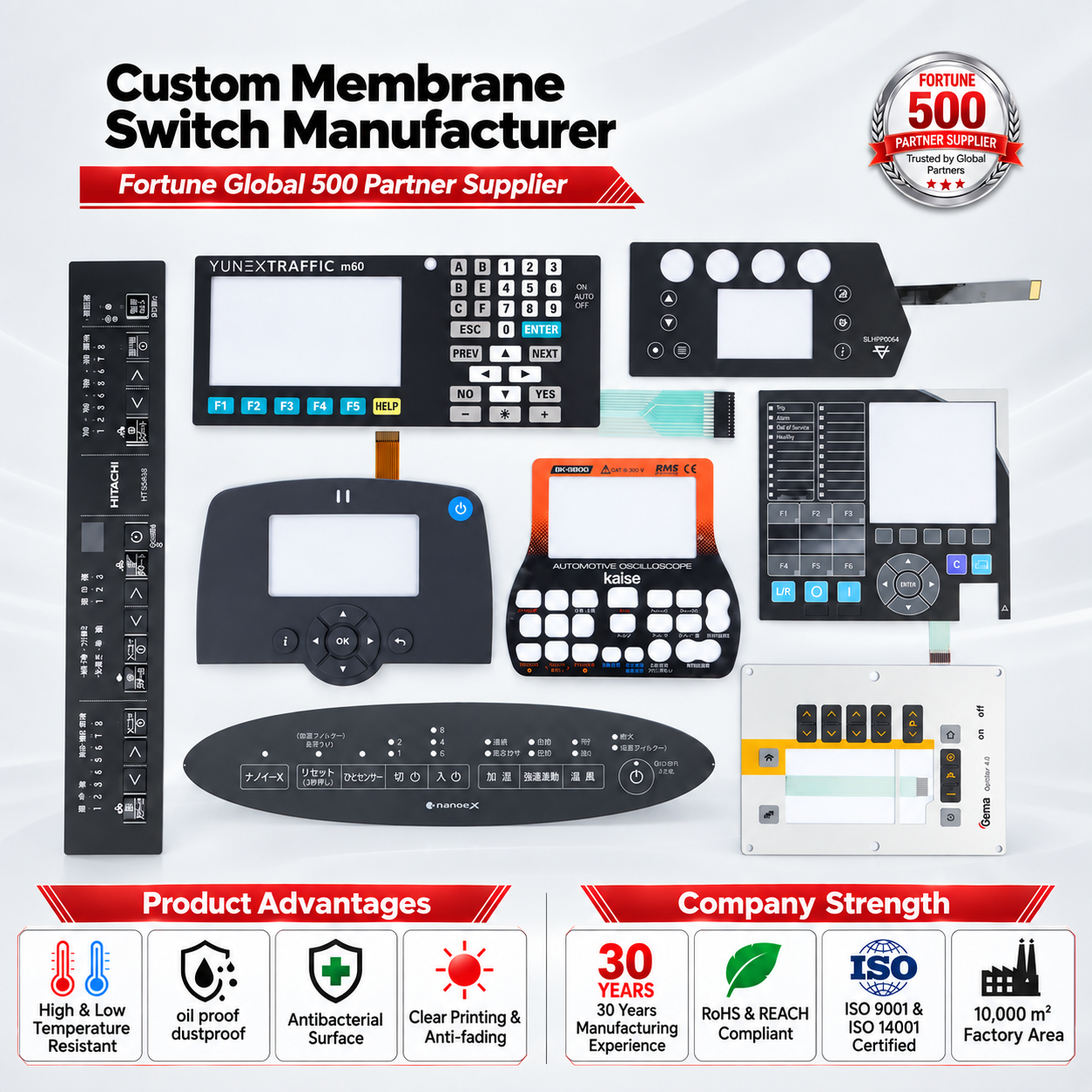
Precision Human-Machine Interface Engineering

Graphic Overlay Panel Manufacturers & Manufacturer in the Santa Ana Market

OEM/ODM Custom Polycarbonate & PET Control Overlays, Harsh-Environment Membrane Switches, and Silicone Interfaces Engineered for Southern California Hardware Innovators

Engineered HMI Solutions & Custom Overlay Assemblies

Direct manufacturer execution delivering precision tolerance, custom micro-embossing, tactile actuation tuning, and environmental perimeter ingress sealing for Orange County original equipment manufacturers.

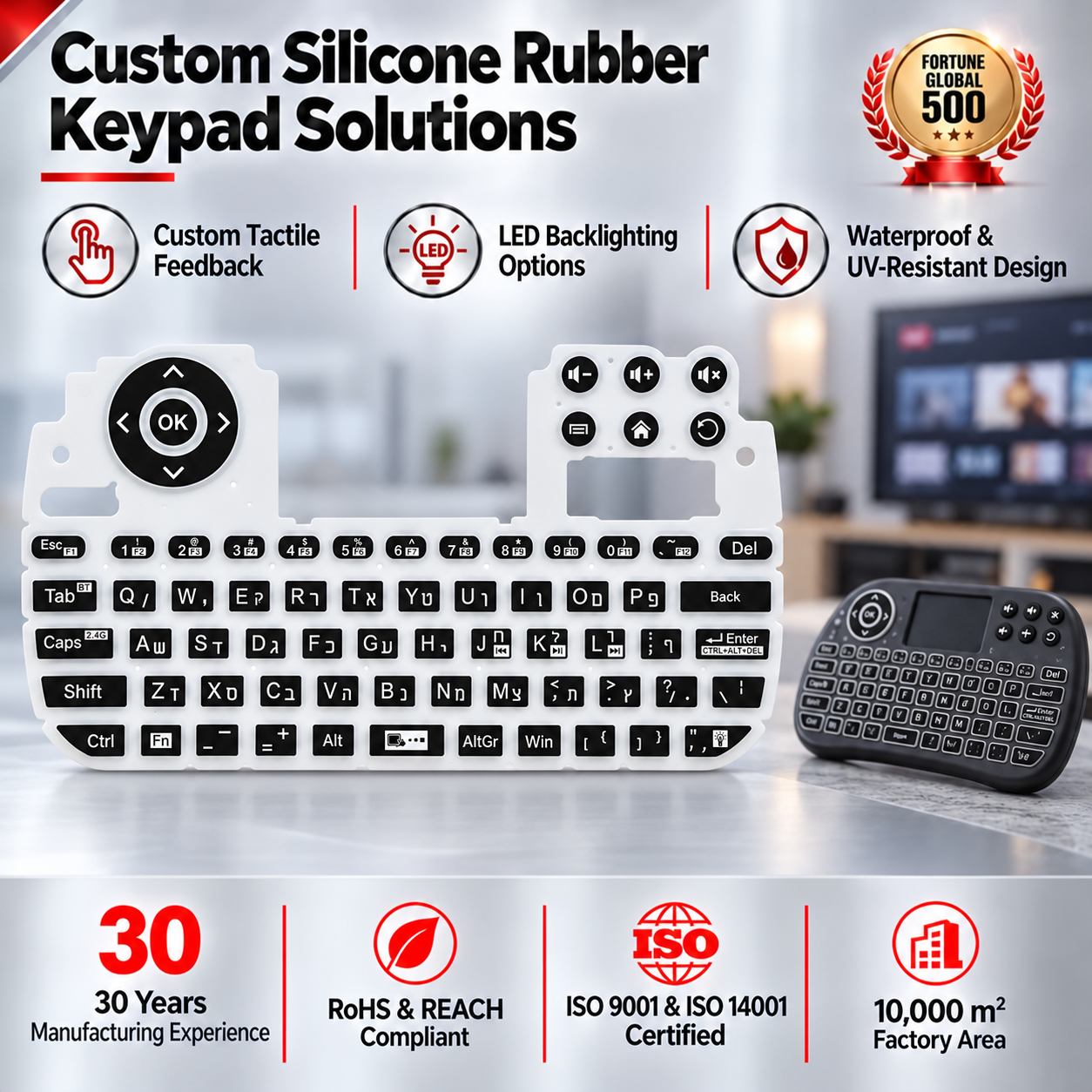
Mini Wireless QWERTY Silicone Rubber Keypad Customizable Soft Touch
  • Material: Medical Silicone Elastomer
  • Actuation: Conductive Carbon Pill / Gold
  • Life Cycle: >1,000,000 Cycles
Conductive Rubber Silicone Elastomer Keypads PTT Push Button
  • Finish: PU / Epoxy Protective Coating
  • Sealing: IP67 Perimeter Compression
  • Application: Tactical Radio / Avionics PTT
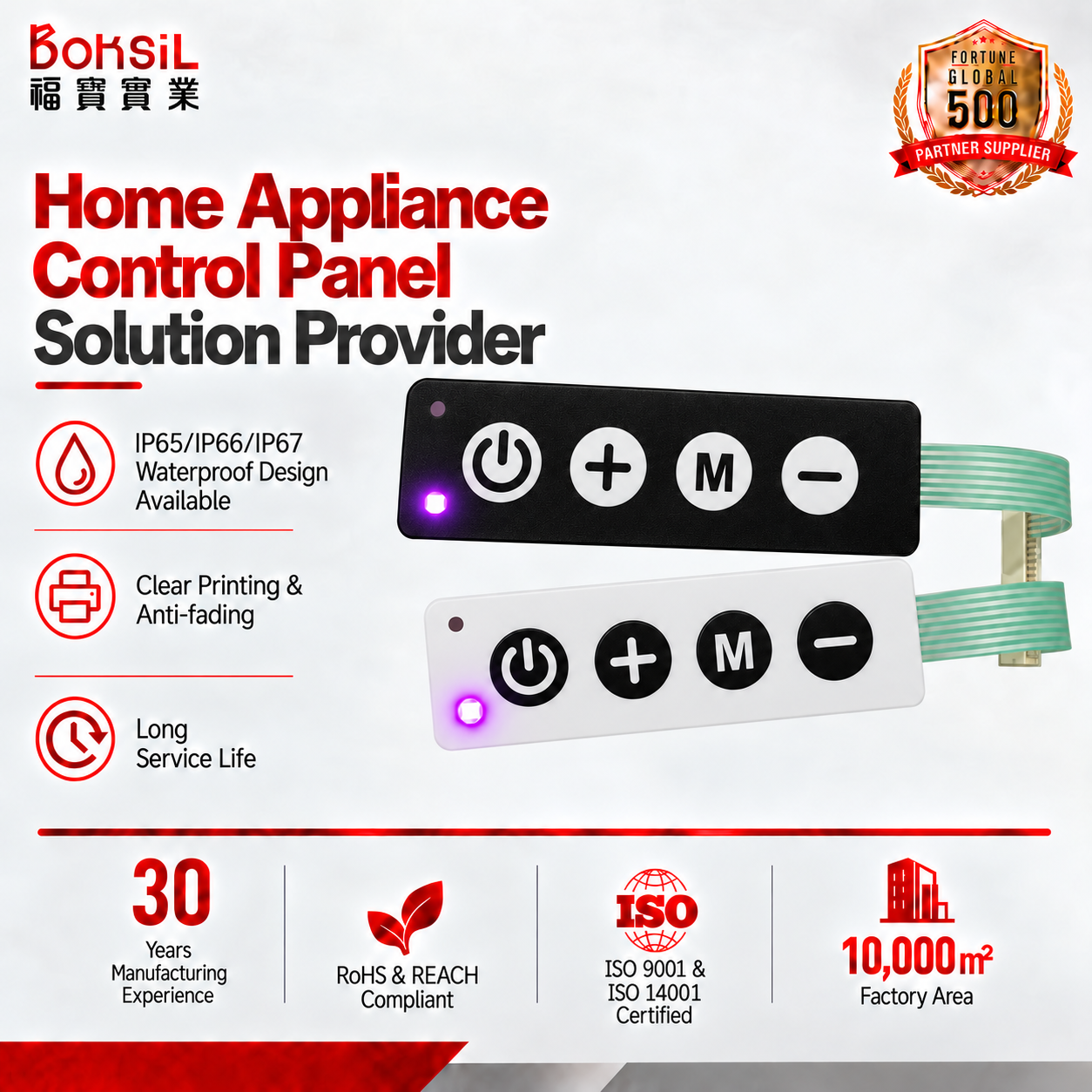
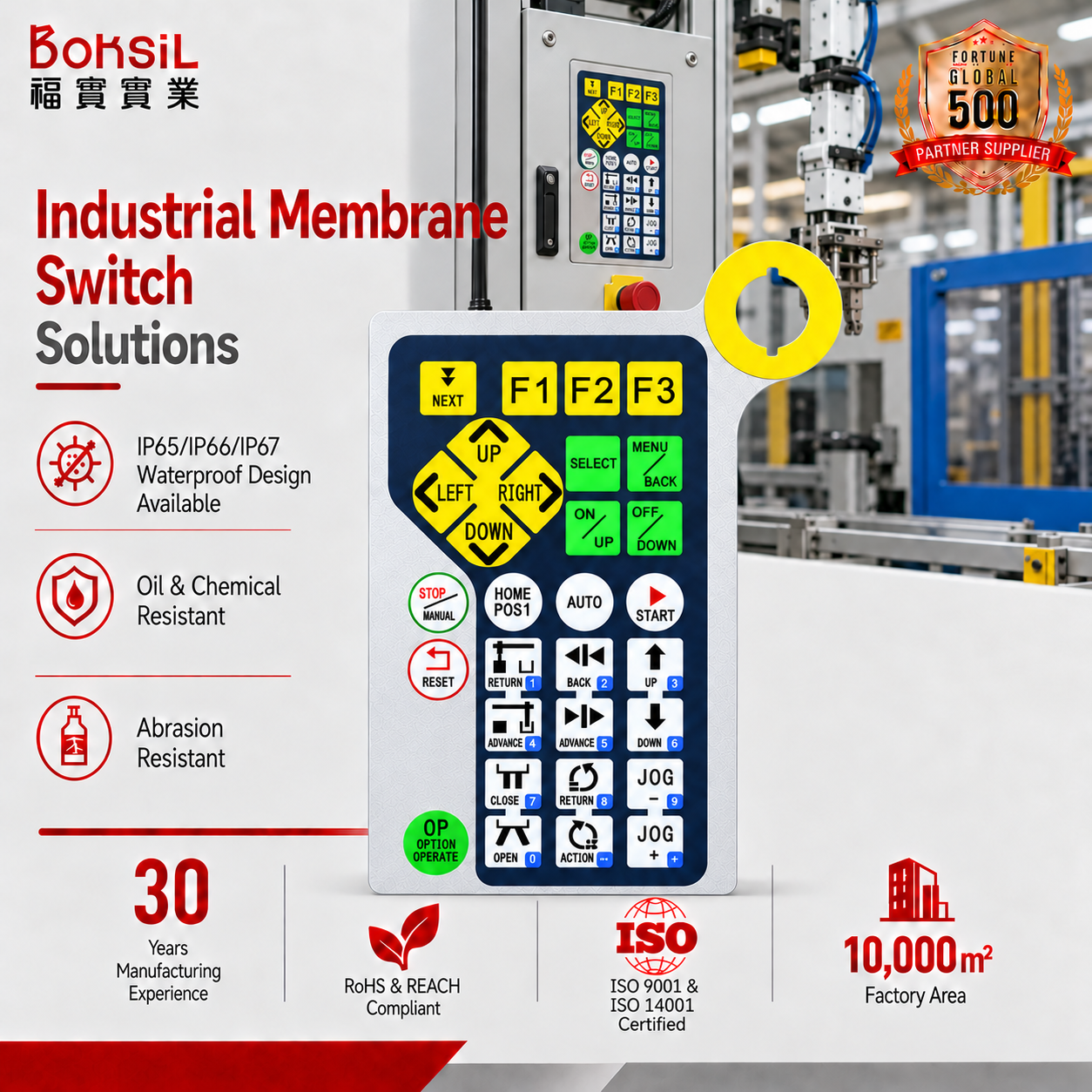
4 Button LED Lights Metal Domes Tactile Membrane Switch
  • Feedback: Stainless Steel Metal Domes
  • Lighting: Integrated Bi-Color SMD LEDs
  • Circuit: Screen-Printed Conductive Ag
Custom Graphic Overlay Industrial Touch Keyboard
  • Film Substrate: Autotex XE / Lexan Polycarbonate
  • Adhesive: 3M 467MP / 468MP High-Bond
  • Printing: Sub-Surface Anti-Abrasion Inks
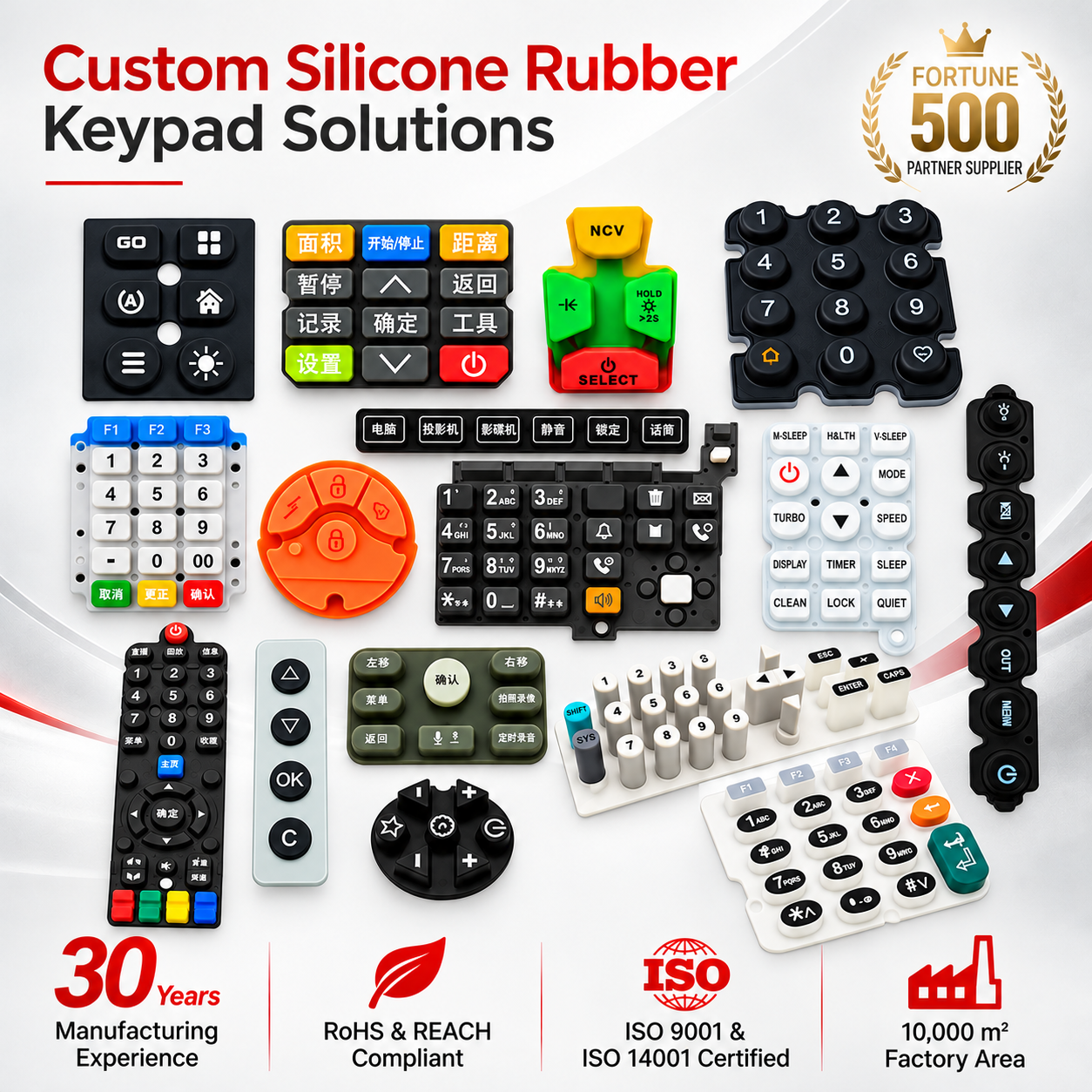
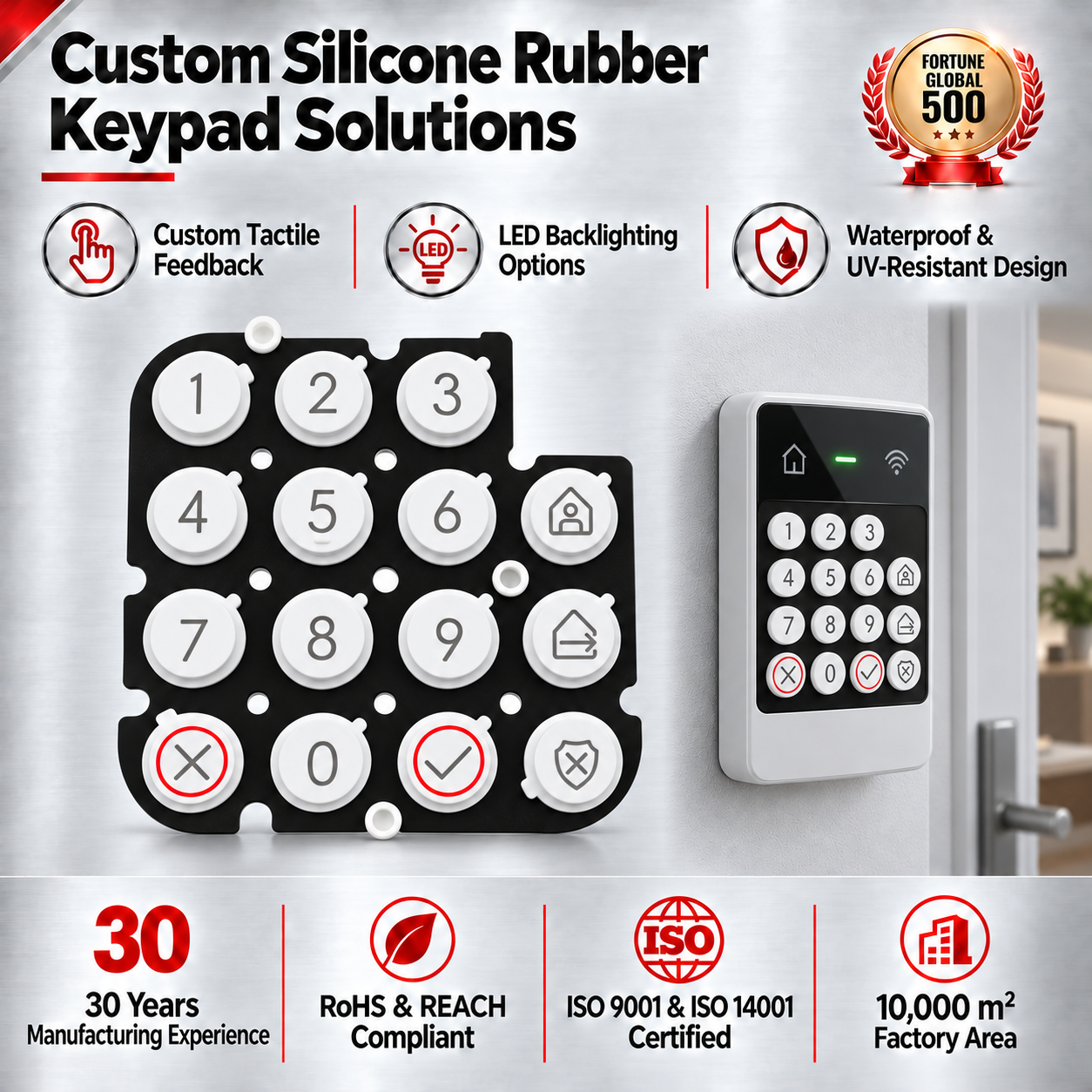
Factory Wholesale Numeric Conductive Silicone Rubber Keypad Panel
  • Durometer: 45° to 70° Shore A
  • Tactile Force: 180g – 350g Snap Curve
  • Resistance: Contact < 100 Ohms
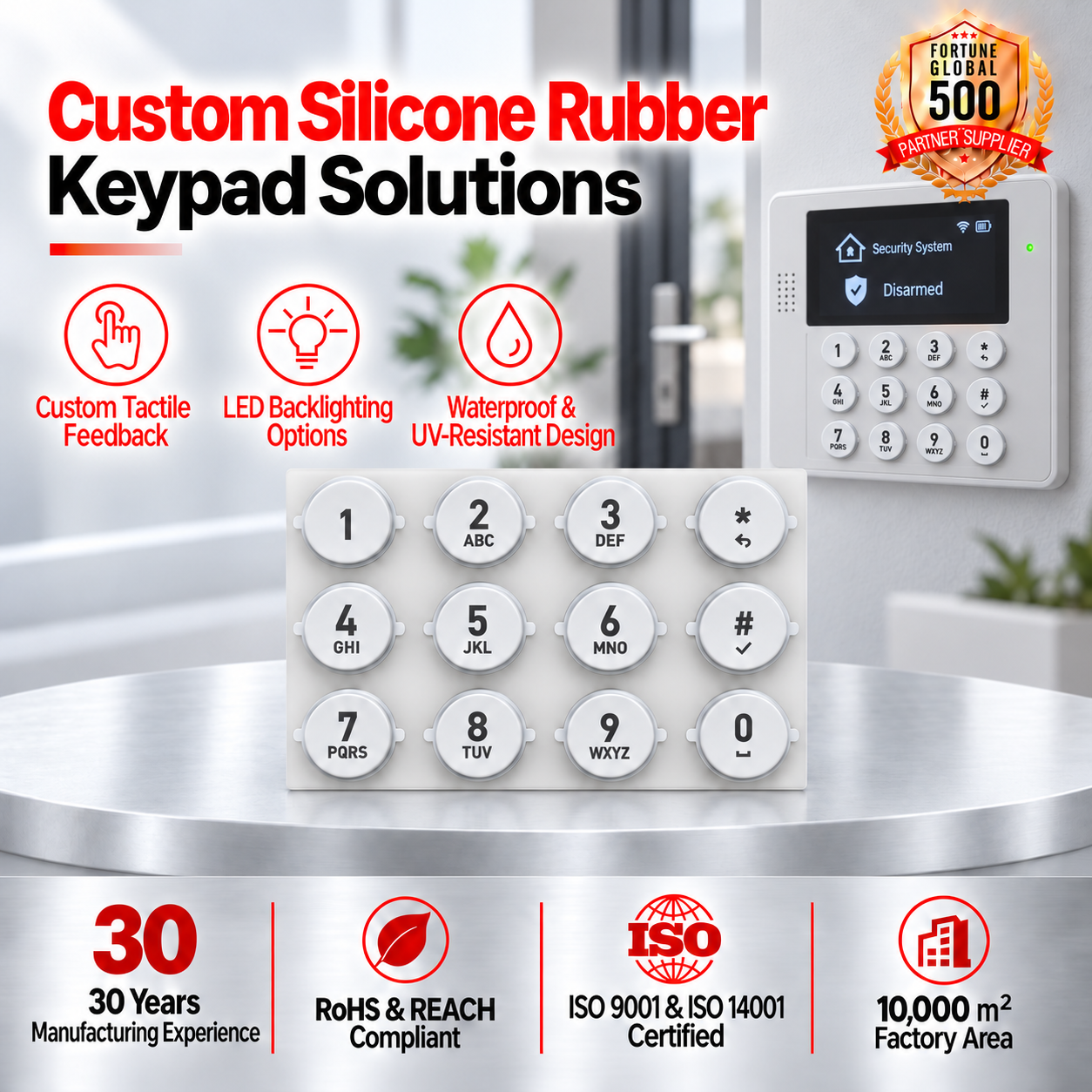
Custom OEM Silicone Rubber Keypad 3x4 Numeric 12 Keys
  • Structure: Plastic Cap + Rubber (P+R)
  • Backlighting: Laser-Etched Dead-Front
  • Chemical Res: Alcohol, Bleach, UV Stable
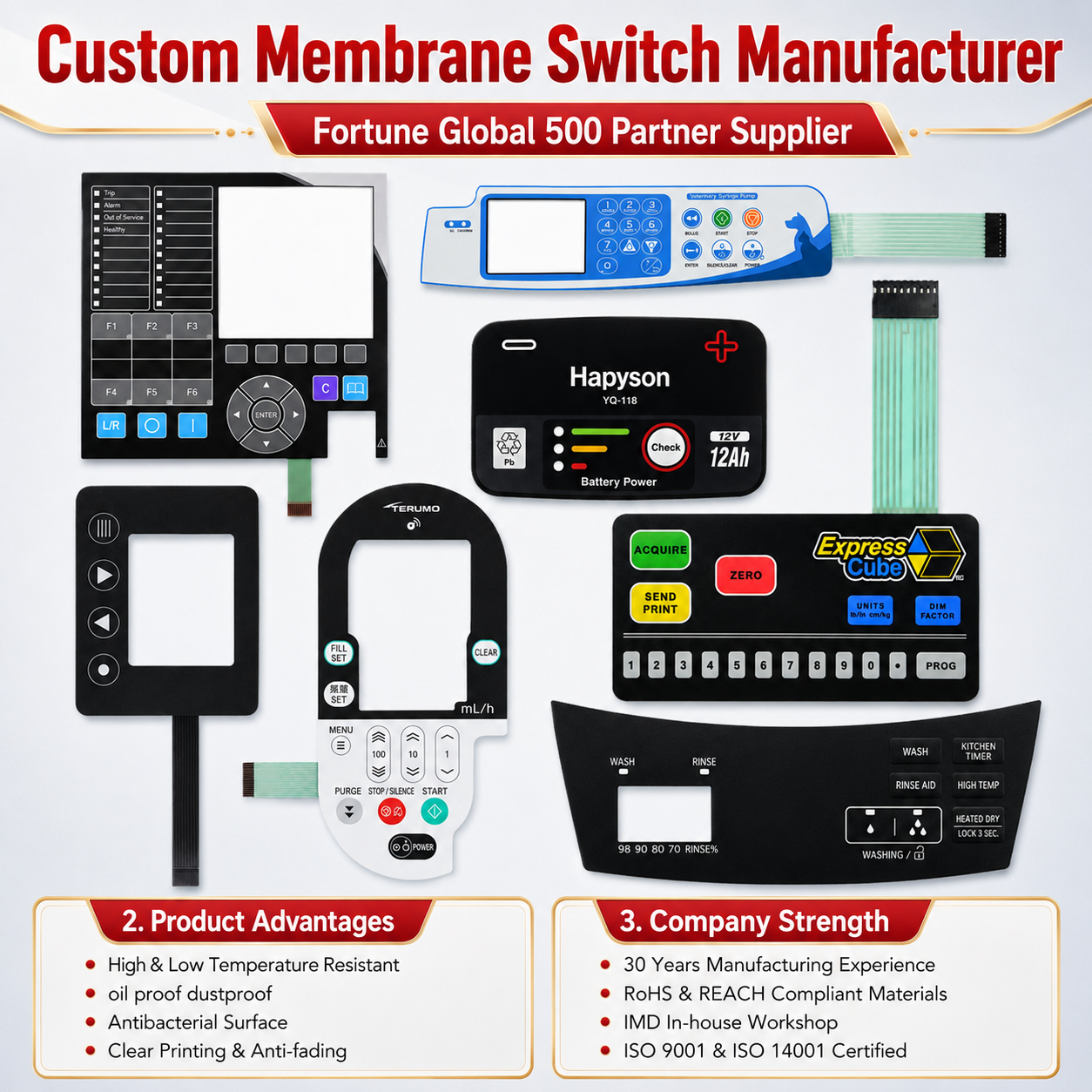
Key Pad Graphic Overlay Control Panel 5x4 Matrix FPC Circuit
  • Flex Circuit: Polyimide Copper FPC
  • Pitch Tolerance: 0.5mm / 1.0mm ZIF Connector
  • Protection: IP65 / NEMA 4 Perimeter Gasket
Medical Automotive Appliance Graphic Overlay Waterproof Touch Panel
  • Overlay: Antimicrobial Coated Polyester
  • Shielding: Full Aluminum / Printed Carbon EMI
  • Compliance: RoHS, REACH, ISO 9001:2015
10,000㎡
Intertek-Verified Facility
100%
Circuit Continuity Tested
12+
Years Specialized HMI Engineering
5,000,000
Switch Actuation Durability

Graphic Overlay Panel Manufacturing in the Santa Ana & Greater Orange County Industrial Ecosystem

The industrial corridor of Santa Ana, California—anchored within the dense technological, biomedical, and aerospace cluster of Orange County—represents one of North America's most exacting consumer bases for custom human-machine interface (HMI) hardware. From medical device engineering firms operating adjacent to John Wayne Airport and the Irvine business complex to advanced defense avionics contractors throughout Santa Ana, the demand for precision-crafted graphic overlays and integrated membrane switches has evolved beyond simple cosmetic cladding. Today’s industrial human-machine interfaces serve as mission-critical barriers that isolate delicate digital logic from chemical disinfectants, moisture condensation, explosive hydrocarbons, and relentless mechanical cycling.

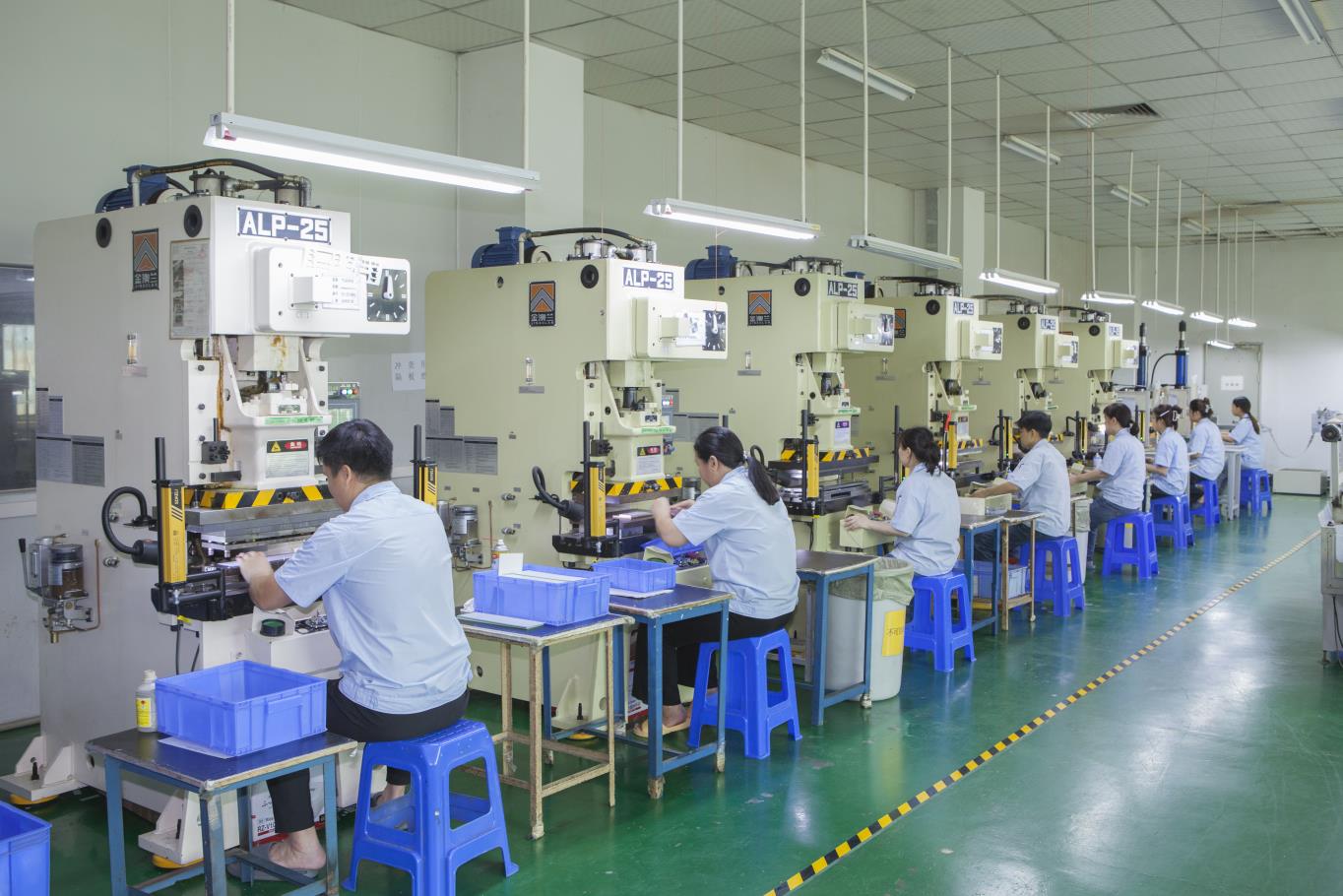
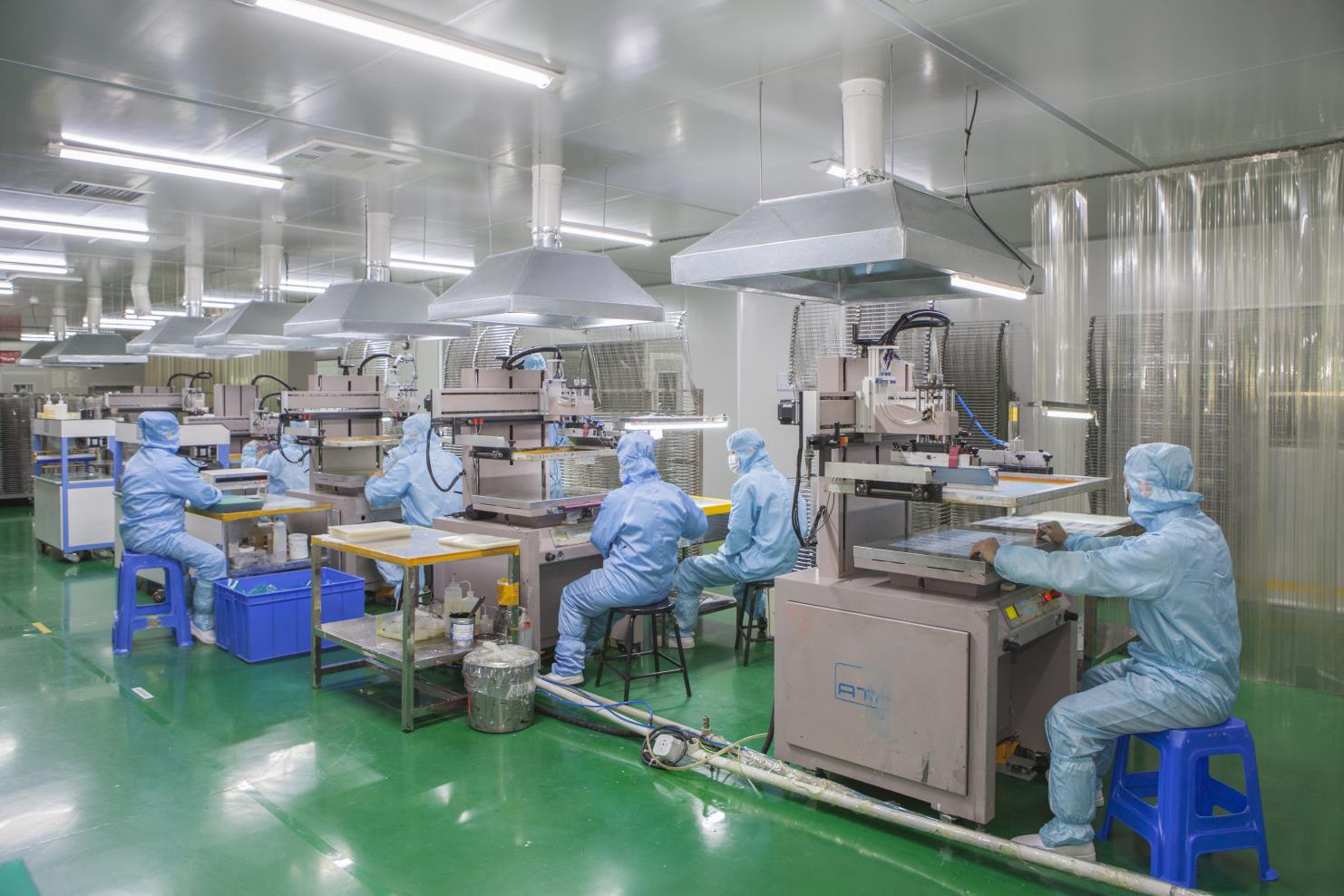
As premier graphic overlay panel manufacturers catering directly to Santa Ana procurement directors, project managers, and electro-mechanical design engineers, Dongguan AXRU Electronics Co., Ltd. provides a streamlined bridge between precision engineering and high-volume, cost-effective fabrication. Operating out of our 10,000-square-meter facility with 121 specialized engineers and technicians, our production lines conform to stringent internationally recognized quality management systems, verified on-site by Intertek. We eliminate the fragmented risk of sub-tier outsourcing by maintaining screen printing, precision micro-embossing, circuit lamination, metal dome arrays, and Class 10,000 cleanroom optical window bonding under one roof.

"In mission-critical Santa Ana applications—spanning surgical fluid monitoring to automated semiconductor wet benches—a graphic overlay is never merely an aesthetic cover. It is an engineered barrier layer engineered with precise surface tension, optical clarity, chemical inertness, and dynamic elastomeric tactile response."

Technical Anatomy of an Engineered Graphic Overlay Stack-Up

Developing an overlay assembly capable of sustaining millions of actuations without delamination requires meticulous attention to substrate physics, chemical ink rheology, and adhesive surface energy. Depending on whether your Santa Ana design requires NEMA 4X washdown capability, UL94 V-0 flame retardance, or antimicrobial efficacy, our engineering division implements targeted multilayer architectures:

Layer Element Material Science / Selection Engineering Function Santa Ana / OC Industrial Relevance
1. Faceplate Substrate Autotype MacDermid PET (F150/F200) or SABIC Lexan HP92W Polycarbonate Sub-surface printed cosmetic face, optical display window, tactile actuation flex membrane. Resistant to hospital-grade IPA wipe-downs, UV sunlight exposure, and repetitive operator wear.
2. Sub-Surface Graphic Inks Marabu / Nazdar UV-curable and solvent screen-printing inks, dielectric carbon/silver High-opacity legend markings, custom corporate PMS color-matching, translucent dead-front LED windows. Impervious to scratch abrasion; graphics remain permanently protected behind the substrate film.
3. Faceplate Adhesive 3M 467MP (2 mil) or 3M 468MP (5 mil) High-Performance Acrylic Adhesives Forms a permanent, bubble-free structural bond between the printed overlay and the internal spacer. Exceptional resistance to shear slippage across wide thermal ranges (-40°C to 125°C).
4. Circuit Spacer Layer Biaxially-oriented PET film with custom die-cut switch cavities and venting channels Establishes exact tactile travel stroke; prevents inadvertent short circuits or metal dome migration. Precision channel venting prevents air entrapment during high-altitude aviation flight profiles.
5. Tactile Dome Matrix Nickel-plated or gold-plated stainless steel tactile domes (4-leg or round snap domes) Provides audible tactile snap-action feedback; establishes momentary electrical contact closure. Engineered snap ratios (45%–60%) calibrated to provide unmistakable tactile confirmation for gloved operators.
6. Electrical Circuitry Screen-printed conductive silver ink traces or Polyimide Copper FPC with gold plating Low-resistance conductor pathways terminating in standard 2.54mm or 1.0mm ZIF tail interfaces. Copper FPC solutions eliminate silver migration concerns in humid Santa Ana coastal deployments.
7. Rear Mounting Adhesive 3M 300LSE (Low Surface Energy) or 3M 9472LE Acrylic Laminating Adhesive Bonds the completed graphic overlay switch assembly directly to the metal or plastic chassis. Adheres tenaciously to powder-coated cast aluminum, ABS, polycarbonate, and polyolefin enclosures.

Substrate Material Physics: Polyester (PET) versus Polycarbonate (PC)

When our engineering team consults with Orange County product designers during preliminary Design for Manufacturability (DFM) reviews, the foundational debate typically centers on selecting between oriented polyester (PET) and optical-grade polycarbonate (PC). Each chemical polymer exhibits distinct mechanical and chemical profiles:

Polyester (Biaxially Oriented PET): Materials such as Autotex Autotype polyester are universally specified for continuous-flex tactile membrane keypads. PET molecules possess superior fatigue endurance, routinely surpassing 5,000,000 switch actuation cycles without micro-cracking along embossed button perimeters. Furthermore, PET demonstrates peerless resistance to aggressive solvents, including harsh industrial degreasers, acetone, methyl ethyl ketone (MEK), and quaternary ammonium surgical disinfectants. For medical telemetry devices manufactured in Santa Ana, PET is frequently treated with an active antimicrobial hard-coat that disrupts bacterial cellular replication on the keypad surface.

Polycarbonate (PC): Substrates like SABIC Lexan offer unparalleled optical clarity, superior thermal deflection stability, and intrinsic UL94 flame-retardant ratings (such as Lexan FR60). PC is exceptionally receptive to deep hydro-forming, high-relief thermoforming, and precision die-cutting. However, unmodified polycarbonate is susceptible to environmental stress cracking when subjected to repeated chemical cleaning with aromatic solvents or concentrated alcohols. Consequently, in Santa Ana aerospace ground stations and high-end automotive diagnostic dashboards where crystal-clear LED dead-front displays and textured aesthetic depth are prioritized over multi-million-cycle switch flexure, polycarbonate remains the industry benchmark.
Localized Application Scenarios Across the Santa Ana Industrial Footprint

Engineered interfaces deployed across Southern California's preeminent technological and manufacturing domains.

Medical Instrumentation & Diagnostic Consoles

Santa Ana and nearby Irvine house the nation's elite cardiovascular, ophthalmic, and critical care device manufacturers. Our graphic overlays integrate antimicrobial PET surfaces, flush wipe-clean switch boundaries, and hermetically sealed perimeter gaskets that withstand daily cleaning protocols using bleach, Cidex, and isopropyl alcohol while maintaining zero liquid ingress.

Commercial Avionics & Defense Systems

Serving defense sub-tier suppliers across the Orange County aviation belt, our military-grade overlays feature matte non-glare finishes, NVG (Night Vision Goggle) compatible filtering, full aluminum foil EMI/RFI shielding layers, and internal back-venting architectures engineered to prevent atmospheric pressure differential rupture during rapid altitude climb cycles.

Robotics, CNC & Factory Automation HMIs

Industrial machinery deployed across Santa Ana’s manufacturing sectors demands control panels resistant to hydraulic cutting oils, metal shavings, and heavy tactile abuse. We deploy heavy-gauge (0.010" to 0.015") textured polycarbonate overlays paired with high-trip-force stainless steel tactile domes for unmistakable tactile confirmation under heavy nitrile work gloves.

Santa Ana Sourcing Trends: The Shift toward Hybrid HMI Architectures

Over the past three years, procurement teams in Orange County have dramatically shifted how they specify and acquire user interface components. As consumer-grade smartphones condition users to expect seamless capacitive touch, industrial hardware engineers in Santa Ana face a dilemma: how to incorporate modern sleek glass and capacitive interfaces while retaining the tactile fail-safe feedback demanded by industrial safety standards (such as OSHA and ISO 13849).

This dynamic has propelled the rapid adoption of Hybrid HMI Architecture. Rather than choosing between a pure touch screen or an archaic mechanical push-button array, Santa Ana engineers are increasingly designing capacitive slider tracks and proximity touch sensors directly beneath a sub-surface printed graphic overlay, flanked by high-tactile snap domes for critical emergency shutdown, prime, and power sequences. At Dongguan AXRU Electronics Co., Ltd., our manufacturing setup is optimized to support this exact transition, combining thin-film capacitive printed sensor circuits with tactile metal-dome overlays in ultra-compact, low-profile form factors.

Why Santa Ana Hardware Innovators Choose Direct Factory Collaboration with AXRU

Navigating domestic Southern California broker networks often introduces substantial markups, opaque lead times, and communication latency when resolving nuanced DFM mechanical interferences. AXRU provides Santa Ana enterprises with direct engineering access to our manufacturing floor, eliminating middlemen while delivering tangible production benefits:

1. Comprehensive In-House Verification Laboratories: Unlike trading intermediaries, AXRU validates every batch against rigorous environmental and mechanical standards before export. Our on-site reliability equipment includes Automated Force-Displacement Curve Analyzers (validating tactile snap ratio consistency), Key Life Cycling Actuators, Programmable Temperature & Humidity Environmental Chambers (-40°C to +150°C), Taber Ink Abrasion Rub Testers, and UV Accelerated Weathering / Yellowing Chambers.

2. Direct Engineering DFM Checkpoints: When you provide your DXF, DWG, Step, or Adobe Illustrator mechanical drawings, our dedicated engineering team inspects tail exit bend radii, conductive trace pitch tolerances, adhesive venting channels, and dome cavity spacing within 24 hours. We identify potential electrical migration risks or mechanical binding issues before steel tooling is cut.

3. Agile Prototyping to High-Volume Scalability: We understand the iterative lifecycle of Santa Ana tech incubators and medical device startups. With minimum order quantities starting at just 100 pieces for custom membrane overlays and rapid CNC plotter sampling, we support your verification and validation (V&V) builds and scale seamlessly into monthly blanket orders of hundreds of thousands of units.

Advanced In-House Testing & Reliability Infrastructure

Every overlay panel leaving our factory floor is backed by traceable inspection records and comprehensive metallurgical and electrical validation.

Force & Displacement Curve Testing

Quantifies tactile actuation travel (0.3mm–0.8mm) and peak tactile force (160g–450g), generating numerical snap-ratio curves to ensure uniform button feel across the entire front panel array.

Programmable Thermal & Humidity Chambers

Subjects completed graphic overlays to prolonged 85°C / 85% RH cycles, validating that multi-layer acrylic adhesives (3M 467MP/468MP) and edge sealings will never bubble, warp, or delaminate in humid field conditions.

Ink Decolorization & Rub Resistance Testers

Employs weighted crockmeter solvent rubs (MEK, alcohol, synthetic perspiration) across sub-surface ink layers to ensure optical legends, branding typography, and colored borders never degrade over decades of field service.

Santa Ana Procurement & Engineering FAQ

Direct, technically rigorous answers to common questions posed by Orange County engineering and purchasing managers.

What design documentation is required to generate a DFM analysis and formal quotation?
To provide an accurate engineering quote within 24 hours, our team requires: (1) 2D vector artwork with defined layers (Adobe Illustrator .AI, CorelDraw, or PDF) detailing graphic callouts and Pantone (PMS) / RAL color codes; (2) Mechanical dimensional drawings (DXF, DWG, or STP) indicating cutouts, LED window positions, embossing boundaries, and tail exit coordinates; (3) Proposed stack-up configuration, including substrate choice (Lexan PC vs. Autotex PET), tactile requirements (metal dome vs. flat non-tactile), circuit type (silver PET or copper FPC), and rear mounting adhesive (such as 3M 467MP, 468MP, or 300LSE). If your project is an existing field replacement without native CAD files, our engineering division can reverse-engineer your physical golden sample.
How do you ensure NEMA 4X / IP65 / IP67 ingress protection against liquid and dust?
True environmental ingress protection requires a continuous, void-free perimeter adhesive gasket that circumvents the active electrical switch area, completely enclosing all tactile domes and conductive traces. Additionally, we integrate specialized water-repellent venting membranes that equalize internal atmospheric pressure differentials (preventing "oil-canning" or accidental key actuation under temperature fluctuations) without allowing moisture or particulate penetration. When combined with sub-surface printed, embossed polyester and custom die-cut 3M acrylic foam gaskets, our assemblies reliably achieve IP67 ratings verified through internal submersible testing.
Can you integrate dead-front lighting and tinted transparent display windows?
Yes. Dead-front graphic windows are a signature capability for our cleanroom screen-printing lines. By precisely blending semi-translucent smoke-tinted inks and calibrated light-blocking black or metallic mask layers, indicator legends remain completely invisible until the underlying SMD LED or light-guide film (LGF) is energized. For LCD, OLED, and vacuum fluorescent display (VFD) windows, we offer optical clear windows (anti-scratch hard-coat with >92% light transmission) or anti-glare matte textured windows that eliminate harsh indoor lighting reflections for medical clinicians and outdoor operators.
What are your typical prototype and production turnaround times for Santa Ana clients?
Rapid prototyping tooling and laser-cut / digital-print first articles are typically completed within 5 to 7 business days following DFM approval. Once engineering prototypes are formally validated by your team, full production hard tooling (steel rule or matched metal blanking dies) and volume manufacturing require approximately 12 to 18 business days, depending on circuit complexity (printed silver versus polyimide copper FPC). For expedited Orange County shipments, we utilize daily express air logistics (DHL, FedEx, UPS) delivering directly from our factory floor to your Santa Ana dock in 3 to 5 business days, with complete customs clearance documentation.
How does AXRU prevent silver migration and electrical trace oxidation?
In humid coastal environments like Southern California, electrical silver migration under continuous DC voltage bias is a known risk for poorly manufactured membrane circuits. AXRU prevents this phenomenon through two robust engineering controls: (1) On standard silver-printed PET circuits, we print a full dielectric carbon overcoat across all silver conductive traces and switch contact pads, physically passivating the silver against atmospheric moisture; (2) For severe mission-critical aerospace or medical applications, we transition from silver ink to flexible printed circuits (FPC) utilizing rolled annealed copper laminated on polyimide film with electrolytic gold over nickel plating, providing total immunity to silver whiskering or migration.

Ready to Engineer Your Custom Graphic Overlay or Interface Panel?

Initiate your comprehensive Design for Manufacturability (DFM) review and request material sample swatches directly from our factory engineering team. Fast responses tailored to Santa Ana original equipment manufacturers.