Precision FPC, Tactile & Interface Solutions for San Pedro de Macorís
Engineered to withstand tropical coastal salinity and high mechanical duty cycles. Fully compatible with automated SMT, ultrasonic welding, and tight medical enclosure tolerances.
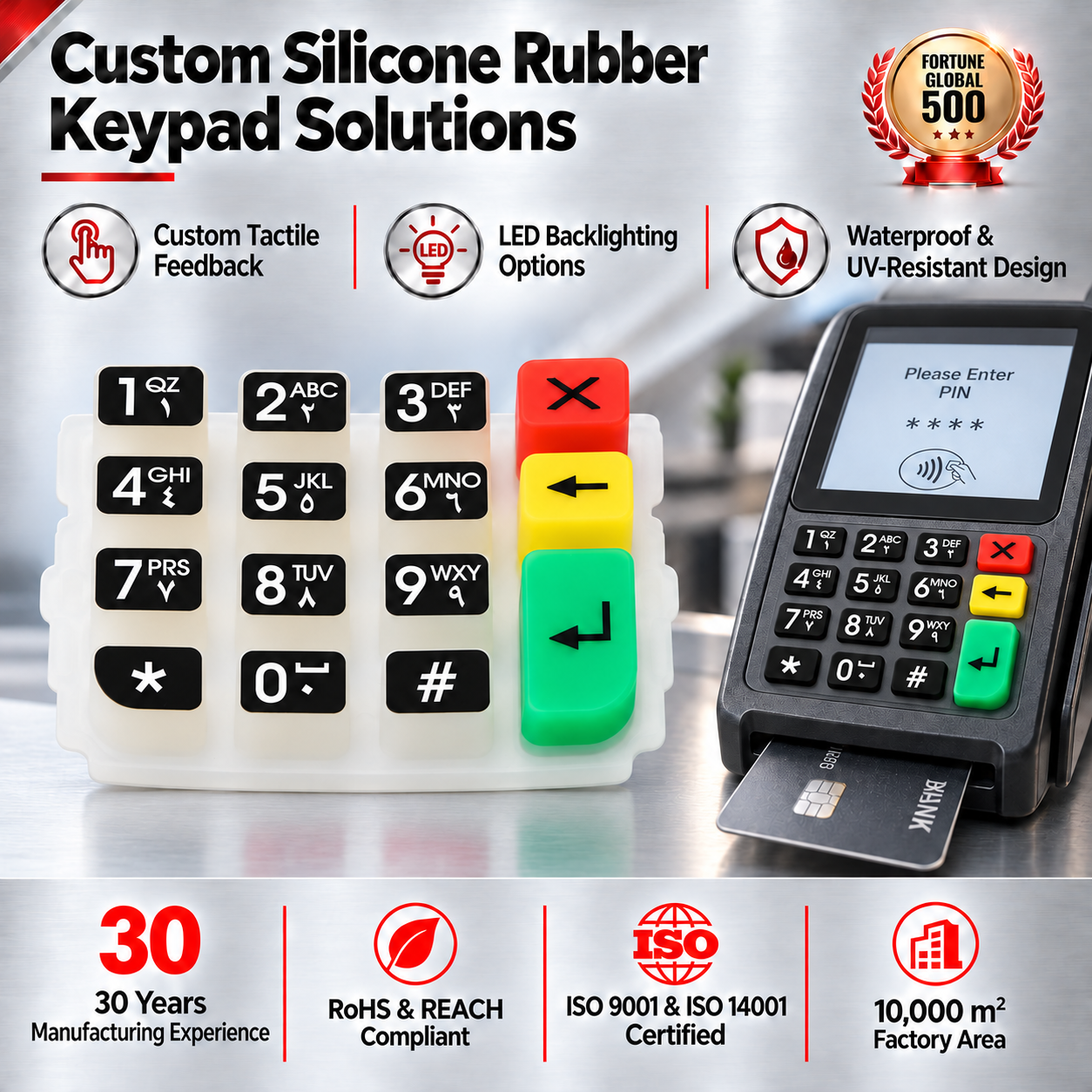
Electronic Soft Tactile Switch Plastic Silicone Button Elastomer Rubber Keypad
View Product Detail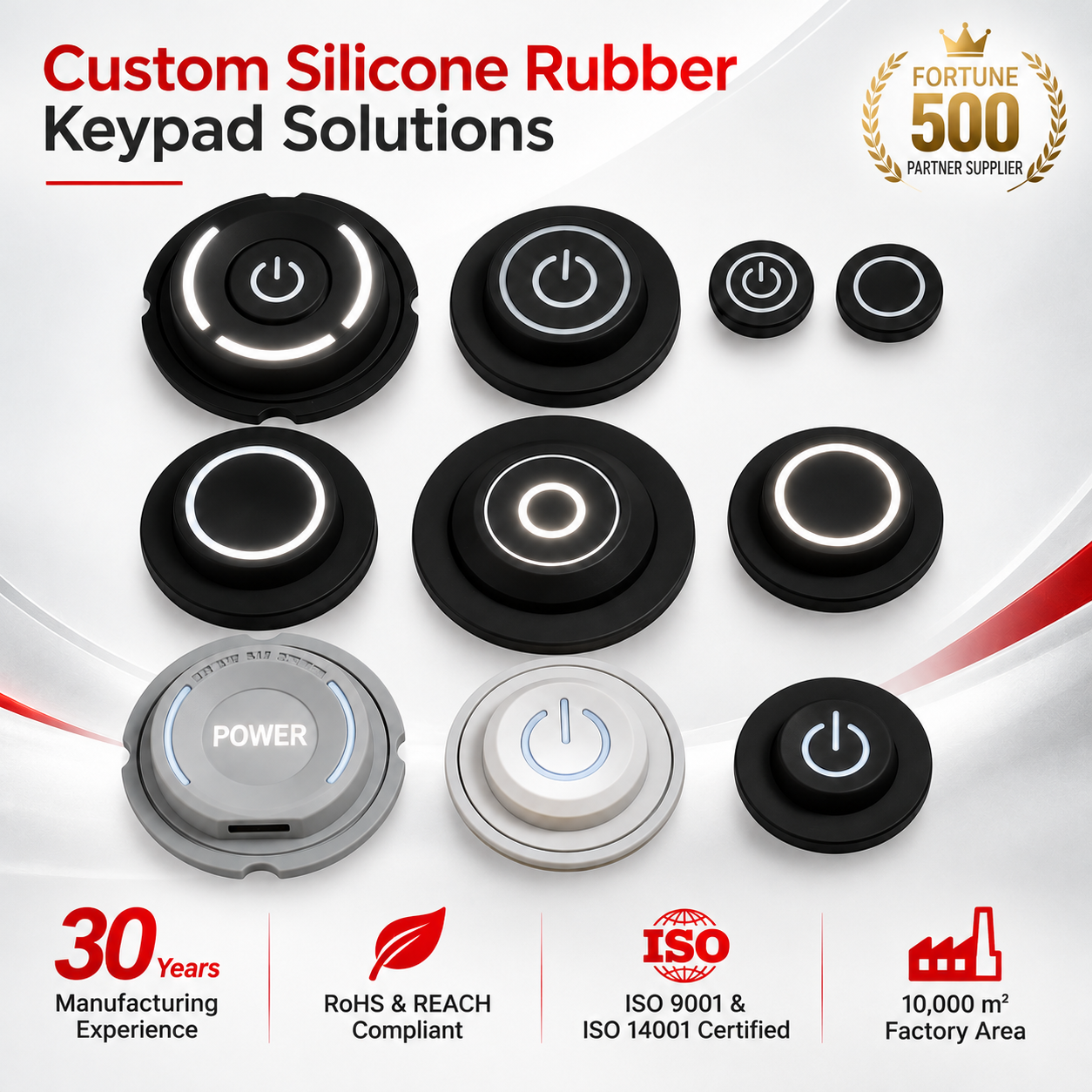
Single Tactile Cap Power Custom Silicone Rubber Button Keypad Multicolor Backlit
View Product Detail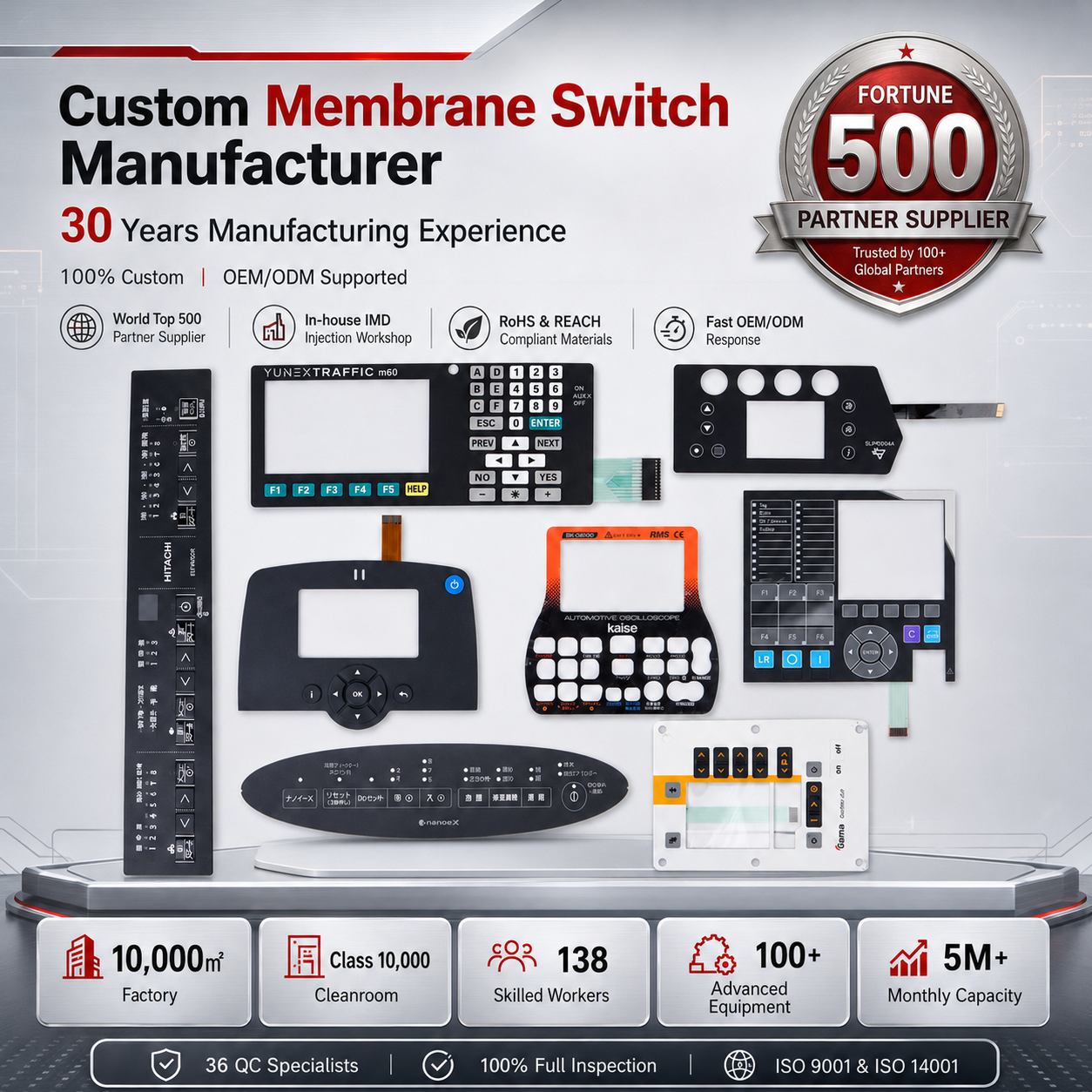
Custom Industrial Medical Membrane Switch Graphic Overlay Waterproof FPC Circuit
View Product Detail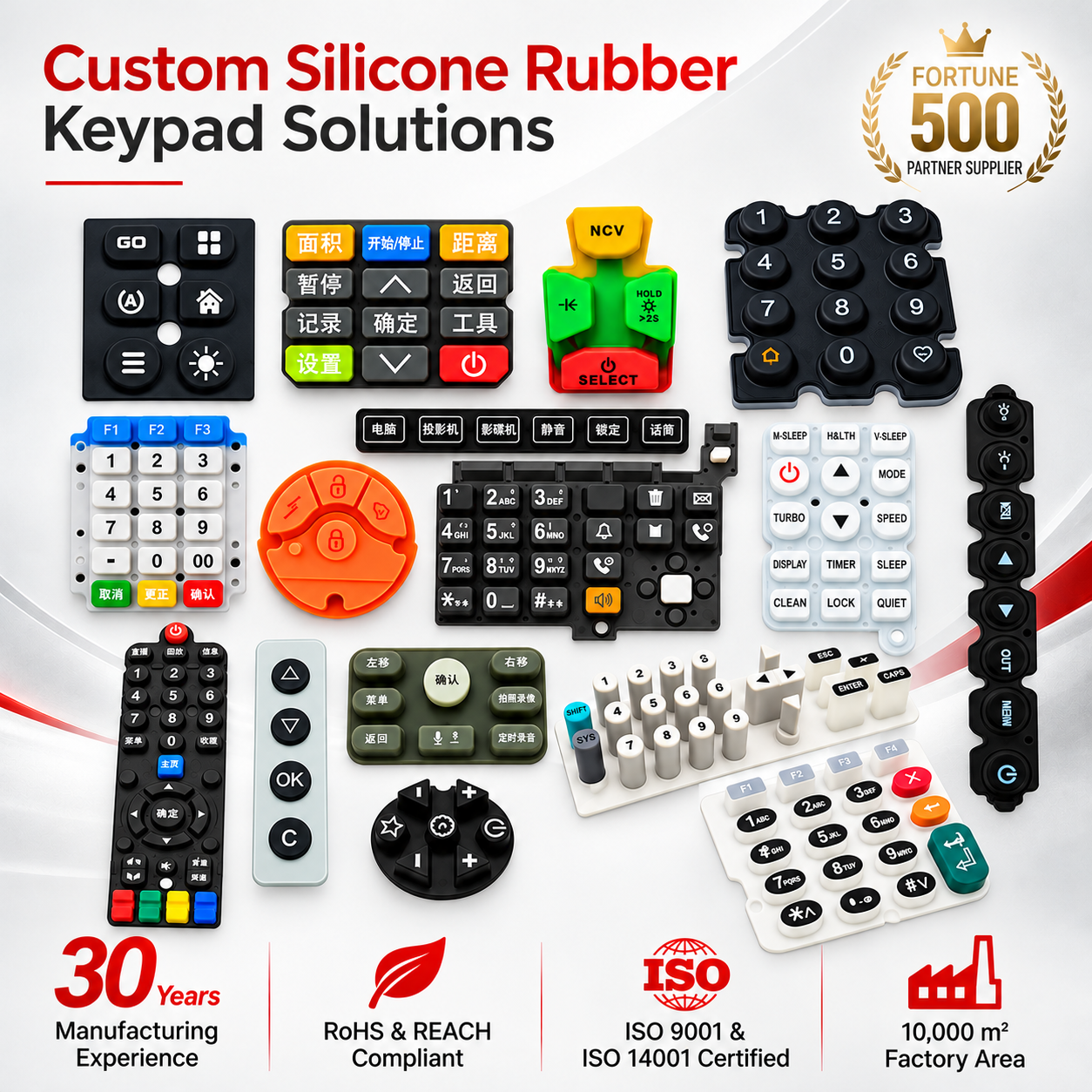
Custom Size Durable Multi Color Conductive Rubber Silicone Elastomer PTT Keypad
View Product Detail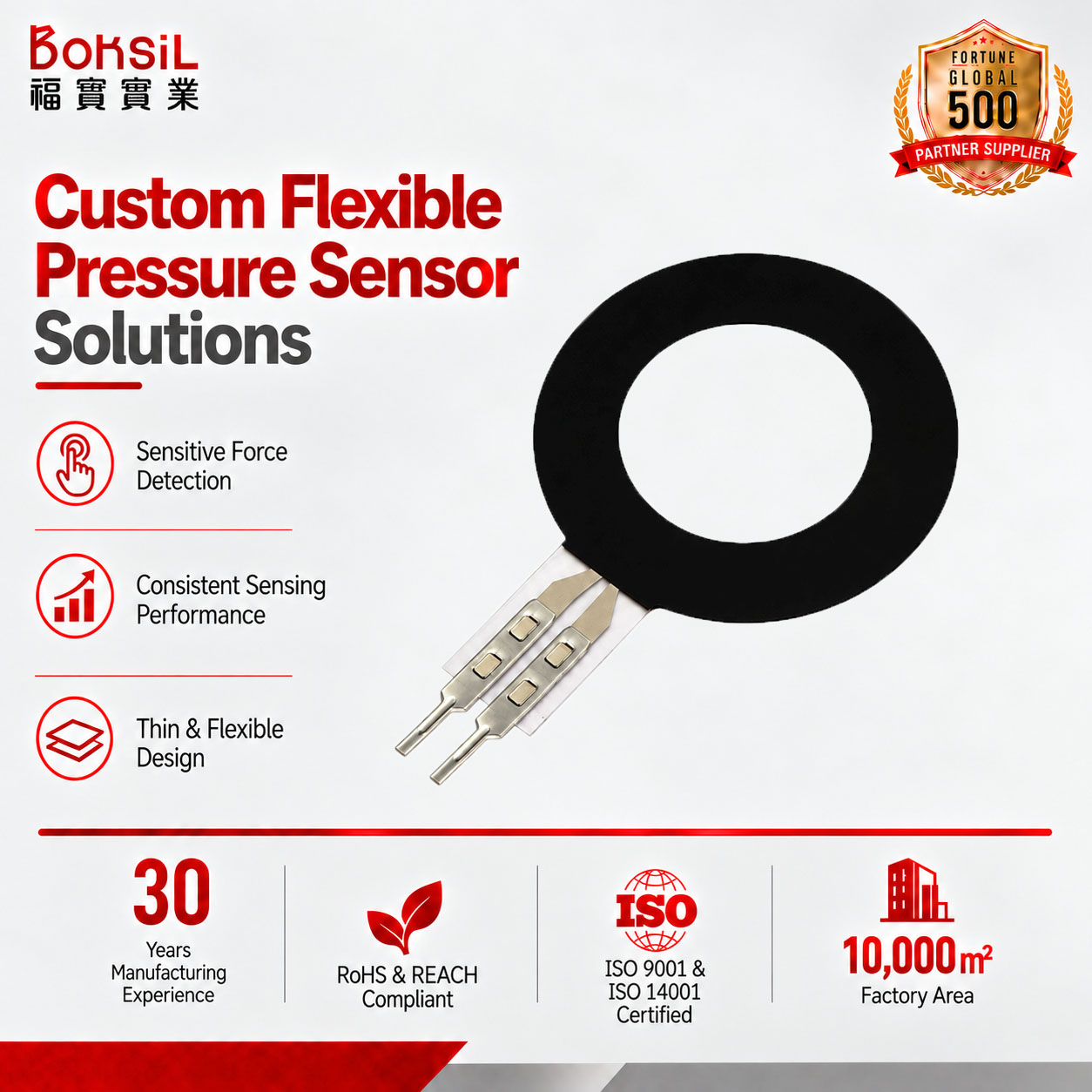
Universal FSR Flexibility Force Sensitive Sensor Capacitive Touch Thin Film Resistor
View Product Detail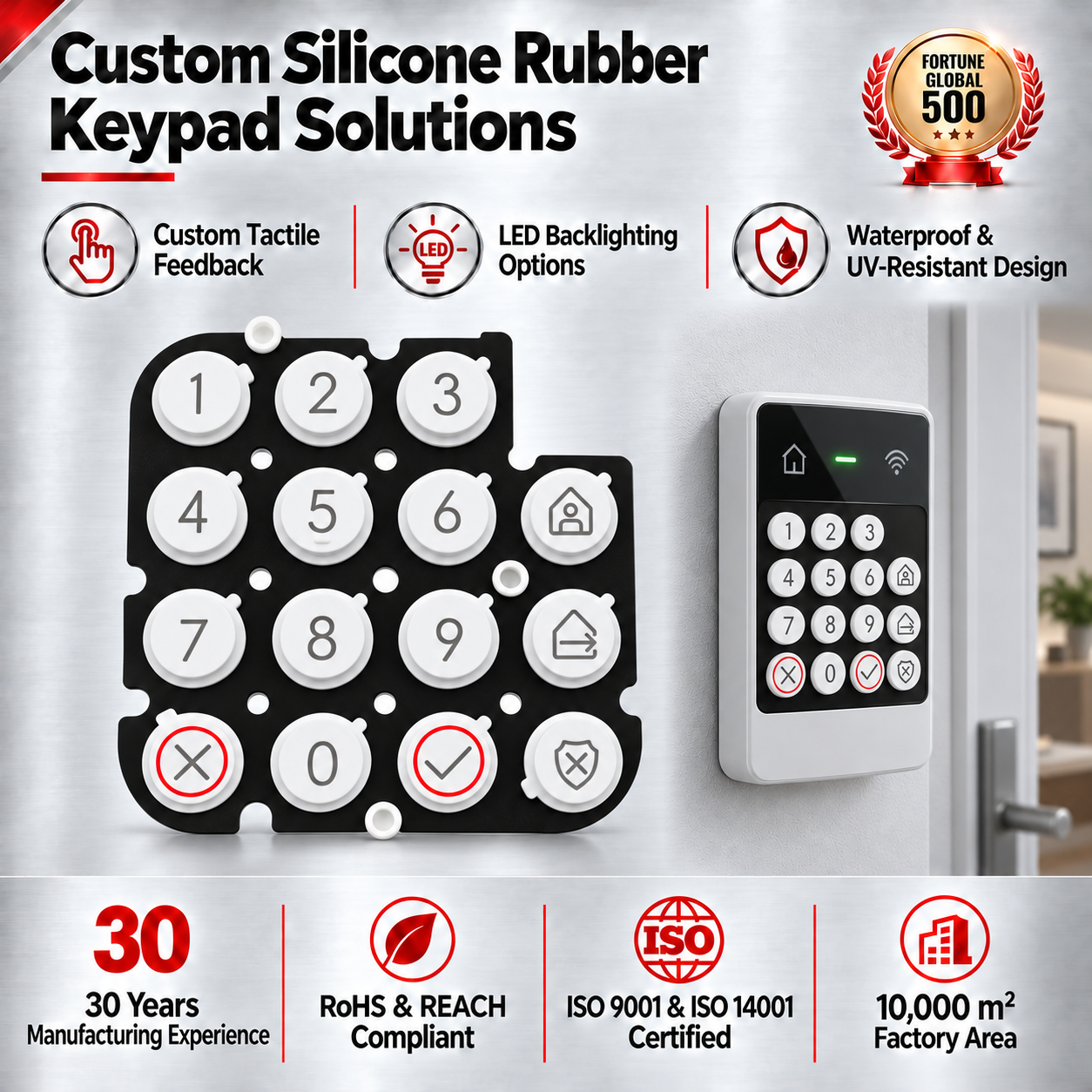
Factory Wholesale Numeric Conductive Silicone Rubber Keypad Panel Embossed Buttons
View Product Detail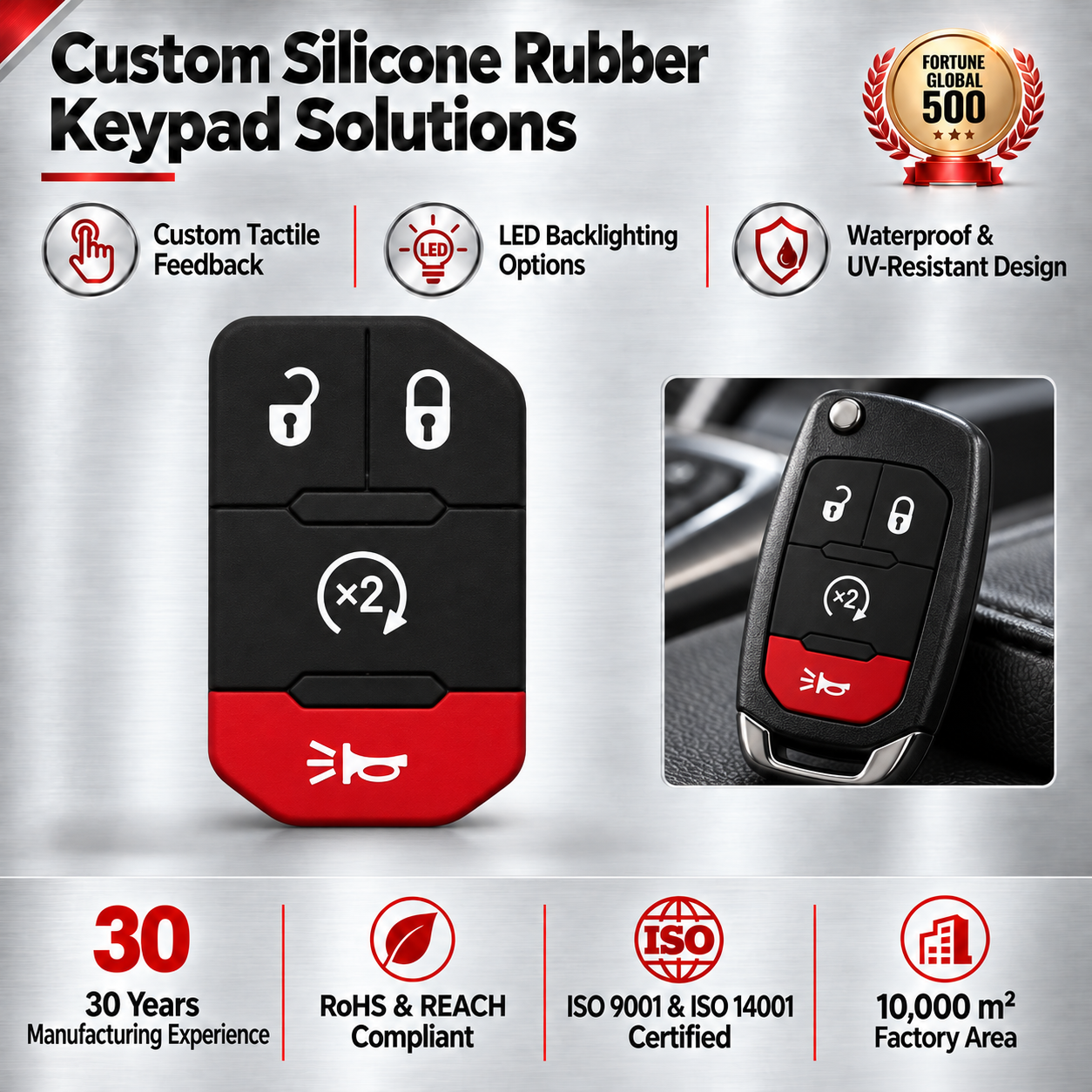
Waterproof Silicone Remote Key Cover Press Button Rubber Keypad Enclosure
View Product Detail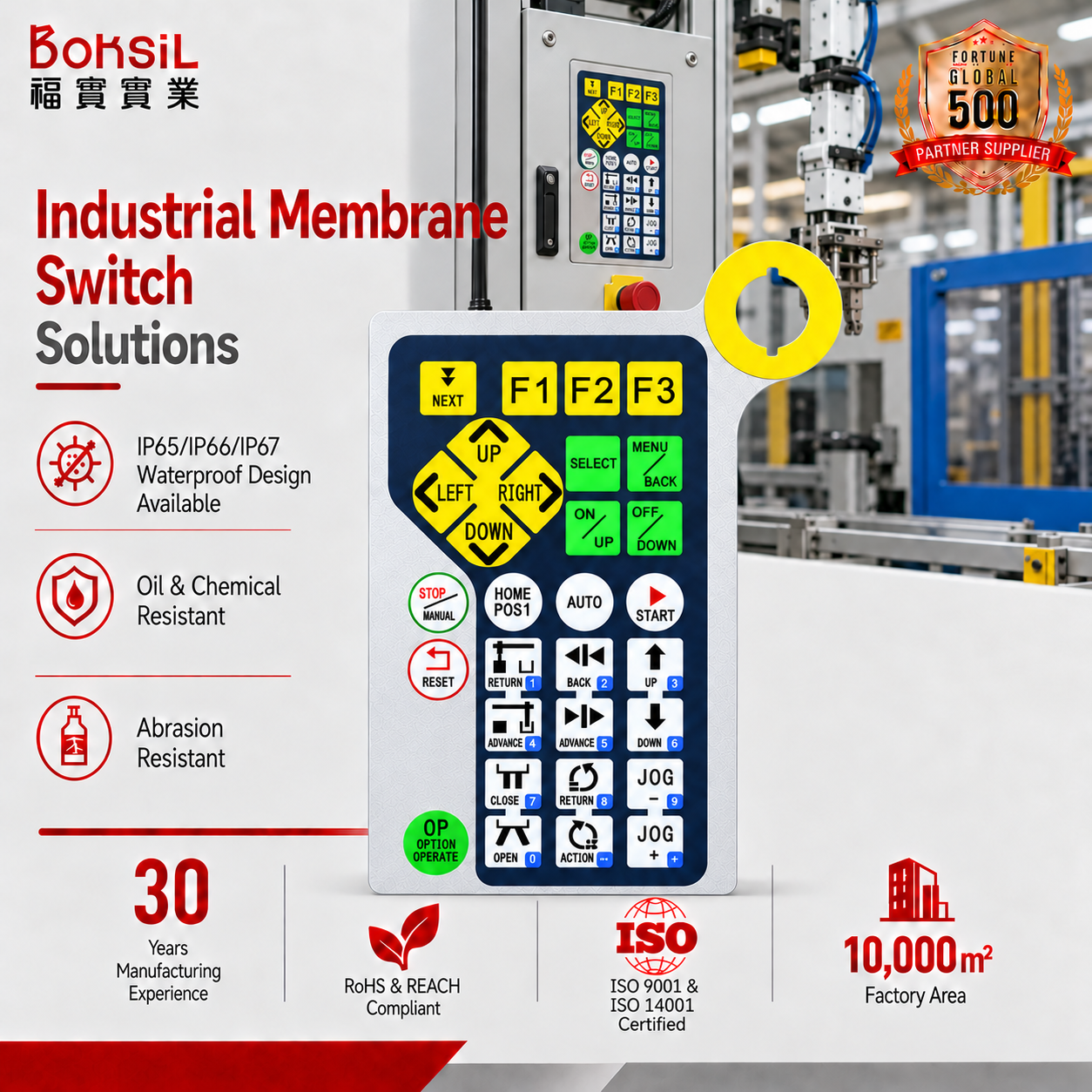
Custom Membrane Keypad Polycarbonate Overlay for Industrial Touch Keyboard
View Product DetailFlexible Printed Circuit Architecture: Reliability Under Environmental Stress
A comprehensive examination of dielectric substrate selection, copper foil metallurgical morphology, and interconnect integrity designed for mission-critical assemblies.
Polyimide (PI) vs. Polyester (PET) Substrates
Standard membrane switches often utilize screen-printed conductive silver ink on Polyethylene Terephthalate (PET). While cost-effective, PET exhibits a glass transition temperature (Tg) near 78°C, making it vulnerable to localized thermal deformation during standard component soldering. For OEM installations in San Pedro de Macorís demanding high circuit density and automated surface-mount assembly, our plant implements adhesiveless Polyimide (PI) copper-clad laminates. Polyimide maintains continuous thermal endurance beyond 200°C, possesses superior dielectric breakdown strength (typically > 200 kV/mm), and guarantees dimensional stability across extreme relative humidity fluctuations.
Dynamic Flex Metallurgy: RA vs. ED Copper
Dynamic flexural longevity is governed by copper crystal structure. Electro-Deposited (ED) copper features a vertical columnar grain structure suitable for static "flex-to-install" configurations. However, under cyclic mechanical flexing—such as moving diagnostic scanner heads, robotic surgical articulations, or high-frequency actuation buttons—ED copper develops micro-fractures along vertical grain boundaries. We engineer high-end FPCs utilizing Rolled Annealed (RA) copper foil. RA copper undergoes extensive mechanical rolling and thermal recrystallization, creating a horizontally flattened grain structure. This achieves over 10 million flex cycles at tight bend radii (≤ 10× circuit thickness) without impedance spikes.
Anti-Corrosive Surface Finishes (ENIG & Immersion)
In San Pedro de Macorís, coastal atmospheric conditions expose electronic interconnects to constant airborne halides (NaCl) and elevated ambient humidity. Untreated copper traces suffer rapid galvanic corrosion and dendritic whisker growth. Dongguan AXRU Electronics standardizes on Electroless Nickel Immersion Gold (ENIG: 3-5 μm Nickel, 0.05-0.1 μm Gold) and Immersion Silver for precision ZIF contact fingers. The noble gold barrier completely passivates the underlying copper, providing contact resistance under 20 mΩ, exceptional solder joint shear strength, and shelf lives exceeding 24 months in unconditioned assembly warehouse environments.
Multi-Layer & Rigid-Flex Integration
Complex electro-mechanical devices increasingly eliminate traditional wire harnesses in favor of hybrid rigid-flex systems. By seamlessly laminating FR4 rigid stiffener cores with flexible polyimide trace sections, our manufacturing workflow removes discrete connectors and solder joints—the primary failure point in field equipment. We produce 1- to 6-layer FPC stack-ups with micro-via laser drilling (≥ 0.1mm), impedance control tolerances (±10%), and integrated electromagnetic shielding (EMI film/silver paste mesh) to isolate sensitive physiological or sensor signals from motor drive noise.
Controlled Tactile Feedback & Dome Integration
Tactile switch response directly impacts user error rates in surgical settings and industrial consoles. Our cleanrooms maintain tight tolerances over metal dome placement, utilizing four-leg and triangle nickel- or gold-plated stainless steel domes (actuation forces from 160g to 450g). Through advanced automatic force-displacement curve analysis, we tune snap ratios between 40% and 60%, delivering distinct, crisp tactile feedback that confirms switch closure even when technicians operate interfaces wearing double-layered medical gloves.
Hermetic Perimeter Adhesion & IP67 Sealing
Ingress protection in humid environments requires chemical compatibility between graphic overlays, spacer matrices, and flexible circuits. We utilize precision optical die-cutting with genuine 3M acrylic adhesive transfer films (e.g., 3M 467MP, 468MP, and 3M 300LSE for low surface energy plastics). Incorporating integrated perimeter gas-vent labyrinths and hydrophobic breathable ePTFE membranes, our sealed panels prevent internal pressure spikes caused by temperature changes while maintaining IP67 water and solvent ingress protection.
San Pedro de Macorís: The Caribbean’s Nearshoring Manufacturing Hub
Empowering contract manufacturers, medical device multinationals, and industrial automation facilities situated within the Zona Franca Industrial de San Pedro de Macorís.
Medical Device Sub-Assemblies
San Pedro de Macorís and the eastern Dominican industrial cluster host world-class medical manufacturing operations. Our FPCs and membrane interfaces provide biocompatible, alcohol-resistant overlays and ultra-reliable electrical interconnects for intravenous infusion pumps, blood analysis monitors, disposable diagnostic strips, and surgical control units requiring stringent cleanroom compliance.
Electrical & Electronic Hardware
For manufacturers assembling circuit breakers, automated transfer switches, sensor modules, and IoT industrial controllers inside the Free Trade Zone, AXRU provides compact FPC circuits that bridge space-constrained electronic chassis, replacing rigid wire bundles with streamlined, error-proof flexible cabling.
Maritime & Tropical Saline Defense
Located on the southeastern Caribbean coast, San Pedro de Macorís facilities endure sustained relative humidity (>75-85% RH) and airborne saline deposition. Our circuits are manufactured with thermal-cure dielectric solder masks, liquid photoimageable (LPI) coverlays, and secondary conformal encapsulation, eliminating electrolytic metal migration and copper oxidation.
Seamless Free Zone Logistics (Law 8-90)
We work directly with supply chain directors utilizing the Dominican Republic's Law 8-90 regulatory exemptions. Our export packaging features complete customs traceability, commercial documentation, Certificate of Conformance (CoC), and raw material lot tracking, enabling frictionless containerized shipping via DP World Caucedo or air courier to Las Américas (SDQ).
Key Drivers Shaping Flexible Circuit Procurement in the Dominican Republic
Strategic perspectives for procurement managers, design engineers, and contract manufacturing executives operating in the Caribbean nearshore corridor.
The Accelerating Nearshoring Shift
North American medical and industrial OEMs are diversifying their supply lines away from single-region dependence, aggressively expanding output within Dominican Free Zones. This shift mandates tier-1 component suppliers capable of meeting stringent US/EU quality standards while matching rapid engineering revision cadences. AXRU supports engineering changes within 48 hours, bridging the Pacific-Atlantic manufacturing chain with consistent batch-to-batch repeatability.
Rise of Low-Mass, Wearable Medical Electronics
Next-generation diagnostic equipment produced in San Pedro de Macorís increasingly demands ultra-miniaturized form factors. Bulky wiring and rigid boards are systematically replaced by ultra-thin (0.1mm - 0.2mm) double-sided FPCs with blind/buried micro-vias. This structural reduction saves up to 70% in enclosure weight and volume, allowing engineers to embed complex multi-channel biosensing matrices into portable, patient-friendly hardware.
Shift from Pure Membrane to Smart HMI Interfaces
Conventional resistive keypads are evolving into dynamic Human-Machine Interfaces (HMIs) integrating capacitive touch sensing, force-sensitive resistors (FSRs), back-lit light guide films (LGF), and embedded microcontroller surface mounting. As medical consoles transition toward cleanable, seamless glass and acrylic front fascias, our capacitive FPCs provide non-mechanical actuation that maintains structural sterility and withstands daily exposure to harsh quaternary ammonium disinfectants.
| Engineering Parameter | Standard Silver-PET Membrane | Polyimide (PI) Copper FPC | Rigid-Flex Hybrid Board | Silicone + FPC Integrated Panel |
|---|---|---|---|---|
| Base Conductor Material | Screen-Printed Silver Paste | Rolled Annealed (RA) Copper Foil | Copper Foil + FR4 Glass Epoxy | Carbon Pill / Gold Trace Contact |
| Conductor Resistivity | ~ 0.05 – 0.5 Ω/sq/mil | ≤ 0.0017 Ω·mm²/m (Pure Cu) | Ultra-Low Lead Impedance | < 50 Ω Total Circuit Contact |
| Operating Temperature | -20°C to +70°C | -40°C to +135°C (Solder Reflow ≤ 260°C) | -40°C to +130°C Continuous | -40°C to +150°C Operation |
| Min. Trace Pitch / Gap | 0.5 mm / 0.5 mm | 0.075 mm / 0.075 mm (High-Density) | 0.1 mm / 0.1 mm | Custom Geometric Pitch |
| Dynamic Flex Durability | < 100,000 Cycles | > 5,000,000 to 10,000,000 Cycles | Continuous Mechanical Hinge Rated | > 1,000,000 Key Presses |
| Environmental Sealing | IP65 Perimeter Seal | IP67 / IP68 Hermetic Adhesion | IP67 Sealed Housing Integration | IP66 Gasket Sealed Compression |
| Target Caribbean Segment | Appliances, Simple Controls | Medical Devices, Sensors, Aerospace | Complex Multi-Chassis Medical Tools | Outdoor Industrial & Harsh Telecom |
Intertek-Verified Manufacturing & Reliability Testing Infrastructure
From our 10,000㎡ production facility in Dongguan to client facilities in the Dominican Republic: zero-defect engineering backed by 100% full-parameter electrical and mechanical validation.
100% Electrical Inspection
Every single FPC panel, membrane switch, and sub-assembly undergoes automated fixture continuity testing prior to secondary packaging. Computerized test jigs evaluate circuit loop resistance, trace-to-trace dielectric insulation breakdown (500V DC testing), LED luminous forward voltage drop, and open/short detection, guaranteeing 100% yield upon assembly line feeding in San Pedro de Macorís.
Dynamic Life & Actuation Testers
Our dedicated reliability testing lab features automatic multi-station key life testers and force-displacement dynamometers. We simulate repetitive end-user usage up to 5,000,000 cycles while continuously plotting contact resistance drift and force attenuation graphs, ensuring physical metal domes retain their tactile snap feel throughout the field lifetime of the finished device.
Programmable Temp. & Humidity Chambers
To simulate long-term deployment in Caribbean tropical climates, sample batches undergo accelerated environmental burn-in. Our programmable chambers cycle assemblies between -40°C and +85°C with relative humidity controlled at 93% ± 2% for up to 500 continuous hours, stress-testing internal adhesive bonding, tail entry sealing, and conductive trace integrity against delamination and copper dendrite growth.
Tensile Shear & Peel Adhesion Testing
Adhesion failures can compromise sensitive medical consoles. Using digital tensile pull testers, we confirm the mechanical peel strength of internal adhesive transfer tapes, stiffener backing bonds, and ZIF connector reinforcements (guaranteeing peel forces exceeding 15 N/cm according to ASTM D3330 protocols), preventing interface buckling during assembly insertion.
UV Weathering & Yellowing Resistance
Equipment deployed in bright operating rooms or semi-outdoor industrial installations suffers UV-induced optical degradation. Our Xenon and UV aging chambers expose graphic overlays, silicone keypads, and transparent display windows to concentrated ultraviolet radiation to certify that colors retain Pantone fidelity and transparent windows resist yellowing and embrittlement.
Chemical & Abrasion Rub Testing
Using motorized RCA abrasion testers and solvent rubbing heads, we verify print legend durability against aggressive industrial agents, including pure isopropyl alcohol (IPA), MEK, bleach solutions, and artificial perspiration. Overlays withstand over 200 double-rubs at 500g load without legend fading or selective texture degradation.
Frequently Asked Questions: Sourcing FPCs in San Pedro de Macorís
Targeted insights for sourcing specialists, customs liaisons, and quality engineers managing electronics manufacturing within the Dominican Republic.
How are import duties and Free Zone (Law 8-90) customs clearances handled for shipments to San Pedro de Macorís?
Under the Dominican Republic's Law 8-90 on Free Trade Zones, enterprises operating inside the San Pedro de Macorís Free Zone (Zona Franca) enjoy full exemption from import duties, tariffs, and ITBIS (value-added tax) on raw materials, electronic components, and machinery. Dongguan AXRU Electronics supplies all export shipments under standard Incoterms (typically FOB Shenzhen/Hong Kong, CIF Santo Domingo/Caucedo, or DAP your facility). Our export department provides commercial invoices with precise HS code classification (such as 8534.00 for Flexible Printed Circuits and 8537.10 for membrane switch consoles), packing lists with net/gross weights per carton, and Certificates of Origin to ensure seamless clearance through the Dirección General de Aduanas (DGA).
What are the typical logistics transit times from your Dongguan plant to our facility in San Pedro de Macorís?
For rapid engineering prototypes, first-article inspections (FAI), and urgent pilot production runs, we coordinate air express freight via DHL, FedEx, or UPS direct to Las Américas International Airport (SDQ) in Santo Domingo, which is located just 45 minutes west of San Pedro de Macorís via the Autopista Las Américas. Air freight transit typically completes within 4 to 7 business days from factory dispatch. For mass production quantities, containerized ocean freight departs from Shenzhen or Hong Kong ports to the Port of Caucedo (DP World) or the Port of Rio Haina, with a typical maritime transit duration of 28 to 35 days. We also offer buffer stock stocking agreements for scheduled blanket orders.
How do you protect Flexible Printed Circuits against Caribbean coastal humidity and salt-spray corrosion during transit and storage?
Our plant implements moisture-barrier vacuum packaging engineered specifically for ocean shipping and tropical warehousing. Finished FPC assemblies and membrane panels are heat-sealed within heavy-duty multi-layer ESD-shielding barrier bags accompanied by active cobalt-free silica desiccant packets and calibrated humidity indicator cards (HIC). At the circuit level, exposed contact fingers are plated with Electroless Nickel Immersion Gold (ENIG) or specified contact alloys, preventing electrolytic oxidation even under prolonged ambient humidity (>80% RH) prior to product box assembly.
Can AXRU support Design for Manufacturability (DFM) reviews to adapt our existing rigid PCB layouts to flexible circuits?
Yes. Our 121-person workforce includes dedicated application engineers who analyze your Gerber files (RS-274X), ODB++ data, or 2D/3D mechanical enclosure models. During the DFM review, we optimize trace layout to avoid stress concentration points, apply teardrop transitions on all pad-to-trace junctions, specify optimal bend radius ratios (typically ≥10x total thickness for dynamic flexing), recommend polyimide stiffener configurations around ZIF connectors, and review stack-up architecture to ensure high production yields and cost efficiency.
What is your Minimum Order Quantity (MOQ) and production turnaround for custom prototypes and mass delivery?
To support new product introductions (NPI) and clinical trial assemblies, our MOQ for custom flexible printed circuits and membrane switches begins at only 100 pieces. Rapid sample prototypes using digital laser-cutting and dedicated sample tooling are typically dispatched within 7 to 10 working days following final DFM drawing approval. Following prototype validation and First Article sign-off, standard production orders of 500 to 50,000+ pieces are manufactured within 15 to 20 working days.
Which medical and industrial quality compliance standards do your manufacturing processes follow?
Our Dongguan facility operates under documented Quality Management Systems audited on-site by Intertek. Flexible circuits adhere strictly to IPC standards, including IPC-6013 (Qualification and Performance Specification for Flexible Printed Boards) Class 2 and Class 3, and IPC-A-600 for acceptability. All raw materials—from DuPont polyimide films and 3M transfer adhesives to silicone elastomers—comply fully with EU RoHS Directives (2011/65/EU and 2015/863) and REACH SVHC regulations. Complete material disclosure sheets, flame retardant ratings (UL94-V0), and full inspection reports are archived for full audit traceability.
Accelerate Your Nearshore Development Pipeline
Whether you require a quick-turn DFM review for an upcoming medical device project in San Pedro de Macorís, or a scalable volume quotation for precision flexible printed circuits and membrane switches, our engineering team is ready to assist.
Inquire Now