Engineered Flexible Interconnects & Industrial Front Panels
Delivering high-density polyimide circuits, fine-pitch trace geometry, and ruggedized human-machine interfaces directly to equipment designers and contract manufacturers across the Naples metropolitan area and Southern Italy.
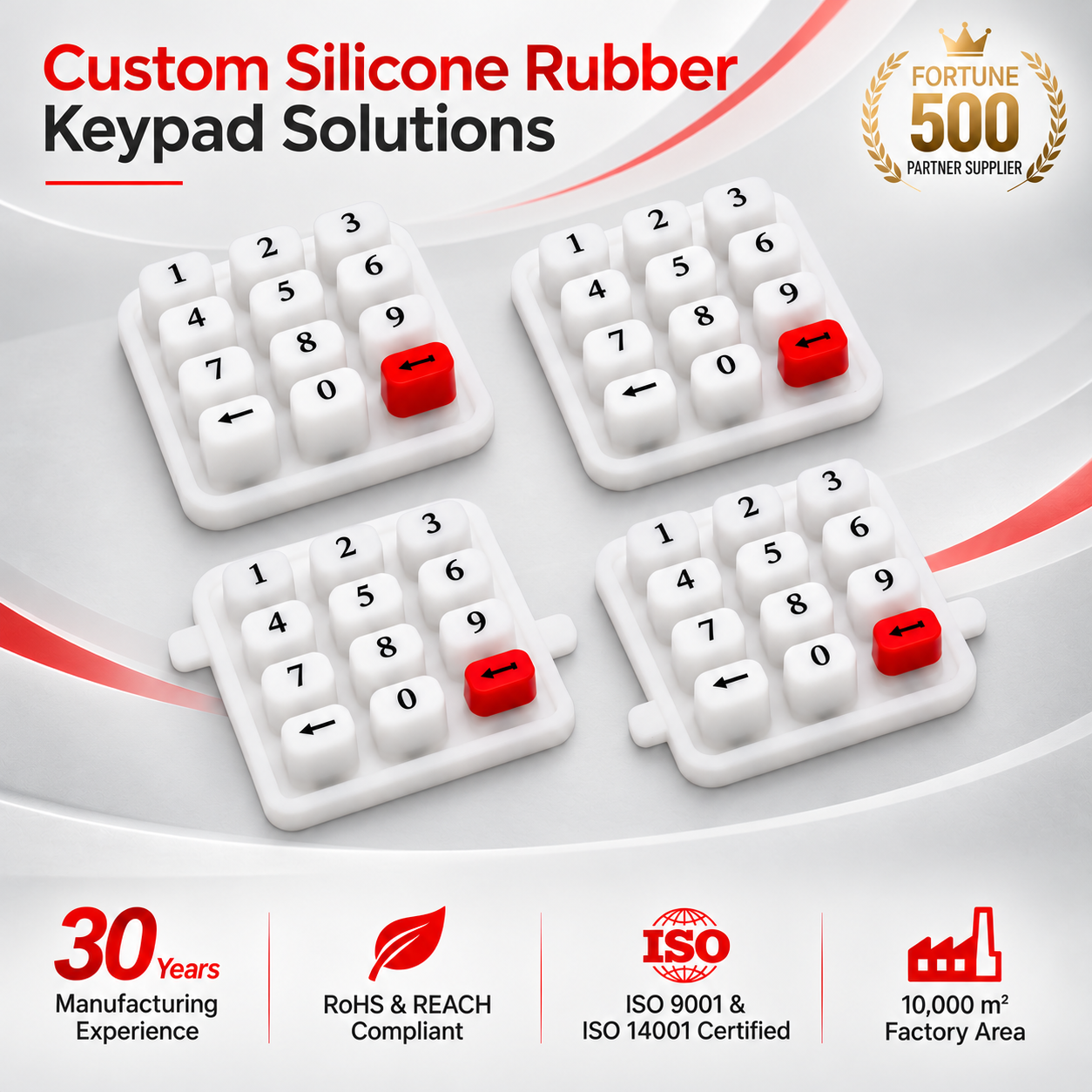
Custom Manufacturer Epoxy Silicone Rubber Keypad oem/odm with low Profile Design Durable and Waterproof
- Substrate: Epoxy Coated Silicone
- Protection: IP67 / IP68 Ingress Proof
- Life Cycle: >1,000,000 Actuations
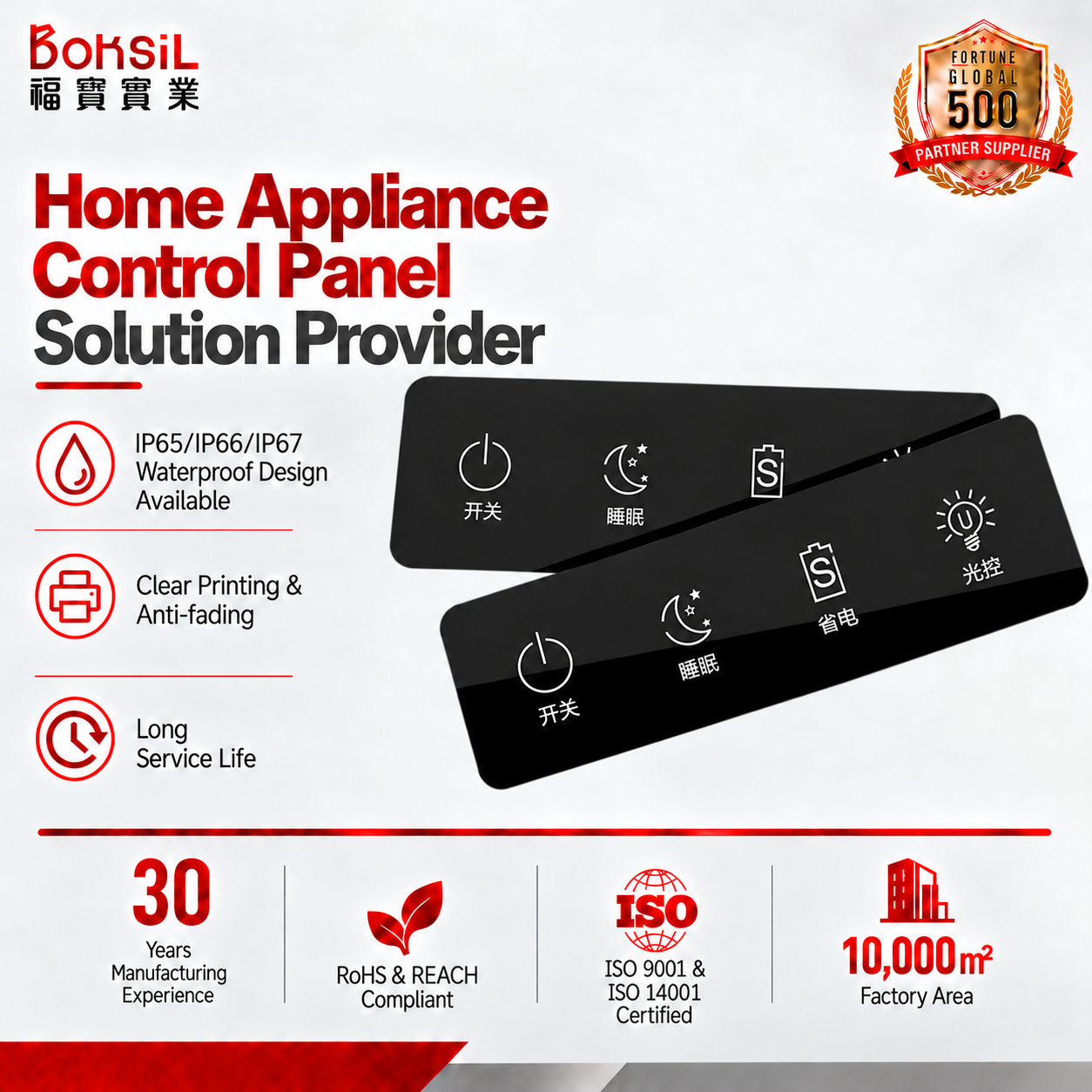
Factory Direct Custom Silk Screen Printing PMMA Graphic Overlay Electronic Control Front Panel for TV LCD Display Screen
- Material: Optical Grade Acrylic (PMMA)
- Hardness: 2H - 4H Anti-Scratch
- Printing: Multi-Layer Sub-Surface
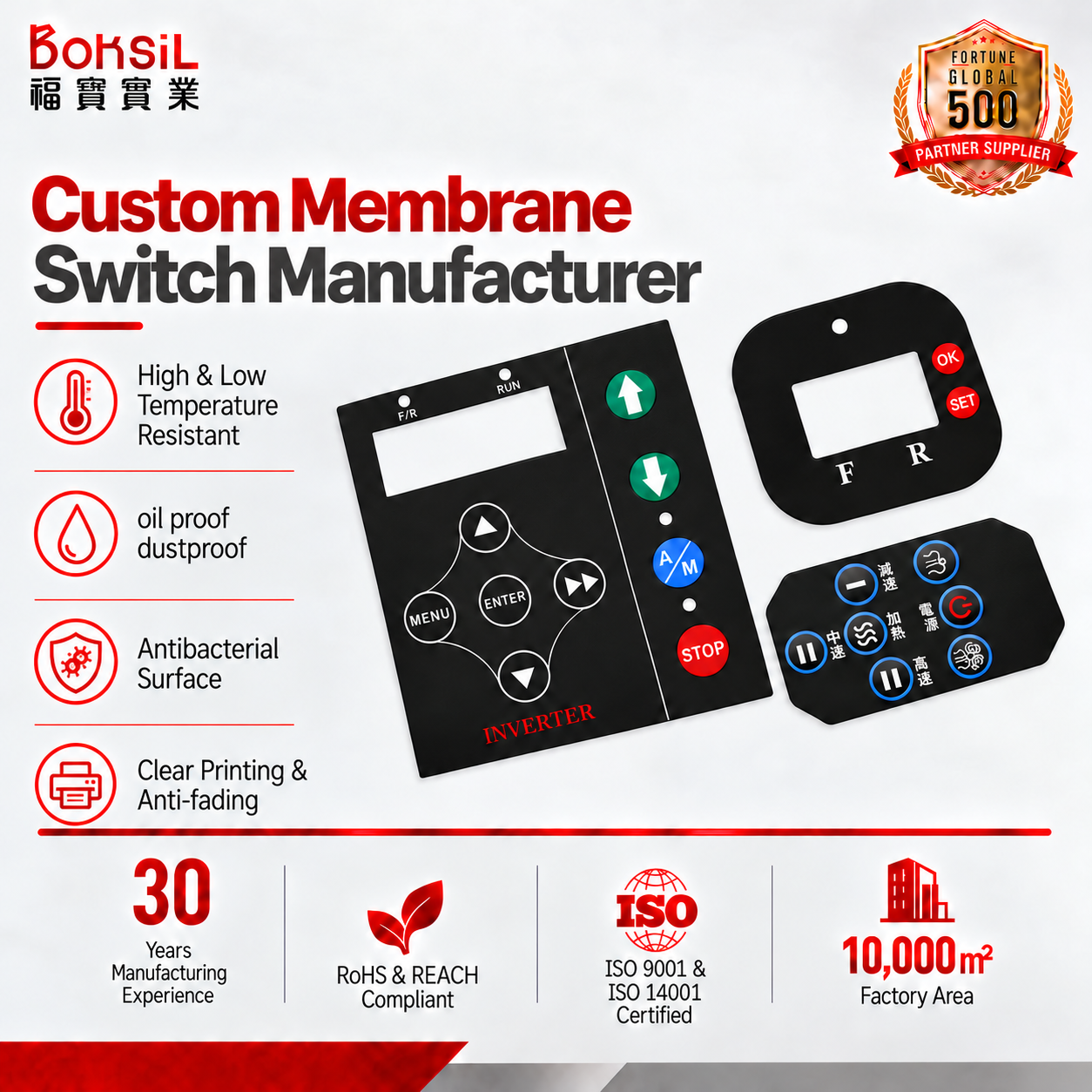
OEM/ODM Factory Front Control Electronic Panel Polycarbonate Membrane Switch Graphic Overlay
- Base Film: Sabic Lexan™ Polycarbonate
- Tactile Feel: Stainless Steel Domes
- Adhesion: High-Shear 3M 467/468MP
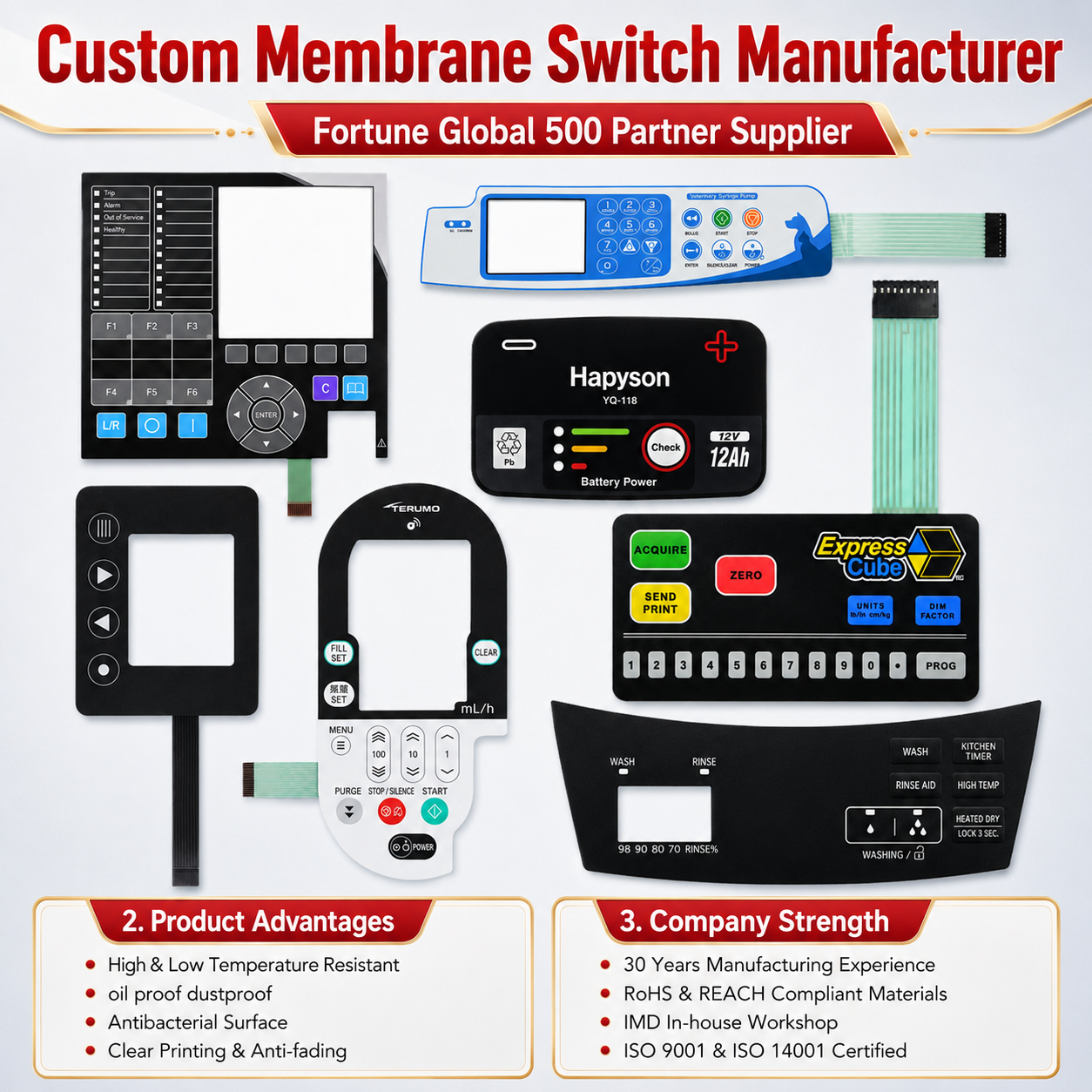
China Manufacturer Key Pad Graphic Overlay Button Control Panel Membrane Switch 5*4 Matrix Water-proof FPC Flexible Circuit
- Conductor: Rolled Annealed (RA) Copper
- Grid Config: 5x4 Scanning Matrix
- Sealing: Perimeter Barrier Gasket
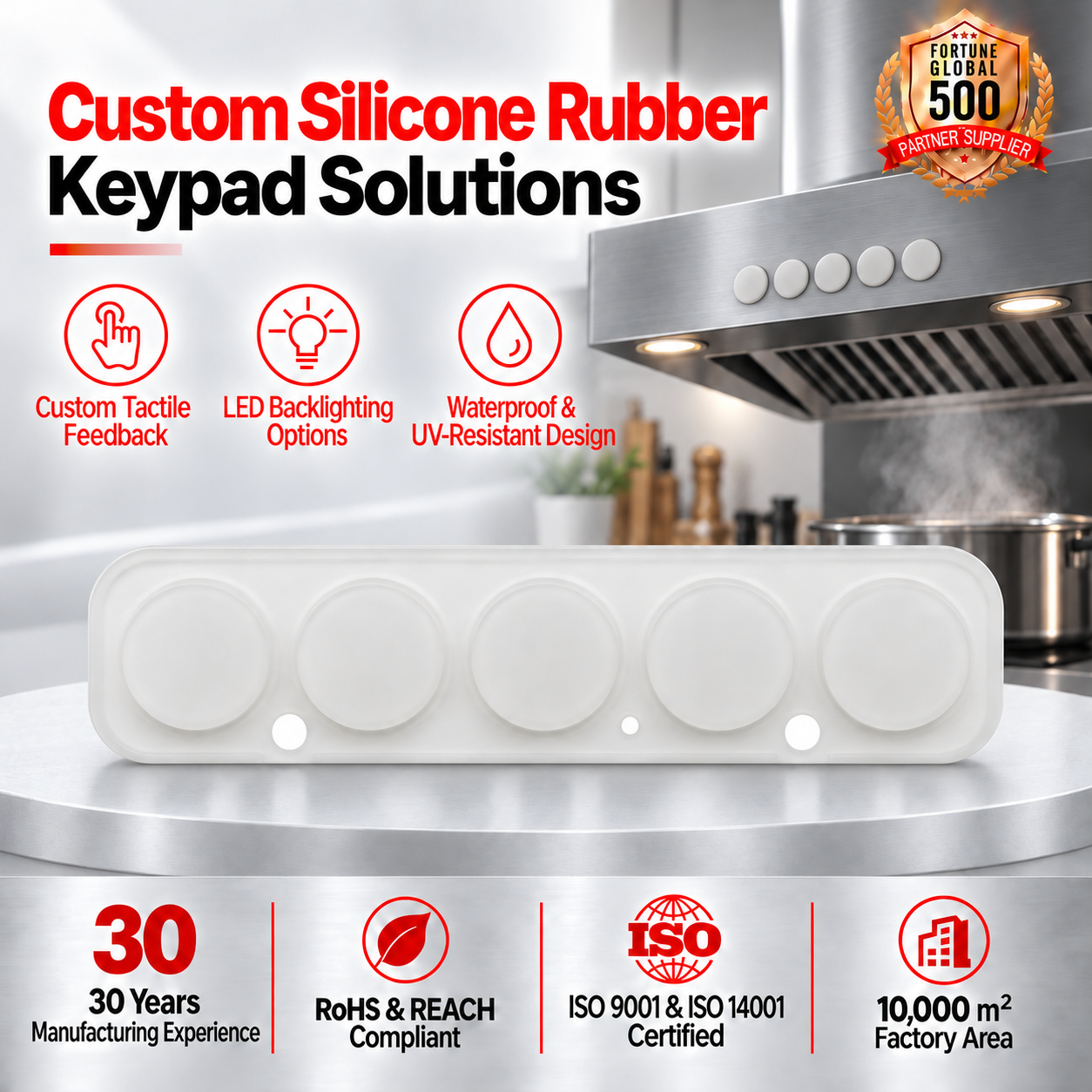
Home Appliance 5 Circular Soft Silicone Rubber Keypad Front Panel Button Unit Momentary Customized Manufacturer
- Contact: Conductive Carbon Pill (<100Ω)
- Actuation Force: 180g - 280g Snap Ratio
- Temperature: -40°C to +200°C Range
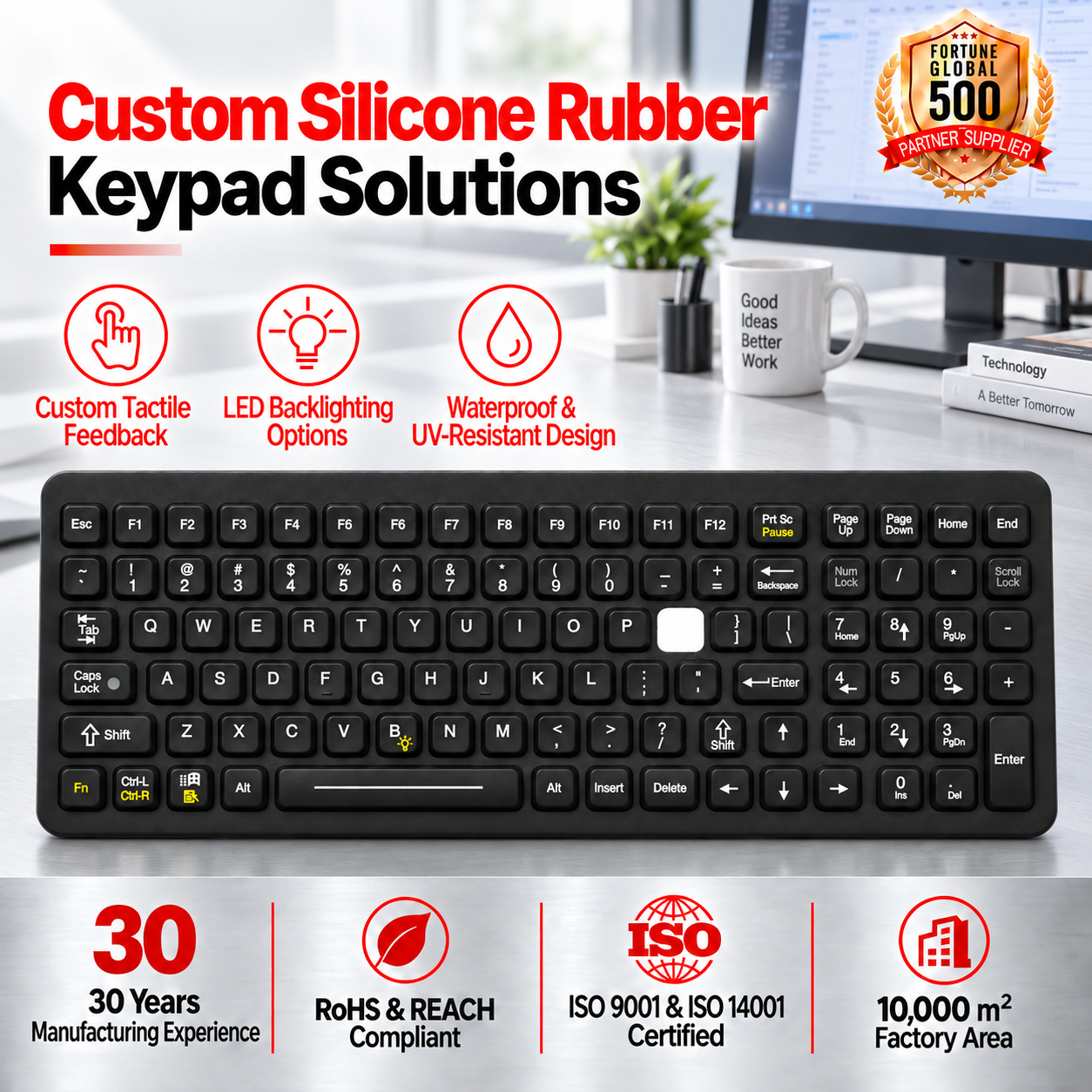
Industrial Custom Manufacturer Silicone Keypad Rubber Button Conductive Non-Toxic for Computer
- Compound: RoHS/REACH FDA Compliant
- Coating: Abrasion Resistant PU Matt
- Resistance: UV, Hydrocarbon, Solvents
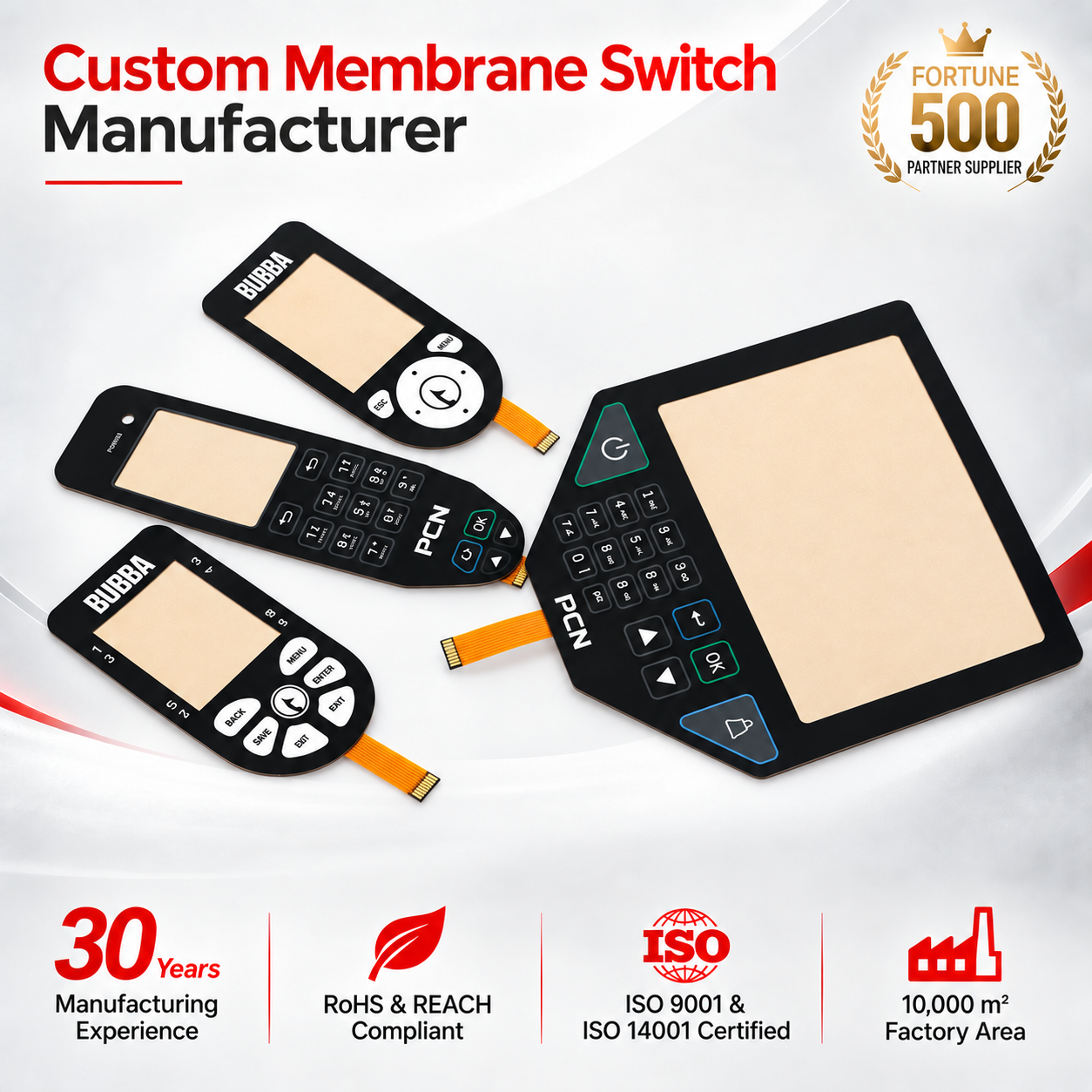
Custom 3m Adhesive Tactile Metal Dome Button Membrane Switch Graphic Overlay for Electronic Equipment
- Dome Type: Nickel / Gold Plated SUS301
- Feedback: Crisp Audible Click Feeling
- Spacer: Laser-Vented Anti-Burst
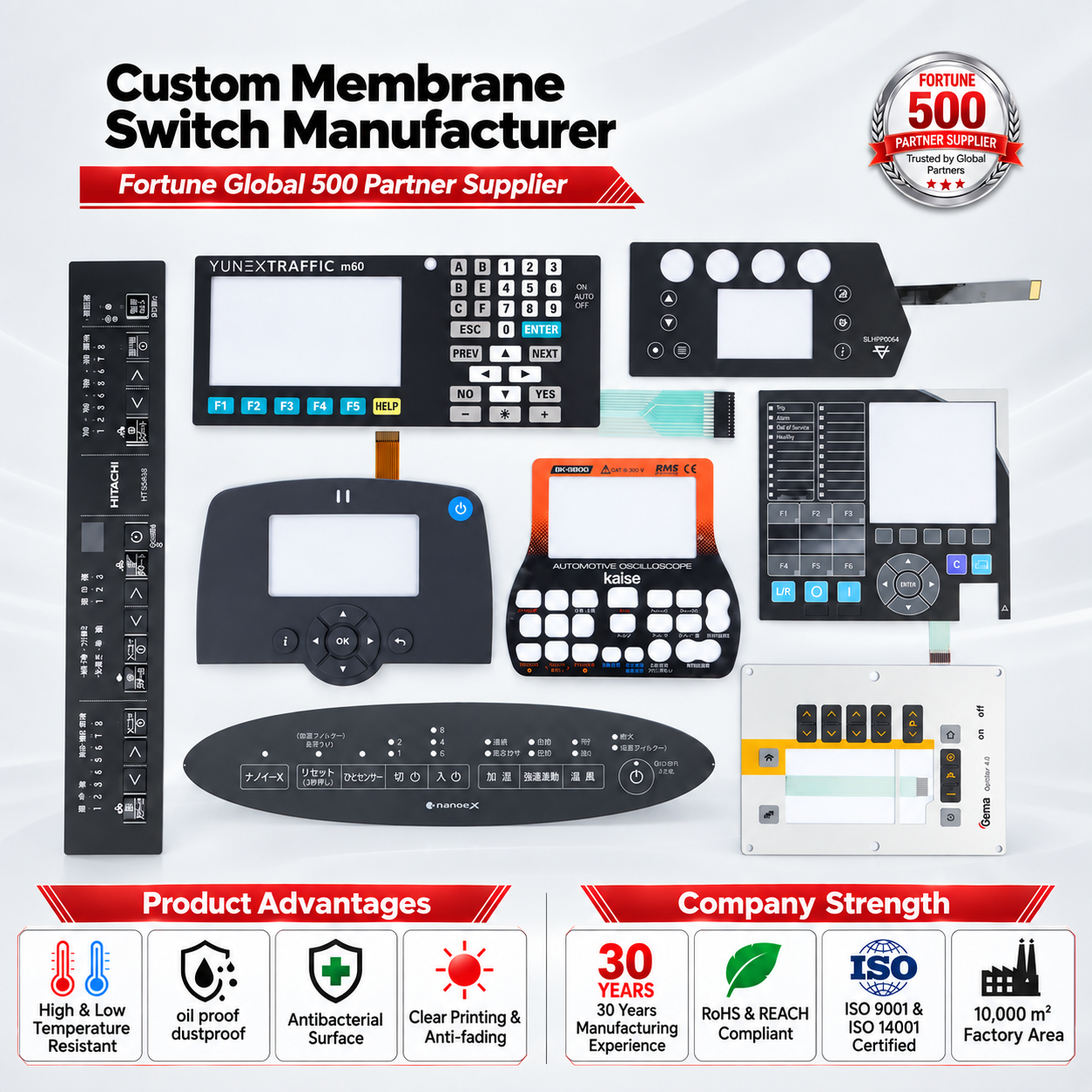
Custom Industrial Medical Automotive Appliance Membrane Switch Graphic Overlay Waterproof FPC Circuit Touch Panel
- Integration: SMD LED & Passive SMT
- Trace Pitch: 0.5mm Fine Pitch Tail Exit
- Standards: IPC-6013 Class 2 / Class 3
Comprehensive Technical Whitepaper: The Strategic Evolution of Flexible Printed Circuits (FPC) within the Greater Naples Industrial Sector
The manufacturing ecosystem of Southern Italy—anchored by the dynamic industrial corridor spanning Naples, Pozzuoli, Caserta, Pomigliano d'Arco, and Salerno—is currently navigating an intensive technological transformation. Traditionally celebrated for aerospace engineering, naval systems, rolling stock assembly, and mechatronics, regional original equipment manufacturers (OEMs) and contract electronics manufacturers (CEMs) are systematically shedding bulky wiring harnesses, thick multicore cabling, and inflexible FR4 assemblies in favor of high-density Flexible Printed Circuits (FPCs) and flexible hybrid electronics (FHE).
As electronic packages become increasingly compact while simultaneously taking on higher computational, sensory, and high-frequency communication burdens, physical geometry becomes the definitive design bottleneck. In applications ranging from cockpit avionic displays engineered in the Campania Aerospace District (Distretto Aerospaziale della Campania - DAC) to high-salinity navigational bridge instrumentation crafted along the Gulf of Naples, spatial constraints and dynamic mechanical stresses preclude traditional planar electronics. Flexible circuits—fabricated from ultra-thin polyimide substrates and rolled annealed copper foils—provide the quintessential solution by offering 3-dimensional volumetric routing, repeatable dynamic flexural endurance exceeding millions of cycles, and substantial weight reductions of up to 75% compared to conventional cabling architectures.
1. Substrate Chemistry and Dielectric Metallurgy for Severe Operating Environments
The foundational integrity of any flexible circuit deployed in heavy-duty or mission-critical industrial hardware depends strictly on the thermal, electrical, and mechanical properties of its raw laminate. For Naples-area procurement teams evaluating international supply chains, understanding the metallurgical and polymeric distinctions is vital:
Adhesiveless Polyimide vs. Adhesive-Based Laminates: Legacy flexible circuits utilize an acrylic or modified epoxy adhesive layer (ranging from 12μm to 25μm) to bond electrolytic or rolled copper foil to the dielectric polyimide base film. While cost-effective for static consumer electronics, adhesive layers present significant failure modes in harsh environments: higher coefficient of thermal expansion (CTE), greater moisture absorption rates (often >2.5%), reduced dielectric breakdown voltage at elevated temperatures, and susceptibility to micro-cracking during lead-free reflow soldering (>250°C). At Dongguan AXRU Electronics, our industrial and aerospace-grade FPCs utilize exclusively adhesiveless polyimide laminates (such as DuPont Pyralux® AP or equivalent cast polyimide). These direct-clad systems offer unmatched thermal endurance, continuous operating thresholds up to 150°C, and exceptional dimensional stability (drift <0.05%), making them impervious to the cyclical thermal shocks encountered in engine bays, outdoor railway switchgears, and hermetic maritime enclosures.
Rolled Annealed (RA) vs. Electro-Deposited (ED) Copper: High flex-life dynamic cycles demand precise copper crystal morphology. ED copper, characterized by a vertical columnar grain structure, performs reliably in static bend-to-fit applications where the circuit is shaped during final mechanical assembly and remains static thereafter. However, when deployed in dynamic mechanical interfaces—such as continuous hinge-motion diagnostic displays, rotating marine radar sweeps, or high-vibration railway traction monitors—columnar grains quickly develop slip planes leading to premature work-hardening and trace fracture. AXRU integrates high-purity Rolled Annealed (RA) copper foil, in which horizontal elongated crystalline structures run parallel to the direction of the flex bend. When designed with an optimal bend radius-to-thickness ratio (typically $R \ge 10 \times T$ for single-sided and $R \ge 20 \times T$ for double-sided dynamic loops), our RA copper flexible circuits withstand well over 10 million continuous flexural cycles without micro-fissuring or measurable shifts in line impedance.
FPC & Substrate Specification Matrix for Naples Purchasing Authorities
Compare standard IPC-6013 parameters, conductor topologies, dielectric properties, and assembly configurations.
| Engineering Parameter | Single-Sided FPC | Double-Sided FPC (PTH) | Multilayer Flexible (3-6 Layers) | Rigid-Flex Hybrid Architecture |
|---|---|---|---|---|
| Dielectric Core Material | 12.5μm to 50μm Adhesiveless PI | 25μm to 50μm Cast Polyimide | Multiple 12.5/25μm Polyimide Cores | FR4 / Polyimide Hybrid Stack-up |
| Conductor Foil Options | 18μm (0.5oz) or 35μm (1oz) RA/ED | 12μm, 18μm, 35μm RA Copper | 18μm or 35μm High-Ductility RA | 18μm to 70μm (2oz) Power/Signal |
| Minimum Trace / Spacing | 0.050mm / 0.050mm (2 mil / 2 mil) | 0.065mm / 0.065mm (2.5 / 2.5 mil) | 0.075mm / 0.075mm (3 mil / 3 mil) | 0.075mm / 0.075mm (Signal layers) |
| Surface Protective Finish | Immersion Gold (ENIG), OSP, Tin | Electroless Ni/Au (ENIG), Hard Gold | ENIG (Au: 0.05-0.1μm; Ni: 3-5μm) | ENIG, ENEPIG, Immersion Silver |
| Impedance Tolerance | Single-ended ±10% (Controlled) | Differential 90Ω / 100Ω ±7% | Controlled Microstrip / Stripline ±5% | Multi-Zone Differential ±5% |
| Dynamic Flex Endurance | > 20,000,000 Cycles (RA Copper) | > 5,000,000 Dynamic Cycles | Primarily Static / Semi-Dynamic | Flexible arms dynamic; Rigid zones static |
| IPC Quality Baseline | IPC-6013 Class 2 / Class 3 | IPC-6013 Class 2 / Class 3 | IPC-6013 Class 3 (Aerospace) | IPC-6013 Class 3 / MIL-PRF-31032 |
| Primary Naples Use-Case | Simple Sensor Strips & Keypads | Ultrasound probes, Marine Displays | DAC Avionics, High-Speed Telecom | Railway STS Signalling, Engine ECU |
Localized Application Scenarios in the Campania & Naples Ecosystem
Precision-tailored interconnects engineered for high-consequence environments across key Southern Italian industrial sectors.
Aerospace & Defense (DAC Cluster)
In aerospace centers surrounding Capodichino, Casoria, and Pomigliano d'Arco, weight minimization and thermal resilience are paramount. Our multilayer FPCs and rigid-flex circuits serve flight-control transducers, cockpit HMI displays, radar antennas, and satellite payload instrumentation. Featuring halogen-free, low-outgassing NASA-spec polyimides and gold-plated landing pads, these assemblies comply with strict aerospace reliability benchmarks.
Marine Electronics & Luxury Nautical
The Gulf of Naples, home to major superyacht shipyards, commercial harbors, and marine propulsion engineers (from Pozzuoli to Castellammare di Stabia), demands zero-compromise environmental sealing. AXRU manufactures custom membrane switches with integral FPC circuits rated to IP67/IP68. Engineered with 3M 300LSE adhesive matrices and hydrophobic vents, they resist prolonged salt-fog corrosion (ASTM B117 >500 hrs) and direct solar UV degradation.
Rail Transit & Rolling Stock Electronics
Anchored by global rail pioneers like Hitachi Rail STS in Naples, the Campania rolling stock hub requires robust signalling hardware, wayside interlocks, and passenger interface panels. Our thick-copper (70μm) flexible circuits manage high-vibration power distribution inside trackside junction enclosures, while flame-retardant (UL94 V-0) membrane overlays with stainless steel domes provide reliable operator controls on train driver consoles.
Biomedical Devices & Diagnostics
With universities and medical startups driving healthcare technology in Naples, clinical instruments require ultra-hygienic, wipe-clean control panels. We manufacture antimicrobial polyester front overlays laminated over fine-pitch FPCs compatible with hospital-grade biocides (quaternary ammonium, sodium hypochlorite). Applications include patient monitoring interfaces, diagnostic centrifuges, ultrasound consoles, and portable field defibrillators.
Industrial Automation & Smart Metering
Manufacturing plants producing food processing equipment, robotic assembly cells, and utility meters in Caserta and Nola require resilient human-machine interfaces. AXRU provides capacitive touch films and silicone keypads laminated with flexible printed circuits, offering integrated backlighting through light guide film (LGF) optics and high-voltage ESD shielding (up to 15kV air discharge) to prevent microprocessor lockups in electrically noisy settings.
Automotive Powertrain & EV Battery Systems
As Campania embraces electric mobility and smart charging infrastructure, battery management system (BMS) flexible wiring harnesses are replacing discrete copper wire bundles. Our extended-length flexible printed circuits integrate precision NTC thermistors, nickel contact tabs, and voltage sampling taps along a single streamlined ribbon, significantly cutting assembly labor and boosting battery pack volumetric energy density.
Emerging Procurement & Engineering Trends in Southern Italy
Key technological factors guiding RFQs, component sourcing, and supplier qualifications across Campania.
1. Transition to Rigid-Flex Architectures
Italian engineering teams are moving away from multi-board FR4 designs joined by ZIF connectors. By uniting rigid SMT zones with integral flexible polyimide ribbons into a continuous homogeneous unit, failure-prone manual wiring is eliminated while achieving high shock absorption.
2. Ultra-Fine Pitch & Micro-Via Routing
With high-density BGAs down to 0.4mm pitch entering industrial IoT nodes, FPCs are transitioning to semi-additive processing (mSAP). Laser-drilled blind and buried micro-vias down to 50μm diameter permit complex multi-bus routing across ultra-narrow mechanical flex arms.
3. Direct SMT on Flexible Substrates
Purchasing agents are prioritizing suppliers with turnkey surface mount technology (SMT) capabilities. Populating passive components, microcontrollers, high-brightness LEDs, and sensor ICs directly on polyimide eliminates separate daughterboards and reduces procurement overhead.
4. Sustainable Materials & Supply Resilience
Driven by strict EU environmental legislation (RoHS 3, REACH SVHC, and impending WEEE updates), Naples hardware brands insist on halocarbon-free solder masks, lead-free surface finishes (ENIG / Pure Immersion Tin), and certified transparent supply-chain documentation.
2. Precision Controlled Impedance and High-Speed Signal Integrity in Flex Circuits
Modern industrial and marine automation hardware deployed in the Naples region routinely handles high-frequency data streams—including USB 3.2, Ethernet (100Base-T1 and 1000Base-T1), LVDS display signals, and MIPI sensor interfaces. Routing high-speed buses across flexible circuits demands disciplined dielectric stack-up synthesis. Unlike rigid PCBs where core thicknesses and dielectric constants ($D_k$) are uniform, flexible circuits exhibit anisotropic behavior and rely on thinner dielectric layers ($D_k \approx 3.2 - 3.4$ for cast polyimide at 1 GHz; $D_f \approx 0.002 - 0.008$).
At Dongguan AXRU Electronics, our engineering team executes rigorous pre-production boundary-element method (BEM) electromagnetic field simulations to establish exact trace geometries for differential ($Z_{diff}$) and single-ended ($Z_0$) impedance profiles:
Crosstalk Mitigation and Cross-Hatched Copper Ground Planes: Solid copper ground reference planes provide the lowest RF return-path inductance; however, in flexible circuits, solid copper layers drastically degrade mechanical pliability and induce stress wrinkles during tight-radius bending. To resolve this dilemma, AXRU employs precisely calculated cross-hatched ground shields (with 45-degree lattice orientations at 50% to 70% copper balance). This preserves optimal high-frequency electromagnetic compatibility (EMC) and shielding effectiveness while retaining the mechanical suppleness required for multi-million-cycle dynamic installations.
Coverlay Lamination vs. Flexible Photoimageable Solder Mask: When choosing the outer insulation layer, engineering teams must evaluate thermal exposure and dynamic bend fatigue. While liquid flexible solder masks provide tight feature clearance around small SMT components, they lack tear strength and crack under severe repetitive flexing. We utilize vacuum-laminated polyimide coverlays bonded under high-pressure thermal cycles with thermosetting modified acrylic or epoxy adhesives. The resulting encapsulating bond forms a monolithic dielectric envelope that shields signal conductors from ionic contamination, atmospheric condensation, and thermal degradation during reflow soldering.
3. HMI Integration: Marrying Flexible Circuits with Tactile Front Panels
One of AXRU's core market differentiators for Naples OEM equipment developers is our fully unified fabrication capability. Rather than requiring buyers to source membrane graphic overlays from one vendor, silicone keypads from a second, and flexible circuits from a third, our 10,000㎡ manufacturing plant produces integrated Human-Machine Interface assemblies under a single roof.
When an FPC serves as the primary circuit layer beneath a graphic front panel, it unlocks performance advantages that traditional screen-printed conductive silver ink circuits cannot match. Silver migration—a catastrophic electrochemical phenomenon where dendritic silver crystals grow across adjacent traces in high-humidity, direct-current environments—is a persistent threat in coastal installations like the Bay of Pozzuoli. By utilizing etched copper FPCs passivated with Electroless Nickel Immersion Gold (ENIG), dendritic growth is completely suppressed. Furthermore, tactile metal domes (SUS301 stainless steel with gold or nickel plating) can be actuated millions of times over gold-plated FPC contact pads without the contact resistance fluctuations common to printed carbon contacts.
Why Naples OEMs & System Integrators Partner with Dongguan AXRU
Factory-direct engineering, verified production capacity, and rigorous in-house quality assurance for global industrial clients.
Intertek On-Site Verified Facility
Our expansive 10,000㎡ production campus in Dongguan, China, and 121-person technical team have undergone comprehensive on-site audits and verification by Intertek. Buyers can review genuine production line audits, cleanroom classifications, and documented trade capacity records with full transparency.
Fortune 500 Trusted Supplier
With over 12 years of specialized engineering experience and a 10+ year export record, AXRU is an approved tier-1 and tier-2 vendor to Fortune 500 equipment makers and internationally renowned electronics brands. We operate under stringent quality management protocols with full production traceability.
In-House Reliability Testing Lab
We do not outsource quality validation. Every production run undergoes verification in our internal laboratory: key actuation life testers (>1M cycles), force-displacement curve analyzers, high/low temperature & humidity programmable test chambers, tensile testers, ink abrasion testers, and UV yellowing chambers.
100% Final Inspection & Fast Prototyping
Zero-defect policy: every unit undergoes 100% electrical continuity, insulation resistance, and visual-optical inspection before dispatch. Our dedicated prototyping line delivers quick-turn engineering samples, complete with First Article Inspection (FAI) reports and DFM design feedback.
Complete End-to-End Vertical Control (No Subcontracting)
From CAD file review and artwork phototooling to screen printing, copper etching, cleanroom adhesive lamination, laser cutting, SMD LED placement, and final testing, our complete stack is kept in-house. This closed-loop manufacturing prevents intellectual property leakage, ensures tight lead times, and keeps engineering accountability clear for overseas procurement leaders.
Frequently Asked Questions: Sourcing Flexible Circuits in the Naples Market
Clear, direct answers for supply chain managers, design engineers, and technical buyers.
What is the standard Minimum Order Quantity (MOQ) and sample lead time for custom FPCs delivered to Italy?
Which engineering CAD files and specifications are required to generate an official quotation?
- FPC Circuit Files: Gerber RS-274X or ODB++ formats, including drill layers and stiffener outlines.
- 2D Mechanical Drawings: DXF, DWG, or PDF illustrating dimensional tolerances, critical bend zones, connector pitch, and stiffener thicknesses (FR4, polyimide, or stainless steel).
- Graphic Front Panel Artwork (if required): Vector files (Adobe Illustrator .AI, EPS, or CorelDraw) with explicit Pantone PMS or RAL color designations and window transparency callouts.
- Environmental Stack-Up Requirements: Target operating temperature ranges, IP ingress ratings (e.g., IP65/IP67), tactile actuation forces, and surface finish (ENIG, Immersion Tin, or OSP).
How does AXRU ensure corrosion resistance for flexible circuits used in coastal and marine environments?
Are your manufacturing processes compliant with European Union CE, RoHS 3, and REACH regulations?
What testing and quality documentation is provided with our orders?
- 100% Automated Electrical Test Reports: Confirming zero open circuits, shorts, or pin-to-pin leakage at specified test voltages.
- First Article Inspection (FAI) Report: Full dimensional verification via high-resolution optical video measurement machines.
- Tactile Force-Displacement Curves: Graphic characterization of snap ratio, tactile feedback peak, and switch travel distances.
- Adhesive Peel Strength & Cross-Hatch Adhesion: Measured per ASTM D3359 and IPC-TM-650 protocols.
Accelerate Your Next Flexible Circuit or HMI Project
Submit your CAD drawings, schematics, or target technical requirements today. Our dedicated project engineers conduct complete DFM reviews and provide quotation packages within 24 hours.