Precision HMI & Transparent Faceplate Solutions
Engineered for high readability, extreme environmental tolerance, and seamless aesthetic integration with industrial LCD, LED, and vacuum fluorescent display assemblies.
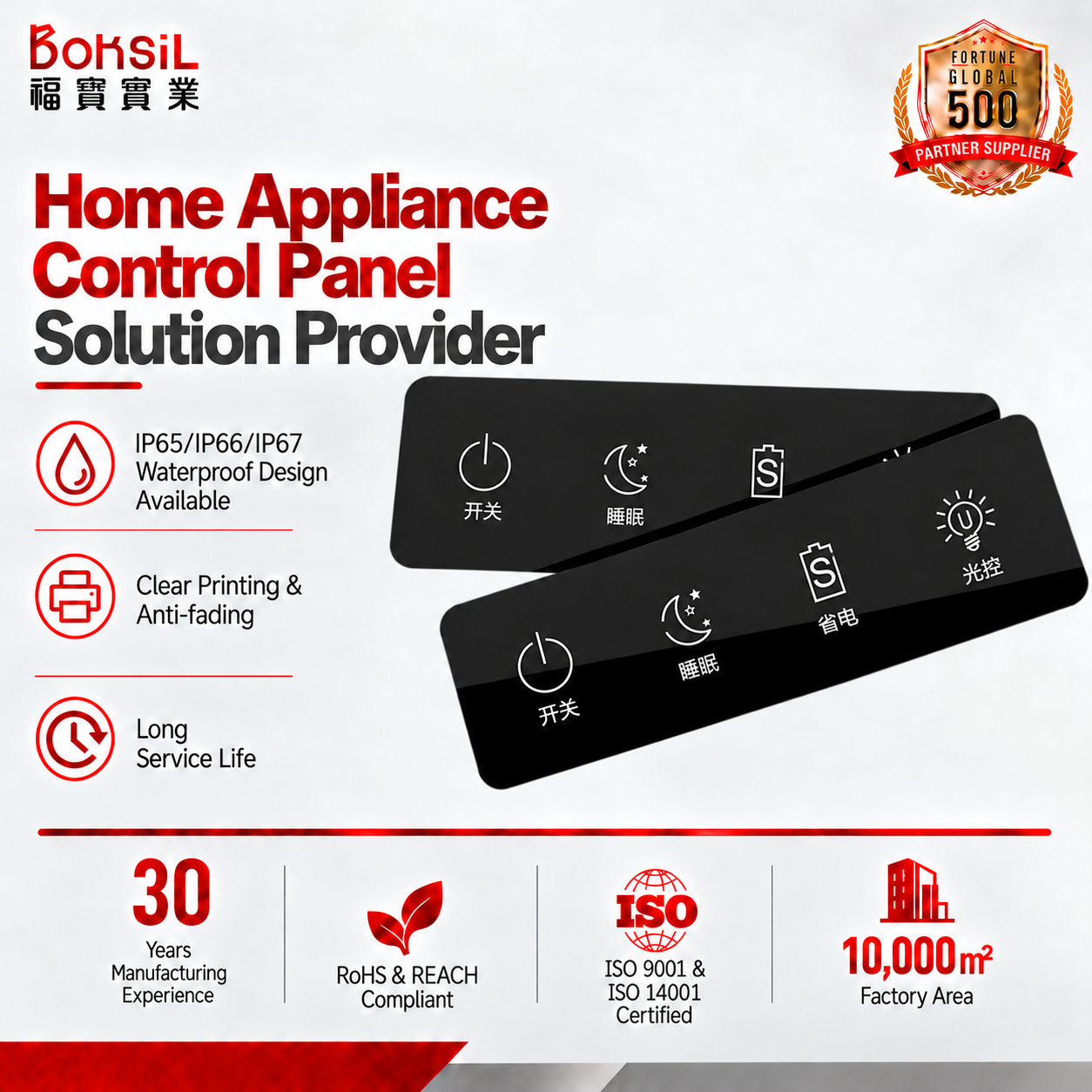
Factory Direct Silk Screen Printing PMMA Graphic Overlay LCD Front Panel
- Substrate:Optical PMMA Acrylic
- Window:Ultra-Clear Gloss Anti-Scratch
- Adhesive:3M Selective Lamination
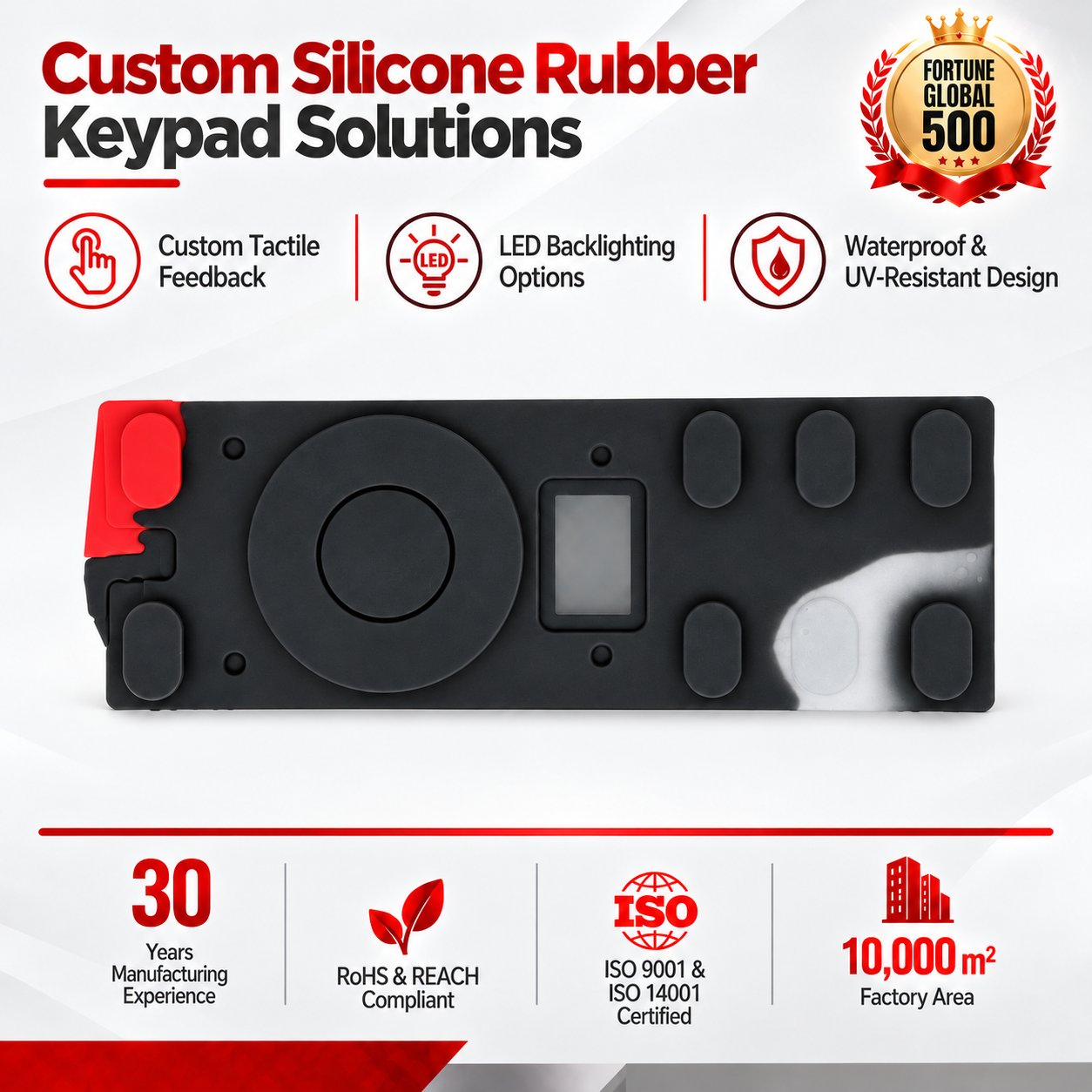
Customizable Embossed Circular Buttons Silicone Keypad Panel Switch
- Feedback:Tactile Elastic Webbing
- Sealing:IP65 Liquid Resistant
- Inks:Chemical & Oil Resistant
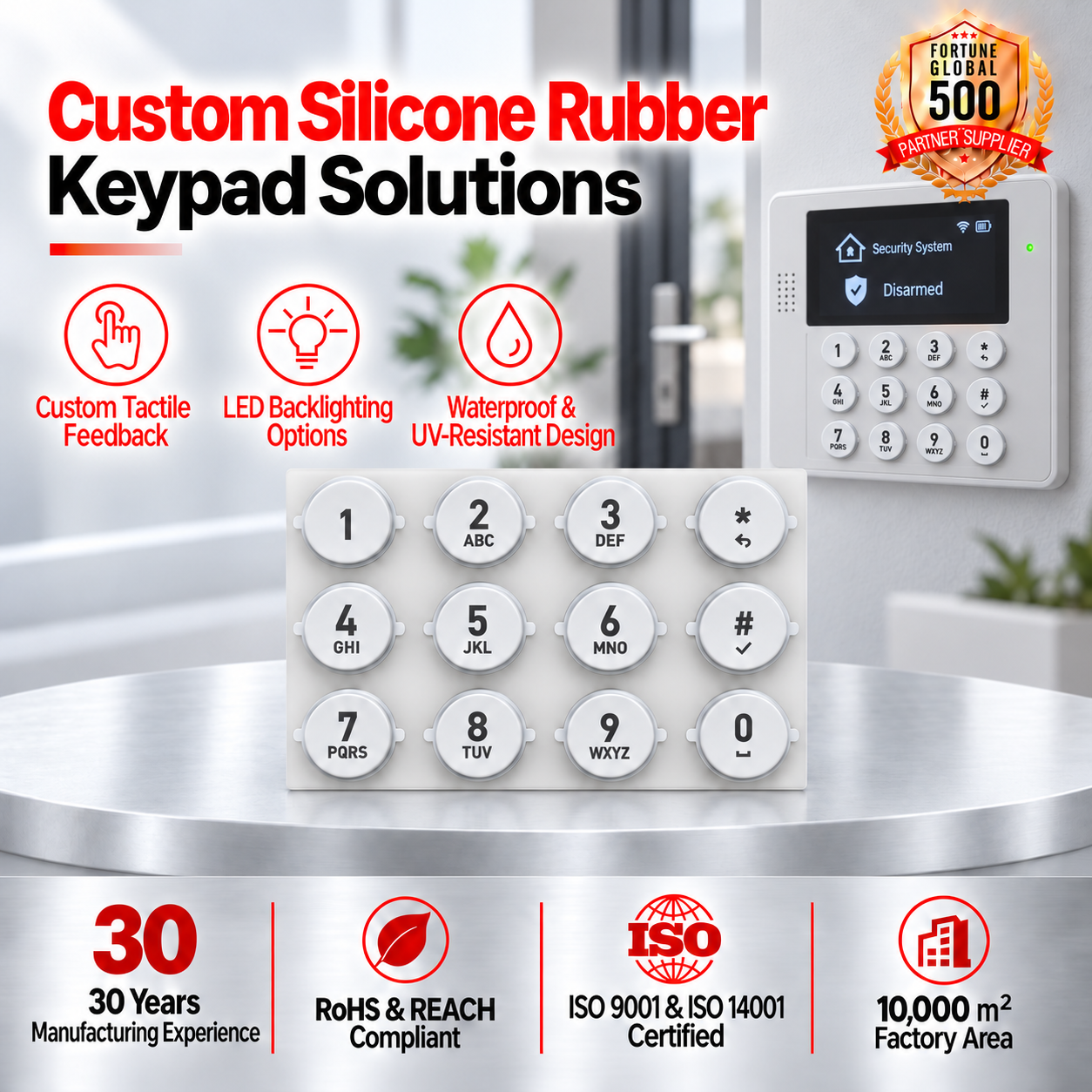
Custom OEM Silicone Rubber Keypad 3x4 Numeric 12 Keys P+R Waterproof
- Design:Plastic + Rubber (P+R)
- Contact:Low-Resistance Carbon Pill
- Durability:>1,000,000 Actuations
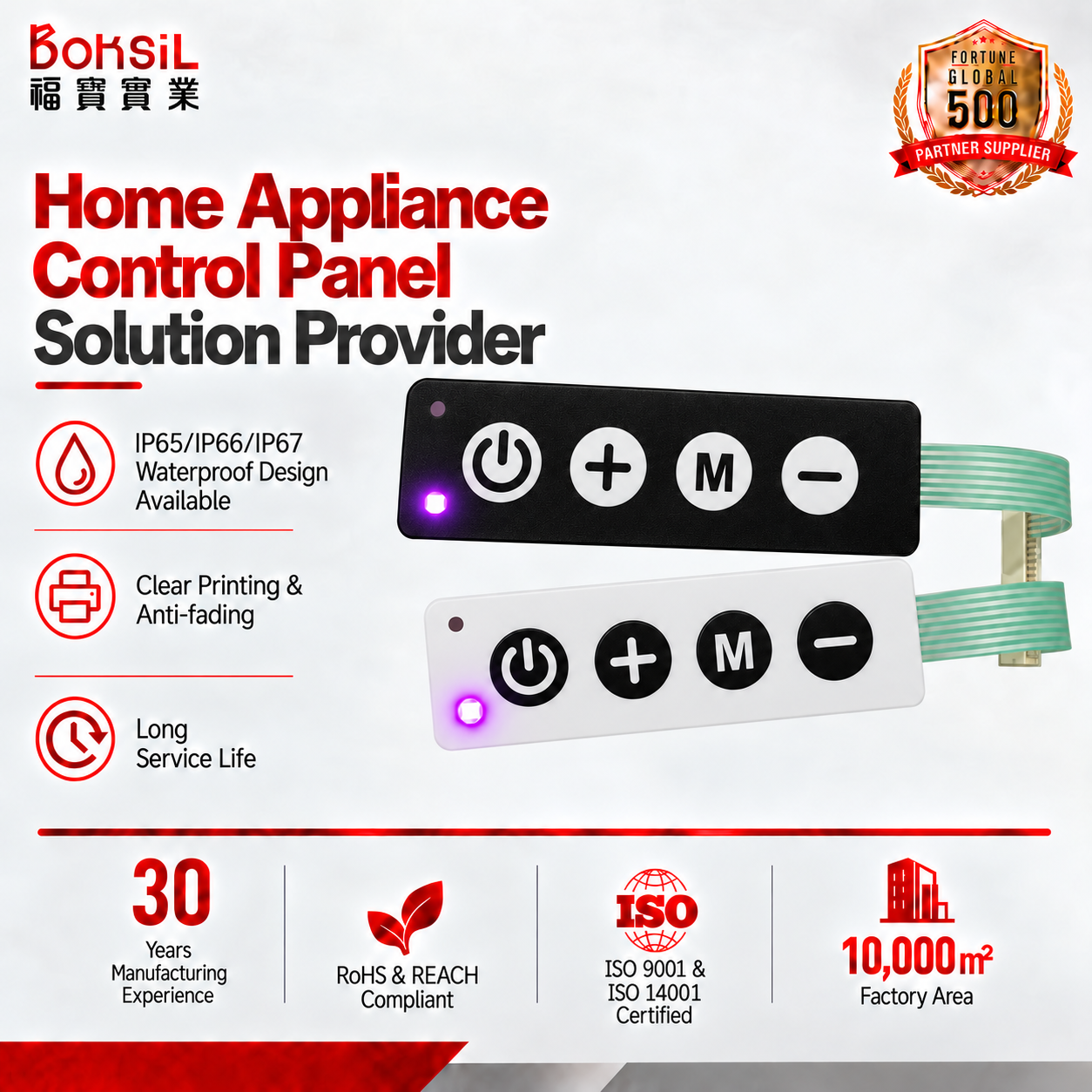
4 Button LED Lights Metal Domes Tactile Membrane Switch Panel
- Components:Surface Mounted Chip LEDs
- Dome:Nickel-Plated Stainless Steel
- Tactile Feel:Crisp Snap Ratio (300g)
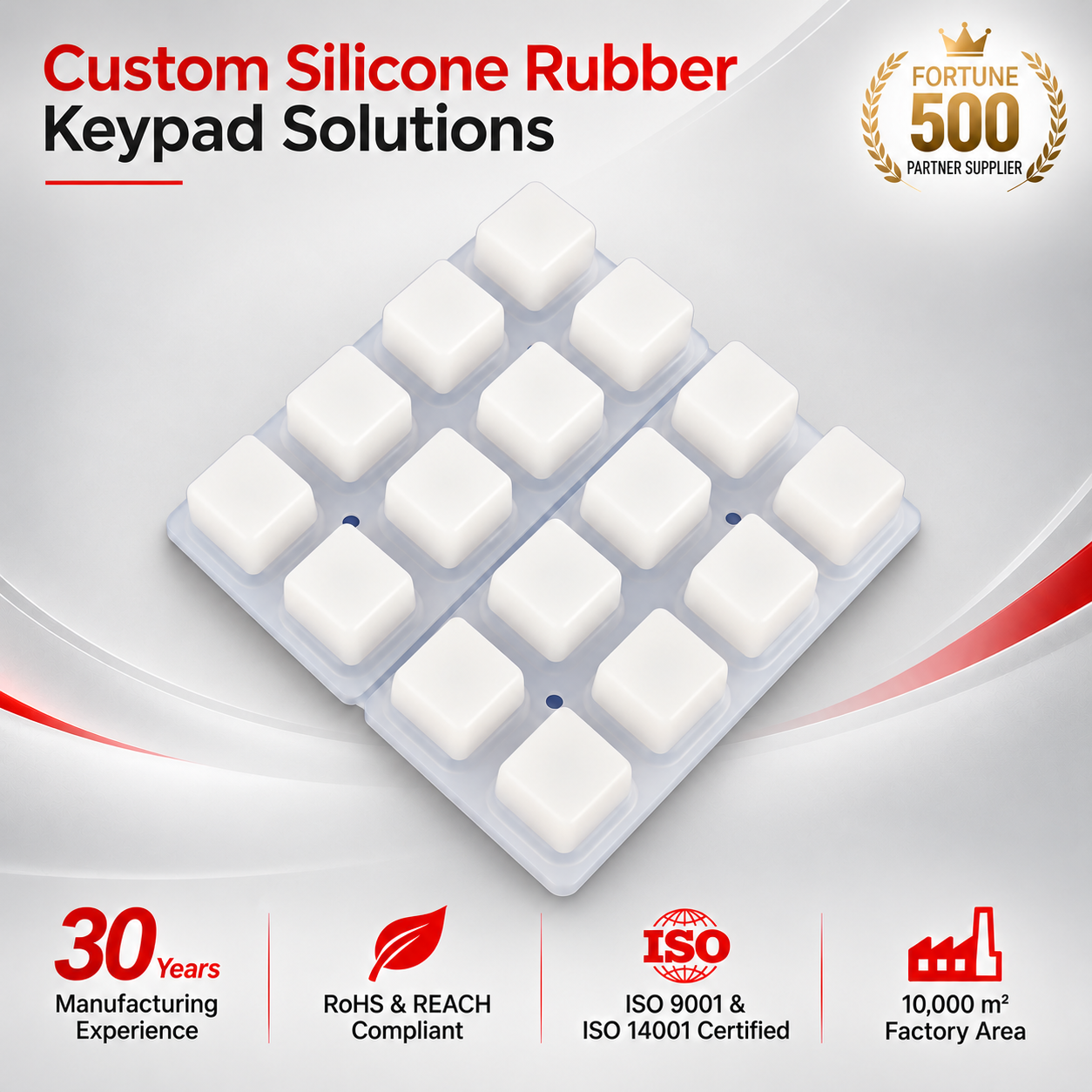
OEM Custom Backlit Silicone Rubber Keypad 4x4 Control Faceplate
- Optics:Laser-Etched Translucent Text
- Lighting:Uniform Light Guide Film (LGF)
- Application:Telecom & Rugged Instruments
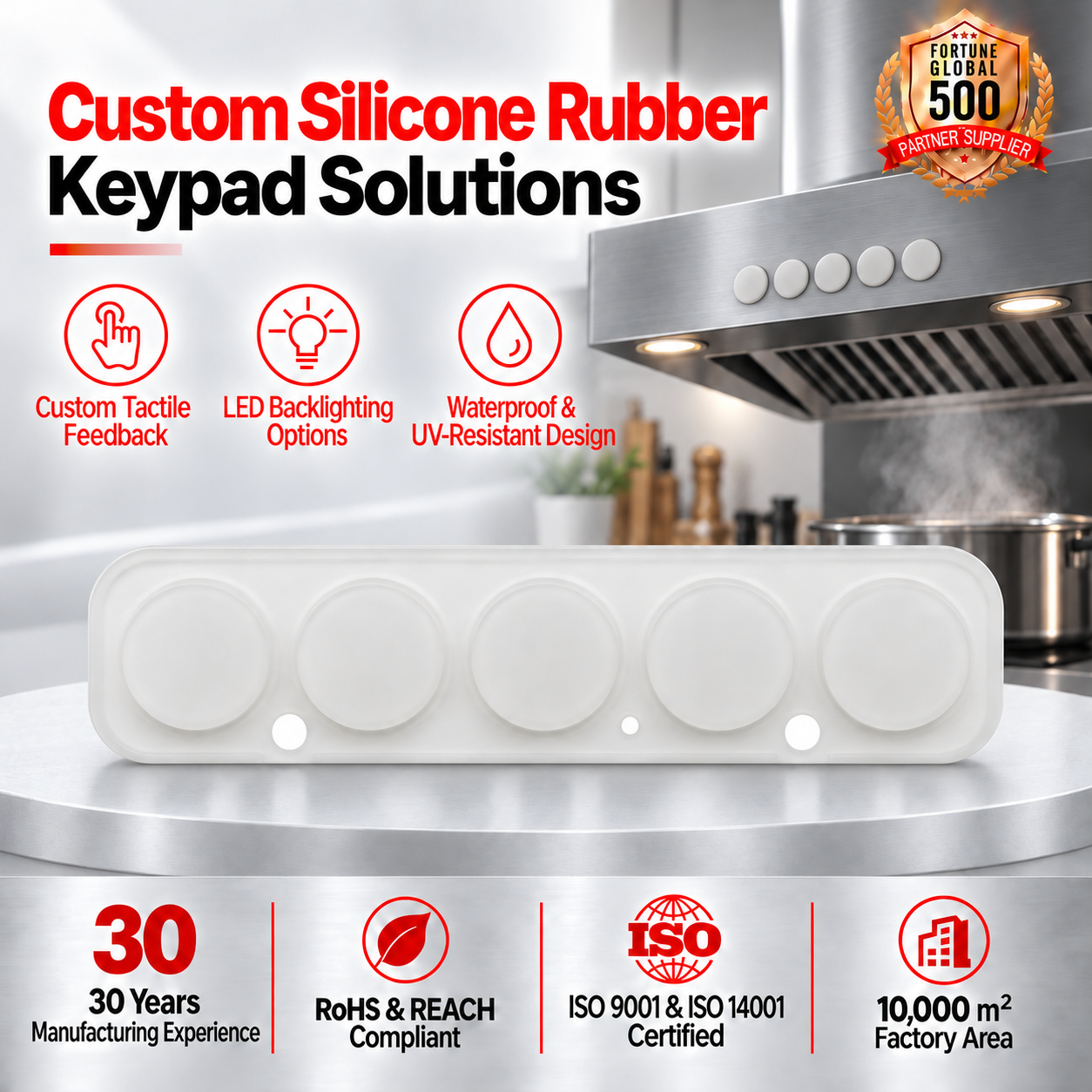
5 Circular Soft Silicone Rubber Keypad Momentary Front Panel Unit
- Surface:PU / Smooth Matte Coating
- Hygiene:Sealed Wipe-Down Surface
- Feedback:Quiet Soft Actuation
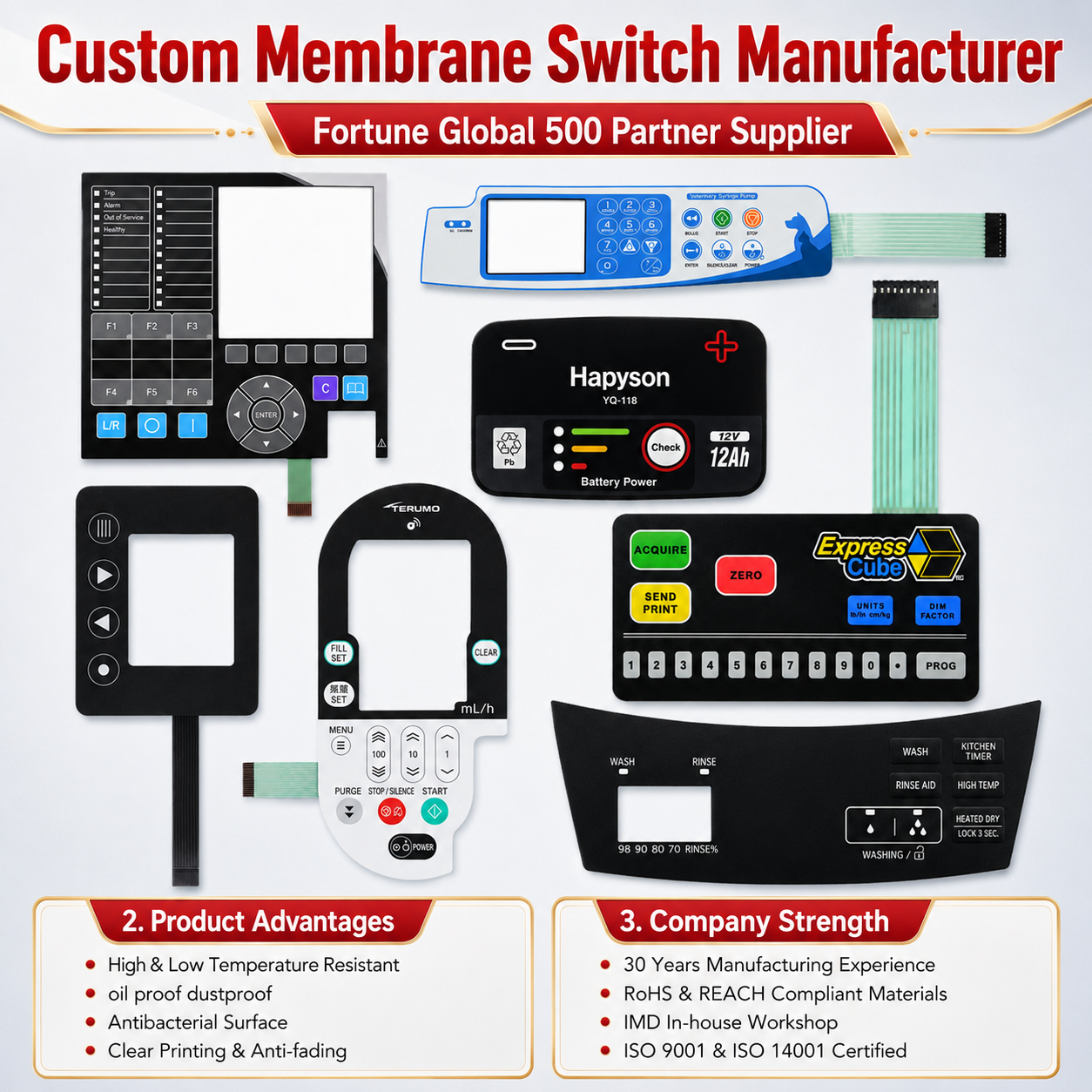
5*4 Matrix Waterproof FPC Flexible Circuit Membrane Faceplate
- Conductor:Polyimide Copper FPC Circuit
- Pitch:0.5mm / 1.0mm ZIF Connector
- Resistance:<1 Ohm Conductor Impedance
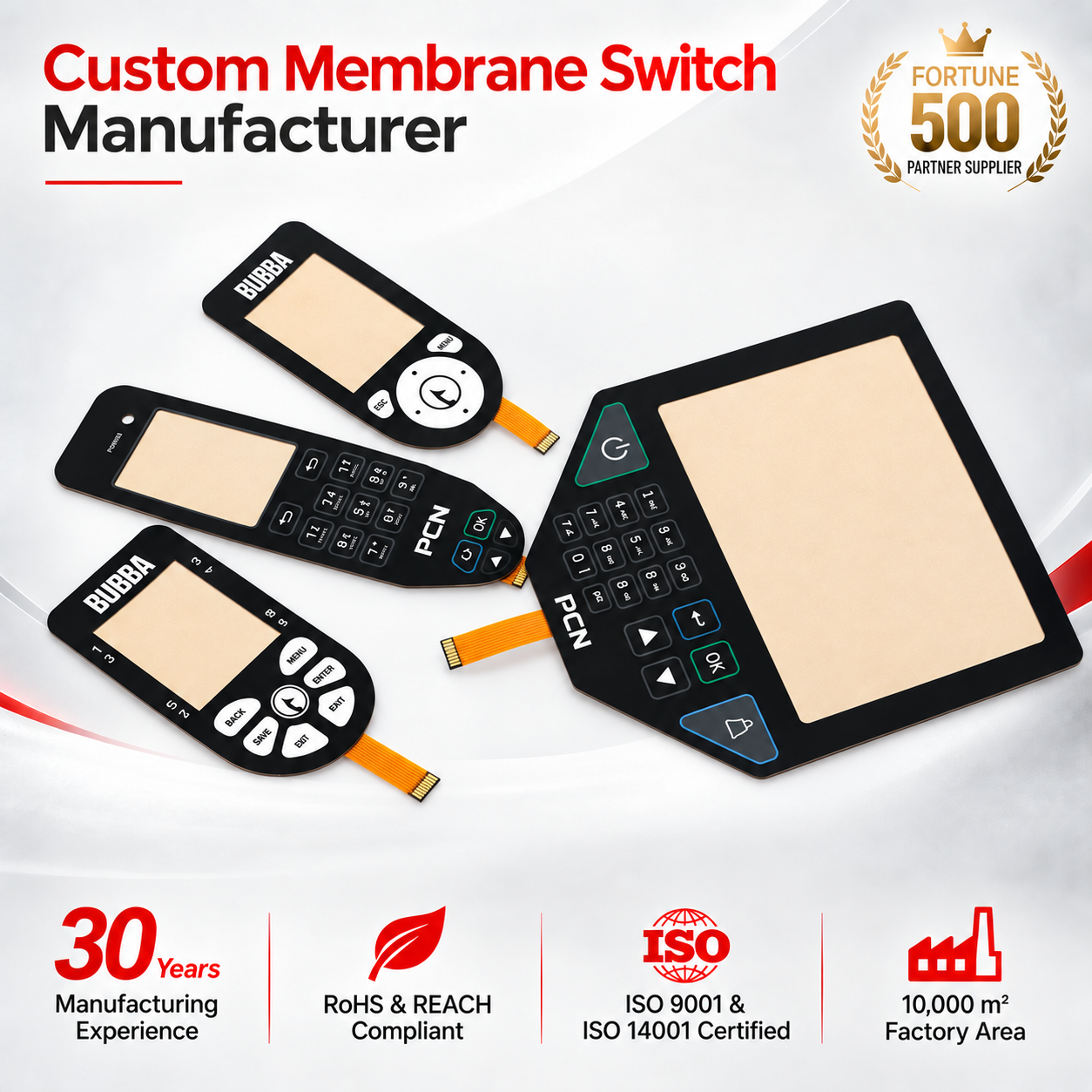
Custom 3M Adhesive Tactile Metal Dome Graphic Overlay Faceplate
- Overlay:Autotype Polyester (PET) Film
- Embossing:Rim & Pillow Button Formed
- Bonding:3M 467MP / 468MP High Tack
Engineering Whitepaper: Precision Window Integration & Environmental Durability
In modern industrial electronics design, an interface faceplate serves two critical roles: an intuitive physical Human-Machine Interface (HMI) and an environmental barrier protecting sensitive internal optoelectronic circuitry. For hardware developers in the Wellington region—known for maritime operations, agricultural tech, and precision lab instrumentation—specifying a transparent window membrane faceplate requires a comprehensive understanding of optical physics, adhesive chemistry, and mechanical engineering.
1. Optical Clarity, Haze Control, and Surface Geometry in Display Windows
Display windows within membrane faceplates frequently interface with TFT LCDs, OLED panels, dynamic 7-segment LED counters, and high-visibility indicator lamps. The primary engineering challenge lies in delivering uncompromised optical clarity without introducing chromatic aberration, Newton's rings, or reflection fatigue in outdoor ambient conditions.
AXRU utilizes double-sided, hard-coated optical polyesters (PET) and custom-machined cast acrylics (PMMA) ranging from 0.125mm to over 3.0mm in thickness. By utilizing precision screen-printed optical tinting or dead-front masking—where the window appears completely opaque until rear illumination is triggered—we eliminate internal bezel distraction. To solve ambient specular glare issues common in New Zealand field environments, anti-glare (AG) texturing reduces reflective haze while retaining over 90% light transmittance across the visible spectrum (400–700 nm).
2. Environmental Protection: Moisture Ingress, Salt Fog, and Thermal Dynamics
Membrane faceplates deployed in coastal and industrial sectors must resist high moisture, salt fog condensation, and routine washdowns using biocides or industrial degreasers. Standard peripheral lamination often suffers moisture creep along the circuit trace tail exit over extended operation.
Our OEM engineering integrates a closed-loop perimeter gasket configuration utilizing cross-linked acrylic foam adhesives (3M 200MP and 300LSE adhesive series). This forms an impermeable barrier rated from IP65 to IP67. Concurrently, circuit layers printed on biaxially oriented polyethylene terephthalate (PET) or copper-clad polyimide (FPC) feature printed carbon or dielectric overcoats over silver traces, actively eliminating silver migration under high relative humidity and continuous voltage differentials.
Localized Application Scenarios in Wellington & Regional NZ
Tailored HMI architectures built to withstand the unique environmental and industrial dynamics of the Greater Wellington and Cook Strait corridors.
Maritime & Port Logistics Instrumentation
Wellington’s coastal logistics, marine science vessels, and port handling equipment demand control surfaces impervious to persistent salt air and heavy water spray. Our PET and acrylic transparent faceplates incorporate chemically inert hard-coats that resist saline corrosion, providing unclouded visibility for telemetry readouts and depth/flow controllers.
Agri-Tech & Environmental Monitoring
Deployed across the Wairarapa and lower North Island, remote agricultural telemetry boxes, soil analysis monitors, and dairy processing controls operate in variable outdoor conditions. UV-stabilized materials and thermal-cycle resistant adhesives ensure windows remain non-yellowing and switches stay responsive through seasonal temperature shifts.
Medical Diagnostics & High-Tech Cleanrooms
Wellington’s burgeoning biotech hubs and medical device makers require completely sealed front panels capable of withstanding daily sterilization with isopropyl alcohol, bleach, and quaternary ammonium solutions. AXRU’s continuous-surface graphic overlays prevent microbial harborage while preserving display clarity.
Technological & Procurement Trends in the Wellington Market
As New Zealand electronics designers accelerate the miniaturization and edge-computing capabilities of their devices, procurement expectations for custom control interfaces have shifted significantly. The following key trends dominate local engineering requests:
| HMI Architecture | Technical Characteristics | Environmental Tolerance | Local Application Fit |
|---|---|---|---|
| PMMA Acrylic Hard-Coat Windows | 0.8mm–3.0mm thickness, optical clarity >92%, diamond polished edges, selective rear ink screening. | Resistant to mechanical impact, scratching, and frequent cleaning chemicals. | Benchtop lab devices, medical centrifuges, indoor retail automation. |
| PET Film Overlay with Metal Domes | 0.15mm–0.25mm textured/gloss PET, stainless steel tactile domes, tactile feedback of 250g–450g. | IP65 perimeter seal, rated for over 1,000,000 actuations, working temp -20°C to +70°C. | Field diagnostic tools, maritime navigational transceivers, utility meters. |
| Copper FPC Flexible Circuit Panels | Polyimide base with etched copper circuits, supports fine pitch connectors (0.5mm) and high current LEDs. | Virtually zero silver-migration risk; withstands prolonged high humidity and continuous power. | Sub-sea sensor housings, outdoor environmental stations, military communication units. |
| Dead-Front Display Faceplates | Formulated semi-transparent ink matrices that conceal LCD/LED indicators until backlighting is active. | Unified aesthetic without compromising rear illumination brightness or contrast. | Smart architectural controls, audio mixing consoles, high-end consumer appliances. |
Embracing Agile Hardware Development & Low-to-Mid Volume Runs
The innovation-led nature of the Wellington hardware ecosystem often requires short to medium-scale production batches (100 to 5,000 units) during beta testing and market rollouts. Historically, offshore manufacturing models imposed prohibitive setup fees and rigid minimum order quantities. AXRU addresses this barrier through our hybrid tooling workflow: utilizing high-speed digital cutting and laser-cutting for zero-tooling prototypes, smoothly transitioning into high-precision hard tooling for volume production without redesign delays.
AXRU Manufacturing Excellence & Rigorous Quality Control
10,000㎡ modernized production base in Dongguan, verified on-site by Intertek. Comprehensive in-house processing ensures complete traceability from raw material intake to final dispatch.
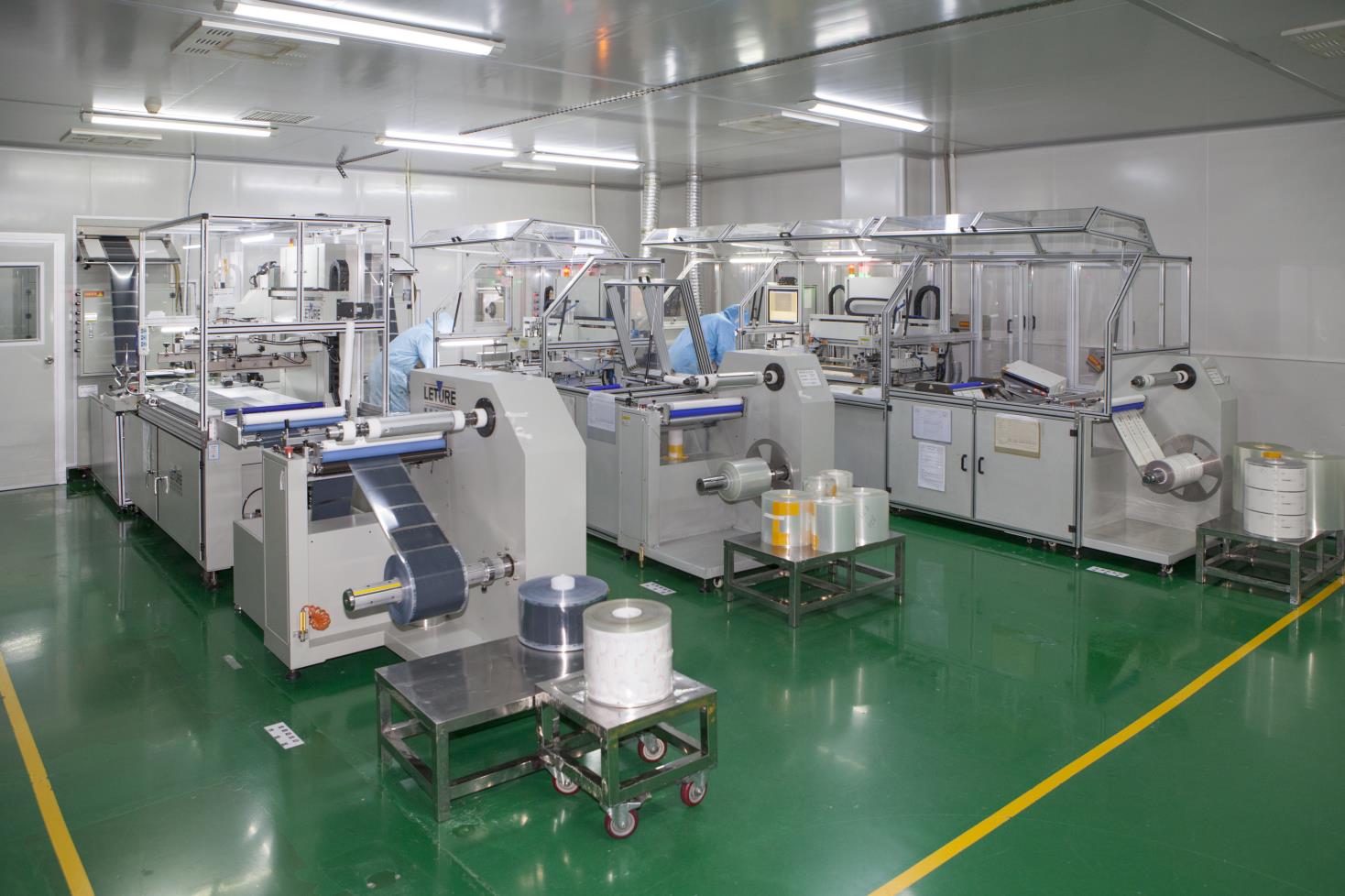
Dust-Free Cleanroom Printing
Class 1,000 and 10,000 cleanrooms ensure optical display windows and delicate circuit films are printed free of airborne contaminants or pinhole defects.
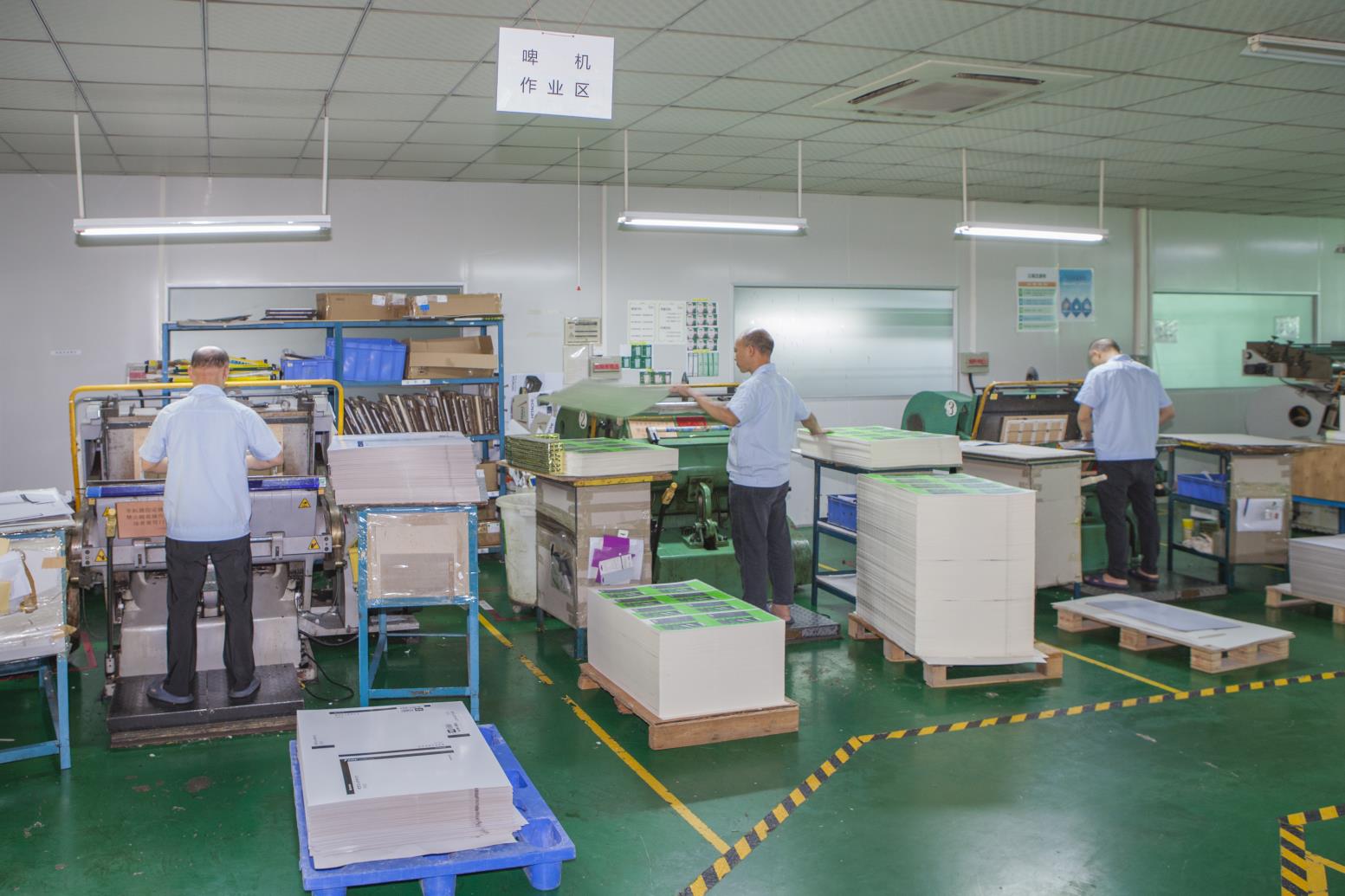
Optical Registration Lamination
Micro-positioning alignment fixtures ensure strict registration accuracy (±0.05mm) between graphic windows, spacer layers, and active circuit traces.
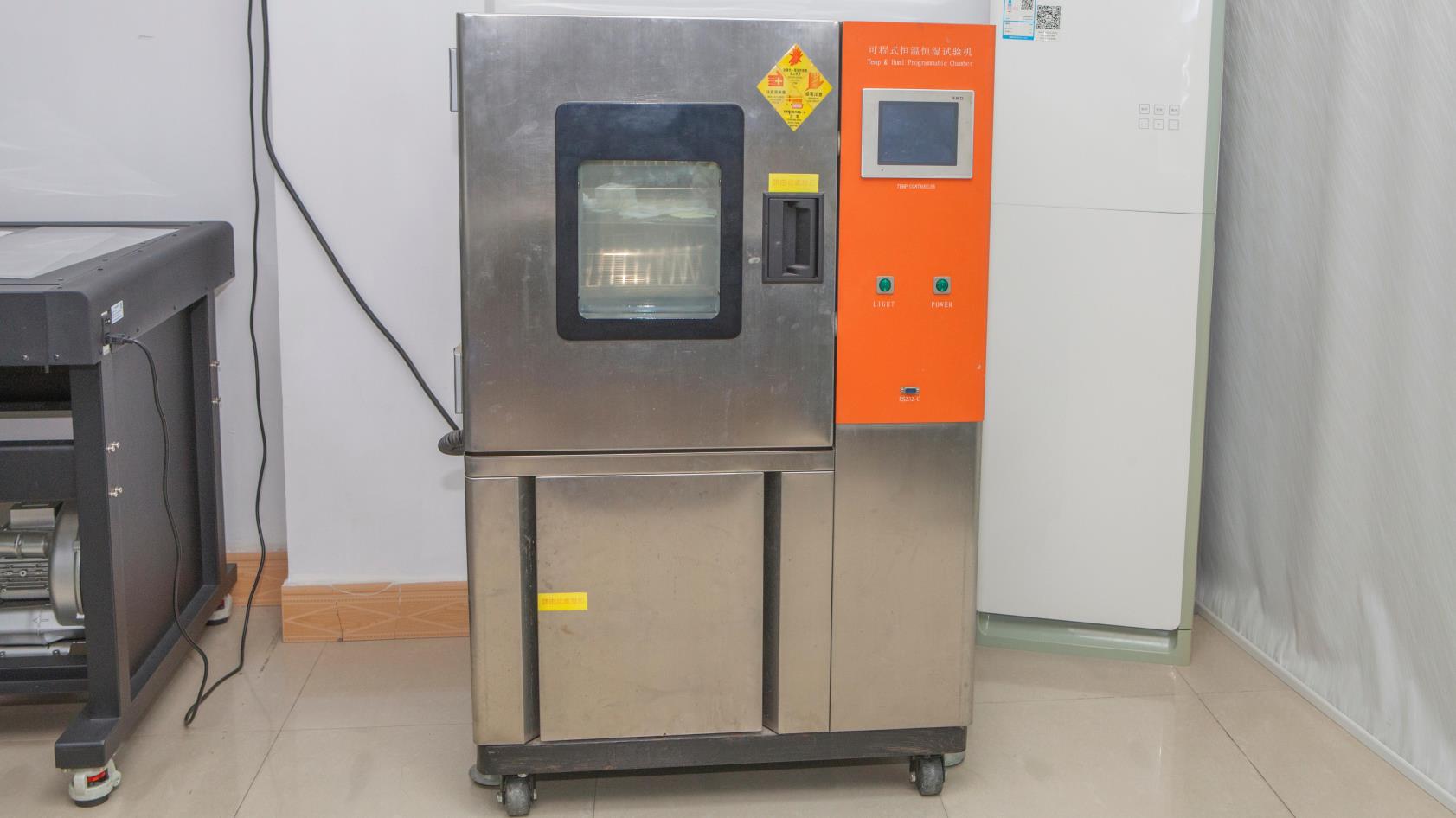
Climatic Reliability Testing
In-house programmable temperature and humidity chambers validate layer adhesion, seal integrity, and ink stabilization under extreme thermal cycling.
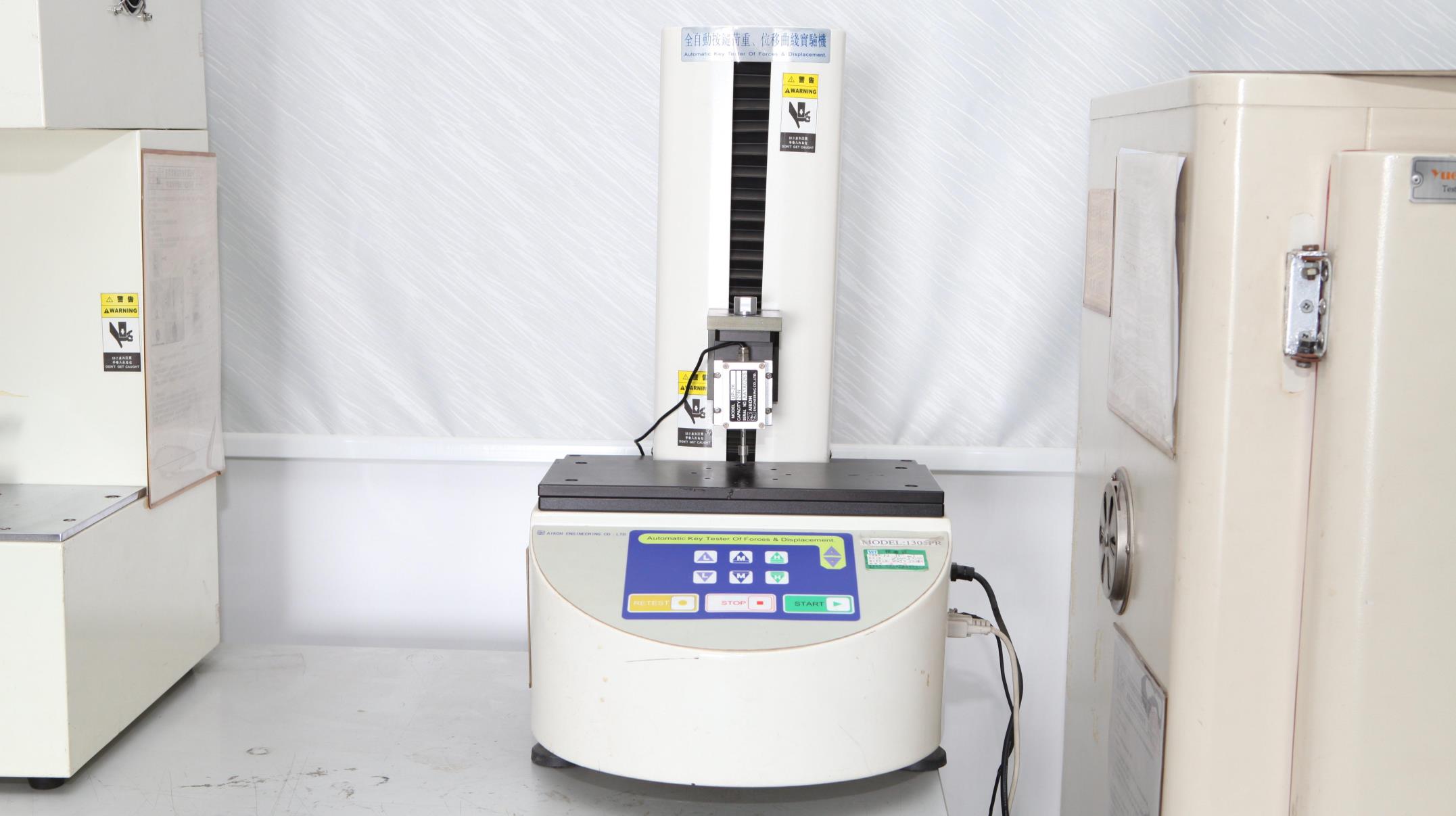
Tactile Force & Displacement Analysis
Automated load testing instruments trace force-displacement curves to verify consistent tactile response, actuation travel, and click ratio across all buttons.
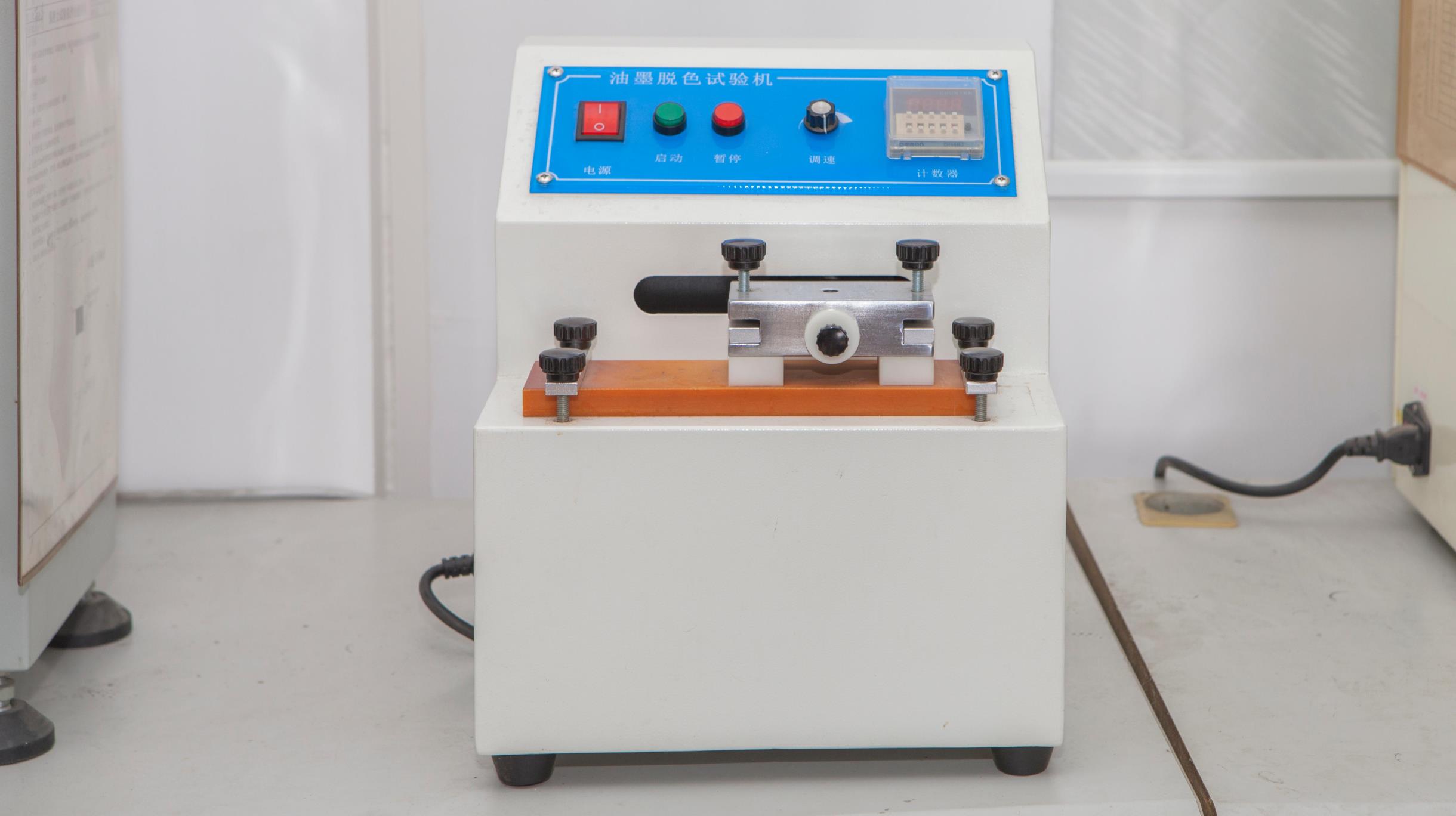
Ink Adhesion & Solvent Resistance
Rigorous linear abrasion and solvent rub tests confirm graphic legends and anti-glare textures withstand harsh industrial chemical exposure.
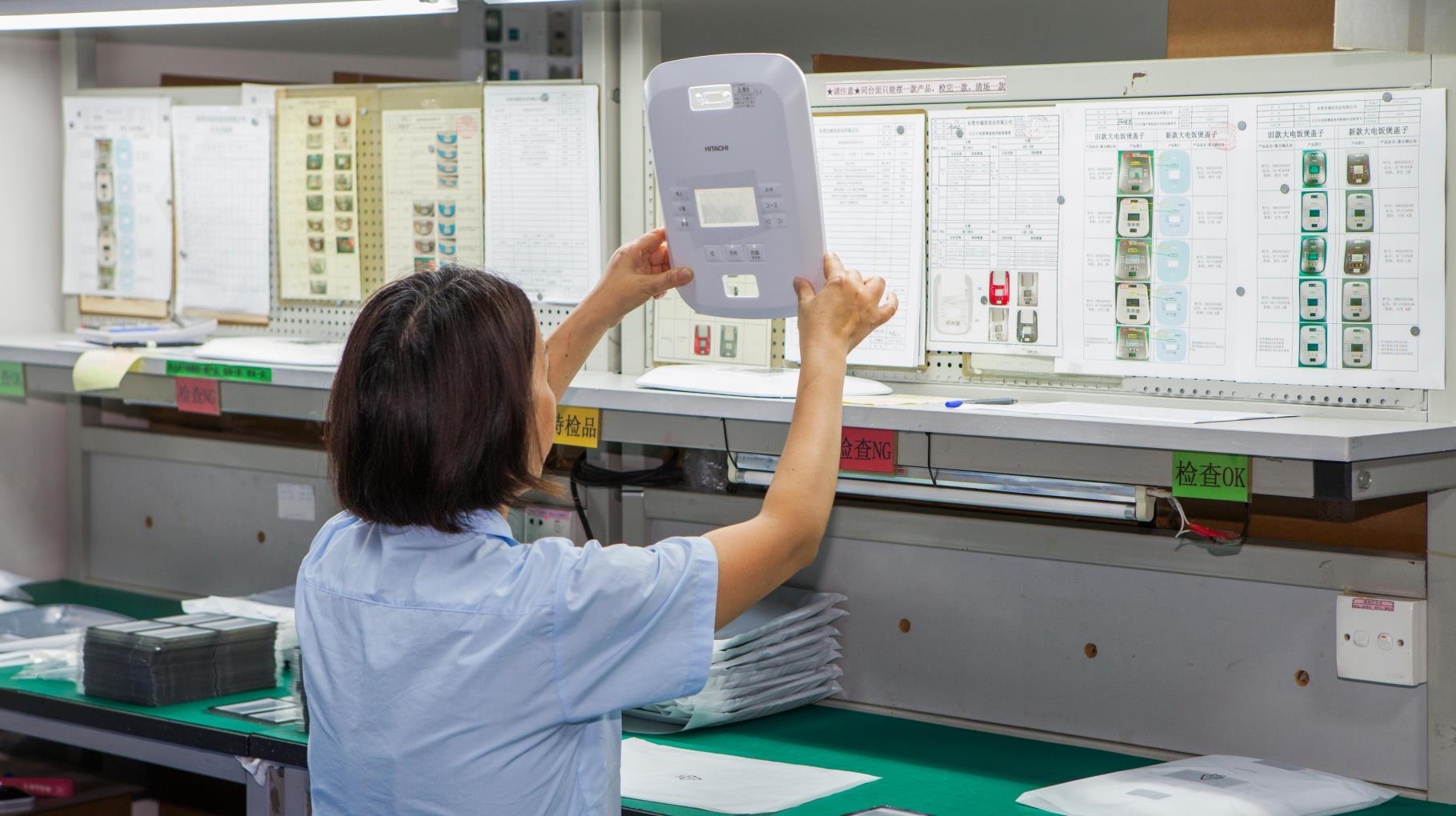
100% Electrical & Cosmetic Verification
Every faceplate undergoes complete automated testing for open circuits, trace resistance, short circuits, and LED optical consistency before vacuum packing.
Frequently Asked Questions for New Zealand Procurement Teams
Direct technical answers addressing engineering files, logistics, environmental resistance, and production timelines.
How do you prevent scratching on transparent display windows during transit and final assembly?
All transparent windows—whether PET or PMMA—are laminated on both sides with low-tack protective masking films. In addition, we apply optical-grade scratch-resistant hard-coats (pencil hardness up to 2H-3H on PET and 4H-5H on PMMA) that resist abrasion during manufacturing and end-user wiping.
Can you match exact corporate brand colors and dead-front translucent tints?
Yes. Our precision color-matching laboratory references both the Pantone Matching System (PMS) and RAL color standards under calibrated standard light booths. For dead-front windows, we precisely formulate semi-translucent ink density so markings stay hidden until rear illumination activates.
What engineering files are required to initiate a formal DFM review and quotation?
We prefer vector drawings in 2D formats (AutoCAD DWG, DXF, or Adobe Illustrator AI/vector PDF) showing dimensions, window cutouts, and embossing profiles. For complex stack-ups, 3D files (STEP, IGES) help verify fit with your enclosure bezels, connectors, and PCB layouts.
What is your typical turnaround time for prototypes and volume delivery to Wellington?
Rapid engineering samples are typically completed within 5 to 7 working days. Following prototype sign-off, full production runs are dispatched within 12 to 18 business days. International express transit (DHL/FedEx/air freight) directly to Wellington typically takes 3 to 5 business days.
How does AXRU ensure the membrane faceplate survives coastal marine salt exposure?
We recommend Autotype textured polyester overlays paired with solid acrylic adhesives (such as 3M 467MP or 468MP) and an engineered perimeter seal. Polyesters are naturally inert to salt fog, hydrocarbon oils, and mild acids, while the absence of exposed conductive silver prevents galvanic degradation.
What is the minimum order quantity (MOQ) for custom transparent window faceplates?
Our standard production MOQ starts at only 100 pieces per batch. We also provide initial prototype runs of 5 to 10 pieces for functional bench testing, ergonomic evaluation, and environmental certification prior to releasing full production tooling.
Ready to Build a High-Reliability Control Interface?
Connect directly with our senior HMI project engineers. Receive a comprehensive Design for Manufacturability (DFM) assessment, material stack-up recommendations, and a rapid quotation within 24 hours.
Contact Us