Precision OEM Membrane Keypads & Tactile Sensor Lineup
Engineered for high duty-cycle endurance, IP65–IP67 environmental protection, and custom ergonomic compliance according to ISO and CE specifications.
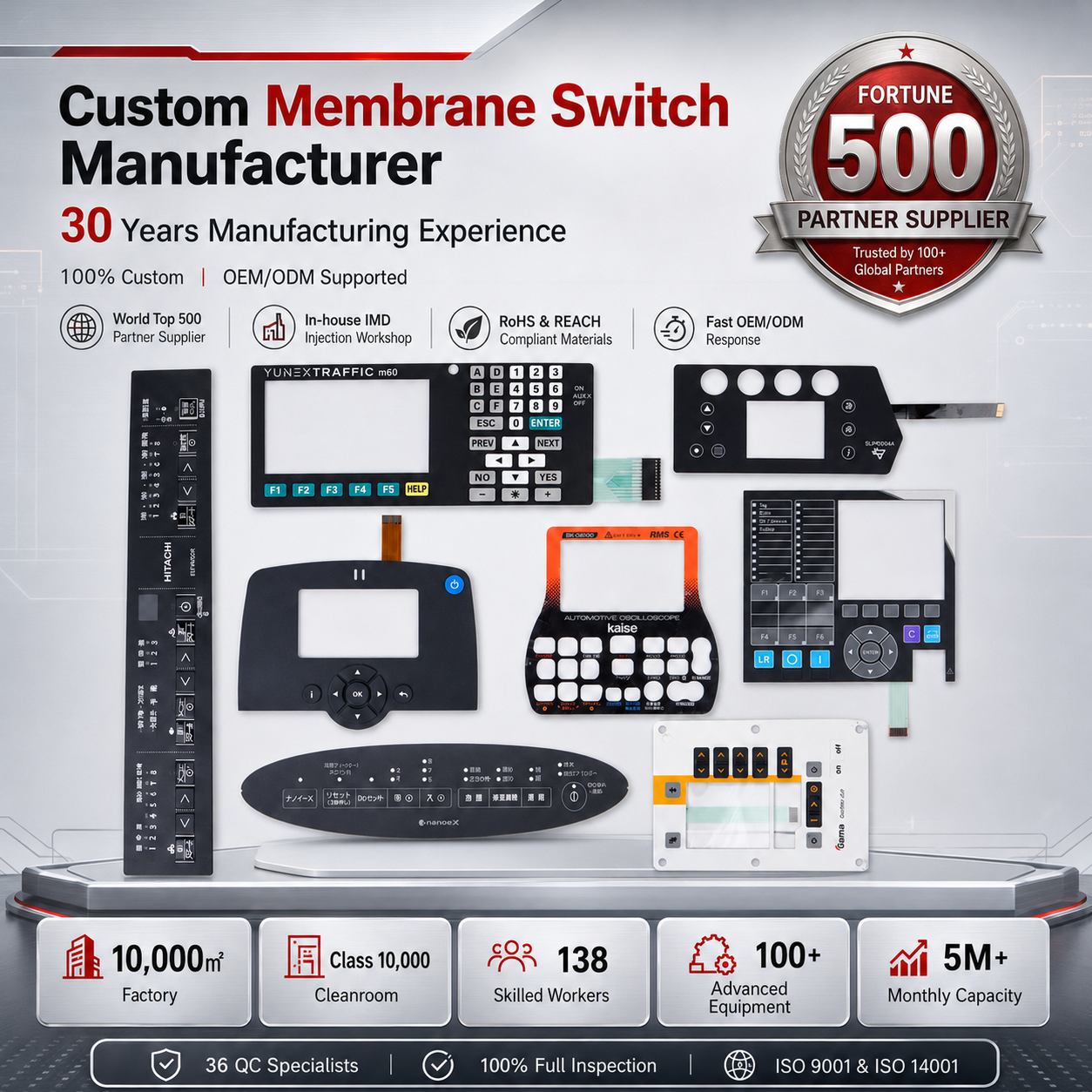
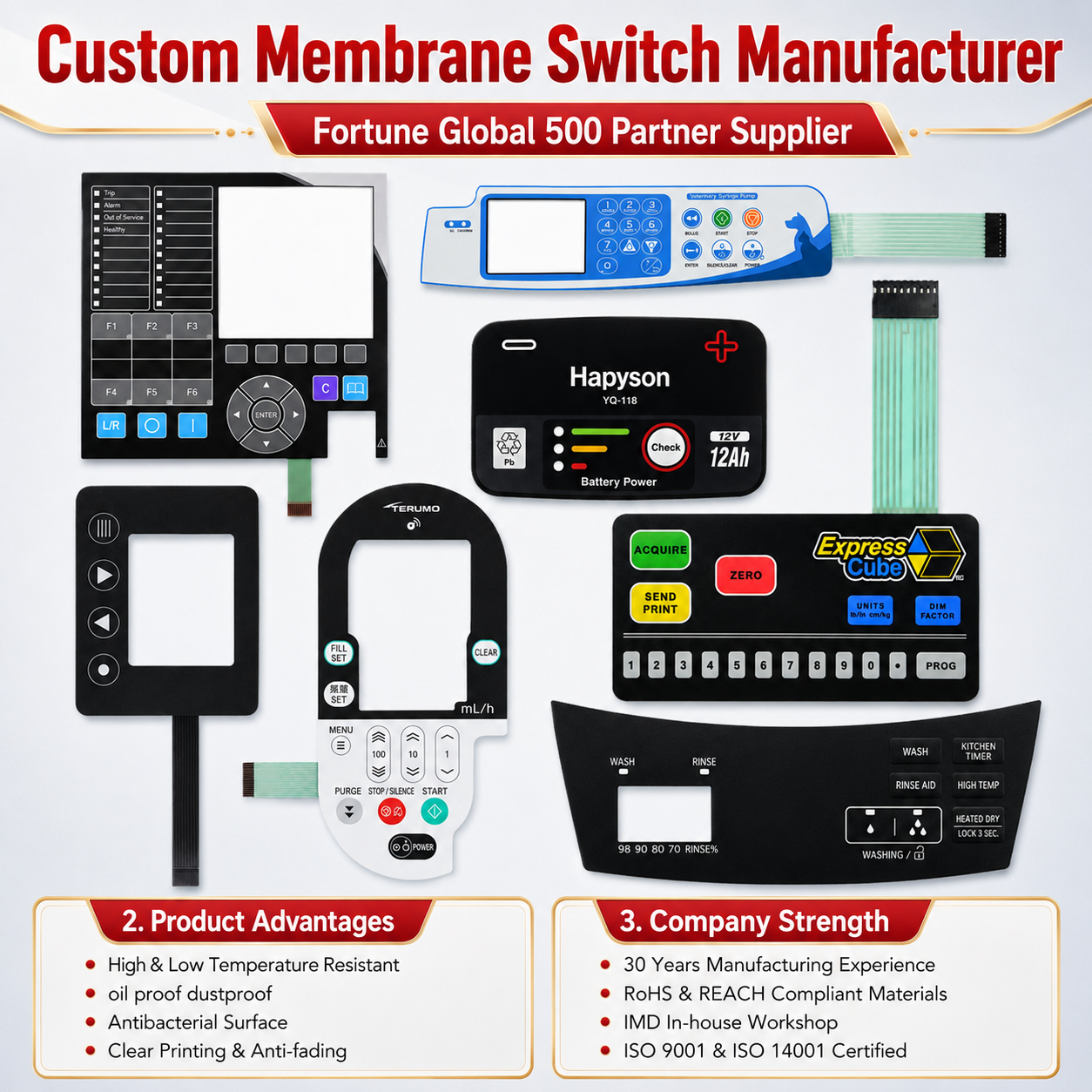
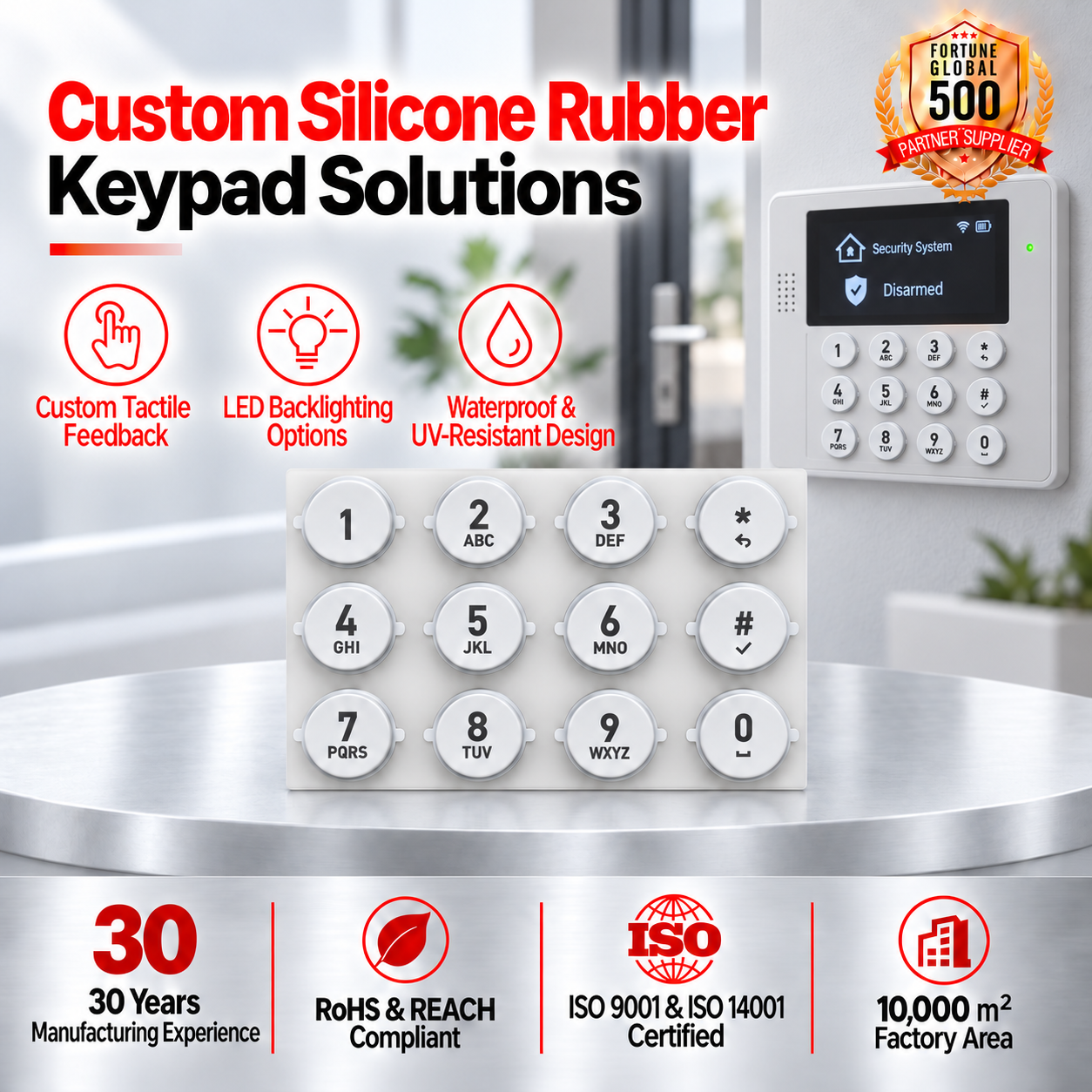
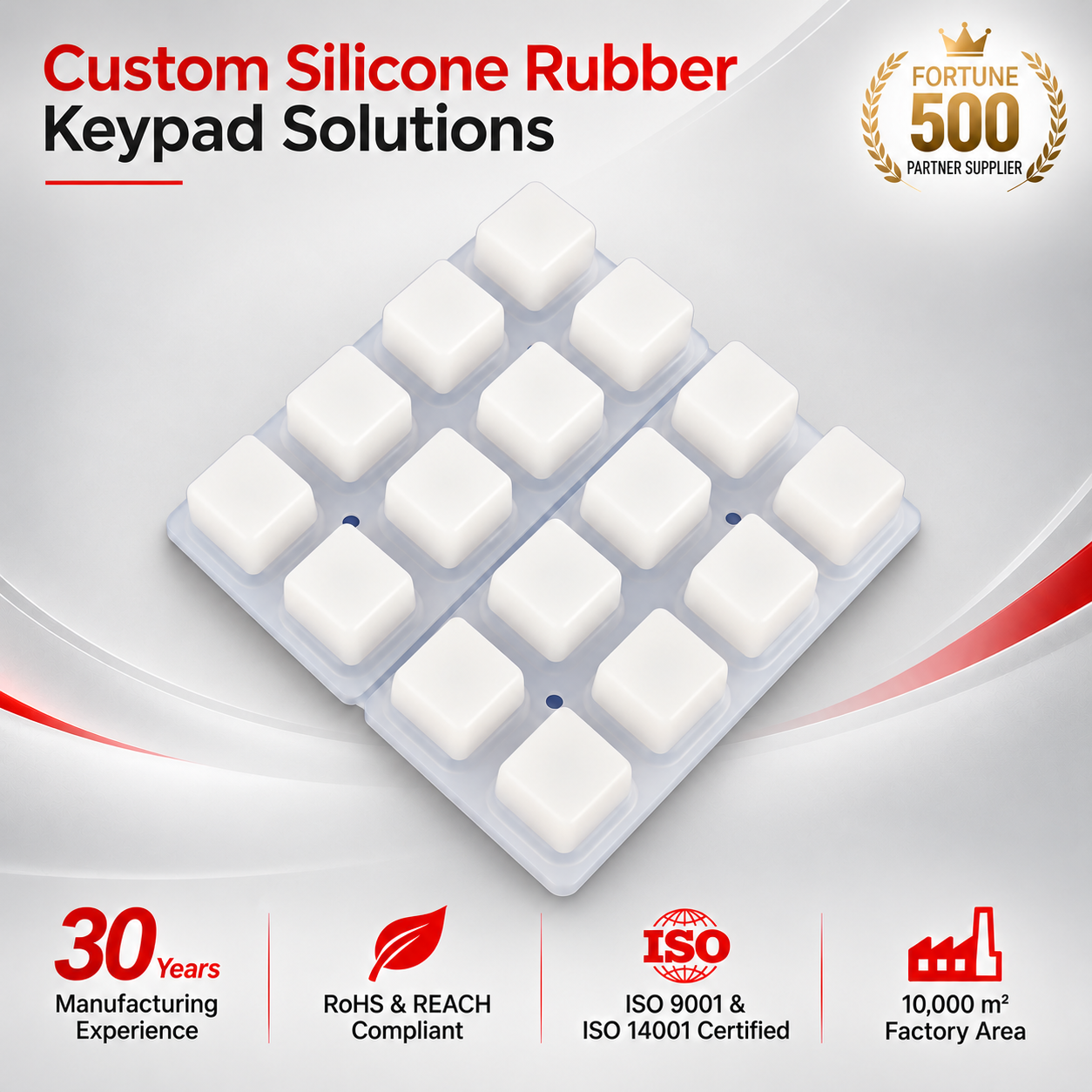
Engineering High-Reliability Human-Machine Interfaces: An OEM Whitepaper for Coimbra's Hardware Ecosystem
The municipality of Coimbra, historically recognized as Portugal's intellectual capital, has rapidly emerged as a strategic European node for biomedical technology, intelligent telemetry, robotic manipulation, and advanced analytical instrumentation. Driven by spin-offs originating from the Universidade de Coimbra (Faculty of Sciences and Technology), the Instituto Pedro Nunes (IPN) incubator, and the contiguous Biocant Park biotechnology cluster in Cantanhede, hardware developers across the Região Centro demand Human-Machine Interfaces (HMIs) and membrane switch assemblies that satisfy rigorous mechanical, chemical, and electromagnetic standards.
As an Intertek-audited, tier-one manufacturing partner with over 12 years of specialized export experience, Dongguan AXRU Electronics Co., Ltd. bridges the gap between precision industrial prototyping and scalable serial production. We supply custom membrane switches, capacitive sensing arrays, illuminated silicone keypads, and graphic overlays tailored to the environmental rigors of European medical and industrial directives.
Material Stack-Up Architecture & Substrate Physics
The structural longevity of a custom membrane keypad depends fundamentally on polymeric molecular integrity, ink binder adhesion, and switch cavity venting mechanics. In standard cleanroom configurations, membrane assemblies are vulnerable to localized pressure trapping, silver migration, and fluid permeation if venting paths and adhesives are incorrectly matched to operational environments.
For medical diagnostic units, laboratory autoclaves, and field-deployed telemetry systems across Coimbra, our engineering team standardizes on premium biaxially oriented polyethylene terephthalate (Autotex / Autotype PET) and high-grade polycarbonate (Sabic Lexan PC). Unlike generic films that undergo rapid plasticizer embrittlement when exposed to hospital-grade disinfectants (such as 70% isopropyl alcohol, quaternary ammonium chlorides, or sodium hypochlorite), textured hard-coated PET provides chemical resistance ratings exceeding DIN 42 115 Part 2. Our graphic overlays withstand over 5 million actuations without surface stress crazing.
Beneath the graphic overlay, the tactile snap sensation is governed by stainless steel metal domes (available in round, four-leg, and oblong geometries) with trip forces calibrated between 220g and 450g. By fine-tuning the snap ratio—defined as $(F_1 - F_2) / F_1$, where $F_1$ is peak actuation force and $F_2$ is contact make force—we maintain a tactile crispness factor above 50%, ensuring unequivocal operator feedback even when field personnel wear heavy nitrile, latex, or industrial safety gloves.
HMI Layer Construction & Performance Matrix
| Layer Technology | Material Formulation | Dielectric / Actuation Strength | Environmental Ingress Rating | Target Industry Fit in Portugal |
|---|---|---|---|---|
| Silver-Ink PET Circuit | Conductive silver paste screen-printed on heat-stabilized optical PET | Loop Resistance < 100 Ω; Dielectric Breakdown > 500V DC | IP65 with continuous perimeter acrylic adhesive gasket | Consumer medical monitors, indoor laboratory instrumentation, vending controllers |
| Flexible Copper FPC | Rolled annealed copper laminated on polyimide (PI) carrier | Trace Resistance < 1 Ω; High density pitch down to 0.5mm | IP67 / IP68 fully submersible with bonded silicone edge seal | Intensive care clinical ventilators, outdoor smart-grid SCADA units, industrial robotics |
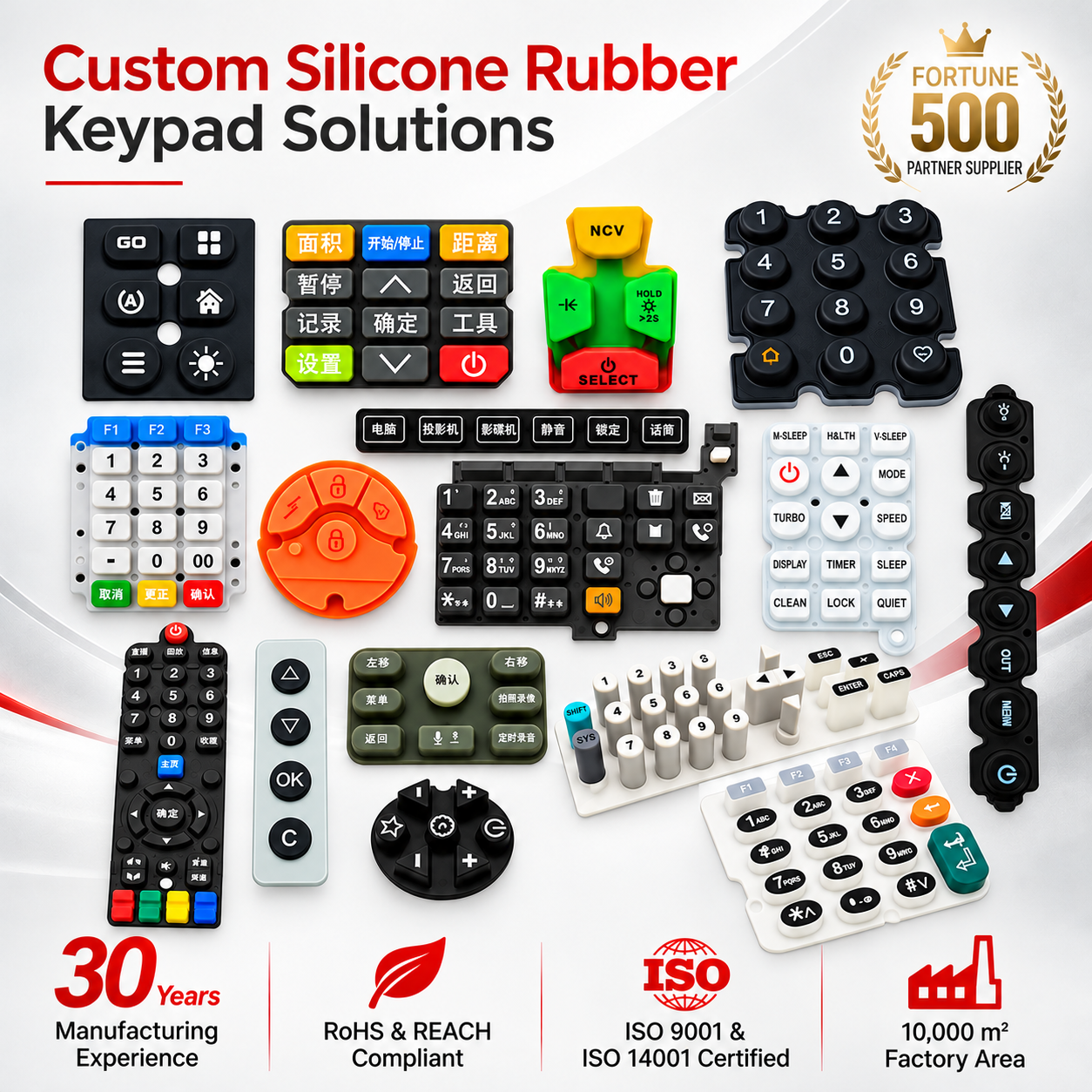
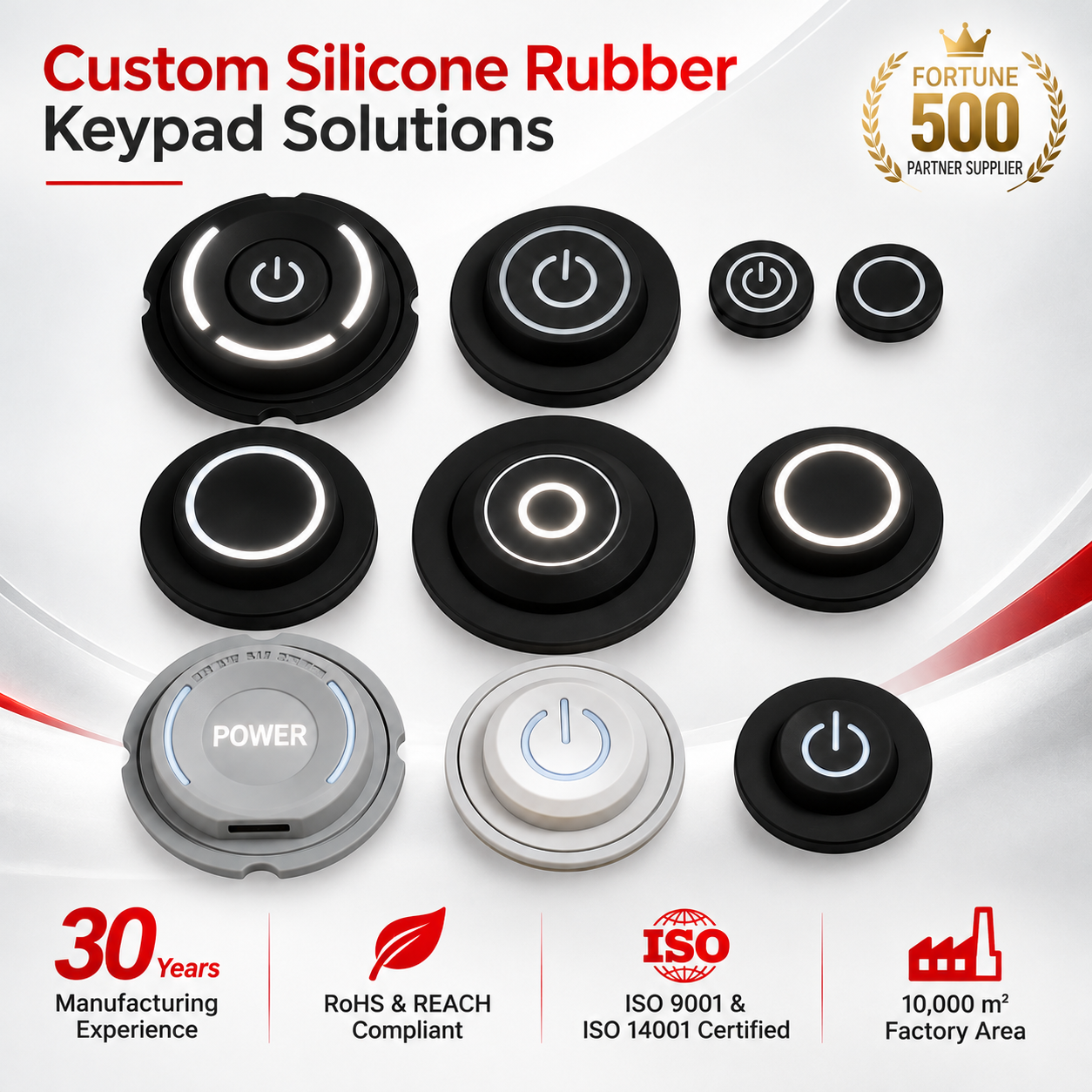
| Silicone Rubber + Carbon Pill | Compression-molded high-tear vinyl methyl silicone elastomer | Contact Resistance < 50 Ω; Stroke travel 1.0mm to 2.5mm | Hermetic sealing when molded with integrated perimeter flange | Rugged military transceivers, marine communication, hand-held diagnostic readers |
| Capacitive Touch Front Panel | Solid surface PMMA Acrylic, chemically strengthened float glass | Zero moving parts; Solid state capacitive electro-sensing | IP69K high-pressure washdown and steam sterilization ready | Food processing machinery in Bairrada, sterile pharmaceutical compounding |
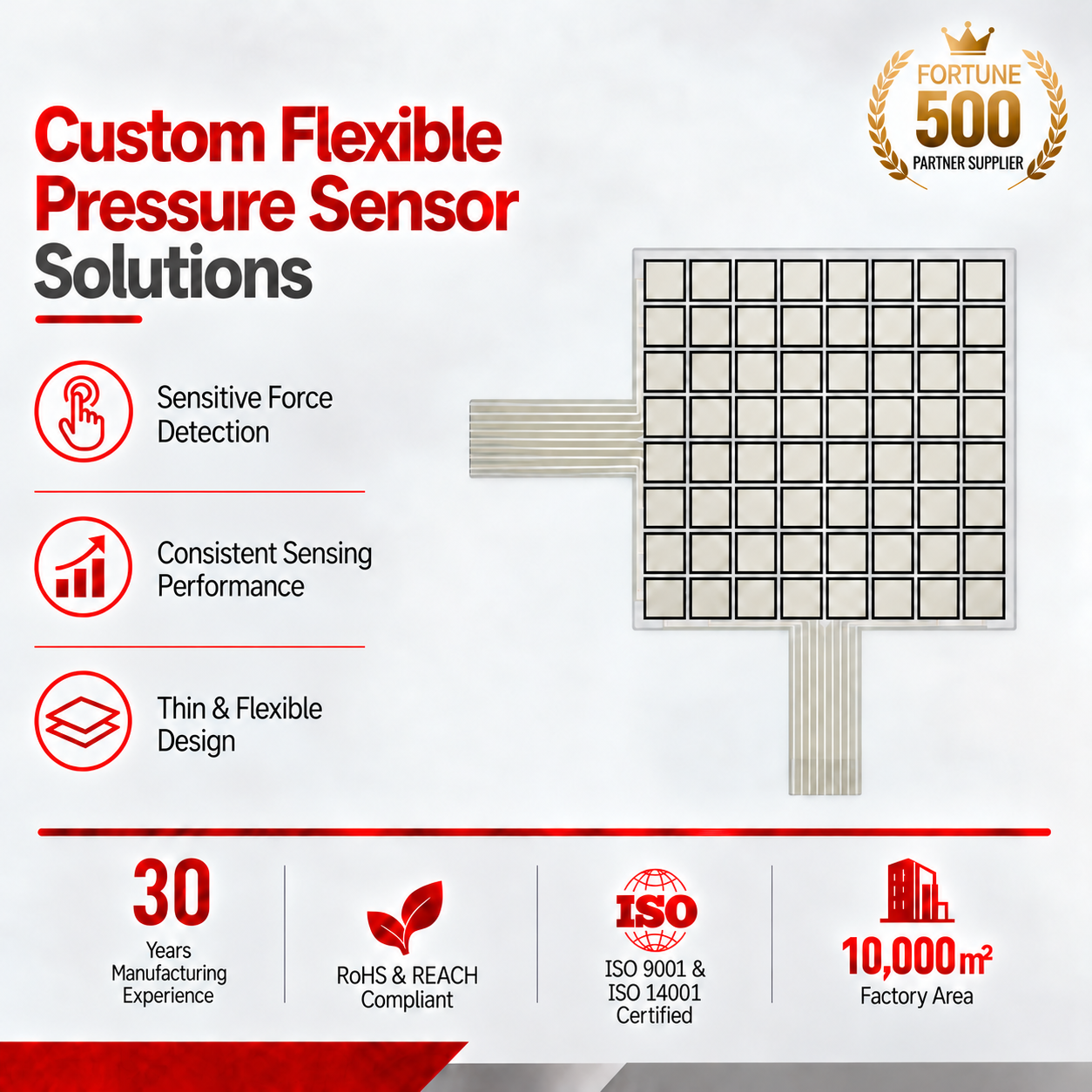
| Thin-Film Piezoresistive Matrix | Semi-conductive nano-composite pressure-sensitive polymer | Dynamic sensing range from 20g to 10kg per node; Ultra-thin <0.25mm | Resistant to mechanical shear, flexible contour conformal | Prosthetic pressure mapping, robotic gripper force control, ergonomic research |
Electromagnetic Shielding & ESD Mitigation Strategies
Coimbra's high-density electronics design laboratories frequently interface membrane switch cables with sensitive 3.3V / 1.8V microcontrollers (such as STM32, ESP32, and Nordic nRF series). Electrostatic discharge (ESD) events occurring when human operators touch keys can induce false trigger states or permanently destroy semiconductor gates.
AXRU addresses this through custom-designed continuous ground grids. By printing an insulated full-surface carbon-graphite or silver boundary mesh routed to a dedicated grounding pin, we dissipate discharges up to 15 kV air discharge and 8 kV contact discharge (in strict compliance with IEC 61000-4-2). Furthermore, where high-frequency noise from nearby variable-frequency motor drives is prevalent, an integrated aluminum foil or copper shielding barrier attenuates electromagnetic interference (EMI), suppressing radio-frequency noise that could otherwise corrupt sensor data channels.
Localized Applications Across Coimbra & Central Portugal
From University research laboratories to heavy industrial automation lines along the IC2/A1 industrial corridor, our HMIs provide dependable field operation.
Biomedical Instrumentation & Clinical Diagnostics
Coimbra's renowned healthcare cluster—anchored by the Centro Hospitalar e Universitário de Coimbra (CHUC) and research enterprises at Biocant—relies on wipe-clean membrane keypads for syringe pumps, spectrophotometers, and blood analysis machinery. We integrate antimicrobial finishes with embedded LED indicators and dead-front display windows that remain chemically inert against hospital cleaning reagents.
Industrial Automation & CNC Controllers
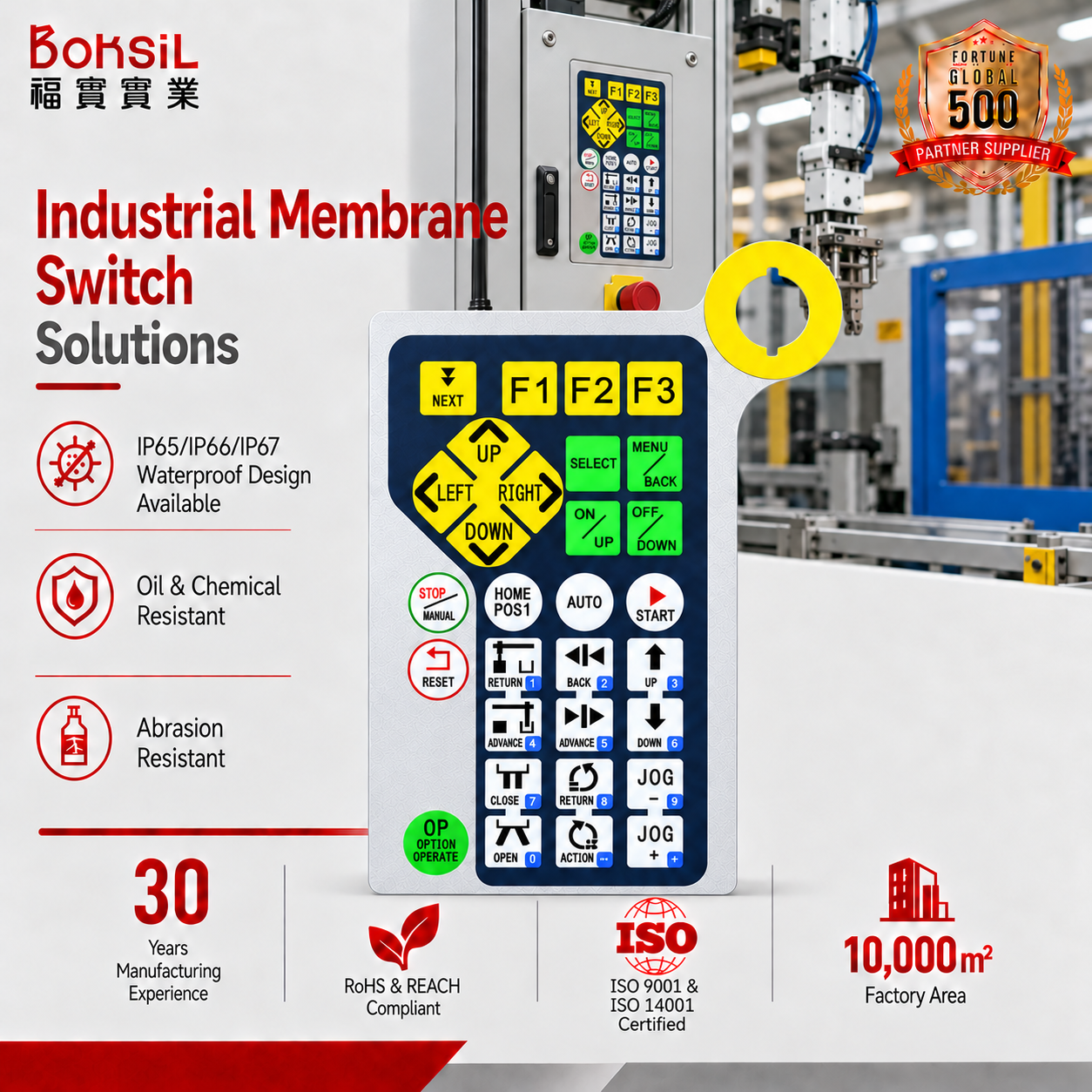
Situated in the industrial corridor connecting Coimbra, Mealhada, and Condeixa-a-Nova, automated equipment manufacturers require tactile feedback buttons capable of withstanding industrial lubricating oils, cutting fluids, and abrasive airborne particulate matter. Our metal-dome matrix panels on polyimide FPC circuits prevent trace cracking under cyclic vibration and plant power surges.
Renewable Energy & Smart Grid Telemetry
Portugal is an international pioneer in green energy integration. Outside urban Coimbra, wind turbine control hubs, river hydroelectric monitoring pods along the Mondego basin, and solar inverter farms utilize our UV-stabilized, IP67-rated membrane keypads equipped with anti-glare display windows and wide temperature operational thresholds (-40°C to +85°C).
Smart Agritech & Forestry Field Hardware
The agricultural and forestry monitoring systems engineered in Central Portugal require portable, battery-powered telemetry units. Our ultra-low-power membrane switches and backlit silicone rubber keypads provide moisture-proof, hermetically sealed operational interfaces for field soil analysers, drone ground stations, and forest fire remote sensing outposts.
University Research & CERN Physics Equipment
Through the Laboratory of Instrumentation and Experimental Particle Physics (LIP) and University of Coimbra physics labs, researchers design specialized test rigs requiring custom low-volume, high-density matrix keypads with specialized shielding and gold-plated dome contacts to guarantee zero contact bounce and negligible contact resistance.
Access Control, Security & Retail Kiosks
For municipal transit, automated ticketing dispensers, and secure building entry across the historic upper town (Alta) and lower commercial districts (Baixa), our stainless steel vandal-resistant keypad panels and illuminated silicone numeric arrays deliver robust tamper-resistance and water-tight sealing against torrential seasonal rainfall.
Emerging Technology & Engineering Trends in Portugal's OEM Sector
Hardware engineering departments across Portugal are shifting from rudimentary discrete push-buttons to integrated, smart, multifunctional front panel assemblies. In discussions with procurement managers and system architects in Coimbra, four dominant technology trends have emerged:
1. Migration from Pure Silver Screen Inks to High-Density Copper FPCs
As micro-controllers incorporate smaller package footprints (e.g., QFN, BGA) and interconnect connectors move to 0.5mm or 1.0mm pitch zero-insertion-force (ZIF) sockets, traditional silver-printed traces hit physical width constraints. Silver tracks below 0.3mm width risk microscopic micro-fractures under repeated bending. Our Flexible Printed Circuit (FPC) switch layers utilize roll-annealed copper laminated onto polyimide film, allowing track widths down to 0.1mm, integrated surface-mount SMD LEDs, onboard resistors, and decoupling capacitors directly within the switch tail.
2. Light Guide Film (LGF) Uniform Surface Illumination
Traditional discrete LED backlighting suffered from distracting "hotspots" and light bleed across adjacent keys. OEMs in Coimbra now mandate Light Guide Film (LGF) architecture. Using precision micro-dot etching on ultra-thin polycarbonate films, light from side-firing miniature LEDs is uniformly dispersed across key legends, symbols, and perimeter halos with total package thicknesses maintained under 1.2mm.
3. Piezoresistive Flexible Thin-Film Pressure Sensing
Driven by robotic research at IPN and biomechanical projects at the Faculty of Medicine, dynamic tactile sensing is replacing binary ON/OFF switching. Our thin-film tactile intelligent sensors translate localized mechanical force into an inversely proportional electrical resistance value, enabling robotic gripping feedback, medical bed patient positioning monitoring, and industrial clamp calibration.
4. Strict Adherence to EU Green Directives (RoHS, REACH & WEEE)
All materials exported from our Dongguan facility into the European Union undergo rigorous analytical validation. We provide full Material Declarations confirming compliance with EU Directive 2011/65/EU (RoHS 3) and EC 1907/2006 (REACH), ensuring that graphic overlays, conductive pastes, pressure adhesives (such as 3M 467MP, 468MP, and 300LSE), and silicone components are free of hazardous SVHC substances.
In-House Testing Laboratories & Production Verification
100% of our products undergo comprehensive automated electrical screening and destructive batch endurance validation in our Intertek-verified facility.
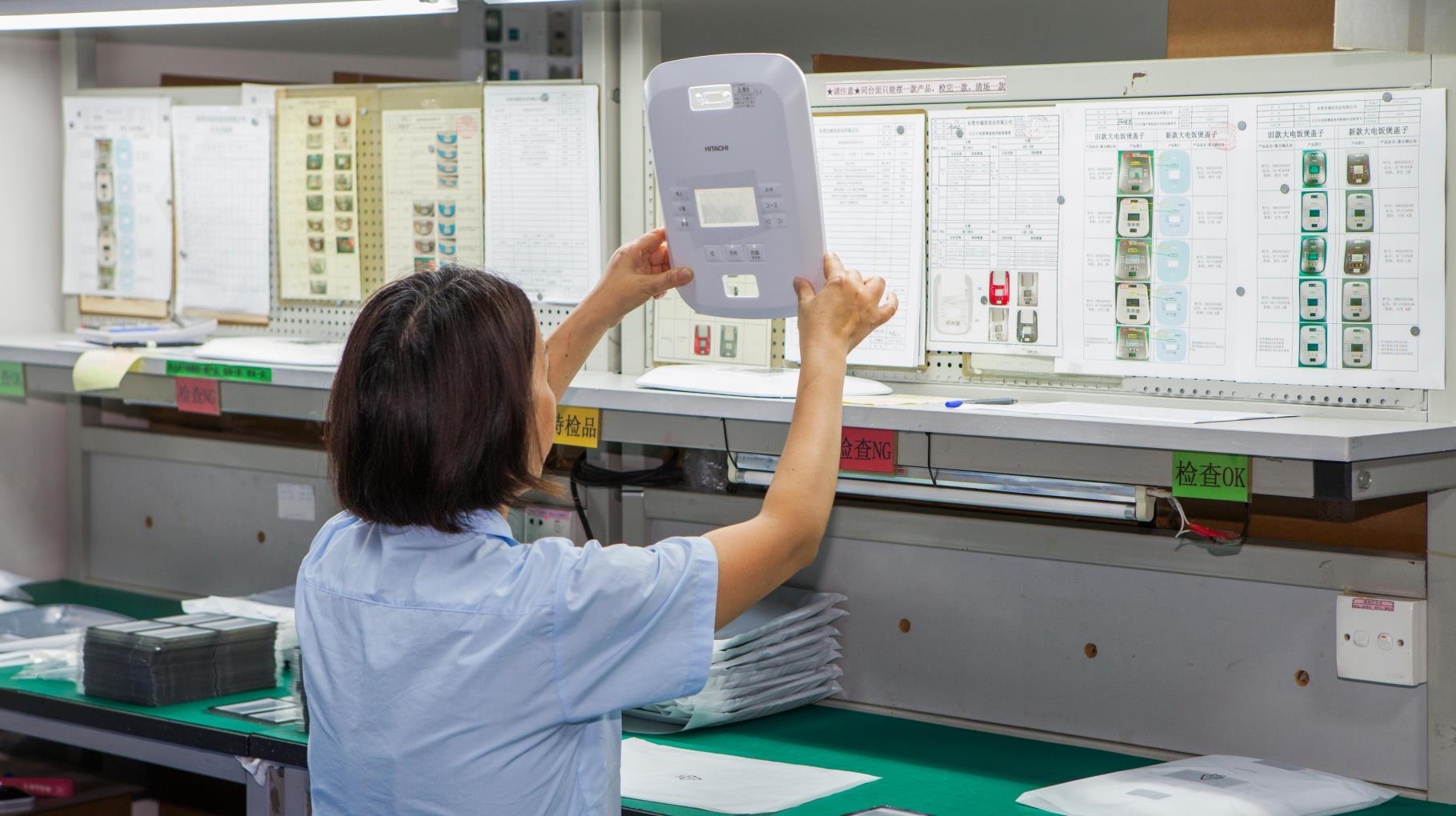
100% Computerized Circuit Testing
Every single unit is checked automatically for open circuits, shorts, loop resistance, LED chromaticity, and insulation resistance prior to packaging.
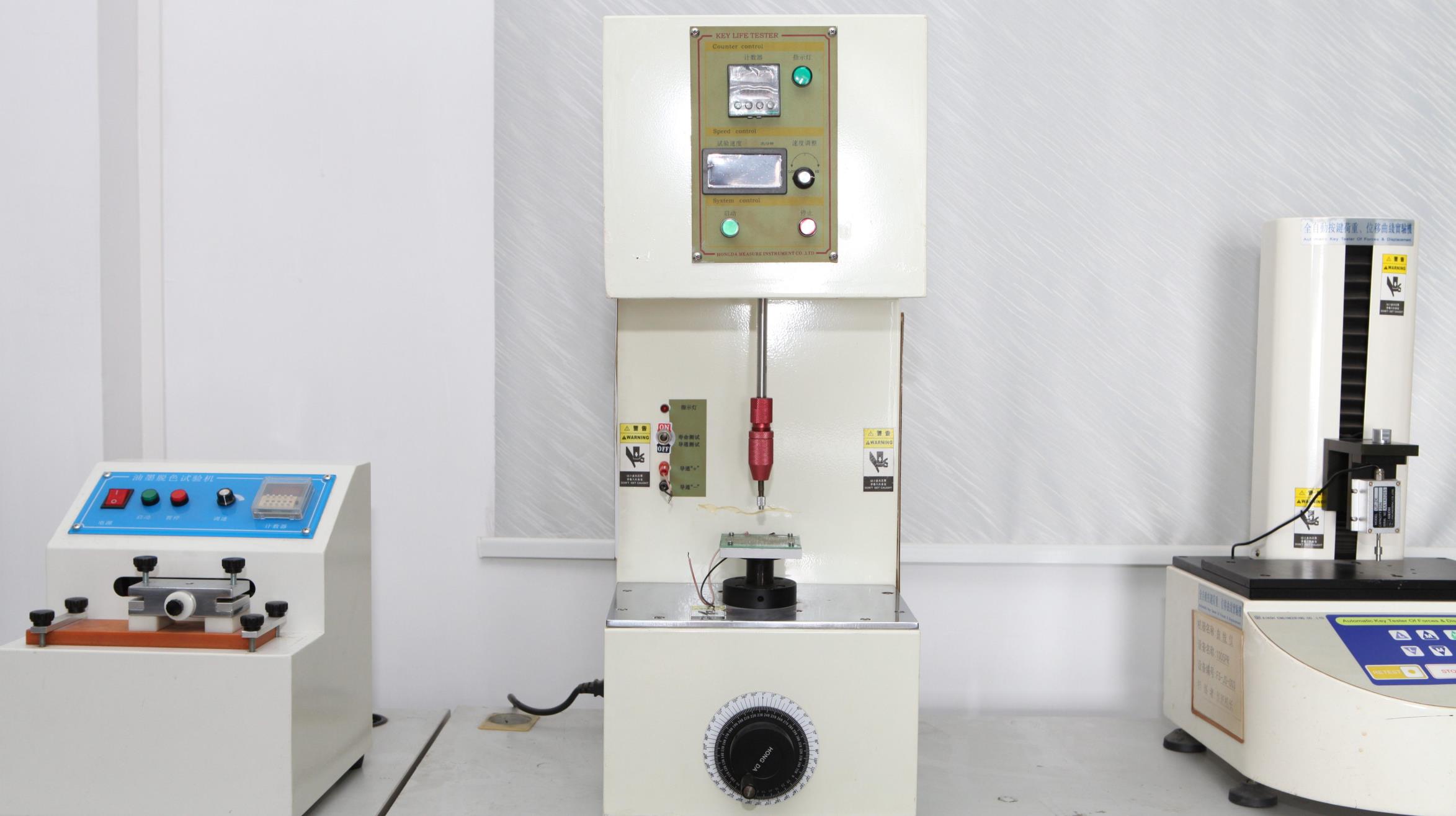
Dynamic Key Life Actuation Tester
Multi-station pneumatic cycle testers exercise keys and metal domes up to 5,000,000 actuations at 3–5 Hz to verify fatigue limits and rebound resilience.
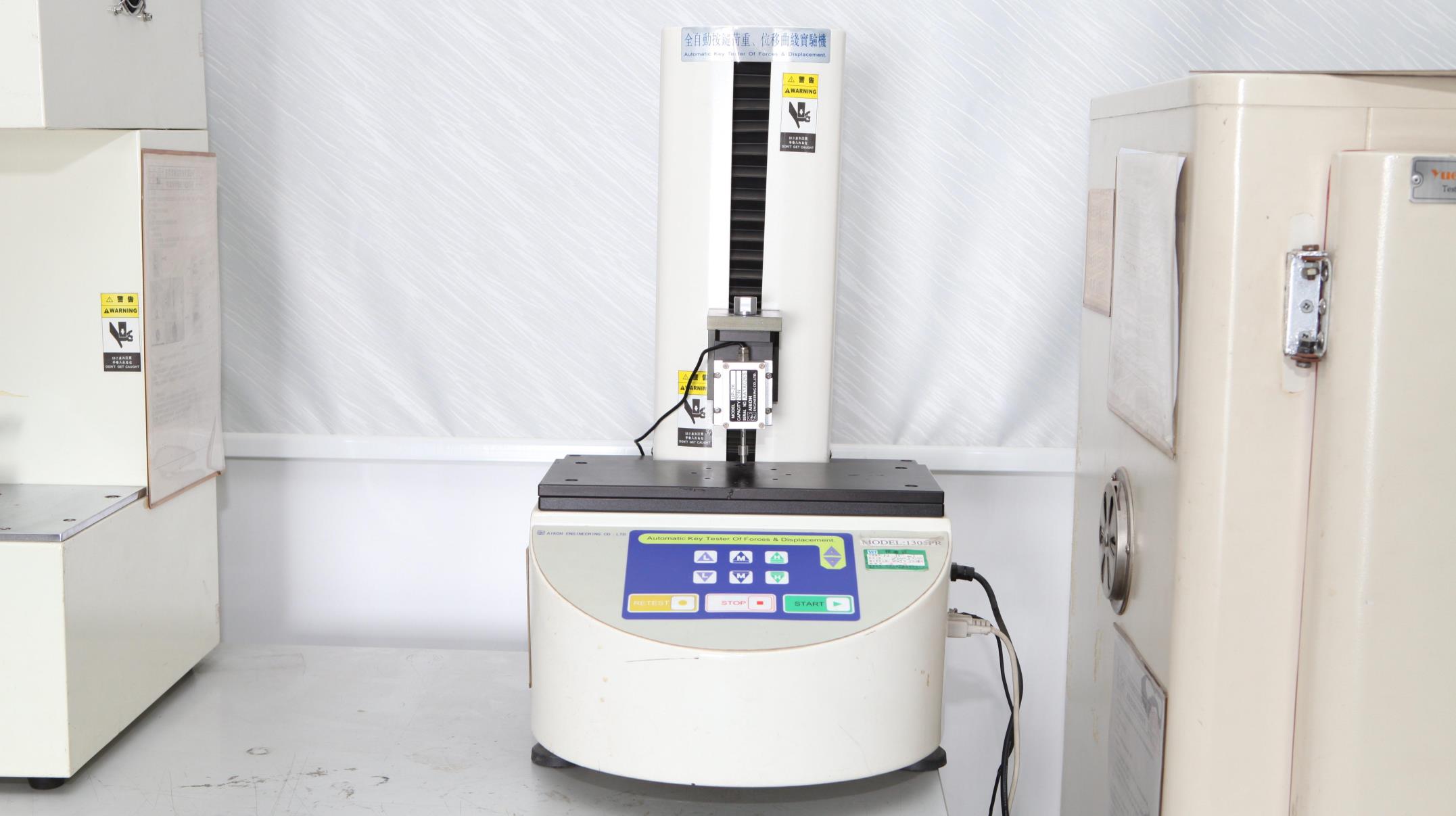
Force vs. Displacement Curve Plotter
High-precision strain gauge sensors map the peak tactile trip force (F1) and return force (F2) curves to ensure batch-to-batch tactile consistency.
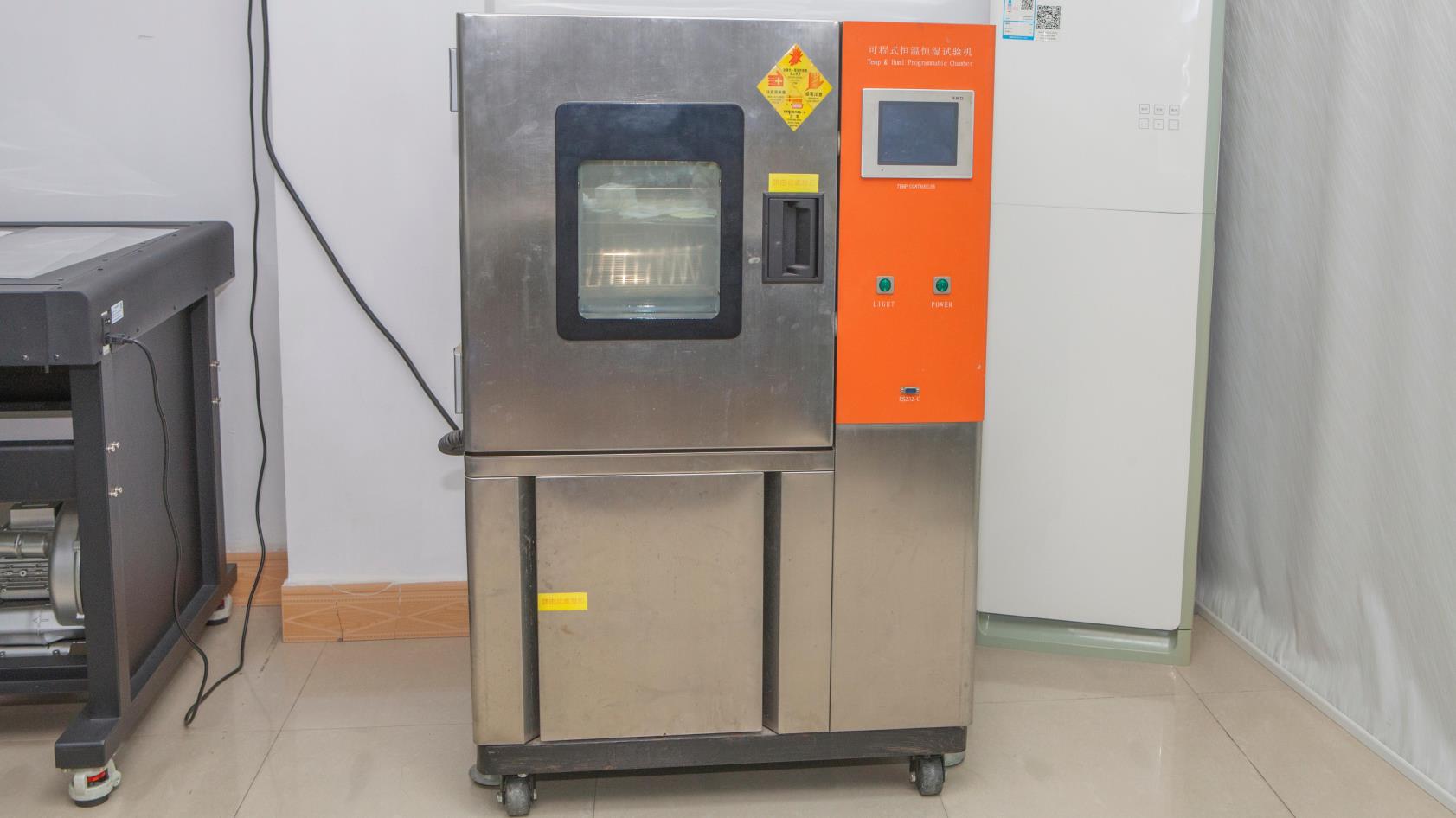
Programmable Temp. & Humidity Chamber
Thermal shock profiling from -40°C to +105°C and 95% relative humidity testing ensures zero adhesive delamination or silver migration in harsh environments.
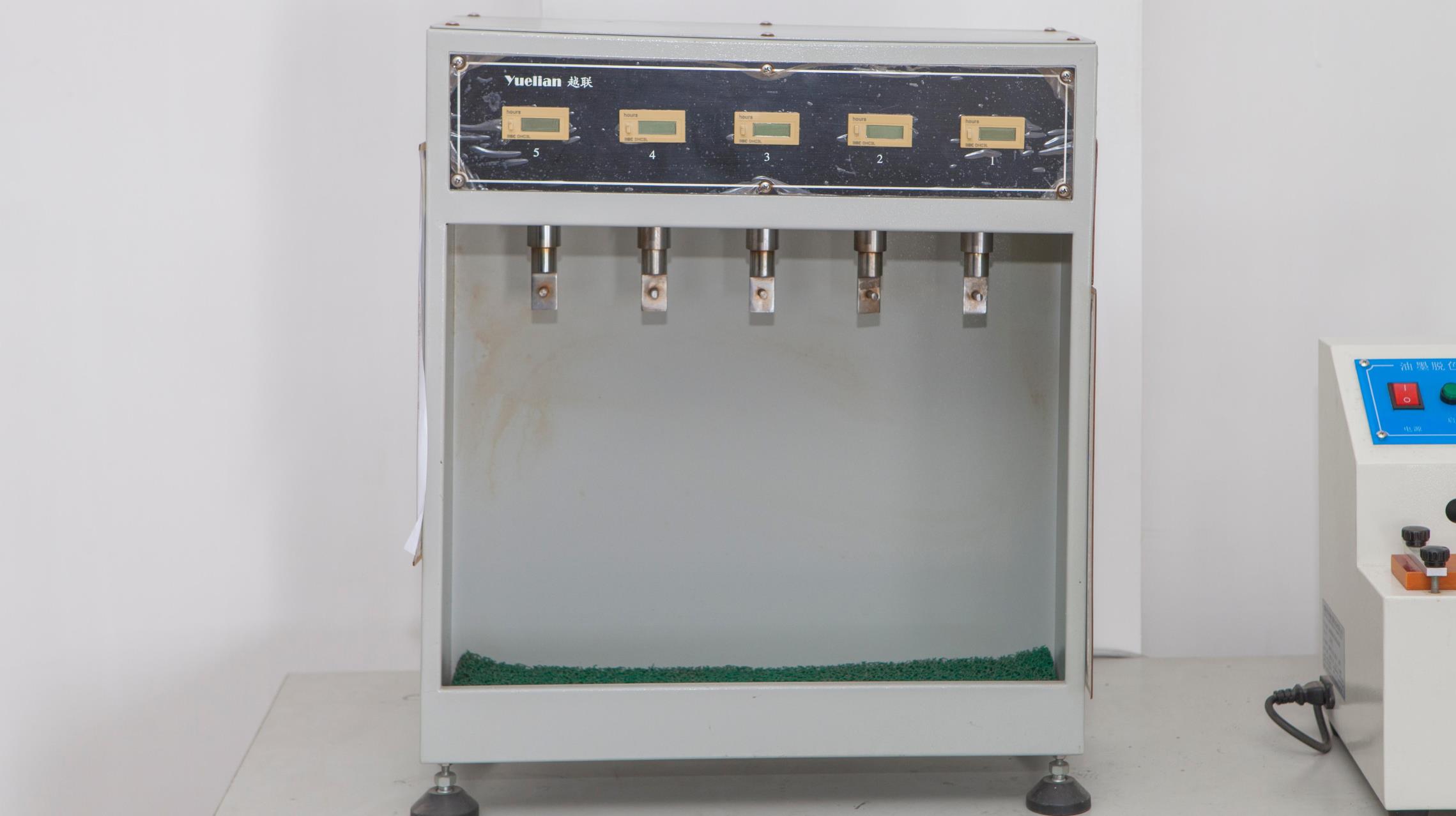
Adhesive Peel & Tensile Testing Machine
Quantifies 180° peel strength of 3M adhesive tapes and connector tail pullout resistance, guaranteeing robust bonding to metal and plastic enclosures.
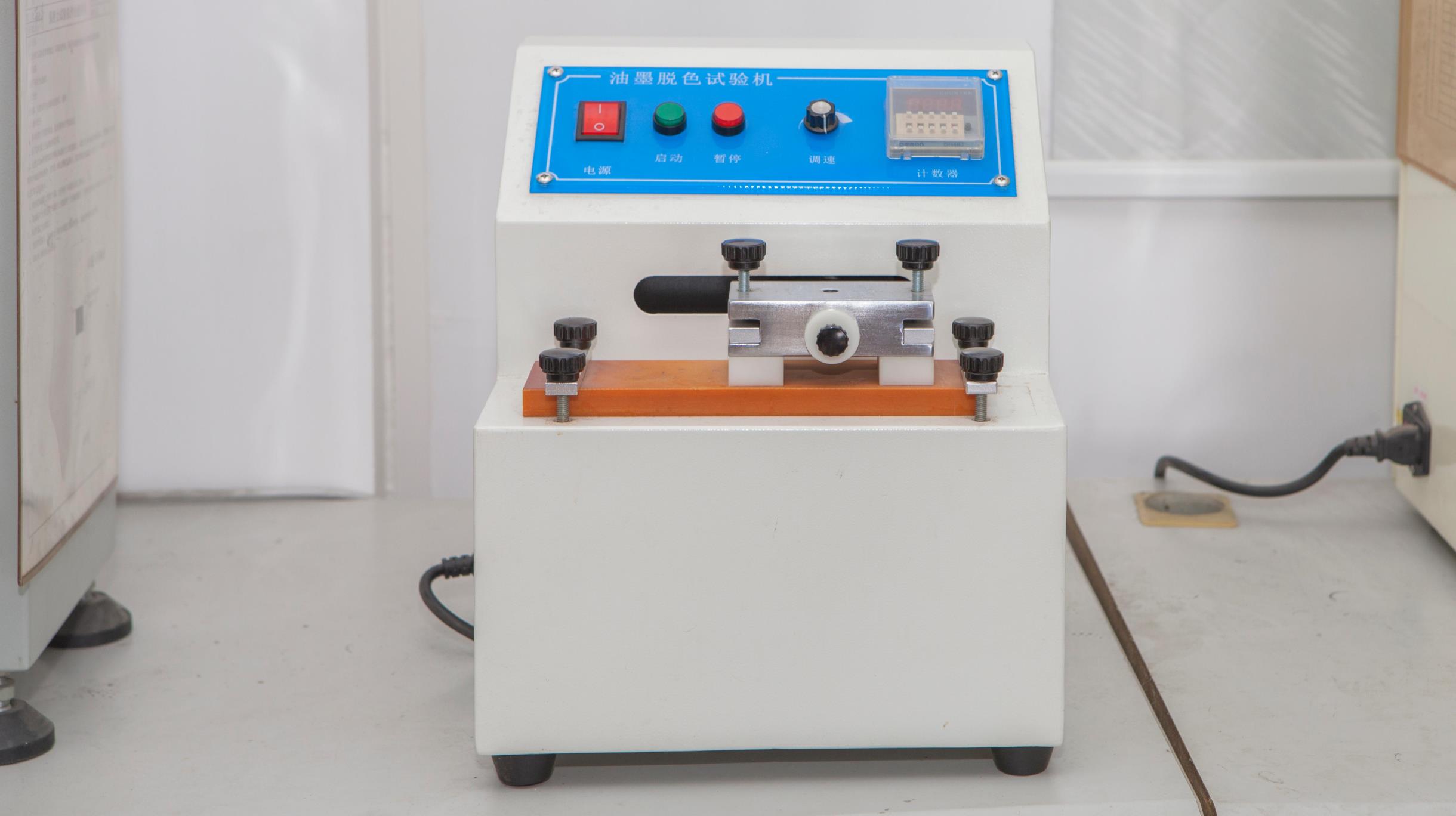
Ink Abrasion & Decolorization Tester
RCA rub tests and chemical wipe rigs assess printed text endurance against ethanol, acetone, artificial sweat, and constant mechanical rubbing.
Why Coimbra Equipment Manufacturers Partner with Dongguan AXRU Electronics
Procuring custom human-machine interfaces from overseas requires absolute transparency, accountable engineering leadership, and dependable logistics. Dongguan AXRU Electronics Co., Ltd. operates a modern 10,000㎡ manufacturing plant with 121 seasoned personnel, providing a direct factory-to-OEM relationship that eliminates intermediary markups and communication delays.
Verified Competitive Strengths:
- On-Site Intertek Verified Facility: Our production cleanrooms, quality management system, and environmental testing labs are independently evaluated by Intertek, ensuring full compliance with international standards.
- Proven Supplier to Global Fortune 500 Brands: We have established a 12-year track record supplying rugged HMIs, fuel dispenser control pads, and medical overlays to leading global brands with demanding supplier audit criteria.
- Fully Integrated In-House Production: From pre-press precision color matching (Pantone / RAL) and cleanroom silk-screen printing to laser die-cutting, automated SMT dome placement, and hot-press lamination, every production step is performed in-house.
- Rapid Prototyping & Flexible Production Scales: Understanding that high-tech instrumentation often requires low-volume, high-mix flexibility, we support pilot runs starting at just 100 pieces, complete with full First Article Inspection (FAI) reports.
- Direct DFM Engineering Collaboration: Coimbra hardware engineers work directly with our English-speaking project engineers, receiving comprehensive Design for Manufacturability (DFM) reviews within 24 hours of CAD file submission.
Frequently Asked Questions: Ordering to Coimbra, Portugal
Practical guidance regarding customs, import tariffs, file formats, lead times, and engineering specifications for Portuguese OEMs.
Q1: How does shipping and customs clearance work for deliveries to Coimbra?
We routinely deliver door-to-door to Coimbra facilities via priority air couriers (DHL Express, FedEx, UPS) with transit times of 3–5 working days from our factory in Dongguan. Shipments clear Portuguese customs efficiently through Lisbon (LIS) or Porto (OPO) airports. We supply complete commercial documentation, including HS codes (typically 8537.10 for membrane switches) and EUR-compliant commercial invoices to facilitate smooth VAT/import clearance.
Q2: Can Portuguese companies apply for EU VAT reverse charge mechanisms?
Direct exports from China to Portugal are billed net of Portuguese VAT (IVA). Upon arrival in Portugal, your designated freight forwarder or broker clears the cargo through the Autoridade Tributária e Aduaneira (AT). Registered Portuguese entities with a valid NIF/VIES number can account for import VAT using standard Portuguese customs reverse-charge accounting mechanisms.
Q3: What engineering file formats do you require for an accurate quotation and DFM review?
We accept vector graphic artwork in Adobe Illustrator (.AI), CorelDraw (.CDR), or vector .PDF format with specified Pantone (PMS) or RAL color codes. For mechanical dimensions, embossing heights, dome positioning, and circuit routing, please submit 2D CAD files in .DWG or .DXF, or Gerber files for FPC layers. 3D STEP files of your plastic enclosure help our engineers verify perimeter bezel tolerances.
Q4: What is the standard turnaround time for prototypes and serial production?
Rapid engineering samples are typically completed within 7 to 10 working days following final DFM approval. Mass production runs (e.g., 500 to 10,000 units) generally require 14 to 20 working days depending on tooling complexity and SMT component availability. Expedited prototyping options are available for time-sensitive biomedical validation runs.
Q5: How do you ensure waterproof and ingress protection up to IP67?
We employ continuous perimeter adhesive rings using high-cohesion, closed-cell 3M transfer adhesives (such as 3M 467MP or 300LSE for low surface energy plastics). Venting channels are routed internally between keys rather than exiting into the ambient atmosphere, preventing the ingress of liquids, humidity, and fine dust while maintaining stable air displacement during actuation.
Q6: Can you match specific custom tactile feedback requirements for gloved operators?
Yes. We offer an extensive selection of stainless steel metal domes ranging in size from 6mm to 20mm, with actuation forces from 180g up to 500g. For medical or field applications where operators wear protective gloves, we typically specify a 12mm or 16mm four-leg dome with 350g–420g actuation force and a pronounced tactile snap ratio to guarantee unambiguous mechanical response.