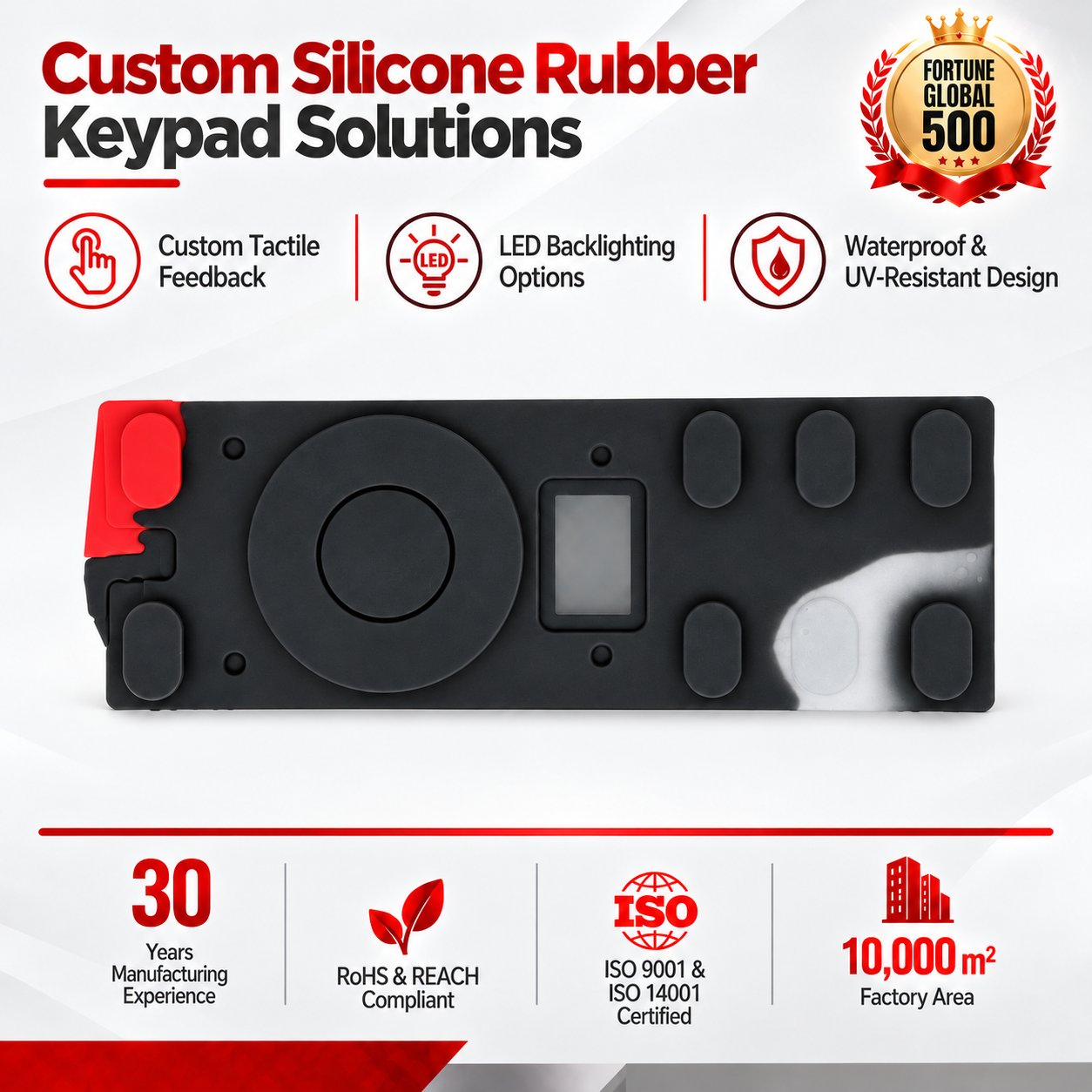
Recommended HMI Solutions for Engineering Projects
Explore our core industrial input assemblies, tested for signal fidelity, harsh environment ingress, and cyclic mechanical endurance.
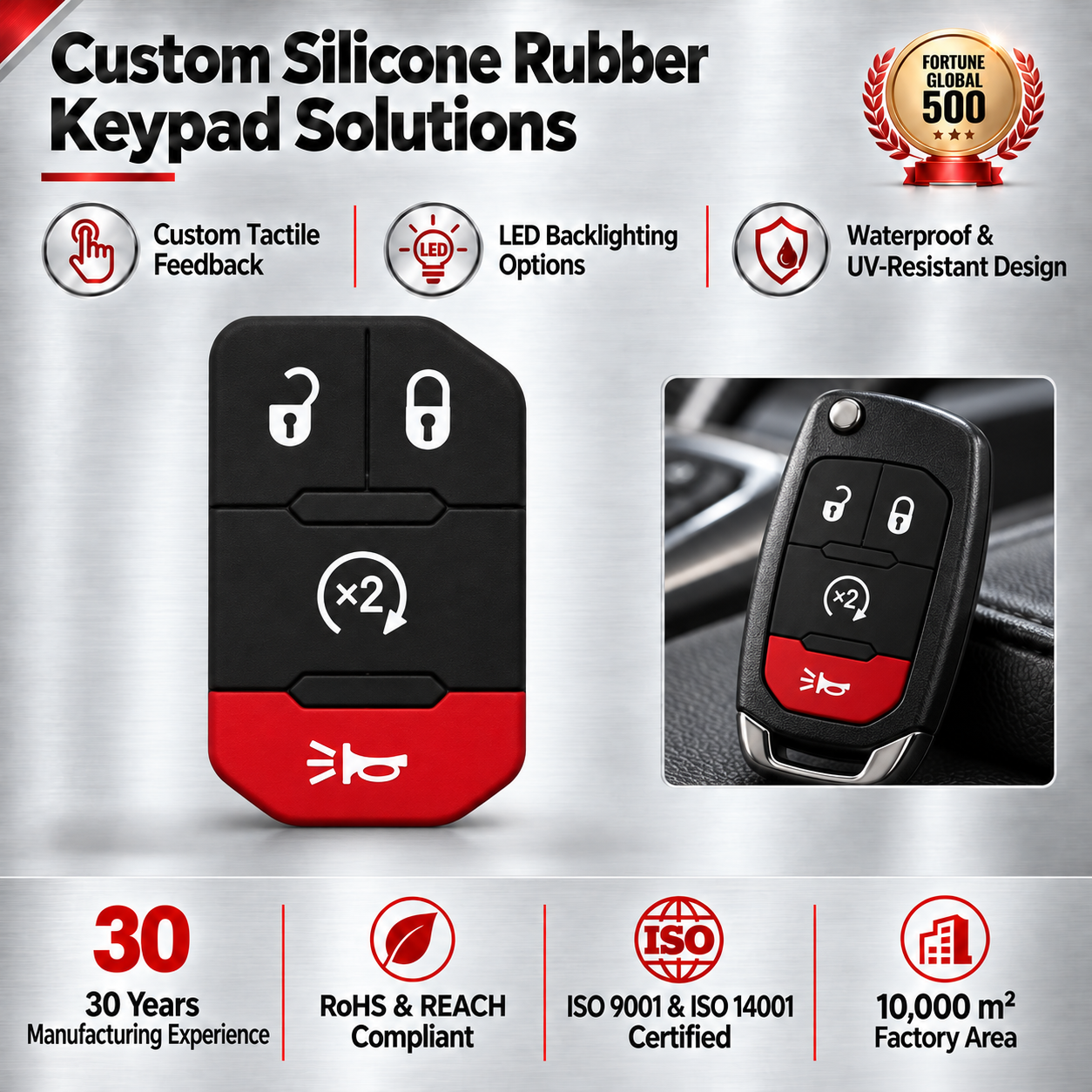
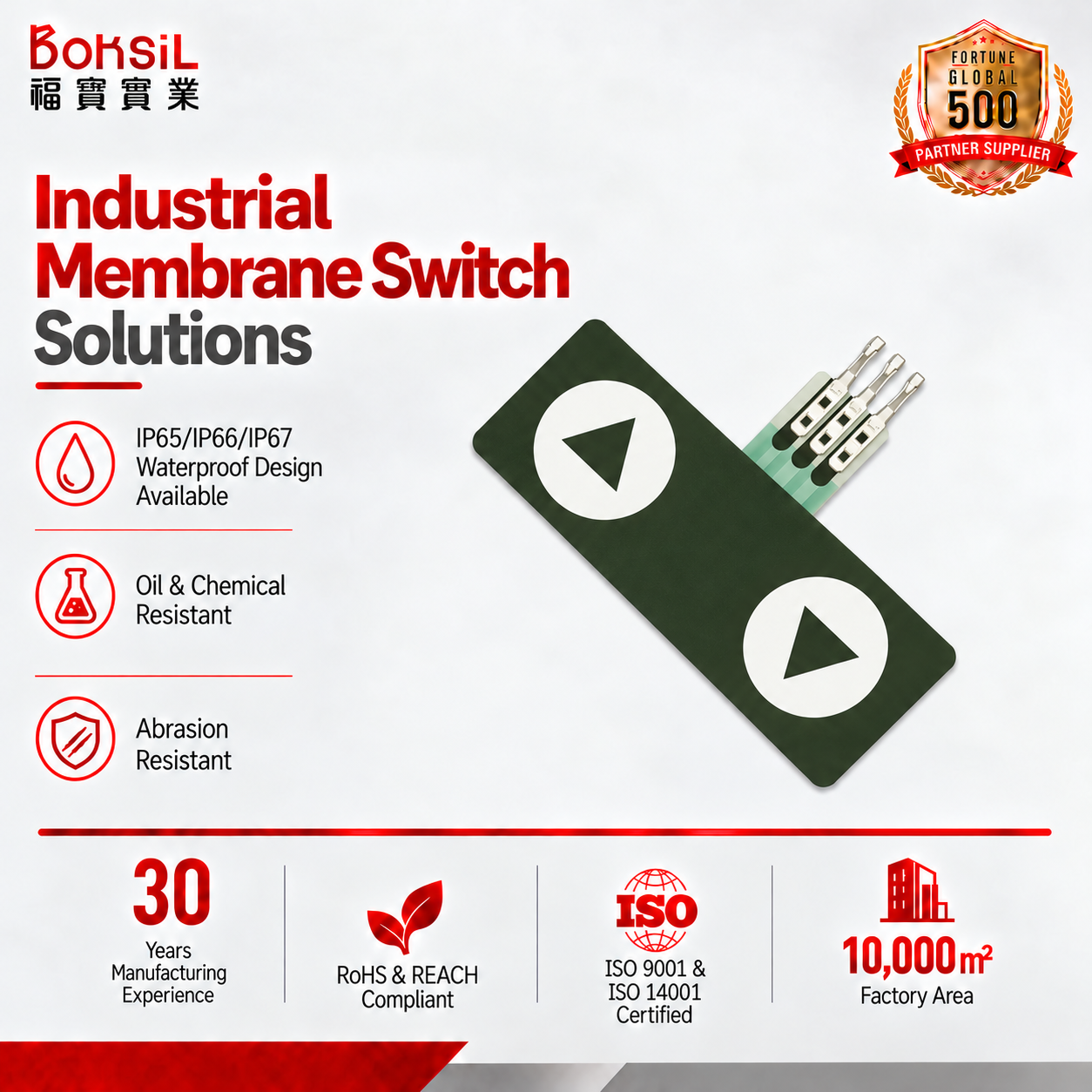
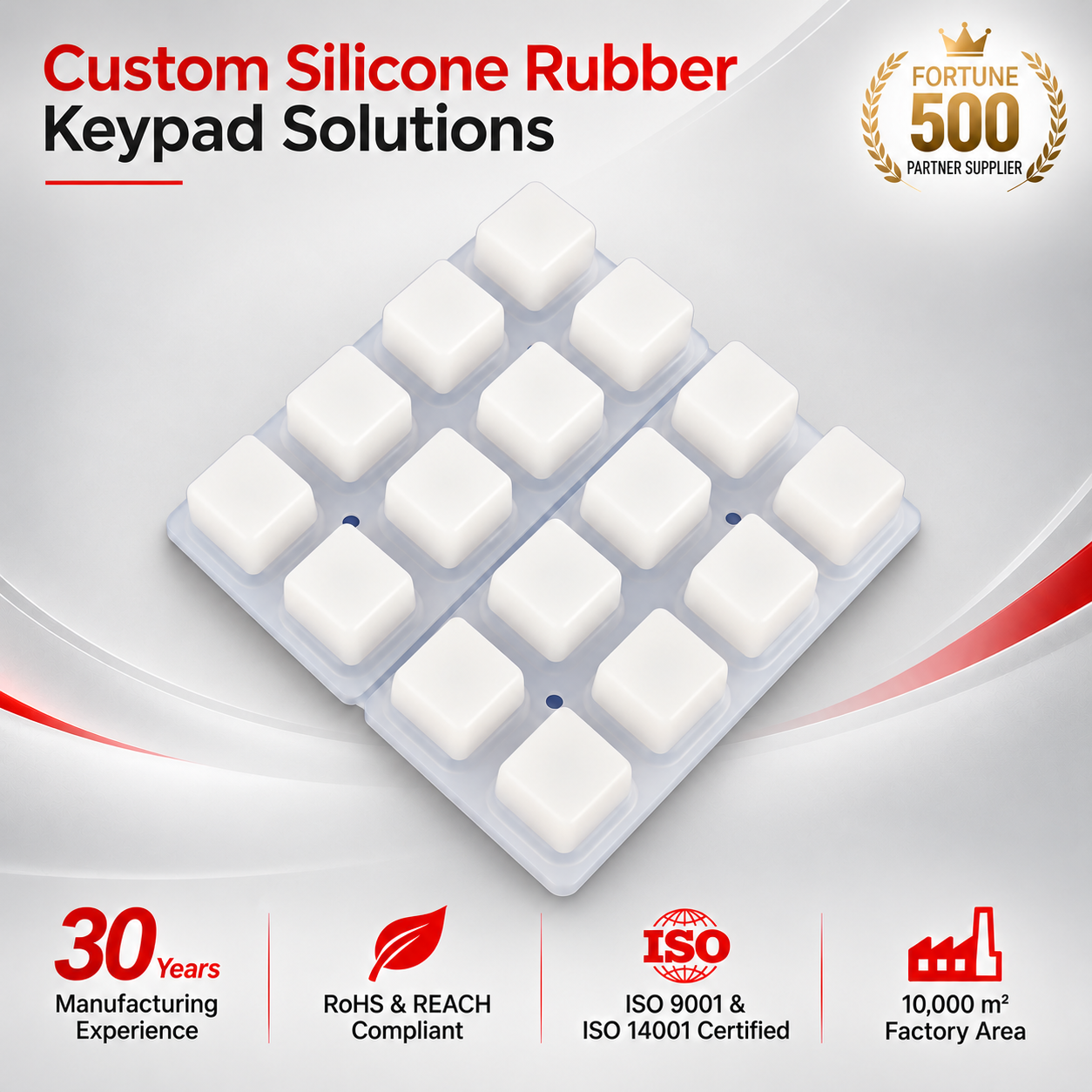
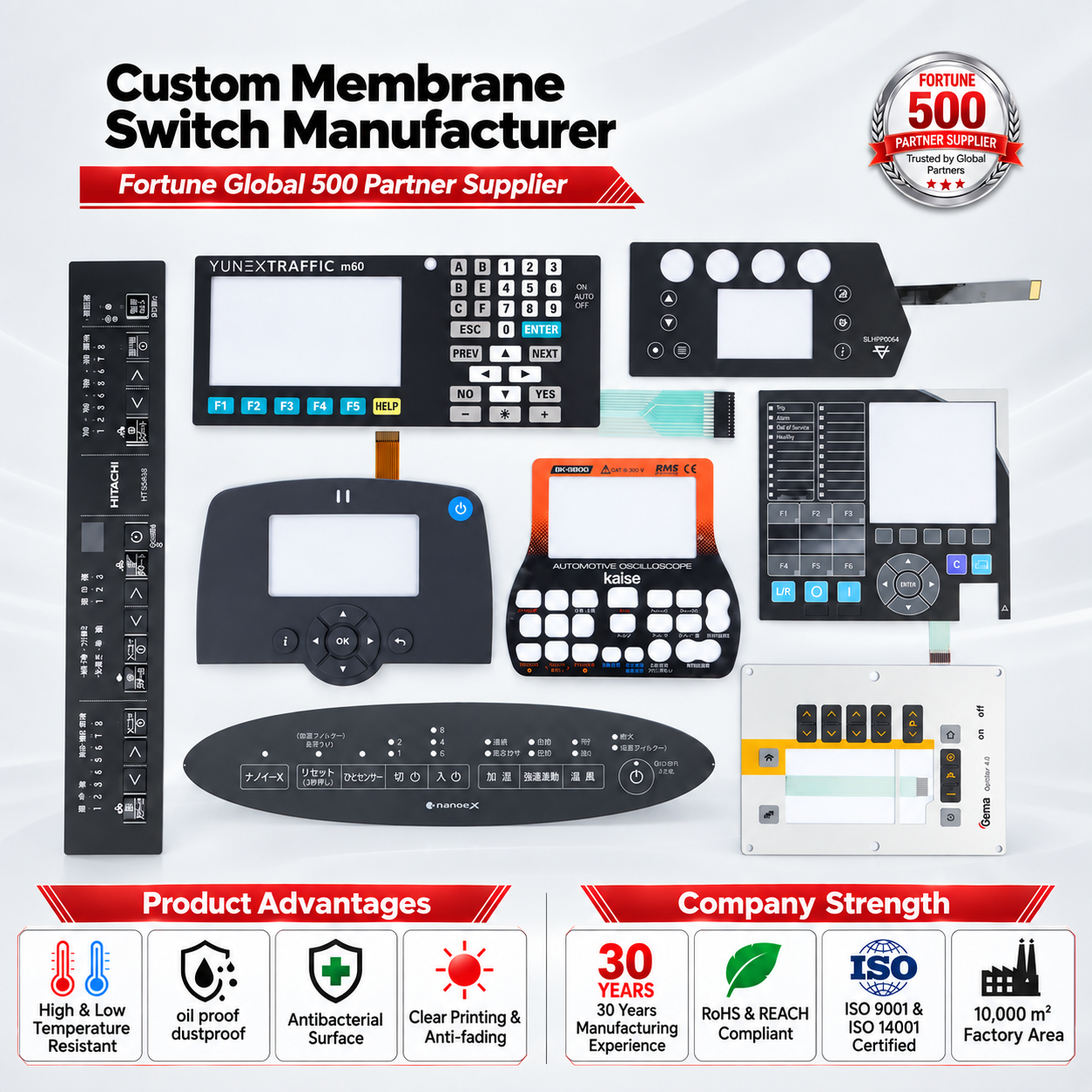
Engineering Architecture: Capacitive vs. Resistive Membrane Switches
A technical guide for industrial designers, procurement specialists, and global brand directors evaluating next-generation control surfaces.
In modern industrial design, human-machine interfaces (HMI) have evolved beyond purely mechanical contact systems. As global buyers like David manage demanding product cycles across medical diagnostics, precision instrumentation, and rugged industrial controllers, understanding the fundamental physics of Capacitive Membrane Switches is crucial to optimizing bill-of-materials (BOM) costs and long-term field survivability.
Unlike traditional electro-mechanical switches or standard silver-printed flexible membrane keypads—which require physical deflection to bring conductive traces into contact—capacitive touch switches function by measuring electrostatic variations. The switch matrix forms a mutual or self-capacitance field beneath an unbroken dielectric front overlay (typically hard-coated polycarbonate, optical PMMA acrylic, or chemically strengthened glass). When a human finger or conductive stylus enters this electric field, it introduces an added dielectric constant, causing a minute capacitance deviation that an integrated controller IC translates into clean, bounce-free actuation.
Key Engineering Insight for Procurement: Capacitive interfaces eliminate mechanical fatigue (contact dome exhaustion), allowing field operation exceeding 5 million activations without degradation. Furthermore, their continuous planar surface ensures IP67/IP68 ingress protection against fluid migration, harsh sterilization solvents, and dust ingress.
| Performance Parameter | Capacitive Touch Membrane | Metal Dome Tactile Membrane | Silicone Keypad + PCB Hybrid |
|---|---|---|---|
| Mechanical Operating Life | Virtually Infinite (> 5M cycles) | 1.0M to 3.0M cycles | 0.5M to 1.0M cycles |
| Ingress Rating Compatibility | IP67 / IP68 / NEMA 4X (Seamless) | IP65 (Perimeter Gasket Seal) | IP64 to IP66 (With Molded Lip) |
| Substrate Architecture | Copper FPC / Silver Screened PET | Silver Conductive PET or FPC | FR4 PCB or Flex Circuit Base |
| Surface Sterilization Resistance | Immune to IPA, Bleach, Hospital Wipe-down | Good (Dependent on Overlay Hard-coat) | Moderate (Silicone Swelling Risk) |
| Backlighting Integration | LGF, Optical Fiber, Capacitive LED Halo | Discrete SMD LEDs, Light Guide Film | Through-hole LED, Laser Etched Window |
Targeted Application Scenarios for International Markets
Meeting regional industrial compliance standards across North America, the European Union, and Australasia.
Clinical Medical & Laboratory Devices
Strict FDA hygiene protocols demand seamless interfaces. Our capacitive membrane switches support antimicrobial polyester overlays, eliminating crevices where pathogens collect, withstanding continuous disinfection by quaternary ammonium and glutaraldehyde reagents.
Severe Industrial & Automation Control
Machinery operating near CNC mills, heavy press equipment, or foundry lines suffers constant vibration and aerosolized lubricants. Capacitive panels with EMI/RFI shielding prevent accidental triggers while guaranteeing uninterrupted feedback through capacitive sensitivity tuning.
Outdoor Commercial & EV Charging Hubs
Public-access outdoor terminals require UV stability, extreme thermal tolerance (-40°C to +85°C), and rainwater rejection algorithms. Incorporating ITO glass or anti-glare Autotex PET maintains visibility and touch precision regardless of weather fluctuations.
Global Trends Shaping HMI Supply Chains
How cutting-edge materials and integrated production systems drive value for engineering leaders.
As international supply chains experience consolidation, original equipment manufacturers are shifting procurement away from distributed workshops toward vertically integrated manufacturing powerhouses. In the context of "China Top Capacitive Membrane Switch Factories & Factory for David", several macroeconomic and engineering shifts are redefining requirements:
1. In-Mold Decoration (IMD/IML) Fusion: Buyers are converging pure capacitive sensing with three-dimensional thermoformed plastics. Rather than assembling a flat overlay to a pre-molded bezel, the sensing circuit and decorative film are fused into a singular structural housing, drastically cutting assembly line labor in David's domestic destination factories.
2. Noise Immunity & Tuned Water Rejection: Historic drawbacks of capacitive systems included false actuation triggered by water droplets or nearby electromagnetic relays. Modern factory-level design combines differential mutual-capacitance layouts with driver firmware that rejects uniform surface conduction (water films) while maintaining sensitivity through heavy work gloves.
3. Light Guide Film (LGF) Micro-Structures: Energy-efficient, ultra-thin backlighting has replaced older, bulky EL lamps. By micro-etching light transmission paths directly into thin polycarbonate foils, our plant delivers homogeneous illumination across complex iconography with minimal LED consumption and zero hotspot bleeding.
Why Partner with Dongguan AXRU Electronics Co., Ltd.?
End-to-end technical governance backed by world-class infrastructure in China's manufacturing heartland.
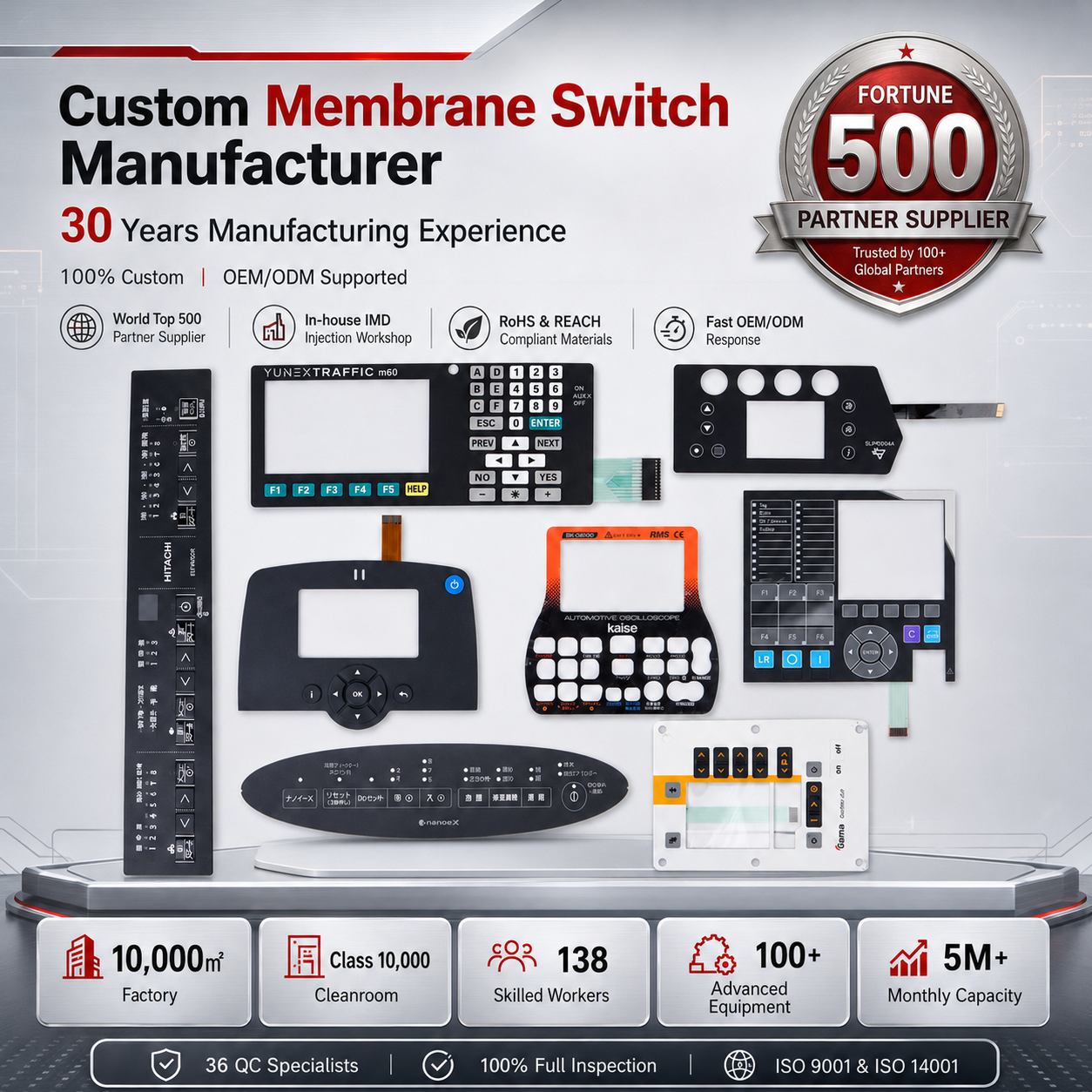
Intertek-Verified 10,000㎡ Facility
Fully controlled cleanroom operations ensure Class 10,000 screen printing, precision registration, adhesive curing, and optical lamination without particulate defects.
Complete In-House Process Chain
From early DFM stack-up modeling to CNC laser die-cutting, embossing, and FPC bonding—every step is handled in-house with end-to-end accountability.
Full-Spectrum Reliability Testing
Every lot undergoes key life cycle cycling, automated force-displacement plotting, tensile adhesive pull analysis, ink abrasion rubbing, and thermal shock validation.
Engineering-First Prototyping (MOQ 100)
We work directly with David's design team, offering rapid engineering prototypes starting at 100 pieces, enabling seamless verification before volume scale-up.
Frequently Asked Questions: Global Sourcing & Engineering
Real-world insights directly addressing common engineering, compliance, and supply chain queries.
How does AXRU protect capacitive switches from false triggering in wet or outdoor environments?
We deploy a two-tiered defense: layout architecture and microcontroller firmware configuration. By designing an interleaved cross-mesh ground ring around sensor pads and configuring mutual capacitance algorithms, the panel differentiates between a localized human finger touch and a continuous fluid film (such as rainwater or chemical spills). This prevents spurious activations in outdoor charging terminals and marine controllers.
What engineering documentation does David's team need to supply for an initial DFM review?
To produce an accurate stack-up proposal and quotation, we recommend submitting 2D mechanical drawings (AutoCAD DWG, DXF, or PDF), vector graphic overlay artwork (Adobe Illustrator or CorelDraw with designated Pantone coated color codes), schematics showing pinout configurations, connector pitch requirements, and environmental specifications (operating temperature range and IP requirements).
Can capacitive panels be integrated with mechanical tactile feedback or backlighting?
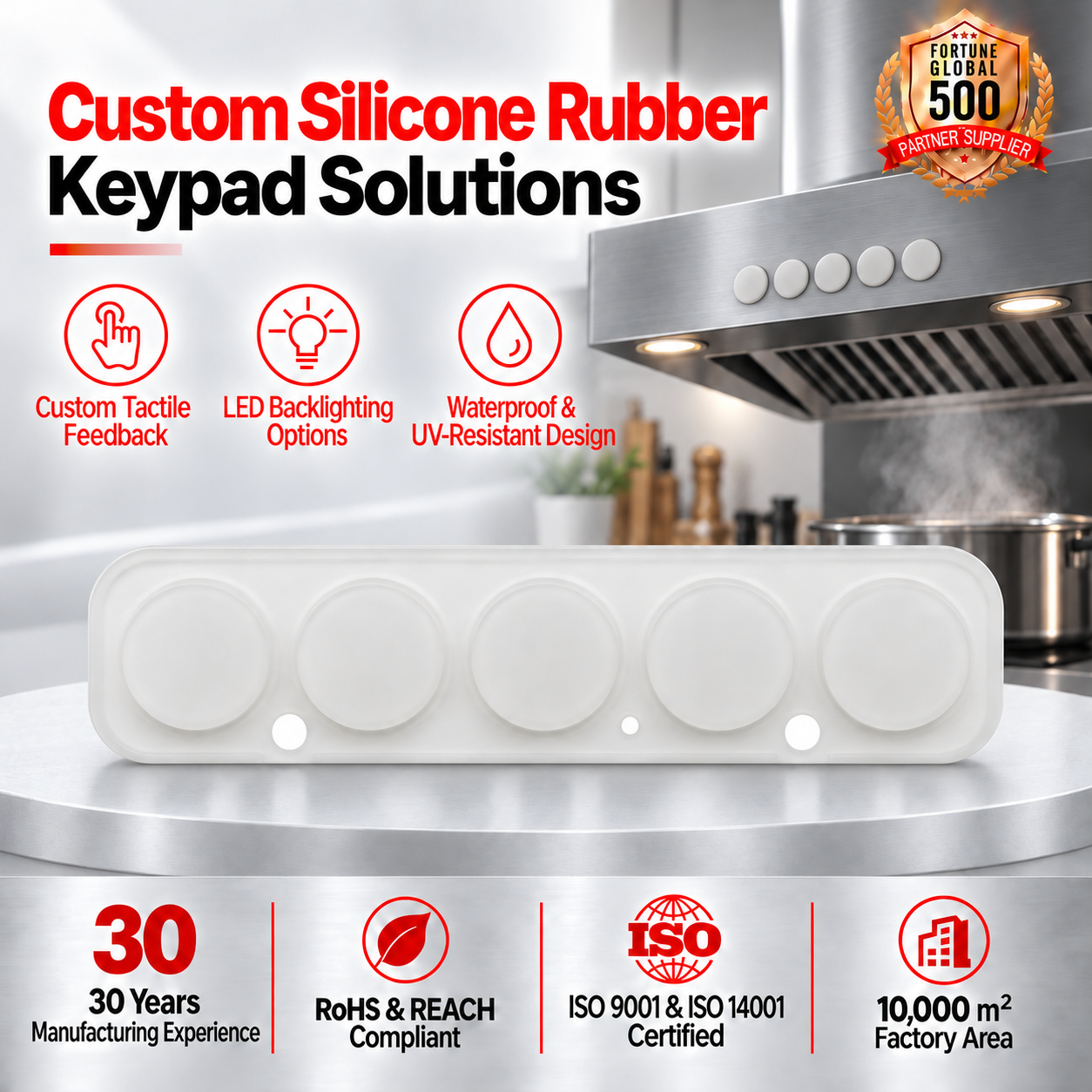
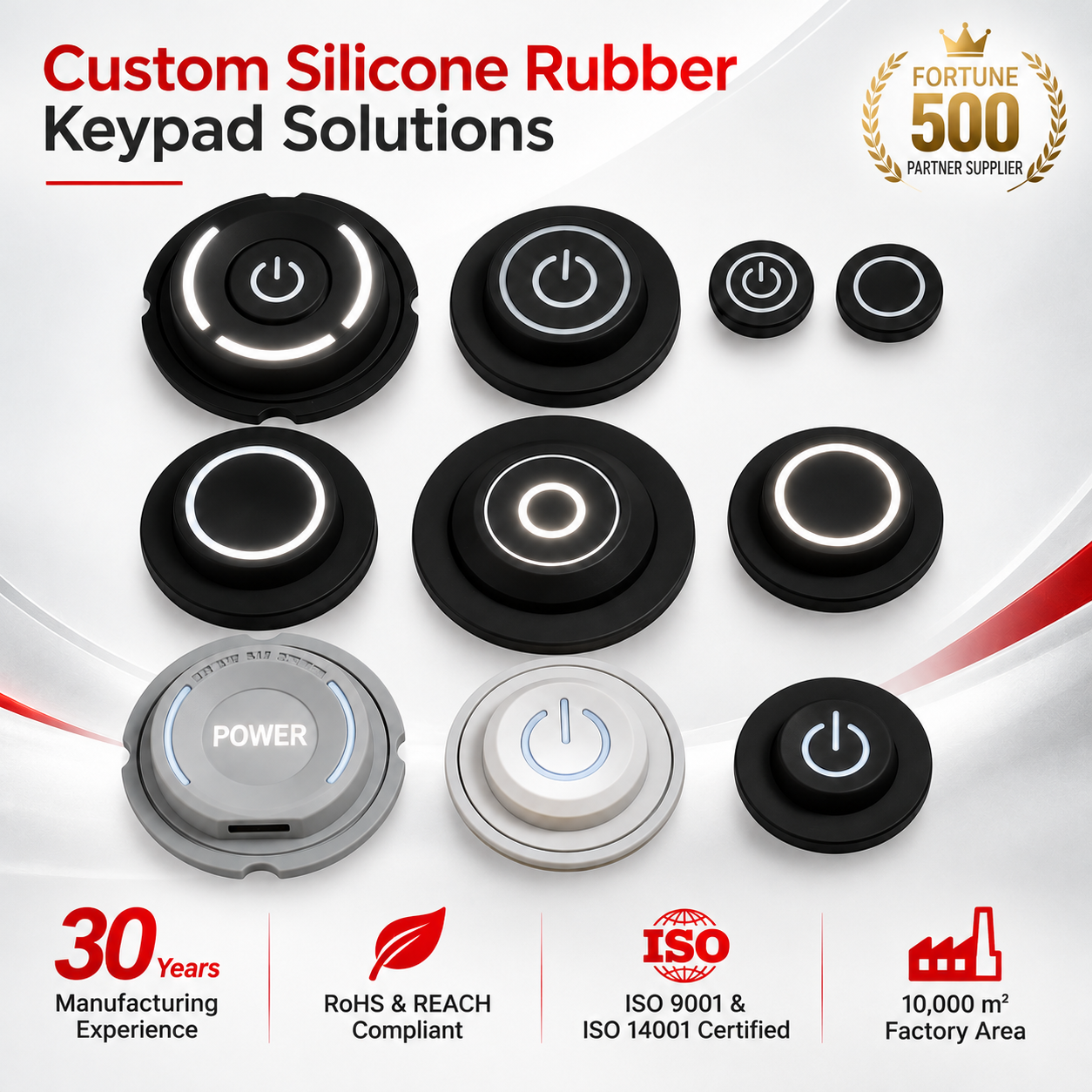
Yes. Many clients configure hybrid architectures. We can design a planar capacitive switch panel with integrated Light Guide Film (LGF) or fiber-optic channels for backlighting, complemented by local silicone actuation elements or integrated audio-haptic buzzer circuits on the backing PCB/FPC to deliver immediate physical confirmation to the operator.
How does the factory control adhesive delamination over extended temperature cycles?
We exclusively specify high-performance pressure-sensitive adhesives from industry-leading manufacturers (such as 3M 200MP, 467MP, 468MP, or VHB series). During our DFM review, we match adhesive performance to the surface energy of your housing substrate (e.g., aluminum, powder-coated steel, ABS, or polycarbonate). Adhesion is verified in our programmable thermal and humidity chamber across -40°C to +85°C.
What are the typical turnaround timelines for prototyping versus volume production?
Rapid engineering sample units generally ship within 7 to 10 working days following engineering drawing sign-off and color match verification. Full-scale production lots typically require 2 to 3 weeks, supported by our comprehensive testing line to verify zero open/short circuits and 100% functional reliability.
Ready to Accelerate Your HMI Development?
Connect with our senior engineering team to review your stack-up specifications, request engineering material samples, or obtain a comprehensive DFM audit.