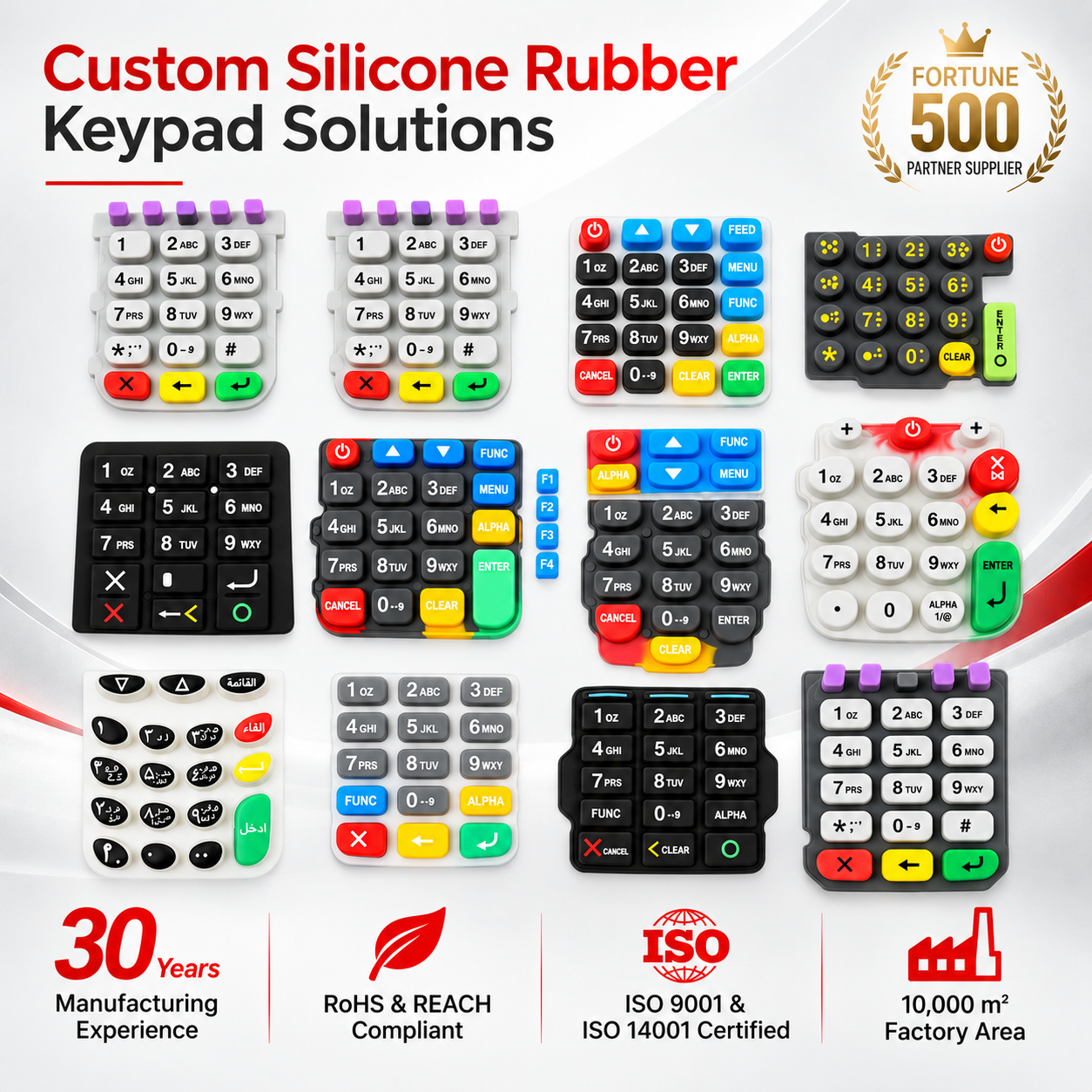
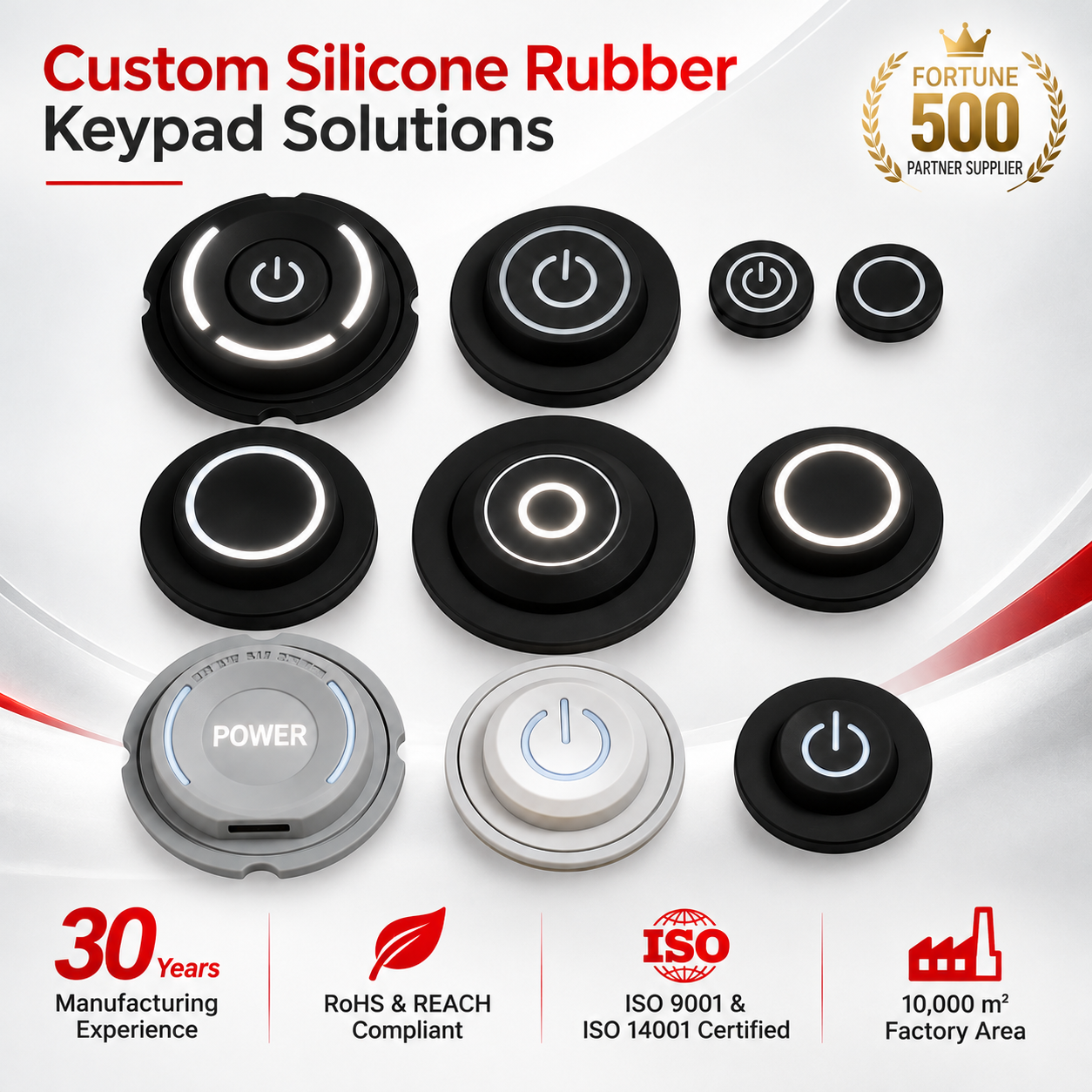
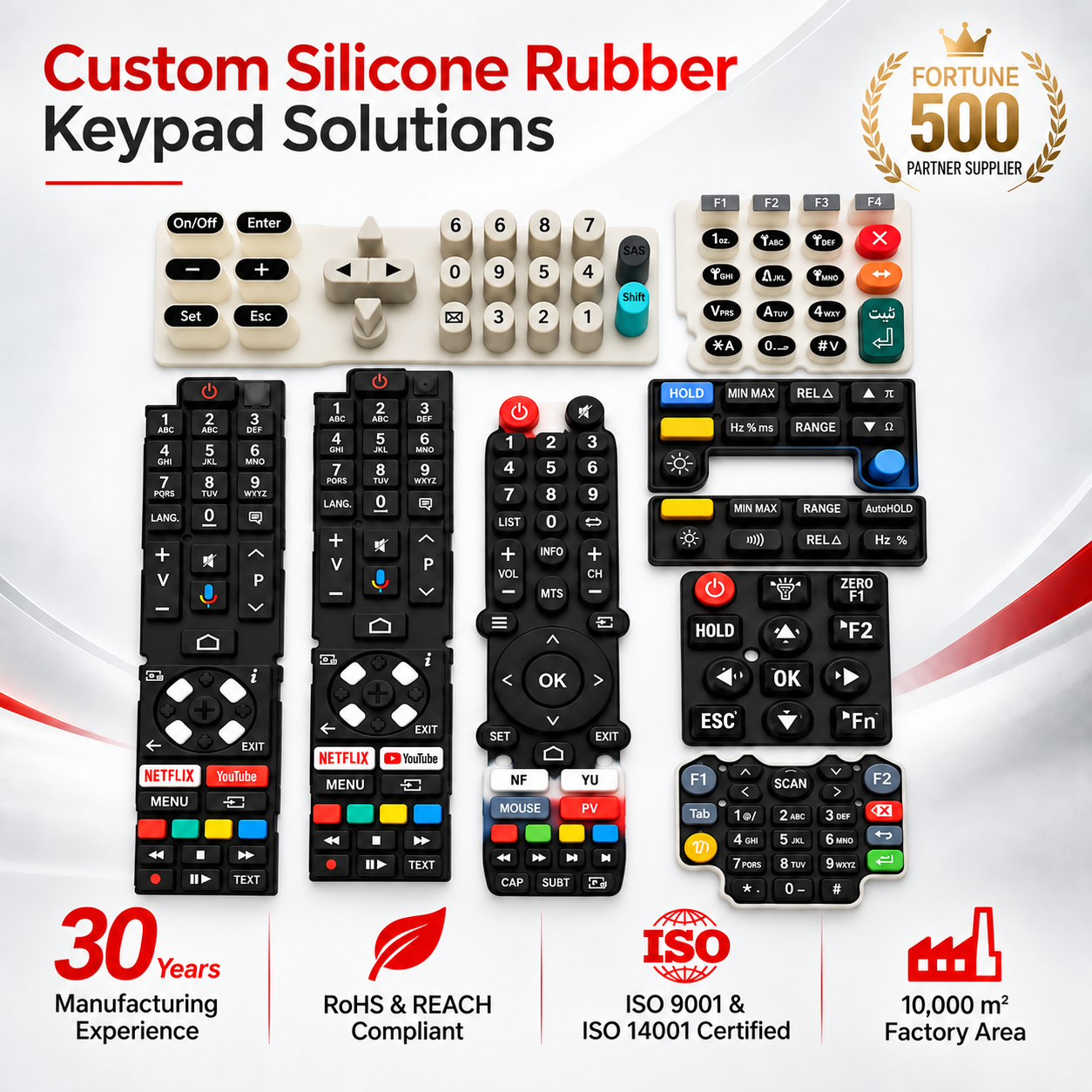
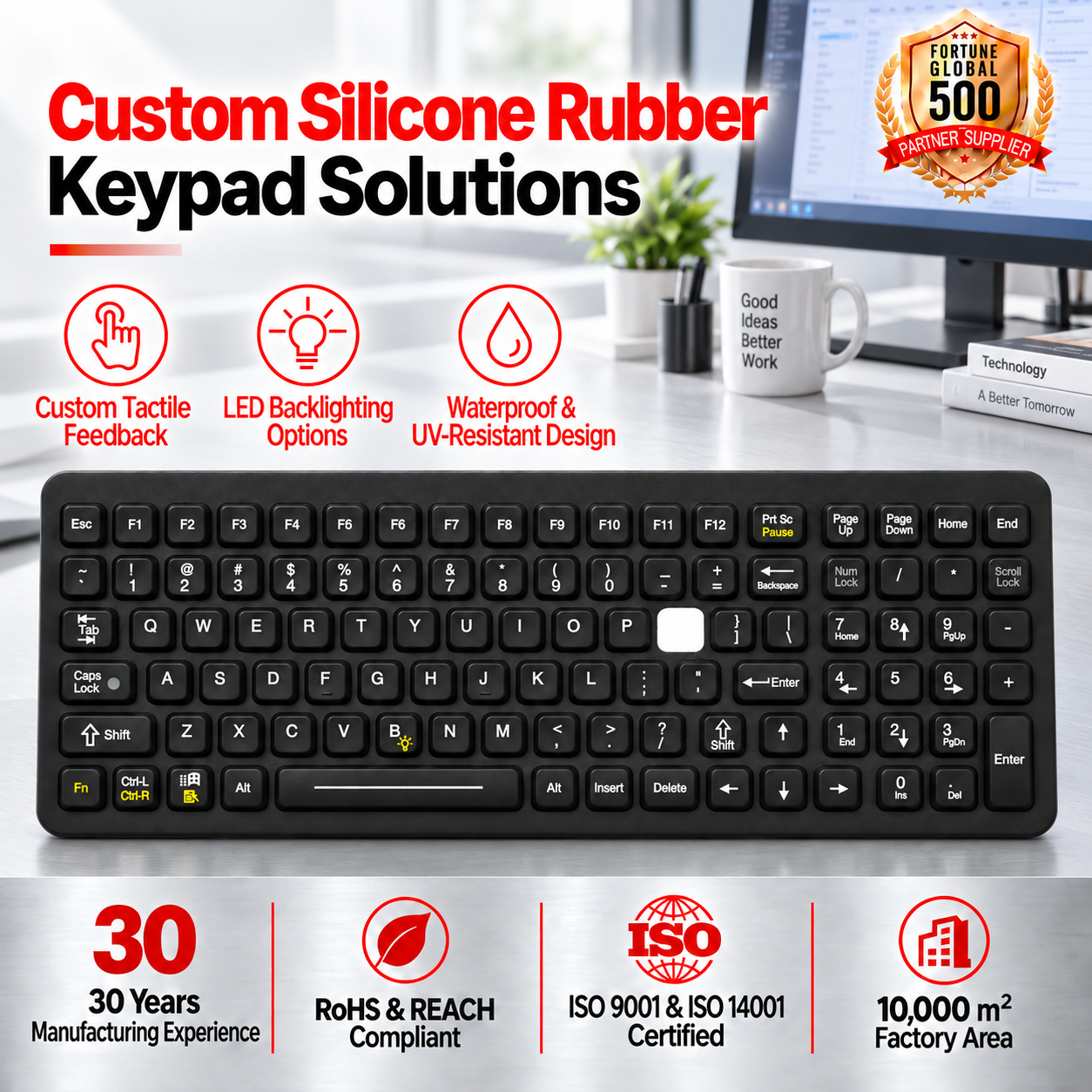
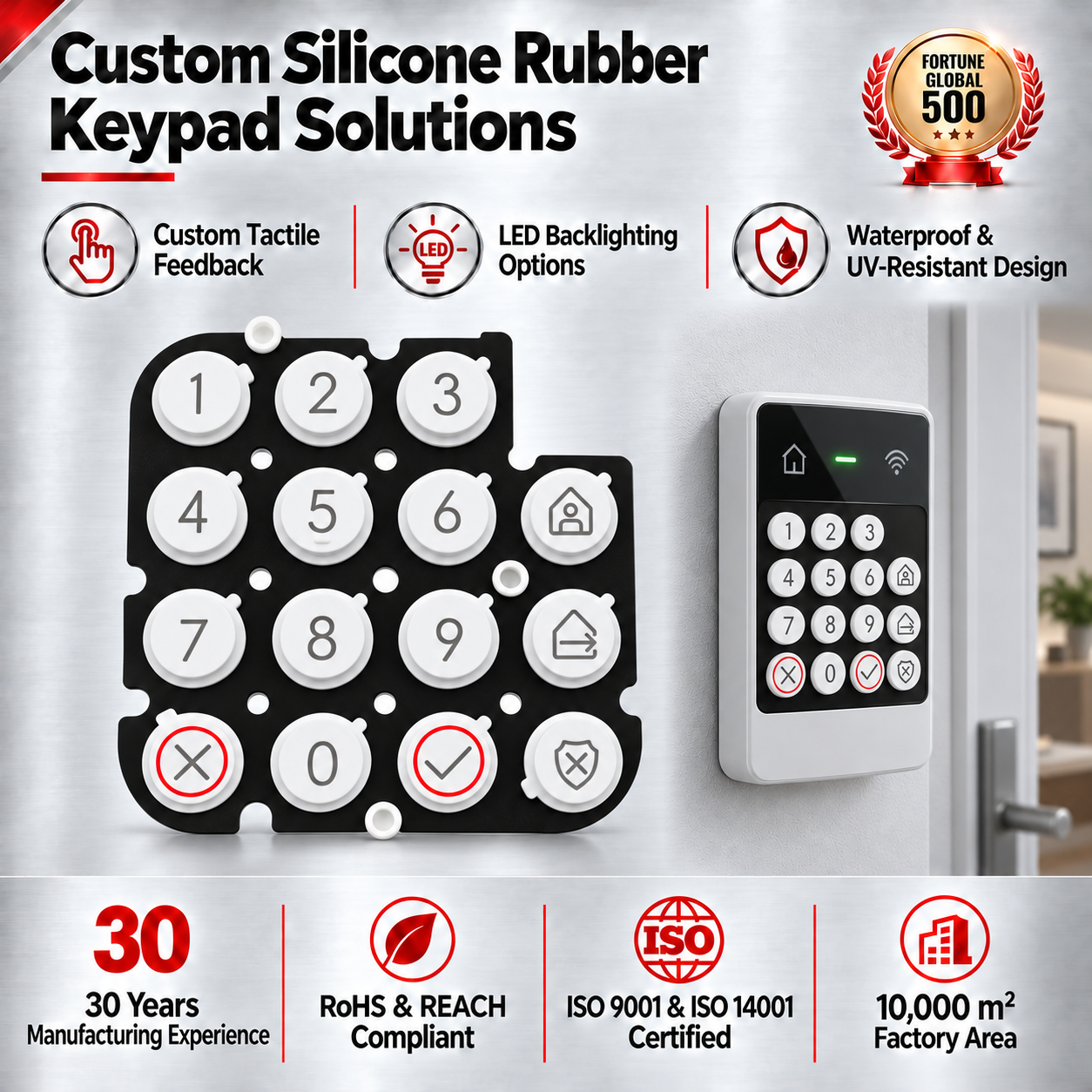
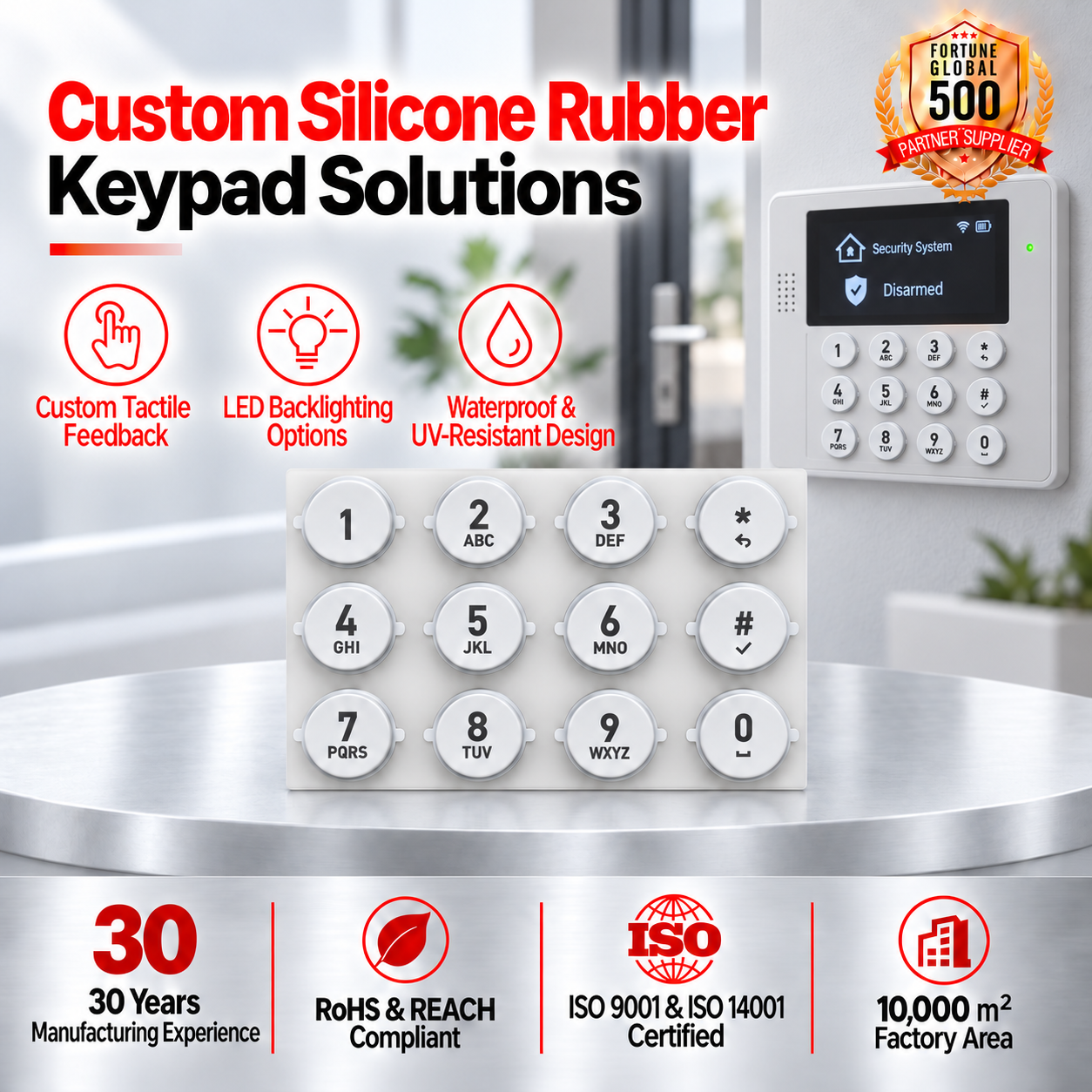
Conductive Silicone Rubber Keypad Push Button for Industrial Medical
- Contact Resistance< 100 Ohm
- Actuation Force120g – 250g
- Life Rating> 1,000,000 Cycles
Direct manufacturer supply for medical instruments, automated production cells, telecom controllers, and commercial devices deployed across Niš and the broader South and East Serbia manufacturing belt.
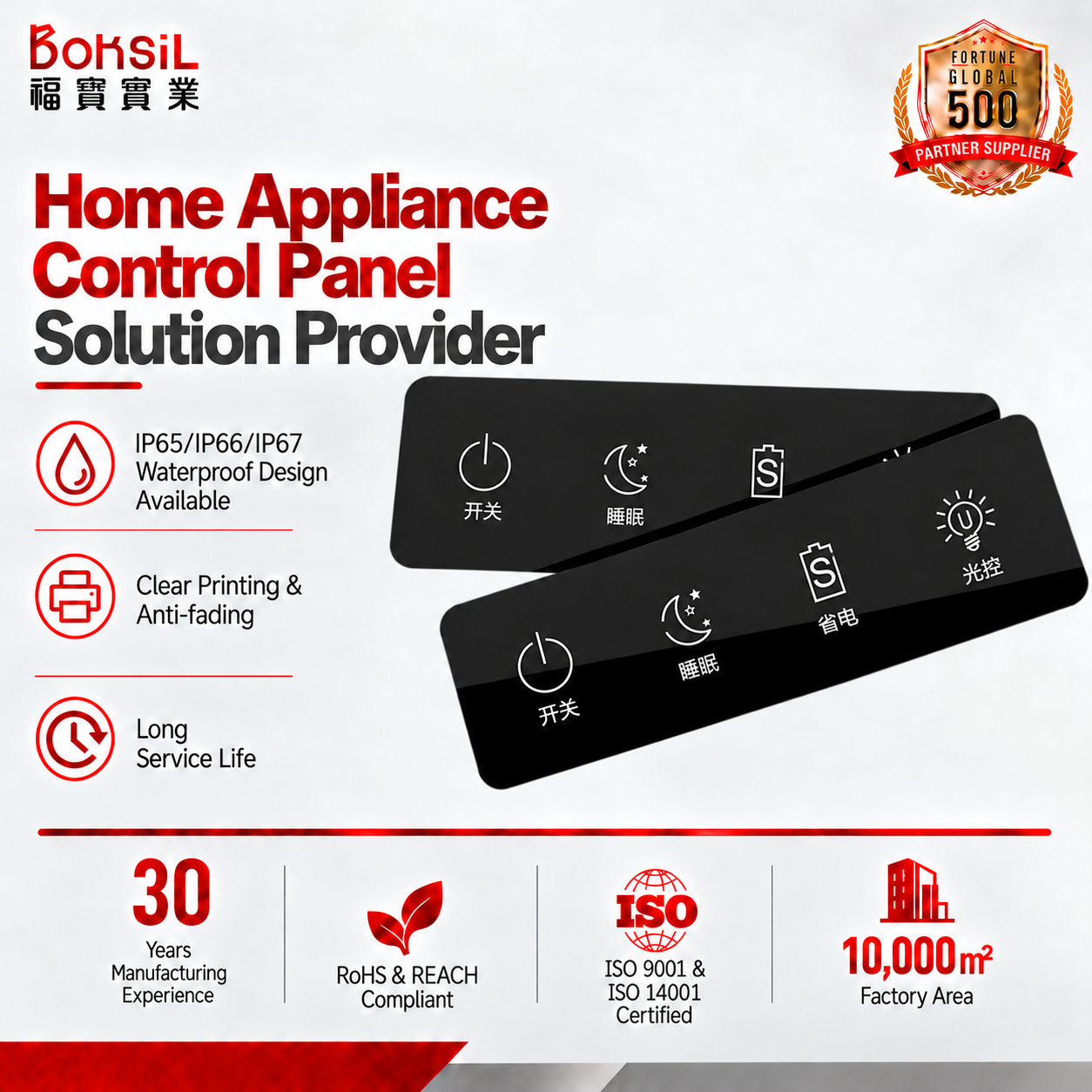
The city of Niš, historically renowned as the electronics manufacturing cradle of Southeastern Europe, is undergoing an aggressive technical renaissance. Propelled by legacy institutions such as the University of Niš Faculty of Electronic Engineering (Elfak), alongside state-of-the-art incubation zones at the Science Technology Park Niš (Naučno-tehnološki park Niš), regional hardware developers are aggressively pivoting from rudimentary electromechanical controls toward integrated Projected Capacitive (PCAP) sensing matrices and sophisticated human-machine interfaces (HMI). Whether engineering next-generation electric mobility hardware, complex industrial programmable logic controllers (PLCs), or sterile medical monitoring equipment, procurement departments within the Niš industrial basin require strict adhesion to electromagnetic compatibility (EMC), functional safety, and robust weather-sealed enclosures.
Modern capacitive touch panels (CTP) deployed in modern harsh environments operate fundamentally on charge-displacement detection across transparent micro-conductive grid arrays—typically etched Indium Tin Oxide (ITO), micro-metal mesh, or flexible printed silver traces deposited over Polyethylene Terephthalate (PET) or chemically strengthened aluminosilicate cover glass. Unlike consumer-grade tablets, industrial capacitive systems tailored for local industrial hardware integration must maintain flawless signal-to-noise ratios (SNR > 35dB) under heavy electromagnetic interference, liquid presence (water droplet rejection), and when operated by plant technicians wearing heavy synthetic or leather gloves.
A resilient industrial touch interface is an engineered multi-tier mechanical laminate. The surface substrate typically utilizes a chemically strengthened cover lens (Gorilla Glass, Dragontrail, or optical-grade PMMA/Polycarbonate) ranging from 1.1mm to over 6.0mm in thickness to pass stringent IK08 or IK10 mechanical impact drops. Beneath the decorative reverse-printed border lies an optically clear adhesive (OCA) layer with refractive indices carefully matched (n ≈ 1.49 to 1.51) to eliminate Newton’s rings and minimize sunlight internal reflection.
The sensing matrix—arranged in driving (Tx) and sensing (Rx) orthogonal axes—interacts continuously with industrial touch controller ICs (such as Microchip maXTouch, Ilitek, or EETI). When a human finger or conductive stylus approaches the dielectric cover surface, a localized change in mutual capacitance is measured. Our manufacturing workflow precisely integrates customized sensor routing, perimeter ground shielding traces, and ferrite-choke integrated Flexible Printed Circuits (FPC) to prevent conducted emissions and RF noise spikes from corrupting the coordinate readout.
Mutual capacitance scanning enables real 5-point to 10-point multi-touch gestures, palm rejection, and pinch-to-zoom capabilities, whereas self-capacitance provides ultra-high sensitivity for thick glove penetration and zero-false-touch water immersion algorithms.
By thermally tempering sodium-lime glass or deploying dual-laminated PMMA with anti-shatter backing, our front displays achieve high vandalism resistance, thermal stability across -30°C to +85°C, and complete resilience against common industrial cleaning solvents.
Full liquid optical clear resin (LOCA) or dry film OCA fills the air gap between the touch matrix and the underlying TFT/OLED display panel, drastically cutting internal reflectance to under 1.5%, increasing contrast, and halting condensation in humid outdoor operations.
OEM engineering teams based across the Nišava District require custom touch assemblies optimized for very specific mechanical operating profiles:
Hardware development cycles in Central and Eastern Europe have accelerated. The modern production blueprint has shifted away from inflexible, catalog-standard components toward bespoke, tailored HMI solutions that combine multiple tactile feedback modalities into a singular structural assembly. Key manufacturing trends dominating client technical inquiries in Niš include:
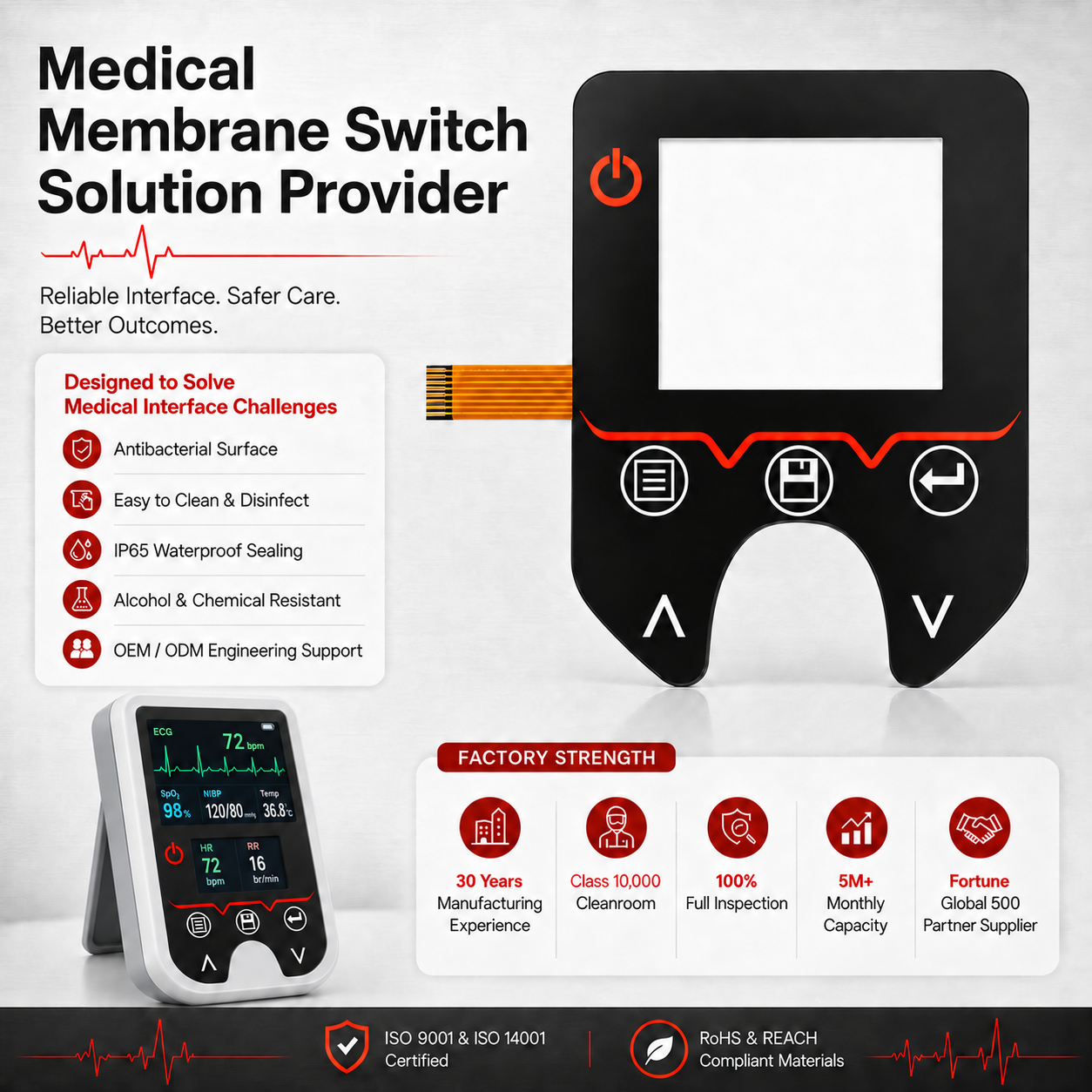
Modern designers are increasingly pairing capacitive touch screen active zones with physical, tactile-feedback silicone rubber push buttons or embossed metal-dome membrane switches for critical fail-safe functions such as emergency stop and rapid parameter overrides.
Consumer expectation is crossing into industrial hardware. Smart fascias now feature "dead-front" translucent graphics where status legends remain invisible until backlit by precision SMD LEDs or Light Guide Film (LGF), eliminating operator clutter during routine machine operation.
By unifying the graphic overlay, capacitive touch layer, integrated backlighting, PCB/FPC circuitry, and rear gasket into a single plug-and-play assembly, local original equipment manufacturers eliminate complex multi-vendor assembly lines and lower their BOM management overhead.
Dongguan AXRU Electronics Co., Ltd. operates as a verified direct manufacturer with over 12 years of specialized HMI engineering. Our 10,000㎡ production headquarters is comprehensively audited and on-site verified by Intertek, housing complete cleanroom printing, automated lamination, CNC precision glass profiling, laser etching, and a dedicated reliability testing laboratory.
We do not outsource quality control. Every production batch is systematically validated using our Key Life Testers, Force-Displacement Profilers, Tensile Peel Testers, Ink Decolorization Rub Testers, Programmable Temperature & Humidity Chambers (-40°C to +150°C), and UV Yellowing Resistance Machines.
With more than 10 years of consistent export operations to top-tier German, American, and European hardware brands, our quality management system enforces 100% electrical continuity verification, optical cleanroom inspection, and end-to-end PPAP / FAI documentation.
Work directly with project engineers, not sales middlemen. From 2D DXF/DWG file interpretation and capacitive electrode trace optimization to stack-up design, connector pitch selection (0.5mm, 1.0mm, 2.54mm), and prototype iteration, we de-risk your development path.
Ready to evaluate stack-up configurations or review DFM files for your next hardware build?
Key technical, logistic, and compliance considerations addressed for Serbian procurement managers and R&D engineers.
Upload your mechanical drawings or specify your operational requirements. Our senior application engineers will reply with a detailed technical review, stack-up recommendation, and firm factory-direct pricing.
Send an Inquiry