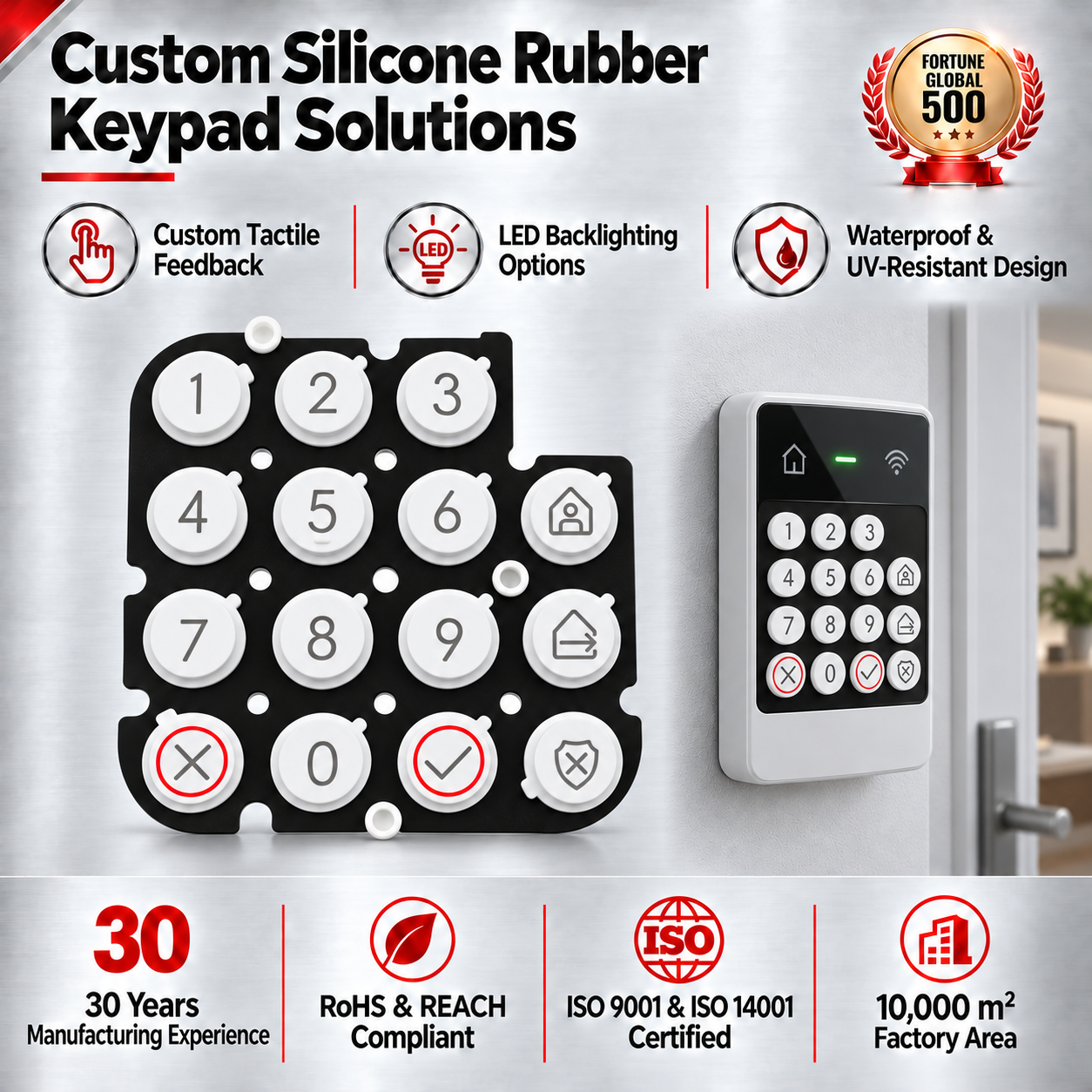
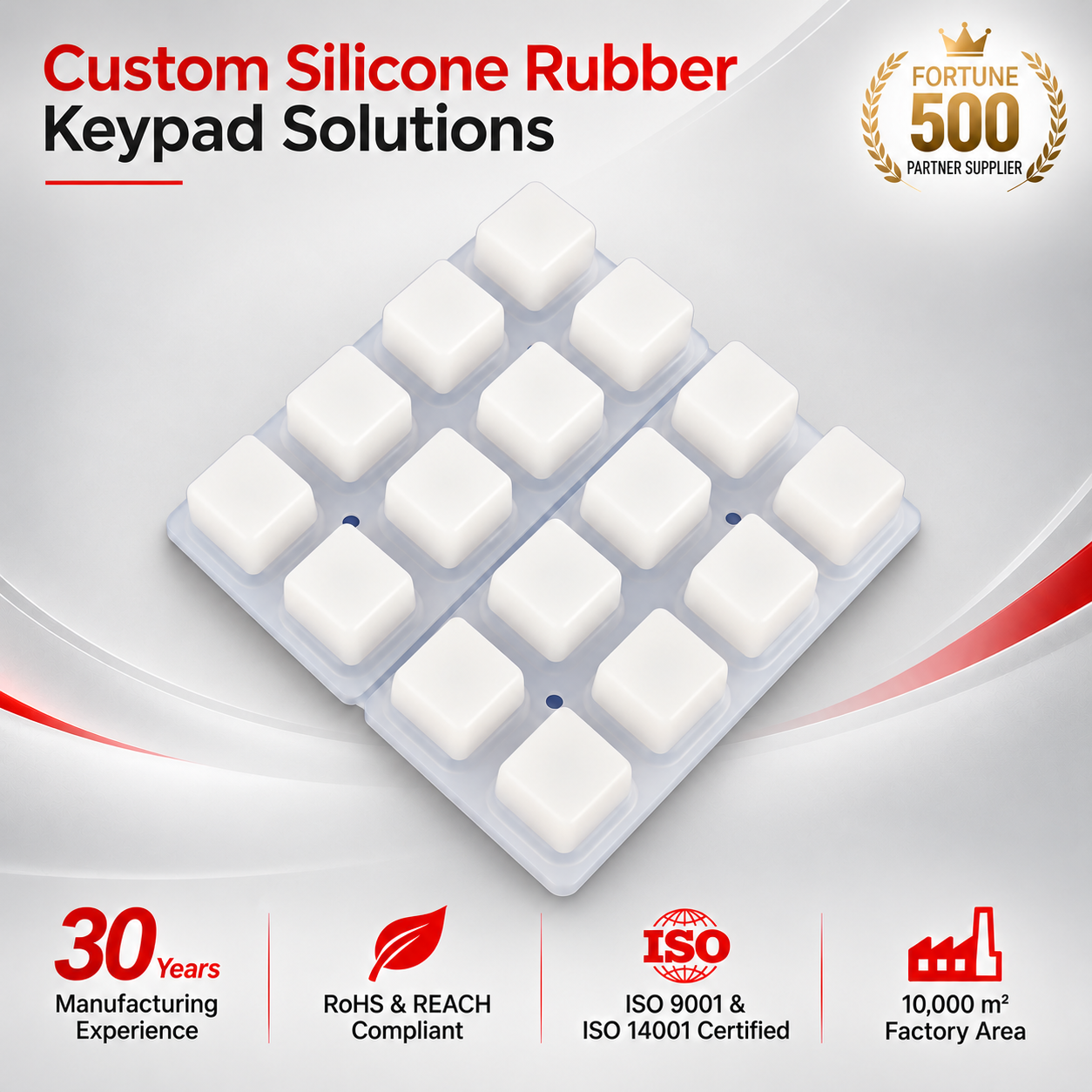
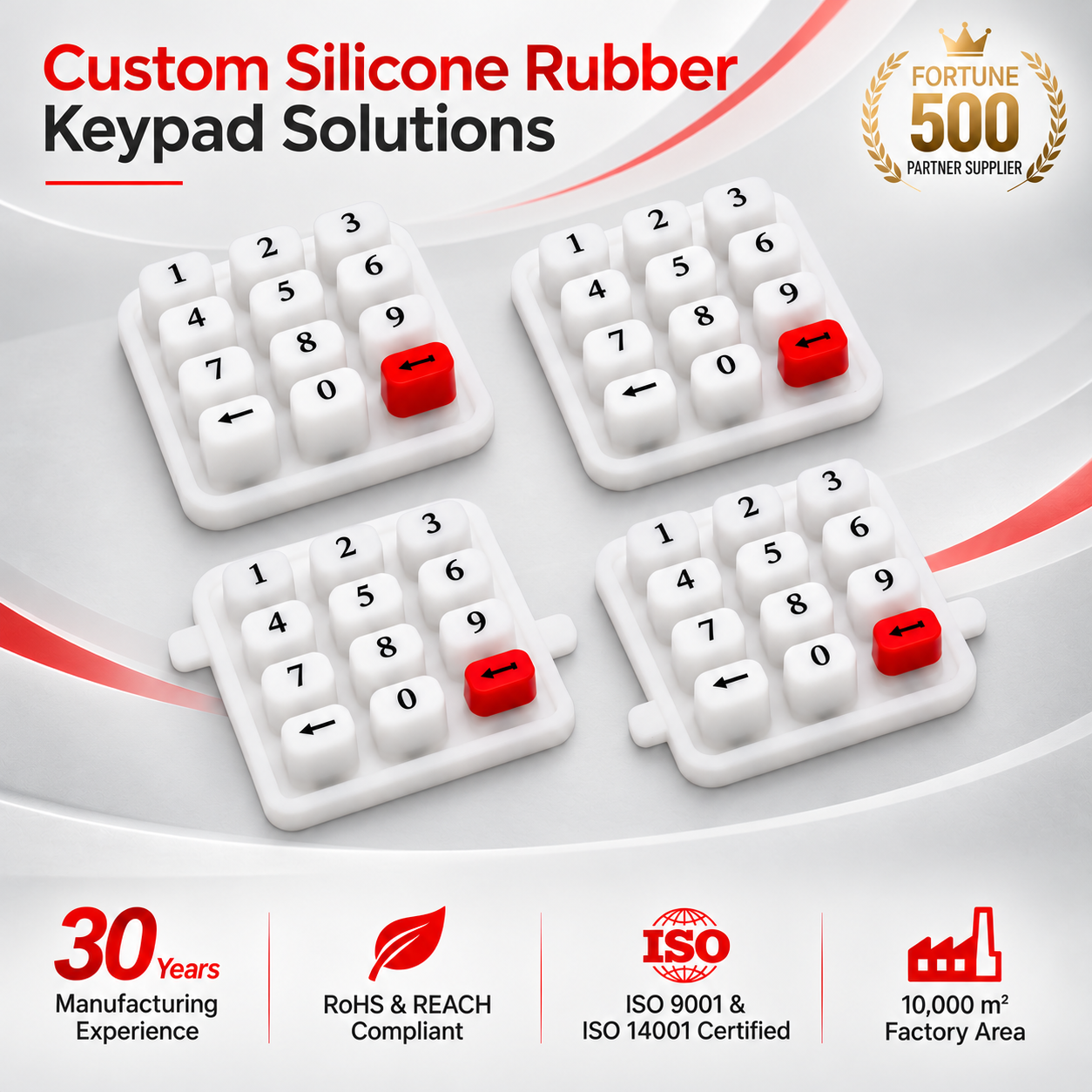
Numeric Conductive Silicone Rubber Keypad Panel for Appliances
- Contact Resistance <100 Ω (Carbon Pill)
- Operating Force 150 ± 30 grams
- Cycle Rating >1,000,000 actuations
Explore our battle-tested interface modules featuring zero-mechanical-wear capacitive sensing, high-durability conductive silicone, and custom IP65–IP67 perimeter seals ready for Saint Lucian deployments.
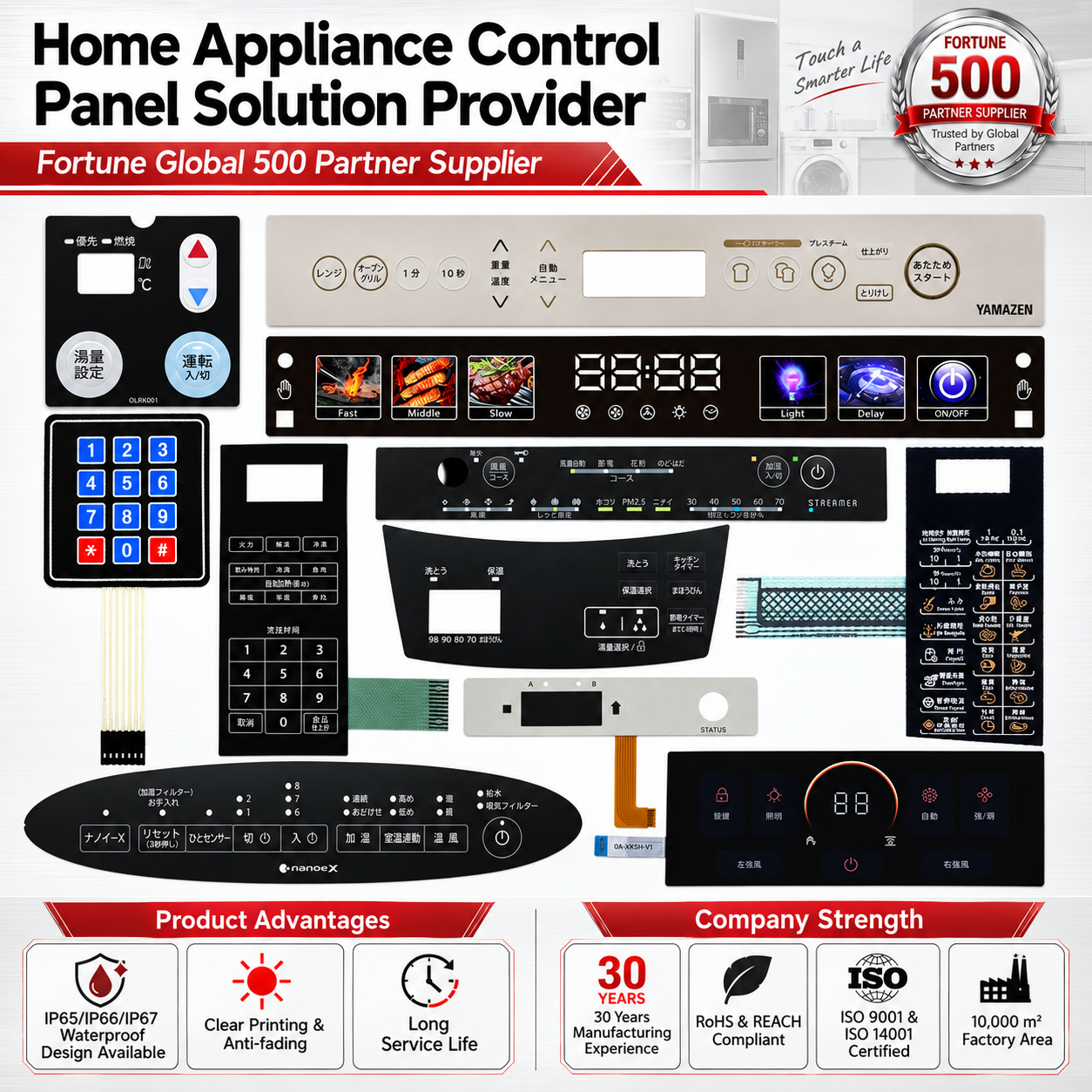
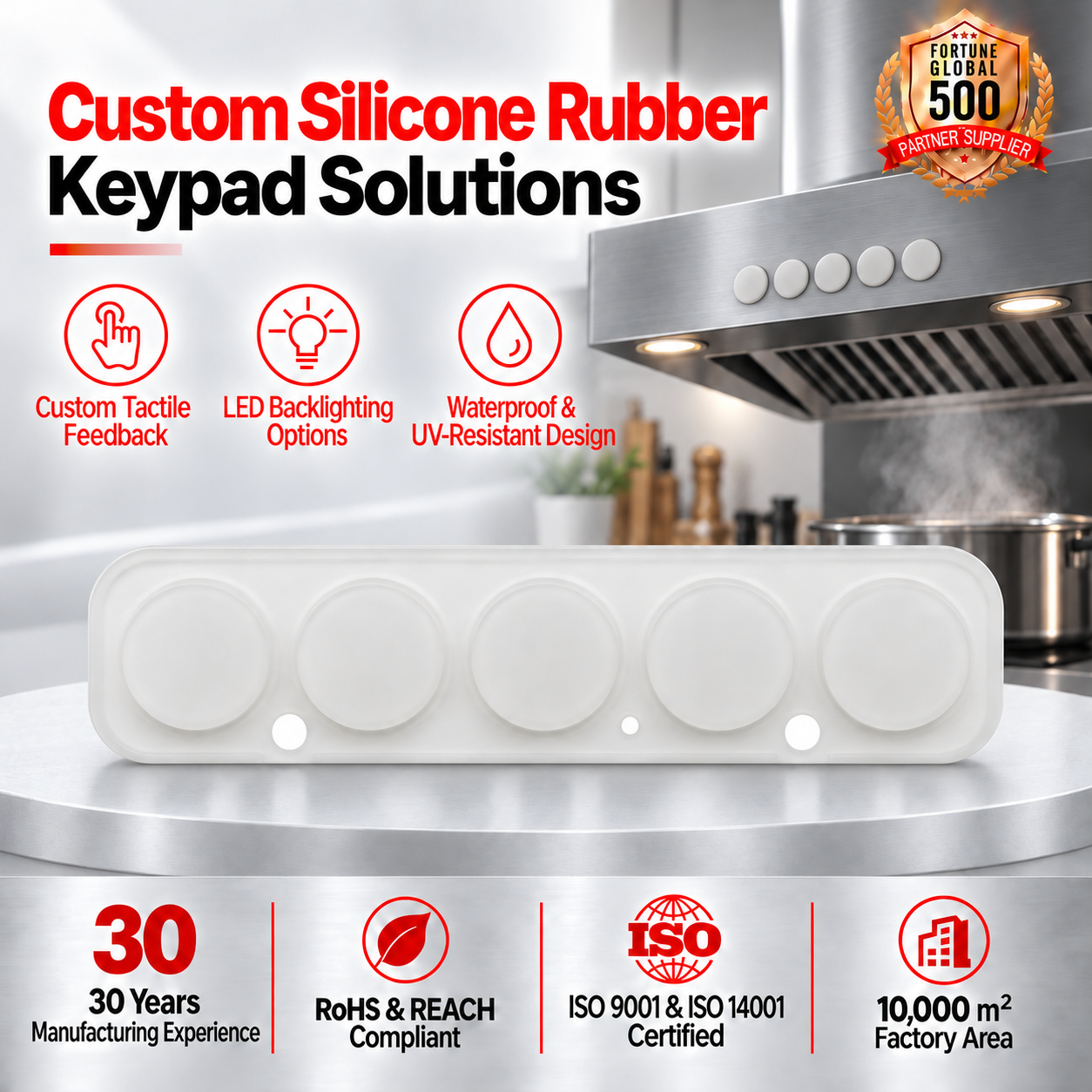
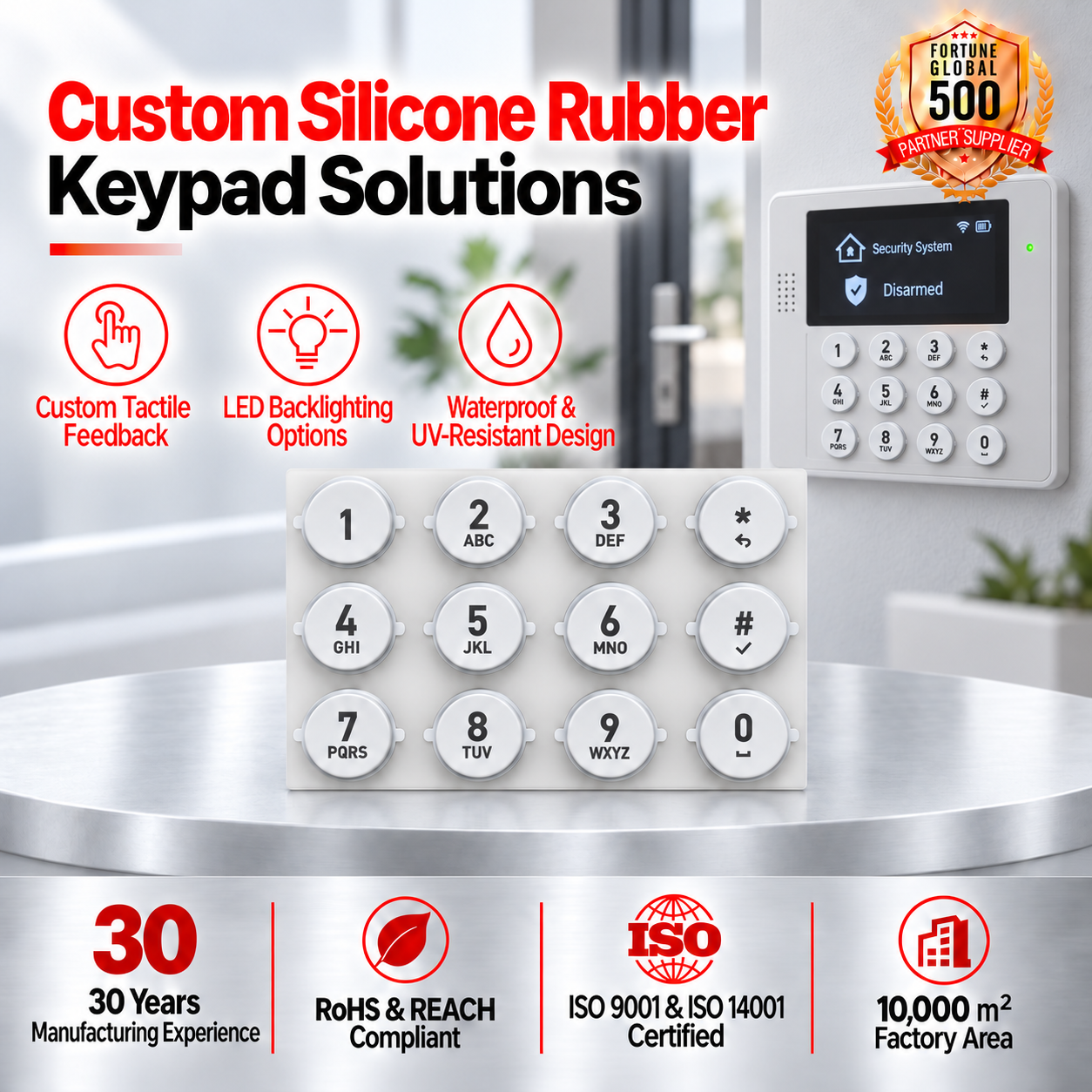
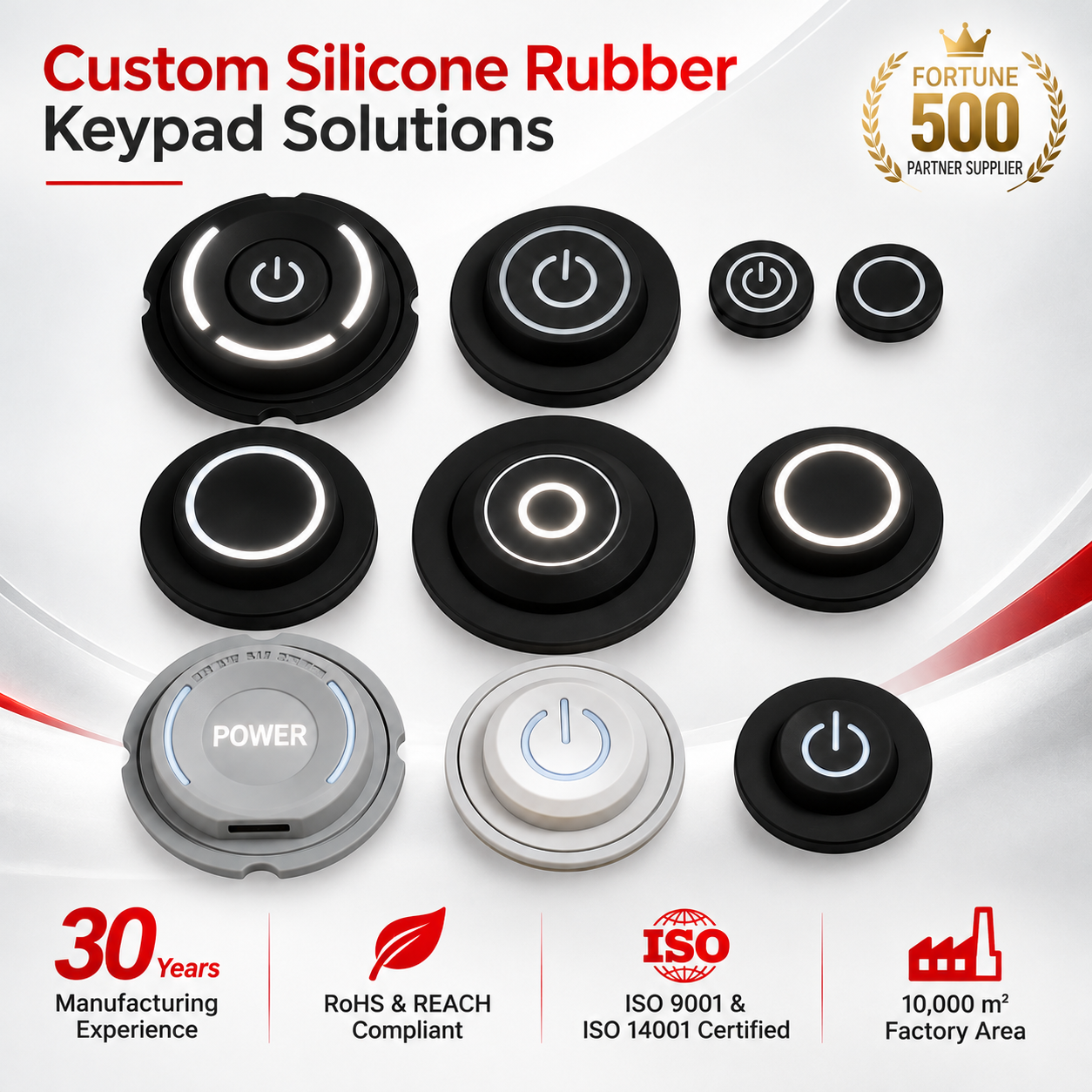
Eliminate intermediary markups and communication bottlenecks. Leverage our vertically integrated 10,000㎡ production facility in Dongguan, verified on-site by Intertek for mission-critical overseas supply chains.
In-house testing rigs including Key Life Cycle testers (over 5M actuations), Force-Displacement analyzers, Tensile testers for tail adhesion, and Ink Decolorization scrub benches.
Programmable temperature and humidity cycling chambers simulate extreme Caribbean marine conditions, validating adhesive delamination resistance from -40°C to +85°C.
Accelerated UV aging chambers ensure that optical display windows, dead-front indicators, and capacitive graphic overlays resist tropical solar radiation degradation over multi-year cycles.
Every single capacitive electrode matrix and flexible printed circuit (FPC) tail is automatedly scanned for microscopic line fractures, insulation resistance, and capacitance deviations.
Procuring Human-Machine Interfaces (HMI) for deployment in Saint Lucia presents unique thermodynamic and chemical failure modes that standard commercial-grade input switches fail to withstand. The island's geography—characterized by sustained oceanic winds bearing sodium chloride (NaCl) aerosol mists, high ambient relative humidity (often exceeding 85% to 95% RH in coastal regions such as Castries, Gros Islet, and Vieux Fort), and persistent thermal cycling—imposes critical physical challenges on user interface design.
Mechanical switches, standard dome membrane switches without hermetic perimeter bonding, and unprotected carbon-contact rubber arrays inevitably suffer from galvanic salt creep. Airborne moisture carrying suspended electrolytes infiltrates micro-voids between lamination layers, generating dendritic silver migration across printed silver traces, resulting in catastrophic intermittent bridging, erratic resistance spikes, and total circuit short-circuiting.
Capacitive touch keyboards eliminate mechanical moving parts, physical contact gaps, and open actuation cavities. By utilizing either self-capacitance or projected mutual-capacitance architectures, capacitive keyboards detect the minute electrical charge alteration (femtofarad variations, ΔC) created when a conductive object—such as a human finger—intersects the fringing electrostatic field established between patterned electrodes.
Because the sensing electrodes can be positioned entirely behind a continuous, monolithic protective fascia—such as chemically strengthened soda-lime glass, optical PMMA, or hard-coated Autotex polyester—the electrical layer remains 100% hermetically isolated from atmospheric contaminants, saltwater aerosol, cleaning detergents, and tropical torrential rainfall.
In the West Indies climate, water droplet accumulation and conductive saline films on the keyboard surface pose a classic engineering dilemma: false touch triggers versus touch rejection. Pure water exhibits a dielectric constant of approximately 80, which can easily mimic a human finger touch to uncalibrated controllers.
Dongguan AXRU Electronics Co., Ltd. addresses this directly through custom microcontroller (MCU) integration and dual-mode algorithm filtering:
The selection of the decorative and protective front panel dictates both tactile responsiveness and operational longevity. For Saint Lucia's eco-resorts, solar installations, and marine vessels, we configure front covers utilizing three core substrates:
From the bustling logistics hubs of Castries Harbor to the high-end architectural villas of Soufrière, our capacitive touch solutions solve precise operational challenges across the Helen of the West Indies.
Saint Lucia's world-renowned boutique hotels and cliffside villas (e.g., in Soufrière and Rodney Bay) require pristine architectural interfaces that merge sophisticated aesthetics with tropical durability.
Commercial cargo handling at Castries Port and Port Vieux Fort, alongside sport fishing fleets and catamaran operators in Rodney Bay Marina, demand marine-grade HMI compliance.
Saint Lucia's strategic transition toward microgrid solar energy (such as the solar PV arrays at Hewanorra Airport) and geothermal exploration near the Qualibou caldera requires hardened telemetry panels.
Evaluate key mechanical, electrical, and longevity attributes to match the correct input engineering to your application constraints.
| Technology Type | Actuation Mechanism | Rated Lifespan | Saline & Moisture Ingress | Optimum Caribbean Applications |
|---|---|---|---|---|
| Solid-State Capacitive Touch | Electrostatic Field Perturbation | >50 Million Touches (Zero Wear) | IP68 Hermetic Front Isolation | Luxury Hospitality Panels, Outdoor Kiosks, Cleanroom Labs |
| Tactile Metal Dome Membrane | Stainless Dome Deflection | 1,000,000 to 3,000,000 Cycles | IP65 with Perimeter Barrier Gasket | Industrial Diagnostic Tools, Handheld Portable Readers |
| Conductive Silicone Rubber | Carbon Pill Compression | 500,000 to 1,500,000 Cycles | IP64 to IP66 with Raised Gasket Lip | Heavy Machinery Remotes, Telecom Field Receivers |
| Vandal-Resistant Metal Matrix | Machined Stainless Steel Plunger | 5,000,000 Cycles | IP65 Front Bezel Sealed | Public Fuel Dispensers, ATM Terminals, Port Turnstiles |
How digital modernization, eco-tourism capital investments, and supply chain adjustments are transforming HMI hardware sourcing throughout the Eastern Caribbean.
Hospitality developers are phasing out segmented mechanical plastic switches that harbor grime and degrade under cleaning chemicals. Flush, edgeless capacitive glass keypads deliver a contemporary architectural aesthetic while allowing complete 100% disinfection with hospital-grade sanitizers between resort guest stays.
With Saint Lucia executing on national energy resilience goals, decentralized solar-plus-storage microgrids are surging. System integrators require compact, energy-efficient capacitive keyboards with integrated low-power MCU controllers capable of automated sleep states and wake-on-proximity capacitive sensing.
Regional contractors and system assemblers in the Caribbean are moving away from multi-tier trading intermediaries in North America or Europe. Partnering directly with audited original manufacturers like Dongguan AXRU Electronics allows customized rapid tooling, custom English labeling, and significant cost savings.
Due to specialized market sizes in the Caribbean, OEM buyers require custom fabrication partners capable of entertaining flexible Minimum Order Quantities (MOQ starting at 100 pcs) without imposing prohibitive NRE tooling charges for prototype testing and pilot production runs.
Detailed technical, logistical, and commercial inquiries answered by our senior applications engineering team.
Capacitive touch keyboards from Dongguan AXRU Electronics are specifically configured for aggressive coastal environments. Unlike mechanical keyboards with exposed contact traces, our capacitive keyboards position sensing pads entirely behind an impenetrable dielectric front cover (chemically hardened glass, PMMA, or hard-coated polyester). The circuit layers are sealed with 3M 300LSE/468MP high-tack perimeter adhesive barriers and backed with hydrophobic conformal coatings on the flexible printed circuit (FPC) tails. Furthermore, our firmware integrates dynamic baseline calibration and active guard traces that cancel the parasitic capacitance created by salt mist deposits and dew condensation, preventing false triggers.
We maintain an agile, low-risk procurement framework with a standard MOQ of just 100 pieces for custom-engineered capacitive touch keyboards, graphic overlays, and silicone membrane assemblies. For prototype evaluation, we offer rapid sample turnaround using digital flatbed cutting and short-run sample production equipment, allowing your engineering and design teams in Saint Lucia to physically validate dimensions, LED backlighting uniformity, and capacitive sensitivity prior to committing to mass tooling.
To initiate a comprehensive Design for Manufacturability (DFM) review, please provide: (1) 2D mechanical drawings in DXF, DWG, or PDF format indicating outer dimensions, key layout, cutouts, and tail exit location; (2) Graphic vector artwork in Adobe Illustrator (.AI), CorelDraw, or high-res vector PDF with assigned Pantone/RAL color codes; (3) Electrical schematic or pinout definition, including connector pitch (e.g., 1.0mm, 2.54mm pitch) and preferred interface (Matrix, I2C, SPI, or USB); and (4) Environmental requirements such as target IP ingress rating, operating temperature range, and UV exposure criteria.
Yes. By optimizing the sensor drive voltage and tuning the mutual-capacitance firmware algorithms, our engineers can dial in the sensitivity matrix to recognize dielectric changes through latex, nitrile, or heavy leather work gloves. In damp scenarios, firmware water-rejection routines isolate localized differential charge disruptions (finger press) from broad, low-gradient electrostatic spreads caused by water droplets, ensuring reliable operation in marine consoles, culinary kitchens, and processing facilities.
We routinely arrange international air and ocean freight shipments destined for Saint Lucia, routing air express (DHL, FedEx, UPS) directly to Hewanorra International Airport (UVF) or George F. L. Charles Airport (SLU) for urgent assemblies (typically 4–7 business days transit). Bulk production runs can be shipped via ocean container freight consolidations to Port Castries or Port Vieux Fort. All keypads are packed in anti-static ESD-shielded vacuum pouches with activated silica gel desiccant packs, separated by scratch-resistant protective interleaving, and secured in heavy-duty 5-ply export master cartons.
We provide full-spectrum illumination options including ultra-thin surface-mount (SMD) side-firing LEDs, integrated Light Guide Film (LGF) layers delivering homogenous light distribution across keys with minimal hot-spotting, and discrete dead-front printing. Dead-front graphic treatment ensures icons remain dark and blend seamlessly with the bezel until backlit, creating an elegant visual experience ideal for luxury hospitality controls and nighttime yacht bridge instrumentation.
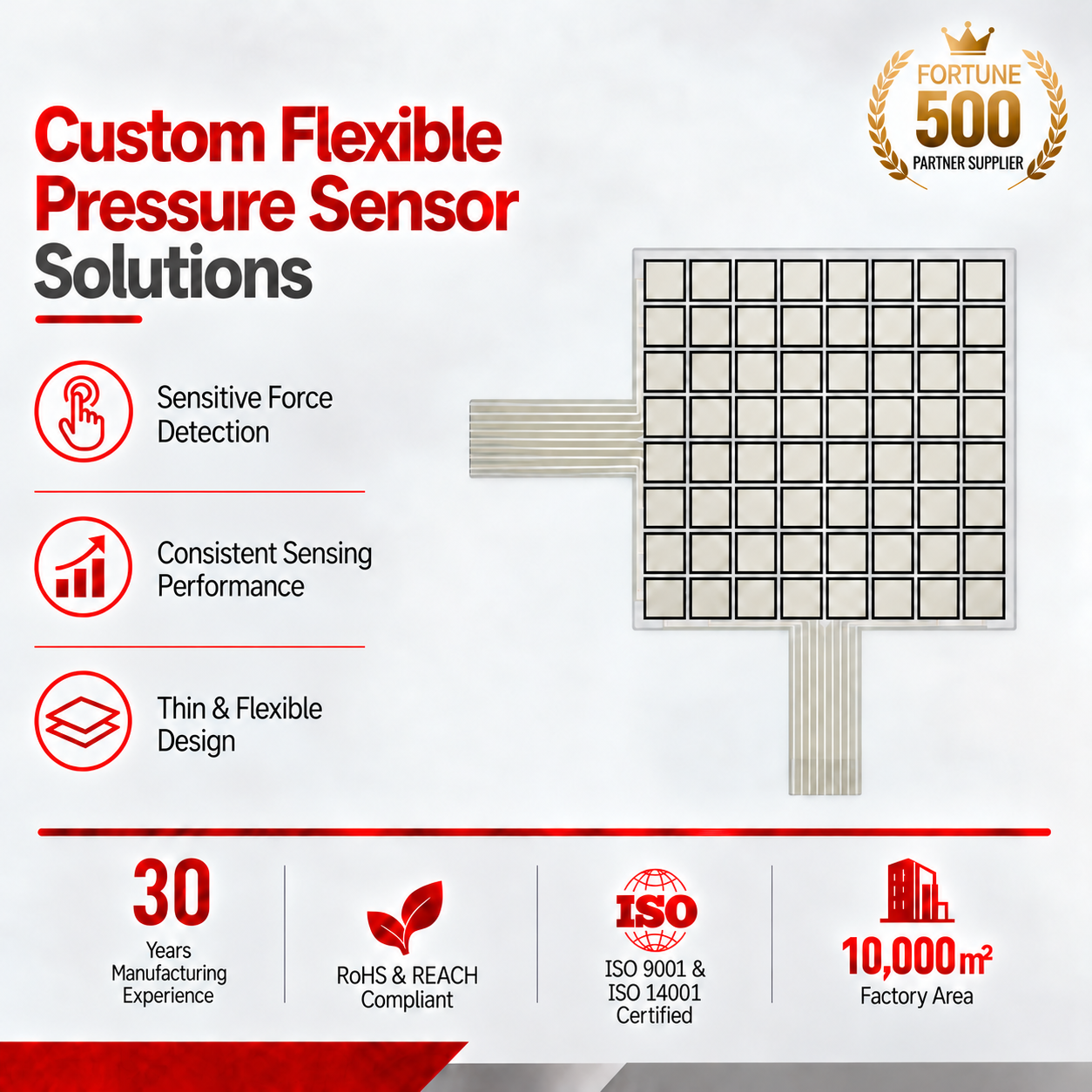
Whether you require a custom waterproof capacitive keyboard for an outdoor eco-resort kiosk, a robust marine controller, or an intelligent thin-film sensor array, our senior engineering team is ready to assist with complimentary DFM analysis and rapid quotation.
Get a Quote