Featured Capacitive & Tactile Sensor Assemblies
Engineered for harsh operating environments, low dielectric drift, and extended actuation lifecycles. Standard and custom sensor stack-ups tested to international automotive and industrial standards.
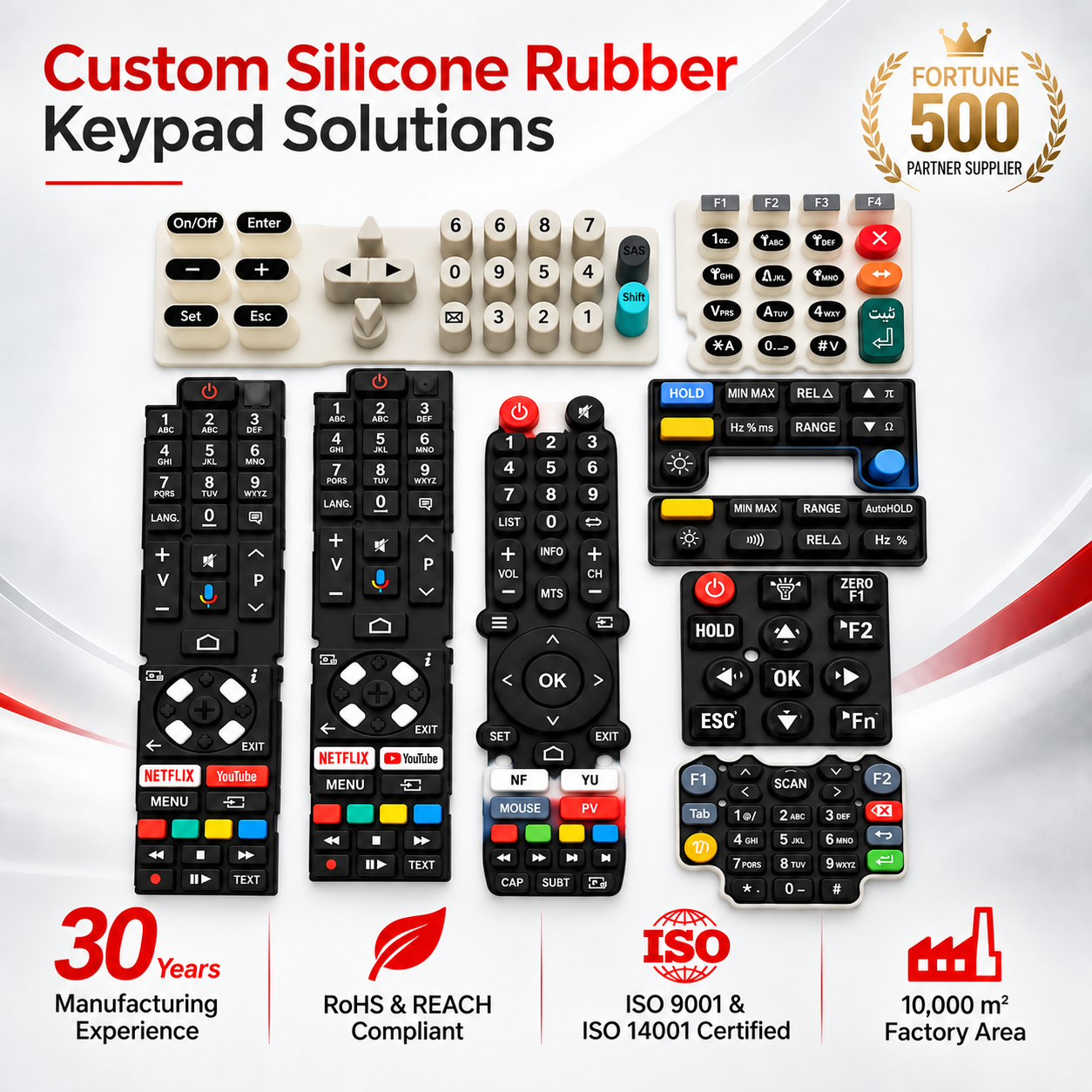
OEM/ODM Custom Special Color Silicone Rubber Elastomer Keypad Membrane Switch Button
- Substrate: Medical/Industrial Silicone
- Actuation Force: 120g - 450g Customizable
- Durability: >1,000,000 Operations
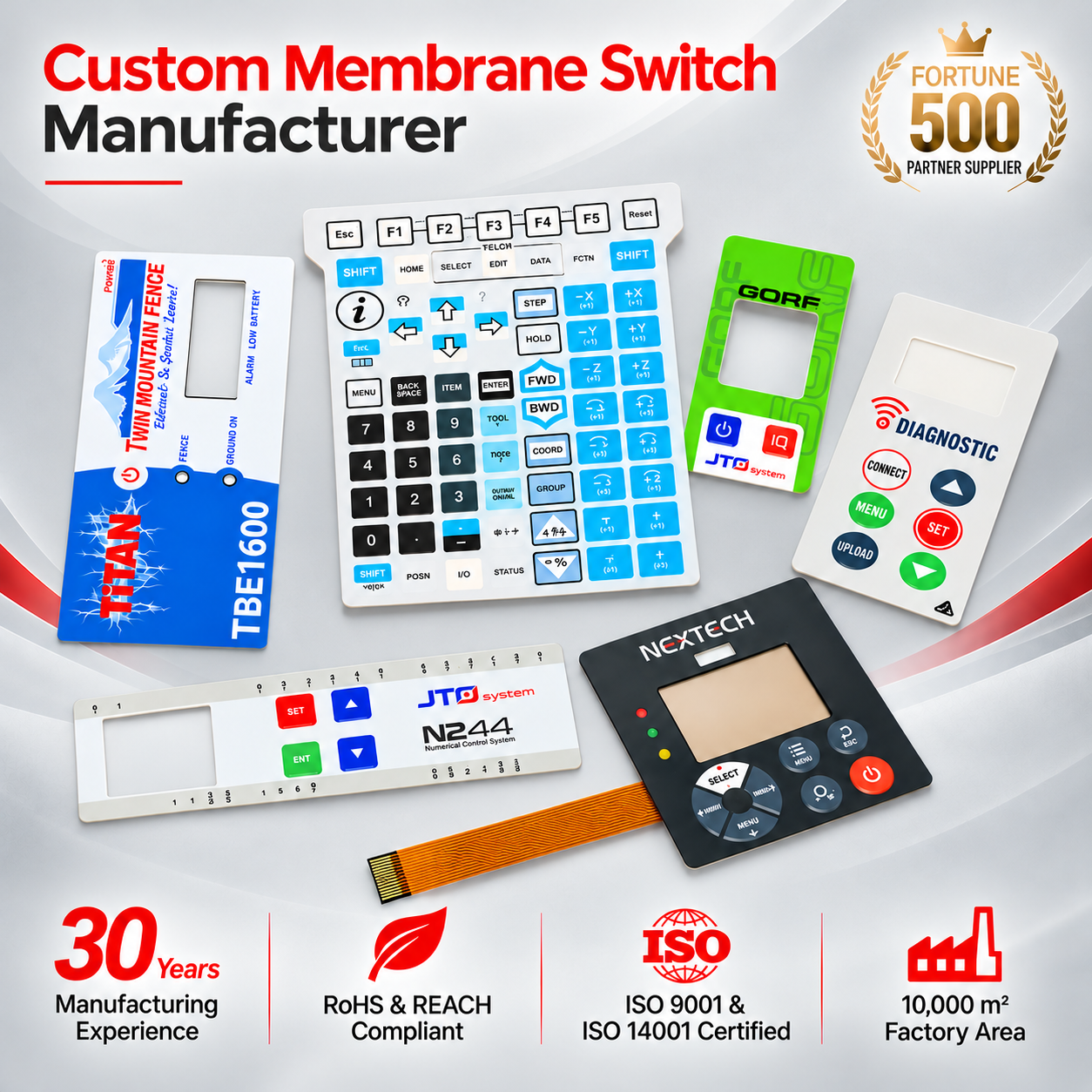
High Quality Industrial Membrane Switch Graphic Overlay Embossed Button Flat Panel
- Overlay Material: Autotex PET / Polycarbonate
- Circuit Pattern: Silver Conductive / Copper FPC
- Resistance: <1.0 Ω/cm Loop Resistance
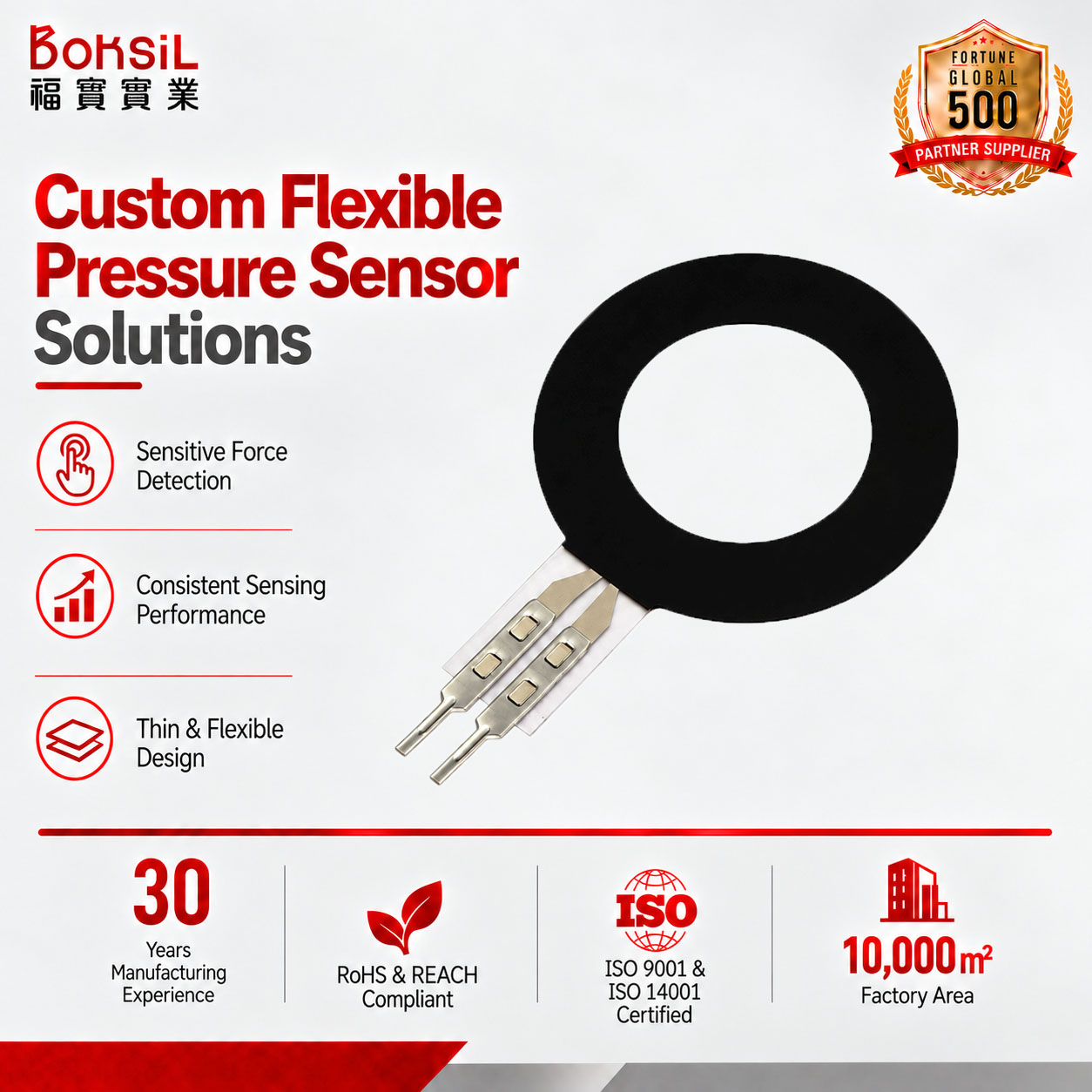
Universal FSR Flexibility Force Sensitive Sensor Capacitive Touch Keypad Thin Film Resistor
- Force Sensitivity: 20g to 10kg Continuous
- Response Time: <10 Microseconds
- Thickness: 0.25mm - 0.45mm Profile
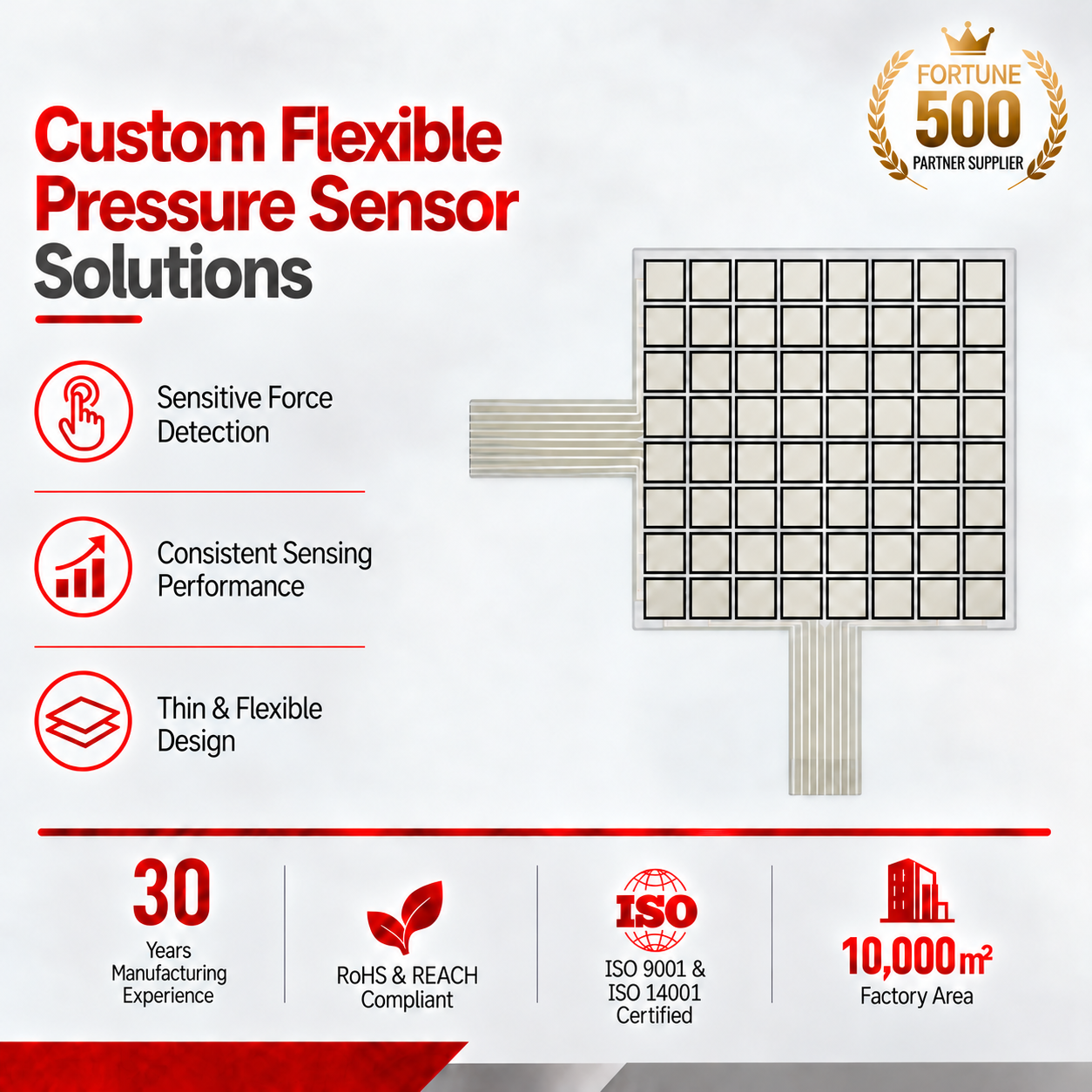
Customized Flexible Thin Film Tactile Intelligent Sensing Tactile Bend Pressure Sensors
- Spatial Resolution: Up to 16x16 Matrix
- Linearity Drift: <3% Full Scale Error
- Flexibility: R<5mm Bending Radius
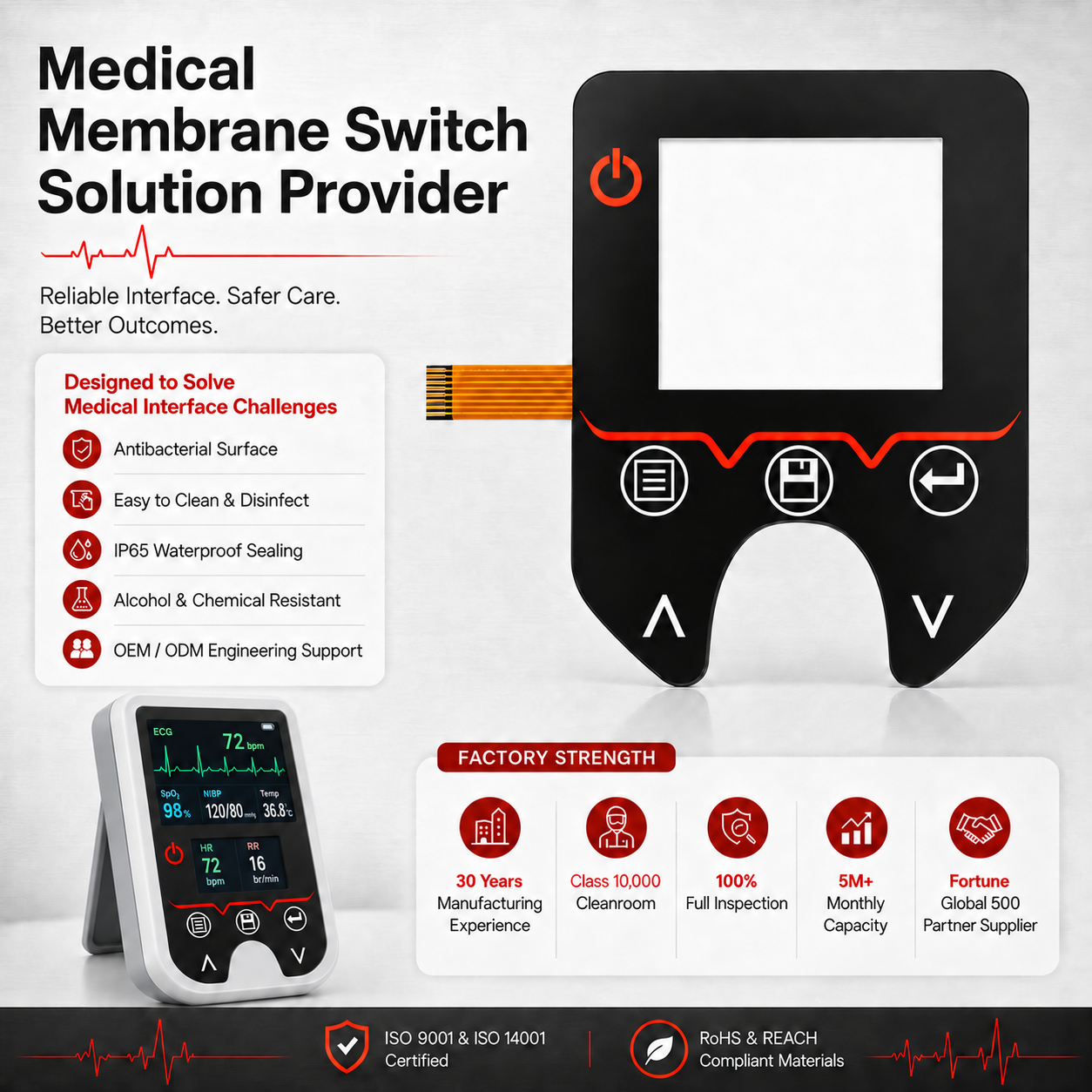
Factory Custom Medical Equipment IP65 Waterproof PC Overlay Membrane Switch Control Panel
- Ingress Sealing: IP65 / IP67 Perimeter Barrier
- Surface Coating: Antimicrobial & Chemical Proof
- Window Finish: Non-Glare Hardcoat Clear
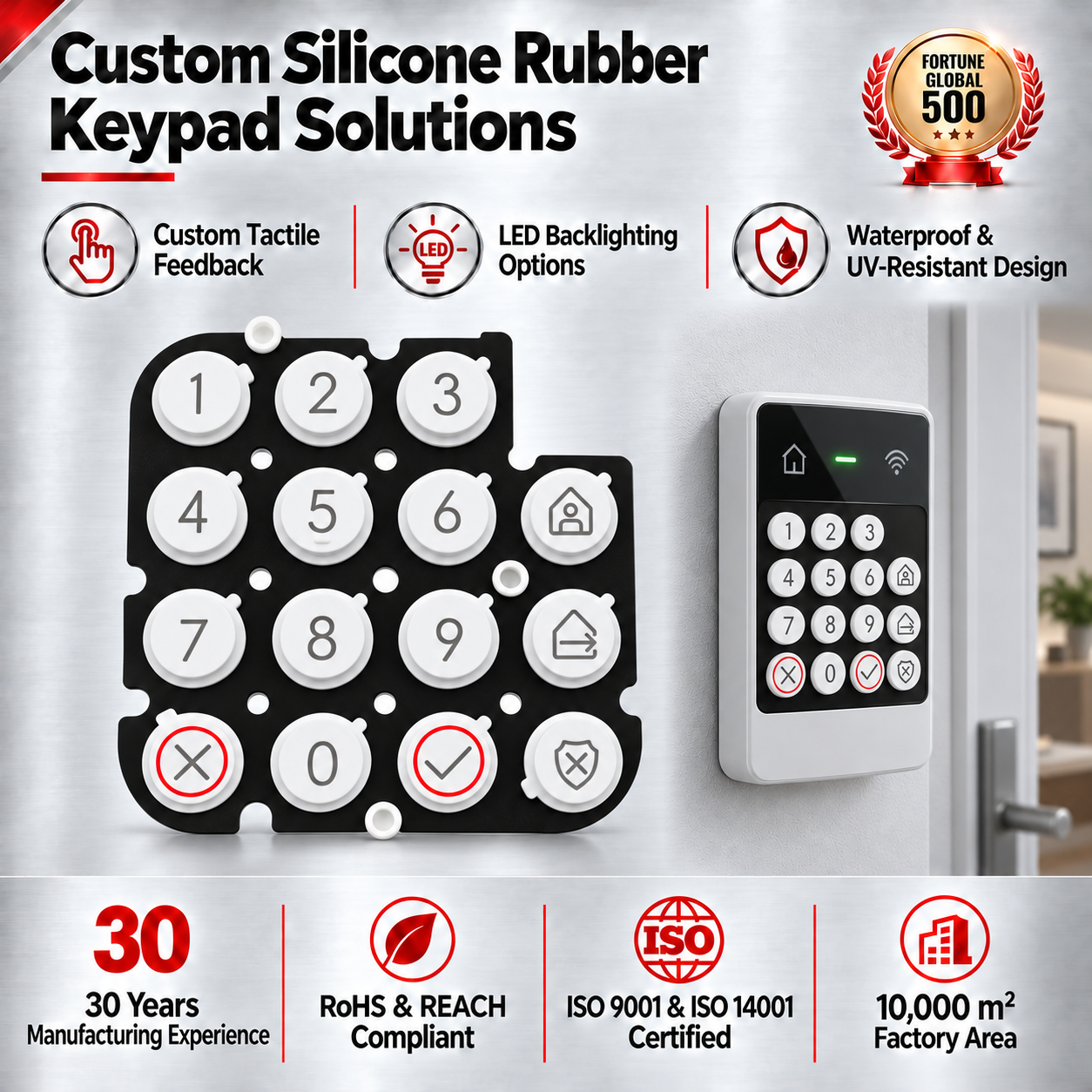
Numeric Conductive Silicone Rubber Keypad Panel Embossed Buttons for Appliance Controls
- Pill Technology: Low-Resistance Carbon Pills
- Contact Resistance: <100 Ω Initial
- Surface Treatment: PU Coating / Laser Etching
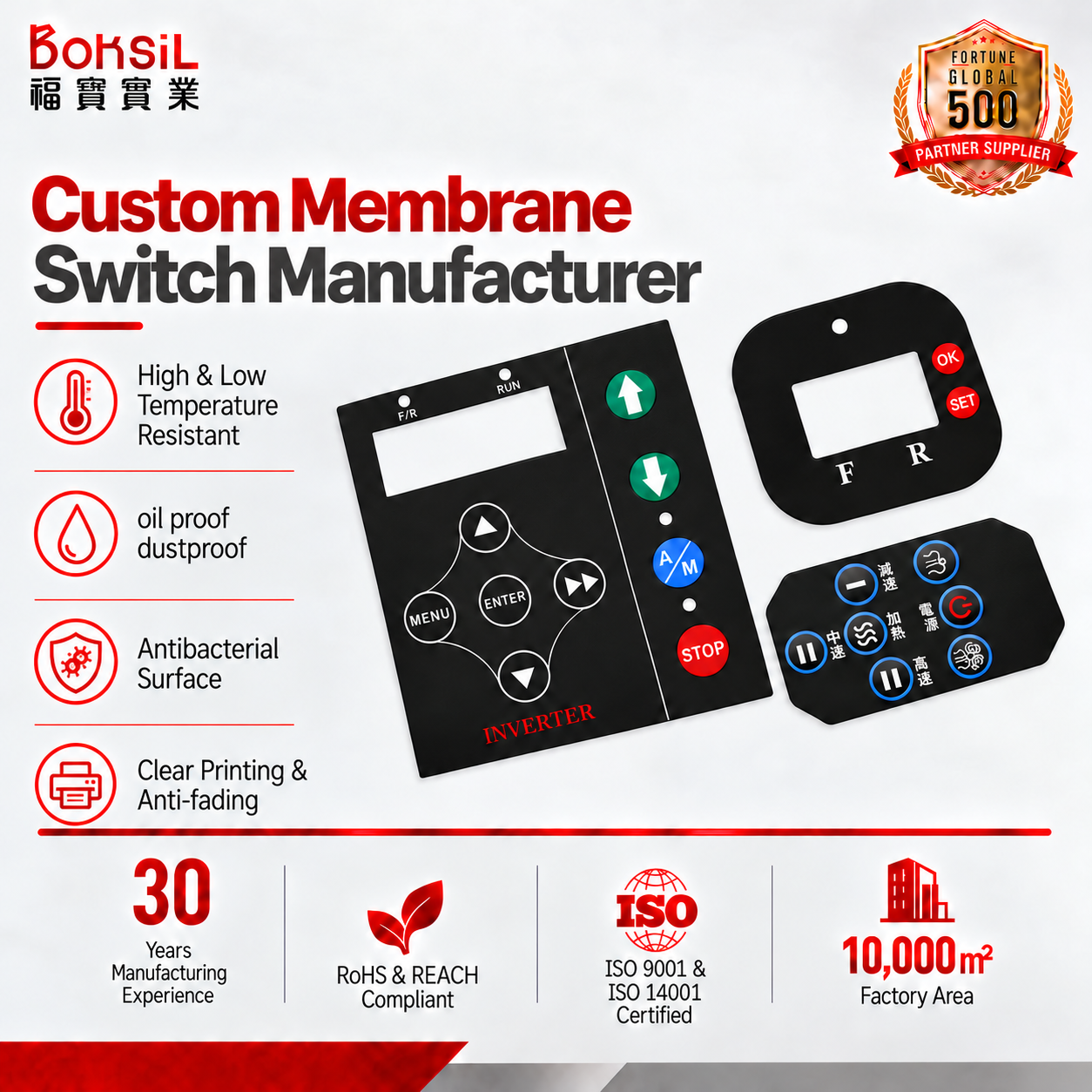
OEM/ODM Factory Front Control Electronic Panel Polycarbonate Membrane Switch Overlay
- Adhesive System: 3M 467MP / 468MP High Tack
- Temperature: -40°C to +85°C Operating
- Backlight Support: LGF / SMT Micro-LED Ready
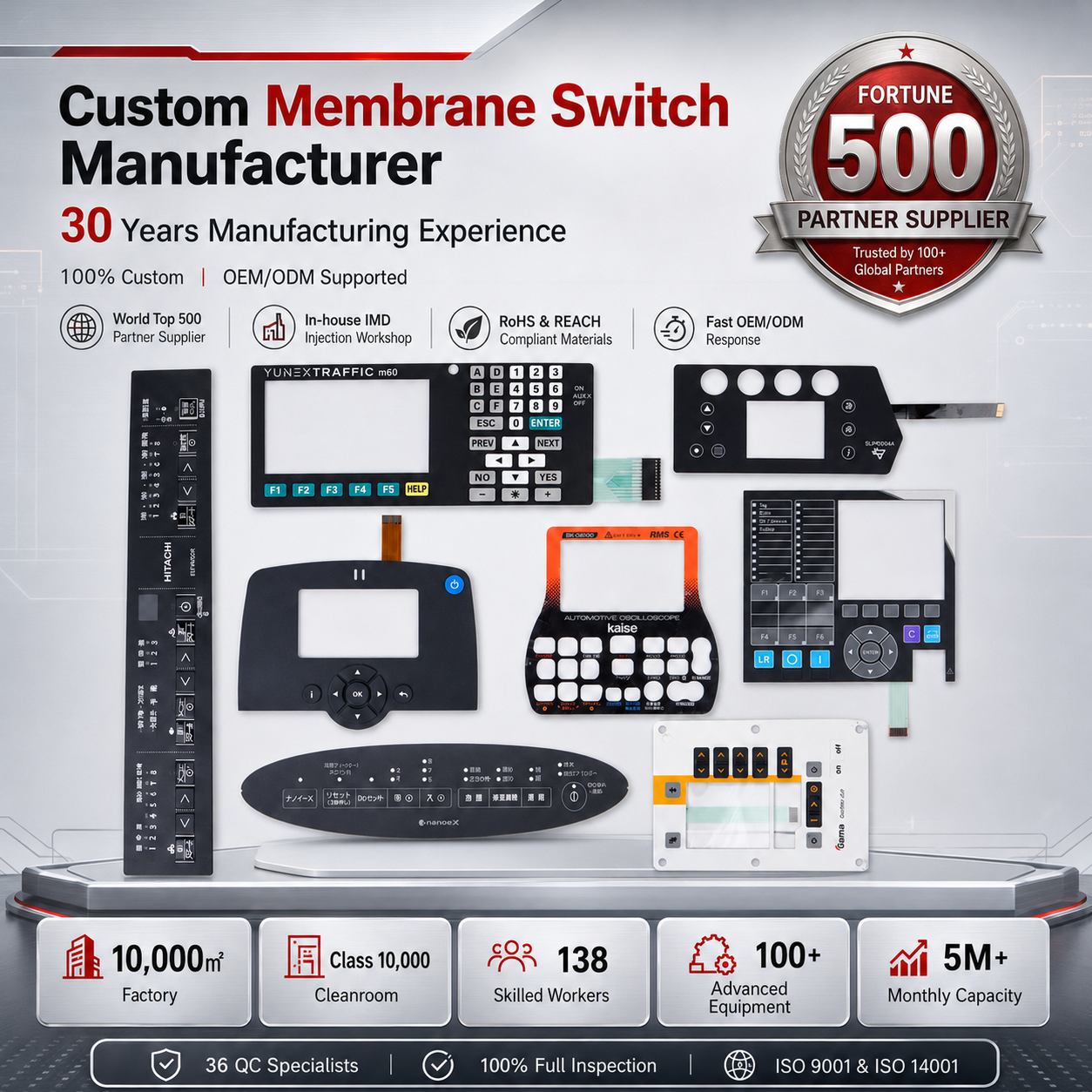
Custom Industrial Medical Appliance Graphic Overlay Waterproof FPC Circuit Power Button
- Conductor: Rolled Annealed Copper Foil
- Pitch Spacing: 0.5mm / 1.0mm ZIF Connector
- Voltage Isolation: >1500V DC Dielectric Breakdown
Capacitive Sensing Integration in the Nitra Industrial Corridor
Addressing Western Slovakia’s surging requirements for solid-state human-machine interfaces, precision force sensing, and automotive-grade touch controls.
Nitra as a High-Density Automotive & Advanced Automation Nucleus
The Nitra Region (Nitriansky kraj) in Western Slovakia has cemented its status as one of Central Europe's most formidable industrial strongholds. Driven by major original equipment manufacturers—most notably the flagship Jaguar Land Rover Nitra facility, alongside extensive automotive supplier parks spanning Dražovce and the Nitra-Sever Industrial Park—the regional manufacturing base demands relentless innovation in human-machine interface (HMI) reliability. Systems integrators, tier suppliers, and automated assembly equipment builders across Nitra require sensor solutions that transcend traditional electromechanical switches, pivoting toward solid-state capacitive touch switches, printed capacitive electrodes, and force-sensitive resistor (FSR) matrices.
Unlike legacy mechanical pushbuttons subject to fatigue, dust ingress, and contact oxidation, capacitive sensors provide true hermetic sealing, immune to lubricants, aggressive sanitizers, airborne particulates, and high-vibration robotic arms. As an established direct-factory manufacturer and global exporter, Dongguan AXRU Electronics Co., Ltd. bridges the critical gap between cost-effective high-volume Asian manufacturing and the exacting ISO/automotive engineering expectations of the Slovak manufacturing ecosystem.
Physics of Capacitive Sensing: Signal Integrity & Dielectric Stack-Ups
Capacitive touch sensing operates on the fundamental physical principle of charge perturbation within an electrostatic field. In self-capacitance architectures, a single conductive electrode deposited on a polyethylene terephthalate (PET), flexible printed circuit (FPC), or indium tin oxide (ITO) substrate maintains a baseline parasitic capacitance relative to circuit ground ($C_p$). When a human finger or conductive stylus approaches the overlay dielectric (typically polycarbonate, PMMA acrylic, or chemically strengthened glass), it introduces a parallel body capacitance ($C_f$), shifting the total monitored capacitance:
C_{total} = C_p + C_f = C_p + \left( \frac{\varepsilon_0 \cdot \varepsilon_r \cdot A}{d} \right)
For engineering teams deploying capacitive switch panels into automated machinery or automotive cockpits in Nitra, controlling the dielectric constant ($\varepsilon_r$) and substrate thickness ($d$) is critical. Any microscopic air pocket trapped inside the lamination stack degrades signal-to-noise ratio (SNR) and can trigger intermittent touch triggers or moisture sensitivity. Dongguan AXRU Electronics resolves this challenge via class 1,000 cleanroom optically clear adhesive (OCA) lamination, maintaining consistent dielectric profiles, exceptional optical transmission (>92%), and zero air entrainment across industrial temperature extremes from -40°C to +85°C.
Engineering Use Cases Across Nitra & Western Slovakia
From Tier-1 automotive interior touch consoles to sealed chemical-resistant HMIs for robotic automotive assembly cells.
Automotive Interior Controls & Overhead Consoles
Supporting tier suppliers feeding automotive assembly lines in Nitra and adjacent Trnava clusters. Our capacitive sensors feature capacitive proximity wake-up, solid-surface backlight dead-front illumination, and multi-zone sliders fabricated on flexible copper FPC substrates. Designed to pass rigorous automotive electrostatic discharge (ESD) thresholds up to ±15kV air discharge and severe automotive thermal cycling.
Industrial Robotics & Assembly Line Teach Pendants
Modern robotic assembly lines in Nitra require human-safe tactile interfaces that resist hydraulic fluid mist, cutting coolants, and frequent physical impact. We combine thin-film force sensitive resistors (FSR) with capacitive presence detection, guaranteeing dual-authentication actuation: a command only registers when genuine operator capacitive contact is verified simultaneously with calibrated threshold force.
Medical Devices & Cleanroom Laboratory Instruments
Nitra’s expanding medical technology and life sciences suppliers require IP65 and IP67 hermetically sealed continuous front overlays. Our capacitive touch switches on polyester and acrylic front panels allow flat, seamless wipe-down surfaces resistant to isopropyl alcohol, quaternary ammonium compounds, and hydrogen peroxide vapor sterilization without graphic degradation or seal breach.
Technological Transformations in Nitra's Smart Manufacturing Sector
Anticipating the technological shift toward solid-state control panels, haptic integration, and Industry 4.0 data exchange across Central European factories.
1. Migration Toward Smart Surfaces & In-Mold Electronics (IME)
Automotive interior designers and industrial machine architects in Nitra are actively transitioning away from bulky mechanical switch boxes toward smart 3D-formed surfaces. By integrating capacitive traces directly into thermoformed graphic foils, In-Mold Decoration (IMD/IME) saves up to 70% in assembly depth and 40% in weight, creating seamless aesthetic curves with integrated active touch buttons.
2. Fusion of Capacitive Touch with Dynamic Haptic Feedback
A primary limitation of purely flat capacitive panels has historically been the absence of tactile confirmation, leading to driver distraction or operator doubt. The current engineering standard adopted by Nitra industrial manufacturers integrates piezoelectric actuators or linear resonant actuators (LRA) beneath the capacitive sensor foil, delivering crisp mechanical-click simulation upon valid capacitive trigger.
3. Environmental Robustness & Liquid Rejection Algorithms
Western Slovakia's manufacturing facilities feature variable ambient conditions, from high-humidity cleaning cycles to coolant splattering. Modern capacitive systems deployed in Nitra incorporate dual-mode sensing (mutual capacitance + self capacitance) backed by differential tracking algorithms. This effectively nullifies false triggers caused by condensation droplets, mineral oil films, or heavy worker gloves.
HMI Technology Comparison Matrix for Systems Engineers
Evaluate capacitive sensing against alternate industrial input technologies to optimize BOM cost, mechanical longevity, and environmental resistance.
| Performance Parameter | Capacitive Touch Sensor (AXRU) | Force Sensing Resistor (FSR) | Metal Dome Membrane Switch | Mechanical Pushbutton Array |
|---|---|---|---|---|
| Actuation Life Cycle | Virtually Unlimited (Zero mechanical wear) | >10,000,000 actuations | 1,000,000 – 5,000,000 clicks | 100,000 – 500,000 cycles |
| Environmental Sealing | IP67 / IP68 / NEMA 4X hermetic surface | IP65 hermetic with perimeter barrier | IP65 standard; IP67 with perimeter gasket | IP40 – IP54 (Gasket seals prone to wear) |
| Tactile Confirmation | Requires Haptic LRA or Audio Cue | Analog resistance change with force | Crisp tactile snap (180g–500g snap ratio) | Physical mechanical travel (2.5mm–4.0mm) |
| Glove & Water Immunity | Configurable via DSP threshold tuning | 100% Immune (Operates purely on force) | 100% Immune to standing liquids | Immune (Mechanically driven) |
| Profile Thickness | 0.5mm – 2.0mm ultra-thin | 0.2mm – 0.5mm ultra-thin | 1.0mm – 1.8mm thin | 15mm – 45mm panel depth required |
| Aesthetic Design Freedom | Continuous dead-front glass / PMMA / PET | Flexible sensor beneath any flex overlay | Embossed graphic keys, selective textures | Discrete cutouts, fixed round/square form |
Why European Sourcing Directors Partner with AXRU Electronics
Full traceability, vertically integrated manufacturing, and comprehensive laboratory stress-testing within our 10,000㎡ Dongguan production facility.
On-Site Intertek Verification
Our 121-person workforce and 10,000㎡ factory have been formally assessed and verified on-site by Intertek. We adhere strictly to ISO 9001 certified quality management protocols, ensuring that automotive and medical supply chain audits for Slovakian buyers proceed seamlessly.
100% In-House Vertical Integration
From precision screen printing, circuit drying, and SMT micro-component placement to optical die-cutting, automated adhesive lamination, and laser marking—zero core manufacturing steps are subcontracted. This tight integration ensures strict confidentiality of proprietary engineering schematics and absolute control over lead times.
Dedicated Reliability Testing Lab
Every production batch is backed by rigorous empirical testing in our internal laboratory: key life cyclers (>5M cycles), automatic force-displacement curve analyzers, programmable temperature/humidity chambers (-60°C to +150°C), UV yellowing chambers, and ink abrasion testers.
Experienced Global Export Logistics
Over a decade of direct export experience into the European Union. We provide DDP/DAP shipments directly clearing customs into Bratislava (BTS), Vienna Schwechat (VIE), or Budapest (BUD), delivering straight to facilities in Nitra, Vráble, or Trnava with full EUR/Schengen documentation.
Nitra Buyer & Engineering FAQ
Direct answers to the most common technical and commercial inquiries from Slovak industrial procurement teams.
What is the standard production lead time for delivery into the Nitra Region?
Can you supply PPAP documentation and Full Material Declarations (RoHS/REACH)?
How do your capacitive sensors prevent false triggers from industrial fluids or gloved workers?
What is your Minimum Order Quantity (MOQ) for custom-engineered capacitive overlays?
What engineering files are needed to begin Design for Manufacturability (DFM) review?
Accelerate Your Next HMI Project with Factory-Direct Engineering Support
Whether you are developing an automotive interior console, an automated robotic pendant, or a ruggedized industrial touch screen in Nitra, our engineering team provides rapid DFM evaluations, rapid prototyping, and verified European delivery schedules.