Curated Industrial Switches & Integrated HMI Modules
High-reliability capacitive sensing components, molded elastomer keypads, and ingress-protected membrane switch matrices fabricated in our ISO-controlled cleanrooms for original equipment manufacturers.
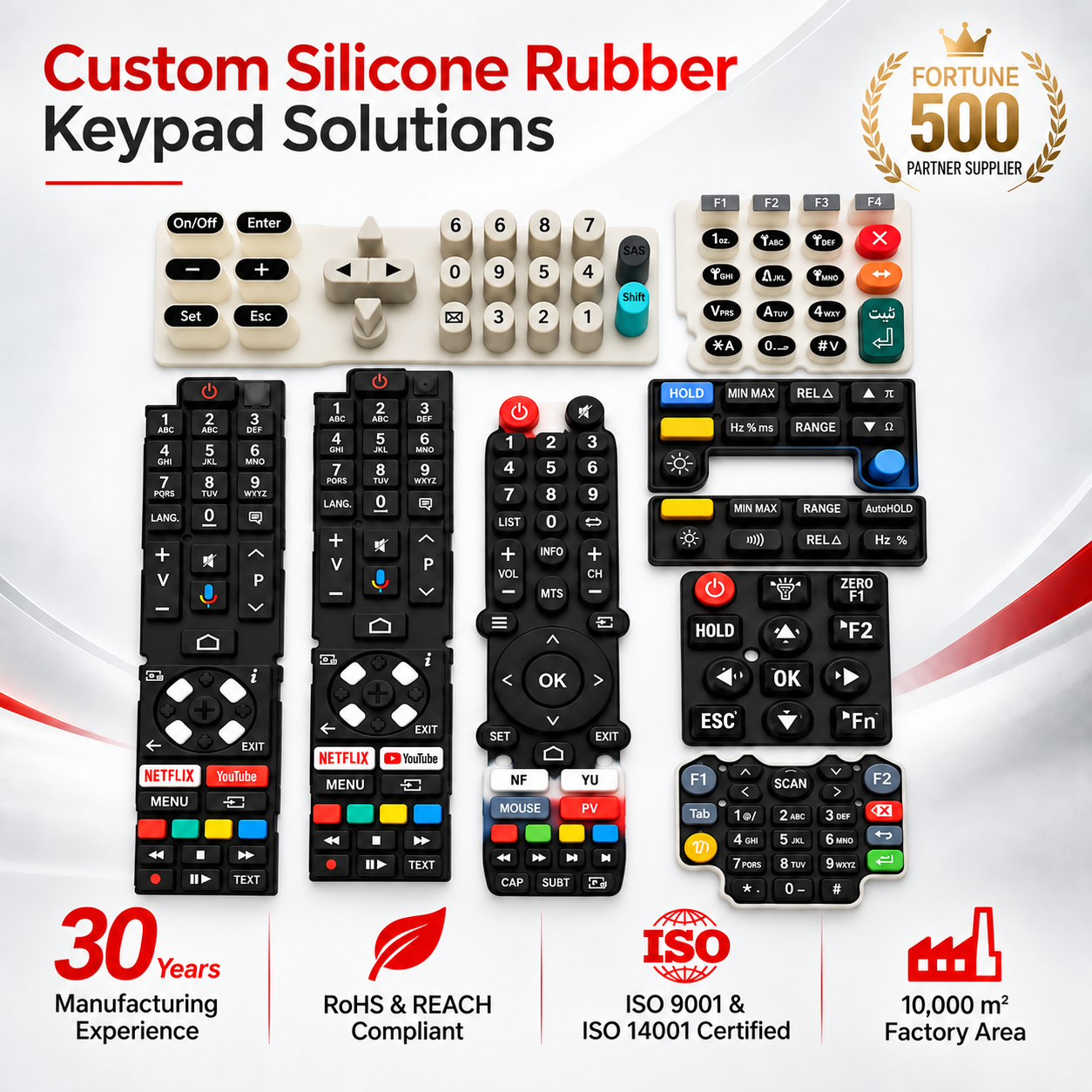
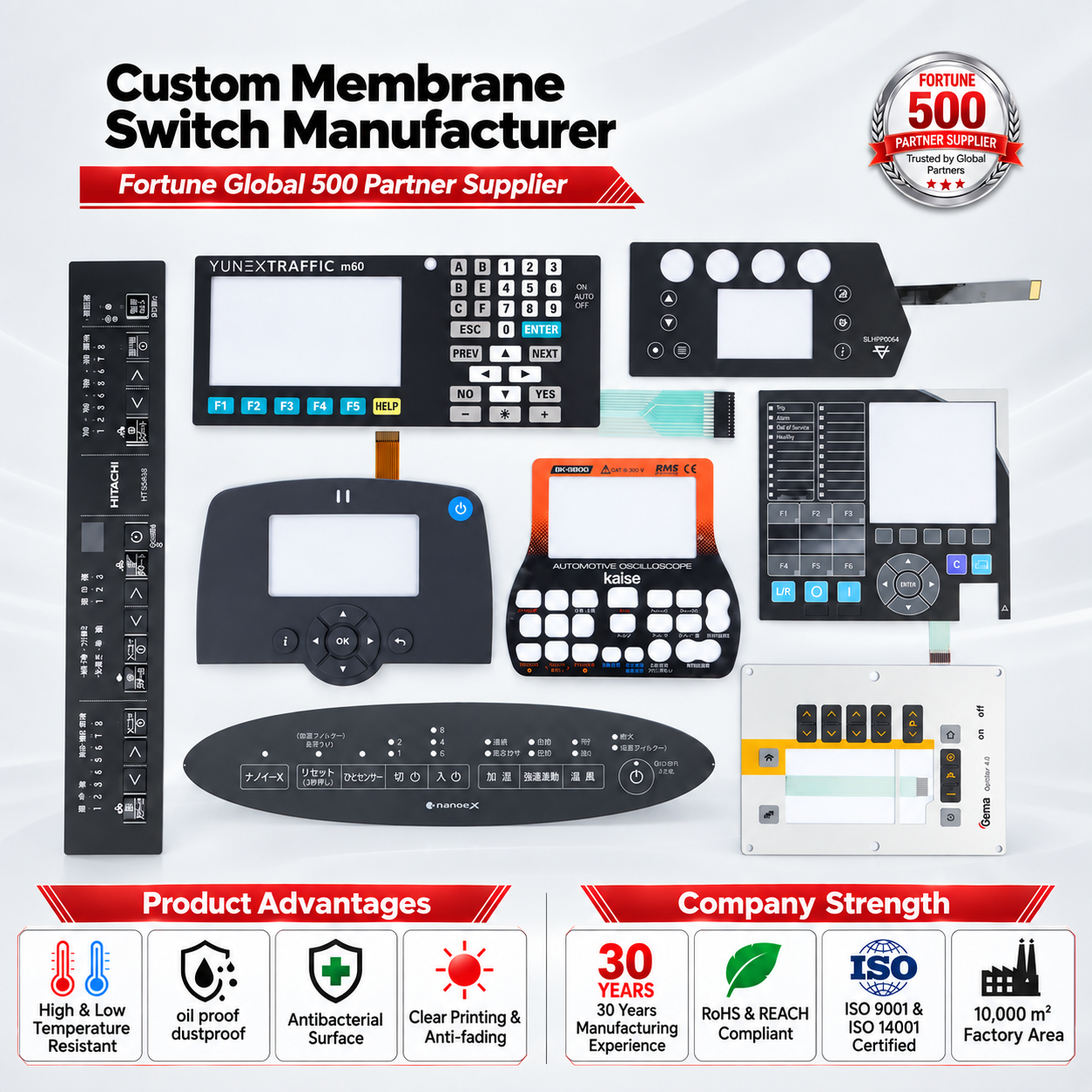
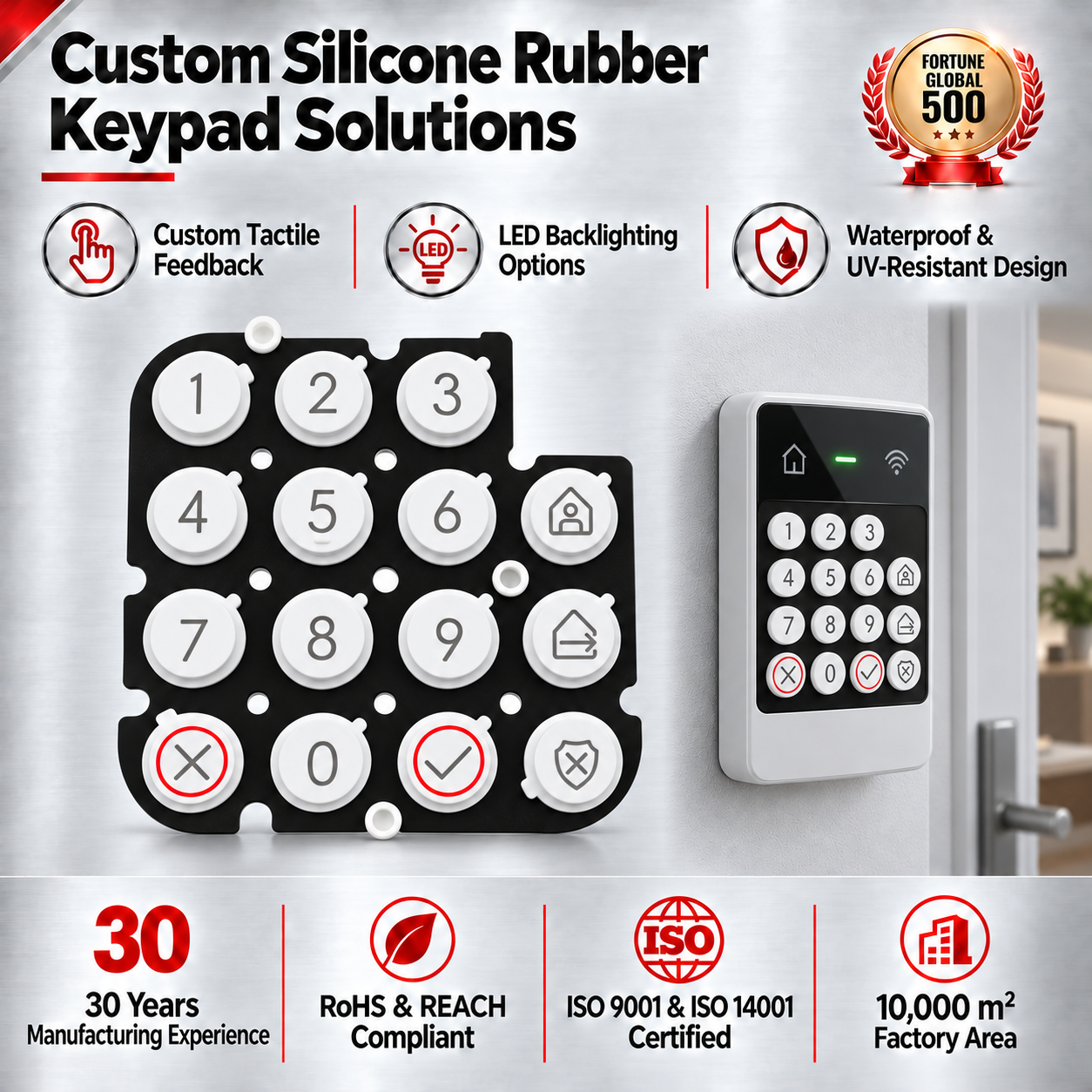
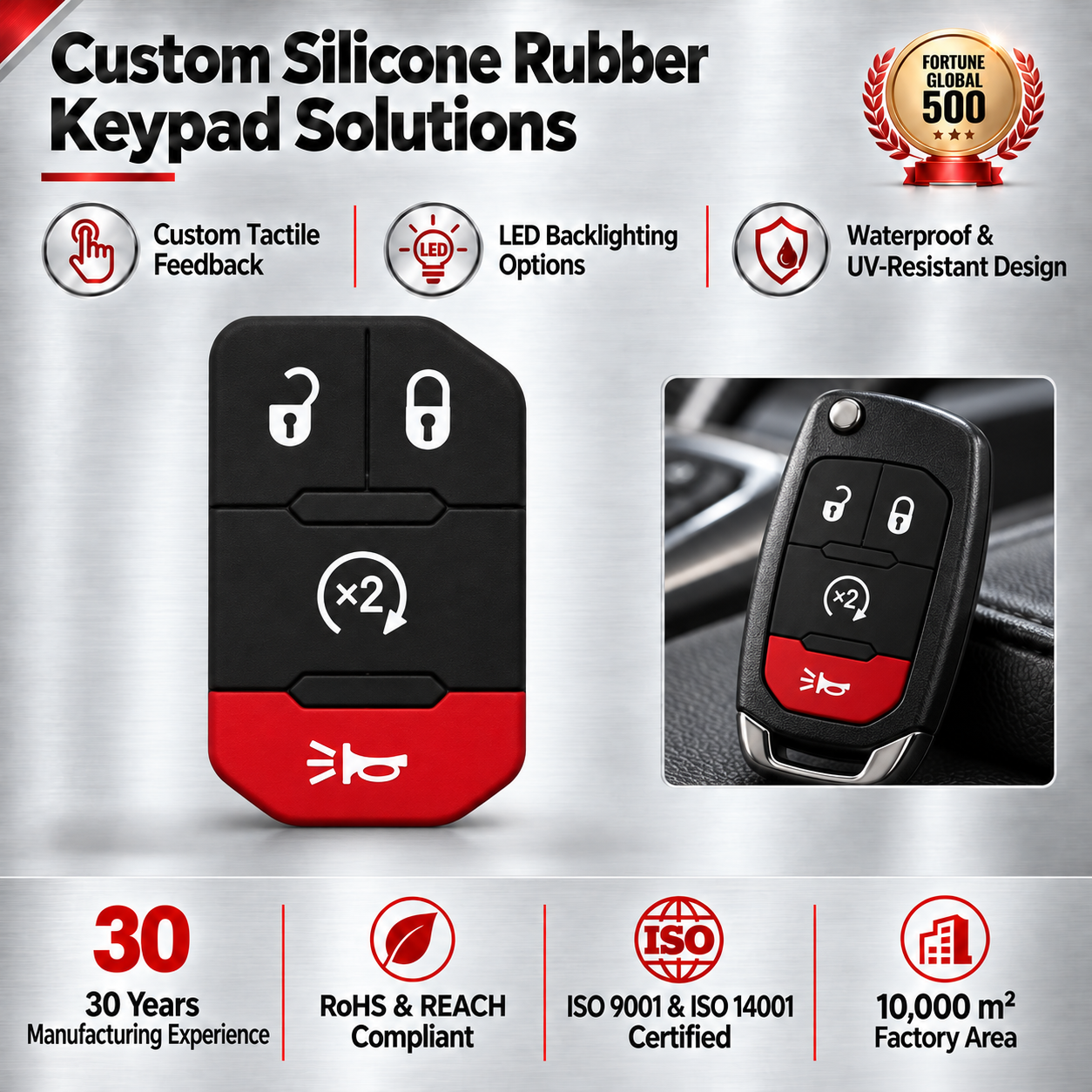
Capacitive Sensor Applications Across the Nice & Sophia Antipolis Ecosystem
As the French Riviera transitions from traditional electronics toward high-precision IoT, clean-tech, and marine engineering, input systems must adapt to rigorous environmental and mechanical realities.
Maritime Navigation & Superyacht Consoles
Operating along the Mediterranean coast requires marine-grade human-machine interfaces that remain impervious to saline fog, intense solar UV exposure, and water film interference. Our capacitive touch switches use projected capacitive (PCAP) sensing coupled with optical bonding to chemically hardened glass or PMMA substrates, suppressing false-triggering caused by sea-spray or condensate.
Sophia Antipolis IoT & Clean-Tech Devices
Europe's premier technology park hosts dozens of specialized telematics and environmental instrumentation firms. Capacitive sensing layers printed with ultra-fine conductive traces directly on flexible polyimide (FPC) or heat-stabilized polyester (PET) enable wafer-thin enclosures without mechanical snap domes, conserving enclosure depth for high-density sensor transceivers and internal antennas.
Medical Instruments & Laboratory Automation
Biomedical clusters near Nice and the wider Alpes-Maritimes prefecture demand interface surfaces capable of withstanding continuous decontamination with isopropyl alcohol, chlorine reagents, and hospital detergents. Continuous front overlays made of autoclaved polyester eliminate mechanical crevices, ensuring complete IP67 surface sealing and zero biological accumulation.
Material Stack-Up Analysis for Demanding Deployments
System designers must reconcile optical clarity, dielectric breakdown, impact resistance, and environmental sealing when designing front panel assemblies.
| Substrate / Technology | Dielectric Constant (εr) | Sealing Capability | Chemical & Salt Resistance | Primary Application Profile |
|---|---|---|---|---|
| Polyester (PET) Screen-Printed | 3.0 – 3.3 | IP65 – IP67 Continuous | Excellent against alcohols & solvents | Industrial automation, sealed medical monitors |
| Polycarbonate (PC) Overlays | 2.8 – 3.0 | IP65 with perimeter seal | Moderate (susceptible to aromatic ketones) | Indoor controllers, appliance control interfaces |
| Chemically Hardened Glass | 6.5 – 7.5 | IP68 Hermetic Bond | Impervious to marine salt spray & acids | Yacht instrumentation, public access kiosks |
| Flexible Copper FPC | 3.4 (Polyimide Base) | Full encapsulation available | High thermal and chemical tolerance | High-density pitch connections, automotive panels |
| Compression Molded Silicone | 2.7 – 3.1 | IP66 with molded bead gaskets | Resistant to ozone, UV, and salt water | Handheld diagnostics, rugged remote devices |
Emerging Procurement Trends in the Southern European HMI Sector
Procurement directors and embedded systems engineers in Nice are fundamentally restructuring their input device specifications based on three core structural trends.
1. Mechanical-to-Capacitive Migration
Equipment builders are actively eliminating traditional pushbuttons and mechanical switches. Solid-state capacitive touch sensors eliminate moving parts that wear down, directly addressing wear cycles and ensuring devices last through millions of actuations without mechanical degradation.
2. Rapid Prototyping to Low-Volume Batches
Niche hardware accelerators throughout the Provence-Alpes-Côte d'Azur area rely on agile product iteration. Sourcing models that demand 10,000-unit minimum orders are failing. European hardware teams favor manufacturing partners capable of delivering custom DFM samples with low MOQs (from 100 pcs).
3. Full In-House Fabrication Accountability
Tier-1 contractors refuse multi-tiered subcontracting where overlays, screen printing, conductive circuits, and surface mounting are split across disparate vendors. Single-roof manufacturing guarantees consolidated traceability, consistent adhesive lamination, and unified environmental validation.
Dongguan AXRU Electronics: Direct Engineering & Export Scale
Operating a verified 10,000㎡ industrial complex in Dongguan, China, we operate as a fully integrated human-machine interface manufacturer with certified on-site Intertek audits.
Vertical Integration
From precision screen printing, laser cutting, circuit deposition, and automated surface-mount placement to finished functional testing, all core processes remain 100% in-house.
100% Electrical Inspection
Every single capacitive switch and membrane trace undergoes complete continuity, contact impedance, insulation resistance, and dielectric breakdown evaluation before shipping.
Fortune 500 Qualified
We routinely fabricate interface modules for leading international brands, maintaining strict PPAP documentation, complete material traceability, and RoHS/REACH compliance.
Engineering-Led DFM
You work directly with dedicated design engineers. We review trace routing, tail exits, adhesive dielectric layers, and environmental sealing before cutting any production tooling.
Reliability Verification In Our Dongguan Cleanroom Facility
To guarantee zero field degradation in corrosive marine and industrial climates, our QA laboratory runs continuous batch sampling on calibrated inspection rigs including our Key Life Actuation Tester (stressing up to 5M cycles), Force-Displacement Curvature Analyzers, Tensile Peel Testers, and programmable Temperature & Humidity Environmental Chambers (-40°C to +85°C at 95% RH).
Frequently Asked Questions by Industrial Buyers in Nice
Technical and commercial answers addressing shipping, import compliance, design formats, and engineering specifications for French and European buyers.
What design files are required to initiate a custom capacitive sensor quote?
What is the minimum order quantity (MOQ) for French OEM projects?
How do your capacitive sensors tolerate Mediterranean salt air and humidity?
What logistics options and lead times apply for shipments into Southern France?
Can backlighting, dead-front indicators, and display windows be combined?
Accelerate Your Next HMI Project with Direct Engineering Review
Send your drawings, BOM, or target specifications. Our factory engineering specialists will review your capacitive stack-up, verify mechanical tolerances, and deliver a comprehensive DFM assessment within 24 hours.