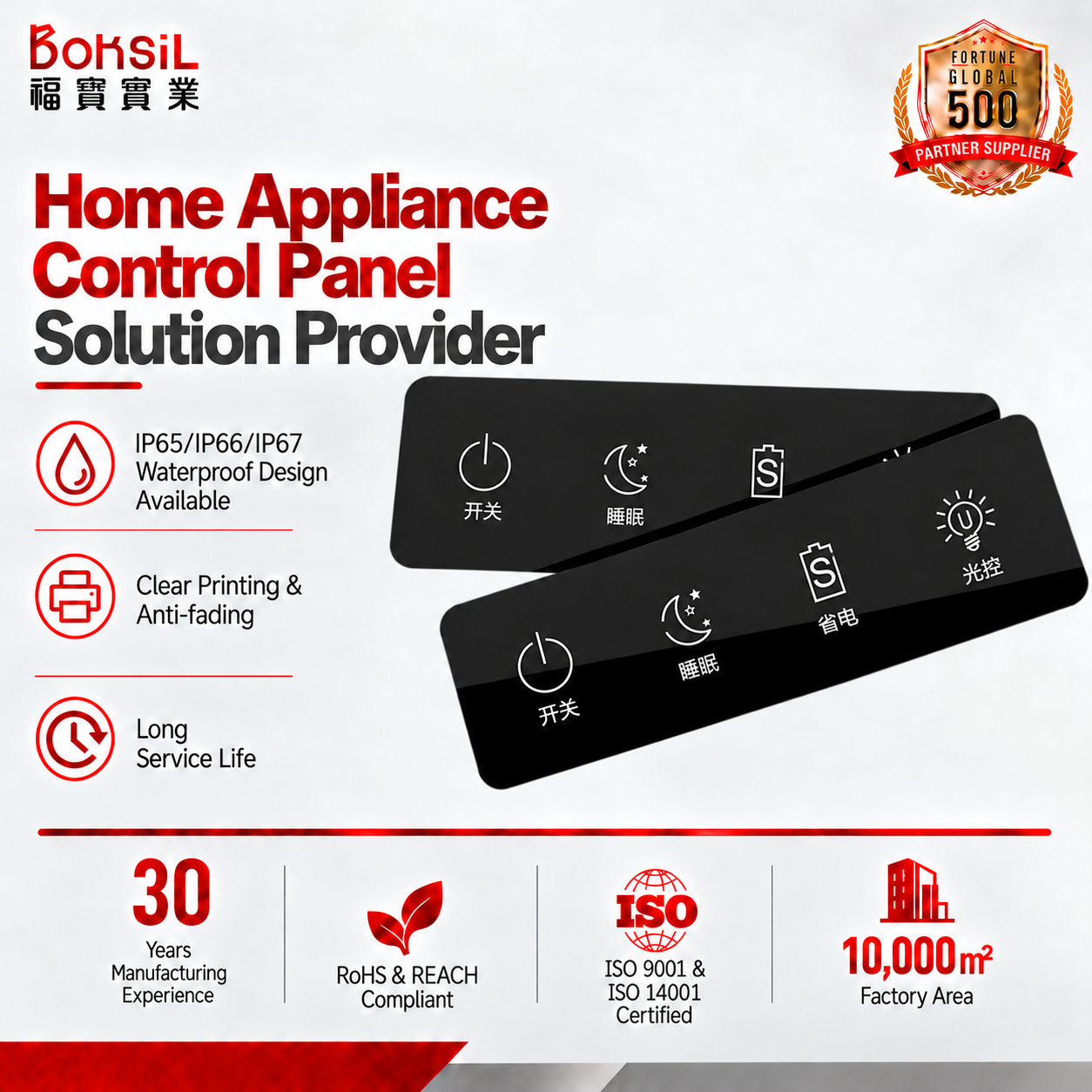
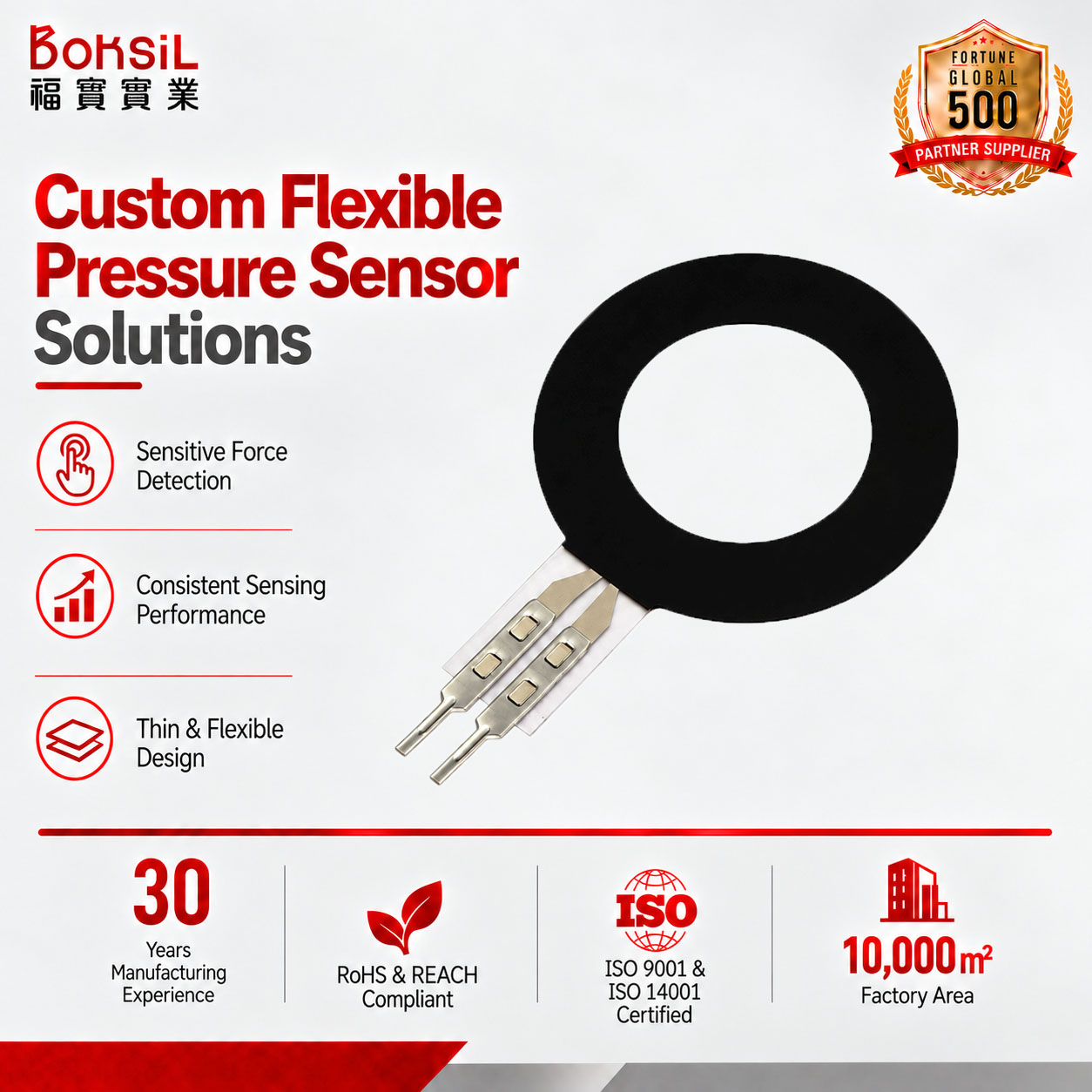
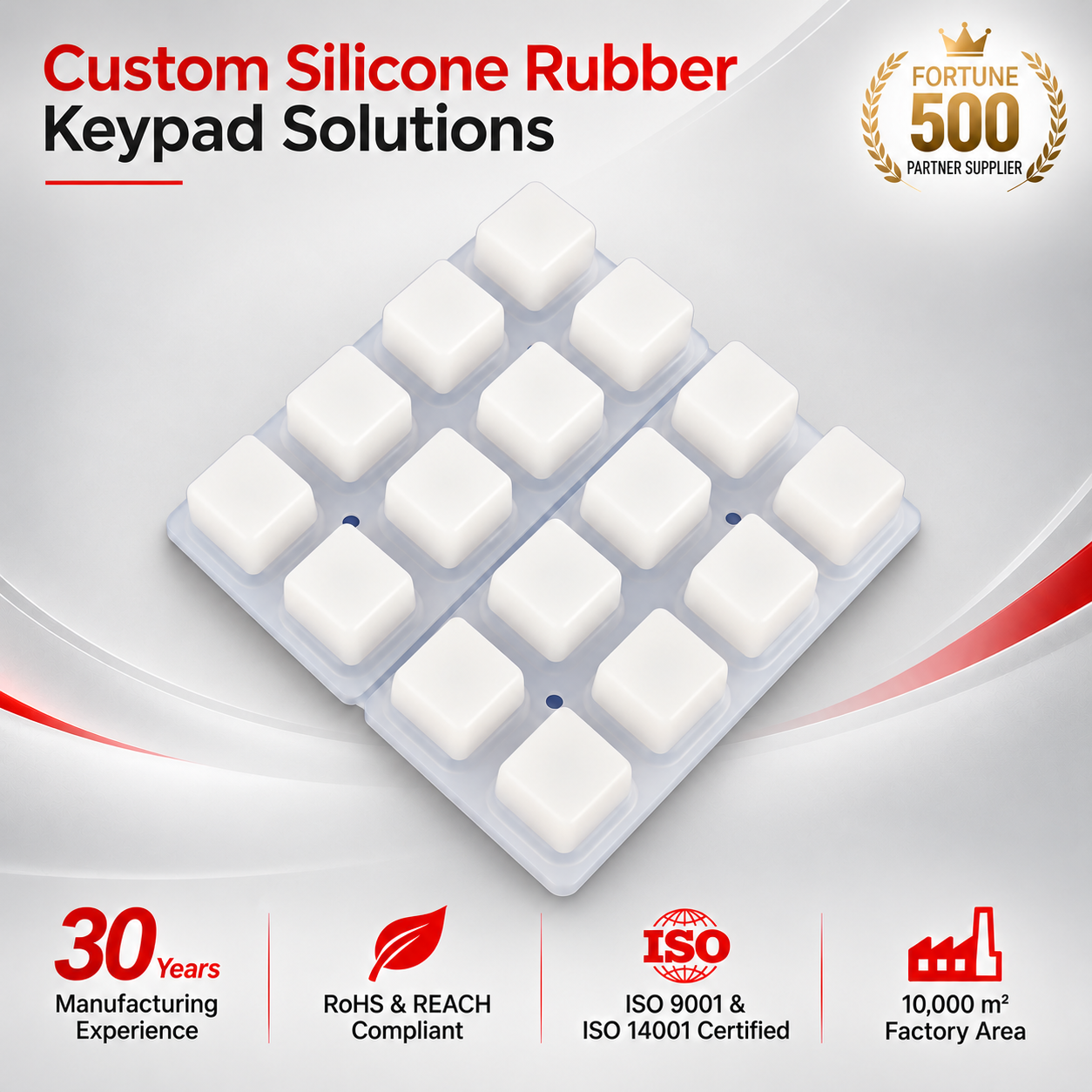
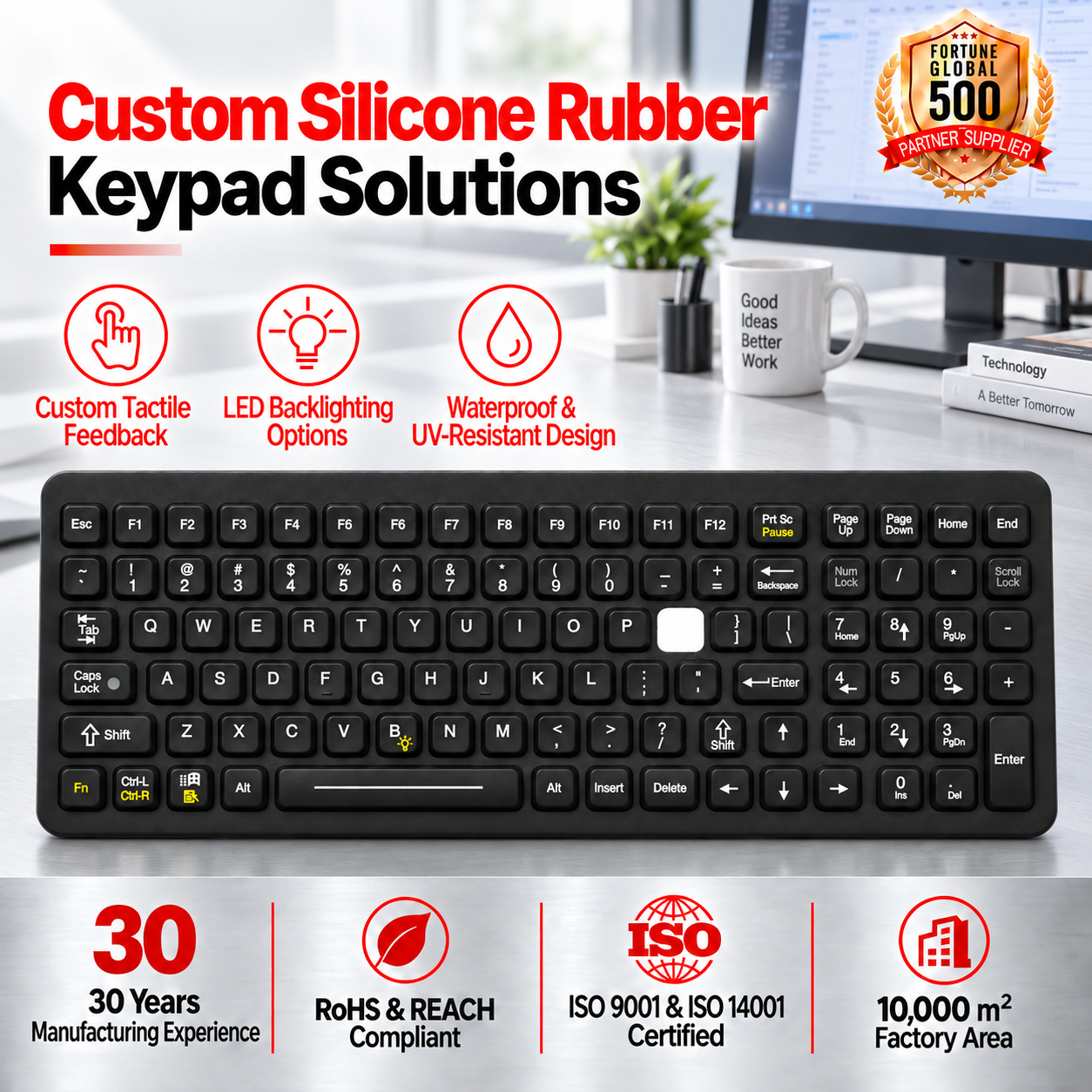
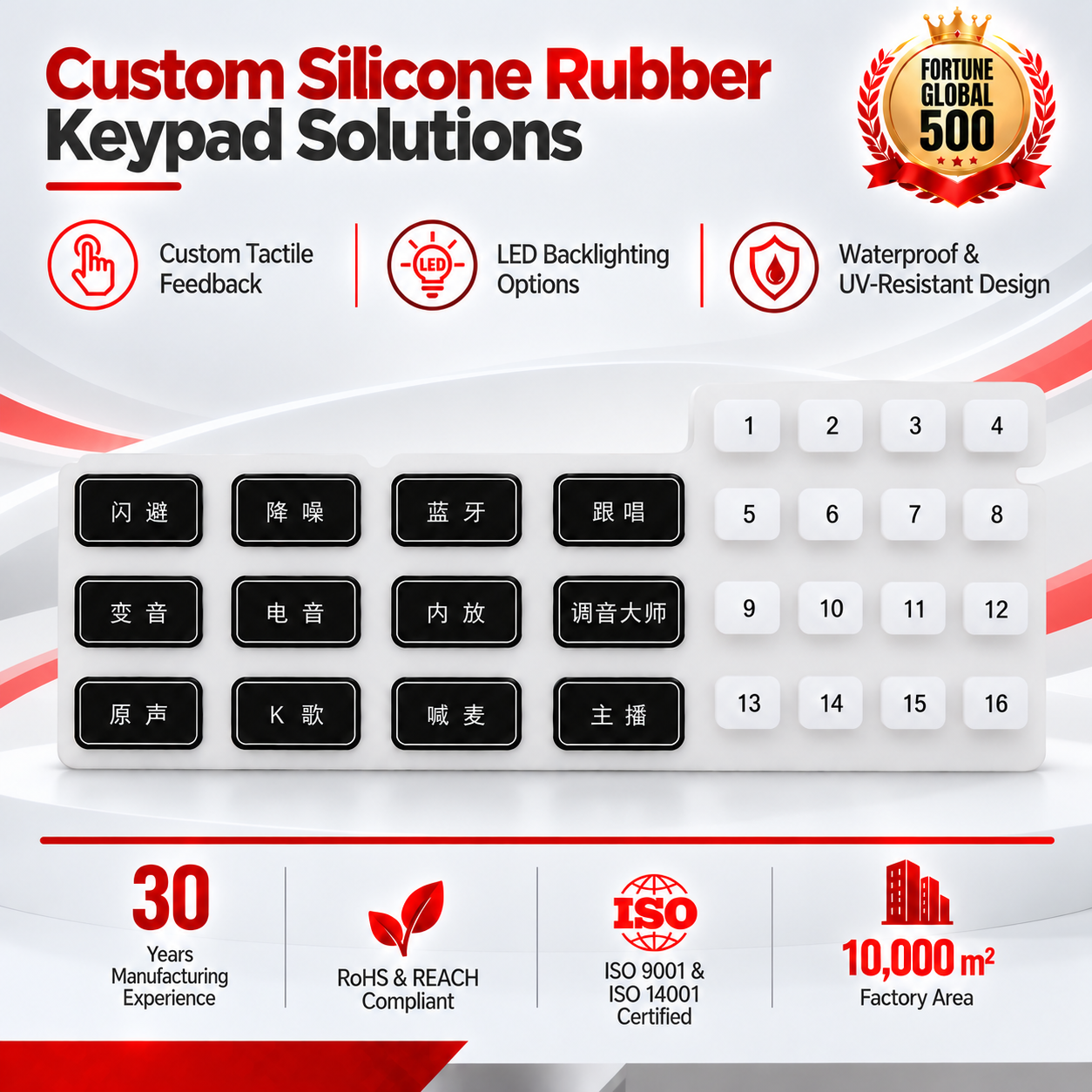
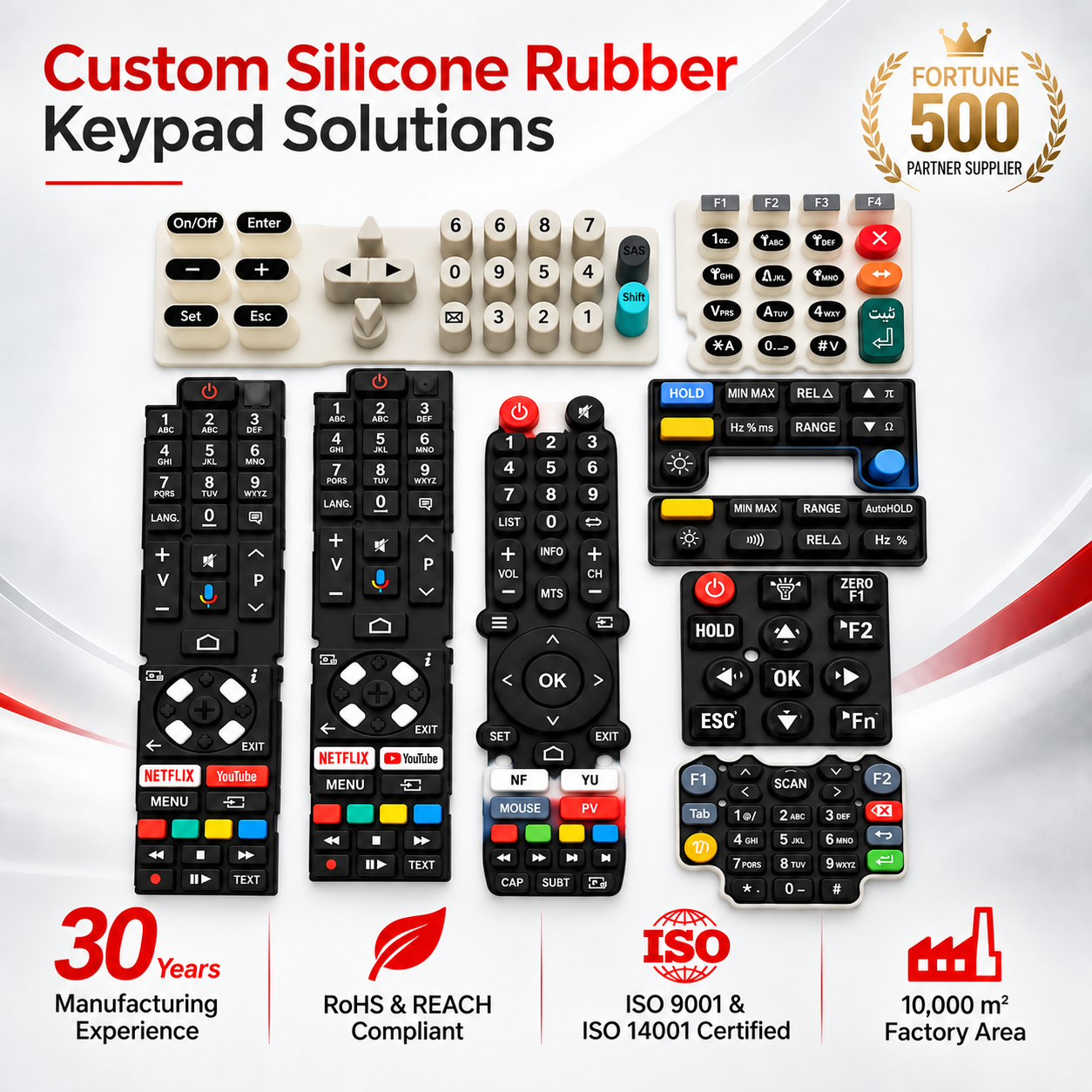
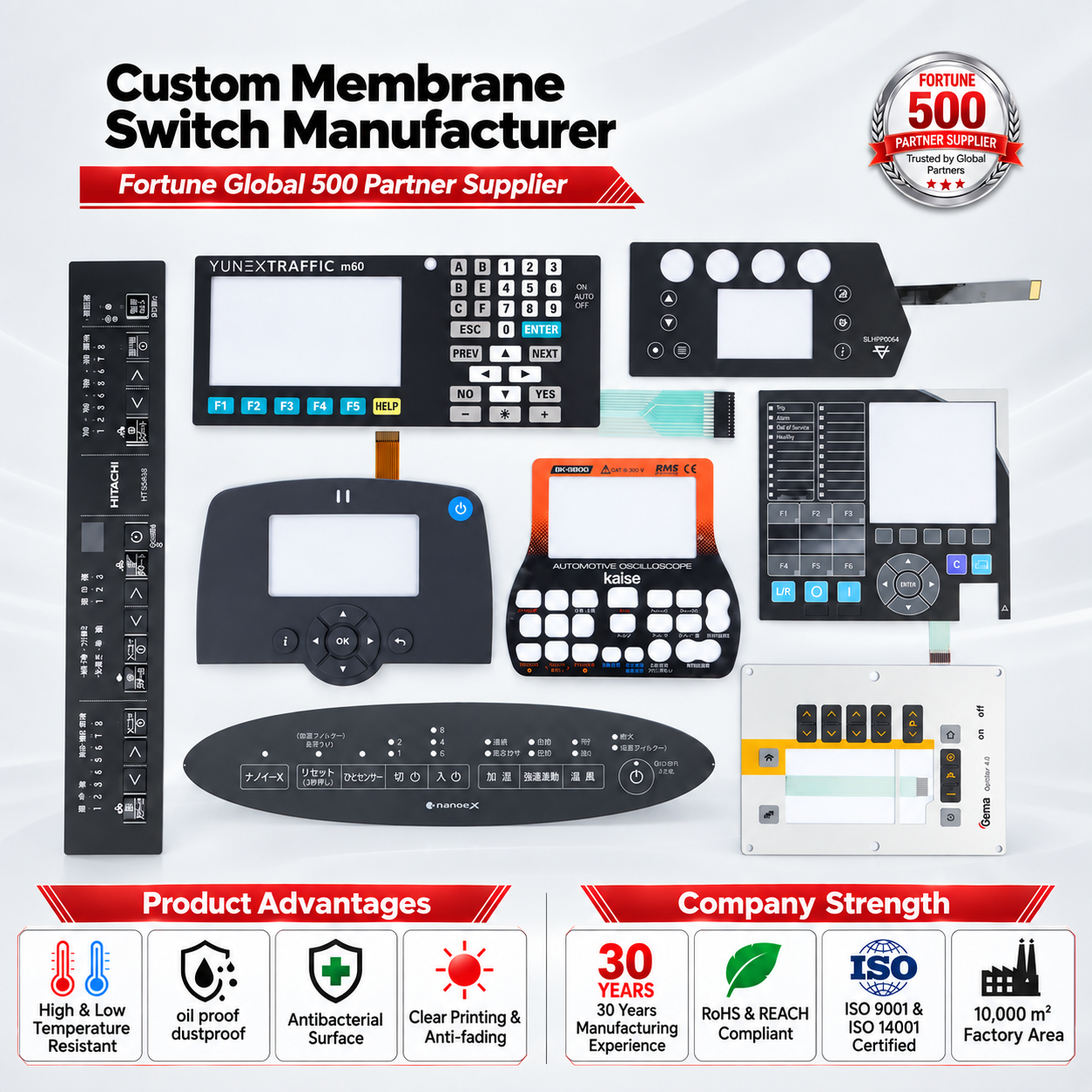
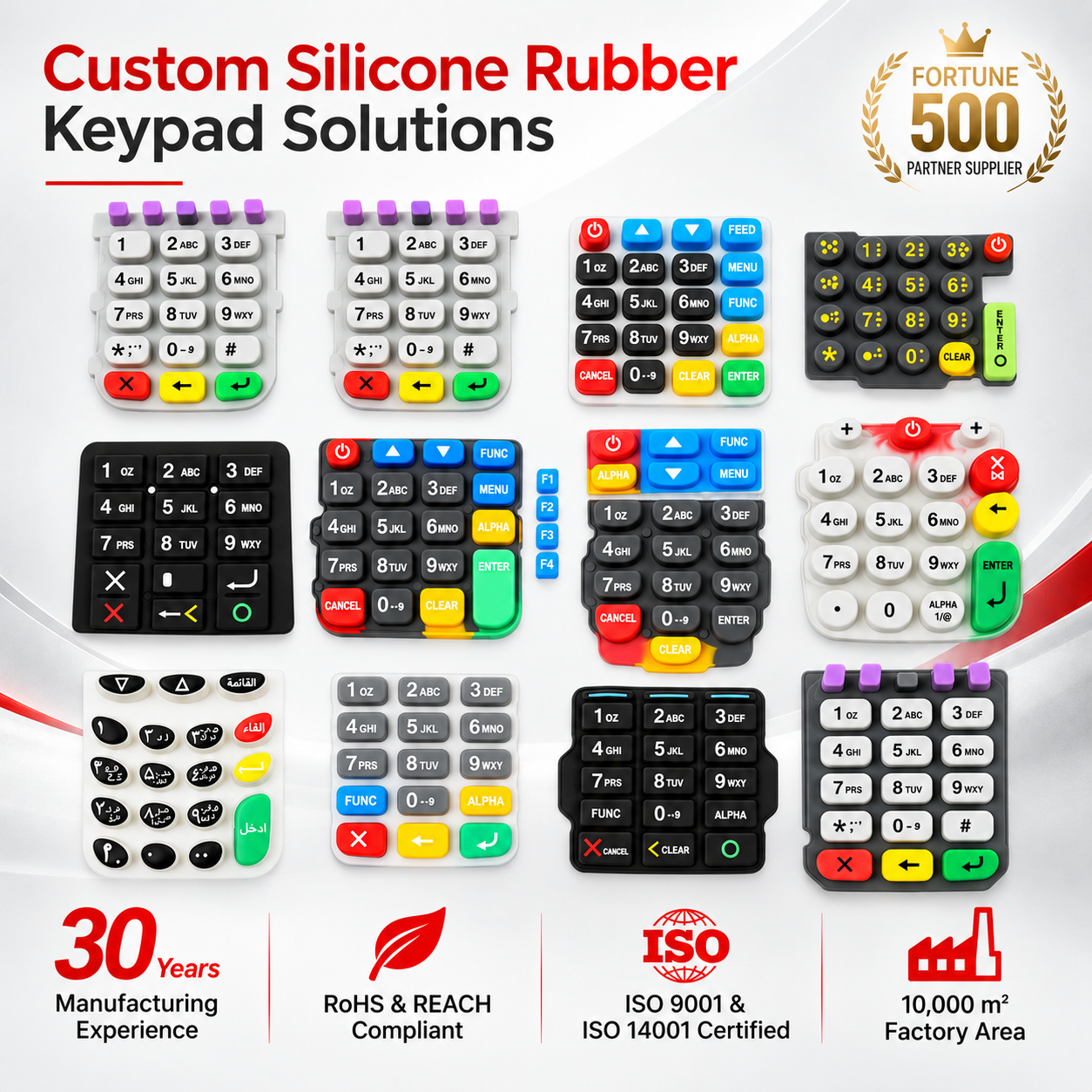
Featured Graphic Overlays, Sensors & Custom HMI Panels
Engineered to tight dimensional tolerances (±0.05mm), sub-surface screen/digital printed with UV-curable inks, and custom-bonded with high-tack acrylic adhesives for long-term industrial reliability.
Graphic Overlay Substrate Selection: Comparative Material Science
In Human-Machine Interface (HMI) system architecture, selecting the appropriate front fascia polymer is critical to mitigating field failure modes including plasticizer migration, environmental stress cracking, and actuation fatigue.
As a top trusted graphic overlay supplier manufacturer and direct OEM/ODM factory, Dongguan AXRU Electronics Co., Ltd. operates high-precision automated screen printing, digital printing, and class 1,000 cleanroom laminating facilities. A graphic overlay represents the direct sensory contact surface between human operators and industrial or medical equipment. When specifying an overlay, procurement and design engineering teams must balance optical transparency, chemical resistance against harsh cleaning chemicals, mechanical flexural endurance, and thermal stability.
Material Performance Index: Autotex PET vs. Lexan PC vs. Optical PMMA
Polymer Substrate
Flex Life (Actuations)
Chemical Resistance
Pencil Hardness
Optimal Applications
Procurement Notes
Biaxially Oriented PET (e.g., MacDermid Autotex)
>5,000,000 cycles
Superior (Solvents, Bleach, MEK)
2H to 3H (Hardcoated)
Medical Monitors, Industrial CNC Keypads, Lab Diagnostic Equipment
Mandatory for embossed tactile keys to avoid flex crack failure over time.
Cost-efficient; easily thermoformed; ideal for dead-front and clear display windows.
Cast / Extruded Acrylic (PMMA Front Panel)
Rigid (Non-flexing)
Excellent (UV / Weatherability)
3H to 5H (Surface treated)
TV Display Bezel Overlays, Smart Vending Kiosks, EV Charging Pillars
Offers crystal-clear glass-like aesthetics with 92% light transmittance at reduced weight.
Tempered Chemically Strengthened Glass
Rigid (Immune to creep)
Maximum (Acid, alkali, scratch proof)
9H (Mohs 7)
Outdoor Marine Displays, Vandal-Resistant Military Terminals
High impact resistance; paired with optical clear adhesives (OCA) for capacitive touch.
Sub-Surface Silk-Screen and High-Resolution Digital Printing: Unlike surface-printed tags that abrade quickly under industrial use, our manufacturing process exclusively utilizes sub-surface printing (second-surface decoration). Graphics, icons, branding, and color tint filters are printed on the rear side of the transparent film. The polymer film thickness itself serves as a permanent protective barrier against rubbing, abrasive grease, isopropyl alcohol (IPA), and industrial sanitizers.
Adhesive System Integration: A critical engineering consideration during procurement is the pressure-sensitive adhesive (PSA) backing. Matching surface energy is crucial: low surface energy (LSE) plastics such as polypropylene or powder-coated cast aluminum housings require modified acrylic adhesives such as 3M 300LSE or Nitto 5000NS to prevent edge delamination and moisture ingress. For flat, smooth, high surface energy (HSE) stainless steel or ABS chassis, 3M 467MP (2 mil) or 3M 468MP (5 mil) deliver high shear strength across operating temperatures ranging from -40°C to +150°C.
Market Intelligence & Sourcing Evolution
Future Procurement Trends for Graphic Overlays & HMI Panels
Strategic supply chain insights for global engineering managers and technical procurement executives balancing total cost of ownership (TCO), supply security, and next-generation device integration.
Consolidation of Hybrid Assemblies
Global OEMs are moving away from sourcing graphic overlays, rubber buttons, and tactile switches from fragmented subcontractors. Sourcing fully integrated front-panel sub-assemblies—combining an embossed PET overlay, embedded SMD LEDs, light guide film (LGF), and a single FPC connector tail—substantially lowers logistics risk and simplifies assembly line operations.
Antimicrobial & Sanitizer Resilience
Following heightened hygienic protocols in clinical and shared industrial environments, over 45% of new medical RFQs mandate antimicrobial hard-coats (incorporating silver ion or nano-zinc formulations). These surfaces eliminate 99.9% of bacterial colonization while tolerating daily cleanings with quaternary ammonium compounds and hospital-grade bleach solutions.
DFM-Driven Rapid Prototyping & Low MOQs
Agile hardware product development requires short prototyping cycles. Leading manufacturers utilize high-precision digital UV plotters and laser plot cutters for pilot sample runs (100–500 units) without costly die tooling. This reduces initial NRE (Non-Recurring Engineering) expenses and shortens sample lead times down to 3–5 working days.
Supply Chain Transparency & Tier-1 Traceability
Procurement teams at international medical and automotive equipment firms now prioritize suppliers with certified traceability down to base polymer rolls and raw adhesive batches. Material certificates of conformance (CoC), RoHS/REACH declarations, and full environmental test records from environmental test chambers are becoming standard pre-shipment requirements. Tier-1 manufacturers such as AXRU maintain full raw material traceability alongside automated inspection data for every batch shipped.
R&D and Technical Trajectory
HMI Technological Evolution: From Simple Overlays to Smart Surfaces
How modern front panels are evolving from static visual overlays into capacitive, force-sensing, backlit interactive surfaces engineered for seamless user experiences.
Thin-Film Force Sensing (FSR)
Transitioning from binary on/off switching to continuous variable-force detection. By printing piezoresistive conductive inks beneath the graphic overlay, devices gain analog input control, operator grip verification, and variable-speed motorized adjustment without bulky mechanical potentiometers.
Dead-Front Optical Stealth Graphics
Utilizing controlled light transmission inks to create smooth, unified black or white display fascias. Icons, warning alerts, and status buttons remain completely invisible until back-illuminated by underlying SMD LEDs, providing clean, distraction-free dashboards on medical and smart home interfaces.
In-Mold Decoration (IMD / IML)
Eliminating post-mold adhesive application by printing the graphic overlay film, thermoforming it to a 3D contour, and injection molding structural ABS/polycarbonate resin directly behind it. This creates a monolithic, hermetically sealed, scratch-proof housing with zero perimeter crevices for dust or fluid ingress.
Eliminating Silver Migration via Copper FPC Circuits
In high-humidity, high-voltage industrial applications, traditional silver-printed flexible conductive circuits can suffer from electrochemical silver migration (dendrite growth across adjacent conductive tracks), causing catastrophic short circuits. To solve this, AXRU integrates etched copper Flexible Printed Circuits (FPC) with polyimide coverlays beneath our graphic overlays. Etched copper traces support narrower trace pitches (down to 0.15mm), zero dendrite risk, lower contact resistance, and direct soldering of miniature discrete SMD LEDs and sensors without relying solely on conductive epoxy.
Direct Factory Advantages
Why Global OEM Brands Trust Dongguan AXRU Electronics
Operating a modern 10,000㎡ manufacturing plant in Dongguan, China, certified by Intertek and trusted by Fortune 500 equipment builders worldwide.
On-Site Intertek Verified Plant
Our 10,000㎡ manufacturing complex and 121 staff members have undergone full on-site evaluation by Intertek. Comprehensive quality management safeguards every batch from raw resin to outgoing shipment.
Complete In-House Tooling & Build
No outsourced core processes. Screen preparation, color matching, semi-automatic cleanroom printing, laser cutting, embossing, metal dome placement, and flatbed die-cutting operate under one roof.
Direct DFM Engineering Support
Work directly with seasoned HMI project engineers. We review your CAD drawings (DXF, DWG, Step, AI), examine stack-up tolerances, verify trace clearances, and optimize tactile actuation before tooling.
Reliability Lab Testing Suite
Every production run is validated using in-house key life testers, force-displacement curve plotters, programmable temperature/humidity chambers, ink abrasion testers, and 100% electrical continuity analyzers.
With over 12 years of specialized engineering experience and more than a decade of export operations spanning North America, Europe, Japan, and the Middle East, AXRU Electronics bridges the gap between low-cost manufacturing and strict Western engineering requirements. Whether you require a single-button embossed graphic overlay, a backlit silicone keypad matrix, or a complete IP67 waterproof membrane switch panel, our dedicated project teams ensure seamless communication, rapid DFM feedback within 24 hours, and reliable volume production.
Detailed technical answers to common queries regarding engineering, manufacturing, tolerances, and quality verification.
What CAD files and technical documentation are needed for an accurate DFM review and quotation?
To provide an accurate quote and comprehensive Design For Manufacturability (DFM) review within 24 hours, we recommend submitting:
1. Vector artwork: Adobe Illustrator (.AI), PDF, or CorelDraw with text converted to outlines and explicit callouts for Pantone (PMS) or RAL color codes.
2. Mechanical 2D drawing: DXF, DWG, or PDF illustrating overall dimensional boundaries, cutouts, window areas, embossing profile heights, and key dimensions (standard tolerance ±0.1mm; precision tolerance ±0.05mm).
3. Layer Stack-up Specification: Overlay material type and thickness (e.g., 0.15mm or 0.18mm Autotex PET vs. 0.25mm Lexan PC), adhesive selection (e.g., 3M 467MP, 468MP, or 300LSE), and details on any tactile metal domes or backlighting requirements.
Note: If you only have a legacy sample or physical unit, our engineering lab can reverse-engineer the mechanical outline, color-match the artwork, and propose a validated modern stack-up.
What are the key technical differences between Polycarbonate (PC) and Polyester (PET) graphic overlays?
The decision between Polyester (PET) and Polycarbonate (PC) hinges on actuation cycle requirements, chemical exposure, and embossing needs:
• Polyester (PET): Offers superior mechanical flex fatigue resistance, easily surpassing 5,000,000 actuation cycles without micro-cracking. It resists harsh chemicals, aggressive solvents, and medical-grade disinfectants (such as MEK, bleach, and alcohol). PET is the industry standard for embossed tactile keys and harsh medical/industrial settings.
• Polycarbonate (PC): Exceptional optical clarity, easy thermoformability, and self-extinguishing flame-retardant ratings (UL94 V-0 or V-2 options available). However, its flex endurance is typically limited to around 100,000 cycles, and it is more susceptible to cracking when exposed to aggressive aromatic hydrocarbons. PC is commonly selected for flat front panels, dead-front indicators, and cost-sensitive consumer appliances.
How does AXRU achieve ingress protection (IP65, IP66, and IP67) on membrane switch assemblies?
Achieving IP65 to IP67 environmental sealing requires a multi-layered engineering approach:
1. Continuous Perimeter Gasket Adhesive: We engineer a custom continuous border adhesive (using 3M high-tack acrylic adhesives) that completely encircles active switch cavities, preventing moisture from entering through cutouts or edges.
2. Hermetic Tail Exit Sealing: Flexible connector tails are routed through labyrinth seals or sealed sub-layers, isolating conductor leads from external liquid immersion or pressurized washdown jets.
3. Environmental Verification: Production samples undergo testing inside our programmable temperature and humidity chamber (-40°C to +85°C at 95% RH) followed by pressure submersion and spray tests to ensure zero seal degradation over extended operating lifetimes.
What embossing profiles can be formed into the graphic overlay, and what tactile domes can be paired?
We provide precision hot-press, cold-form, and hydro-form embossing tooling options:
• Rim / Border Emboss: Rims outline the perimeter of the keycap, guiding the operator's finger to the active actuation zone.
• Pillow / Surface Emboss: The entire key area is uniformly raised (typical height: 0.3mm to 0.6mm), providing a clean tactile profile.
• Dome Emboss (Polydome): The embossed film itself acts as the spring-return mechanism, suitable for moderate-lifecycle tactile switching.
• Tactile Metal Domes: For crisp, audible feedback and maximum operational life, we integrate four-leg, round, or oblong stainless steel metal domes (nickel-plated or gold-plated) ranging from 6mm to 20mm with actuation forces from 180g to 450g.
What surface finishes and window treatments are available for integrated LCD/OLED displays?
We support varied aesthetic and functional surface configurations:
• Velvet / Textured Body with Clear Windows: Textured matte finishes minimize glare and resist fingerprint oils, while selective gloss varnish printing over display areas provides 100% optical clarity for underlying LCD or OLED screens.
• Anti-Glare (AG) & Anti-Reflective (AR) Treatments: Diffuses harsh indoor task lighting or direct sunlight, maintaining legibility on high-resolution displays.
• Tinted & Colored Filter Windows: Specific translucent dye inks optimize contrast for red, green, blue, or white 7-segment LED readouts.
• Dead-Front Graphics: Specialized translucent black or neutral gray printing keeps indicators and warning icons hidden until backlit by integrated LEDs.
What pre-shipment quality assurance protocols are conducted to ensure zero out-of-box defects?
Every production batch undergoes comprehensive in-process and final testing:
• 100% Electrical Inspection: Automated testing of all switch positions, contact resistances (<100Ω for silver traces, <10Ω for copper FPC), loop continuity, open circuits, insulation resistance (>100MΩ at 100V DC), and LED functionality.
• Actuation Force & Displacement Curve: Tested on our automated load-deflection tester to verify consistent tactile feel and snap ratios across all keys.
• Ink Decolorization & Abrasion Testing: Validated against ASTM D3363 (pencil hardness) and ASTM D3359 cross-hatch adhesion testing following repetitive rubbing cycles with isopropyl alcohol and solvent mixtures.
• Accelerated Aging: Monitored in our yellowing resistance UV chamber and thermal shock chambers to ensure aesthetic and mechanical stability under diverse operating conditions.
Ready to Optimize Your Graphic Overlay & HMI Keypad Project?
Connect directly with our senior HMI application engineers in Dongguan. Submit your 2D/3D CAD drawings or project requirements for rapid DFM evaluation, substrate recommendations, and a detailed factory quote within 24 hours.