Engineered Graphic Overlay & Keypad Assemblies
Explore our high-performance custom human-machine interface assemblies engineered to perform across extreme temperatures, intensive chemical washdowns, and relentless operational cycling.
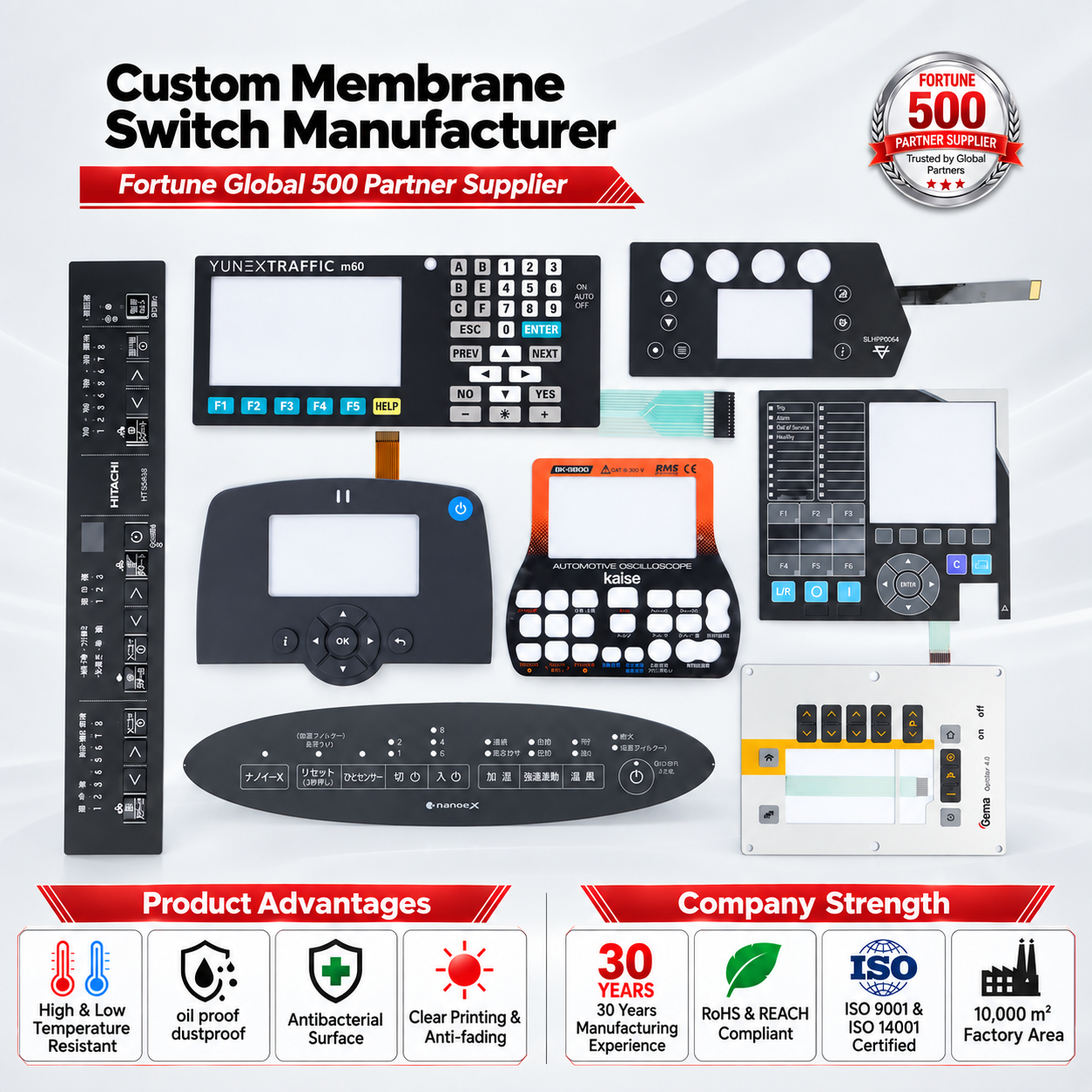
Custom Industrial Medical Automotive Appliance Membrane Switch Graphic Overlay Waterproof FPC Circuit Touch Panel
- Substrate:Autotype PET / PC
- Circuit:Flexible Copper FPC
- Protection:IP67 Waterproof Seal
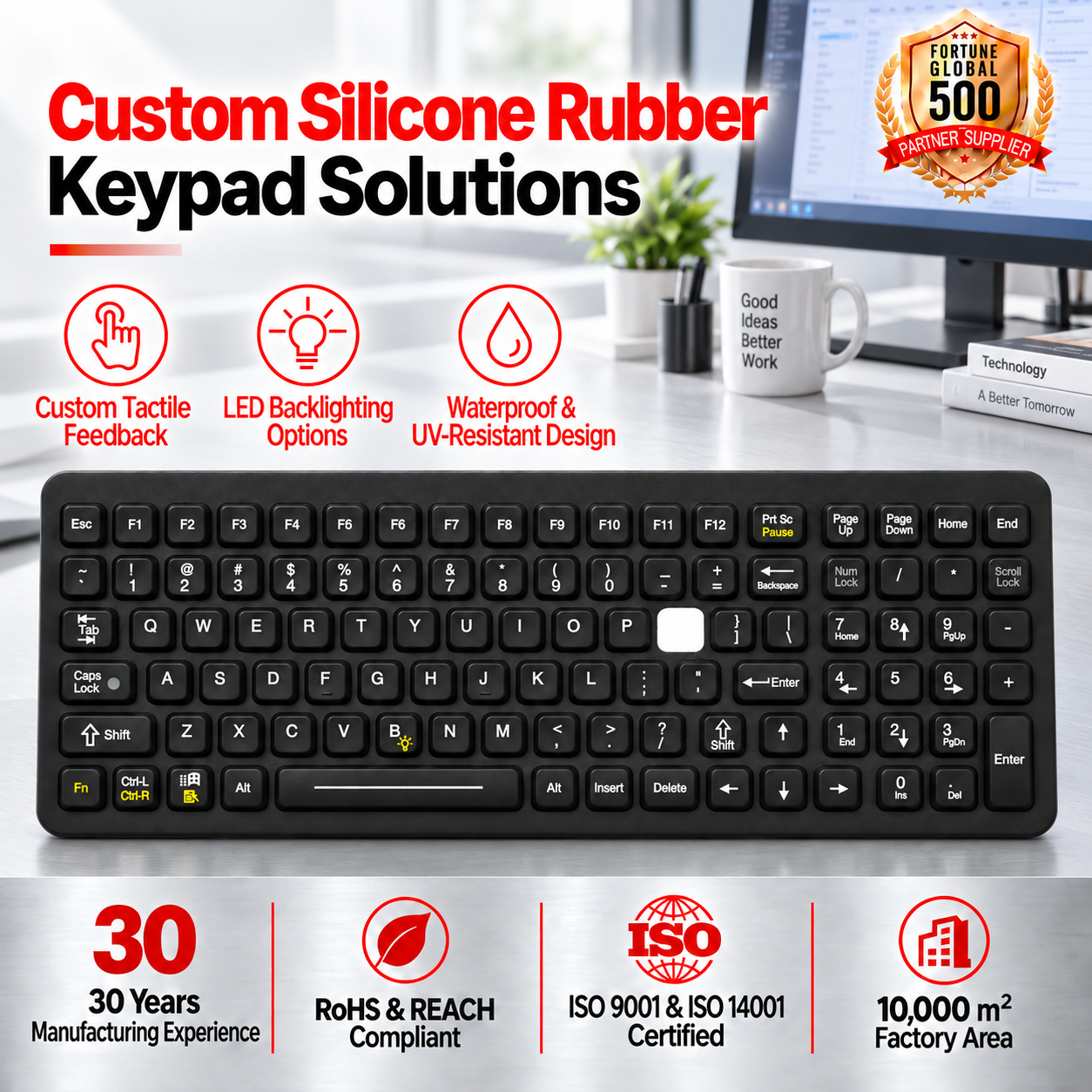
Industrial Custom Manufacturer Silicone Keypad Rubber Button Conductive Non-Toxic for Computer
- Elastomer:RoHS Silicone Rubber
- Contact:Carbon Pill Matrix
- Tactile Feel:High Snap Ratio Feel
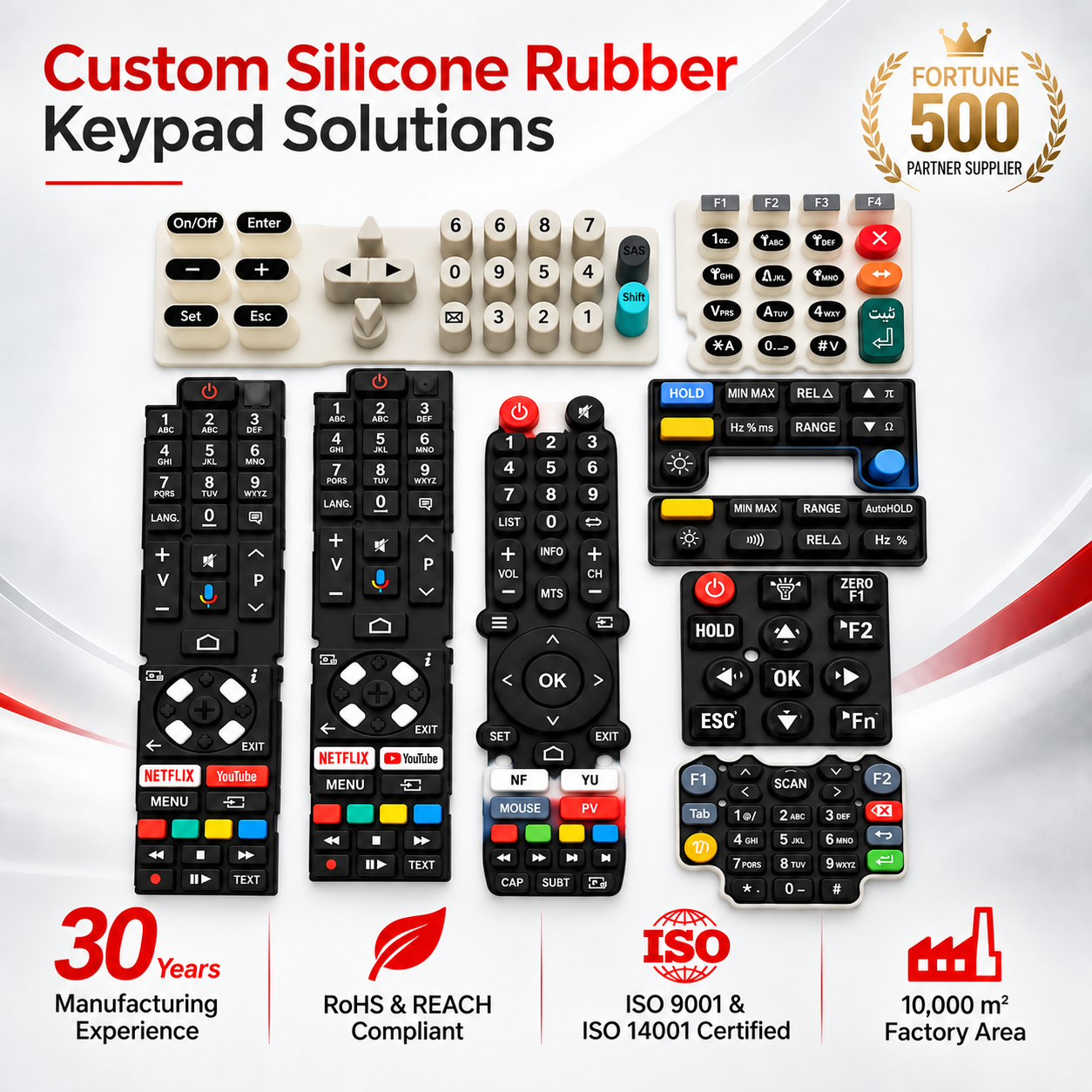
OEM/ODM Custom Special Color Silicone Rubber Elastomer Keypad Membrane Switch Button for Remote Controller
- Color Match:Pantone / RAL Spec
- Finish:PU / Epoxy Coating
- Life Cycle:> 1,000,000 Actuations
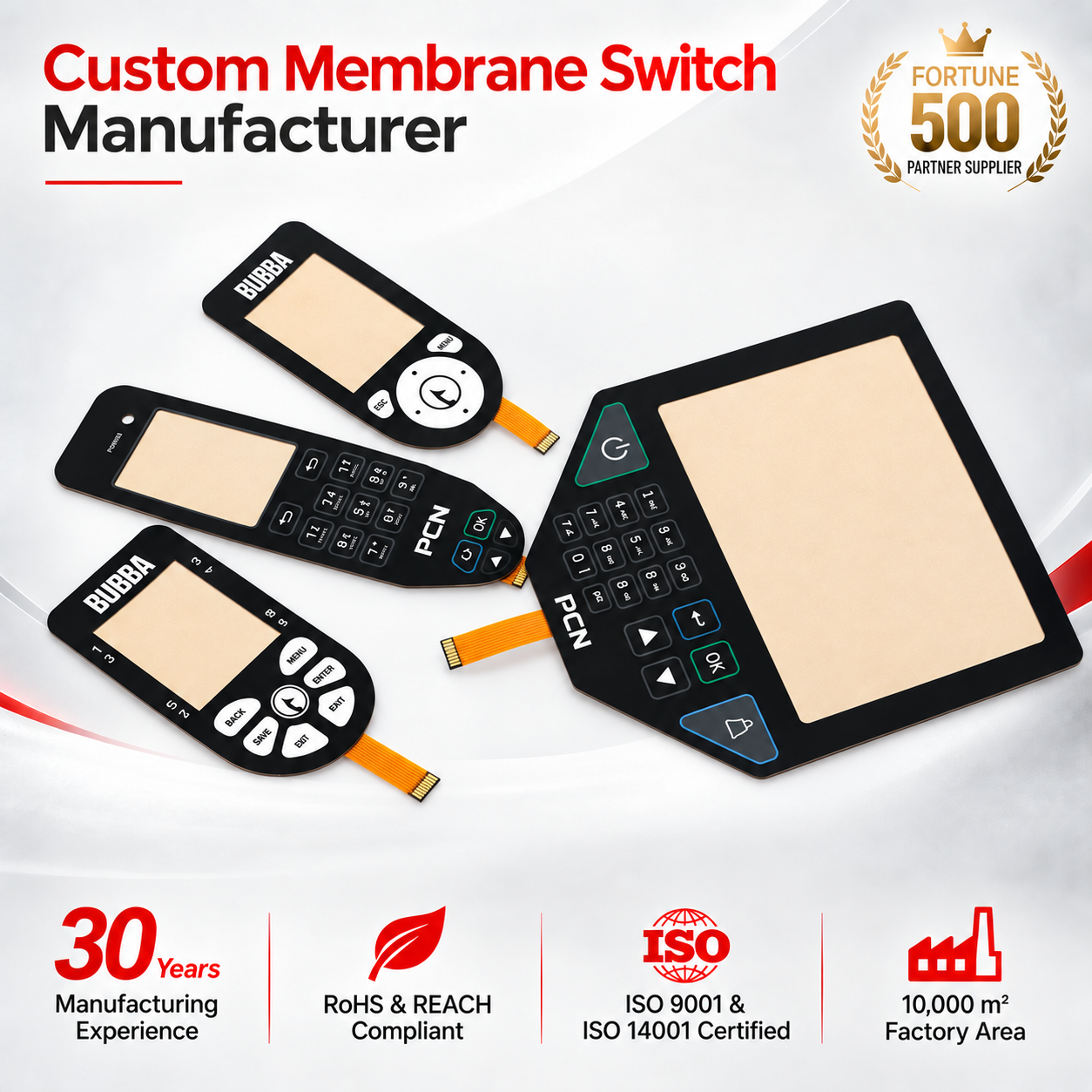
Custom 3m Adhesive Tactile Metal Dome Button Membrane Switch Graphic Overlay for Electronic Equipment
- Adhesive:3M 467MP / 3M 468MP
- Tactile Dome:Stainless Steel Dome
- Travel:0.5mm Crisp Click
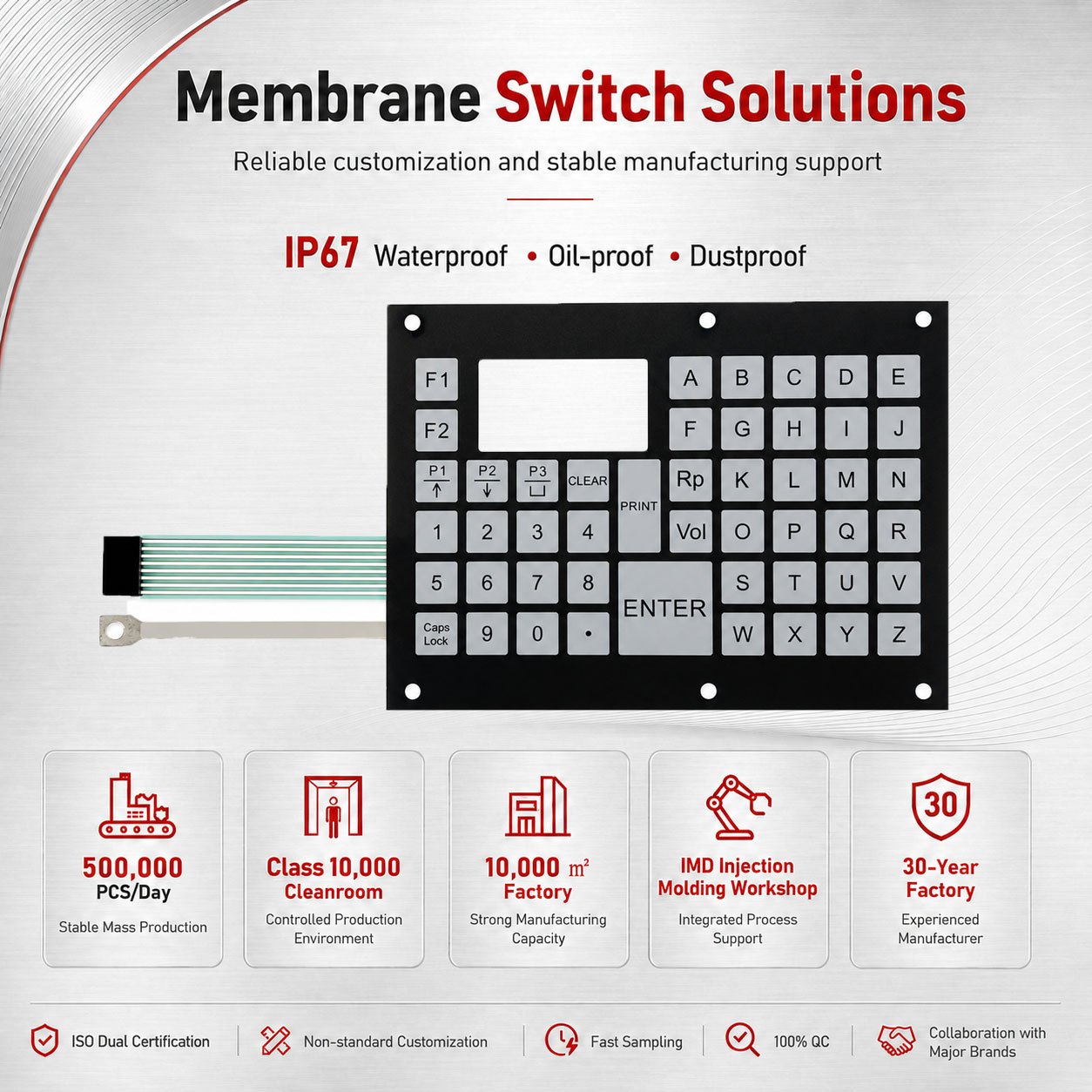
Custom Waterproof Wired Screen Wireless Tactile Switch Panel Fuel Dispenser Button Board Resistive Pad Keypad Circuit
- Application:Fueling & Outdoor Kiosk
- Durability:Anti-UV, Weatherproof
- Design:Vandal-Resistant Layer
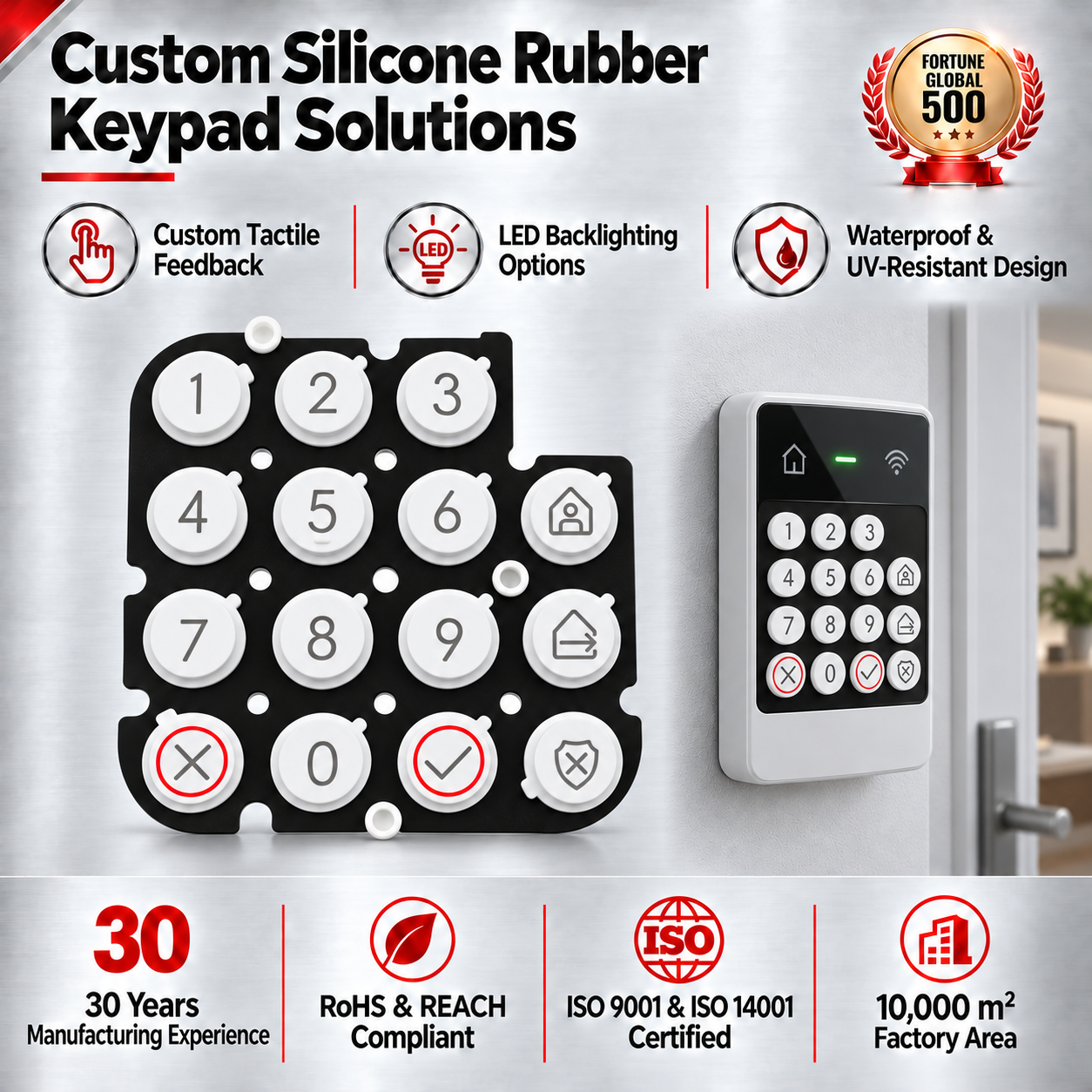
Factory Wholesale Numeric Conductive Silicone Rubber Keypad Panel Embossed Buttons for Home Appliances
- Pill Resistance:< 100 Ohms Conductive
- Key Travel:1.0mm - 2.0mm
- Customization:Laser Etched Legends
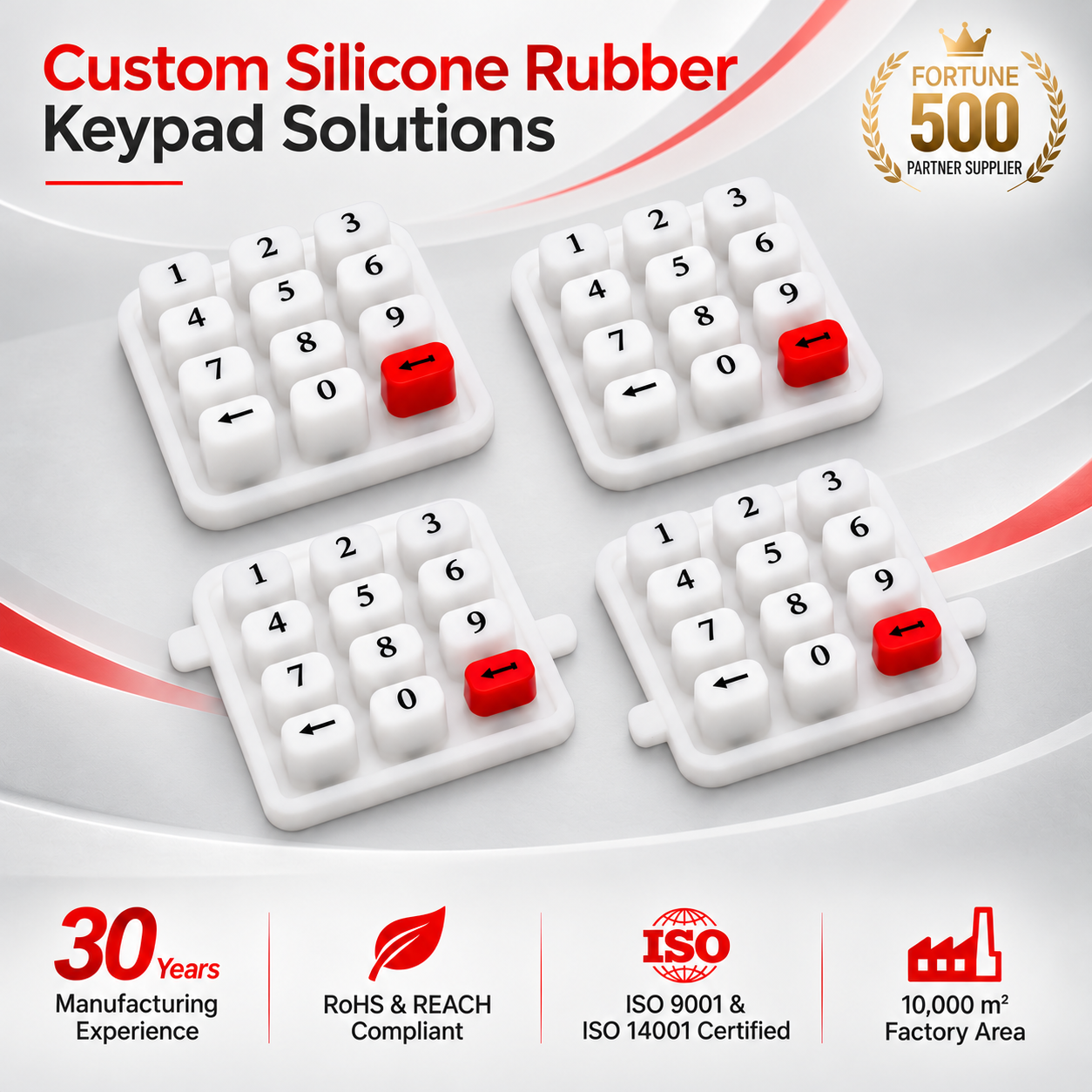
Custom Manufacturer Epoxy Silicone Rubber Keypad oem/odm with low Profile Design Durable and Waterproof
- Surface:Crystal Epoxy Dome
- Profile:Low Profile Slim Fit
- Sealing:Impermeable Moisture Seal
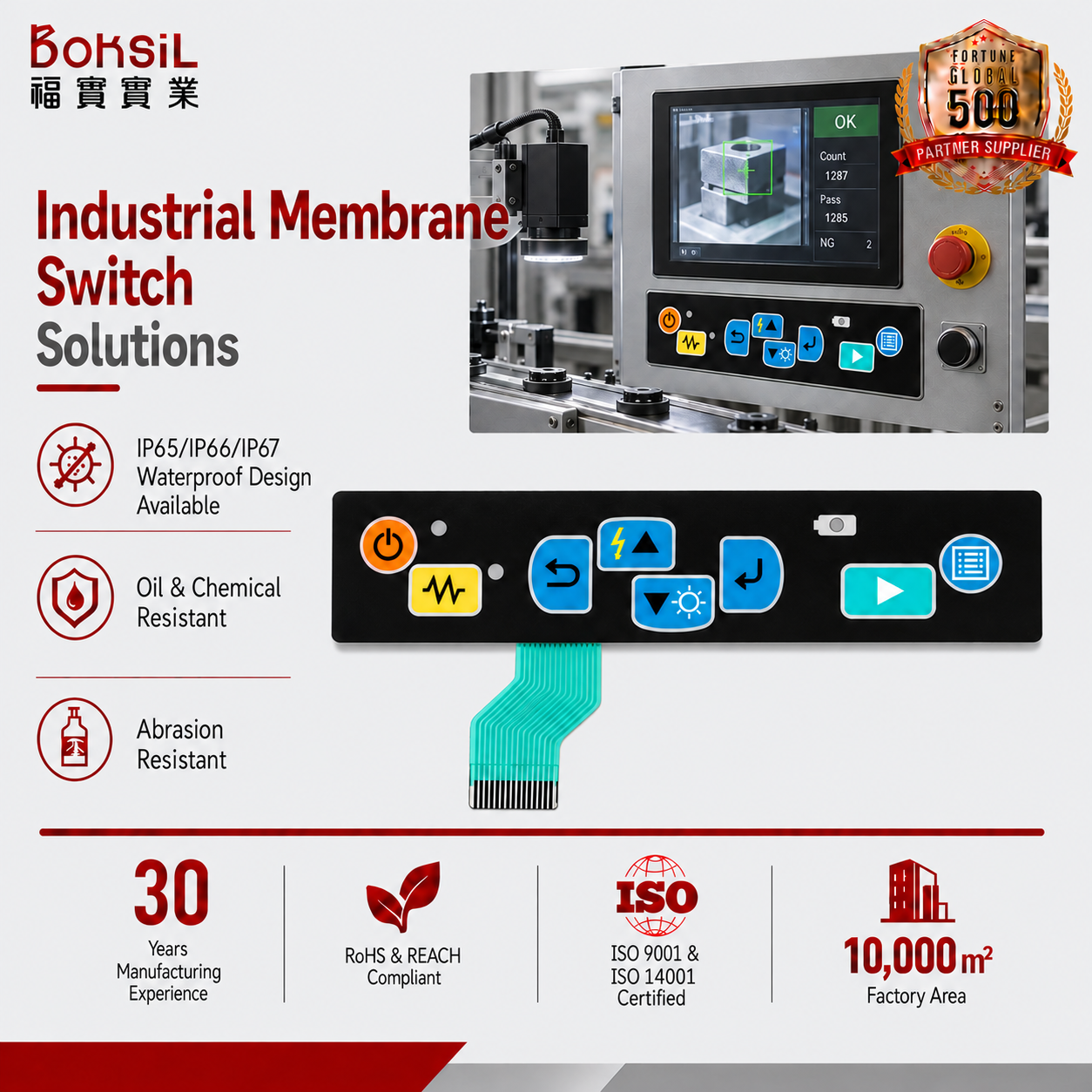
Custom Capacitive Touch Screen Panel Screen Printing Graphic Overlay Membrnae Switch for Home Appliance
- Technology:Capacitive Touch Sensor
- Windows:Transparent Display Lens
- Illumination:Integrated LGF / LED
The Engineering Foundation: Enterprise Advantages of AXRU Electronics
Operating a modernized 10,000㎡ manufacturing facility in Dongguan, China, verified on-site by Intertek, Dongguan AXRU Electronics Co., Ltd. serves as an end-to-end original design and manufacturing (OEM/ODM) supplier to Fortune 500 enterprises and Tier-1 engineering entities worldwide. By maintaining tight vertical integration across screen printing, Class 1,000 cleanroom lamination, precision flatbed die-cutting, and 100% automated electrical testing, we eliminate supply chain fragmentation and protect our partners against premature field degradation.
- Comprehensive DFM Protocols: Pre-tooling trace width, tail radius, and actuation analysis.
- Traceable Raw Materials: Exclusively sourcing Autotype polyester, Sabic Lexan PC, and 3M adhesive systems.
- In-House Reliability Testing: Dynamic key life cycle, tensile strength, and ink decolorization validation.
- Direct Technical Interface: Dedicated project managers and electrical engineers guiding every quote.
Comparative Engineering Stack-Up Selection
Selecting the correct balance between surface chemistry, tactile feedback mechanisms, and environmental seals is essential to ensure long-term durability and ergonomic success.
| Architecture Type | Core Substrate & Inks | Actuation Rating | Ingress Protection | Primary Industrial Use-Cases |
|---|---|---|---|---|
| Tactile Metal Dome Membrane | Autotype Autoflex PET / Screen Conductive Ag | 1,000,000 - 5,000,000 clicks | IP65 to IP67 Perimeter Gasket | Patient Monitors, Industrial CNC Centers, Portable Testers |
| Capacitive Solid-State HMI | Optical Polycarbonate / Indium Tin Oxide (ITO) | Zero Mechanical Wear (>10M touches) | IP68 Hermetic Front Surface | Sterile Operating Theaters, Cleanrooms, Smart Appliances |
| Silicone Rubber Overlays | Elastomeric Compression Molded Rubber | 500,000 - 2,000,000 cycles | IP66 Gasket Compression Fit | Military Radio Equipment, Rugged Surveying Devices |
| In-Mold Decoration (IMD/IML) | Formed PC/PMMA Film fused with ABS Resin | Permanent Decoration (Scratch Proof) | Integrated Bezel Assembly | Automotive Center Consoles, Premium Consumer Electronics |
| Hard-Coated Acrylic/Glass Lens | Chemically Strengthened Glass / PMMA 4H-7H | Indefinite (Display Faceplate) | Full UV and Chemical Barrier | Outdoor EV Charging Hubs, Industrial Automation Terminals |
Future Procurement Trajectories for Interface Engineering
In modern industrial and medical manufacturing, procurement directors and system architects are encountering radical shifts in Human-Machine Interface technologies. Understanding these micro- and macro-trends is vital to mitigating supply chain disruption and engineering obsolescence.
Antimicrobial & Aggressive Chemical Resistance
The post-pandemic medical device landscape demands front-panel graphic overlays capable of withstanding daily, aggressive disinfection protocols using quaternary ammonium, bleach, and isopropyl alcohol. Engineering teams are transitioning en masse from standard polycarbonates to textured, biaxially-oriented polyesters treated with inorganic, silver-ion based antimicrobial matrices that inhibit micro-bacterial proliferation without clouding optical windows or causing perimeter delamination.
Light Guide Film (LGF) & Dead-Front Illumination
Traditional multi-LED arrays often introduce hotspot artifacts, thermal dissipation bottlenecks, and excessive stack-up thickness. Modern procurement trends show an explosive demand for integrated ultra-thin Light Guide Film (LGF) layers. By coupling side-firing sub-miniature SMD LEDs into micro-etched optical grade films, manufacturers achieve balanced, uniform backlighting across expansive key clusters and dynamic "dead-front" icons that remain invisible until activated by system states.
Convergence of Capacitive Sensing with Tactile Hybridization
While capacitive touch delivers sleek, flush, wipe-clean industrial designs, heavy machinery, automotive controls, and aerospace systems still mandate positive tactile confirmation for blind operator control. The industry is rapidly adopting hybrid interfaces: thin-film overlay panels that combine projected capacitive sliders for continuous parameters with discrete, sealed snap-action metal domes for safety-critical emergency actions, driving higher assembly yield through single-connector FPC tails.
Copper Flexible Circuits (FPC) Over Printable Silver
As pin pitches shrink down to 0.5mm to interface with compact microcontrollers, traditional screen-printed silver ink tracks encounter severe silver migration risks under high ambient humidity and electrical bias. Global procurement teams are standardizing on polyimide-based Copper Flexible Printed Circuits (FPC) laminated directly behind the graphic overlay. Copper traces deliver virtually zero track resistance, robust component solderability, and imperviousness to micro-cracking under repetitive bending stresses.
Supply Chain Resiliency via Verified Direct Exporters
Recent international logistical disruptions have exposed the vulnerabilities of multi-tiered trading brokers. Strategic procurement directors are eliminating intermediary markups and information delays by partnering directly with vetted manufacturing plants that carry on-site ISO qualifications, verified Intertek credentials, and dedicated English-speaking engineering staff capable of delivering immediate Design for Manufacturing (DFM) reviews.
Frequently Asked Questions on Graphic Overlay Procurement
Direct technical answers to common queries raised by hardware engineers, procurement specialists, and global supply managers.