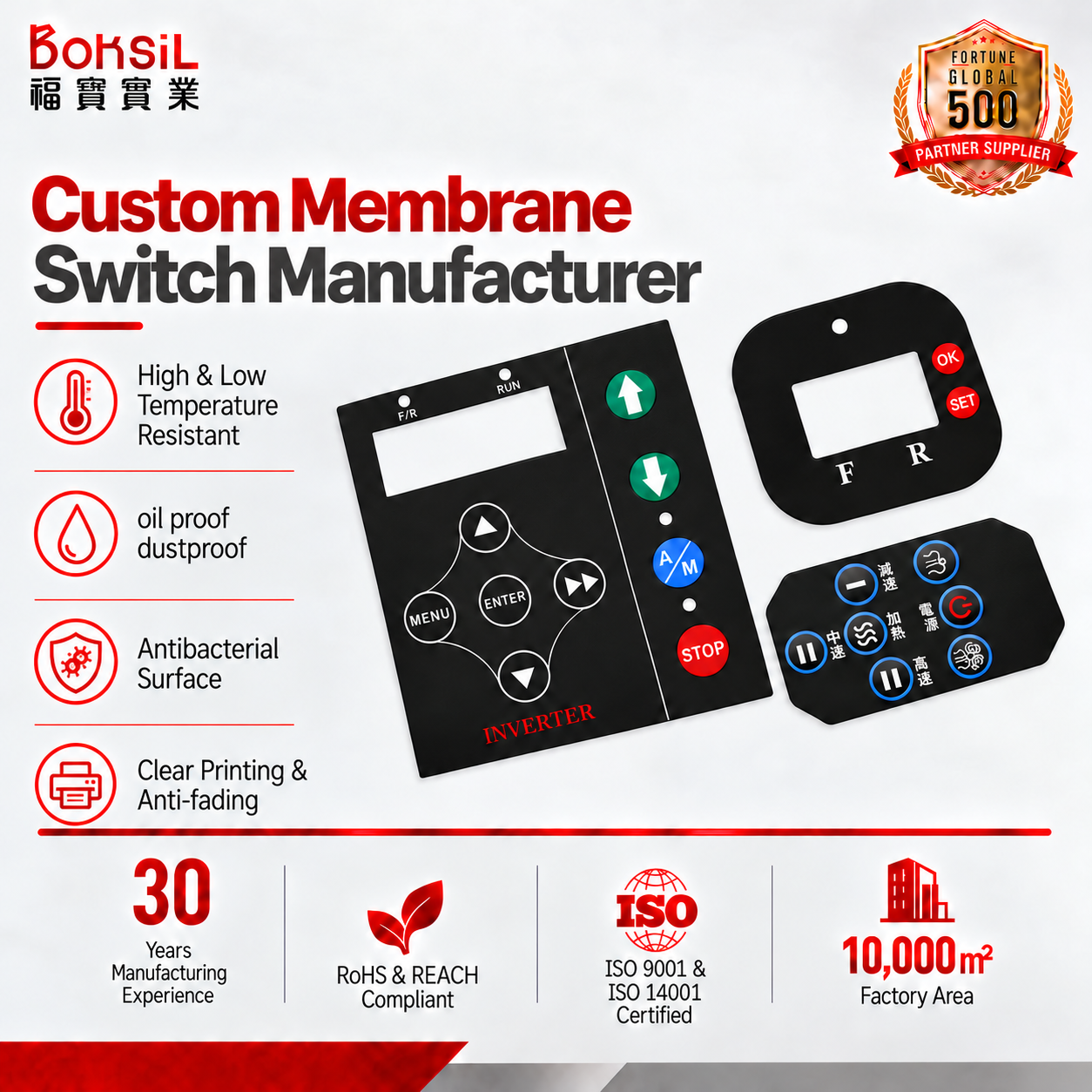
OEM/ODM Front Control Polycarbonate Membrane Switch
Sub-surface screen-printed overlay built with optical clarity, high wear resistance, and precision metal dome tactile feedback.
Explore our export-certified interface modules designed for industrial controllers, healthcare electronics, high-reliability test equipment, and consumer interfaces.
Sub-surface screen-printed overlay built with optical clarity, high wear resistance, and precision metal dome tactile feedback.
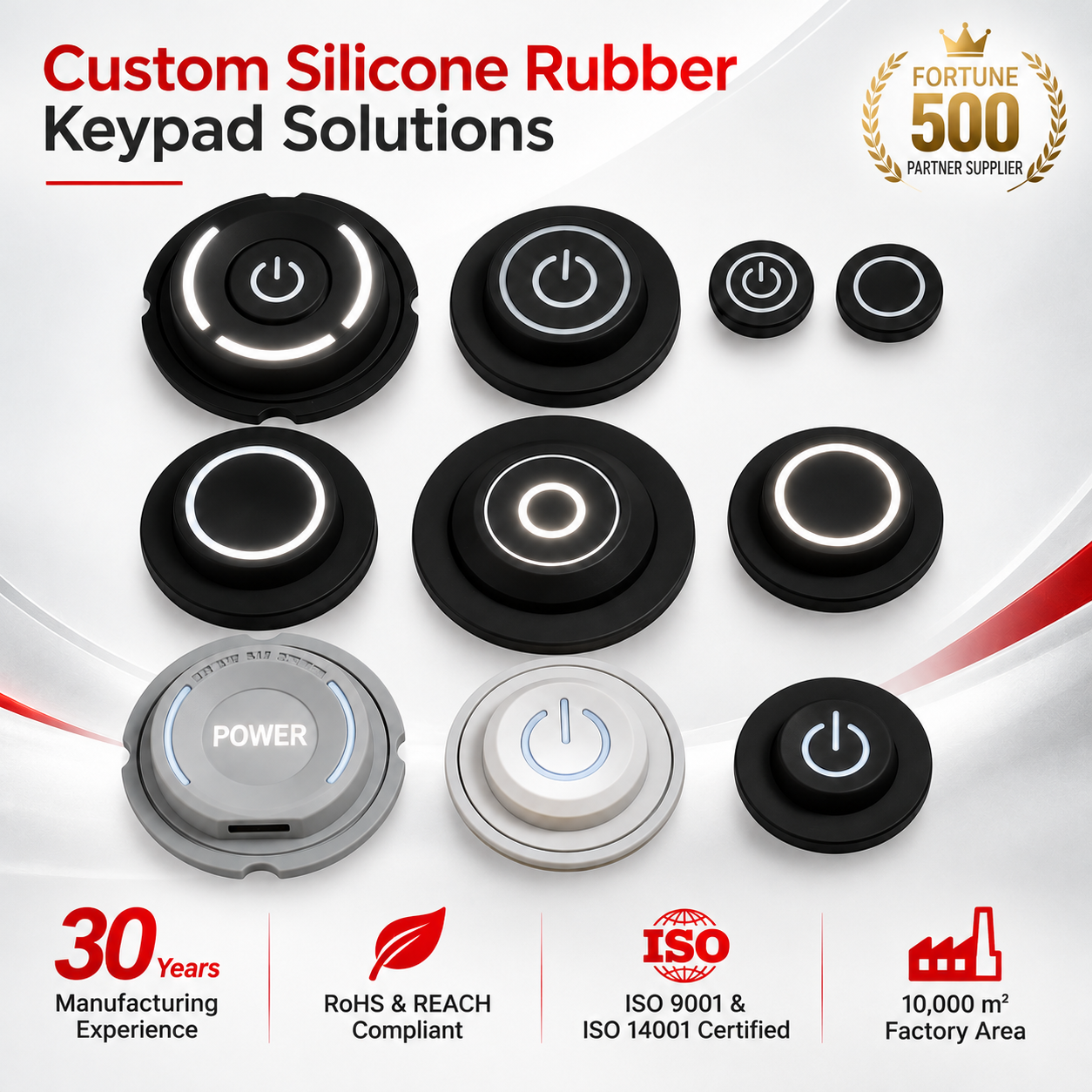
Multicolor laser-etched silicone elastomeric keypad backed by printed circuit membranes for uniform backlighting dispersal.
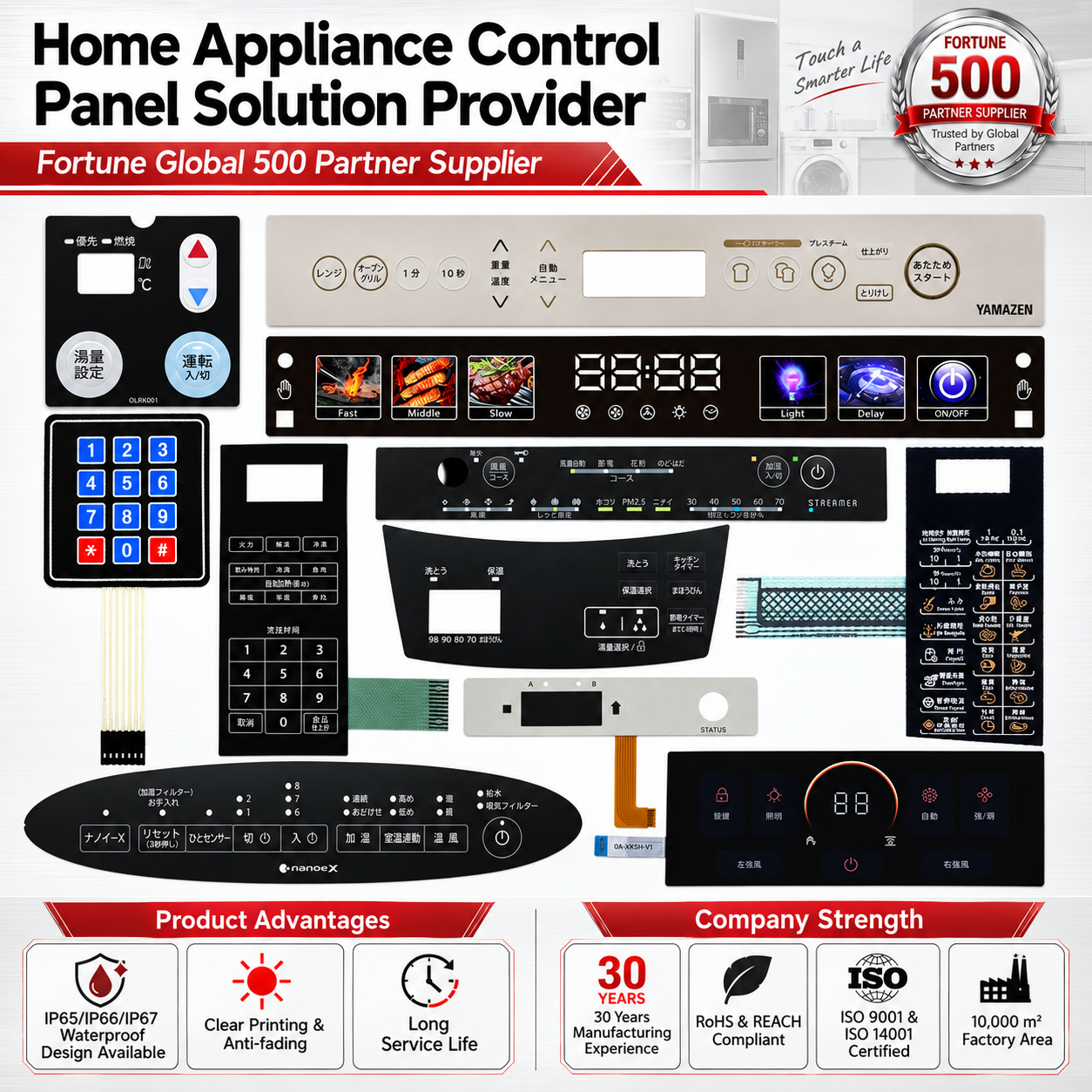
Perimeter environmental adhesive barriers shielding circuits against fluid washdown, oils, humidity, and fine particulate penetration.
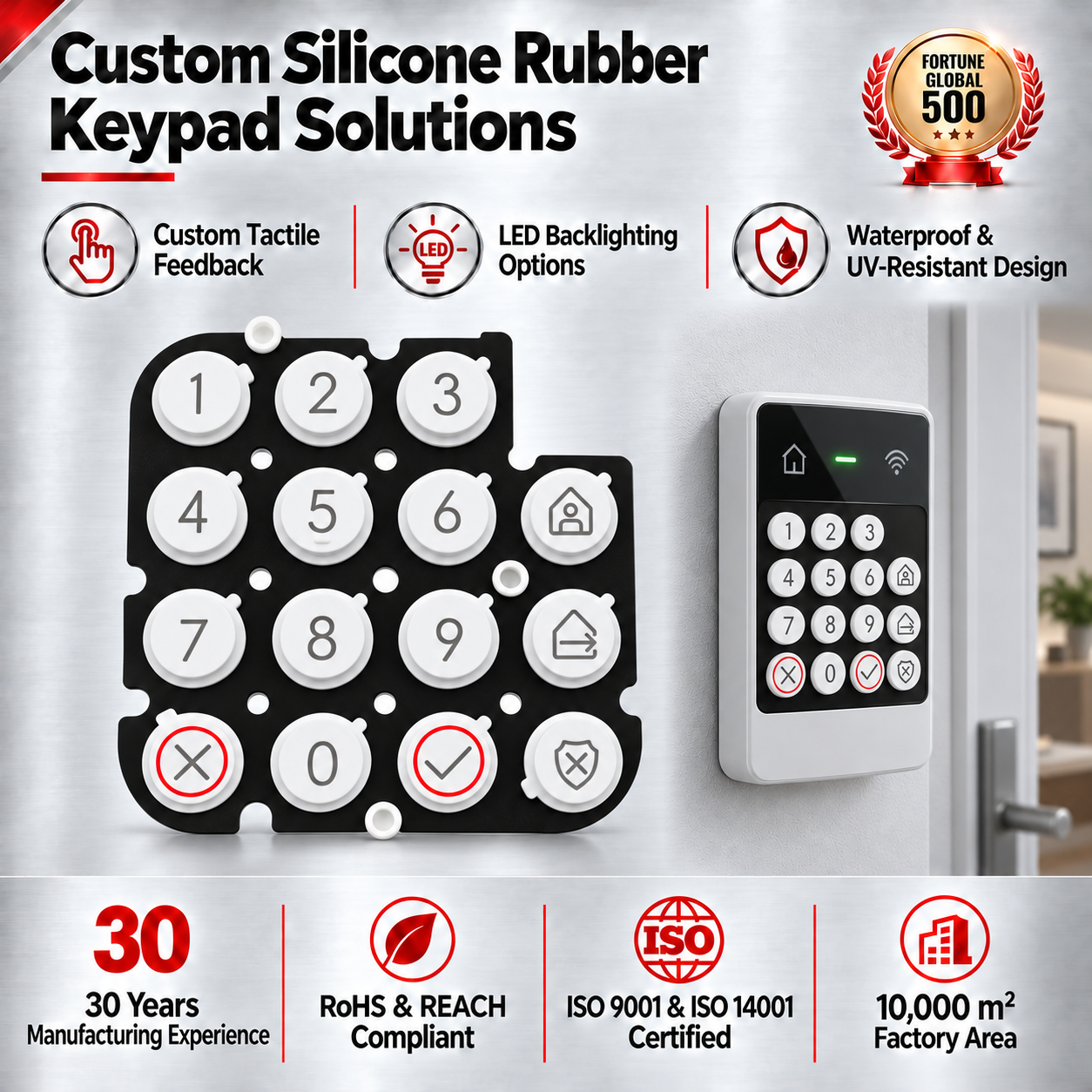
Conductive carbon pill contact matrix offering ergonomic stroke feel, long operational cycle life, and low resistance actuation.
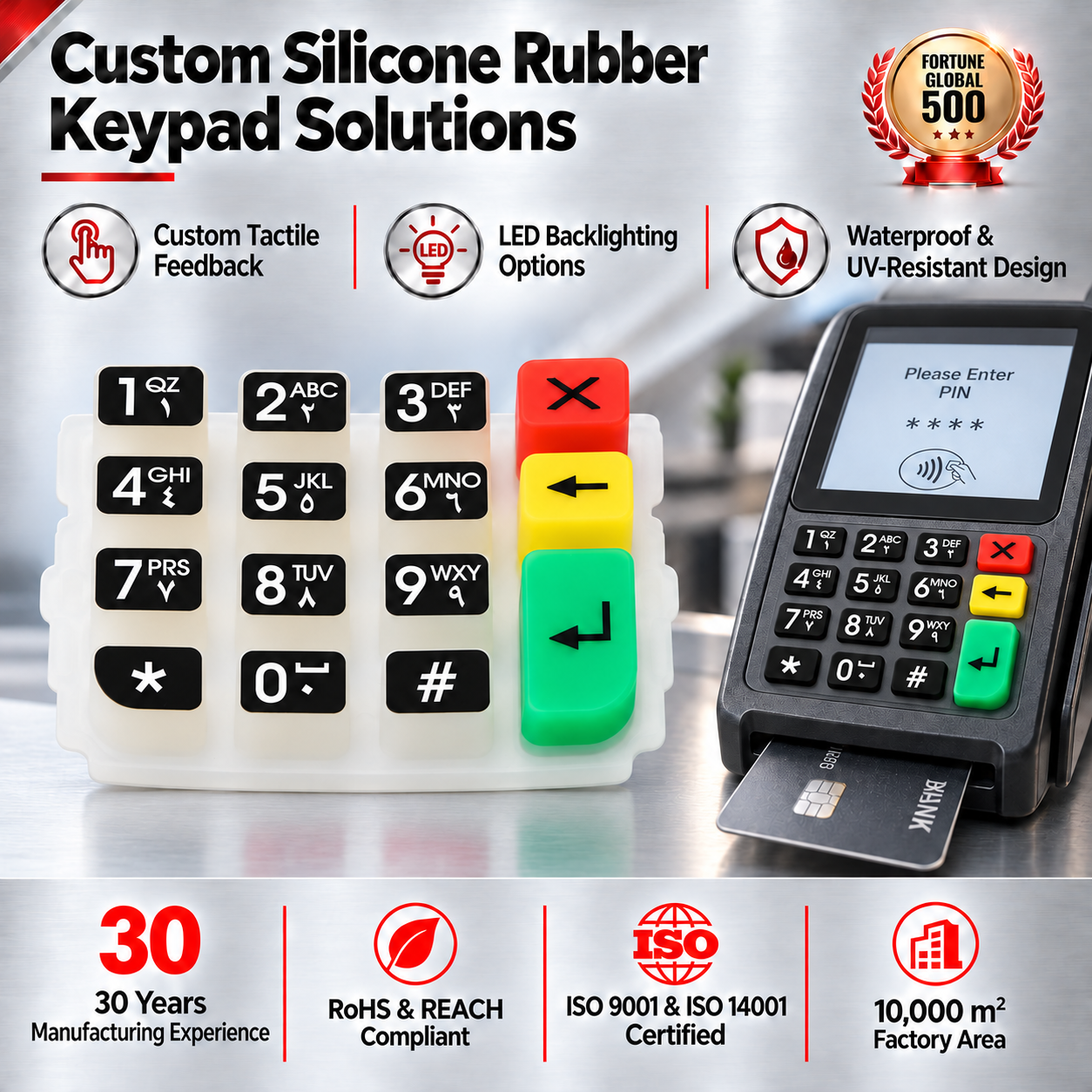
Custom elastomer compression molding configured with plastic keycap integration for consumer and home electronics.
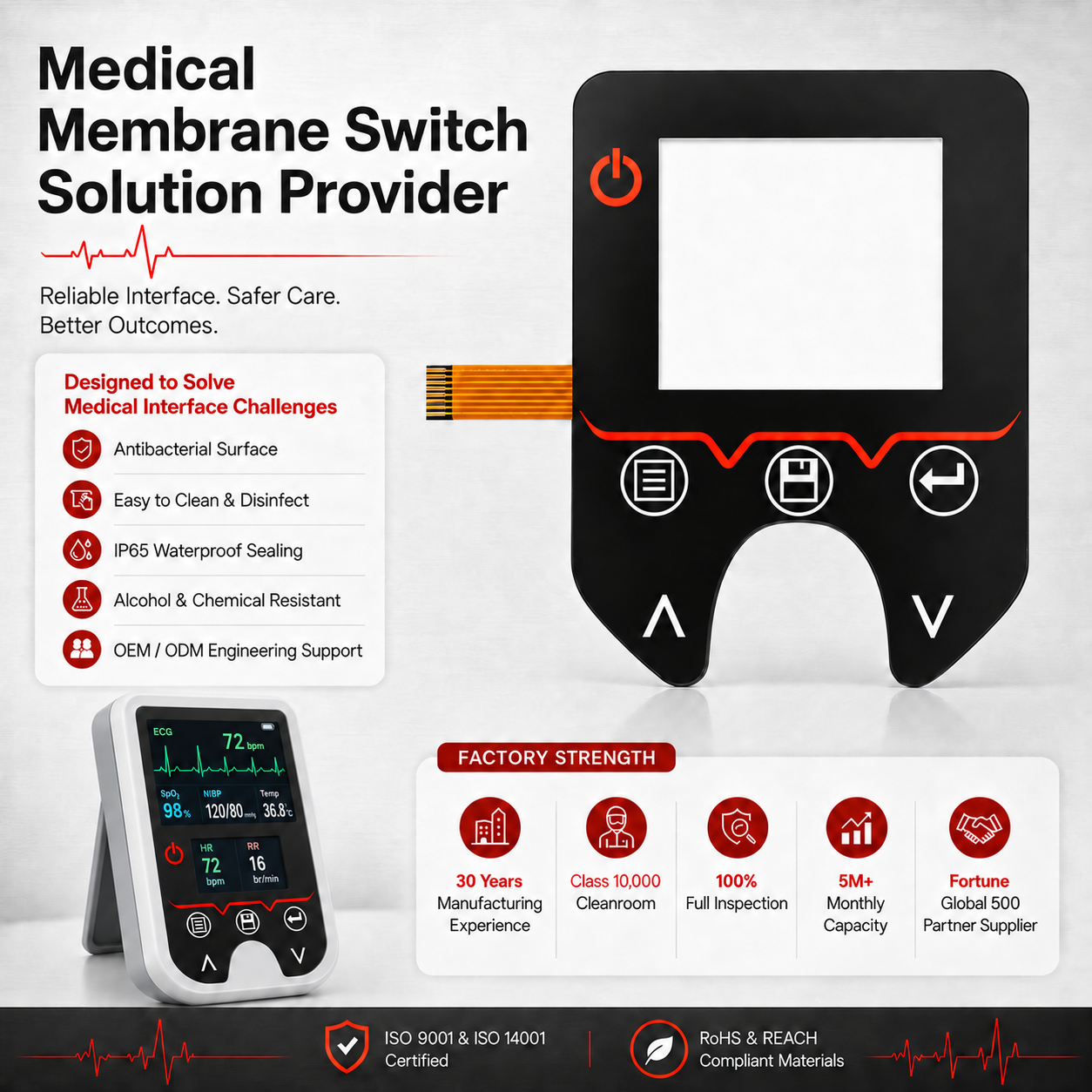
Chemical-resistant antimicrobial PET/PC overlay engineered for continuous clinical disinfection and sterilization regimes.
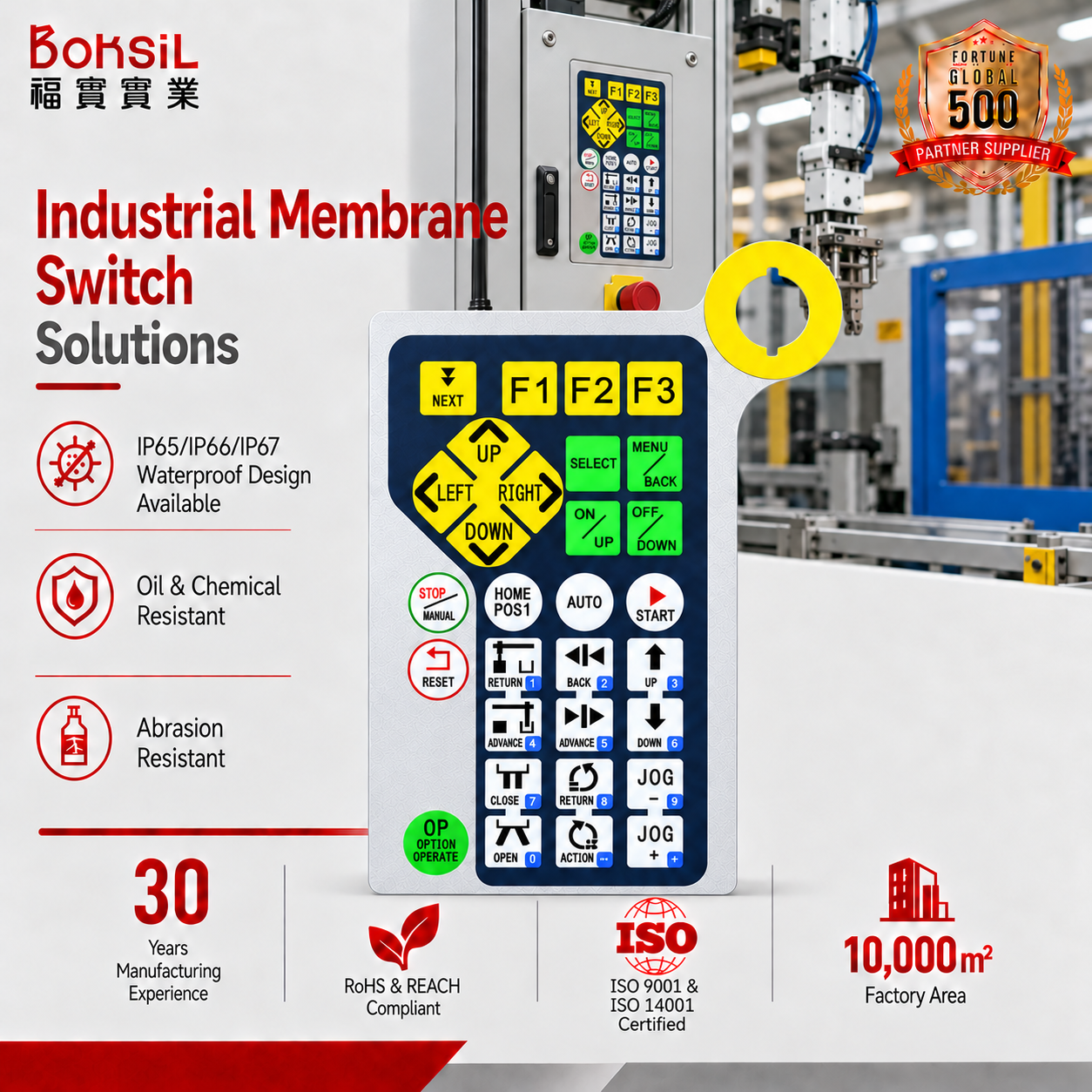
Rugged graphic overlay engineered for heavy-duty CNC, PLC industrial equipment interfaces, and harsh manufacturing environments.
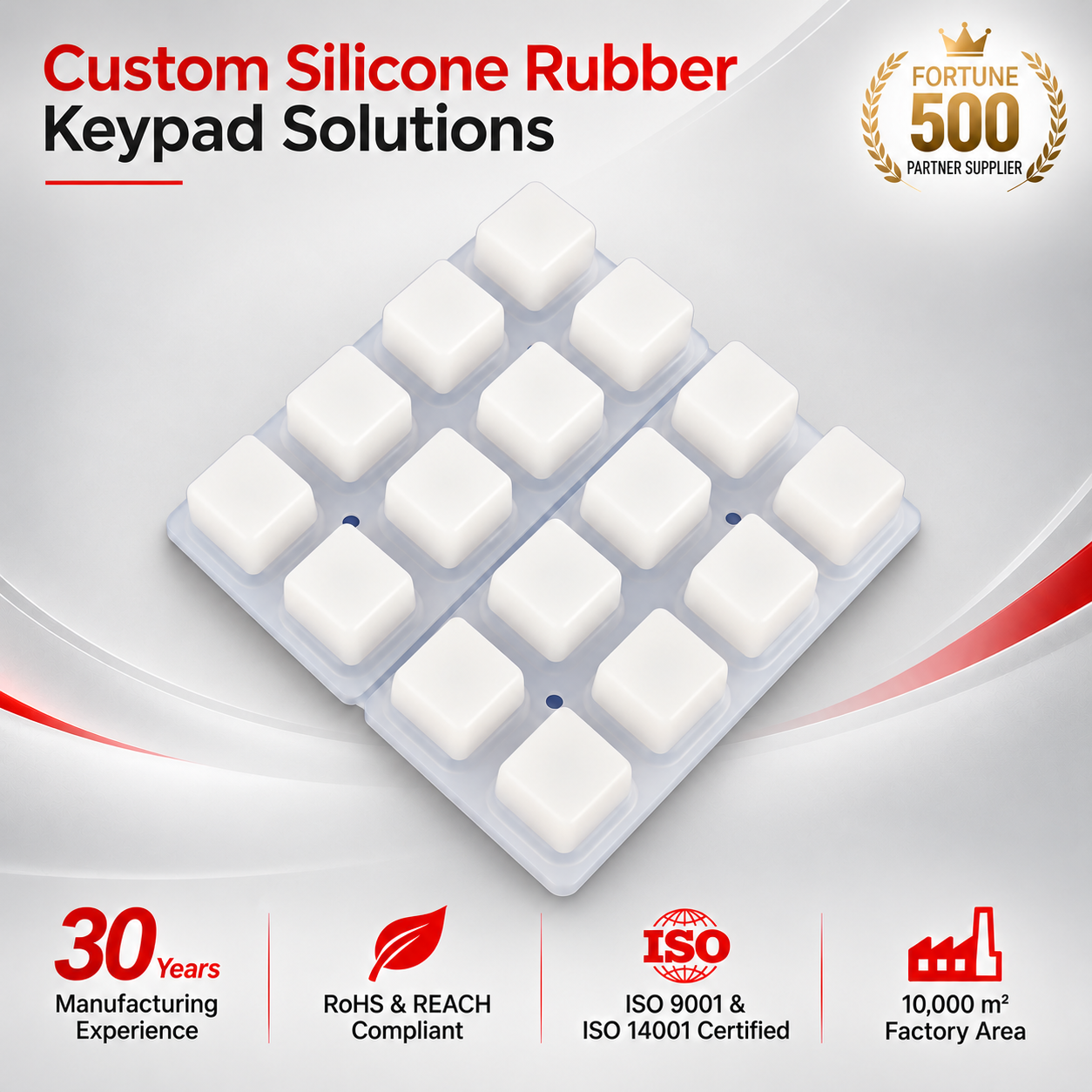
Precision-molded silicone keypad with embedded high-snap stainless steel oval domes, engineered for communication transceivers.
A membrane keypad is not just a graphic sticker; it is an electro-mechanical multilayer system. Choosing the correct substrate, conductor, adhesive, and dome switch geometry defines long-term product durability.
| Subsystem / Layer | Material Options | Key Engineering Characteristics | Critical Test Metric |
|---|---|---|---|
| Graphic Overlay | Autotype PET (Polyester), Lexan Polycarbonate (PC), PMMA Acrylic | Reverse-printed sub-surface inks; selective fine/velvet texture; hard-coated anti-scratch, UV stabilization. | Taber Abrasion (ASTM D1044), Yellowing UV Resistance |
| Circuit Substrate | Screen-Printed Silver on PET vs. Flexible Copper Polyimide (FPC) | Silver PET provides optimal cost efficiency; Copper FPC delivers dense routing pitch (<0.5mm) and SMD LED reliability. | Loop Resistance (<100Ω), Trace Bend Radius Flexibility |
| Tactile Actuators | Stainless Steel Domes (Nickel/Gold Plated), Polydome (Formed PET) | Tripod, four-leg, or round domes. Actuation forces from 220g to 450g; audible tactile feedback click. | Actuation Life Cycle (1M to 5M cycles), Snap Ratio Test |
| Adhesive Systems | 3M 467MP, 3M 468MP, 3M 300LSE, 3M 9472LE (Low Surface Energy) | High sheer holding power; impervious to moisture vapor ingress; bond integrity across metals and textured plastics. | 180° Peel Adhesion (ASTM D3330), Thermal Chamber Cycle |
| Environmental Barrier | Gasketed perimeter seals, breathers with hydrophobic microporous vents | Provides IP65, IP66, or IP67 ingress protection against liquid jet cleaning and environmental dust. | IEC 60529 Ingress Testing, Temp-Humidity Soak |
Global supply chain managers and hardware design engineers are adopting advanced interactive technologies. Learn what is transforming membrane keypad manufacturing.
Procurement teams are no longer choosing strictly between flat capacitive glass and physical switches. The dominant trend is the hybrid interface: capacitive slider controls and wake-up sensors unified with sealed, metal-dome physical emergency-stop or confirmation keys on a single integrated FPC circuit layer.
Traditional bulky LED arrays or fragile electroluminescent (EL) foils are being superseded by side-firing micro-LEDs paired with 0.125mm optical Light Guide Film. This delivers dead-front selective icon illumination with ultra-low power consumption and zero hotspots across industrial controllers.
Post-pandemic healthcare protocols and food-processing hygiene require graphic overlays that resist quaternary ammonium, IPA 70%, and sodium hypochlorite washdowns. The deployment of micro-textured, anti-microbial biocide-embedded polyester films has surged from optional to standard BOM specs.
Procurement cycles are accelerating. High-speed digital flatbed UV printers and precision digital laser plotters eliminate upfront steel die-mold charges for phase-1 engineering samples, reducing sample delivery timelines from 21 days down to 48–72 hours.
OEMs are eliminating intermediate suppliers. Instead of purchasing separate overlays, bare switches, plastic enclosures, and PCBs, buyers demand fully validated front sub-assemblies complete with display bonding (OCA optical bonding) and tested integrated cabling.
While final system assembly is often localized, Tier-1 and Tier-2 manufacturers rely on China for specialized screen printing chemistry, precision dome arrays, and cost-effective FPC fabrication, leveraging high-efficiency automated mass production lines.
Headquartered in Dongguan, China, Dongguan AXRU Electronics Co., Ltd. operates a 10,000㎡ verified cleanroom manufacturing plant, housing complete vertical production from initial artwork separation to final reliability certification.
Complete stack-up analysis, connector pitch verification, tactile snap-ratio profiling, and environmental seal validation.
Class 10,000 cleanroom printing, automated optical color densitometer verification, and precise Pantone matching.
Automated stainless-steel dome pick-and-place, silver circuit curing tunnels, and SMD LED encapsulation.
High-precision laser and flatbed CNC die-cutting ensuring outline tolerances within ±0.05mm for enclosure fitting.
Our 121-person operation is independently audited and verified on-site by Intertek. We provide verifiable production histories, audited trade capacity, transparent material traceability (RoHS & REACH compliant), and have proudly supplied interface assemblies for Fortune 500 equipment programs.
Zero escaped defects guaranteed through our rigorous testing equipment:
• Key Life Tester: Multimillion-cycle durability validation.
• Force-Displacement Tester: Tactile curve & snap feedback.
• Programmable Temp & Humidity Chamber: Environmental soak.
• Ink Decolorization & Yellowing Testers: Solvent & UV stability.
Eliminate misunderstandings caused by third-party trading agencies. At AXRU, international buyers interface directly with dedicated Bilingual DFM Project Engineers and Quality Assurance specialists capable of reviewing 2D/3D CAD, DXF, DWG, and Gerber files within 24 hours.
Clear, direct engineering answers addressing common questions regarding specifications, tolerances, lead times, and customization.