Precision Engineered Keypad Overlays & Assemblies
Industrial-grade graphic overlays, silicone components, tactile switches, and sensor arrays manufactured under strict ISO quality workflows.
The Definitive Engineering Guide to Sourcing Keypad Overlays from China
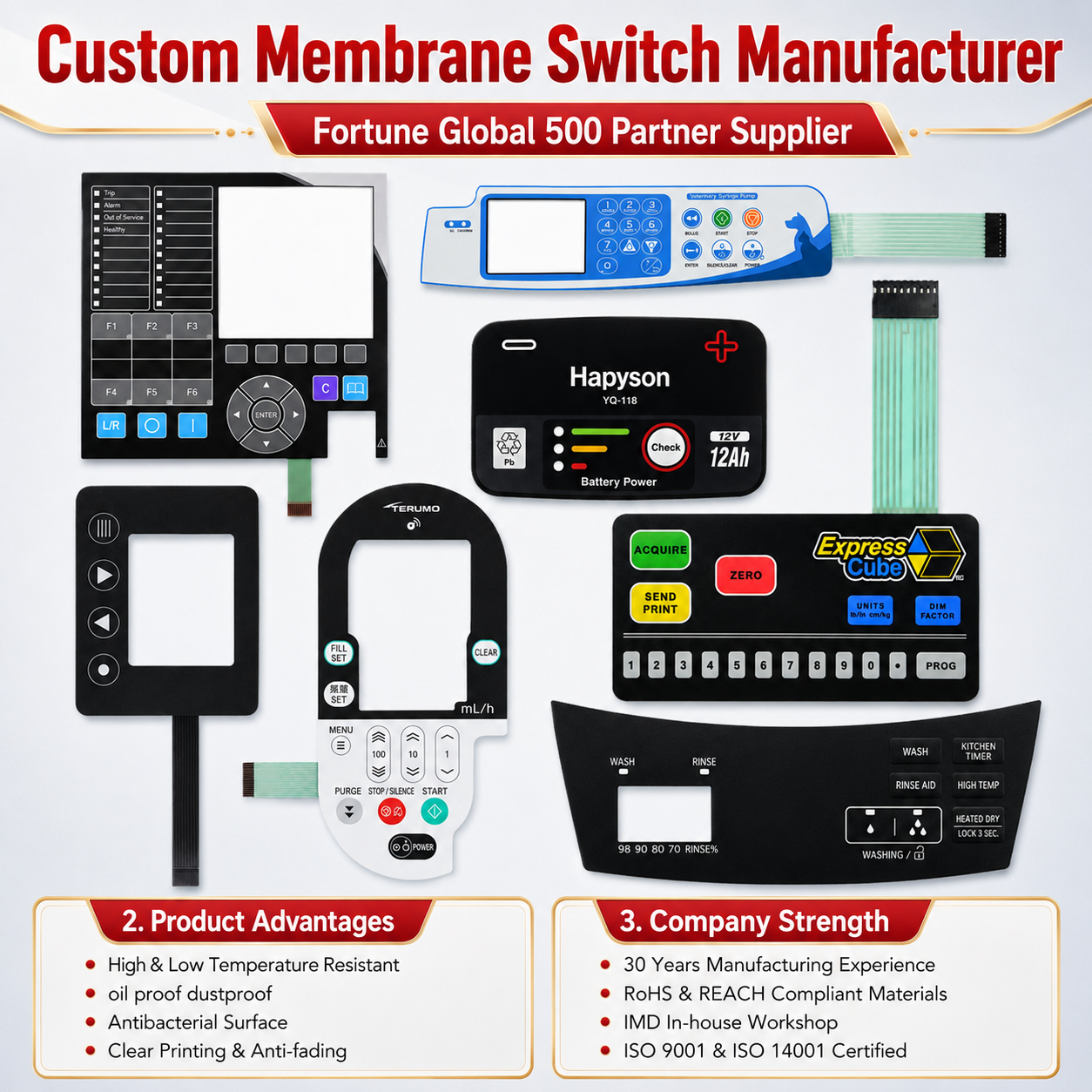
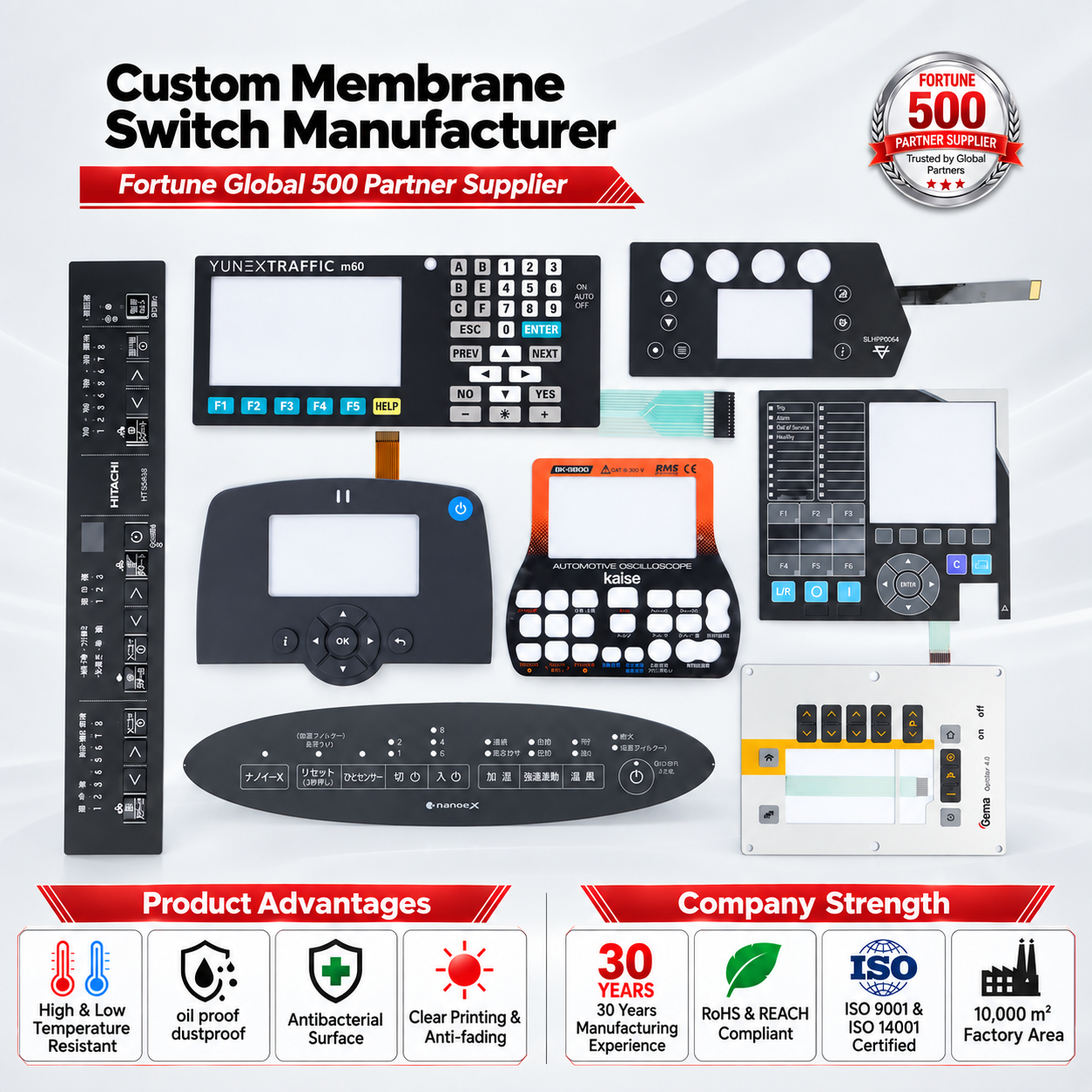
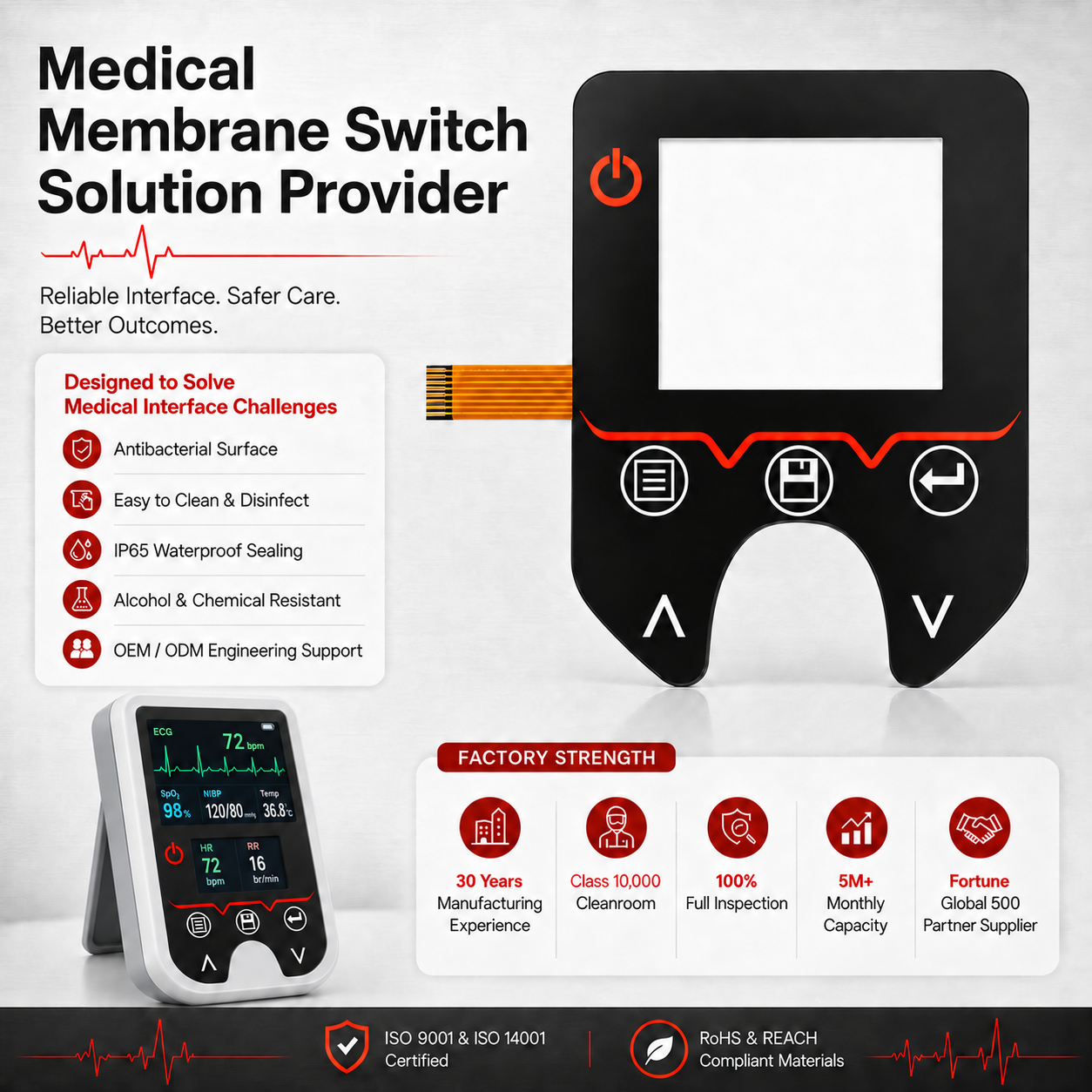
Keypad overlays, typically classified within the Human-Machine Interface (HMI) segment as graphic overlays, membrane switch front facings, or elastomeric interfaces, form the physical boundary between human operators and sophisticated electronic hardware. In high-reliability applications—such as Class II medical diagnostic devices, automotive telematics, avionics ground controls, and ruggedized industrial PLCs—an overlay is not simply an aesthetic cover. It is an intricate multi-layer engineering barrier designed to withstand mechanical strain, continuous chemical wipe-downs, UV light exposure, electrostatic discharge (ESD), and moisture ingress.
When procurement managers, DFM engineers, and supply chain directors evaluate keypad overlay factories in China, selecting an ideal contract manufacturing partner requires looking far beyond basic price quotations. Top-tier Chinese production facilities, centered primarily in precision manufacturing clusters like Dongguan and Shenzhen, have evolved from rudimentary silkscreen operations into advanced, automated micro-fabrication centers. These facilities integrate roll-to-roll screen printing, high-speed laser routing, automated optical inspection (AOI), cleanroom optical bonding, and environmental testing labs directly on-site.
Engineering Core Note: Premature field failures in graphic overlays and membrane keypads are almost never caused by standard cosmetic wear. Over 80% of interface failures trace directly to adhesive migration along spacer layers, chemical leaching of low-grade polycarbonate resins, silver trace migration under humid conditions, or improper venting channels that fail during rapid barometric changes.
This technical whitepaper outlines the structural material architectures, industrial sourcing trends, and technological evolutions dominating the modern keypad overlay sector, helping original equipment manufacturers (OEMs) and original design manufacturers (ODMs) ensure maximum reliability and lower total cost of ownership (TCO).
Substrate Material Selection: Autotype PET vs. Optical Grade Polycarbonate
A keypad overlay's primary substrate dictates its service life, actuation resilience, tactile switch travel, and ambient resistance. Sourcing teams must clearly differentiate between Polyethylene Terephthalate (PET) and Polycarbonate (PC) formulations:
Polyester (PET) Substrates
Engineered films such as MacDermid Autotype (Autotex/Autoflex) represent the gold standard for high-cycle flexural life. Capable of enduring upwards of 5 million continuous switch actuations without micro-cracking or hinge-fatigue. PET features extraordinary chemical resistance against harsh hospital cleaning agents (isopropyl alcohol, bleach, quaternary ammonium compounds) and industrial solvents, making it non-negotiable for medical and mission-critical controls.
Polycarbonate (PC) Substrates
Polycarbonate (e.g., SABIC Lexan) delivers superior impact strength, optical clarity, dimensional stability, and ease of thermal embossing. It is universally preferred for instrument bezels, appliance displays, and dead-front backlighting designs. However, unhardcoated PC exhibits reduced fatigue life (typically sub-100,000 deep flex cycles) and vulnerabilities to aggressive hydrocarbon solvents, restricting its use to lower-actuation or static panel overlays.
Hybrid Elastomeric & Plastic-on-Rubber (P+R) Systems
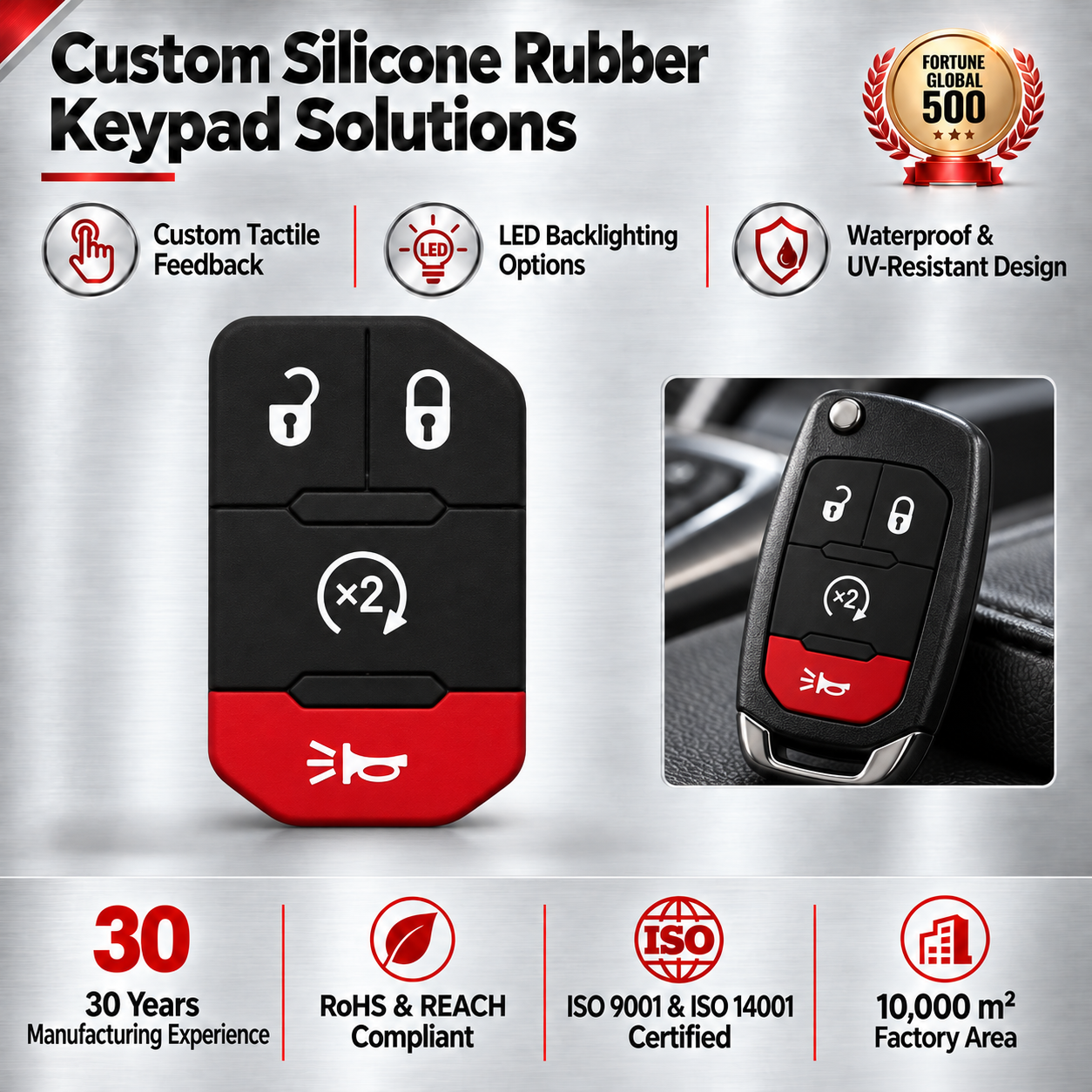
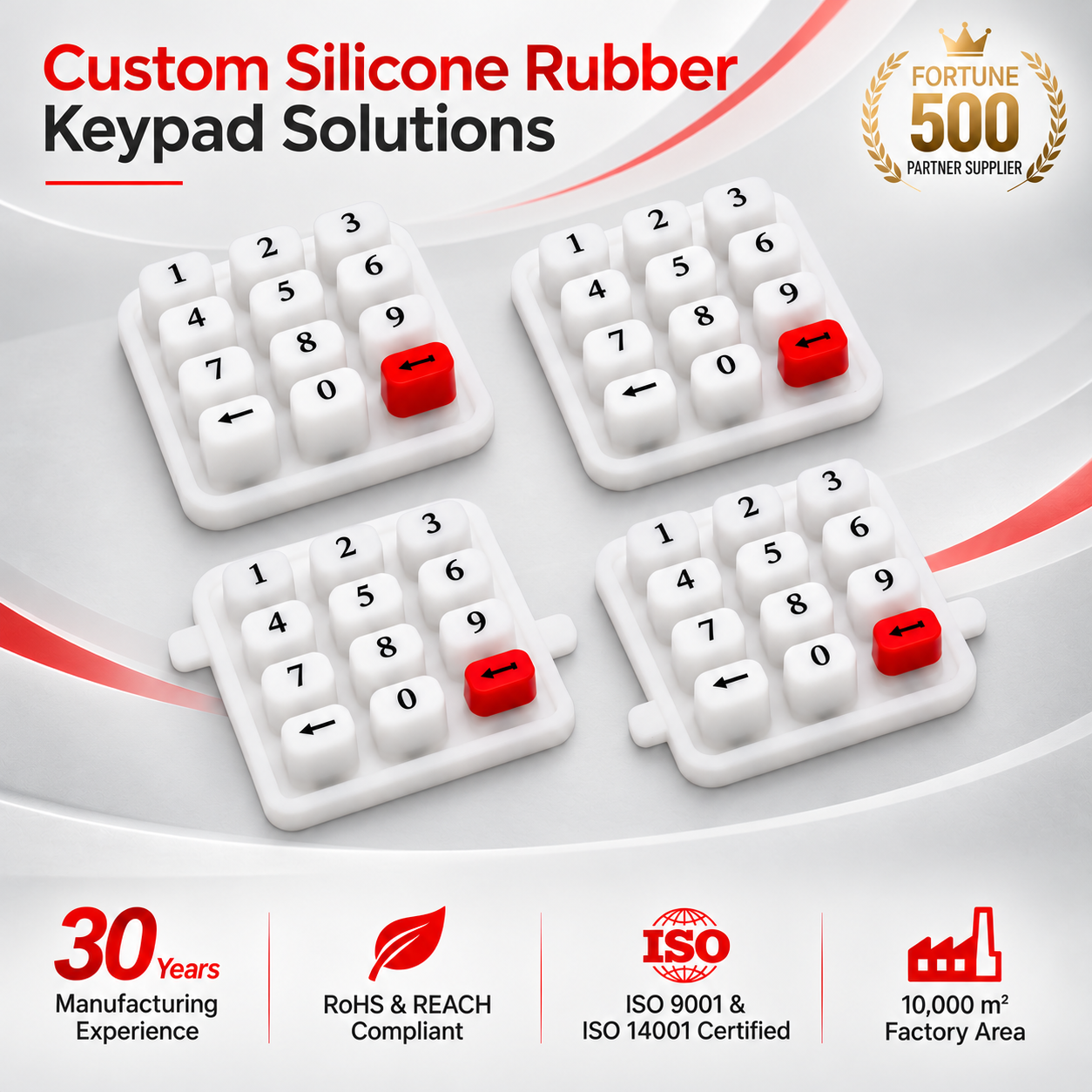
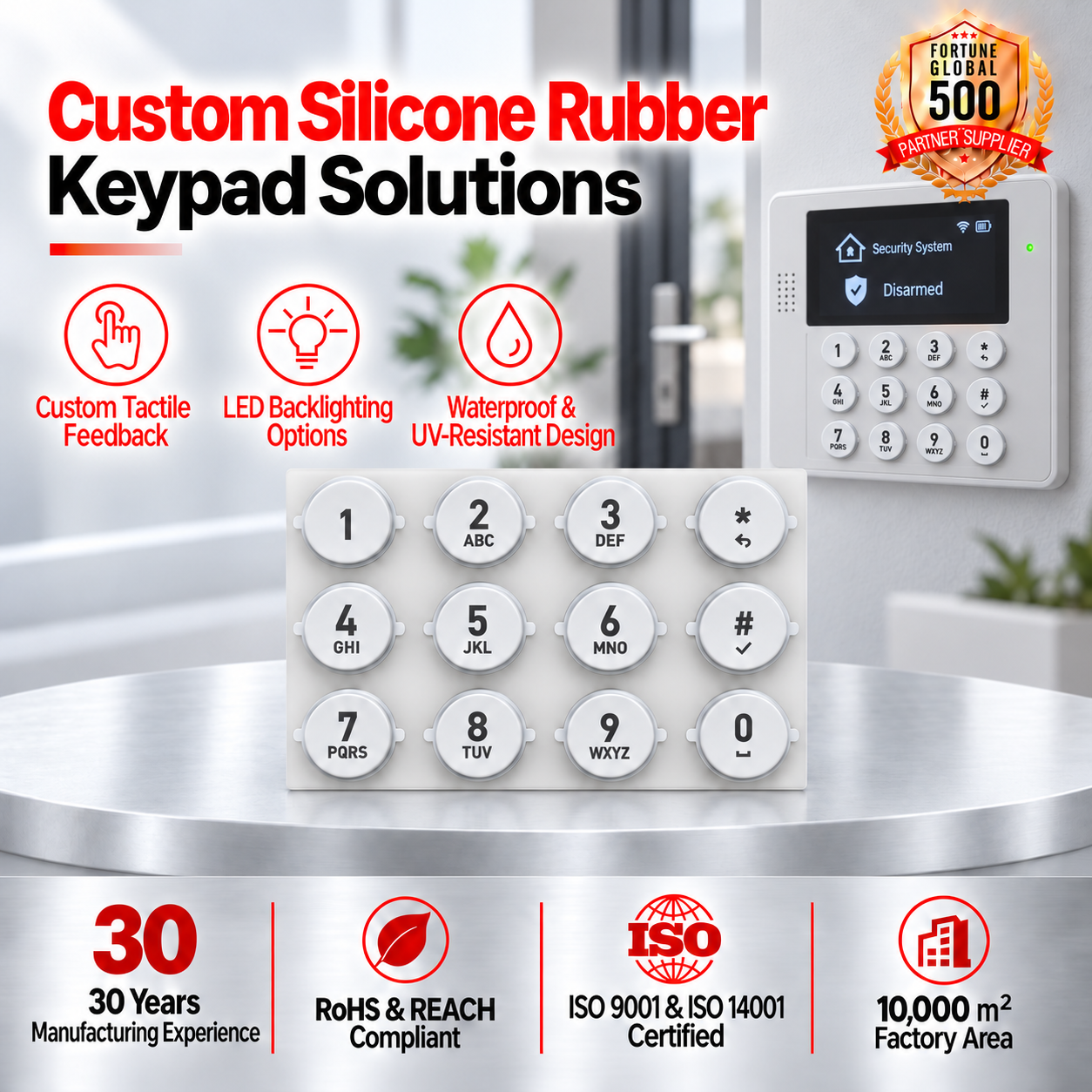
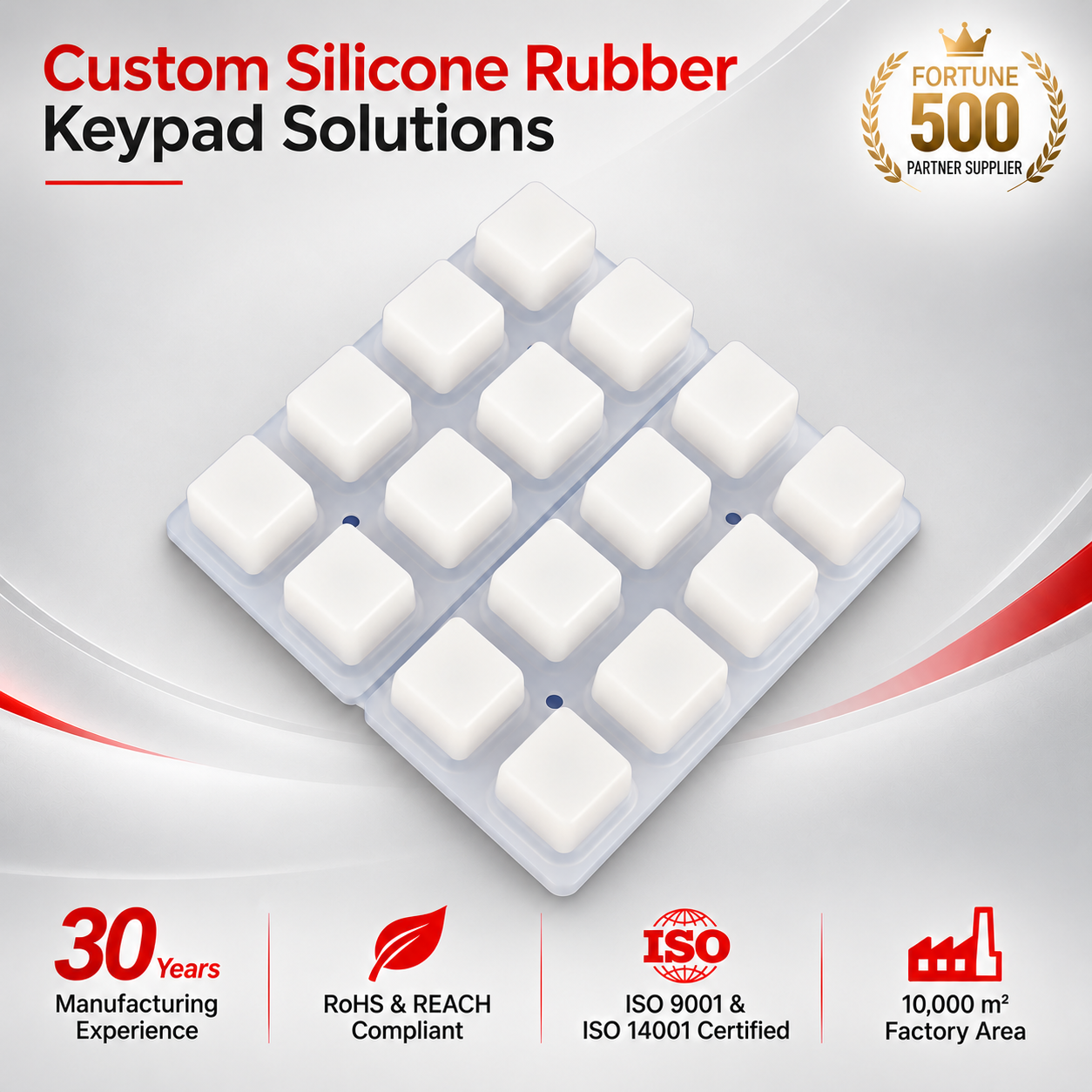
Combining the tactile travel of molded liquid silicone rubber (LSR) with the aesthetic precision of rigid plastic keycaps or thin-film graphic overlays. P+R assemblies leverage carbon pills, gold-plated contacts, or metal dome actuation underneath an ergonomic, 3D contour. This hybrid approach provides tactile feedback matching consumer expectations while preserving IP67-rated perimeter environmental seals.
Future Keypad Overlay Procurement Trends: 2025–2030
The global human-machine interface market is experiencing rapid transformation driven by IIoT deployments, smart healthcare automation, and advanced automotive cockpit architectures. International buyers must structure their multi-year sourcing roadmaps around three defining technical developments:
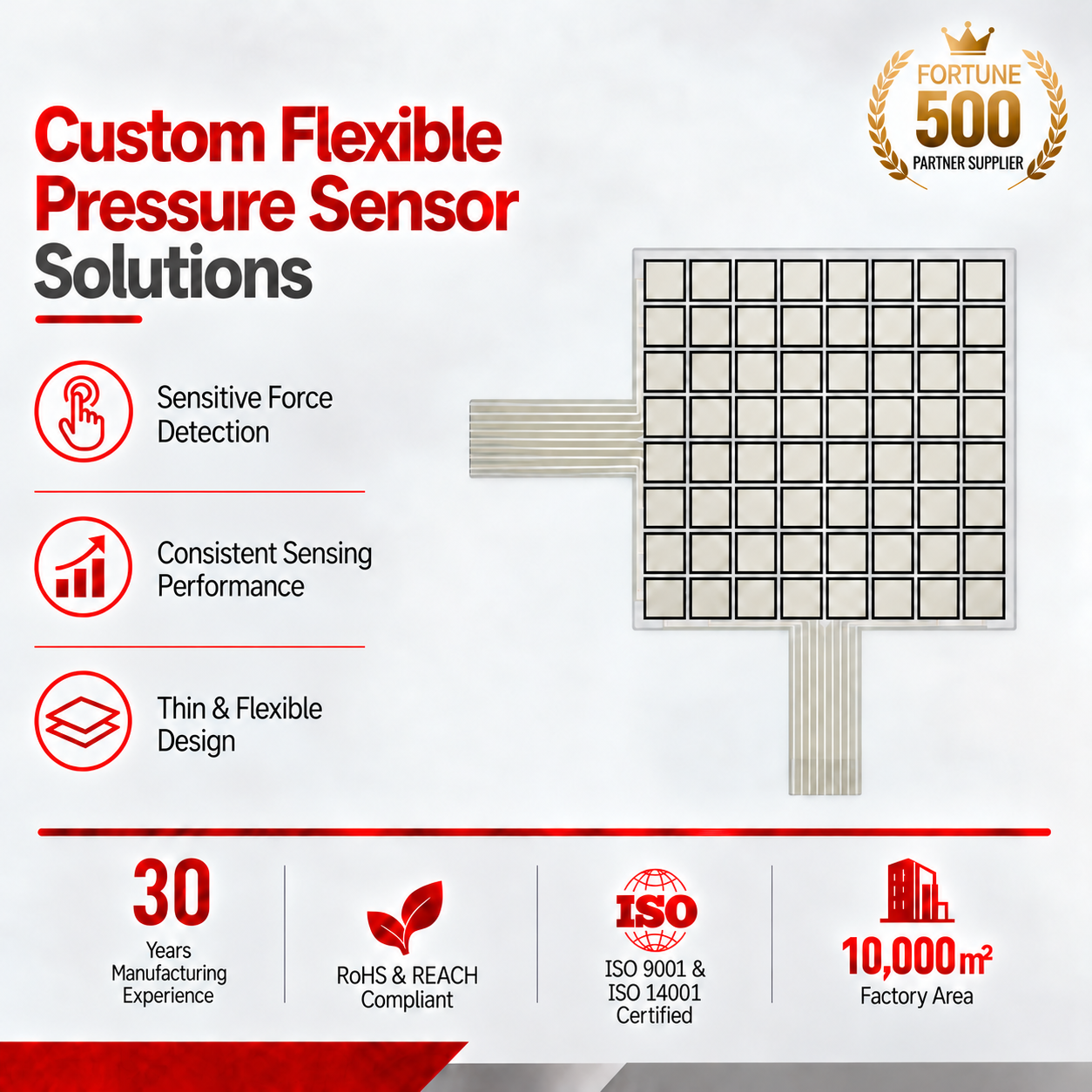
1. Shift from Pure Tactile to Capacitive & Thin-Film Force Hybrids: Traditional tactile metal dome switches (snap domes) continue to command steady demand due to affirmative operator tactile feedback. However, high-end applications are aggressively integrating printed capacitive sensors directly behind decorative overlays. By coupling printed conductive circuits with capacitive ICs, hardware designers eliminate physical travel wear altogether while offering multi-touch sliders, virtual wheels, and sealed seamless surfaces that can be completely sterilized.
2. In-Mold Electronics (IME) and 3D Structural Integration: The convergence of In-Mold Decoration (IMD) with printed conductive traces—known as In-Mold Electronics (IME)—is eliminating the traditional distinction between enclosure, overlay, and PCB. Screen-printed circuit traces and surface-mount LEDs are embedded within thermoformed plastic resin, reducing component count by up to 70%, slashing assembly weights, and eliminating mechanical seams where moisture or particulate contamination could collect.
3. Transition from Screen-Printed Silver to Copper FPC Circuits: While screen-printed conductive silver flakes suspended in polyester binders remain cost-effective for basic matrix keypad configurations, high-density interconnections are moving decisively toward etched Copper Flexible Printed Circuits (FPC). Copper circuits support fine pitch traces (≤0.5mm), virtually eliminate silver migration vulnerabilities in high-humidity operating environments, and permit direct surface mounting of ultra-miniature discrete components, including microcontrollers and light-guide film (LGF) arrays.
Keypad Overlay Technical Developments: Surface Science & Lighting
Beyond simple electrical connectivity, current developments focus on precision optical performance and hygienic durability:
Micro-Structured Light Guide Film (LGF)
Traditional overlay backlighting utilized bulky, uneven arrays of discrete LEDs, generating localized hotspots and thermal build-up. Modern HMI overlays integrate laser-etched or micro-molded polycarbonate Light Guide Films (LGF). A handful of edge-lit side-firing LEDs disperse illumination uniformly across complex graphic legends, logos, and borders with minimum power consumption and sub-0.8mm profile thickness.
Antimicrobial & Self-Healing Coatings
In post-pandemic clinical environments, chemical resistance alone is insufficient. Overlays are coated with specialized biocidal topcoats containing ionic silver or non-migratory organic microbicides that actively eliminate 99.9% of bacterial growth on contact (ISO 22196 compliance). Additionally, polyurethanic elastomeric hardcoats provide scratch self-healing capabilities, preserving cosmetic integrity under severe operating abuse.
Dead-Front & Vanishing Display Windows
Achieving clean aesthetics requires display windows that appear completely opaque and blend seamlessly into the black or metallic bezel until internally illuminated. Precision ink density formulation and multi-pass screen printing balance transmission opacity, allowing underlying OLED or 7-segment LED indicators to shine sharply without halo artifacts or ghosting.
Dongguan AXRU Electronics: Direct Factory Strengths
As a verified China keypad overlay manufacturer and complete HMI solution provider, Dongguan AXRU Electronics Co., Ltd. offers unified vertical integration, engineering agility, and rigorous testing architectures:
Operating out of our 10,000㎡ manufacturing hub in Dongguan, our 121-person engineering and manufacturing group operates without outsourcing critical operations. Screen printing, cleanroom circuit lamination, metal dome positioning, precision flatbed die-cutting, silicone compression molding, and final optical bonding take place under one roof, audited and verified on-site by Intertek.
Quality Assurance Protocol: Every single production batch is backed by 100% automated electrical continuity testing, alongside destructive sample validation covering tensile adhesion, force-displacement curve analysis, RCA ink abrasion cycles, UV accelerated weathering, and programmable thermal humidity cycling (-40°C to +85°C).
We routinely supply Fortune 500 equipment builders and specialized hardware innovators worldwide. With prototype sample lines supporting rapid iterations and production workflows accommodating flexible MOQs from 100 units up to multimillion-piece recurring programs, AXRU bridges the gap between engineering concept and reliable serial manufacturing.
Procurement & Engineering FAQ
Direct technical answers addressing the most common issues raised during vendor audit, DFM reviews, and production handover.
Q: How do you prevent silver migration in humid operating environments?
Silver migration occurs when an electrical potential causes silver ions to transfer across moist dielectric spacers. We mitigate this through three engineering standards: utilizing carbon paste overcoating to completely encapsulate critical silver traces, maintaining safe conductor spacing rules (>0.8mm), or upgrading high-density, outdoor, or medical circuits to etched copper Flexible Printed Circuits (FPC) with polyimide coverlays.
Q: What is your standard protocol for validating tactile switch actuation feel?
Tactile snap ratio is systematically evaluated using our automatic key force and displacement testers. We generate precise force-deflection curves measuring peak actuation force (F1), switch contact force (F2), and release tactile return. Standard production tolerances maintain trip forces within ±20g of customer specification across all keypad dome locations.
Q: What adhesive transfer tapes are specified for demanding enclosure surfaces?
We work exclusively with genuine performance pressure-sensitive adhesives (PSAs), primarily from 3M (e.g., 3M 467MP for smooth metallic surfaces, 3M 468MP for textured cast metals, and 3M 300LSE for low surface energy plastics like powder-coated metals, polypropylene, or ABS). All adhesives are die-cut with venting paths to equalize internal cavity pressures without compromising IP65/IP67 ingress ratings.
Q: Which CAD and graphical assets are required for immediate DFM and quotation?
For accelerated engineering review, we require vector mechanical drawings (AutoCAD DWG or DXF) defining outer dimensions, cutouts, circuit tail pitch, and layer stack-ups, alongside graphic artwork files in Adobe Illustrator (AI), PDF, or EPS format with labeled Pantone/RAL color codes, surface texturing designations, and clear/tinted window callouts.
Q: What steps ensure color consistency between prototypes and mass production?
Color matching is controlled through spectrophotometric analysis (CIE L*a*b* standard) under standard D65 illuminants. Our ink laboratory mixes inks using computerized formulation systems, accounting for substrate refractive index, back-printing optical shifts, and post-curing transmission variations.
Q: Can AXRU handle complete turn-key subassemblies including rigid backer plates?
Yes. Beyond standalone flexible overlays, we manufacture and mount keypads directly onto precision CNC-machined aluminum backer plates, stamped stainless steel brackets, or injection-molded plastic sub-chassis, integrating press-fit standoffs, integrated PCBA connectors, and display optical bonding before final dispatch.
Ready to Accelerate Your HMI Project with a Direct Manufacturer?
Send your drawings, CAD files, or physical reference samples to our engineering team for a rapid DFM assessment, layer stack-up optimization, and production quotation.
Get a Quote