High-Reliability HMI Portfolio
Engineered Front Panels & Graphic Overlay Systems
Precision-screened sub-surface graphics, robust tactile actuation, and integrated environmental sealing designed for extreme operating conditions.
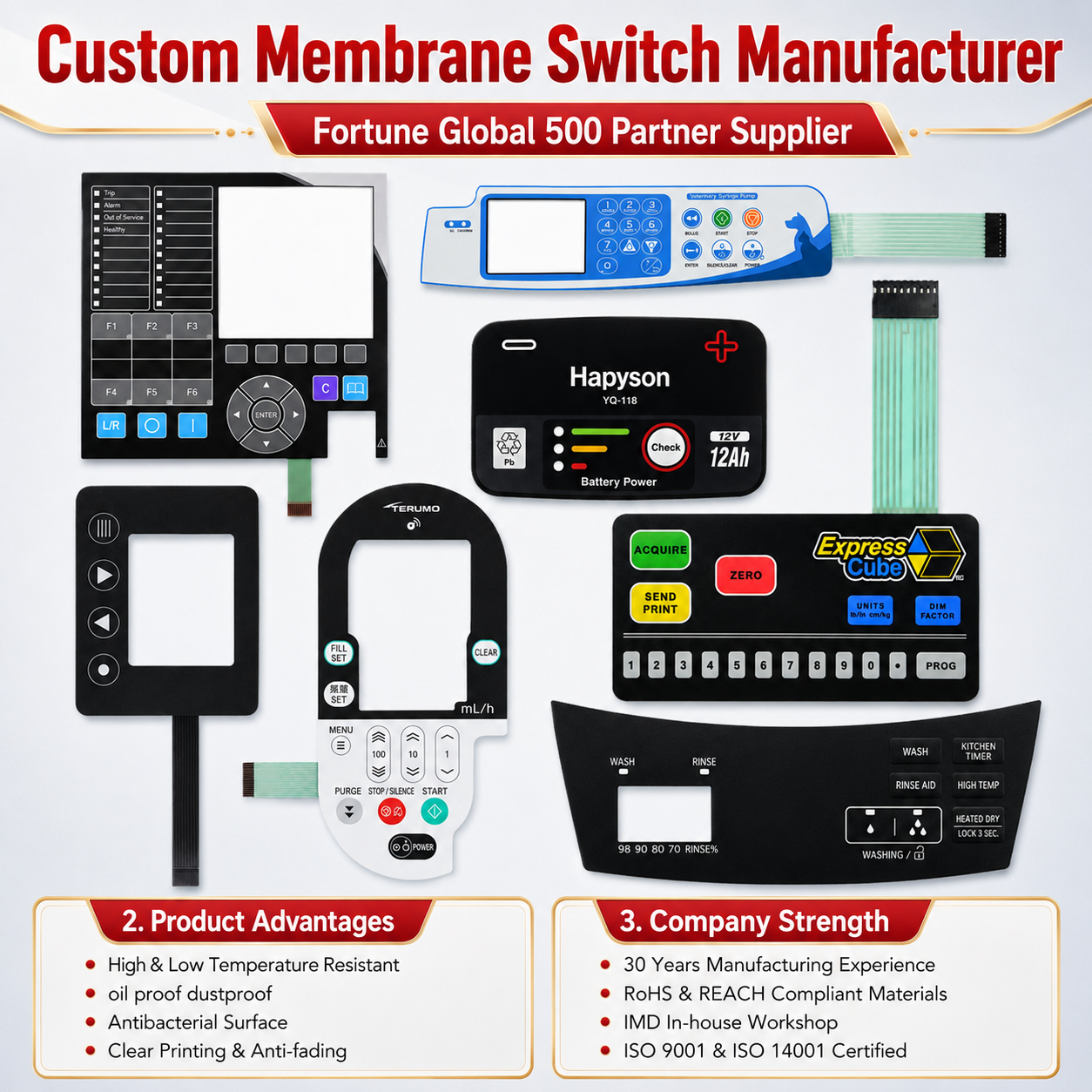
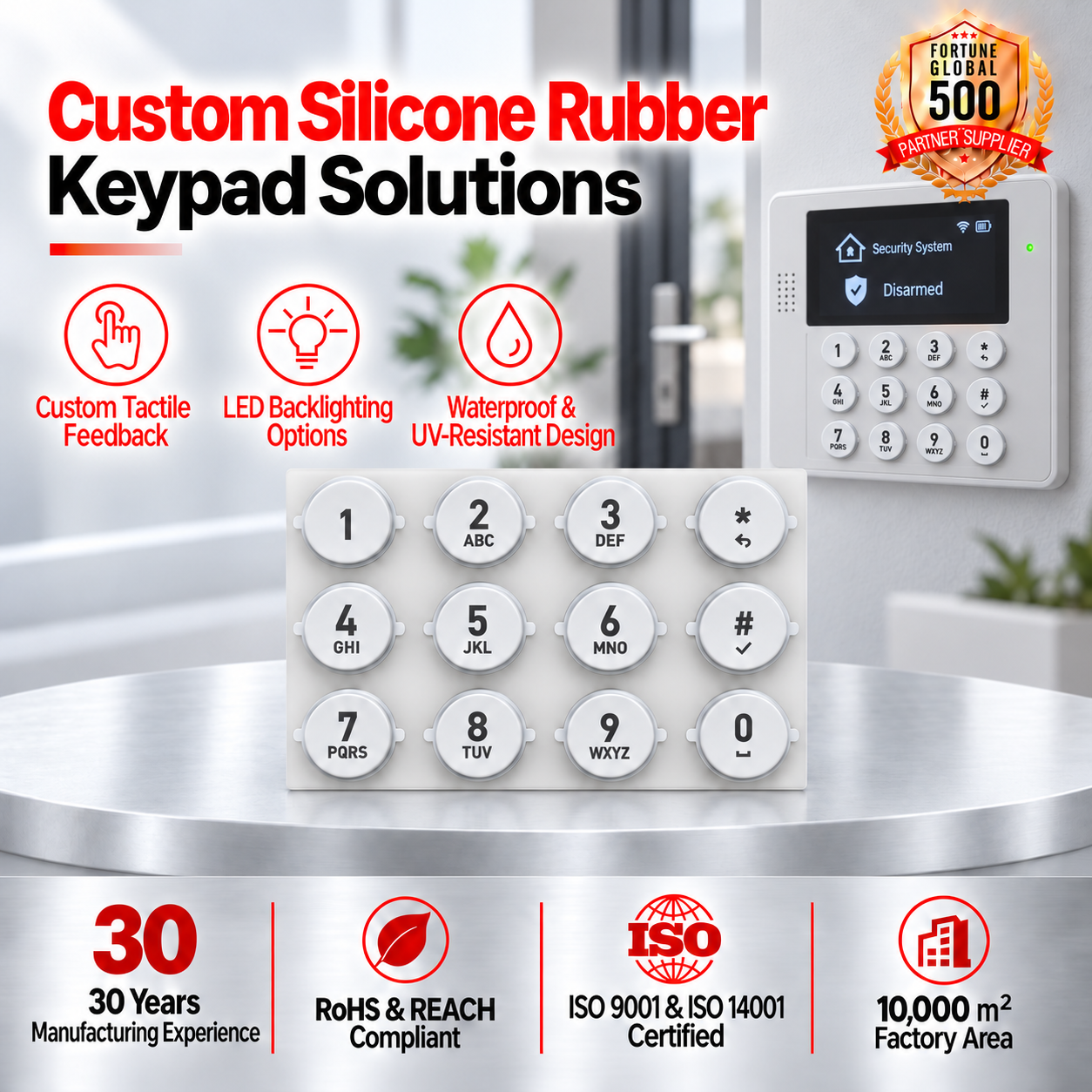
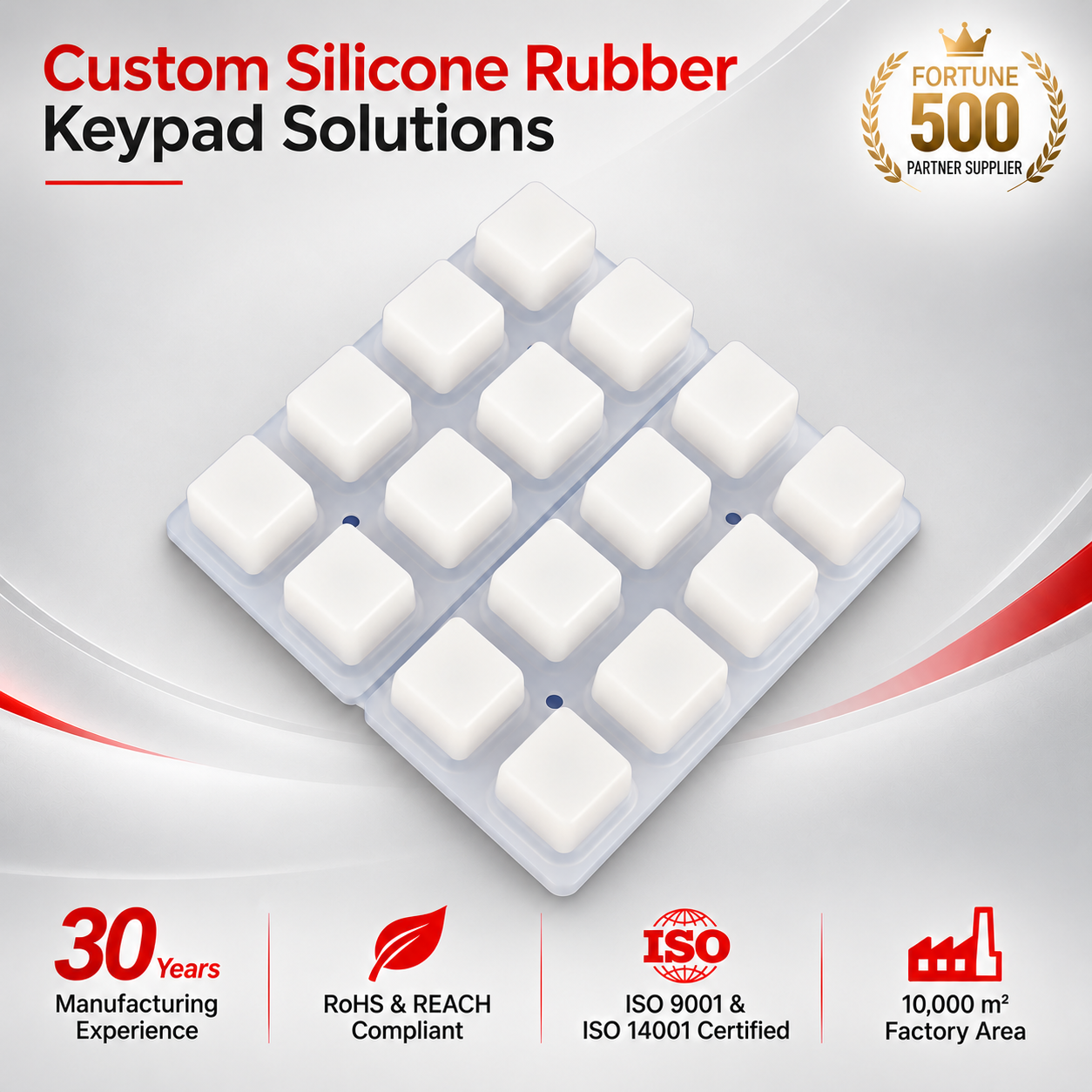
10,000㎡
Intertek Verified Plant
12+ Yrs
Custom HMI Experience
100%
Full Functional Inspection
100 Pcs
Flexible Production MOQ
Strategic Sourcing Whitepaper
Future Procurement Trends in Electronic Graphic Overlays
How global electronics OEMs and supply chain heads are recalibrating procurement metrics for total lifecycle durability, supply assurance, and advanced substrate integration.
Shift Toward Integrated Assemblies (Box-Build Subsystems)
Purchasing teams are systematically pivoting away from procuring isolated graphic overlays, loose rubber keypads, and separate tactile domes. Sourcing strategies now prioritize fully tested electromechanical sub-assemblies.
- Pre-bonded overlay-to-FPC circuits with soldered SMD LEDs.
- In-house integrated CNC aluminum backing plates & IP-rated gaskets.
- Drastic reduction in assembly line scrap and vendor reconciliation overhead.
Medical-Grade Antimicrobial & Chemical Hard-Coating
Standard polycarbonate films fail under hospital-grade quaternary ammonium compounds and industrial solvents like MEK and isopropyl alcohol. Sourcing specifications now mandate robust selective texturing.
- Automated micro-textured polyester (Autotype MacDermid PET).
- Sub-surface reverse screen-printing immune to surface abrasion.
- Antimicrobial additives actively inhibiting biofilm contamination.
Supply Chain De-risking & Direct-to-Factory Engineering
Tier-1 OEMs are eliminating intermediary trading agents in favor of direct engineering access in China. Real-time DFM (Design for Manufacturability) collaboration prevents tooling redesign loops.
- Intertek-verified facilities providing direct dimensional FAI reports.
- Fast-track laser prototype prototyping in 3–5 working days.
- Transparent raw material batch certificates (3M, Covestro, DuPont).
Technology Horizon
Engineering Evolution & Future Product Development
The convergence of printed electronics, capacitive sensory arrays, and embedded illumination within ultra-thin graphic interfaces.
Capacitive Sensing & Dead-Front Secret-Until-Lit
Mechanical switches are harmoniously coexisting with touch-sensitive capacitive film layers. Next-generation front panels utilize sophisticated dead-front optical masking inks.
- Icons remain completely invisible until activated by internal LED backlighting.
- Smooth, un-embossed flush surfaces enabling seamless IP68 washdown sterilization.
- Integrated sliding scales, wheel sensors, and proximity waking states.
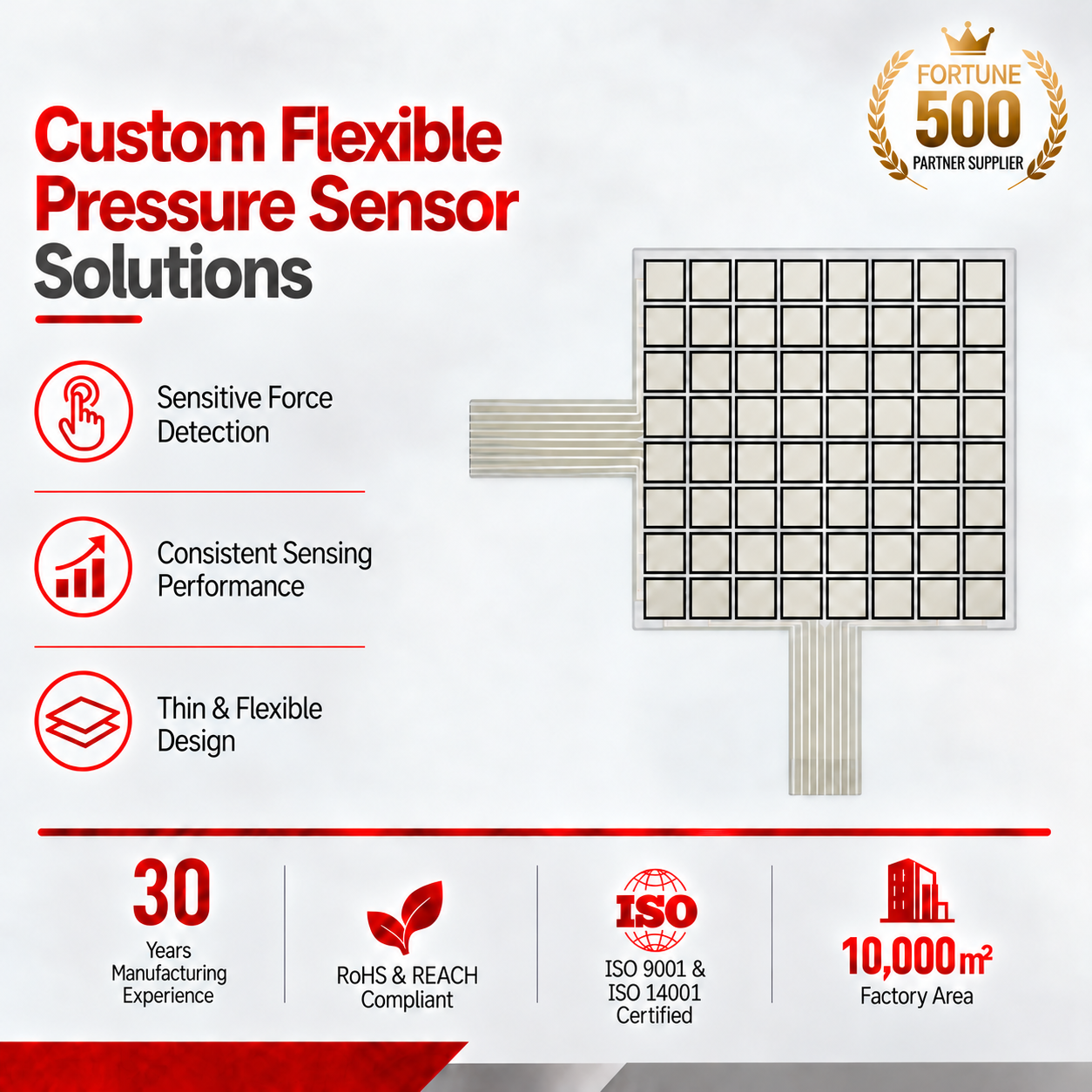
Printed Pressure Matrix & Flexible Thin-Film Sensors
Graphic overlays have surpassed purely cosmetic and actuating functions. Through nanoscale conductive carbon and silver ink micro-printing, overlays now act as tactile dynamic sensors.
- High-sensitivity bend and force-sensing resistors (FSR).
- Sub-millimeter pressure response maps for smart robotic grips and medical beds.
- Flexible circuits resilient to over 1,000,000 dynamic mechanical bending cycles.
Micro Light Guide Films (LGF) & Uniform Backlighting
Eliminating spotty, uneven LED hot-spots has driven the broad deployment of ultra-thin (0.125mm) Light Guide Films engineered directly beneath the polycarbonate overlay.
- Laser-etched micro-dots uniformly redirect side-firing SMD LED emission.
- Consumes up to 70% less power compared to legacy electroluminescent (EL) foils.
- Ultra-thin profile preserving the precise click-ratio and tactile feedback of metal domes.
DFM Engineering Matrix
Graphic Overlay Substrates & Actuation Comparative Analysis
Critical mechanical, thermal, and chemical performance metrics for procurement engineers.
| Material / Technology | Operating Temp | Chemical & Solvent Resistance | Flexural Fatigue Life | Best Fit Industry Application |
|---|---|---|---|---|
| Polyester (PET - Autotype) | -40°C to +85°C | Excellent (Resistant to MEK, alcohols, household cleaners) | >5,000,000 actuations (High switch flex life) | Medical diagnostic monitors, industrial automated machinery, outdoor HMIs. |
| Polycarbonate (PC - Lexan) | -30°C to +75°C | Moderate (Prone to aromatic hydrocarbons and harsh acids) | <100,000 cycles (Embossed keys will micro-crack over time) | Display bezels, non-actuated graphic facings, automotive gauge instrument panels. |
| Silicone Elastomer Overlay | -50°C to +200°C | Outstanding (Excellent UV, ozone, and thermal stability) | >1,000,000 cycles (Excellent ergonomic compression return) | Rugged military handsets, survey equipment, marine navigation remotes. |
| In-Mold Decoration (IMD/IML) | -30°C to +85°C | Superior (Graphic layer completely locked behind resin layer) | Stationary front fascia (Rigid 3D structural component) | Automotive interior trim, premium home appliances, smart security access consoles. |
| Flexible Copper FPC Circuit | -40°C to +105°C | Superior (Sealed polyimide encapsulation) | >10,000,000 cycles (Withstands extreme tight bending) | High-density connector interconnects, mission-critical aerospace assemblies. |
Why Partner With AXRU Electronics
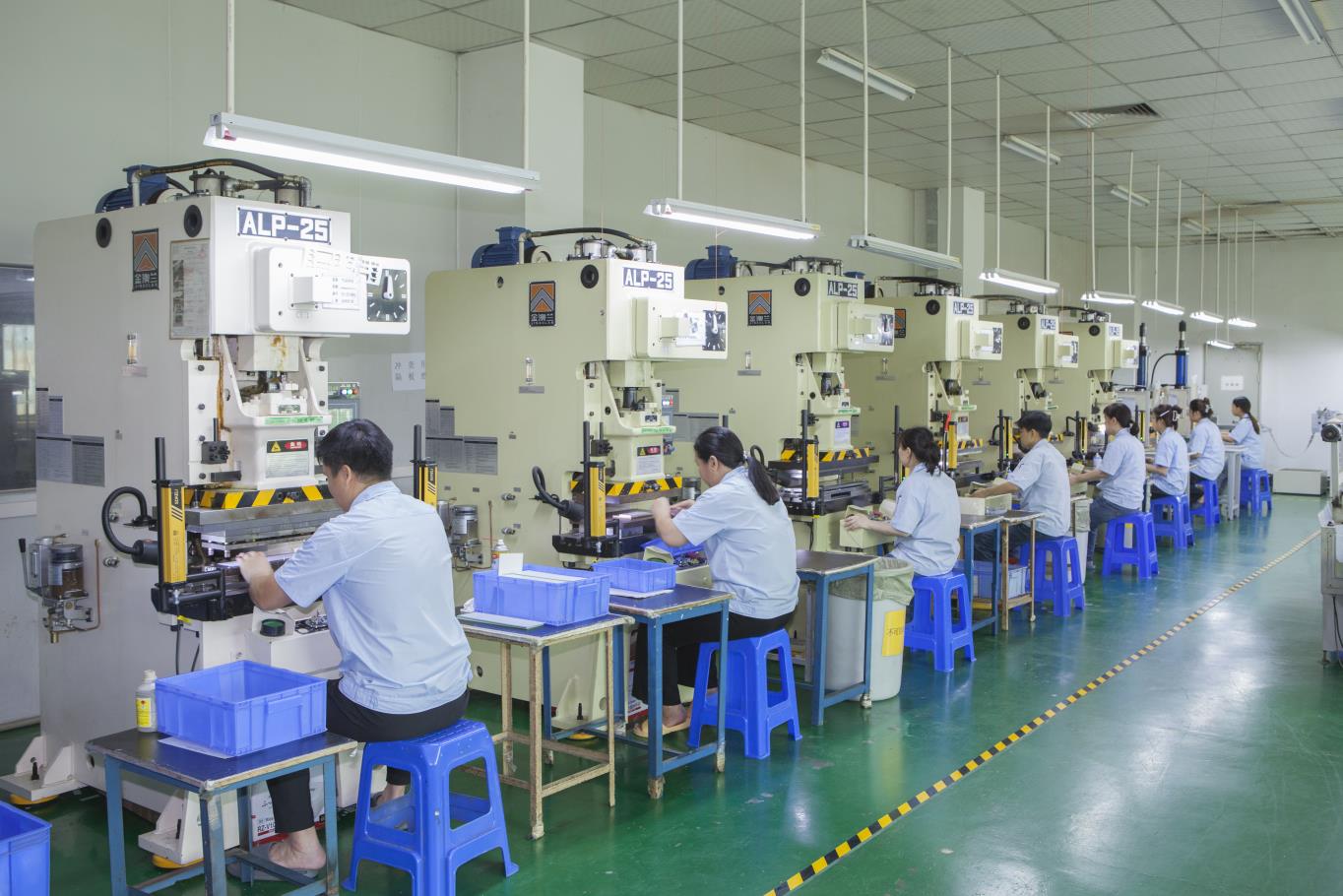
Dongguan Advanced HMI Production Hub: 10,000㎡ Vertical Integration
Unlike sourcing intermediaries, Dongguan AXRU Electronics Co., Ltd. orchestrates all mission-critical fabrication stages under one roof. Our 121-technician facility has undergone rigorous on-site audit and verification by Intertek, guaranteeing uncompromised quality oversight.
From Class 10,000 dust-free screen printing rooms and automated high-speed film punching to full-cycle reliability labs, our workflow eliminates sub-tier contractor finger-pointing and delivers tight dimensional tolerances (±0.05mm).
100% In-House Testing Lab
Key life, force-displacement, UV yellowing, and humidity cycle testers.
Supplier to Global Brands
Trusted contract manufacturer for Fortune 500 equipment builders worldwide.
Low MOQ & Rapid DFM
Prototype runs starting from 100 pcs with engineering sign-off in 24 hours.
Certified Quality Systems
Traceable FAI, PPAP Level 3 documentation, and environmental RoHS compliance.
Procurement Knowledge Hub
Frequently Asked Questions on Graphic Overlays & Switches
Direct technical answers addressing production feasibility, design guidelines, and cost drivers.
Q1: What is the ideal substrate choice between Polycarbonate and Polyester?
Polycarbonate (PC) is cost-effective, offers exceptional optical transparency, and is simple to die-cut; however, it lacks flexural endurance (<100k cycles) when embossed. Polyester (PET) costs slightly more but delivers superior chemical resistance, thermal stability, and withstands over 5,000,000 tactile switch cycles without embrittlement.
Q2: How do you ensure graphic overlays survive harsh industrial chemical wipe-downs?
We implement reverse sub-surface printing. The conductive and aesthetic inks are screened entirely onto the backside of transparent PET or PC films. The front face remains an impermeable solid barrier that completely shields inks against abrasive rubs, UV rays, IPA, chemical bleaches, and hydraulic oils.
Q3: Can you achieve true IP67 or IP68 environmental ingress protection?
Yes. True waterproof sealing requires an engineered perimeter adhesive ring (utilizing 3M 200MP or 300LSE acrylic adhesives) unbroken by circuit tail exits. We route the circuit traces internally or utilize sealed top-surface transitions so dust and pressurized wash-down water cannot migrate into the internal switch cavities.
Q4: What design files and documentation are required for a rapid quotation?
Please provide vector artwork files (Adobe Illustrator .AI, .EPS, or .PDF) referencing Pantone or RAL color codes, coupled with 2D mechanical mechanical drawings (.DXF or .DWG) outlining overall tolerances, window clearances, tail pitch, and preferred tactile dome actuation force (typically 250g to 450g).
Q5: What are the standard lead times for prototyping and volume manufacturing?
Rapid laser-cut samples and prototype membrane overlays are normally delivered in 5 to 7 business days following artwork and stack-up approval. Mass production runs utilizing hardened flatbed die tooling typically require 12 to 18 business days, depending on batch quantities and testing requirements.
Q6: How is tactile actuation consistency guaranteed across millions of cycles?
Tactile performance is secured by selecting premium nickel-plated stainless steel metal domes (four-leg or oblong configurations) mated to high-precision spacer venting layers. Every production lot is validated on our in-house automated force-displacement tester to safeguard crisp snap ratios and uniform tactile tactile feedback.
Initiate Your Custom Graphic Overlay & Keypad Project
Collaborate with senior HMI mechanical engineers directly from our Dongguan factory. Review your stack-up, select precision materials, and obtain a factory-direct quotation within 24 hours.
Inquire Now