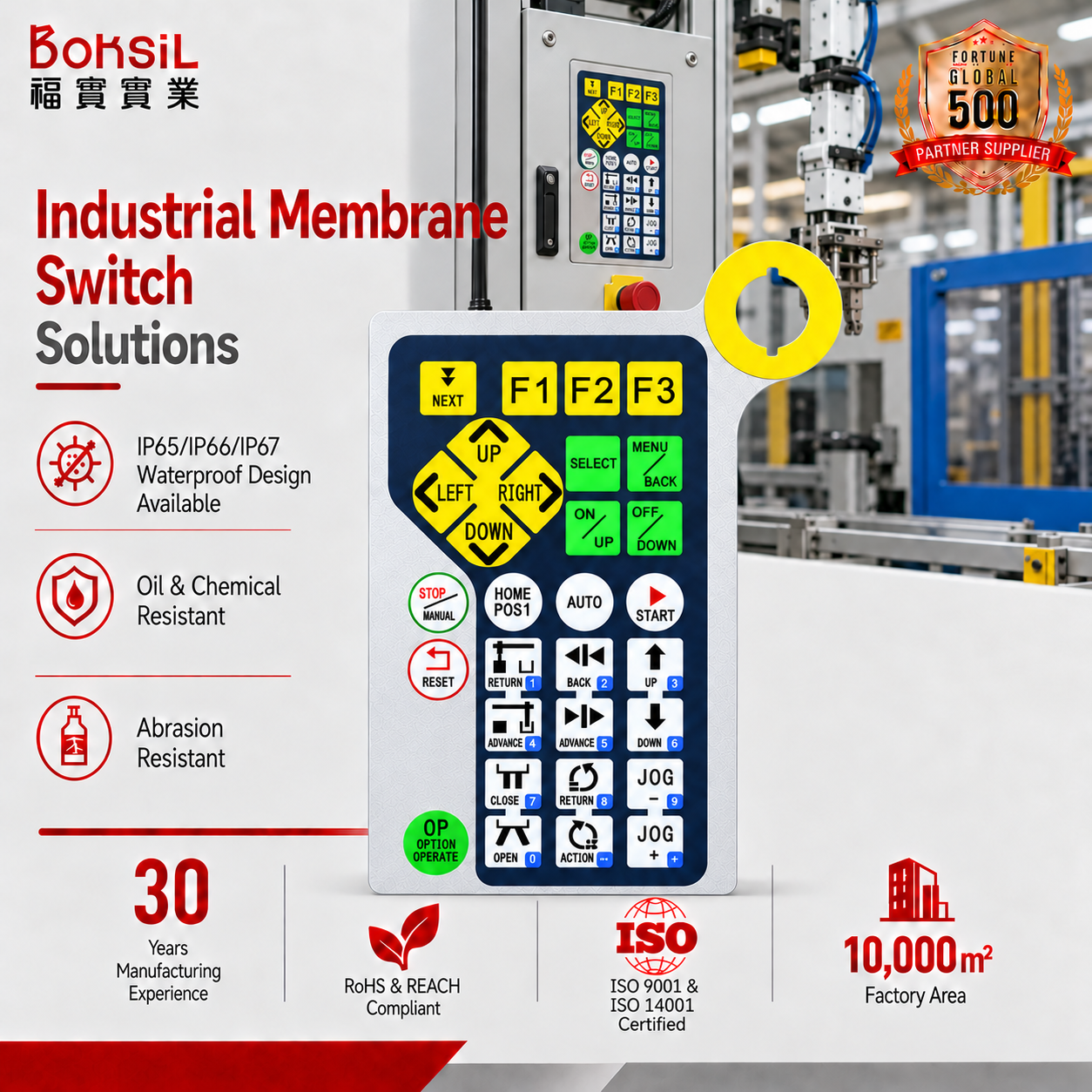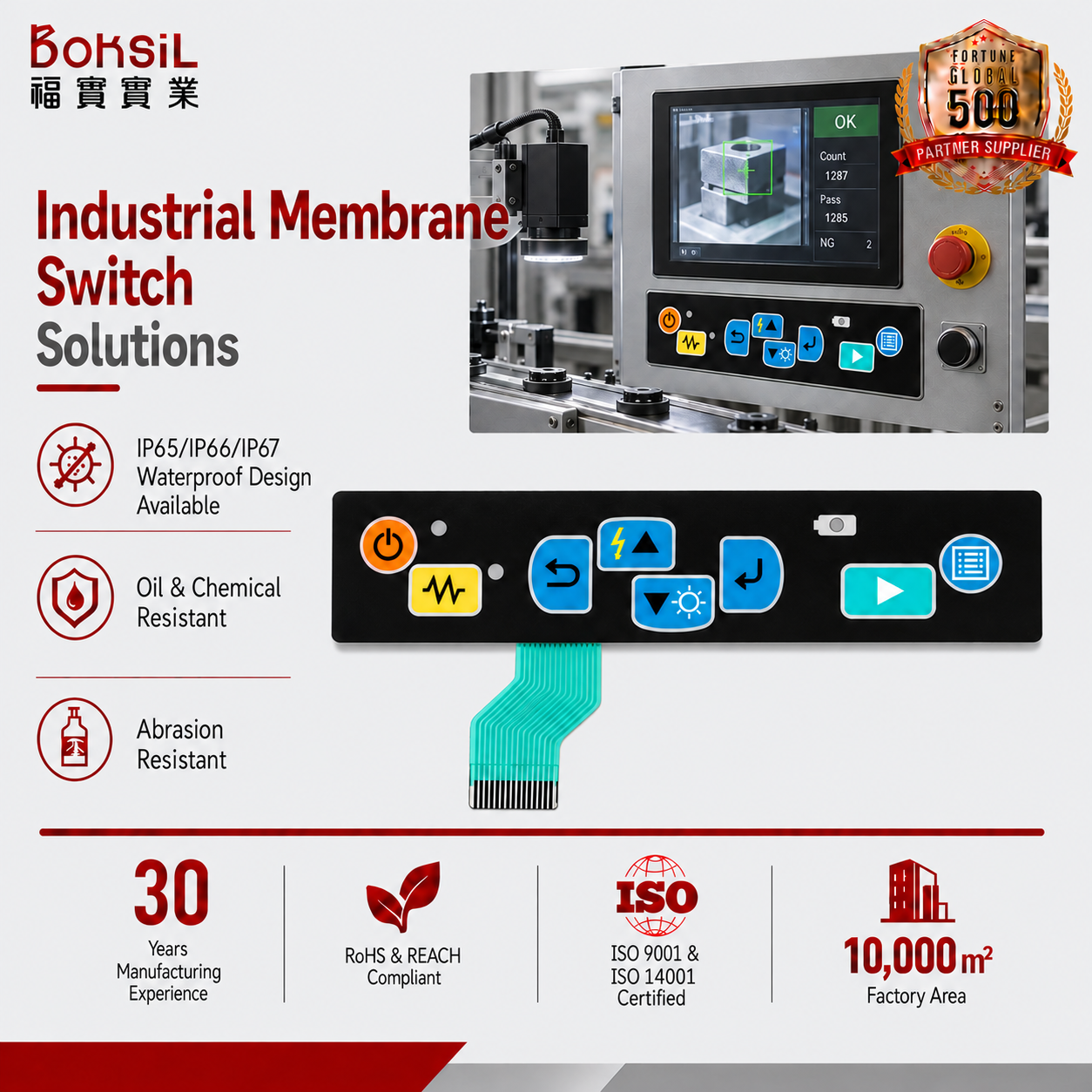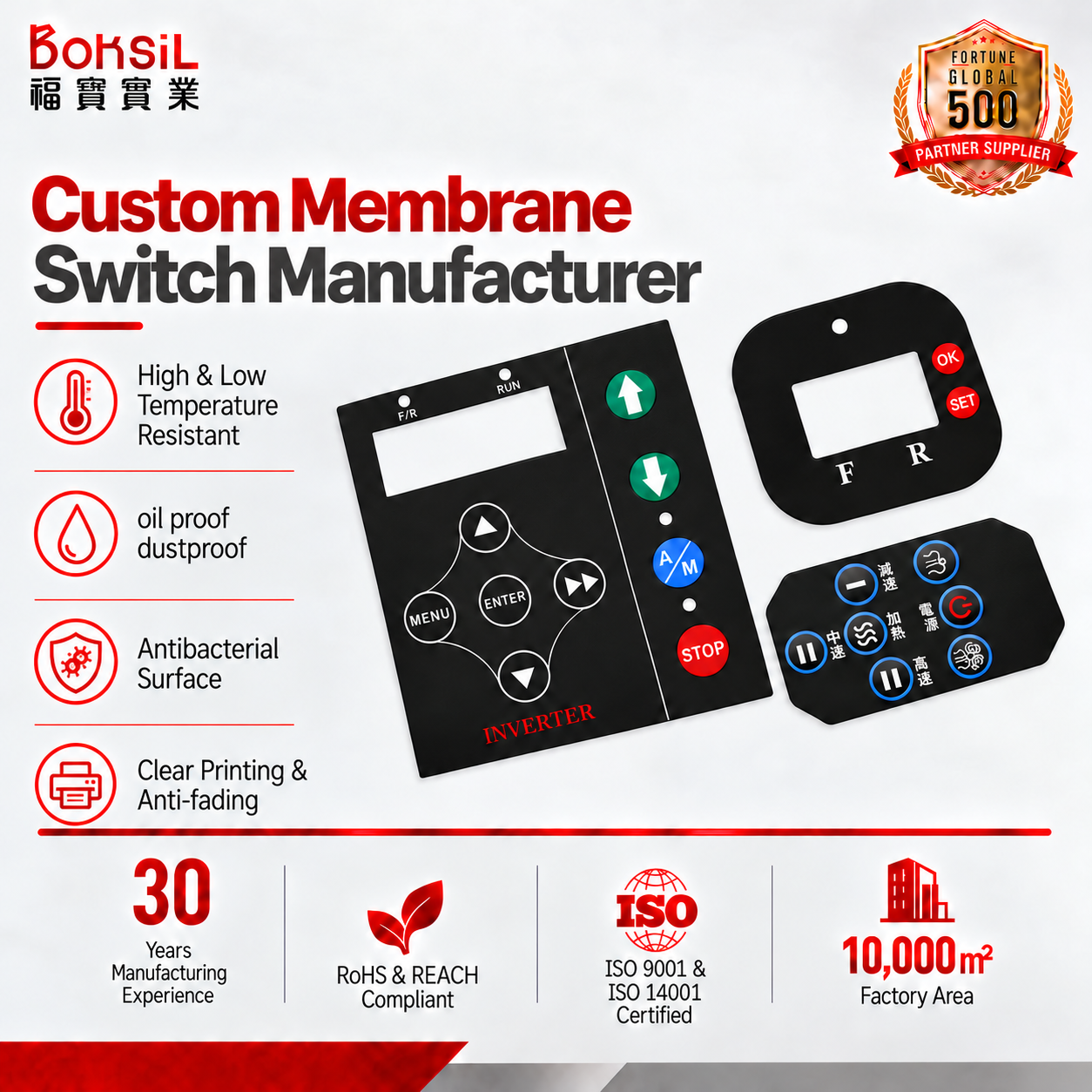
OEM/ODM Factory Front Control Electronic Panel Polycarbonate Membrane Switch Graphic Overlay
- Substrate:Optical Polycarbonate / PMMA
- Finish:Selective Velvet / Anti-Glare
- Tactile:Stainless Steel Metal Dome
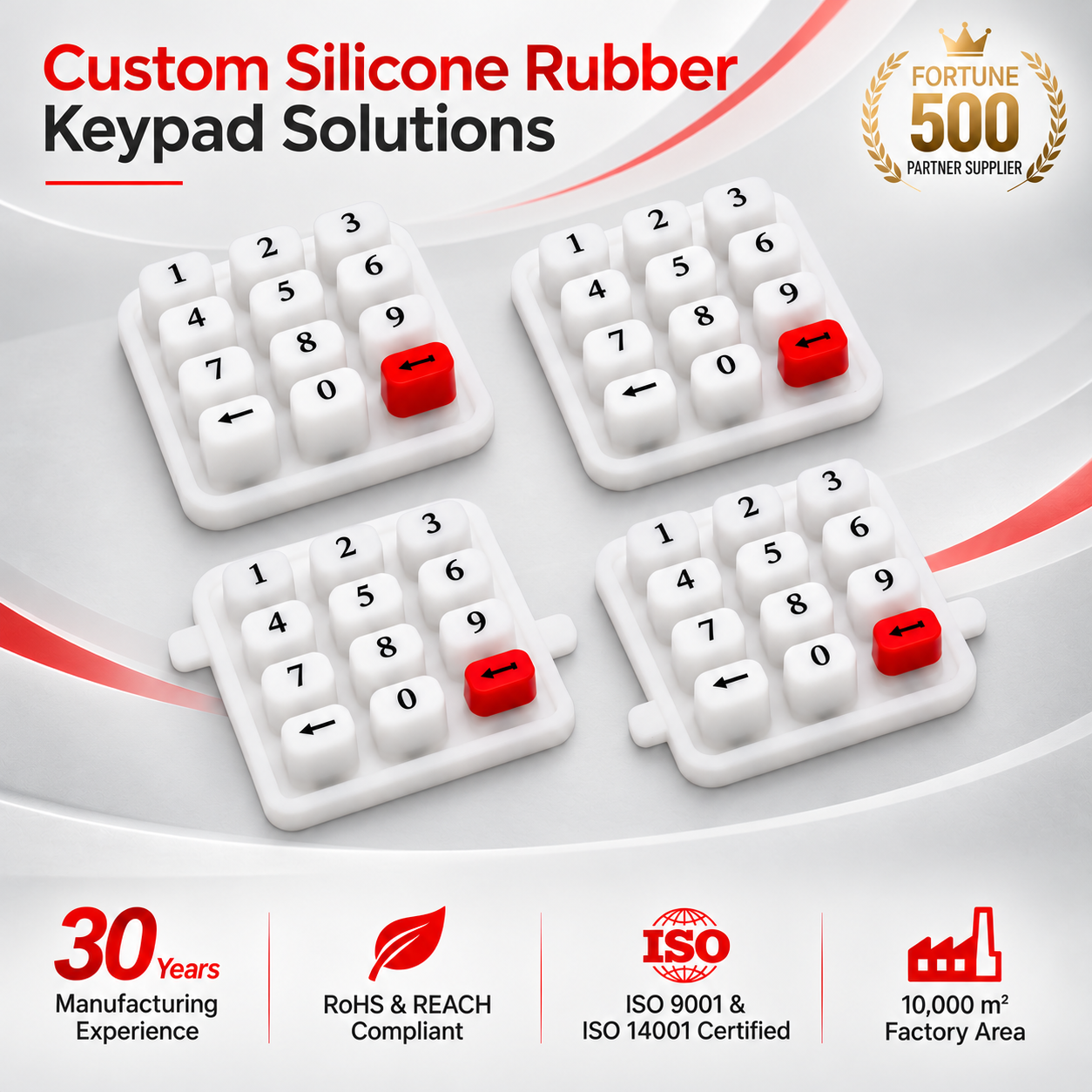
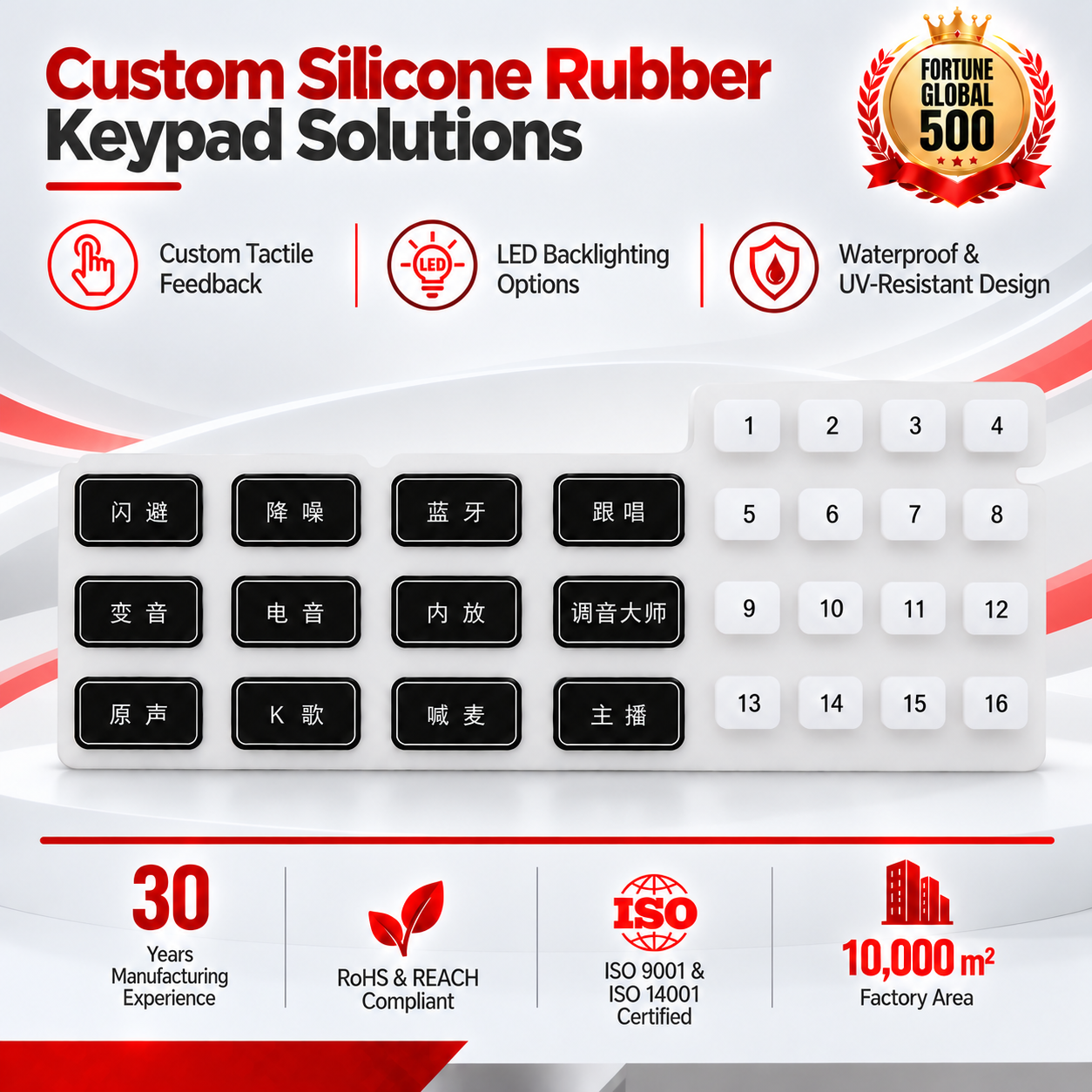
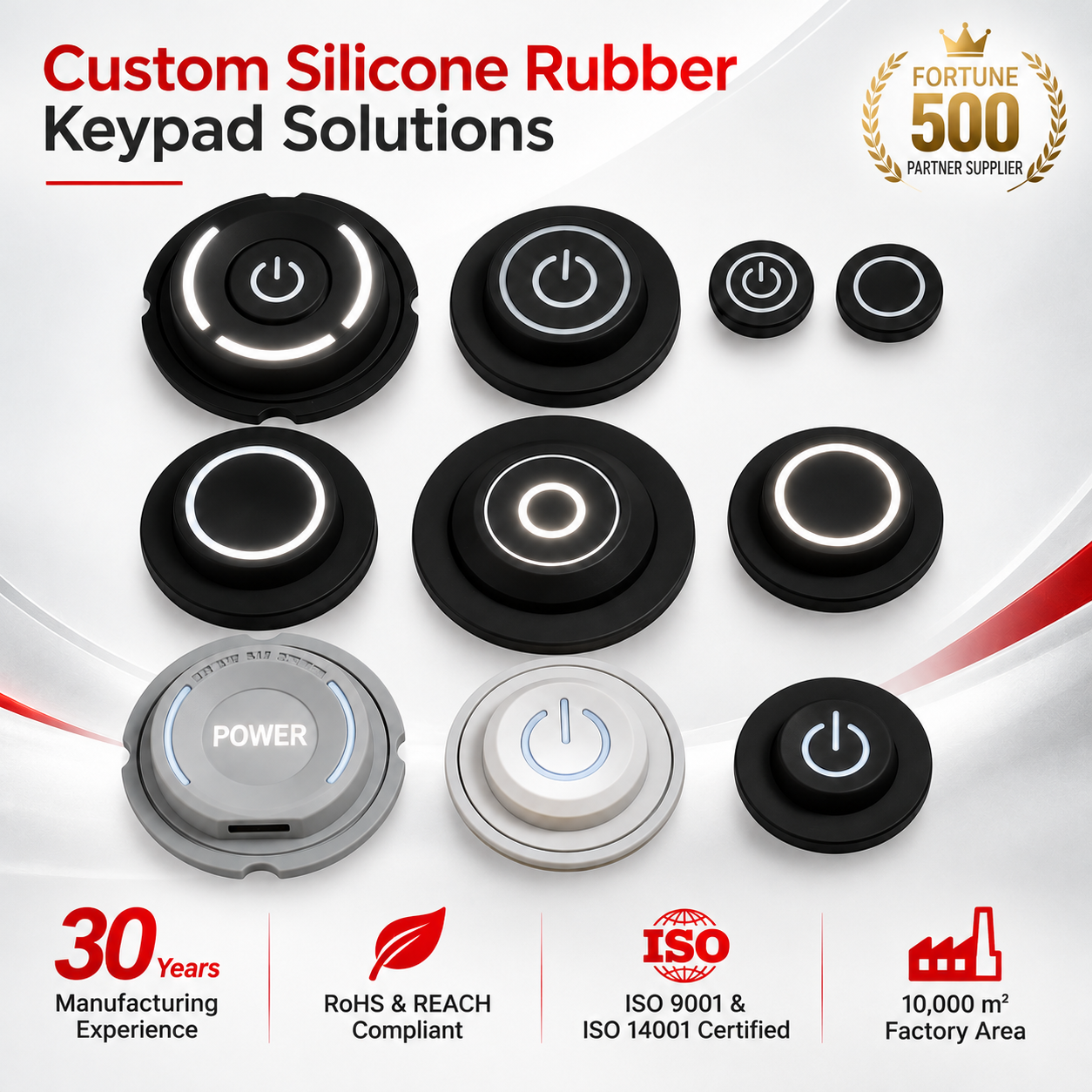
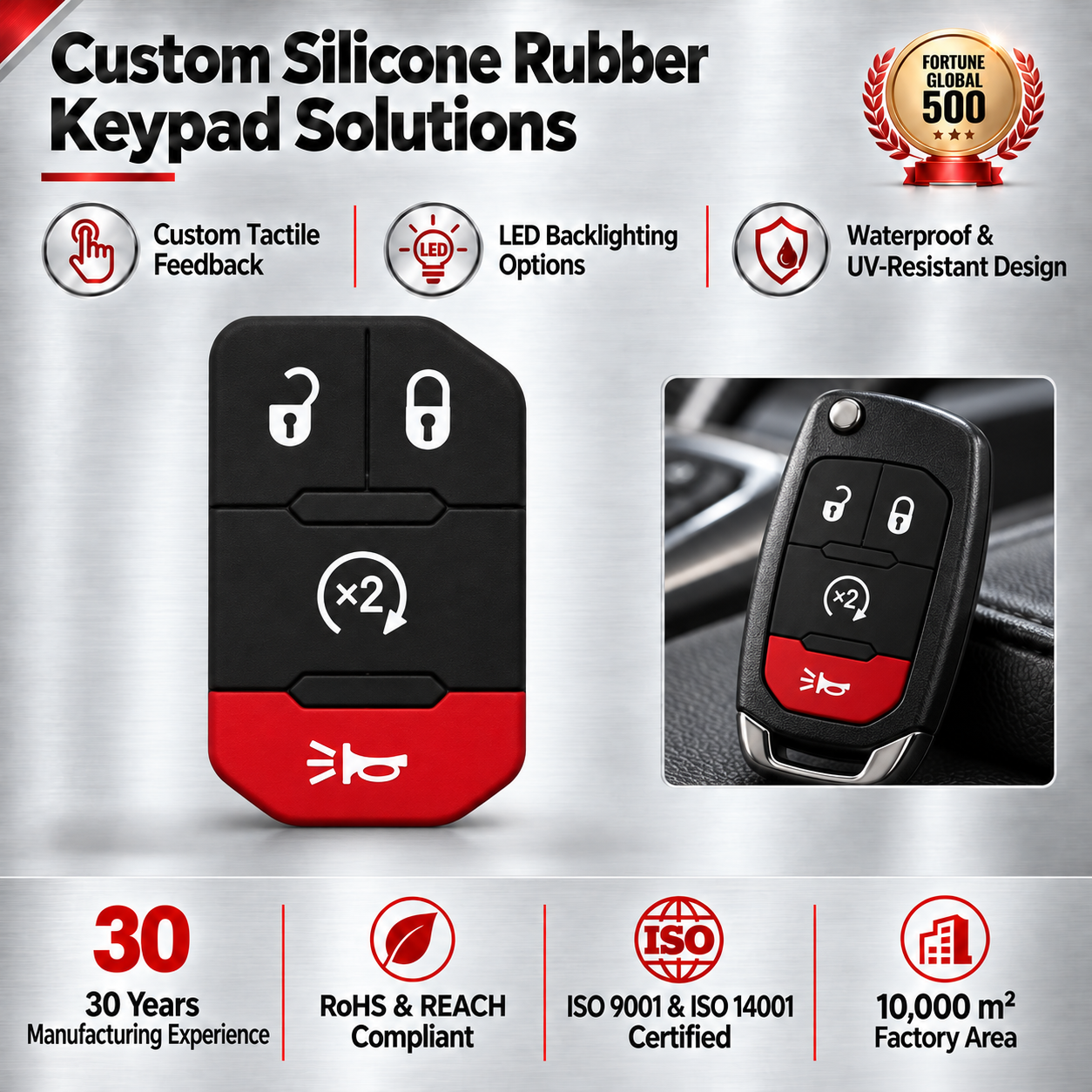
From optical-grade acrylic front fascias to durable elastomeric silicone keypads and membrane switch matrixes. Directly manufactured in our 10,000㎡ Dongguan facility.
A comprehensive guide for hardware designers, mechanical engineers, and strategic procurement officers seeking reliable China manufacturing partnerships.
Unlike standard polycarbonate (PC) which yields ~88% light transmission and tends to shift yellow when exposed to prolonged UV radiation, optical grade polymethyl methacrylate (PMMA) provides an exceptional 92.5% to 93% visible light transmission. This makes acrylic graphic overlays the premier choice for display windows, high-definition TFT/OLED bezels, medical diagnostic monitors, and outdoor marine instrumentation where zero color distortion and optical clarity are mission-critical.
Uncoated raw acrylic yields a modest 2H surface hardness. At Dongguan AXRU Electronics, we integrate thermal and UV-cured silica nanoparticle hard-coatings that boost the pencil hardness to 4H, 5H, or even 6H (under ASTM D3363 testing protocols). This treatment provides bulletproof resistance to micro-scratches from heavy industrial scouring, steel wool abrasion, chemical wipe-downs (IPA, bleach, MEK), and abrasive environmental dust.
Durability begins with ink encapsulation. Graphics, logos, translucent windows, and functional boundary borders are printed on the second surface (underside) of the acrylic blank within our Class 1,000 cleanroom. By placing the inks behind the solid PMMA substrate, legends can never be worn away by fingertip friction, industrial solvents, saline mist, or UV degradation, ensuring indefinite legibility throughout the device lifecycle.
Selecting the correct front panel fascia requires evaluating optical clarity, mechanical yield strength, thermal deflection, and fabrication cost.
| Material Metric | PMMA (Optical Acrylic) | Polycarbonate (PC) | Polyester (PET) | Tempered Cover Glass |
|---|---|---|---|---|
| Light Transmittance | 92.5% – 93% (Superb) | 88% – 90% (Good) | 86% – 89% (Moderate) | 91% – 92% (High) |
| Inherent Surface Hardness | 2H (Uncoated) / 4H–6H (Hard-coated) | 1B – 1H (Requires Hardcoat) | 2H – 3H (Hard-coated) | 7H – 9H Mohs (Extremely High) |
| UV & Sunlight Weatherability | Superior (Non-yellowing, 10+ yrs outdoor) | Poor to Moderate (UV grade required) | Moderate (Degrades under solar UV) | Inert / Immune to UV fading |
| Keypad Embossing Capability | Rigid (Flat display windows only) | Excellent (Dome & rim embossing) | Outstanding (>5M flex fatigue life) | None (Rigid Flat / 2.5D Edge) |
| Chemical Solvent Resistance | Moderate (Resistant with hard coat) | Moderate (Vulnerable to ketones/amines) | Exceptional (Harsh chemical barrier) | Total Inertness |
| CNC Machining & Beveling | Clean diamond polish, CNC chamfer, step cut | Standard CNC die-cutting and routing | Die-cut stamping / laser outline only | Diamond grinding / high tooling cost |
| Tooling & Piece Price Ratio | Economical to Moderate (Low NRE) | Low Tooling / Affordable Part | Very Low Tooling / Cost-effective | High Tooling / Expensive Processing |
Anticipate market shifts in HMI design, supply chain governance, sustainable polymer sourcing, and multi-sensor integration.
Global OEMs are standardizing "dead-front" front panels. Functional icons, warning legends, and numerical displays remain completely invisible—blending seamlessly into a jet-black or mirror-white piano finish—until triggered by proximity or capacitive touch. Engineering this demands microscopic ink-layer density management, precision optical density (OD) tolerances, and controlled light leak barriers.
Following post-pandemic cleanroom regulations in healthcare, diagnostic, and commercial food equipment, acrylic graphic overlays now demand silver-ion antimicrobial coatings (JIS Z 2801 / ISO 22196 verified) alongside oleophobic and anti-fingerprint (AF) nanocoatings that yield water contact angles >110°, inhibiting microbial colonization and preventing grease streaks.
Traditional flat overlays are rapidly evolving toward thermoformed, 2.5D contoured PMMA front fascias that blend into sleek enclosure bezels. Buyers are increasingly sourcing In-Mold Decoration (IMD) and IME solutions that combine reverse-printed acrylic carrier foils directly with conductive capacitive touch inks inside injection molding cavities, collapsing BOM assembly steps.
With stringent European circular economy regulations (CSRD and Ecodesign directives), enterprise procurement teams now demand full chemical transparency. AXRU supports sustainable sourcing protocols utilizing certified depolymerized circular PMMA resins (rPMMA) that lower the product carbon footprint by up to 40% while upholding virgin-grade optical purity.
Headquartered in Dongguan, China, Dongguan AXRU Electronics Co., Ltd. consolidates 12+ years of human-machine interface manufacturing under one verified roof.
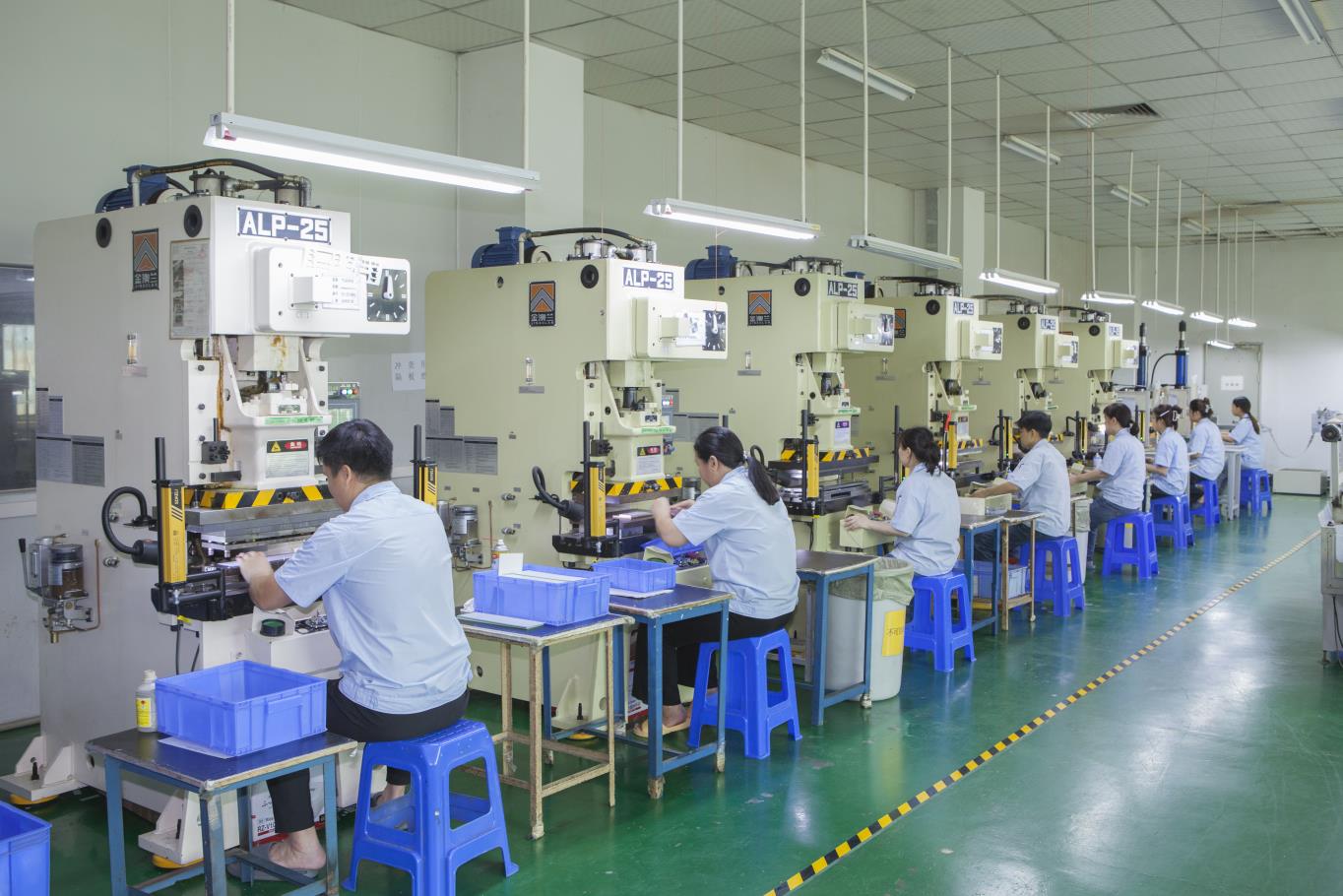
Many trading companies and low-tier brokers outsource critical fabrication stages, resulting in color variations, delamination under heat, and undetectable electrical micro-shorts. At our 10,000㎡ modernized facility audited on-site by Intertek, we house 121 skilled technicians and control every process phase from CAD/CAM review to tooling, cleanroom printing, precision CNC milling, optical bonding, and 100% automated electrical testing.
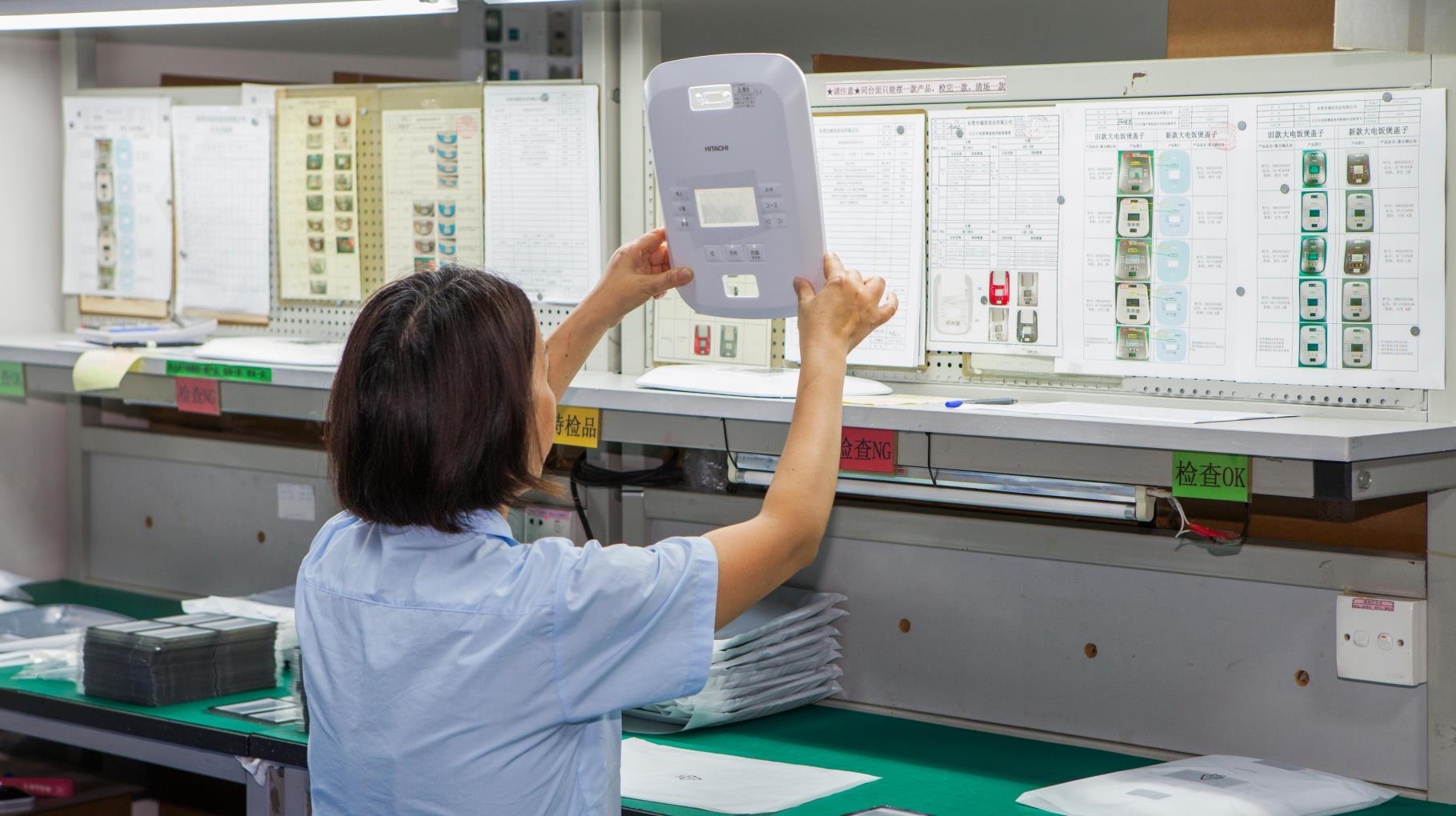
Every overlay is inspected for pinholes, color variance (Delta-E < 0.8), adhesive bubbles, and dimensional tolerances.
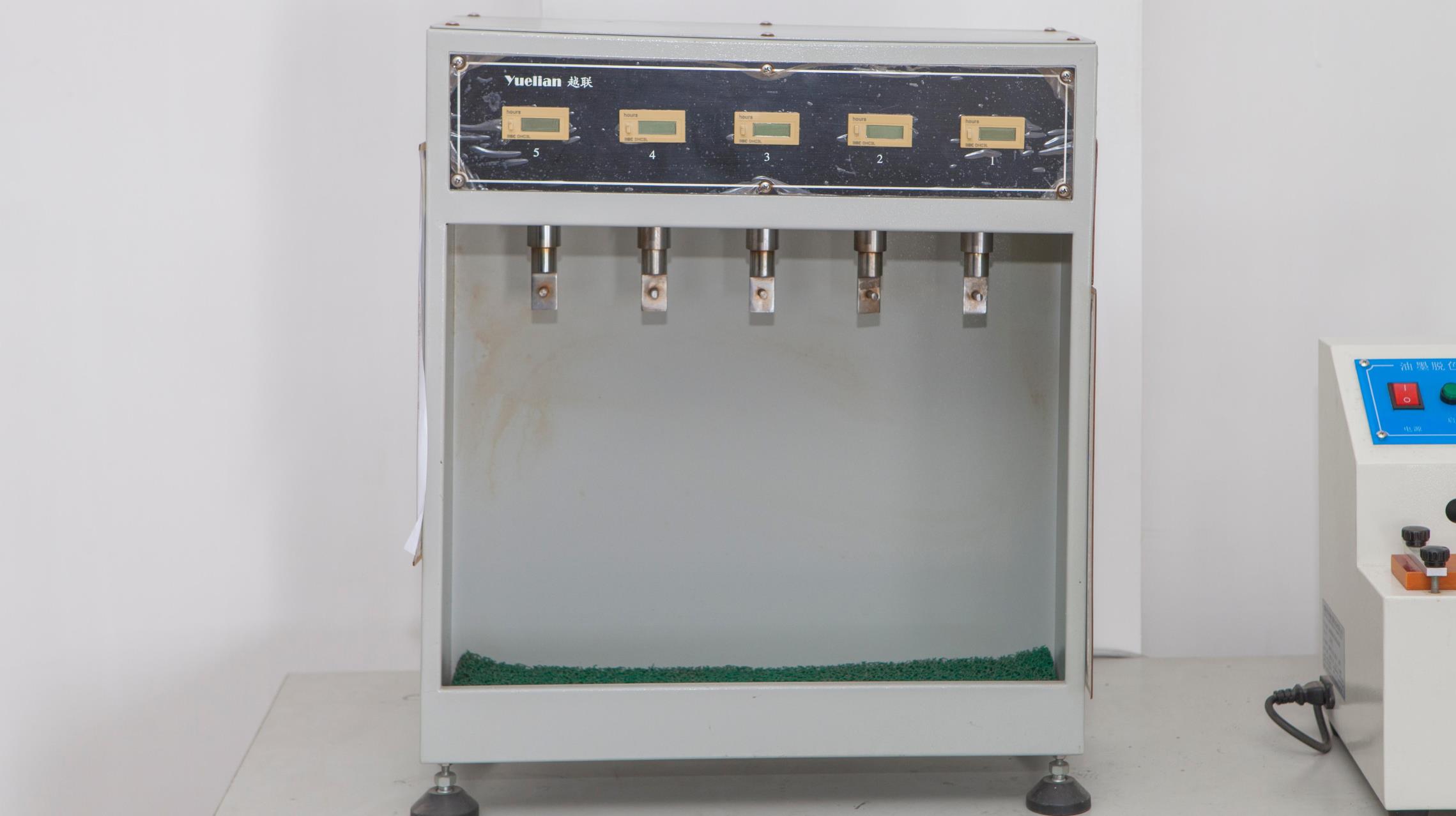
Measures adhesive bonding strength and tail exit peel resistance under ASTM D903 180° testing parameters.
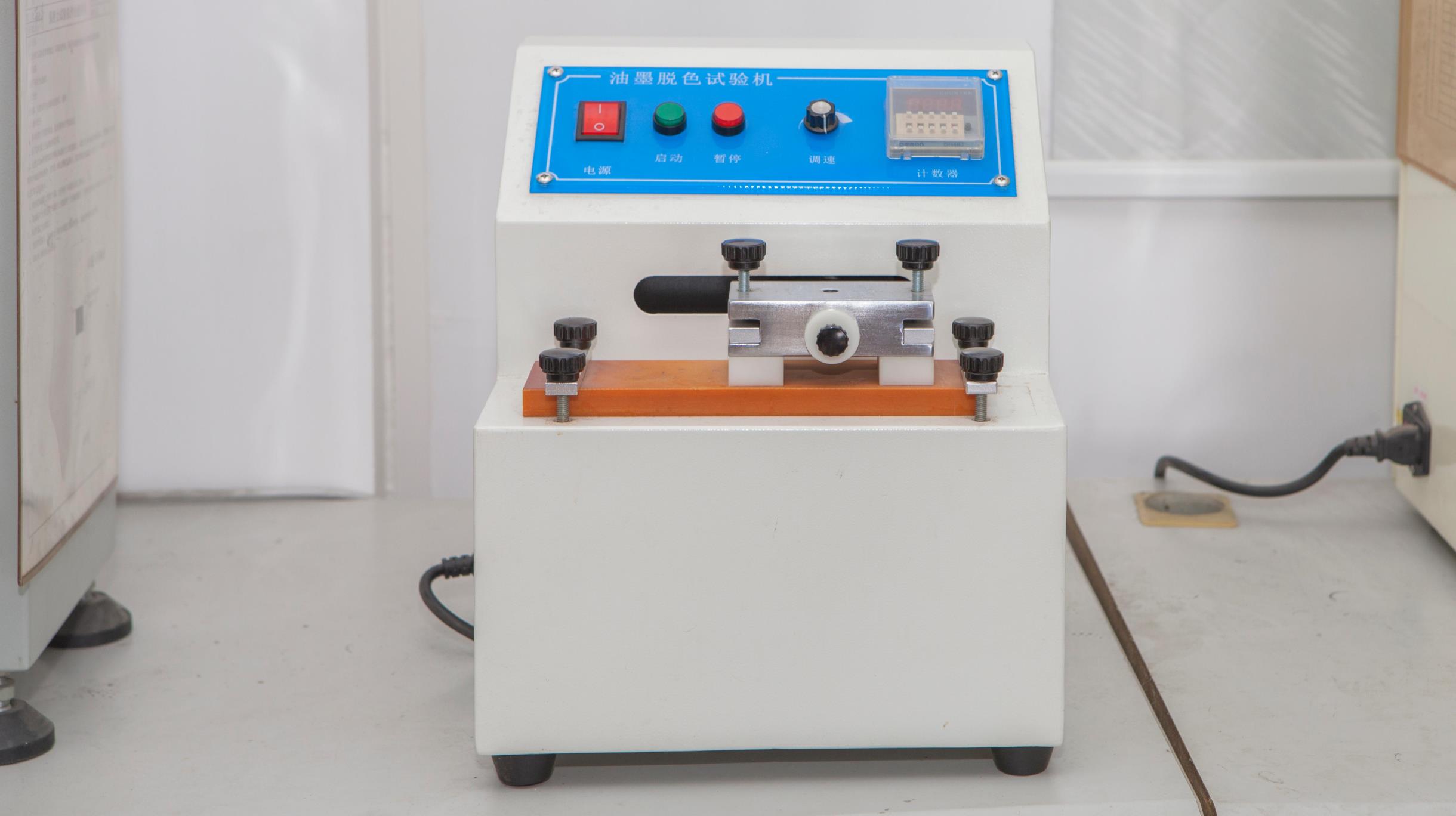
Validates surface ink adhesion via RCA abrasion, pencil scratch (ASTM D3363), and solvent rub tests.
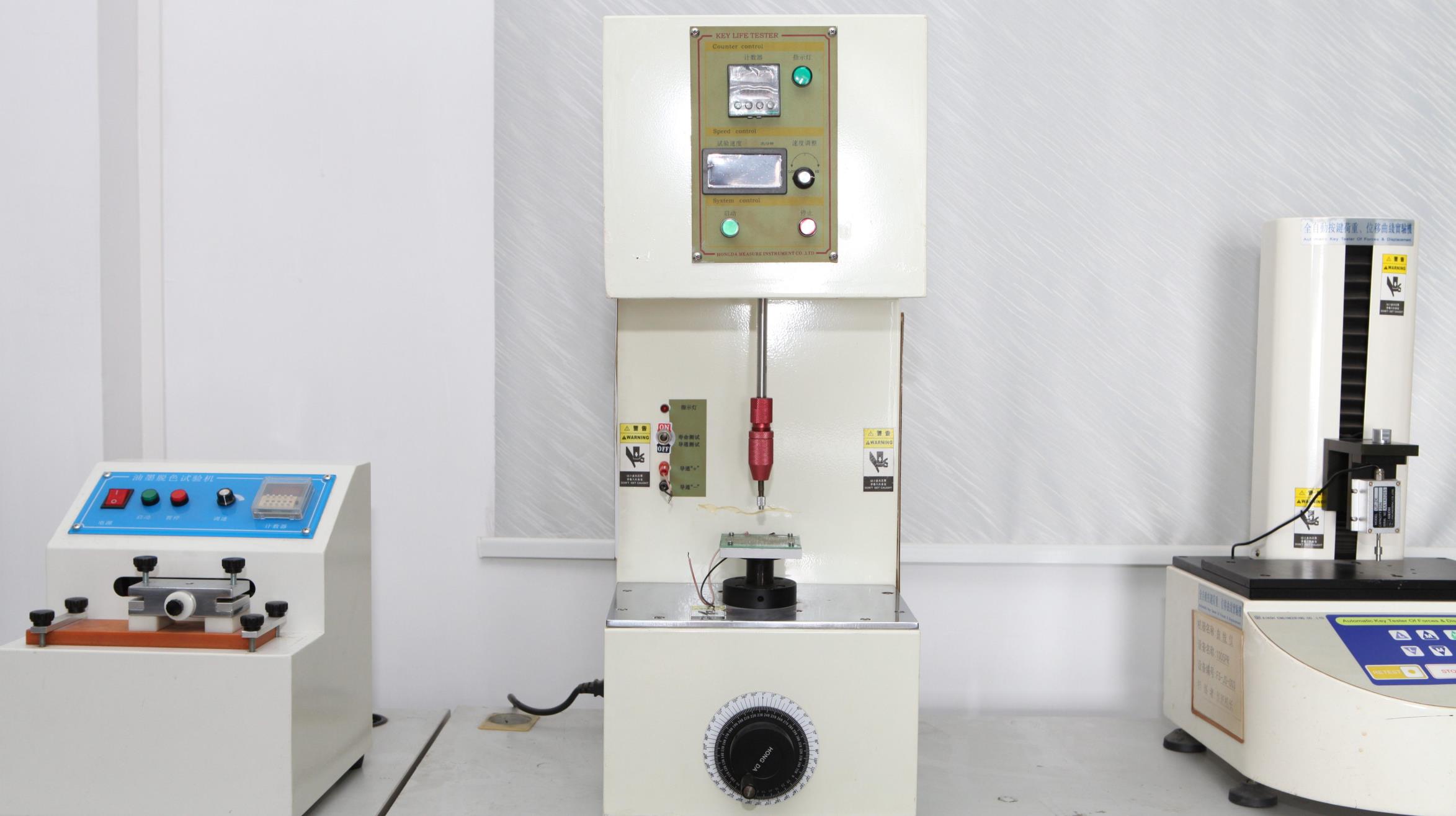
Automated pneumatic actuators cycle switches and flexible circuits up to 5,000,000 actuations to confirm fatigue limits.
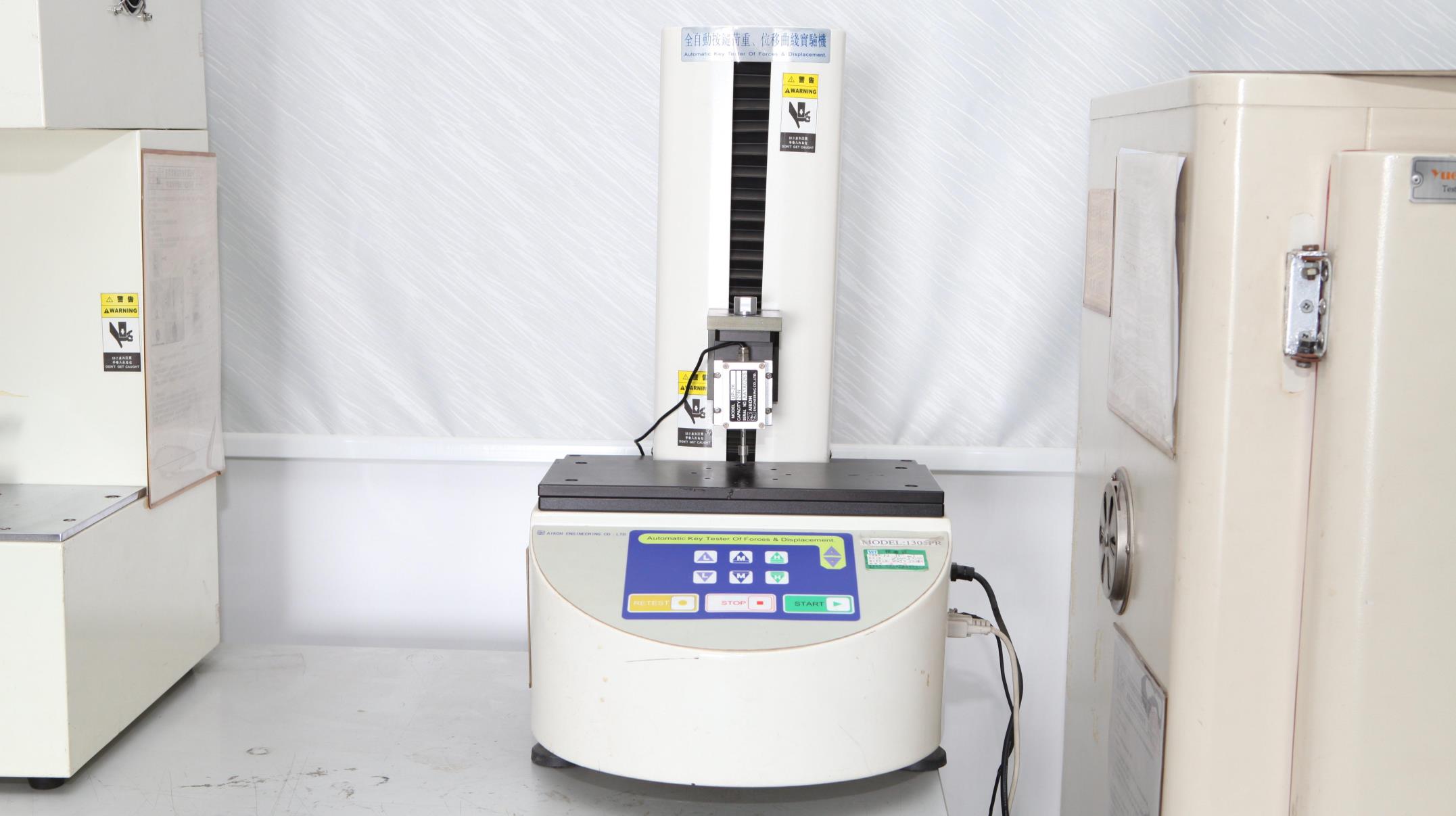
Computes tactile feel curve, actuation force (160g–500g), travel distance, and snap ratio consistency across arrays.
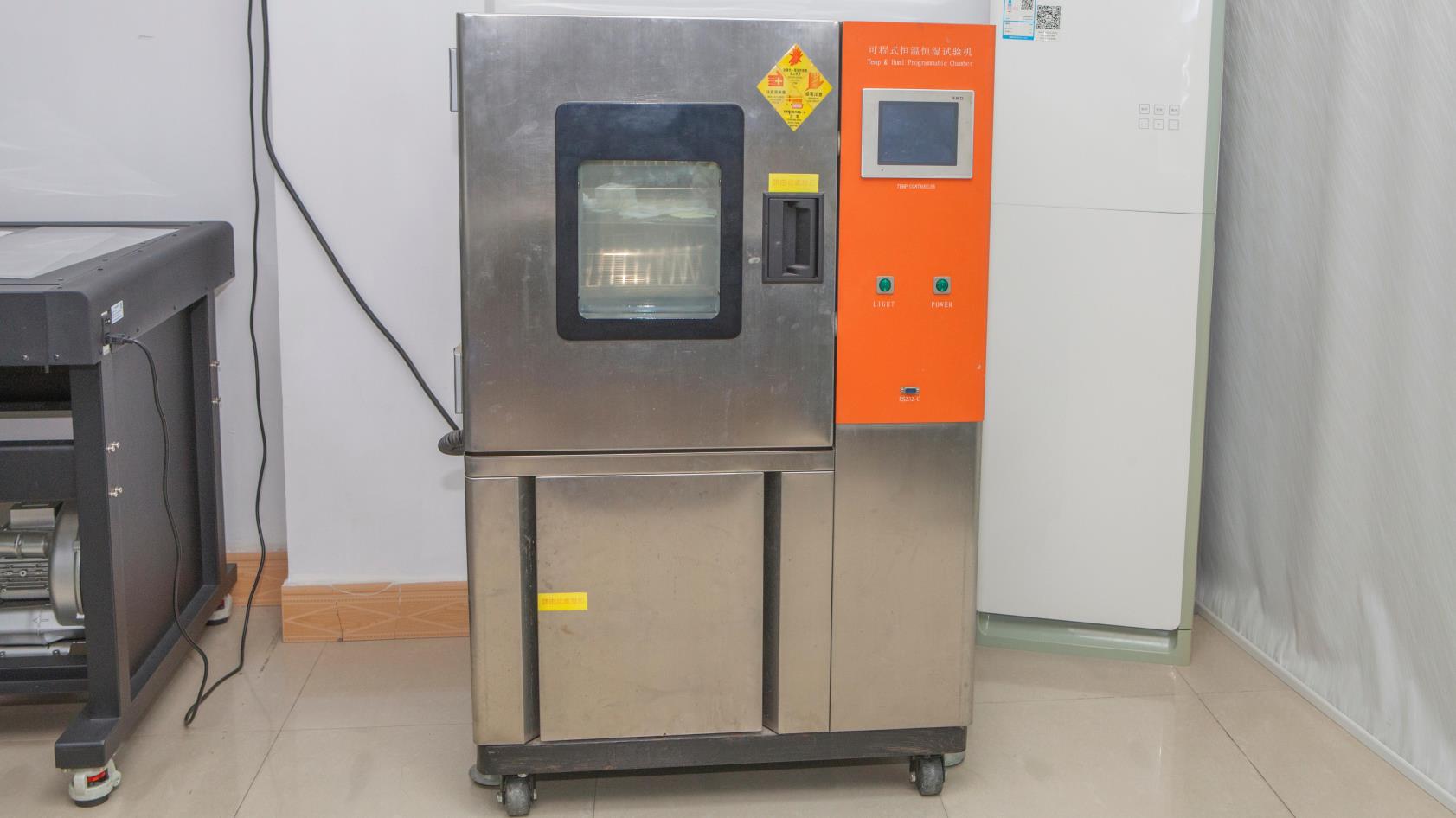
Thermal shock cycling (-40°C to +85°C) and constant humidity (95% RH @ 60°C) to prevent delamination and seal degradation.
Detailed answers prepared by senior HMI tooling engineers to streamline your request for quotation (RFQ) and design for manufacturing (DFM) review.
Consult with our Dongguan engineering team for complete DFM feedback, stack-up optimization, rapid functional prototypes, and tier-1 pricing.
Get a Quote