Global Manufacturing & Supply Chain Guide

Top 10 Printed Control Panel Exporter & Exporters

Strategic Procurement Whitepaper: Material Architectures, DFM Benchmarks, Quality Verification, and Direct OEM/ODM Manufacturing Capabilities

Engineered Control Interfaces & Graphic Assemblies

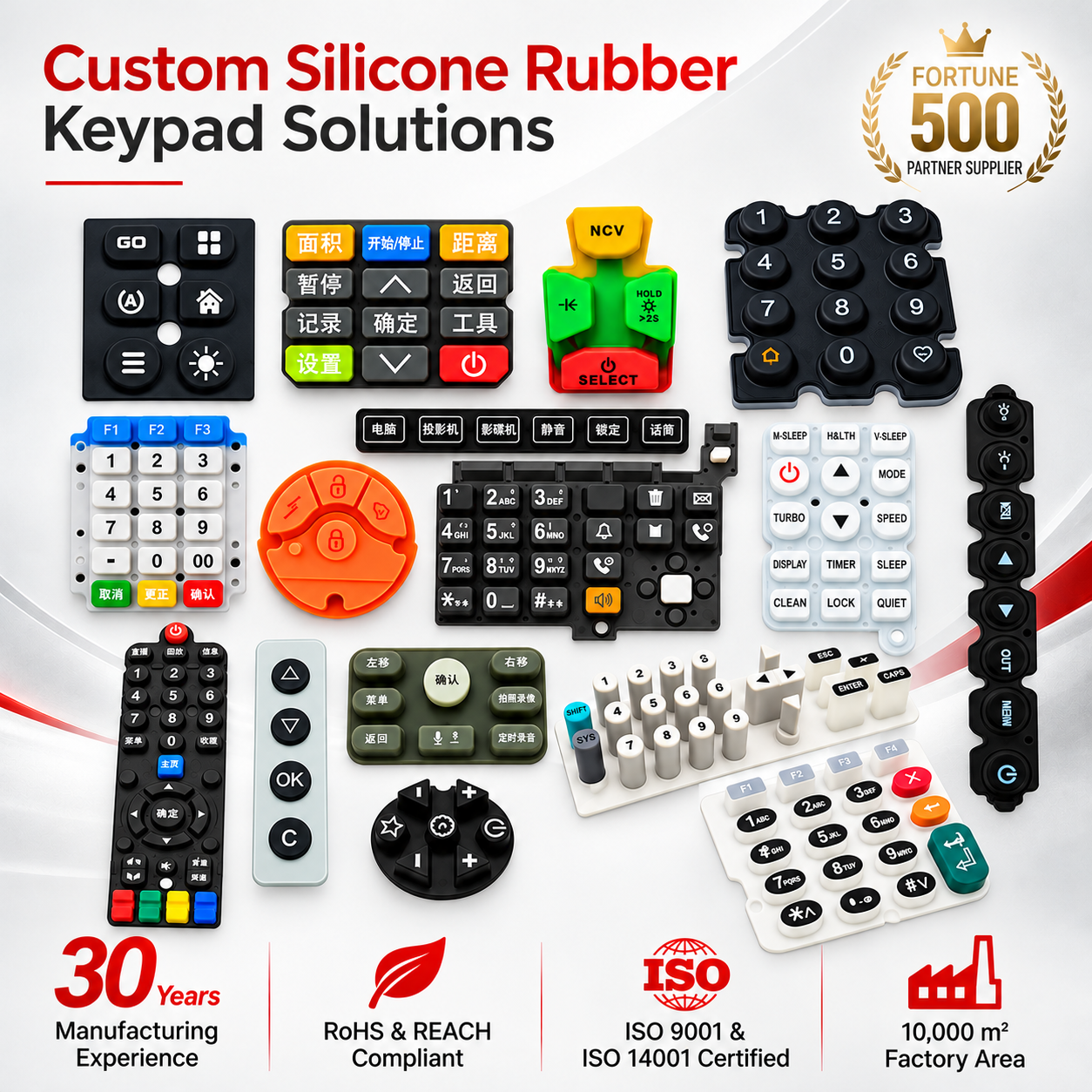
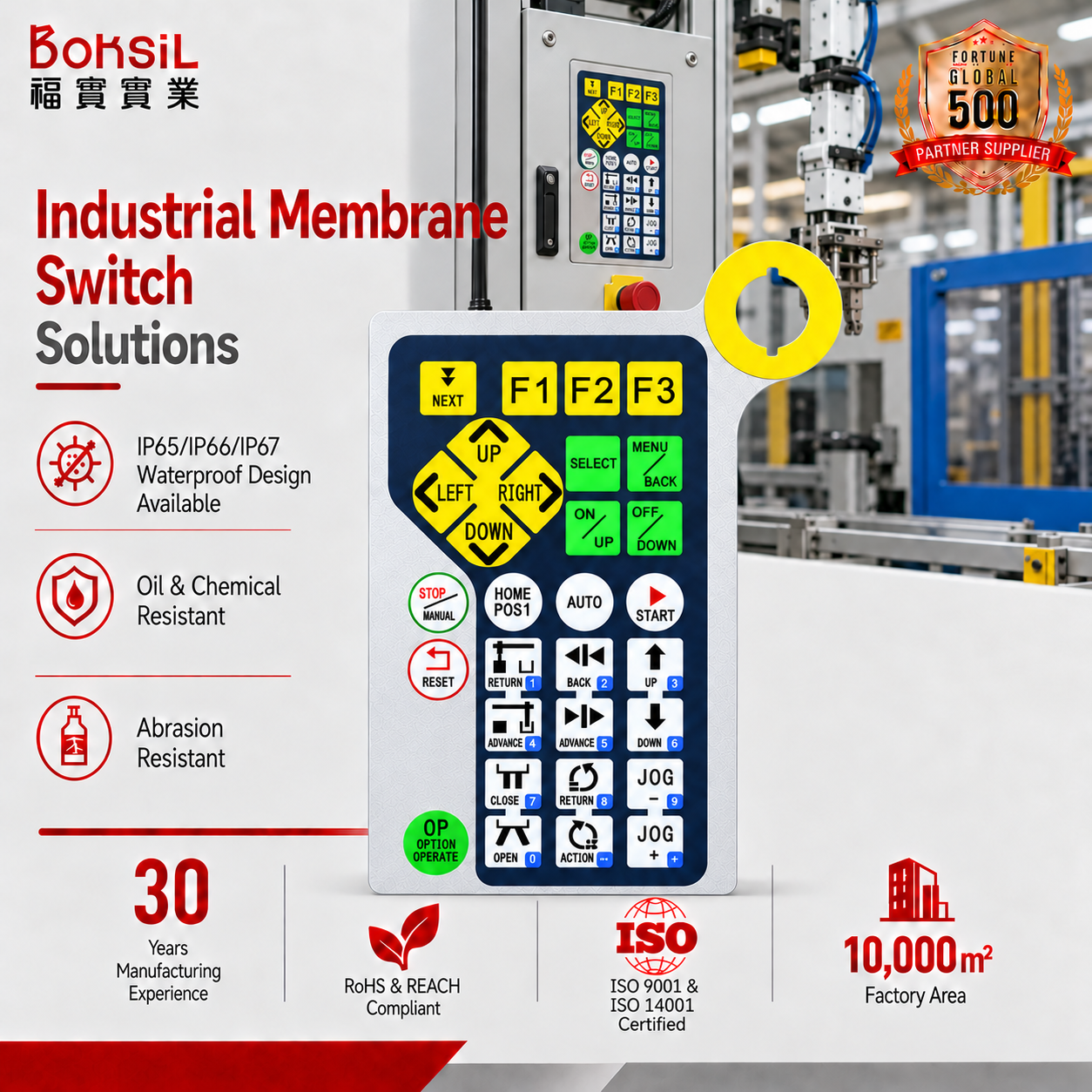
Standardized and custom-built front panels, membrane switches, and elastomer input assemblies engineered for precision medical instrumentation, industrial automation, and extreme-duty human-machine interfaces (HMI).
10,000㎡
Dedicated Production Floor
121+
Specialized Technicians & Staff
100%
Optical & Continuity Inspection
12+ Yrs
Global Tier-1 Export Track Record

Evaluating Top 10 Printed Control Panel Exporters: The Engineering Framework

In modern electronic equipment manufacturing, printed control panels, graphic overlays, and integrated human-machine interface (HMI) modules are no longer regarded as superficial cosmetic skins. They function as critical electromechanical boundary layers responsible for device hermeticity, user feedback latency, electrostatic shielding, and chemical defense. Selecting an offshore exporter requires evaluating engineering competencies far beyond baseline silk-screen printing.

Substrate & Polymer Integrity

Leading exporters specify optical-grade, biaxially oriented polyethylene terephthalate (PET) like Autotex XE or MacDermid Autotype over conventional extruded polycarbonate (PC). PET delivers superior flexural endurance (>5 million switch cycles without craze failure) and chemical resistance against standard medical disinfectants (isopropyl alcohol, bleach, chlorhexidine) and industrial solvents.

Biaxially Oriented PET UV Hard-Coats Anti-Microbial Formulations

Conductive Circuit Dynamics

Trace degradation and silver migration represent the leading failure modes of printed membrane circuits in high-humidity operating environments. Top-tier manufacturers mitigate electrochemical migration via micro-filtered silver paste formulations, carbon over-coating barriers, and dielectric encapsulation. For mission-critical interfaces, flexible printed circuits (FPC) with etched polyimide copper are deployed.

Silver Migration Protection Carbon Protective Caps Polyimide Copper FPC

Tactile Ergonomics & Domes

Actuation force profile (snap ratio) directly dictates operator error rates in high-vibration medical or industrial workspaces. Premium fabricators maintain strict tolerances on stainless steel metal domes (typically SUS301 or SUS304 with nickel or gold plating), calibrating actuation forces within 220g to 450g ranges with switch travels tuned between 0.3mm and 0.6mm.

Plated Stainless Domes Automated Force Profiling Snap Ratio Optimization

Manufacturing Specifications & Comparative Engineering Matrix

Comprehensive verification parameters separating standard commercial print shops from certified human-machine interface export manufacturers.

Functional Metric Conventional Tier-3 Exporters AXRU Cleanroom Precision Grade Engineering Verification Protocol
Graphic Substrate Material General purpose Calendared PVC / Standard PC Autotex PET / Optical Grade Hard-Coated PMMA Taber Abrasion (ASTM D1044), Yellowing Resistance UV Cham.
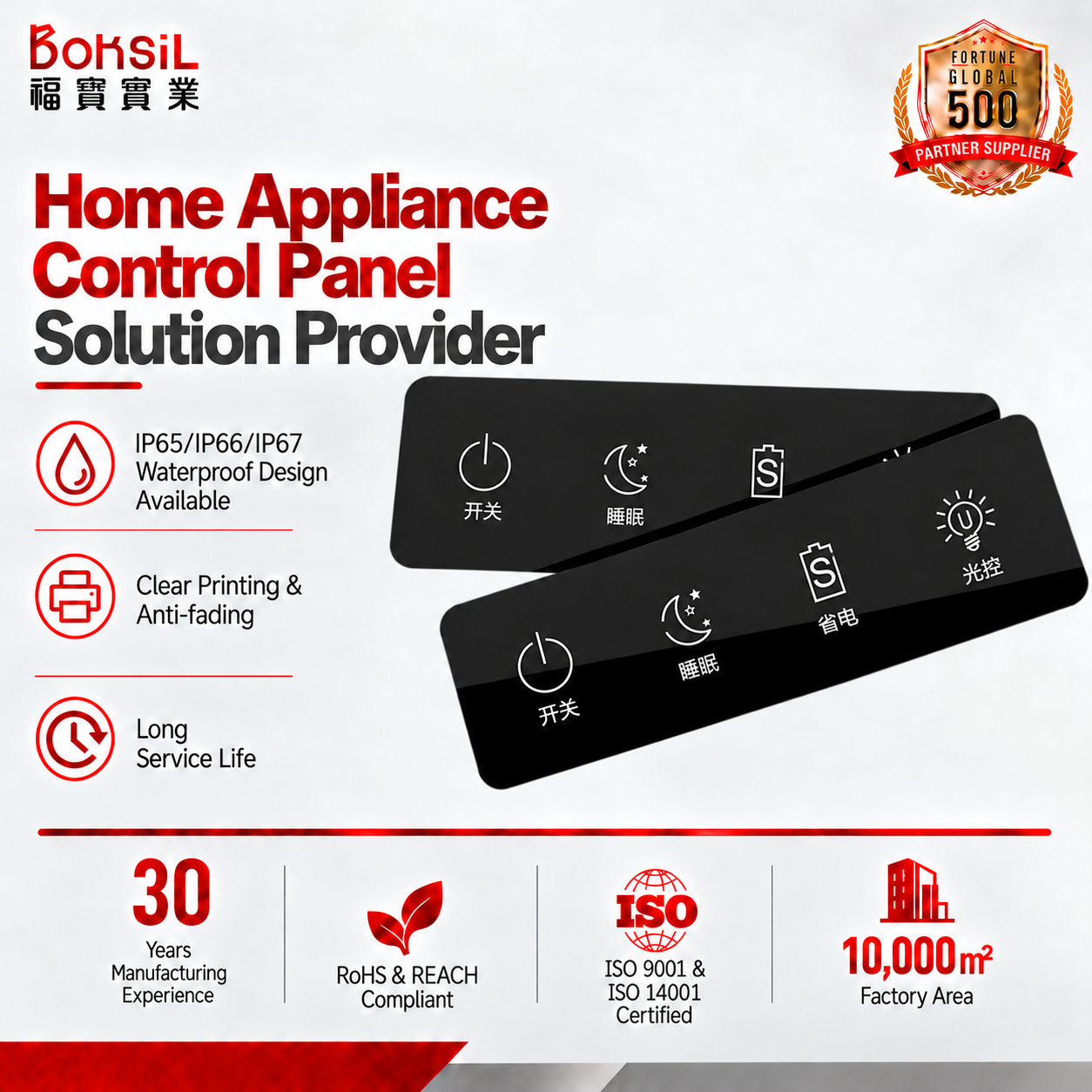
Environmental Hermeticity IP40 / Unsealed Perimeter Edges IP65 to IP67 Full Perimeter Hydrophobic Seal Programmable Temperature-Humidity Cyclic Chamber
Circuit Conductive Layers Single-layer printed silver, unpassivated Carbon passivated silver or Polyimide Copper FPC Insulation resistance at 100V DC (>100M Ohm) post-humidity
Contact Life Expectancy 200,000 to 500,000 cycles before fatigue 1,000,000 to 5,000,000 mechanical operations Automated pneumatic Key Life Testing rigs
ESD / EMI Shielding None or segmented ground trace Full aluminum/copper foil or printed grid (>15kV) Electrostatic Discharge Simulation via IEC 61000-4-2
Quality Assurance & Tracking AQL batch sampling (2.5 / 4.0) 100% Automated Optical (AOI) + Electrical Test Individual batch travel sheets, calibrated trace resistance logs

Future Procurement Vectors: 2025–2030 Technology Shifts

How the global landscape for printed control panels and human-machine interface assemblies is evolving under industrial IoT, edge AI, and ergonomic demands.

Capacitive & Hybrid Switching

Transitioning from purely mechanical switches to solid-state capacitive surfaces integrated beneath continuous PMMA or glass panels. Eliminates mechanical failure, enables wipe-down medical sanitation, and supports slider gestures.

Micro-LED & Light Guide Films

Replacing bulky electroluminescent (EL) foils with ultra-thin Light Guide Film (LGF) arrays and surface-mounted ultra-bright chip LEDs, delivering zero hot-spot illumination across complex graphic control topologies.

In-Mold Electronics (IME / IMD)

Combining functional screen-printed circuitry and decorative films directly into the plastic injection tool. This creates structural 3D smart surfaces with embedded electronics, dramatically lowering device weight and thickness.

Sustainable Material Science

EU RoHS, REACH, and ESG mandates are accelerating the deployment of halogen-free flame-retardant films, solvent-free UV-curing inks, and recyclable thermoplastic olefin (TPO) elastomer keypad alternatives.

Direct Manufacturing Authority

Dongguan AXRU Electronics: Vertically Integrated HMI Production

Operating out of a 10,000㎡ precision manufacturing complex in Dongguan, China, Dongguan AXRU Electronics Co., Ltd. represents the gold standard for global OEMs sourcing high-reliability printed control panels, membrane switches, and elastomer interfaces.

Unlike trading brokers or fragmented workshops, AXRU consolidates CAD/CAM DFM reviews, high-precision screen printing, cleanroom circuit lamination, metal dome mounting, optical bonding, and environmental qualification under a single roof. Assessed on-site by Intertek, our facility serves top-tier multinational clients across North America, Europe, and the Asia-Pacific.

  • Class 10,000 Cleanroom Printing: Eliminates airborne dust particles, guaranteeing pinhole-free ink coats, flawless display windows, and uniform dielectric layers.
  • In-House Reliability Testing Center: Outfitted with programmable humidity chambers, Key Life cycling stations, Taber abrasion testers, and automated actuation force curve plotters.
  • 100% Continuity & Resistance Mapping: Every outbound control assembly passes microprocessor-controlled open/short circuit and contact resistance verification.
Contact Us

On-Site Verification Profile

Plant Location: Dongguan, Guangdong, China
Audit Body: Intertek Verified Supplier
Production Footprint: 10,000 Square Meters
Active Workforce: 121 Technical Personnel
Core Tooling: Flatbed Die-Cutters & CNC Millers
Production Cleanliness: ISO 14644-1 Enclosed Cleanrooms
Compliance Track: RoHS, REACH, ISO 9001 Compliant

Frequently Asked Questions: B2B Control Panel Procurement

Engineering and supply-chain inquiries addressed by AXRU's technical application team.

1. What engineering files and specifications are required to initiate an accurate quotation?
To provide a comprehensive DFM and pricing schedule, our engineering team requires: (1) 2D mechanical drawings (AutoCAD DWG/DXF or PDF) specifying external contours, window placements, cutouts, and tail exit coordinates; (2) Graphic vector artwork (Adobe Illustrator .AI or vector PDF) with specified Pantone Matching System (PMS) codes; (3) Schematic circuit layout showing pinouts, common lines, LED forward voltages, and connector pitch (e.g., 2.54mm or 1.0mm); and (4) Operating environmental specifications including operating temperature ranges and desired IP ratings.
2. How does AXRU prevent silver migration in high-temperature, humid industrial environments?
Silver migration is an electrochemical reaction occurring when moisture penetrates the circuit layers under a continuous DC bias voltage, causing dendrite growth between traces and leading to catastrophic short circuits. AXRU prevents this through three defenses: First, applying an impermeable carbon over-print cap completely isolating silver conductors. Second, utilizing advanced UV dielectric masks with cross-linked polymer densities. Third, establishing a hermetic perimeter gasket using 3M 200MP or 300LSE adhesive systems, achieving an IP67 barrier against ambient moisture ingress. For zero-risk applications, we recommend flexible copper etched circuits (FPC).
3. What are the key distinctions between Polycarbonate (PC) and Polyester (PET) graphic overlays?
While Polycarbonate (PC) is economical, flame-retardant, and straightforward to thermoform, it demonstrates poor chemical tolerance against aggressive solvents and tends to develop micro-cracks (craze failure) after repeated actuation (<100,000 flexes). In contrast, biaxially oriented PET (such as Autotex XE) sustains over 5,000,000 mechanical flexes without fatigue, offers exceptional resistance to industrial degreasers and hospital sanitizers, and exhibits superior tactile response retention when switch domes are embossed. AXRU primarily recommends PET for medical, military, and heavy automation applications.
4. What prototyping turnaround times and Minimum Order Quantities (MOQs) are offered?
To accelerate New Product Introduction (NPI) cycles, AXRU supports an agile rapid-prototyping service. Digital UV printing and laser cutting allow engineering samples to ship in as few as 5 to 7 business days without hard steel tooling charges. For mass production, our standard Minimum Order Quantity (MOQ) starts at just 100 pieces per revision, scaling effortlessly to high-volume containerized deliveries of 100,000+ units per month.
5. Can backlighting, display windows, and dead-front effects be combined on a single panel?
Yes. AXRU specializes in integrated multi-tier optical front panels. We regularly combine dead-front printed indicator icons (which remain invisible until backlit by internal surface-mount LEDs), crystal-clear transparent display windows for OLED/LCD screens (with optional anti-glare or anti-fingerprint surface textures), and Light Guide Film (LGF) networks ensuring uniform key illumination with minimal power draw and negligible profile thickness.

Bridge Your Interface Concept to Scalable Mass Production

Collaborate directly with our Senior HMI Application Engineers. Submit your project requirements, 2D/3D CAD files, or graphic sketches today for a complimentary Design-for-Manufacturability (DFM) review, material stack-up recommendation, and firm quotation within 24 hours.

Contact Us