Precision Polycarbonate & Elastomer Front Panels
Explore Tier-1 export-grade graphic overlays, capacitive touch assemblies, and integrated silicone arrays engineered for medical grade sterilization, outdoor UV resistance, and rigorous industrial duty cycles.
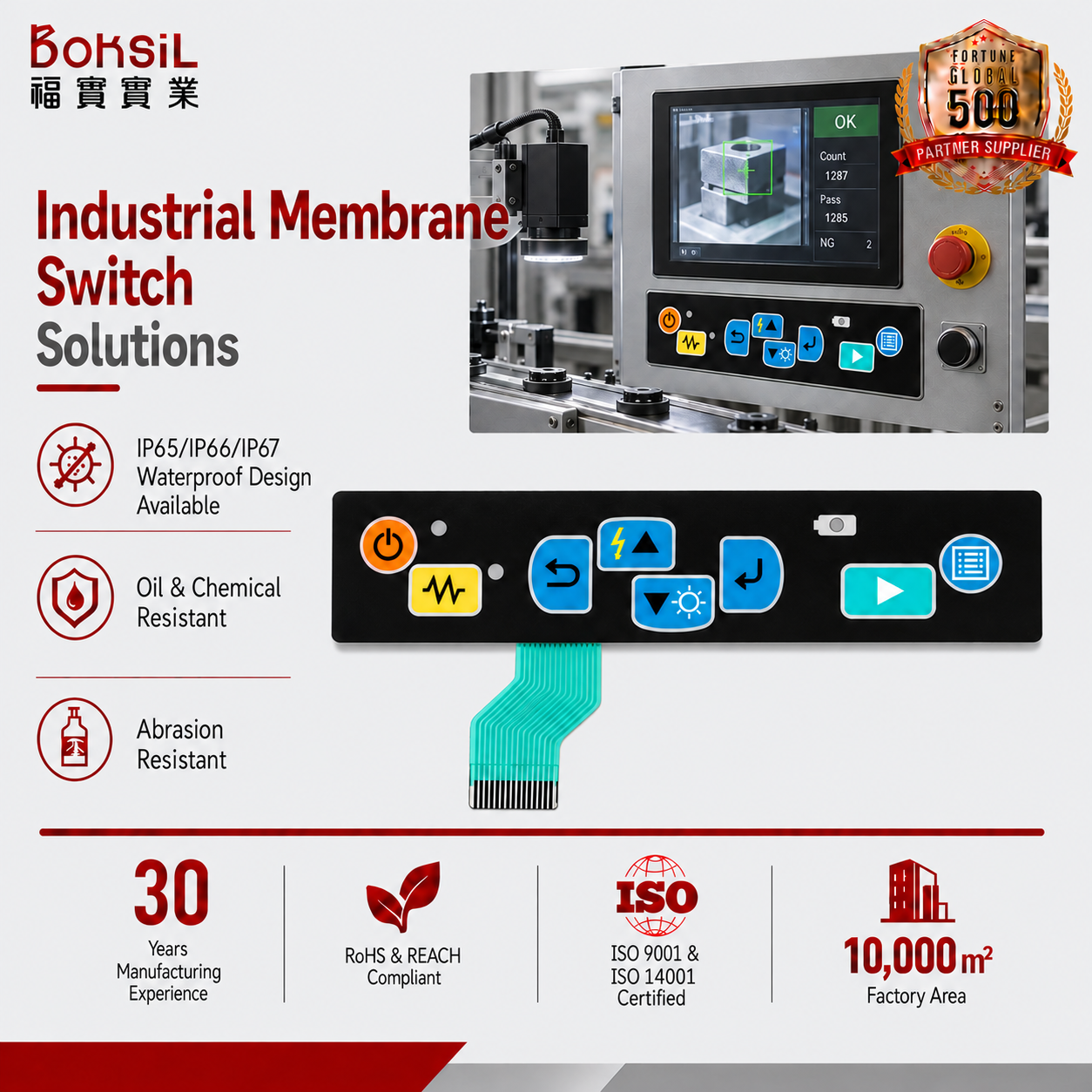
Custom Capacitive Touch Screen Panel Screen Printing Graphic Overlay Membrnae Switch for Home Appliance
- Substrate: Optical Polycarbonate / PMMA
- Sensing Tech: Solid-State Touch / Slider
- Durability: Zero Mechanical Wear
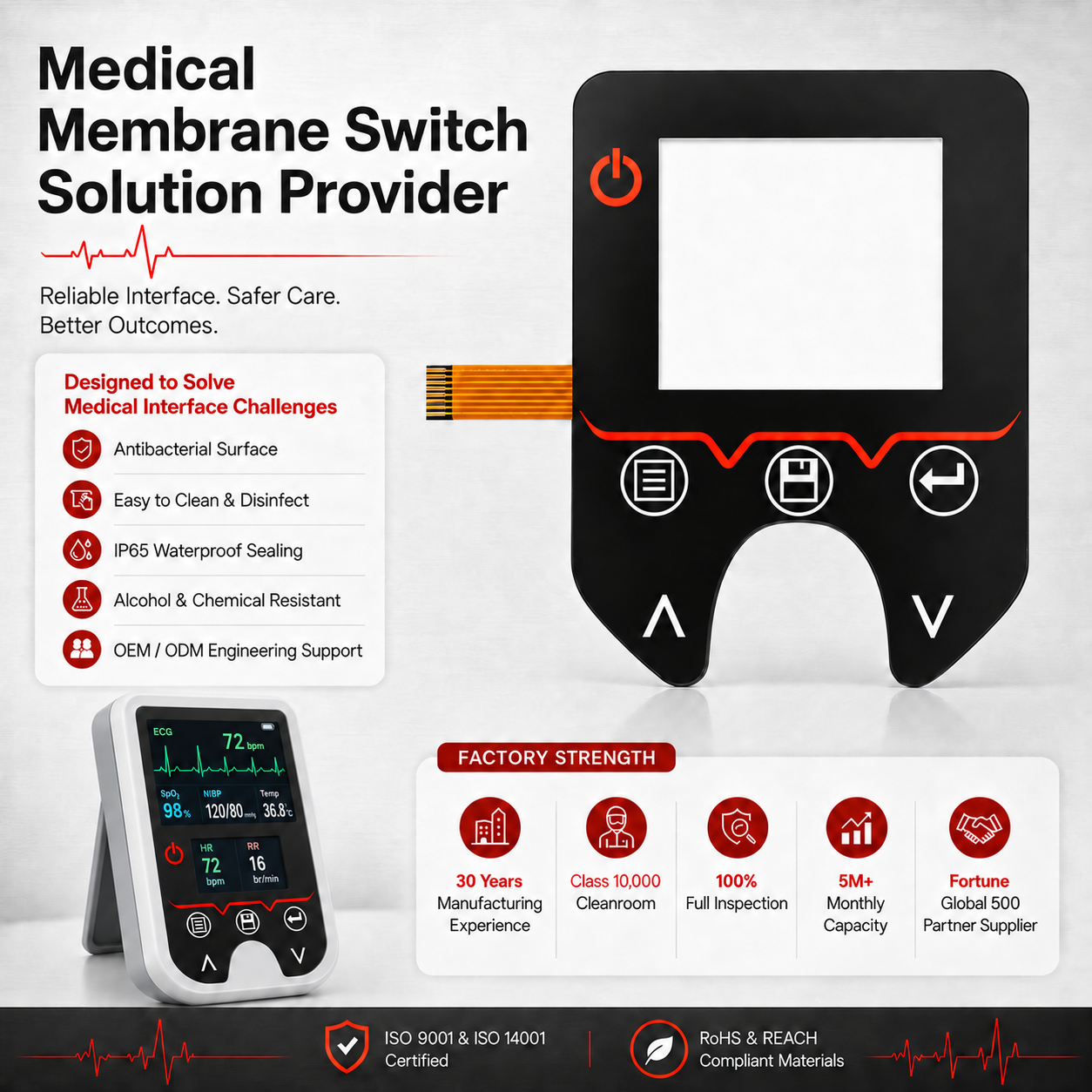
Factory Custom Medical Equipment ip65 Waterproof PC Graphic Overlay Membrane Switch Control Front Panel Button
- Ingress Rating: IP65 / IP67 Perimeter Seal
- Resistance: Anti-Microbial / Disinfectant
- Overlay: Textured Polycarbonate (Lexan™)
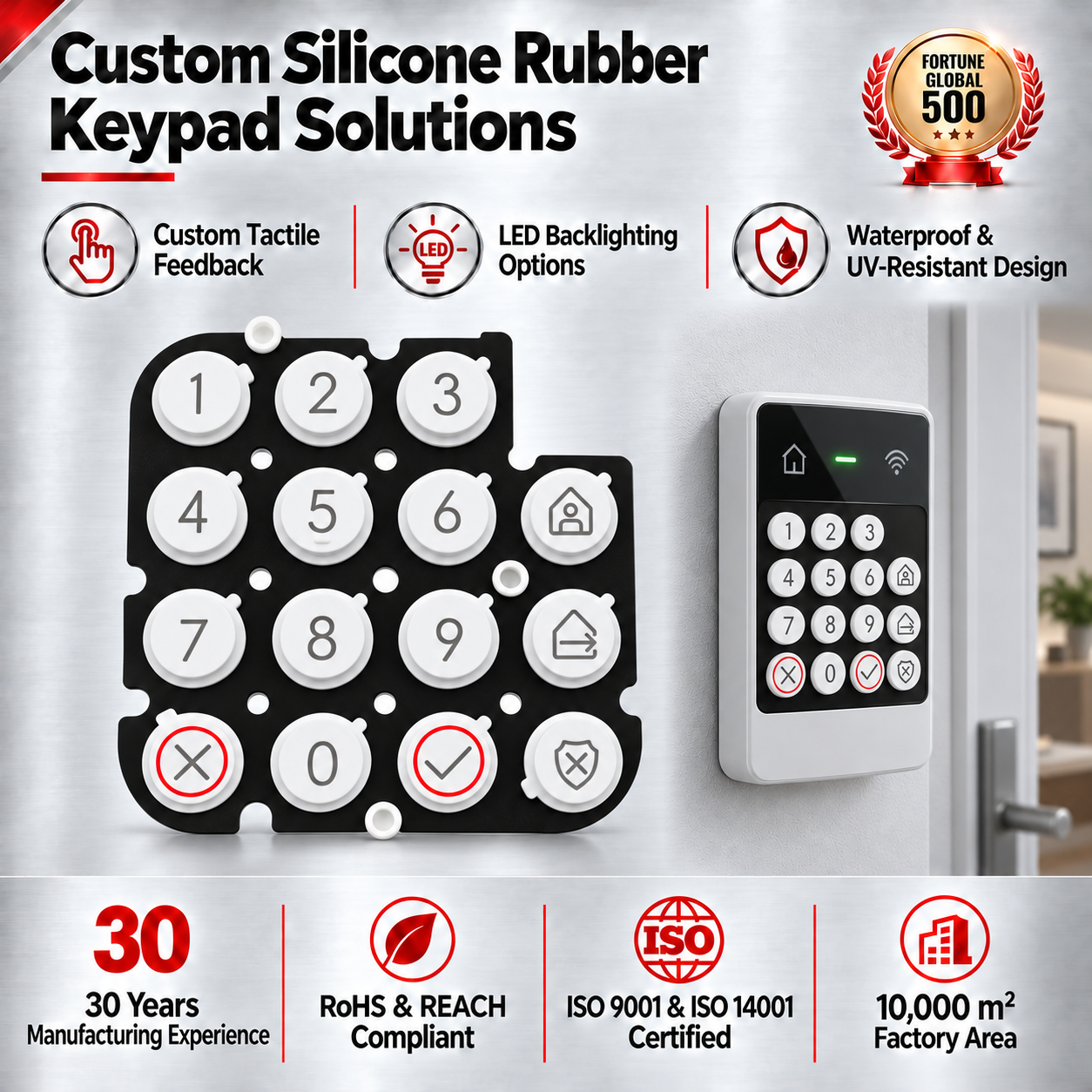
Factory Wholesale Numeric Conductive Silicone Rubber Keypad Panel Embossed Buttons for Home Appliances
- Pill Contact: Conductive Carbon Pills (<100Ω)
- Actuation Force: 160g – 280g Customizable
- Finish: PU Anti-Abrasion Coating
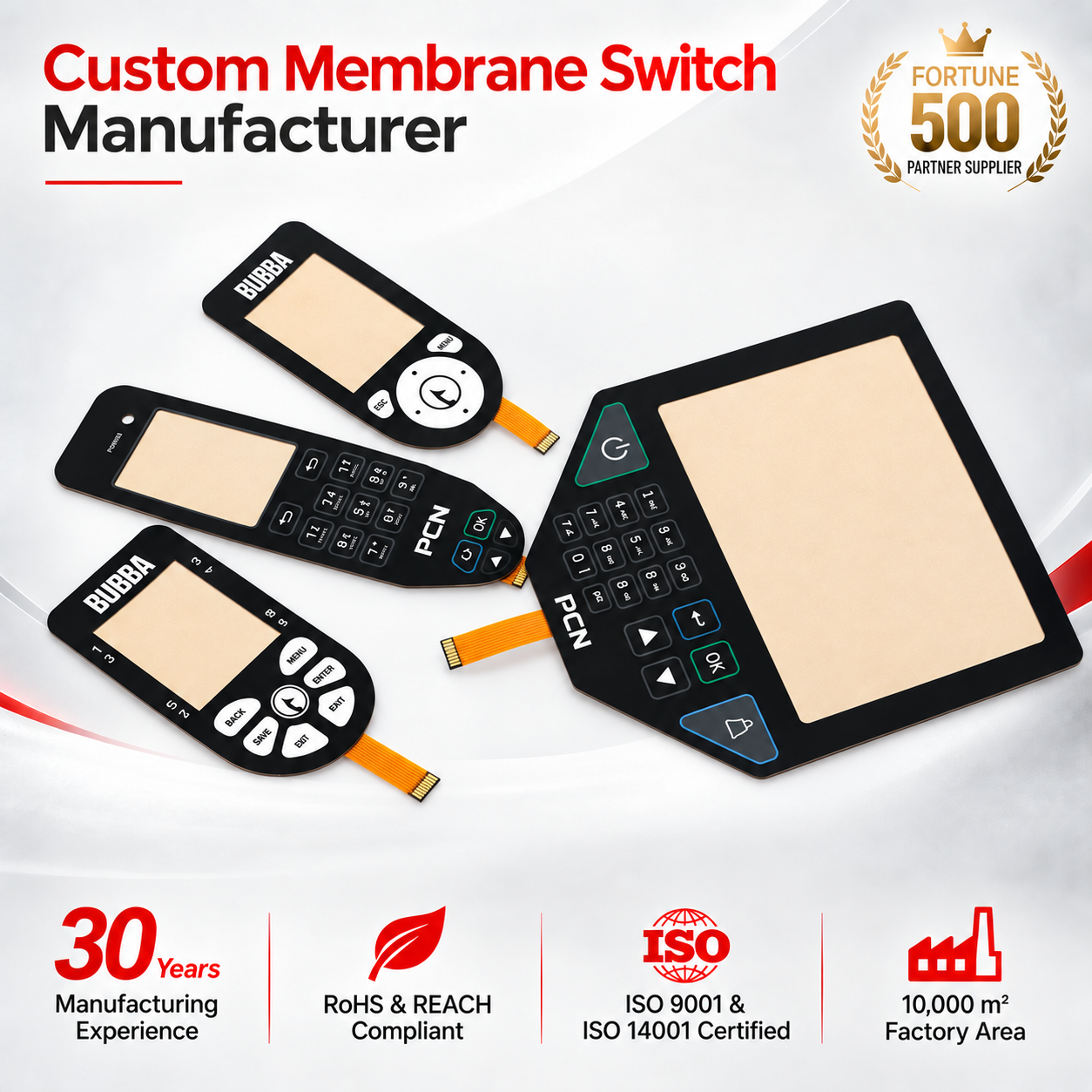
Custom 3m Adhesive Tactile Metal Dome Button Membrane Switch Graphic Overlay for Electronic Equipment
- Dome Type: Stainless Steel Nickel-Plated
- Adhesive: Genuine 3M 467MP / 468MP
- Mechanical Life: >1,000,000 Actuations
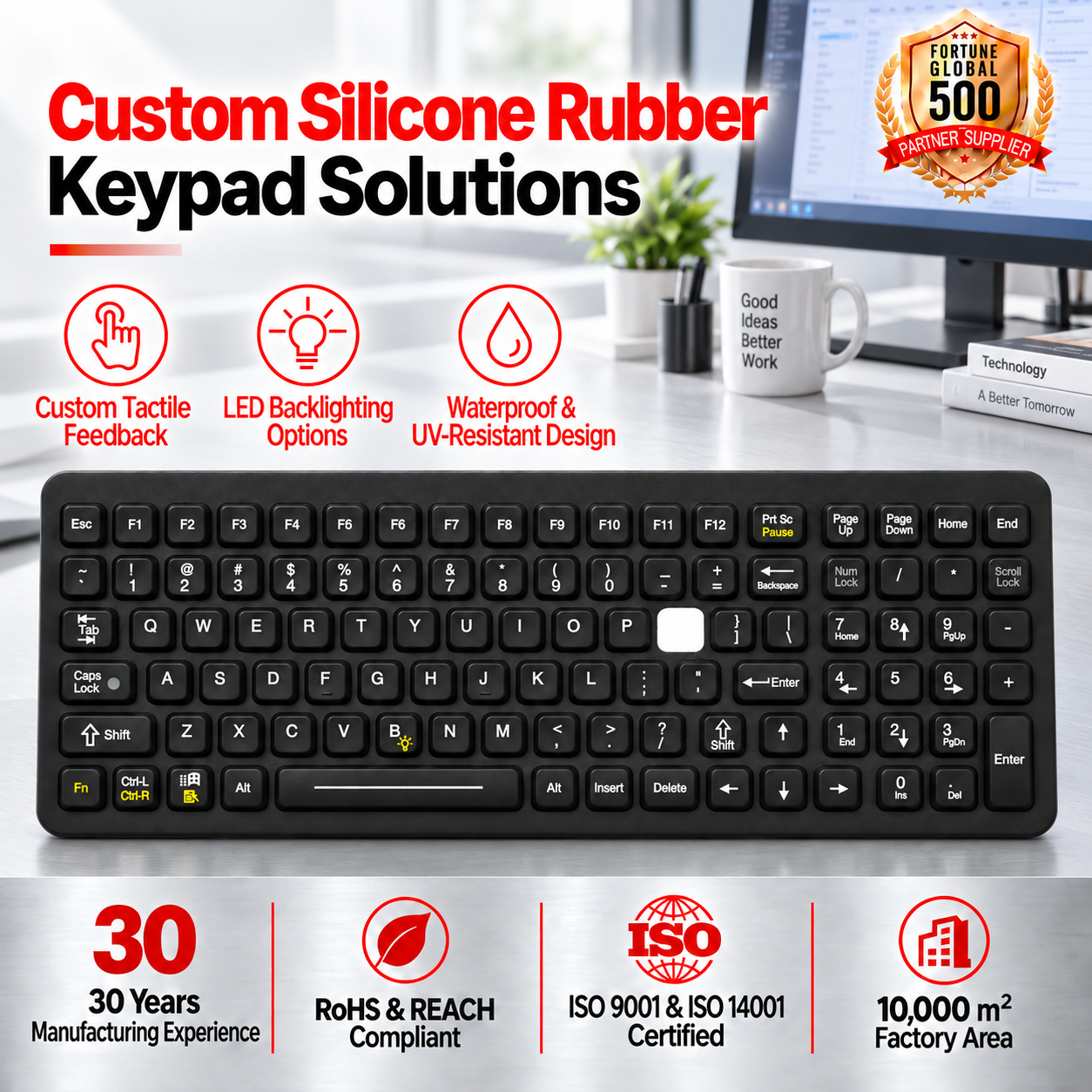
Industrial Custom Manufacturer Silicone Keypad Rubber Button Conductive Non-Toxic for Computer
- Material: RoHS / REACH Silicone Compound
- Printing: Multi-Color Screen + Clear Coat
- Protection: Oil, Dust, and Solvent Proof
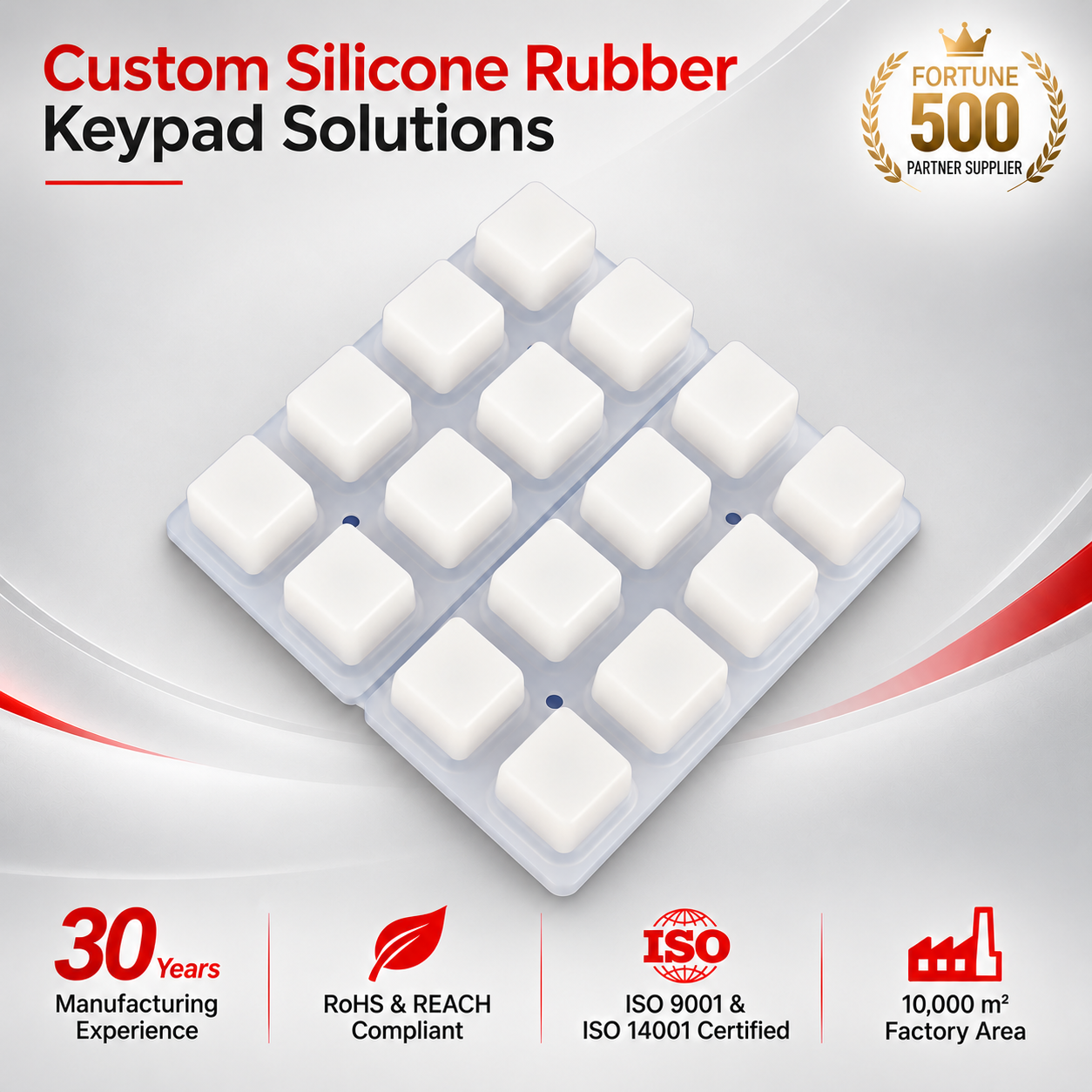
Wholesale Oval Dome OEM/ODM Custom Backlit White Silicone Rubber Keypad 4x4 Control Panel for Communication Equipment
- Backlighting: Laser Etched Through-Legend
- Integration: LGF / Fibre-Optic Uniform Light
- Layout: 4x4 Matrix Protocol Ready
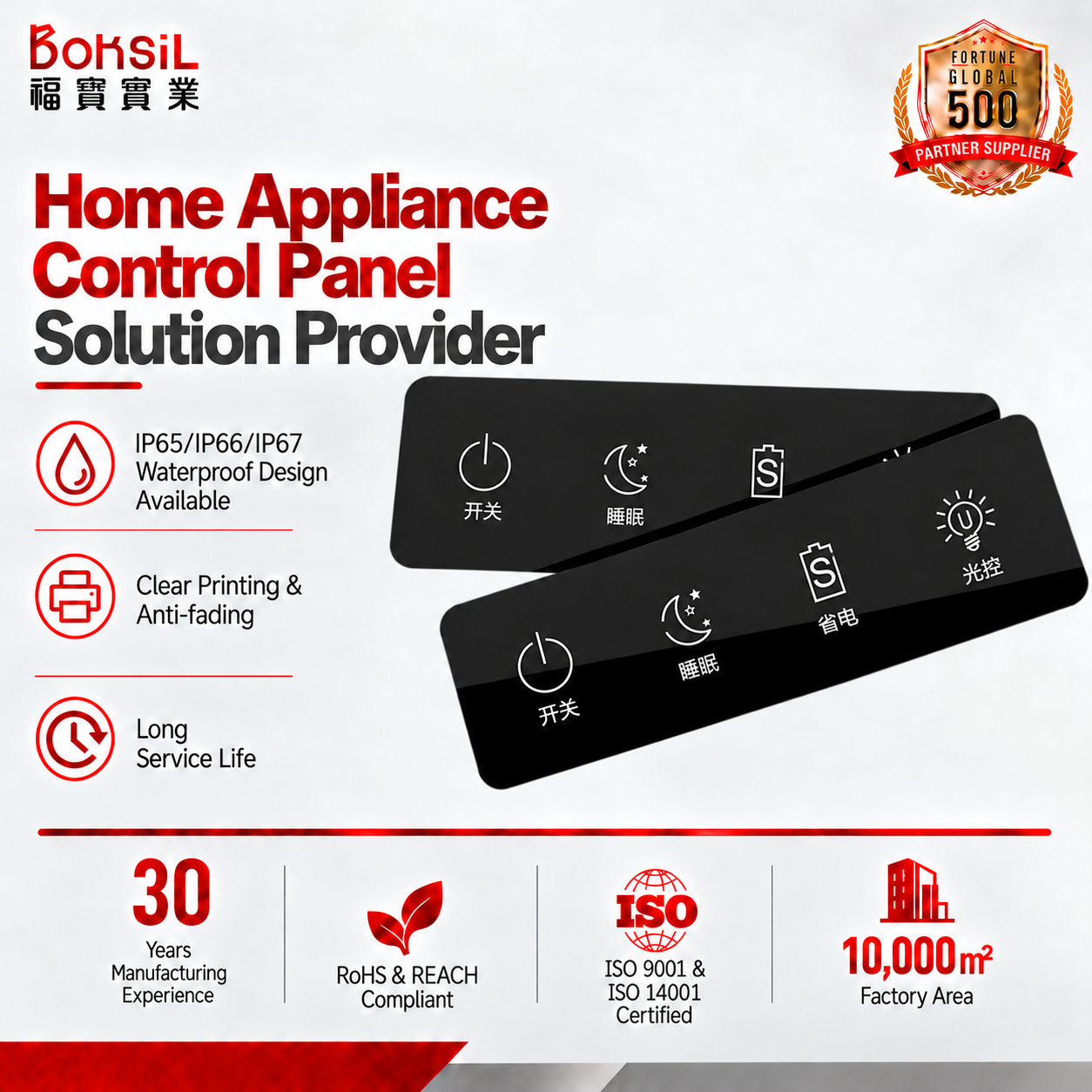
Factory Direct Custom Silk Screen Printing PMMA Graphic Overlay Electronic Control Front Panel for TV LCD Display Screen
- Hard-Coat: 4H - 6H Scratch Resistant PMMA
- Transmittance: >92% Optical Clarity for Displays
- Bonding: Optically Clear Adhesive (OCA)
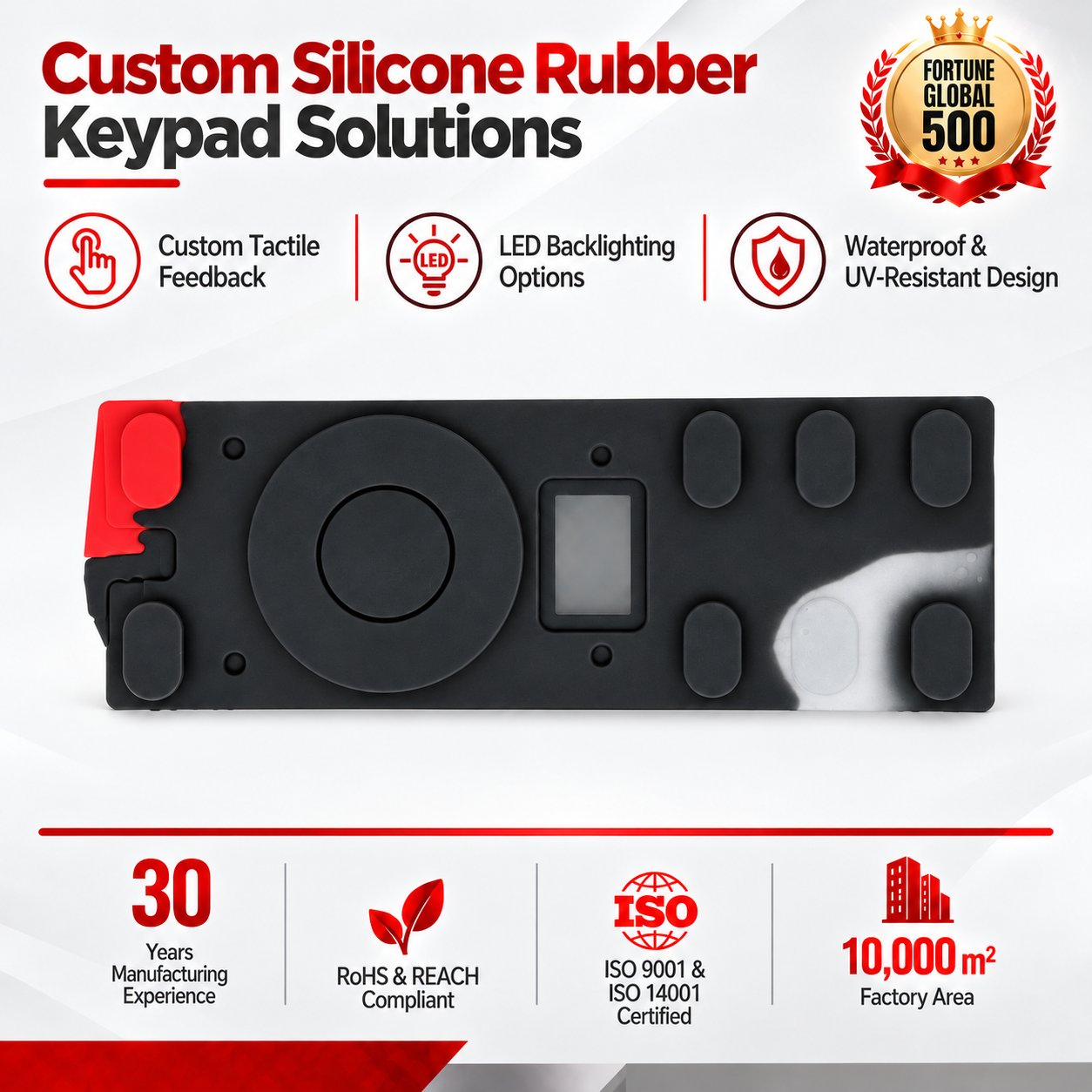
Customizable Design Black Embossed Circular Buttons Red Silicone Rubber Keypad Panel Switch for Industrial Control
- Embossing: Pillow / Rim Tactile Geometry
- Operating Temp: -40°C to +125°C Continuous
- Application: Heavy Machinery, CNC, Marine
How Tier-1 OEM Buyers Audit Polycarbonate Graphic Overlay Exporters
In modern high-reliability electronics, a graphic overlay is no longer a simple decorative faceplate. It is a critical environmental barrier, dielectric insulator, and user tactile interface. Below is the multi-point evaluation matrix used by leading Fortune 500 procurement teams to qualify the Top 10 Polycarbonate Graphic Overlay Factories worldwide.
| Audit Dimension | Evaluation Parameter | Tier-1 Factory Benchmark (AXRU Standards) | Secondary / Sourcing Risk Factors |
|---|---|---|---|
| 1. Cleanroom Printing Environment | Class 1,000 to Class 10,000 positive pressure screen printing lines. | Zero Pinholes Fully enclosed positive pressure climate control; zero dust specks in display windows. | Uncontrolled room printing resulting in ink pinholes, backlit light leaks, and premature short circuits. |
| 2. Resin & Film Traceability | Authentic polycarbonate (SABIC Lexan™, Covestro Makrofol®) raw film stock. | Certified COC Strict resin lot traceability with UL94 V-0/VTM-2 flame retardancy certification. | Unbranded recycled PC films prone to embrittlement, yellowing under indoor fluorescent UV, and delamination. |
| 3. Dimensional Precision & Registration | Multi-layer printing registration tolerance and CNC/die-cut boundary offsets. | ±0.05 mm CCD visual auto-positioning screen printers and servo flatbed die-cutting tables. | Manual manual registration with offsets >±0.3mm causing LED bleed and misaligned tactile dome cavities. |
| 4. In-House Environmental Chambers | Programmable thermal shock (-40°C to +105°C) and cyclic relative humidity (RH 95%). | In-House Lab Dedicated ESPEC programmable chambers running 240-hour accelerated aging per batch. | No internal testing; relies on third-party test houses only once per year without production batch control. |
| 5. Adhesive Structural Bonding | Selection and lamination of genuine high-shear transfer adhesives (3M 467MP, 468MP, 300LSE). | Automated Laminating Bubble-free cold/hot roller lamination with automated surface tension corona treatment. | Counterfeit or off-brand acrylic adhesives that degrade under low temperatures or plastic outgassing. |
| 6. Tactile & Mechanical Actuation Life | Force-displacement curve testing (Snap Ratio, Travel Distance, Contact Resistance). | Automated Profiling 100% batch validation of actuation force (180g–350g ±20g) to ensure uniform click feel. | Subjective manual button pressing with no recorded snap curve; high incidence of double-clicking or stiff actuation. |
| 7. Dead-Front & Backlit Performance | Light masking ink density, chromaticity consistency, and light transmission tuning. | Densitometer QC Multi-pass high-density carbon/silver/pigment printing to eliminate haloing around LED windows. | Light bleed between closely spaced status indicators; uneven backlighting across display cutouts. |
| 8. Ink Adhesion & Chemical Resistance | Cross-hatch tape test (ASTM D3359 Method B) and chemical exposure rubbing tests. | 5B Adhesion Tested against MEK, isopropyl alcohol, bleach, and commercial disinfectants with zero delamination. | Sub-surface ink flaking or dissolving during hospital sanitation or industrial grease cleanup. |
| 9. Electronic Continuity & Dielectric Proof | 100% automated electrical testing for open/short circuits and dielectric breakdown. | 100% Verified Dedicated computerized harness testers scanning circuit loops and insulation up to 500V DC. | Sample-based visual inspection resulting in field failures of open traces or intermittent dome contacts. |
| 10. Supply Chain & Third-Party Audit | Independent facility capability verification, trade compliance, and financial integrity. | Intertek Audited 10,000㎡ plant, Fortune 500 direct supplier verification, audited ISO9001/ISO14001 pipelines. | Middleman trading company posing as a factory with no direct production equipment or engineering accountability. |
Material Science: Polycarbonate (PC) vs. Polyester (PET) vs. PMMA
Selecting the optimal front panel substrate is the most decisive engineering factor dictating operating temperature, switch actuation life, chemical tolerance, and optical clarity. Review our empirical comparison matrix below.
Polycarbonate (PC) Overlays
The industry benchmark for visual depth, flame-retardant enclosures, and complex mechanical embossing. Optimal for indoor appliances, instruments, and commercial control consoles.
- Flex Switch Life: Up to 100,000 cycles
- Heat Resistance: -40°C to +135°C
- Flame Rating: UL94 V-0 / VTM-2 Available
- Optical Window Clarity: High (Gloss / Velvet / Matte)
- Embossing Retention: Superior Dimensional Hold
- Chemical Tolerance: Moderate (Sensitive to Ketones)
Polyester (PET) Overlays
Unmatched flexural endurance and harsh chemical solvent resistance. The premier choice for membrane switch keypads subjected to millions of clicks and frequent sanitization.
- Flex Switch Life: >5,000,000 cycles
- Heat Resistance: -40°C to +120°C
- Flame Rating: UL94 VTM-2
- Optical Window Clarity: Requires Hard-Coat treatment
- Embossing Retention: High Elastic Recovery
- Chemical Tolerance: Extreme (Acids, Bleach, Alcohols)
PMMA (Acrylic Glass) Panels
Rigid aesthetic faceplates designed for structural cover lenses, TV/monitor front bezels, and seamless capacitive touch displays requiring high surface hardness (4H–6H).
- Flex Switch Life: Non-Flexible (Rigid Panel)
- Heat Resistance: -30°C to +85°C
- Surface Hardness: Up to 6H with Hard-Coat
- Optical Window Clarity: >92% Light Transmission
- Embossing Retention: N/A (CNC Chamfered / Milled)
- Chemical Tolerance: Good (Cleanable Surface)
Emerging Technology & Procurement Trends in Graphic Overlays
How the global convergence of IoT, embedded sensors, and human-centric industrial design is reshaping polycarbonate overlay manufacturing specifications.
1. Dead-Front Dynamic LED Illumination
Modern medical devices and luxury automotive controls demand completely invisible icons until actively backlit. Achieving this requires precise multi-layer translucent gray or colored optical inks with spectrophotometer delta-E < 0.5 tolerances. Tier-1 exporters use secondary light-blocking masks to ensure high contrast without peripheral light blooming.
2. Anti-Microbial & Medical Disinfectant Hard-Coats
Post-pandemic healthcare standards require graphic overlays on patient monitors, syringe pumps, and ICU consoles to resist hospital-grade ammonium salts, hydrogen peroxide vapor, and isopropyl alcohol. Sub-surface printing combined with silver-ion antimicrobial topcoats inhibits 99.9% of bacterial colonization over 10-year product lifespans.
3. In-Mold Decoration (IMD / IML) Integration
Traditional flat overlays attached via PSA adhesives are transitioning toward In-Mold Decoration (IMD/IML) for consumer appliances and automotive interiors. Printed polycarbonate films are vacuum thermoformed and back-injected with ABS/PC resin, creating single-piece seamless enclosures with zero parting lines and extreme dust/water ingress resistance.
4. Capacitive Touch Sensor + Overlay Hybridization
Mechanical metal domes are increasingly replaced or supplemented by printed capacitive sensing electrodes. Conductive silver or PEDOT polymer inks are silk-screened directly onto the sub-surface of the overlay film, enabling gesture sliding, multi-touch buttons, and water-rejection firmware interfaces on continuous glass or plastic surfaces.
5. Ultra-Thin Flexible Printed Circuits (FPC) Backing
While screen-printed conductive silver ink remains economical for low-density circuits, high-reliability military and medical front panels have adopted copper FPC backings. Copper etched traces support sub-millimeter pitch connectors, withstand vibration without micro-fracturing, and allow direct surface mounting of micro-LEDs and sensor ICs directly inside the keypad sandwich.
6. Near-Shoring Sourcing with Direct Engineering DFM
Procurement teams are cutting intermediary distributors and working directly with audited OEM exporters like AXRU Electronics. Direct access to DFM (Design for Manufacturability) engineers shortens rapid prototyping to 3–5 business days, eliminates multi-tier markups, and guarantees that tool steel dies and artwork intellectual property remain strictly controlled.
Why Tier-1 Global Brands Choose Dongguan AXRU Electronics
Located in the heart of China’s world-class precision electronics manufacturing hub, Dongguan AXRU Electronics Co., Ltd. operates a comprehensive, 10,000㎡ vertically integrated campus audited on-site by Intertek.
10,000㎡ Intertek Audited Facility
No outsourced core processing. Screen printing, laminating, metal-dome placing, laser cutting, and reliability validation occur under one roof with full traceability.
121 Technical Personnel
Dedicated DFM project managers, tooling masters, and quality engineers ensure quotation turnarounds within 24 hours and seamless translation of 2D/3D CAD models.
100% Inspection & Testing Rigs
Armed with in-house key life cycle testers, force-displacement curve plotters, tensile peel testers, yellowing UV ovens, and programmable climate chambers.
Over 10 Years Direct Export
Exporting to leading OEMs across North America, Germany, Japan, and the UK. Fully compliant with international customs packaging, anti-static protocols, and RoHS/REACH.
Frequently Asked Questions on Polycarbonate Overlay Sourcing
Clear, uncompromised technical answers to help sourcing managers, component engineers, and buyers avoid costly re-tooling and prototype delays.
What are the key differences between polycarbonate and polyester for graphic overlays?
Polycarbonate (PC): Excels in optical clarity, flame retardancy (UL94 V-0 options), easy deep-embossing forming, and dimensional stability. It provides a premium rich visual depth, making it ideal for indoor consumer electronics, instrumentation consoles, and automotive gauges. However, its flex fatigue threshold is around 100,000 cycles, and it is sensitive to aromatic solvents.
Polyester (PET): Offers superior mechanical fatigue resistance (withstanding over 5,000,000 switch actuations without micro-cracking) and exceptional resistance to harsh industrial chemicals, medical disinfectants, and cleaning agents. For applications requiring embossed tactile buttons undergoing heavy daily use or frequent clinical wipe-downs, PET is generally recommended.
How do you achieve IP65 or IP67 waterproof sealing in membrane keypads?
Sealing against water, industrial oils, and airborne humidity requires three structural engineering features:
1. Continuous Perimeter Adhesive Ring: We route the bottom adhesive layer with an uninterrupted outer border (minimum 3.0mm width) enclosing all venting channels internally.
2. Internal Air Venting: Keypad venting is engineered between keys rather than vented out to the atmosphere, preventing moisture ingress when switches are actuated.
3. Sealed Tail Exit: The flex circuit tail exits through a potted or silicone-gasket sealed portal, ensuring complete ingress protection validated in our programmable humidity and splash testing chambers.
What design files and technical parameters are required for an exact quote?
To deliver a firm DFM review and tooling quotation within 24 hours, our engineering office requires:
• Vector Artwork / Mechanical Drawing: Adobe Illustrator (.AI), AutoCAD (.DXF/.DWG), or vector .PDF format.
• Color Specifications: Standard Pantone (PMS) matching codes or RAL color numbers.
• Layer Stack-Up: Substrate material, thickness (typical 0.125mm to 0.5mm), adhesive type (such as 3M 467MP, 468MP, or 300LSE for low surface energy plastics).
• Tactile & Window Elements: Desired button embossing style (pillow, rim, dome) and display window surface finish (anti-glare, clear gloss, or tinted filter).
What is the Minimum Order Quantity (MOQ) and production turnaround timeline?
To support high-mix, low-to-medium volume OEM enterprises, our standard production MOQ starts at just 100 pieces for custom overlays and membrane switches. Rapid prototyping and initial FAI (First Article Inspection) engineering samples are completed in 5 to 7 working days. Standard volume production lead time is typically 12 to 15 working days following sample sign-off.
How does AXRU guarantee color consistency across repeat mass-production batches?
We apply closed-loop colorimetry management. Every ink batch is precision-mixed using automated digital scales and checked with an X-Rite spectrophotometer under standard D65 day-lighting to maintain ΔE < 0.8. Retained physical golden sample panels are archived in temperature-controlled dark storage for 5+ years, ensuring zero visual drift between your initial sample and volume re-orders years later.
Ready to Engineer Your Custom Graphic Overlay?
Direct factory engineering consultation, immediate DFM feedback on your CAD drawings, and ISO-certified manufacturing without distributor markup. Send your files to our Dongguan engineering team today.
Contact Us