Top 10 Membrane Switch Panel Factory & Supplier Guide

Engineering Whitepaper: Direct-Factory Selection Metrics, Advanced HMI Construction, Procurement Trends, and ISO 9001/Intertek-Verified Manufacturing Insights

Direct-Line Engineering Solutions

Precision OEM/ODM Human-Machine Interface Solutions

Explore custom human-machine interfaces engineered with extreme environmental tolerance, tactical feedback precision, and industrial-grade durability.

Sourcing Methodology

Engineering Audit: Evaluating Top 10 Membrane Switch Panel Suppliers

A rigorous industrial procurement framework designed to audit production reliability, avoid silent circuit failure, and mitigate multi-tier supplier markups.

1. Conductor Metallurgy & Silver Migration

Top-tier suppliers utilize high-purity micro-silver inks with polymer thick film (PTF) cross-linkers, accompanied by carbon encapsulation to prevent dendritic short-circuits under high humidity and constant DC bias voltage.

2. Ingress Protection (IP65 - IP68)

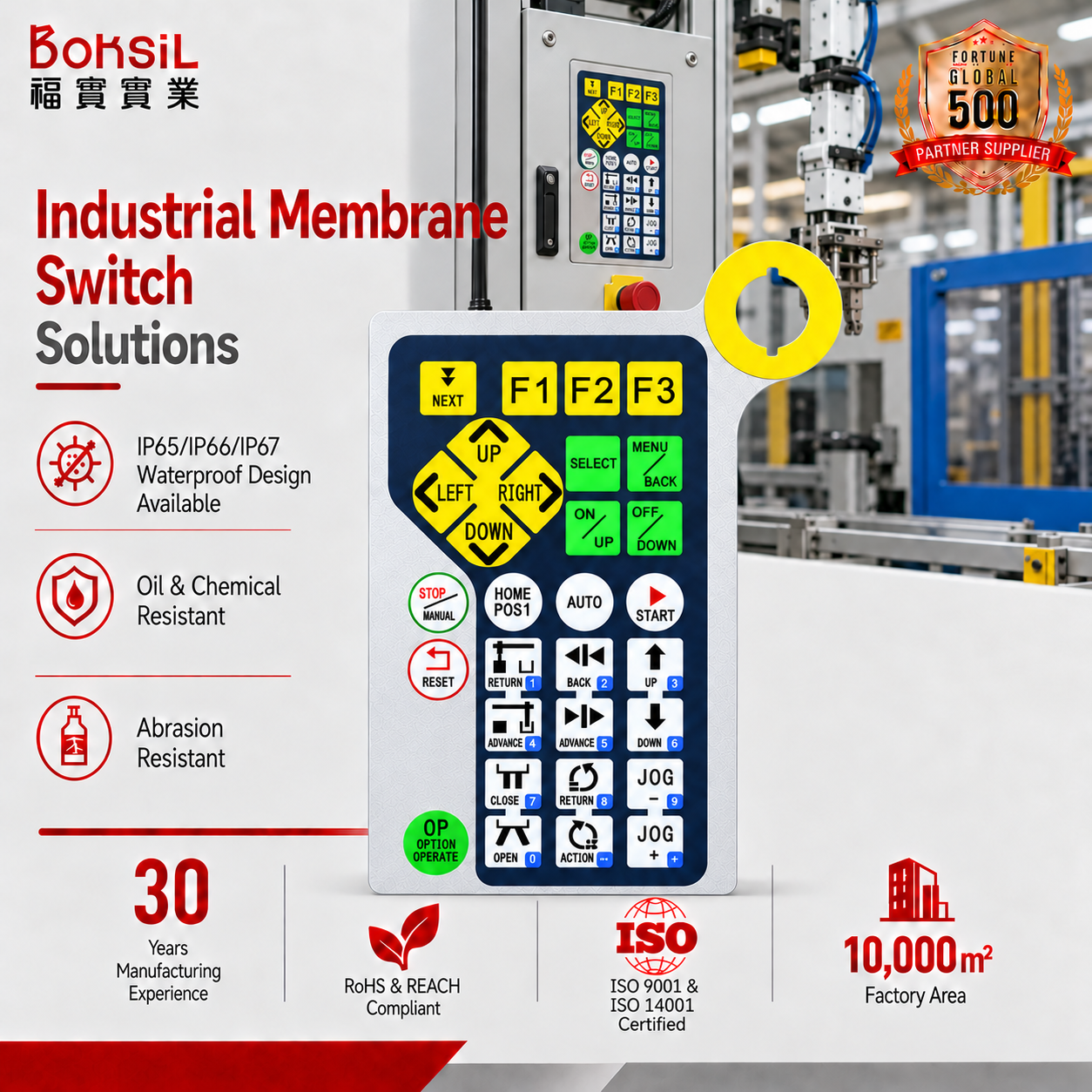
True industrial suppliers integrate complete perimeter channel gaskets and hydrophobic vents. This prevents internal capillary vacuuming that draws moisture through tail exits when equipment transitions between temperature extremes.

3. Dome Actuation & Travel Consistency

Examine whether the manufacturer stamps tactile domes internally or sources pre-tested stainless domes (SUS301/SUS304). Top factories maintain automated force-displacement plotting to confirm crisp tactile snap ratios across large lot runs.

4. Overlay Film Resins (PET vs. PC)

Autotype/Toray heat-stabilized polyesters (PET) offer flex life over 5,000,000 cycles and resistance to aggressive industrial solvents, while SABIC Lexan Polycarbonate (PC) provides optimal optical clarity and cost efficiency for non-flexed fascias.

5. Full In-House Testing Laboratory

Never partner with brokers who lack in-house metrology. Qualified suppliers maintain environmental humidity ovens, key life cycle cyclers, tensile testers, spectrometer color calibrators, and 100% automated electrical continuity testers.

Technology Forecasting

Emerging Technology Trends & Next-Gen Sourcing Demands

Human-Machine Interface engineering is evolving rapidly beyond passive mechanical switches. Discover how advanced sensor integration, lighting schemes, and smart surfaces are shaping global OEM procurement.

Capacitive Sensing & Haptic Hybridization

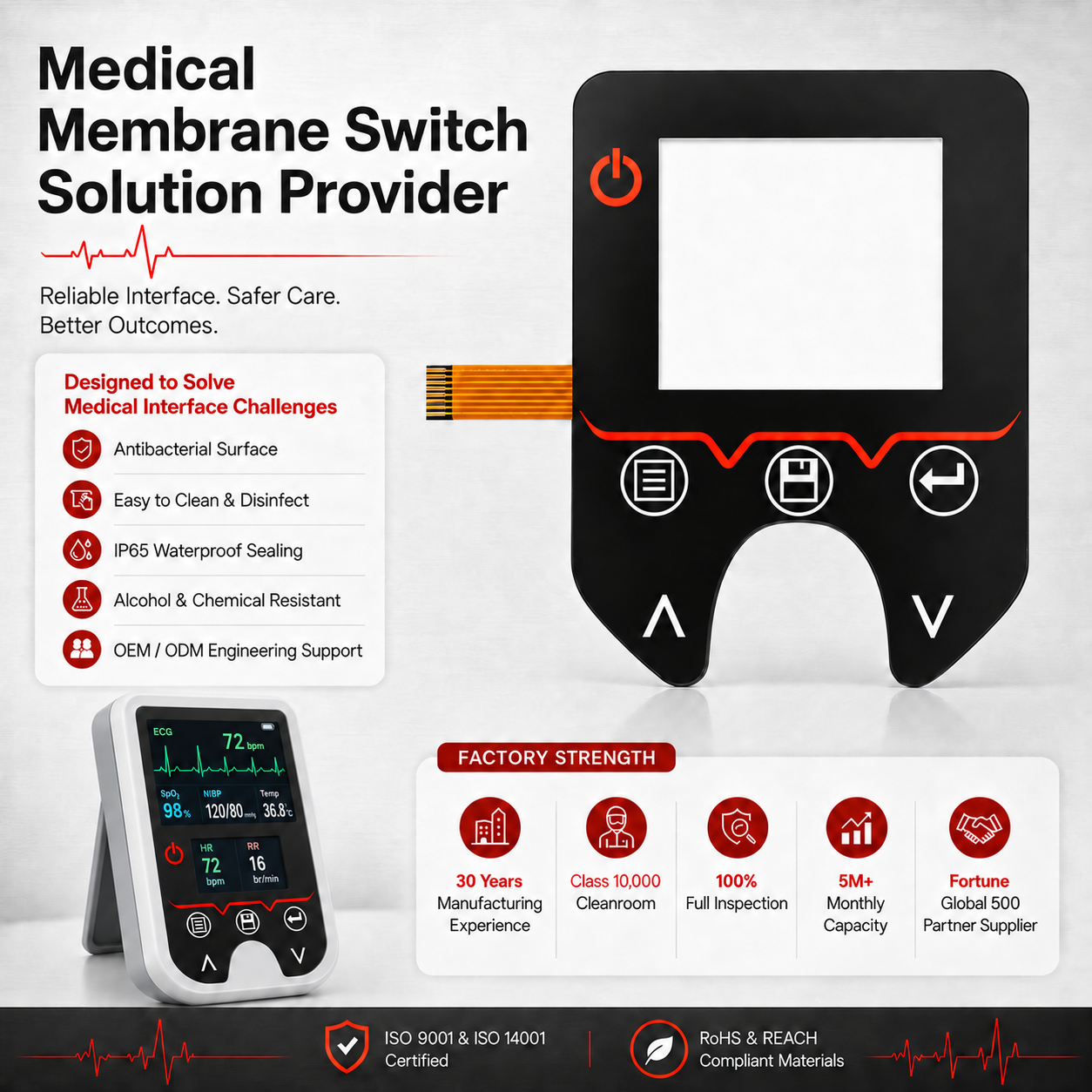
Original Equipment Manufacturers are transitioning from purely mechanical click membranes to solid-state capacitive touch overlays backed by piezo or ERM haptic feedback. This architecture eliminates physical mechanical wear while offering smooth glass-like wipeability needed in pharmaceutical and food processing environments.

Light Guide Film (LGF) & Dead-Front Displays

Bulky backlights and hot-spot EL strips are being replaced by ultra-thin (0.125mm) micro-etched Light Guide Films (LGF). Combined with specialized dead-front screen-printed transparent inks, visual warning icons remain entirely invisible until backlit by circuit-mounted side-fire micro-LEDs.

Copper FPC Replacing Traditional Silver Traces

As control panels become more intricate with tightly spaced SMT microcontrollers, shift registers, and fine-pitch 0.5mm connectors, flexible printed circuits (Copper FPC) are superseding screen-printed silver ink. FPC completely neutralizes silver migration risks and permits standard reflow soldering.

In-Mold Decoration (IMD / IME) Integration

In-Mold Structural Electronics (IME) merges functional printed conductive circuitry and graphic films directly with injection-molded resin housings. The result is a unified, seamless 3D structural component that cuts assembly time, eliminates gaskets, and reduces bill-of-materials weight.

Interface Technology Actuation Life Expectancy Ingress Sealing Limit Tooling / NRE Scope Primary Industrial Fit
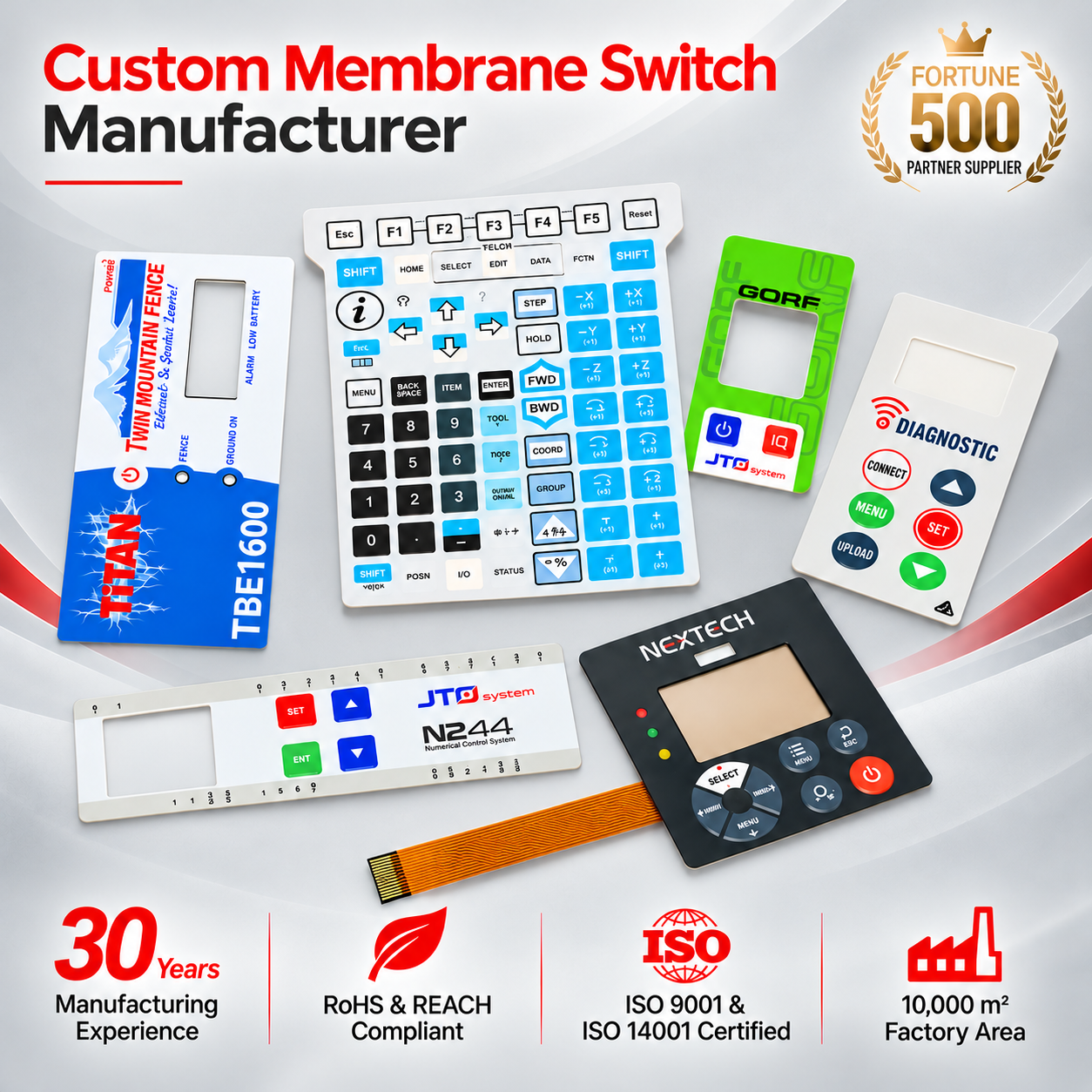
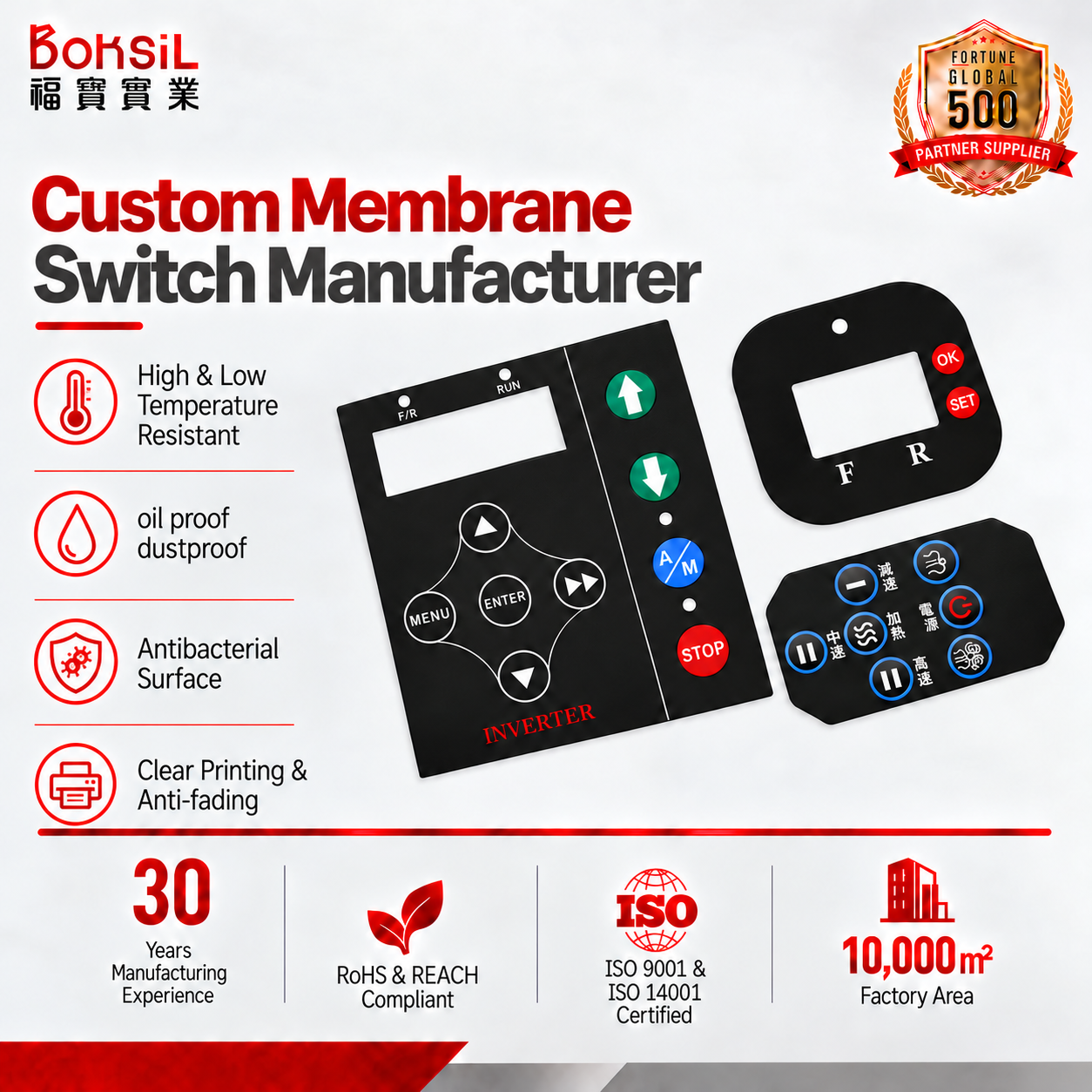
Tactile Metal Dome Membrane 1,000,000 to 5,000,000 Cycles IP65 – IP67 (Perimeter Seal) Low to Medium Medical diagnostics, industrial PLCs, agricultural monitors
Capacitive Touch Surface (PC/Glass) Infinite (Solid-State / Non-Mechanical) IP68 / IP69K (Hermetic) Medium Cleanroom instrumentation, laboratory devices, consumer kitchenware
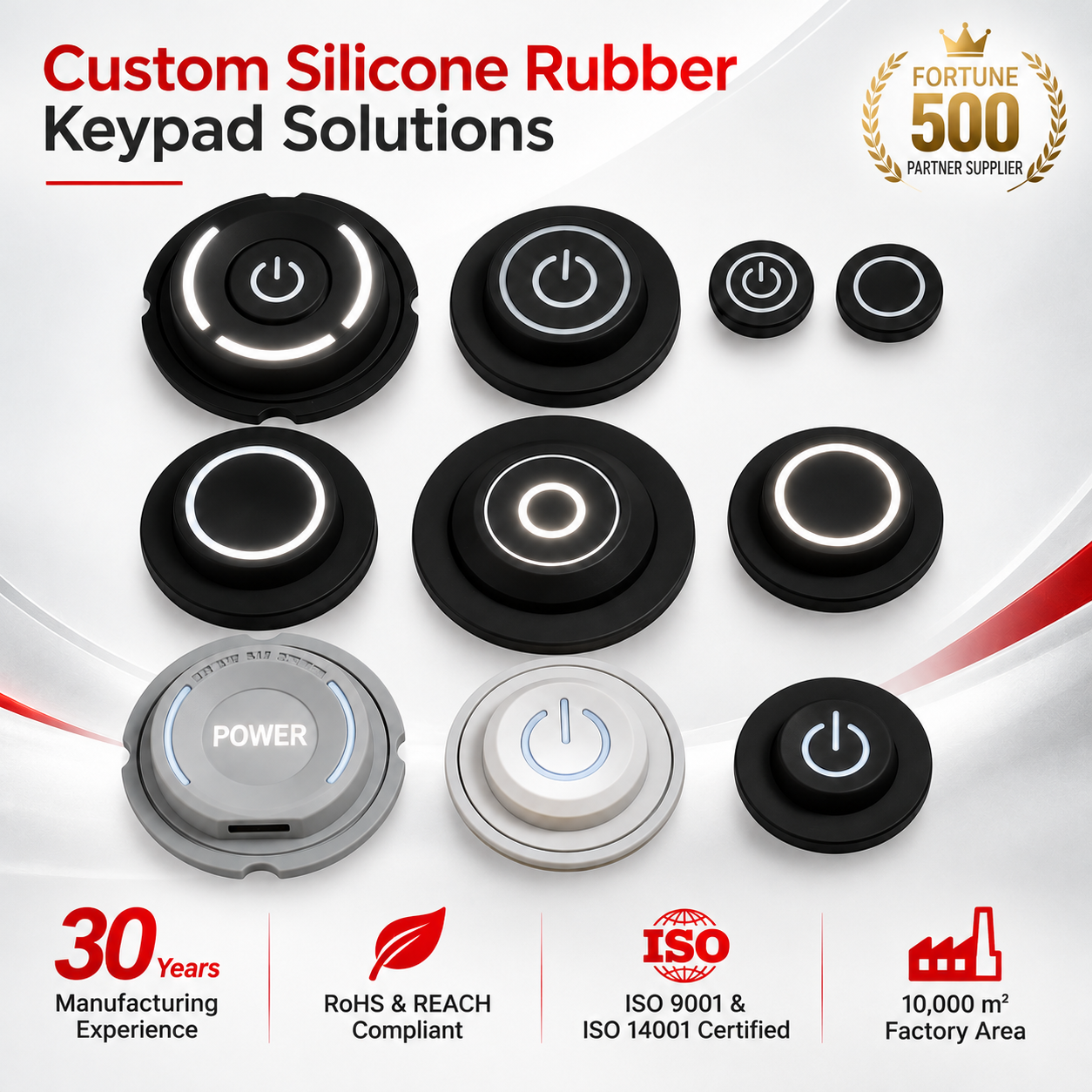
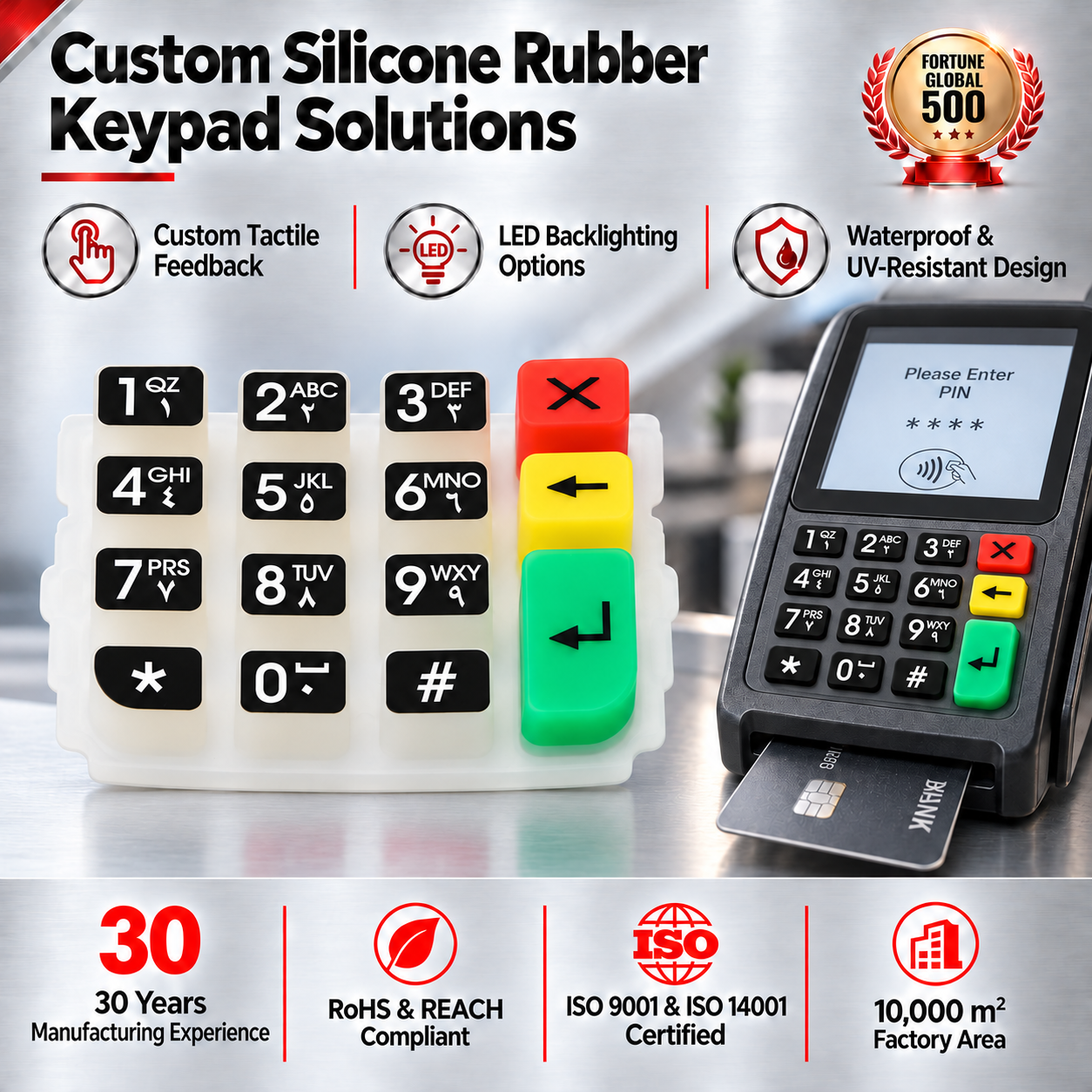
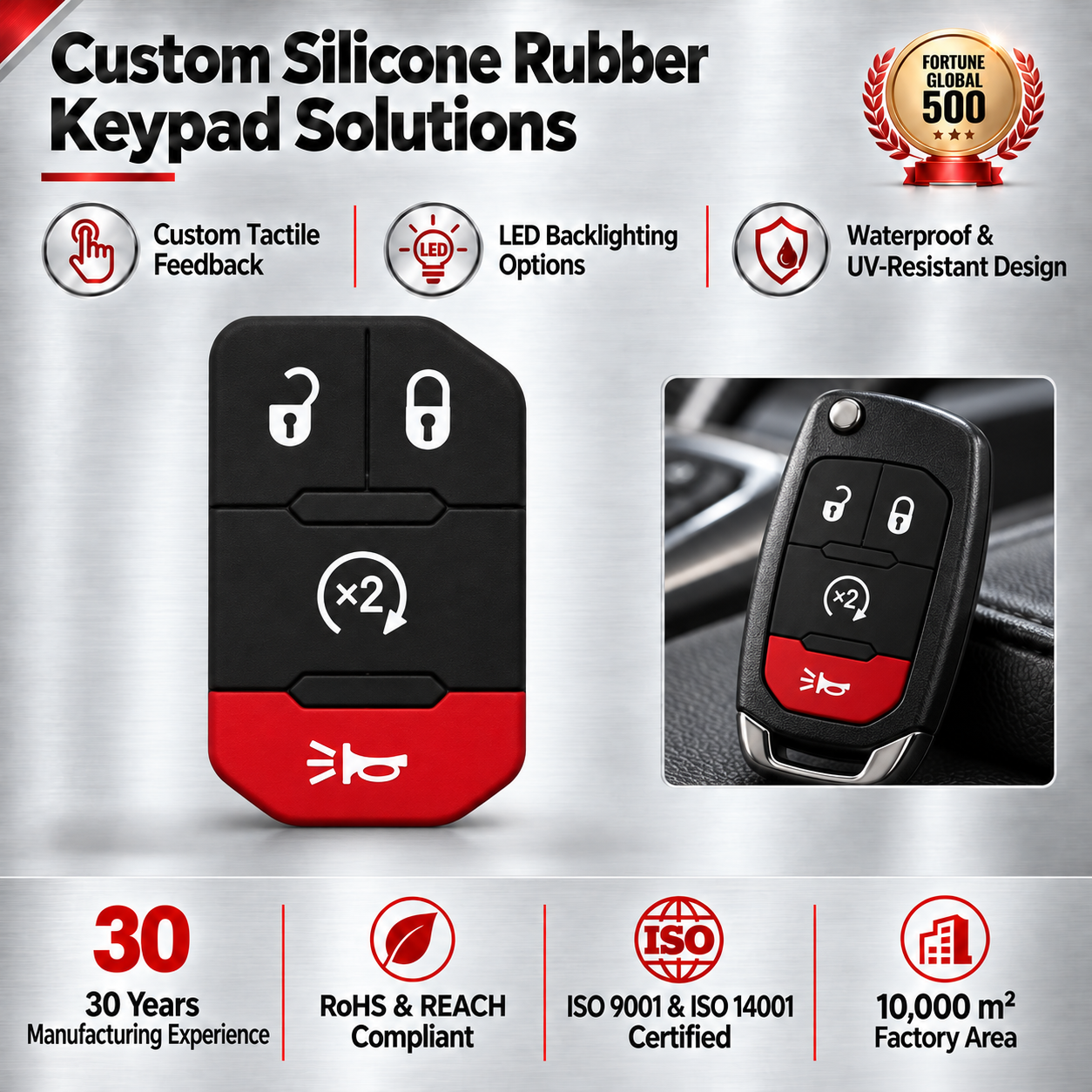
Silicone Rubber Keypad Overlay 500,000 to 2,000,000 Cycles IP64 – IP66 (With Gasket Flange) Medium (Steel Compression Molds) Rugged handheld terminals, military transceivers, fleet vehicle keys
In-Mold Electronics (IME / IMD) Permanent Structural Integration IP67 Integrated High (Injection Tooling) Automotive cockpit trims, aerospace passenger consoles, white goods
Direct-Manufacturer Advantage

Enterprise Production Strengths & Infrastructure

Dongguan AXRU Electronics Co., Ltd. operates a high-capacity manufacturing center delivering verifiable quality control, rapid engineering turnarounds, and global OEM export capability.

10,000㎡
Manufacturing Facility
12+Yrs
Engineering Excellence
100%
Electrical & Optical QC
100pcs
Accessible Low MOQ

Intertek On-Site Verified Facility

Our production floor, labor safety systems, and raw material traceability processes are verified on-site by Intertek. Buyers bypass intermediary broker overhead and gain direct oversight of factory-floor operations in Dongguan, China.

Fortune 500 Qualified Supplier

AXRU builds custom assemblies to the strict standards demanded by Fortune 500 brand partners and leading Tier-1 electronics manufacturers. We follow rigorous PPAP (Production Part Approval Process) and FAI (First Article Inspection) controls.

Comprehensive Reliability Laboratory

Our facility houses 9+ dedicated testing rigs, including automated actuation force-displacement plotters, programmable temperature and humidity cycling chambers, UV yellowing test rigs, and abrasion rub testers.

1-on-1 Dedicated DFM Engineering

Every RFQ is assigned directly to a bilingual Project Engineer. We complete deep Design for Manufacturability (DFM) reviews within 24 hours, evaluating switch pitch, circuit trace resistance, actuation snap ratio, and ingress seal design.

Procurement Knowledge Base

Frequently Asked Questions for Sourcing Managers

Detailed technical answers to common queries regarding lead times, layer stack-up configuration, file requirements, and environmental standards.

What CAD files and technical documentation are needed for an accurate DFM quote?
To prepare an engineering quotation and DFM assessment, we typically require 2D mechanical drawings in DXF, DWG, or PDF format illustrating cutouts, overall dimensions, tolerances, tail length, and pinout assignments. Vector artwork files (Adobe Illustrator .AI or vector .PDF) with explicit Pantone PMS/RAL color callouts are necessary for graphic overlays. Providing your target layer stack-up, connector pitch (e.g., 2.54mm or 1.0mm ZIF), and operating environments (such as IP rating requirements) helps our team confirm the most reliable material bill.
How does AXRU ensure true waterproof sealing to IP65, IP67, or higher?
Liquid ingress most often occurs at two vulnerability points: the perimeter boundary adhesive and the circuit tail exit. We solve this by engineering unbroken closed-cell acrylic foam adhesive perimeters (such as genuine 3M 200MP, 300LSE, or VHB series) paired with tailored internal air-venting channels that lead to sealed breathable membranes. For harsh washdown setups, we encapsulate the flexible tail using polyurethane potting or hot-melt silicone barriers, validated in our in-house programmable environmental chambers.
What is the standard turnaround time for engineering prototypes versus volume production?
Our rapid-prototyping sample cell can produce verified engineering prototypes in 5 to 9 working days following DFM approval, using precision flatbed digital cutting tables to eliminate early hard tooling expenses. Mass production orders requiring dedicated laser-machined stamping dies, custom silkscreens, and automated assembly typically dispatch within 14 to 20 working days, depending on raw material sourcing and lot quantities.
Can AXRU support low minimum order quantities for pilot programs?
Yes. While high-volume automation lines benefit from orders of tens of thousands of units, our factory actively supports OEM prototyping, market pilots, and specialized industrial equipment runs starting at a minimum order quantity (MOQ) of just 100 pieces. This enables hardware teams to validate field reliability and refine revisions before committing to high-volume manufacturing.
What testing procedures are applied to assure batch-to-batch consistency?
Every manufactured switch undergoes 100% automated continuity, open/short-circuit detection, and LED functional verification before packing. Lot samples undergo mechanical life-cycle cycling (tested past 1,000,000 actuations), force-versus-displacement snap ratio plotting, surface ink rub resistance tests (MEK / alcohol scrub testing), cross-hatch adhesive peel tests, and accelerated thermal-humidity stress testing to prevent field delamination.

Ready to Validate Your HMI Switch Design?

Collaborate directly with our Dongguan engineering team. Send over your technical prints, artwork layers, or legacy samples to receive a comprehensive DFM assessment and formal quotation within 24 hours.