Engineering Precision in Custom Human-Machine Interfaces (HMI)
In modern industrial instrumentation, medical diagnostics, automotive clusters, and commercial appliances, membrane switches serve as the critical frontline of interaction. Selecting an export-grade manufacturing partner requires rigorous evaluation across printed electronics tolerance, silver migration prevention, adhesive shear strength, and environmental ingress protection (IP65 to IP68).
Featured Membrane Keypad & Interface Solutions
Precision-fabricated assemblies produced under automated environmental controls, featuring metal domes, flexible printed circuits, backlighting integration, and chemical-resistant graphic overlays.
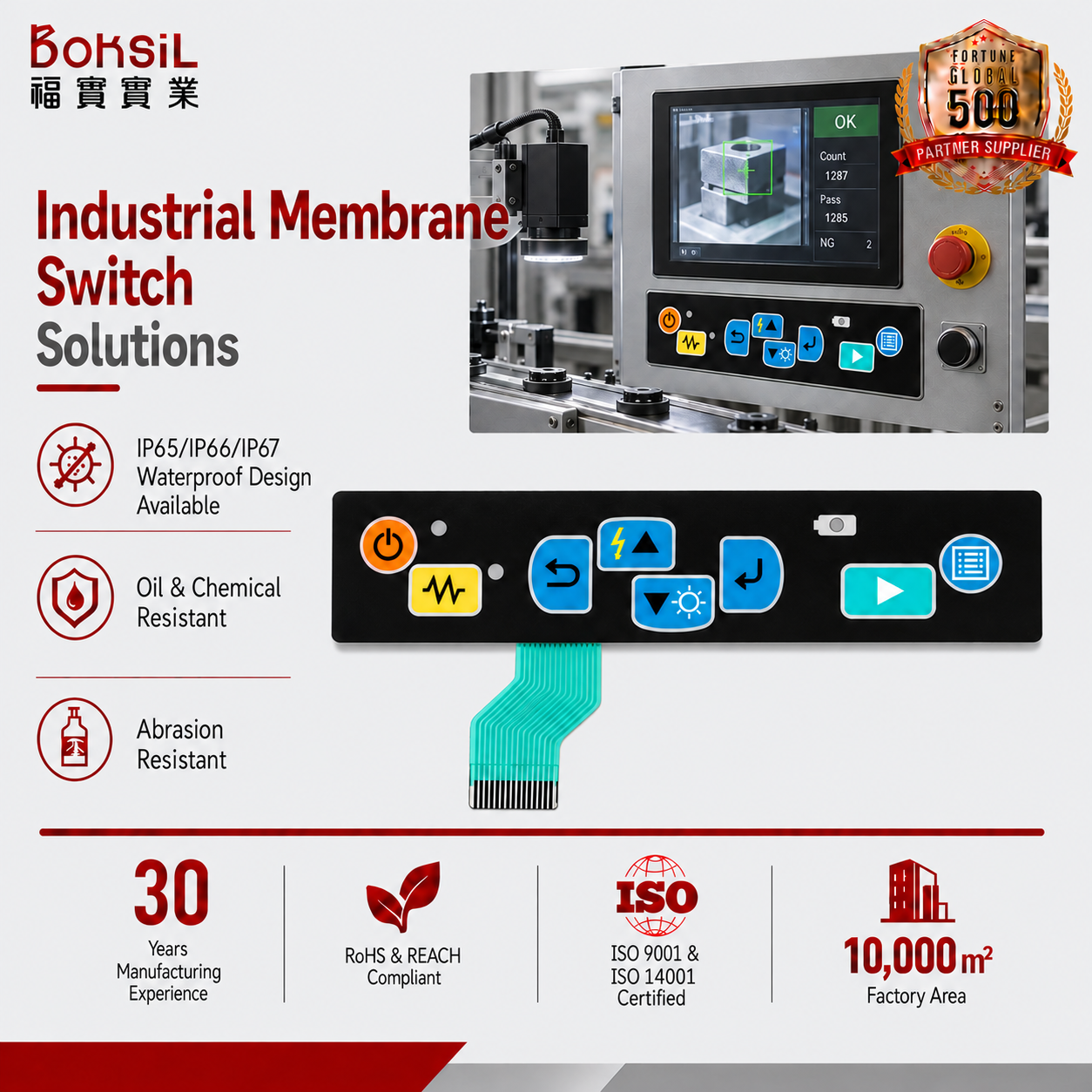
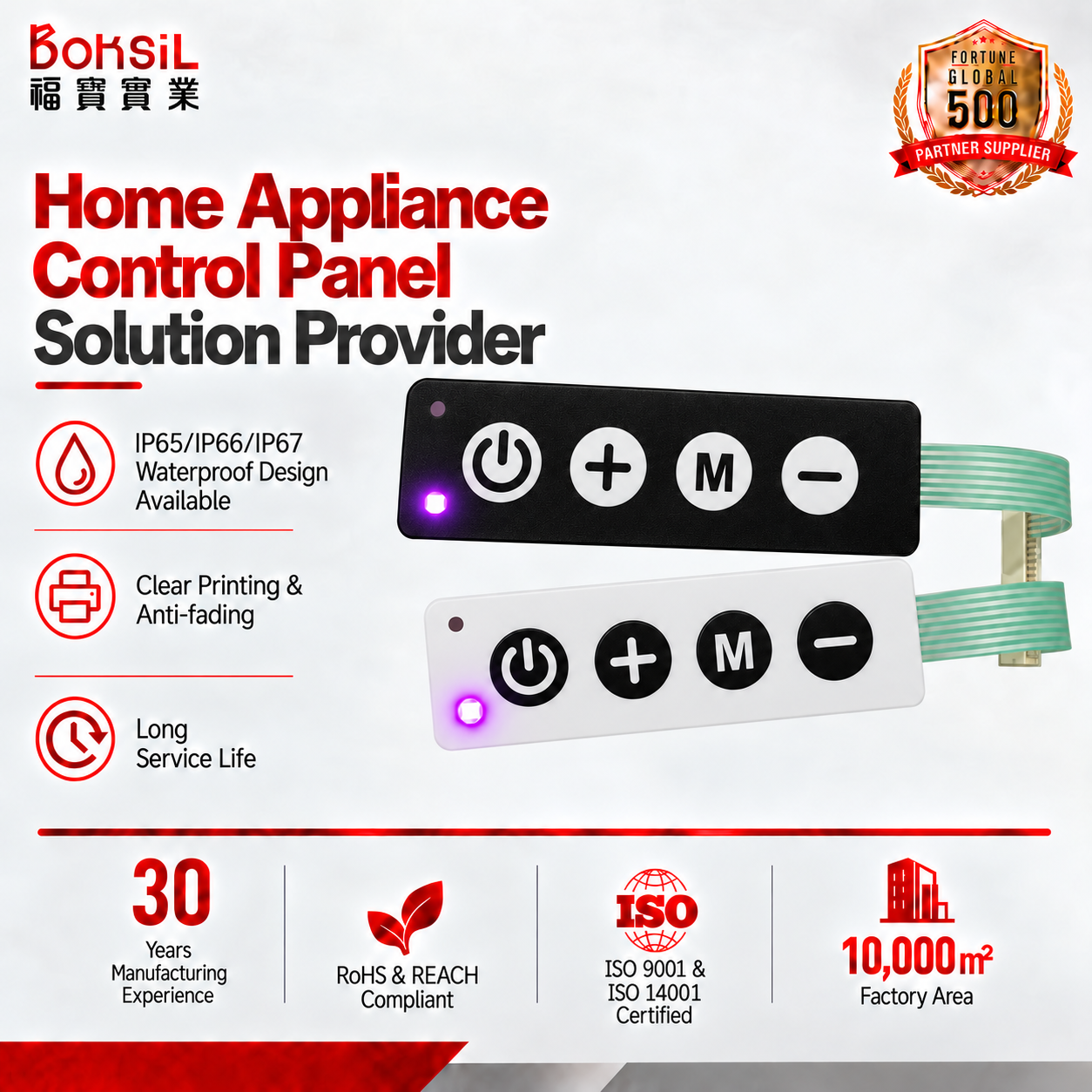
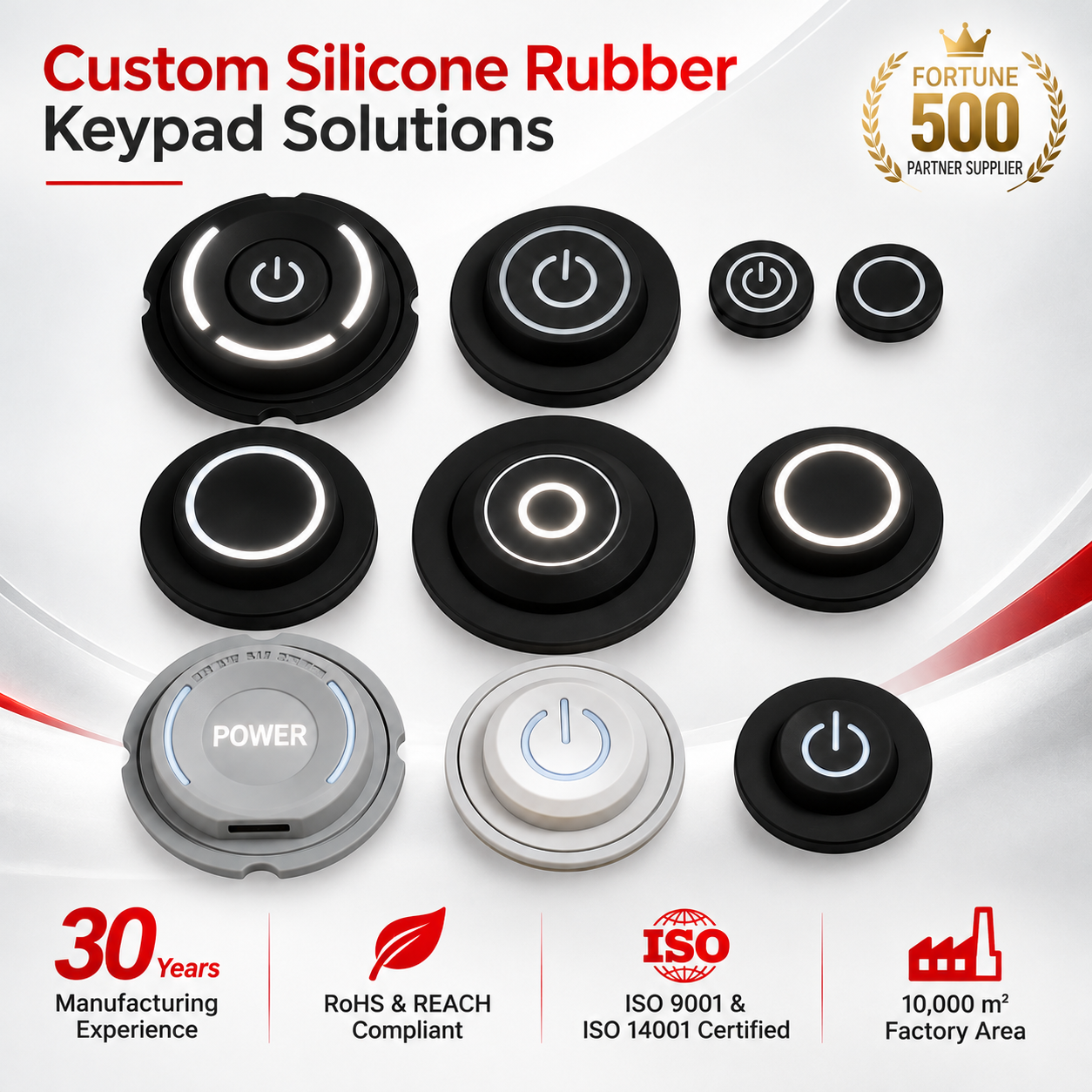
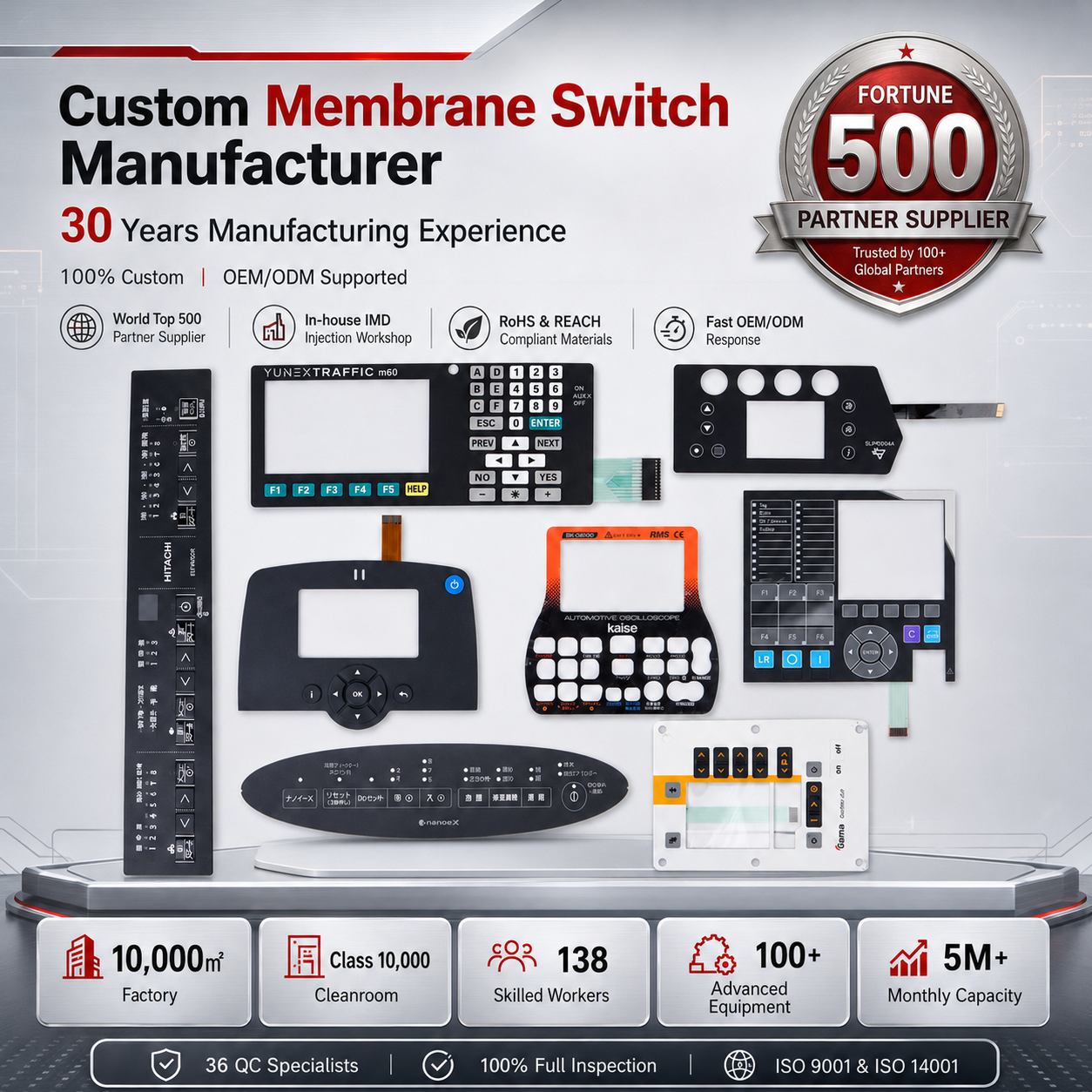
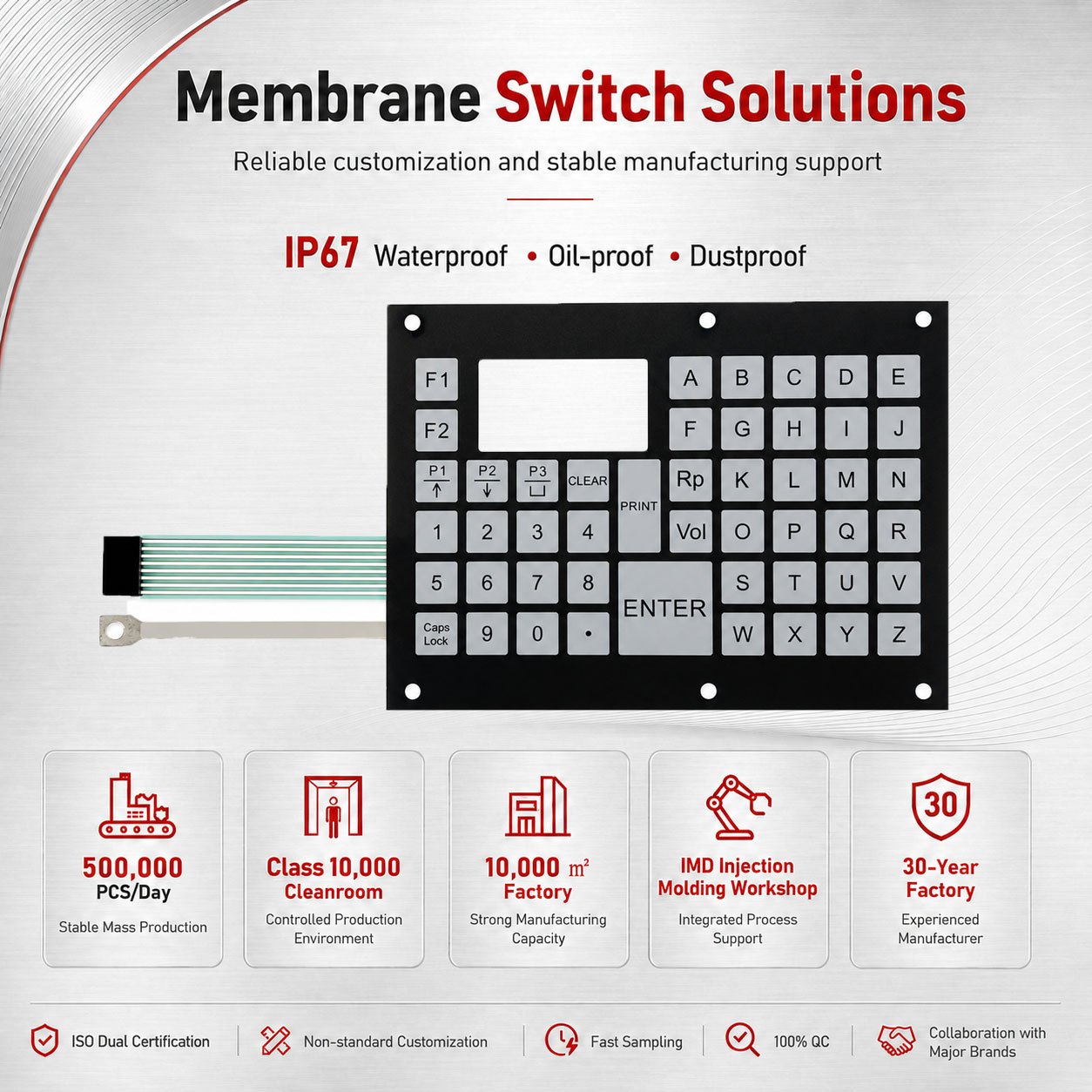
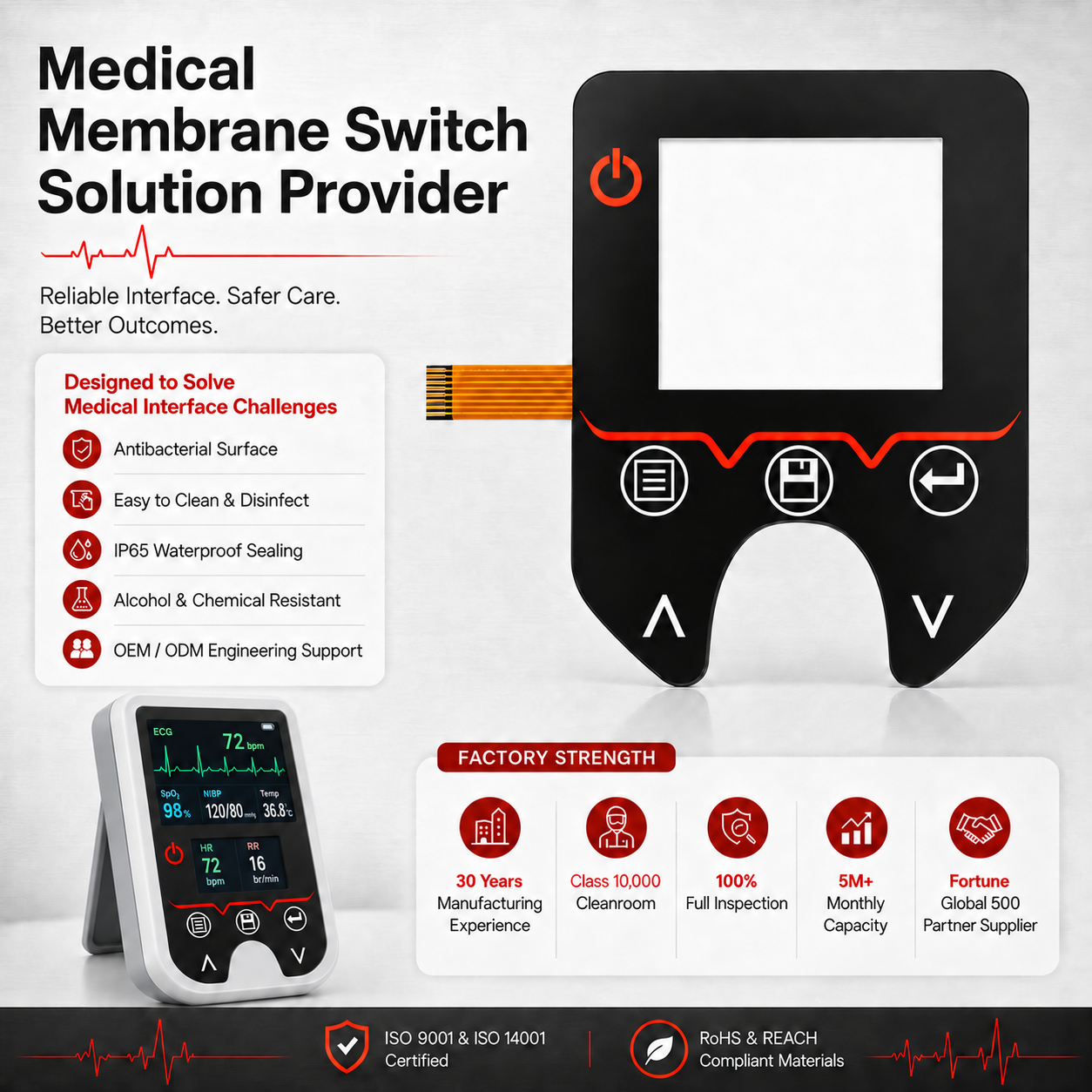
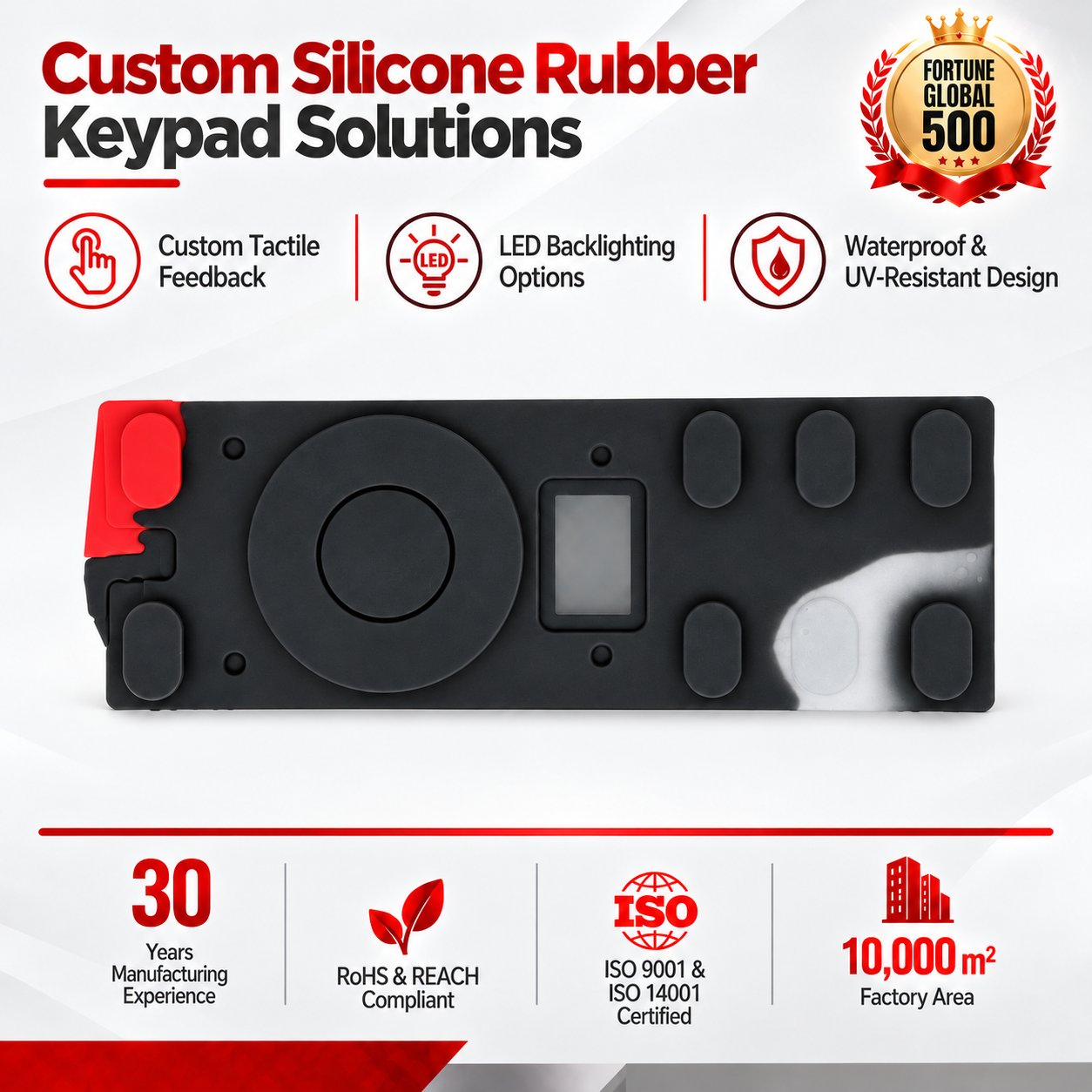
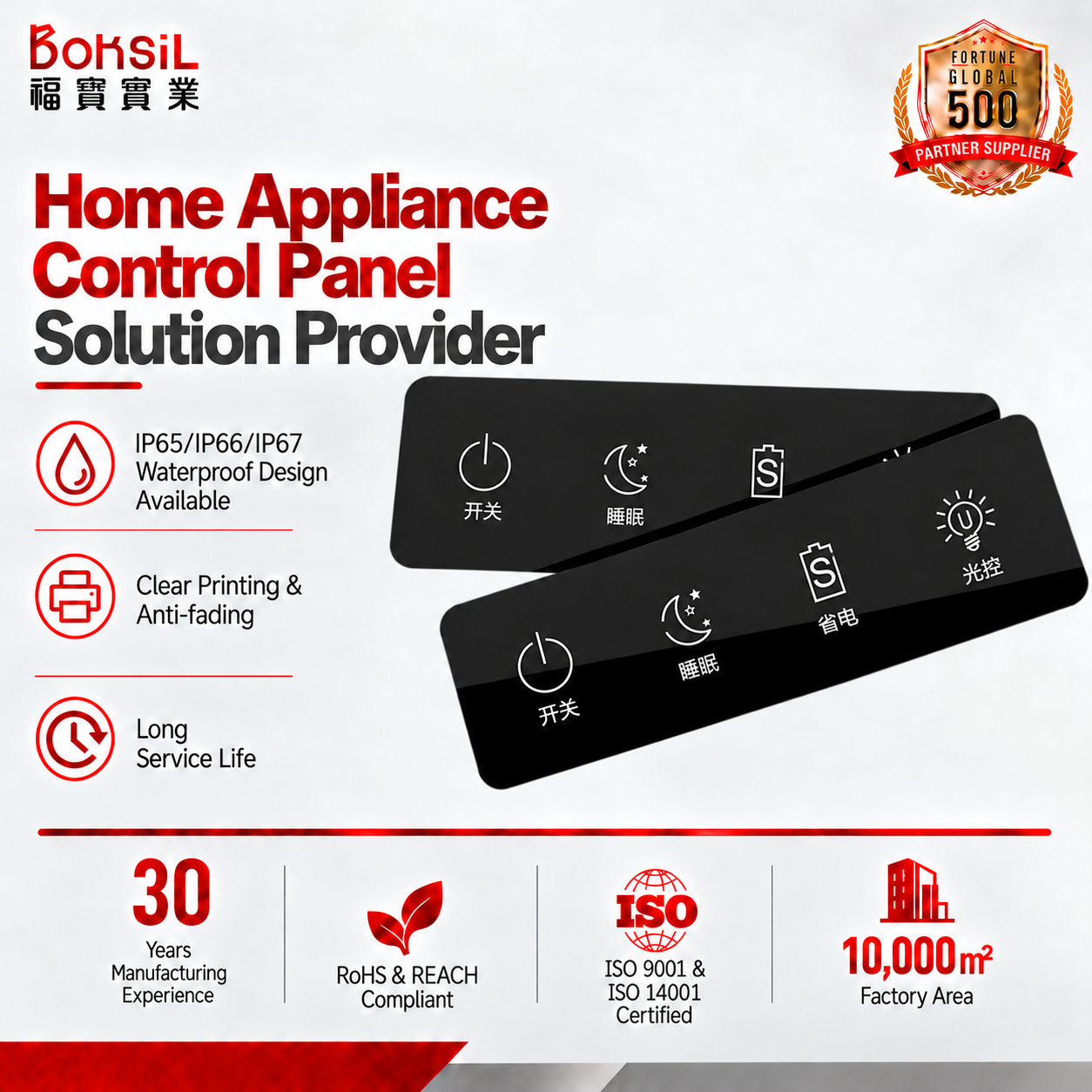
Top 10 Membrane Switch Keypad Factories & Exporters Worldwide
Comparative evaluation based on technical manufacturing capabilities, cleanroom automation, quality certifications (ISO 9001, ISO 13485, IATF 16949), export supply stability, and low-impedance circuit reliability.
| Manufacturer / Exporter | HQ & Core Plant | Primary Specialization | Cleanroom Level | Export Footprint | Key Advantage |
|---|---|---|---|---|---|
| Dongguan AXRU Electronics Co., Ltd. | Guangdong, China | Membrane Switches, Capacitive Touch, FPC, IMD, Silicone | Class 1,000 / 10,000 | North America, EU, APAC (40+ Countries) | 10,000㎡ plant, Fortune 500 supplier, in-house lab, 100% test |
| Molex Incorporated | Illinois, USA | High-density flexible circuitry, automotive assemblies | Class 10,000 | Global Multinationals | Extensive automotive ecosystem & harsh-duty connectors |
| Nelson-Miller, Inc. | California, USA | Aerospace keypad panels, capacitive switches | Class 10,000 | North America, Western Europe | High-mix low-volume military & avionics compliance |
| Sytech Designs | Manchester, UK | Industrial grade membrane switches & labels | Class 100,000 | UK, Northern Europe | Rapid prototyping for regional European machinery builders |
| Douglas Corporation | Minnesota, USA | Nameplates, decorative overlays, automotive badges | Class 50,000 | Americas | Specialized cosmetic finishes and chrome plating |
| Dyna-Graphics Corp. | California, USA | Rubber keypad integration, ruggedized overlays | Class 10,000 | Americas, Asia | Medical diagnostic switch panels with ESD shielding |
| Lustre-Cal Corporation | California, USA | Graphic overlays, thin-gauge metal tags | Class 100,000 | North America | Specialized adhesive coatings for textured cast enclosures |
| Epec Engineered Technologies | Massachusetts, USA | Custom battery packs, flex circuits, membrane switches | Class 10,000 | Global | High-mix turnkey hardware integration |
| GGI Solutions | Quebec, Canada | Printed electronics, sensorized surfaces, aerospace HMI | Class 1,000 / 10,000 | North America, Europe | Advanced conductive ink research and defense certifications |
| Cicoil Flexible Circuits | California, USA | Silicone encapsulation, flat flex cabling | Class 10,000 | Americas, Global | Extreme temperature siliconization for motion machinery |
Engineering Architecture of High-Reliability Membrane Switches
A membrane switch is an engineered multi-layer laminate where each micron of adhesive, conductive silver, and substrate determines functional lifespan and actuation consistency.
Substrate Selection: Autotex PET vs. Lexan PC
Polycarbonate (PC) provides exceptional optical clarity and cost-effective embossing, yet fatigue cracking can occur after 100,000 flexural strokes. For medical and industrial controllers exceeding 1,000,000 switch cycles, biaxially oriented polyethylene terephthalate (PET, such as MacDermid Autotex XE) delivers chemical immunity against alcohols, caustic washes, and aggressive solvents.
Tactile Feedback Dynamics & Metal Domes
Tactile performance hinges on snap ratio (typically targeted between 40% and 65%). Premium stainless steel snap domes (nickel or gold-plated, trip force ranging 220g to 450g) prevent operator fatigue while preventing double-actuation. Non-tactile designs, preferred in cleanroom sterile wipe-down units, utilize flat graphic overlays with acoustic or display confirmations.
Conductive Traces: Silver Polymer vs. Copper FPC
While screen-printed conductive silver flakes on PET offer economical routing for compact matrix panels, high-humidity applications risk silver ion migration (dendrite short-circuiting). High-reliability designs mandate a dielectric overcoat with carbon-bridging on contact fingers, or a transition to Polyimide Copper Flexible Printed Circuits (FPC) with gold-plated pads for ultra-low resistance (<1Ω).
Future Procurement & Technology Trends in HMI Keypads
Procurement teams are moving away from treating membrane switches as simple commodity build-to-print parts toward value-engineered smart surfaces with integrated telemetry, backlighting, and environmental sealing.
Procurement Trend: Total Cost of Ownership (TCO) & NRE Amortization
Global sourcing leaders are increasingly rationalizing tooling Non-Recurring Engineering (NRE) costs across multi-tier SKU lines. Rather than creating distinct steel die tooling for separate machine variants, modular graphic embossing dies and standard universal pinout connectors (1.00mm, 1.27mm, 2.54mm pitch) drastically compress development cycles. Direct factory partnerships with turnkey facilities eliminate middle-tier subcontractor markups, yielding up to 35% unit cost savings while retaining complete PPAP Level 3 documentation.
Technology Trend: In-Mold Electronics (IME) & Capacitive Smart Surfaces
The boundary between traditional mechanical switches and touch screens is dissolving. Modern front panels fuse In-Mold Decoration (IMD/IML) with embedded capacitive sensors, creating seamless 3D curved surfaces completely devoid of dirt-trapping crevices. Light Guide Film (LGF) illumination provides uniform, zero-hotspot backlighting using minimal surface-mount LEDs, reducing system power consumption while enhancing low-light legibility in critical cockpit and operating room enclosures.
Environmental Trend: PFAS-Free Adhesives & Antimicrobial Coatings
Tightening global environmental mandates (RoHS 3, REACH SVHC, and upcoming US/EU restrictions on per- and polyfluoroalkyl substances) are forcing a transition in adhesive chemistry. Tier-1 manufacturers have validated solventless acrylic transfer tapes (such as genuine 3M 467MP, 468MP, and 200MP series) that maintain 150°C shear resistance without hazardous halogenated outgassing. Concurrently, permanently bonded silver-ion nano-coatings on graphic front layers inhibit bacterial growth by 99.9% in healthcare diagnostic gear.
Quality Trend: 100% In-Line Computerized Traceability
Manual testing is no longer viable for safety-critical OEM products. Elite exporters deploy automated test fixtures checking every individual keypad for loop resistance, open-circuit continuity, insulation resistance (>100MΩ at 100V DC), contact bounce time (<5ms), and LED luminous flux balance before packaging. Serialized QR codes etched on tail flex terminations provide batch-level traceability tied back to raw resin lots, conductive ink batches, and lamination climate records.
Why Global Tier-1 OEMs Partner With Dongguan AXRU Electronics
Based in the heart of the world's premier electronic manufacturing hub, Dongguan AXRU Electronics Co., Ltd. operates a fully integrated, Intertek on-site verified production facility engineered specifically for international OEM/ODM contracts.
10,000㎡ Vertically Integrated Facility
From raw film preparation, automated reel-to-reel and precision flatbed silk screen printing, cleanroom dome array taping, high-pressure embossing, to CNC laser plotter cutting—all core fabrication processes remain 100% in-house with zero outsourced dependencies, ensuring tight control over delivery lead times and IP security.
Proven Fortune 500 Sourcing Pedigree
With over a decade of direct export experience across Europe, North America, Japan, and the Middle East, our technical teams operate with full fluency in international engineering documentation, delivering comprehensive FAI (First Article Inspection) reports, PPAP documentation, and material compliance declarations (RoHS/REACH).
Comprehensive In-House Reliability Lab
Every design iteration is proven against harsh environmental realities in our dedicated testing facility. Our lab houses programmable temperature and humidity chambers (-40°C to +150°C), automatic key life cycle cyclers (up to 5,000,000 strokes), force-displacement curve analyzers, ink abrasion taber machines, and yellowing resistance UV chambers.
Essential Answers for B2B Membrane Switch Buyers
Clear technical responses covering mechanical stack-up design, environmental ingress ratings, tooling timelines, and connector specifications.