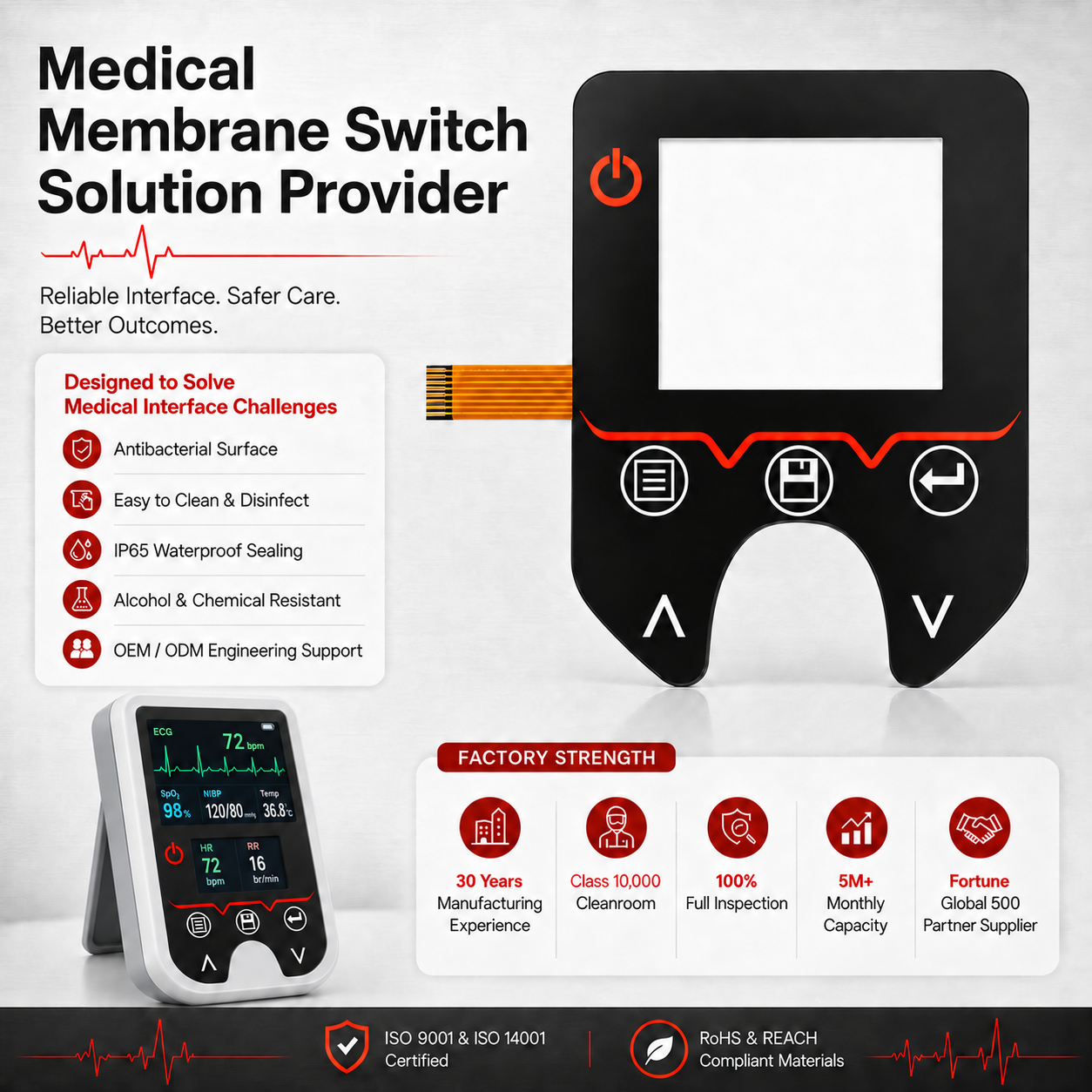
Factory Custom Medical Equipment IP65 Waterproof PC Graphic Overlay Control Panel
- Material: Polycarbonate (PC)
- Ingress Rating: IP65 Liquid Sealed
- Feedback: Tactile Metal Dome
Industrial, medical, and commercial-grade user panels built to exacting tolerances, complete mechanical sealing, and verified contact life.
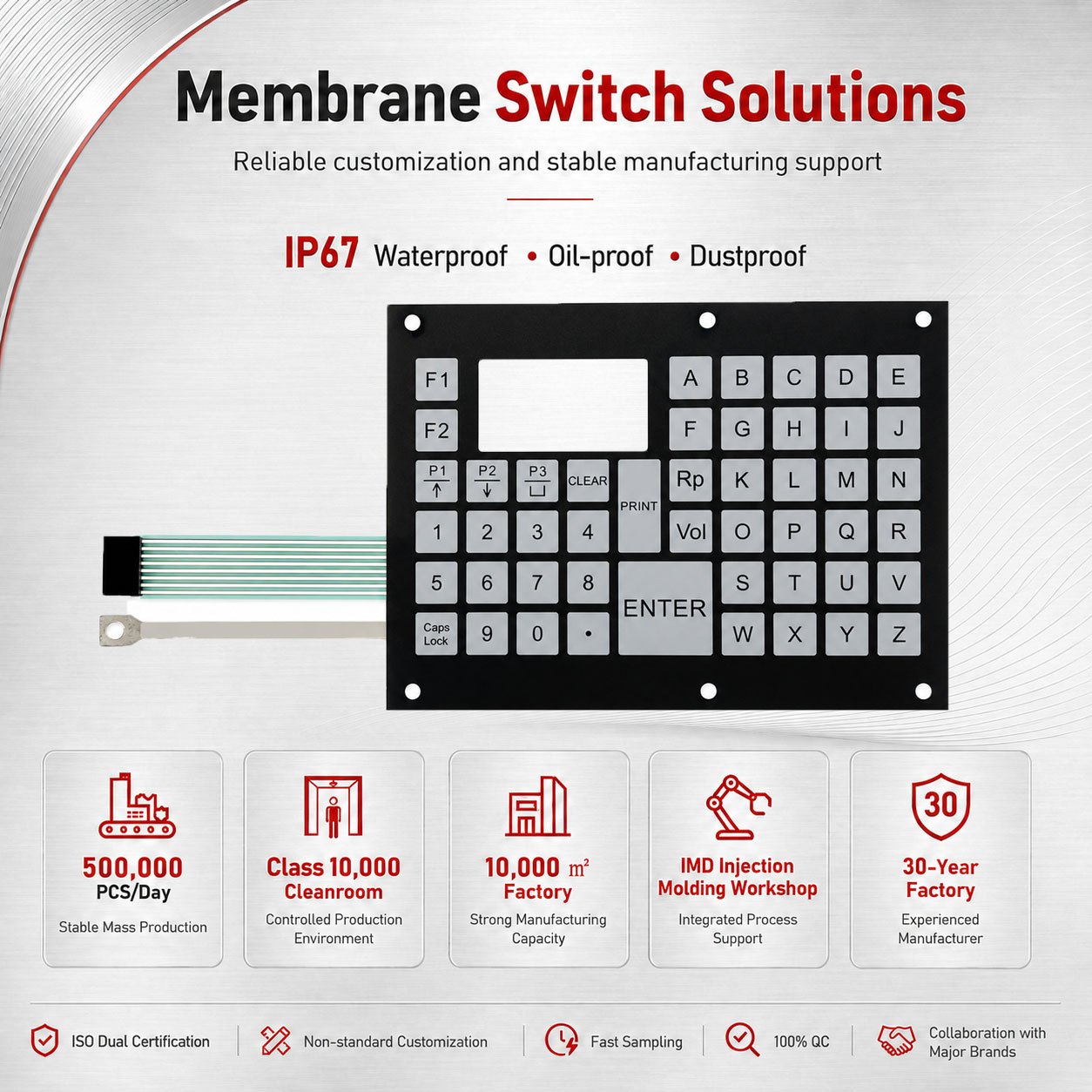
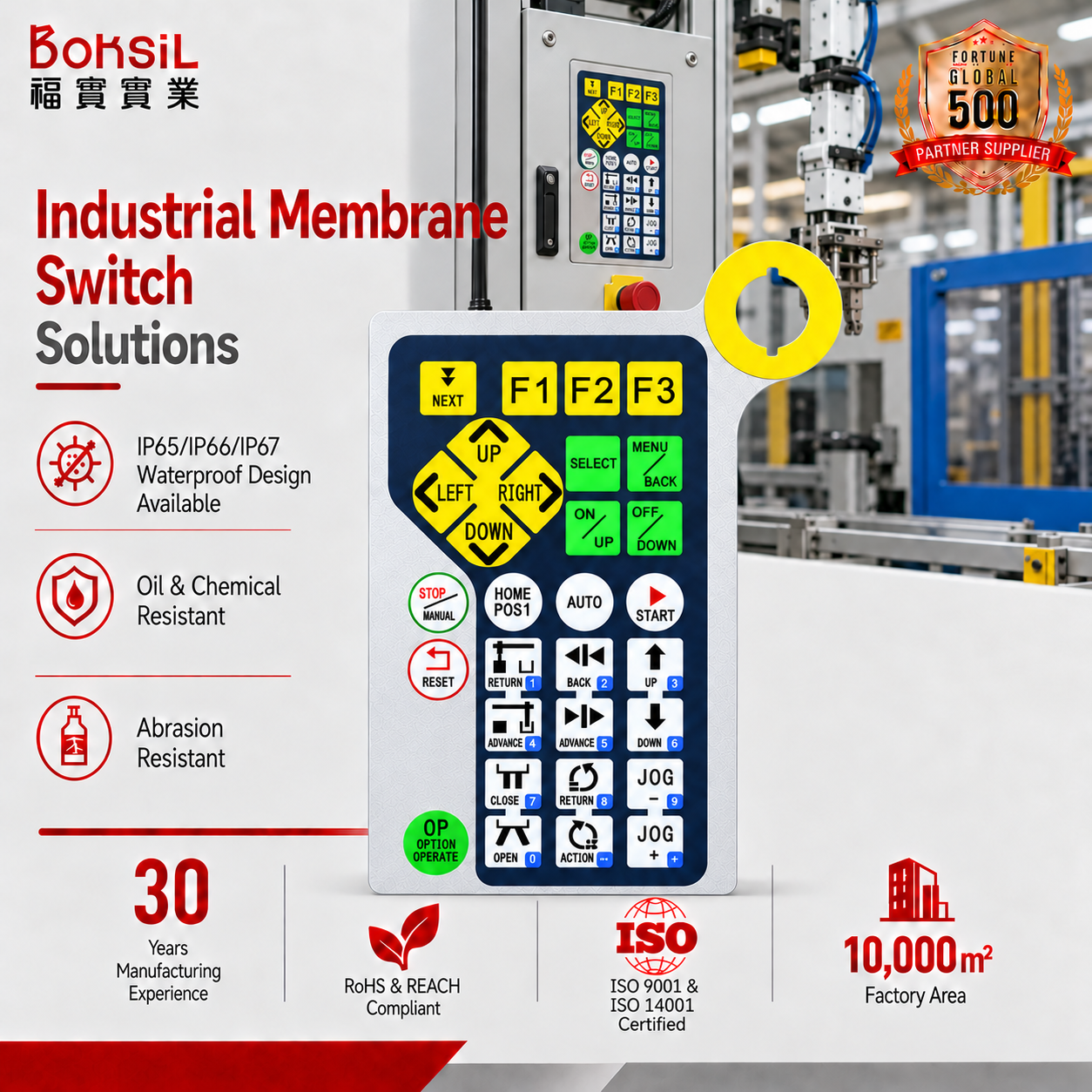
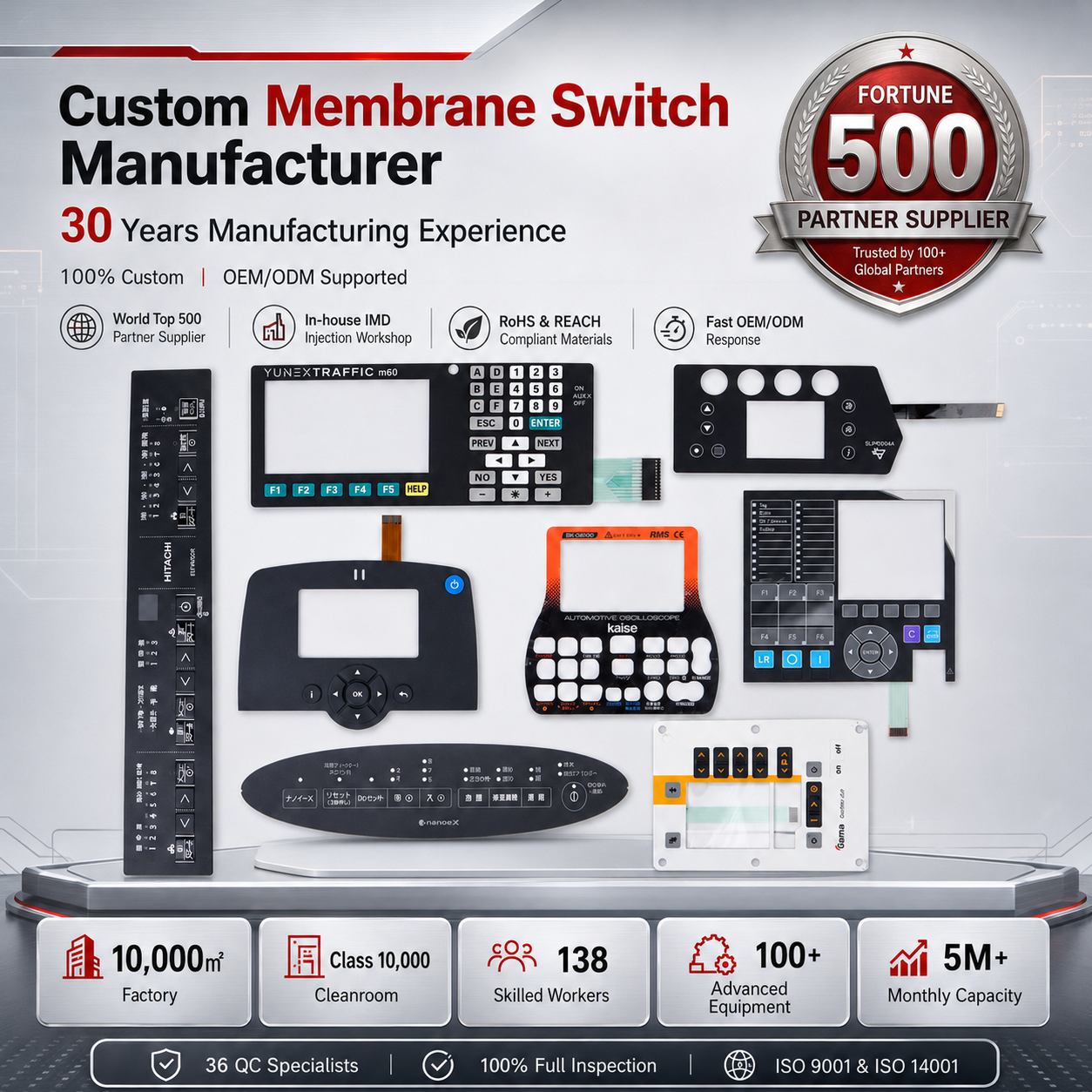
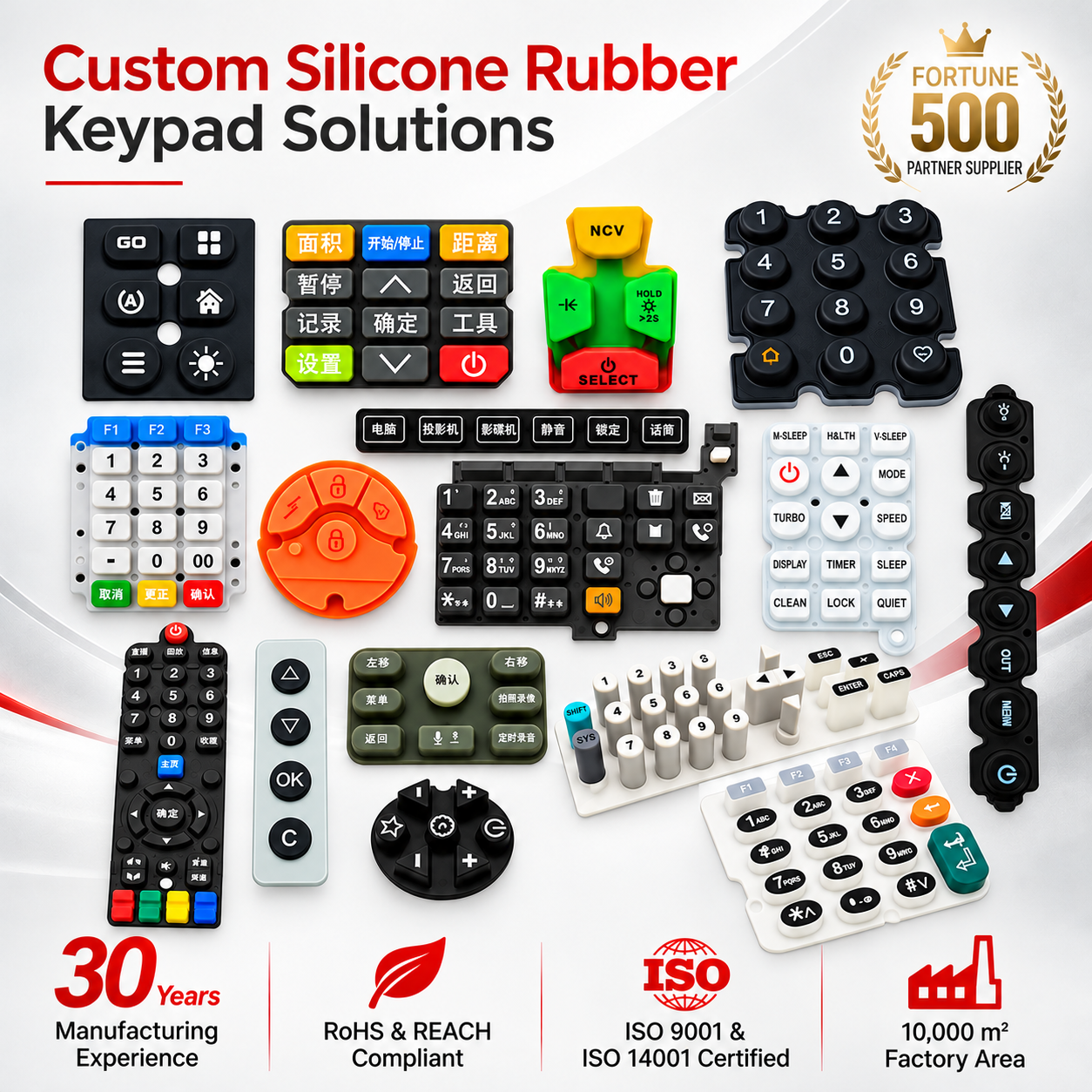
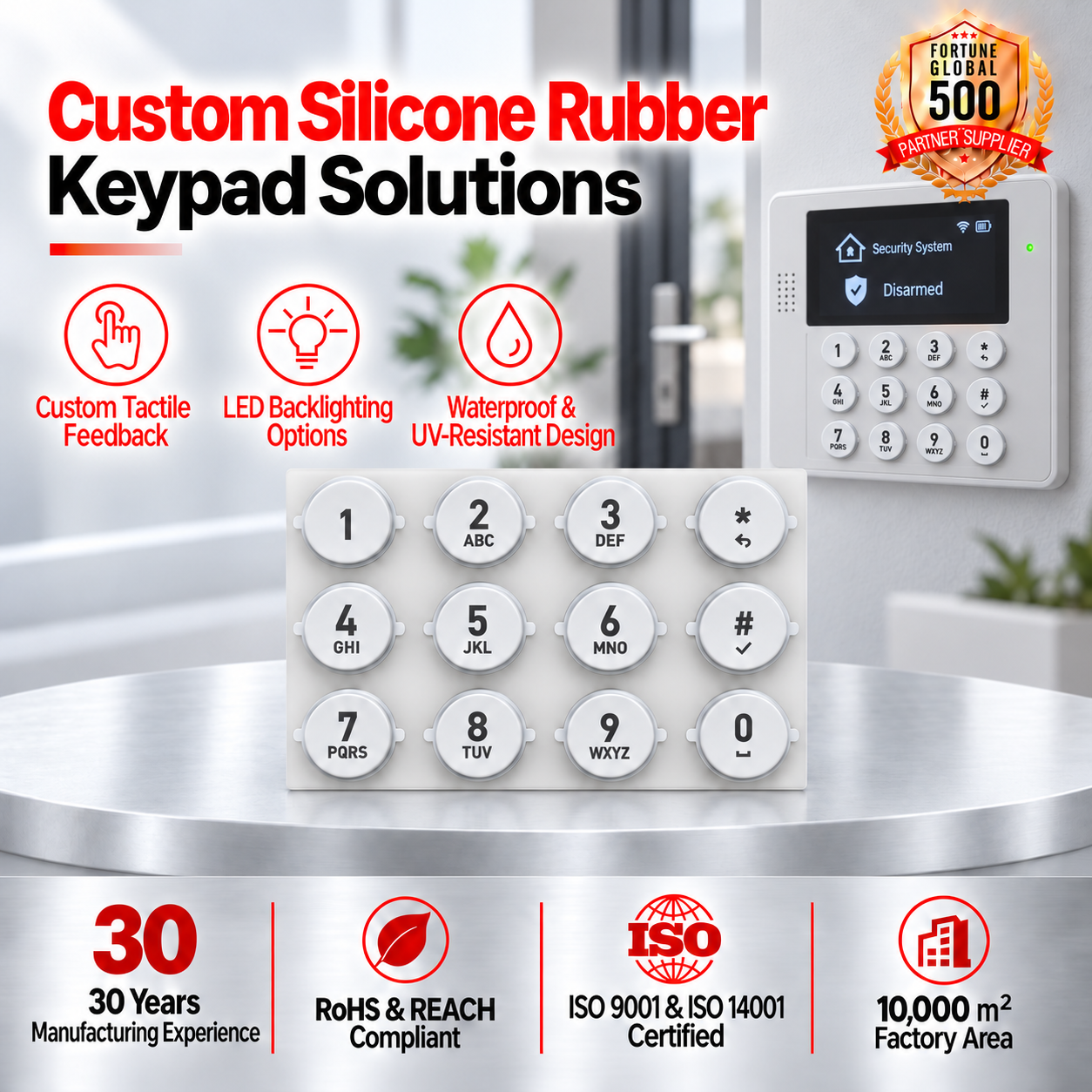
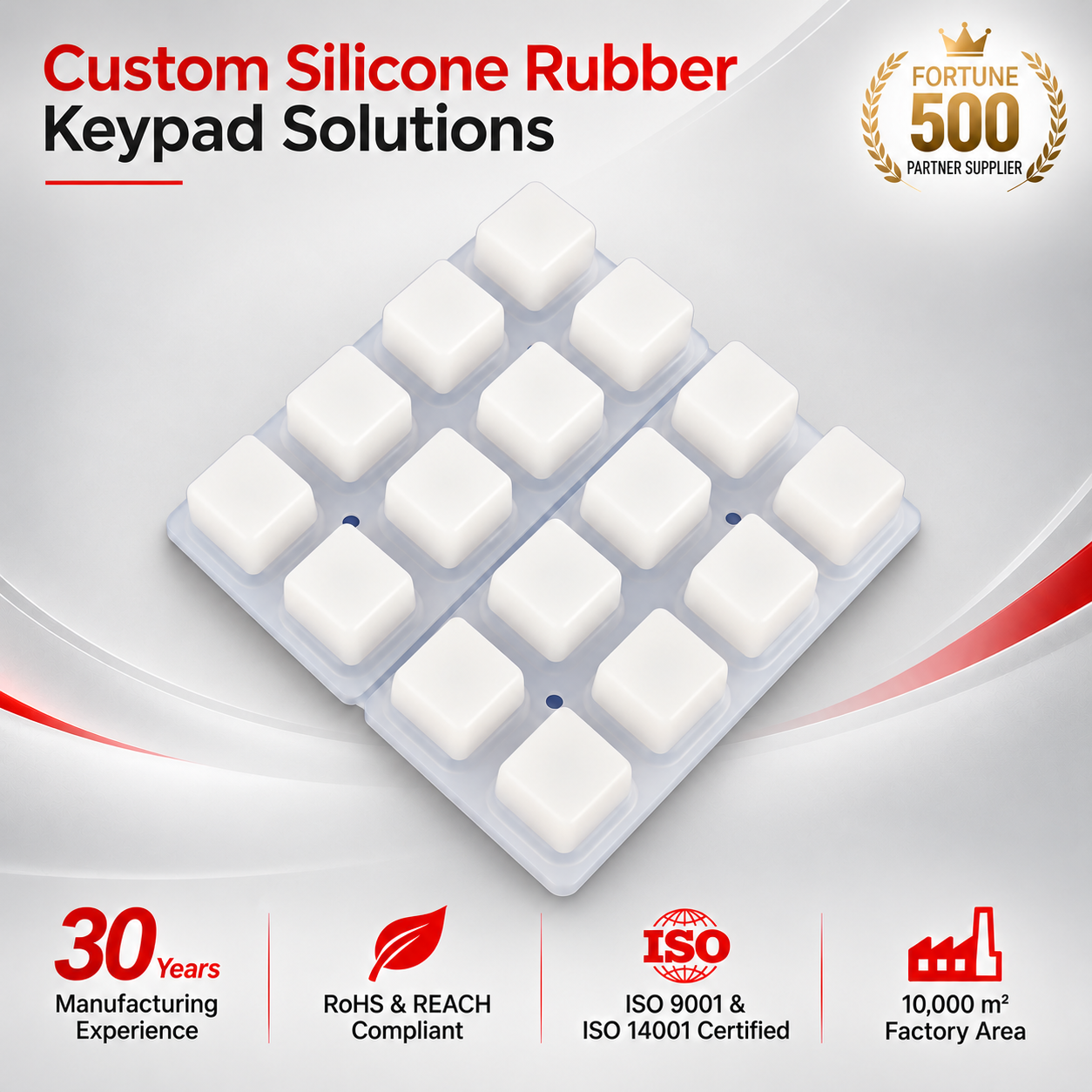
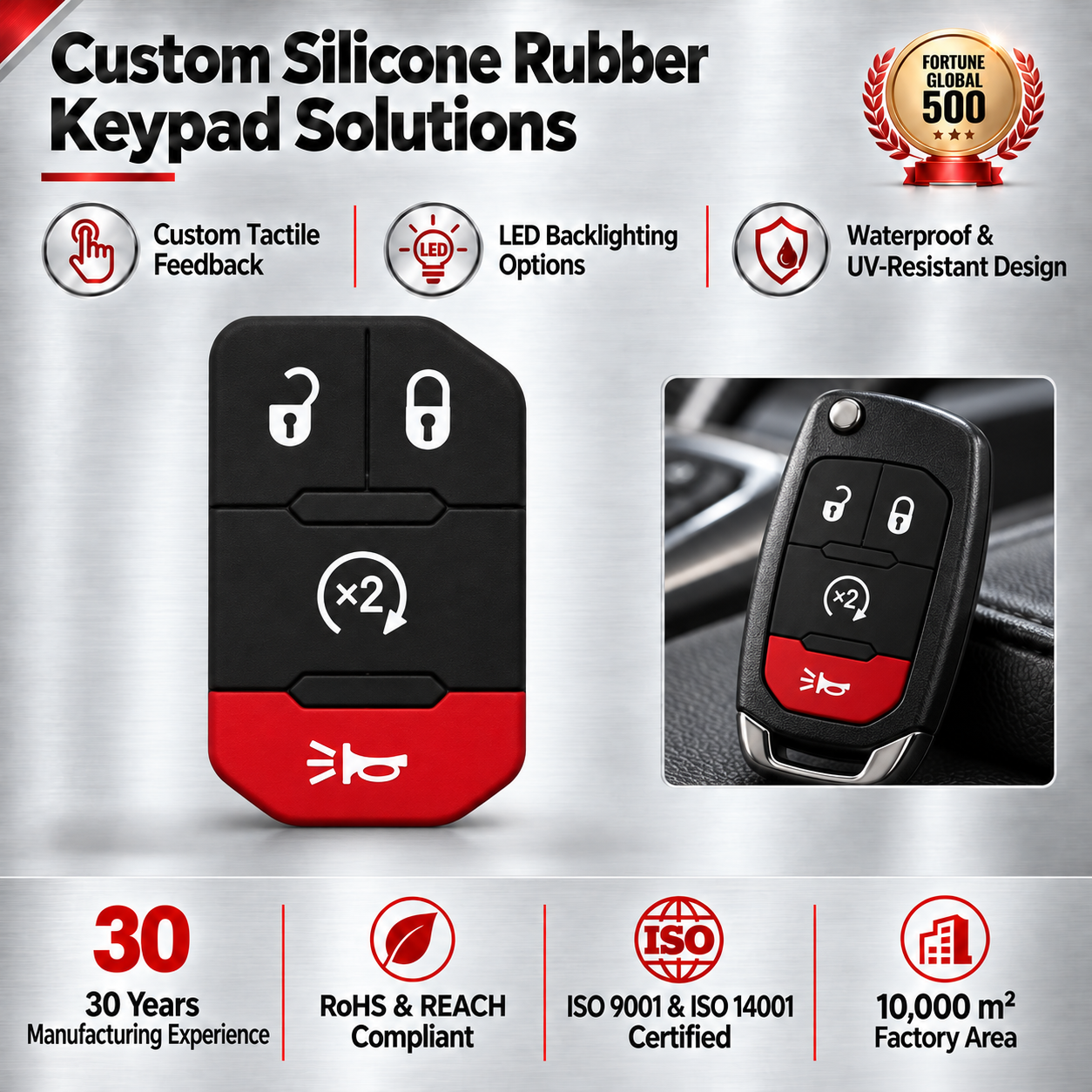
With an Intertek-assessed 10,000㎡ plant and over 12 years of specialized HMI engineering experience, we eliminate manufacturing risks for global procurement teams.
Our complete operational footprint in Dongguan operates under documented ISO standards, with on-site credentialing by Intertek. Buyers enjoy full audit trail transparency, FAI packages, and direct engineering access without intermediary markups.
We do not outsource core steps. Precision screen printing, FPC bonding, metal-dome registration, laser cutting, and die cutting are housed under one roof, guaranteeing uniform color consistency and structural bonding durability.
Specialized adhesives, continuous perimeter channel gaskets, and custom tail exits prevent moisture, grease, and aggressive solvents from penetrating circuits, ensuring uninterrupted service in medical diagnostic and fuel dispensing installations.
Equipped with automatic force-displacement analyzers, tensile peel benches, environmental humidity/temperature cycle chambers, and UV yellowing testers to ensure electrical traces withstand over 1,000,000 to 5,000,000 operations.
Trusted by premier multinational instrumentation makers. We deliver comprehensive OEM/ODM manufacturing encompassing DFM reviews, stack-up optimization, electrical schematics translation, and rapid-turn prototype sampling.
Over a decade of direct export operations across Europe, North America, and the Asia-Pacific. We provide standard customs clearing documentation, shock-absorbent antistatic packaging, and guaranteed on-time port delivery schedules.
Key technical insights on thermal, electrical, and tactile mechanics for instrumentation design engineers.
Selecting the optimal graphic overlay substrate represents the single most significant factor dictating long-term actuation survival and aesthetic integrity. While Polycarbonate offers superior clarity, high-impact resistance, and ease of thermal embossing, it exhibits finite flexural endurance under constant cyclic loading, typically degrading around 100,000 actuation cycles in aggressive environments.
Conversely, Biaxially Oriented Polyethylene Terephthalate (PET)—such as Autotex and MacDermid Autotype series—demonstrates remarkable flexural endurance, regularly sustaining up to 5,000,000 switch operations without micro-cracking. PET also delivers superior resistance to aggressive chemicals, industrial cleaning solvents, and medical-grade disinfectants, making it the premier choice for clinical monitors and harsh industrial machinery interfaces.
Traditional membrane switches rely on screen-printed conductive polymer thick-film (PTF) silver inks deposited onto PET layers. While economical for high-volume commercial runs, silver-ink traces can experience micro-fractures under sharp bending radii and are susceptible to silver migration in high-moisture environments if dielectric barrier layers fail.
For mission-critical applications, copper-clad polyimide FPC circuits represent a major technical leap. With etched copper traces, FPCs accommodate ultra-fine pitch component soldering (down to 0.5mm), enable dense surface-mount LED integration, eliminate migration hazards, and ensure negligible loop resistance across large console arrays, maintaining absolute signal fidelity in critical diagnostic and aviation controls.
Anticipate architectural changes and supply chain shifts in the global HMI market over the next 3 to 5 years.
Global procurement data reveals a swift transition from standalone mechanical switches toward hybrid assemblies that combine tactile silicone elastomer surfaces with capacitive touch sensors. Equipment manufacturers increasingly demand clean, bezel-free front profiles that integrate seamless touch sliders, proximity wake-up functionality, and laser-backlit icons for night-vision readability.
Post-pandemic regulatory requirements across North America and the EU enforce stringent clinical surface sanitation protocols. Future membrane purchases favor PET overlays with permanently embedded, non-leaching antimicrobial biocides that inhibit microbial proliferation without degrading under repeated wash-downs using sodium hypochlorite, isopropyl alcohol, or quaternary ammonium compounds.
Engineering departments now demand lower minimum commitment thresholds without sacrificing mass-production unit pricing. Flexible tooling processes—such as high-speed digital UV printing and precision digital flatbed knife plotters—allow OEM manufacturers to iterate fast prototypes (100–500 pcs) for pilot clinical trials before committing to hard steel tooling for million-unit production runs.
Clear, direct answers regarding tolerances, testing protocols, custom tooling, and supply logistics.
Send your drawings or sample specs to our engineering team. We provide complete DFM feedback, stack-up optimization, and production quotations within one business day.