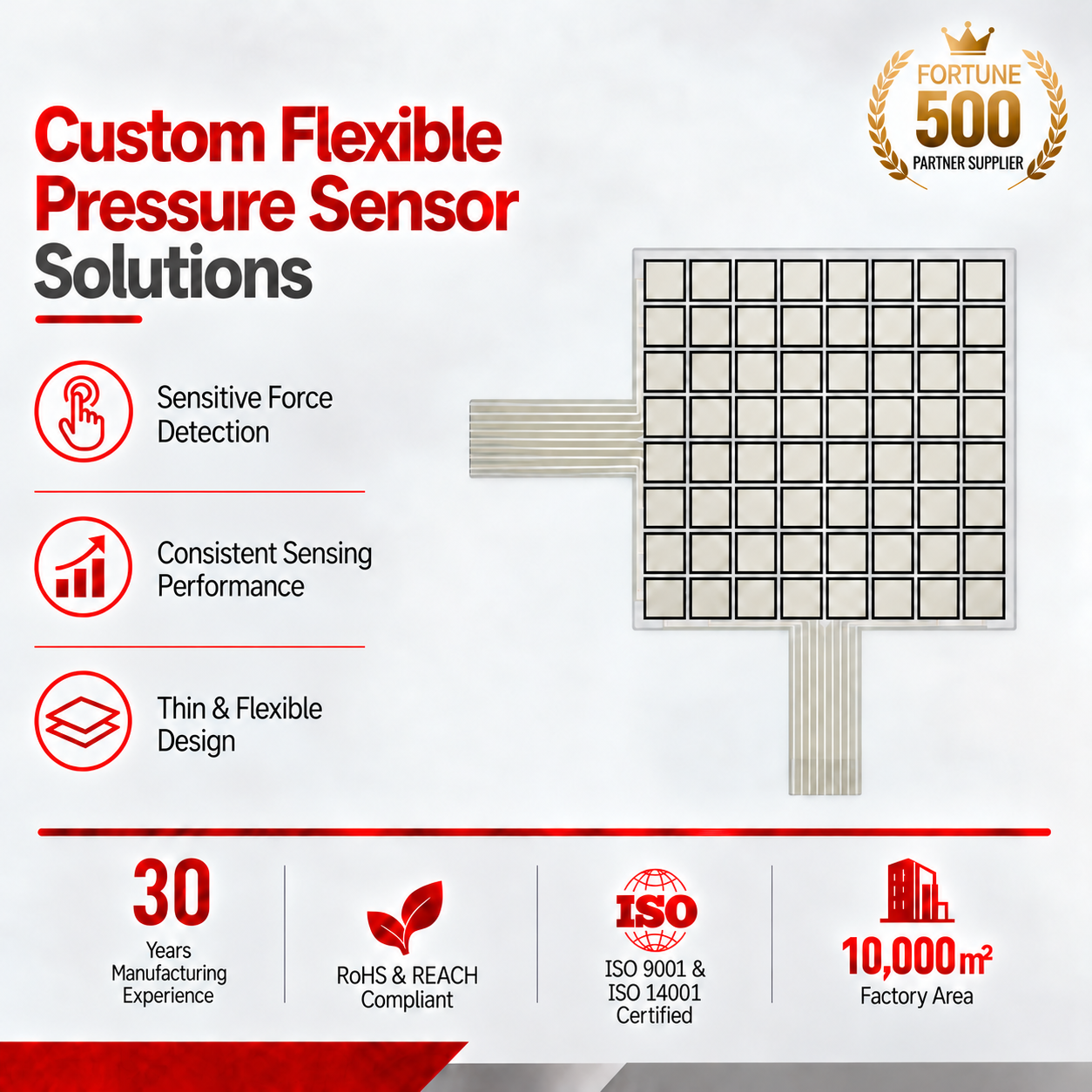
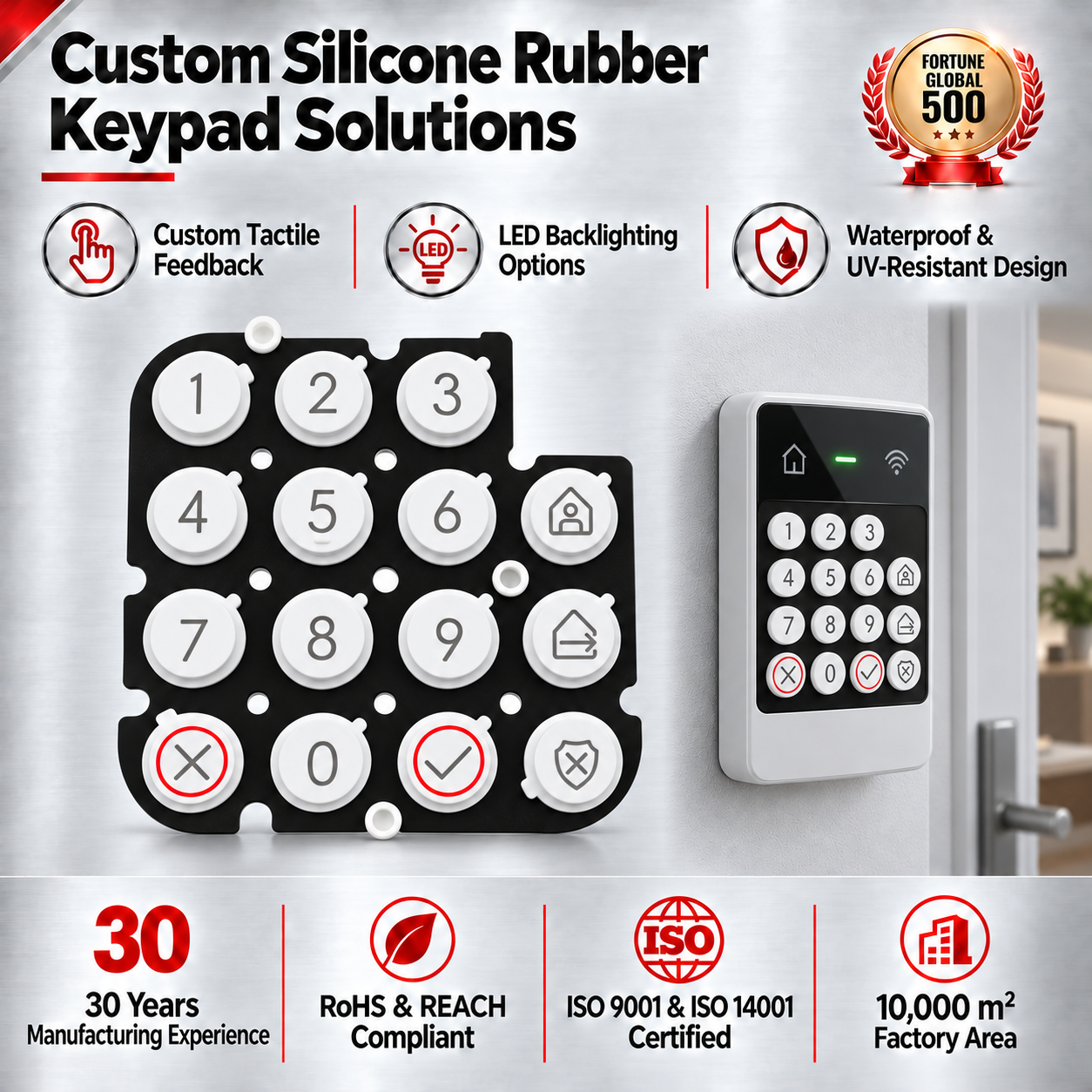
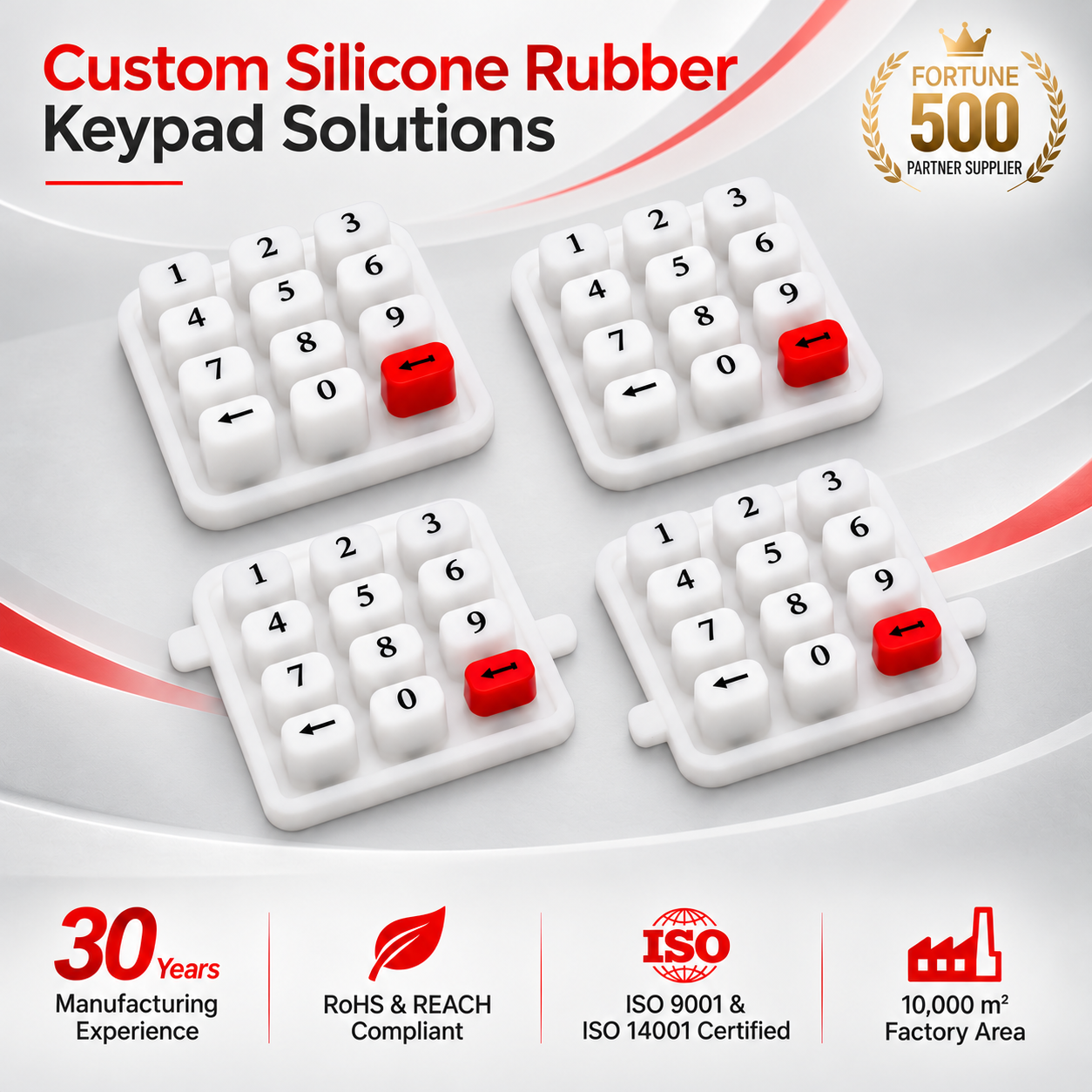
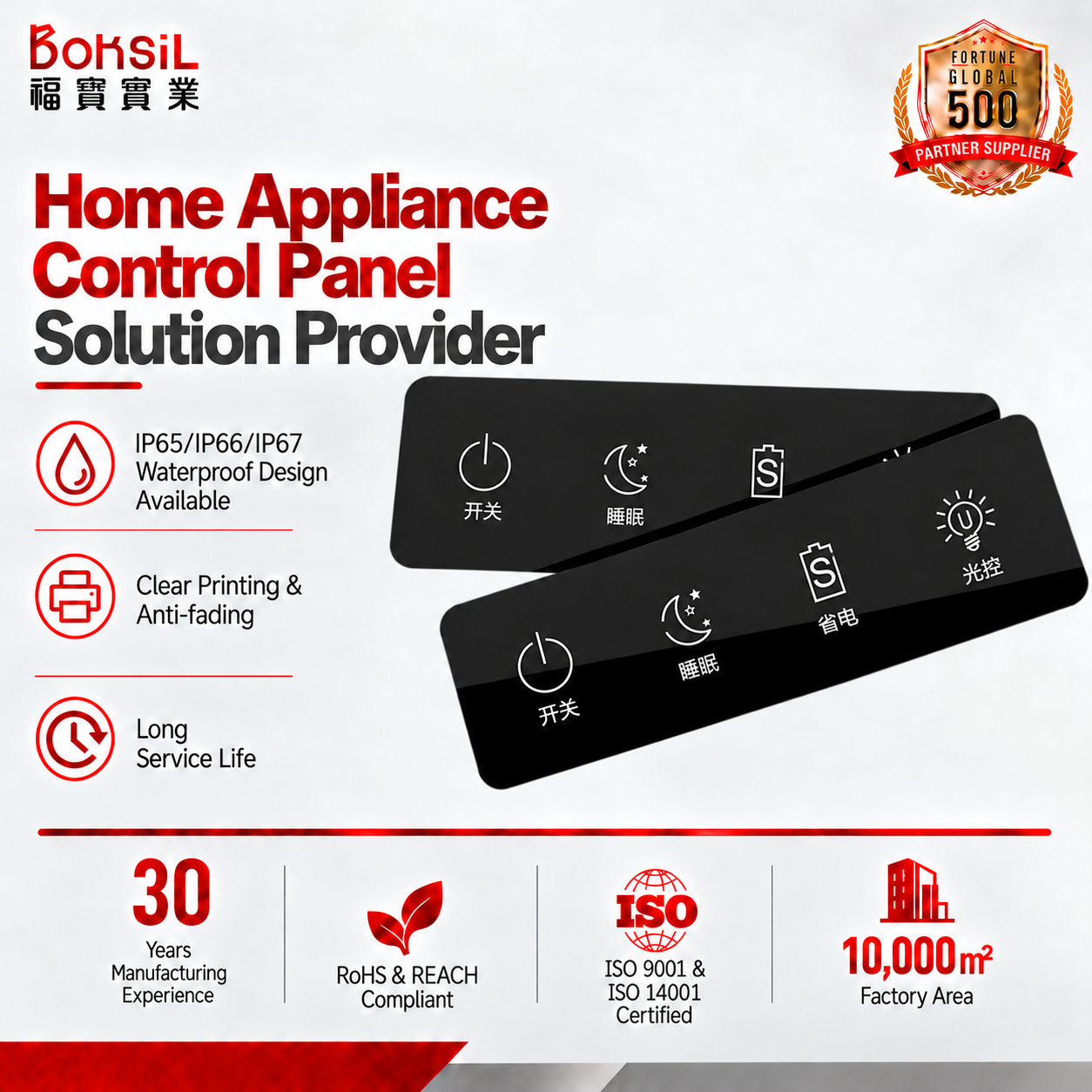
Featured Interface Sub-Assemblies & Graphic Overlays
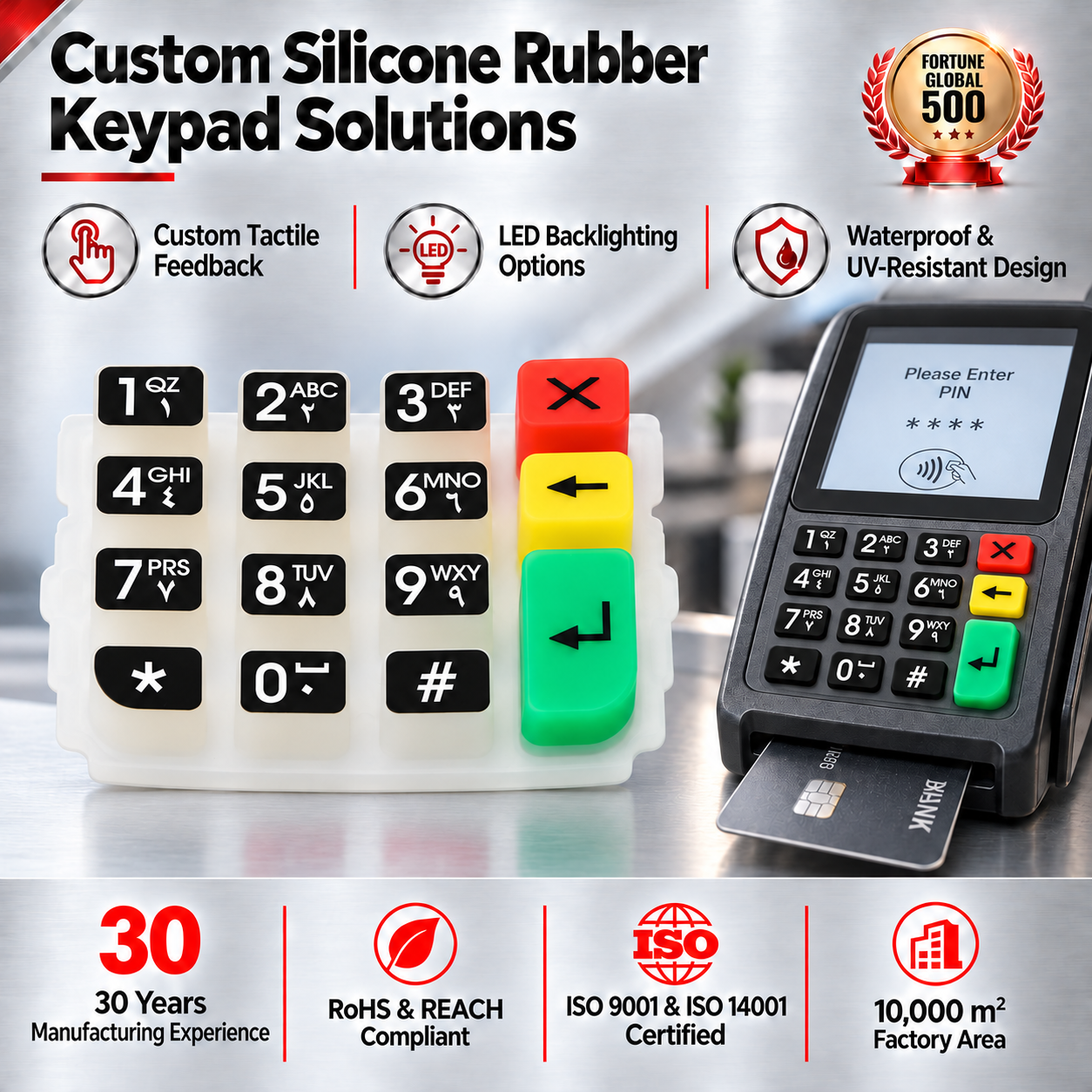
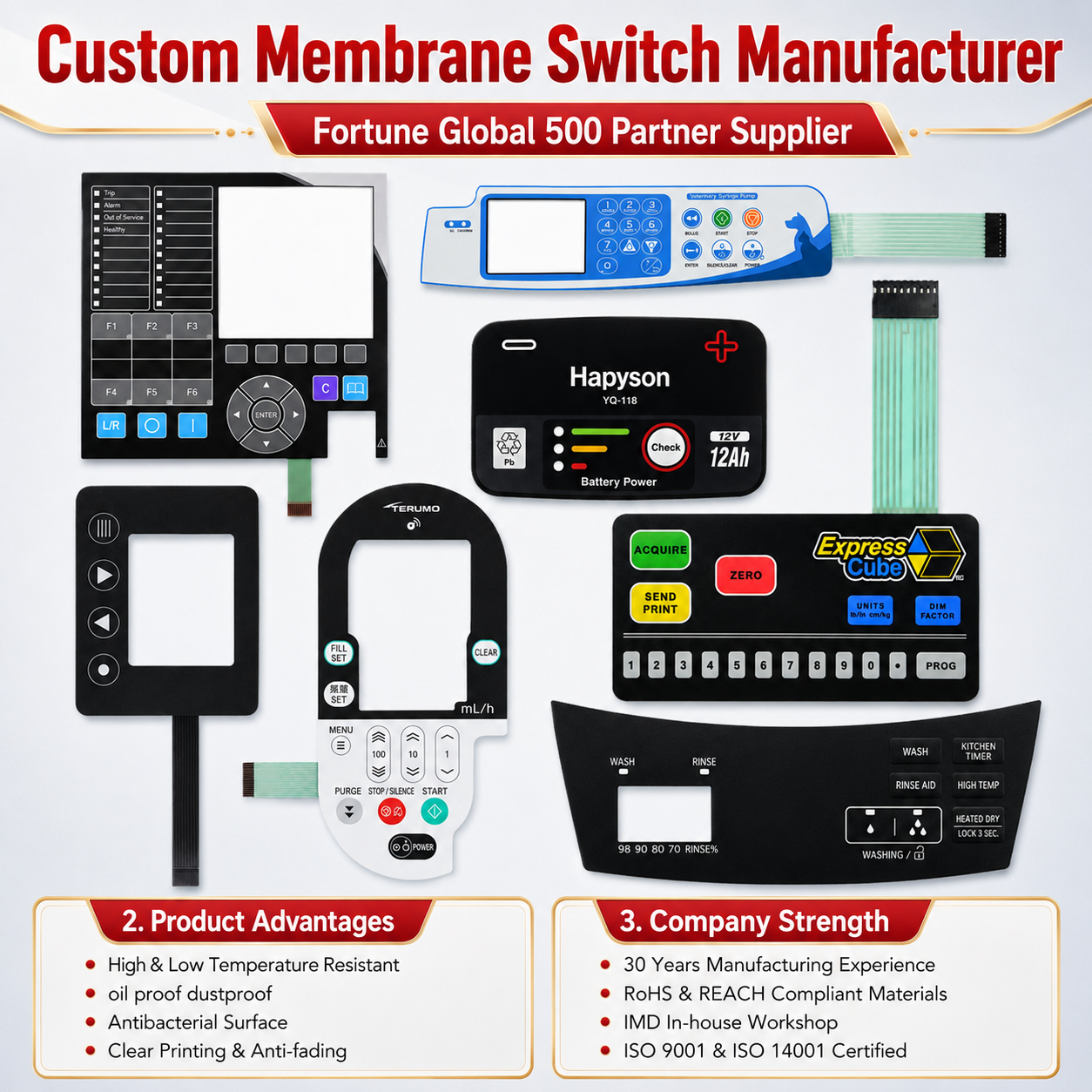
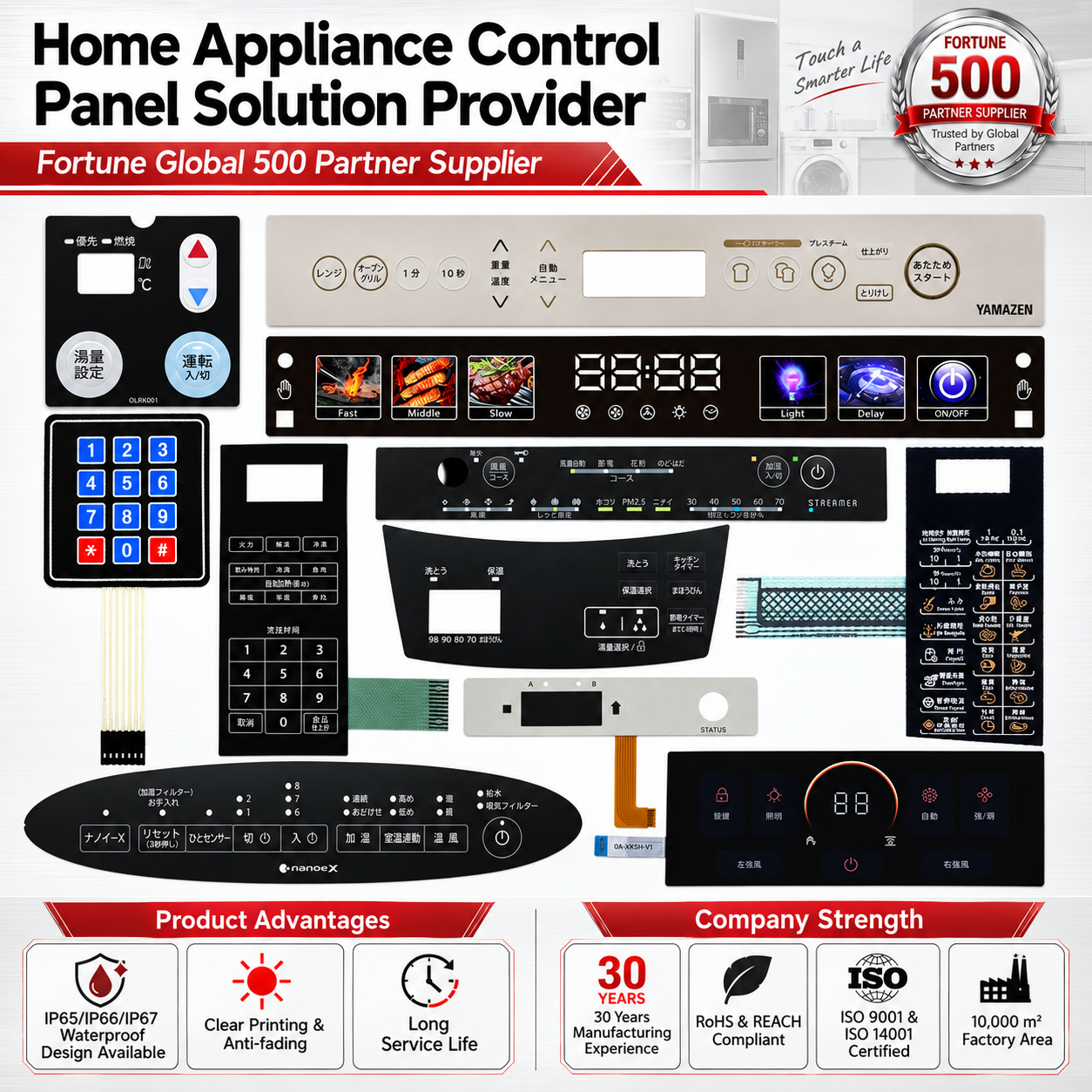
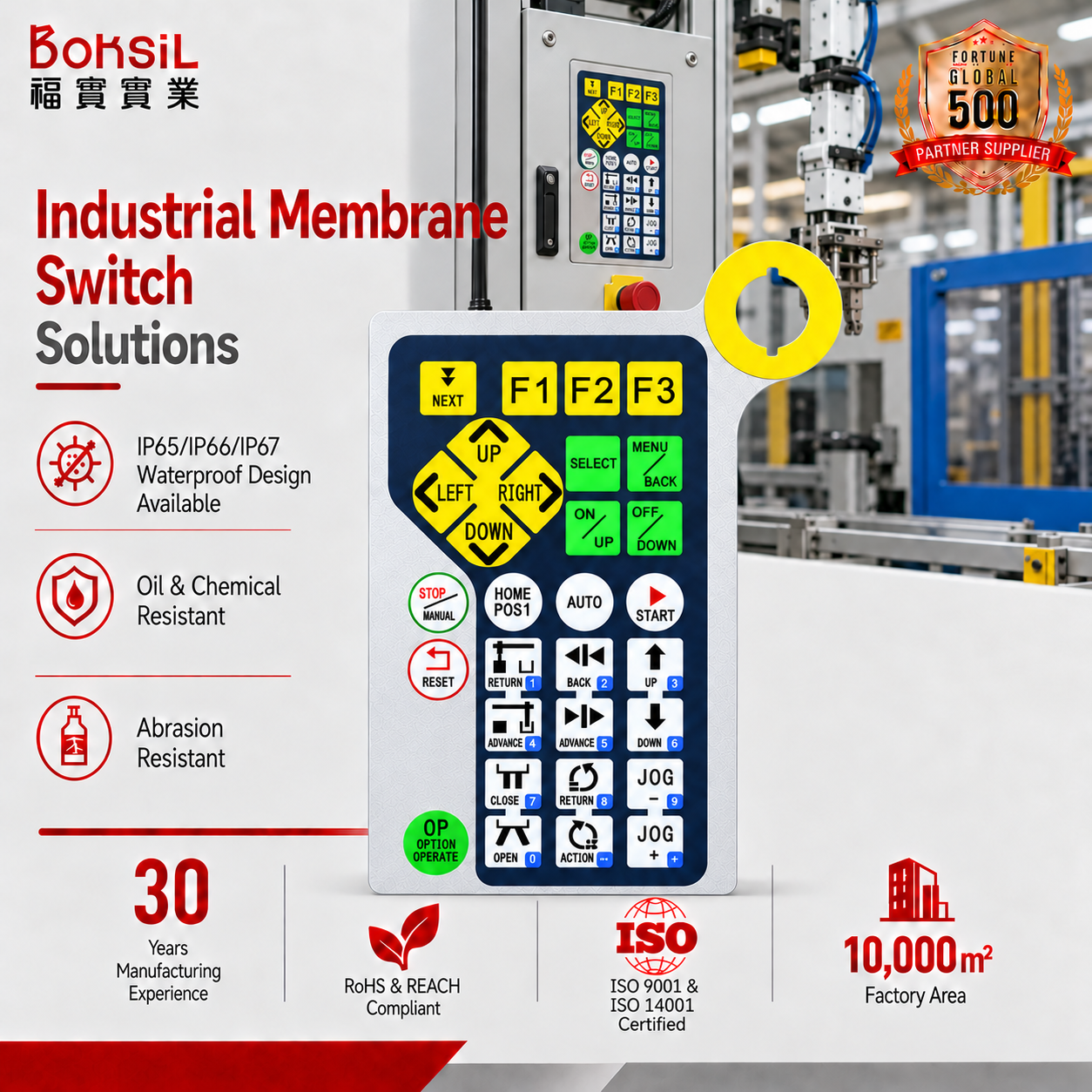
Precision-engineered membrane keys, tactile thin-film pressure sensors, PMMA electronic control front panels, and custom silicone elastomeric contact strips.
10,000㎡
Production Footprint
12+ Yrs
OEM Engineering Depth
100%
Continuity & Optical QC
Intertek
On-Site Plant Audit
Engineering Architecture: High-Performance Graphic Overlays
A technical teardown of material physics, selective texture printing, and ingress protection dynamics for mission-critical Human-Machine Interfaces.
Polycarbonate (PC) Substrates
Polycarbonate films (such as Lexan™ 8010, 8A35) offer superior optical clarity, exceptional dimensional stability, and high thermal deflection points (up to 135°C). They support reverse-subsurface printing that protects legends from chemical cleaning agents, abrasive contact, and mechanical wear. Ideal for instrument clusters, medical consoles, and indoor electronics demanding precision display windows.
Biaxially-Oriented PET Films
Polyester (Autotype Autotex®, Melinex®) delivers superior flexural endurance, enduring over 5,000,000 switch actuation cycles without micro-cracking or stress embrittlement. Chemically inert against aggressive solvents, fuels, alcohol rubs, and sanitizers, hard-coated PET is the premier choice for outdoor industrial controllers, military handhelds, and surgical diagnostic interfaces.
Adhesive Engineering (3M™ / Nitto)
Overlay longevity depends fundamentally on the shear strength and tack of the adhesive layer. We implement high-cohesion acrylic adhesives (including 3M 467MP, 468MP, and 3M 300LSE low-surface-energy laminators) combined with precision continuous perimeter gaskets to guarantee complete ingress protection up to IP65, IP67, and NEMA 4X performance thresholds.
Procurement Dynamics: Global Sourcing Realities
Tier-1 procurement teams are shifting away from modular, piecemeal component sourcing toward complete integrated sub-assemblies. The demand for one-stop manufacturing encompasses everything from raw polymer sheet conversion to integrated printed circuit tails and backlighting arrays.
- Consolidated BOM Sourcing: Single-vendor integration of overlay films, elastomeric silicone keypads, and flexible printed circuits (FPC) lowers logistics overhead and eliminates layer-stack tolerance stacking errors.
- Total Compliance Traceability: Strict mandate for complete RoHS 3, REACH SVHC, UL94 flammability ratings, and ISO-documented optical density checks.
- Accelerated Agile Prototyping: Utilizing digital UV flatbed imaging for fast DFM sample runs prior to hard-tooled screen production reduces tooling iteration lead times down to 3-5 working days.
Future Technological Trajectory: Next-Gen HMIs
The boundaries between mechanical switches and intelligent surfaces are evaporating. Graphic overlay manufacturing is evolving into smart skins equipped with integrated sensor matrices and active visual feedback systems.
- In-Mold Electronics (IME): Merging conductive traces and surface-mounted LEDs directly within the thermoformed graphic sheet, producing ultra-thin, highly contoured 3D functional surfaces.
- Dead-Front Dynamic Illumination: High-opacity translucent masks that appear entirely dead-front solid until backlit by integrated Light Guide Films (LGF) or side-firing micro-LED arrays.
- Antimicrobial & Anti-Fingerprint Hard-Coats: Nano-ceramic hydrophobic and silver-ion antimicrobial surface treatments formulated specifically for surgical consoles and public touchpoints.
Material Selection Engineering Matrix
A comparative structural guide for system architects selecting the optimal graphic overlay substrate.
| Evaluation Parameter | Polycarbonate (PC) | Autotex® Polyester (PET) | Optically Clear PMMA (Acrylic) |
|---|---|---|---|
| Mechanical Flexural Life | 100,000 - 300,000 cycles | > 5,000,000 flex cycles | Rigid (Non-actuating overlay) |
| Chemical & Solvent Resistance | Moderate (Sensitive to aromatics) | Exceptional (Alcohols, MEK, acids) | High resistance to atmospheric ozone |
| Embossing Integrity | Good thermo-forming retention | Outstanding hydro-forming snap retention | Not embossable (Machined/Beveled) |
| Pencil Hardness | HB - 1H (Uncoated) | 2H - 3H (Hard-coated grades) | 3H - 4H (Natural surface hardness) |
| Operating Temperature | -40°C to +125°C | -40°C to +85°C (120°C intermittent) | -20°C to +70°C |
| Optimal Application | Consumer devices, dashboards, LED windows | Industrial control, medical keyboards, outdoor | LCD protective lenses, high-end display panels |
Enterprise Strengths & Production Capability
Direct manufacturer execution based in Dongguan, China. Complete accountability from CAD to container.
10,000㎡ Scalable Clean Facility
Our centralized manufacturing plant features 121 skilled personnel, Class 1,000 clean printing environments, automated flatbed die-cutting units, and high-precision screen printers. Having every production process located under one roof prevents quality degradation and controls scheduling.
Verified Fortune 500 OEM Partner
Certified by Intertek through strict on-site audits, our factory serves as a qualified Tier-1 and Tier-2 supplier for international brand leaders across North America, Europe, and Asia. We support PPAP documentation, complete FAIR validation, and RoHS/REACH compliance certifications.
Comprehensive In-House Testing Lab
Quality assurance is backed by our specialized analytical testing suite, including key lifecycle testers, automatic force-displacement analyzers, tensile peel strength machines, ink abrasion/decolorization testers, programmable environmental chambers, and UV yellowing evaluation equipment.
Frequently Asked Questions for Sourcing & Engineering Teams
Technical guidance regarding design validation, layer stack-up tolerances, material selection, and quotation requirements.
What engineering files and specifications are required to obtain a detailed DFM analysis and quotation?
To initiate a rapid Design for Manufacturability (DFM) assessment, please provide your 2D mechanical outlines in DXF, DWG, or PDF format, paired with layered vector artwork (Adobe Illustrator .AI or vector EPS) containing Pantone (PMS) or RAL color designations. Please detail the required overlay thickness, adhesive requirements (e.g., 3M 467MP for smooth substrates, 3M 300LSE for textured powder coatings), connector type/pitch, and target ingress protection ratings (IP65, IP67). If you have physical golden units or previous samples, our engineering lab can reverse-engineer the stack-up precisely.
How do you prevent ink delamination and color fading under aggressive chemical exposure?
All printing on our graphic overlays is executed via reverse-subsurface silk-screen or digital printing. This puts the ink layer underneath the transparent film, making the substrate itself an impenetrable barrier against physical scratching, finger abrasion, hospital disinfectants, aliphatic hydrocarbons, and alcohol cleaning rubs. Furthermore, every batch of ink is cured under calibrated thermal and UV exposure profiles and confirmed using in-house rub resistance and ink decolorization testing rigs.
What is the standard production lead time and Minimum Order Quantity (MOQ) for custom overlay tooling?
To support your engineering validation phases, we offer rapid sample making with standard prototype delivery in 5 to 7 working days using dedicated digital printing and plotter cutting lines. Production tooling and first-article samples are completed within 10 to 14 days. Our flexible production infrastructure supports low-volume high-mix manufacturing with an accessible standard MOQ starting at just 100 pieces per custom configuration, scaling seamlessly to hundreds of thousands of units for mass production.
What techniques are used to ensure proper LED backlighting uniformity and dead-front appearance?
We achieve true dead-front visualization by screen printing a precisely calibrated neutral-density semi-translucent ink mask beneath the graphic icons. When the underlying LED is extinguished, the legend blends seamlessly into the background fascia without any visible border. When energized, light passes cleanly through the window without hotspotting. For complete surface backlighting, we integrate micro-molded Light Guide Films (LGF) or optical diffusion layers that distribute light evenly from low-power perimeter LEDs across keys and icons.
How do you ensure tight dimensional tolerances for display cutouts and perimeter seals?
Our factory employs class-matched steel rule die-cutting sets, CNC digital knife plotters, and hardened male-female matched punch tool dies operating in temperature-controlled rooms. We maintain standard dimensional tolerances of ±0.10mm (±0.004″) on general outlines and hole-to-hole centerlines, with registration tolerances of ±0.05mm on optical window cutouts. This guarantees drop-in alignment with CNC aluminum housings, injection-molded plastics, and display glass bezels.
Request a DFM Engineering Review & Rapid Sample Quote
Collaborate directly with our technical team in Dongguan. Send your CAD drawings, stack-up questions, or benchmark samples.