Waterproof
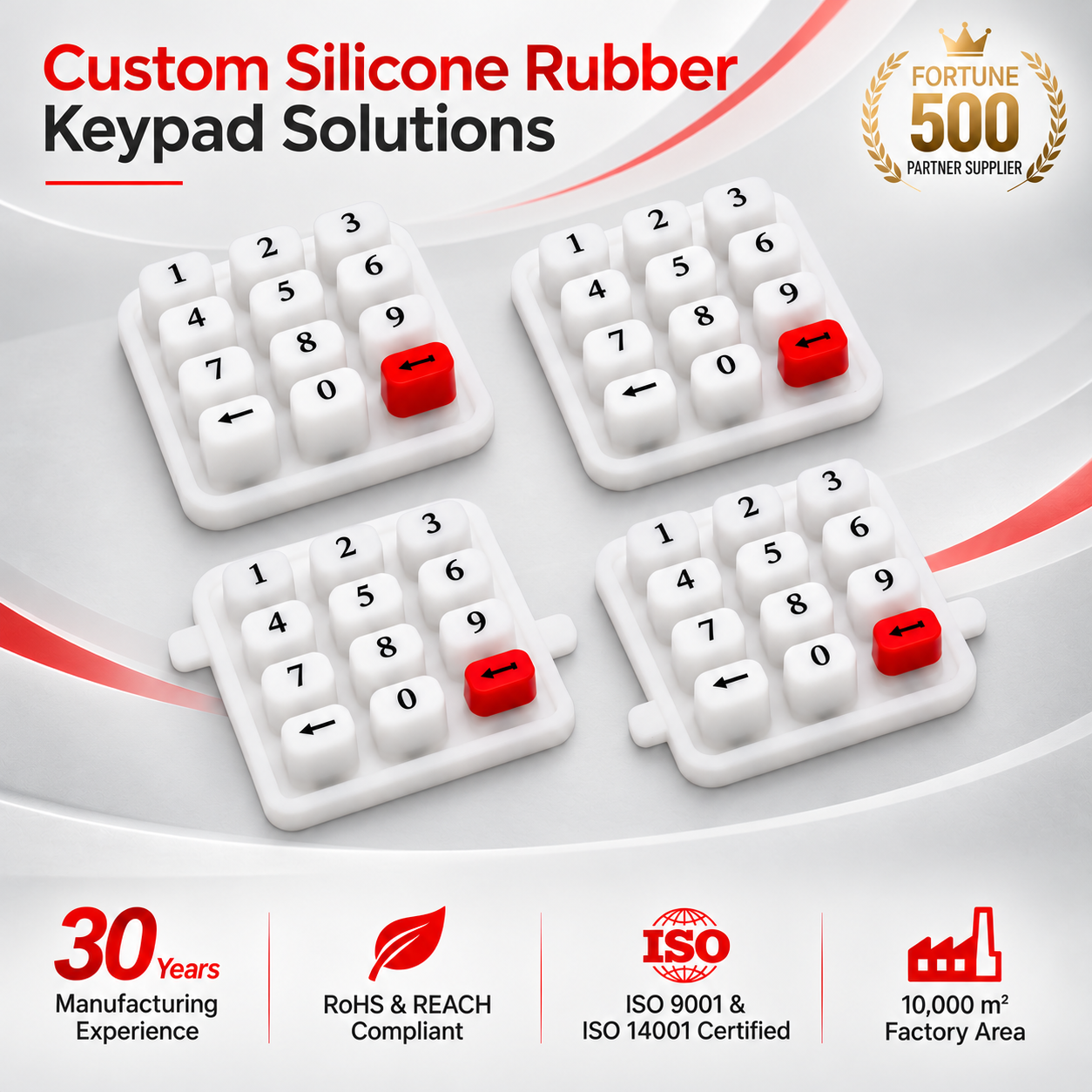
Custom Manufacturer Epoxy Silicone Rubber Keypad OEM/ODM Low Profile
- Structure: Epoxy Coating + Silicone
- Ingress Rating: IP67 Submersible
- Actuation Life: > 1,000,000 Cycles
Custom fabricated to tight engineering tolerances with full environmental sealing, customized actuation forces, and specialized graphic finishes.
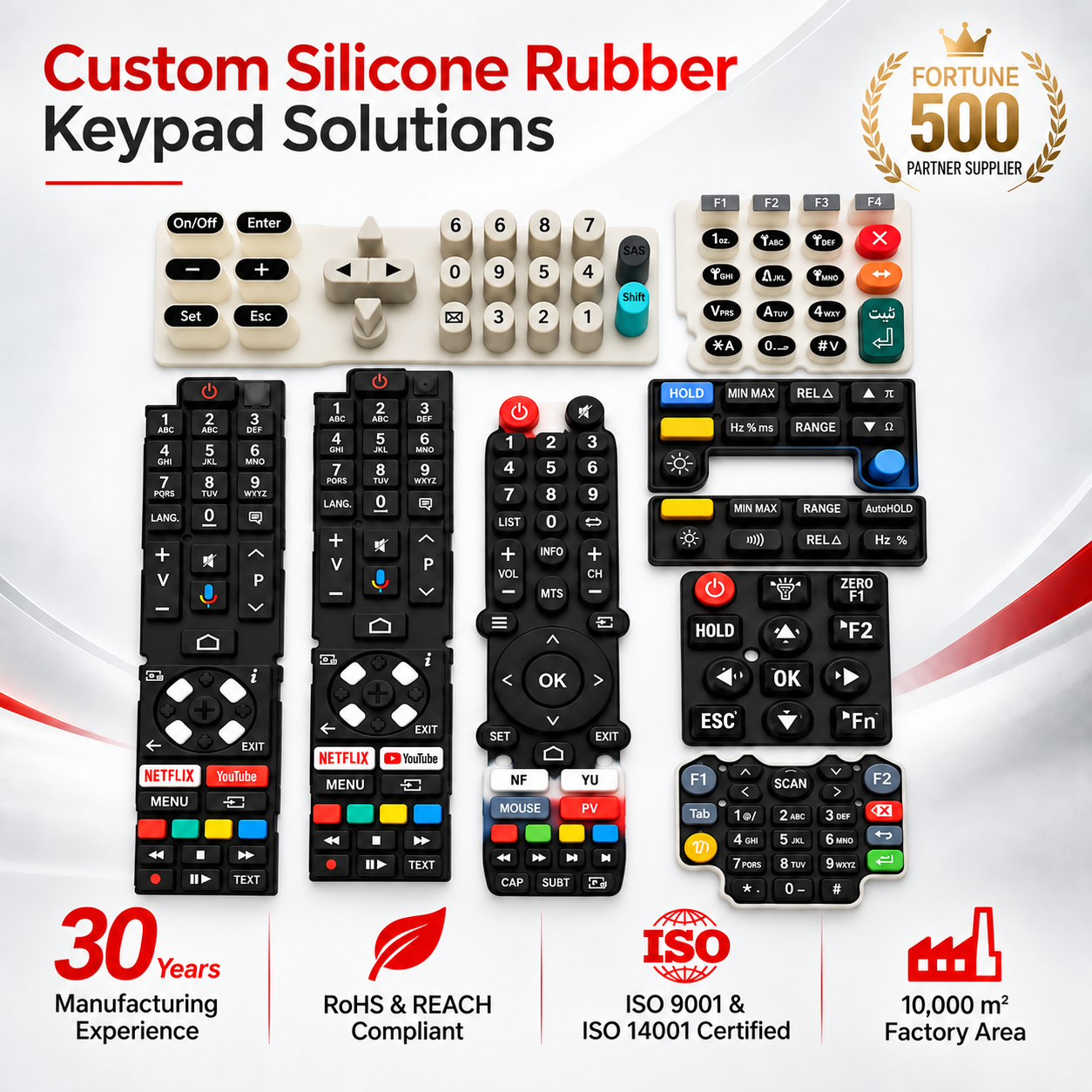
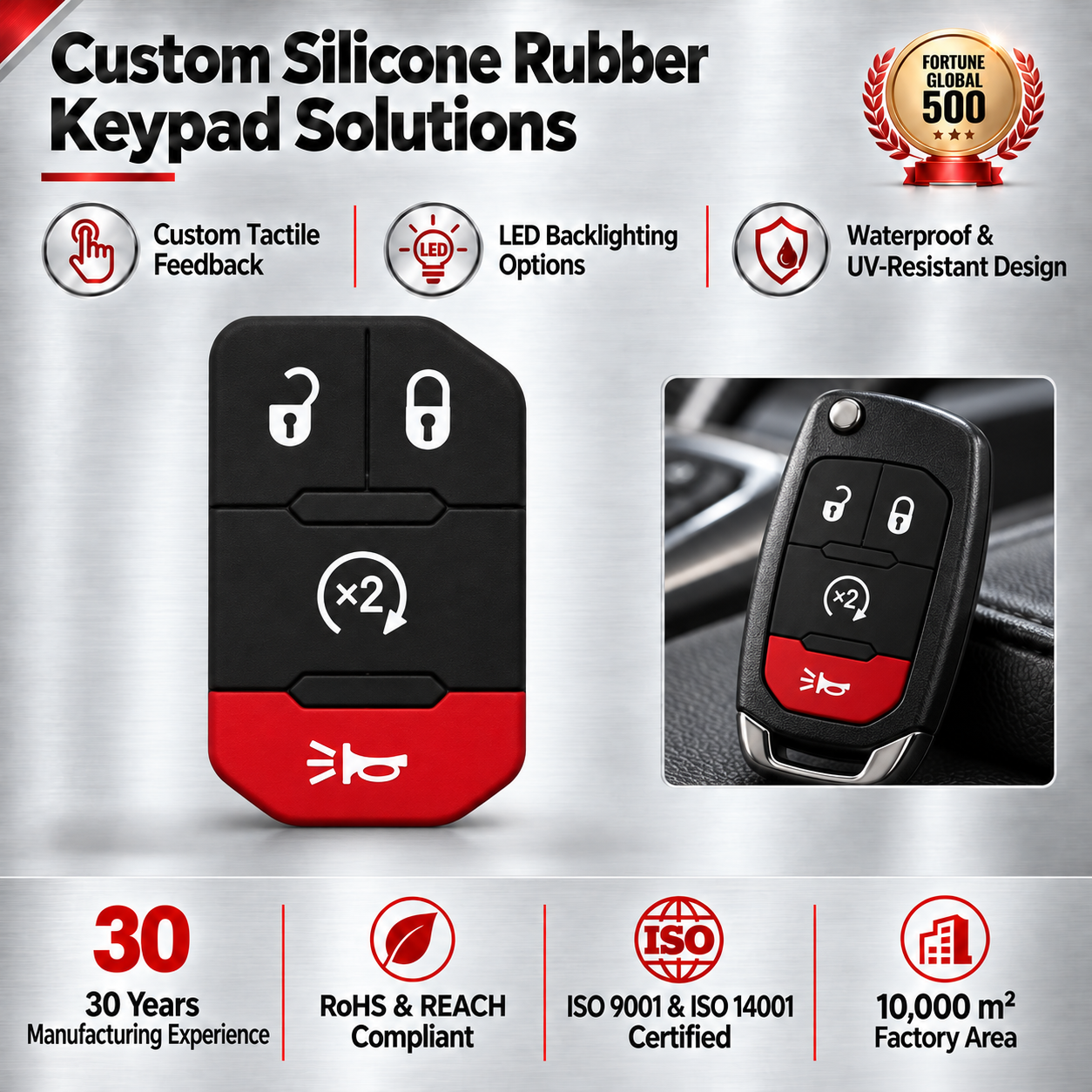
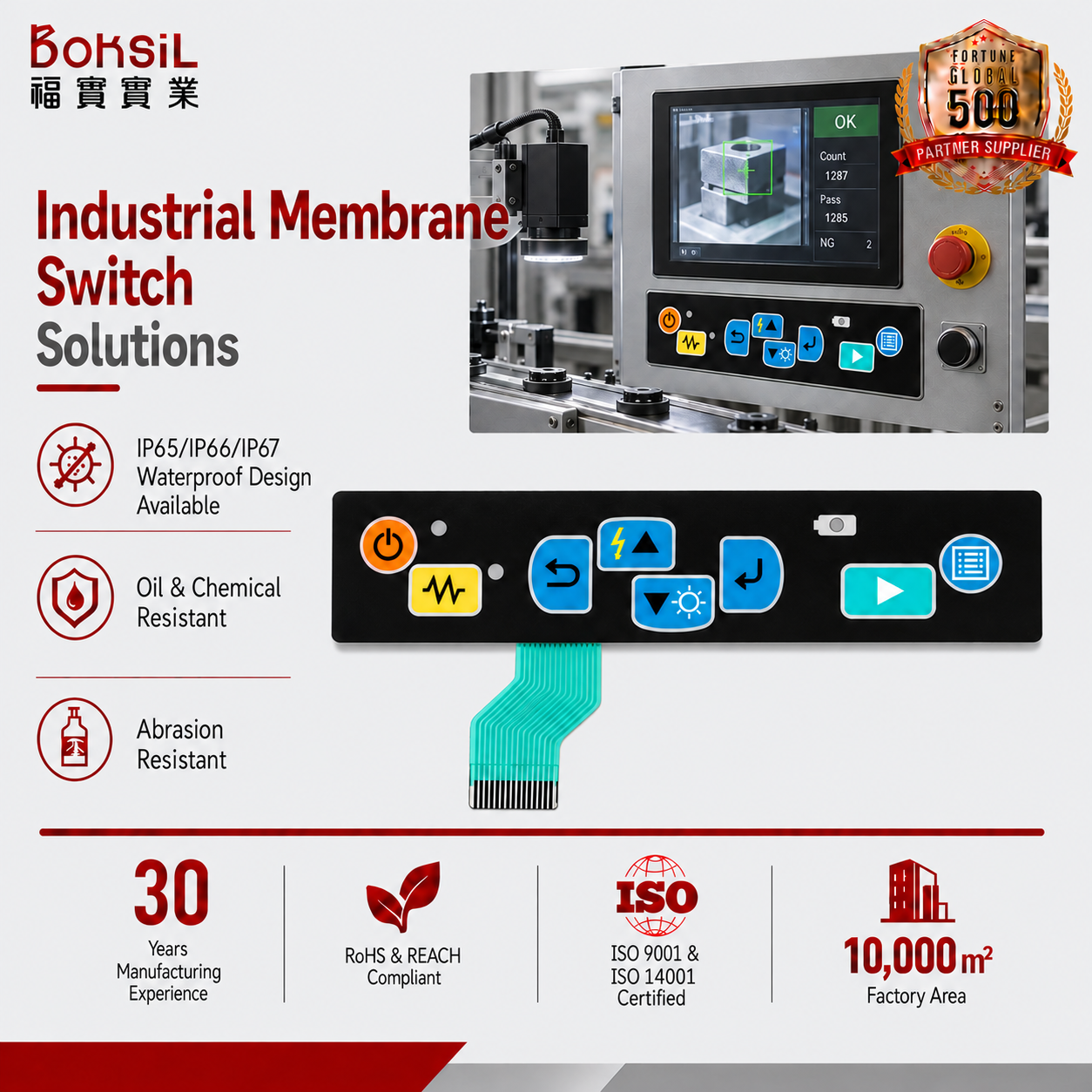
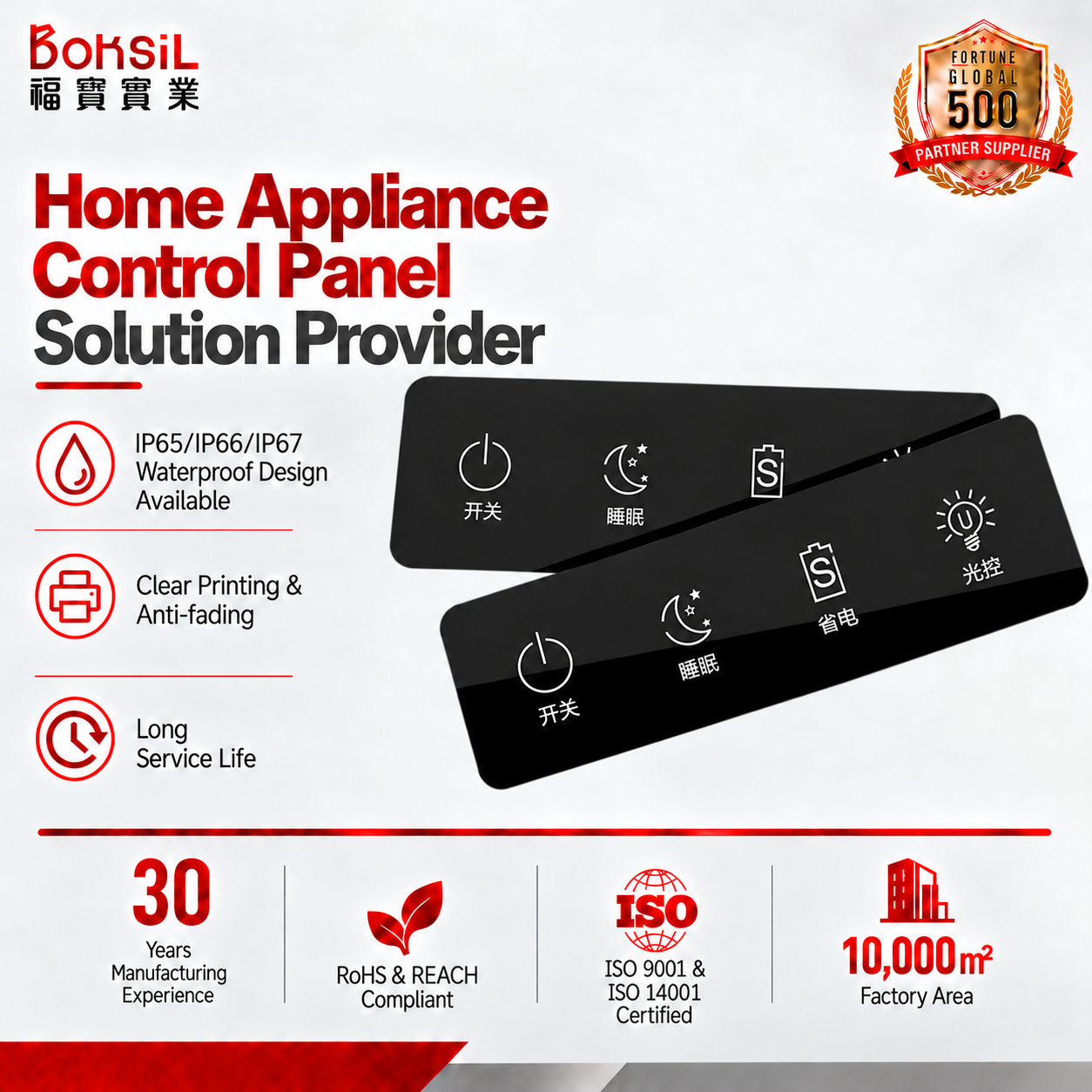
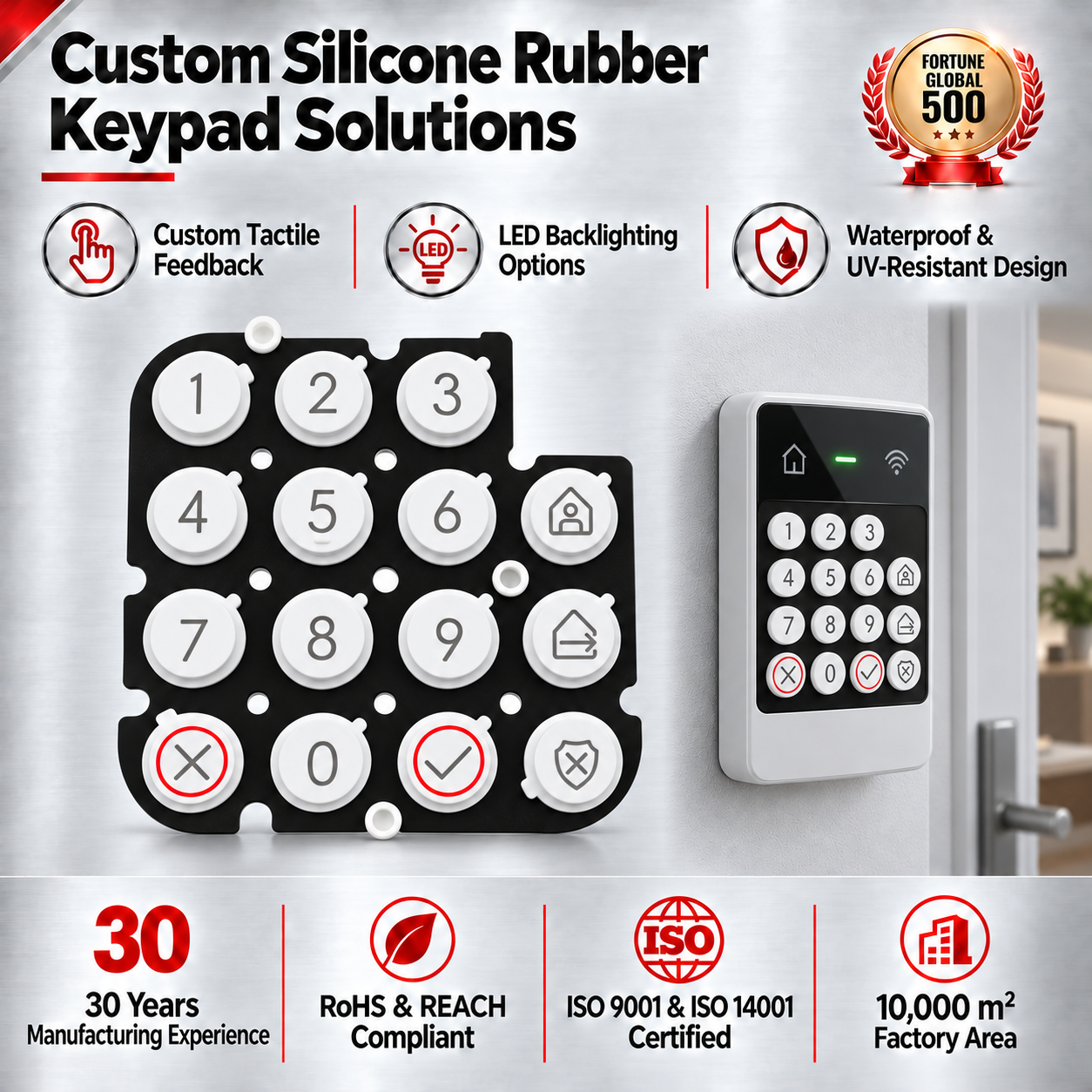
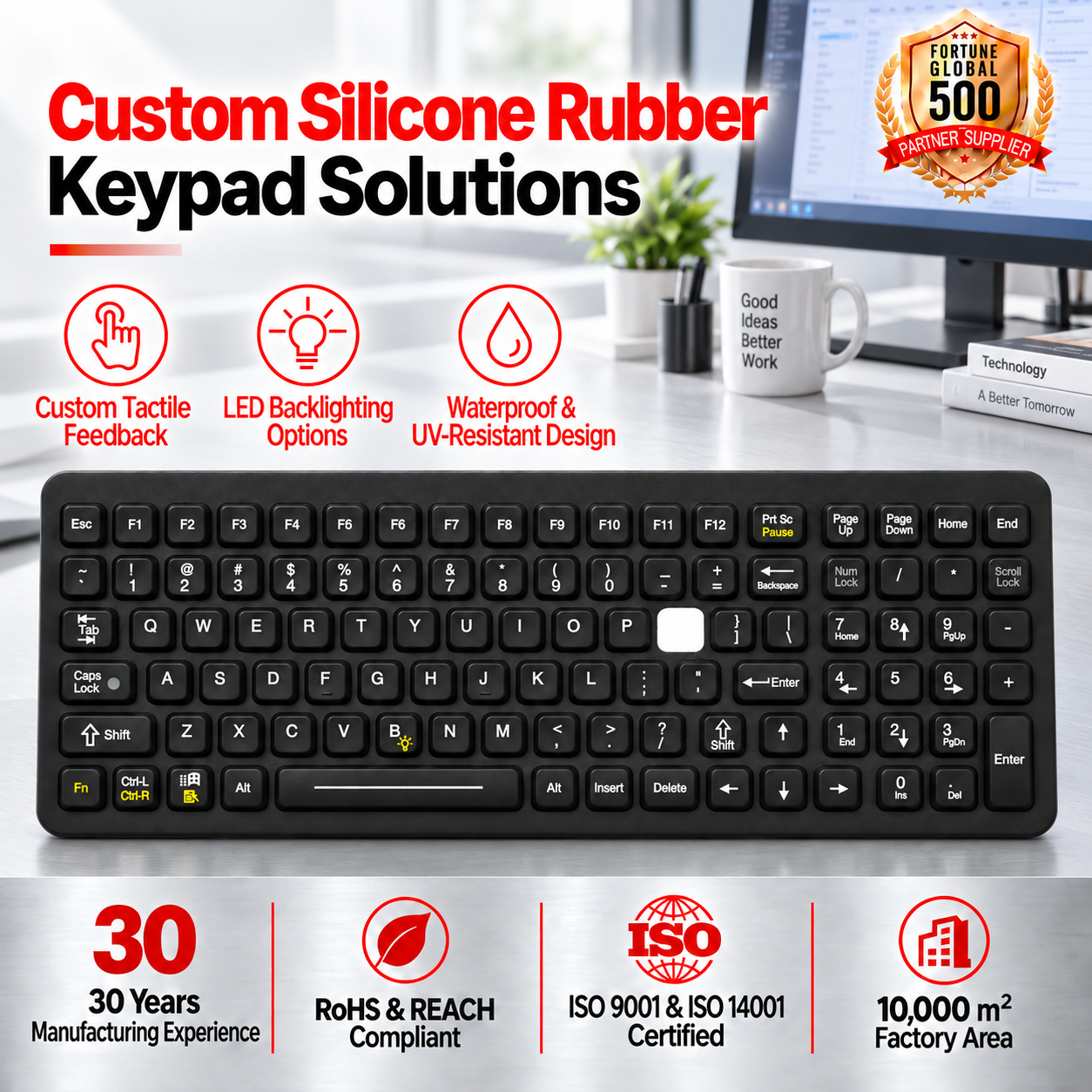
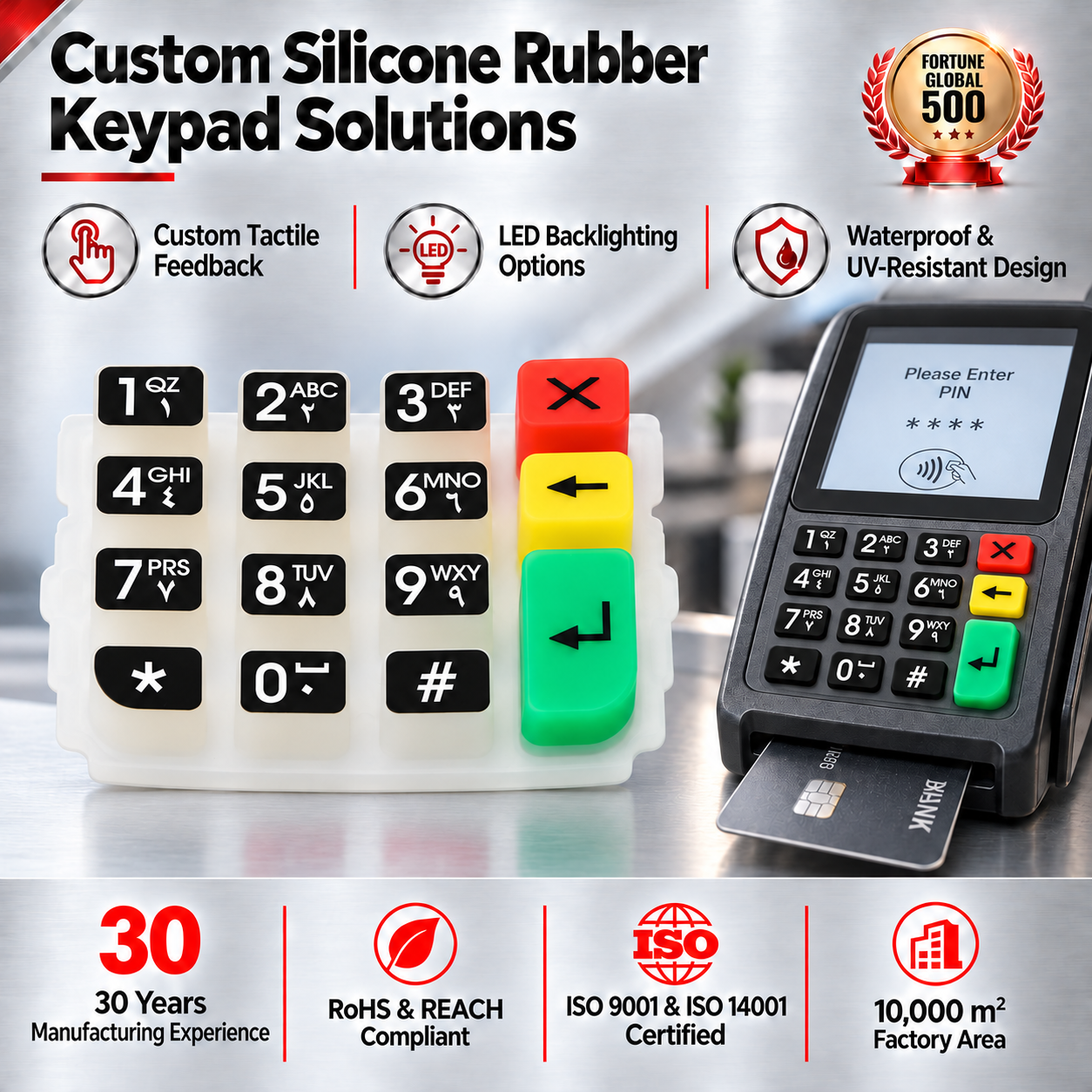
In the modern electronics landscape, the human-machine interface (HMI) serves as the primary touchpoint determining operational reliability, industrial safety, and brand value perception. For procurement engineers, original equipment manufacturers (OEMs), and contract electronics manufacturers (CEMs), sourcing custom membrane switches and tactile keypad assemblies requires navigating complex interdependencies between physical ergonomics, environmental resilience, electrostatic discharge (ESD) shielding, and circuit longevity. As equipment operating conditions transition toward higher humidity, broader thermal cycles (-40°C to +85°C), and intense chemical exposure, traditional entry-level switch configurations must yield to scientifically engineered multi-layer assemblies.
A commercial-grade membrane switch is a precision-engineered stack typically comprising 5 to 9 distinct functional layers. Failure in any single interface layer undermines the entire electronic subsystem. The graphic overlay, typically extruded from biaxially oriented polyethylene terephthalate (PET) or high-grade polycarbonate (PC), acts as the primary barrier against environmental elements. Underneath, acrylic pressure-sensitive adhesives (PSAs)—specifically engineered series from manufacturers such as 3M (e.g., 3M 467MP, 468MP, or 200MP series)—bond the circuit layers while preventing micro-channel vapor penetration.
Tactile feedback is achieved either via polyester hydro-formed bubbles or precision-stamped stainless steel metal domes (available in nickel-plated or gold-plated finishes, trip-force range 180g to 450g). The conductive traces are screen-printed using polymer thick film (PTF) silver and carbon inks onto stabilized polyester film, or etched onto rolled annealed copper-clad polyimide Flexible Printed Circuits (FPCs). For high-density matrix configurations or environments with extreme vibration, FPC constructions eliminate micro-cracking risks often associated with silver ink over-bending.
| Technology Construction | Overlay Substrate | Actuation Life | Ingress Rating | Shielding & Illumination Options |
|---|---|---|---|---|
| Silver-Printed PET Membrane | Autotex PET / Polycarbonate | 1,000,000 - 3,000,000 Cycles | IP65 Perimeter Gasket | Carbon overcoat, printed silver grid ESD shield, integrated chip LEDs |
| Copper Etched FPC Switch | High-Temp Polyimide | > 5,000,000 Cycles | IP67 Sealed Housing | Solid copper plane EMI/RFI grounding, high-density pitch ZIF connectors |
| Capacitive Solid-State Touch | Chemically Strengthened Glass / PMMA | Infinite (Zero Mechanical Wear) | IP68 / Submersible Solid Surface | Optical clear adhesive (OCA) bonding, custom slider/wheel backlighting |
| Silicone Rubber + Membrane Hybrid | Molded Liquid Silicone (LSR) | 1,000,000 - 2,000,000 Cycles | IP66 Gasket Perimeter | Laser-etched backlit legends, epoxy button coatings, plastic keycap caps |
Global supply chain teams are transitioning away from fragmented component sourcing toward vertically integrated turnkey suppliers. The consolidation of raw material compounding, precision silkscreening, die-cutting, electronic testing, and final housing integration under one cleanroom-equipped roof reduces project lead times from 12 weeks to less than 15 working days.
Transition from bulky discrete bulbs to Light Guide Film (LGF) and micro-etched acrylic diffusers that achieve ultra-thin profiles (<0.8mm) with uniform luminance and zero hot-spotting across expansive front panels.
Medical and industrial sectors require front overlays treated with textured, textured-matte, or antimicrobial hardcoats resistant to harsh disinfectants (quaternary ammonium compounds, bleach) without hazing or peeling.
Procuring membrane controls pre-laminated to aluminum backing plates or FR4 PCBs populated with SMT controllers, buzzers, and microcontrollers, shifting labor away from client assembly lines to the component manufacturer.
The trajectory of custom membrane switch manufacturing is marked by the fusion of tactile mechanical switching with solid-state sensing. The emergence of In-Mold Electronics (IME) and capacitive proximity sensing allows engineers to mold three-dimensional curved surfaces with integrated circuit tracks. By encapsulating conductive silver lines directly inside injection-molded resins, IME eradicates airspace entirely, preventing moisture condensation and internal corrosion in marine and outdoor agricultural hardware.
Simultaneously, haptic actuators combined with piezoelectric feedback are bridging the tactile deficit in touchscreens. Engineers now demand switch solutions where clicking forces, snap ratios, and travel distances (0.2mm to 1.5mm) are validated mathematically through force-displacement plot testing to deliver a definitive sensory confirmation to machine operators wearing safety gloves.
Operating an advanced 10,000㎡ production facility in Dongguan, China, our team delivers uncompromised engineering integrity backed by on-site Intertek verification and adherence to global quality management systems.
Every switch matrix, trace resistance, and surface-mount LED is dynamically tested for shorts, open circuits, and contact resistance prior to export shipment.
State-of-the-art clean printing enclosures mitigate airborne particulate contamination, guaranteeing pinhole-free dielectric layers and optically flawless display windows.
Equipped with computerized actuation life testers, force-displacement analyzers, temperature/humidity programmable chambers, and ink abrasion rubbing testers.
Work directly with project engineers who review Gerber, CAD, and artwork files, optimize trace routing, dome sizing, and stack-up tolerances within 24 hours.
Essential design, engineering, and manufacturing specifications for OEM engineering teams.
To complete an accurate Design for Manufacturability (DFM) review and accurate quotation, we require: 1) Vector artwork files for the graphic overlay (Adobe Illustrator, CorelDraw, or high-res vector PDF) specifying Pantone or RAL color codes; 2) 2D mechanical drawings (AutoCAD DWG/DXF) showing overall dimensions, cutouts, window locations, embossing boundaries, and tail exit coordinates; 3) Electrical schematic or circuit routing drawings depicting pinout assignments, trace resistance limits, switch matrix logic, and connector pitch (e.g., 2.54mm or 1.0mm ZIF); and 4) Operating environmental specifications such as IP water-resistance ratings, thermal operating ranges, and UV exposure criteria.
Environmental ingress sealing is engineered by implementing a perimeter adhesive gasket ring that completely encloses the switch vent chambers without breaching the external boundary. The flexible tail egress is sealed with water-block adhesive dams or routed internally to prevent capillary moisture migration. For IP67 and IP68 configurations, closed-cell acrylic bonding films (e.g., 3M VHB series) are utilized in conjunction with continuous outer silicone seals, preventing water, saline mist, and hydrocarbon solvents from penetrating the circuit layers during high-pressure washdown or chemical decontamination.
Screen-printed silver ink circuits on polyester (PET) film represent an economical and highly reliable solution for standard matrix configurations, typically offering over 1,000,000 actuation cycles with typical trace resistance under 100 Ohms. However, copper-clad polyimide Flexible Printed Circuits (FPCs) provide significantly superior performance: trace resistance is reduced to under 1 Ohm, allowing longer tail lengths without signal attenuation; pitch density can reach ultra-fine tolerances (0.5mm pitch ZIF); and resistance to micro-crack fatigue during dynamic flexing exceeds 5,000,000 cycles. Copper FPCs also permit automated SMT component soldering (such as dense LED arrays and sensor chips) with superior mechanical solder joints compared to conductive epoxy bonding.
For ultra-thin enclosures where total stack-up height cannot exceed 1.2mm, Light Guide Film (LGF) is the industry benchmark. LGF utilizes side-firing surface-mount LEDs positioned along the periphery of a micro-grooved optical film layer, dispersing light evenly across graphic icons, dead-front indicators, and keypad borders while requiring minimal current. For localized status indicators, miniature chip LEDs (0603 or 0805 packages) are placed into embossed spacer pockets. Alternatively, fiber-optic weaves and Electroluminescent (EL) foils can be integrated for specific military and avionics interfaces requiring zero-heat generation and electromagnetic compliance.
Our quality management system enforces a dual-stage verification framework. First, 100% of finished units undergo computerized testing for circuit continuity, contact bounce (<5ms), short-circuit isolation, trace impedance, and LED forward voltage verification. Second, batch sample lots are subjected to mechanical and environmental validation: actuation force and displacement profiling on an automated testing rig, keystroke life testing up to 5 million cycles, adhesive peel strength evaluation on digital tensile testers, cross-hatch ink adhesion testing, alcohol/solvent rub resistance (MEK 500g double-rubs), and thermal-shock environmental aging in our programmable humidity/temperature test chambers.
Partner directly with an Intertek-verified OEM/ODM manufacturer. From rapid functional prototyping to high-volume multi-layer keypad assembly, our engineering team is ready to optimize your design and deliver reliable prototypes.
Contact Us