Engineering-Grade Membrane Keypads & Overlays
Explore our standard and custom industrial human-machine interfaces engineered for demanding medical, automotive, and automation environments.
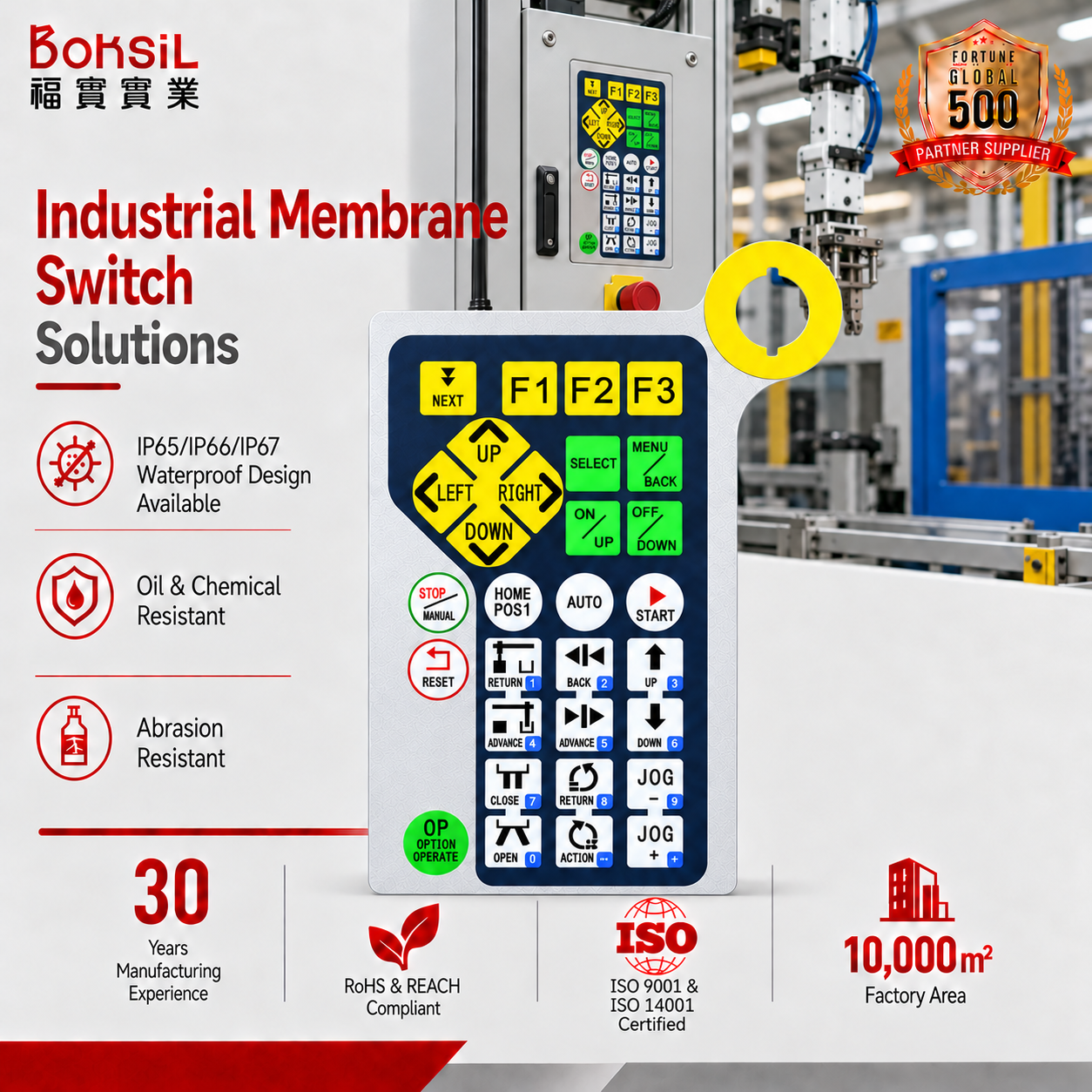
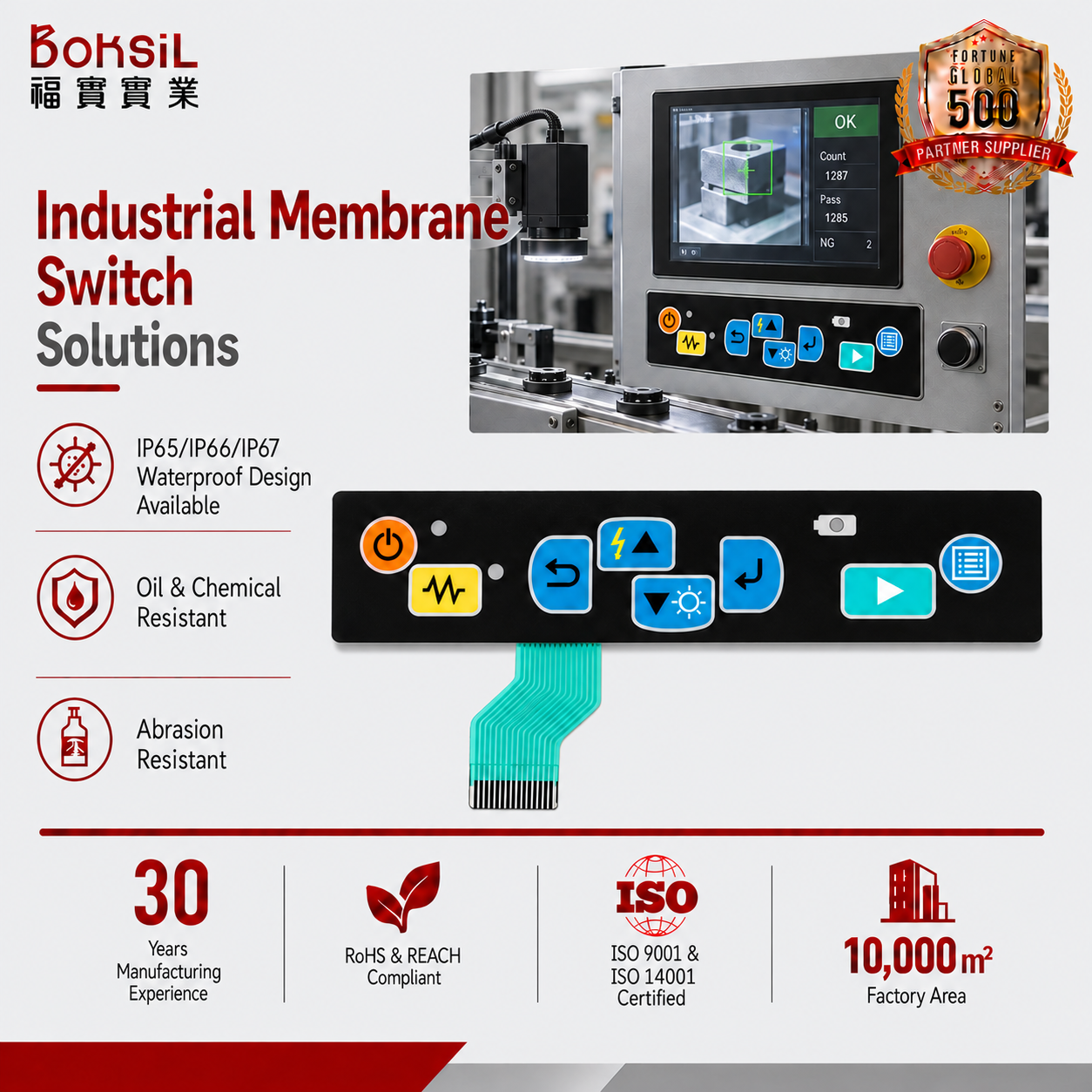
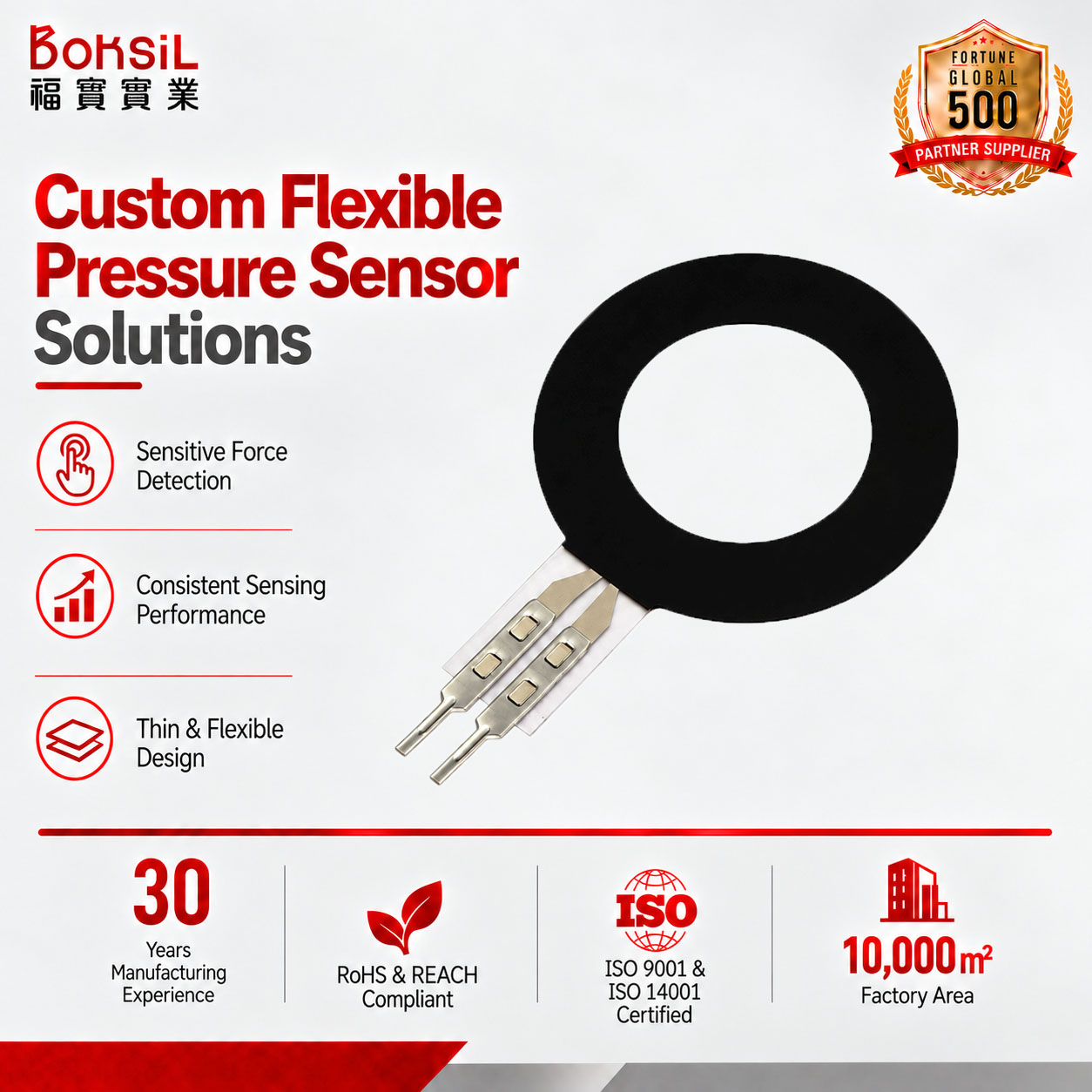
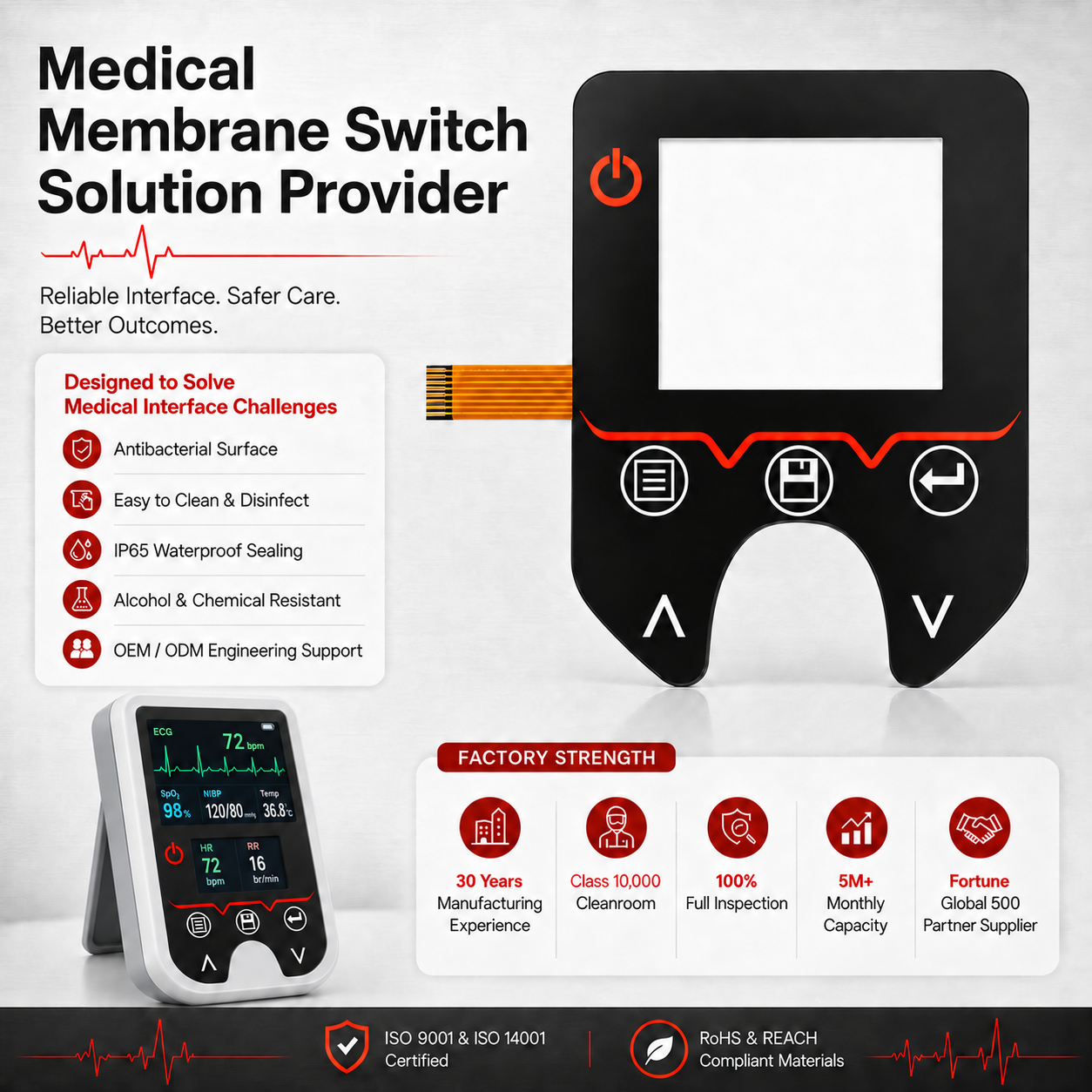
Engineering White Paper: Membrane Keypad Architecture & Substrate Selection
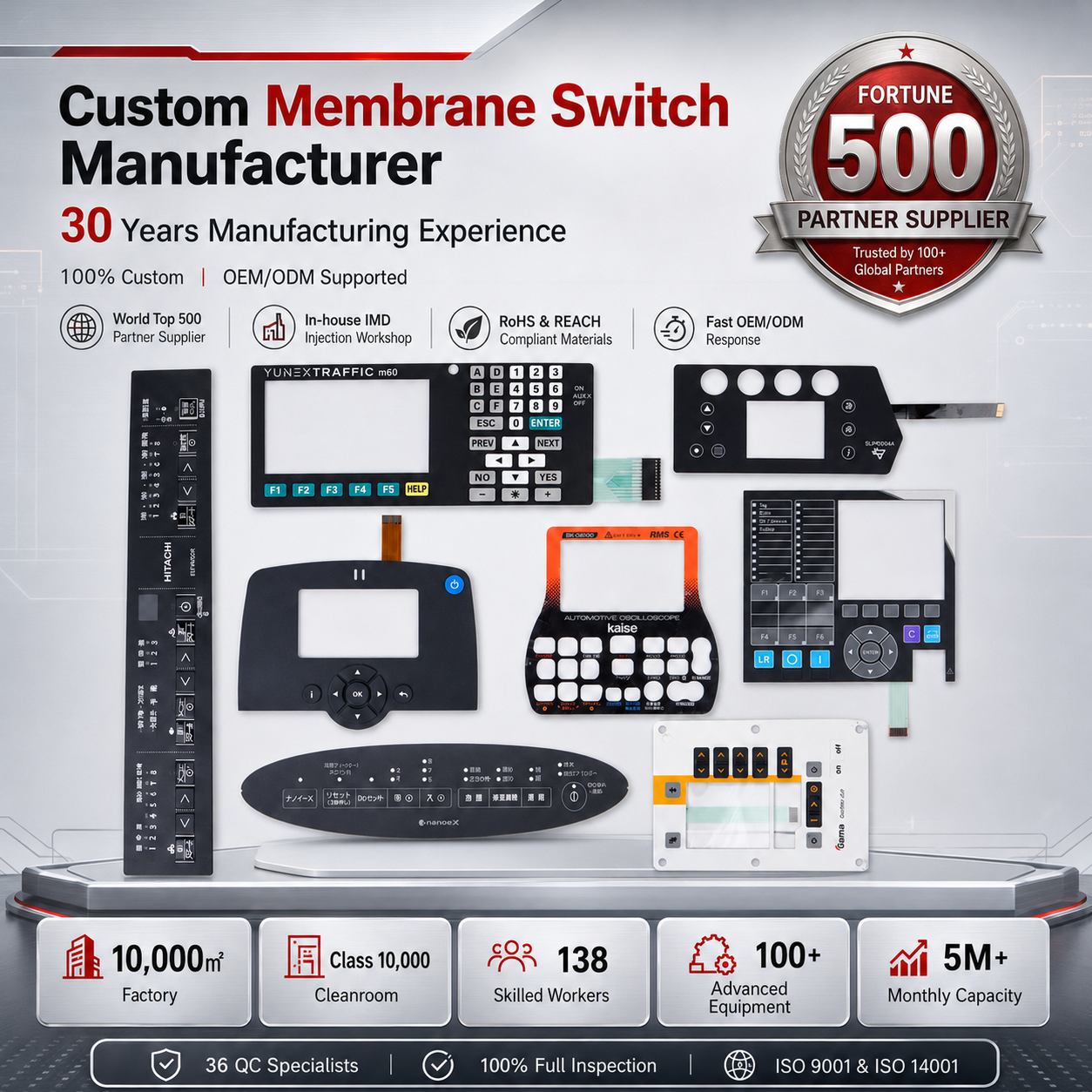
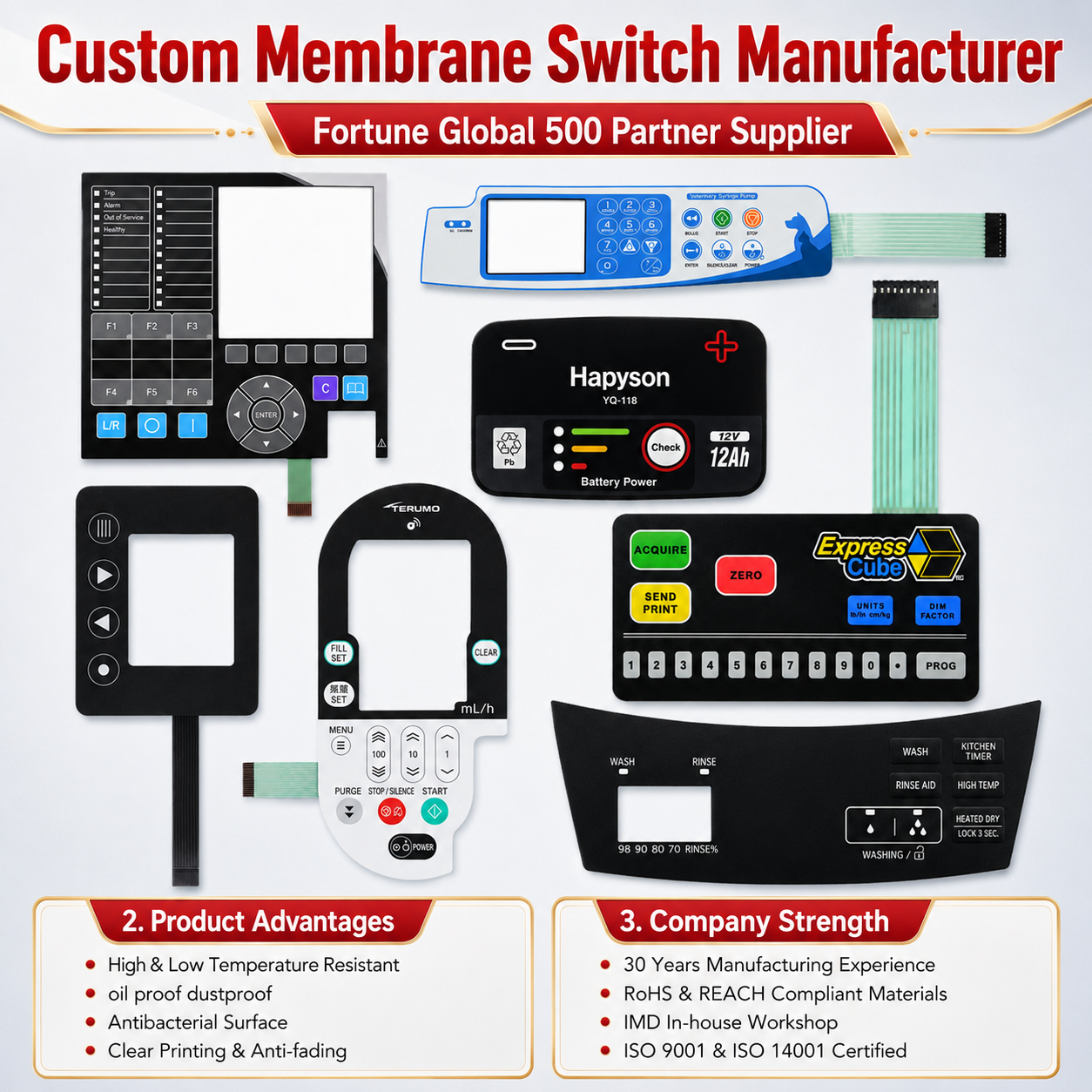
Modern Human-Machine Interface (HMI) engineering demands uncompromising resilience against mechanical wear, chemical exposure, electrostatic discharge (ESD), and moisture ingress. As a tier-one custom OEM membrane keypad overlay manufacturer, our engineering team adheres to stringent Design for Manufacturability (DFM) guidelines to optimize component longevity across harsh operating environments.
1. Substrate Comparison: Polycarbonate (PC) vs. Polyester (PET)
Selecting the optimal front panel substrate is critical to the functional lifecycle of graphic overlays:
- Autotype Polyester (PET): Exhibits superior flexural fatigue strength exceeding 5,000,000 actuations without stress cracking. Highly resistant to harsh solvents, alcohols, and aggressive cleaning detergents commonly found in clinical and industrial environments. Recommended for embossed keypads and long-stroke tactile domes.
- Optical Polycarbonate (PC): Features outstanding optical clarity, thermal stability, and ease of thermal forming or high-definition screen printing. However, under cyclic actuation or exposure to aromatic hydrocarbons, unmodified PC is prone to micro-cracking. It remains ideal for non-tactile fascia, dead-front indicator lenses, and flat bezels.
2. Tactile Feedback Mechanics: Stainless Steel Metal Domes
Tactile perception directly governs operator safety and operational error rates in mission-critical applications. By integrating four-leg or oblong nickel-plated stainless steel metal domes, actuation forces can be precisely calibrated from 180g to 450g. Travel profiles span 0.3mm to 0.6mm, generating an unmistakable snap ratio that prevents double-triggering even when operated with thick industrial work gloves.
3. Ingress Protection (IP65 to IP67) Sealing Dynamics
To establish true water-tight hermetic seals, we utilize continuous-perimeter die-cut adhesive gaskets using genuine 3M 467MP, 468MP, or VHB structural laminates. Vented channels are routed internally away from contact chambers toward dry connector exits or equalized through breathable hydrophobic membranes to prevent atmospheric pressure variations from collapsing tactile keys during thermal cycling.
| Interface Technology | Circuit Material | Typical Switch Life | Sealing Capability | Best Suited Operational Field |
|---|---|---|---|---|
| Tactile Metal Dome Membrane | Screen-printed Silver Ink on PET or Copper FPC | 1,000,000 to 5,000,000 cycles | IP65 – IP67 (Perimeter Ring) | Medical Diagnostic Monitors, Heavy Machinery PLCs |
| Capacitive Touch Front Panel | ITO Film / Silver Grid on Glass or PET | Solid-state (Virtually unlimited) | IP68 (Seamless solid faceplate) | Smart Kitchen Appliances, Sterile Laboratory Systems |
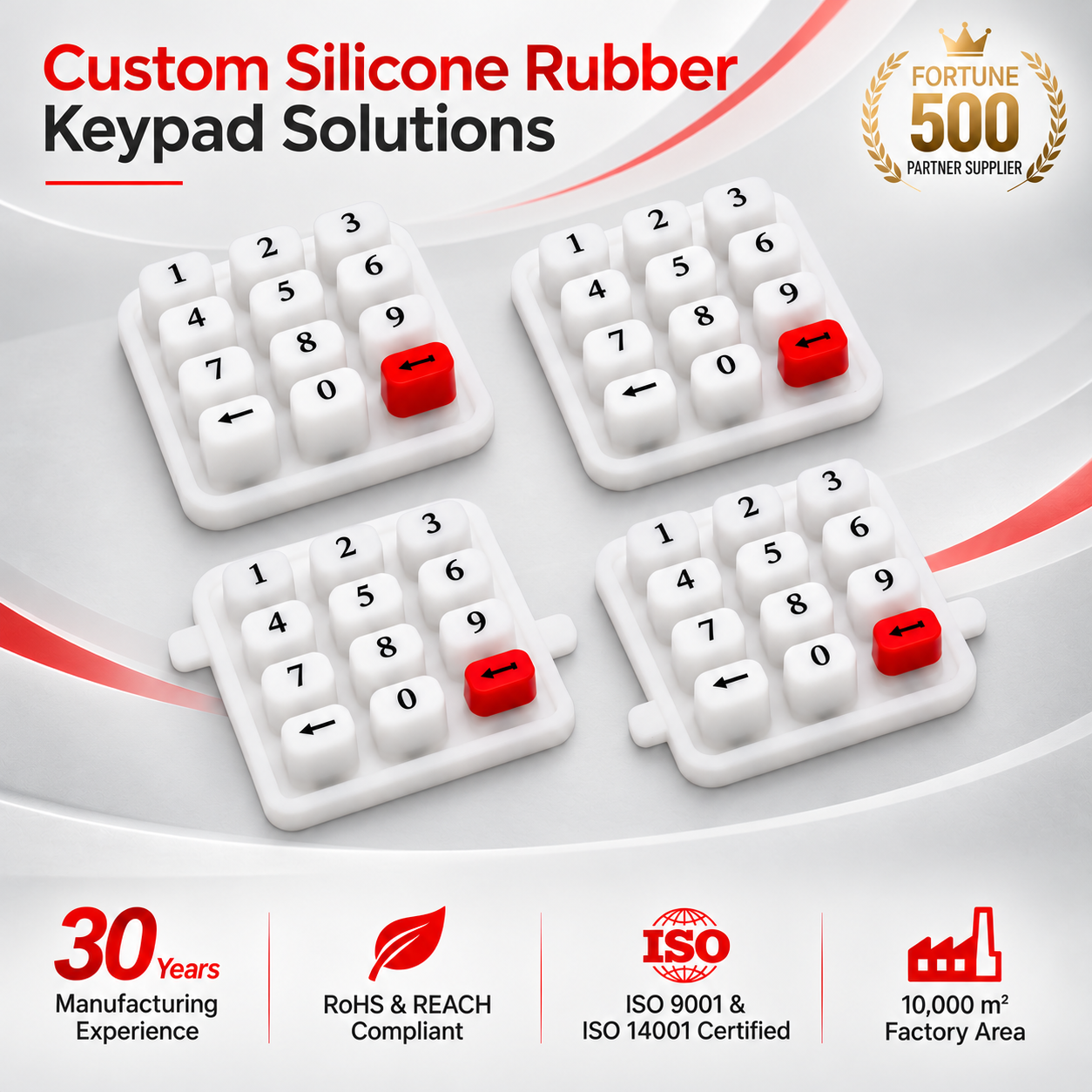
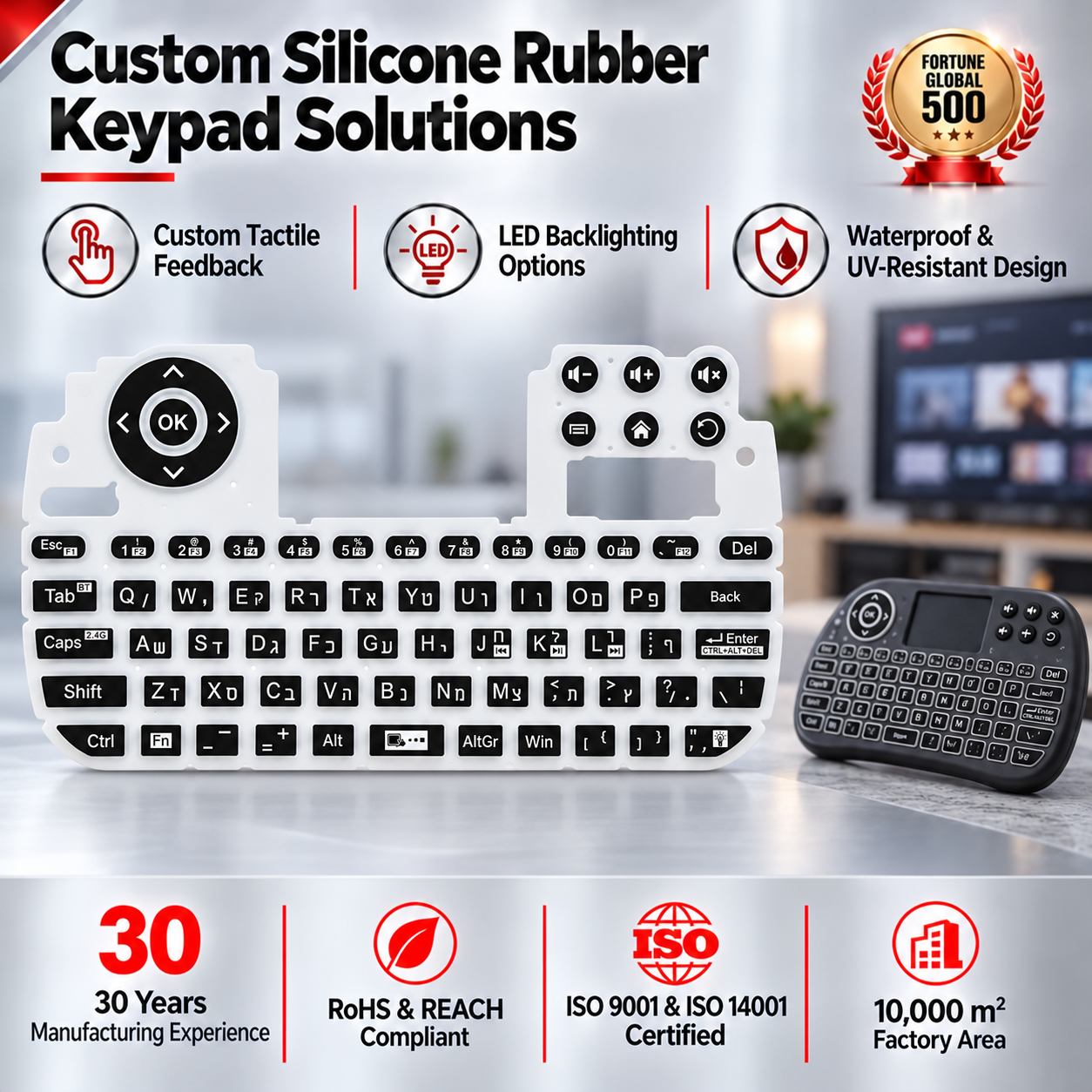
| Silicone Elastomer Keypad Matrix | Conductive Carbon Pill / Metal Pill to PCB | 500,000 to 2,000,000 cycles | IP64 – IP66 (With wrap-around flange) | Rugged Handheld Scanners, Military Radio Terminals |
| In-Mold Decoration (IMD / IML) | Formed Hard-coat Film fused with Polycarbonate | Permanent wear barrier | Hermetic structural fusion | Automotive Instrument Clusters, Premium White Goods |
Integrated Manufacturing Strengths
Complete control over fabrication, assembly, and testing ensures end-to-end quality without third-party outsourcing vulnerabilities.
10,000㎡ Vertically Integrated Plant
From Class 1,000 dust-free silk screen printing rooms to high-speed die-cutting and automated SMT dome placement, every workflow step is handled within our Intertek-verified facility in Dongguan.
100% Comprehensive Inspection
Every switch assembly undergoes complete automated testing for open circuits, short circuits, loop resistance, insulation resistance, and functional LED emission prior to anti-static packaging.
Dedicated In-House Reliability Lab
Our facility houses automated key life testers, force-displacement curve plotters, programmable temperature & humidity chambers, tensile test stands, and ink abrasion testers to validate custom specs.
Rapid Prototyping & Agile Tooling
Equipped with specialized digital plotters and laser-cutting gear, we accelerate sample turnaround to 3–5 working days for early engineering validation before steel tooling commitment.
Fortune 500 OEM Experience
Serving world-class OEMs across North America, Europe, and Asia-Pacific for over a decade. We provide full traceability, custom FAI, PPAP Level 3 documentation, and international shipping support.
Low Minimum Order Quantity (MOQ: 100 pcs)
We actively support both high-mix/low-volume specialized industrial orders and million-unit mass production runs, backed by factory-direct pricing without distributor markups.
Procurement & Technology Trends in HMI Overlays
Strategic manufacturing considerations driving engineering architectures over the next decade.
1. Transition to Flexible Printed Circuit (FPC) Layers
While screen-printed silver paste tracks remain cost-effective for standard matrix switches, complex assemblies increasingly rely on etched copper FPC substrates. FPC circuits eliminate silver migration risks in humid conditions, support ultra-fine pitch connectors (down to 0.5mm), and enable direct reflow soldering of compact surface-mount LEDs and microcontrollers.
2. Integration of Thin-Film Force Sensing (FSR)
Modern touch interfaces are shifting toward dual-modality sensing. Integrating thin-film Force-Sensing Resistors (FSR) allows membrane assemblies to detect progressive touch pressure, unlocking multi-state switching, accidental touch rejection, and variable speed actuation across industrial cranes, surgical tools, and power electronics.
3. Uniform Thin Backlighting via Light Guide Film (LGF)
Bulkier discrete LED windows are being replaced with ultra-thin Light Guide Film (LGF) modules. LGF technology uses side-firing SMD LEDs and micro-etched light refraction dots to distribute balanced, glare-free backlighting evenly across keys, icons, and branding logos while maintaining an overall keypad profile under 1.2mm.
4. Antimicrobial and Chemically Resistant Hard-Coats
Accelerated post-pandemic sanitization protocols mandate graphic overlays that endure recurring wipe-downs with harsh quaternary ammonium solutions, bleach, and isopropanol. Specialized textured polyester films with non-leaching antimicrobial coatings prevent microbial proliferation while protecting legends from chemical ghosting.
5. Dead-Front Display Windows with Hidden-Until-Lit Legends
High-end consumer white goods and medical consoles prioritize uncluttered aesthetics. Dead-front graphic overlay printing masks indicators, alarms, and auxiliary controls completely behind uniform opaque tints until rear LED channels are triggered, guiding user workflows intuitively.
6. Low-Carbon and Recyclable Laminate Stack-Ups
Global procurement teams prioritize ESG compliance. Membrane architectures are adapting through solvent-free UV-curable dielectric inks, bio-based polyester alternatives, and modular disassemblable adhesive constructions to simplify end-of-life electronic recycling workflows.
Procurement & Engineering FAQ
Direct technical answers to common questions raised by industrial buyers and system design engineers.
What is the minimum order quantity (MOQ) for custom overlays?
Our standard production MOQ starts at 100 units for fully custom membrane switches, graphic overlays, and silicone hybrid assemblies. We provide dedicated pre-production prototype runs (5 to 10 pcs) for fit and function verification prior to mass fabrication.
Which file formats are required for an engineering quote and DFM review?
We accept 2D vector CAD files (DWG, DXF, PDF) for outline dimensions and layer stack-ups, along with graphic artwork in Adobe Illustrator (.AI), vector EPS, or high-resolution PDF format with callouts for Pantone (PMS) or RAL color codes. Schematic pinouts are needed for custom tail routing.
How do you prevent silver migration and contact oxidation in humid climates?
For high-humidity applications, we deposit printed carbon overcoats across exposed silver switch contacts, coat conductive runs with high-dielectric polymer varnishes, or upgrade the core switch layer to a photo-etched copper Flexible Printed Circuit (FPC) with polyimide coverlay.
Can membrane overlays withstand outdoor UV exposure without yellowing?
Yes. For outdoor environments, we use specialized UV-resistant polyester grades (such as Autotex XE) or UV-stabilized polycarbonate formulations. These materials are tested in our in-house accelerated yellowing test chambers to guarantee multi-year outdoor aesthetic and structural stability.
What connector terminations are standard on flexible switch tails?
Flexible switch tails can be specified with industry-standard 2.54mm (0.100") pitch female crimped contacts housed in plastic latching shells, 1.25mm or 1.0mm pitch solder-tab housings, or bare conductive traces formatted directly for ZIF (Zero Insertion Force) or LIF surface-mount PCB connectors.
How is switch tactile actuation feel consistency maintained across batches?
We deploy fully automated force-displacement curve testers that graph actuation force, return force, travel distance, and tactile snap ratio. Every production lot of stainless steel domes is pre-certified, and spacer adhesive layers are die-cut within ±0.05mm dimensional tolerances.
Ready to Build Your Custom HMI Interface?
Send us your dimensional drawings, schematic ideas, or target specifications. Our application engineering team will provide a comprehensive DFM assessment and formal quotation within 24 hours.
Inquire Now