Featured Membrane Keypads & Interface Solutions
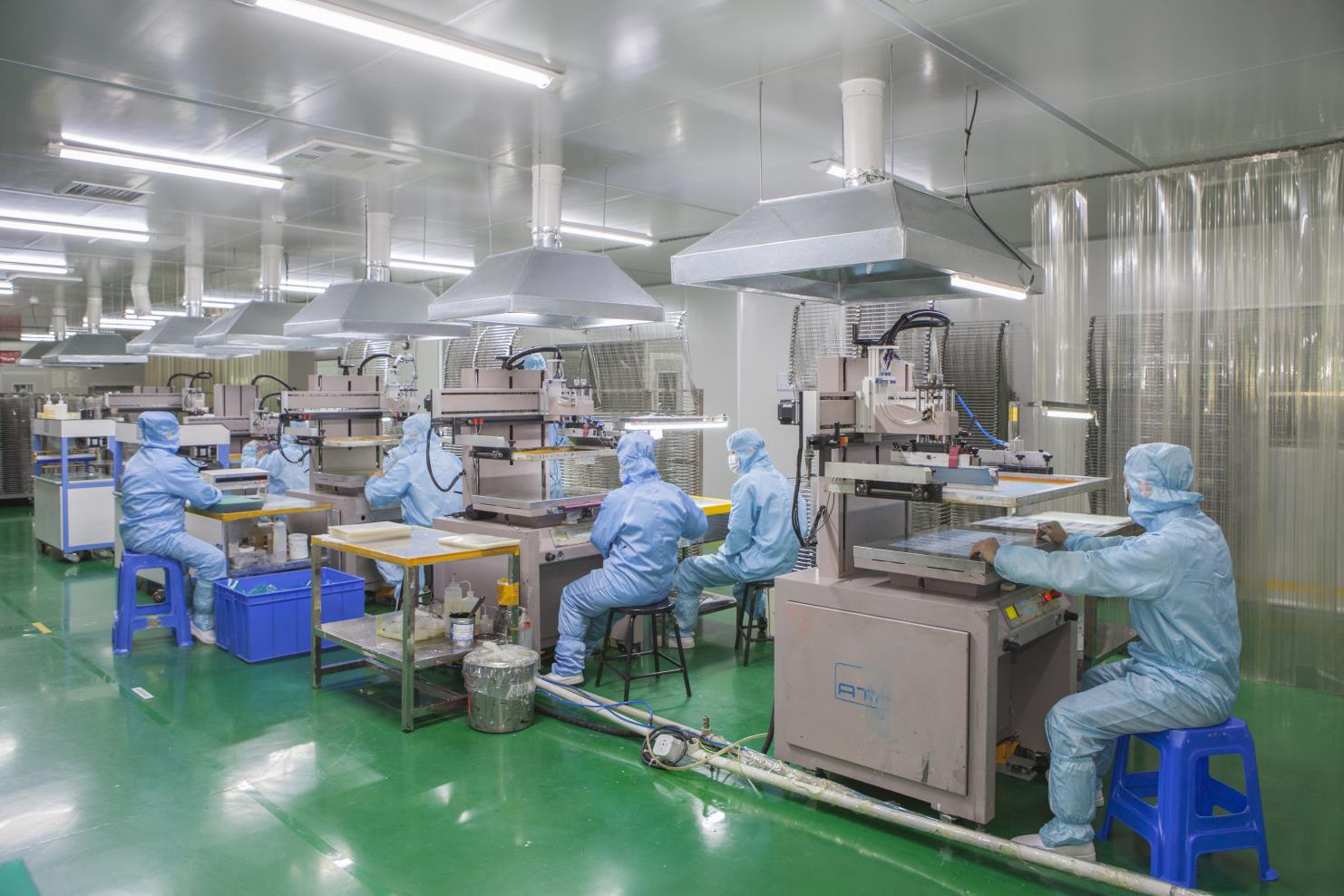
Precision-manufactured across our Dongguan cleanrooms. Designed to meet strict MIL-STD, IP67 ingress sealing, automotive vibration, and medical biocompatibility specifications.
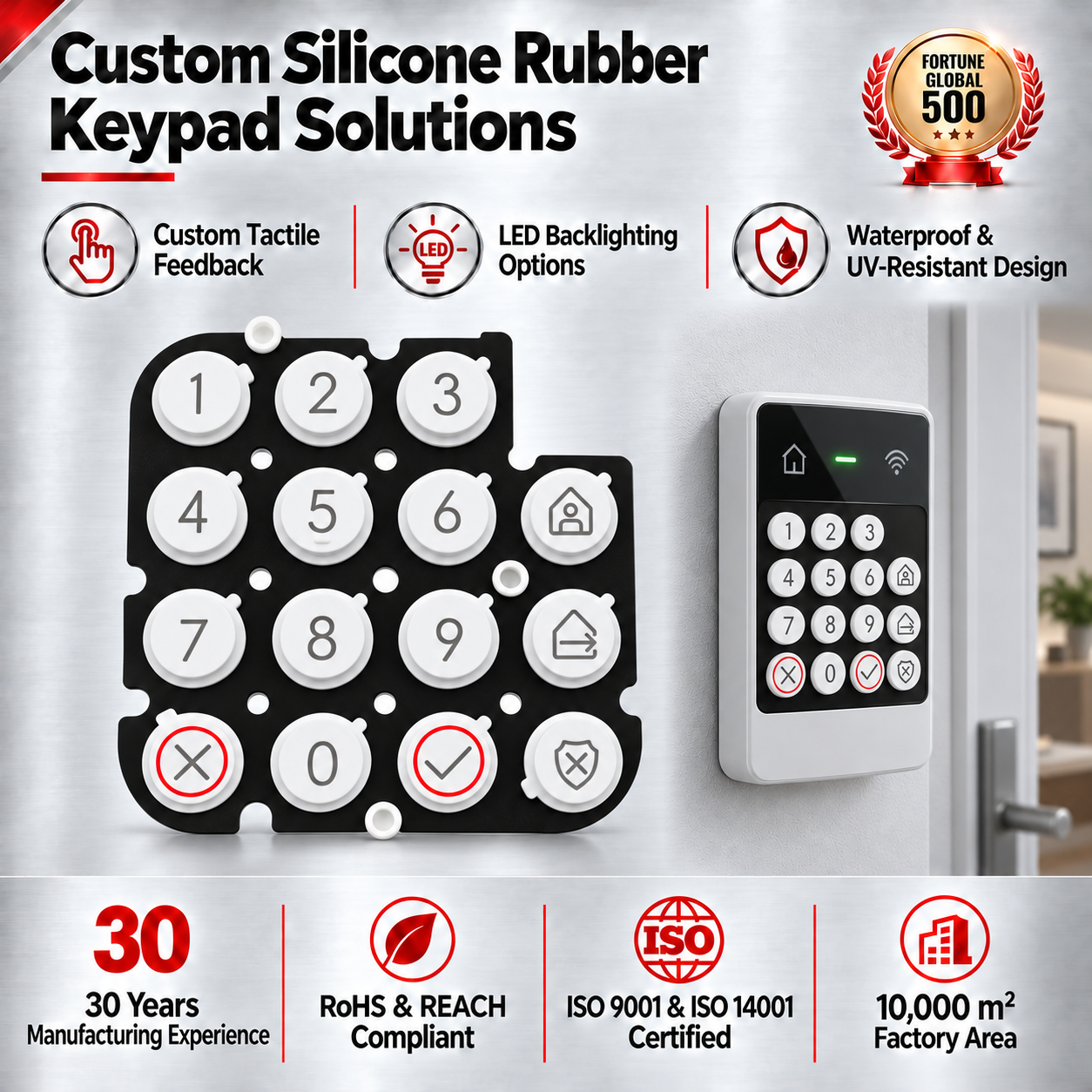
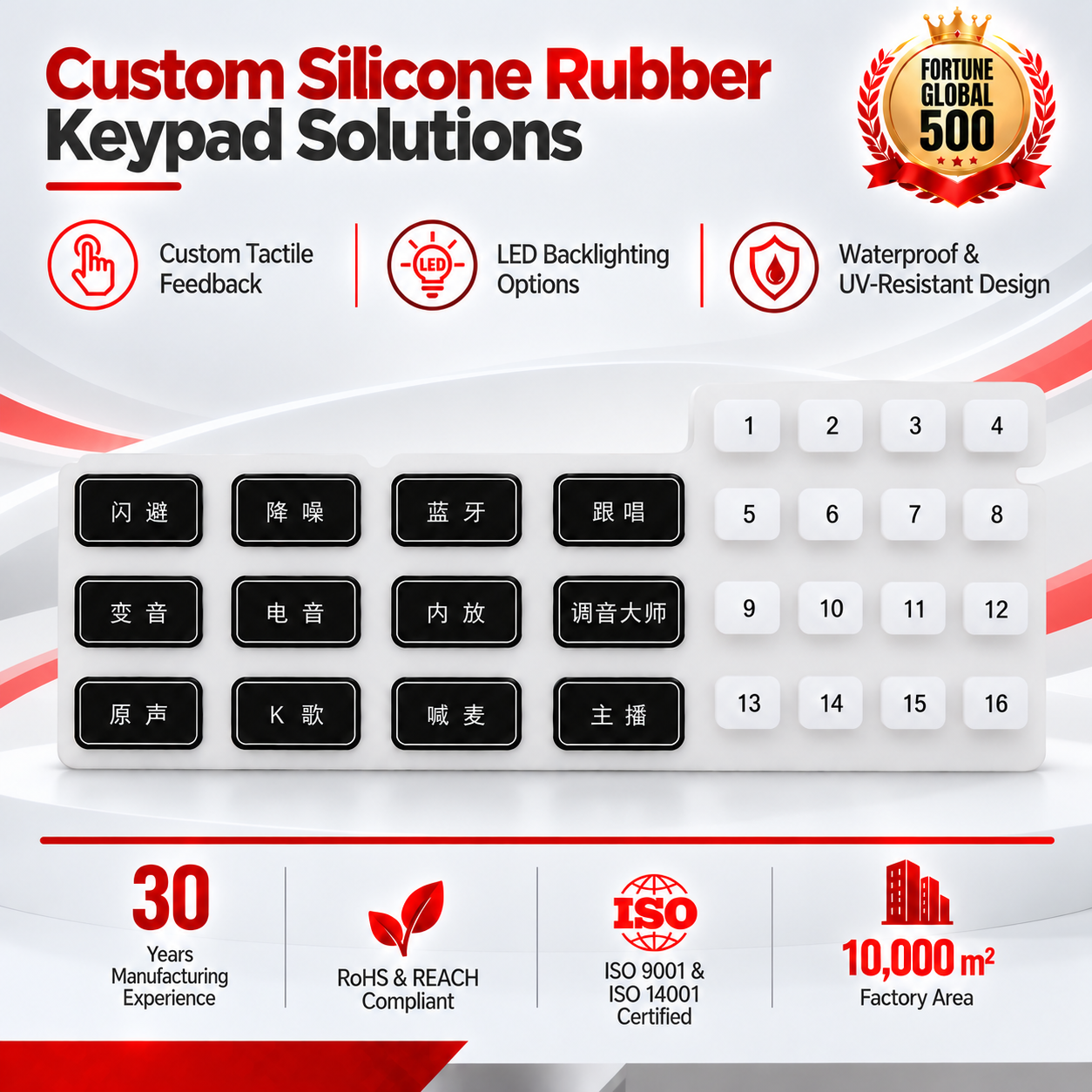
Factory Wholesale Numeric Conductive Silicone Rubber Keypad Panel Embossed Buttons for Home Appliances
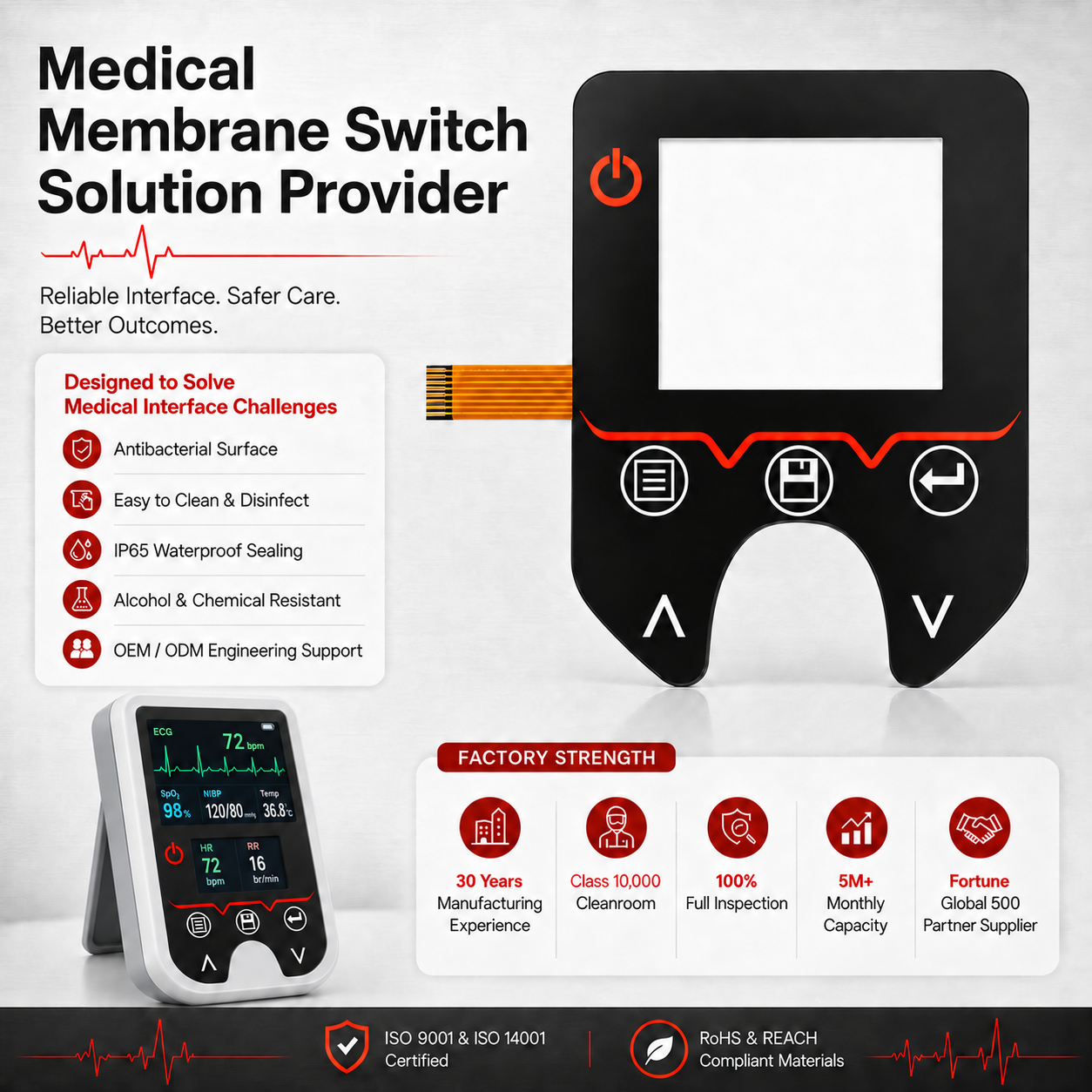
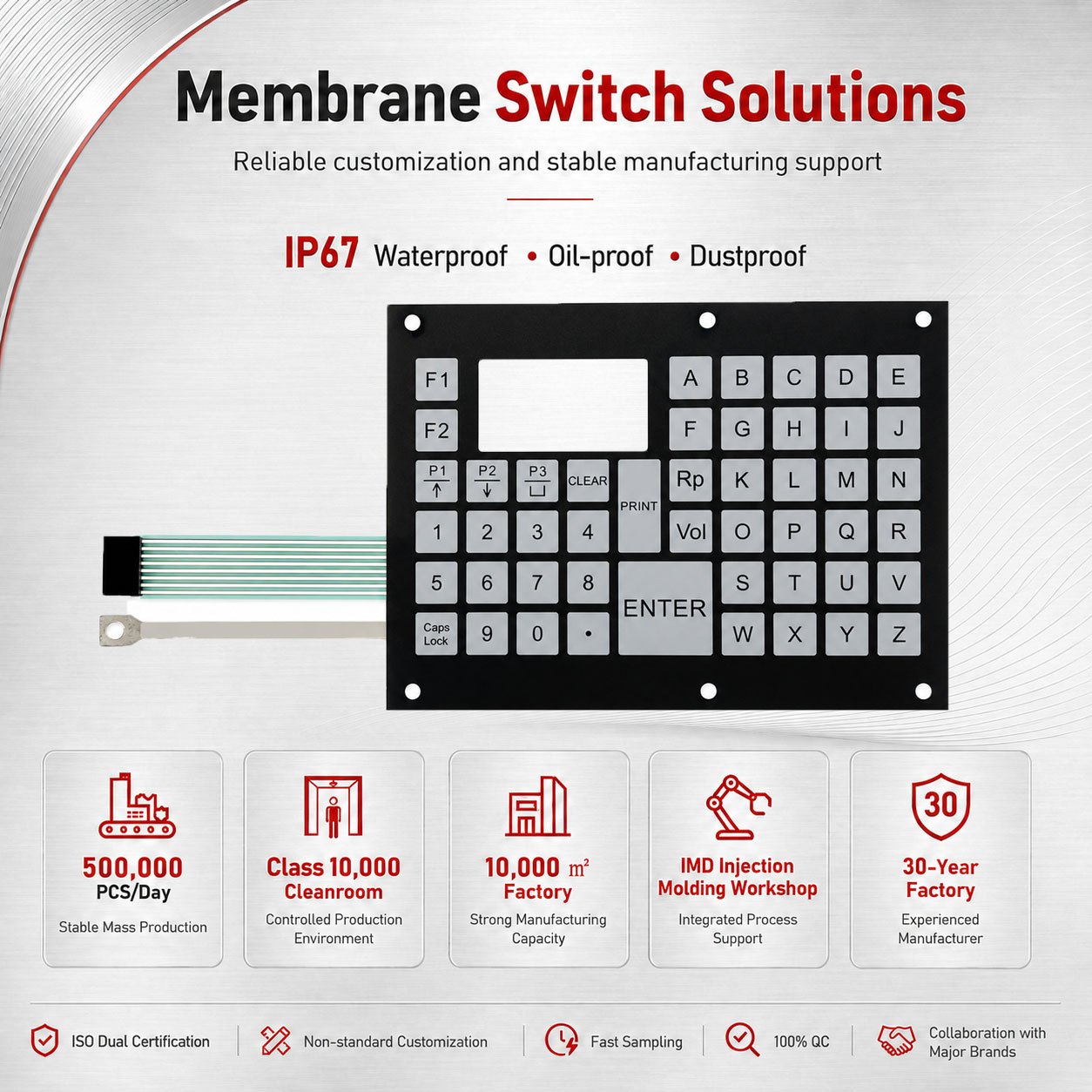
Factory Custom Medical Equipment ip65 Waterproof PC Graphic Overlay Membrane Switch Control Front Panel Button
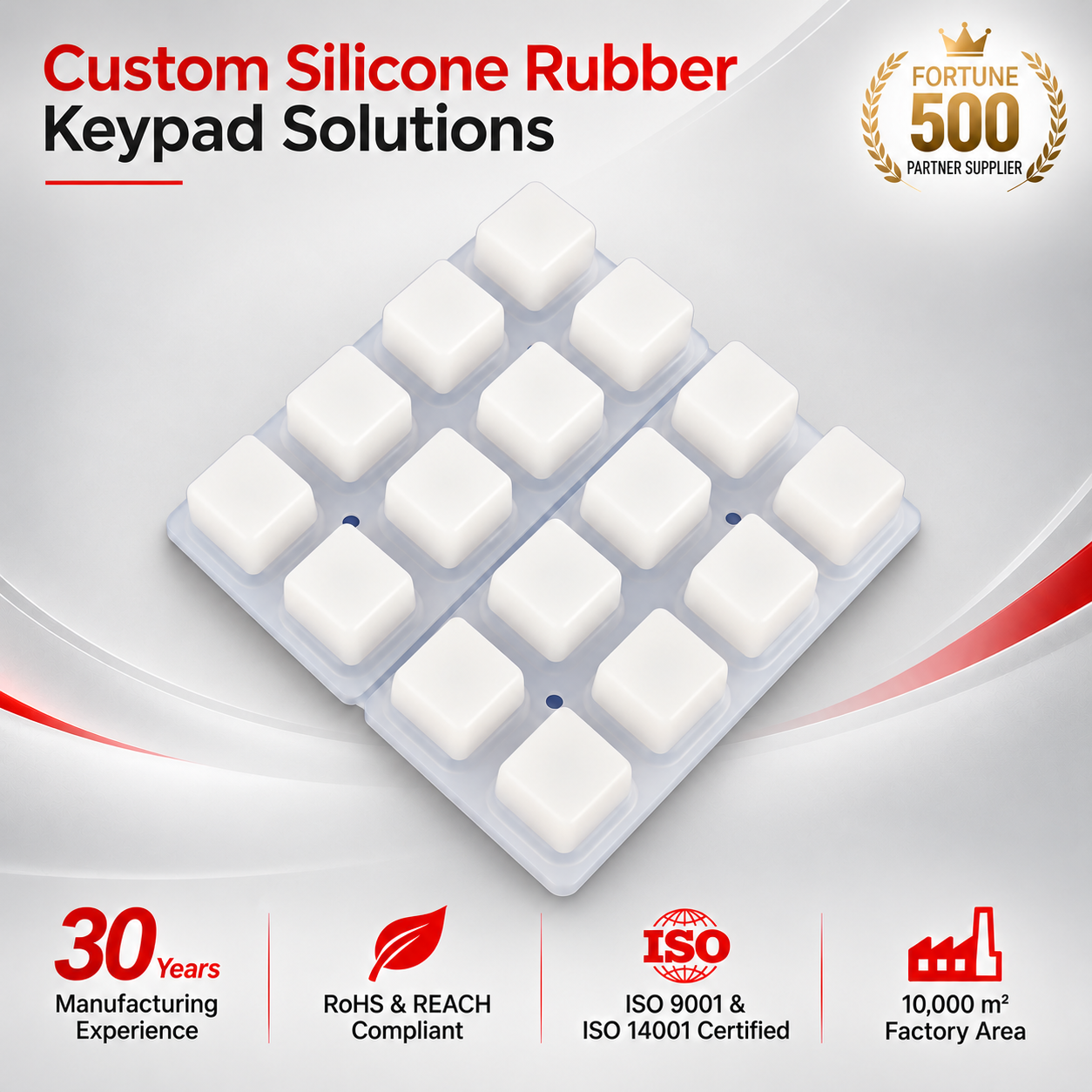
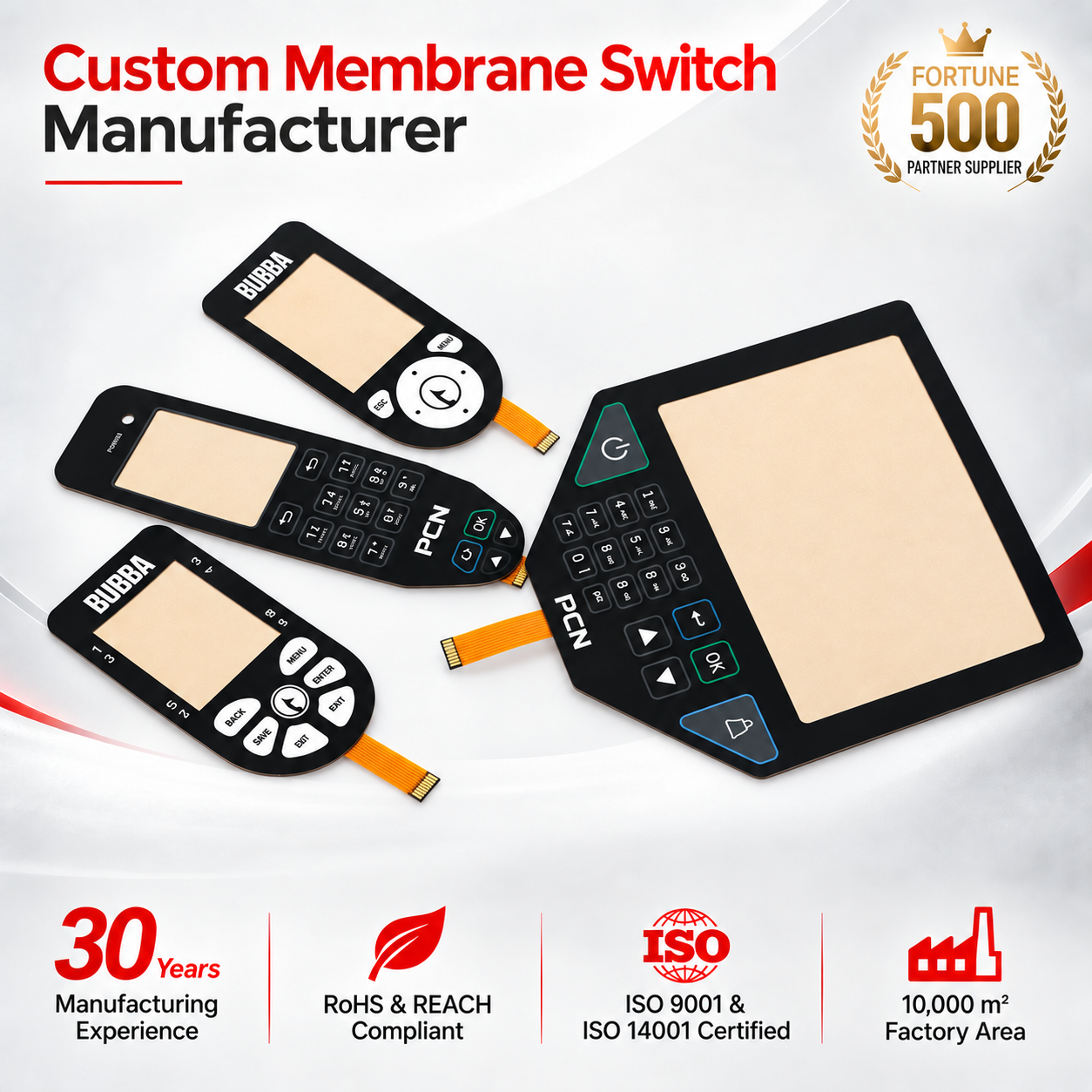
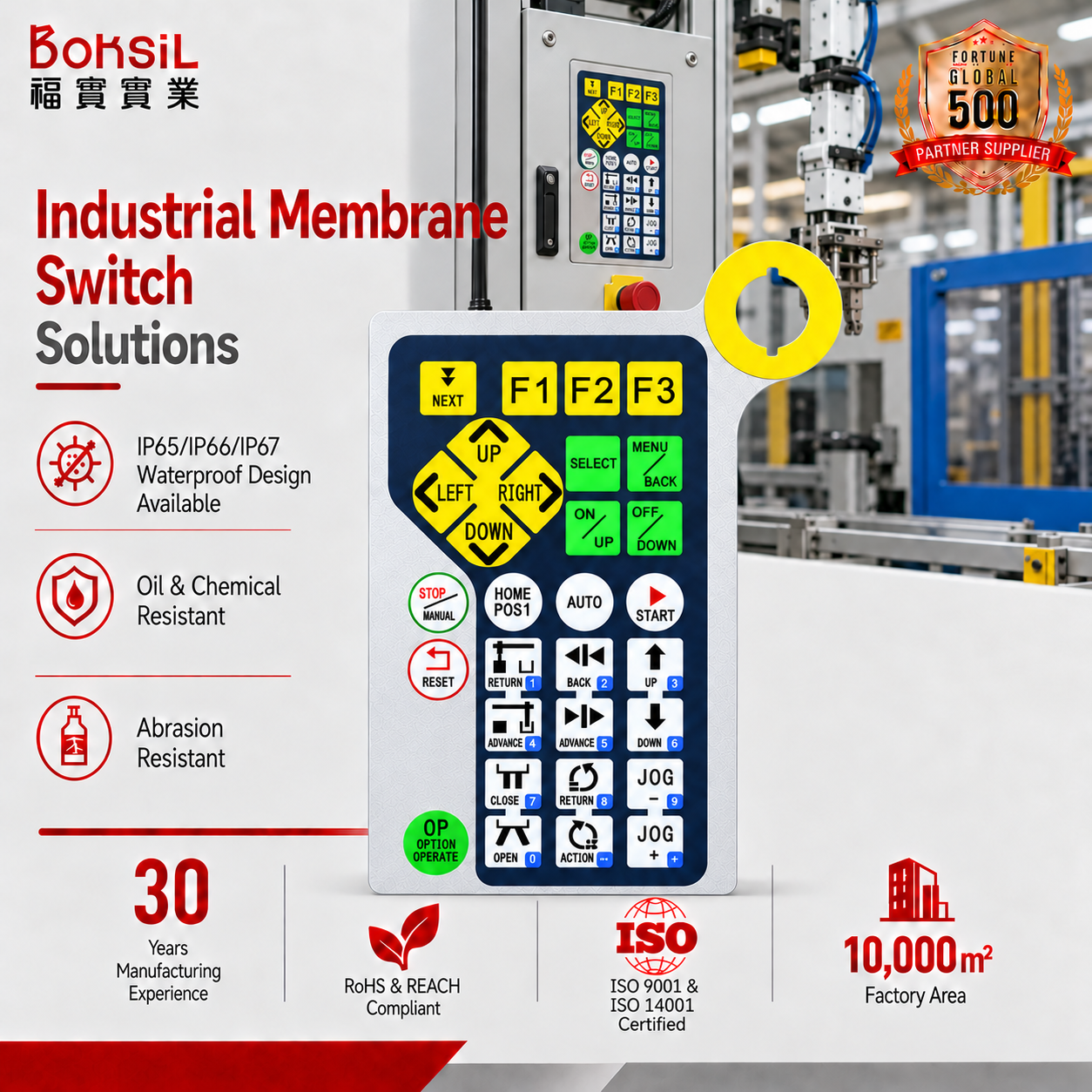
Custom 3m Adhesive Tactile Metal Dome Button Membrane Switch Graphic Overlay for Electronic Equipment
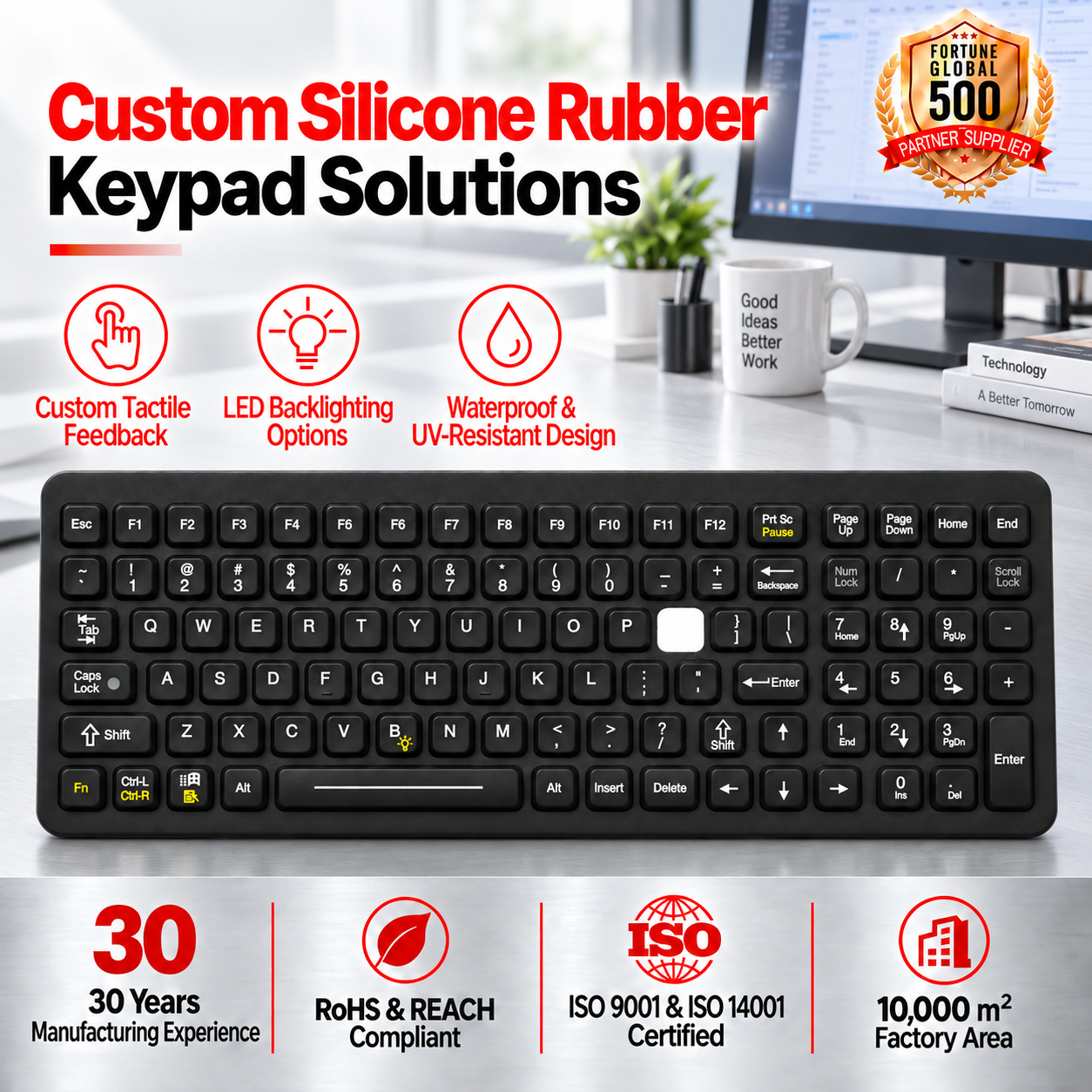
Industrial Custom Manufacturer Silicone Keypad Rubber Button Conductive Non-Toxic for Computer
Why Global Tier-1 Brands Depend on Our Dongguan Factory
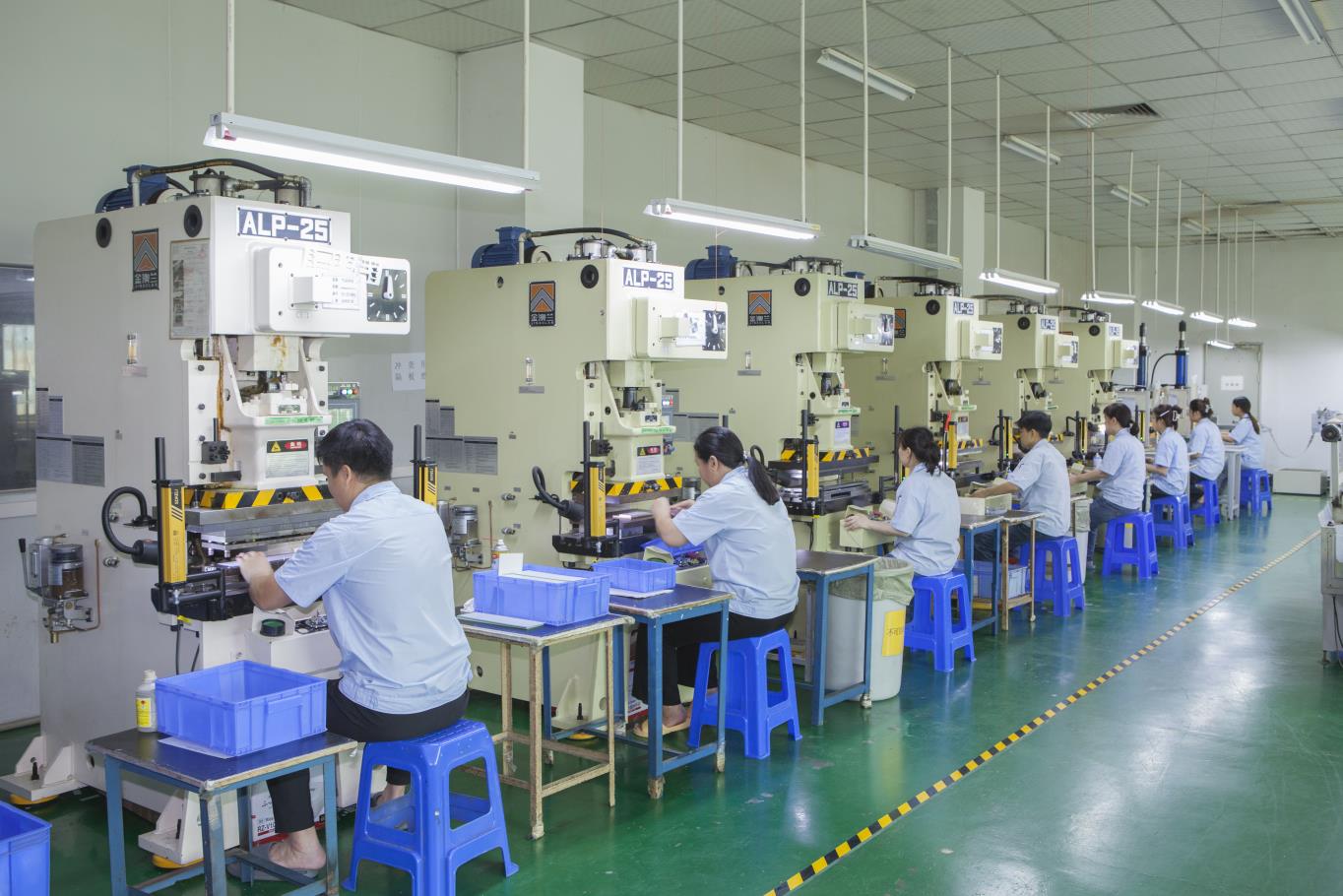
Unlike trading brokers, Dongguan AXRU Electronics Co., Ltd. controls 100% of engineering, tooling, screen printing, surface mounting, and environmental testing in our wholly owned facility.
Full In-House Manufacturing: From Raw PET Substrate to Hermetically Sealed Unit
Navigating global supply chain volatility requires direct factory transparency. At our Dongguan facility, we manage every step under rigid ISO 9001 and ISO 13485 quality protocols. Our internal engineering department performs comprehensive Design for Manufacturability (DFM) reviews on every CAD package before steel dies or silver silkscreen stencils are produced.
We eliminate common failure modes such as silver migration, delamination under thermal cycling, dead-front light leakage, and metal dome oxidation through precision chemistry selection, including authentic 3M 467MP/468MP adhesives and MacDermid Autotex textured hard-coat polyester films.
- Certified Materials: Guaranteed UL94-V0 flame retardancy, RoHS 3, and REACH compliance on all films, silicone elastomer, and conductive inks.
- Hermetic Perimeter Sealing: Proprietary gasket layouts achieving certified IP65, IP66, and IP67 wash-down ratings for harsh outdoor and medical sterilization settings.
- Electrostatic Discharge (ESD/EMI) Shielding: Printed carbon/silver grids or aluminum foil layers grounded directly through the flexible tail to dissipate up to 15kV strikes.
Circuit Precision & Pitch Density
From standard screen-printed silver-on-polyester circuits to high-density Copper Flexible Printed Circuits (FPC) with fine-pitch 0.5mm ZIF tail connectors, we support high-pin-count matrix architectures without cross-talk or high resistance.
Sub-Surface Graphic Inks & Optics
All graphic overlays feature reverse-side (sub-surface) screen printing. The graphics and color dyes cannot be scratched, abraded by cleaning agents, or degraded by alcohol, detergents, hydraulic fluids, and constant operator contact.
Tactile Ergonomics & Snap Feel
We stock over 60 varieties of nickel-plated and gold-plated stainless steel metal domes (round, 4-leg, triangle, oblong) offering actuation forces from 180g to 500g with crisp snap ratios exceeding 50% for definitive tactile feedback.
Material Architecture: Polycarbonate vs. Polyester vs. FPC vs. Silicone
Choosing the right HMI stack-up directly impacts mean time between failures (MTBF), resistance to environmental aggressors, and total lifecycle cost.
| Layer Technology | Material Options | Actuation Life (Cycles) | Chemical / UV Resistance | Best Fit Applications |
|---|---|---|---|---|
| PET Graphic Overlay (Autotex) | Polyester (Biaxially oriented PET, 130µ–200µ) | > 5,000,000 actuations | Superior Resists MEK, alcohol, oils, repeated flex fatigue | Medical diagnostic equipment, industrial HMIs, food processing machinery |
| PC Graphic Overlay (Lexan) | Polycarbonate (General purpose or flame-retardant) | > 100,000 actuations | Moderate Susceptible to chemical solvents; high impact clarity | Consumer electronic faceplates, indoor exercise equipment, measurement gauges |
| Silver-Printed Circuit (PET) | Conductive silver ink printed on heat-stabilized PET | > 1,000,000 actuations | Requires dielectric crossover coating to prevent electrochemical migration | Cost-sensitive matrix keyboards, appliances, commercial vending terminals |
| Copper Flexible Printed Circuit (FPC) | Polyimide (PI) film with etched copper traces | > 5,000,000 actuations | Maximum Handles high current, SMD LED vibration, dense 0.5mm pitch | Automotive instrument clusters, military communication systems, robotics |
| Silicone Rubber Keypad Integration | Elastomeric compression-molded silicone (30–70 Shore A) | > 1,000,000 actuations | High Stable from -40°C to +150°C; resists water ingress | Rugged handheld scanners, military field radios, outdoor gas pump terminals |
Future Procurement Trends for OEM Buyers (2025–2030)
How engineering directors and procurement specialists are future-proofing human-machine interface sourcing in response to automation, connectivity, and environmental regulations.
Capacitive Touch Merged with Tactile Safety Keys
Buyers are migrating away from pure touchscreens due to false triggers caused by water sprays or operators wearing gloves. The winning design pattern combines capacitive sliders with physically embossed tactile metal dome keys for safety-critical inputs like E-stop and power activation.
Light Guide Film (LGF) & Uniform Dead-Front Displays
Eliminating bulky electro-luminescent (EL) panels and uneven LEDs, modern switch designs leverage ultra-thin 0.125mm LGF layers. This channels light from side-firing surface-mount LEDs uniformly across key icons while keeping power consumption minimal and profile height under 1.2mm.
Hospital-Acquired Infection (HAI) Barrier Compliance
Global healthcare procurement demands ISO 22196-certified antimicrobial coatings integrated directly into the polyester overlay hard-coat. These active silver-ion matrices neutralize 99.9% of bacterial pathogens even after hundreds of bleach and quaternary ammonium wipe-down cycles.
Direct Factory Alliances with In-House Tooling
OEM procurement managers are consolidating vendors by bypassing middlemen. Partnering directly with high-capacity Chinese manufacturing plants that house internal CNC mold tooling, laser plotters, and environmental labs shortens development cycles by 4–6 weeks and lowers landed TCO by 28%.
In-House Reliability Testing Rig Infrastructure
Every production lot is subjected to destructive and non-destructive life-cycle simulations. Our calibrated test laboratory delivers documented validation data for medical and automotive PPAP filings.
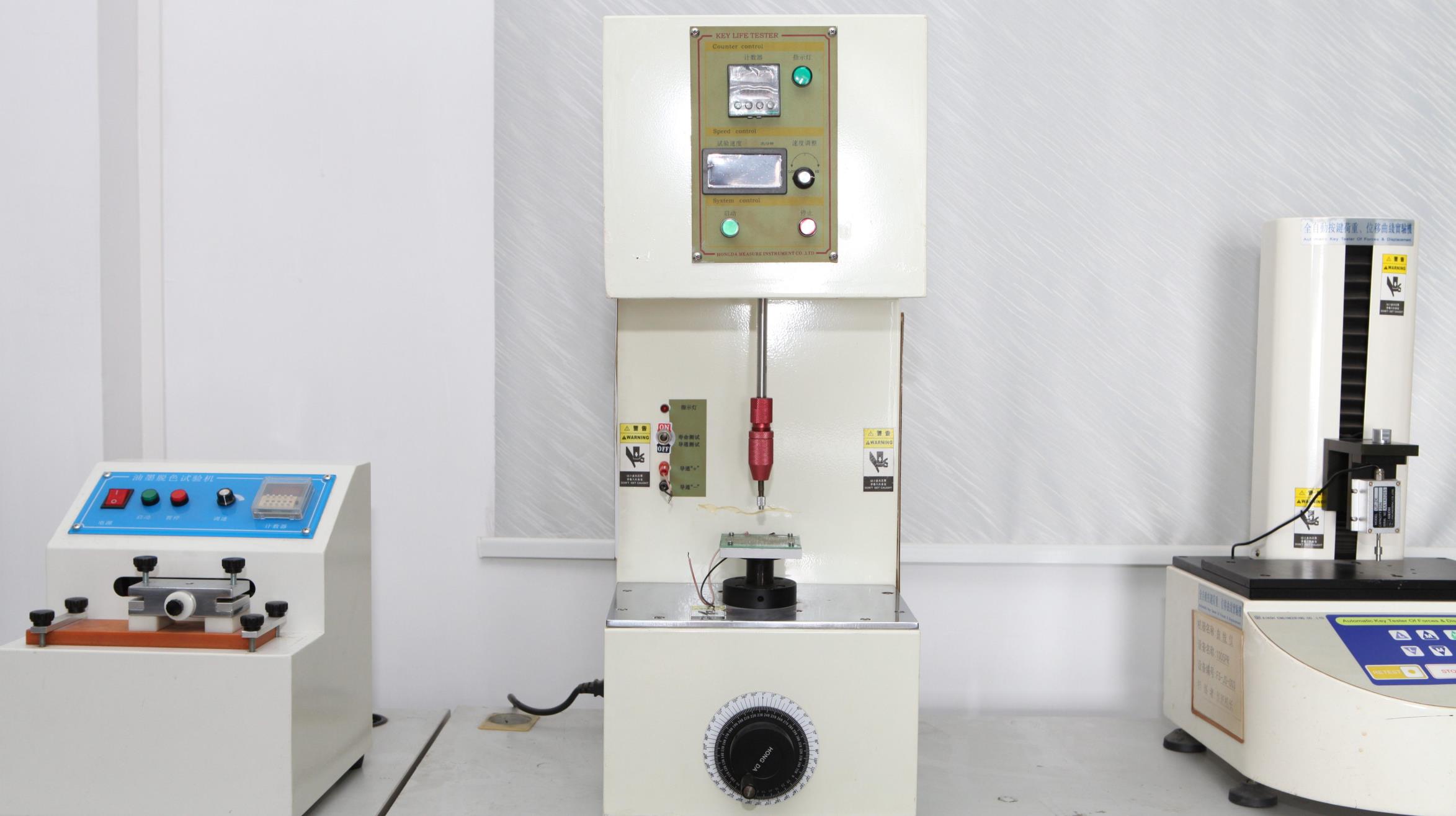
Actuation Fatigue Life Tester
Pneumatic cycling fingers actuate dome switches up to 5,000,000 cycles at controlled speeds to confirm switch contact resistance and metal fatigue resistance.
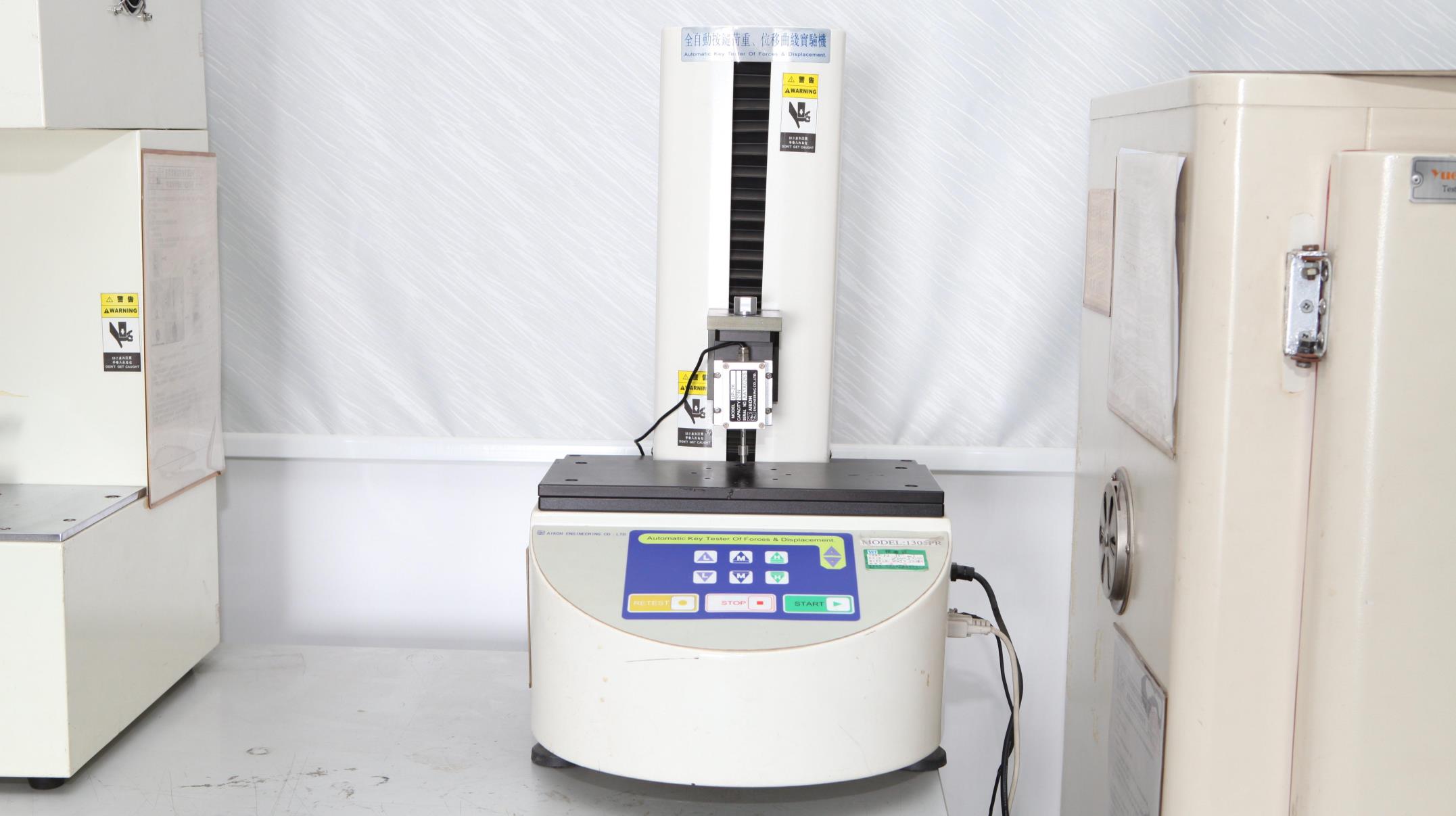
Force-Displacement Curve Profiler
Generates high-precision force-travel graphs, measuring peak actuation force (F1), contact force (F2), and snap tactile ratio ((F1-F2)/F1) to guarantee consistent hand feel across all batches.
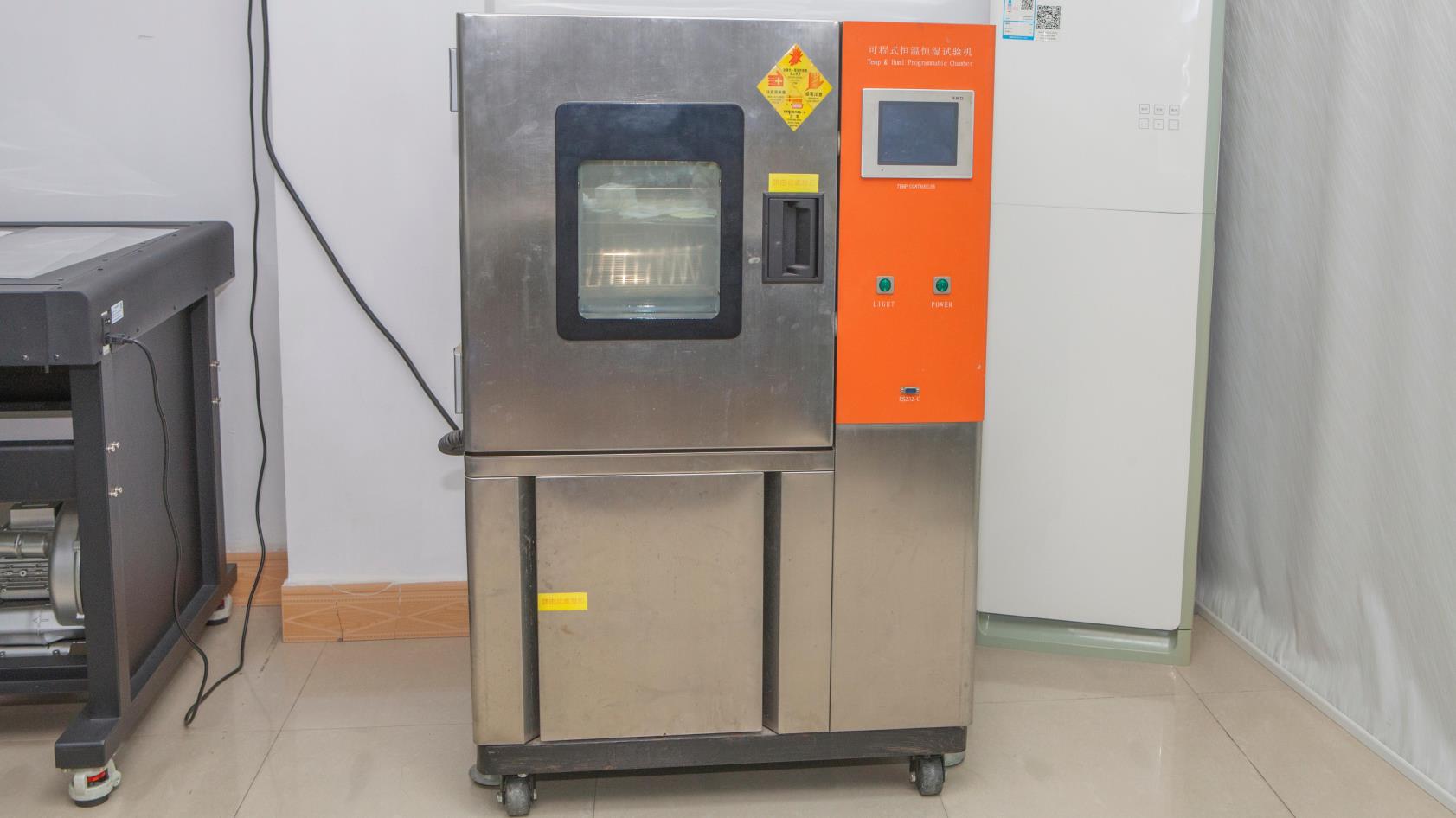
Thermal & Humidity Environmental Chamber
Tests adhesive shear integrity, silver migration risks, and overlay lamination across -40°C to +85°C with 95% relative humidity over 240 continuous test hours.
Membrane Switch DFM Best Practices Checklist for Engineers
Before releasing drawings for production, ensure your design includes: a minimum 1.5mm edge border margin between circuit traces and the die-cut outline; vented internal channels between metal dome chambers to balance atmospheric pressure during actuation; radius fillets (minimum R0.5mm) on all internal cutouts to eliminate stress fractures; and proper tail pitch matching with mating AMP, Nicomatic, or standard ZIF female headers.
Get CatalogFrequently Asked Questions from OEM Purchasing Teams
Direct answers regarding lead times, tooling costs, custom materials, environmental sealing, and engineering deliverables.